GR Press continues with fluff for Election Coverage
Today, the Grand Rapids Press posted a short story online about gubernatorial candidate Pete Hoekstra and his so-called “jobs campaign.”

The article highlighted Hoekstra’s visit to a Holland business owned by a life long friend whom the Press calls liberal, because he also supported Governor Granholm in the 2006 Election.
The Press story states, “Republican gubernatorial candidate Pete Hoekstra brought his “100 Jobs” campaign tour to de Boer Brothers Dutch restaurant.” The article also says that Hoekstra has been traveling around the state, “working at different jobs across the state to get input from business people and workers on what the state needs to improve the economically.”
What the Press writer never asks is how does doing someone’s job for a few hours help anyone understand how to improve the economy? The reporter also could have asked Hoekstra if this is just a PR tactic to appear like the candidate cares about working people?
There is nothing in the article about what Hoekstra’s plan is for dealing with the Michigan economy, job creation or helping working people out in general. On the Hoekstra for Governor site his 100 jobs campaign tour only provides little antidotes about what he did on these so-called jobs, but no hard information on what he would do as Governor in relation to the economy. In fact, Hoekstra has no platform information on his website as of this writing, just information on how to volunteer, donate money and biographical material.
On practical journalistic question to raise would be what has Hoekstra’s voting record on economic and labor issues been since he became the 2nd Congressional District Representative? We know that Hoekstra has voted for both NAFTA and CAFTA, trade agreements, which have cost Michigan workers thousands of jobs. A report from Jobs with Justice shows that as early as 2000 Michigan had already lost at least 46,000 jobs.
Hoekstra voted for the Wall Street Bailout, which has cost taxpayers an estimated $4.6 Trillion according to the Center for Media and Democracy. On top of that, Hoekstra has voted for almost every funding bill for the US wars in Iraq and Afghanistan, which according to the National Priorities Project, has meant that over $26 Billion in tax dollars have left the state to fund those wars.
These are basic questions that any journalist could be and should be asking of candidates who are running for office.
GRIID will continue to track local media coverage for Election 2010, analyze the coverage and when possible provide independent coverage of the candidates and ballot initiatives for voters in Western Michigan.
Democrats Pocket More Campaign Cash from Special Interests Ahead of 2010 Midterm Elections
(This article is a re-post from the site www.opensecrets.org)

The cost of the 2010 election cycle is on pace to break the record for a midterm election, set during the 2006 cycle. And across the board, Democrats, who now control the White House and both chambers of Congress, are on the receiving end of far more campaign cash than they were four years ago, according to a Center for Responsive Politics review of campaign finance data filed with the Federal Election Commission.
Many special interest groups sought to influence the direction of President Barack Obama and congressional Democrats’ ambitious legislative goals such as health care reform, financial regulation and energy policy targeting climate change.
People and political action committees categorized by the Center as part of the health sector gave 32 percent more to federal candidates, parties and committees last year compared to 2005, increasing to about $55 million. Of this sum, 58 percent went to Democrats, compared to just 33 percent flowing to Democrats in 2005. People and PACs within the energy sector donated 30 percent more last year than they did in 2005, the Center found, giving about $26 million in 2009. Nearly 50 percent of this amount went to Democrats, compared to just 24 percent going to Democrats in 2005.
Defense sector giving was 23 percent higher in 2009 than it was in 2005, at about $29 million last year, and contributions by people and PACs associated with ideological causes and single-issue groups were 21 percent higher last year compared to 2005, the Center found, increasing to $70 million.
Furthermore, defense sector contributions went from 37 percent to Democrats in 2005 to 58 percent to Democrats in 2009, and ideological and single-issue giving went from 54 percent to Democrats to 70 percent.
Contributions within the finance, insurance and real estate sector — where many large institutions have ceased to exist and the economic turmoil that began in late 2007 has made other companies more reticent to invest as heavily in federal politics — remained essentially unchanged from 2005 levels, the Center found, at about $110 million each year, the most of any sector during each year. Nonetheless, contributions from these interests increased from 42 percent to Democrats in 2005 to 56 percent in 2009. While hundreds of millions of dollars flowed into the war chests of candidates, political parties and special interest groups, these sums never exceeded the record amounts shelled out in 2007 and 2008, in which presidential candidates alone raised more than $1 billion.
The total amount contributed by the defense sector in 2009, for instance, was only about 80 percent of the sums these interests gave in 2008, the Center found. The labor sector’s $29 million in contributions last year were only about two-thirds of their 2008 total giving. And contributions by the health sector, energy sector and lawyers and lobbyists last year stood at roughly 50 percent of their 2008 levels, the Center found.
The Center for Responsive Politics categorizes all contributions from individuals and political action committees into 13 broad sectors. Of these, only one sector — construction — gave less money in 2009 than in 2005: $21.8 million versus $22.4 million. Even here, contributions to Democrats increased from 29 percent in 2005 to 46 percent in 2009. Here is a chart detailing how much each sector contributed in 2009, 2008 — a presidential election year, when contributions routinely spike — and 2005. The percent increase between 2005 and 2009 is also included:
| Sector | Total in ’09 | Total in ’08 | Total in ’05 | % Increase ’05-’09 |
| Health | $54,593,763 | $104,011,447 | $41,211,454 | 32% |
| Energy & Natural Resources | $25,544,120 | $47,689,559 | $19,591,854 | 30% |
| Defense | $10,157,723 | $12,800,376 | $8,270,745 | 23% |
| Ideological/Single-Issue | $70,447,579 | $197,493,916 | $58,184,877 | 21% |
| Labor | $28,769,077 | $45,046,404 | $24,712,305 | 16% |
| Other | $64,583,312 | $280,177,421 | $57,229,105 | 13% |
| Lawyers & Lobbyists | $71,853,034 | $150,570,075 | $63,791,013 | 13% |
| Agribusiness | $20,136,334 | $38,854,908 | $18,208,721 | 11% |
| Communications/Electronics | $32,876,109 | $84,703,267 | $30,523,923 | 7.7% |
| Misc Business | $61,739,996 | $176,162,645 | $57,517,728 | 7.3% |
| Transportation | $17,209,391 | $31,564,238 | $16,977,306 | 1.4% |
| Finance, Insurance & Real Estate | $110,040,845 | $264,034,470 | $109,987,626 | 0.05% |
| Construction | $21,802,851 | $52,907,284 | $22,352,458 | -2.5% |
And here is a chart detailing the percentage of contributions from each sector that went to Democrats each from 2005 through last year. The increase from 2005 to 2009 may vary from the numbers displayed for each year based on differences due to rounding.
| Sector | % Dem ’05 | % Dem ’06 | % Dem ’07 | % Dem ’08 | % Dem ’09 | Increase ’05-’09 |
| Health | 33% | 39% | 54% | 54% | 58% | 24% |
| Energy & Natural Resources | 24% | 25% | 38% | 32% | 46% | 21% |
| Transportation | 27% | 29% | 41% | 35% | 48% | 21% |
| Defense | 37% | 39% | 52% | 51% | 58% | 21% |
| Communications/Electronics | 50% | 58% | 67% | 72% | 69% | 18% |
| Construction | 29% | 31% | 38% | 35% | 46% | 18% |
| Misc Business | 38% | 41% | 53% | 52% | 56% | 17% |
| Agribusiness | 31% | 31% | 44% | 34% | 47% | 16% |
| Ideological/Single-Issue | 54% | 55% | 64% | 67% | 70% | 16% |
| Finance, Insurance & Real Estate | 42% | 45% | 53% | 48% | 56% | 15% |
| Lawyers & Lobbyists | 64% | 68% | 72% | 75% | 77% | 13% |
| Labor | 84% | 89% | 90% | 93% | 93% | 9% |
| Other | 47% | 54% | 55% | 57% | 54% | 7% |
Putting the T back in LGBT
Julie and Jo, her partner of 37 years. They have three married sons and four grandsons.
Putting the T back in LGBT
Dr. Julie Nemecek
Sunday April 18, 2010
10 a.m. Sermon followed by soup and salad lunch
12 noon Presentation
Plymouth UCC
4010 Kalamazoo Ave. SEYou don’t have to attend the worship service in order to participate in the presentation.

On Sunday, April 18, Rev. Dr. Julie Nemecek will deliver the sermon at Grand Rapids’ Plymouth Congregational United Church of Christ and share an hour long presentation following the service, Putting the T back in LGBT.
An ordained Baptist minister and Presbyterian Church elder, Nemecek served at an inner city Chicago church for 20 years before taking a position as a professor with a Christian university. A transexual, Nemecek lost her job there in 2007 when she took medical steps to find “congruency between her mind and her body.” The university labeled those steps as “unchristian behavior.”
GRIID spoke with Nemecek Friday morning; she explained why she brings her message to churches. “Some of the strongest resistance to equality as far as legislation and city ordinances comes from religious groups. It’s very important that there are voices from the faith community that can respond,” she said. “The research shows 80% of the general public support equality for LGBTQ people in employment or housing. Among conservative Christians, there is a flip flop, only 20%–but they are so vocal.”
When asked how members of the West Michigan community can support LGBTQ rights, reduce intolerance and erase the hate, Nemecek responded, “It’s important for straight allies to be willing to speak up. Silence is the greatest asset of those that would deny equality to LGBTQ people. Edmund Burke said, ‘All it will take for evil to prevail is for good people to do nothing.’ There are a lot of good people who believe equality for all Americans is important, especially when it is not a choice or a lifestyle, but who you are. Accepting people for who they are and making your voice known is the greatest thing that can happen.”
Nemecek also encourages straight people to join groups such as PFLAG to show their support. Plymouth UCC shows it support by openly and fully welcoming gay, lesbian, bisexual and transgender persons into its congregation. Its Open and Affirming Committee helps church and community members to understand and be involved in GLBT issues and formerly hosted a transgender support group.
Dr. Nemecek serves on the boards of Michigan Equality, Soulforce, Michigan Fairness Forum, and PFLAG Jackson as well as the advisory board of Trans Youth Family Allies (TYFA).
 The 2010 United States Social Forum (USSF) takes place in Detroit June 22 through 28. In anticipation, several West Michigan groups are taking action to spread the word and plan their involvement.
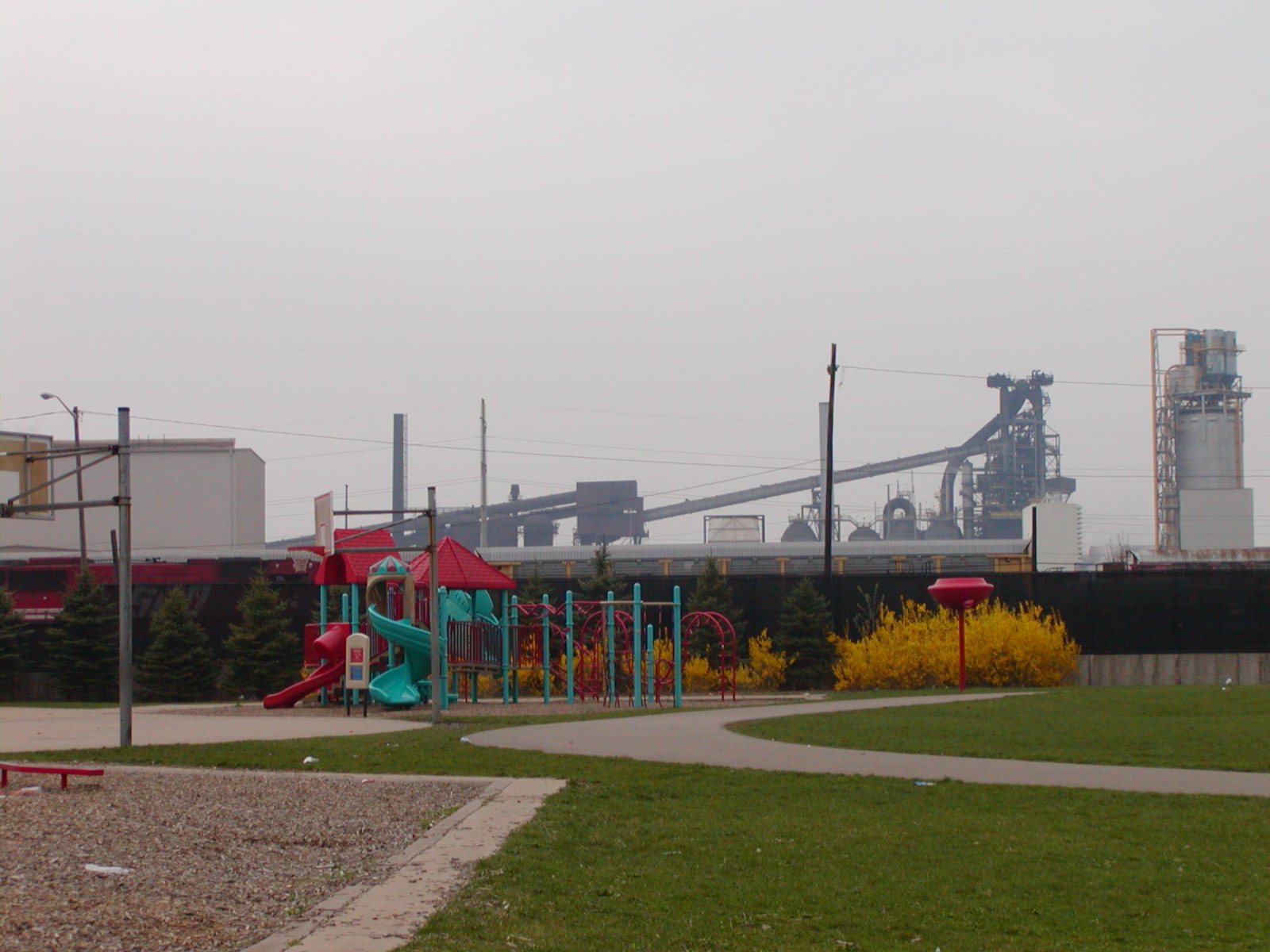
A Dearborn elementary school adjacent to Detroit's Marathon Refinery
Our Kitchen Table (OKT), a grassroots activist organization working for environmental justice and food security, is taking part in East Michigan Area Environmental Action Council‘s ReMedia Project. The OKT team, ReMedia West, will produce short documentaries to promote environmental justice that will be screened at the USSF on June 25. The group traveled to Detroitlast Tuesday where EMEAC members took them on an environmental justice tour of Detroit.
Grand Valley University’s Student Environmental Coalition (SEC) hosted Andrew Plisner, a USSF committee member, on Thursday evening for a discussion about how SEC’s work relates to social justice and today’s educational/cultural crisis.
 The Bloom Collective is hosting a USSF discussion group for local folks who want to learn more about the forum or share how they will be participating. This group will start off with meetings Friday April 16 and Friday April 23 from 1 – 2:30 p.m. at The Bloom Collective’s former space, 1134 Wealthy St. SE and Saturday May 1 at MayDay 2010, a May 1 celebration sponsored by Grand Rapids IWW at Grand Rapids’ MLK Park. People can come to any or all of the meetings.
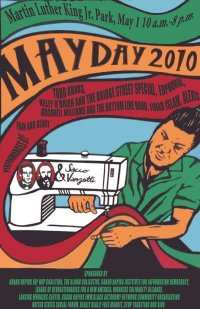 During MayDay 2010, Chinonye, chairperson of the USSF health, healing and environmental justice committee, will share a presentation about the USSF as well as performance. Chinonye is also member of the Calabar Theatre Company.
Are you or your group planning on attending the USSF? Let GRIID know. We are connected to the USSF Writers Group and will be covering the USSF live from Detroit.
Syndicated talk show Host Sean Hannity stopped in Grand Rapids yesterday as part of a book tour, with his newest rant Conservative Victory: Defeating Obama’s Radical Agenda.

About 700 people showed up at Schuler Books in Kentwood to buy Hannity’s book and get a glimpse of the right-wing pundit. All of the major daily news outlets reported on Hannity’s visit and most of them treated it like a celebrity citing.
WOOD radio did not do a news story about Hannity’s stop in Grand Rapids, which makes sense at some level since their station airs the right-wing pundits show Monday-Friday from 3-6pm. The Clear Channel owned radio station did broadcast live from the bookstore and featured photos of the talk show host’s visit.
WOOD TV 8 had the shortest story of the three Grand Rapids-based TV stations, while WXMI and WZZM all provided longer stories.
The FOX 17 story was produced like political theater with a few comments from those who came to hear Hannity. One woman says he is a “true American.” The WXMI broadcast also mentions that a “lone dissenter” was outside the bookstore, but they never expressed what the person was objecting to.
The WXMI story did mention Hannity’s relationship to the Tea Party movement, but they don’t challenge him on the movement’s racist comments and increasing call for violence against the government. Hannity said of the Tea Party movement, “To see people, on their own, calling congress, calling the senate, to see people get motivated, to get involved in the government process, for people to say, ‘you know what? I care about the America we’re going to leave our children and grandchildren,’ is frankly inspiring to me.”
WZZM 13 did the best job of three TV stations by actually challenging Hannity on his message and whether or not it influences or inspires reactionary groups like the Hutaree militia. Hannity responded by saying, “Oh, God, I hope not. That’s not the people I’m seeing at town halls.”
However, the channel 13 reporter lets Hannity off the hook by not verifying any of the claims the talk show host has made not talking with an independent source to get a sense of what role the Hannity plays in the current anti-government currents.
The only local news agency to get input from a non-partisan and independent perspective was the Grand Rapids Press. They spoke with GVSU Professor Erika King who said, “Sean Hannity doesn’t pretend to be a neutral political observer. Nobody expects him to do that.” Not exactly a useful analysis for understanding the talk show host’s role in current politics.
Hannity however, has a long history of engaging in media distortions, lies and hate speech. According to Rory O’Connor, Hannity was fire from his first radio show (1987) because he made anti-gay/lesbian remarks. O’Connor notes in his book Shock Jocks: Hate Speech & Talk Radio, that Hannity has made numerous claims on air that are just simply lies. Some of those statements are, “It doesn’t say anywhere in the Constitution this idea of the separation of church and state.” Hannity has also claimed that the Democratic National Convention doctored the photos of tortured Iraqis at Abu Ghraib prison and in 2004 he fabricated a poll, which said that minorities supported the end of Social Security.
According to Media Matters, Hannity appeared at and broadcast live last year at a Tea Party Tax Day rally in Atlanta and this week the West Michigan Tea Party website featured Hannity’s visit to Schuler Books.
Media Matters also did a fact check on Hannity’s new book and found 20 falsehoods, smears and distortions. One of those examples deals with the racist language of the Tea Party:
While discussing the tea party movement, Hannity writes that the “lion’s share of the ideas coming out of the Tea Party protests are indeed positive, but they lack any kind of organizational unity.” In the next paragraph, Hannity positively cites Dale Robertson for challenging “Republicans in name only”:
The lion’s share of the ideas coming out of the Tea Party protests are indeed positive, but they lack any kind of organization unity — which is inevitable in such a decentralized, grassroots movement. We also see, within the movement, a good amount of single-issue advocacy — the kind of passionate activism that can have the power to ignite a movement, but cannot on its own sustain a new “revolution” unless it’s consolidated into a unified vision.
The Tea Party protests will continue, as I believe they should. They have been an indispensable catalyst to energize our troops to fight back. They have done more than that as well, supporting, for example, constitutionally conservative candidates against RINOs — Republicans in name only — such as helping to oust Florida’s Republican Party chairman. “We are turning our guns on anyone who doesn’t support constitutionally conservative candidates,” said Dale Robertson, who helped start the Tea Party movement two years ago. [Pages 193-194]
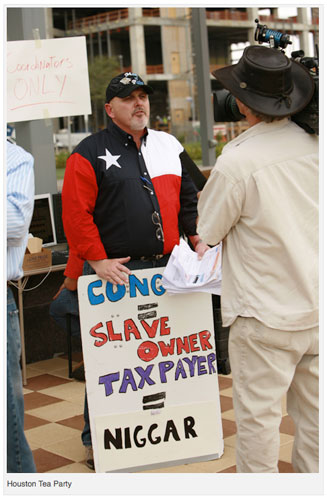
Hannity’s tea party leader was reportedly kicked out of tea party event for carrying sign with racial slur. The Washington Independent’s David Weigel reported on January 4 that “Dale Robertson, a Tea Party activist who operates TeaParty.org, is getting stung for an old photo — taken at the Feb. 27, 2009 Tea Party in Houston — in which he holds a sign reading ‘Congress = Slaveowner, Taxpayer = Niggar.’ ” Weigel also reported that “Josh Parker of the Houston Tea Party Society tells me that Robertson was booted out of the event for this sign.” Weigel included this picture:
It is unfortunate that the West Michigan news media did not apply some of the same investigative journalism skills with Hannity’s visit. Instead, the news media for the most part gave Hannity a free pass to say whatever he wanted without verifying his claims or the content of his latest book.
How Massey Energy Does Business
(This article was re-posted from the online news & information site CounterPunch)

Massey Energy Corp., owner of the Upper Big Branch Mine in West Virginia where at least 25 miners were killed April 5 in a methane gas explosion, apparently arranged for and purchased disability compensation insurance coverage only a month before the disaster, according to one source with inside knowledge about the company’s risk management operations.
Prior to that, the company, known for its aggressive challenges to workers’ comp claims, was self-insured for workers compensation.
But given the number of safety violations at its mines–there were 53 in March alone, 495 in 2009 and 1300 since 2005, at just the Upper Big Branch Mine and 2,074 over the past year at other mines owned by Massey across the Appalachian region–perhaps the money spent buying insurance to cover workers’ injury claims might have been better spent fixing chronic problems with methane gas build-ups in the mine. Then again, maybe the company felt that violation citations were no big deal–it has reportedly challenged two out of three instead of fixing them as a matter of course.
The company certainly has not shown particularly good judgment when it comes to its insurance decisions. Last year, despite noting in its annual report that its operations were “subject to certain events and conditions that could disrupt operations, including fires and explosions,” Massey Energy decided not to purchase business interruption insurance, according to Business Week magazine. With some analysts suggesting that the accident at the big West Virginia mine, where metalurgical coal used in the production of steel is extracted, could lead to a shutdown of that mine, and to a nearly 50% loss in overall corporate earnings this year, that decision could prove costly to Massey investors. The ratings agency Standard & Poors earlier this week placed the company, which already sports a junk-bond-level BB- credit rating, on watch for a downgrade, citing lost production, the “workers’ compensation liability and any impact potential lawsuits brought against the company may have.”
The accident could also prove costly for Massey CEO Don Blankenship, who only recently had the performance pay portion of his compensation package upped significantly by the company’s board of directors from $900,000 in 2009 to $1.5 million for 2010 and 2011. Blankenship reportedly would also be in line to receive 81,500 Massey shares if certain performance targets are met for the year, and another 32,250 shares if a second set of targets are met. Among the performance areas considered are financial results, sales volume, and safety performance, all of which are likely to be problematic this year in the wake of the West Virginia disaster.
Blankenship, a local boy who made good and became the first non-Massey family member to head the giant mining firm, has been aggressively anti-union, as has the entire company. A bitter strike by the United Mineworkers in 1984-85, in which the company, backed by the Reagan administration, brought in scab workers and hired private armed guards backed by West Virginia State Troopers to harass and intimidate unionized workers, lead to a breaking of the union at the company, which is now largely non-union, and across the country.
A call to Massey asking for comment had gone unanswered as of this posting.
Dave Lindorff is a Philadelphia-based journalist and columnist. His latest book is “The Case for Impeachment” (St. Martin’s Press, 2006 and now available in paperback). He can be reached at dlindorff@mindspring.com
US Covering Up Reality in Honduras
(This Media Alert is re-posted from Fairness & Accuracy in Reporting)
A leaked videotape of a 2007 U.S. helicopter attack in Baghdad that killed a dozen Iraqis was unveiled on April 5 by the website WikiLeaks. To much of the corporate media, though, it was either not worth reporting at all, or an unfortunate incident to be defended.
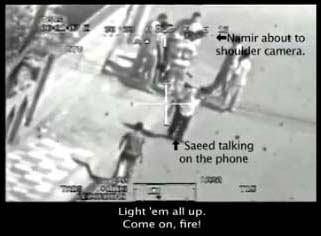
The graphic and disturbing video includes audio of the helicopter pilots cheering their attacks. Two journalists working for Reuters–photographer Namir Noor-Eldeen and driver Saed Chmagh–were killed in the assault, which U.S. military officials had claimed was a response to insurgent activity. WikiLeaks says it acquired the video from whistleblowers within the military.
The release of the video, though, got only cursory treatment in the mainstream press. The New York Times (4/5/10) ran a relatively thorough piece, which summarized the video this way:
But the video does not show hostile action. Instead, it begins with a group of people milling around on a street, among them, according to WikiLeaks, Mr. Noor-Eldeen and Mr. Chmagh. The pilots believe them to be insurgents, and mistake Mr. Noor-Eldeen’s camera for a weapon. They aim and fire at the group, then revel in their kills.
“Look at those dead bastards,” one pilot says. “Nice,” the other responds.
A wounded man can be seen crawling and the pilots impatiently hope that he will try to fire at them so that under the rules of engagement they can shoot him again. “All you gotta do is pick up a weapon,” one pilot says.
The helicopters also fire on a van that appears on the scene to carry away some of the victims. The Times had two follow-up stories on April 7.
A leaked video that seems to show the U.S. military killing and wounding civilians should be a big news story. But most of the media seemed to think otherwise, with a search of the Nexis news database showing scant pick-up.
CBS Evening News (4/5/10) reported on the video, with anchor Harry Smith opening the segment, “In the heat of battle, things are not always as they might seem.” Correspondent Bob Orr closed by offering something of a justification: “Now, it appears from the tapes that at least some of those hit on the ground were unarmed, but a journalist who was in the general area that same day says it’s important for all of us to remember it was a hectic, violent and uneasy day.”
On CNN‘s Situation Room (4/5/10), the network decided not show any of the shots that were fired “out of respect for the families of the two Iraqi employees of the Reuters news organization that were killed,” explained Pentagon correspondent Barbara Starr. (The photographer’s father was quoted in the April 7 Times: “God has answered my prayer in revealing this tape to the world…. I would have sold my house and I all that I own in order to show this tape to the world.”) Starr went on to claim:
There was an investigation of this incident. The Army found no one at fault, that the units in the air–the helicopters in the air had no reason to believe that there were journalists there on the ground with the insurgents. They say that nearby U.S. troops had come under attack and that this shooting, which we are not showing the specifics of, was justified.
While it is correct that the military conducted some sort of investigation, it is unclear how Starr could know that any of the victims were “insurgents.”
And there has been little discussion of the relevant history of U.S. forces firing on and killing journalists working in Iraq, including a tank firing on journalists at the Palestine Hotel and attacks on the Baghdad offices of Al Jazeera and Abu Dhabi TV (FAIR Media Advisory, “Is Killing Part of Pentagon Press Policy?,” 4/10/03). While those who defend the helicopter attacks in the video say that the U.S. forces could not have known there were journalists on the ground, these earlier incidents suggest that knowledge of the whereabouts of media workers does not necessarily prevent attacks.
There has been other coverage of the video. MSNBC‘s Dylan Ratigan (4/5/10), for example, hosted a lengthy discussion with former military officials, Salon‘s Glenn Greenwald and Julian Assange from WikiLeaks. Democracy Now! (4/6/10) hosted a discussion with Assange and Greenwald as well. National Public Radio aired two reports on April 6. But where is the rest of the media on this story?
This news comes on the heels of the revelation that a Special Forces raid in Afghanistan killed five civilians, including three women, in a house raid in February. NATO forces had originally claimed that the three women were found dead at the scene; the London Times reported (4/5/10) that according to Afghan investigators, “U.S. special forces soldiers dug bullets out of their victims’ bodies in the bloody aftermath of a botched night raid, then washed the wounds with alcohol before lying to their superiors about what happened.”
Both incidents, of course, demand more scrutiny. So far, U.S. corporate media are mostly ignoring them.
To view the WikiLeaks video: http://www.collateralmurder.com/
Three Cups of Tea author addresses audience at GVSU

Yesterday the Grand Rapids Press ran an article in the region section about a talk given at GVSU by “Three Cups of Tea” author Greg Mortenson. The headline of the story written by reporter Charles Honey was, “The real enemy is ignorance.”
The story states that around 2,000 people came to hear the author who has been working to build schools in Pakistan and Afghanistan in recent years. The story cites Mortenson as saying that education is the key to peace in Afghanistan. “We can drop bombs, we can surge troops, we can put in electricity, we can build roads. But if girls are not educated, a society will never, ever change.”
The article also stated that Mortenson’s book “Three Cups of Tea” has been GVSU’s Community Reading Project this year. Part of this project was an interdisciplinary panel discussion two weeks ago on the book and its significance.
On that panel, GVSU Sociology Professor Jennifer Stewart raised concerns about the book, calling it “sincere fiction.” Sincere fiction is literature written by White, privileged people who go somewhere to “help” other people, usually people of color. Stewart thinks that the popularity of Mortenson’s book is in part because it makes Americans feel good. “Americans like to be seen as the ones who save others and this fits into our country’s narrative about being a beacon of light for the rest of the world.”
The Press reporter states that Mortenson was somewhat critical of President Obama’s decision to send more US soldiers to Afghanistan, but the criticism had more to do with the process used for making this decision and not so much about the increase in troops. Reporter Charles Honey does say that the book is required reading by US military leaders, but the reporter never says why the book is required reading. Joint Chiefs of Staff Chairman Adm. Mike Mullen has an endorsement on the book cover of Mortenson’s most recent book “Stone’s into Schools,” which raises questions about the roll that Mortenson’s schools play in the larger US counter-insurgency strategy in Afghanistan.
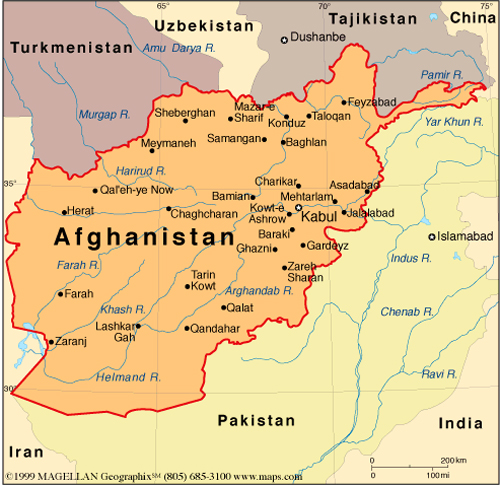
What is missing from the discussion on Afghanistan as it relates to Mortenson’s book and his visit is the lack of historical context to the current US/NATO occupation of that country.
Afghanistan is a country made up of numerous tribal communities and the borders of that country were arbitrarily created by the British government during their occupation at the end of the 19th century. There is tremendous language diversity in the country, which makes Mortenson’s decision to use English as the language in which his schools operate seem questionable.
Afghanistan is also a country, which has been at war for the past 30 years. The former Soviet Union occupied Afghanistan from 1980 – 1989. During that period the US recruited, financed and trained insurgents from all over the world who identified with a very narrow interpretation of Islam, a group of men known as the Moujahedeen (Holy Warriors). This group of men were the ones who instituted policies and practices that restricted women’s freedom, which was acceptable to US policy makers because it served Cold War objectives.
“What was more important in the worldview of history? The Taliban or the fall of the Soviet Empire? A few stirred-up Muslims or the liberation of Central Europe and the end of the Cold War?” –President Carter’s national security advisor Zbigniew Brzezinski, 1996.
After the Soviet Union withdrew from Afghanistan the US paid little attention to the aftermath of the Moujahedeen. This group of radical Jihadists began fighting each other for control of the country and continued to use the weapons provided by the US or left over from the Soviets. Thousands of people were murdered in the first half of the 1990s until another group known as the Taliban came to power in 1996. The Clinton administration initially endorsed the Taliban because they were a “stabilizing force in the country.”
The 1990s were also a period where there was greater interest in the gas & oil resources within Afghanistan and the strategic role the country could play as a trans-shipment point for energy resources in the region. One US-based energy company with close ties to the government was UNOCAL.
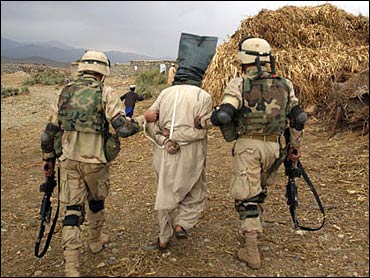
Then the September 11, 2001 terrorist attacks occurred and Afghanistan became front-page news and on the top of the list of US foreign policy interests. The US began bombing Afghanistan in October of 2001 and has been occupying that country for almost nine years. In those nine years the US military has built numerous bases, detained thousands of Afghanis, systematically tortured them, and killed thousands more.
To not provide this kind of information about what Mortenson has been doing with his school project, not only distorts any discussion about what will ultimately bring peace to that country, it is a disservice to the Afghani people who have suffered as a direct result of US policy for three decades.
Some excellent resources on US policy in Afghanistan in recent decades are the website Rethink Afghanistan and the books Bleeding Afghanistan and Ending the US War in Afghanistan.
People’s Climate Justice Summit in Cochabama, Bolivia
(This article is re-posted from Inter Press Service IPS)
by Franz Chávez
LA PAZ – A different way of fighting global warming will be tried out in the central Bolivian city of Cochabamba when government representatives and thousands of activists gather for the World People’s Conference on Climate Change and the Rights of Mother Earth.

The social organizations sponsoring the Apr. 19-22 conference have announced an alternative platform to the efforts of the 15th Conference of the Parties to the United Nations Framework Convention on Climate Change (COP-15), which ended in failure in icy Copenhagen in December 2009.
The defense of Mother Earth, championed by Bolivian President Evo Morales, has the support of more than 240 grassroots and indigenous movements, non-governmental organizations, activists and intellectuals who are calling for a charter of rights for the planet. The main aims of the conference are to organize a world people’s referendum on global warming, draw up an action plan to create an international climate justice tribunal, and agree new commitments to be negotiated within United Nations scenarios.
The agenda priorities are: climate debt, climate change migrants and refugees, greenhouse gas emission cuts, adaptation, technology transfer, financing, forests and climate change, shared visions and indigenous peoples.
“We, as activists from different social movements, define the present time by the arrogance of the United States, European Union and transnational corporations, which was expressed at Copenhagen where a very few countries attempted to impose an outcome – that was not agreed at COP 15 – to do nothing to stop rising global temperatures and climate damage,” said the event announcement by leading social organizations.
These organizations include the Hemispheric Social Alliance (ASC-HSA), Friends of the Earth Latin America, the Trade Union Confederation of the Americas (TUCA-CSA), the World March of Women, Campaign 350.org and Via Campesina. Morales will formally open the conference on Apr. 20.
The organizations identify a “crisis of civilization” that they attribute to capitalism and the “logic of exploitation, racism and patriarchy,” which they see in “increased military presence and military bases in various parts of the world, and ‘humanitarian’ invasions and occupations” which are actually war, they say.

War, the occupation of markets and territories, and militarization to control energy resources, water and biodiversity, are pointed out as capitalism’s methods for solving its own crisis. The World People’s Conference on Climate Change will advocate the right to “live well,” as opposed to the economic principle of uninterrupted growth.
In contrast to Copenhagen, where industrialized countries sought a formula for greenhouse gas emissions reductions that would not imply binding commitments, at Cochabamba it will be the popular sectors that take the lead. “For a long time, the voices of indigenous peoples and social organizations have not been heard. Their movement has been growing underground, in rural areas and the outlying suburbs of cities,” environmentalist Carmen Capriles, of the Bolivian chapter of Campaign 350.org, told IPS.
Their knowledge, as farmers or livestock raisers, means they can promptly identify the climate phenomena that their way of life and economic wellbeing depend on, she said.
Campaign 350.org is named for the 350 parts per million of carbon dioxide in the atmosphere that scientists regard as the “maximum safe limit” for the concentration of this gas, without triggering climate catastrophe. The conference is distinguished by being “for and with indigenous peoples, unlike any other world conference held to date,” Bolivian economist and environment expert Stanislaw Czaplicki told IPS.
Czaplicki was at Copenhagen as a civil society representative, and coordinated networks of young Latin American environmental activists. “Indigenous peoples and social organizations have already formed a worldwide movement in defense of the planet, and civil society has a major role in the development of public policies,” he said. However, “women and young people are under-represented,” he added. In Capriles’ view, new movements capable of generating alternative proposals are needed, and she called for political will on the part of developed countries to make structural changes in their economies.
Czaplicki said there are political movements in Europe that are against models of development that harm the environment, but they do not express anti-capitalist thinking, and neither do they distance themselves from the international financial institutions.
These movements arise in countries that achieved development by environmentally harmful means, not in countries that can still choose their model of economic growth, he said. In the case of Bolivia, policies opposed to capitalism and polluting industrialization have not yet changed the model of extracting commodities like minerals and gas, Czaplicki said. As a result, 300,000 hectares are deforested every year, he said. Theory and practice must come together, he said.

