Another Guerilla Garden in GR

There are a growing number of people who are participating in what is called Guerilla Gardening. Guerilla Gardening is when people plant flowers, fruits or vegetables in soil or land that they don’t have permission to use.
The very practice of Guerilla Gardening not only can provide needed food for people, it can beautify our communities and it can challenge the whole idea of private property.
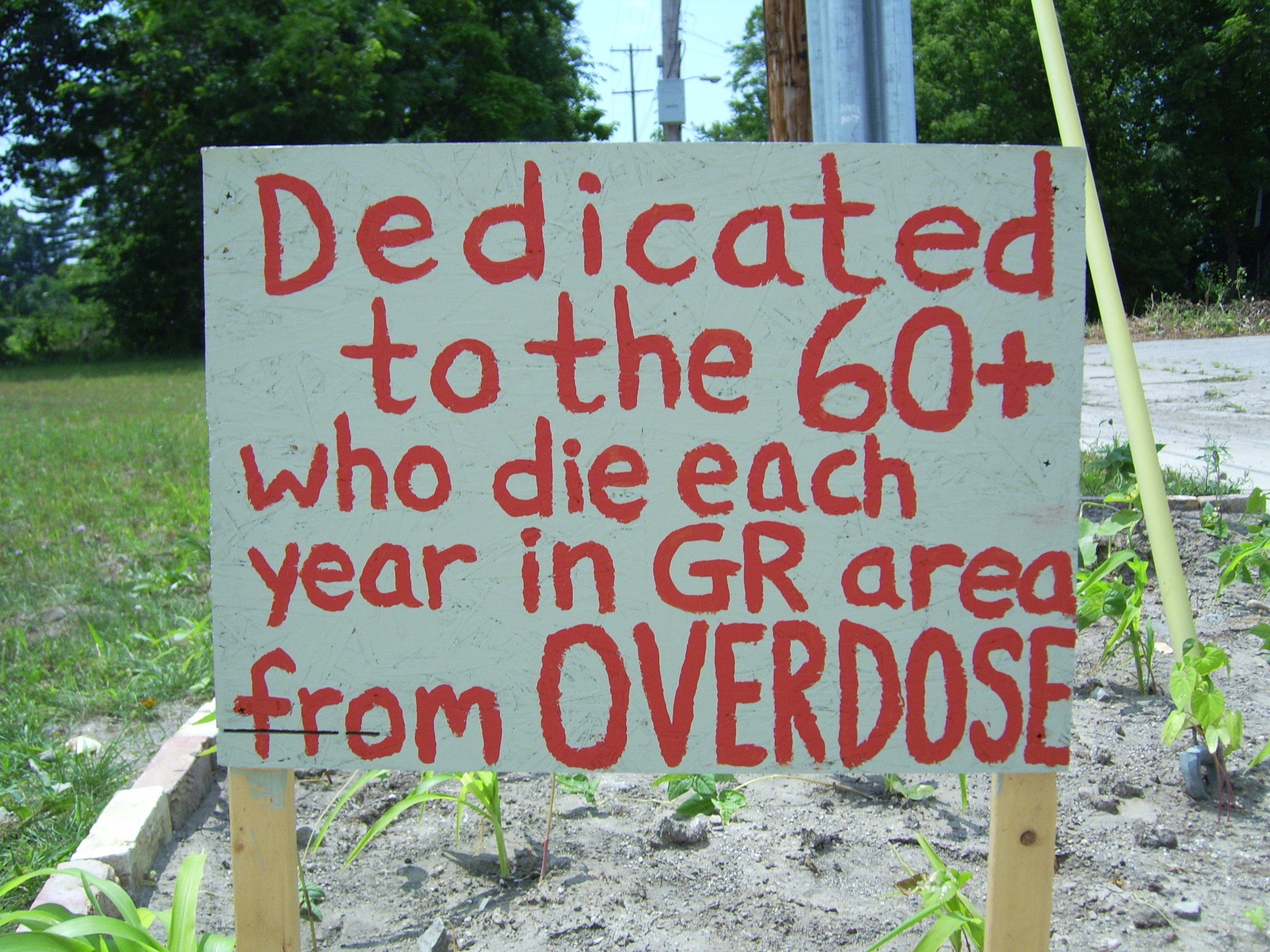
The Guerilla Garden in these pictures also shows that people wanted to make a statement about an issue they are passionate about. This Guerilla Garden contains both corn and bean plants.
Honduras, a Year After the Coup
(This article is re-posted from CounterPunch.)

At dawn one year ago, on June 28, soldiers invaded the home of Honduran President Mel Zelaya and flew him to Costa Rica. It was a frightening throwback to the days when military men, backed by a local oligarchy and often the United States, could overturn the results of democratic elections.
It would also turn out to be a pivotal moment for relations between the United States and Latin America – especially South America, where a new generation of left-of-center governments in Argentina, Bolivia, Brazil, Chile, Ecuador, Paraguay, Uruguay and Venezuela were all hoping for a new relationship with Washington. This new American president, a former community organizer, had come to Trinidad just a few months earlier and shook hands with President Hugo Chavez of Venezuela, and actually listened to his southern neighbors. He was more like us, they thought – former trade unionists, two women, an indigenous leader, a progressive catholic bishop, political outsiders for the most part.
But it was not to be. The first signal came when, on the day of the coup, the White House did not condemn it, merely calling on “all social and political actors” to respect democracy. The White House later joined other countries in condemning the coup, but there was a noticeable difference: While the OAS, the United Nations, and other international organizations called for the “immediate and unconditional” reinstatement of President Zelaya, no U.S. official would ever utter those words over the next five months.
Nor would U.S. officials join human rights organizations from throughout the hemisphere and the world in condemning the violence and repression of the Honduran dictatorship. Its security forces raided and shut down independent radio and TV stations and beat and arrested thousands of peaceful demonstrators. There were reports of torture and some opposition activists were killed in circumstances that implicated the government. Since this took place during the official campaign period for the fall elections, it made free elections impossible. The Obama Administration’s silence was deafening.
President Zelaya traveled to Washington six times during his exile, but President Obama refused to meet with him. Meanwhile, Washington blocked the Organization of American States from taking stronger actions against the Honduran dictatorship.

The United States then supported elections under the dictatorship. The OAS and European Union refused to send observers. The vast majority of the hemisphere – including Brazil, Argentina and Chile – were vehemently opposed to the elections. The Rio Group, which includes all of Latin America, signed a statement saying Zelaya’s immediate restitution to the presidency was “indispensable” to the recognition of elections. Even the right-wing governments of Panama and Colombia, and Peru – Washington’s closest allies in the region – felt obliged to sign on to the statement.
This created a rift that remains today: U.S. Secretary of State Hillary Clinton has recently been campaigning for recognition of the Honduran government, but has so far found few takers. In South America, it is only Peru and Colombia that recognize Pepe Lobo’s government – the official position of UNASUR is still non-recognition.
When Spain invited Lobo to Madrid for the EU-Latin America and Caribbean Summit in May, Ecuador, representing UNASUUR as chair at that time, protested; so did other countries including Brazil, Argentina and Venezuela. Lobo was forced to cancel his visit.
Washington’s campaign to legitimize the government that was elected under a dictatorship accelerated with the inauguration of Lobo in January. A few days after the inauguration Hillary Clinton announced that the Honduran “crisis” had been “managed to a successful conclusion” and this “was done without violence.” Two days later Clinton announced that the U.S. was restoring all assistance to Honduras despite a letter sent to her the day before by Democratic members of Congress asking her to “send a strong unambiguous message that the human rights situation in Honduras will be a critical component of upcoming decisions regarding the further normalizations of relations, as well as the resumption of financial assistance.”
The repression in Honduras has continued and perhaps worsened since the November election, with dozens of opposition activists and nine journalists murdered. On June 24, twenty-seven members of the U.S. Congress, including some of the Democratic leadership, wrote a letter to U.S. Secretary of State Hillary Clinton: “Members of social movements who oppose or criticize the government have been victims of violence and subject to ongoing intimidation. … Violations of human rights and democratic order persist in Honduras on [President Lobo’s] watch.”
There is impunity for those who carried out the coup and the repression, and the government has established a “Truth Commission” that appears set to sweep all these crimes under the rug. The general who headed the armed forces during the coup was put in charge of the state telecommunications company. He then stated that he would use his new position for intelligence gathering.
Presidents like Lula da Silva of Brazil and Michele Bachelet – who was president of Chile when South America had to fight with Washington over Honduras – take the threat of military coups seriously. They both did prison time under military dictatorships. Most of the hemisphere feels the same way. It’s about time that the United States join them and support the rights of Hondurans who are fighting for democracy, instead of fighting to legitimize a repressive regime.
Media Bites – Steve Heacock Political Ad
In this week’s Media Bites we take a look at a couple of ads by 3rd Congressional District candidate Steve Heacock. The ads take the standard approach to branding a candidate with simplistic statements and virtually no information on issues. These highly scripted ads will benefit the TV stations that air them, but do little to promote democracy. A good resource for critiquing political ads across the country, go to http://www.factcheck.org.
Some reflections on the Twilight Film Series

Having just seen the third movie in the Twilight series, I think it is time to offer some observations about one of the most popular films series in decades. Much has been written about the books turned into films and as a person with an interest in media literacy it seems useful to not only think about these films with a critical eye, but how we relate to people who are participating in the Twilight phenomenon.
The most obvious aspect of the first three films is the focus on relationships, particularly between Bella, Edward and Jake. This love triangle is so overwhelming at times that it doesn’t allow for much character development. Instead, the film keeps presenting an almost obsessive depiction of “young love,” similar to Romeo and Juliet.
However, despite all the attention to the struggle that Bella has between her infatuation for Edward and her attempts to keep Jake’s friendship, we never see her develop her own identity outside of these boys. In the first film Bella does begin to cultivate friendships, but as soon as she encounters Edward, those friendships diminish.
In the second film Bella becomes almost a recluse after Edward leaves her, until she decides to spend time with Jake. In the period right after Edward’s departure we see Bella waking up screaming or sitting in her room as the seasons change. What we don’t know is what she is feeling or how this loss has impacted how she sees herself in the world. She does write to Alice (Edward’s sister), but even in those moments there is no insight into who she is, only an echoing of her pain over losing Edward.
While one could argue that Bella can come across as a woman with strong convictions, we never know what she is like independent of a relationship. This relationship dependence and the “struggle” for Bella’s attention certainly could send strong messages to young people, particularly girls who are constantly being measured by how guys value them. This is not surprising considering the author of the Twilight books is a Mormon and believes strongly in the dominance of men.

Class & Race
If you can look beyond the obvious emphasis on relationships and young love the films also send strong messages about class and race. It is interesting that the majority of vampires are White and the Cullen family is exclusively so. They are generally presented as level headed and gracious. Edwards father is a doctor who is well respected in the community and he has raised hi family of vampires to only feed on animals, thus making them benign bloodsuckers.
The other major racial representation is that of the Native community. The Native Americans are the wolves, which often are prone to anger and short tempers. Jake’s character constantly reminds the audience of this fact. In the second film we are introduced to Paul (the leader of the wolf pack), who in a fit of anger, permanently wounds his girlfriend.

In addition, the young men who make up the wolf clan are almost always seen without a shirt on. This is what activist Jackson Katz calls the male pose, where young men of color who don’t have any economic power use their bodies as a way to compensate. We rarely see the male vampires without a shirt and their bodies are generally not presented as a weapon.
The lack of economic power is clearly depicted with the Native community. Jake lives in a very modest house and if often working on cars or motorcycles. Jakes dad is in a wheelchair and often drinks beer with Bella’s father, underscoring their working class status.

The Cullen’s however drive nice vehicles, wear more fashionable clothing and live in a very expensive house. They listen to classical music and their house is decorated with expensive art.
These dynamics are not what are central to the plot, but they are important subplots that speak volumes about how we see poor, working class minorities and people of privilege. I would argue that these messages are just as relevant and can have as much influence with audiences as the messages about relationships and sexuality, even if they are not part of the discourse on popular culture.
Club for Growth Endorses Amash for Congress
Yesterday, the Grand Rapids Press ran a front-page story announcing the endorsement of 3rd Congressional Justin Amash (Rep.) by the national group Club for Growth.

The article gets reactions from other Republican candidates in the race, as well as Bill Ballenger (Inside Michigan Politics) and Rich Robinson (Michigan Campaign Finance Network). The Press story also features photos of the other 12 candidates that are being endorsed by Club for Growth across the country, with a summary of the group’s endorsement of Tim Walberg in the 2006.
There is also some “criticism” by Republican Steven LaTourette from Ohio who says of Club for Growth, “If their goal is to increase the Democrats numbers in Congress, they’re doing a good job.” Besides this the only other “criticism” is from other 3rd Congressional candidates, which is understandable since this endorsement could be a determining factor in the August 3 primary.
However, what is missing from the story is what kind of politics Club for Growth supports. The Press story does state that they are opposed to taxes and big government, but these issues are not explored.
Club for Growth was started by men involved in the National Review magazine and the ultra-conservative think tank, the Cato Institute. According to the website Right-Wing Watch, Club for Growth has more than 9,000 members and is dominated by “Wall Street financiers and executives,” which is interesting since they have been the beneficiaries of the bailout. Doesn’t that mean that Club for Growth supported the bailout? In looking at their website, it isn’t absolutely clear that is the case, but their news posting suggest that they have been critical of the bailout.
However, there is no clear sense of what kind of tax increases they oppose, nor what they mean by big government. Does this mean that they oppose a bloated military budget, with increased spending for military hardware, private contractors and the intelligence sectors? We could find nothing on where they stand on those matters and Justin Amash is vague on where he stands regarding military spending.
Amash is featured on the Club for Growth website, but there isn’t much information on why they have endorsed him other than to say that he is pro-growth and has voted against taxes in his 2 years in the Michigan Legislature. The Press only speculates as to how much money Amash may receive from this group, but they don’t mention that as of the last federal filing date Amash leads all candidates in the 3rd Congressional district in money raised.
In electoral politics it is usually comes down to money and it would serve the public well for local news agencies to report on and explore who is bankrolling candidates and why.
Colorblind Ambition: The Rise of Post Racial Politics and the Retreat from Racial Equity
(This article is re-posted from Znet.)

It was summer 2004 when most of us first became familiar with Barack Obama. Then an Illinois state senator, the U.S. senate candidate delivered the keynote address at the Democratic National Convention in Boston: the first of his many now-famous orations on a national stage. Therein he delivered several applause lines, but none were as big as when he proclaimed:
“There’s not a black America and a white America and Latino America and Asian America; there’s the United States of America.”
Though one might welcome such a statement were it offered in the future and aspirational tense — as a heartfelt plea for true equality — Obama proclaimed it in the descriptive and present tense. In so doing he traded intellectual honesty for easy and predictable ovation. After all, 2004 was the same year that research from MIT and the University of Chicago found that job applicants with “white” names were 50 percent more likely to be called back for an interview than those with “black” names, even when all their qualifications were indistinguishable. And with black and brown unemployment standing at double the white rate, even as the new upstart from Chicago poured forth rhetoric professing national unity (and with the median white family possessing 8-10 times the net worth of the median black or Latino family), it should have been apparent that Obama was engaged in political science fiction rather than the description of sociological truth.
Post-Racial Liberalism: It’s Origins and Trajectory
To be fair, of course, the rhetoric of post-racial liberalism wasn’t something invented by the current President. Rather, it has its roots in the period immediately following the passage of civil rights laws in the 1960s. It was Daniel Patrick Moynihan, for instance — an advisor to President Johnson before becoming a United States Senator — who first suggested that the nation would do well to engage in “benign neglect” when it came to the issue of race.
According to Moynihan, persistent inequities between whites and blacks could best be addressed by the passage of race-neutral, universal programs to help all in need; that, in addition to focusing on presumed cultural defects in the black community, from single parent families to crime to an inadequate attachment to education and the labor market. While conservatives made some of the same arguments about so-called black cultural pathology during this period, what distinguished post-racial liberalism from the new cultural racism of the right was its stated commitment to reducing racial disparities, albeit by non-racial means.
By the late 1970s, the leading herald of post-racial liberalism was University of Chicago sociologist, William Julius Wilson, an African American scholar (now at Harvard) whose books, The Declining Significance of Race, and later, The Truly Disadvantaged, put forth the two main pillars of post-racial thought. The first of these was that racial inequities were now mostly the result of race-neutral factors like deindustrialization, the mismatch between jobs (increasingly in suburbs) and people of color (who lived mostly in cities), and inadequate investment in education and other public goods. The second pillar of Wilson’s position was the political calculation that white backlash to things like affirmative action now made it necessary to push universal, race-neutral solutions to those problems, rather than race-specific programs and efforts. In short, we needed to talk less about racism, and more about class.

It is this race-neutral approach (which involves both a rhetoric of racial transcendence and a colorblind public policy agenda), which Barack Obama advocated in his best-selling policy book, The Audacity of Hope. And it is this same approach that he endorsed all throughout the campaign for the Presidency, and which he has articulated consistently since winning the election. When asked about persistent health disparities between whites and blacks, for instance, Obama has maintained that universal coverage and making health care more affordable for all is the best way to close those gaps. When asked about the depression-level job situation in communities of color (in which even blacks with college degrees are nearly twice as likely as their white counterparts to be out of work, and college educated Latinos 2/3 more likely than similar whites to be unemployed), Obama has insisted that a “rising tide lifts all boats,” and so the stimulus package and other measures to get the economy “moving again” are the best remedies for the suffering of folks of color.
But as I show in my new book, Colorblind: The Rise of Post-Racial Politics and the Retreat from Racial Equity, President Obama and other adherents to the post-racial liberal philosophy are flatly wrong. In fact, not only are they wrong about the ability of “universal” programs to reduce racial disparities in health, income or education; they are also wrong about the political value of race-neutral approaches. At the end of the day, avoiding conversations about race will not boost support for progressive social policy, and may in fact undermine it.
Why Colorblind Policy Cannot Solve Racial Disparities
To begin, race-neutral policies cannot possibly solve persistent racial inequities. Because so many of those disparities are caused by racial discrimination — not merely the residue of past racism but ongoing racial discrimination in the present-day — universal efforts, though valuable, will prove insufficient. If people of color face discrimination in employment, housing, education and the provision of health care (and I document fully in Colorblind the considerable extent to which they do), economic stimulus legislation, universal health care, or better-funded schools will be inadequate to the task of closing racial gaps. Companies that get the stimulus money for construction projects, for instance, will still provide unequal opportunity to black and brown folks; doctors will continue to treat their patients of color unequally (as has been documented by numerous studies), and schools, though better funded, will continue to track students of color into remedial classes, regardless of their ability, and discipline them more harshly even though rates of misconduct are similar among all racial groups.
Perhaps the most telling evidence of the inadequacy of race-neutral, universal policy comes in the arena of health care. As I note in Colorblind, the racial gaps in health outcomes between whites and blacks, for instance, are mostly unrelated to mere issues of coverage, affordability, or health care access. In short, they are not about economics. Consider the following:
*Black women with college degrees have higher rates of infant mortality for their newborns than white women who dropped out after eighth grade; and children born to black women with college degrees have three times higher infant mortality rates for their children than similar white women.
*Black women who received early and consistent prenatal care while pregnant have infant mortality rates for their children that are nearly double the rates for white women who received no prenatal care at all.
*Black women and Latinas who come to the nation poor or lower-income actually see their health status decline over time, even as their income status typically improves. And foreign born black women (including those from the African continent) come to the U.S. with health outcomes comparable to those of white women. But after a generation, their daughters’ health status has declined to that of other African Americans.
So what is it about being black or brown in the United States that affects health, independent of economics or health care access? The research says, as mentioned above, that unequal treatment at the hands of physicians is part of the problem; but even more so, we have to look at the cumulative impact of racism on black and brown bodies over time. What the research increasingly finds is that racialized stresses, like dealing with discrimination, causes a “weathering” effect on people of color, which has repercussions for blood pressure and affects the proper functioning of the cardiovascular, metabolic and immune systems. Over 100,000 people of color die each year because of excess mortality rates relative to the rates for whites, and it appears as though a substantial amount of that excess mortality can be laid at the feet of black and brown folks’ experiences with racism. Universal, colorblind policy cannot possibly hope to remedy problems such as these.
How Colorblindness Can Make Things Worse
In fact, by refusing to talk openly about the race-specific causes of racial disparities, those who adhere to post-racial liberalism may actually worsen the extent of those disparities. First, the rhetoric of racial transcendence and the public policy agenda of colorblind universalism tend to further the already-ingrained problem of white denial. After all, if we don’t talk about a problem, it becomes easier to assume it isn’t a problem any longer. Considering how prevalent denial of racism already is among white Americans (and has been in every generation, truth be told), intensifying this “see no evil” approach can only serve to limit the extent to which we are able to do much about the reality of discrimination.
Secondly, the refusal to talk openly about racism can lead Americans to increasingly rationalize the disparities that continue to exist. So, for instance, even a young child can readily observe substantial disparities in the United States, which play out across racial lines. They can see that where people tend to live, where they tend to go to school, and what kinds of jobs they tend to have, often have a distinct racial cast to them. If the society in which these children live is actively discussing and seeking to remedy the reasons for those disparities, including discrimination in the present and the inertia of past injustice, then those children can develop a fairly nuanced understanding of how things got to be the way they are, and how we might solve the problem. But if we are actively de-emphasizing the discussion of racism and discrimination — in other words, if we are stripping away the context necessary to understand the phenomena those children are observing — young people will likely grow up assuming that inequity is “just the way things are,” or worse, that the disparities must be due to some people just being “better” than others. In short, post-racial liberalism in the name of colorblindness can enhance racially-biased thinking: the ultimate irony.
Finally, since the right continues to hammer racialized themes in their attacks against progressive public policy, the decision by erstwhile liberals to avoid discussing race only serves as a form of unilateral disarmament in the face of conservative race-based bullying. If the right continues to accuse the President, for instance, of only pushing health care as a form of reparations for slavery (as Glenn Beck has said), or of “hating white people” (Beck again), or of being “more an African colonial despot” than an American (as Rush Limbaugh has proclaimed) it is doubtful that his decision to avoid discussing race will help him much. The right will continue to push buttons of white racial resentment, no matter what Obama does. To not push back, or worse, to deny as he has the obvious — that much of the intense hatred for his agenda is due to racial bias — only makes the president appear weak. In this sense, post-racial liberalism isn’t even astute politics.
Why Post-Racial Liberalism is NOT Good Political Strategy
Contrary to the claims of post-racial liberals, colorblind policy efforts like universal health care or jobs programs do not truly help build support for progressive social policy. In large part this is because even universal efforts at social uplift for the “have nots” tend to be perceived as racial handouts by large segments of the white public.
For forty years, the rhetoric around any policy intended to improve life for those who are struggling economically has been racialized, so much so that international comparisons of social program spending and public attitudes have found that the biggest reason why the United States has a more paltry system of social support for the poor, relative to our European counterparts, is the perception that here, blacks will abuse whatever programs exist. In other words, white racial resentment and bias causes large numbers of white Americans to “hear” black and brown people, even when a politician like President Obama isn’t talking in racialized terms. So health care becomes a “giveaway” for “illegal aliens” or “lazy welfare recipients” (almost always perceived as black).
Further suggesting the extent to which whites attach racialized meaning to Obama’s health care efforts (no matter how deracialized he tried to make them), consider the results of one recent study, in which even whites with high levels of racial bias supported the Obama plan so long as it was described to them as Bill Clinton’s health care reform proposal. In the study, support among these whites plummeted once they learned that the plan in front of them was Barack Obama’s.
Interestingly, the research suggests that it is precisely when the racialized aspect of an issue or dispute is allowed to remain sublimated and below the surface that it tends to have the greatest ability to control people’s opinions and actions. In other words, by allowing whites to remain behind a veil of racial innocence, in which place they are not made to confront the possibility that their opposition to things like health care might be due to racial resentment, post-racial rhetoric and policy discussions actually allow the subtle biases that are often at the root of that opposition to go unchecked. According to the evidence, talking openly about race and the extent to which racism might motivate some of that opposition–though it might make people angry in the short run–also tends to subconsciously prime more egalitarian thoughts and behavior.
Because most whites don’t want to be racist, or act on the basis of racialized biases, they are often keen to rethink their positions when confronted with the possibility that they may be doing just that. Post-racial liberalism, however, reduces the likelihood that white Americans will be forced to confront the gaps between their professed and perhaps heartfelt beliefs, and their implicit biases, and thus resolve the contradiction between what they say and what they do.
An Alternative to Colorblindness: Illuminated Individualism
In response to the growth of post-racial liberalism, I propose an alternative paradigm for thought and action: one that is in keeping with what the most recent research from the field of psychology tells us works for confronting our own racial biases, and what the sociological research tells us we need to do from a systematic perspective. This paradigm I call, Illuminated Individualism.
Illuminated individualism is based on the premise that our individual identities, experiences and perceptions are profoundly shaped by our group identities, including but not limited to our racial group. To be white, or a person of color means something. Thus, neither the abstract individualism peddled by the right, or the “we’re all in this together” universalism of post-racial liberals, truly captures the current reality of life in the United States. In order to treat people as the individuals they are, we will have to take account of the lives they actually lead, and in part this means understanding the role of racism in our lives, and the extent to which our own perceptions and biases have been ingrained within a group context.
The research in this area is clear: only by recognizing the extent to which we have been conditioned to internalize racial biases can we hope to check and interrupt discriminatory behaviors. According to the best available evidence, when we make race salient, and raise the specter of possible racism (in a jury deliberation, job interview process, or other settings) we are actually more careful to act fairly and deliberately, and take special pains not to discriminate. Studies have found, for instance, that large numbers of whites (and even large numbers of people of color) have deep-seated implicit biases against blacks and in favor of whites. Because these are often held subconsciously they are difficult if not impossible to notice or interrupt unless one has been trained to think about them, excavate them and challenge them. But this necessitates, quite obviously, a race-conscious, not colorblind or race-neutral approach.
The good news is, when we call out racial biases in society and ourselves, we can in fact reduce the likelihood of acting on the basis of those biases. Anti-racism, in other words, takes practice. It takes deliberate efforts to check ourselves at every possible turn: as teachers in the classroom, employers during a job interview, police officers on the street, loan officers at the bank, and as parents in our homes.
And many of the things we can do to practice this color-conscious approach take no special government effort: rather, they are things we can do, each of us, individually and collectively in the institutional spaces where we operate each day. Among these, we can have open conversations with our children about racism and discrimination, past and present; we can make having experience in multiracial settings, and having a proven commitment to racial equity in the workplace or school a bona fide qualification requirement for jobs or slots in colleges. After all, in a twenty-first century in which the nation will become increasingly of color, whites who are either uncomfortable in cross-racial settings or inadequately committed to equity will become professional liabilities for institutions, actually impeding their ability to function.
Furthermore, we can train teachers in methods for creating equity in the classroom — methods that, according to the research, require a color-conscious approach that takes full account of the way young people experience race and racism — and push for public policies that reflect an understanding of the ongoing problem of racial bias. Among these: we can advocate for the declaration of racism as a public health issue (which would help facilitate funding for anti-bias training among physicians and in medical schools); we can fight for the requiring of racial impact statements before passing public policies that might have a disparate impact on different racial groups, and we can get serious about punishing companies that engage in discrimination.
In short, by recommitting ourselves to a public and private discourse that challenges racism and discrimination head on — and that challenges us to rise to the better angels of our natures rather than remaining stuck in denial, silence, and political calculations that in the end aren’t even strategically wise — we can get back on track in the struggle for racial equity. It’s a struggle worthy of our attention still, despite the ways in which we’ve sometimes obscured its importance over the past forty years.
Crises of Capitalism Animated
In this RSA Animate, radical sociologist David Harvey asks if it is time to look beyond capitalism towards a new social order that would allow us to live within a system that really could be responsible, just, and humane?
This is based on a lecture at the RSA (www.theRSA.org).
Frederick Douglas on the 4th of July
As the nation prepares to celebrate the 4th of July, we thought it would be fitting to reprint a speech that the great abolitionist Frederick Douglas gave in 1852. His words still ring true for today, you just need to replace slavery with immigrants, people who have had their homes foreclosed, the unemployed/underemployed/overworked, people within the prison industrial complex and those around the world who have felt the brutality of US wars of occupation.
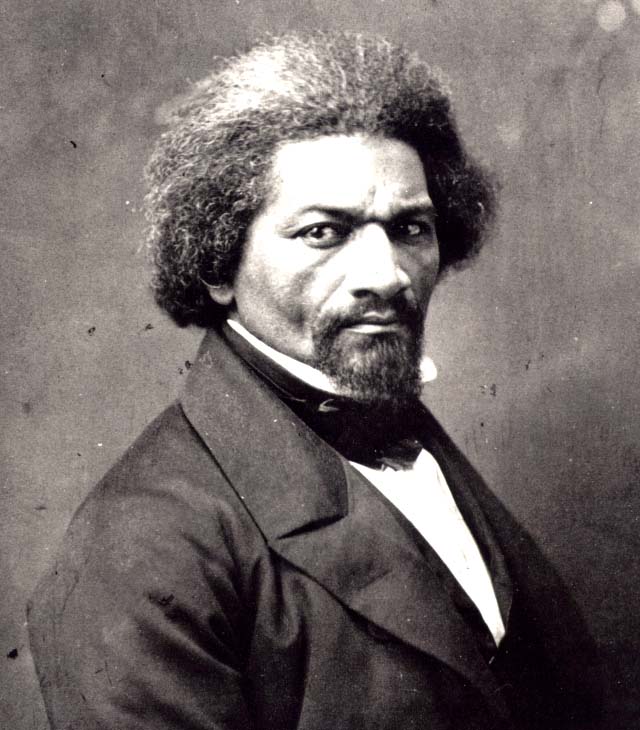
Fellow citizens, pardon me, and allow me to ask, why am I called upon to speak here today? What have I or those I represent to do with your national independence? Are the great principles of political freedom and of natural justice, embodied in that Declaration of Independence, extended to us? And am I, therefore, called upon to bring our humble offering to the national altar, and to confess the benefits, and express devout gratitude for the blessings resulting from your independence to us?
Would to God, both for your sakes and ours, that an affirmative answer could be truthfully returned to these questions. Then would my task be light, and my burden easy and delightful. For who is there so cold that a nation’s sympathy could not warm him? Who so obdurate and dead to the claims of gratitude, that would not thankfully acknowledge such priceless benefits? Who so stolid and selfish that would not give his voice to swell the hallelujahs of a nation’s jubilee, when the chains of servitude had been torn from his limbs? I am not that man. In a case like that, the dumb might eloquently speak, and the “lame man leap as an hart.”
But such is not the state of the case. I say it with a sad sense of disparity between us. I am not included within the pale of this glorious anniversary! Your high independence only reveals the immeasurable distance between us. The blessings in which you this day rejoice are not enjoyed in common. The rich inheritance of justice, liberty, prosperity, and independence bequeathed by your fathers is shared by you, not by me. The sunlight that brought life and healing to you has brought stripes and death to me. This Fourth of July is yours, not mine. You may rejoice, I must mourn. To drag a man in fetters into the grand illuminated temple of liberty, and call upon him to join you in joyous anthems, were inhuman mockery and sacrilegious irony. Do you mean, citizens, to mock me, by asking me to speak today? If so, there is a parallel to your conduct. And let me warn you, that it is dangerous to copy the example of a nation (Babylon) whose crimes, towering up to heaven, were thrown down by the breath of the Almighty, burying that nation in irrecoverable ruin.
Fellow citizens, above your national, tumultuous joy, I hear the mournful wail of millions, whose chains, heavy and grievous yesterday, are today rendered more intolerable by the jubilant shouts that reach them. If I do forget, if I do not remember those bleeding children of sorrow this day, “may my right hand forget her cunning, and may my tongue cleave to the roof of my mouth!”
To forget them, to pass lightly over their wrongs and to chime in with the popular theme would be treason most scandalous and shocking, and would make me a reproach before God and the world.
My subject, then, fellow citizens, is “American Slavery.” I shall see this day and its popular characteristics from the slave’s point of view. Standing here, identified with the American bondman, making his wrongs mine, I do not hesitate to declare, with all my soul, that the character and conduct of this nation never looked blacker to me than on this Fourth of July.
Whether we turn to the declarations of the past, or to the professions of the present, the conduct of the nation seems equally hideous and revolting. America is false to the past, false to the present, and solemnly binds herself to be false to the future. Standing with God and the crushed and bleeding slave on this occasion, I will, in the name of humanity, which is outraged, in the name of liberty, which is fettered, in the name of the Constitution and the Bible, which are disregarded and trampled upon, dare to call in question and to denounce, with all the emphasis I can command, everything that serves to perpetuate slavery — the great sin and shame of America! “I will not equivocate – I will not excuse.” I will use the severest language I can command, and yet not one word shall escape me that any man, whose judgment is not blinded by prejudice, or who is not at heart a slave-holder, shall not confess to be right and just.
But I fancy I hear some of my audience say it is just in this circumstance that you and your brother Abolitionists fail to make a favorable impression on the public mind. Would you argue more and denounce less, would you persuade more and rebuke less, your cause would be much more likely to succeed. But, I submit, where all is plain there is nothing to be argued. What point in the anti-slavery creed would you have me argue? On what branch of the subject do the people of this country need light? Must I undertake to prove that the slave is a man? That point is conceded already. Nobody doubts it. The slave-holders themselves acknowledge it in the enactment of laws for their government. They acknowledge it when they punish disobedience on the part of the slave. There are seventy-two crimes in the State of Virginia, which, if committed by a black man (no matter how ignorant he be), subject him to the punishment of death; while only two of these same crimes will subject a white man to like punishment.
What is this but the acknowledgment that the slave is a moral, intellectual, and responsible being? The manhood of the slave is conceded. It is admitted in the fact that Southern statute books are covered with enactments, forbidding, under severe fines and penalties, the teaching of the slave to read and write. When you can point to any such laws in reference to the beasts of the field, then I may consent to argue the manhood of the slave. When the dogs in your streets, when the fowls of the air, when the cattle on your hills, when the fish of the sea, and the reptiles that crawl, shall be unable to distinguish the slave from a brute, then I will argue with you that the slave is a man!
For the present it is enough to affirm the equal manhood of the Negro race. Is it not astonishing that, while we are plowing, planting, and reaping, using all kinds of mechanical tools, erecting houses, constructing bridges, building ships, working in metals of brass, iron, copper, silver, and gold; that while we are reading, writing, and ciphering, acting as clerks, merchants, and secretaries, having among us lawyers, doctors, ministers, poets, authors, editors, orators, and teachers; that we are engaged in all the enterprises common to other men — digging gold in California, capturing the whale in the Pacific, feeding sheep and cattle on the hillside, living, moving, acting, thinking, planning, living in families as husbands, wives, and children, and above all, confessing and worshipping the Christian God, and looking hopefully for life and immortality beyond the grave — we are called upon to prove that we are men?
Would you have me argue that man is entitled to liberty? That he is the rightful owner of his own body? You have already declared it. Must I argue the wrongfulness of slavery? Is that a question for republicans? Is it to be settled by the rules of logic and argumentation, as a matter beset with great difficulty, involving a doubtful application of the principle of justice, hard to understand? How should I look today in the presence of Americans, dividing and subdividing a discourse, to show that men have a natural right to freedom, speaking of it relatively and positively, negatively and affirmatively? To do so would be to make myself ridiculous, and to offer an insult to your understanding. There is not a man beneath the canopy of heaven who does not know that slavery is wrong for him.
What! Am I to argue that it is wrong to make men brutes, to rob them of their liberty, to work them without wages, to keep them ignorant of their relations to their fellow men, to beat them with sticks, to flay their flesh with the lash, to load their limbs with irons, to hunt them with dogs, to sell them at auction, to sunder their families, to knock out their teeth, to burn their flesh, to starve them into obedience and submission to their masters? Must I argue that a system thus marked with blood and stained with pollution is wrong? No – I will not. I have better employment for my time and strength than such arguments would imply.
What, then, remains to be argued? Is it that slavery is not divine; that God did not establish it; that our doctors of divinity are mistaken? There is blasphemy in the thought. That which is inhuman cannot be divine. Who can reason on such a proposition? They that can, may – I cannot. The time for such argument is past.
At a time like this, scorching irony, not convincing argument, is needed. Oh! had I the ability, and could I reach the nation’s ear, I would today pour out a fiery stream of biting ridicule, blasting reproach, withering sarcasm, and stern rebuke. For it is not light that is needed, but fire; it is not the gentle shower, but thunder. We need the storm, the whirlwind, and the earthquake. The feeling of the nation must be quickened; the conscience of the nation must be roused; the propriety of the nation must be startled; the hypocrisy of the nation must be exposed; and its crimes against God and man must be denounced.
What to the American slave is your Fourth of July? I answer, a day that reveals to him more than all other days of the year, the gross injustice and cruelty to which he is the constant victim. To him your celebration is a sham; your boasted liberty an unholy license; your national greatness, swelling vanity; your sounds of rejoicing are empty and heartless; your shouts of liberty and equality, hollow mock; your prayers and hymns, your sermons and thanksgivings, with all your religious parade and solemnity, are to him mere bombast, fraud, deception, impiety, and hypocrisy – a thin veil to cover up crimes which would disgrace a nation of savages. There is not a nation of the earth guilty of practices more shocking and bloody than are the people of these United States at this very hour.
Go search where you will, roam through all the monarchies and despotisms of the Old World, travel through South America, search out every abuse and when you have found the last, lay your facts by the side of the everyday practices of this nation, and you will say with me that, for revolting barbarity and shameless hypocrisy, America reigns without a rival.
Gubernatorial candidate spending in West Michigan

At one time in American history election “season” may have represented our great democratic process in action. These days however election time typically consists of months and months of establishment candidates calling each other names and making tons of empty promises. Election time also consists of television and radio consumers being totally overwhelmed with those same establishment candidate’s paid advertising. While the stations that run the ads are regulated by the FCC to have the information regarding who bought the ads and for how much available to the public, the actual data is rarely reported on, as GRIID has noted in the past.
On Thursday afternoon a couple of us from GRIID visited the offices of WOOD TV 8, Fox 17, and WZZM to request their files on paid political advertising. While we experienced no hostility from any of the staff at the stations, it was quite obvious that they get few requests from anyone to actually view these files. While it is not incredibly surprising that most citizens would not spend time on this, it seems as though our local media should be reporting on the amount of money the candidates are spending. To this reporter, therein lies one of the major flaws of our for-profit media system. These stations are supposed to report news and hold candidates accountable. However, they are also receiving millions of dollars in revenue from those same candidates by running these ads.
Obviously the most striking part of the research was the numbers themselves. Currently only three gubernatorial candidates have bought advertising in the Grand Rapids market, all of them Republican. The numbers are as follows: Attorney General Mike Cox has run 446 spots, totaling $210,480 in expenditures. Ann Arbor businessman Rick Snyder has run 858 paid spots totaling $289,518. Representative Pete Hoekstra has run only 29 spots, totaling $4,415.
WOOD TV8/WOTV/WXSP
Cox – 163 spots $124060
Hoekstra – 2 spots $550
Snyder – 442 spots $178,105
WXMI 17
Cox – 57 spots $30,010
Hoekstra – 1spot $50
Snyder – 80 spots $47,606
WZZM 13
Cox – 226 spots $55850
Hoekstra – 26 spots $3815
Snyder – 336 spots $63,407
All three of the candidates have at least paid lip service to the ideas of “fiscal responsibility” and ending wasteful spending. However when presented with these numbers it is difficult to see how there is anything responsible about spending hundreds of thousands of dollars to be able to spew thirty seconds of rhetoric. Another bit of information contained in the files were the agencies that produced the advertisements for the candidates. Seeing as how they are running for governor of Michigan, one might think they would use agencies located in this state. However none of the candidates did. Snyder’s ads were all produced by Target Enterprises, located in Encino, California. Hoekstra used the agency Kelly, Scott, and Madison Inc. out of Chicago. Cox’s ads were produced by Strategic Media in Delaware, Ohio.
It is also worth noting that the primary is still a month away, so all of these candidates are fighting each other to simply get the Republican Party nomination. Despite the fact that there will be fewer candidates after the primary, it is reasonable to assume that there will be an upswing in paid advertising. Another interesting point was that none of the Democratic Party candidates have run any ads in the Grand Rapids market. That is certainly quite telling about how the Democrats view their chances to keep the governorship come November.
The last thing worth mentioning is that a group calling themselves The Coalition for American Jobs ran a series of ads on Fox 17 totaling $6,000 in expenditures. The group’s web site has vague information about who they are, merely saying “We represent American businesses, industries and others concerned about the impact of potential EPA action on job creation, including the growth of green jobs”. The web site Grist provides some insight into this obvious corporate front group.
Like many Americans, my disgust with the shallowness of our mainstream political culture has only grown over the years. Armed now with the knowledge of how much money the candidates spend to produce these vapid advertisements, I am thoroughly ashamed.
(This article is re-posted from Reuters.)
The House of Representatives approved funds on Thursday to pay for President Barack Obama’s Afghanistan troop increase but also voted to signal growing unhappiness with the war among his fellow Democrats.

The House’s Democratic leaders, who had procrastinated for weeks over the bill, did not act in time to get the $33 billion to the troops by July 4 as the Pentagon had requested.
An amendment demanding an exit timetable from Afghanistan failed, but got 162 votes, the biggest anti-war vote in the House on Afghanistan to date. All but nine of the supporters were Democrats, and included House Speaker Nancy Pelosi.
House leaders added billions of dollars in non-military spending before passing the war funds, so the measure must now return to the Senate. It passed the troop funds and its own set of disaster relief add-ons in May.
Both chambers must agree to the same legislation before it can go to Obama for his signature into law. But the Senate is not in session again until July 12, and it is unclear how it will view the additions the House has made.
Pentagon chief Robert Gates said recently the money for 30,000 additional troops to Afghanistan should be approved by July 4 to avoid the Pentagon having to juggle accounts and possibly lay off civilians while continuing war operations.
Still it seemed a wonder the new money for the unpopular war got through the House at all, after long arguments among Democratic lawmakers over whether and how to do it. They set up a complicated series of votes in which the non-military spending passed 239-182, while the part containing the war funding passed 215-210.
“I do not believe this war is anything but a fool’s errand. If I had my way, I would never bring this to the floor,” declared House Appropriations Committee Chairman David Obey, who is in charge of spending legislation in the chamber.
The last two weeks have thrown an especially harsh light on the war effort, with new reports of corruption in President Hamid Karzai’s government, and a change in the commander of U.S. forces and multinational forces in Afghanistan.
The House-approved bill includes nearly $4 billion in economic aid to Afghanistan and its neighbor, Pakistan.
The war funds are in addition to $130 billion Congress has already approved for Afghanistan and Iraq this year.
DAY OF DRAMA
Key members of the Democratic majority decided to let the legislation go to the House floor Thursday evening after adding the money for domestic U.S. programs they favored.
There was $10 billion to help avert teacher layoffs, $700 million for security on the border with Mexico and $142 million to help the oil-sullied Gulf Coast. Cuts were proposed to other programs to offset the spending.
“If American money is going to be building a nation, I’d like it to be mine,” said Representative Louise Slaughter, chairwoman of the powerful Rules Committee, before the vote.
She complained that the United States has already spent too much on the Afghan war — some $345 billion, according to the nonpartisan Congressional Budget Office — and needed to pay attention to its own economic problems and mounting debt.
But while the extra cash helped bring in Democratic votes, it turned off Republicans who generally supported Obama’s surge but also expressed concern about rising U.S. debt.
“I think this is disgraceful,” said House Republican Leader John Boehner. He said Republicans had promised to vote for war funds so long as the bill was “clean,” without any add-ons.
“We promised the president we would help pass this bill,” Boehner said. “There was never any working together to try to make sure that our troops have what they needed in a timely fashion.”
The White House joined in the drama by threatening to veto the final version of the bill if lawmakers do not put back $800 million in education program cuts in the non-military part.
The White House also said any legislation that would undermine Obama’s ability to conduct military operations in Afghanistan would draw a veto.
The House rejected amendments that would strike military funding from the bill or limit funds to a pullout. Longtime war opponents complained that lawmakers were still afraid to pull the plug on the war.
“Why are we continuing to send our troops into a Mission Impossible?” asked Rep. Dennis Kucinich, a liberal Democrat.

