Dow Chemical and the Greenwashing of the Olympics

Recently it was announced that the Michigan-based company Dow Chemical will be the official “chemistry company” of the Olympic Games. West MiBiz made this announcement in one of their weekly updates that the chemical company would be a corporate sponsor of the Olympic Games through 2020.
According to the Detroit News, “Jacques Rogge, president of the International Olympic Committee, praised Dow’s innovation and commitment to sustainability in an announcement in New York Friday.” This is clearly another example of corporate green-washing, where a company with an atrocious track record is hoping to buy public opinion by sponsoring the Olympics.
If we had serious journalism in this country reporters would first probably fall out of their seats at such an announcement by Dow Chemical and then they would provide the public with an honest assessment of Dow’s “innovation.”
Dow Chemical is the largest chemical company in the US and the second largest in the world. Their pesticides and other chemicals they have produced have left a toxic legacy that will impact generations to come. One of those pesticides is called chlorpyrifos and was first used as a nerve gas during WWII. Dow turned it into pesticides that were used in the home and eventually by agribusiness. The side effects of this chemical are cancer, birth defects and other reproductive problems.
Dow also has a history of war profiteering. During the US invasion and bombing of Vietnam Dow developed (along with Monsanto) Agent Orange. Agent Orange is a herbicide used by the US military to destroy plant life that provided cover for the Viet Cong. However, Agent Orange has left a toxic legacy of millions contaminated, deformed or dead throughout Southeast Asia.

In addition, Dow developed the use of Napalm and made millions by selling it to the US government for its use in their counter-insurgency war in Vietnam. One Vietnam Veteran recounts in graphic detail how Dow developed Napalm to make it a lethal weapon used on civilians.
“We sure are pleased with those backroom boys at Dow. The original product wasn’t so hot – if the gooks (Vietnamese) were quick they could scrape it off. So the boys started adding polystyrene – now it sticks like shit to a blanket. But then if the gooks jumped under water it stopped burning, so they started adding Willie Peter (white phosphorus) so’s to make it burn better. It’ll burn under water now. And just one drop is enough; it’ll keep on burning right down to the bone so they die anyway from phosphorus poisoning.”
So, when an Olympic official praises Dow for its commitment to sustainability we need to recognize that we are being manipulated.
Some suggestions for Dow’s Olympic sponsorship might be a 100 meter try to out-run napalm being dropped from planes event. This would really inspire a fast race as people would be running for their lives. There could also be an Agent Orange relay race, where people born with deformities from exposure to the chemical could compete. This would involve people with missing limbs or deformed lungs due to Dow’s creation of Agent Orange and contestants could crawl or roll across the finish line.
What We Are Reading
Below is a list of books that we have read in recent weeks. The comments are not a review of the books, instead sort of an endorsement of ideas and investigations that can provide solid analysis and even inspiration in the struggle for change. All these books are available at The Bloom Collective, so check them out and stimulate your mind.
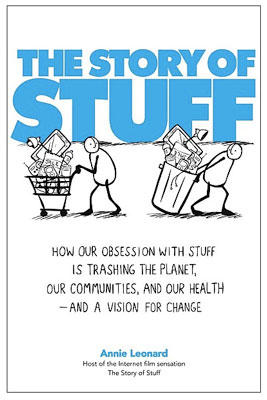
The Story of Stuff: How Our Obsession With Stuff is Trashing the Planet, Our Communities, and Our Health – And a Vision for Change, by Annie Leonard. This book is a more detailed investigation than the animated video that Annie Leonard produced called the Story of Stuff. The author provides a great deal more material to make her case about the human and environmental cost of consumerism. During the process of researching and writing this book Leonard came to the conclusion what she was ultimately critiquing was Capitalism. Well written, good documentation and excellent examples of people and movements that are challenging our current economic model.
 The Bomb, by Howard Zinn – This short book consists of two essays from radical historian Howard Zinn on the realties of modern warfare and dropping bombs on civilian populations. The first essay is Zinn’s investigation into the US bombing of Hiroshima, with the second essay looking at the bombing of the French town of Royan. These two essays were not just academic exercises for Zinn. He flew planes during WWII and was on the mission that dropped bombs on Royan and his time in the military was ended because of Hiroshima. Zinn not only excavates for us the truth of these bombings, he offers a confession of sorts for how these experiences radically changed hi life.

The Citizen Machine: Governing by Television in 1950s America, by Anna McCarthy. The Citizen Machine is a fresh, new look into the role that powerful sectors in US society played in determining the use of TV during the 1950s. McCarthy looks at how the DuPont corporation, the National Association of Manufacturers, the Ford Foundation and the AFL-CIO all used TV as a meaning of trying to influence public opinion and develop “citizens” in a narrowly constructed sense. By sifting through TV shows and documents from the 1950s, McCarthy provides us with an insight into how elite sectors of society wanted to use TV to fashion how Americans would see themselves and even how the world might view this country.

Bad Sports: How Owners Are Ruining the Games We Love, by Dave Zirin – Left sports writer and host of the radio show Edge of Sports, Dave Zirin, has done it again. Bad Sports is an excellent analysis of modern sports owners and why anyone who cares of social justice should care. Zirin not only appeals to sports fans whose teams have been transformed by greedy owners, he appeals to people who care about how corporate greed, the misuse of public tax money and urban development impacts us all. This collection of essays examines specific professional sports team owners in cities across the country, including a chapter on the owner of the NBAs Orlando Magic, Richard DeVos. Zirin concludes the book with a refreshing essay on the Green Bay Packers since the community owns the team. This powerful contrast of ownership demonstrates that public ownership is far superior to private ownership and can act as a model for how we deal with things like energy and transportation.
BP’s Environmental Racism
(This article by Robert Bullard is re-posted from OpEdNews.com.)
 For three months the nation watched and held its breadth as the busted British Petroleum (BP) well spewed as much as 60,000 barrels (2.5 million gallons) of oil into the Gulf of Mexico every day. Government officials estimate that the ruptured well leaked between 94 million and 184 million gallons of oil into the Gulf, surpassing the record-setting, 140-million gallon Ixtoc I spill off Mexico’s coast from 1979 to 1980.
Clearly, the massive BP oil spill disaster has created an environmental nightmare on the Gulf Coast from Florida to Texas. According to National Oceanic and Atmospheric Administration (NOAA), the government closed more than 81,181 square miles in the Gulf to fishing, which is approximately 33.5 percent of Gulf of Mexico federal waters. The spill fouled 120 miles of U.S. coastline, imperiled multibillion fishing and tourism industries and killed birds, sea turtles and dolphins. The full health, environmental, and economic impact of this catastrophe may not become clear for decades.
While the media spotlight has focused attention on efforts at stopping the massive oil leak and cleaning up the spill, the same level of attention has not been given to where the oil-spill clean-up waste is eventually dumped–even after an Associated Press spot check showed mishandling of waste and shoddy disposal work. Before one drop of oil was cleaned up, black people were asking “where will the oil- spill waste go after it has been collected from the beaches and skimmed off the water?” The answer: solid waste landfills. Concern mounted about which communities would be selected as the final resting place for BP’s garbage. Because of the size of the massive oil spill, even white communities in the Gulf Coast began asking this same question, “where is the waste going?”
Given the sad history of waste disposal in the southern United States, it should be no surprise to anyone that the BP waste disposal plan looks a lot like “Dumping in Dixie,” and has become a core environmental justice concern , especially among low-income and people of color communities in the Gulf Coast–communities whose residents have historically borne more than their fair share of solid waste landfills and hazardous waste facilities before and after natural and man-made disasters.
For decades, African American and Latino communities in the South became the dumping grounds for all kind of wastes–making them “sacrifice zones.” Nowhere is this scenario more apparent than in Louisiana’s “Cancer Alley,” the 85-mile stretch along the Mississippi from Baton Rough to New Orleans. Gulf Coast residents, who have for decades lived on the fenceline with landfills and waste sites, are asking why their communities are being asked again to shoulder the waste disposal burden for the giant BP oil spill. They are demanding answers from BP and the EPA in Washington, DC and the EPA Region 4 office in Atlanta and EPA Region 6 office in Dallas–two EPA regions that have a legacy of unequal protection, racial discrimination, and bad decisions that have exacerbated environmental and health disparities.

A large segment of the African American community was skeptical of BP, the oil and gas industry, and the government long before the disastrous Gulf oil disaster, since black communities too often have been on the receiving end of polluting industries without the benefit of jobs and have been used as a repository for other people’s rubbish. It is more than ironic that black and other communities of color get BP’s garbage, while mostly white companies rake in the millions in BP contracts. It does not take a rocket scientist to figure out this inequitable flow of benefits.
An NAACP investigation this month concluded that “Community members and business owners [of color] have been locked out of access to contracts for cleanup and other opportunities related to addressing this disaster.” Using the latest Federal Procurement Data System (FPDS) information (July 9, 2010), environmental writer Brentin Mock reports that “minorities see little green in BP oil spill jobs.” He finds only $2.2 million of $53 million in federal contracts, a paltry 4.8 percent, has actually gone to small, disadvantaged businesses. Women-owned businesses received 4.2 percent of contracts. And of the 212 vendors with contracts, just two are African American, 18 are minority-owned, none are historically black colleges or universities (HBCUs), despite the three in New Orleans alone: Xavier University, Dillard University and Southern University at New Orleans.
In mid-June, environmental justice and equity concerns were aired on an EPA conference call meeting “attended” by more than 370 callers. EPA Administrator Lisa P. Jackson, who was on the call for 30 minutes, emphasized that environmental justice was a priority and she indicated that her agency has added staffers to the Joint Information Center to work specifically on environmental justice concerns in day-to-day operations.
In an August 2009 letter to environmental justice stakeholders, Mathy Stanislaus, EPA assistant administrator for the Office of Solid Waste and Emergency Response (OSWER), posited some key questions and challenges for his office. One question seems especially relevant for the BP spill. Stanislaus, asks, “How can we develop better strategies for handling waste or cleaning up contaminated sites?” The answer is simple: make the strategies fair, just, and equitable without regard to race color or national origin, or income status.
African American communities in the Gulf Coast still see the “PIBBY” (Place in Blacks Back Yard) principle operating that allows a disproportionate share of black communities to be targeted for BP oil-spill waste disposal. Gulf Coast residents who live on the fenceline with landfills are determined not to see past mistakes repeated where waste from a major industrial accident or disaster get dumped on poor and politically powerless African American communities.
We saw this pattern emerge more than twenty-five years ago with toxic the dumping of PCB-waste cleaned up from roadways and later dumped in a landfill in mostly black and poor Warren County, North Carolina in 1982. We also saw the pattern continue in 2009 when 3.9 million tons of toxic coal ash from the massive Tennessee Valley Authority (TVA) power plant spill in East Tennessee were cleaned up and shipped more than 300 miles south by train and disposed in a landfill in rural and mostly black Perry County, Alabama.
Today, we are seeing this disturbing pattern re-emerge in the disposal of the BP oil-spill waste. Because of the haphazard handling and disposal of the wastes from the busted well, the U.S Coast Guard and the U.S. EPA leaned on BP and increased their oversight of the company’s waste management plan. BP’s waste plan, “Recovered Oil/Waste Management Plan Houma Incident Command,” was approved on June 13, 2010. The company hired private contractors, including Waste Management, Inc., the nation’s largest trash hauler, to cart away and dispose of thousands of tons of polluted sand, crude-coated boom and refuse that washed ashore. At the beginning of July, waste haulers sent more than 3,913 tons of oil garbage to landfills in Alabama, Florida, Louisiana, and Mississippi.
Although the U.S. EPA has made environmental justice one of its seven priorities, no environmental justice or equity analysis has been conducted as to where the BP oil-spill clean-up waste ends up. The approved Gulf Coast solid waste landfills (Subtitle D landfills) and the percent minority residents living within a one-mile radius of the facilities are listed below:
ALABAMA
Chastang Landfill (Waste Management Inc.), Mount Vernon, AL (56.2%)
Magnolia Landfill (Waste Management Inc.), Summerdale, AL (11.5%)
Timberland Landfill (Allied Waste), Brewton, AL (15.4%)
FLORIDA
Springhill Regional Landfill (Waste Management, Inc.), Campbellton, FL (76.0%)
LOUISIANA
Colonial Landfill (Allied Waste), Ascension Parish, LA (34.7%)
Jefferson Parish Sanitary Landfill (Waste Management, Inc.), Avondale (51.7%)
Jefferson Davis Parish Landfill (Allied Waste), Welsh, LA (19.2%)
River Birch Landfill (Waste Management, Inc.), Avondale, LA (53.2%)
Tide Water Landfill (Environmental Operators LLC), Venice, LA (93.6%)
MISSISSIPPI
Central Landfill (Waste Management, Inc.), Pearl River, MS (5.0%)
Pecan Grove Landfill (Waste Management, Inc.), Harrison, MS (12.5%)
Even as the Obama administration oversees BP’s waste management plan, the oil giant been allowed to dump oil-spill waste on a disproportionately large share of African Americans and other people of color communities in the Gulf Coast states. This targeting of people of color for BP oil-spill waste is consistent with past practices in the region.
Generally, it has been more of the same when it comes to disposal of oil-spill waste. African Americans and other people of color comprise a majority of the residents living within a one-mile radius in five of the nine landfills (56%) where BP oil-spill waste has been dumped. Two landfills in mostly white communities–Jefferson Davis Landfill in Walsh, LA and the Central Landfill in Poplarville, MS–although approved for disposal, have not yet received any BP oil-spill waste.
The two government approved landfills in Mississippi are located in mostly white communities. The disposal of BP waste in the Pecan Grove Landfill in Harrison and the “contingency plan” that would allow oil waste to be dumped at the Central Landfill in Pearl River County, MS generated an inordinate amount of media and government attention, unlike that generated in the mostly black communities where BP waste is dumped. Oil-spill waste was dumped in the Harrison County Pecan Grove Landfill over the objections of county supervisors. However, as of July 13, no BP oil waste had made its way to the Central Landfill in Pearl River County. Waste Management, Inc. Market Area Engineer Dan Bell informed Pearl County supervisors that there was no “economic value” in dumping any of the oil-spill waste at its Central Landfill. Ball added, “It is just more feasible right now and closer to the site at this time to use Pecan Grove. Right now we have no plans to use Central Landfill. But that could change tomorrow.”
BP oil-spill waste in Florida is sent to the lone landfill that’s located in a community where three-fourths of the population is people of color. One of the three landfills (33%) in Alabama approved for BP oil-spill waste is located in a mostly black community.
Although African Americans make up about 32 percent of Louisiana’s population, three of the four approved landfills (75%) in the statethat have received BP oil-spill waste are located in mostly black communities. African American communities in Louisiana’s Gulf Coast were hardest hit by Hurricane Katrina and have experienced the toughest challenge to rebuild and recover after five years. Now they are targets for BP garbage. Dumping more disaster waste on them is not a pathway to recovery and long-term sustainability.
Clearly, Environmental Justice Executive Order 12898, “Federal Actions to Address Environmental Justice in Minority Populations and Low-Income Populations,” signed by President William J. Clinton in 1994, requires the EPA and the U.S. Coast Guard to do a better job monitoring where BP oil-spill waste ends up to ensure that minority and low-income populations do not bear an adverse and disproportionate share of the burdens and negative impacts associated with the disastrous BP oil spill. Allowing the BP, Gulf Coast states, and the private disposal industry to select where the oil-spill waste is dumped only adds to the legacy of environmental racism and unequal protection.
Time Magazine uses Afghan women
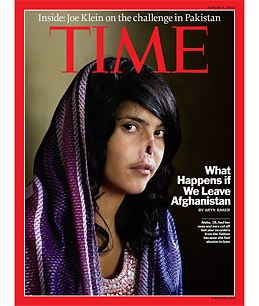
You may remember in 2001, when the US first began its invasion/occupation of Afghanistan, the Bush administration was arguing that one of the reasons for this invasion was to liberate Afghani women. Laura Bush herself took this position and publicly became the face of the administration’s claim to be concerned about the plight of the women in Afghanistan.
Some media pundits and political sectors continue to use this argument to justify the US occupation, even the escalation of US troops by the Obama administration. One recent example of this justification and moral pontification is the most recent issue of Time Magazine.
Time uses the photo of an 18 year-old Afghani women who had her nose cut off by the Taliban. The headline for the cover story reads, “What happens if we leave Afghanistan?” The article reads in part like a White House position paper where the well being of women is held up as a reason to question the nearly 9 year occupation.
However, there are several things that the Time Magazine cover story fails to address. First, it is important that the Taliban are an outgrowth of the ultra-right group of Muslim men knows as the Mujahideen. The Mujahideen were financially backed by the US with the goal of overthrowing the Soviet occupation in the 1980s, but the Mujahideen also wanted to impose its own ideology on the people of Afghanistan, particularly women.
Before the Mujahideen took power, women enjoyed a great deal of equality in Afghanistan, as is well documented in the book by Afghani writer Sonali Kolhatkar, Bleeding Afghanistan. Kolhatkar is also the co-director of the Afghan Women’s Mission, an organization that has been calling for the end of the US occupation.
Second, Afghani women have suffered from 3 decades of war, violence and occupation. The Time article frames the issue of female suffering primarily at the hands of the Taliban, when in fact women in Afghanistan were viciously targeted by the Mujahideen, various warlords and under the current Karzai administration. The Karzai administration, you will recall, last March passed a law, which essentially legalizes rape in Afghanistan. Such an extreme law was never passed while the Taliban were in power.
Third, the headline of the cover story, “What happens if we leave Afghanistan,” reflects an imperialist mind set by the editorial staff at Time Magazine. It suggests that Afghanistan will be worse off if the 9-year occupation ends. This ignores any historical context – the US-backed counter-insurgency war of the 1980s, the role of the US in back specifics warlords in the early 1990s, the US support of the Taliban in its first years of rule and the tremendous human cost to Afghanis of the current occupation.
A more honest cover-story headline would read, “What has the 9 year occupation meant for Afghanis?” Unfortunately, this is not the kind of reporting we are likely to see from the corporate media in the US, as is evidenced by the coverage of the recently released US documents regarding Afghanistan by Wikileaks. Fairness and Accuracy in Reporting has noted that the mainstream news response by Wikileaks has been to either downplay the seriousness of those documents or to further justify the current US military escalation in Afghanistan.
The 18 year-old woman on the front cover of Time Magazine may have indeed suffered at the hands of the Taliban, a political movement which has a horrendous record of violence towards women. However, the picture and the story are misleading at best and could easily be classified as propaganda, since it not only distorts the historical record, it also can be used by the Obama administration as further justification for the US occupation of Afghanistan.
The Time article also ignores other Afghan women’s voices, many of which have condemned the US occupation. Listen to what Afghani women have to say in this portion of the documentary Rethink Afghanistan.
(This Media Release is from the ACLU of Michigan.)

The American Civil Liberties Union of Michigan today asked the FBI to turn over records related to the agency’s collection and use of race and ethnicity data in local communities. According to a 2008 FBI operations guide, FBI agents have the authority to collect information about and map so-called “ethnic-oriented” businesses, behaviors, lifestyle characteristics and cultural traditions in communities with concentrated ethnic populations. While some racial and ethnic data collection by some agencies might be helpful in lessening discrimination, the FBI’s attempt to collect and map demographic data using race-based criteria for targeting purposes invites unconstitutional racial profiling by law enforcement, says the ACLU.
“For more than 50 years, the ACLU of Michigan has fought for the public’s right to know about government abuses of power,” said Mark P. Fancher, American Civil Liberties Union of Michigan Racial Justice Project staff attorney. “Today we continue this tradition by asking the federal government to account for the troubling civil rights and civil liberties implications of the FBI’s racial data gathering and mapping practices. Through this effort we hope to finally bring this important information to light and assess whether the FBI has abused its authority.”
The FBI’s power to collect, use and map racial and ethnic data in order to assist the FBI’s “domain awareness” and “intelligence analysis” activities is described in the 2008 FBI Domestic Intelligence and Operations Guide (DIOG). The FBI released the DIOG in heavily redacted form in September 2009, but a less-censored version was not made public until January of this year, in response to a lawsuit filed by Muslim Advocates. Although the DOIG has been in effect for more than a year and a half, very little information is available to the public about how the FBI has implemented this authority.
“The FBI’s mapping of local communities and businesses based on race and ethnicity, as well as its ability to target communities for investigation based on supposed racial and ethnic behaviors, raises serious civil liberties concerns,” said Michael German, ACLU policy counsel and former FBI agent. “Creating a profile of a neighborhood for criminal law enforcement or domestic intelligence purposes based on the ethnic makeup of the people who live there or the types of businesses they run is unfair, un-American and will certainly not help stop crime.”
ACLU affiliate offices across the nation today filed coordinated Freedom of Information Act requests to uncover records about the FBI’s collection and use of racial and ethnicity data from their local FBI field offices. The requests were filed by the ACLU affiliates in Alabama, Arkansas, California (Northern, Southern and San Diego), Colorado, Connecticut, Washington, D.C., Delaware, Florida, Georgia, Illinois, Maine, Maryland, Massachusetts, Michigan, Minnesota, Nevada, New Jersey, New Mexico, New York, Ohio, Oregon, Pennsylvania, Rhode Island, South Carolina, South Dakota, Tennessee, Texas, Utah, Vermont and Virginia.
The DIOG provisions in question are available online at: www.muslimadvocates.org/DIOGs_Chapter4.pdf
The entire DIOG is at: www.muslimadvocates.org/latest/profiling_update/community_alert_seek_leg…
GR Free School: Not another brick in the wall
GR Free School at RRFM
Sunday August 1
Wealthy Street & Fuller Avenue SE, Grand Rapids
1–1:30 p.m. Yoga workshop. Basics of yoga and stress management.
2–3 p.m. Sling-making/primitive tools workshop. Learn how to make useful and fun primitive tools, specifically slings!

Free from tuition. Free from authority. Free to participate. That’s how the folks from the new GR Free School describe the new project they are launching in Grand Rapids this Sunday at the Really Really Free Market. Free schools operate outside the market economy. So, kicking off GR Free School at the Really Really Free Market makes perfect sense.
G.R. Free School is dedicated to community-based education free from tuition and authority where anyone can teach or attend classes. “We believe that everyone has something to teach and everyone has something to learn. Where state/private education exists to prepare people for a life of obeying orders, being productive workers and not resisting authority figures, a free school consists of people freely participating in creating, sharing, and learning together collectively as equals.”
GR Free School is offering these classes throughout August:
- Tuesday, August 3rd, 10th, 17th, 24th: Special Topics: Feminism discussion: 2 pm – 3 pm. At Cherry Park: 725 Cherry St. SE. A series of facilitated discussions on feminism today, in the past, and towards the future.
- Saturday, August 7th: Know Your Rights Against Police workshop: 1 pm – 3 pm. At The Bloom Collective in Steepletown Center, 671 Davis St NW, room 7. The first in a series of “know your rights” classes, this workshop will give you the knowledge you need when dealing with police at home, on the streets, in a vehicle, and more.
- Sunday, August 8th, 22nd: Yoga class: 3 pm – 4pm. At Cherry Park: 725 Cherry St. SE. A bimonthly beginner level yoga class for breathing and stress management.
- Wednesday, August 11th, 18th, 25th: French language course: 7:30 pm – 8:30 pm. At Cherry Park: 725 Cherry St. SE. An ongoing French course taught by two skilled speakers of French. Continues every Wednesday at the same time. Will continue into September.
A free school is a collectively organized, community-based organization of people who freely participate in creating, sharing, and learning together as equals in a safe place. Anyone can teach a class, and anyone can attend one. While today’s government sanctioned schools and universities focus on turning out law abiding citizens who will dedicate their lives to “successful careers,” free schools foster self-reliance, critical consciousness and a learning community free of hierarchy and its school-chums: patriarchy, racism and sexism.
The first anarchist free schools were organized in the late 19th century in Spain in reaction to the church controlled schools of that day. Today, many free schools operate throughout North America. California’s Free Skool Santa Cruz lists 20 of them on its Web site, which also states, “More than an opportunity to learn, we see Free Skool as a direct challenge to dominant institutions and hierarchical relationships. Part of creating a new world is resistance to the old one, to the relentless commodification of everything, including learning and the way we relate to each other.”
Organizers from the GR Free School released this statement:
“Our society’s mainstream education system is meant to breed ignorance and obedience. By forcing young people to spend copious amounts of time learning useless facts, the idea of learning or education becomes unattractive to them. By structuring the classes in an authoritarian fashion where the student has no say in what they’re learning and must obey the teacher, they become jaded to the presence of authority, which will dominate their relations in their workplaces, in their homes, on their streets and for the rest of their lives. This created complacency is what allows some people to exploit and dominate everyone else, to become rich and powerful.
Fighting back means taking back the means through which we live together. It means freeing our authoritarian education, and replacing it with autonomous and collective models. We think education should simply be people sharing skills and information that is relevant to our lives with our peers. That’s what GR Free School is all about.”
For information, visit the GR Free School website.
Grand Rapids People’s History Project
For years now GRIID has been facilitating a class on the History of US Social Movements, using the important text of radical historian Howard Zinn, A People’s History of the United States.

With Zinn’s recent death we decided to work on a project that applies Zinn’s work on a local level. The Grand Rapids People’s History Project seeks to recover and reclaim the history of people who have been forgotten, ignored or suppressed from “official history.”
We begin our project with an interview with former historian for the City of Grand Rapids Gordon Olson. We spoke with Gordon about the early immigrant communities to Grand Rapids, the 1911 furniture workers strike and the broader idea of history from below.
We have decided to look at labor history first and have begun interviews and research. We will likely look at the abolitionist movement and civil rights in Grand Rapids, the Suffragette and feminist movements, anti-war and LGBT movements as well.
The Grand Rapids People’s History Project is taking a process-oriented approach that will be posting as much information online as possible and an eventual DVD and screening of each of the major themes. We welcome people who want to do research, help with production and writing for this project. If you have ideas or an interest in working on this project you can contact us here at GRIID.
(A special thanks to Gordon Olson for his time and to Rick Beerhorst who allowed us to use his music for the introduction.)
Michigan’s Oil Disaster: Another symptom of Capitalism
It has been several days now since the Enbridge owned & operated pipeline began spewing oil into the Kalamazoo River in southwest Michigan. The EPA now estimates that nearly 1 million gallons of oil have already contaminated the river and ecosystems that the river runs through.

As to be expected there is a tremendous amount of local news coverage, due in part to the onslaught of coverage of the BP oil disaster in the Gulf of Mexico. MLive has 32 stories posted since the oil disaster began just days ago and features a link to the archived stories on the main page for MLive/Grand Rapids.
After wading through the 32 stories it was clear that the bulk of the coverage on MLive was about the “leak,” political responses from Michigan, the “clean up,” and reactions from those who live on or near the river where the oil has been detected. There was one story from the Detroit Free Press with a promising headline that read, “Michigan oil spill, could this have been prevented?”
The article began by stating that the company that owns and operates the pipeline had received several notices about potential problems. “In one report, the federal Pipeline and Hazardous Materials Safety Administration raised concerns in January about Enbridge discontinuing the use of monitoring systems for corrosion inside Line 6B, saying its plans for ensuring pipe safety while a new monitoring system was brought on line didn’t meet standards.” However, the reporter did not continue any further investigation into the company’s history and whether or not they have failed to comply with regulations at other locations in North America.
An Associated Press story does provide some of this information in a story that was published on July 29, which clearly shows that Enbridge has a history of regulatory violations.
“Houston-based Enbridge Energy Co. spilled almost 19,000 gallons of crude oil onto Wisconsin’s Nemadji River in 2003. Another 189,000 gallons of oil spilled at the company’s terminal two miles from Lake Superior, though most was contained.
In 2007, two spills released about 200,000 gallons of crude in northern Wisconsin as Enbridge was expanding a 320-mile pipeline. The company also was accused of violating Wisconsin permits designed to protect water quality during work in and around wetlands, rivers and streams, the Wisconsin Department of Natural Resources said. The violations came during construction of a 321-mile, $2 billion oil pipeline across that state. Enbridge agreed to pay $1.1 million in 2009.”
Unfortunately, this kind of information has not appeared in the Grand Rapids Press or the numerous articles sourced on MLive specific to the recent oil spill into the Kalamazoo River. What one would have seen in the Grand Rapids Press on Thursday, July 29 was a full-page ad by Enbridge, with a statement from their CEO Pat Daniel. The thousand dollar (estimated cost for the ad) statement was similar to what the BP CEO said, which amounted to nothing more than a weak apology and assurances that the company has the well being of the people who live near the oil spill as their “top priority.”
Lets be clear at this point, Enbridge Energy Partners is a company that owns and operates oil and natural gas pipelines in the US and Canada. Their “top priority” is to make as much money as possible. Enbridge does not make the public or the environment, but their shareholders the “top priority” and this means to increase their market shares no matter what.
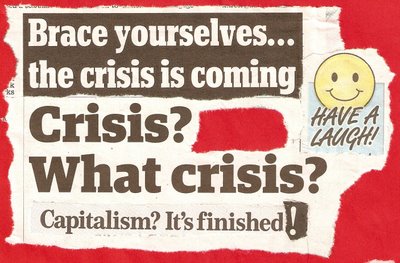
It is important for us to see companies like Enbridge and BP as nothing more than particular corporations that operate within a capitalist model, which is based upon growth. If growth drives the economic system then oil spills, environmental degradation and global warming should be seen for what they are – symptoms of a destructive system. For example, Enbridge is one of the partner companies in a $778 million “carbon capturing” project in Canada known as Project Pioneer. This project will include injecting carbon underground, despite widespread belief that carbon sequestration is highly problematic.
Sure, one can argue that if there was better regulation it might have prevented this particular oil spill into the Kalamazoo River, but since the system demands growth there will always be environmental disaster. You cannot sustain healthy eco-systems when oil, gas, coal and other polluting energy sources are extracted from the land.
Besides the lack of investigative journalism on the Enbridge oil disaster there is also no real discussion about the need to reduce our collective levels of energy consumption. Several environmental organizations such as Clean Water Action and the Michigan Environmental Council have responded to this disaster with calls for a shift to renewable energy. While a shift to renewable energy sources is critical, none of these environmental groups are calling for a reduction in energy consumption (individual consumption not included).
The problem with looking at a reduction in energy consumption means that society would have to make serious changes, since the economy is built around growth. However, if we are serious about wanting to prevent more oil spilling into the Gulf of Mexico or the Kalamazoo River then we need to question an economic system that is based on exponential growth.
LaDuke to speak at Protect the Earth gathering
This post was provided by Stand for the Land.
Third Annual Protect the Earth
Great Lakes Community Gathering and Annual Walk to Eagle Rock
July 30, 31, August 1
Featuring guest speakes including Winona LaDuke, annual walk to Eagle Rock, workshops, film showings and live entertainment including Joanne Shenandoah. Organized by Oshkinawe-Ogichidaag Akiing “New Warriors for the Earth” (NWE). Visit Standfortheland.com for more information.
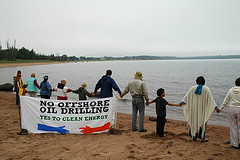
The third annual Protect the Earth Gathering will be held from July 30 through August 1st on the Pow-wow grounds and at the Keweenaw Bay Ojibwa Community College in Baraga, Michigan. This year’s events will also include an annual walk from the Yellow Dog River to Eagle Rock on the Yellow Dog Plains.
According to head organizer Jessica Koski (Keweenaw Bay Indian Community Member), “This event will bring together some of the most prominent environmental and indigenous rights leaders from across the region including Winona LaDuke; Al Gedicks; Lee Sprague, clean energy campaign manager for Michigan Sierra Club; and, Stuart Kirsch, and more.
A focused session on mining in the U.P. will present expert perspectives on metallic sulfide mining, treaty rights and Anishinaabe cultural concerns, international movements, and lessons from Wisconsin’s Native-Environmental alliance and grassroots efforts to stop the Crandon Mine.”
 Winona LaDuke will be the keynote speaker Friday night and Saturday. LaDuke is from the White Earth reservation in Minnesota. She is a mother, author, former Green Party vice presidential candidate, Harvard graduate and activist. Winona is a founding director of both the White Earth Land Recovery Program and Honor the Earth.
Grammy Award winning artist Joanne Shenandoah, an Iroquois singer, composer, actress and acoustic guitarist is the featured musical guest. A Protect the Earth Concert will also include local up-and-coming musician “E”, Wisconsin folksinger Skip Jones, and Ojibwe folksinger Bobbie Bullet.
“Protect the Earth is an opportunity to learn about issues facing the Great Lakes region, including climate change, biomass burning, petro-chemical plants and mining. It is a time to gather with old and new friends, Native and non-Native, to make our public voice loud and clear on some of the critical issues affecting our communities.
“I hope it leaves people informed, inspired and empowered to make a difference.” said NWE member Kalvin Hartwig (Sault Ste. Marie Chippewa).
Protect the Earth gatherings started in 1986, when the U.S Department of Energy was considering northern Wisconsin as the site for a nuclear waste dump. Jim Schlender, of the Great Lakes Indian Fish and Wildlife Commission organized a rally in opposition of the proposal, and the first rally was held at the Mole Lake Reservation in Wisconsin. The rally brought awareness to the DOE’s proposal, but also helped bring together people from all walks of life to work toward a common goal. From that day forward Protect the Earth became an important tradition in Wisconsin and played a very important role in the battle to protect the land and water from metallic sulfide mining.
In 2008, the Protect the Earth was handed over to citizen leaders in Michigan’s Upper Peninsula. New Warriors for the Earth (NWE) will carry on the tradition this year in 2010. NWE is a new Native and non-Native environmental organization dedicated to educating and empowering our communities to take action to protect Aki, Mother Earth. Its mission is to raise awareness about mining and other social-ecological injustices facing the Upper Great Lakes region and Mother Earth.
So, we welcome you to please join us again this year for the 3rd Annual Protect the Earth in Michigan’s beautiful UP. We have a wonderful fun-filled, action-packed weekend planned; including workshops and presentations, music, a film screening, food, prayer and a walk to Eagle Rock (don’t forget to bring your wild blueberry buckets!).”
A schedule, directions and lodging information can be found at standfortheland.com.
Vigil promotes justice for immigrants

Yesterday in Grand Rapids about 100 people came together to offer up written and verbal prayers for those in the immigrant community faced with separation from family, harassment and other forms of repression that confront them.
People representing the Christian Reformed Church, local Methodists, other Protestants, Catholics and members of the Jewish community shared prayers in both English and Spanish, prayers that called for dignity, respect and open arms for immigrants in West Michigan.
Kim deLong said, “Because families are the cornerstone of a healthy society, we pray for reforms in our family-based immigration system that reduce the time families must wait to be reunited.” This was one of many prayers that focused on the desire to keep immigrant families together.
Other speakers focused on the realities of migrant labor. Liz Balck, an immigration attorney said, “We pray for those who endure long days, hot sun, little water, and homesickness in order to put food on American tables. We pray for immigrants who travel across borders to fill jobs we rely on, and yet are shunned from participation in our culture and lifestyles.”
Some speakers focused on immigration policy and elected officials. “We pray that our leaders would examine solutions to address the root causes of migration, such as vast economic disparities between rich and poor nations. We pray for economic justice throughout the world. We do not believe that our lifestyle must be lived at the expense of the suffering of people in other countries. We do not accept that there are no better solutions than the policies we have today,” said Peter Vander Meulen, with the Office of Social Justice for the Christian Reformed Church.

Before he offered up a prayer, Vander Meulen said he was fielding phone calls all day, some of which were critical of the CRCs role as advocates for immigrants. “People asked me what we were doing getting involved in the immigration problem and I told them why aren’t you involved in trying to fix a system that is unjust and keep families apart?”
In addition to the verbal prayers that were offered, people were invited to write statements, prayers and desires on pieces of paper with images of feet. The pieces of paper where then attached to a long piece of material, which will eventually be sent to Michigan lawmakers as a way of telling them to not support a proposed bill on immigrant that would be similar to the one adopted by Arizona.
Afterwards, we had an opportunity to speak with Kate Kooyman, with the CRC Office of Social Justice and one of the organizers of the vigil.

