CEO Pay and the Great Recession
(The article is re-posting from ZNet.)
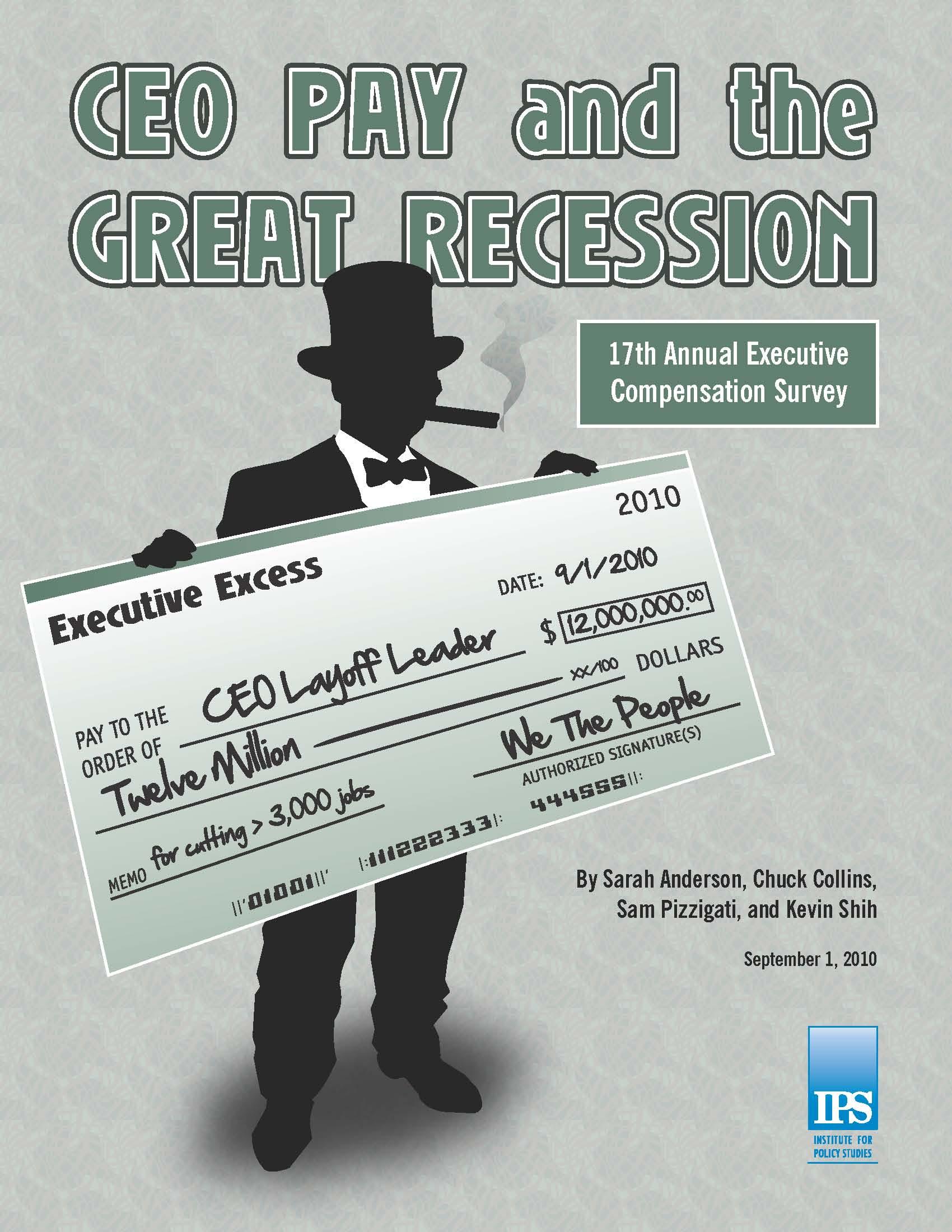
CEOs of the 50 firms that have laid off the most workers since the onset of the economic crisis took home 42 percent more pay in 2009 than their peers at S&P 500 firms, according to CEO Pay and the Great Recession, the 17th in a series of annual Executive Excess reports from the Institute for Policy Studies.
“Our findings illustrate the great unfairness of the Great Recession,” says Sarah Anderson, lead author on the Institute study. “CEOs are squeezing workers to boost short-term profits and fatten their own paychecks.”
PSAs Challenge Bigotry, Church’s Quran-Burning Event

(This article is re-posted from PRWatch. GRIID equally condemns hate crimes of any kind directed at the Muslim community abroad and here in West Michigan.)
The Council on American-Islamic Relations (CAIR) in Los Angeles is responding to a wave of anti-Muslim bigotry sweeping the U.S. by running public service announcements aimed at helping defuse the growing hatred.
Two of the three spots remind the public that many of the first responders at the World Trade Center site on 9-11 were, in fact, Muslims. These two spots conclude with the line, “9/11 happened to all of us.”
The third PSA features Christian, Jewish and Muslim leaders describing the “Golden Rule” as their faiths define it, and ends by saying “We have more in common than we think.” The third PSA is designed to demonstrate the commonalities between faiths and challenge people who seek to divide Americans along religious lines, like the member of the church in Florida who plan to burn Qurans on September 11. The PSAs will be disseminated to TV stations and through social media sites.
Media Bites – Nike and Mountain Top Mining

In this week’s Media Bites we take a look at a recent ad campaign by Nike in conjunction with the University of West Virginia football team. Nike has contracts with numerous college sports programs and often will do ad campaigns to accompany those contracts.
In this ad Nike attempts to honor miners killed this past April, but the ad really ends up normalizing mountain top coal mining. We point out that not only is the ad misleading, but coal mining is also a burden on working people and taxpayers in general because of the deaths and environmental impact.
We also note that because of public pressure the ad was changed just prior to the opening of the college football season, which was last weekend.
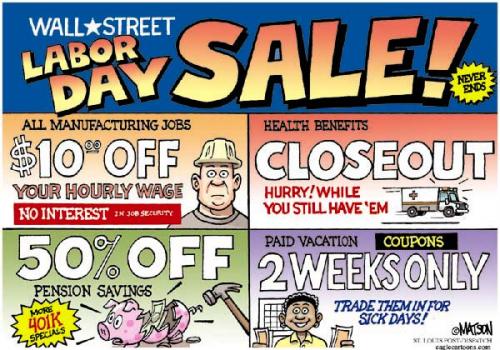
Wall Street Labor Day Sale
Farmworkers launch JPMorgan Chase Divestment Campaign
We reported at the US Social Forum in June about a campaign that was being organized by the Farm Labor Organizing Committee (FLOC) that was targeting the JP Morgan/Chase bank. Below is a Media Release we received today from FLOC.

JP Morgan Chase is one of the lead banks in a consortium of lenders that provides $498 million dollars in credit to Reynolds American, one of the largest tobacco companies in the US. While Reynolds American and JP Morgan Chase make billions, tobacco farmworkers continue to suffer serious human rights abuses in the fields. Although Reynolds does not directly employ these farmworkers, they determine the terms for contract growers which directly affects the living and working conditions of farmworkers.
Reynolds American and JP Morgan Chase have the ultimate responsibility and financial resources to ensure safe and humane working conditions for tobacco farmworkers.
As a major lender to Reynolds, Chase has the stature and resources to convince Reynolds to improve conditions for tobacco farmworkers. Since May 12, 2010 FLOC has been asking Chase to use their influence to push Reynolds to address farmworker exploitation. To date Chase has refused to take any action.
Beginning on September 7, 2010, FLOC will launch a national divestment campaign of Chase bank and call on consumers to close their Chase accounts and cancel Chase credit cards until Reynolds agrees to work with FLOC to find a solution to these abuses or until Chase severs financial ties with Reynolds.
Even if you don’t currently have a Chase bank account or Chase credit card, you can support the divestment campaign by pledging not to bank with Chase or apply for a Chase credit card.
Beginning Monday, September 13, FLOC supporters will be organizing actions nationwide in front of Chase branches to increase awareness about the abuses in the fields of NC and to keep building on the Chase divestment campaign. We will continue to organize events at Chase Bank branches throughout the campaign until Chase agrees to help find a solution or it severs financial ties with Reynolds American. Click here for more info and to download the Chase Organizing Toolkit.
IWW holds Solidarity picket in Grand Rapids for Jimmy John’s workers

Today, 10 members of the local chapter of the IWW and a few supporters stood in the rain outside of the Jimmy John’s restaurant in Eastown today to show support for a new national effort to unionize fast food restaurant chain in the US.
IWW members received primarily positive responses from people walking and driving by the Jimmy John’s location on Wealthy Street near the intersection of Lake Dr and Wealthy.
Despite sending out a Media Release to dozens of local news agencies, the only coverage of the solidarity picket came from Indy media sources, GRIID and a citizen journalist with the Rapidian. WZZM 13 did run a story about the planned picket yesterday, but no commercial news agencies showed up today, despite the obvious tie in to Labor Day.
We had a chance to interview IWW member Cole Dorsey after the solidarity picket and asked him about the campaign to support Jimmy John’s workers and related matters.
The Press wages Class War with “Right to Work” stories – Part II
Continuing our initial critique of the Grand Rapids Press series that began on Sunday, today we look at the articles the Press ran on September 6th, which is also ironically Labor Day in the US.
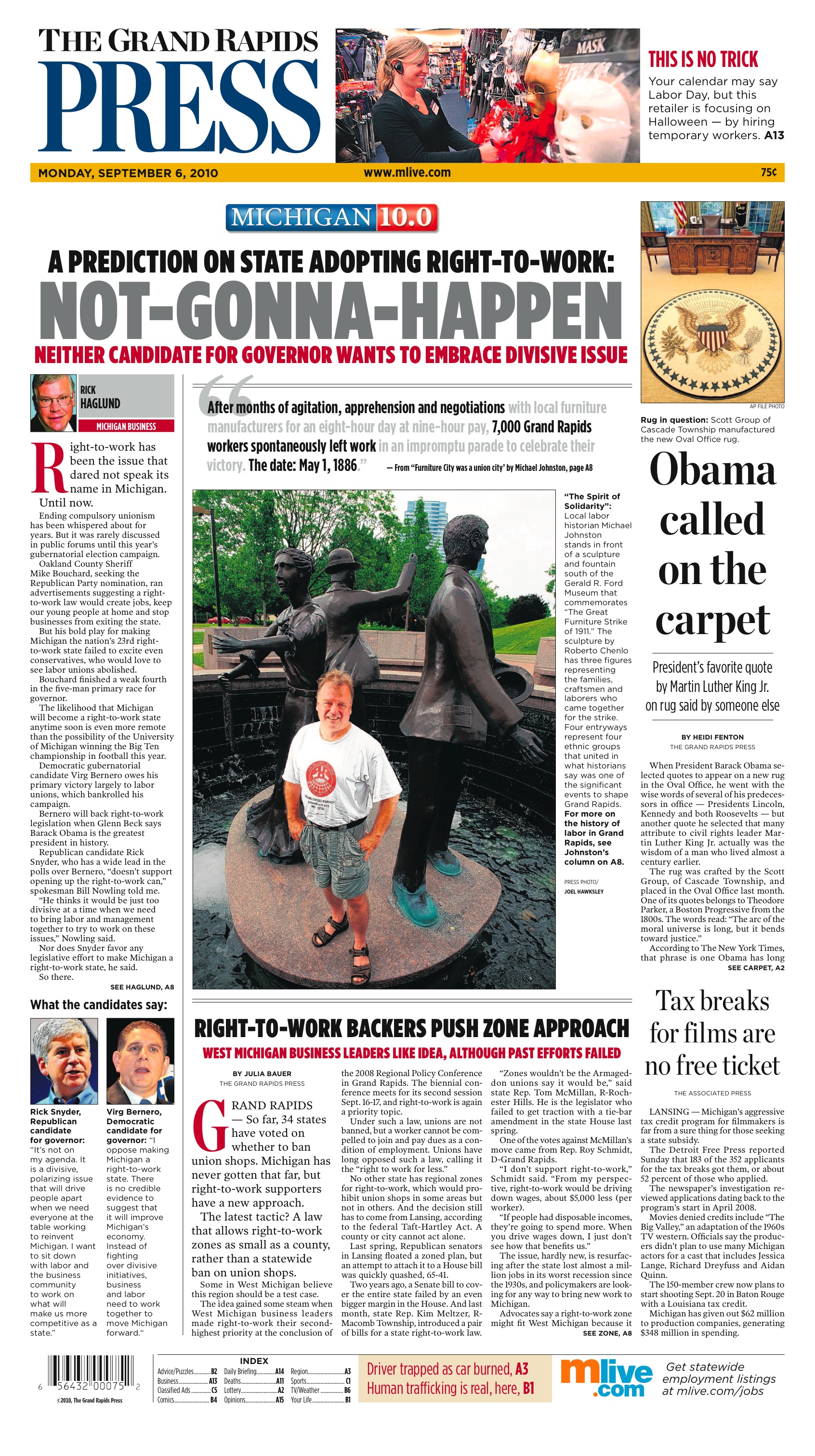
The Press ran an additional four stories today that are part of their Michigan 10.0 series that is for all practical purposes an endorsement of further attacking unions under the guise of a “Right to Work” policy for Michigan.
The lead article was by Business reporter Rick Haglund, which looked at where the two main candidates for Governor in Michigan stand on the “Right to Work” debate. Haglund says that neither Bernero (D) nor Snyder (R) support a “Right to Work” policy. However, Haglund couldn’t resist mentioning a recent statewide poll, which says, “51% of likely voters surveyed would favor a right-to-work law in Michigan.”
Haglund then cites a spokesperson for the Traverse City Area Chamber of Commerce who believes, “The perception out there is that the entire state is unionized.” I’m not sure what this guy means by “out there” but there is no evidence that Michigan is perceived as entirely union. Haglund does provide some numbers to dispute such a claim and says that only 18.8% of Michigan’s workers are unionized, although he does not source where that figure comes from.
Haglund concludes the article by citing the new UAW President Bob King who says that the UAW is committed to working “cooperatively with automakers to insure their success.” This sentiment by King underscores the point we made yesterday that once union conceded systemic power to the capitalist class they were doomed. What will prevent the US-based automakers from continuing to undermine autoworkers if the union is unwilling to challenge their power like they did in the early days with wildcat strikes, a tactic which made the UAW a force to be reckoned with?
Right to Work Zones
A second major article on the front-page of Monday’s Press took a lengthy look at a proposal by those in the business class to push for a “zoned” approach to a “Right to Work” policy for Michigan. In this article Press reporter Julia Bauer looks at efforts by Michigan lawmakers and their business counter-parts to push for legislation that allow for “Right to Work” in counties or regions throughout the state instead of statewide policy.
Bauer mentions that this idea gained momentum in 2008 at a regional policy conference held in Grand Rapids and has since been proposed on several occasions in the State legislature. The article includes comments from two Michigan legislators, one for and one against a “Right to Work” policy.
However, the rest of the article is an absurdly biased look at the issue beyond where elected officials stand on the matter. The source the Press reporter cites in favor of a zoned “Right to Work” approach are the Grand Rapids Chamber of Commerce, a GVSU Economics Professor, President of The Right Place Inc., the National Right to Work Foundation, a corporate consultant and a University of Michigan economist, which made six different sources. The number of sources that the Press reporter cited as critical of a zoned “Right to Work” approach – one. So much for the claim of balanced journalism.
Throwing a bone to labor voices
The remaining two articles were on pages 8 and 9 of the Press. One was a short article (page 9) that just dealt with some responses by readers to the “Right to Work” poll that the Press published on Saturday.
The other article was written by long-time local labor historian Michael Johnston entitled, “Furniture City was a union city, a headline which the writer had no say in. The article is pretty decent in that it communicates important information about a rich labor history that Grand Rapids has, despite the brevity of the article.
I spoke with Michael Johnston today at the Labor Festival in Grand Rapids and he was told that they would only allow him 500 words to right about this history, a grossly inadequate amount of words to necessarily provide a more honest assessment of this rich labor history that Grand Rapids possesses. (Recently GRIID conducted an hour long video interview with Johnston, an interview we hope to have posted later this week.)
So, even though the Press allowed a short article by a local labor historian, it in no way absolves the paper of its overtly anti-union coverage for a second day in a row.
The Press wages Class War with “Right to Work” stories
Don’t ever let anyone tell you that we don’t have a class war in this country. Every day those in the capitalist class are constantly devising ways to wage war on working people, all in the name of profit.

Unemployment numbers are high and under-employment is even high, with millions of people unable to make a living off the one or more jobs that they have while a small percentage of those at the top live in excess.
Today, the Grand Rapids Press has run several articles that they believe to be objectively discussing the pro’s and con’s of whether or not Michigan should adopt a Right to Work policy. The editorial staff might argue that as part of the Michigan 10.0 series the issue is relevant in the upcoming November Elections, but one can help but wonder about the timing of these articles on the eve of Labor Day.
The lead article on the front-page of today’s Press is based on a study commissioned by the Press, which is part of the Booth News chain of paper, which is owned by the media giant Advanced Publications.
This “Right to Work” study was conducted by GVSU economics professor Hari Singh, who teaches in the Seidman School of Business. The study is not particularly well done and the sources that Singh uses are those of sources that favor the anti-union/pro-business perspective, such as the Cato Institute and the Mackinac Center for Public Policy.
Besides Singh, the only other business source cited in the rest of the main article is David Cole with the Center for Automotive Research, a pro-business entity based in Ann Arbor. The article does cite four different union representatives throughout the state and one local labor historian, which could give the impression that the article is balanced.
However, the problem with seeing the amount of labor sources vs business sources as balance and objective journalism is that the article itself is framed in such a way to favor the business perspective. The article, in fact, the whole series is framed in such a way as to suggest that if Michigan was a “Right to Work” state there would be more jobs and that would improve the economy.

The sad thing is that the union voices in this story don’t have a strong argument against Michigan not adopting a “Right to Work” policy, since their arguments only address wages and to some degree standard of living. If Michigan were to lower auto industry wages then the argument goes that they could hire more people, which is an appealing notion to many working class people, especially those that are unemployed.
The problem with this line of thinking and the way the Press is presenting this issue as a whole is twofold. First, the articles do not provide any real historical perspective, besides one line from local labor historian Michael Johnston.
Basic labor history would teach anyone that any rights that workers currently enjoy – workers compensation, benefits, wages, work safety standards, paid vacations, 8 hour work day and the right to organize is because unions fought hard for decades to win those basic rights, quite often at a high price. The Press stories provide no insight into the long fought battles that working people waged in order to have these basics rights, because the capitalist class never gave them as a gift.
These basic rights were won by working people, but those who fought for them were not primarily focused on wages, rather they fought for the dignity of working people and against a capitalist system. And this is the second point about what is flawed about the way the Press series is presented and how much of the economic discussion is framed today in the news media.
Most of the people who fought for the 8-hour work day or worker rights were members of unions like the CIO, the Knights of Labor and the IWW, all more radical union groups which were a real threat to the capitalist class. They were such a threat that they were targeted by the business class with blacklisting, firings, beatings, arrests, deportations and sometimes out right murder. (See Jeremy Brecher’s book Strike! and Sidney Lens’s The Labor Wars: From the Molly Maguires to the Sit-Downs)

Once the most radical elements of the labor movement were too small in number to seriously threaten the capitalist class, the more mainstream unions like the AFL agreed to embrace the capitalist system as long as they could negotiate over wages and benefits. (See Irvin Bernstein’s two volumes The Lean Years A History of the American Worker, 1920-1933 and The Turbulent Years A History of the American Worker, 1933–1941)
This is not to say that all unions since WWII don’t serve the interest of working people, but most of them have given up much of their power by making peace with the capitalist class. However, the capitalist class has never been content with the concessions made to unions, thus there has been an ongoing effort to weaken unions beginning with the passage of the Taft Hartley Act in 1947 and continuing with trade policies such as NAFTA and the current globalization of neoliberal economics.
These are the reasons for the decline of organized labor numbers in the US, a number that represents only 12% of working people in the US. Had the Press even attempted to include the more complex aspects of organized labor of capitalism then the article about “Right to Work” would have been more honest.
The Press could have even spoke to labor organizations who fight for more than just wages and job security such as Warehouse Workers for Justice, the Coalition of Immokalee Workers, the Restaurant Opportunities Center United, Justice for Janitors, the IWW and Labor Notes, which is based in Detroit. The IWW also has a chapter based in Grand Rapids.
The Press will be running more stories on this the theme of “Right to Work” and we plan to provide some analysis as they do.
Vandana Shiva: Resisting Hegemony
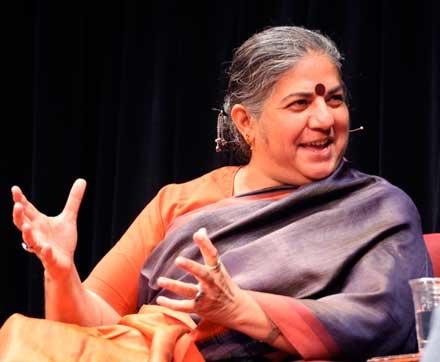
(This video is re-posted from Common Dreams.)
Excerpt of Vandana Shiva speaking about ‘food and seed sovereignty’ at the International Meeting on Resisting Hegemony held 2-5 August 2010 in Penang, Malaysia. The complete presentation and others from the meeting are available at the TV Multiversity channel on Vimeo.
Follow the Money – State Senate and State House races
Yesterday, the Grand Rapids Press ran a story about campaign finances for a local State House and State Senate race.

The short article provides some basic financial data for the 75th District House race between Bing Goei (R) and Brandon Dillon (D) and the 29th District State Senate race between Dave Hildenbrand and David LaGrand.
However, the financial data for both races provided by the Press is just the amount each candidate brought in during the last recording period, how much they have spent and their current totals.
As we have stated in a recent posting it is important for voters and the public general to know who is donating money to candidates and what that means in terms of who candidates give their allegiance to.
The Press reporter could easily have found out who has given to each of these candidates recently by searching the Michigan Secretary of State’s database.
For Bing Goei, the largest contributor during the last recording period was himself, where he gave his campaign $3,000. Other significant contributors were the GR Chamber of Commerce ($2,000), Matt Sterenberg ($2,000), Michael Jandernoa/Steelcase ($500), Henry Fox/Fox Sales ($500), Paul Jendrasiak/Bully Spam ($500), James Zawacki/GR Spring and Stamping ($500), John Canepa/Grand Action ($250), Diana Seager/GR Community Foundation ($200), John Loeks/Loeks Theaters ($200) and Steven Ender/GR Community College ($150).

For Brandon Dillon the largest so far are the Michigan Beer and Wine PAC ($1,500), W. Michigan Main Street Fund ($1,500), Hammel Leadership Fund ($1,000), Roy PAC ($1,000), Turnaround PAC ($750), Michigan Laborers Political L ($500), DTE Energy ($500), Troopers Political Action Committee ($500) and Blue Cross/Blue Shield ($500) just to name a few.
For the 29th State Senate race, Republican Dave Hildenbrand the largest campaign contributor in the last recording period was DTE Energy ($3,200), followed by the GR Chamber of Commerce ($3,000), Majority 2010 PAC ($2,500), Fund for Republican Majority ($2,500 twice), MI Doctors PAC ($2,000), Dow Corning Legal Action Team ($1,000), Fifth Third Bank ($1,000) and MI McDonalds Operators PAC ($1,000).
For David LaGrand the largest contributor was Whitmer Leadership Fund ($7,500), West Michigan Main Street Fund ($4,000), MI Association for Justice ($2,000), Sarah Deboer ($1,000), Micigan Laborers PAC ($1,000), Grand Rapids Firefighters Union ($800), Salvatorre Pirrotta/Lawyer ($250) and Frand Stanley/Lawyer ($200).
This is just a summary of the larger donors to each of the four candidates, but it at least provides people with a sense of who is funding them and what that will likely mean no matter who is elected. We will continue to follow these races and report on campaign finances when the data is made public.

