Frederick Douglas on the 4th of July
As the nation prepares to celebrate the 4th of July, we thought it would be fitting to reprint a speech that the great abolitionist Frederick Douglas gave in 1852. His words still ring true for today, you just need to replace slavery with immigrants, people who have had their homes foreclosed, the unemployed/underemployed/overworked, people within the prison industrial complex and those around the world who have felt the brutality of US wars of occupation.
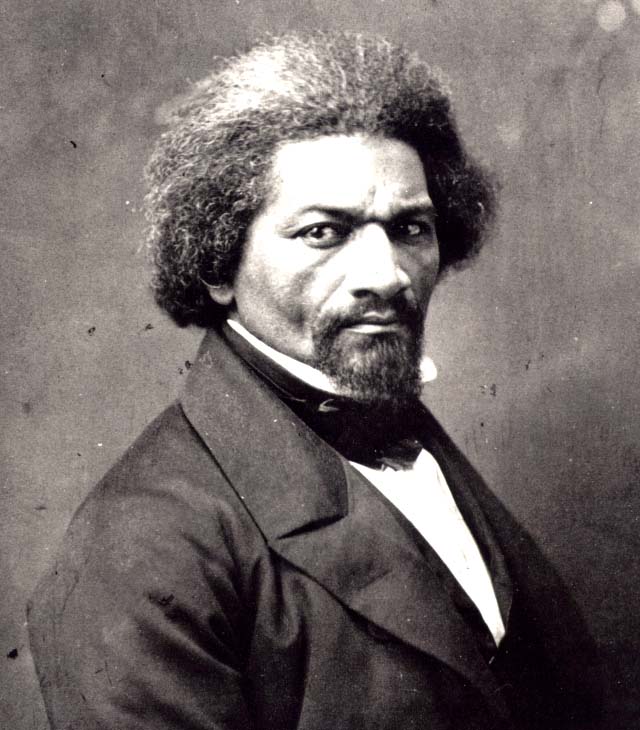
Fellow citizens, pardon me, and allow me to ask, why am I called upon to speak here today? What have I or those I represent to do with your national independence? Are the great principles of political freedom and of natural justice, embodied in that Declaration of Independence, extended to us? And am I, therefore, called upon to bring our humble offering to the national altar, and to confess the benefits, and express devout gratitude for the blessings resulting from your independence to us?
Would to God, both for your sakes and ours, that an affirmative answer could be truthfully returned to these questions. Then would my task be light, and my burden easy and delightful. For who is there so cold that a nation’s sympathy could not warm him? Who so obdurate and dead to the claims of gratitude, that would not thankfully acknowledge such priceless benefits? Who so stolid and selfish that would not give his voice to swell the hallelujahs of a nation’s jubilee, when the chains of servitude had been torn from his limbs? I am not that man. In a case like that, the dumb might eloquently speak, and the “lame man leap as an hart.”
But such is not the state of the case. I say it with a sad sense of disparity between us. I am not included within the pale of this glorious anniversary! Your high independence only reveals the immeasurable distance between us. The blessings in which you this day rejoice are not enjoyed in common. The rich inheritance of justice, liberty, prosperity, and independence bequeathed by your fathers is shared by you, not by me. The sunlight that brought life and healing to you has brought stripes and death to me. This Fourth of July is yours, not mine. You may rejoice, I must mourn. To drag a man in fetters into the grand illuminated temple of liberty, and call upon him to join you in joyous anthems, were inhuman mockery and sacrilegious irony. Do you mean, citizens, to mock me, by asking me to speak today? If so, there is a parallel to your conduct. And let me warn you, that it is dangerous to copy the example of a nation (Babylon) whose crimes, towering up to heaven, were thrown down by the breath of the Almighty, burying that nation in irrecoverable ruin.
Fellow citizens, above your national, tumultuous joy, I hear the mournful wail of millions, whose chains, heavy and grievous yesterday, are today rendered more intolerable by the jubilant shouts that reach them. If I do forget, if I do not remember those bleeding children of sorrow this day, “may my right hand forget her cunning, and may my tongue cleave to the roof of my mouth!”
To forget them, to pass lightly over their wrongs and to chime in with the popular theme would be treason most scandalous and shocking, and would make me a reproach before God and the world.
My subject, then, fellow citizens, is “American Slavery.” I shall see this day and its popular characteristics from the slave’s point of view. Standing here, identified with the American bondman, making his wrongs mine, I do not hesitate to declare, with all my soul, that the character and conduct of this nation never looked blacker to me than on this Fourth of July.
Whether we turn to the declarations of the past, or to the professions of the present, the conduct of the nation seems equally hideous and revolting. America is false to the past, false to the present, and solemnly binds herself to be false to the future. Standing with God and the crushed and bleeding slave on this occasion, I will, in the name of humanity, which is outraged, in the name of liberty, which is fettered, in the name of the Constitution and the Bible, which are disregarded and trampled upon, dare to call in question and to denounce, with all the emphasis I can command, everything that serves to perpetuate slavery — the great sin and shame of America! “I will not equivocate – I will not excuse.” I will use the severest language I can command, and yet not one word shall escape me that any man, whose judgment is not blinded by prejudice, or who is not at heart a slave-holder, shall not confess to be right and just.
But I fancy I hear some of my audience say it is just in this circumstance that you and your brother Abolitionists fail to make a favorable impression on the public mind. Would you argue more and denounce less, would you persuade more and rebuke less, your cause would be much more likely to succeed. But, I submit, where all is plain there is nothing to be argued. What point in the anti-slavery creed would you have me argue? On what branch of the subject do the people of this country need light? Must I undertake to prove that the slave is a man? That point is conceded already. Nobody doubts it. The slave-holders themselves acknowledge it in the enactment of laws for their government. They acknowledge it when they punish disobedience on the part of the slave. There are seventy-two crimes in the State of Virginia, which, if committed by a black man (no matter how ignorant he be), subject him to the punishment of death; while only two of these same crimes will subject a white man to like punishment.
What is this but the acknowledgment that the slave is a moral, intellectual, and responsible being? The manhood of the slave is conceded. It is admitted in the fact that Southern statute books are covered with enactments, forbidding, under severe fines and penalties, the teaching of the slave to read and write. When you can point to any such laws in reference to the beasts of the field, then I may consent to argue the manhood of the slave. When the dogs in your streets, when the fowls of the air, when the cattle on your hills, when the fish of the sea, and the reptiles that crawl, shall be unable to distinguish the slave from a brute, then I will argue with you that the slave is a man!
For the present it is enough to affirm the equal manhood of the Negro race. Is it not astonishing that, while we are plowing, planting, and reaping, using all kinds of mechanical tools, erecting houses, constructing bridges, building ships, working in metals of brass, iron, copper, silver, and gold; that while we are reading, writing, and ciphering, acting as clerks, merchants, and secretaries, having among us lawyers, doctors, ministers, poets, authors, editors, orators, and teachers; that we are engaged in all the enterprises common to other men — digging gold in California, capturing the whale in the Pacific, feeding sheep and cattle on the hillside, living, moving, acting, thinking, planning, living in families as husbands, wives, and children, and above all, confessing and worshipping the Christian God, and looking hopefully for life and immortality beyond the grave — we are called upon to prove that we are men?
Would you have me argue that man is entitled to liberty? That he is the rightful owner of his own body? You have already declared it. Must I argue the wrongfulness of slavery? Is that a question for republicans? Is it to be settled by the rules of logic and argumentation, as a matter beset with great difficulty, involving a doubtful application of the principle of justice, hard to understand? How should I look today in the presence of Americans, dividing and subdividing a discourse, to show that men have a natural right to freedom, speaking of it relatively and positively, negatively and affirmatively? To do so would be to make myself ridiculous, and to offer an insult to your understanding. There is not a man beneath the canopy of heaven who does not know that slavery is wrong for him.
What! Am I to argue that it is wrong to make men brutes, to rob them of their liberty, to work them without wages, to keep them ignorant of their relations to their fellow men, to beat them with sticks, to flay their flesh with the lash, to load their limbs with irons, to hunt them with dogs, to sell them at auction, to sunder their families, to knock out their teeth, to burn their flesh, to starve them into obedience and submission to their masters? Must I argue that a system thus marked with blood and stained with pollution is wrong? No – I will not. I have better employment for my time and strength than such arguments would imply.
What, then, remains to be argued? Is it that slavery is not divine; that God did not establish it; that our doctors of divinity are mistaken? There is blasphemy in the thought. That which is inhuman cannot be divine. Who can reason on such a proposition? They that can, may – I cannot. The time for such argument is past.
At a time like this, scorching irony, not convincing argument, is needed. Oh! had I the ability, and could I reach the nation’s ear, I would today pour out a fiery stream of biting ridicule, blasting reproach, withering sarcasm, and stern rebuke. For it is not light that is needed, but fire; it is not the gentle shower, but thunder. We need the storm, the whirlwind, and the earthquake. The feeling of the nation must be quickened; the conscience of the nation must be roused; the propriety of the nation must be startled; the hypocrisy of the nation must be exposed; and its crimes against God and man must be denounced.
What to the American slave is your Fourth of July? I answer, a day that reveals to him more than all other days of the year, the gross injustice and cruelty to which he is the constant victim. To him your celebration is a sham; your boasted liberty an unholy license; your national greatness, swelling vanity; your sounds of rejoicing are empty and heartless; your shouts of liberty and equality, hollow mock; your prayers and hymns, your sermons and thanksgivings, with all your religious parade and solemnity, are to him mere bombast, fraud, deception, impiety, and hypocrisy – a thin veil to cover up crimes which would disgrace a nation of savages. There is not a nation of the earth guilty of practices more shocking and bloody than are the people of these United States at this very hour.
Go search where you will, roam through all the monarchies and despotisms of the Old World, travel through South America, search out every abuse and when you have found the last, lay your facts by the side of the everyday practices of this nation, and you will say with me that, for revolting barbarity and shameless hypocrisy, America reigns without a rival.
Gubernatorial candidate spending in West Michigan

At one time in American history election “season” may have represented our great democratic process in action. These days however election time typically consists of months and months of establishment candidates calling each other names and making tons of empty promises. Election time also consists of television and radio consumers being totally overwhelmed with those same establishment candidate’s paid advertising. While the stations that run the ads are regulated by the FCC to have the information regarding who bought the ads and for how much available to the public, the actual data is rarely reported on, as GRIID has noted in the past.
On Thursday afternoon a couple of us from GRIID visited the offices of WOOD TV 8, Fox 17, and WZZM to request their files on paid political advertising. While we experienced no hostility from any of the staff at the stations, it was quite obvious that they get few requests from anyone to actually view these files. While it is not incredibly surprising that most citizens would not spend time on this, it seems as though our local media should be reporting on the amount of money the candidates are spending. To this reporter, therein lies one of the major flaws of our for-profit media system. These stations are supposed to report news and hold candidates accountable. However, they are also receiving millions of dollars in revenue from those same candidates by running these ads.
Obviously the most striking part of the research was the numbers themselves. Currently only three gubernatorial candidates have bought advertising in the Grand Rapids market, all of them Republican. The numbers are as follows: Attorney General Mike Cox has run 446 spots, totaling $210,480 in expenditures. Ann Arbor businessman Rick Snyder has run 858 paid spots totaling $289,518. Representative Pete Hoekstra has run only 29 spots, totaling $4,415.
WOOD TV8/WOTV/WXSP
Cox – 163 spots $124060
Hoekstra – 2 spots $550
Snyder – 442 spots $178,105
WXMI 17
Cox – 57 spots $30,010
Hoekstra – 1spot $50
Snyder – 80 spots $47,606
WZZM 13
Cox – 226 spots $55850
Hoekstra – 26 spots $3815
Snyder – 336 spots $63,407
All three of the candidates have at least paid lip service to the ideas of “fiscal responsibility” and ending wasteful spending. However when presented with these numbers it is difficult to see how there is anything responsible about spending hundreds of thousands of dollars to be able to spew thirty seconds of rhetoric. Another bit of information contained in the files were the agencies that produced the advertisements for the candidates. Seeing as how they are running for governor of Michigan, one might think they would use agencies located in this state. However none of the candidates did. Snyder’s ads were all produced by Target Enterprises, located in Encino, California. Hoekstra used the agency Kelly, Scott, and Madison Inc. out of Chicago. Cox’s ads were produced by Strategic Media in Delaware, Ohio.
It is also worth noting that the primary is still a month away, so all of these candidates are fighting each other to simply get the Republican Party nomination. Despite the fact that there will be fewer candidates after the primary, it is reasonable to assume that there will be an upswing in paid advertising. Another interesting point was that none of the Democratic Party candidates have run any ads in the Grand Rapids market. That is certainly quite telling about how the Democrats view their chances to keep the governorship come November.
The last thing worth mentioning is that a group calling themselves The Coalition for American Jobs ran a series of ads on Fox 17 totaling $6,000 in expenditures. The group’s web site has vague information about who they are, merely saying “We represent American businesses, industries and others concerned about the impact of potential EPA action on job creation, including the growth of green jobs”. The web site Grist provides some insight into this obvious corporate front group.
Like many Americans, my disgust with the shallowness of our mainstream political culture has only grown over the years. Armed now with the knowledge of how much money the candidates spend to produce these vapid advertisements, I am thoroughly ashamed.
(This article is re-posted from Reuters.)
The House of Representatives approved funds on Thursday to pay for President Barack Obama’s Afghanistan troop increase but also voted to signal growing unhappiness with the war among his fellow Democrats.

The House’s Democratic leaders, who had procrastinated for weeks over the bill, did not act in time to get the $33 billion to the troops by July 4 as the Pentagon had requested.
An amendment demanding an exit timetable from Afghanistan failed, but got 162 votes, the biggest anti-war vote in the House on Afghanistan to date. All but nine of the supporters were Democrats, and included House Speaker Nancy Pelosi.
House leaders added billions of dollars in non-military spending before passing the war funds, so the measure must now return to the Senate. It passed the troop funds and its own set of disaster relief add-ons in May.
Both chambers must agree to the same legislation before it can go to Obama for his signature into law. But the Senate is not in session again until July 12, and it is unclear how it will view the additions the House has made.
Pentagon chief Robert Gates said recently the money for 30,000 additional troops to Afghanistan should be approved by July 4 to avoid the Pentagon having to juggle accounts and possibly lay off civilians while continuing war operations.
Still it seemed a wonder the new money for the unpopular war got through the House at all, after long arguments among Democratic lawmakers over whether and how to do it. They set up a complicated series of votes in which the non-military spending passed 239-182, while the part containing the war funding passed 215-210.
“I do not believe this war is anything but a fool’s errand. If I had my way, I would never bring this to the floor,” declared House Appropriations Committee Chairman David Obey, who is in charge of spending legislation in the chamber.
The last two weeks have thrown an especially harsh light on the war effort, with new reports of corruption in President Hamid Karzai’s government, and a change in the commander of U.S. forces and multinational forces in Afghanistan.
The House-approved bill includes nearly $4 billion in economic aid to Afghanistan and its neighbor, Pakistan.
The war funds are in addition to $130 billion Congress has already approved for Afghanistan and Iraq this year.
DAY OF DRAMA
Key members of the Democratic majority decided to let the legislation go to the House floor Thursday evening after adding the money for domestic U.S. programs they favored.
There was $10 billion to help avert teacher layoffs, $700 million for security on the border with Mexico and $142 million to help the oil-sullied Gulf Coast. Cuts were proposed to other programs to offset the spending.
“If American money is going to be building a nation, I’d like it to be mine,” said Representative Louise Slaughter, chairwoman of the powerful Rules Committee, before the vote.
She complained that the United States has already spent too much on the Afghan war — some $345 billion, according to the nonpartisan Congressional Budget Office — and needed to pay attention to its own economic problems and mounting debt.
But while the extra cash helped bring in Democratic votes, it turned off Republicans who generally supported Obama’s surge but also expressed concern about rising U.S. debt.
“I think this is disgraceful,” said House Republican Leader John Boehner. He said Republicans had promised to vote for war funds so long as the bill was “clean,” without any add-ons.
“We promised the president we would help pass this bill,” Boehner said. “There was never any working together to try to make sure that our troops have what they needed in a timely fashion.”
The White House joined in the drama by threatening to veto the final version of the bill if lawmakers do not put back $800 million in education program cuts in the non-military part.
The White House also said any legislation that would undermine Obama’s ability to conduct military operations in Afghanistan would draw a veto.
The House rejected amendments that would strike military funding from the bill or limit funds to a pullout. Longtime war opponents complained that lawmakers were still afraid to pull the plug on the war.
“Why are we continuing to send our troops into a Mission Impossible?” asked Rep. Dennis Kucinich, a liberal Democrat.
(The following action alert is from Presente.org after President Obama gave a speech on immigration policy.)

1,000 per day. That’s the rate at which immigrants are being deported under the Obama Administration. Amazingly, it’s more than under President Bush, and the vast majority are students, taxpayers and hardworking community members.1
Today, President Obama addressed the nation, and once again expressed his commitment to immigration reform. But at this point, as Latino and immigrant communities are being torn apart, we need more than empty promises. We need action.
And so far, the only action we have seen is increased enforcement, including a $600 million dollar request for more immigration agents and a recent deployment of 1,200 troops to the border. Things have become so urgent that hundreds of undocumented youth are committing civil disobedience around the country, risking deportation to send a signal that enough is enough.
That’s why Presente.org, in collaboration with the National Day Labor Organizing Network (NDLON) and the Trail of DREAMs, is launching an ambitious new campaign calling on the President to use his power to create real change, starting with ending the deeply problematic 287g program. The 287g program is what empowers local authorities like Sheriff Joe Arpaio to conduct vicious raids of Latino communities and is what inspired Arizona to pass SB 1070.2,3,4 It’s time to tell President Obama to move beyond just finger pointing at Republicans, and say BASTA to 287g. Will you join us?
In anticipation of his speech, President Obama met with community leaders on Monday, including Juan Rodriguez — one of four brave immigrant students who have been working with Presente.org since January to raise awareness about the plight of undocumented immigrants through the “Trail of Dreams,” a 1,500-mile walk from Miami to Washington, D.C. After the meeting, Juan told us how it went:
“While the President expressed support for measures that required Congressional action, he refused to act on any of the ones he can change immediately through executive action, such as 287g, the federal program that allows collaboration between local police and ICE (Immigration & Customs Enforcement). He said his office is looking to see where the flaws of the programs are.”
We think the flaws are clear. The Department of Homeland Security’s own Inspector General recently issued a scathing report with one central conclusion: 287g does not increase public safety.5 Only 10 percent of the people deported through the program have committed serious crimes, and more than half have no involvement in violence, drugs, or property crimes. In many communities, 287g has become a license for police officers to hunt down and deport undocumented immigrants who have committed no crime other than working hard to provide for their families.6
As a candidate, then Senator Obama spoke eloquently about the horrors caused by our failed immigration system, saying that, ” …when nursing mothers are torn from their babies, when children come home from school to find their parents missing, when people are detained without access to legal counsel … the system just isn’t working, and we need to change it.” But as President, Obama has done little to lessen the terror of deportations. The 287g program is something that the President can end with the simple stroke of a pen, and in doing so, he can show he has more to offer Latino and immigrant communities than just compelling speeches.
Corruption Road – A new resource to monitor how Big Media influences Washington Politics

Yesterday, the national media reform group Free Press, announced that it has begun a new online project called Corruption Road.
Corruption Road is unique, in that they not only look at how the Telecommunications industry lobbies Congress, they also profile which corporations are involved, which ones have paid lobbyists and which ones funded Astroturf groups.
For example, one could find out that the cable giant Comcast has spent $58 million lobby Congress since 1998. The page on Comcast also reveals that,
In 2007, Comcast was caught blocking legal file-sharing applications by secretly disconnecting Internet users without explanation. After getting caught, the cable giant tried to block public debate at a hearing on the matter by paying people to fill seats — closing the venue to concerned citizens. The FCC approved a bipartisan order forcing Comcast to stop its secret blocking, but Comcast successfully appealed the order, arguing in court that the FCC didn’t have the authority to protect Internet users.
Under the Lobbyist section one would find that AT&T has spent $14.7 million on 105 lobbyists in 2009. One of those lobbyists, James Cicconi has stated (in regards to Internet Neutrality), “These blocking concerns are a sham … there is no potential upside to Net Neutrality regulation.”

One of the best features of the Corruption Road site is their information on Astroturf groups. According to Source Watch, “Astroturf refers to apparently grassroots-based citizen groups or coalitions that are primarily conceived, created and/or funded by corporations, industry trade associations, political interests or public relations firms.”
In their Astroturf section you would discover information about front groups such as Broadband for America. “Broadband for America is an industry front group that receives money from AT&T, Verizon, Comcast and Time Warner Cable to paint a pretty picture about broadband access, innovation, choice and competition in America.”
The Telecom industry is one of the largest and most influential when it comes to federal policy. The resources at Corruption Road can be useful tools when fighting for a better and more democratic media system.
ACLU Sues Wal-Mart On Behalf Of Cancer Patient Fired For Legally Using Medical Marijuana
(This Media Release is from the ACLU of Michigan.)
The American Civil Liberties Union and ACLU of Michigan in partnership with the law firm of Daniel W. Grow, PLLC, filed a lawsuit today against Wal-Mart Stores, Inc. and the manager of its Battle Creek store for wrongfully firing an employee for using medicinal marijuana in accordance with state law to treat the painful symptoms of an inoperable brain tumor and cancer.

The lawsuit charges that Joseph Casias, 30, the Battle Creek Wal-Mart’s 2008 Associate of the Year, was fired from his job at the store after testing positive for marijuana, despite being legally registered to use the drug under Michigan’s medical marijuana law. In accordance with state law, Casias never ingested marijuana while at work and never worked while under the influence of marijuana.
“Medical marijuana has had a life-changing positive effect for Joseph, but Wal-Mart made him pay a stiff and unfair price for his medicine,” said Scott Michelman, staff attorney with the ACLU. “No patient should be forced to choose between adequate pain relief and gainful employment, and no employer should be allowed to intrude upon private medical choices made by employees in consultation with their doctors.”
Casias, married with two young children, has suffered for more than a decade from sinus cancer and a brain tumor in the back of his head and neck that was the size of a softball when it was first diagnosed. Casias’ condition has forced him to endure extensive treatment and chemotherapy, interferes with his ability to speak and is a source of severe and constant pain. Nonetheless, he had been successfully employed for more than five years by Wal-Mart in Battle Creek, where he began as an entry-level grocery stocker in 2004 and worked his way up to inventory control manager.
“For some people, working at Wal-Mart is just a job, but for me, it was a way of life,” said Joseph. “I came to Wal-Mart for a better opportunity for my family and I worked hard and proved myself. I just want the opportunity to continue my work.”
In 2008, Michigan voters enacted the Michigan Medical Marihuana Act, which provides protection for the medical use of the drug under state law. The pain medication Casias’ oncologist had previously prescribed for him provided only minimal relief and as a side effect caused Casias to suffer from severe nausea. After the law was enacted, Joseph’s oncologist recommended that he try marijuana as permitted by state law, and so Casias obtained the appropriate registry card from the Michigan Department of Community Health. The results were immediate and profound: his pain decreased dramatically, the new medicine did not induce nausea and Casias was able to gain back some of the weight he had lost during treatment.
“Joseph is exactly the kind of person whom Michigan voters had in mind when they passed the state’s medical marijuana law,” said Daniel W. Grow, a St. Joseph, Mich.-based attorney. “Medical marijuana is legal in this state because voters recognized its ability to alleviate the pain, nausea and other symptoms associated with debilitating medical conditions, and no corporation doing business in Michigan should be permitted to flout state law.”
Michigan’s medical marijuana law protects patients registered with the state of Michigan from “arrest, prosecution, or penalty in any manner” for the use of medicinal marijuana as prescribed by a doctor and also protects employees from being disciplined for their use of medical marijuana in accordance with the law. The law does not require employers to accommodate the ingestion of marijuana in the workplace and does not protect employees who work under the influence of the drug.
The outcome of today’s lawsuit, filed in Calhoun County Circuit Court, could have ramifications beyond Michigan.
“Today, 14 states and the District of Columbia provide protections for patients who use marijuana as recommended by a doctor,” said Kary L. Moss, Executive Director of the ACLU of Michigan. “This case will be closely watched by patients across the country who rely on this medicine for pain relief and on their state laws for protection against unscrupulous employers.”
Casias is represented by Daniel W. Grow, Scott Michelman of the national ACLU and Kary L. Moss, Michael J. Steinberg and Dan Korobkin of the ACLU of Michigan.
A copy of the today’s complaint is available online at: http://www.aclumich.org/sites/default/files/file/casias%20complaint%206%2024%2010.pdf
Additional information about the ACLU’s drug policy work is available online at: www.aclu.org/drug-law-reform
Today, the Grand Rapids Press ran an editorial piece from their own staff about the recent decision of the Obama administration to replace General McCrystal with General Petraeus. The editorial not only justifies the near 9-year US occupation of Afghanistan, it perpetuates numerous distortions about US policy.
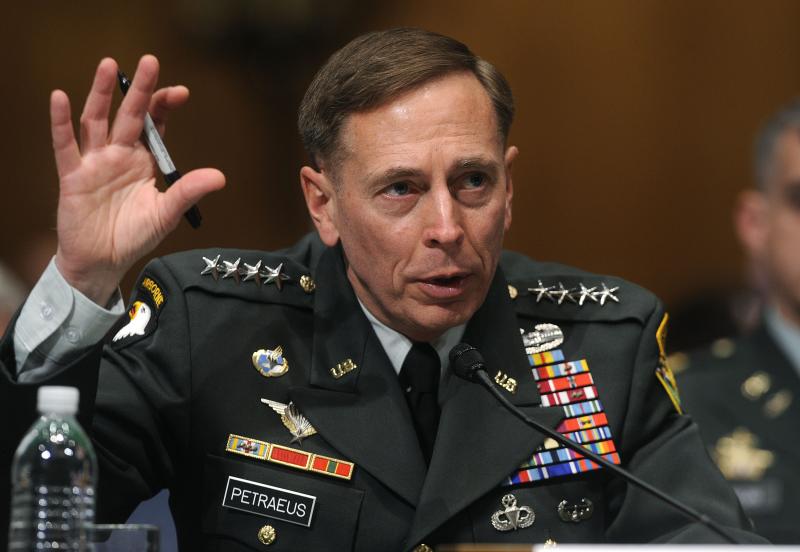
First, the Press editorial says that replacing McCrystal with Petraeus was “inspired” because of the successful counterinsurgency strategy in Iraq. The Press, like most media, does not qualify what they mean by a success with the counterinsurgency campaign in Iraq. Independent reporters like Patrick Cockburn and Dahr Jamail, both of whom have been reporting from Iraq for years, have documented that the US counterinsurgency campaign in Iraq was not successful in that it resulted in numerous Iraqi civilian deaths, did not stabilize the country and only created more anti-American sentiment.
Second, the Press editorial mentions the Senate Armed Forces confirmation hearing from yesterday for General Petraeus, proceedings, which were chaired by Michigan Senator Carl Levin. Again, the Press writer says that the counterinsurgency of General Petraeus ,“are not in doubt.” Amidst the hearing there was no serious discussion about the validity of the US occupation of Afghanistan, only the importance of having a new military leader in charge.
Third, the Press editorial mentions the growing number of US and NATO troop deaths, but that does not deter them from promoting the idea that the US can “win” in Afghanistan. Dead and wounded US troops does not really matter to the Press editorial staff, since they are not directly impacted by this. However, the cost of taking care of the thousands of serious wounded and traumatized US soldiers is rising, a cost all of us will pay for. In addition, the Press casual mention of US troop deaths ignores the fact that there is a growing list of US soldiers who have served in Afghanistan and are now calling for an end to the US occupation.
Lastly, the Press editorial continues to misrepresent the content of the Rolling Stones article that led to McCrystal’s dismissal. They state:
“The Rolling Stone interview of Gen. McChrystal laid bare simmering tensions between civilian and military leadership. Debate between battlefield leaders and the White House is nothing new — think Gen. Douglas MacArthur and President Harry Truman. But any dysfunction that threatens mission effectiveness and by extension American lives must be quickly quashed.”
As has been mentioned on this site already, the Rolling Stones article was not just about the General McCrystal’s disagreement with the administration, rather it included numerous comments from current and former US military personnel that were questioning the US military occupation of Afghanistan.
The Press editorial concludes by saying, “The appointment of Gen. Petraeus offers an opportunity for a new beginning, and a new chance in Afghanistan.” This is a fitting conclusion for an editorial that mimics the sentiment coming from the White House on what should be done in Afghanistan. Such sentiments are exactly why we need independent journalism in this country, a type of journalism that isn’t afraid to question institutions of power.
Objectification & our Hyper-sexualized Media
GRIID recently presented to a group of people who are working with teenagers in Kent County and promoting the idea of safe dating and healthy relationships. They invited us to do a session on how media objectifies women, hyper-sexual images and messages and how it normalizes violence against women. Here is a summary of that workshop, including some examples of the media we looked at.
The Reality
We know that sexual assault in the US happens at an astronomical rate. According to some sources someone is sexually assaulted in the US every 2 minutes. Another statistics states that 1 in 6 women in the US will be sexually assaulted at some point in their life. However, statistics do not reflect the actual harm, the pain and the trauma of sexual assault. Statistics do not have names or stories, nor do they encompass the emotional realities of sexual assault, a reality that will affect victims for the rest of their lives.
There are numerous factors that contribute the high levels of sexual assault in this country. Male dominance in economic, political and social spheres are contributing factors in sexual assault, as is the theological justification for men having power that most world religions preach. Then there is the role that popular culture plays through the media, with an instantaneous 24/7, no holds barred approach to hyper-sexual content.
Objectification
Objectification of women is so pervasive in media that many of us don’t even recognize it and if we do we may not think much of it since we are all so desensitized to those images. Objectification of women’s bodies is so normal, that we don’t even blink. Look at this example from Budweiser, where the woman’s body is available to consume just like the beer.

The same could be said about this ad for a video game, where the text of the ad sends a clear message about sexuality.

Hyper-Sexualized Images and Messages
With the advent of the Internet and all other kinds of digital media humanity has seen a whole lot more hyper-sexualized content. Not much is left to the imagination and the exposure to such images and messages is at a much younger age. According to the group Stop Porn Culture, the average exposure to pornography online is 11 years old. And it is important to point out that the kind of images are not like the Playboy magazine that many of us saw as a kid, but images much more graphic.
However, the kind of hyper-sexualized content that we are exposed to is much like this billboard or this clip from the recent movie Kickass.
In many of the teen and tween targeted films not only are kids having sex, but they use highly sexualized language. All one has to do is look at films, video games and music videos that target predominantly younger audiences and you can see the hyper-sexualized content. The most popular music video online is a Lady Gaga video where she uses her body in a mostly sexualized fashion. One other example is this JC Penny ad.

Sexualized Violence
One other way that media contributes negatively to relationships or how we see woman’s bodies in our culture is the sexualizing of violence. Talk show host will often comment that a woman who was raped by a man either “asked for it” or “provoked” the man into doing it by her being sexually provocative. This blaming the victim mentality is quite pervasive amongst the predominantly male talk show hosts in the US.
However, sexualized violence is now the norm within pornography and other forms of popular media. Look at this Calvin Klein ad, where the actors are simulating what could be interpreted as a sexual assault.

Even though it may be difficult to look at these images and one might be disgusted by them, it is important that we have an understanding about how these popular images and messages contribute to creating a climate of hyper-sexuality and sexualized violence.
The Real Crime Scene Was Inside the G20 Summit
(This interview was re-posted from Democracy Now!)

As thousands protested in the streets of Toronto, inside the G20 summit world leaders agreed to a controversial goal of cutting government deficits in half by 2013. We speak with journalist Naomi Klein. “What actually happened at the summit is that the global elites just stuck the bill for their drunken binge with the world’s poor, with the people that are most vulnerable,” Klein says.
AMY GOODMAN: As thousands protested in the streets of Toronto, inside the G20 summit world leaders agreed to a controversial goal of cutting government deficits in half by 2013. Economists say such a move could usher in sizable tax increases and massive cuts in government programs, including benefit programs such as Social Security and Medicare. Meanwhile, world leaders at the G8/G20 failed to come to an agreement on setting new global rules for big banks or imposing a new across-the-board global bank tax.
Journalist Naomi Klein joins us now from her home in Toronto. Her most recent book, The Shock Doctrine: The Rise of Disaster Capitalism. She has an op-ed in the Toronto Globe and Mail today called “Sticking the Public with the Bill for the Bankers’ Crisis.”
Naomi, welcome to Democracy Now! You were out on the streets throughout the weekend. Describe what Toronto looks like and what the G20 decisions—their significance are.
NAOMI KLEIN: Well, Toronto has pretty much returned to normal. They cleaned up the broken glass, and the leaders have gone home. And I was near the Convention Center last night and saw some sweeping up. And, you know, all weekend the media here has been in hysterics over the broken glass and the burning police cars and saying, you know, nothing like this has ever happened before in Canada, which, first of all, is just not true. We have some pretty intense hockey riots, where in one case sixteen police cars were burned. So it isn’t true that we’ve never seen property destruction like this.
But my feeling, when I went by the Convention Center after all the leaders had gone home, was that this was the real crime scene, not those shattered storefronts, but what actually happened at the summit on Sunday night, when the world leaders issued their final communiqué. And what that communiqué said was that there wouldn’t even be a measly tax on banks to help pay for the global crisis that they created and also prevent future crises. There wouldn’t be a financial transaction tax, which could create a fund for social programs and for action on climate change. There wouldn’t be a real action to eliminate subsidies for fossil fuel companies that have also created so many social and environmental costs around the world, as we see with the BP disaster.
But what there would be was very decisive action on deficit reductions. These leaders announced that they would halve their deficits by 2013, which is shocking and brutal cut. You know, I don’t believe—maybe some of the leaders intend on keeping—making good on this promise, but, on the other hand, they can hide behind this promise as the excuse to do what a lot of them want to do anyway, and say, you know, “We have no choice; we made this commitment.” But so, just to put this in perspective, if the US were to cut its deficit, its projected 2010 deficit, in half by 2013, that would be a cut of $780 billion, you know, if there were no tax increases in that period. So, you know, that’s why I wrote the piece that came out this morning in Canada’s national newspaper The Globe and Mail, that what actually happened at the summit is that the global elites just stuck the bill for their drunken binge with the world’s poor, with the people who are most vulnerable, because that is really who’s going to pay, when they balance their budgets on the backs of healthcare programs, pension programs, unemployment programs. And also, the other thing that they did at this G8 summit, that preceded the G20 summit, is admit that they were not meeting their commitments to doubling aid to Africa, once again, because of the debt that was created by saving the banks.
AMY GOODMAN: Naomi Klein, in your piece in The Globe and Mail, you talk about the history of G20, how it was formed.
NAOMI KLEIN: Yeah, you know, the G20 is a little bit of a mysterious institution. Amy, you and I were both at an event in Toronto on Friday night, both speaking at an event organized by the Council of Canadians. It was a terrific event. And Vandana Shiva was one of the other speakers, and she had a great line. She said, “Ah, the G20, so young and yet so old,” referring to the fact that the ideas of the G20 are so old, so predictable. But it is a young institution. It was conceived in 1999 as a summit of finance ministers. It only became a sort of an extension of the G8 as a leaders’ summit in the past two years, and that we saw in London, and we saw it in Pittsburgh, and we have now seen it in Toronto. So this incarnation of the G20 as a leaders’ summit is very young indeed.
But yeah, ten years ago, Paul Martin, who was then Canada’s finance minister, later Canada’s prime minister, was at a meeting with Larry Summers. This is 1999, so Summers at that time was Bill Clinton’s nominee for Treasury secretary. And the two men were discussing this idea to expand the G7 into a larger grouping to respond to the fact that developing country economies like China and India were growing very quickly, and they wanted to include them into this club, and they were under pressure to do so. So, what Martin and Summers did—and this history we only learned last week. This really wasn’t a history that had been told. So this story came out in The Globe and Mail. And it turns out that the two men didn’t have a piece of paper. They wanted to—I don’t know how this would possibly be the case, but their story is that they wanted to make a list of the countries that they would invite into this club, and they couldn’t find a piece of paper, so they found a manilla envelope and wrote on the back of the manilla envelope a list of countries. And by Paul Martin’s admission, those countries were not simply the twenty top economies of the world, the biggest GDPs. They were also the countries that were most strategic to the United States. So Larry Summers would make a decision that obviously Iran wouldn’t be in, but Saudi Arabia would be. And so, Saudi Arabia is in. Thailand, it made sense to include Thailand, because it had actually been the Thai economy, which, two years earlier, had set off the Asian economic crisis, but Thailand wasn’t as important to the US strategically as Indonesia, so Indonesia was in and not Thailand. So what you see from this story is that the creation of the G20 was an absolutely top-down decision, two powerful men deciding together to do this, making, you know, an invitation-only list.
And what you really see is that this is an attempt to get around the United Nations, where every country in the world has a vote, and to create this expanded G7 or G8, where they invite some developing countries, but not so many that they can overpower or outvote the Western—the traditional Western powers. So, as this happened, we have also seen a weakening and an undermining of the United Nations. And I think that that’s the context in which the G20 needs to be understood. And that’s why a lot of the activists in Toronto this week were arguing that the G20 is an illegitimate institution and the price tag is—that we, as Canadian taxpayers, have had to take on for hosting this summit, you know, $1.2 billion, is particularly unacceptable, given that we have the United Nations, where these countries can meet in a much more democratic, much more legitimate forum, as opposed to this ad hoc invitation-only club from the back of an envelope in Larry Summers’s office.
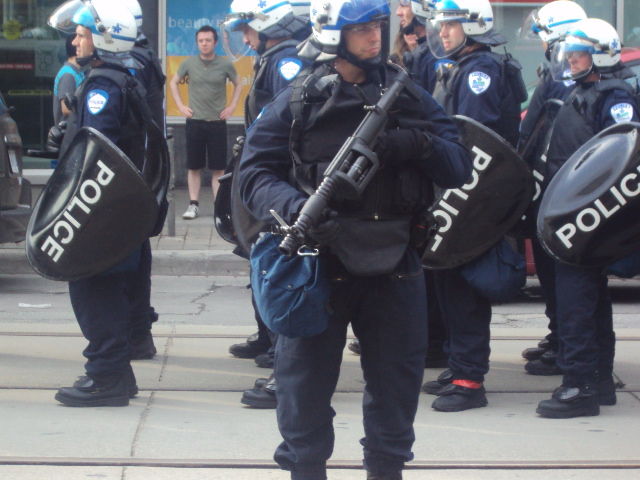
AMY GOODMAN: I wanted to turn to the issue of war. There were a number of feeder marches into the main one on Saturday. The peace groups started in front of the US consulate in Toronto. And there, in a rare moment, a mother of a young Canadian who had just been deployed to Afghanistan, to Kandahar, spoke out against war.
JOSIE FORCADILLA: I’m Josie. I’m employed by the United Church of Canada in the Justice, Global and Ecumenical Relations Unit. My son was deployed in Afghanistan in May this year and is currently working in the Kandahar Airfield, where the Canadian forces is located. And he is under the Royal Regiment, the regiment—the battle group, I mean, that is currently deployed in Afghanistan.
AMY GOODMAN: And why are you here in front of the US consulate on this rainy day?
JOSIE FORCADILLA: I’m here—I’m here, even though it’s raining, as you can see, that I just want to convey my message to the members of the G20 and G8, that relatives, a mother like me, doesn’t want to extend this mission in Afghanistan.
AMY GOODMAN: Why?
JOSIE FORCADILLA: Why? Because lots of lives has been lost, not only from this side of the NATO forces or the ISAF, but as well as the Afghan civilian population. We don’t know what’s happening with the civilians. We don’t know how much people have died—how many people have died in this conflict. So, as a mother, I’m very concerned about that.
AMY GOODMAN: There have just been reports that have come out about torture at the Kandahar air base. Have you heard about this?
JOSIE FORCADILLA: I’ve heard about that, and I’ve read about that. And I think it’s—this government, the Harper government, should come clean with this issue. There should be an impartial investigation, as far as torture is concerned in Kandahar Airfield.
AMY GOODMAN: Josie Forcadilla is the mother of a Canadian soldier currently serving in Kandahar. A hundred fifty Canadian soldiers have died in Afghanistan. Four civilians have died, two since I actually spoke to her.
Naomi Klein, talk about war in the context of the G20 summit, and Canada’s decision to pull out troops, their 4,500 troops, in a year.
NAOMI KLEIN: Well, we’ll see whether that happens. But I do think that the anger that we saw displayed on the streets of Toronto this weekend did surprise a lot of people. You know, people think of Canada as a very polite country, and there was a lot of anger and a lot of very angry young people. And this has to do with a real transformation that’s taken place in our country. And, you know, I say that without romanticizing the pre-Harper Canada, because it had many, many flaws, and Canada is a colonial country with a very violent history. But having said that, something has changed under this government, and it began under the preceding government, where the country has become much more militaristic. And the tradition that Canadians identify with, which is the tradition of peacekeeping, not these overt combat missions, as we’re engaged with in Afghanistan, is really disappearing. And, you know, one of the things that you really notice as a Canadian traveling internationally is that people are constantly asking—certainly they’re constantly asking you, you know, “What is going on with Canada? You know, Canada used to be such a sort of friendly player on the world stage and, you know, pro-human rights and so on. And now Canada is a really belligerent force.” And, you know, Amy, you saw this in Copenhagen around climate change. Canada has the worst record on climate change because of the tar sands.
But, for me, the turning point of realizing just how bad things had gotten was when Jeremy Scahill reported on a speech that Erik Prince, the CEO of Blackwater, the founder of Blackwater, gave in—I believe it was Michigan a couple of months ago. And, you know, Erik Prince didn’t have a lot of nice things to say about too many people, but he was positively effusive about the role that Canada was playing in Afghanistan. He said if you ever see a Canadian, stop them and thank them for the role they’re playing in Afghanistan. So, to me, this was a real sort of turning point in terms of really understanding just how bad things have gotten. And we’ve lost a lot of friends in the world, and the new friends we’re making are people like Erik Prince, not the kind of friends we want to have. So, yeah, there have been a lot of ongoing torture scandals, with Canadian officials having knowledge of torture when they transfer prisoners in Afghanistan, allowing it to happen. So, you know, there’s a real identity crisis going on in this country, where a lot of our cherished beliefs about who we are in the world are just being challenged by the facts. And I think that what we saw on the streets this weekend and this expression of anger in the streets needs to be seen in that context.
AMY GOODMAN: I wanted to turn to a young journalist who was beaten and arrested. Among the hundreds of people arrested at the G20 protests in Toronto was Jesse Rosenfeld. He is a freelance reporter who was on assignment for The Guardian newspaper of London. He’s also a journalist with the Alternative Media Center. He was arrested and detained by Canadian police on Saturday evening covering a protest in front of the Novotel Hotel. We reached him just before this broadcast this morning. He was over at the CBC. And he described what happened to him.
JESSE ROSENFELD: They started sending in snatch squads and declared a mass arrest. At that point, I went up to them, and I was with some other media and said, “What about the media?” Their first reaction was, “Well, media is also under arrest.” And then the officer came up actually [inaudible], said, “If you had an official lanyard from the G8/G20 summit, then you’re actually going to be OK and you can go through.”
Now, it’s interesting, because I filed for my G8/G20 media accreditation on June 11th, back at the deadline, submitted both—you know, all my documentation, including a letter from The Guardian. And then, what happened was, while the summit kept saying, oh, yeah, yeah, yeah, I’m approved, they’re just waiting for the final approval of the RCMP background check before they can send me my lanyard or my official media photo ID, that it basically said it had to declare a background check. And that was basically used to prevent me from getting the media pass. So I only had an Alternative Media Center pass on me, which was the passes that the AMC, the Alternative Media Center, not the government, set up. Alternative Media Center had issued to all the independent journalists that were working with it.
The police told me, “Oh, we don’t recognize these credentials.” I explained to them that I was a journalist also with The Guardian, that I was writing for “Comment Is Free.” I told them about my editors. I told them about my stories. And they said, “Well, we’ll check your credentials, and then, if it’s fine, we’ll let you go.”
At that point, I was sort of taken to the side, after a bunch of media had gotten through the police line, and an officer walked up to me, looked at my ID and said—my Alternative Media Center press pass, that is—and said, “This isn’t legitimate. You’re under arrest,” at which point I was immediately jumped by two police officers. I had my notepads in my hands. Grabbed my arms, they yanked back. My notepad went flying. I was hit in the stomach by one officer as I was held by two others. As I was going over, I was then hit in the back and went down. After I went down and as I went down, I smacked my leg. I had officers jump on top of me. I was being hit in the back. My face was being pushed to the concrete. All the time I’m saying, “I’m not resisting arrest. I’m a journalist. Why are you beating me?” My leg was lifted up, and my ankle was twisted, from while I was on the ground not resisting. And at that point, after I started saying these things, the police then started saying, “Stop resisting arrest,” as if to try and provide cover for themselves.
Something interesting about when I was jumped, as well, is, just a minute or so after, two other officers had passed by, and they identified me as someone who is, quote-unquote, “a mouthy kid.” Basically, I had run into them at demonstrations previously in the week and basically been asking tough questions on the front of the riot line as they were either clashing with media, which they did quite violently through the week, or beating protesters. And so, they had identified me as someone who was challenging them publicly and on the record. And it was at that point that I was jumped by the other officers, you know, and beaten and arrested.
We were then hauled off to jail. I spent—I guess I was arrested at around 10:00, 11:30 in the evening, and I didn’t get out of jail ’til 5:00 or 6:00 the next afternoon. And that was basically on—we weren’t charged. We were held on the—we were detained on the grounds of, quote-unquote, “breach of peace,” which is not a criminal offense. And the conditions in jail—I mean, I’ve been working from the Middle East as a journalist for the past three years or so, since 2007, and the jails actually remind me a lot more of the ones I’ve seen that Israelis hold for Palestinians or the Palestinian Authority holds. We were in handcuffs, or at least I was in handcuffs ’til nearly 5:00 in the morning, while being processed in different cells and waiting to be processed and in cells of over—overcrowded cells with over twenty people, with a porta-potty, very limited access to water. Then, after I was processed, I was moved to a five-foot-by-eight-foot cell, where there were five other people with me. And there was benches, no washroom, only a concrete floor. And the room was absolutely freezing, not even enough space for us to lie down and sleep all at the same time. It was incredibly difficult to sleep because it was so cold. A lot of the people I was in jail with had been beaten, and beaten quite badly—black eyes, bloody noses, and been hit all over. And also, a lot of the people from—there were several people from the Alternative Media Center who had been taken in for just doing their job, which was reporting from the front lines.
AMY GOODMAN: That was Jesse Rosenfeld, freelance reporter on assignment with The Guardian newspaper in London. He was also a journalist with the Alternative Media Center, arrested and detained by the Canadian police on Saturday evening.
Naomi Klein, the level of force that was used, the money that has been put into this, and then I want to end with the Gulf of Mexico, from the G20 to the Gulf of Mexico, and there are connections. I think you make them when you speak and when you write, when we’re talking about the power of corporations.
NAOMI KLEIN: Well. we’ll see if we make it to the Gulf of Mexico, Amy. But, yeah, I want to talk a little bit about, you know, that horrifying story from Jesse. And there are many others like it. And, you know, the police rioted after what happened on Saturday. As you mentioned at the top of the show, more than 600 people have been arrested, brutally arrested in many cases, these nighttime raids. There are stories of people waking up with guns pointed in their faces.
And the context for this is really frightening, because the police are feeling really cornered and feeling like they have to justify something which is completely unjustifiable. And that is the price tag that they put on what it would cost to provide security for the G8 and G20 summit. Security for this summit cost, as you mentioned, an estimated $1 billion. Just to put that in perspective, it’s more than security has ever cost for any summit ever in the world. And, you know, Canada is not a country which has a history of terrorist attacks. So, it isn’t at all clear why they felt they needed to spend such a huge amount of money. As a point of comparison, at Pittsburgh G20 summit, the price tag for security was $100 million. So you went in less than a year from a $100 million price tag to $1 billion price tag for security, with no explanation. And as Canadians started to learn about this, they became rightfully very, very angry. And the police were under a lot of pressure to explain why they were treating this summit that Canada was hosting essentially as a cash grab. Basically what happened is they were able to buy all kinds of new toys, water cannons, sound cannons, you know, all kinds of high-tech stuff. But the real cash grab was overtime pay for the police. I mean, they were absolutely extravagant in their overtime demands, unyielding. They said, “If you want security, this is what it costs.” So, before the summit started, there was a public opinion poll that was conducted that found that 78 percent of Canadians believed that the cost was unjustified.
So, what happened on Saturday, when you saw those burning cop cars and windows breaking, was what I can only describe as a cop strike. Essentially, they were just letting it happen. And people were watching this, not understanding why, for hours, the same police car was just allowed to burn. I mean, these guys had just bought themselves a brand new water cannon, and yet they couldn’t seem to find themselves a fire extinguisher.
Now, while that was happening, media outlets were getting press statements. And I’ll just read you one. This is from the Toronto Police Department: “All you have to do is turn on the TV and see what’s happening now. Police cars are getting torched, buildings are being vandalized, people are getting beat up, and [so] the so-called ‘intimidating’ police presence is essential to restoring order.” In other words, the police were playing public relations, overtly. They were saying, “OK, you’re telling us our price tag was too high. We’re getting in political trouble for our outrageous demands. So now we’re going to show you this huge threat that we’re up against.” And so, we have a police commissioner named Julian Fantino, who’s now started to talk about activists as organized crime. He says it’s not enough to call them thugs, they’re organized criminals. So, what’s dangerous here is that in order to justify their own unjustifiable actions, they need to overinflate a threat.
And so, that has played itself out in two ways: one, by allowing what happened on Saturday to happen with almost no intervention; and then—that was stage one—and stage two was using that inaction as justification for scooping up hundreds of other activists, beating up journalists, just going on a rampage. Now, it they were serious about getting the people who had broken the windows, they would have done the arrests there at the time. But that’s not what they’d done. They went to other parts of the city. They waited hours. And that’s who they arrested. So, I feel very, very worried about my friends who are in jail right now, because—because I think there’s nothing more frightening than, you know, a police force that feels the need to justify itself in this way and using these young activists as their political cover. And, you know, I think it’s a very dangerous situation, Amy.
AMY GOODMAN: Naomi, we just have a minute, but I would like you to touch on, since you were in the Gulf, and because the G20 is not as much about containing corporate power, but it seems to be augmenting and protecting it. What you see is the connection from the Gulf to Toronto?
NAOMI KLEIN: Yeah, well, Amy, I do have a long piece about the oil disaster in the Gulf of Mexico. It’s the cover story in The Nation this week, if people want to read it. It’s called “A Hole in the World.” And I won’t try to summarize it here.
But, you know, to me—and this is what I spoke about in Toronto—one of the most important messages that we really need to learn in this moment is if we are going to oppose the strategy that these G20 leaders have just put on the table for how to deal with the budget crisis that they created, if we’re going to say, “We don’t want to get stuck with the bill for your crisis,” then we have to put other revenue sources on the table, and that means cutting military and police spending, like the outrageous police spending we just saw in Toronto, but much larger than that, the losing wars that we’re fighting—that’s a great cost saver—and also taxing the banks, financial transaction taxes, but also going after the fossil fuel companies, because the message that we need to learn from the BP disaster is just the incredible costs imposed on societies by this industry. It is not just BP.
And we’ve accepted the principle in the Gulf of Mexico, or most of us have, with the exception of some Republicans, that the polluters should pay. And I think what we need to do is extend that principle, so that [inaudible] paying around the world, so Shell is paying for the environmental devastation it has wrought in Ogoniland in Nigeria and the decimation of the Niger Delta, and Chevron is paying for what its predecessor, Texaco, did in the Amazon in what’s called the Amazonian Chernobyl, in a case, I know, that you’ve covered extensively on Democracy Now!, and on and on. [inaudible] that is the issue of what the whole fossil fuel industry has done, in terms of sticking us with the bill for climate change, the cost of adapting to climate change, but also the cost of shifting away from fossil fuels.
And, you know, one of the things that we just heard at the G20 summit is that they can’t—the leaders don’t believe that they can afford to take real action on climate change. Any action on climate change, according to the G20, has to ensure economic growth, which basically means they can’t take any action on climate change. So, I think we need to very forcefully put on the table, we do need to take action on climate change, and if our governments have a cash flow problem, then they should be going directly after the fossil fuel companies, and they should pay for it, because they created the crisis, they created the problem, and the polluters should pay.
(This article is re-posted from the Michigan Campaign Finance Network.)
With over 500 individuals seeking state offices this election cycle, it is safe to say that candidates have already raised several million dollars this year. However, due to disgracefully lax state reporting requirements, the citizens of Michigan currently have access to 2010 fundraising data from precisely two of those candidates: U.S. Rep. Pete Hoekstra and Oakland County Sherriff Mike Bouchard. Hoekstra and Bouchard have filed partial fundraising reports with the Bureau of Elections in applications for gubernatorial public matching funds.
The public funding system provides gubernatorial candidates with a two-to-one match for eligible contributions of up to $100 from a person. Contributions from political action committees (PACs) and political parties are not eligible to be matched. A candidate must raise at least $75,000 in eligible contributions to qualify for public funds.
The system was designed to impose a $2 million primary election spending limit for candidates who accept public funds. However, those spending limits are waived for a participating candidate who faces an opponent who has provided at least $340,000 of his own funds to his own campaign. Since Republican candidate Rick Snyder had contributed over $2.6 million to his campaign by the end of 2009, all his primary opponents may be eligible for public funds without having to observe spending limits.
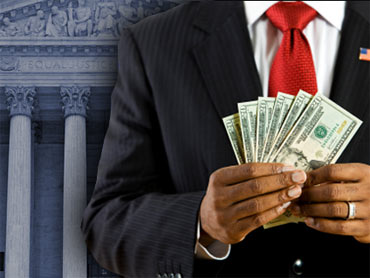
The Hoekstra campaign has filed two applications for a total of $365,717 in matching funds, based on contributions from 2,656 individuals. The Bureau ruled that $19,552 in contributions were ineligible for the match and informed the Hoekstra campaign it is eligible for $326,613.
The Bouchard campaign applied for $238,735 based on contributions from 1,712 contributors. The Bureau ruled that $22,975 was ineligible for the match and informed the Bouchard campaign it is eligible for $192,835.
Both Bouchard’s and Hoekstra’s applications included individual contributions from 2009 and 2010. Neither campaign will receive the full amount for which it is eligible, at least not initially.
The Legislature took $7 million from the public campaign fund in October 2007 to balance the FY 2008 budget, so this year’s initial primary grants will be prorated to 42 percent of the eligible amount. If the total amount for which all the candidates ultimately apply is less than the total amount available for the primary, the full amounts for which eligible candidates apply will be paid. However, those completing payments likely would be made too late to be of full utility to the campaigns.
It remains to be seen why other candidates have not filed for matching funds so far. They may be temporarily concealing the identities of their donors, or they may have ideological objections to the fund. Or, in the cases of state Sen. Tom George, Speaker of the House Andy Dillon and Lansing Mayor Virg Bernero, the question may be whether they have raised the $75,000 in eligible contributions to qualify.
Alternatively, Dillon and/or Bernero may be planning to exceed the $2 million primary election spending limit, and they do not have the same latitude as the Republicans to collect public funds and ignore the spending limit.
Attorney General Mike Cox has raised sufficient eligible contributions to apply for public funds, and the only question relative to his campaign’s participation is likely to be whether he is ideologically opposed to the fund. As a practical matter, it is unlikely he would leave money on the table, particularly when he could deprive his primary election opponents of a greater pro rata distribution by applying for funds himself.
As a self-funded candidate, Rick Snyder is ineligible for public funds.
The mystery surrounding gubernatorial campaign finances is symptomatic of a lax and inadequate campaign finance reporting regime. State officeholders file only an annual report in years when they are not facing the electorate. This contrasts with federal officeholders and candidates who file quarterly in off years. State candidates will file their first report for 2010, the pre-primary, on July 23rd. Federal candidates file quarterly reports, in addition to pre- and post-election reports, in election years.
“It is unconscionable to have officeholders raising millions of dollars from interest groups who are driving a policy agenda and we see only one report in 18 months,” said Rich Robinson of the Michigan Campaign Finance Network. “The citizens of this state have a right to know who is giving what to whom, and they shouldn’t have to wait six months to know it in an election year.”
Note to editorial writers: Two candidates who aspire to receive the Republican nomination to be secretary of state are well positioned to move legislation to address the unacceptably long gaps between state campaign finance reports. Sens. Michelle McManus and Cameron Brown are the Chair and majority Vice Chair, respectively, of the Senate Committee on Campaigns and Elections. Their inaction perpetuates the disgraceful lack of timeliness in Michigan campaign finance disclosure. Please, remind your readers that candidates should earn higher office through service to the citizens of this state.
Statewide Candidate Annual Reports, 10 Months Before Election, 2002-2010
 Grand Rapids Institute for Information Democracy