Levin defends Imperialist “Progress” in Afghanistan
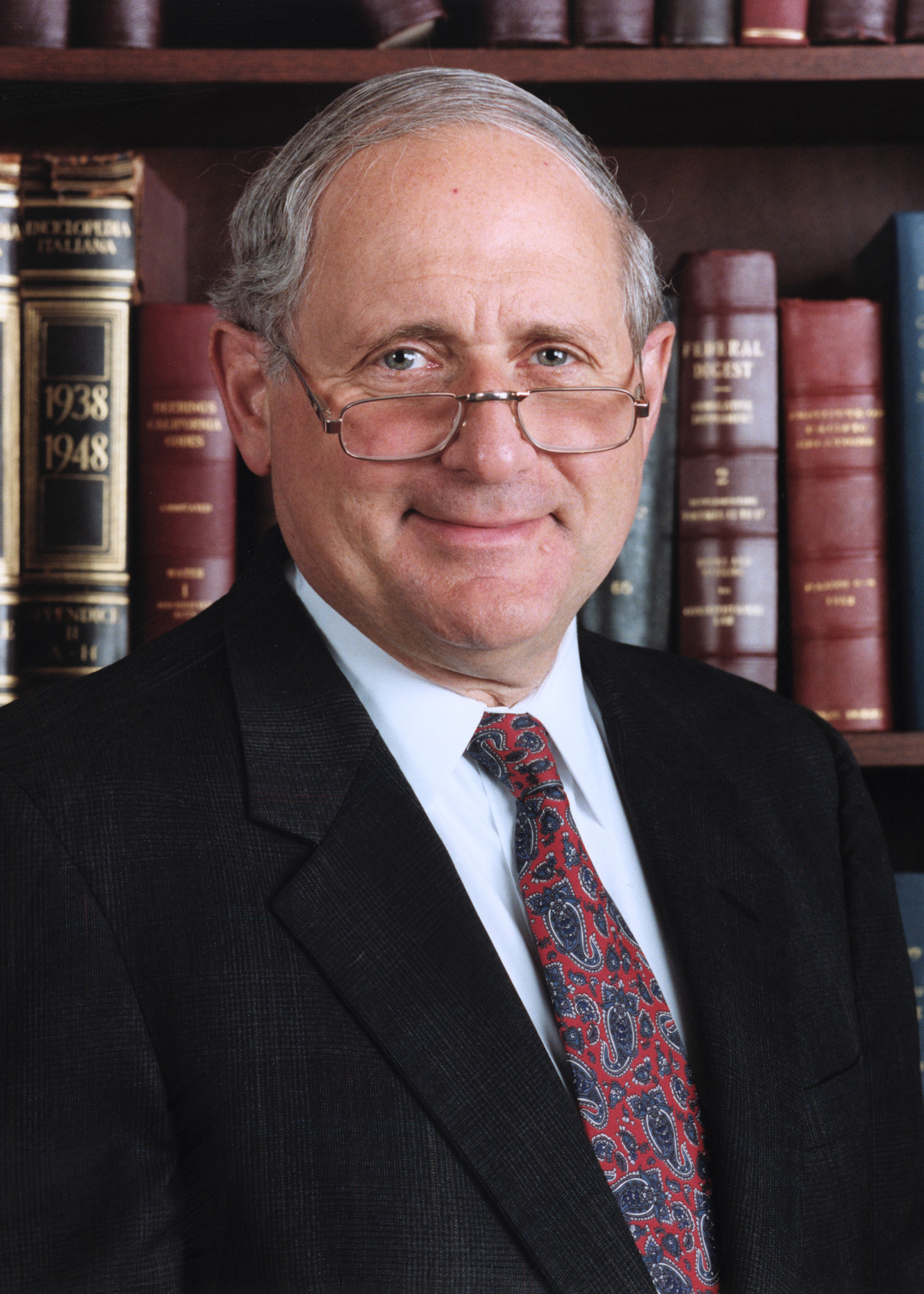
Michigan Senator Carl Levin just returned from a trip to Afghanistan and Pakistan, his second since the Obama administration announced an additional 30,000 US troops to Afghanistan last December.
Levin posted a statement he read on the Senate floor on Wednesday, July 14. It is clear from the statement that Levin is firmly committed to the US occupation of Afghanistan. It is also clear that the Michigan Senator doesn’t want the American people to know the realities of what is happening on the ground in Afghanistan as a result of the nearly 9 year US occupation.
First, it should be noted who Levin met with during his trip. He says that he met exclusively with Afghani and Pakistani government and military officials, as well as US military commanders and US Ambassador Eikenberry. In other words, Levin met with those who support the occupation and are prosecuting a brutal counter-insurgency war.
Second, it is important to point out that Levin makes clear that he believes that there is significant “progress” being made in Afghanistan. What he means by progress is the growing number of Afghanis who are now part of the Afghan National Army (ANA) that is being trained by the US. Levin also believes that the ANA is taking more of the lead in US/NATO missions.
However, this glowing report about the Afghan National Army is contradicted by other sources, which claim that members of the ANA have attacked and killed US and NATO troops. Ryan Harvey reports that ANA members are shooting and killing US & NATO troops. Harvey also reports that desertion rates are nearly 20% amongst Afghan soldiers and that many of them join in order to get training that they will share with the insurgency.
Third, Senator Levin states that he is encouraged by the progress of other Afghan security forces such as they Afghan National Police (ANP) and the Afghan National Civil Order Police (ANCOP). However, independent, non-governmental reports, such as the one put out recently by the Afghanistan Analysis Network, contradict much of Senator Levin’s optimism on the role that these security forces play.

Fourth, Levin does mention that the US occupation of Afghanistan has resulted in the deaths of over 1,200 US troops and countless more wounded. Levin also acknowledges that more casualties are expect, but that “their morale is high and regardless of whether one agrees with the mission in Afghanistan, those men and women deserve a tribute from all Americans. We stand in awe of them.”
Such sentiments ignore the much larger human cost that Afghan civilians have paid and it omits the growing number of US military personnel who have served in Afghanistan and actively oppose the war. Groups such as Veterans for Peace and IVAW are supporting more and more Afghan veterans who do not share Senator Levin’s view on what is happening on the ground in Afghanistan.
Senator Levin concludes in comments on the Senate floor by acknowledging that there are “threats to the Afghan mission.” However, for Levin these threats are external, which means that he is in complete support of the imperialist US occupation.
Levin states that terrorist groups are a threat, some of which operate in Pakistan. What Levin fails to mention is that the US has fomented anti-US sentiment in Pakistan in part because of its support of a corrupt government and the ongoing drone bombings, which have resulted in hundreds on civilian deaths.
Another threat that Levin points to are the warlords in Afghanistan. Again, the Michigan Senator omits the fact that many of the current warlords were once US allies who were trained and funded by the US government. (See Bill Blum’s essay America’s Jihad.)
Ultimately, Levin acknowledges the need for a political settlement, but here again he fails to mention that the US has resisted such a settlement if it involves the Taliban or at least until the US military forces have been able to seriously weaken the Taliban forces.
Levin concludes his comments by quoting T.E. Lawrence, which is a statement that speaks volumes about Levin’s imperialist views. Lawrence was a rabid defender of the British Empire, even if he at times felt it was best to use the “native population” to do the Empire’s dirty deeds.
“Do not try to do much with your own hands. Better (they) do it tolerably than you do it perfectly. It is their war and you are to help them, not to win it for them. Actually, also, under the very odd conditions (there), your practical work will not be as good as, perhaps, you think it is.” T.E. Lawrence
How Would You Like Brigido Oregon’s Job?
(This article by Stephen Franklin is re-posted from In These Times.)
GRAND RAPIDS, MICH.—Brigido Oregon is a small man, so it is hard to imagine all the work that has been squeezed out of him in 27 years as a farmworker.

The blue baseball cap he is wearing flops down below his ears. He smiles and half of his teeth are missing. And he smiles frequently. He looks at least 60, but says he is 45. His hands shake somewhat, and he explains that is the result of a brutal beating he got some months ago by hooligans who hit him with a wooden stick in Immokalee, Fla., the place where thousands of farmworkers make their winter livelihoods.
But you wonder if he also shakes from the endless hours of picking in the early morning when it’s still cold and then in broiling afternoons or from picking without a break or from picking in fields newly sprayed with pesticides or from just living around pesticides.
He says he worked 14 hours stretches day after day last year on some Michigan farms and got only $25 a day. He says he has worked in fields where the crew boss will sell him a bottle of water for a $1 and he will pay $25 a week for a ride by the crew boss out to the fields.
Some months he says he only earns $200 from his work in the fields.
He says there are bathrooms sometimes in the fields, but often he isn’t allowed to go to them. “They don’t want you to go to the bathroom. They want you just to work,” he says with a faint smile.
He says he has worked for crew bosses who pay different wages to workers and the pay depends on whether the workers get along with the crew boss or not. He often does not indicate that he speaks English, because crew bosses, he explains, don’t like English speakers since it means they can speak up for themselves.
“People are afraid to talk,” he says. “The crew leader says to them, ‘If you complain, I’ll call immigration.’”
Because he is a permanent resident he doesn’t mind speaking up. And so he complained about getting cheated out of his wages and officials at the Migrant Legal Aid office here say they helped win some justice.
But sometimes people don’t listen to him. Like when he was arrested by immigration officials. In a statement he made at hearings last October on the conditions facing farmworkers by the Michigan Civil Rights Commission, he explained that:
“I came home and my friends in the house I rented a room told me Immigration had been there and they were looking for me. I told them that couldn’t be right, that I was legal, not illegal. I am a legal permanent resident. Later I was watching tv and heard footsteps…Immigration had come back. They didn’t ask me if I was legal, they just put me in handcuffs. I told them I was legal, but they wouldn’t listen. They said they would not talk to me about that until we got to the police station. When we got there they put my information in the computer and said I was going to be going to jail for some time.
I spent 17 days and night in jail. On the 17th, I went in front of the immigration Judge and he said he had good news and bad news. He said I wasn’t going to be deported because they had found out I was legal. But I did have to go back to Texas to pay some money. I told him someone had stolen my papers and was using my identity in Texas. They checked my fingerprints and determined the name and photo of the man who stole my identity. They said I was free to go. I was in jail for 17 days for no reason.”
As we talked, I was thinking about the United Farm Workers’ Take Our Jobs campaign. I wondered how many would want Brigido Oregon’s life or the lives of the 1.8 million workers who harvest our fields.
If You’re Going to Do Something Illegal in America, Do Something Spectacularly Illegal!
(This article is re-posted from CounterPunch.)

If you want to avoid facing a tough prosecution for malfeasance, be a banker, not a biker.
That appears to be the lesson of Saturday’s front page of the Wall Street Journal, where the lead story was about how Bank of America repeatedly hid its massive bad debt holdings from regulators and investors through a creative accounting device called “repurchase agreements,” and the second story, just above the fold, was about how US Food and Drug Administration prosecutors are “Casting a Wider Net” investigating the use of steroids by competitive cyclists.
According to the BofA story, the bank, during a Securities and Exchange Commission investigation into the real financial condition of the nation’s biggest financial institutions, admitted that at the ends of all the quarterly reporting periods from 2007 through 2009, it had used repurchase agreements, or “repos,” to temporarily shed bad debt before drawing up and releasing its required public filings. That is to say, it managed to lie about and hide from view its weakened liquidity position all through the financial crisis.
Astonishingly, the Wall Street Journal article reports that this practice, known euphemistically in financial industry parlance as “window dressing,” is “not illegal in itself,” unless it is done with the intent of misleading investors. The article is quick to note that “Bof A said its incorrect accounting wasn’t intentional.” (The newspaper didn’t go to the SEC or to any independent source such as an academic expert or lawyer for comment on this laughable whopper.)
BofA, every three months, was transferring mortgage-backed securities briefly to a trading partner in return for a simultaneous agreement to repurchase similar securities from the same partner, once the required SEC filing had been shipped out in the mail. As the Wall Street Journal’s reporter Michael Rapoport writes, “The practice amounts to a bank renting out its balance sheet for short periods; the bank gets fees, and the client on the other end of the trade gets short-time cash.”
If this kind of thing is not deliberate fraud I don’t know what is, and yet the bank, in its statement to the Wall Street Journal, claims the “effort to manage its balance sheet” was “appropriate,” and that the intent behind the shell game was not to mislead investors or regulators, but rather was “to reduce the specific business unit’s balance sheet to meet its internal quarter-end limits for balance sheet capacity.”
How’s that for financial mumbo jumbo?

It would be interesting to see how well an ordinary citizen would fare, if he or she used a “repo” type strategy to hide half his or her income from the IRS (the equivalent scam might involve “donating” half of one’s income on December 31 of the tax year to an accommodating charity, and then taking the money back on January 1 of the next year), and then claimed that the fraud was “not intentional.”
But hey, it works for the banks. The article goes on to report that, “Apart from requiring more disclosure about its repo accounting, the SEC hasn’t taken any action against BofA over the matter. The fact that the [BofA] letter [to the SEC] was released suggests the SEC has concluded its review.”
Meanwhile, even as BofA and other financial behemoths get away with accounting murder, and are held harmless after their crooked dealings brought the US and the global economies to their knees, we’re informed that FDA legal bloodhounds are doggedly stepping up their investigation into illegal steroid use by US cyclists involved in the current Tour de France bicycle competition. The FDA is reportedly hoping to get some participants to turn in competitors who are using illegal substances to enhance their physical performance.
In this fishing expedition, the FDA, according to this second Wall Street Journal article by Reed Albergotti and Vanessa O’Connell, is not out to prosecute rank-and-file riders, but rather wants to bring charges against “any team leaders and team directors who may have vacillated or encouraged doping by their riders.”
Clearly, it is viewed by the US government as being critically important that the sport of cycling be kept clean of drugs, so that the Americans who watch the race from the comfort of their sofas and barcaloungers will know that the winners really deserved to win. But it clearly is not very important for Americans to know whether the bank where they put their hard-earned savings, or in whose artificially inflated stock they have invested their IRA or 401)(k) retirement funds, is cooking its books.
It is apparently critically important to know that those who encourage the use of performance enhancing drugs, thus undermining the confidence of America’s sports viewers in the validity of their viewing experience, will be prosecuted to the full extent of the law. It is apparently not that important at all that the people who caused a financial collapse that has pushed real unemployment and underemployment in the US up to close to 20 percent, collapsed the housing market, and put school districts, town and state governments on the brink of bankruptcy, be called to account, made to do jail time, or to perform community service.
The absurdity of this juxtaposition is made all the more clear by the fact that the FDA isn’t even able to come up with a significant charge to bring against the alleged dopers in its intensifying investigation of the cycling sport. As the Journal notes, “Federal investigators are exploring several avenues,” for possible prosecution, including “whether teams defrauded sponsors by failing to race cleanly,” or whether US Tour de France multiple winner Lance Armstrong’s US Postal Service team might have “misused federal funds.”
It’s the old story: steal a loaf of bread for a family and go to jail for years. Deceive national regulatory authorities and steal from a generation of pension investors and get a Troubled Asset Relief Program handout of billions of dollars in taxpayer funds.
 On June 17, a good size group of folks came to The Bloom Collective’s screening of Crude: The Real Price of Oil. The expose of Chevron/Texaco’s infamous Ecuadorian “Amazon Chernobyl” broke viewers’ hearts as they watched newborn babies squirming in anguish due to skin rashes caused by oil contaminated soil and water; women who lost husbands to the carcinogens bringing their children in for cancer treatments; and villagers dipping drinking water from streams sparkling with rainbow oil slicks on the surface.
In a bold act of solidarity, a delegation from the Amazon visited the Gulf Coast. Amazon Watch reported, “Indigenous and community leaders . . . visited Native American communities and other residents of the oil-afflicted Louisiana Gulf Coast to witness the impacts of BP’s oil spill and offer lessons from their long struggle . . . the Ecuadorian delegation to the Gulf Coast toured the oil-choked coastal marshlands, initiated a summit of oil-impacted indigenous communities, and released a report with ten lessons to help communities demand accountability and cleanup, and prepare for the long-term impacts of living with oil contamination.”
Watch Al Jazeera’s video broadcast:
We here in Michigan should watch and learn. With Indiana recently granting BP the right to dump 54 percent more ammonia and 35 percent more sludge into Lake Michigan each day, our beaches are potentially the next site of yet another man-made environmental catastrophe.
You can borrow “Crude: The Real Price of Oil” from The Bloom Collective.
Haiti, Six Months After the Earthquake
(This article from Amy Goodman is re-posted from Truthdig.)

July 12 marked the six-month anniversary of the devastating earthquake here in Haiti that killed as many as 300,000 people and left much of the country in ruins. Up to 1.8 million people are living in squalid tent cities, with inadequate sanitation, if any, no electricity and little security, or any respite from the intense heat and the worsening rains. Rape, hunger and despair are constant threats to the people stranded in the camps. Six months ago, the world seemed united with commitments to help Haiti recover. Now, half a year later, the rubble remains in place, and misery blankets the camps, layered with heat, drenched by rain.
After landing in Haiti, we traveled to one of the more than 1,350 refugee camps, Camp Corail. It is right near Titanyen, which was used as a dumping ground for bodies during the first coup against President Jean-Bertrand Aristide, and which, after the earthquake, was used for makeshift mass graves.
Corail is on a flat expanse of white gravel, with orderly rows of tents. During the day, the camp becomes searingly hot, with no trees for protection.
Corail resident Romain Arius told me: “In the situation we’re living here in the tents, we can’t continue like that anymore. We would ask them as soon as possible to give us the real houses that they said they were going to give us so that our situation could improve.”
Soon after we left, we heard that a storm collapsed at least 94 tents and sent hundreds of residents fleeing to find shelter.
Haitians are angry, questioning where the billions of dollars donated in the immediate aftermath of the earthquake have gone. The Disaster Accountability Project found that of the 197 organizations that solicited money following the earthquake, only six had publicly available reports detailing their activities.
From the “international donor community,” the wealthier nations, more than $9 billion was pledged, but to date, only Brazil, Norway and Australia have paid in full. Most of the U.S. pledge of $1.15 billion is now being held up in Congress.
Patrick Elie, a longtime Haitian democracy activist and Haiti’s former secretary of state for public security, spoke with me, about land ownership and the earthquake’s enormous toll:
“Land tenure in Haiti is in total chaos. This is also the result of the behavior of the Haitian elites over centuries. They appropriated land, especially after independence and the end of slavery, which would have been common property. And now, there is a lot of discussion about who owns what piece of land.”
Elie said that in this time of emergency that gives the government the power of eminent domain, the key question is whose land will be seized-communal land that peasants have used for centuries, or the vast tracts of land owned by the elites.
I also spoke with Sean Penn. The two-time Oscar-winning actor came to Haiti after the earthquake. Having just been through a medical crisis with his own teenage son, who underwent major surgery, he was horrified at the stories he was hearing about the amputations being performed in Haiti without anesthesia. Penn founded the J/P Haitian Relief Organization (jphro.org) and has been in Haiti for five of the past six months, managing a refugee camp at the Petionville Club golf course with 55,000 Haitians displaced by the earthquake. Sitting in a large tent, Penn was frustrated. Comparing the U.S. resources being spent in Afghanistan (which he called “a ludicrous exercise”) with the U.S. spending in Haiti, he said, “You have a war here, you’ve got a surge coming with storms, but no face to hate, no country to rail at, no natural resources, and the faces here are black.”
Penn says J/P HRO will be in Haiti for the long haul: “We plan to adapt, to adjust. I think our next major new push for us will be rubble removal and working with partners to get people returned into neighborhoods and to again work with partners. Take camp management into community management and advocacy.”
Patrick Elie advocates for popular Haitian leadership in the reconstruction: “We are a people who can fend for ourselves. We have a vision of where we want to go. So we do need friends, but we don’t need people to think for us, or to pity us.”
According to The Washington Post, only 2 percent of promised reconstruction aid has been delivered. The hurricane season is upon Haiti, and millions there are counting on all of us making good on our pledges.
(This article is re-posted from PRWatch.org.)
There’s a new player in the game that is pro-Israel lobby hasbara in the United States: The Emergency Committee for Israel, which is running an ad attacking House Representative Joe Sestak for his positions on Israel.
The Committee has arisen just in time for the 2010 mid-term elections campaign season, and right in the middle of what have been, albeit weak and mostly a public relations stunt, a push for peace talks, mediated by the Obama Administration, between the Benjamin Netanyahu-lead Likud coalition of the Israeli government, and the Palestinians. Even the facade of Obama pushing for negotiations for a two-state solution and holding both sides of the conflict accountable, though, is too much for this new committee, which explains why it has arisen from the dust.
One must look no further than the Committee’s Board of Directors to understand what this organization is all about — it’s almost always that simple. William Kristol and Gary Bauer are the two prominent Neo-conservative figures on the Board. Both have deep ties both to the neo-conservative movement along with the pro-Israel lobby, which, although many innocent bystanders do not realize, often are one in the same.
The Consequences of Breaking from the “Speak with One Voice on Israel” Political Script

On March 23, 2010, Speaker of the House Nancy Pelosi was quoted as saying, “We in Congress speak with one voice on Israel,” a commonly-repeated soundbite on the Hill that comes straight from the book of the American-Israel Political Affairs Committee (AIPAC). By and large, the sentiment is true, which was one of the main motives behind John Measheimer and Stephen Walt’s penning of the book, “The Israel Lobby and U.S. Foreign Policy,” a book that explained a phenomenon that sensible people already understood, but no academic or journalist had been brave enough to research and write about — the “special relationship” between Israel and the United States.
The book argues that the pro-Israel lobby has a stranglehold on U.S. foreign policy, and not just policy related to the resolution of the Israel-Palestine conflict. Indeed, the book argues that groups like AIPAC, the Anti-Defamation League, the David Project, CAMERA and other groups work against the strategic and national security interests of both Israel and the United States in the short- and long-term, in that they have made both countries more susceptible to bearing the brunt of terrorist attacks at home.
While this is almost certainly the case in terms of strategic value, the book also argues that this topic is a taboo in Congress, for the “special relationship” serves as a muzzle for virtually every member of Congress in the way they speak about Israel and vote on Israel-related issues. If they do not vote in a pro-Israel manner (and the lobby gets to define the terms of what is pro-Israel), the AIPACs of the world will rally wealthy donors and powerful names to chase those politicians who deviate from the framework and norms of the “special relationship” out of office.
One can be assured that when nearly every politician in Congress, as well as every politician on a Presidential administration speaks about Israel, it is almost always in terms of how the United States and Israel’s relationship is based almost entirely on a “strategic security relationship” consisting of “shared values.” These are talking points straight from The Lobby.

Walt and Mearsheimer quickly debunk this notion in their book, for Israel has been occupying Palestinian territory for the past 43 years, ever since the culmination of the 1967 War, and continues to build settlements in what is occupied territory under international law, namely United Nations 242. They say occupation of another peoples’ land is something U.S. citizens think is disdainful, and therefore is not something we “value.” Yet, this is actually not correct, for numerous Americans are still flag-waving supporters of the United States’ occupation of both Iraq and Afghanistan.
The second argument, though, is totally smashed — that of the “strategic partnership.” Indeed, many of the 9/11 hijackers were motivated by the United States’ blind support for Israel in the Israel-Palestine conflict. This was stated in the National Commission on Terrorist Attacks Upon the United States, better known to most as the 9-11 Commission Report.
The first claim is more a public relations tool for politicians for pandering to the pro-Israel lobby and their constituents, but the second claim is serious business. Sure, the first one is also repulsively disingenuous from a moral point-of-view, but morals aside, the second claim is factually untrue.
And so, as it relates to the second claim about security of both Israel and the U.S., more progressive-leaning politicians like Obama and Sestak both have been fairly active in pushing negotiations for a two-state solution to the conflict, at least more so than the Bush Adminstration ever was. Obama and Sestak and that crowd are always careful with message control, framing their arguments in a pro-Israel framework for why a two-state solution must be negotiated.
It’s true: if you care about the future of a truly democratic and Jewish state, the two-state solution is the only game in town, and pushing Israel to make more concessions and stop building settlements is mandatory.
J-Street’s “Community of Yes” and Overpowering the Emergency Campaign’s “Chorus of No’s”
JStreet, “the political arm of the Pro-Israel, Pro-Peace movement,” has started what it calls its “Community of Yes” Campaign, encouraging politicians in Congress and the Obama Administration to make a bold move and stop making excuses for why “now is not the time” for a two-state solution, and start making bold moves for peace. Groups like the Emergency Campaign for Israel, in theory, state they support a two-state settlement, yet the neo-conservative movement, which serves as a bedfellow of Israel’s far-right Likud party, a political party that does not recognize the existence of “Palestinians” in its Charter, nor does it call for a two-state solution. In fact, it calls for settlement throughout Greater Israel, which is the antithesis of a two-state settlement to the conflict and is a recipe for bloodletting for years to come.
Groups like the Emergency Campaign will do everything they can to swiftboat politicians out of office who show even the slightest interest in resolving the Israel-Palestine conflict, for they are not interested in peace, but rather in winning back seats in Congress through fear tactics. The Community of Yes, then, must drown out the Chorus of No’s that are coming from neo-cons. Far too much is at stake to do anything but that.

Last night the 9th floor of City Hall was packed with people who were there to discuss a proposed ordinance change that would allow city residents to raise chickens within the city limits. Even before anyone stepped up to the microphone Mayor Heartwell said, “during my time as both Mayor and Commissioner this issue has generated more e-mail than any other.”
Clearly, the proposed ordinance change was a contentious issue, with both sides speaking passionately about chickens in an urban setting. However, the bulk of those in attendance were in favor of the ordinance change and of those who addressed the commission directly there were 28 in favor and 9 against.
As we mentioned in a previous article, one of the largest egg producers in the state, Herbrucks was opposed to the ordinance change and 3 of the Herbrucks grandsons addressed the commission. They all spoke about the potential for diseases in an urban setting, but mostly they focused on wanting to protect the profitability of their businesses. After members of the Herbruck family spoke, the vice president of production got up and painted a grim picture about avian caused diseases, even though he never cited any documentation to support his position.
The disease spreading claims were countered by several people who are already raising chickens, have researched the issue and found that if raised properly chickens in an urban setting pose no health risks to humans. One of the residents cited a document from the Center for Disease Control (CDC), while another cited the World Health Organization (WHO). Advocates for raising chickens in an urban settling made it clear that if the chickens are cared for properly there would be no health risks to humans whatsoever.
Many children addressed the City Commission and expressed their desire to have chickens as pets and for the eggs they would produce. One young girl read off a list of cities in the US that currently allow urban chickens. Their parents and other adults who spoke in favor of the ordinance expressed the importance of having an opportunity for children to learn where their food comes from as well as an opportunity to do something outdoors and away from the TV or computer screen.
Cynthia Price, speaking on behalf of the Greater Grand Rapids Food Systems Council said that adopting such an ordinance would promote sustainability, more local food production and reduce fossil fuel use for transporting food long distances. She also stated that chicken waste could provide needed fertilizer for urban farmers and that chickens also eat insects, which would reduce the need for people to use insecticides. Price also stated that she was in communication with city officials in Madison, Wisconsin and other cities and they told her there was little money spent on enforcement.

The cost of allowing chickens in the city was a concern raised by one man from the Westside who felt that in this time of massive budget cutting the city could not afford any added costs. However, several people speaking in favor of urban chickens stated that the city could charge a permit fee, which would generate income and more than cover any needed costs for inspection of homes that raised chickens.
Two Westside neighborhood Associations (SWAN and WGNO) said that their board of directors were opposed to the ordinance change, mostly on the grounds that homes were already to close to each other and would not allow enough room to raise chickens. While this would be true in some cases there clearly are plenty of homes that have adequate yard space that would allow residents to have chickens that would not negatively impact neighbors.
Rick Beerhorst, whose family has already been raising chickens at their southeast side home, spoke to the issue of neighbor complaints. He stated that one neighbor complained to the city and said that the chickens were attracting flies. Rick took it upon himself to talk with that neighbor and other neighbors and found that one of them had a dog and didn’t always clean up after them so they put out fly traps, which solved the problem.
Berrhorst also stated that this whole issue has provided him an opportunity to get to know his neighbors better and build community. This was a theme that several residents addressed and one parent said that their chickens were an incentive for other neighborhood kids to come and play at their house.
Other residents argued that having the opportunity to raise chickens could help reduce food budgets, promote healthier eating and could be another component of the City’s efforts to promote itself as a model for sustainability.
However, there were a few other dissenters during the evening. One man who said he used to live in South America said his neighbors had chickens and the flies were awful. He also said that the chickens attracted mice and rats.
Having lived in Latin America myself, where neighbors had chickens and pigs, sanitation was never an issue. It seemed as if the gentleman was trying to infer that having chickens in an urban setting would be like living in a “third-world” country. This man was followed by George House, the executive director of Michigan Allied Poultry Inc., which advocates on behalf of the industry on government matters. House also raised concerns about the risk of diseases, but considering that he is essentially a lobbyist for large egg farms it seems to this writer that he was just defending the economic interests of large egg farms.
One woman who addressed the commission said that she has a garden at her Grand Rapids home and gets eggs from a neighbor. She stated that what is happening is that the “Chemlawn monoculture that we grew up with is on its way out.” She also stated that more and more residents are trying to live sustainable lifestyles and the city needs to recognize this.
After nearly 90 minutes of public comment on this matter the hearing was adjourned with no clear date when the City Commission would decide on this matter. This means that people still have an opportunity to weigh in and let the City officials know what you think about the possibility of raising chickens in the city of Grand Rapids.
Media Bites – Deconstructing Hoekstra Ads
In this week’s Media Bites we take a look at some of the political ads from Michigan Gubernatorial candidate Pete Hoekstra. We point out several contradictions in Hoekstra’s ads, particularly on economic issues and we provide some information on the groups that have endorsed him. Like most political ads Hoekstra’s are trying to appeal to a particular audience, have limited information on where he stands on issues and no information on his voting record while in Congress.
Scary Anti-Iran Talk Is Escalating — And Weapons May Be Moving Into Position for Attack
(This article is re-posted from AlterNet.)
Crazy talk about the Middle East seems to be escalating, backed up by some pretty ominous military deployments. We’ll start with the department of scary statements:

First up, Shabtai Shavit, former chief of the Israeli spy agency Mossad, speaking June 21 at Bar Ilan University, Tel Aviv on why Israel should launch a pre-emptive strike at Iran: “I am of the opinion that, since there is an ongoing war, since the threat is permanent, since the intention of the enemy in this case is to annihilate you, the right doctrine is one of presumption and not retaliation.”
Second up, Uzi Arad, Israeli prime Minister Benjamin Netanyahu’s national security advisor, speaking before the Jewish Agency in Jerusalem June 22 on his belief that the “international community” would support an Israeli strike at Iran: “I don’t see anyone who questions the legality of this or the legitimacy.”
Third up, Italian Prime Minister Silvio Berlusconi speaking to reporters at the G-8 meeting in Toronto June 26: “Iran is not guaranteeing a peaceful production of nuclear power [so] the members of the G-8 are worried and believe absolutely that Israel will probably react preemptively.”
Fourth up, Central Intelligence Director Leon Panetta predicting on ABC’s “This Week” program June 27 that Iran could have two nuclear weapons by 2012: “We think they [Iran] have enough low-enriched uranium for two weapons…and while there is continuing debate [within Iran] right now about whether or not they ought to proceed with a bomb…they clearly are developing their nuclear capacity.” He went on to say that the U.S. is sharing intelligence with Israelis and that Tel Aviv is “willing to give us the room to be able to try to change Iran diplomatically and culturally and politically.”
A few points:
1) Iran and Israel are not at war, a fact Shavit seems confused about.
2) Since the recent rounds of sanctions aimed at Iran would have lost in the United Nations General Assembly, it unclear who Arad thinks is the “international community.”
3) Berlusconi is a bit of a loose cannon, but he is tight with the Israelis.
4) An Iran that is different “diplomatically and culturally and politically” sounds an awful lot like “regime change.” Is that the “room” Panetta is talking about?
And it isn’t all talk.
Following up the London Times report that Saudi Arabia had given Israel permission to fly through Saudi airspace to attack Iran, the Jerusalem Post, the Islam Times and the Iranian news agency Fars report that the Israeli air force has stockpiled equipment in the Saudi desert near Jordan.
According to the Post, supplies were unloaded June 18 and 19 outside the Saudi city of Tabuk, and all civilian flights into the area were canceled during the two day period. The Post said that an “anonymous American defense official” claimed that Mossad chief Meir Dagan was the contact man with Saudi Arabia and had briefed Netanyahu on the plans.
The Gulf Daily News reported June 26 that Israel has moved warplanes to Georgia and Azerbaijan, which would greatly shorten the distance Israeli planes would have to fly to attack targets in northern Iran.
The U.S currently has two aircraft carriers—the Truman and the Eisenhower—plus more than a dozen support vessels in the Gulf of Hormuz, the strategic choke point leading into the Gulf of Iran.
The Saudis have vigorously denied the reports they are aiding the Israelis, and Shafeeq Ghabra, president of the American University of Kuwait, says, “It would be impossible for the Saudis to allow an Israeli attack on Iran.”
But Ephraim Inbar, director of the Begin-Sadat Center for Strategic Studies in Ramat Gan, Israel, argues that Saudi Arabia and Israel both fear a nuclear-armed Iran. “This brings us together on a strategic level in that we have common interests. Since the Arab world and Saudi Arabia understand that President Obama is a weak person, maybe they decided to facilitate this happening.” He also said the story might not be true because “I don’t think the Saudis want to burden themselves with this kind of cooperation with Israel.”
According to military historian Martin van Creveld, a professor at the Hebrew University in Jerusalem, “The real fear is that someone will get carried away by his own rhetoric and fear mongering” and start a war. He also thinks, however, that Israel should not take a preemptive strike “off the table.”
Trita Parsi of the Woodrow Wilson Center in Washington argues that the escalation of rhetoric is dangerous. “When you have that kind of political environment, you are leaving yourself no space to find another solution,” he told the Christian Science Monitor. “You may very well end up in a situation where you are propelled to act, even though you understand it is an unwise action, but [do so] for political reasons.”
The rhetoric is getting steamy, the weapons are moving into position, and it is beginning to feel like “The Guns of August”* in the Middle East.
The Grand Rapids Press is using its Profile feature on Sundays to write about each of Michigan’s gubernatorial candidates. If there were a Pulitzer Prize for trivial information reporting, this series might just nail that award. This past Sunday’s article was about Pete Hoekstra. Here’s a brief recap of what it did and didn’t cover:

1. We learn that Hoekstra gives an interview on Fox News and “never breaks a sweat.” But the Press doesn’t mention he was sweating plenty after he Twittered away confidential information during a visit to Iraq, potentially endangering his entire travel party. The supreme irony here is that Pete is the ranking member of the House Permanent Select Intelligence Committee.
2. The article describes Hoekstra’s marriage to his high school sweetheart, but doesn’t mention his other cozy, long-term relationship: with the military-industrial complex. The top 20 contributors to Hoekstra’s congressional campaigns include Boeing, Lockheed Martin, and Raytheon—makers of items like guided missiles, phantom jets, and attack drones.
3. The Press covers the fact that Hoekstra is an immigrant—born in the Netherlands—but doesn’t mention his rabid anti-immigration stance. He’s voted for things like a fence along the Mexican border, deporting undocumented immigrants who go to emergency rooms for treatment, plus he wants to make English the official language of the United States. Hoekstra recently attacked the launch of a Supreme Court case to try to overturn SB 1070, Arizona’s racist anti-immigration law.
4. In the Press article, Hoekstra says that the highlight of his years in Congress has been doing feel-good things for Michigan, like getting federal funds for cherry and asparagus farmers. The Press doesn’t mention that Hoekstra’s interests are rarely related to compassionate, social-oriented legislation. For example, in 2007, he voted to provide $100 billion to fund the war in Iraq and increase the military presence in Afghanistan. That same year, he voted against expanding the State Children’s Health Insurance program at a cost of $12 billion a year for five years.
5. The Press article never alludes to Hoekstra’s recent TV ad that states, “We are going to have a tax code that works for the taxpayer and not for special interests and not for lobbyists,” and that he actually manages to say that with a straight face. Nor does it tie into the fact that Pete voted for, among other things, sending $850 billion of taxpayer money to Wall Street during the October 2008 bailout—proving that truth in advertising can be just a three-word phrase.
6. The Press reporter included an adorable description of the Hoekstra family making olle bollen, a Dutch type of a doughnut, on New Year’s Day. It somehow missed mentioning Pete’s other holiday activity last year: the release of a fund-raising letter capitalizing on the attempted Christmas terrorist attack in Detroit. “My promise to you, as your governor, my first duty and most solemn responsibility is to keep Michigan safe!” Hoekstra swore. The fact that the attack had been thwarted before anything happened was apparently beside the point.
7. The article notes that Hoekstra developed his political philosophy working at Herman Miller, but outside of stating that he’s a conservative, there are no details. Here are a few:
Hoekstra is vehemently against a woman’s right to choose; same-sex marriage; amnesty and citizenship for undocumented immigrants; ending the occupations of Iraq and Afghanistan; and universal health care.
He is strongly in favor of prayer in schools and school voucher programs; privatizing Social Security; expanding the military; keeping coal and oil as our major energy sources; and the death penalty.
These are just a few pertinent facts that went missing in last Sunday’s coverage. But they help prove that if you want to be informed about elections in West Michigan, the Grand Rapids Press is hardly your go-to resource. Use reputable research sites, like Open Secrets, and independent journalism sites, like this one and others such as The Michigan Messenger, to seek more substance for an informed voting decision.
 Grand Rapids Institute for Information Democracy