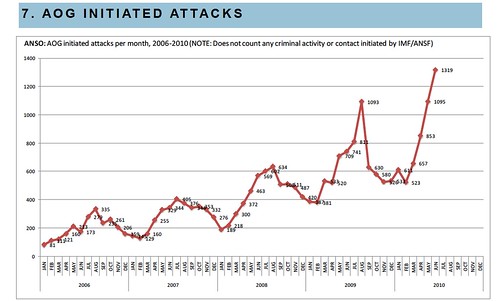
Media Bites – Hollywood and trivialized violence

In this week’s Media Bites we take a look at some of the content in the recently released DVD of the film Kick Ass. The film uses some stereotypical racial themes with a White “superhero” killing the “bad” black characters.
However, the stronger theme that this clip deals with is violence that is perpetrated by a pre-adolescent girl “superhero,” who seems to take pleasure in her acts of violence. While these acts of violence are taking place the theme song from a 1968-70 Saturday morning cartoon – The Banana Splits – is playing, which further trivializes the violence.
New Report Looks at how State Judicial Seats are being bought
Spending on state Supreme Court elections has more than doubled in the past decade, from $83.3 million in 1990-1999 to $206.9 million in 2000-2009, and deep-pocketed special interests play a dominant role in choosing state jurists, according to a report released today.
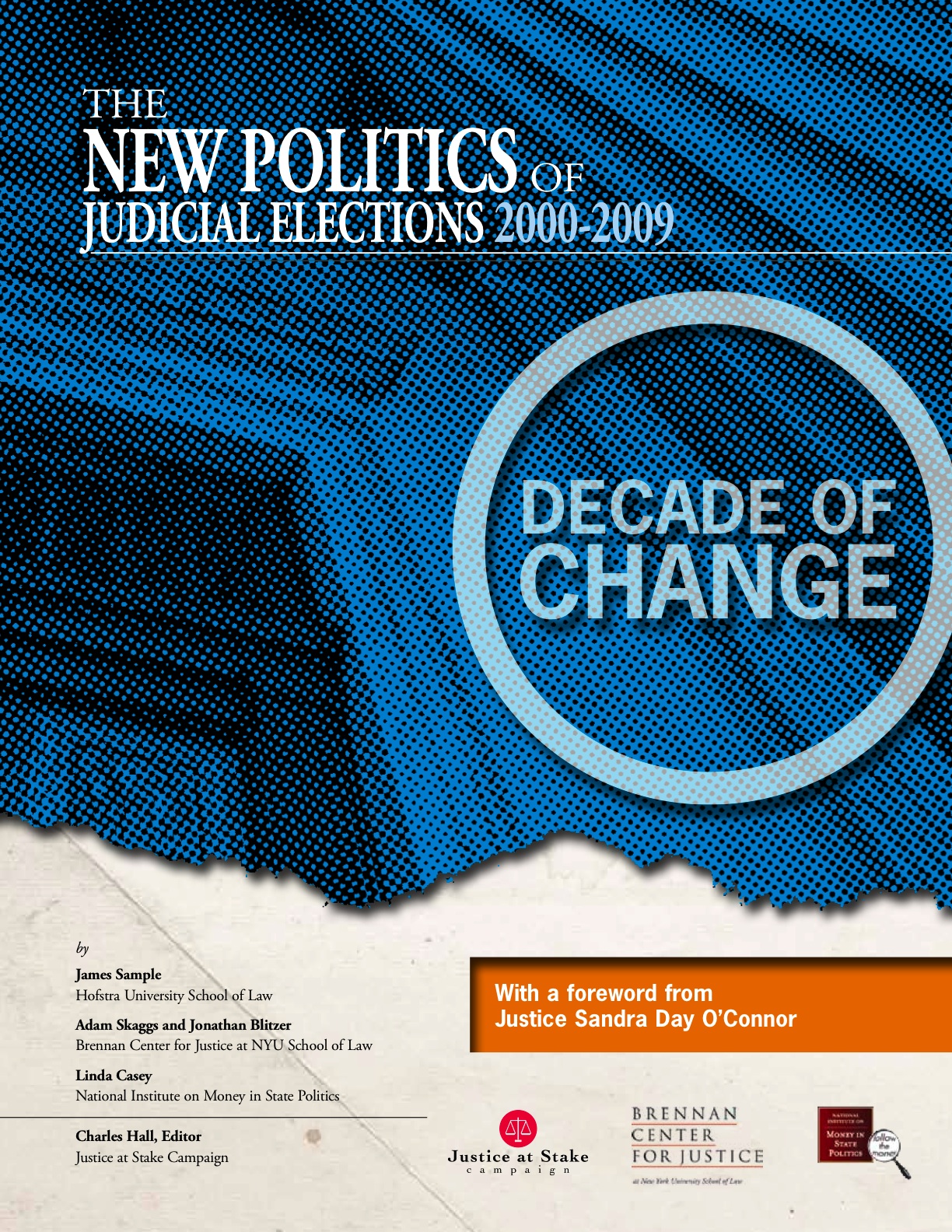
For more than a decade, partisans and special interests of all stripes have grown more organized in their efforts to tilt the scales of justice their way. This surge in spending-much of it funneled through secret channels-has fundamentally transformed state Supreme Court elections.
The report, “The New Politics of Judicial Elections, 2000-2009: Decade of Change,” is the first comprehensive study of spending in judicial elections over the past decade. It was released today by the Justice at Stake Campaign, the Brennan Center for Justice at NYU School of Law, and the National Institute on Money in State Politics.
An Executive Summary of the report is available here. Among the report’s key findings:
- Spending records were repeatedly shattered nationally and by state throughout the decade. Candidates raised $206.9 million in 2000-2009, compared with $83.3 million in the 1990s. Twenty of the 22 states that hold at least some competitive elections for judges had their most expensive election ever in the last decade.
- A select group of “super spenders” is outgunning small donors. In the 29 costliest elections in 10 states, the top five spenders each averaged $473,000 per election to install judges of their choice, while all other contributors averaged only $850 apiece.
- Judicial elections are increasingly focusing not on competence and fairness, but on promising results in the courtroom after election day. The tort reform wars have driven this trend, with a half-dozen national business-funded groups, and leaders of such corporate giants as Home Depot and AIG insurance, squaring off against plaintiffs’ attorneys and unions.
- A TV spending arms race continues to escalate, creating a need for money that only special interests can satisfy. In 2007-08, $26.6 million was spent on Supreme Court TV ads, the costliest two-year ad cycle since tracking began in 2000. For the decade, supreme court candidates, special-interest groups and political parties spent an estimated $93.6 million on TV ads.
- Special interests are committed to dismantling spending limits, eliminating merit selection of judges, and keeping campaign spending secret by assaulting decades of disclosure laws. A campaign is underway to persuade federal courts to downplay the Constitution’s due process guarantee by reinterpreting the he First Amendment to gut and weaken federal and state election laws.
- Many judicial election spenders, including plaintiffs’ lawyers and corporations, have a passion for secrecy-using shell organizations to keep their role out of the public eye. Such strategies are likely to continue even after Citizens United, a Supreme Court decision that allowed corporate and union spending in elections. This could make a true accounting of special-interest spending impossible in 2010 and beyond.
In one section of the report that looks at individual states and judicial elections the information on Michigan does not bode well for those who care about democracy.

“For much of the decade, four conservative Supreme Court justices dominated Michigan’s Supreme Court. Their opponents, who assailed the justices as an anti-plaintiff “Gang of Four,” helped defeat Chief Justice Cliff Taylor in 2008. The four justices’ top supporters from 2000–09 included the Michigan Chamber of Commerce and the Michigan Republican Party. Top super spenders on the other side included the Michigan Democratic Party; the Michigan Trial Lawyers Association; and Citizens for Judicial Reform (CFJR), a group wholly funded by plaintiffs’ lawyer Geoffrey Fieger and his law firm. The state Democrats ran more than $1.1 million ads for 2008 winner Diane Hathaway, almost exactly offsetting the $1.2 million that the Michigan Chamber and GOP combined to spend on TV ads for Justice Taylor. In addition, the state parties and other PACS reported an additional $1 million in non-TV spending in 2008. Total Supreme Court spending in 2007–08 (candidate fundraising, independent TV ads, and $1 million in non-TV independent expenditures registered with state): $5.9 million.”
To view the whole report Justice at Stake, click here.
Carl Levin accused of war crimes, then hit with a pie
It is being reported on many news outlets that Michigan Senator Carl Levin was confronted today by antiwar activists while speaking to Democrats in Mecosta County.
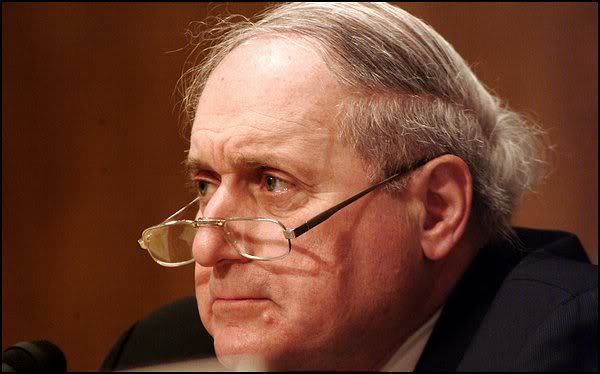
Some reports state that a young man read a statement to Senator Levin that accused him and other Senators of committing war crimes, specifically “Israeli war crimes against the Palestinian people.” Other news sources said that the woman who pied the Senator stated, “Carl Levin is one of the most respected senators in Congress. People tend to blame the war on Republicans, but we wanted to target Levin today to send a message that liberals and Democrats are just as implicated in the violence as the Republicans.”
We have not come across the actual statement read by the student who confronted Senator Levin, nor have we found any additional comments from the woman who pied him. The mainstream news coverage seems to be uninterested in the motives of the two people involved, instead they report it like a typical crime story.
Regardless of what people think about the tactic of hitting an elected official with a piece of pie, the claims that Levin supports war crimes should be investigated. It has been well documented for several years now that Senator Levin has voted for the funding of both the Iraq and Afghanistan wars. At times Levin has been critical of the US occupation of Iraq, but Levin has consistently voted to fund that occupation and the US/NATO occupation of Afghanistan.
When it comes to Israel, Levin’s voting record has been one of the most pro-Israel in all of Congress. Levin has voted to provide $3 billion of US aid to Israel annually for the past 30 years. Levin voted to support Israel’s bombing of Lebanon in 2006 and the Israeli assault on Gaza at the end of 2008 and early 2009. On this last point one could argue that Israeli’s assault on Gaza was a war crime as has been supported by the Goldstone Report.
None of this should be a surprise, since Senator Carl Levin has been one of the largest recipients of pro-Israeli PAC money over the past 20 years. According to Opensecrets.org, Levin has received $1,649,962 from pro-Israel groups.
This superficial coverage is similar to that of the action that two people took against Senator Levin last December just hours before President Obama made the announcement of sending 30,000 more US troops to Afghanistan. Some local news media reported that two men were arrested for refusing to leave the Senator’s office, but they failed to report their motives even though they had all been provided a statement explaining their actions.
Is the GR Press doing PR work for Enbridge CEO?
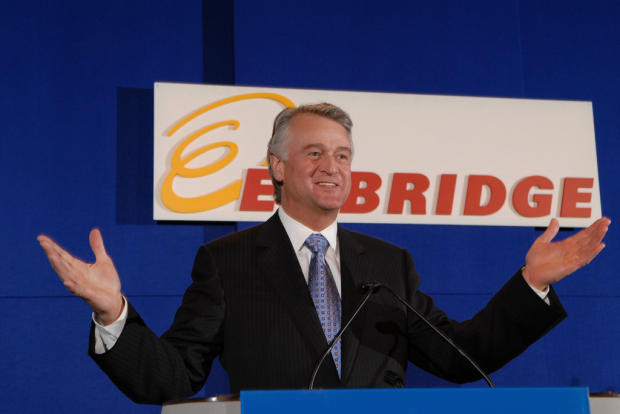
It has been 3 weeks since the massive oil spill occurred in southwestern Michigan due to negligence from a defective pipeline owned and operated by the energy company Enbridge.
Yesterday, the Grand Rapids Press ran a story based on a 30-minute interview with Enbridge DEO Patrick Daniel. Like the previous coverage, this article didn’t do much to analyze the cause and consequences of the spill that has contaminated the Kalamazoo River and the communities it runs through.
The Press article essentially allows the Enbridge CEO to provide a narrative for what has happened since July 26. The energy company CEO tells us how he reacted to hearing about the spill, to his interactions from those affected by it, as well as his thoughts about the “realities” of living in an industrial society.
“The value and importance of energy to society is so critical,” he said. “We all wish that we didn’t have to have pipelines. And we all wish that we didn’t have to experience accidents. We must remain vigilant.”
Wow. The Enbridge CEO’s comments are an amazing example of propaganda. First, Daniel wants to assure us all how important energy is to society. By framing the comment the way he did it’s as if he were saying, “Breathing air is so important to society.” By making energy this benign entity we don’t question the very nature of how or why countries like the US have become so dependent on fossil fuels.
Second, the CEO’s comments make it sound as if all societies benefit equally from the use of oil and other fossil fuel energies. Ask the Ogoni people in Nigeria if they feel that oil is a benefit to their communities. Ask the Uwa in Colombia if they are any better off because of oil or any number of indigenous groups around the world. Ask the people whose lives have been destroyed by the ongoing oil spill in the Gulf of Mexico. Hell, ask the people along the Kalamazoo River if they see the “value” of energy in this society.

Third, Patrick Daniel insults us all by saying that he wishes that we didn’t have to have pipelines, especially ones that are defective. This statement should be seen for what it is, a statement in defense of privatized energy that operates within a system of capitalism. What the CEO really means is that we shouldn’t question how energy production happens and who profits from it.
Enbridge certainly profits from oil production and they also operate on the assumption that there will be negative environmental consequences. Enbridge and other capitalists see oil spills and environmental damage as externalities, something that doesn’t factor into the cost of doing business.
Lastly, when the CEO says, “We must remain vigilant,” he distracts us all from the fact that Enbridge has had 610 different spills between 1999 and 2008 alone, according to a report from Tar Sands Watch. If the reporter at the Grand Rapids Press were at all competent, he or she would have responded to Patrick Daniel’s statement that, “we must remain vigilant.” Instead, the Press reporter goes on to tell us that the Enbridge CEO is “a hiker, a mountain climber and an avid fly fisherman.” In the end the Press article ends up being a wonderfully crafted public relations piece for the Enbridge CEO.
Media Failing to Ask Tough Questions on Afghanistan War…Again
(This article/video is re-posted from Rethink Afghanistan.)
General Petraeus is on a media tour to sell the idea that the U.S. military is “making progress” in Afghanistan, a well-worn message aimed at convincing elites to extend this brutal, futile war. So far, it looks like the mainstream media is buying it, hook, line, and sinker.
Petraeus kicked off his spin campaign this morning with an hour-long special on Meet the Press with David Gregory. The piece opened with a montage of Petraeus doing sit-ups, and later showed him jogging, with Gregory opining about him wearing out troops half his age. Gregory went out of his way to set up a “Petraeus saves the day” narrative, asking the general if the situation in Afghanistan reminds him of the “dark days” in Iraq just before Petraeus “succeeded” with the surge. Petraeus hammered home his one-word message relentlessly: progress. Gregory feigned tough skepticism, but betrayed his hero-worship with setups like, “Watch how savvy Petraeus is when he answers my tough question.” Throughout, Gregory’s sheepish grin conveyed the sense that he wanted to hug Petraeus instead of critically probe his assertions.

As Petraeus battered viewers again and again with his “making progress” theme, Gregory failed to ask probing, skeptical questions. When Petraeus mentioned “oil spots,” as if the stain spreading across Afghanistan were one of security, Gregory failed to press him on the huge increase in civilian deaths, the 87-percent spike in violence and the incredible explosion of IED attacks over the last several months. When he brought up the outrageous TIME Magazine cover showing a woman’s mutilated face, Gregory failed to mention the attack happened last year and that TIME Magazine’s cover grossly distorts the choices before the United States. When Petraeus denounced the Taliban’s recent killing of a pregnant woman, Gregory failed to press Petraeus on ISAF’s own killing of pregnant women earlier this year in which bullets were reportedly dug out of a screaming woman by special forces troops before she bled to death. Gregory didn’t do journalism today. He provided a platform for military spin.
Petraeus and Gregory jovially closed the interview by quoting Generals Grant and Sherman, with Petraeus saying he’s no politician. Don’t believe that for a second. The military wants to extend this war, and it sees American public opinion as an obstacle in getting what it wants. Petraeus admitted as much when he told Gregory that the point of his upcoming media appearances were scheduled in the hopes of showing “people in Washington” and the public that we’re making progress (Finish your drink!) and to shore up support for the failing war effort. This media blitz is about Petraeus shaping public opinion to affect the political environment for a future push to extend the war far beyond the bounds implied by Obama’s December 2009 West Point speech. In short, the military is turning its several-billion-dollar public relations apparatus on the American people, and the mainstream media is so far complicit. To quote one of my favorite bands, “There is a war going on for your mind.”
If the media fail to ask hard questions, there’s a chance Petraeus could get what he wants: the freedom to extend an extremely unpopular war that’s not making us safer. We’ve got to push back, and we’ve got to do it now.
CBS’ Katie Couric is next in line to talk to Petraeus during his high-profile spin campaign, so we’re starting with her. Sign our act.ly petition to Couric and push her to ask tough questions about Petraeus’ claims of “progress” and his attempt to extend the Afghanistan War. If you’re not a Twitter user, don’t worry–there are instructions on how you can participate without it.
General Petraeus’ media blitz is just getting started. We’ve got to push our media–hard–to ask real questions and prevent easily disproved spin from polluting the debate. Petraeus wants to change public opinion, and he’s spending your money to sell you a brutal, futile war that’s not making us safer. If you’re tired of this kind of manipulation, join the tens of thousands of other people working to end this war with Rethink Afghanistan.
Carl Levin’s Idea of Revolution
 On Friday, August 6, Michigan Senator Carl Levin released a statement entitled “Pursuing a Revolution in Transportation.” In this statement Levin is basing his idea of a transportation revolution on a continuation of car production with one small change – the cars will be powered by electricity, not oil.
The statement by Levin is to be expected considering the Senator’s relationship with the auto industry. During his career three of the top four individual campaign contributions have been from the Big Three automakers. The Michigan Senator would be hard pressed to advocate for anything that would threaten the auto industries stranglehold on transportation in the US.
Just because there is the possibility of a future with cars that do not use fossil fuels to power them does not equate a revolutionary departure from the environmental and social and human health costs of petroleum-powered cars. The idea that using electric batteries to power individual vehicles will revolutionize transportation is flawed on many levels.

First, petroleum and petroleum-based production will still be part of the auto industry even if we switch to electric batteries. Plastics are an integral part of auto production, which will necessitate the use of oil consumption. Car parts factories and auto assembly plants function on either oil or coal-powered electricity production, neither of which are revolutionary.
Second, the production of batteries comes with its on consequences. Car batteries rely on the extraction of minerals, particularly lithium, which has its own particular environmental and social costs.
Third, will the “transition” to electric battery-powered cars mean that everyone will have to buy a new car? Who would be able to afford such cars and will we see only the economically privileged sectors of society able to drive these vehicles? Will this cause more contempt for the poor and working class who would continue to drive petroleum-powered cars? Either way, the production of more cars means the extraction of more minerals for the metals used in cars, rubber for tires and plastics for auto parts.
Fourth, the continued production of cars will mean the continual construction of roads and park spaces, which have contributed greatly to environmental damage and human suffering. Road construction historically has displaced people and that will only continue as car production continues. Ecosystems have been devastated by road building and according to the World Wildlife Federation an estimated 1 million animals are killed by cars/trucks on US roads every day.
Finally, the continued production of cars, even ones powered by batteries, limits our ability to rethink about what is really necessary to revolutionize transportation. If we want to be revolutionary, we really need to think about the role of transportation in our lives and what is absolutely necessary for a sustainable future.

We cannot expect to find Star Trek-like solutions to our problems, rather a serious evaluation of how we move about. Mass transit systems that will serve entire populations are essential if we are to beat our energy addictions. We also need to evaluate how often we move about and redesign our collective lives that serious reduces the need for transportation that perpetuates the current system.
Some excellent resources that might jar some creative thinking are books like Katie Alvord’s Divorce Your Car! : Ending the Love Affair with the Automobile. An organization that has done important work to challenge road and parking construction is the Alliance for a Moratorium on Paving. Ultimately, we will need to redesign our cities and our lives. These ideas and more might qualify as a revolution in transportation, unlike the modest adjustment that Senator Levin is advocating for.
Who Owns Ya Mind?
Musical documentary about the subversive core of Hip-Hop sampling. How samples, remixing, mashups and copyright criminal dj’s, are radically transforming property to work for the public, not just the capitalist and mega-corporations.
Video by Jonathan Uss. Song: Who Owns What – PARECON and Productive Property by Lonnie Ray Atkinson and error404(ccMixter) Album: DEF with the REVOLUTION.
Who Gets to Review and Be Reviewed?
(This article is re-posted from Fair.org.)

When it comes to political books, the New York Times Book Review and the C-SPAN book show After Words share an exceedingly narrow view of whose books deserve review—and who is fit to discuss them. A FAIR study found that these important media venues for discussion of newly published books were overwhelmingly dominated by white and male authors, reviewers and interviewers.
FAIR’s study examined every episode of After Words from March 2008 to January 2010, and the reviews of politically themed books in the New York Times Book Review from January 2009 to February 2010. In total, the study counted 100 episodes of After Words and 100 reviews in the Times. In each case, the author(s) and reviewer/interviewer were classified by ethnicity and gender. (Because some books had co-authors and some reviews encompassed multiple books, there were 120 authors of 111 books in the Times reviews studied.)
Ethnicity
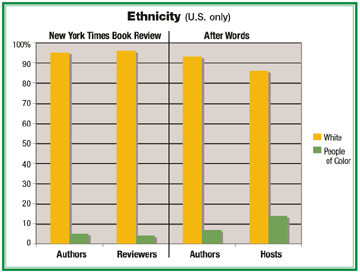
In terms of ethnicity, the authors and reviewers featured by both outlets were strikingly homogeneous. In the Times, 95 percent of the U.S. authors of political books were non-Latino whites, a group that makes up 65 percent of the U.S. population. The non-white U.S. authors included three African-Americans, one Asian-American (Bush legal counsel John Yoo) and one Iranian-American. Of the 12 non-U.S. authors in the Times (10 percent of the total), 10 were white British, one was Israeli and one—Tariq Ali—was Pakistani-British.
The reviewer roster at the Times was even less ethnically diverse. Just 4 percent of U.S. reviewers of political books were people of color—two African-Americans, one Indian-American and one Arab-American. Eight percent of the Times’ political reviewers were from outside the U.S., all of them either white Europeans (British, Irish and French) or Israeli.
After Words was only slightly more ethnically diverse. Whites accounted for 93 percent of the U.S. authors; among the non-white authors, all but one were black. The study found nine international authors on After Words, coming from a range of countries, including Uruguay, Kenya and India.
After Words’ interviewers were the most diverse group the study counted. Ninety-nine of the 100 were American; of these, 14 were people of color. Eleven of the American interviewers were African-American. The remaining non-white interviewers included one Arab-American, one Indian-American and one Iranian-American. The study counted one international interviewer—Moisés Naím, the editor of Foreign Policy.
The study did not find a single U.S. Latino or Native American author or reviewer in either the Times or on After Words during the periods studied.
Gender
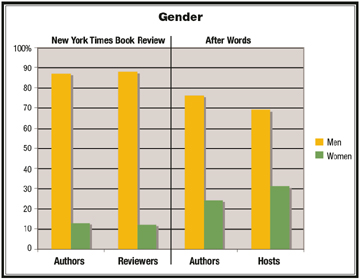
The numbers on gender were likewise unbalanced, with men the dominant presence in both outlets. In the Times Book Review, women made up just 13 percent of the authors of political books and 12 percent of the reviewers. After Words fared somewhat better, with women constituting 24 percent of the authors and 31 percent of the interviewers.
Among 231 reviewers and authors combined, the Times included just two women of color: PBS news anchor Gwen Ifill and history professor Bettye Collier-Thomas, both African-American authors. The Times published no women of color as political book reviewers. After Words featured women of color 11 times among the authors and interviewers on the show, accounting for 5 percent of the show’s roster; Ifill appeared twice, once as an author and once as an interviewer. (Women of color are roughly 16 percent of the U.S. population.)
Topics
The study also looked at the subject matter of the books reviewed. In both cases, books about international policy were the most prevalent, accounting for 36 percent of both the Times and After Words lists. The second and third most frequent topics on the Times list were economics (22 percent) and partisan/electoral politics (19 percent). (Books could be counted in more than one subject category.) On C-SPAN, books on history (27 percent) and military/espionage topics (19 percent) rounded out the top three.
Books pertaining to environmental issues were notably limited, accounting for 5 percent of the Times list and just 2 percent of C-SPAN’s. One of After Words’ two books on environmental themes was written by climate change denialist Christopher Horner (1/11/09).
The study looked specifically at the subjects of books authored or reviewed by women and people of color. On C-SPAN, more than three-quarters of the books with non-white (U.S. and international) authors—77 percent—centered on ethnic issues. For instance, Peniel Joseph (1/23/10), a Haitian-American Tufts University history professor, discussed his book Dark Days, Bright Nights: From Black Power to Barack Obama. Likewise, of the 15 people of color who were invited to host After Words, nine (60 percent) did so for books about ethnic issues.
In the Times, similarly, four of the six non-white authors represented wrote books on ethnic issues—for instance, William Julius Wilson’s More Than Just Race: Being Black and Poor in the Inner City (3/8/09). About two-thirds of the non-white reviewers discussed books with ethnic topics.
Women authors and reviewers were somewhat less focused on women or women’s issues. On C-SPAN, 10 of the show’s 24 female authors spoke about such books, like Cokie Roberts (5/18/08) and her book Ladies of Liberty. Of the 31 female interviewers on After Words, 11 of them spoke to authors of books about women.
In the Times, 27 percent of female authors wrote books about women, such as Sally Denton’s The Pink Lady: The Many Lives of Helen Gahagan Douglas, a biography of the pioneering female politician (1/10/10). Of the 12 female reviewers in the Times, two of them reviewed books dealing with women.
Political Ideology
Authors and reviewers/interviewers were not classified by left/right ideology, as such categories may be quite subjective, particularly with authors and critics who may not have taken public stances on a variety of political topics. However, looking at individuals on the Times and C-SPAN rosters whose ideological classification might elicit little debate, it appears that both outlets were able to achieve some measure of ideological diversity.
For instance, the Times featured left-leaning authors like Tariq Ali and Juan Cole, centrists like Leslie Gelb and Gregg Easterbrook, and conservatives like Richard Brookhiser and Norman Podhoretz. Like-wise, Times reviewers spanned the ideological spectrum, including Patrick Cockburn and Paul Hockenos on the left, Roger Cohen and Matt Bai in the center and Ross Douthat and Christopher Caldwell on the right.
After Words’ authors included left-leaning Tom Hayden and Matt Taibbi, centrists Cokie Roberts and Brian Michael Jenkins, and conservatives George Will and Andrew McCarthy. Among its interviewers were leftists Bernie Sanders and Robert Dreyfuss, centrists David Broder and David Ignatius, and conservatives Frank Gaffney and Peggy Noonan.
Ideological diversity is vitally important, but book discussions that depend so heavily on white male authors, reviewers and commentators do more than deny a full voice in the discussion to women and people of color, who together represent well more than half the population; they also deprive all readers and viewers of exposure to the variety of experiences and sensibilities that women and people of color would bring to the discussion.
There is as great a variety of views among women and people of color as there is among white men; Peggy Noonan no more represents all women than John Yoo does all Asian-Americans. This is not a reason to neglect gender and ethnic diversity, however; it’s a reason to include enough female and non-white voices that they can enjoy the same ideological diversity the New York Times Book Review and C-SPAN’s After Words seem to provide when it comes to white males.
Babies and the U.S. Constitution: Immigration Witch Hunt 2.0
Arizona State Senator Russell Pearce announced recently that he intends to overturn the 14th Amendment of the Constitution. On hearing this, the two questions that might leap to your mind are “Can he do that?” and “Why on earth would he want to?”

The answer to the first question is easy: No. A state cannot overturn a portion of the U.S. Constitution, and in this case Pearce has selected a particularly hard target. The second sentence of the amendment reads: No State shall make or enforce any law which shall abridge the privileges or immunities of citizens of the United States; nor shall any State deprive any person of life, liberty, or property, without due process of law; nor deny any person within its jurisdiction the equal protection of the laws.
Clear enough. This law is saying, “Back off, states. Don’t even think about messing with me.”
What Pearce and his cronies can do, of course, is start another protracted legal battle, like the one currently raging over the law Pearce authored, SB 1070, a fight that will end up in a Supreme Court test. But even with the Court slanted as it is today, it is unlikely that it would attempt to overturn an amendment to the Constitution that has withstood repeated challenges since it was passed in 1868.
Now the second question. Why would a conservative like Pearce, or his U.S. Senate counterpart, the repulsive Lindsey Graham of South Carolina, want to overturn this amendment? Aren’t they the guys who are constantly talking about protecting the sacred Constitution?
Not in this case—because there are babies involved. Pearce calls them “anchor babies.” Graham terms them “drop and leave babies.” And as far as these two are concerned, it’s open season on these children, the sons and daughters of undocumented workers in the United States.
“Anchor baby” is a racist term that implies immigrant women illegally cross the border (specifically from Mexico, although all Latinos fall into the Pearce/Graham crosshairs) specifically for the purpose of giving birth. They then have produced an “anchor,” a child which will guarantee them U.S. citizenship and carte blanche to a whole array of services paid for by U.S. taxpayers. These babies must be stopped, they insist. And the only way to do it is to rescind the 14th Amendment, which guarantees that any person born on American soil is automatically a U.S. citizen.
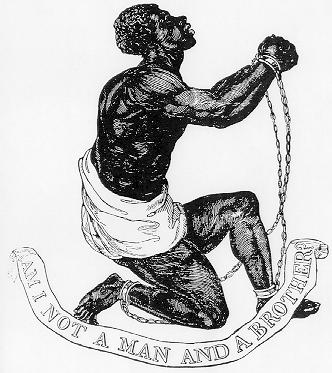
The original purpose of the 14th Amendment was to confirm that all enslaved people freed by the Emancipation Proclamation were in fact United States citizens. And the “hands-off” portion of the law was to protect it from Southern states attempting to pass their own laws depriving former slaves of these rights. Subsequent attempts to overturn the Amendment—such as one to prevent the children of Chinese railroad laborers from becoming citizens—were stopped dead in their tracks. There’s no reason to believe that this racist panic will play out any differently than the others did.
But in the meantime, a shameful new chapter in the undocumented worker witch hunt gives us a snapshot of how the radical right is whipping up panic over this issue. To listen to them talk, you’d think that immigrant robo-babies rocket directly from the delivery room to federal offices to secure for their parents what Pearce calls “access to the great welfare state we’ve created.” And the devious parents give birth to these children merely to grab benefits for themselves.
Nothing could be further from the truth. Having a child in the United States does not protect undocumented workers from deportation except in an extreme circumstance: for example, if the child was on life support, receiving complex medical care, and the removal of the family would endanger the life of the child. The odds of any protection from deportation, therefore, are slim to none.
Secondly, while it is true that an American-born child can potentially secure citizenship for his or her parents, it is a lengthy process filled with difficult requirements. The child must actually have reached the age of 21 before parental visas can be applied for. The child must be living in the U.S. and meeting stringent income requirements. And the undocumented parents must have returned to their native country for at least 10 years prior to the visa application date. If they are found to be here without legal documentation, they are barred from the procedure despite having a family member to sponsor them.
This is hardly the “anchor baby” cakewalk that the right-wing media describes.
Hate groups like FAIR and racist politicians like Graham insist that immigrant parents come here solely to have these babies. This, too, is not borne up by research. If a family must come here and cannot wait for the current Draconian process to grind forward (many visa categories have backlogs of 7 to 14 years, for a start), a pregnancy only adds to the stress. Such was the case with my grandmother, who was pregnant with my mother when her family fled to America. The difficulty of their entry into the United States and her lack of prenatal care caused her to die not long after my mother was born. Pregnancy is actually an added hardship for many immigrants.
In other cases, once a family is here, they might feel that they are, for the first time, in a safe enough environment that they can responsibly have a child. Although undocumented immigrants endure many difficulties and financial hardship, often their life in the U.S. is still more secure than it was in their native countries.
But recent research shows that two main reasons that immigrants come to the States are to earn an income and to be reunited with family members who are already here. It has nothing to do with babies, the timing of having babies, or securing rights via babies, despite the endless Fox News chatter.
And what about that gravy train of welfare handouts that “anchor babies” supposedly secure? The list that’s waved about by conservative politicians includes free medical care, free education, and untaxed income. Although it’s true that undocumented workers, like most lower-income people in the United States, have access to public schools and Medicaid, they pay far more into the system than they ever take out in benefits.
In one estimate, these workers pay approximately $90 billion in payroll and other taxes, and use about $5 billion total in services. Undocumented workers also contribute approximately $7 billion a year into the Social Security system, money they will never be able to reclaim later in benefits.

Conservatives who scream about taxpayers funding free schooling for immigrant children conveniently forget that property owners also pay taxes covering American children whose parents are unable to own property—and that the schools recoup benefits from larger student populations in terms of more state and federal funding.
When Arizona passed SB 1070, politicians declared that the law was essential because border crossings into the state had reached epic proportions; Senator John McCain said it was “the worst I have ever seen.” This manufactured crisis was masking the real truth: that the Arizona-Mexico border was more secure than it had been in decades, with numbers of apprehended immigrants down 60 percent from 10 years ago.
In a similar manner, the “drop and leave baby” crisis is a fiction to support a specific political agenda. And the rhetoric surrounding it would be comic if its intent was not so ugly. For example, Glenn Beck declared in June last year that the United States was the only country in the world that granted jus soli (“the justice of the soil”)—a ridiculous lie, since birthright citizenship is currently the law in 33 countries around the world. Debbie Schlussel has been warning about Al-Qaeda sending women here to “drop and leave” future terrorists on American soil. These “terrorist babies take root,” she claims, even after their parents leave the country.
Listen closely. If you do, behind these ravings you’ll hear echoes of Senator Edgar Cowan, a 19th century politician who thundered that if the 14th Amendment was not overturned, America would be overrun by Mongol hordes. The history lesson here: rabid racists will use any argument, no matter how absurd, in order to rationalize their actions.
The U’wa in Colombia, the Ogoni in Nigeria, the Quichua in Ecuador, the Cree in Manitoba, the Subanen in The Phillipines and the Keweenaw Bay Indian Community in Michigan’s Upper Peninsula—these indigenous peoples are among the many making a stand against resource extraction companies that are devastating their lands. The environmental destruction wrought by these corporations threatens to further pollute the world’s water, air and land. As caged canaries warned coal miners in times past, these and other indigenous people are proclaiming the danger—some are dying in the process.

Who are these companies? The long list of names frequently morphs because of buy-outs, mergers and start-ups trying to escape previously tainted reputations. A special threat to the UP, new Canadian companies come and go thanks to the ease with which they can be listed on Canada’s stock exchange. Even more frightening are the environmental damage and humans rights abuses committed by the established companies at work in Michigan today.
As mentioned in GRIID’s previous post, Rio Tinto/Kennecot has one of the worst records in the industry. Our indigenous neighbors living in the UP are currently experiencing Kennecott’s special brand of terror. This company will construct its new Michigan sulfide mine by blasting directly through the heart of sacred Eagle Rock. Kennecott has already bulldozed, degraded and fenced the area surrounding Eagle Rock as well as parts of the pristine Yellow Dog Plains, as widened roads and power lines are readied for the mine’s operation.
Kennecott “helped” rewrite Michigan mining law as a prelude to this disaster, with what it seems, a lot of “insider” cooperation. As mentioned in GRIID’s first article, Kennecott hired Governor Granholm’s contact and communications point person on metallic sulfide mining Matt Johnson as its PR point person for the project, raising suspicions of insider influence. And, DEQ Office of Geological Survey geologist, Joe Maki, remains in charge of inspecting the mine, even though he “lost” negative reports about its future impact during the approvals process.
While we should expect better from our State agencies and businesses, we cannot expect better from Rio Tinto/Kennecott. Rio Tinto’s history of abuses goes back to the 1930s, when the company engaged fascist General Francisco Franco to court martial and shoot miners rallying for improved working conditions. In Apartheid South Africa, the company paid migrant black workers less than minimum wage and, in Nambia, investigators found working conditions akin to slavery.
Since Jan 30, 2010, Rio Tinto’s Boron, California laborers have lived without a paycheck. The company locked them out when they refused to agree to a contract that turned their good jobs into part-time, temporary or contracted jobs.
The floodgate is open
Sorry to say, Rio Tinto/Kennecott is just one of many mining companies poised to strike at Michigan’s resources. Now that the flood gate is open, Rio Tinto/Kennecott is planning several more mining ventures in other areas of the U.P. A slew of other mining companies are already surveying for new mines: Bitterroot Resources, Cameco, Aquila Resources, HudBay Minerals Inc. and Orvana. Bitterroot Resources and Cameco explored the U.P. for uranium in 2008. Orvana has a current U.P. mining project, Coppperwood.
“(Even though) It is not in a reactive sulfide body. . . our concern with this project is that it is so very close to Lake Superior. It is also near where the old White Pine mine was, which is of some concern because while mining, the company hit an old sea bed which introduced salt to Lake Superior,” says Teresa Bertossi, organizer with Stand for the Land. “Also, the Copperwood project is of concern because the ore body likely runs under Lake Superior, which means mining could take place under the lake.”
Bertossi expects Aquila Resources and HudBay Minerals Inc. to be the next corporations to submit applications to mine the U.P. in a project they call The Back Forty. “This mine would be in a reactive sulfide ore body. It would mostly be a zinc and gold mine. It would be partially open pit and underground,” Bertossi says. “The mine project would be located within a few hundred feet of the Menominee River and near the Shakey Lakes Savannah. The company is also proposing to use on site cyanide leach processing.”
 According to May 2010 testimony collected by Rights Action and students from the University of Northern British Columbia (UNBC), HudBay is one of several Canadian mining companies directly involved in violent, illegal forced evictions, gang rape of several women and assassination in Guatemala.
Rio Tinto/Kennecott is no stranger to human rights abuses
As was mentioned at the beginning of this article, Rio Tinto/Kennecott has a gruesome track record of environmental contamination and human rights abuses around the global. One of the more famous cases was the company’s role in the CIA coup in Chile in 1973, a coup that overthrew the democratically elected government of Salvador Allende and put in power the brutal dictatorship of General Pinochet.
Kennecott became a financial backer of the military coup when they discovered that the Allende government wanted to nationalize the mining industry, something that the Nixon administration was also adamantly opposed to. The CIA backed coup resulted in the murder of an estimated 30,000 Chileans, with thousands more being tortured and others fleeing into exile.
Back in the US
Michigan isn’t the only target for destructive profiteering by mining corporations. For example, in Lynne, Wisconsin, citizens are fighting Tamarlane Ventures Inc. In Minnesota, they are taking on Polymet in that state’s Arrowhead region. While the company names change from state to state, their methods are similar. They line pockets, influence laws, promise jobs and paint a rosy PR picture in local media.
“We need jobs in the UP, personally I would love to be able to make a good living here, but we can’t trade our heart and soul to bring them here. We need our representatives to get off of their duffs and use their heads to bring long-term jobs to the area. If we can subsidize foreign mining companies, give them our land and minerals for pennies, we can subsidize a more sustainable and versatile economy,” Bertossi says. “Michigan needs to stop using the UP as a resource colony. We have to protect our water, our greatest asset in this region, and the risky mining ventures currently proposed here cannot coexist alongside clean water.”
What can we do downstate?
Jessica Koski, organizer and Keweenaw Bay Indian Community member, suggests organizing meetings and informational workshops; starting grassroots organizations; hosting a film screening of Mining Madness or Water Wars; writing to elected officials, the EPA and the Michigan Department of Natural Resources & Environment; writing op-eds and letters to the editor in local newspapers; informing family and friends about the issues to spread awareness; taking a trip up to Yellow Dog Plains to experience the beauty of the area and visit the new camp.
“I think one of the most important thing down-state folks can do is demand that upcoming politicians looking to be elected stand up and take an important stand for the health and environment of people who live in the U.P., and that they don’t put our abundant freshwater resources at risk of acid mine drainage and contamination from mining,” she says. “If an incident such as the oil spill in the gulf or in Kalamazoo happens here in the UP with the Eagle Project, it will be too late as irreversible acid mine drainage makes it way towards Lake Superior.”
 Grand Rapids Institute for Information Democracy