Obama’s Afghanistan Review
(This article by Phyllis Bennis and Kevin Martin is re-posted from ZNet.)
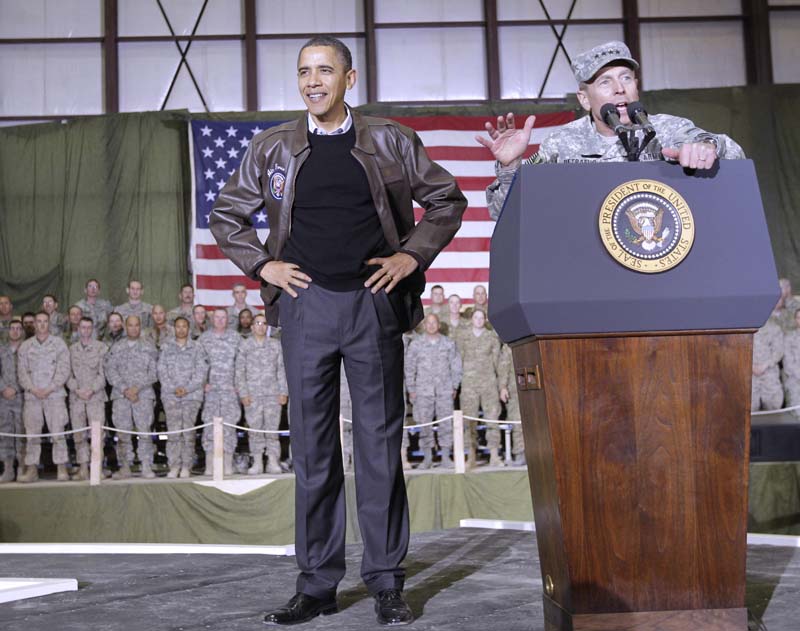
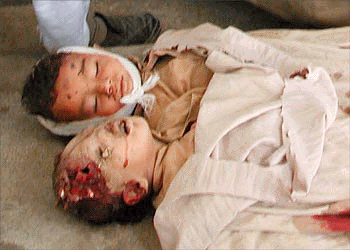
Apparently nothing can happen in the U.S. war in Afghanistan that doesn’t mean good news. If violence rises, it’s because “we’re taking the fight to the enemy.” The Pentagon must be taking a lot of fighting to whoever they’re calling the enemy – this year alone the war has killed over 2500 Afghan civilians, and almost 500 U.S. troops and more than 200 other NATO forces have died too. Of course in those isolated areas where violence may have dropped, it’s because “our strategy is winning.”
President Obama’s most recent Afghanistan review process resulted – surprise! – in the announcement that the U.S./NATO occupation will continue at least until 2014. Another four years of war, death, and devastation for the people of Afghanistan, as well as for the young U.S. soldiers drafted by poverty and lack of opportunity and sent to kill and die there in escalating numbers.
That earlier promise of July 2011 as the pull-out date? That one was always at least partially a sham – designed to pacify Obama’s powerfully anti-war base. The language even when first announced was a carefully ambiguous version that sounded like “July 2011 will start a process to determine whether conditions might allow preparation for beginning consideration of when the partial transfer of some control to Afghan forces might allow for a partial withdrawal of a few U.S. troops…”
As is recognized by the 60% of people in the U.S. who understand that the war in Afghanistan is “not worth fighting,” this is a war we cannot win and cannot afford. There is no military solution – we’ve heard that for years now, from the very leaders orchestrating the war, in the Pentagon, in Congress, in the White House. And yet, the military battle goes on, despite its inevitable failure.
And the cost continues to rise, exacting a huge price from U.S. taxpayers. The 2010 military budget plus the costs of the wars in Afghanistan and Iraq totaled over one TRILLION dollars – an amount so huge we can’t even comprehend it. Here’s one slightly smaller, that maybe we can grasp. Just the cost of President Obama’s escalation this last year, those additional 30,000 troops, was over $33 billion. That money could instead have been used to create 600,000 new green middle-class jobs here at home – and still had $3 billion left over to help with the rebuilding of post-occupation Afghanistan. Wouldn’t those 60% of Americans who think the war is not worth fighting have preferred to use the money for jobs instead of war?
President Obama told us the military is succeeding in its mission to “disrupt and dismantle, defeat and destroy” al Qaeda. And yet the CIA and other intelligence agencies acknowledge there are somewhere between 50 and 100 al Qaeda operatives even in Afghanistan. So we’ve sent 100,000 troops to wage war against the insurgents in Afghanistan who aren’t al Qaeda. Do they really believe that al Qaeda-style terrorism really requires large swathes of territory? They’re not training up battalions of soldiers who need to practice. All they really need are a few garage-sized labs and an Internet café with a fast connection.
As is true in any guerrilla war, the insurgents will fade before massed conventional forces, only to reappear when those forces move on. “Clearing” an area of the Taliban or other Afghan opposition forces is relatively easy; “holding” the area, not so much. And “building” – that’s pretty much off the agenda altogether. Why? It has a lot to do with the Afghan government, as well as the Afghan National Army and National Police. We hear a lot about how we’re making improvements in their recruitment and training, how they’re gaining skills and capacity every day. That’s probably all true. (Recruitment is fairly easy in a country with such pervasive unemployment.)
But it’s mostly irrelevant too. The problem isn’t training, it isn’t even the widespread lack of literacy. Many Taliban, Haqqani, and other fighters are largely illiterate also, and have no access to sophisticated training. It’s not about training, it’s about loyalty. And there’s no reason in the world to believe that a majority of Afghans, even those temporarily accepting pay in military or civil service, are going to develop real loyalty to a U.S.-imposed, western-style “strong central government” when there is nothing anywhere in Afghan culture that has created strong central governments or primarily national identity. That would be the case even with a legitimate, relatively honest administration in Kabul – let alone Hamid Karzai’s government that remains so thoroughly mired in fraud and corruption linked to the billions of U.S. tax dollars funneling in and out of Afghanistan.
Ironically, while President Obama’s review was all about the positive, the latest National Intelligence Estimate (NIE) on Afghanistan was leaked just the day before. And boy, did they see things differently. The NIE is important – it reflects the consensus view of all 16 U.S. intelligence agencies – the CIA, the DIA, the NSA and all the rest. And what they said was profoundly different from the rosy-eyed assessment of the White House and the Pentagon. Officials briefed on the NIE said it acknowledged that large swaths of Afghanistan are still at risk of falling to the Taliban. And that there is no chance for anything resembling success in Afghanistan without the kind of massive shift in Pakistan that would eliminate the Afghan Taliban’s current access to safe havens across the border.
And as of now, since the government in Pakistan we’re propping up with billions of dollars in military and economic aid has made quite clear that it – especially its powerful ISI intelligence agency – has no intention of ending support for the Afghan Taliban, the possibility of “success” seems to be just about zero.
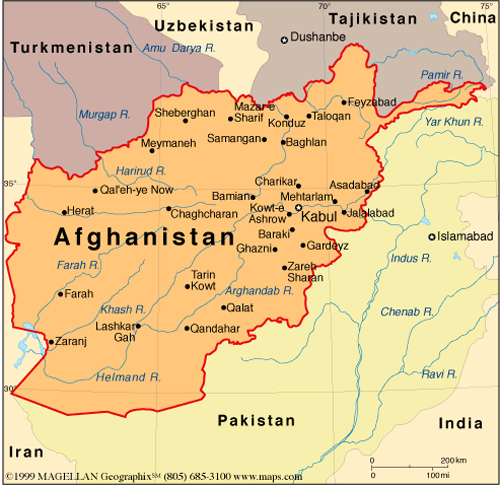
It shouldn’t be a surprise to anyone. The Pakistani government is perfectly happy to accept U.S. aid and weapons and use them to go after the Pakistani Taliban – who could indeed threaten the stability, maybe even the survival of the current government in Islamabad. But they are just as clear that the Afghan Taliban, currently taking advantage of Pakistan’s welcome and support, is pretty much the opposite of a threat to the government in Islamabad. To the contrary, the Afghan Taliban are understood to represent Pakistan’s interests in Afghanistan – especially against those of Pakistan’s arch-rival India. And, like every regional government surrounding Afghanistan, Pakistan is looking out for its own interests, making sure it has a reliable surrogate in Kabul, especially whenever the U.S. troops begin to leave.
The ultimate military goal, we are told, is to make sure the Taliban doesn’t come back to power, because supposedly that will prevent al Qaeda from launching another 9/11. Let’s just take a “worst case scenario.” The U.S. invasion, war and occupation have devastated Afghanistan, and in a post-occupation scenario the Taliban will certainly be one of the forces contending for political power. Could they win?
Maybe – they did once before, in 1996, when a huge proportion of Afghans welcomed them because the Taliban promised to end the five years of bloody inter-warlord fighting that had devastated the country and nearly destroyed Kabul.
What if they did? The Taliban leadership are no fools – they know they lost their hold on power only because of their protection (for a while) of al Qaeda and its leaders. Chances are pretty good they might not want to risk that again.
And if they did? We know that war doesn’t work against terrorism – what does work, what has worked in every example where the U.S. has managed to find and capture top al Qaeda officials or information, has not been bombing but good intelligence, good police work, good cooperation with other governments and international institutions. That hasn’t changed. That’s why we need – and shouldn’t fear – negotiations with everybody at the table. Including the Taliban.
The U.S. war and occupation has not made Afghans safer, more secure, more prosperous – they still have one of the lowest life expectancies on earth. The war has not protected women – Afghan women still die in childbirth at rates second highest in the world. And children are not better off – UNICEF reports that Afghan babies are more likely to die before their first or fifth birthdays than any other children in the world.
War isn’t working. Sixty percent of Americans know it. The U.S. intelligence agencies know it too. And we’re thinking even President Obama knows it.
The president was quoted in Bob Woodward’s recent book Obama’s Wars as saying he would not lose his political base over Afghanistan, yet he is risking exactly that. Despite some significant political victories on gay rights and disarmament in the lame duck session of Congress that have him looking much better than after the mid-term election “shellacking” just seven weeks ago, Obama and his political advisers must know his chances of re-election will be very poor if the economy is still in the doldrums and we remain mired in a seemingly endless war in Afghanistan. His base, both on the war and peace side, and the economic justice side, simply won’t hustle for him as it did in 2008 (and without said hustle he’d still be the junior senator from Illinois).
Our main concern is not for the president’s re-election prospects, it’s to end this disastrous war as soon as possible. But it’s conceivable the two could be strategically linked. The president’s anti-war base must connect the urgency of getting out of Afghanistan and making serious cuts in the military budget, with the immediate need to reinvest in the working economy, job creation, and environmental restoration. That means building powerful alliances with the key movements rising in response to the economic crisis, and fighting now for immigrant, labor, community and civil rights.
If the president and his political team are as savvy as everyone thinks they are (or at least were in the 2008 campaign), they’d do well to get in front of that wave and run on a genuine peace and green prosperity platform. Imagine if that happened, and President Obama really did start paying attention to his anti-war base, and began carrying out the dramatic shift in policy necessary to insure a real withdrawal of troops from Afghanistan, a genuine move to close Guantanamo, a final withdrawal of all remaining troops in Iraq, a serious level of pressure on Israel to end its occupation, as well as to launch a serious New New Deal to create green jobs and rebuild the economy… Then not only would the president likely coast to re-election, but the Afghan and U.S. people would be the real beneficiaries – instead of banks, war profiteers and Wall Street – and THAT election would really be one for the history books.
The Press’ Double Standard on Foreign Policy Speakers

This morning MLive posted an article announcing the 2011 foreign policy lecture series hosted by the World Affairs Council of Western Michigan. In fact, the Grand Rapids Press and MLive always publish the lecture series and write about each speaker as the series progresses.
The World Affairs Council (WAC) could be labeled as host speakers that tend to have a right of center view of the world and US foreign policy and this year’s line up is not that different.
The speakers include someone with the Council on Foreign Affairs, a retired Navy officer, a representative of the Red Cross and for a discussion about energy policy and national security WAC has someone from Marathon Oil and the American Petroleum Institute, which is essentially a front group for the oil industry.
In addition, there is a panel discussion on the global financial crisis featuring economics professors who all take a pro-capitalist position. Lastly, there is a speaker from the American Institute for Contemporary German Studies, which has a board of directors that mostly represents corporate America and includes as an honorary member James Baker III of the Reagan and Bush Sr. administrations.
However, if one were to look at speakers who have come to Grand Rapids in the past two years that have a critical view of US foreign policy the Grand Rapids Press and MLive not only don’t send a reporter to these events, they don’t announce them either. (with the exception of Kathy Kelly, where the announcement appeared in the Faith Calendar, even though it was not a religious-based event.)
In March of 2009, Institute for Policy Studies analyst Phyllis Bennis spoke on the Israeli assault on Gaza and the US wars in Iraq and Afghanistan during a two-day conference.
In June of 2009, Kathy Kelly with Voices for Creative Non-violence spoke in Grand Rapids after returning from a trip to Pakistan and Afghanistan to speak with victims of the US drone bombings.
On March 18/19 the group Healing Children of Conflict hosted Doctor Izzeldin Abuelaish, a Palestinian doctor who spoke about the 2008/2009 Israeli assault on Gaza that killed his 2 daughters.
On March 25 of 2010, radical author and activists John Ross spoke in Grand Rapids about the role of the US in the war on drugs in Mexico while he was on a book tour throughout the US.
Lastly, on October 8, journalist Anand Gopal spoke in Grand Rapids. Gopal has been living in and reporting from Afghanistan for both the Christian Science Monitor and the Wall Street Journal.
These are not all of the left of center or anti-imperialist speakers to come to Grand Rapids in the past 2 years, but it gives you an indication of the double standard that the Press practices in terms of foreign policy speakers who come to West Michigan.
(This statement from Palestinians is re-posted from Common Dreams.)

We, the Palestinians of the Besieged Gaza Strip, on this day, two years on from Israel’s genocidal attack on our families, our houses, our roads, our factories and our schools, are saying enough inaction, enough discussion, enough waiting — the time is now to hold Israel to account for its ongoing crimes against us. On the 27th of December 2008, Israel began an indiscriminate bombardment of the Gaza Strip. The assault lasted 22 days, killing 1,417 Palestinians, 352 of them children, according to mainstream human rights organizations. For a staggering 528 hours, Israeli Occupation Forces let loose their US-supplied F15s, F16s, Merkava Tanks, internationally prohibited white phosphorous, and bombed and invaded the small Palestinian coastal enclave that is home to 1.5 million, of whom 800,000 are children and over 80 percent UN registered refugees. Around 5,300 remain permanently wounded.
This devastation exceeded in savagery all previous massacres suffered in Gaza, such as the 21 children killed in Jabalia in March 2008 or the 19 civilians killed sheltering in their house in the Beit Hanoun Massacre of 2006. The carnage even exceeded the attacks in November 1956 in which Israeli troops indiscriminately rounded up and killed 275 Palestinians in the southern town of Khan Younis and 111 more in Rafah.
Since the Gaza massacre of 2009, world citizens have undertaken the responsibility to pressure Israel to comply with international law, through a proven strategy of boycott, divestment and sanctions. As in the global BDS movement that was so effective in ending the apartheid South African regime, we urge people of conscience to join the BDS call made by over 170 Palestinian organizations in 2005. As in South Africa the imbalance of power and representation in this struggle can be counterbalanced by a powerful international solidarity movement with BDS at the forefront, holding Israeli policy makers to account, something the international governing community has repeatedly failed to do. Similarly, creative civilian efforts such as the Free Gaza boats that broke the siege five times, the Gaza Freedom March, the Gaza Freedom Flotilla, and the many land convoys must never stop their siege-breaking, highlighting the inhumanity of keeping 1.5 million Gazans in an open-air prison. Two years have now passed since Israel’s gravest of genocidal acts that should have left people in no doubt of the brutal extent of Israel’s plans for the Palestinians. The murderous navy assault on international activists aboard the Gaza Freedom Flotilla in the Mediterranean Sea magnified to the world the cheapness Israel has assigned to Palestinian llife for so long. The world knows now, yet two years on nothing has changed for Palestinians. The Goldstone Report came and went: despite its listing count after count of international law contraventions, Israeli “war crimes” and “possible crimes against humanity,” the European Union, the United Nations, the Red Cross, and all major Human Rights Organizations have called for an end to the illegal, medieval siege, it carries on unabated. On 11th November 2010 UNRWA head John Ging said, “There’s been no material change for the people on the ground here in terms of their status, the aid dependency, the absence of any recovery or reconstruction, no economy…The easing, as it was described, has been nothing more than a political easing of the pressure on Israel and Egypt.” On the 2nd of December, 22 international organizations including Amnesty, Oxfam, Save the Children, Christian Aid, and Medical Aid for Palestinians produced the report ‘Dashed Hopes, Continuation of the Gaza Blockade’ calling for international action to force Israel to unconditionally lift the blockade, saying the Palestinians of Gaza under Israeli siege continue to live in the same devastating conditions. Only a week ago Human Rights Watch published a comprehensive report “Separate and Unequal” that denounced Israeli policies as Apartheid, echoing similar sentiments by South African anti-apartheid activists.

We Palestinians of Gaza want to live at liberty to meet Palestinian friends or family from Tulkarem, Jerusalem or Nazareth; we want to have the right to travel and move freely. We want to live without fear of another bombing campaign that leaves hundreds of our children dead and many more injured or with cancers from the contamination of Israel’s white phosphorous and chemical warfare. We want to live without the humiliations at Israeli checkpoints or the indignity of not providing for our families because of the unemployment brought about by the economic control and the illegal siege. We are calling for an end to the racism that underpins all this oppression.
We ask: when will the world’s countries act according to the basic premise that people should be treated equally, regardless of their origin, ethnicity or colour — is it so far-fetched that a Palestinian child deserves the same human rights as any other human being? Will you be able to look back and say you stood on the right side of history or will you have sided with the oppressor?
We, therefore, call on the international community to take up its responsibility to protect the Palestinian people from Israel’s heinous aggression, immediately ending the siege with full compensation for the destruction of life and infrastructure visited upon us by this explicit policy of collective punishment. Nothing whatsoever justifies the intentional policies of savagery, including the severing of access to the water and electricity supply to 1.5 million people. The international conspiracy of silence towards the genocidal war taking place against the more than 1.5 million civilians in Gaza indicates complicity in these war crimes.
We also call upon all Palestine solidarity groups and all international civil society organizations to demand:
– An end to the siege that has been imposed on the Palestinian people in the West Bank and Gaza Strip as a result of their exercise of democratic choice.
– The protection of civilian lives and property, as stipulated in International Humanitarian Law and International Human Rights Law such as The Fourth Geneva Convention.
– The immediate release of all political prisoners. - That Palestinian refugees in the Gaza Strip be immediately provided with financial and material support to cope with the immense hardship that they are experiencing
– An end to occupation, Apartheid and other war crimes.
– Immediate reparations and compensation for all destruction carried out by the Israeli Occupation Forces in the Gaza Strip.
Boycott, Divest and Sanction. Join the many international trade unions, universities, supermarkets and artists and writers who refuse to entertain Apartheid Israel. Speak out for Palestine, for Gaza, and crucially ACT. The time is now.
Besieged Gaza, Palestine
Dismissing race and class in Digital Divide story
MLive posted a story by a Grand Rapids Press reporter on the digital divide for students in Grand Rapids. The article claims that one third of Americans still do not have access to the Internet from home, which effects both urban and rural populations.
The digital divide is a serious problem in the US and in West Michigan, but instead of exploring what that really means the Press reporter decides to just speak with a student, a parent and two local library staff. All of those interviewed are addressing either their use of computers at public libraries or the increased amount of research students must do as part of their class work, even though the headline clearly puts the emphasis on the negative consequences of the digital divide. (Grand Rapids students caught in the digital divide as more school assignments include online aspect)
Besides some Census Bureau data, the MLive story never explores what the digital divide really means for Grand Rapids students. There is no investigation into the testing skills of students with easy access to the Internet compared to those with limited access. There is no exploration on the difference with Internet access along class and income lines or along racial lines, which seem to be obvious and important routes to take in such a story.
The first major government funded study on the digital divide was done a decade ago by the National Telecommunications and Information Administration (NTIA). The report found that there were major sectors in both urban and rural areas that have limited or no access to the Internet. Since then more Americans now have access, but the data shows that it disproportionately effects low income and minority populations.
The Pew Research Center just conducted a survey of Internet use in the US by income levels and found there was a disparity in use between households that make more than $75,000 and those that make less than $75,000. However, the household income level seems to be a bit misleading and there would no doubt be an even greater disparity if one looked at households of $25,000 or less.

Just having access does not always mean the digital divide is decreased, since the speed and quality of the broadband can also impact Internet use. A new report by the FCC says that 68% of the 133 million broadband users in the US have way too slow of a connection to even be legitimately considered broadband.
The Pew Hispanic Center published findings in July of this year about the digital divide when comparing US born to foreign-born children now living in the US. This is the most recent study that looks at the digital divide along racial lines and similar investigation could be done for Grand Rapids Public School students, considering that it is a majority Black student population and a growing Latino student population. An excellent resource for exploring the digital divide and online use for school age students is the book The Young and the Digital, by S. Craig Watkins.
The Largest Prison Strike In American History Goes Ignored By US Media
(This article is re-posted from InfoShop.)
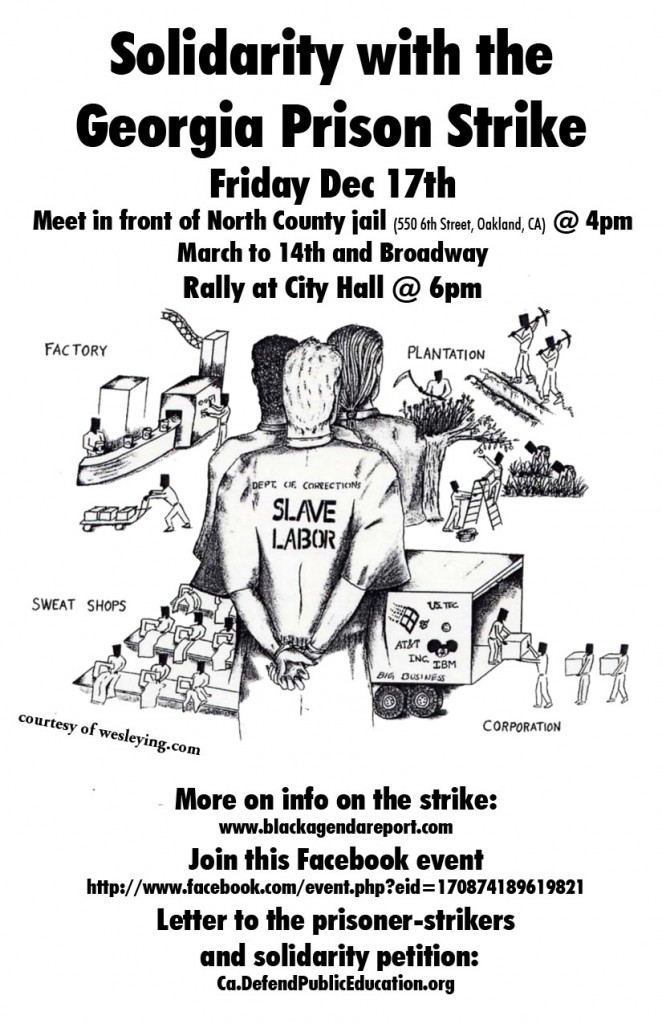
Today marks the end of a seven-day strike where tens of thousands of inmates in Georgia refused to work or leave their cells until their demands had been met. The odd thing is, that until today, no one had ever heard about this strike. Inmates in ten Georgia prisons, Baldwin, Hancock, Hays, Macon, Smith and Telfair State Prisons, to name a few, went on strike last Thursday to protest their treatment and demand their human rights.
Today marks the end of a seven-day strike where tens of thousands of inmates in Georgia refused to work or leave their cells until their demands had been met. The odd thing is, that until today, no one had ever heard about this strike.
Inmates in ten Georgia prisons, Baldwin, Hancock, Hays, Macon, Smith and Telfair State Prisons, to name a few, went on strike last Thursday to protest their treatment and demand their human rights.
According to an article by Facing South, Department of Corrections have been nervous about deteriorating conditions in Georgia’s prisons since early 2010. Wardens started triple bunking prisoners in response to budget cuts – squeezing three prisoners into cells intended for one. Prison officials have kept a watchful eye out for prisoners to meaning riot, for prisoners’ rights lawyers to litigate, or both.
Poor conditions and substandard medical care are also on the inmates’ list of demands. However, the jailed’s main gripe seems to center on landing recognition as workers entitled to fair pay.
As it goes, prisoners in Georgia are forced to work without pay for their labor – seemingly a violation of the 13th Amendment, which prohibits slavery and involuntary servitude.

For months the prisoners had apparently used cell phones to get in touch with inmates from other prisons, organizing a non-violent strike. The outcome began the morning of Dec. 9 – by Dec. 13 the GDC issued a statement that four prisons were completely on strike.
An interview with one of the strike leaders revealed that every group of inmates in the prison had been working together. “They want to break up the unity we have here,” said an anonymous strike leader in an interview with the Black Agenda Report. “We have the Crips and the Bloods, we have the Muslims, we have the head Mexicans, and we have the Aryans all with a peaceful understanding, all on common ground.”
The largest prison strike in American history seems like a topic ripe for the press, however there was no mention of it anywhere in mainstream media. Smaller outlets like Black Agenda Report and Facing South (Institute for Southern Studies) have been covering the strike since day one.
Perhaps there was a larger hand at play – one that did not want the deplorable conditions of the Georgia prison system to surface. If Wikileaks has taught us anything, it is that the revolution will be televised.
The prisoners demands:
* A LIVING WAGE FOR WORK: In violation of the 13th Amendment to the Constitution prohibiting slavery and involuntary servitude, the DOC demands prisoners work for free.
* EDUCATIONAL OPPORTUNITIES: For the great majority of prisoners, the DOC denies all opportunities for education beyond the GED, despite the benefit to both prisoners and society.
* DECENT HEALTH CARE: In violation of the 8th Amendment prohibition against cruel and unusual punishments, the DOC denies adequate medical care to prisoners, charges excessive fees for the most minimal care and is responsible for extraordinary pain and suffering.
* AN END TO CRUEL AND UNUSUAL PUNISHMENTS: In further violation of the 8th Amendment, the DOC is responsible for cruel prisoner punishments for minor infractions of rules.
* DECENT LIVING CONDITIONS: Georgia prisoners are confined in over-crowded, substandard conditions, with little heat in winter and oppressive heat in summer.
* NUTRITIONAL MEALS: Vegetables and fruit are in short supply in DOC facilities while starches and fatty foods are plentiful.
* VOCATIONAL AND SELF-IMPROVEMENT OPPORTUNITIES: The DOC has stripped its facilities of all opportunities for skills training, self-improvement and proper exercise.
* ACCESS TO FAMILIES: The DOC has disconnected thousands of prisoners from their families by imposing excessive telephone charges and innumerable barriers to visitation.
* JUST PAROLE DECISIONS: The Parole Board capriciously and regularly denies parole to the majority of prisoners despite evidence of eligibility.
Bradley Manning and GI Resistance to US War Crimes
(This interview is reposted from Dissident Voice.)

Jamail is the author of two recent books: “Beyond the Green Zone: Dispatches From An Unembedded Journalist” (2008) and “The Will To Resist: Soldiers Who Refuse To Fight in Iraq and Afghanistan” (2009). He also contributed Chapter 6, “Killing the Intellectual Class,” for the book Cultural Cleansing in Iraq: Why Museums Were Looted, Libraries Burned and Academics Murdered (2010). Learn more at http://www.dahrjamailiraq.com
Angola 3 News: On April 4, 2010, WikiLeaks.org released a classified 2007 video of a US Apache helicopter in Iraq, firing on civilians and killing 11, including Reuters’ photojournalist, Namir Noor-Eldeen, and his driver, 40 year old Saeed Chmagh. No charges have been filed against the US soldiers involved.
In sharp contrast, a 22-year-old US Army intelligence analyst named Bradley Manning has been accused of leaking the classified video. Arrested in May and facing up to 52 years in prison for a range of charges, Manning is now being held under what lawyer/journalist, Glenn Greenwald, has termed “inhumane conditions.”
Manning’s support website declares that “exposing war crimes is not a crime.” Indeed, the Nuremberg Laws, established after the horrors of WWII, declare that soldiers have a legal obligation to resist criminal wars. Let’s please take a closer look at this issue of US war crimes. What do you think are the strongest arguments that have been made for why US invasions of Iraq and Afghanistan are criminal?
Dahr Jamail: To be clear, while I’ve covered Iraq extensively, I’ve not covered Afghanistan. Thus, I’ll keep all my answers in the context of my expertise, that being Iraq.
That said, the US-led invasion and occupation of Iraq could not have more clearly violated international law. Even former Secretary General of the UN, Kofi Annan, said in September 2004 that the Iraq war was illegal and breached the UN Charter.

An illegal war is thus the mother of all war crimes, for from that stem all the rest. What I’ve seen in Iraq has been a parade of war crimes committed by the US military: rampant torture, collective punishment (Fallujah is an example), deliberate firing on medical workers, deliberate killing of civilians for “sport,” and countless others.
Then, there is the fact that both occupations are so clearly about control of dwindling resources and their transport routes, that the excuses given for them by the US government (both Bush and Obama) are both laughable and insulting to anyone capable of a modicum of critical thought.
A3N: How do you rate the corporate media’s coverage of the Bradley Manning story?
DJ: It’s been a farce. A classic case of “shoot the messenger.” When someone becomes a soldier, they swear an oath to support and defend the US constitution by following “lawful” orders. Thus, they are legally obliged by their own oath to not follow unlawful orders. What Manning did by leaking this critical information has been to uphold his oath as a soldier in the most patriotic way. Now compare that with how he has been raked over the coals by most of the so-called mainstream media.
A3N: How do they address the argument that “exposing war crimes is not a crime?”
DJ: Usually they don’t, because the corporate media, and the government for that matter, avoid the words “war crime” as though they are a plague. Thus, they avoid the issue at all cost.
A3N: In your opinion, how do the corporate media present the US occupations of Iraq and Afghanistan to the US public?

DJ: With Iraq, the occupation is presented as though it was a mistake, as though the great benevolent US Empire was mistakenly mislead into the war. But since “we” are there, it is good that at least Saddam Hussein has been removed, and now, of course, the US has only done the best it can in a tough situation.
With Afghanistan, the occupation is presented to the public as the ongoing frontline battle against “terrorism,” while, in reality, they should call Afghanistan “pipeline-istan” because it’s all about securing the access corridors for natural gas and oil pipelines from the Black Sea, through Afghanistan (the 4 main US bases there are located along the exact pipeline route) to the coast of Pakistan.
A3N: How does the corporate media narrative contrast with what you have seen first-hand in Iraq?
DJ: The difference is night and day. The whitewashing and outright lying by the corporate media is offensive to me. It is repulsive, in fact, when compared to what the reality on the ground is in Iraq. The brutality of the US military there against the civilian population would shock people. More than 1 million Iraqis have been slaughtered because of the US occupation. As you read this you can know that one in every ten Iraqis remains displaced from their homes. Can you imagine that? The US policy in Iraq has been so destructive, that one out of every ten Iraqis is currently displaced from their home, now at more than 7 years into the occupation?
A3N: Returning now to the issue of soldier resistance, what are the various reasons that anti-war soldiers give as motivation for their opposition to the occupations?
DJ: Mostly from what the soldiers see once they arrive in the occupation: the buckets of money being made by the contractors, the lack of goals for the occupation beyond generating huge amounts of profit for war contractors, and that the reasons given for the invasion/occupation were entirely false. So most seem to become anti-war when they see that they’ve been lied to, used, betrayed, and that they are putting their lives on the line so that war contractors can get richer.
A3N: What are some of the ways that anti-war soldiers in Iraq and Afghanistan have resisted?
DJ: Myriad ways. The most common, and least dramatic, is going AWOL. More than 60,000 soldiers have now taken that route since 11 September 2001. So, often, folks will go do a deployment, come back for a break, then simply not show up when it’s time for their unit to redeploy.
Some of the more interesting means of resistance I’ve found entailed doing what soldiers refer to as “search and avoid” missions. One soldier told me how they would go out to the end of their patrol route in their Humvees, find a big field, and park. They’d call in to base every hour to check in and say, “We’re fine, we’re still searching this field for weapons caches.” And they would sit there doing nothing until the time was up for their patrol, and they’d return to base. I met more and more soldiers who shared similar stories, from all over Iraq, during different times of the occupation. That’s when I realized how low morale was and how widespread different kinds of resistance had become.
Other soldiers found out how to manipulate their locator beacon on the GPS unit in the Humvees, so they’d sit and have tea with Iraqis, while someone moved their beacon around so their base thought they were patrolling.
A3N: How has US military leadership responded to this resistance?
DJ: They don’t know about much of it when it’s happening. Although there have been times when a unit has been caught doing something like the aforementioned, and they’ve broken up the unit, but that has been quite rare overall.
With AWOL troops, the military doesn’t have the manpower to send their MPs after them, so they let them go, wait for them to get a traffic ticket, for example, then the cops hand them over to the MPs who throw the AWOL soldier in the brig to await a court-martial. Then, often, the soldier is told he/she can go back to Iraq/Afghanistan, or they will be court-martialed.
A3N: In your book The Will To Resist, you document many different cases of soldiers that faced criminal charges for their opposition to US wars. We discussed Bradley Manning’s case earlier in this interview, but can you please tell us about any other recent, ongoing cases that have begun since the publication of your book in 2009? How can our readers best support these soldiers?
DJ: Most of those I followed that took place after my book was published have been completed, time served by the soldiers, and then their release into freedom from the military. Two cases of this type really stand out: Victor Agosto and Travis Bishop. Both of these men stood up and refused to be deployed, were court-martialed, served their time, and are now free.
There will be more to come as these occupations persist. A group to follow who regularly supports these resisters is Courage To Resist. They are based in Oakland and are run by Jeff Paterson, himself a resister to the first Gulf War. They do a great job of tracking resisters and what folks can do to support them. Support includes donations, but also making phone calls, writing letters, and other forms of activism.
A3N: In the months leading up to the US invasion of Iraq in 2003, the anti-war movement in the US was relatively strong, but since the invasion began, the anti-war movement seems to have lost considerable momentum and strength. On a practical level, what do you think the US anti-war movement needs in order to be re-energized and finally end these wars?
DJ: At the risk of sounding like a cynic when I feel I’m making an honest assessment, I don’t feel there will be a mass organization of an anti-war movement. We already live in a police state. What is left of the anti-war movement is completely infiltrated, and is being torn apart by sectarianism and profiteering (the peace-industrial-complex).
In addition, I feel that the main reason for the failure of the anti-war movement is that most folks involved in it still believe they can work within the system to generate change, when the system is completely corrupted already. By “system,” I mean the federal government. That apparatus is broken beyond repair, it is completely corrupted, and needs to be dissolved. Thus, any movement that seeks to work within the parameters set by the system (such as weekend permitted demonstrations, thinking you can effectively pressure your representative, etc.) is doomed before it begins, because it is still playing by the rules set out by those in power. Rules guarantee never to jeopardize the loss of power by those who hold it.
Only truly radical actions, meant to subvert the system and shut it down to a point where business as usual is impossible until demands are met, are all that is left.
Anti-Muslim hysteria takes local toll
As the secular message of Christmas continues its descent into unbridled consumerism, the hate-mongers of the religious right seem more occupied with keeping the prophet Muhammad out of America than keeping Christ in Christmas. Corporate media is rife with accounts of outrage over banned nativity scenes. And, the finger of blame is increasingly pointed at Muslims.
“The Christmas story is about a person born into a religious minority in a land occupied by oppressors who persecute,” says Mary Vaccaro, associate director for program design with Grand Rapids’ Catholic Information Center. The Center actively promotes dialogue with local Muslims. “The holy family is homeless, refugees. For us to perpetuate the true Christmas spirit is to treat all people, whatever their faith, the way we would like the holy family to be treated.”
This message is sadly lacking according to a December 20 story on Alternet .”Right-Wing Money-Fed Campaign Escalates Latent 9-11 Paranoia into Anti-Muslim Hysteria” explains how the religious right, ultra-Zionists, Tea Party propagandists and half-baked conspiracy theorists have successfully financed 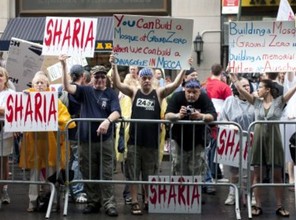 and promoted Islamaphobia as a means to their own ends. Tom Englehart writes in the article’s introduction, “In an atmosphere of swirling fears and hysteria amid declining living conditions, ‘explanations’ that at other times might have remained confined to tiny crews of conspiracy-mongers can suddenly gain a patina of plausibility and so traction. No wonder then that, as hard times hit, as the financial system seemed on the verge of collapse, as unemployment soared and a massive wave of home foreclosures swept into view, increasing numbers of Americans became prey to any wacky explanation for our troubles, none more so than the idea that Islam was somehow responsible, that mosques and Islamic centers meant for a sliver of a minority here were capable of imposing anything, no less a way of life on this country, or that Sharia law (of all things) might somehow worm its way into state legal systems, or that YouTube was a hotbed of terrorism worthy of suppression, or… well, you name it.”
Elsewhere in Indy News, Professor Juan Cole’s Dec. 21 post, “Hating Muslims in America,” states, “Rep. Peter King (R-NY), the incoming chair of the House committee on Homeland Security has announced that he will hold hearings into the ‘radicalization’ of American Muslims. This, despite the fact that the Muslim Americans are pillars of the US community–disproportionately well-educated and well integrated into the country, and even though a third of tips forestalling radical Muslim operations come from the community itself. And, despite the fact that most terrorism in the US is committed by white supremacists. King’s obscene gesture of Kristallnacht-by-hearing does not come out of the representative’s own eccentricities, but is part of an organized conspiracy to demonize and marginalize Muslim Americans and Arab Americans.”
Cole takes the government’s role in fueling anti-Islamic sentiment one very logical step further, “Since the wars are for resources in the resource-rich Muslim world, it is convenient to demonize Muslims across the board, including domestic ones.”
An August 2010 Pew Research Center poll of Americans found that the favorability rating of Muslims has dropped by 11 points since 2005. In the midst of this whipped up frenzy, arsonists are torching mosques. Christians are blocking construction of mosques in their towns and cities. And, in Oklahoma, voters overwhelmingly approved a ban on Sharia law, even though the prospect of Sharia replacing that state’s laws is laughable at best.
Has this Islamaphobia impacted our Muslim neighbors in the greater Grand Rapids area? Yes. “I know there is anti-Muslim sentiment,” Vaccaro says. “I see it in the media. And, my Muslim friends have anecdotes they have shared with me. I can’t speak for all Christians and church history sadly includes that there has been (persecution) there. We have reformed our teaching since ….and teach that it is wrong to discriminate against anyone because of their faith. To criticize another faith is not who we are.”
While preparing to write this post, the writer asked a Muslim friend, Wafa H., if she has noticed a worsening attitude towards Muslims locally. She is well educated, fluent, friendly and has a great sense of humor. She lived in the Grand Rapids area for many years before relocating to California for a year or so. She recently returned here to live and re-establish her small business.
Wafa returned my call from the urgent care waiting room. Stress has caused her physical collapse. Last summer, she moved to an apartment in Byron Center. There, every time she and her son came or left, they were called names, told to get out of the country and threatened with a rifle on several occasions. Wafa’s tires were slashed. While police responded on numerous occasions, they claimed not enough evidence existed to prosecute a hate crime.
Life in her new rental home is not much better. After living without electricity or locks on the doors for two months, Wafa withheld the rent. She shares , “My current landlord evicted me because he does not want to deal with me because I speak with a Middle Eastern accent . . . he threatened me, called me ‘bitch’ and ‘ whore’ and pushed the door on me. Now he is evicting me. Wherever you’re from (in the Middle East) if you don’t speak English (without an accent), people yell, scream and show me disrespect. Especially this year. I never had this before.”
Her son, who finally were allowed to join her in the U.S. after years of separation, is enrolled at GRCC. “He is shocked and depressed and does not know what to do. He needs a job but no one will hire him,” Wafa says. “We need to educate, educate, educate the public about Arabic culture. I was living here in peace years ago and now these people are against me. I am so tired.”
Educate, educate, educate. Though ignored by local media, people from different faiths here are working together to raise awareness of what Islam really teaches and how local Muslims really live. Despite early notification, local media failed to cover an event attended by more than 160 people last fall. Neither did they cover peaceful Muslim scholar Omid Safi when he spoke at Calvin College a few days later. Sane and peaceful Muslim voices are being raised across the country. But corporate media, goaded by right-wing fear mongers, ignores them, prefering to exploit the false idea that Islam is a faith of violence that is intent on destroying the “West.”
“It is American Muslims’ responsibility to reach out and explain their religion. The 99% need to explain how peaceful our faith is and how that 1% is misrepresenting the faith. The violent 1%, those are the ones the media grabs for the first story in the evening news,” says Dr. Mohammad Saleh, a local physician involved in organizing upcoming interfaith events about Islam. “The best thing for non-Muslim to show support is to reach out to their Muslim neighbors and co-workers . Meet with them, understand the faith, share in their traditions. We are really trying to speak up. My hope is to have more media coverage of our events so that people are aware. We would hope that people who don’t know the faith not to stereotype Muslims, to not apply what they see and hear in the news to every Muslim.”
Upcoming interfaith events about Islam
- Jan. 10 and 11, 7- 8:30 p.m. Will the Real Islam Please Stand Up? This two session course will present a basic overview of Islam and the Quran. Presenter: Ghazala Munir. Hosted by the Catholic Information Center, 2nd floor Cathedral Square Center, 360 S. Division.
- Feb 9, 7 – 9 p.m. Building Interfaith Friendships: The Dialogue Tour of the new mosque and conversation about Islam. Hosted by the Islamic Mosque and Religious Institute, 3333 East Paris SE, Grand Rapids.
FCC Adopts Corporate Internet Regulatory Rules
(This article is re-posted from OpenSecrets.)

The Federal Communications Commission on Tuesday approved new rules that will regulate Internet access for consumers. Passed by FCC Commissioner Julius Genachowski and his Democratic colleagues, the rules stipulate that Internet providers cannot block or restrict the delivery of online services. But providers may have preferred clients in which a company can pay for faster Internet access for consumers.
Indeed, the debate over net neutrality has been raging over the past two years as entities on both sides have been lobbying heavily to influence policymakers. On one end, Internet providers generally pushed for the ability to charge businesses and consumers for faster Internet speeds, creating a seemingly tiered Internet system.
Conversely, consumer advocates wanted the FCC to keep the Internet universally available to all consumers and businesses, thereby protecting and entrenching net neutrality. After analyzing lobbying disclosure reports, the Center for Responsive Politics finds that communication companies have had a much larger presence than the consumer advocates lobbying policymakers.
The chart below shows how many entities within specific industries or special interest areas specifically mentioned lobbying on “net neutrality” during the past two years:

While federal lobbying disclosure forms make it impossible to tell exactly how much money these companies spent lobbying on net neutrality alone, the significant resource advantage communication companies have over consumer advocacy groups suggest an advantage in making their voices heard over competitors.
WikiLeaks Battles for the Future of Journalism
The organization WikiLeaks continues to be attacked by the very pillars of free society it is seeking to reform, much to the detriment of good governance and free press. WikiLeaks, with its staggered release of 250,000 US diplomatic cables working in tandem with the world’s most respected newspapers, has brought to light the power abuses by the world’s governments and corporations. WikiLeaks seeks to build a more transparent and honest system of government and media by shaking the corrupt foundations of political and journalistic structure to its core.
The leaked US embassy cables continue to draw attention around the world, revealing everything from systematic torture in India, to oil giant Shell’s infiltration of the Nigerian government, to United States’ efforts to force Spain to drop a murder investigation in the case of a Spanish cameraman killed by US soldiers. The cables have turned the world inside out, enabling us all to see the gruesome innards of government and diplomacy as usual.
Because of this, Julian Assange and his large WikiLeaks organization have come under repeated attack. First have been the attacks by the US government itself, whose acts of arm twisting and political bullying, as revealed in the leaked diplomatic cables, have brought it under the judging eyes of the world. In an effort to regain credibility, politicians in Washington are currently looking into prosecuting WikiLeaks under laws they are frantically working to revise or propose, such as the SHIELD Law. This raises suspicions about the ethics of US lawmakers, as ex post facto laws are expressly prohibited by the Constitution. However, Assange can only be tried if extradited by the United States, which is proving difficult as lawmakers are unable to pin a specific charge on him. If Assange were to be tried under current law, it might follow that the New York Times, which has published the classified documents, would also be affected by the outcome of that decision. A report by the Congressional Research Service doesn’t paint this as a very likely possibility:
“Leaks of classified information to the press have only rarely been punished as crimes, and we are aware of no case in which a publisher of information obtained through unauthorized disclosure by a government employee has been prosecuted for publishing it. There may be First Amendment implications that would make such a prosecution difficult, not to mention political ramifications based on concerns about government censorship.”
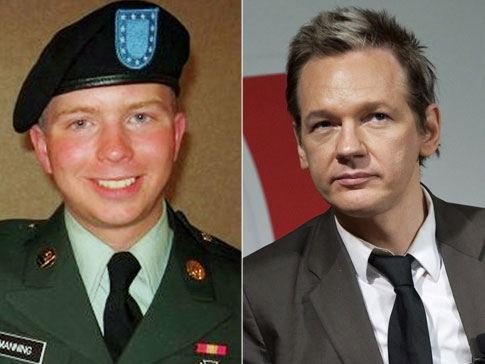
Currently, the United States government is seeking to prove Army Private Bradley Manning, who is suspected of leaking the cables, and Julian Assange worked together to gather the secret documents. If they can prove that Assange collaborated with Manning to release the information, the US may have a case against Assange as a co-conspirator. This theory has journalists and law professors in an uproar, as the relationship between reporter and confidential source lies at the heart of investigative journalism. Former Bush Justice Department official and now Harvard Law Professor Jeff Goldsmith wrote:
“But it [the prosecution theory] would not distinguish the Times and scores of other media outlets in the many cases in which reporters successfully solicit and arrange to receive classified information and documents directly from government officials. Prosecution of Assange on this theory would therefore raise awkward questions about why DOJ [Department of Justice] does not bring charges against the American media for soliciting classified information on a regular basis. It would be a fateful step for traditional press freedoms in the United States.”
Recent revelations about the conditions Manning is being held under show the seriousness of US efforts to indict Assange. Bradley Manning, a 23 year old Army Private, has never been convicted of a crime. Yet he has been held in solitary confinement in a US Marine prison in Virginia for the past 5 months, where his life is severely restricted and regimented. Here are just a few examples: Manning is unable to exercise in his cell; if he tries, he is forced to stop. Every 5 minutes during waking hours a guard asks Manning if he is ok; Manning must answer or the guards will come in and check on him. Manning is only allowed a few visitors and has been unable to speak to his family face to face. Those restrictions pale in comparison to the psychological toll that prolonged solitary confinement has been shown to have on prisoners. (This has led some countries to classify solitary confinement as a form of torture.) The journalist who exposed Manning’s prison conditions, Constitutional attorney and blogger Glenn Greenwald, provides an excellent analysis of solitary confinement. Some people believe the government hopes to so wear Manning down, that he will incriminate Assange as part of a plea bargain.
Meanwhile unlawful government censorship is continuing, despite the fact that WikiLeaks, like Manning, has not been officially charged with a crime. When WikiLeaks began its drawn out release of the diplomatic cables, their site, WikiLeaks.org, was shut down by its US based DNS provider. At the time of this writing, it is still not functioning. To keep the information accessible, WikiLeaks was picked up by other hosts around the world, but it needs to bounce around to avoid being shut down. (The most reliable mirror site so far has been http://wikileaks.ch/ .)
After the website itself was attacked, several large companies, such as Amazon, Visa, PayPal, and, most recently, Bank of America withdrew their services to WikiLeaks, saying that WikiLeaks had violated their “Terms of Service” by publishing illegally obtained documents. Though with warning comments from Senator Joseph Liebermann about aiding WikiLeaks, the motive behind the companies suddenly dropping their services seems curious at best. This blatant attack on free speech and internet freedom has prompted several cyberattacks by WikiLeaks supporters Anonymous. These attacks have not been condoned by Mr. Assange.
WikiLeaks is also being discredited by some in the media. Consider, for example, the falsehood in some media outlets that says WikiLeaks dumped all of the 250,000 cables online without any concern for journalistic ethics. This story has been repeated on NPR and TIME, among others. Again, WikiLeaks has only published cables that have first been published by the newspapers and only after they have been redacted and vetted by those journalists and by Assange’s team (Assange even sought US government assistance in this). Glenn Greenwald strongly opposes such careless reporting:
“That’s why this cannot-be-killed lie about WikiLeaks’ ‘indiscriminate’ dumping of cables has so consumed me. It’s not because it would change much if they had done or end up doing that — it wouldn’t — but because it just so powerfully proves how mindlessly subservient the American establishment media is: willing to repeat over and over completely false claims as long as it pleases the right people — the same people to whom they claim they are ‘adversarial watchdogs.’ It’s when they engage in such clear-cut, deliberate propagandizing that their true function — their real identity — is thrown into such stark relief.”
The attacks continue with calls from prominent politicians and media personalities for Mr. Assange to be taken down or even assassinated.
For instance, Democratic Party consultant and Fox Business commentator Bob Beckel:
“We’ve got special ops forces. I mean, a dead man can’t leak stuff. This guy’s a traitor, a treasonous, and he has broken every law of the United States. The guy ought to be—and I’m not for the death penalty, so if I’m not for the death penalty, there’s only one way to do it: illegally shoot the son of a [bleep].”
The logical gymnastics Beckel had to go through to come to that conclusion are astounding. Or read this gem of twisted logic from ex-governor Sarah Palin:
“He is an anti-American operative with blood on his hands. His past posting of classified documents revealed the identity of more than 100 Afghan sources to the Taliban. Why was he not pursued with the same urgency we pursue Al Qaeda and Taliban leaders?”
But the biggest attack of all is on the First Amendment’s rights of free speech and free press. The hypocrisy that the US, the world’s supposed leader in matters of democracy and rights, is displaying in relation to WikiLeaks is extremely unnerving. This also has many Europeans confused by the US government’s reaction, as reported in the New York Times:
“For many Europeans, Washington’s fierce reaction to the flood of secret diplomatic cables released by WikiLeaks displays imperial arrogance and hypocrisy, indicating a post-9/11 obsession with secrecy that contradicts American principles.”
Some criticize WikiLeaks due to the supposed security threat. But the fear that leaked documents automatically put American lives at risk may be unfounded, as a Pentagon study found no lives were put in danger with the publishing of the Afghanistan war logs. Also, the vetting process the diplomatic cables undergo, including the redaction of sensitive information, before being published by the newspapers and WikiLeaks will continue to keep this fact applicable.
What about other lives that have been negatively affected due to American foreign policy? The media and political attacks have mainly been centered on the supposed damage caused by WikiLeaks and Mr. Assange, but scant attention has been given in the mainstream media to the lives lost, environments destroyed, and the economic disasters caused by reckless and power-hungry American interests shown in the leaked embassy cables. The United States’ worries about lives in jeopardy are looking towards the wrong lives, says human rights activist and reporter Jemima Khan: ”The best justification governments can find to shut down information is that lives are at risk. In fact, lives have been at risk as a result of the silences and lies revealed in these leaks.” The embassy cable coverage itself also differs greatly, as the New York Times reportage is more optimistic as compared to the more critical London Guardian or Germany’s Der Spiegel. The public’s eyes are being diverted by the mainstream media, in particular by the politicians and military officers they continually use as their talking heads. A recent Guardian editorial addresses just that:
“In times when big business and governments attempt to monitor and control everything, there is a need as never before for an internet that remains a free and universal form of communication. WikiLeaks’ chief crime has been to speak truth to power. What is at stake is nothing less than the freedom of the internet. All the rest is a sideshow distracting attention from the real battle that is being fought. We should all keep focus on the true target.”
And what exactly is the true target? What is the point of WikiLeaks exposing governments and corporations? What drives this organization, even at great risk to itself?
The best place to start would be to look at the manifesto published by Editor-in-Chief Julian Assange and WikiLeaks back in 2006. Using computer programmer analogies, Assange points to the conspiratorial relationships (here meaning acts done in secret without public knowledge) between major world players that seek to hold onto their power at any cost. Assange’s way of disrupting this abusive power is “to address the aggregative process itself, by impeding the principle of its reproduction: rather than trying to expose and cut particular links between particular conspirators (which does little to prevent new links from forming and may not disturb the actual functioning of the system as a whole), he [Assange] wants to attack the ‘total conspiratorial power’ of the entire system by figuring out how to reduce its total ability to share and exchange information among itself, in effect, to slow down its processing power.” (More of this deep analysis of the WikiLeaks’ manifesto can be found here.) However, it is important to note from a recent TIME interview that Mr. Assange does believe that secrecy is important, yet “it shouldn’t be used to cover up abuses.”
Making the conspiratorial links ineffective is just part of WikiLeaks’ mission. Julian Assange, who rose to fame as an Australian journalist and hacker, helped start WikiLeaks to begin a new type of journalism, a “scientific journalism.” Assange wrote recently in an editorial for The Australian:
“WikiLeaks coined a new type of journalism: scientific journalism. We work with other media outlets to bring people the news, but also to prove it is true. Scientific journalism allows you to read a news story, then to click online to see the original document it is based on. That way you can judge for yourself: Is the story true? Did the journalist report it accurately?”
This statement reveals Mr. Assange’s mistrust of the media. The media has shown itself to be just as capable of being duped by the government as we are. (See: Iraq War.) Seeking to alter and address the corrupt power structures of media and government, WikiLeaks has consistently been changing the face of modern journalism. Rather than be a party to a system of corruption, of backdoor deals, and suppression of information, WikiLeaks is dismantling the status quo of reportage, leak by leak. Guardian journalist Simon Jenkins wrote:
“Disclosure is messy and tests moral and legal boundaries. It is often irresponsible and usually embarrassing. But it is all that is left when regulation does nothing, politicians are cowed, lawyers fall silent, and audit is polluted. Accountability can only default to disclosure.”
These secret disclosures of government memos are a necessary goad for change. The cozy relationship between the press and the government continues to invite more and more lies to the main discourse of the American public. Why does the press continually rely on official sources who specialize in spin? Perhaps the press should counteract official spokespeople with additional sources from outside the realm of power, in order to give an outsider’s perspective and to provide a view that does not have as its main objective the protection of power and those who profit from it. This more objective view is, in part, what the leaked documents help bring into the debate. These reports cannot and should not be ignored, for they have brought truth to light for the American people to read and understand, without the slant of a biased media and political meddling.
A sure sign the press is doing its job of not playing to those in power is, according to Julian Assange, censorship attempts:
“So, maybe where you see freedom in the press, you are actually seeing the basic power structures of society so sewn up that the press doesn’t matter much. And where you see aggressive attempts to censor things, it’s a positive symbol, because the power structures that control those attempts are revealing their fear of journalists or other people revealing that information.”
The censorship and other attacks faced by WikiLeaks reveal serious double standards that should alarm any American citizen who wants to protect free speech and a free press. Mr. Assange is being attacked for the slim possibility that he broke a yet-to-be-determined American law, whereas the documents released by WikiLeaks show evidence of war crimes in Iraq and Afghanistan, as well as outright lying by our politicians and corporations that could get them ousted by their constituencies or shareholders. Those who lie aren’t being held accountable for their actions, while those who speak truth are being torn apart. When are we going to demand justice?
Journalists and politicians are lashing out, not only because WikiLeaks is exposing their misdeeds, but also their weakness of character and morals in the gruesome face of power and money. The release of these secret documents is not about settling scores, or embarrassing American officials–nor are the leaks as damaging to the American image as WikiLeak detractors would have us believe. Rather the leaking of secret documents is about destroying the system of secrecy and revealing truths to the American people. Many of the more despicable actions of the United States are no secret to the world, yet they have long been kept from us, in whose name these actions are being perpetrated, to keep us from seeking reforming action. Finally, through WikiLeaks, we can see the cold, hard, and often embarrassing truth: This is who we really are in the world. This is how our power is won and twisted. This is why we are hated.
Perhaps America’s most famous whistleblower, Daniel Ellsberg, of Pentagon Papers fame, said it best:
“They [the American public] have not asked enough. They have not expected enough or demanded enough in the way of boldness, in the way of responsibility from their public servants. Make that known and I think our Constitution will continue to function better than it has in the past.”
WikiLeaks is tearing away the cloak of secrecy and lies that our media and politicians have shrouded US actions in for so long. WikiLeaks is not changing the power structures of media and government, it is destroying it with each and every leak released. In the place of this corrupt system, WikiLeaks hopes to bring about a new breed of journalism and a new fear of exposure instilled in power’s abusers. And for that, we should applaud Mr. Assange and WikiLeaks.
IWW supports Boycott, Divestment and Sanctions movement in support of Palestinian Rights
(This article is re-posted from the national IWW.)
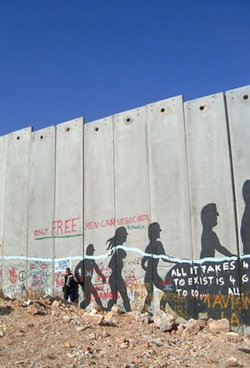
The Industrial Workers of the World (IWW or Wobblies) has officially voted to support the Boycott, Divestment and Sanctions (BDS) movement in support of Palestinian rights. The “Resolution in Support of the Workers of Palestine/Israel” was adopted in an overwhelming vote both at the IWW’s convention in Minneapolis and by the membership via referendum. This vote makes the IWW the first union in the US and the third union in Canada to officially support the Palestinian United Call for Boycott, Divestment and Sanctions.
Inspired by the struggle against apartheid in South Africa, the BDS movement calls for boycott, divestment and sanctions against Israel until such time as fundamental Palestinian rights are recognized. The BDS call is supported by a broad cross-section of Palestinian society, including Palestinian unions.
The resolution to support the BDS campaign comes out of the work of the IWW’s International Solidarity Commission and the IWW Friends of Palestinian Workers Group, a grassroots network of Wobblies supportive of the Palestinian, Israeli and international struggle against Israeli apartheid. Support for the BDS campaign was also stressed by all the Palestinian workers who met with members of the IWW on the IWW delegation to Palestine, particularly the Independent Workers Federation of Palestine, with whom the IWW shares a close bond of solidarity.
“For a union concerned with international solidarity, supporting the BDS movement is the right thing to do”, said IWW member Nathaniel Miller, who serves on the International Solidarity Commission and attended the IWW delegation to Palestine. “By officially supporting this BDS call, the IWW stands shoulder to shoulder with Palestinian workers in a global picket line against Israeli apartheid.”
“Our support of the BDS movement is in line with traditional wobbly principles of anti-racism and international solidarity”
The IWW Friends of Palestinian Workers Group resolves to continue to advance the cause of Palestinian rights inside and outside of the IWW.
Founded in 1905, the IWW is a union with a long tradition of solidarity and anti-militarism, and has been central to some of the most important struggles in US working class history. More recently, the IWW has been successful organizing at Starbucks and in the fast food industry, among workers long thought to be unorganizable. The IWW is an international union, with members across North America, Europe, Australia, and South Africa.
IWW Friends of Palestinian Workers Group
Phone – 610-209-1447
E-mail – nathaniel [at] iww.org
Web – www.iww.org/projects/isc/palestine
 Grand Rapids Institute for Information Democracy