Levin supports Obama’s decision to bomb Libya
Last week, Michigan Senator Carl Levin released a statement in support of US President Barack Obama’s decision to bomb the country of Libya.

Levin begins his comments by noting that Obama has “carefully helped assemble a broad military coalition supported by a U.N. resolution.” It is true that a United Nations resolution was passed in support of a No-Fly zone, but such a statement from Levin is overly simplistic.
First, it should be stated that 5 of the 15 UN Security Council members abstained from the vote, specifically Brazil, China, Germany, India and the Russian Federation. Some of these countries called for an immediate ceasefire and dialogue with Libya.
Second, the US and other NATO countries are already in violation of the UN Security Council resolution they signed on to. In a recent article Noam Chomsky points out that the US France and the UK interpreted the UN resolution as a justification for aggressive military action. Chomsky goes on to say:
“The blatant disregard of UN 1973, from the start began to cause some difficulties for the press as it became too glaring to ignore. In the NYT, for example, Karim Fahim and David Kirkpatrick (March 29) wondered “how the allies could justify airstrikes on Colonel Qaddafi’s forces around [his tribal center] Surt if, as seems to be the case, they enjoy widespread support in the city and pose no threat to civilians.” Another technical difficulty is that UNSC 1973 “called for an arms embargo that applies to the entire territory of Libya, which means that any outside supply of arms to the opposition would have to be covert” (but otherwise unproblematic).”

Levin then goes on to state, “while the military mission is focused on saving lives, we must also pursue the broader goal of a future for Libya that belongs not to a tyrant, but to the Libyan people.” This ignores the US support for Qaddafi when he came to power since 1969. According to Bill Blum, author of Killing Hope, the US supported Qaddafi throughout the 1970s and into the early 80s, but that support turned to antagonism during the Reagan years. The US did attempt to assassinate Qaddafi on several occasions and did get the UN to impose sanctions on Libya from 1992 – 1999. However, the sanctions were motivated by a legal case where in Libya shot down a commercial airplane. Levin’s statement about Libya belonging to its people is somewhat hollow, especially since there has been no historical evidence that the US has taken action to support civil society since Qaddafi came to power.
Levin concludes his statement by saying, “President Obama has been cautious in weighing the considerations and conditions for the use of military force, and I am confident he will continue to do so in considering the many questions surrounding the supply of weapons to the opposition forces.”
This concluding comment by Levin is either intentionally misleading or overly naïve. When has the US ever militarily intervened with supplying weapons that led to a positive and peaceful outcome? Some examples might be the US supply of weapons to Colombia and Turkey since the early 1990s. In both cases state repression increased against insurgent forces in both countries resulting in tens of thousands being killed with US weapons.
More importantly, the US decision to begin bombing Libya from planes and naval ships has had a non-peaceful effect on other countries in the region. As Phyllis Bennis points out in a March 24 posting, the US bombing of Libya has resulted in harsh crack downs by other Arab regimes against indigenous uprisings. Bennis also points out that the US bombing campaign does not have the support of the African Union (AU), a point which neither Obama or Levin are willing to acknowledge.
So it seems that Senator Levin, despite his claims to “progressive” credentials is endorsing yet another military campaign by the Obama administration. Further evidence that US war policies are fundamentally bi-partisan in nature.
Sexual Assault Awareness Month Events Announced
The West Central Michigan branch of the YWCA and the Kent County Sexual Assault Prevention Coalition have announced local activities and resources for Sexual Assault Awareness Month.
 The events that have been organized are:
Eyes Wide Open Information Tables April 4 – 8
GVSU student group Eyes Wide Open will have an information table in the Kirkoff Center from 10AM – 2PM
Guyland: The Perilous World Where Boys Become Men – April 5
1:00 PM Book talk by Michael Kimmel, author and professor of sociology at the State University of New York at Stony Brook.
Calvin College
Commons Lecture Hall in the Commons Annex
Talk with Bob Hall – April 7
6 –7:30 PM Allendale Campus/Cook-Dewitt Center
Nationally-known presenter and founder of “Learning to Live with Conflict, Inc.”,
Bob Hall, will bring his message of non-violent sexuality, respect within relationships, and clear communication to GVSU’s campus. His talk will be repeated at 8-9:30 PM.
Denim Day Kickoff Event – April 12 5:00-6:15 PM at the YWCA 25 Sheldon downtown Grand Rapids. Includes Yo Puedo Art Exhibit, Interactive Theater performance by GVSU Theater group, screening of the film “Breaking Our Silence: The Gloucester Men Speak Out Against Domestic Abuse.”
PROM NIGHT III: Dating Violence Forum – April 28
5:00 – 7:30 PM hosted by Girls Inc.® at the YWCA West Central Michigan 25 Sheldon Blvd.
In addition to the events the YWCA and the Sexual Assault Prevention Coalition are providing resources for the community to stop rape and sexual assault. Among those resources is information to engage bystanders so that people will not allow sexual assault to happen even if it is not directly affecting them.
In addition the YWCA now provides sexual assault services for people with disabilities. For more information on these services or any of the events for Sexual Assault Awareness Month contact the YWCA at 616-459-4652.
Corporations and the Arab Net Crackdown
(This article by Tim Karr and Clothilde de Coz is re-posted from Foreign Policy in Focus.)
Springtime in the Arab world is looking bleaker now that despots in Libya, Bahrain, and Yemen and reactionary elements in Egypt have gained an upper hand against the pro-democracy protesters who have inspired the world. And the Internet, hailed sometimes in excess as a potent tool for these movements, has itself come under increasing fire from these and other autocratic states seeking to crush popular dissent.

In Libya, the Gaddafi regime plunged the nation into digital darkness during the first week of March, where it has remained. In Bahrain, the kingdom reacted swiftly to pro-democracy demonstrations by filtering sites that let locals share cell phone videos, blocking YouTube pages containing videos of street protests, and taking down a large Facebook group that called for more demonstrations. And even in Egypt, despite the departure of Mubarak, the interim military authority has taken a harsh stand against pro-democracy activists, while trying to stop the sharing of looted state security files, which reveal the extent to which the government uses the Web to spy on Egyptians. These accounts of Internet abuse have not gone unnoticed. Less known, however, is the degree to which U.S. and European companies have enabled the crackdown.
Corporate Enablers
Egypt’s Internet crackdown appears to have been aided by Narus, a Boeing-owned surveillance technology provider that sold Telecom Egypt “real-time traffic intelligence” software that filters online communications and tracks them to their source.
Israeli security experts founded Narus to create and sell mass surveillance systems for governments and large corporate clients. It is known for creating NarusInsight, a supercomputer system that is allegedly being used by the National Security Agency and other entities to provide a “full network view” of suspected Internet communications as they happen.
Narus has also provided surveillance technology to Libya, according to James Bamford, author of 2008’s The Shadow Factory. In 2005, the company struck a multimillion-dollar agreement with Giza Systems of Egypt to license Narus’ Web-sleuthing products throughout the Middle East. Giza Systems services the Libyan network. British-owned Vodafone shut down its Egypt-based cellphone network following a request from the Mubarak regime and then restored it only to send pro-Mubarak propaganda to text-messaging customers across the country. When digital rights groups like AccessNow.org protested Vodafone’s actions, the company stated that it could do nothing to stop those texts, because it was forced to abide by the country’s emergency laws.
Bahrain reportedly filtered and blocked websites using “SmartFilter” software supplied by the U.S. company McAfee, which Intel acquired late last year. Despite widespread reports of its use, company executives claim that they have “no control over, or visibility into how an organization implements its own filtering policy.” Cisco Systems, a leading manufacturer of Deep Packet Inspection (DPI) systems, a content-filtering technology that allows network managers to inspect, track, and target content from users of the Internet and mobile phones, is a major partner in Bahrain. In 2009, the San Jose, California-based company joined with the kingdom to open an Internet Data Center in Bahrain’s capital “as an essential component in the drive to improve government services to the populace.” The extent to which Cisco’s own DPI products are part of this deal remains to be seen. Executives at Cisco would not return our requests for comment on the nature of its involvement in Bahrain.
Nokia and Siemens also support Libya’s cell phone network. A joint venture between these two firms was heavily criticized in 2009 for reportedly assisting the Iranian regime’s crackdown against cyber-dissidents. It’s difficult to know whether they assisted the Libyan government, since Nokia Siemens’ PR didn’t return our call, either.
Leading by Action
In mid-February, Secretary of State Hillary Clinton spoke about a new U.S. Internet freedom policy designed to help democracy movements gain access to open networks and speak out against authoritarian regimes. As part of this initiative, the State Department will provide tens of millions of dollars in new grants to support “technologists and activists working at the cutting edge of the fight against Internet repression.”
Secretary Clinton spoke of the Obama administration’s belief in our universal “freedom to connect,” something the White House sees as a natural extension of our longstanding rights to free speech, assembly, and association.
Yet it’s hard to claim the moral high road and lecture other countries on the importance of online freedom when U.S. companies are exporting DPI systems and other technology to regimes intent on spying on their own people and turning the open Internet into a means of repression.
Asking Clinton’s deputy director James Steinberg about this inconsistency during a House Foreign Affairs Committee hearing in February, Rep. Chris Smith (R-NJ)brought up Narus’ dealings with the Mubarak regime. “It is an awful tool of repression,” Smith said, “and Narus, according to these reports, is enabling this invasion of privacy.” Rep. Bill Keating (D-MA) continued the questioning, going so far as to say that “people are losing their lives based on this technology.” Keating called on Steinberg to investigate U.S. companies that sell DPI technology overseas. In a subsequent press statement, Keating pledged to introduce legislation “that would provide a national strategy to prevent the use of American technology from being used by human rights abusers.”
Earlier this month, Sen. Dick Durbin (D-IL) who sits on the Senate Foreign Relations Committee, penned a Politico op-ed slamming the U.S. technology industry for “failing to address serious human rights challenges.” He wrote, “If U.S. companies are unwilling to take reasonable steps to protect human rights,” Durbin wrote, “Congress must step in.”
Pledges to act are encouraging, but far less so than action itself. As of now, we have seen little of substance to defend our freedom to connect against companies and their despotic clients that seek to take it away.
Bradley Manning: Ruled by Conscience, Not Law
Alleged WikiLeaks source Bradley Manning again made headlines recently, this time for being forced to strip naked in his prison cell at the US Marine base in Quantico, Virginia. Continuing to pay for his alleged crimes, Army Private Bradley Manning is locked in solitary confinement while being subjected to sleep deprivation and other humiliation tactics. But is it right for him to be forced to pay such a cost?
After public outcry at this act of humiliation, as well as harsh comments from the now-fired State Department spokesman PJ Crowley, many more people are aware of the abuse of Manning and are rallying for him to be treated justly. Nevertheless the media most often portray Manning as someone who indiscriminately stole the hundreds of thousands of secret documents without reason. But from what is known about Manning, this is utterly false.
Manning’s apparent motive in leaking the secret documents was not vindictiveness, but a sincere belief that public awareness would help right wrongs. In the partially released chat logs that are purportedly between Manning and hacker Adrian Lamo (who turned Manning in), Manning writes:
I want people to see the truth . . . regardless of who they are . . . because without information, you cannot make informed decisions as a public . . . I don’t believe in good guys vs bad guys anymore . . . I only [see] a plethora of states acting in self-interest . . . with varying ethical and moral standards of course, but self-interest nonetheless.
This supports what friends and family have said about Manning’s moral convictions and political ideas. Always intelligent and opinionated, Manning then started to get into politics in high school. Frontline correspondent Martin Smith, who interviewed Manning’s family and friends, recently told NPR: ”He opposed the war in Iraq and talked about that with friends. And he also start[ed] to get a reputation for being somewhat hot-headed.”
For Manning, whose job allowed him to spend hours digging through military databases while stationed in Iraq, the abuses of power he uncovered perhaps collided with those opinions. Documented abuses of power, including possible war crimes committed by the American military in Iraq and US diplomatic manipulations around the world, as well as the infamous Collateral Murder video showing the killing of Iraqi civilians and Reuters journalists by the crew of a US military helicopter. All of these could have been what pushed Manning into the realm of principled law-breaking. In defense of such law-breaking, historian and political activist Howard Zinn writes: ”Can a decent society exist. . . if people humbly obey all laws, even those that violate human rights? And when unjust laws and policies become the rule, should not the state (in Plato’s words) ‘be overthrown’?” Manning felt he had to do his part to bring about this “decent society,” even at great personal risk, which is currently being borne out in his imprisonment.

Meanwhile, human rights activists continue to advocate for an end to the military’s campaign of discrimination, torture, and humiliation against Manning. The military accuses Manning of thirty-four charges related to the document leak. At this time, Manning has not been convicted of any crimes, but a pre-trial hearing is tentatively set for late May 2011. Many see the punitive measures Manning is being subjected to as an effort by the Obama administration to intimidate other potential whistleblowers, saying quite clearly, “Your actions will not be tolerated”. While candidate Obama pledged to protect whistleblowers, his actions as president contradict his promise, as his administration deals with whistleblowers more harshly than any prior administration.
Others suggest that the treatment of Manning for such crimes is an attempt to wear down his resistance in order to implicate WikiLeaks founder Julian Assange, because if evidence of collaboration between Manning and Assange is unearthed, the US can then charge and prosecute Assange. These suspicions seem warranted and would explain the lengths to which the US government has gone to imprison the 5’2″ physically harmless man in the conditions usually reserved for Supermax prisoners.
The military’s treatment of Manning is not so different in character from the corruption and war crimes he has been accused of exposing, as both are morally wrong and unlawful. In a public letter, around 300 of the nation’s leading law educators have decried the abuse of Manning as a direct violation of the Fifth and Eighth Amendments, which protect due process and prohibit cruel and unusual punishment. Manning’s lawyer will also use Article 13 of the Uniform Code of Military Justice in Manning’s case, according to which he is not to be “subjected to punishment or penalty other than arrest or confinement upon the charges pending against him.” The US military and the Obama administration are ignoring these foundational laws, while simultaneously upholding other laws in an effort to further their own self-protection. The US government continues to imprison Manning for allegedly breaking laws that, in comparison, pale utterly to their law breaking he may have exposed and their law breaking they are using to imprison him.
Beyond the legal questions of the Manning case, the moral issues are at stake as well. Is breaking the law to expose such unlawful acts as corruption, war crimes, and backdoor dealings wrong? Our political tradition often upholds laws as a foundation for moral decision, yet this is often not the case. Departing from this tradition, whistleblowers adhere not to the laws made and upheld by corrupt institutions and people but to a higher law, a moral code. This is right. Laws are made to protect people, not serve as cover ups and a retaliatory means to condemn whistleblowers, so when these laws are being abused, it is the right of the people to seek to alter the law. The laws of our country should serve those who seek to right the wrongs at great personal risk, for it is these people who challenge our unjust laws that keep our democracy and freedoms alive and growing. Bradley Manning was willing to put himself at risk to right wrongs, and we owe it to him and every other whistleblower to hold our government accountable.
Hundreds participate in march commemorating Cesar Chavez
Yesterday, hundreds of people, most school children, march down part of Cesar Chavez Way (Grandville Avenue) for the annual Cesar Chavez Social Justice March in Grand Rapids.

The march brought out students, teachers, union members, politicians, religious leaders and activists. People marched from the corner of Grandville Avenue and Hall St. to Chicago Drive chanting Si Se Puede! Many people wore t-shirt with the United Farmworkers logo on the front while others carried banners and flags. The march ended at Holy Name Catholic Church, where a formal program was held to commemorate the life of Cesar Chavez.

The crowd was welcomed by the pastor of the church and was followed by Rosa Fraga a long-time educator in the Latino/a community. She said that this celebration was not just an event honor the legacy of Cesar Chavez, but “all the farmworkers who give us food.”
As Rosa Fraga spoke students brought forth baskets of food that symbolized the kinds of agricultural labor that migrant workers engage in here in West Michigan. She said that the US lives in such abundance, but all of this “has come to us on the backs of migrant workers.”

Following Rosa were a group of students who read several statement from Cesar Chavez in both English and in Spanish. The students read comments from Chavez that talked about struggle, courage, hope, education, farmworkers, perseverance and non-violence.
Later in the program people watch a short video by Dan Salas with several people who had participated in the UFW boycotts in the 1960s and 70s in Grand Rapids. One of those who had participated in the boycotts was Michael Johnston, a retired teacher and local labor historian. Johnston and others that had participated in the boycott spoke briefly about their experiences in that campaign and some of them spoke about meeting Cesar Chavez. At one point Johnston told the story of how Chavez responded to the question of how he would want to be remembered. Chavez said, “If you want to remember me, then organize!”
At the end of the program Jordan Bruxvoort with the Michigan Organizing Project (MOP) spoke about a new campaign that MOP and other local entities are working on. The campaign is centered around Wage Theft, which is the illegal underpayment or non-payment of workers’ wages.
According to the literature MOP was handing out, “Wage theft affects millions of workers each year, often forcing them to choose between paying rent or putting food on the table. Wage Theft is all around us. It robs from the government’s tax coffers, resulting in cutbacks of vital services. Wage theft puts ethical employers at a competitive disadvantage.”
This campaign was in part initiated by the Mayor of Grand Rapids, who has set up a wage theft task force that will be spending the next several months documenting cases of wage theft in Grand Rapids. For those interested in the campaign you can contact Jordan at jbruxvoort@miorganizingproject.org.
Besides all the positive elements of this event it is worth mentioning some aspects that seem quite contradictory and at least raise some serious questions. The march was led by a group of JROTC students, some dressed in fatigues. Cesar Chavez was a staunch proponent of non-violence, so why would the organizers have students who are participating in a military program led a march honoring Chavez?

In addition, the t-shirt that many people, especially students were wearing with the United Farm Worker (UFW) logo on the front had the logos of AT&T and Fifth Third Bank on the back. I could not get an answer to why there were corporate logos on the shirts, but then during the program one of the organizers read a list of corporate donors off and AT&T and Fifth Third Bank were the largest.
This kind of corporate sponsorship raises critical questions about the relationship of such events to the memory of Chavez and the farmworker struggle. The UFW has always been in battle against large agri-business companies that have close relationships with the banks and companies like AT&T. A case in point is the current struggle that the Farm Labor Organizing Committee’s (FLOC) is engaged in with Chase Bank and RJ Reynolds Tobacco.
In addition, there was very little commentary from any of the presenters about the realities for migrant workers in West Michigan today. According to a report from the Michigan Civil Rights Commission farmworker wages and conditions have not improved much since the 1960s when Chavez and the UFW became nationally known. It would seem that the current conditions of migrant workers would be the most important thing to address at an event commemorating a man who dedicated his life to fighting for the rights of farmworkers in America.
New Media We Recommend
Below is a list of new materials that we have read/watched in recent weeks. The comments are not a “review” of the material, instead sort of an endorsement of ideas and investigations that can provide solid analysis and even inspiration in the struggle for change. All these books are available at The Bloom Collective, so check them out and stimulate your mind.

The Coke Machine: The Dirty Truth Behind the World’s Favorite Soft Drink, by Michael Blanding – Much has been written about Coca Cola’s involvement in murdering union leaders in Colombia, theft of water and how the most branded beverage company in the world has been targeting children with their sodas. What makes The Coke Machine stand out is that is tackles of these topics and more. Blanding’s book begins with the founding of the company, which is also mired in deception and greed, and then lays out a well-documented history of Coca Cola’s contribution to environmental destruction and human misery. This book is an excellent example of how issues like labor rights, ecological destruction and human health are linked. An excellent text for anyone who wants a concrete example of how corporate power works.

Who Is Rigoberta Menchu?, by Greg Grandin – Since David Stoll’s book on Rigoberta Menchu’s story was published in 1999 the political right in this country has been attempting to undermine the credibility of the 1992 Nobel Peace Prize winner Ribogerta Menchu Tum. This book is Grandin’s response to those attacks, not so much to defend Rigoberta, but to challenge one of the premises of Stoll’s book. Grandin provides important analysis about the 36 – year war in Guatemala based on the extensive reports by both the UN Historical Clarification Commission and the Guatemala Archdiocese Human Rights reports that came out after the 1996 Peace Accords were signed. Who Is Rigoberta Menchu? Is an important book in that it discusses how we read history and how we frame testimonial literature as a legitimate source of information and history.

Islamophobia: The Ideological Campaign Against Muslims, by Stephen Sheehi – More than any other book to date, Islamophobia dissects the varying forces in both the political and academic world that have sought to demonize Islam and its practitioners. Sheehi lays out a well-documented account of how “academics” such as Daniel Pipes, Bernard Lewis, Fareed Zacharia and many more have infected public discourse on how we talk about Islam since 9/11, 2001. Sheehi also demonstrates that even many Liberal sectors in US politics also have adopted an ideological position on Islam that has justified the so-call War on Terror that began under Bush and continues with the Obama administration. An important contribution to our understanding of how pervasive anti-Islamic ideology is within American institutions.

Roses in December (DVD) – Originally released in 1982, this documentary is about the four US church women who were murdered by death squads in El Salvador in December of 1980. The film investigates the murders as well as focusing specifically on Jean Donavan, who was a lay missionary with the Maryknoll order. This story and the film had a huge impact on my political education in the early 80s and since it was re-released (with updated) material it is still a valuable and powerful example of human courage and resistance to oppression. Highly recommended!
Last nearly a hundred people attended a forum organized by several GVSU student groups on the prison industrial complex. The student groups invited three panelists to address different aspects of the criminal justice system.
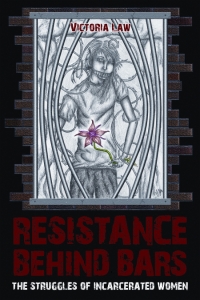
Victoria Law is a prison rights activist and author of the recent book Resistance Behind Bars: The Struggles of Incarcerated Women. She began her presentation talking about the Attica Prison uprising, which she claims led to the modern prisoner rights movement. She then spoke about the August Prison uprising, which involved incarcerated women fighting for rights in a New York prison in 1974. She makes the point that while Attica is fairly well know in popular culture, the August Prison uprising is not because it was a women’s uprising. Victoria also made the point that much of the literature on the prisoner right movement is focused on men.
She then asks the audience to identify issues that women in prison are faced with – health issues, sexual assault, pregnancy, emotional support, HIV/AIDS, and the disproportionate number of women that are incarcerated are women of color. African American women and Latinas are 3 times more likely to be arrested than White women in the US, according to Law, which for her speaks to the inherent racism within the criminal justice system.
However, Victoria said that women have been fighting back, organizing and resisting. Some women have filed lawsuits against the prison system. These campaigns led to changes in the law, which now prohibit male guards from physically searching women and no longer being allowed to violate women’s space where male guards would often watch them undress or shower.
Women have also fought to gain the same access as men in prison to be able to take courses while in prison in order to gain skills that would provide opportunities when they got out. Women who take on these campaigns or acts of resistance are often targeted by the prison authorities, which sometimes results in longer prison terms.

The next speaker was Mark Clements, who spent years in prison beginning as a juvenile despite not committing any crime. Upon being released from prison Mark has continued being an activist around prisoner rights and now works for the Campaign to End the Death Penalty.
Mark began by talking about Troy Davis who is facing the death penalty. Mark said that if you are poor and charged with a serious crime you are likely to be found guilty in the US. He said, “We are a nation that believes in the law and incarceration, even incarceration of children.” Mark was arrested as a juvenile in Chicago and he spoke about the abuse, what he called torture at the hands of the Chicago police. He was charged with multiple life sentences.
Mark also spoke about the race and class dynamics of the prison system. He said that it has more to do with class than race. He also said that while Michigan was the first state to abolish the death penalty, the state does hand out life sentences to juveniles.
Mark then passionately pleaded with the audience to get involved, to not be apathetic, but to take action and see how the criminal justice system affects all of us. He spoke about the crimes of John Burge, a Chicago Police Detective who would systematically round up black youth in Chicago and beat them until one of them confessed to a crime they didn’t commit.
Mark spoke passionately about the evils of the criminal justice system and pleaded with everyone to sign the petition to free Troy Davis. He told the students of GVSU that they should organize a campaign on campus to speak out on behalf of Troy and to engage their fellow students in taking action against the systematic incarceration of poor people.
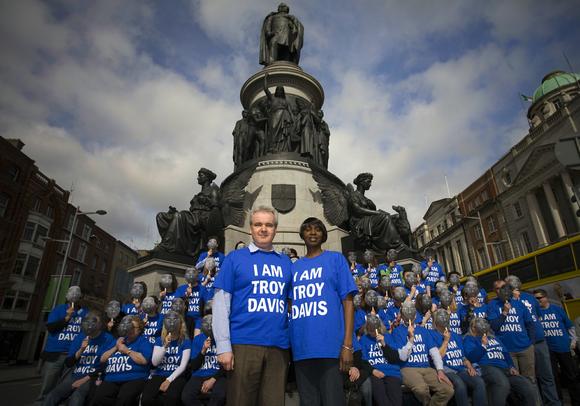
The last speaker was Randi Jones, who for years worked against the death penalty in Texas, which has executed more people than any other state in the country. Randi now works in Illinois and was part of the campaign that recently abolished the death penalty in that state. Randi talked about the work it took to make this grassroots campaign work. She said that we all need to learn from previous movements for change which can teach us a lot about to fight institutional injustice.
Randi then talked about what she called Lethal Injustice. This means the conditions of prisoners, the lack of rights or the fact that many states take away people’s voting rights after serving time. The US has the highest rate of incarceration than any country in the world. Lethal injustice, according to Randi, is racism.
Randi then spoke about the revolutionary movements in the Middle East, the push back in the US, especially Wisconsin, where people are organizing against the so-called austerity measures. Randi said that this is all related to the fight against the criminal justice system, when the budget cuts will take money away to school programs, which only increases the chance of more crime.
Randi ended her comments by saying that the movement against the death penalty is growing, with fewer executions now occurring across the country. She said we need to see the links between all justice issues and build a stronger movement and encouraged those in attendance to make the links with prisoner rights to whatever issue we work on – war, poverty, housing, LGBT and anti-racism work.
The Kings of Michigan

Last week, GRIID shared a Mother Jones news report showing how Governor Rick Snyder’s emergency manager/martial law legislation came directly from the radically conservative Mackinac Center for Public Policy (slogan: “Advancing Liberty and Prosperity.”)
In fact, many of the Mackinac-generated “research” studies are nothing but thinly disguised class warfare tactics that Snyder appears to be using currently in his takeover of the state on behalf of the capitalists. The “mismanagement” of Michigan cities (justification for putting them in the hands of private corporations and dissolving union contracts) is explored in one study. Attacks on collective bargaining and union spending are covered. So is the supposed overspending on public education in Michigan. Another paper recommends the repeal of Michigan’s Wage Act. (To see a listing of all studies, click here.)
But a more significant question is: Who is driving this neo-conservative think tank? Why is the Governor siphoning his ideas directly from it into legislative policy? Who’s really running Michigan?
Information about the people funding the Mackinac Center is sketchy, with donations closely guarded. SourceWatch provides a list of some current and/or past donors, and in some ways the list is unsurprising. It’s well known that Dick DeVos has put significant money into the place, along with various family members. It served as a kind of policy launch pad for the issues highlighted in his failed campaign for governor. Citizens of Michigan would be alarmed to learn that, having rejected him for that post, DeVos and other wealthy capitalists appear to be gaining control of the state via three connected centers of power.
Along with the Mackinac Center, take a look at an organization called Business Leaders for Michigan. This group of overlords runs most of the major business concerns in the state, and membership in the organization is by invitation only. If you aren’t an upper-level executive in a company with revenues of more than $500 million per year, and if your pay isn’t at least in the upper six figures, don’t hold your breath waiting for your invitation in the mail. It’s not coming. Collectively, the 81 members of BLM make $107.5 million a year in salary.
Residents of West Michigan will recognize a lot of the names: Jim Hackett from Steelcase; Richard Haworth from Haworth; Mark Bissell, the vacuum-cleaner king; Dan Gordon of Gordon Food Services; Blake Krueger from Wolverine World Wide.
But where it gets interesting is when you start matching up the financial supporters of the Mackinac Center for Public Policy with members of BLM. Here are some examples:

Mackinac Donor: Chase Foundation
BLM Member: Sarah McClelland, President, Michigan Region/Chase Bank
Mackinac Donor: Hanover Insurance Group Foundation
BLM Member: Frederick Eppinger, President and CEO, Hanover Insurance Group
Mackinac Donor: Herbert and Grace Dow Foundation
BLM Member: Andrew Liveris, CEO, Dow Chemical
Mackinac Donor: General Motors Foundation
BLM Member: Daniel Akerson, CEO/Chairman of the Board, General Motors
Mackinac Donor: Jay and Betty Van Andel Institute
BLM Member: Steve Van Andel, Amway
Mackinac Donors: Dick and Betsy DeVos Foundation, Richard and Helen DeVos Foundation, Edgar and Elsa Prince Foundation
BLM Member: Doug DeVos, Amway
Another interesting connection is the BLM “turnaround plan” for Michigan, which includes: reducing the compensation of state employees…having state employees pay more for their health insurance…encouraging sharing of services between local governments…eliminating binding arbitration for police officers and firefighters…deregulating workplace safety standards…reducing the Michigan Business Tax…stop me when this starts to sound familiar.
During Rick Snyder’s campaign, when he was coyly ducking questions about the details of his 10-point recovery plan, its twin was already posted on the BLM website.
The BLM appears to be the pathway by which the Mackinac Policy Center “studies” are turned into capitalist action steps. And from there, the action steps—all of which ensure that capitalists’ interests trump all—can be plunked into the hands of Rick Snyder, who was the BLM’s leading celebrity speaker at its 2011 conference. And from there into the hands of the corporate cronies with whom he’s surrounded himself.
Because there’s more apparent government tie-in to the BLM—and the Mackinac Policy Center—than just Rick Snyder’s obvious channeling of their policies. John Nixon, the State Budget Director, has been a speaker at the BLM’s Leadership Conference. So has William Schuette, a state senator who also happens to be the Trustee of the Rollin M. Gerstaker Foundation—a major Mackinac Center contributor.

Caroline Sallee, a featured speaker at the BLM’s 2011 conference, is working on a project benchmarking Michigan’s business taxes in comparison with other states. The study was commissioned by the Michigan House of Representatives.
Mark Murray, a BLM member and current president of Meijer, Inc., was formerly the Michigan State Treasurer, the Michigan State Budget Director, and the Director of the Department of Management and Budget.
Another “bridge” from one power center to the other is Andy Dillon, who ran a failed campaign for governor, following in Dick DeVos’s footsteps. He was the former vice president of GE Capital and then president of Detroit Steel Company. As Speaker of the Michigan House, he endorsed the BLM turnaround plan. Now, he’s Rick Snyder’s State Treasurer.
Doug Rothwell, the current president and CEO of the Business Leaders for Michigan, was appointed in January by Rick Snyder to be Chairman of the Michigan Economic Development Corporation. As ProgressMichigan noted, “This gives BLM—a private organization—virtual control over an agency that makes decisions regarding tens of millions of taxpayer dollars and sets economic policy for the state.”
Not surprisingly, the Michigan Economic Development Corporation just published a paean of praise for Rick Snyder’s recent proposals, saying that his $1.5 billion reduction in business taxes will “level the playing field” and offer “a new level of economic certainty for business.”
It’s possible to start seeing the whole state of Michigan, with all these networked connections, as a kind of Bermuda Triangle of rulers: the current conservative state government…the Business Leaders for Michigan…and the Mackinac Center for Public Policy along with its über-wealthy patrons.
And lost in the triangle? The workers of Michigan. The unions. Local governments and their elected officials. And, of course, democracy.
March 30 is the international day of action in support of the Boycott, Divestment and Sanctions Campaign (BDS) against Israel for its ongoing illegal occupation of Palestinian land.
People all around the world today have organized public acts of resistance to Israel’s illegal occupation, such as educational events, flash mobs, boycotts of companies like Caterpillar and a new campaign to target the Jewish National Fund will kick off today.
The International BDS Campaign is modeled on the anti-Apartheid Movement that eventually brought down the Apartheid government of South Arica. This movement includes the boycott of specific companies, divestment from banks and financial systems and other institutions, which are profiting from or doing business with the State of Israel and a call for international sanctions against Israel until it ends the decades long occupation of the West Bank and Gaza.
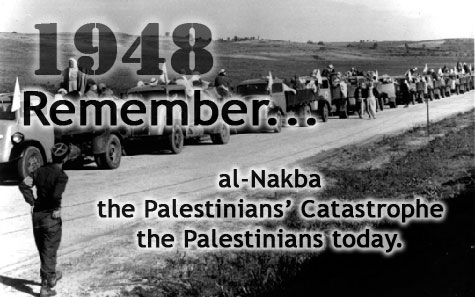
The 30th of March was chosen as the day to bring attention to the BDS campaign because this is the day that Palestinians commemorate as Land Day. It is also a day that Palestinians remember the Nakba. The Nakba commemorates the expulsion of thousands of Palestinians from their homes and land in 1948 by Israeli forces.
The Israeli government just passed laws that make it illegal for Palestinians to participate in such commemorations or to engage in the international BDS campaign.
Land Day has a rich history. Palestinian author and activist Mazin Qumsiyeh writes about this rich history of Land Day in his book Popular Resistance in Palestine:
“Away from politics, grassroots efforts were functioning. The increased mobilization among Palestinians inside the Green Line took a dramatic and bold step forward with a large meeting in August 1975 in Nazareth attended by 110 individuals to defend the land. At this meeting, a committee was selected, headed by Anees Kardoush, to prepare for an even larger meeting.
This meeting, held in October 1975, included about 5,000 activists from many factions and created the Committee for Defense of the Land (Lajnat Al-Difa’ ’An Al-Aradi) with 100 members and an eleven-member secretariat. It began by protesting against the confiscation of 22,000 dunums in the Galilee and the declaration of an even larger parcel of land belonging to three villages (in the Al-Mil area) as closed military zones, with the intention of building nine Jewish settlements in this closed zone. A meeting was held in Nazareth on March 6, 1976. This included 48 heads of municipalities and local village councils and called for a day of protests and strikes on March 30, 1976 should Israel go ahead with its land confiscation policies. When it appeared the strike would take place, many areas outside of the Galilee joined it, including in the West Bank.
 This became known as ‘Land Day’ throughout Palestine. The events actually started on March 29, when a demonstration against the Israeli army’s provocative mobilizations in the village of Deir Hanna. Later that evening the village of Araba Al-Batoof demonstrated in solidarity and a young man, Khair Muhammad Yassin, was killed by Israeli soldiers. He was the first martyr of the 1976 Land Day. More martyrs fell over the next 24 hours. The events were well organized and participation was high. The Israeli authorities reacted violently. Many were injured, six nonviolent protesters killed and hundreds arrested.
The events coincided with the secret Koening Memorandum which laid out plans for further discrimination and ethnic cleansing to ‘make the Galilee more Jewish’. The
Israeli government condemned the leaking of the memorandum, but no government official repudiated its racist content. After this successful popular event, differences arose that weakened the organizing committee and yet, the movement continues strongly to this day.”
The only local action we are aware of is a presentation tonight at the Bloom Collective by a Palestinian at 7pm.

On this day in 1920, Emma Goldman—anarchist, activist, political writer and organizer—arrived in Moscow after being deported by the U.S. government for “dangerous, destructive and anarchistic sentiments.” Having been born Russian, and having written in a positive light about the Russian Revolution, Goldman thought at the time that she was, in a way, coming home. Later, she was to write, “The individual whose vision encompasses the whole world often feels nowhere so hedged in and out of touch with his surroundings as in his native land.”
Emma Goldman was born in Kovno, a town in the former Russian Empire (now Lithuania). When she was 16 years old, she emigrated to New York City with her family. There, she became a garment worker. But she also launched into her lifetime work of radical organizing, anarchist writing, and advancing the causes of justice.
She met and became the partner of Alexander Berkman, and together they became active in the trade union movement. Goldman was witness to a bloody battle at the Homestead Strike, a steel mill overseen by Henry Clay Frick. Striking workers were attacked by 300 hired Pinkerton strikebreakers. Seven workers were killed and sixty more severely wounded. Goldman and Berkman decided to take direct action, which she described as “the logical, consistent method of Anarchism.”
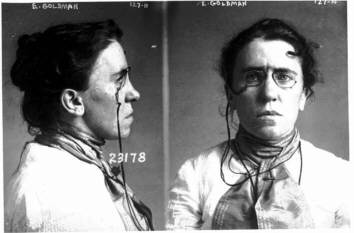
Goldman and Berkman planned the assassination of robber-baron capitalist Henry Clay Frick. Berkman stabbed Frick twice and shot him three times. Frick survived and Berkman was sentenced to prison for 22 years.
Goldman was not charged, but was closely followed and arrested for a number of activities, including her work against militarism, distributing birth control information, and handing out pamphlets telling the unemployed to steal the food they needed to survive. Undaunted by her jail sentences, she carried on with her work. She was a tireless lecturer, speaking throughout the country on topics of social injustice in the United States and the foundational principles of anarchy. She encouraged the formations of unions in and advised how to organize demonstrations and acts of protest.
When the Criminal Anarchy Act was passed in New York State in 1902, Goldman was forced to go into hiding, but continued her activism through her writing. She moved to the tenements of the Lower East Side and worked as a nurse for the immigrant residents.
Berkman was released from prison in 1906; together he and Goldman founded the radical Mother Earth magazine. One of her most famous pieces for the magazine was called “Self-Defense for Labor,” in response to a series of violent attacks on union organizers. In the essay, she called for workers to arm themselves for their protection.
When World War I broke out, Goldman and Berkman started a new publication, Blast. Later, both were accused of violating the War Powers Act by speaking out against U.S. involvement in World War I, even though, ironically, Woodrow Wilson had done the same thing. Goldman had harshly criticized Wilson for reversing his stance on neutrality in the war during his 1916 campaign, and noted, “If voting changed anything, they’d make it illegal.”
 The newspapers called her “Red Emma.” Goldman was one of thousands arrested and told that, as “subversive” aliens, they had no legal rights in the United States. (At this point, it had been 35 years since Goldman had entered the country legally and established residence in the U.S.) Held in prison illegally by order of J. Edgar Hoover, Goldman, along with Berkman and 247 other radicals, were deported to Russia.
Once there, Goldman discovered that Lenin had turned his back on anarchism and that the tenor of the Revolution had changed. The people were no longer in charge; a centralized and elite group of autocrats were. While attending an anniversary commemoration of the October Revolution, Goldman said it was “more like the funeral than the birth of the Revolution.”
She was even more disillusioned with the revolution which she had supported so ardently as she traveled to Moscow and other cities, seeing widespread famine, demonstrations for bread shut down by the secret police and the rights of workers denied. Goldman decided she must leave. She managed to obtain a Swedish visa. Later, Goldman wedded a Welsh miner and workers’ rights advocate, James Colton, who offered marriage solely so Goldman could obtain British citizenship. This allowed her to travel and speak without constant visa applications and arrests.
After she left the Soviet Union, Goldman wrote two volumes about her experience that were published under the title My Disillusionment in Russia. The work prompted socialist author Lincoln Steffens to say, “Emma Goldman, the anarchist who was deported to that socialist heaven, came out and said it was hell.”
 Goldman moved to Paris, where she became the central figure in a group of American and British radicals. It was from Paris that she went to Spain in 1936 to observe the situation during the Spanish Civil War. She founded the Committee to Aid Homeless Spanish Women and Children, and was in charge of a pro-revolutionary news source in London, where reports of the fighting in the Times and other papers were badly slanted. Later, friends said that when Franco came into power, Goldman’s heart was broken.
Emma Goldman died in Toronto in 1940. Her life of constant service to justice and workers’ rights spanned nearly seven decades. She was the author of four books and countless articles addressing issues such as freedom of speech, imperialism, the corruption of capitalism, the rights of homosexuals, women’s suffrage, birth control, the rights of unions to organize and protect workers, prison abuses, anarchism, and revolution.
Special permission from the United States government had to be obtained to allow the body of “the most dangerous woman in America” to be buried in Chicago, near the monument for the Haymarket.martyrs of 1886.
 Grand Rapids Institute for Information Democracy