This article by Neil deMause is re-posted from the August issue of Extra!
The analysis provided in this article contrasts with a recent MLive story, which acknowledges warmer temperatures, but also provides significant space to WOOD TV8 meteorologist Bill Steffens who continues to deny there is global warming.

On April 14, a massive storm swept down out of the Rocky Mountains into the Midwest and South, spawning more than 150 tornadoes that killed 43 people across 16 states (Capital Weather Gang, 4/18/11). It was one of the largest weather catastrophes in United States history—but was soon upstaged by an even larger storm, the 2011 Super Outbreak that spread more than 300 tornadoes across 14 states from April 25 to 28 (including an all-time one-day record of 188 twisters on April 27), killing 339 people, including 41 in Tuscaloosa, Alabama (CNN, 5/1/11).
Ensuing weeks saw Texas wildfires that had been burning since December expand to consume more than 3 million acres (Texas Forest Service, 6/28/11; CNN, 4/25/11), plus record flooding along the Mississippi River, which couldn’t contain the water from April’s storms on top of the spring snowmelt. On May 22, a super-strong F5 tornado killed 153 people as it flattened a large part of Joplin, Missouri (National Weather Service Weather Forecast Office, 5/22/11) ; in the first two weeks of June, a heat wave broke temperature records in multiple states, and the Wallow fire became the largest in Arizona state history (Washington Post, 6/14/11).
It was an unprecedented string of severe weather: By mid-June, more than 1,000 tornadoes had killed 536 people (NOAA, 6/13/11), nearly as many deaths as in the entire preceding decade. And it was only natural to ask: Were we seeing the effects of climate change?
Most scientists would say yes, or at least “probably.” The Intergovernment Panel on Climate Change, a global scientific body that has been a target of conservatives despite a record of soft-pedaling its findings to avoid controversy (Extra!, 7/8/07), warned on February 2, 2007, “It is very likely that hot extremes, heat waves and heavy precipitation events will continue to become more frequent.” (In science-speak, “very likely” refers to a certainty of greater than 90 percent, and is as near as you get to a definitive conclusion.) Other forecasts (e.g., Environment America, 9/8/10) have projected that wet regions will receive record rainfall thanks to increasing evaporation, while dry ones get record drought, as climate patterns shift to accommodate the new normal.

Yet despite these dire predictions, U.S. media were hesitant to investigate the links between climate change and this spring’s extreme weather. Much coverage settled for the cheap irony of contrasting extreme phenomena, as when NBC’s Saturday Today show meteorologist Bill Karins (6/11/11) quipped:
Feast or famine’s been the rule this spring. The northern half of the country, we’ve dealt with the heavy rain, the record snow pack that’s now melting in the northern Rockies. That’s causing the flooding. The southern half of the country, you would love some of that rain.
Even news reports that probed deeper into the causes of the spring’s extreme weather, though, often stopped short of looking at climate factors. A Chicago Tribune story (4/29/11) headlined, “Why April Record for Twisters? Experts Call It Random, Say Nature Varies,” noted that “some meteorologists” blame the periodic weather pattern known as La Niña, but then cited other scientists as saying the tornado outbreak was just random variation, with University of Illinois meteorologist Bob Rauber saying, “Global warming is occurring, but this is not a manifestation of it.”
On the CBS Evening News (6/9/11), meanwhile, John Blackstone noted, “Perhaps the biggest weather troublemaker has been in the Gulf of Mexico, where sea surface temperatures have been almost 2 degrees [Fahrenheit] above average. That warm, moist Gulf air meeting the powerful jet stream created the string of tornadoes that killed 525 people.” Yet, asked by anchor Scott Pelley why the Gulf of Mexico is hotter than usual, Blackstone replied only: “Well, it’s related to the drought in the South—in the South-Southwest, with little clouds, lots of sunshine, the waters warming up and those warm waters could add energy to this hurricane season as well.”
But while La Niña is a natural cyclical variation, the warming Gulf is not—at the very least, it’s exacerbated by the global warming trend, which has pumped at least four times the heat energy into the oceans that it has into the atmosphere (NPR, 3/19/08). As National Center for Atmos-pheric Research climatologist Kevin Tren-berth explained to Extra!, the air over oceans now averages 1 degree Fahrenheit warmer and 4 percent wetter than it was before 1970. “So there is more warm moist air from the Gulf flowing into all spring storms that travel across the U.S. That destabilizes the air, provides fuel for thunderstorms and converts some thunderstorms into supercell storms, which in turn provide the environment for tornadoes to form.”
The easiest connection for most reporters to make was with heat waves, probably because they match best with the popular image of “global warming.” “Intense hot conditions will increase dramatically over the next 30 years,” ABC News’ Jim Avila (6/8/11) reported after June’s record-setting heat wave. “Climatologists say it’s clear: Global warming is beginning to show itself in plain sight.”
For other extreme weather events, though, climate change only merited occasional mention. The wildfires that raged out of control across the Southwest in May and June were mostly covered as an unexpected natural disaster, without much thought of causes; in one exception, the Arizona Republic (6/12/11) fixed the blame squarely on the state having too many trees—a charge also brought up by the New York Times (6/11/11), which reported that, among other things, “Some [residents and experts] complained that it was environmentalists who had caused the forests to become tinderboxes by preventing the thinning of trees as they sought to protect wildlife.”
This common conservative claim, Climate Progress blogger Joe Romm noted (6/12/11), was refuted in a 2006 paper (Science, 8/16/06) that found that fires were increasing the most at higher elevations, where forest restoration is less of an issue, but where warmer temperatures have a huge impact by melting winter snows earlier and increasing summer drought.
In fact, scientists have long predicted that one result of climate change would be a dramatic increase in Western wildfires, as Pete Spotts of the Christian Science Monitor explained in a rare article making such connections (6/9/11). The National Academy of Sciences projected (7/16/10) that a 1-degree Celsius increase in global temperatures—just half the best-case scenario in most climate models—could more than triple the acreage burned by wildfires in the U.S. West. Washington Post blogger Jason Samenow (6/14/11) reported on this study, but it went unmentioned in the newspaper’s wildfire coverage.
Similarly, a NASA wildfire model released last year (10/27/10) projected that climate change would lead to an increase of fires in the U.S. West of between 30 and 60 percent by 2100. “I want you to think a little bit of fire as a metaphor for the many things that climate change holds for us,” NASA earth sciences director Peter Hildebrand told a conference in Colorado in early April—though the only reporter to note this statement was environmental journalist Brendon Bosworth on his self-titled blog (4/8/11).
As for tornadoes, news coverage was openly dismissive of their connection to climate change. A New York Times Q & A following the Joplin tornado (5/25/11) asked: “Can the intensity of this year’s tornadoes be blamed on climate change?” and answered “Probably not. Over all, the number of violent tornadoes has been declining in the United States, even as temperatures have increased.”
Indeed, while the number of reported tornadoes has steadily risen in recent years, prior to this year the number of strong tornadoes (category F4 or F5) had not, leading most scientists to conclude that the rising totals for weak storms are merely a result of more thorough reporting, thanks to sprawling development in tornado-prone regions that has put more people within sighting distance. And because the mechanics of tornado generation are poorly understood—and they depend on vertical temperature differential, so a warming lower atmosphere would predict more tornadoes, but a warming upper atmosphere would tend to reduce them—most scientists say that stronger and more frequent tornadoes can’t be definitively linked to climate.
Still, Trenberth told the blog Think Progress (4/29/11) that it’s “irresponsible” not to mention climate change in tornado coverage. “The basic driver of thunderstorms is the instability in the atmosphere: warm moist air at low levels with drier air aloft,” he told the site. “With global warming, the low-level air is warm and moister and there is more energy available to fuel all of these storms.”
Most reporters, though, chose to stick to the narrower question of whether these particular tornadoes were caused by climate change—which, given all the factors involved to create any particular storm, is impossible to answer, except in the sense in which all weather today is the product of a warmed climate.
“Contributing to the thrashing were the La Niña conditions in the Pacific Ocean, unusually warm ocean temperatures in the Gulf of Mexico and the increase of moisture in the atmosphere caused by the warming climate,” wrote the Washington Post (6/15/11) on the spring’s tornadoes, fires and floods. The piece cited National Oceanographic and Atmo-spheric Administration climate director Thomas Karl as “caution[ing] against focusing on any single cause for the unusual chain of events,” quoting him as saying that “clearly these things interconnect.”
Karl also featured prominently in an article by the New York Times’ John Broder (6/15/11) that reported, “Government scientists said Wednesday that the frequency of extreme weather has increased over the past two decades, in part as a result of global warming,” but quickly added that scientists “were careful not to blame humans for this year’s rash of deadly events.” Broder’s only evidence: Karl’s statement that “since 1980, indeed, extreme climatological and meteorological events have increased. But in the early part of the 20th century, there was also a tendency for more extreme events followed by a quiet couple of decades.”
The story’s headline: “Scientists See More Deadly Weather, but Dispute the Cause.” (Broder later apologized to Romm—Climate Progress, 6/18/11—for what he called a “crappy headline.”)
In fact, though, Karl had previously made clear that climate change would result in more extreme weather. “How climate change will be felt by you and impact your neighbors is probably going to be through extreme weather and climate events,” he told EarthSky (3/15/10). “We may be fine for many years, and all of a sudden, one particular season, one particular year, the extremes are far worse than we’ve ever seen before.”
In many ways, articles like Broder’s parallel the decades-long public debate over carcinogens: It’s just as difficult to say whether any one person’s cancer was caused by pollutants as whether one weather event was caused by climate change. And in both cases, statistical studies have a literally fatal drawback: By the time you’ve gathered enough data, it’s too late to prevent the consequences.
Scientists, then, may conclude that it’s “too soon to tell” exactly how climate change affects tornadoes and other severe weather, but that’s not the same as saying it has no effect. As Trenberth tells Extra! of the spring’s string of catastrophes: “Much of what goes on is natural variability and weather. But there is a component from human influences through global warming. While it may be modest, it is real and significant.”
As noted, the role of climate change in the spring’s severe weather wasn’t entirely ignored. The Christian Science Monitor (6/9/11), in its report on Arizona wildfires that had “blackened an area half the size of Rhode Island,” called them “the latest poster child for what some scientists see as a long-term trend toward larger, longer-lived wildfires in the American West,” noting that “climate change appears to be an important contributor.”
Urgency was left to op-ed pages: Climate activist Bill McKibben wrote a scathing op-ed in the Washington Post (5/23/11) that sarcastically suggested: “It’s very important to stay calm. If you got upset about any of this, you might forget how important it is not to disrupt the record profits of our fossil fuel companies.” Environmental writer Chip Ward wrote an opinion piece on CBS News.com (6/16/11): “Global warming, global weirding, climate change—whatever you prefer to call it—is not just happening in some distant, melting Arctic land out of a storybook. It is not just burning up far-away Russia. It’s here now.” (CBS News’ television programs, meanwhile, never once mentioned climate change in their coverage of the spring’s wildfires.)
One example of how to cover the story differently came from the Edmonton Journal (5/17/11), where columnist Graham Thomson wrote:
No scientist can guarantee that any of these events are caused by human-induced climate change. Climate change is all about trends.
However, the trends are consistent: The atmosphere is warming, the climate is changing and we are largely responsible through our burning of fossil fuels.
What scientists can tell us is that as the climate warms we’ll experience more extreme weather events leading to floods, droughts, forest fires and crop failures. In other words, it’s what we’re seeing now.
Even Thomson, though, didn’t try to suggest that we change our behavior to prevent extreme weather from becoming te norm.
Similarly, when the New York Times editorial page weighed in on what can be done about climate change (6/1/11), it was to praise the city of Chicago for building more rooftop gardens and adding air conditioning to classrooms as part of “long-term preparations for a warmer, stormier climate.” Never mind that the electricity needed to power air conditioners is a major contributor of carbon emissions, or that air conditioning in schools is unlikely to do much to stem the additional 166 to 2,217 annual deaths that researchers Roger Peng and Francesca Domenici estimate Chicago will suffer by the end of the century as the result of climate change (Environmental Health Perspectives, 5/11).
And then there was the counsel given by Nightline anchor Bill Weir (4/26/11), who bent over backwards to avoid definitive conclusions on the causes of the deadly weather:
After months of epic droughts and floods, blizzards and heat waves, some are seeing proof of warnings past, while others refuse to believe that man could ever wreck God’s planet. But neither side can deny that we are having one hellacious spring.
He informed viewers that a NASA scientist says blaming individual weather events on climate change is “a leap too far,” then signed off with this advice: “In the near term, the best you can do is get a weather radio and try to stay dry.”
The Drug War as the New Jim Crow
(This article/video by Laura Flanders is re-posted from GRITtv.) The NAACP has just passed a historic resolution demanding an end to the War on Drugs. The resolution comes as young Black male unemployment hovers near 50 percent and the wealth gap’s become a veritable gulf. 
So why is the forty-year-old “War on Drugs” public enemy number one for the nation’s oldest civil rights organization? Well here’s why: it’s not extraneous – it’s central: the war on drugs is the engine of 21st century discrimination – an engine that has brought Jim Crow into the age of Barack Obama. Author Michelle Alexander lays out the statistics — and the stories — of 21st Century Jim Crow in her ought-to-blow-your-socks off book: “The New Jim Crow: Mass Incarceration in an Age of Colorblindness.” I had a chance to sit down with Alexander earlier this summer. We’ll be posting the full interview in two parts.
“We have managed decades after the civil rights movement to create something like a caste system in the United States,” says Alexander in part one here “In major urban areas, the majority of African American men are either behind bars, under correctional control or saddled with criminal record and once branded as criminal or a felon, they’re trapped for life in 2nd class status.” It’s not just about people having a hard time getting ahead and climbing the ladder of success. It’s about a rigged system. Sound familiar? Like the Pew Research Center report on household wealth and the Great Recession — the NAACP resolution story was a one-day news-blip – despite the fact that it pierces the by-your-bootstraps myth that is at the heart of – you pick it – the deficit, the stimulus, the tax code – every contemporary US economic debate.
White America just maybe ought to pay attention. With more and more Americans falling out of jobs and into debt, criminal records are a whole lot easier to come by than life-sustaining employment. Contrary to the conventional media version, the “Drug War” story is not a people with problems story – it’s a policing and power story that reminds us that racism’s not a figment — and it just might contain a hint or two, too, about what a high-unemployment America could come to look like — for all of us.
Rally for Marital Justice all week in Grand Rapids

The struggle for LGBTQ justice has been taking place in Grand Rapids for decades and one of the most visible allies of the LGBTQ community over the years has been the group Concerned Clergy.
Concerned Clergy was involved in the early days of LGBTQ organizing in Grand Rapids and has provided not on spiritual support for the LGBTQ community, they have actively been engaged in local campaigns. Concerned Clergy was involved in the effort to get an anti-discrimination ordinance passed in Grand Rapids and has organized numerous forums on the faith & justice implications of support equality and dignity for all.
Today in Grand Rapids, several members of Fountain Street Church continue that tradition by holding a monthly vigil in support of Marriage Equality. Starting on Valentine’s Day nearly three years ago Rev. Fred Wooden and Rev. Matthew Cockrum began inviting members of their congregation and the general community to join them in these vigils to make this issue public and to say that Marriage Equality is not just an issue for the LGBTQ community, but one that the straight community should also fight for.
These vigils are the first Wednesday of every month, beginning at noon near the entrance to Rosa Parks Circle. This week, however, they are hosting a vigil Monday through Friday to try to make this issue more visible to the Grand Rapids community.
GRIID had a chance to interview Fred Wooden about the history of this effort, what it means for West Michigan and his thoughts on the recent vote to have Marriage Equality in New York.
March in Holland on Wednesday for LGBTQ Rights

This Wednesday, August 3rd people are invited to Holland to participate in a march that will end up at City Hall to get the Council to reconsider their non-vote on an anti-discrimination ordinance voted on in June.
GRIID writer Joshua Sadowski wrote a story about the 5 – 4 no vote in June and we plan on being at the march this week to report on both the marchers and the reaction at City Hall.
People are invited to come to Smallenburg Park on Fairbanks Avenue in Holland at 5pm and share some food before marching to City Hall. The facebook page announcement states that people are encouraged “to speak up against the unfair discrimination of LBGT members in Holland. We will be asking that the Council reconsider their NO vote on adding sexual orientation and gender identity language into our anti-discrimination ordinance.”
Marching to City Hall as The Voice of Holland’s Future
Wednesday, August 3
5:00 PM
Smallenburg Park on Fairbanks Avenue
Holland, MI
According to a new report from the Michigan Campaign Finance Network, the top 150 PACs in Michigan have raised $8,587,412 since January 2011.

This amount is actually a bit down since last year at this time, but last year was also a gubernatorial election year. The report cites the following as the top PAC fundraisers for the first half of 2011:
“The Republican legislative caucuses’ PACs are the top fundraisers so far this cycle. The House Republican Campaign Committee has raised $758,385 to top the list, and it has a cash balance of $511,267. The Senate Republican Campaign Committee is second with $599,050 raised, but it has only $63,784 on hand after repaying debts from last election cycle. The SRCC still owes $325,000.
The House Democratic Fund has had the third biggest take so far this cycle at $501,547. It has a balance of $235,824. The Senate Democratic Fund has raised $202,276, good for seventh place on the list, and its balance is $124,163.
The rest of the top ten PACs includes Blue Cross/Blue Shield of Michigan PAC, $309,342; Michigan Health and Hospital Association’s Health PAC, $298,638; the Michigan Education Association PAC, $294,612; Business Leaders for Michigan PAC II, a corporate PAC, which can make independent expenditures but not contributions to candidates, $200,500; Michigan Association for Justice PAC, $195,417; and the Michigan Association of Realtors PAC, $190,532.
Business Leaders for Michigan also operates a PAC, which does not use corporate funds that can make direct contributions to candidates. That PAC raised $100,500. The Michigan Chamber of Commerce, likewise, has a corporate PAC, which raised $60,000, and a ‘hard money’ PAC that raised $122,148.”
The Press Release for this new report ends with this comment from MCFN executive director Rich Robinson, “Michigan’s economic recovery may be sputtering, but the money that lubricates Michigan politics never dries up.”
Reporting on anti-gay violence
Yesterday, MLive posted a story about a gay man who was assaulted on Wednesday night after leaving an event at the Bistro Bella Vita in downtown Grand Rapids.

The article states that Dave Battjes, a member of the West Michigan Pride, was physically assaulted by “2 men in their 20’s” who called Battjes a “faggot” and told him he didn’t deserve to live.
The article then refers to the assault as “alleged” until police are able to interview the victim. The Press reporter goes on to quote Battjes and then refers to a statement from the GR Community Foundation President, which condemns the violent assault.
The comments section of the MLive article is filled with lots of anti-gay comments and victim blaming, which is what we have come to expect from those who regularly spew hate. However, what is equally objectionable is the weak article from GR Press reporter John Tunison.
Like much of crime reporting, the article has little contextual information that would assist readers in understanding that while this assault was a specific incident it is also part of a larger societal problem. For instance, a National Coalition of Anti-Violence Programs report from 2010 stated that anti-LGBTQ violence increased by 13% from 2009 to 2010, with 2,503 reported incidents of violence.
The same report also states that the majority of the perpetrators of such hate crimes are White men between the ages of 19 and 39. The Press article says that the victim estimated the perpetrators as in their 20’s, but it doesn’t identify their race and there is no discussion about what motivates young men like those who assaulted Wednesday’s victim. In other words, like news stories on rape, we are left with only a focus on the victim and not the perpetrators.

In Michigan the numbers on anti-gay violence aren’t much better. According to Equality Michigan (cited in the same report mentioned above), the number of reported anti-LGBTQ hate crimes reported in Michigan in both 2009 ad 2010 were both around 200.
One of the services that Equality Michigan provides is to assistance to victims of hate crimes. Michigan Equality’s Department of Victim Services (DVS) “is a social change and social service program that works to address and end violence in the lives of LGBT and HIV-affected people. Violence is any act or situation where a person or group harms others, denies them the right to be who they are, or hurts their quality of life. Violence can be direct, such as assault, or it can be indirect, such as being fired because you are gay. Both can be devastating to an individual and to a community.”
In fact, at the Equality Michigan event that was held on Wednesday night in downtown Grand Rapids just prior to the assault, the new Executive Director spoke about this service that the statewide organization provides. The focus on these kinds of services might have been more apparent to the GR Press has they bothered to send a reporter to that event, which was historic in that the new Executive Director for Equality Michigan is the first trans person to lead an statewide equality organization. The sad fact that no commercial news media attended the event and the only report we are aware of is what GRIID posted yesterday.
It is certainly important that the GR Press reported on the anti-gay assault, but we need to demand better coverage of this kind of violence in order to have a greater collective understanding of what drives this kind of violence and how we can all respond to it.
New Media We Recommend
Below is a list of new materials that we have read/watched in recent weeks. The comments are not a “review” of the material, instead sort of an endorsement of ideas and investigations that can provide solid analysis and even inspiration in the struggle for change. All these items are available at The Bloom Collective, so check them out and stimulate your mind.
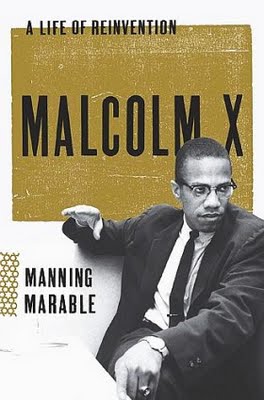
Malcolm X: A Life of Reinvention, by Manning Marable – This book not only sheds new light on the person of Malcolm X, it raises numerous questions about the Nation of Islam, the FBI, CIA and NYC cops and their role in the assassination of one of the most important Black activists of the 20th century. There is a great deal of new information on Malcolm’s life that the author was able to track down over a 10 year research period, which includes new documents, taped lectures and interviews with those who knew Malcolm. Equally important is the new details on the drastic changes that Malcolm X was making months before his assassination in terms of his evolving views about the plight of Black America, religion, politics and organizing. Highly recommended as an informative and inspiring look at the person that James Baldwin referred to as “the gentlest person I ever met.”

BP: The Unfinished Crimes and Plunder of Anglo-American Imperialism, by Frederic Clairmont – It has been more than a year since the BP disaster in the Gulf of Mexico and not only has BP been able to avoid any serious backlash from their insidious greed they have been able to avoid having to deal with greater scrutiny of their entire history. This short book provides readers with a brief history of the company that has been wedded to western imperialism and British colonialism. The author provides important information that frames BP as a long-term partner in the plunder of countries like Iran, where BP played a central role in the military overthrow of the democratically elected government in 1953. This book is an important resource to help us prevent future historical amnesia when it comes to corporate crimes.
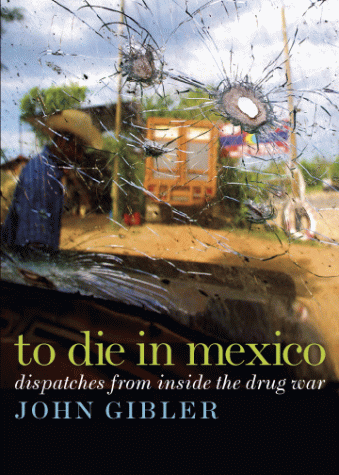
To Die in Mexico: Dispatches from Inside the Drug War, by John Gibler – The united Nations recently published a report saying that the 40 – year old international war on drugs has been a complete failure. This new book by John Gibler confirms this fact in terms of how the war on drugs is playing out in Mexico. Gibler provides an investigative reporter account of the human cost of the war on drugs and takes you to the scene of the crimes where innocent people are being gunned down over profits. To Die in Mexico follows in the great tradition of writers such as John Reed and John Ross, making Mexican life and politics come alive in print. This book not only should be required reading for anyone wanting to understand the human cost of the war on drugs, it should be read by Americans who will come to realize through Gibler’s book that the US government is deeply complicit in the gruesome deaths that occur daily throughout Mexico because of drug trafficking.
Screaming Queens: The Riot at Compton’s Cafeteria (DVD) – This documentary not only demonstrates that Stonewall was not the first radical action by the LGBTQ community it sheds like on the fact that the main force behind this uprising in San Francisco were trans people. The film is packed with first person accounts of what happened in before and after the 1966 riot where police attacked members of the LGBTQ community and people fought back. Screaming Queens is an important contribution to our understanding of the struggle for liberation within the LGBTQ community and a powerful example of the need to continue to present a grassroots perspective on history that mostly ignores the views of the most vulnerable.

Last night about 50 people gathered in Grand Rapids to meet the new Executive Director of the statewide organization Equality Michigan.
Earlier this week Equality Michigan announced that Denise Brogan-Kator was named the new Executive Director and she and other staff have been visiting communities across the state to let them know the of organization’s future plans and find out what communities need to fight for greater equality for the LGBTQ rights.
In a media release from Equality Michigan, Brogan-Kator states:
“I am excited about the opportunity to move equality forward with our talented team, and humbled by the support I’ve received. My focus is to end legal workplace and housing discrimination in Michigan by bringing our antiquated state nondiscrimination law in line with those states, which understand that equality for all is central to being competitive. I know what it is like to lose a job after you’ve performed well; I know what it is like to hear homophobic and transphobic slurs; I know what it’s like to nearly lose my children in the legal system; I know what it’s like to feel unsafe walking with my partner – all for no reason other than who I am.”
After making a few comments to the audience we had a chance to speak with Denise on camera about the work of Equality Michigan, her assessment of where West Michigan is on LGBTQ issues, the Holland vote and the significance of her new appointment as a trans woman.
Ever since Barack Obama was elected as President the claim has been made that we live in a post-racial society. Even amongst many liberal commentators the idea that racial equality has reached some sort of social apex because a Black family inhabits the White House.
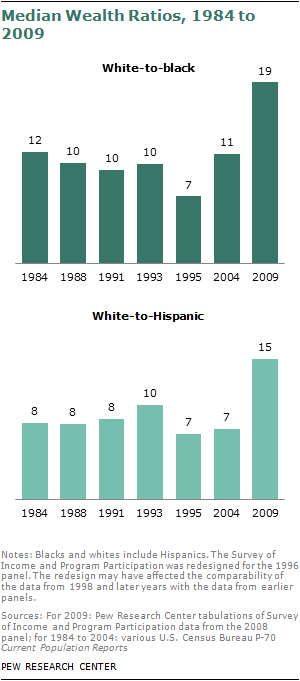
The reality for communities of color across the US however is quite different. A new study by the Pew Research Center shows that since 2005 the wealth gap has increased throughout the US, particularly along racial lines.
In looking at census data from 1984 to 2009, researchers found that there has been an increase in the wealth gap between Blacks and Whites of 19 to 1. In 1984 the gap was 12 to 1 and as low as 7 to 1 in 1995. The biggest change has been between 2004 and 2009. The same is true in the gap between Hispanics and Whites, where in 2004 there was a 7 to 1 wealth gap and by 2009 that gap grew to 15 to 1.
Other key findings from the report:
Hispanics: The net worth of Hispanic households decreased from $18,359 in 2005 to $6,325 in 2009. The percentage drop—66%—was the largest among all groups. Hispanics derived nearly two-thirds of their net worth in 2005 from home equity and are more likely to reside in areas where the housing meltdown was concentrated. Thus, the housing downturn had a deep impact on them. Their net worth also diminished because of a 42% rise in median levels of debt they carried in the form of unsecured liabilities (credit card debt, education loans, etc.).
Blacks: The net worth of black households fell from $12,124 in 2005 to $5,677 in 2009, a decline of 53%. Like Hispanics, black households drew a large share (59%) of their net worth from home equity in 2005. Thus, the housing downturn had a strong impact on their net worth. Blacks also took on more unsecured debt during the economic downturn, with the median level rising by 27%.
Whites: The drop in the wealth of white households was modest in comparison, falling 16% from $134,992 in 2005 to $113,149 in 2009. White households were also affected by the housing crisis. But home equity accounts for relatively less of their total net worth (44% in 2005), and that served to lessen the impact of the housing bust. Median levels of unsecured debt among whites rose by 32%.
The report does not provide much data state by state, but there is some information that looks at the median home prices state by state. According to the Pew study, “From the end of 2005 to the end of 2009, median home prices decreased by more than 30% in five states: Nevada (down 49%), Florida (38%), Arizona (38%), California (37%) and Michigan (34%).”
We do know that the racial break down of children living in poverty based on a report Kids Count 2010. According to that report, “Almost one of every two African American children was mired in poverty and more than one of every three Hispanic children, compared with one in seven white non-Hispanic children.”
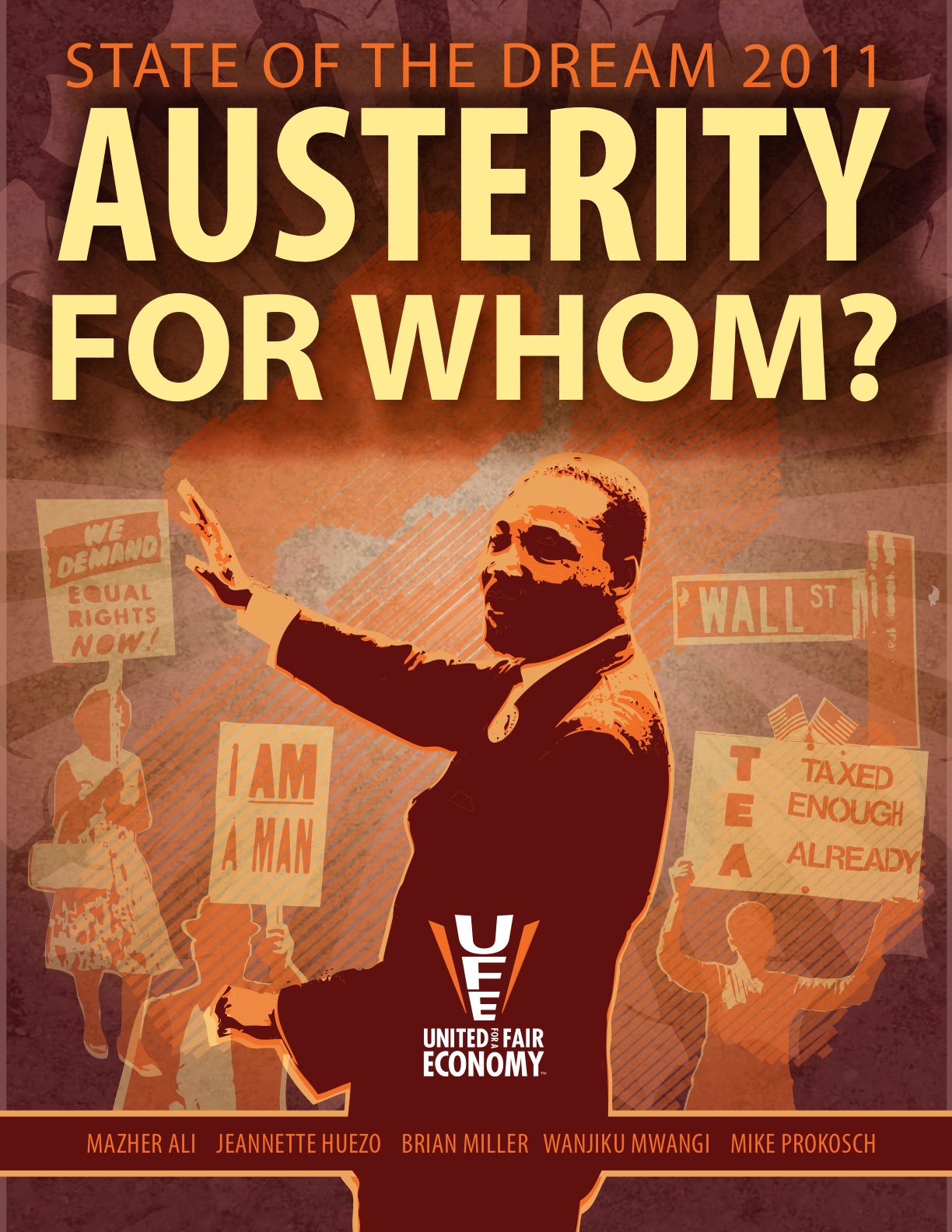
All this data is not suggesting that the Obama administration is to blame for the increase in the wealth gap between Whites and racial minorities, especially since the data only includes one year of the current administration. What it does say is that the trend is not on the decline and according to a report by the group United for a Fair Economy the trend is even worse in the past year.
What this data should say to people who care about racial justice is that institutional racism is deeply entrenched and statistically has grown worse for African Americans and Hispanics in the last 30 years. It also suggests that the emphasis on diversity in this society is not the same as racial justice and that maybe we need to challenge our understanding of house race and class intersect in this society.
I have heard numerous people over the past 2 years make the argument that Rick DeVos is blazing his own path and shouldn’t be judged by the previous DeVos generations’ political philosophy. A recent article in MiBiz would suggest otherwise, especially for those who are not under the spell of Capitalism’s promise of riches.
The MiBiz article mostly focuses on Rick DeVos’ more recent project known as 5×5, a competition of sorts, which requires those seeking funds for start up business projects must present their idea to a panel of judges. This is really old news for those who follow GR politics since the 5×5 venture has been happening since January of this year.
5×5 is not an entirely original idea for Grand Rapids, since another project called Sunday Soup follows a similar model. Well, not really. There are fundamental differences between the two projects, Sunday Soup is grassroots, takes place at the DAAC and allows anyone who attends to be part of the collective decision on which art-based proposal will get funding. 5×5 is not grassroots, gives out money for business-focused projects and uses judges that are primarily culled from business circles.
Cut from the same cloth
The MiBiz article is instructive in that not only provides DeVos an unchallenged forum to promote his ideas, it tells us something about what he really values.
The article provides a little information on DeVos’ history of for-profit projects. He mentions Sprout as his first venture and says that it didn’t do as well as planned. Soon after he started ArtPrize, which as we all know has been widely successful. Rick DeVos then goes on to say:
“Perseverance is the key, as is not treating failure as something that marks someone for life. (Failure) is inevitable if you’re trying. If you’re not failing, you aren’t trying hard enough.”
Interesting, although not surprising, that the MiBiz writer does not challenge DeVos on this notion of perseverance. Here is a guy who comes from a multi-billion dollar family, with business and political connections that have a global reach, and he wants us to believe that he became successful because he persevered?
In addition, Rick DeVos has become quite good at using cutting edge language like “decentralized models” and “a dynamic ecosystem of entrepreneurs.” DeVos wants us all to think that he embraces a communal/collectivist approach to life, but despite his use of language we need to ask the basic question…….who benefits from these kinds of projects?
The MiBiz article makes it clear that the local elite business community fully endorses his projects, as well as the Grand Rapids Downtown Development Authority (DDA). There is no mention of working class people, racial minorities or those who live anywhere other than the downtown business districts. So it seems clear who the beneficiaries are.
The MiBiz article also mentions a third project by Rick DeVos, called Momentum. Momentum is a business “boot camp” where applicants are vetted and are then eligible for much larger capital investment funds. The project provides mentors (all White business people) and a group of business sponsors that also attempt to present themselves as “community minded.”
The MiBiz article ends with one more comment from Rick DeVos that is also instructive. “I love ideas, and I love the connection between ideas. I love innovation and trying things in that spirit of rebelliousness you have to start from when you’re trying to do something new. … Anything we can do to support that is a good thing.”
First, there is nothing rebellious about anyone who was born into wealth and continues to promote well accumulation for a chosen few. Second, there is nothing terribly innovative about any of the projects that Rick DeVos has created to far. The 5×5 and Momentum projects are both designed to do what organizations as old as the National Manufactures Association – generate more wealth for a select few and then make the claims that this new wealth will trickle down to benefit everyone.

The trickle down notion is even what drives ArtPrize if one considers who the primary beneficiaries are of that project. The downtown businesses – hotels, restaurants, clubs and private parking lots – are the big winners. Sure some working class people might make extra tips, but the whole idea is based on the fact that hundreds of artists will invest their unpaid labor with only a handful of artists getting paid.
ArtPrize is also “successful” in that it has received an uncanny amount of local news coverage (which is essentially free advertising), so much so that in 2010 ArtPrize coverage trumped election coverage despite the fact that there was a Governor’s race. Add to this the recent announcement that ArtPrize is receiving $100,000 of federal money, which essentially means that working people are partially subsidizing a project that will disproportionately benefit the business class.
For all the claims that Rick DeVos is a rebellious guy who is stepping out from the shadows of his father and grandfather, we think it would be more accurate to say that he is continuing the family tradition of transferring wealth to a chosen few while most of the community struggles to meet its basic needs.
 Grand Rapids Institute for Information Democracy