Katrina by the numbers – Six years later
(This article by Bill Quigley and Davida Finger is re-posted from Common Dreams.)
Six years ago, Hurricane Katrina hit the Gulf coast. The impact of Katrina and government bungling continue to inflict major pain on the people left behind. It is impossible to understand what happened and what still remains without considering race, gender, and poverty. The following offer some hints of what remains.
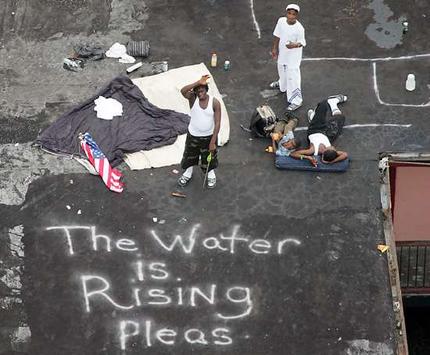
$62 million. Amount of money HUD and the State of Louisiana agreed to pay thousands of homeowners because of racial discrimination in Louisiana’s program to disburse federal rebuilding funds following Katrina and Rita. African American homeowners were more likely than whites to have their rebuilding grants based on much lower pre-storm value of their homes rather than the higher estimated cost to rebuild them. Source: Greater New Orleans Fair Housing Action Center.
343,829. The current population of the city of New Orleans, about 110,000 less than when Katrina hit. New Orleans is now whiter, more male and more prosperous. Source: Greater New Orleans Community Data Center.
154,000. FEMA is now reviewing the grants it gave to 154,000 people following hurricanes Katrina, Rita, and Wilma. It is now demanding that some return the long ago spent funds! FEMA admits that many of the cases under review stem from mistakes made by its own agency employees. FEMA’s error rate following Katrina was 14.5 per cent. Michael Kunzelman and Ryan Foley, Associated Press.
65,423. In the New Orleans metropolitan area, there are now 65,423 fewer African American women and girls than when Katrina hit. Overall, the number of women and girls decreased since Katrina by 108,116. Source: Institute for Women’s Policy Research.
47,738. Number of vacant houses in New Orleans as of 2010. Source: GNOCDC.
3000. Over three thousand public housing apartments occupied before Katrina plus another thousand under renovation were bulldozed after Katrina. Less than ten percent, 238 families, have made it back into the apartments built on the renovated sites. Only half of the 3000+ families have even made it back to New Orleans at all. All were African American. Source: Katy Reckdahl, Times-Picayune.
75. Nearly seventy five percent of the public schools in New Orleans have become charters since Katrina. Over fifty percent of public school students in New Orleans attend public charter schools. There are now more than thirty different charter school operators in New Orleans alone. The reorganization of the public schools has created a separate but unequal tiered system of schools that steers a minority of students, including virtually all of the city’s white students, into a set of selective, higher-performing schools and most of the city’s students of color into a set of lower-performing schools.
Sources: Andrew Vanacore, Times-Picayune; Valerie Strauss, Washington Post; Institute on Race & Poverty of University of Minnesota Law School.
70. Seventy percent more people are homeless in New Orleans since Hurricane Katrina. People living with HIV are estimated to be homeless at 10 times the rate of the general population, a condition amplified after Hurricane Katrina. Source: Unity for the Homeless and Times-Picayune.
59. Less than 60 percent of Louisiana’s public school students graduate from high school with their class. Among public school children with disabilities in New Orleans, the high school graduation rate is 6.8%.
Source: Education Week and Southern Poverty Law Center.
34. Thirty four percent of the children in New Orleans live in poverty; the national average is 20%. Source: Annie Casey Foundation Kids Count 2011.
11. Eleven New Orleans police officers convicted or plead guilty to federal crimes involving shootings of civilians during Hurricane Katrina aftermath. Source: Brendan McCarthy, Times-Picayune.
10. At least ten people were killed by police under questionable circumstances during days after Katrina. Source: Times-Picayune
3. A three-fold increase in heart attacks was documented in the two years after Katrina. Source: Tulane University Health Study.
Number unknown. The true impact of the BP oil spill in terms of adverse health effects is vast but unknown. Delays by the federal government in studying the spill’s physical and mental health effects hinder any ability to understand these issues with accuracy. A year after the spill, more people are reporting medical and mental health problems. Source: Campell Robertson, New York Times and National Geographic.
Obama and the Free Trade Lobby
(This article is re-posted from OpenSecrets.)

In his weekly address to the nation on Saturday, President Barack Obama said, “Let’s pass trade deals to level the playing field for our businesses. We have Americans driving Hyundais and Kias. Well, I want to see folks in Korea driving Fords, Chevys and Chryslers. I want more products sold around the globe stamped with three words: Made in America.”
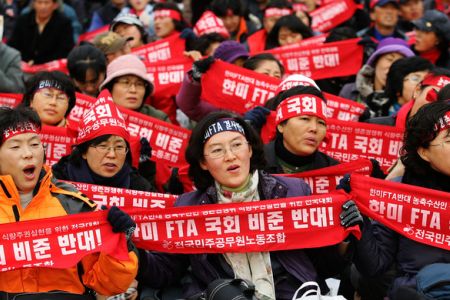
There’s a pending trade deal behind Obama’s words. It’s called the U.S.-Korea Free Trade Agreement.
Earlier this year, Republicans in both the House and Senate introduced resolutions urging the compact’s approval. And since then, hundreds of companies, unions and trade associations have set their sites on the proposal.
The Congressional resolutions are S. Res. 20, sponsored by Sen. Mike Johanns (R-Neb.), and H. Res. 86, sponsored by Rep. Rodney Frelinghuysen (R-N.J.).
According to research by the Center for Responsive Politics, only a handful of organizations have specifically mentioned these resolutions in their lobbying reports so far this year.
Hewlett-Packard, the National Council of Textile Organizations and the American Jewish Committee are the only three groups that have specifically mentioned H. Res. 86 in their lobbying reports, according to the Center’s research.
Meanwhile, the National Council of Textile Organizations, American Jewish Committee, American Apparel & Footwear Association, Fashion Accessories Shippers Association and Travel Goods Association have all specifically mentioned S. Res. 20, the Center’s research shows.
But hundreds of groups have lobbied on the trade agreement without specifically mentioning either of these resolutions. In fact, about 500 companies, unions, trade associations and other groups.
Among the organizations that expressly mentioned “free trade agreement” in their lobbying reports are the American Farm Bureau, the Business Roundtable, Chevron, Pfizer, the AFL-CIO, Wal-Mart, General Motors, the U.S. Chamber of Commerce and PhRMA.
Needless to say, these groups are listening closely to what Obama and congressional leaders will say next.
Libyan Deaths, Media Silence
(This article is re-posted from Fairness & Accuracy in Reporting.)
Allegations of Libyan civilian deaths as a result of NATO bombing have often been covered in the corporate media as an opportunity to scoff at the Gadhafi regime’s unconvincing propaganda (FAIR Blog, 6/9/11).

But dramatic new allegations that dozens of civilians were killed in Majer after NATO airstrikes on August 8 have been met with near-total media silence.
According to Libyan officials, 85 civilians were killed in Majer– a town south of Zliten, a site of frequent clashes and NATO airstrikes. There is no reason journalists should take this claim at face value. But reports from the scene suggest that something significant happened. According to Agence France Presse (8/9/11), “Reporters attended the funerals of victims and saw 28 bodies buried at the local cemetery…. In the hospital morgue, 30 bodies — including two children and one woman — were shown along with other bodies which had been torn apart.”
The AFP report included NATO denials, with a spokesman claiming that the target “was a military facility clearly.”
A Reuters correspondent (8/9/11) “counted 20 body bags in one room, some of them stacked one on top of the other…. In total, reporters saw about 30 bodies at the Zlitan hospital.” The New York Times (8/10/11) ran a 170-word version of a Reuters dispatch which noted: “There was no evidence of weapons at the farmhouses, but there were no bodies there, either. Nor was there blood.”
Amnesty International has called for an investigation, which led to this mention from CNN anchor John King (8/11/11):
Amnesty International is demanding that NATO investigate whether a Monday strike on Moammar Gadhafi”s forces killed 85 Libyan civilians including 33 children. NATO says it has no evidence of civilian casualties at this point.
A Nexis database search yields very little coverage in U.S. outlets beyond that brief comment. But that is not because no reporters were present. CNN correspondent Ivan Watson covered a mass funeral after the strikes. But his report aired only on CNN International (8/10/11). Watson reported a visit to “three or four houses that had been demolished by some kind of missiles from the sky.”
He added:
We were also shown a morgue where there were the bodies of at least 25 people. Many of them appeared to be men. There were some women and children included among those corpses.
Watson noted that it was “impossible for us, from this perspective, to confirm whether or not 85 people were in fact killed, but it does appear that at least some women and were among those hurt in this deadly strike.” (You can watch Watson’s report here).
Watson’s CNN.com report (8/10/11) included an interview with a Libyan who claimed that nine members of his family were killed in the attack, including his two-year old daughter. Watson also interviewed a man who was burying his daughter.
It is curious that Watson’s reporting was shared with CNN‘s international audience, but not broadcast to its domestic audience.
But Watson did appear on CNN a few days earlier from the scene of another NATO strike in Zliten. The point of that report (8/5/11) was to suggest that official claims of civilian deaths were suspicious. In that segment, Watson noted that on a visit to a law school that had been attacked by NATO forces, he found what “appear to be uniforms over here, these olive green pants. And then we have got boxes here that look an awful lot like they could have been holding ammunition.”
Reporting that undermines Libyan claims of civilian casualties has been a staple of the war so far– as evidenced by headlines like “Libya Government Fails to Prove Claims of NATO Casualties” (Washington Post, 6/6/11) and “Libya Stokes Its Machine Generating Propaganda” (New York Times, 6/7/11).
Is Majer being ignored by the media because it is just more clumsy Libyan propaganda? Or is it because the story might conflict with the media’s overriding message that Libyan civilians aren’t dying in NATO’s airstrikes? In any event, corporate media outlets that have so diligently sought to debunk Libyan claims of civilian deaths should investigate what happened in Majer. On the BBC website, reporter Matthew Price published one such effort (8/11/11), headlined “What really happened in Libya’s Zlitan?” There should be more like it.
This Day in Resistance History: Happy Birthday, Ogden Nash
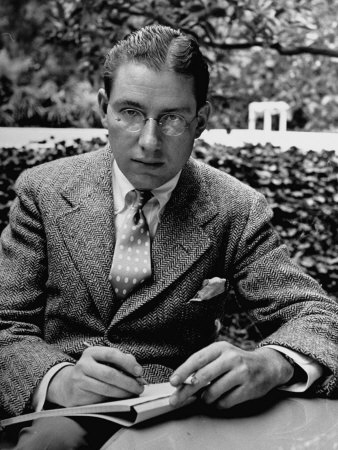
Why include a light-hearted versifier like Ogden Nash in our resistance history review? There was a deeper side to a man whose poems were considered throw-away verse during their time. Those who can quote Nash’s witty short poems such as “Candy is dandy/But liquor is quicker” and his ode to the common cold often don’t realize that during his life, Nash openly pronounced the two-party political system as a fraud. He was also scathing in his assessment of the elite, corporations, and the corrupting influence of advertising.
Born on August 19, 1902, to a family originally from the South (Nashville was named after one of his ancestors), Nash was born in New York. He spent the better part of his adult life sneaking groundbreaking political thinking into his popular light verse. Some academic studies have compared him to political satirist Jonathan Swift. As one critic commented, “It would be a mistake to think of Ogden Nash merely as a funnyman…he has a Democritean streak which entitles him the respect due to a philosopher.”
Look at this take on the two-party system, excepted from Nash’s poem “The Politician”:
Behold the politician.
Self-preservation is his ambition.
He thrives in the D. of C.
Where he was sent by you and me.
He has many profitable hobbies
Not the least of which is lobbies.
He would not sell his grandmother for a quarter…
If he suspected the presence of a reporter.
He gains votes ever and anew
By taking money from everybody and giving it to a few
While explaining that every penny
Was extracted from the few to be given to the many.
Some politicians are Republican, some Democratic,
And their feud is dramatic,
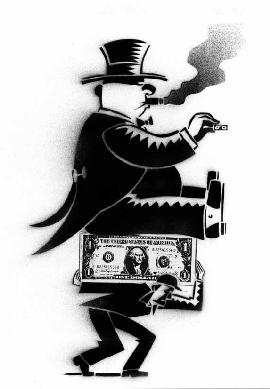
But except for the name
They are identically the same.
In a poem titled “Bankers Are Just Like Everybody Else, Only Richer,” Nash exposes the cold heart of the banking system: to cooperate with the wealthy and exclude the poor from its services. He comments that in a bank’s “marble halls” it is impossible for someone to take out a loan for $50 to pay a hospital bill or back rent because “you must never lend any money to anybody unless they don’t need it.” But the scenario changes when a rich person enters the bank:
But suppose people come in and they have a million
And they want another million to pile on top of it.
Why, you brim with the milk of human kindness
And you urge them to accept every drop of it.
And you lend them the million so then they have two million
And this gives them the idea that they would be better off with four.
So, they already have two million as security so
You have no hesitation in lending them two more.
And all the vice presidents nod their heads in rhythm,
And the only question asked is do the borrowers want the money sent or do they
want to take it with them.
Nash’s poem “Lines Indicted with All the Depravity of Poverty” admits to some envy of those who have unlimited funds but takes a razor-sharp swipe at the indifference of the elite as they “spend money like water”:
If you are rich you don’t have to think twice about buying a judge or a horse,
Or a lower instead of an upper, or a new suit, or a divorce,
And you never have to say “when”
And you can sleep every morning until nine or ten.
He was keenly aware of the other side of the coin: the inequity dealt to the working class in their jobs. When asked to sum up working life by one interviewer, Nash said, “People who work sitting down get paid more than people who work standing up.” His focus on the unfair advantages of white-collar work is also found in this pithy two-line poem:
Professional men, they have no cares.
Whatever happens, they get theirs.
Media and advertising were other targets for Nash’s scorn. He hated the pervasiveness and influence of advertising. He once noted that in our modern life, nothing had value except products. He quipped that, as a poet, he was therefore valueless:
Poets aren’t very useful
Because they aren’t consumeful or produceful.
Here’s Nash’s dry commentary on the wasted money that is poured into promoting products:
Good wine needs no bush
And perhaps products that people really want
need no hard-sell or soft-sell TV push.
Why not?
Look at pot.
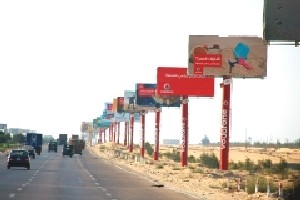
He complained about the ubiquitous highway billboards of the 1930s in his short parody of Joyce Kilmer’s poem:
I think that I shall never see
A billboard lovely as a tree.
Indeed, unless the billboards fall
I’ll never see a tree at all.
Found among Nash’s many verses on social life, marriage, children, and health problems are a surprising number of poems about political life, social justice issues, and the grip capitalism has in deciding the fate of the many for the benefit of the few. He honed his views through observation rather than current events; Nash hated reading newspapers. One of his most famous non-verse comments, in fact, is one that still resonates with perfect clarity today:
“I do not like to get the news, because there has never been an era when so many things were going so right for so many of the wrong people.”
 More than 30 people joined Our Kitchen Table (OKT) for the 4th Annual Eastown Food Garden Tour the evening of Tuesday August 16. After OKT’s Lisa Oliver King introduced OKT’s Food Diversity Program and community partner, Dr. Clinton Boyd, spoke to resolving lead and arsenic contamination in urban soil, the group began the one and one-half mile trek with stops planned at 14 Eastown neighborhood food gardens.
Many on the tour were amazed to discover the abundance of foods growing in the small front, side and back yards of neighbor’s homes. Bountiful garden plots, raised beds and recycled containers yield everything from the common tomatoes, herbs, beans and peppers to hops for homebrewed beers, exotics, like figs and kiwi, and berries—strawberries, blueberries, raspberries and even huckleberries.
Many of the gardeners on tour were beginners—though you wouldn’t know it from looking at their gardens. And, many of the gardens showed off plants received as seedlings raised from seed by OKT staff and volunteers.
However, the point of this garden tour was not to showcase local gardeners’ green thumbs. OKT is supporting their efforts as food, i.e. food security and access to healthy foods, is a justice issue. OKT believes access to nutritious whole, organic and fresh foods is every person’s right—not a privilege for those who can afford to shop in upscale grocery stores or eat at trendy restaurants.
Specifically, OKT’s Food Diversity Program targets Grand Rapids neighborhoods hardest hit by asthma and lead poisoning, both of which can be ameliorated by eating fresh, organic fruits and vegetables. Too much of the affordable food widely available in these neighborhoods is over-processed, high in fat, high in sugar and low in nutrients. OKT believes people in need should have more than a full belly—they should have regular access to the whole foods that prevent expensive illnesses like diabetes and heart disease.
The gardens on the tour prove that people can easily and inexpensively grow their own nutritious foods in the urban environment—a fact that the food industry obfuscates with media messages that make growing, canning and preparing food from scratch seem like difficult, time consuming and insurmountable tasks.
In addition to touring gardens at private residences, the tour also made stops at the Eastown Neighborhood Association community garden and the Barefoot Victory Garden Barefoot Victory Garden. At the latter, any neighborhood resident can pitch in according to ability and take home abundant produce according to need. Instead of personal plots, like those found at traditional community gardens, each raised bed is dedicated to a specific “crop.”
The Barefoot Victory Garden boasts organic, heirloom plant varieties. Heirloom plants are fertile, that is, you can collect seeds from them at the end of the growing season for the next year’s sowing. Most food plants and seeds sold at commercial retail nurseries are “terminator” varieties that are sterile and cannot produce seed (but can increase the seed companies’ profits).
 As another part of its justice piece, OKT encourages growers within its program to save their own seeds—a practice deemed illegal by the World Trade Organization (WTO).
As part of its Food Diversity Program, OKT also manages both locations of the Southeast Area Farmers’ Market. The market at the Gerald R. Ford Middle School is open Fridays 2 to 7 p.m.; the market at Garfield Park, Saturdays 9 a.m. to 1 p.m. These smaller markets feature mainly backyard chemical-free growers as vendors and provide ample opportunity for socializing with neighbors.
OKT is sponsoring an Urban Foraging Workshop with The Bloom Collective on September 10 as well as a fall bicycle tour of urban nut trees and October workshops on building hoop houses to extend the growing season. For information, email okt1@gmail.com.
Holland City Council hears more on the anti-discrimination ordinance, but are they listening?
Last night about 40 people showed up at the Holland City Council meeting to continue their effort to get the council members to reverse their decision on including sexual orientation as part of the City’s anti-discrimination policy.
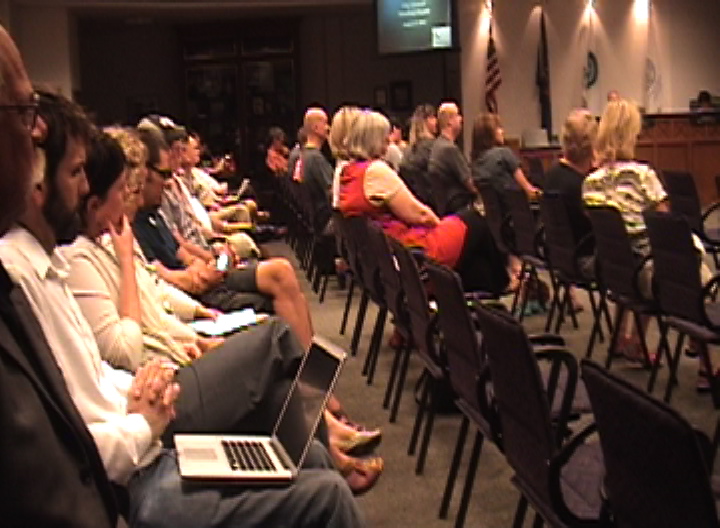
Again, members of Until Love is Equal, Holland is Ready and Holland PFLAG addressed the city council. A few people spoke as business owners to argue that it would be economically beneficial for the City to add sexual orientation to the ordinance. One person stated that most of the Fortune 500 companies in the US have policies that are inclusive in regards to sexual orientation.
Another Business owner, Dottie Rhoades, said that she thinks the vitality of Holland could depend on reversing their decision and stated that although her business is in Grand Rapids such policies have an impact on the entire region.
A woman then read a statement from the owner of Piper Restaurant, a statement which endorsed the inclusion of sexual orientation in the Holland City ordinance. The statement pointed out that the restaurant has always welcomed gay customers and has even employed LGBT youth.
Bill Freeman (Holland is Ready) then addressed the council and spoke to the council members who voted no for the ordinance. He spoke to the council members who voted no last time and clearly wanted to affirm the yes votes this time by addressing each of the four members who voted in favor of the ordinance.
The next person to address the council was a Dutch National, Girbe Eefsting. Mr. Eefsting wanted to address the claim that the no votes reflected Dutch heritage, which he said wasn’t the case since the Dutch have a long history of tolerance and acceptance. He then read a statement from the Dutch organization the Center for Culture and Leisure (COC):
“With this letter on behalf of my organization COC Netherlands – based in Amsterdam, The Netherlands – I would like to express my concern of the fact that the City of Holland, MI continues to keep laws in place that do not protect lesbians, homosexuals, bisexuals and transgender people from being fired from their job or put out of their house just because their sexual preference or gender identity.
We are absolutely outraged over the fact that at the recent occasion to change such discriminatory laws, the city of Holland, Michigan has elected to keep those in place specifically using the argument that it would be against “Dutch tradition” or not reflect the “Dutch heritage and/or values” to update such laws.
COC Netherlands has represented and represents the Dutch lesbian, gay, bisexual and transgender community for over 65 years, making us the oldest LGBT movement in the world. We are also an international LGBT human rights organization that is actively supporting LGBT activists in over 40 countries worldwide. Having obtained Ecosoc status at the United Nations, we are considered to be one of the most influential LGBT organizations in the world.
Our international support to LGBT communities around the globe is based on the core values of Dutch society. Such values include acceptance, tolerance and protection of vulnerable groups. We are proud to be a fundamental part of the Dutch multi-plural society. Our achievements as a human rights movement and our involvement and participation in society are a true example to the world. It shocks us that “Dutch tradition” is abused by the City of Holland, MI to withhold vulnerable groups from their protected rights by leaving discriminatory laws unchanged!
We widely and explicitly support the aims of the “Until Love is Equal” campaign. We call on the city of Holland to embrace the legacy of Dutch values providing equal rights, protection and opportunities to all!”
A few folks who have supported the City’s decision to exclude protections for the LGBT community also addressed the council. One man said that continuing to address this matter could distract the city from “more pressing issues.” He also stated that those who continue to push for sexual orientation in the ordinance are engaged in a form of harassment and suggested the City seek a restraining order on people who continue to push the issue.
A Holland woman followed and affirmed that this was harassment and that she believed that God’s laws are against homosexuality and that the council should stick to its decision.
Another Holland resident then said he had invited all the council members to a PFLAG meeting this coming Friday so that they could meet the families who are deeply affected by these kinds of decisions. He believes that people need to study and to learn that we cannot have “policies that are based on fear.”
Another opponent of including sexual orientation in the ordinance addressed the council first by making the claim that homosexuals commit more domestic abuse than heterosexuals. He made such claims without citing one single source. He also cited numerous biblical references, which he claimed condemned homosexuality.
In response to the claims that the LGBT community engages in more domestic abuse, Colette Seguin-Beighley addressed the council. Seguin-Beighley cites the Just the Facts Coalition report from 2008, which contradicts the claims made that gays commit more domestic abuse. Her statement closed the public comment period, which saw 9 speak in favor of sexual orientation being included in the City’s anti-discrimination ordinance and 4 against.
Just before the meeting adjourned Councilman Whiteman said that those who are for the ordinance are predominantly from “outside of this community.” He also says there is no evidence of harm and that he will not change his vote on this matter. The outgoing City Manager also said he would not speak to this issue other than to say people should move on so that other matters could be attended to, which in and of itself was clearly a statement that he was not a fan of a more inclusive ordinance.
To the matter of people not being from Holland who are demanding equality, justice and protection for the LGBT community, this attitude reflects a total lack of the history of struggle in the US. There have always been “outside” interest where injustice is concerned. During the Civil Rights movement racist southern Whites would often cite “outside agitators” as the problem.
It is true that people from around the country came to the south to participate in the struggle for racial equality, whether that was to participate in the Freedom Rides, the Montgomery Bus Boycott, marches or other forms of civil disobedience. People from all over the country to came to the south to fight the racist Jim Crow laws, laws that denied Blacks basic economic, civil and human rights. If this is the argument of some members of the Holland City Council then history is on the side of those who fight for equality.
Drive to Repeal Emergency Financial Manager Law Nears Its Goal

Michigan Forward and allied activist groups across the state are closing in on their goal of collecting signatures to repeal Public Act 4, Snyder’s punitive emergency financial manager law in the state. According to the Detroit Free Press, activists have collected 120,000 of the 161,304 votes they need to send the matter back to the voters. As soon as the necessary signatures are collected, the law will be suspended until the election and there should be a return to the less restrictive, former EFM policy. However, the Free Press noted it is possible that both laws would be suspended entirely; the point is unclear because of a lack of legal precedent.
This has opened the door for conservatives to object on the grounds that the repeal effort would cause “potential mayhem,” as state legislator Jase Bolger of Marshall called it.

But others would argue that the mayhem is already at work as the EFM in Benton Harbor plans to sell a public park to a development group for a private resort and golf course…the EFM for the Detroit Public Schools is selling 45 of its schools to charter-school companies…the EFM for the city of Ecorse has eliminated half its firefighters…and the EFM for the city of Pontiac disbanded the municipal police force and hired the Oakland County Sheriff’s Office to do the work, apparently after they finish for the day with their county duties. All of these changes were made under Snyder’s expanded Public Act 4 legislation. EFMs are also privatizing services, slashing wages and benefits, and laying off city and school system staff.
Next on the hit list: the city of Detroit—with Mayor David Bing petitioning Governor Snyder to be appointed the EFM there, according to one of his assistants—and the Highland Park School System.
Michigan Forward has announced that the allied groups collecting signatures have until March to gather the remaining ones, and they plan to continue to collect signatures until they have twice as many as they need. This will allow a healthy margin for what will undoubtedly be a vicious defense by the state in discarding as many signatures as possible.
Here in Grand Rapids, we’ve seen little activity regarding the signature drive, and what there has been appears to have been organized at the last minute. Since Grand Rapids is Michigan’s second largest city, it seems the most likely place to turn for the final push to gain the necessary signatures and a margin for error. We plan to keep you updated, and you can also check Michigan Forward’s Facebook page for information.
Starbucks CEO wants fiscal responsibility?
On Monday, Starbucks CEO Howard Schultz send out a letter to “Concerned Americans” with the suggestion that people withhold all campaign contributions before the 2012 Presidential Elections until Washington can figure out “long term fiscal challenges for this country.”

The announcement by the Starbucks leader was met with some support even liberal advocacy groups like Democracy 21. According to the Center for Responsible Politics, Democracy 21 sent Schultz’s letter to other campaign finance reform groups and posted the Starbucks CEO’s statement on their website.
While one can recognize in principle that the idea of withholding campaign donations until the economy is fixed, the proposal from Schultz is flawed in two ways.
First, the coffee baron does not clarify what is meant by fiscal responsibility. Does he mean that we need to produce and consume more to get the US economy going or does he mean there needs to be less regulation of the private sector? Without any articulation of what he means by fixing the economy we shouldn’t trust the intent of someone who has made millions by exploiting workers and farmers.
This brings us to the second reason why we shouldn’t take Howard Schultz’s proposal to seriously. Starbucks buys its coffee from around the world and doesn’t pay the farmers a fair wage for the coffee they grow, an issue that is explored in the powerful documentary Black Gold.
In addition, Starbucks doesn’t practice fiscal responsibility when it comes to its own workers. The coffee giant makes it a practice to hire workers and rarely give them 40 hours a week, thus avoiding the responsibility of paying them benefits. More importantly, Starbucks has a long history of targeting workers who either join a union or try to organize their fellow workers.

Attacking union members has been going on for several years now, especially since the IWW started organizing at Starbucks around the world. The Grand Rapids branch of the IWW has been organizing at Starbucks and demonstrating at various Starbucks locations around the city after one worker was fired for attempting to organize his fellow baristas.
Last month an IWW member was fired from a Starbucks in New York for her involvement in the union and just days ago another IWW Starbucks worker was targeted in Nebraska. The Omaha branch of the IWW filed an Unfair Labor Practice charge against the company for this action.
So, when Starbucks CEO Howard Schultz makes a proposal for people to withhold campaign contribution until politicians can create fiscal responsibility for the US, the public should respond by telling Schultz he needs to practice some economic responsibility by paying coffee farmers a fair wage and allow Starbucks workers the right to organize in his chain of cafes.
New Media We Recommend
Below is a list of new materials that we have read/watched in recent weeks. The comments are not a “review” of the material, instead sort of an endorsement of ideas and investigations that can provide solid analysis and even inspiration in the struggle for change. All these items are available at The Bloom Collective, so check them out and stimulate your mind.

Tropic of Chaos: Climate Change and the New Geography of Violence, by Christian Parenti – Perhaps the most urgent issue of our day is global warming. It is urgent for many people because of the small window of opportunity we may have to stop the trend towards warming the planet beyond a level that would be inhabitable by people. However, an often over looked reason why global warming is so urgent is that it is contributing right now to increased violence and militarism around the world. This is the thesis of Christian Parenti’s new book Tropic of Chaos. Parenti documents on a continent by continent basis how global warming is resulting in increased violence and in some cases significant military conflicts. In addition, Parenti points out how even US military planners are factoring in the ecological and social costs of global warming for their future plans, which will rely heavily on counter-insurgency measures and targeted at increasingly civilian populations most affected by climate change. A disturbing but important book for those concerned about the future of humanity.
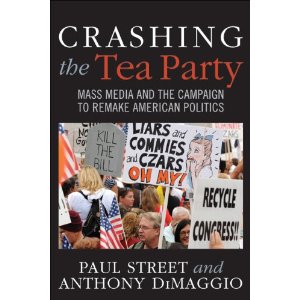
Crashing the Tea Party: Mass Media and the Campaign to Remake American Politics, by Paul Street and Anthony DiMaggio – Most books and commentary on the Tea Party are usually presented through a partisan lens. What is refreshing about Street and DiMaggio’s book is that it not only deconstructs the so-called Tea Party movement in the US, they juxtapose it with the original Tea Party to show how disconnected those involved with the current manifestation are from historical reality. In addition, the authors demonstrate that the Tea Party in many ways was purely a media creation along with major funding from wealthy reactionary sectors of American capitalism. Besides the well documented dissection of this so-called modern movement, the book frames the Tea Party within the boundaries of current political debate in the US demonstrating that there is no real populist movement from wither the Right or the Left and that the Tea Party (like MoveOn) is intrinsically part of the two party system and not representative of grassroots political opposition. An important book to read before the 2012 election madness.

Queer (In)justice: The Criminalizing of LGBT People in the United States, by Joey Morgol, Andrea Ritchie and Kay Whitlock – Over the past 6 months while doing research for the People’s History of the LGBTQ community Project in Grand Rapids we have learned some amazing things. The fight for LGBTQ equality is still going on today, but the emphasis might not be where it should be. This book by 3 authors/activists demonstrates that one of the most pressing issues for the LGBTQ community is how Queers are criminalized within the US “criminal justice” system. The authors make a compelling argument about how the LGBTQ is targeted by law enforcement and how the legal system still criminalizes people who challenge heterosexual norms. Queer (In)justice is essential reading for anyone fighting for LGBTQ equality and it challenges the current priorities of many of the mainstream LGBT organizations across the country which are focused on marriage equality and city ordinances.
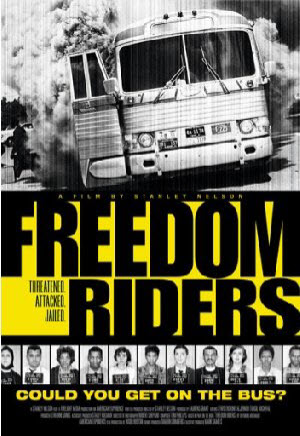
Freedom Riders (DVD) – This recent PBS documentary is based on the book with the same title, Freedom Riders, by Raymond Arsenault. The documentary focuses on the 1961 effort by the national civil rights group the Congress on Racial Equality (CORE), where Black and White citizens would ride Greyhound buses through the Deep South in order to expose the racial inequality that was institutional. Freedom Riders is a powerful testimony of the courage and risk that people were willing to take for racial justice that includes interviews by participants in the Freedom Rides as well as solid archival footage from that campaign. The film is a powerful tool both for investigating civil rights history in the US and the effectiveness of certain tactics within the strategy for racial equality. Highly recommended.
Confronting Back to School commercial madness
We are two weeks away from when K – 12 classes begin in Michigan and one thing worth thinking about is the amount of commercialism that children will be exposed to.
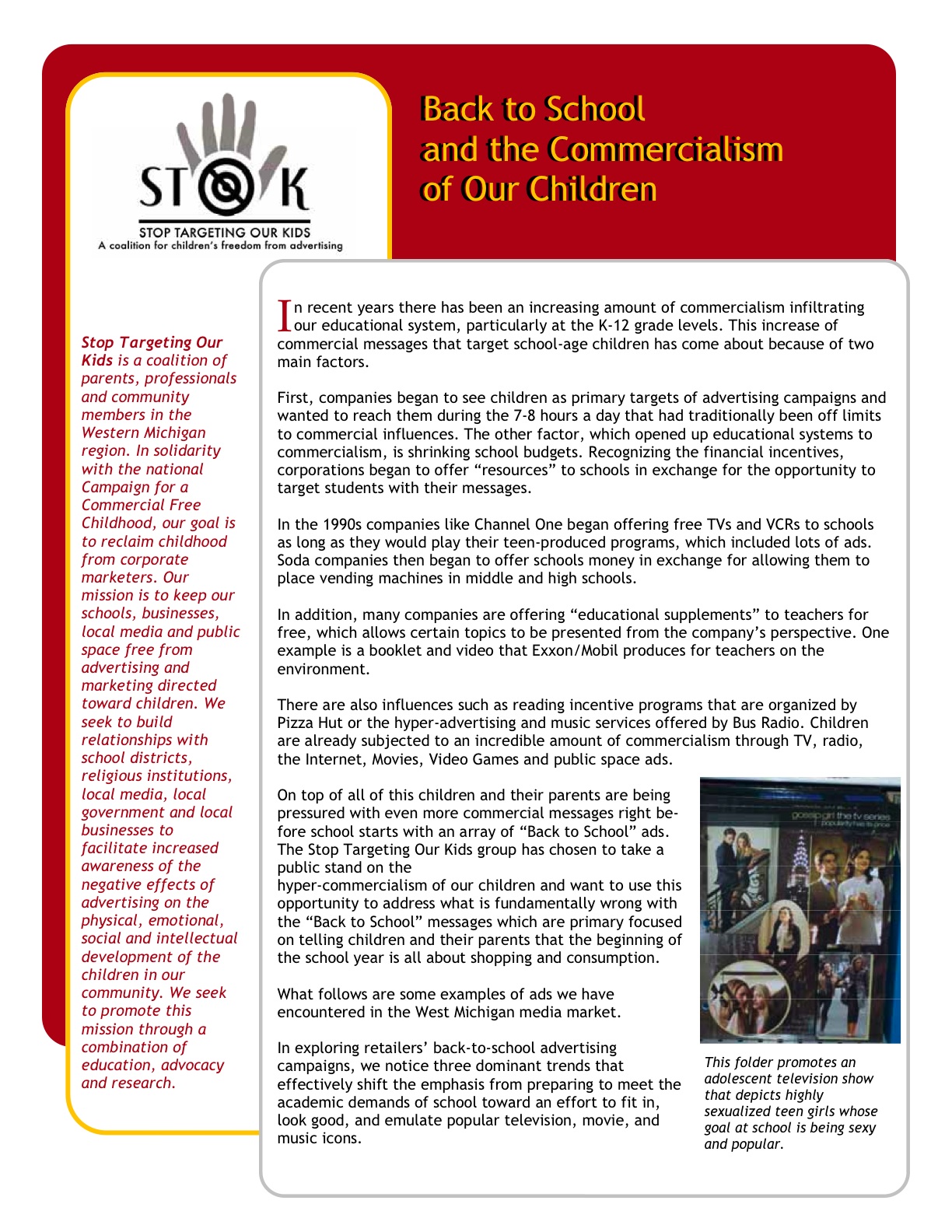
Last year the local group Stop Targeting Our Kids (STOK) produced a 3 – page informational sheet on commercialism in schools, particularly with the back to school theme. The information sheet points out that schools have become a favorite place for commercial messages.
In the last decade companies have been spending millions of dollars to find ways to target children while they are in school, through ad placement on the walls and book covers, fast food franchises getting cafeteria contracts and corporate created “educational materials” that are often sent to schools for free.
One example in recent years of corporate educational material that is sent to thousands of schools across the country was a coal industry produced curriculum document on the “benefits” of coal. Fortunately through the efforts of the Campaign for a Commercial Free Childhood that coal-industry sponsored material is no longer being distributed in schools.

In fact, the Campaign for Commercial Free Childhood (CCFC) also recent won another victory by getting one of the largest supplemental teacher material entities, Scholastic, to reducing the amount of corporate educational material they distribute.
According to a Media Release by CCFC:
“For years, Scholastic has produced teaching materials for corporate clients like Shell, Disney, and Nestle. In May, after a campaign led by CCFC, Rethinking Schools, and environmental groups, Scholastic pulled biased materials paid for by the coal industry. It was an important decision, but it didn’t go far enough. That’s why we asked you for help convincing Scholastic to stop distributing all corporate- and industry-sponsored teaching materials in schools.
We would prefer, of course, that Scholastic end all corporate sponsorships. But this is a huge step. Starting this fall, children will be exposed to significantly less corporate marketing in their classrooms. Already, Scholastic has agreed to end its partnership with SunnyD to promote sugar-laden beverages in elementary schools, and materials produced for corporations like DreamWorks, Disney, Shell, and Playmobile have been removed from Scholastic’s website for teachers. And Scholastic’s capitulation sends an important message to other companies working to subvert learning through the commercialization of teaching materials.”
This is certainly encouraging news and speaks to the importance of organizing for change. If you as a parent, student or educator in the West Michigan area are concerned about the commercialism in the schools you can contact STOK for more information.
 Grand Rapids Institute for Information Democracy