March Against Male Violence in Grand Rapids

Last night 22 people were not deterred by the rain and came out to be part of a march against male violence.
The event was co-organized by the Grand Rapids chapter of NOW (National Organization of Women) and the Bloom Collective.
Marchers gathered at Rosa Parks Circle with signs and whistles to draw attention to the violence perpetrated by men against women, children and other men.
Speakers included representatives from NOW, the LGBT Resource Center, the Bloom Collective and the YWCA. All of the speakers invited everyone, but particularly men to get involved and see sexual assault, rape, violence against the LGBT community and domestic violence as primarily a men’s issue.
Here is video footage of each of the four speakers:
[vimeo 30552358]Occupy Wall Street’ aims ire at foreclosures
This article is re-posted from iwatchnews.
As many as a dozen “Occupy Wall Street” protestors and their allies were arrested Thursday afternoon as they tried to stop a foreclosure auction inside a courthouse in Brooklyn, N.Y.

As the auctioneer called the proceeding to order, the protestors, who had been sitting quietly in the courtroom, broke into song. “Mrs. Auctioneer, all the people here are asking you to hold all the sales right now,” they sang, in surprising harmony. “We’re hoping to survive, but we don’t know how.”
Their voices filled the courtroom and, for a while at least, brought the proceedings to a halt. After a few minutes, a court security officer warned them to stop or face arrest, but he could barely be heard over the singing. The singing continued for about a half an hour until they were led off in plastic handcuffs, still singing.
The disruption coincided with a larger protest outside the state Supreme Court building in downtown Brooklyn, across the East River from Wall Street.
“We all know there are hundreds of thousands of people who have lost their homes through nothing but outright theft,” housing activist Frank Morales told a crowd of more than 100 outside the courthouse.
The courtroom action was planned in secret by protestors linked to Occupy Wall Street and another group, “Organizing for Occupation,” which had previously formed an “eviction blockade” at the home of an 82-year-old grandmother in Brooklyn. So far, the group has been able to prevent the woman’s eviction, but the outcome of Thursday’s sing-in in the courtroom was less certain.
After the protestors were arrested, the courtroom was opened back up for the foreclosure auction. For sale on the courtroom docket was at least one residential home as well as two commercial properties. It is not known who owned the home, or what led to the foreclosure.
Nearly 1.8 million homes were hit with foreclosure actions during the first nine months of this year, according to RealtyTrac Inc., an industry data provider. That translates into roughly one out every 73 homes in the U.S.
The foreclosure rate is down slightly from 2010, when a record 2.9 million homes were hit with foreclosure actions, according to RealtyTrac.
RealtyTrac chief executive James Saccacio has said that U.S. foreclosure activity has been “mired down” since last October, when the “robo-signing” controversy sparked a series of state and federal investigations into lender foreclosure procedures.
It was a year ago today that 50 state attorneys general announced they were investigating big banks’ foreclosure tactics in the wake of reports that many were using questionable documentation to push families out of their homes.
Federal officials have also gotten involved in the negotiations with the banks. Some reports have said the government authorities and the banks have discussed a settlement that could total $20 billion. But some state authorities, including California Attorney General Kamala Harris, have said that the proposed deal isn’t tough enough on the banks. Harris has vowed to pursue an independent investigation.
Bob Davis, an executive vice president at the American Bankers Association , told Bloomberg News that an agreement hasn’t been reached because state and federal authorities are asking for “wildly excessive” payments from the banks.
“A settlement is not likely to be agreed to if one side is asking for remuneration or fines that the other side believes is wildly unbalanced to the proof of harm to consumers,” he said.
In addition to the attention from state and federal officials, the foreclosure process has also been slowed by a growing wave of activism from beleaguered homeowners, community activists and consumer attorneys. Foreclosure opponents have used social media to spread the word about questionable tactics by banks and to swap advice on legal maneuvers and grassroots tactics for blocking foreclosures.
Outside the Brooklyn courthouse Thursday, protestors held signs with various messages critical of the banking industry.
“Stop lootin’ start prosecutin’,” read one. Another named the chief executive of JP Morgan Chase & Co.: “The United States of Jamie Dimon? No! STOP unlawful foreclosures.”
Morales, the housing activist, told the crowd that inside the courthouse “moneychangers” were sitting behind closed doors passing properties back and forth. “They shuffle these things around like so many pieces of paper. They don’t realize that behind these numbers are real people.”
People involved in the auction sat stone-faced as the protestors inside the courtroom began to sing. After a while, the protestors began clapping as well. As more and more security officers, some wearing “special response team” vests, filed into the courtroom, the protestors stood and swayed, raising their voices even louder.
Occupying for Occupation said later Thursday afternoon that at least seven and as many as a dozen protestors were arrested inside the courthouse.
A reporter observed about a dozen people led away in handcuffs. Soon after, the court officer ushered the remaining crowd back into the courtroom and the auction resumed.
Seven Outstanding Films About Immigrants
With all of the anti-immigration legislation heating up again—and with Alabama’s inhumane law confirmed by a Federal District court recently—we thought it might be a good idea to offer a list of the best films we’ve seen about immigrants. These movies will offer you a look through the eyes of immigrants in both the U.S. and Europe, and give an insider perspective of why many are forced to enter countries without documentation and take jobs that put them in peril.
El Norte
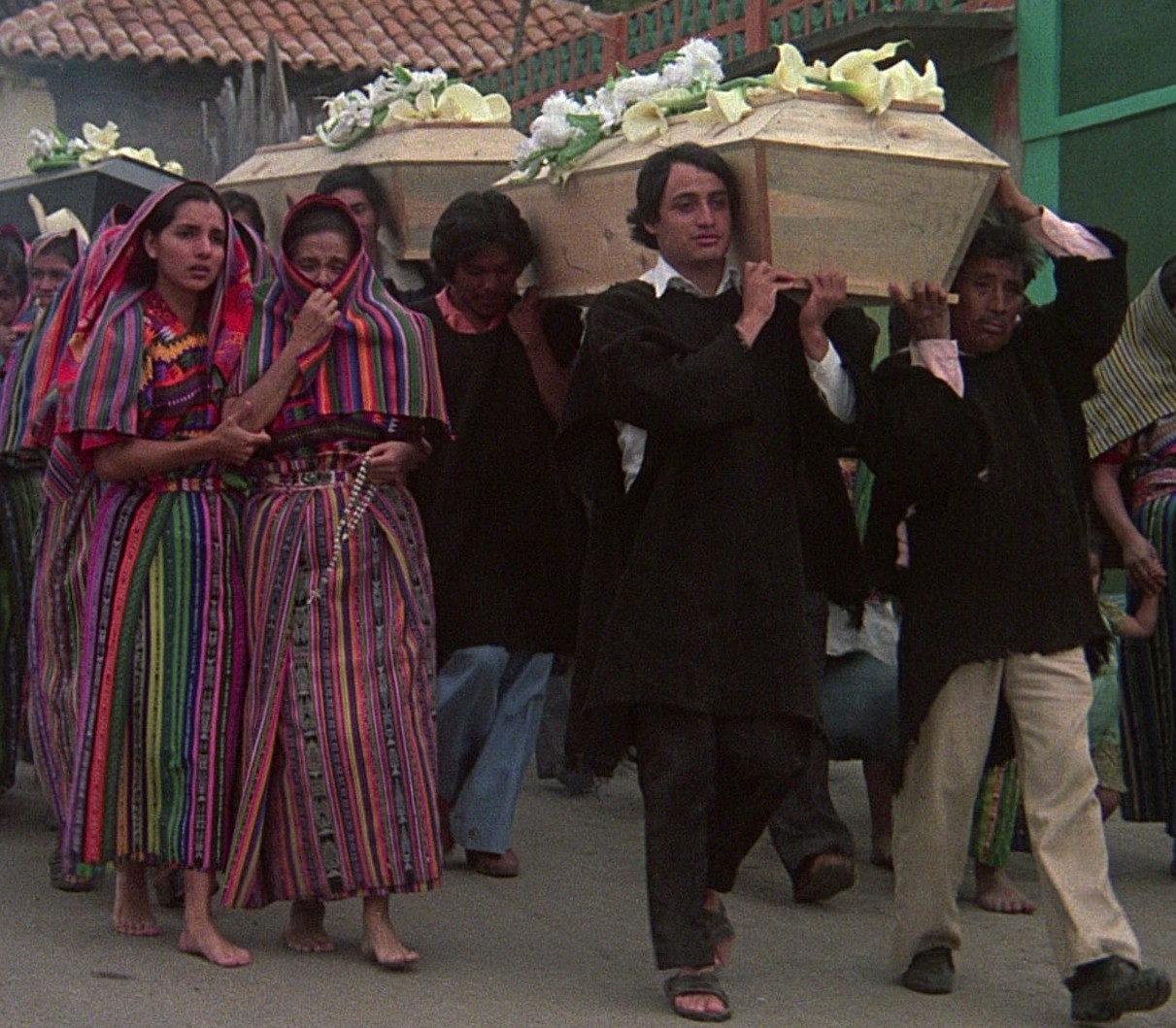
A brother and sister from Guatemala escape from their village after most of the workers there are slaughtered by the army. Their crime? Attempting to organize for better working conditions and fair pay, which is considered tantamount to revolution. They are unable to stay in Mexico, where they head first but where they are treated like “dumb Indians” in the words of the brother, Enrique. They manage to cross the U.S. border, making a heart-stopping trip through the sewer system. The two head to Los Angeles.
To return to Guatemala means death, so Rosa and Enrique must attempt to decode the American culture, the urban culture of L.A., and survive without documentation in the United States. They don’t find the warm, hospitable life they’ve seen on American TV shows; instead, they are forced to adapt to a foreign and confusing language, high prices and a life continually on the run from the authorities.
This film won an Oscar for best screenplay. The performance of David Villalpando, a Mexican actor and author, as Enrique is particularly moving.
Bread and Roses
Maya, who crosses the border from Mexico without papers, heads for Los Angeles and the home of her sister, Rosa. Rosa gets Maya a job at the non-unionized janitors’ service for which she works. It’s a nightmare job: the abusive supervisor enjoys his power trips, and in one scene fires a woman simply for forgetting her glasses.
Along comes union organizer Sam Shapiro, who talks to the crew about a “justice for janitors” campaign, urging them to organize. Maya is intrigued. But Rosa, who is supporting her ill husband, resists—she is scared she will lose her job. Her boss launches an intimidation campaign that frightens her even further. When she and Maya argue about unionization, Rosa reveals all of the indignities and abuse she has suffered in order just to stay in the United States—that speech alone is worth the time spent watching this remarkable movie.
But the performances, the script, and the direction in this film all contribute to its excellence. As Sam, Adrian Brody spent a month working with union organizers in Los Angeles to learn about the hardships that undocumented workers face here. Pilar Padilla and Elpidia Carrillo are superb as the two sisters.
The film’s title comes from the 1911 union song of the same name. The song’s final lines sum up the message of this film perfectly: “Our lives shall not be sweated from birth until life closes/ Hearts starve as well as bodies, bread and roses, bread and roses!”
Dirty Pretty Things
Okwe, a Nigerian immigrant living in political exile in London, discovers a horrifying crime ring but can’t intervene because of his undocumented status.
In Nigeria, Okwe was a doctor; in London, he drives a cab by day and works as a desk clerk at a hotel at night. Kindhearted despite being seriously sleep-deprived, Okwe also gives free medical treatment to other undocumented immigrants who can’t use the public health system. His friend Guo Yi, who works at the local hospital, steals antibiotics for Okwe to use in his work. Okwe rents sleeping time on the sofa of another undocumented worker, a Turkish housemaid. An intriguing element of this film is its depiction of an entire shadow network of immigrants helping each other as they live under the radar of the authorities.
One night a porter asks for Okwe’s help with a plugged toilet, and he fishes out a human heart. The shocking discovery launches Okwe into danger as he discovers an organ-harvesting scam that’s sending immigrants to their deaths.
In one memorable scene, a doctor demands of several of the immigrants, “How come I’ve never seen you people before?” Okwe answers, “Because we are the people you do not see. We are the ones who drive your cabs. We clean your rooms. And suck your cocks.” Roger Ebert wrote about this film, “It is a story of desperation, of people who cannot live where they were born and cannot find a safe haven elsewhere.”
Sweet Land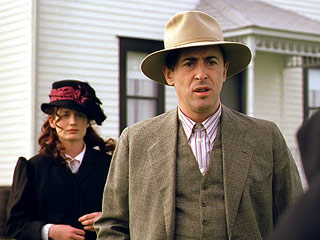
Providing an earlier view of an immigrant and the bigotry she faces when she arrives in Minnesota, Sweet Land is set in the early 1920s. Inge’s mail-order arrangement is to marry Olaf, a Norwegian-American farmer. In the stark Minnesota farmland, Inge finds welcoming neighbors…until they discover that she is not Scandinavian, but German. Their change from warmth to icy contempt is incomprehensible to Inge, who doesn’t understand how they can blame her for the sons they lost in World War I. The local pastor preaches sermons against Inge and refuses to perform the wedding ceremony.
Inge is an alien in every sense of the word. Her lack of English (she speaks mostly in slang expressions she picked up on her journey to America, such as “I could eat a horse”) makes her as much of an outsider as her German birth. So does the fact she was raised in the city and knows nothing about farming. But her steadfast nature and her enthusiasm about all things new gradually evoke a grudging respect from the hidebound community members, who have to let go of their bigotry and accept Inge simply as the person she is. In that way, it is a perfect film about assimilation.
The casting of this film is brilliant. It includes Elizabeth Reaser as the young Inge; veteran stage actress Lois Smith as Inge in old age; John Heard as the rigidly conservative pastor; and Ned Beatty as one of the leading citizens of the farming town.
 The Visitor
Walter, a professor from Connecticut, arrives at his Manhattan apartment, which he keeps only for visits. There he discovers two undocumented immigrants—he walks in on a naked woman from Senegal using his bathtub. A young couple has rented the usually vacant apartment, they thought legitimately, from a scam artist taking advantage of immigrants’ need for no-questions-asked housing.
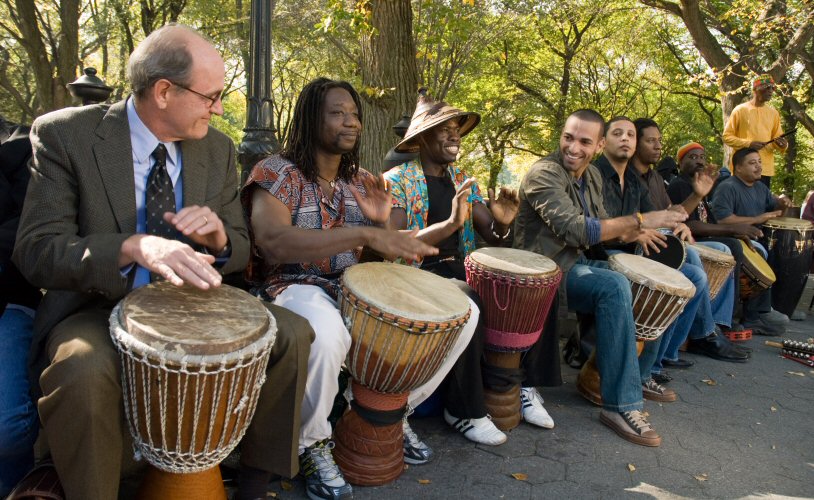
Walter, played by Richard Jensen in an Oscar-nominated performance, has shut down emotionally after the death of his wife. He turns the couple, Tarek and Zainab, out onto the street, and then changes his mind and tells them they can stay the night. One night turns into many as the two draw him out of his grief with their hopeful, optimistic view of life. He even becomes immersed in the African drum music that Tarek plays.
Through these two, the professor also meets Tarek’s mother. When Tarek is arrested, she arrives from Michigan to try to keep her son from being deported. The bureaucracy and red tape of the immigration system in the U.S. is plainly depicted in this film, and the presentation of the cruel withholding of information at the detention center from family members is wrenching to watch.

The film’s subtlety lets all of the emotions of this story shine forth—ranging from joy to despair and hope to outrage—without ever letting us forget the reality of people who are trapped in a system where they are truly dependent on the kindness of strangers.
Maria Full of Grace
The Oscar-nominated performance of Catalina Sandino Moreno in her first acting role is only one reason to watch this compelling film. Maria works on a Columbian flower plantation in the awful job of de-thorning roses. Her family is dependent on her wages. But then everything goes wrong. She becomes pregnant. She’s forced to quit her job. Without any prospects, Maria sets out for Bogatá to start over, and meets a man who talks her into taking a job as a drug mule. She is a desirable candidate because she is pregnant, and US Customs will not subject her to an x-ray.
After swallowing 62 pellets of heroin, Maria boards a plane and arrives at LaGuardia Airport, evading suspicious customs officials. The drug mules, mostly young women, are held captive in a seedy hotel until they pass all of the pellets they’ve swallowed. When one woman is killed, Maria and a friend she’s made on the trip run for their lives.
The film shows in detail why the drug-mule fee would be a huge temptation to the poverty-wage workers of Central America. Mules are lured with descriptions of easy money, but the trip is dangerous, the heroin packets can kill, and there’s a cold cruelty to those who treat Maria as nothing more than a package containing a valuable commodity.
The script offers fully drawn portraits of these usually marginalized people. Each character has her own motivation for the drug-trafficking job: political sanctuary, desperation fueled by poverty, a chance to be reunited with family in the U.S. They are victims of the wealthy drug lords, but they understand the risks they are accepting, or think they do. The real villain here is a have/have-not system that allows those risks to seem acceptable to anyone.
Paris, Je T’Aime
This is a collection of short films by various directors. The one featuring an immigrant is titled Loin du 16e (16e is an arrondissment, or neighborhood, of Paris). The nearly wordless piece, by Brazilian writers/directors Walter Salles and Daniela Thomas, is quietly heartbreaking. It shows the morning routine of a young South American immigrant. She makes a long, tiring trek from her barely-affordable slum neighborhood in Paris to the home of her rich employer. But there’s more at stake than just a complicated commute; the woman also has a baby who she must leave behind every day.
Catalina Sandino Moreno, the star of Maria Full of Grace, plays the young mother, the only featured actor in the film.
If you are looking for a story that, in just a few minutes, elegantly sums up the hardships and the emotional stress of living life as an immigrant in a foreign country, removed from family and familiar surroundings, this is it.
All of these films are available from the Grand Rapids Public Library System. You can round out your viewing by checking out the documentaries and other resource materials about immigrants, immigration issues, and the history of immigration to the U.S. at The Bloom Collective.

It is increasingly important for organizations and movements for justice to practice inter-sectionality, the “theory that suggests—and seeks to examine how—various socially and culturally constructed categories such as gender, race, class, disability, and other axes of identity interact on multiple and often simultaneous levels, contributing to systematic social inequality.”
A recent piece of local news provides us with an example of why inter-sectionality is important to practice.
The most recent e-newsletter from MiBiz highlighted the Whirlpool Company’s decision to be part of the “It Gets Better” campaign. Actually, the MiBiz mention was just a hyperlink to a Whirlpool media release, sent out to coincide with National Coming Out Day.
The Whirlpool media release also mentions that the company has scored 100 by the Human Rights Campaign (HRC) Corporate Equality Index.
We recognize the importance of have basic anti-discrimination practices in the workplace, especially now in Michigan which is considering legislation to broaden the capacity of businesses to fire workers for being gay, lesbian, bisexual or transgender.
However, we also know that Whirlpool has a long history of unfair treatment of workers and even eliminating hundreds of jobs most recently in Indiana, where the kitchen appliance giant dismissed hundreds of workers. The rational for the jobs cuts was a familiar mantra, the company needed to stay competitive. Labor groups challenged these claims, especially since the company received nearly $20 million from the federal government’s economic stimulus plan.
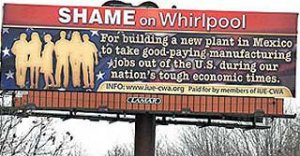
When workers at the Indiana plant organized to protest the job loss and it was reported that the company engaged in some potentially illegal tactics. In 2008, Whirlpool got rid of 300 workers from its world headquarters in St. Joseph-Benton Harbor, Michigan.
However, job elimination isn’t the only negative thing that Whirlpool engages in. The company has used its political and economic power to influence policies on a national level by its campaign donations. In Michigan, the company throws its weight around with its political connections to Congressman Fred Upton, whose family founded the company nearly 100 years ago.
Closer to home, Whirlpool is notorious for determining the fate of politics in the St. Joseph/Benton Harbor area. Whirlpool has been accused of financing the political campaigns of people on city councils and even the courts.
The Black Autonomy Network Community Organization (BANCO) refers to the racial dynamics between Benton Harbor and St. Joseph as a form of apartheid, where Blacks who live in Benton Harbor and excluded from any really economic benefits that mostly White residents of St. Joseph. With the backing of the Whirlpool Corporation, the legal authorities in St. Joseph have targeted one of the organizers with BANCO, Rev. Pinkney. Pinkney has been fighting a legal battle for years and was even sentenced to serve time in jail on bogus charges.
In the past two years there has been an organized boycott of Whirlpool and all its subsidiaries (Amana, Estate, Gladiator Garage Works, Insperience, Jenn-Air, KitchenAid, Magic Chef, Maytag, Roper, Acros, Inglis, Bauknecht, Brastemp, Admiral, IKEA appliances, some Kenmore). The boycott is a response to the latest efforts by Whirlpool to take property along the lakeshore in Benton Harbor to develop it for a golf course and numerous resorts.
Considering these unjust practices by Whirlpool, their decision to be part of the “It Gets Better” campaign seems less significant. We are not saying that this doesn’t have some potential benefit, but what it can do is have the potential to divide grassroots efforts for justice and in this case create tensions and even a divide between the LGBTQ community and the labor and African American communities.
More than ever these grassroots groups need each other if we are to truly challenge corporate power or the power of the 1%. Whirlpool would not be able to eliminate jobs or treat the Black community in Benton Harbor with distain as easily if the LGBTQ community formed an alliance with these groups to further challenge the company’s human rights record. Indeed, we can not afford these kinds of divisive tactics by the corporate elite if we are to ever achieve any kind of lasting justice or equity.
Obama’s campaign fundraising way ahead of any GOP candidate
This article is re-posted from Open Secrets.

President Barack Obama continues to be a fund-raising juggernaut, practically exceeding the fund-raising total of the entire GOP field combined. During the third quarter, Obama raised $70.1 million, his campaign announced today. That sum includes $42.8 million that went directly into his own campaign war chest and $27.3 million raised for the Democratic National Committee.
By contrast, none of his GOP rivals are on the same level. No GOP contender cracked $20 million during the third quarter, and only two cracked the $10 million mark.
The campaign of Texas Gov. Rick Perry has said Perry raised about $18 million during the third quarter. Meanwhile, the campaign of former Massachusetts Gov. Mitt Romney has said Romney raised about $14 million and the campaign of Rep. Ron Paul (R-Texas) has said Paul raised about $8 million.
Obama’s massive third-quarter haul brings his campaign’s cycle-to-date fund-raising total to about $91.5 million, not including the large sums he’s helped the DNC raise. That amount nearly matches the sum he had raised by the same point in time four years ago, as he battled for the Democratic Party nomination against political heavy weights including Hillary Clinton and John Edwards.
As of Sept. 30, 2007, Obama had raised $106 million, according to research by the Center for Responsive Politics. That’s only about 16 percent more than he raised through the third quarter. And this time around, Obama will not face a contentious primary fight.
Here’s a chart comparison the Obama campaign’s quarter-by-quarter fund-raising during his two presidential runs:

In 2008, Obama became the first major party nominee to opt against participating in the federal public financing program — a move that allowed him to shatter fund-raising records and ultimately collect nearly $750 million. Obama is again unlikely to participate in the system again this election cycle.
According to his campaign, more than 606,000 individuals donated to Obama during the third quarter and the average amount of a donation was $56. During the second quarter, about 47 percent of the money Obama raised came from small-dollar donors who gave $200 or less, as OpenSecrets Blog previously reported. An official figure for such small-dollar donors during the third quarter will not be available until the campaign files its paperwork with the Federal Election Commission — paperwork which is due by midnight Saturday.
Public money being used to promote shopping in Grand Rapids
Yesterday, it was reported on MLive that the Grand Rapids Downtown Development Authority (DDA) decided to give more money than requested to a business called Levitation.

Levitation, which organizes events, was at the most recent DDA meeting to ask for $5,000 for a holiday shopping kick-off event in downtown Grand Rapids tentatively set for November 18.
The DDA responded by giving them an additional $7,500. The MLive story reads:
DDA board member and Huntington Bank’s regional President Jim Dunlap encouraged organizers to think bigger — exponentially bigger. “We don’t do little things here,” he said. “We’re trying to change what we do here. Does anybody care about $7,500. What if it was $75,000?” DDA board member Brian Harris echoed Dunlap: “We don’t (sic) you to be anemic on this,” he said.
Does anybody really care about $7,500? Actually, people would care if they realized that the DDA uses in part taxpayer money for their downtown projects, despite the fact that the group is not elected or chosen by the public.
In addition, those who make up the board of the DDA are predominantly from the business community, who would potentially benefit from such an investment from taxpayer money. Those on the current DDA board include John Bultema (Fifth Third) John Canepa (Grand Action), Jim Dunlap (Huntington Bank), Kayem Dunn (Consultant), Jane Gietzen (Spectrum Health), Brian Harris (CEO H & H Metal) and Joe Tomaselli (Amway Grand CEO). There are also two politicians on the DDA, Grand Rapids Mayor George Heartwell and Kent County Commissioner Jim Talen.
Many of the business people on the DDA are also involved with other business-focused groups that reflect the interlocking systems of power in this community that are so wealthy that it boggles the mind that they get to decide on how public money is spent.
Jim Dunlap is a core member of the West Michigan Policy Forum, which fought to get the business tax eliminated in Michigan and is also trying to make Michigan a Right to Work state. John Canepa is with Grand Action, the DeVos led group that was behind the construction of the Van Andel arena and is the main force behind the downtown urban market, which the DDA has also given hundreds of thousands of dollars to.
Just another example of how the 1% is using the funds of the 99% without our consent.
Alabama and anti-immigration legislation

Like several other states, including Michigan, there is an effort in Alabama to pass legislation that would criminalize and target undocumented immigrants and their children.
The following information on the anti-immigration legislation in Alabama is from an action alert from the group Presente.
“The most draconian anti-immigration law in the country is going into effect in Alabama right now, and what is happening as a result will horrify you.
There are reports circulating on blogs that people must show a valid Alabama ID to get water service to their homes, that many are too scared to leave their homes to buy groceries for fear of being targeted, and of neighbors turning on each other and calling the authorities to check the immigration status of people living next door. The law is also compounding the economic crisis in Alabama, which has a deep farming economy. Migrant workers are afraid to go to work—so there are millions of dollars of produce that is rotting in the fields as a result.
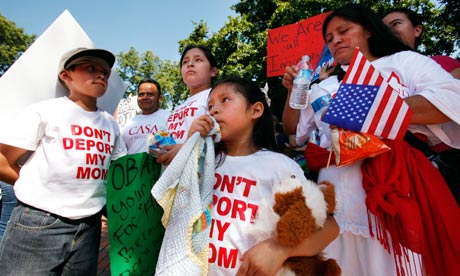
And since this law targets immigrant children and parents explicitly, the day after its implementation 2,000 children or 5% of Latino children in the Alabama school system did not go to school.3
Right now the media is not covering this unfolding humanitarian crisis so it’s hard to give a full sense of the outrage that is happening in Alabama. That’s why we sent members of our team down there to help document the abuses so that we can raise the alarm about what’s happening all over the country.
In the meantime, it is vital that we all speak out against what’s happening there—keeping kids out of school and forcing whole communities to live in fear is simply inhumane. Will you sign on to condemn Alabama and pledge to stop this sort of hate from spreading to your state?
There is currently a legal battle being waged over the Alabama law. The Department of Justice along with religious groups and human rights groups in Alabama have tried to prevent it from going into effect. Unfortunately, a U.S. district court judge refused to block some of the worst provisions, like the requirement that public schools check the immigration status of children. There is an appeal underway that will hopefully block these horrible provisions but in the meantime we need to stand up and make our voices heard.”
Occupy Wall Street, Denounce the Democrats
This article by Margaret Kimberley is re-posted from Black Agenda Report.

In 2009, the New York state legislature imposed a tax surcharge on residents earning $1 million or more per year. This “millionaire’s tax” was passed with the proviso that it expire on December 31, 2011. When Democrats in the state capital proposed extending this tax on the rich, Democratic governor Andrew Cuomo said no, and the surcharge was history.
The Occupy Wall Street protesters held a march, dubbed the millionaire’s march, to demand that the rich pay their fair share of taxes. They marched past the New York City homes of billionaire David Koch, News Corporation CEO Rupert Murdoch, and Jamie Dimon, CEO of J.P. Morgan Chase. For some strange reason, they did not march past the offices of the Democratic governor.
This stunning inaction is a bad omen that the Occupy Wall Street movement is doomed to fail unless it changes course quickly. The only way to protest income inequality or bailouts of the financial services industry is to protest against the people in power, even when they happen to be Democrats. Occupy Wall Street appears destined to turn into yet another effort to soft pedal Democratic complicity in the current economic crisis. OWS activists must not only disconnect themselves from the Democratic Party, but have the courage to protest them as strongly as they would Murdoch and Koch.
Agitation in favor of the “99%” against the “1%” is useless if it doesn’t address the bipartisan nature of the attack on the working people of this country. It is a bad sign indeed when the likes of Nancy Pelosi express support for OWS. The Democratic Congressional Campaign Committee hypocritically asks for “100,000 strong standing with Occupy Wall Street.” It strains credulity to believe that the people in charge of raising corporate cash for democrats really want to see changes in our political system.
It is Barack Obama, not George W. Bush, who made a lie of the dictum that Social Security is the “third rail of politics.” It is now in the slaughterhouse along with all other government programs, waiting its turn to be eviscerated. The Democrats have excelled in committing the crimes, which Republicans have only dreamed about, and they will only grow bolder if they are not called to account.
As a witness to the protest in lower Manhattan’s Zuccotti park, this columnist did not see one sign or hear any general assembly statements denouncing the Democratic Party. It is easy to shout down Geraldo Rivera and Fox news, that condemnation is low hanging fruit for any intelligent person.
It will be harder to say that Andrew Cuomo and his political aspirations are as much a part of the problem as Messrs. Koch and Dimon. The propaganda, which ignores Democratic Party perfidy, is very deeply imbedded in the American people. If they don’t hear the voices of the American left telling them the truth of the country’s condition, then our situation is a dire one indeed.
The coming days and weeks will give the occupiers ample opportunity to speak out as the Obama administration ratchets up its efforts to realize right wing fantasies. On the same day that marchers missed a golden opportunity to expose the Democratic Party’s complicity in letting wealthy New Yorkers get away with their ill gotten gains, the administration charged Iranian citizens in a bizarre and unbelievable plot to kill the Saudi ambassador to Washington. Will the OWS forces move to protest when Obama makes the inevitable case for war, or will they revert to letting Democratic crimes against humanity go unopposed?
While OWS promises to remain unco-opted by any political party, it has not moved further to include the Democrats in its denunciations. Partly as a result of its leaderless, decentralized nature, OWS has been slow to solidify any demands. Words like breaking up the concentration of wealth and power will be meaningless without a more pointed critique of the political system, a critique which should be no respecter of persons or party.
Mass action is the only way to prevent further inequality, and further American aggression around the world. Occupy Wall Street can be the beginning of a great movement, or a lost opportunity. The experiment may be in its beginning stages, but the learning curve has to be brief if OWS is to not only remain free from political interference, but make good on its claims of fighting for the interests of working people.
Why the Local Media doesn’t and won’t get Occupy Grand Rapids
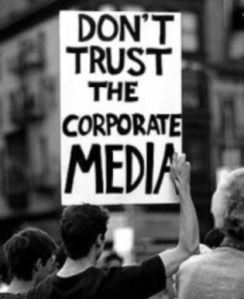
Over the past several days there have been numerous stories done by local commercial news media on the Occupy Grand Rapids movement, with much of the coverage focused on the drama and conflict of any protest movement.
This kind of coverage is doomed to fail in terms of what the Occupy Grand Rapids might want to achieve, which seems to be systemic change, particularly over economic issues. What follows are some reasons why the local news media just won’t get it.
- The local commercial news media has consistently over the past 20 years of monitoring (conducted by GRIID and other sources) has demonstrated that an inherent bias in favor of the status quo because of their general lack of holding power accountable. Even though holding power accountable is a fundamental principle of journalism, rarely is it ever practiced.
- One basic premise of the Occupy Wall Street movement is that the current economic system of capitalism is bankrupt and only serves the interests of the 1%. However, the local news media (like the national news media) has failed to fully understand and report on how this economic system inherently serves the interest of the 1%. Economic news coverage is flawed because it accepts the myth that the economic system serves the majority and when there are “problems,” like the 2008 crash it is simply because of a lack or regulation or a few corrupt individuals or companies.
- The failure of commercial news media to investigate and question the real reasons behind the 2008 crash is reflected in their continual acceptance of the current economic system. Economic reporting continues in the same way it has for decades and even if the local commercial media gives some attention to the Occupy Grand Rapids movement it will be token at best because the bulk of their economic reporting accepts that capitalism works for everyone.

- The local news stories about the Occupy Grand Rapids movement are event based, meaning they have been reporting on the initial gathering, subsequent gatherings and conflicts with the city government and police. This kind of reporting ignores the work and efforts of people for decades to challenge the economic system and its consequences – poverty, unemployment, underemployment, wage theft and who are the primary beneficiaries of this economic system. In other words, there is no historic context to why people are engaged in the occupy movement now. This means there is no linkage with the anti-globalization movement, which challenged global capitalism as it has evolved since NAFTA, the creation of the WTO, the role of the IMF and the World Bank.
- The local commercial news media will never be able to objectively report on any movement that is calling for a systemic change of the current economic system, because the local news media is part of that system. All of the local commercial news media outlets are owned by for profit companies, many of which are part of large media monopolies. The Grand Rapids Press is owned by Advanced Publications, WZZM 13 by Gannett, Fox 17 by the Tribune Company, WOOD TV 8 by LIN Media and WOOD radio by Clear Channel.
- Another reason why local commercial news media can never really report honestly and objectively about the Occupy Grand Rapids movement is because they rely on advertising for the majority or all of their revenue. The Occupy movements are inherently opposed to the hyper-consumption message of advertising, which is the life-blood of commercial media. Advertisers will not tolerate consistent and substantive news reporting on the crisis of capitalism and since these media companies operate on advertising revenue they are unable to investigate and report on this movement with any depth.

- Lastly, the local commercial news media will not be able to honestly report on the 1% that lives in West Michigan because they have demonstrated an unwillingness to challenge the local economic power structure. In fact, not only are they unwilling to expose the local 1%, they often provide a forum for the local 1% or act as cheerleaders.

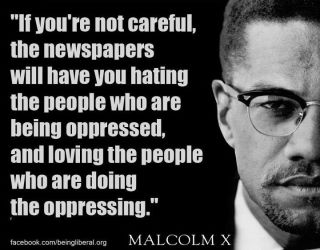
Having attended numerous general Assembly meetings I am aware of the desire of the Occupy Grand Rapids movement to have a media policy. However, I have yet to see a concrete policy and based on the stories already done by the local news media there doesn’t seem to be any indication that a clear policy or coherent talking points have been adopted.
A media policy will be critical if the local movement is to have a chance at preventing the commercial news media from distorting their message. More importantly, such a media policy should be focused on developing independent and autonomous media that they and their allies can distribute. This kind of a media strategy will have a more positive and long term benefit than relying on the for profit media to “report the truth.”
National Coming Out Day – Interview with Queer Activist Wick Thomas

The LGBT Resource Center at GVSU brought to town Queer activist Wick Thomas for their National Coming Out Day events on campus. We had an opportunity to interview Wick about his own history, queer organizing in Kansas City, challenging the religious right and his thoughts on Occupy Wall Street.
Wick is involved with the Kansas City-based group Equal, is known for organizing an action challenging Kansas City Pride and in support of LGBTQ rights in Uganda.
[vimeo 30394334] Grand Rapids Institute for Information Democracy