Local Media Blackout on recent trade agreements

Last week the US Congress passed “free trade agreements” with the countries of Panama, Colombia and South Korea. The Obama administration considered these trade agreements as a victory for the US economy.
However, if you rely on local news for information on these trade policies you would have been in the dark. None of the local media outlets reported on the October 12 vote in both the House and Senate. The three pieces of legislation were HR 3078, HR 3079 and HR 3080.
There was also no local reporting on how area members of the House of Representatives voted on these critical trade policies. According to Vote Smart, both 2nd Congressional Representative Bill Huizenga and 3rd Congressional Representative Justin Amash voted for all 3 free trade agreements.
Representing Michigan in the Senate, senior Senator Carl Levin voted for the South Korea and Panama agreements, while voting against the agreement with Colombia. Levin most likely voted against the Colombia agreement because of the pressure from some labor groups concerning the high level of union activists being murdered there in recent years, but Levin could also get away with voting no since that agreement passed by a large margin in the Senate 66 – 33.
Debbie Stabenow voted for the trade agreement with South Korea, but against the Colombian and Panamanian trade agreements. Stabenow is in a re-election campaign so voting against two of the three trade agreements was in her interest in order to maintain good relations with trade unions, but since both passed in the Senate by a wide margin she could get away with a no vote.

The only coverage we documented in recent weeks was an editorial in the Grand Rapids Press, which endorsed the trade agreements with all three countries.
This lack of coverage on substantive economic policy issues underscores the point we made last week about why the local commercial news media won’t get the Occupy movements, because they fail the public miserably when it comes to reporting on critical economic issues.
But what the heck, at least the Grand Rapids Press, channel 8 and channel 13 all reported that Rob Bliss is auctioning off his big water slide. This is news we can all really use?
Wall Street’s Second Occupation: The Police Move In
This article by Tom Engelhardt is re-posted from TomsDispatch.org.
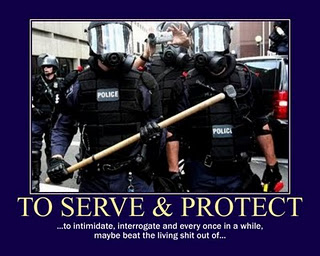
These last weeks, there have been two “occupations” in lower Manhattan, one of which has been getting almost all the coverage — that of the demonstrators camping out in Zuccotti Park. The other, in the shadows, has been hardly less massive, sustained, or in its own way impressive — the police occupation of the Wall Street area.
On a recent visit to the park, I found the streets around the Stock Exchange barricaded and blocked off to traffic, and police everywhere in every form (in and out of uniform) — on foot, on scooters, on motorcycles, in squad cars with lights flashing, on horses, in paddy wagons or minivans, you name it. At the park’s edge, there is a police observation tower capable of being raised and lowered hydraulically and literally hundreds of police are stationed in the vicinity. I counted more than 50 of them on just one of its sides at a moment when next to nothing was going on — and many more can be seen almost anywhere in the Wall Street area, lolling in doorways, idling in the subway, ambling on the plazas of banks, and chatting in the middle of traffic-less streets.
This might be seen as massive overkill. After all, the New York police have already shelled out an extra $1.9 million, largely in overtime pay at a budget-cutting moment in the city. When, as on Thursday, 100 to 150 marchers suddenly headed out from Zuccotti Park to circle Chase Bank several blocks away, close to the same number of police — some with ominous clumps of flexi-cuffs dangling from their belts — calved off with them. It’s as if the Occupy Wall Street movement has an eternal dark shadow that follows it everywhere.
At one level, this is all mystifying. The daily crowds in the park remain remarkably, even startlingly, peaceable. (Any violence has generally been the product of police action.) On an everyday basis, a squad of 10 or 15 friendly police officers could easily handle the situation. There is, of course, another possibility suggested to me by one of the policemen loitering at the Park’s edge doing nothing in particular: “Maybe they’re peaceable because we’re here.” And here’s a second possibility: as my friend Steve Fraser, author of Wall Street: America’s Dream Palace, said to me, “This is the most important piece of real estate on the planet and they’re scared. Look how amazed we are. Imagine how they feel, especially after so many decades of seeing nothing like it.”

And then there’s a third possibility: that two quite separate universes are simply located in the vicinity of each other and of what, since September 12, 2001, we’ve been calling Ground Zero. Think of it as Ground Zero Doubled, or think of it as the militarized recent American past and the unknown, potentially inspiring American future occupying something like the same space. (You can, of course, come up with your own pairings, some far less optimistic.) In their present state, New York’s finest represent a local version of the way this country has been militarized to its bones in these last years and, since 9/11, transformed into a full-scale surveillance-intelligence-homeland-security state.
Their stakeout in Zuccotti Park is geared to extreme acts, suicide bombers, and terrorism, as well as to a conception of protest and opposition as alien and enemy-like. They are trying to herd, lock in, and possibly strangle a phenomenon that bears no relation to any of this. They are, that is, policing the wrong thing, which is why every act of pepper spraying or swing of the truncheon, every aggressive act (as in the recent eviction threat to “clean” the park) blows back on them and only increases the size and coverage of the movement.
Though much of the time they are just a few feet apart, the armed state backing that famed 1%, or Wall Street, and the unarmed protesters claiming the other 99% might as well be in two different times in two different universes connected by a Star-Trekkian wormhole and meeting only where pepper spray hits eyes.
Which means anyone visiting the Occupy Wall Street site is also watching a strange dance of phantoms. Still, we do know one thing. This massive semi-militarized force we continue to call “the police” will, in the coming years, only grow more so. After all, they know but one way to operate.
Right now, for instance, over crowds of protesters the police hover in helicopters with high-tech cameras and sensors, but in the future there can be little question that in the skies of cities like New York, the police will be operating advanced drone aircraft. Already, as Nick Turse indicates in a groundbreaking report “America’s Secret Empire of Drone Bases,” the U.S. military and the CIA are filling the global skies with missile-armed drones and the clamor for domestic drones is growing. The first attack on an American neighborhood, not one in Iraq, Afghanistan, Pakistan, Somalia, Yemen, or Libya, surely lurks somewhere in our future. Empires, after all, have a way of coming home to roost.
Beehive Collective brings radical art to Grand Rapids this week
The Beehive Design Collective, a radical art group, is coming back to Grand Rapids this week. The Bees will be speaking and doing workshops over a four day span.
On Thursday, at 7pm in the Padnos Student Gallery at GVSU, the Beehive Collective will be presenting their most recent illustration/narrative, “The True Cost of Coal“, having spent several months in the Appalachian region investigating the economic/social/environmental consequences of mountain-top removal.

Then on Friday, Saturday and Sunday the Beehive Collective will be at Red Hydrant Press Studio. On Friday, they will be again be presenting on the True Cost of Coal, but will include more interactive elements in this presentation with participants.
On Saturday there will be a radical art-making workshop and on Sunday the Bees will offer a children’s workshop.

All 3 sessions will be at Red Hydrant Press Studio, located in the Tanglefoot Building on the Westside, the space is limited to 35 people. The event is free and open to the public, but they would greatly appreciate your donations. The Bloom Collective is also a co-sponsor of the events along with Red Hydrant Press Studio.
Friday 5:30 – 8:30PM general public
Saturday 2:00 – 6:00PM graphic workshop for artists (rsvp only)
Sunday 1:00 – 3:00PM Kids workshop ages 7-12
For more information go to the Facebook event page.
Rev. Billy, Bank of America and the 99%

In only a way that Rev. Billy can articulate, here is a fun and creative way in which the Occupy movement is confronting Bank of America. Rev. Billy also addresses the question of hope and revolution in this video interview.
As part of doing research for the LGBTQ People’s History Project in Grand Rapids, we thought it was important to look at local media coverage and to see how people were being represented.

We decided it was important, since many people not only rely on local news for information and local news often is the only source of information people may have had when it came to the struggles of the LGBTQ community in the 1980’s and 90’s.
However, we know that mainstream commercial news coverage is always limited and often reflects the views of the dominant culture. This is why it has always been important for social movements to create their own media as a means of sharing information and perspectives that are often counter to commercial media.
The Network News was formed in 1988 as a mechanism for not only sharing information for the Gay and Lesbian community, it was a tool to hold commercial media accountable.
In one of the first issues of the Network News (August 1988), there is an interesting article about a journalist at the Advance was fired because she was writing stories that were sympathetic to the Gay and Lesbian community. The Network News article read:
The Advance, an area newspaper serving greater Grand Rapids, has dropped the regular religion column written by freelancer Margie Gage. Termination followed soon after the appearance of Gage’s column about the May building dedication of Reconciliation Metropolitan Community Church. An official of The Advance confirmed that the RMCC column was one of the reasons for termination.

Rev. Bruce Roller and Rev. Maggie Beretz met in early July with Advance associate publisher and managing editor to discuss the paper’s reporting of minority issues. Roller and Beretz were told that news of the gay community would upset advertisers and readers and that, economically, “Your community is simply not a force to be reckoned with.”
Earlier this year The Advance at the last minute killed an article by one of their own reporters featuring RMCC and the gay Catholic organization Dignity. News from other area churches is reported regularly in the publication.
The Network is in the process of determining a course of action to encourage The Advance and other news organizations to accurately report news of their various constituencies. Network News will continue to report information as it becomes available.
The issue of whether or not the LGBTQ community is being accurately portrayed in the local news media today is a matter worth investigating and discussing. It could be a valuable tool today to have local LGBTQ groups monitoring local news and challenging them, if need be, on whether or not they are being covered accurately or honestly.
The Network News still exists today, as do many other LGBTQ forms of media in the growing digital world. However, even though there is a tremendous amount of media being produced, is there enough media being produced by the LGBTQ community that honestly reflects the issues and concerns it has today?
This brief look at the LGBTQ history in Grand Rapids is part of the Grand Rapids People’s History Project. A feature film on the history of the LGBTQ community, will premier on Thursday, November 17 at the downtown campus of GVSU. For details go to our Facebook event page.
Keystone Pipeline Faces Indigenous Trans-Border Opposition
This article is re-posted from CorpWatch.org
In mid-September this year, as sharp winds howled across the Great Plains, indigenous leaders from either side of the U.S. –Canada border held an “emergency meeting” in the basement of a South Dakota casino. They came from all over – one flew in from Canada’s frigid Great Bear Lake near the Arctic Circle, a husband and wife drove east on Highway 18 from their reservation, and several more drove west, on Interstate Highway 90.

The casino (official slogan: “A little bit of Vegas on the prairie”) itself is not much to look at. The low building sits by itself on the prairie near the southern edge of the Rosebud Indian Reservation, almost straddling the border between Nebraska and South Dakota. For two days the indigenous delegates – men and women, mostly middle-aged and older — huddled downstairs, drinking coffee out of styrofoam cups, and nibbling on salted peanuts and M&M candies.
How to radically alter the energy policy of the United States, they wondered, and keep a foreign company far away from their land? They prayed to their ancestors for guidance. They took smoke breaks under an enormous grey sky.
After two days they drafted a “Mother Earth Accord” that they hope will galvanize indigenous opposition to the most contentious infrastructure proposal in North America: a privately-built 1,661-mile-long oil pipeline set to carry crude from Alberta’s oil sands to refineries on the Texas Gulf Coast. Some say they’re fighting for the safety of their peoples — and others, to redress generations of conflict, poverty, and injustice. “Our ancestors protected the land when they were alive,” Rosebud Tribal Chief John Spotted Tail said at the meeting. “Our belief is that we need to do the same.”
Great Plains country
From the air, South Dakota resembles a tile floor where earthy rectangles of green, brown, yellow, and red line up with geometric precision. The view from the ground reinforces that image, adding texture, sound and smell. Highways run to distant points on the horizon. Fields of corn, wheat, soybeans, and sunflowers ripple in the wind. The odor of manure drifts across the land, sometimes wafting even to Sioux Falls, the state’s largest city.
Driving down the interstate highway, you can tune to KBHB 810 Five State Ranch Radio near Rapid City; catch the daily “Farm and Ranch Review” on KWYR Country 1260; or listen to KILI Radio 90.1, the “Voice of the Lakota Nation.”
Scattered among the farmer-settlers, South Dakota has the largest indigenous population in the U.S., with more than 71,000 Lakota, Dakota, and Nakota peoples (“Sioux”, as they are known by outsiders) spread across eight reservations and beyond. Theirs is often a marginalized existence, separated by history and culture, as well as poor health and poverty, from the agricultural mainstream that surrounds them.
But local leaders are hoping to wield outsize influence in coming weeks over one of the most important environmental decisions in Barack Obama’s presidency: whether or not to approve TransCanada’s Keystone XL pipeline.
Keystone XL is the Calgary-based energy company’s most important project. Canadian analysts expect it to add Cnd$500 million to $700 million to its balance sheets each year. Those earnings hinge on Obama’s acceptance of the argument–promoted by Alberta’s oil sands industry and its political supporters–that pumping an extra 500,000 barrels of oil each day from friendly Canada will help wean the U.S. off Middle Eastern oil.
A fierce opposition, including Democratic party members of the U.S. Congress, environmental activists, and local ranchers, has delayed the proposal for years, framing it as a mortal danger to the planet’s climate and to the rivers and aquifers of the “American heartland.” For some indigenous peoples on South Dakota’s Great Plains, the controversy has an added, historical, significance. They see TransCanada as the latest in a long line of unwanted intruders on their ancestral homeland.

‘Something bad is coming to our nation’
“Excuse if me if I just spoke too fast for you to understand,” Alex White Plume said, moments after delivering an opening prayer in the Lakota language. His quick laughter softened the joke at the expense of the white English speakers in the casino basement. The 59-year-old White Plume and his wife, Debra, were among the first to arrive at the “emergency meeting” of indigenous leaders at the Rosebud Tribal Casino. They sat at the right arm of a U-shaped table configuration, notebooks open.
The meeting had been organized only the week before, and opening attendance was modest. Down the short end of the “U” to their left were several local farmers, dressed in flannel shirts and blue jeans. Nearby were representatives from the Rosebud Tribal council and on the other side was an anti-pipeline activist from Nebraska. Enclosed in the center, facing a large projector screen, was Marty Cobenais, the pipeline campaigner of the Indigenous Environmental Network and one of the meeting’s organizers. An aerial shot of an oil sands operation in northern Alberta filled the projector screen: miles of strip-mined blackness where thick woodland used to be. “Jesus,” muttered one of the farmers. White Plume remarked: “Something bad is coming to our nation and to our land.”
The future of oil?
Whatever your view of Alberta’s oil sands industry, there’s no denying its sheer visual spectacle. Picture the boreal forest, like a great green blanket spread across northern Canada. Now picture a gash in the fabric that reveals 426 square miles of toxic lakes and bare, black earth, where shovels and trucks the size of small buildings mine “bitumen,” a thick mixture of sand, clay and oil. (A tiny patch measuring 0.64 square miles has certified by the provincial government as reclaimed). At the edges of this rip, the green blanket appears to fray, cut through with production wells, pipelines, access roads, and processing facilities — essential elements of the system of high-pressure steam injections that let producers access deeper deposits. Each year, this frenzy of industrial activity pumps out close to 40 megatonnes of greenhouse gases, more than all the cars on Canadian roads.
Much of the bitumen produced here is diluted with a chemical cocktail of industrial solvents — including benzene, a known carcinogen — and then sent via pipeline to the U.S. Midwest. So much of this “dilbit” is shipped south, in fact, that Canada has become the number-one supplier of crude oil to the U.S., shipping one million more barrels each day than Saudi Arabia.
And this output is only the beginning. The Canadian Association of Petroleum Producers expects production to more than double in the next 14 years. But for that to happen, the Cnd$100 billion industry needs a way to get that oil to foreign markets. It needs pipelines. “If there was something that kept me up at night,” Alberta energy minister Ron Liepert told the Globe and Mail this summer, “it would be the fear that before too long we’re going to be landlocked in bitumen. We’re not going to be an energy superpower if we can’t get the oil out of Alberta.”
Pipeline Politics
Climate change activists hoped to keep Liepert sleepless in late August, when they began staging a massive protest against TransCanada’s Keystone XL. Each day for two weeks, people from across the continent stood, sat, and chanted in an off-limits area in front of the White House in Washington DC. More than 1,250 activists, including actress Daryl Hannah, writer Naomi Klein, and environmental leader Bill McKibben were led away in handcuffs. (After some time in a detention center and payment of a $100 fine, all the detainees were freed). ”We’re pretty sure that without serious pressure, the Keystone Pipeline will get its permit from Washington,” reads a release signed by McKibben, Klein, and others. Canadian Prime Minister Stephen Harper countered during a visit to New York, calling the project a “complete no-brainer,” and telling reporters: “I’m confident that it will be built.”
Then, near the end of September, more than 100 activists were arrested leaping police barricades at a solidarity protest outside the Canadian parliament in Ottawa. Rancor over the pipeline continued to crescendo at emotional public hearings in the six U.S. states along Keystone XL’s proposed route. News reports detailed how one packed eight-hour meeting in Nebraska pitted local ranchers, fearful of oil leaks into their water supplies, against blue collar workers, insistent the project will create thousands of much-needed construction jobs.
With the Obama administration expected to step into this political war zone by year’s end to decide the fate of the pipeline, chances to intervene are dwindling..
Against this high-stakes environmental showdown, indigenous voices have struggled to be heard. But in the basement of the Rosebud Casino, tribal leaders began enacting a compelling battle-plan.
Cross-border Alliance
Four hours into the Rosebud casino meeting, the Canadian delegation arrived: Dene Nation leader Bill Erasmus, from Great Bear Lake in the North West Territories and George Stanley, a tribal leader from northern Alberta’s Frog Lake, right near major oil sands operations. The basement group welcomed them like long-distant friends. In fact, meeting organizer Cobenais had been at the Washington DC, protests with Erasmus and Stanley only weeks before. It was there that Erasmus had experienced a bit of a revelation. “Our peoples in Canada and the U.S. have been working in isolation to fight [Keystone XL],” he said. “I became intrigued by the idea of bringing us together.”
Many North American indigenous communities do not recognize the 49th parallel, preferring to think of themselves as continental peoples. Yet to date, local priorities and distance had thwarted cross-border cooperation on Keystone XL. The plan at this meeting was to draft a unified two to three-page “Mother Earth Accord” opposing the pipeline.
Erasmus and Stanley, who sit on the executive of Canada’s Assembly of First Nations, hoped to get the document adopted by the wider leadership (which they did, not long after the meeting). Cobenais, in turn, would help push it to the National Congress of American Indians, the biggest indigenous lobby group in Washington, DC (still an ongoing process). Both organizations eventually hope to present the “Mother Earth Accord” directly to President Obama, Secretary of State Hillary Clinton, and Secretary of the Interior Ken Salazar. “With an accord at that level,” Cobenais said, “we believe the administration would have a hard time saying ‘yes’ to this pipeline.”
450 mile Benzene Plume
During a break in the meeting, Alex White Plume smoked a hand-rolled cigarette under a small alcove outside the casino. “The ones with filters give you bad breath,” he explained. Dark clouds spat rain onto the parking lot in front of him. For White Plume and many other indigenous peoples, Keystone XL is both a risk to the safety of their peoples, and the latest chapter in a centuries-old struggle to defend their land.
Although TransCanada’s proposed route does not enter any indigenous reservations as it slices diagonally across South Dakota, the pipeline will burrow under several tributaries of the Missouri River (the White, the Bad and the Cheyenne) that flow near or alongside tribal territory. Earlier this summer John Stansbury, a professor of water resources engineering at the University of Nebraska-Lincoln, released a report on Keystone XL, predicting 91 major spills over a 50 year life period. “If this thing ruptured into a waterway,” Stansbury told this reporter in an interview, “the oil itself wouldn’t go too far. But what would happen is [that] chemicals in the oil, like benzene, would start to dissolve and form a plume, possibly stretching for 450 miles.”
TransCanada disputed Stansbury’s report, telling Nebraska media that “as a pipeline operator across North America for over 60 years, safety is a top priority…We would not put our reputation or the public at risk.” And a final environmental assessment from the U.S. State Department predicted “no significant impacts” from Keystone XL.
Descended from Crazy Horse
Hundreds of years of history and personal experience have made White Plume skeptical of the promises of outsiders. Still smoking his cigarette, he explained how his attempt to grow industrial hemp 11 years ago ended with a gun pointed in his face. Some 36 heavily armed U.S. federal agents raided his Pine Ridge Reservation farm, and shut it down by enforcing a law that drew no distinction between hemp and marijuana. The incident strengthened his resentment toward big business and the U.S. government, and his belief that, in the end, his peoples have little say over their land or future.
This widely-held conviction among local tribes dates at least to 1851, when Washington signed the first Treat of Fort Laramie with Lakota leaders, giving them control over tens of millions of acres across the Great Plains. Then, generations of settler encroachment, renegotiated treaties, and all-out war shrank tribal sovereignty to the confines of a few poverty-stricken reservations. Some believe the full 1851 territory is still indigenous land, and are rankled that TransCanada’s Keystone XL might gain the legal power to slice right through it.
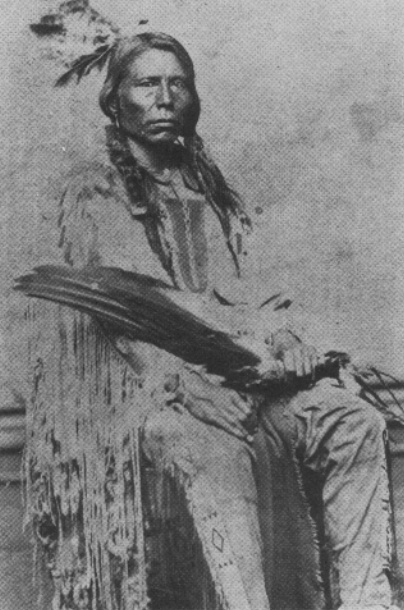
Historical grievances cut especially deep for White Plume, who is descended from the same tribal band as Crazy Horse, the famed 19th century Lakota warrior who helped wipe out General George Custer’s cavalry regiment at Little Big Horn. “When the settlers came and killed off all our buffalo, they wiped out an ecosystem that we depended on,” White Plume said. “And now they’re trying to bring dirty oil through our country.” He paused for a second, then began to laugh. When he finished the only sound came from the prairie wind.
Argentina to Wall Street: Latin American Social Movements and the Occupation of Everything
This article by Ben Dangl is re-posted from Common Dreams. Also, to further illustrate the historical context of this movement, check out the timeline of the People’s Global Actions.
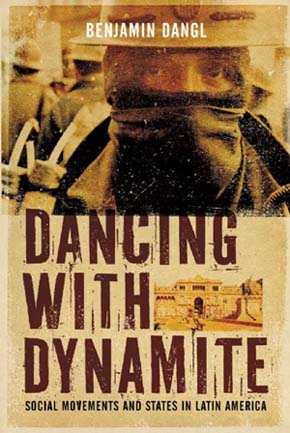 Massive buildings tower over Wall Street, making the sidewalks feel like valleys in an urban mountain range. The incense, drum beats and chants of Occupy Wall Street echo down New York City’s financial district from Liberty Plaza, where thousands of activists have converged to protest economic injustice and fight for a better world.
As unemployment and poverty in the US reaches record levels, the protest is catching on, with hundreds of parallel occupations sprouting up across the country. It was a similar disparity in economic and political power that led people to the streets in the Arab Spring, and in Wisconsin, Greece, Spain and London. Occupy Wall Street is part of this global revolt. This new movement in the US also shares much in common with uprisings in another part of the world: Latin America.
This report from Liberty Plaza connects tactics and philosophies surrounding the Occupy Wall Street movement with similar movements in Latin America, from the popular assemblies and occupation of factories during Argentina’s economic crisis in 2001-2002, to grassroots struggles for land in Brazil.
Latin America: Economic Crisis and Grassroots Responses
Almost overnight in late 2001, Argentina went from having one of the strongest economies in South America to one of the weakest. During this economic crash, the financial system collapsed like a house of cards and banks shut their doors. Faced with such immediate economic strife and unemployment, many Argentines banded together to create a new society out of the wreckage of the old. Poverty, homelessness, and unemployment were countered with barter systems, factory occupations, communally-run kitchens, and alternative currency. Neighborhood assemblies provided solidarity, support and vital spaces for discussion in communities across the country. Ongoing protests kicked out five presidents in two weeks, and the movements that emerged from this period transformed the social and political fabric of Argentina.
These activities reflect those taking place at Occupy Wall Street and in other actions around the US right now. Such events in Argentina and the US are marked by dissatisfaction with the political and economic system in the face of crisis, and involve people working together for solutions on a grassroots level. For many people in Argentina and the US, desperation pushed them toward taking matters into their own hands.
“We didn’t have any choice,” Manuel Rojas explained to me about the occupation of the ceramics factory he worked at outside the city of Mendoza, Argentina during the country’s crash. “If we didn’t take over the factory we would all be in the streets. The need to work pushed us to action.” This was one of hundreds of businesses that were taken over by workers facing unemployment during the Argentine crisis. After occupying these factories and businesses, many workers then ran them as cooperatives. They did so under the slogan, “Occupy, Resist, Produce,” a phrase borrowed from Brazil’s Landless Workers Movement (MST), which has settled hundreds of thousands of families on millions of acres of land through direct action.
In 2008 in Chicago, when hundreds of workers were laid off from the Republic Windows and Doors factory, they embraced similar direct action tactics used by their Argentine counterparts; they occupied the factory to demand the severance and vacation pay owed to them – and it worked. Mark Meinster, the international representative for United Electrical Workers, the union of the Republic workers, told me that the strategies applied by the workers specifically drew from Argentina. In deciding on labor tactics, “We drew on the Argentine factory occupations to the extent that they show that during an economic crisis, workers’ movements are afforded a wider array of tactical options,” Meinster said.
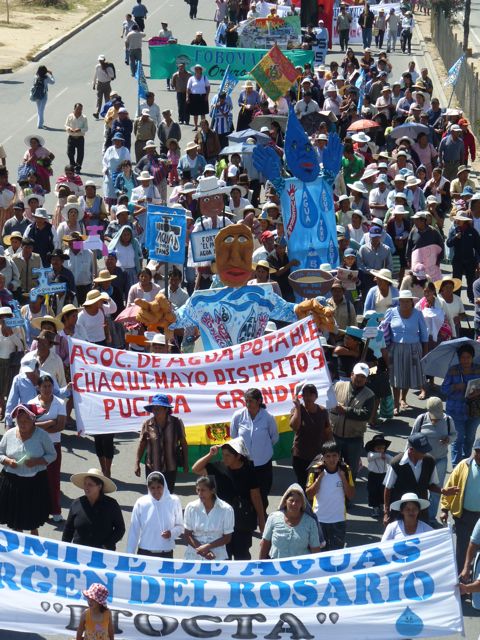
Many groups and movements based in the US have drawn from activists in the South. Besides the 2008 occupation of the Republic Windows and Doors factory in Chicago, movements for access to water in Detroit and Atlanta reflected strategies and struggles in Cochabamba, Bolivia, where in 2000, popular protests rejected the multinational company Bechtel’s water privatization plan and put the water back into public hands. The Take Back the Land movement in Florida, which organized homeless people to occupy a vacant lot and pairs homeless families with foreclosed homes, mirrors the tactics and philosophy of the landless movement in Brazil. Participatory budgeting in Brazil, which provides citizens with direct input on how city budgets are distributed, is now being implemented by communities across the US.
These are just a handful of movements and grassroots initiatives that provide helpful models (in both their victories and failures) for decentralizing political and economic power, and putting decision making into the hands of the people. In the face of corrupt banks, corporate greed and inept politicians, those occupying Wall Street and other spaces around the US have a lot on common with similar movements in Latin America. Besides sharing the same enemies within global banks, international lending institutions and multinational corporations, these movements have worked to make revolution a part of everyday life. And that is one of the most striking aspects of about what’s happening with the Occupy Wall Street movement right now.
Occupying Wall Street
The organization and activities filling Liberty Plaza in New York are part of a working community where everyone is taking care of each other and making decisions collectively. During a recent visit, a kitchen area in the center of the park was full of people preparing food for dinner with donated cooking supplies. Other spaces were designated for medical support, massage therapy, sign-making and meditation. One area was for the organization of recycling and garbage; people regularly walked around the park sweeping up debris and collecting garbage.
A massive People’s Library contained hundreds of books along the side of the park. As with the cooking, sign-making and medical supplies, the movement had received donated materials and support to keep these operations thriving. Occupy Wall Street also has its own newspaper, the Occupy Wall Street Journal, copies of which were being handed out in English and Spanish editions on nearly every corner of the park. A media center where various people sat around computers and cameras provided ongoing coverage of the occupation.
Within this community were pockets of areas with blue tarps and blankets where people were resting and sleeping, having meetings or simply holding home made signs on display. Singing, drumming, chanting, guitar and accordion playing were also going on in a wide array of places.
Ongoing meetings and assemblies, with hundreds to thousands of participants, dealt with issues ranging from how to organize space in the park and manage donated supplies, to discussions of march plans and demands. Police outlawed the use of megaphones, so people at the park have just been relaying what others say during these assemblies by repeating it through the layers of the crowd, creating an echo so everyone can hear what is said.
At the Comfort Station, where well-organized piles of clothes, blankets, pillows and coats were stacked, I spoke with Antonio Comfort, from New Jersey, who was working the station at the time. Antonio, who had his hat on backwards and spoke with me in between helping out other people, said that the donations of clothes and sleeping materials had been pouring in. People had also offered up their showers for activists participating in the occupation to use. While I was at the station someone asked for sleeping supplies for an older man, and Antonio disappeared into the Comfort Station piles and returned with an armful of blankets and a pillow.
“I’m here so I can have a better life, and so my kids can have a better life when they get older,” he said about his reasons for participating in the occupation. Everything at the station had been running smoothly, Antonio explained. “Everybody works together, and it’s very organized. We’ll be here as long as it takes.”
Adeline Benker, a 17-year-old student at Marlboro College in Vermont who was holding a sign that said, “Got Debt? You are the 99%,” told me that for her – like many other young students participating in the occupation in New York and elsewhere – it was all about debt. “I will be $100,000 in debt after I graduate from college, and I don’t think I should have the pay that for the rest of my life just to get an education in four years.” Benker said this was her very first protest, and her first time in New York City. When I spoke to her, she had been at the occupation for a few days, and would be returning the following week.
Down the sidewalk was activist Tirsa Costinianos with a sign that said, “We Are the 99%”. Costinianos said, “I want the big banks and the corporations to return our tax money from the bailout.” Costinianos had been at the occupation on Wall Street every weekend since it started on September 17th. “I love this and I’m glad we’re doing this. All of the 99% of the people should join us – then we could stop the stealing and the corruption going on here on Wall Street.”
Ibraheem Awadallah, another protester holding a sign that said “Wall Street Occupies Our Government: Occupy Wall Street”, told me, “The problem is this system in which the corporations have the biggest influence in politics in our country.”
These types of encounters and activities were happening constantly in the ongoing bustle of the park, and underscore the fact that this occupation, now nearly into its third week, is as much of a community and example of participatory democracy as it is a rapidly spreading protest.
As the late historian Howard Zinn said, it is important to “organize ourselves in such a way that means correspond to the ends, and to organize ourselves in such a way as to create the kind of human relationship that should exist in future society.” That is being developed now within this movement, from the leaderless, consensus-based assemblies, to the communal organization of the various food, media and medical services organized at the occupation.
Similarly, movements across Latin America, from farmer unions in the Paraguayan countryside to neighborhood councils in El Alto, Bolivia, mirror the type of society they would like to see in their everyday actions and movement-building.
As Adeline Benker, the 17-year-old student at the Wall Street occupation said, echoing the struggles from Argentina to the Andes and beyond, “We need to create a change outside of this system because the system is failing us.”
Dive! Living Off America’s Waste screening and panel discussion
DIVE! Living Off America’s Waste
Screening and Panel Discussion
Monday, Oct 17 at 6pm
Loosemore Auditorium,
Downtown Pew Campus , GVSU
Grand Valley State University is screening the documentary, Dive! Living off America’s Waste as part of the GVSU Campus Sustainability Week activities.
The film’s website says, “Inspired by a curiosity about our country’s careless habit of sending food straight to landfills, the multi award-winning documentary DIVE! follows filmmaker Jeremy Seifert and friends as they dumpster dive in the back alleys and gated garbage receptacles of Los Angeles’ supermarkets. In the process, they salvage thousands of dollars worth of good, edible food – resulting in an inspiring documentary that is equal parts entertainment, guerilla journalism and call to action.”
After the screening, there will be a panel discussion featuring Timothy Vatterott, the film’s composer and producer, as well as:
- Lisa Oliver King and Inez Adams, from Our Kitchen Table
- Elianna Bootzin of Feeding America West Michigan
- Emma Rosauer of Access of West Michigan
The screening is free and open to the public. Watch the trailer:
Naomi Klein: ‘The Stakes Are Too High for Us Not to Make the Absolute Most of This Moment’
This information is re-posted from Infoshop.org. You can download a pretty pdf of the zine at: http://www.autonomousappalachia.wordpress.com
Politicians

The beauty of the Occupy movement is that it is truly grassroots and people powered. It is horizontal, explicitly organized without leaders. It is our resistance as a collective body that gives us power. However there are those with intentions both good and bad that are always eager to co-opt and utilize effective social movements for their own purposes. Soon enough politicians and political parties (especially Democrats and yes even the Green Party) will be making promises that they alone can bring the change we want if only we give our allegiance, our money, and our vote to them. That is, they are asking us to cede our collective power in the streets so that they can pursue their private power from city hall to the White House. Already the headlines on many papers are talking about how Obama can use the Occupy movement to push his agenda. Lets be clear, the Occupy movement has nothing in common with the Democratic Party, they are just as beholden to Wall Street., militarism, and ecologically destructive practices as the Republicans. Nor are third parties the answer. Putting aside the fact that the electoral system is hopelessly rigged against them, why would we give up our collective, horizontal power to hierarchical, top down political parties in which we have little say? The occupy movement is creating something new, that is beyond the reach of political parties, lets keep it that way.
Police (the other 1%)
The Police might just be doing their job when they eventually evict us from the plaza, but they do in fact have a choice, just like we have a choice in whether to call in sick for work or not. A question we should ask is: If the Police really were part of the 99%, if they were really with us, then why would they evict us?
The Police help the banks evict us from our foreclosed homes everyday, but if they really were with us in this struggle-then why don’t they stop? This struggle against corporate greed requires people giving up roles (such as the police) that are needed to lubricate the nuts and bolts that keep the status quo. This would mean for them to not follow orders from their superiors, this would mean no longer being police.
The Police might be blue-collar or part of the “99%,” but they enforce the laws that keep the divide between the rich and the poor intact. The police are the protectors of the 1%. The police are the ones firing tear gas and rubber bullets whenever a demonstration gets out of hand. They are the ones who stand between every hungry person and the corporate grocery shelves stocked with food, between every homeless person and the buildings standing empty, between every immigrant and her family. The police are the ones who beat Occupy Wall St. protestors, who gunned down Sean Bell and Oscar Grant, and who murdered Fred Hampton in his bed. They are the ones who once enforced segregation in the United States and who back the bosses and the 1% in every labor strike.
The Police are an institution, that is an extension of the 1%, and are fundamentally and very concretely in the way of what we really want-the end of a society based on class divisions. The downtown police officers might be the nicest people in the world, but they will still be the ones evicting us from the park. They are still part of that same extension.
This means they’re not to be trusted by any of us involved in the occupation.
Dogmatic Nonviolence
Tunisia and Egypt are commonly cited as one of the main inspirations for the Occupy movement. Indeed these revolutions were inspiring to many around the world. However they have been mystifyingly portrayed as “nonviolent” revolutions. This could not be further from the truth. A quick survey of news reports show that while protestors for the most part remained unarmed (as in guns), these were far from nonviolent revolutions. These revolutions utilized a wide range of tactics including many peaceful occupations and marches. But, when necessary, people regularly defended themselves from police and pro-government thugs with burning barricades, rocks, and clubs. Police stations were burned, government offices were ransacked, cop cars overturned. These actions were taken out of a combination of rage at a corrupt system as well as a necessity to defend oneself, and in the end it worked.
So why do we bring this up? With little debate the Occupy movement has adopted a stance of nonviolence while at the same time holding up two, oftentimes violent, revolutions as its main inspiration. On the surface this is simply hypocritical, but it also brings up an important question. Is dogmatic adherence to nonviolence in our best interest as a movement?
We are not interested in perpetuating the violence/nonviolence dichotomy. Nonviolent tactics and more militant ones both have their strengths and weaknesses. We should choose our tactics based on effectiveness, not religious adherence to nonviolence nor fetishization of violence. Just as the people of Egypt at times had to resort to self defense and property destruction to achieve there goals, there may be a time in which the Occupy movement finds it to be strategic to use these tactics as well. And we should be ready to support them. It might be that some people have been beaten down so many times, their rage bottled up for so long that they topple a police barricade, or fight back when the police try to tear down our tents, or break out the windows at a bank. And we should support them, for their rage is real and just. That day might be a month from now, a year from now, or it might be this very moment.
The Occupy movement should wholeheartedly embrace a diversity of tactics from peaceful sit-ins to self defense against police attacks and economic sabotage. That does not mean that we use all of those tactics or that everyone has to agree with them, but at the very least we should be willing to not denounce each other in the media or cooperate with the police over differences in tactics.
Reform
The bane of every uprising is reform. The root of the problems that we are rising up against is this ruthless, exploitive, ecologically destructive economic system known as capitalism. Taxing the richest 1%, regulating Wall St, or ending corporate bailouts might free up a little more money for social programs and stop some of the worst abuses of the banks. But these band-aid reforms will not change the fact that those who produce the wealth for the rich, the working class, remain so poor that they must wait in line at DSS for food stamps or the Salvation Army for some warm clothes and a bowl of soup. It will not change the fact that corporations kill people for profit every day through unsafe work conditions, poisoned water, and polluted air.
The allure of reform is tempting. It is so much easier to patch up the cracks in the pillars of this system rather than tearing it all down to the ground. Reform can be presented in nice, pre-packaged form, ready made to be carried through the halls of Congress by politicians who will throw us a bone just big enough to stave off our hunger for true freedom until another day. A bone just big enough to keep us biting at their ankles rather than going for the jugular.
How do we get beyond reform, to truly overthrowing this system? To be honest there is no One Big Plan or blueprint for getting there. It is up to us to figure that out together in our communities, at our daily general assemblies, amongst our co-workers, and in our affinity groups. The horizontal, directly democratic (dare we say anarchistic? Oh my!) structure of the general assemblies is a good start. The question is how do we utilize the general assembly to get beyond making demands and begin creating autonomous communities. How do we in a collective manner continue to mount effective resistance while finding ways to provide for our basic needs outside of the capitalist economy? These processes take time. Let the politicians do what they will, our power is in the streets and the only way we have a chance at a world worth living is if we keep it there. Let the politicians go the way of the dinosaurs.
Stagnation
One of the greatest threats to the Occupy movement comes from within. Stagnation. If we get stuck in ruts, doing the same thing day in and day out, this vibrant uprising will become little more than a stale ritual. We must remain a dynamic force, constantly trying new approaches, pushing new boundaries, and escalating our tactics. The daily general assemblies and marches are great for now, but they alone can only maintain the movement’s energy and effectiveness for so long. At some point they will become the normal, a habit.
We must Experiment, Evolve, Escalate!
What else might we do? Disrupt a bank, project subversive movies on the sides of downtown buildings, squat foreclosed houses, organize student walkouts and work stoppages, take over a vacant lot for a garden, evict a developer’s office, provide free classes and skillshares, free healthcare, free clothing, free food and other acts of mutual aid. We need to think beyond just the act of occupation and realize the possibilities of what we can do with the liberated spaces we occupy.
 Grand Rapids Institute for Information Democracy