This Day in Resistance History: The Asking Day Model

In only a couple weeks, we’ll be face to face with Black Friday: the day after Thanksgiving, America’s tribute to the temples of capitalism. This year, as hordes of bargain-hunters fill corporate coffers, think about an alternative model. Think about Asking Day.
November 14 marks the Asking Day Festival in the Inuit culture. It’s the first of a string of winter festivals that encourage the Inuit people to celebrate their season of leisure and plenty after the long summer of hunting and food preservation. This first and most important festival underscores a basic tenet of the Nation: possessions belong to everyone.
The Inuit believe that everything on earth has inua, or a soul. Places, people, animals, and objects all have souls. But the Inuit Nation also believes that no one person can truly possess an object. The only “things” an individual truly owns are the dreams he or she has, the healing songs passed down through a family, and the stories that a person tells. Each tool, item of food, article of clothing, and work of art does not have only one owner. It must find its way to the person who needs it the most.

Inuit communities are essentially collectives, where everything belongs to the group and not to individuals. Although early White anthropologists formulated some pretty outlandish theories about the festival’s focus, Asking Day is intended to celebrate this life of communal property.
On the evening before the festival, the children of the village go from house to house and ask to be given food. They bring the food back to a central kitchen where it is used to cook the Asking Day feast.
On the day of the festival, each person in the village asks someone else to give up an object. They begin by asking for possessions which have the most value. No one may refuse a request. It is considered wise to ask for an item that you really need, and an honor to give such an object up. The goal, by the end of the day, is to see that most of the community’s possessions have changed hands.
The Inuit believe that it adds heaviness to the soul to own things that one cannot use. By evening, everyone’s burden is lightened. Each person has found what he or she needs and possessions have been redistributed to reflect that. The community feasts on shared food and dances to celebrate.
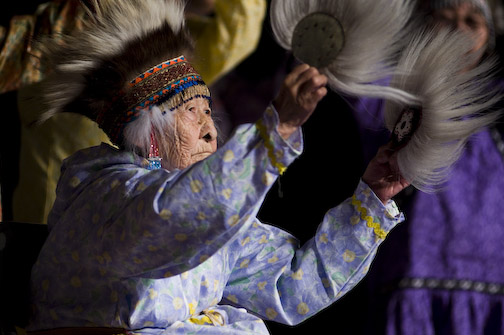
In dealing with the outside world, the Inuit have been forced to work on a cash basis to sell their furs and their art. But within their own communities, the culture is still heavily founded on the idea of sharing freely to meet everyone’s needs.
So as we hear on the news about Black Friday…complete with news footage of people being trampled underfoot as crowds race for Early Bird specials…with cash registers ringing up sale after sale…with gloating merchants announcing their one-day sales totals…the Inuit Asking Festival is a road map leading in another direction.
Buy Nothing Day has become a popular activist alternative to Black Friday’s consumer glut. Events such as Really Really Free Markets offer the chance to put possessions we don’t use into the hands of people who really need them. Individual barters and swaps of services, food, and possessions is another way to fulfill community needs without buying new merchandise from the corporate elite. Community gardens and food justice programs help us grow and exchange food and share seeds.
We can lighten the burdens of others by helping meet their needs. And we can lighten our own lives at the same time by starving the capitalist system of its fuel and its power.
Moving money revisited
This article is re-posted from Left Business Observer.
Along with the Occupy Wall Street movement has grown up a Move Our Money campaign, pushed by a group calling itself the New Bottom Line. It takes off from a brainchild of that great exploiter of unpaid journalistic labor at her eponymous Post, Arianna Huffington. Ariana’s scheme, launched almost two years ago, would have those of us with money in large banks move it to small ones. This touches on foundational populist fantasy: that virtue and size are inversely related.
When Huffington unveiled her scheme, I took advantage of the gadget on her website (the Move Your Money Project) that allowed you to enter your zip code and came back with a suggested list of virtuous, meaning small, banks. I thought I’d look into some of the suggestions that emerged when I entered by home zipcode, 11238. One, the black-owned Carver Federal Savings Bank, is a major financer of the gentrification of predominantly black neighborhoods in Brooklyn and Queens. As those neighborhoods get richer, Carver boasts, it’s partnering with Merrill Lynch (a subsidiary of the Bank of America) to offer wealth management services to the flusher new residents. Another suggestion, Apple Savings Bank, has about three-quarters of its assets in securities like U.S. Treasury bonds, not local loans. They don’t come much bigger than the U.S. Treasury. And a third, New York Community Bank, which even features that precious word in its name, financed a private equity group that bought up a lot of apartment buildings in New York in the hope of squeezing out the rent-regulated tenants and replacing them with more lucrative ones paying market rents. With the real estate bust, the PE firm is having trouble servicing its debts, and the residents of its buildings are suffering as services are cut further.
There’s a fundamental problem with these small-is-beautiful schemes. One, many small banks have more money than they can profitably invest locally. As Barbara Garson showed in her wonderful book, Money Makes the World Go Around, the portion of her book advance she deposited in tiny upstate New York bank was probably lent via the fed funds market to Chase, where it entered the global circuit of capital. This is not at all uncommon. Money is fungible, protean, and highly mobile even when it looks locally rooted. That very mutability is part of what makes money so valuable: it’s the ideal form of general wealth that can instantly be turned into caviar, lodging, Swedish massage, erotic massage, or shares of Google.
The New Bottom Line people are pushing credit unions along with small banks. Many credit unions are fine little enterprises. But they too have the more money than they know what to do with problem. According to the Federal Reserve’s flow of funds accounts, 58% of their assets are in individual loans, mostly for cars and houses. The balance is invested in bank deposits and bonds. The bonds are Treasury and federal agency securities. Again, anything but small and local. And should they get an influx of money, it’s highly likely that most of it will go to these sorts of bonds. In fact, , more than half the growth in credit union assets over the last three years has gone into Treasury and federal agency securities. Less than a quarter went to mortgage loans, and consumer credit (like credit cards and auto loans) have actually declined. There’s no way they could accommodate even a small fraction of our near-$8 trillion in bank deposits without turning to bigtime securities or Merrill Lynch wealth management services.
Getting banks under control is a matter of politics, not individual portfolio allocation decisions. Sure, you may get friendlier service and lower fees from a credit union—but you’re not really doing anything politically transformative by moving the money. Move your money and it’s still money.
New Media We Recommend
Below is a list of new materials that we have read/watched in recent weeks. The comments are not a “review” of the material, instead sort of an endorsement of ideas and investigations that can provide solid analysis and even inspiration in the struggle for change. All these items are available at The Bloom Collective, so check them out and stimulate your mind.

Food Sovereignty: Reconnecting Food, Nature and Community, edited by Hannah Wittman, Annette Aurelie Desmarais and Nettie Wiebe – This collection of essays is an important contribution to the growing awareness about our food system. The authors present a compelling case for the idea of food sovereignty, where communities would have complete say in the kind of food system they want. The other important aspect of the book is the articulation of what food sovereignty would mean for communities around the world and what groups like Via Campesina are actually doing about it. Food Sovereignty is an important resource for anyone who cares about a truly sustainable food system for the future.

On History: Tariq Ali and Oliver Stone in Conversation – Anyone who has come to know the writings of Tariq Ali, knows what a treat they are in for. In this series of interviews, famed film director Oliver Stone talks with radical historian Tariq Ali about topics such as WWI, WWII, the former Soviet Union, post-colonialism, US blowback and what Tariq refers to as “the revenge of history.” The book is only 105-pages, but it packs a lot of information and insight into the importance of understanding history and its significance for today. On History is a delightful read and a welcomed contribution to a radical critique of history.

Gender Outlaws: The Next Generation, by Kate Bornstein & S. Bear Bergman – In a fabulous sequel to her first book Gender Outlaw, Bornstein and co-editor Bergman provide readers with dozens of essays that both challenge and expand our notion of gender and identity. Many of the book’s contributors identify as transgender, but this collection of essays cannot be simply put in that category. The stories, information and analysis provided in the contributions of people of all ages, races and experiences was riveting and at times confusing to someone who has always identified as heterosexual. However, this writer found the book challenging and enlightening not only in how I self-identify, but how the dominant institutions label people. Gender Outlaws is an important contribution to a growing understanding of gender identity and gender justice.
Just Do It: A Tale of Modern-Day Outlaws (DVD) – Just Do It lifts the lid on climate activism and the daring troublemakers who have crossed the line to become modern-day outlaws. Documented over a year, Emily James’ film follows activists in England as they blockade factories, attack coal power stations and glue themselves to the trading floors of international banks despite the very real threat of arrest. The film is both inspirational and instructive of the kinds of direct action tactics people can use to challenge capitalism and corporate power. Just Do It demonstrates that there are plenty of people willing to take risks and engage in a type of organizing that is outside of the acceptable means of the State.
Thank Obama for the Occupy Wall Street Movement
This article by Glen Ford is re-posted from Black Agenda Report. 
There is no particular political genius to the Occupy Wall Street movement, no soaring, searing vision that sets the world afire in some new and different way. When it comes to political analysis, much of what emanates from the swirl of activity is no more than soggy old left-liberal reformism that only feels more dynamic when wrapped in a youthful, “movement” package. And yet it is the most promising mass U.S. phenomenon in more than forty years. Why, and why now?
The power of the movement derives from the inexorable logic of its animating slogans. It is, at root, opposed to the rule of finance capital – although even the word “capital” is repugnant to some participants who believe themselves to be engaged in a spiritual quest far beyond the parameters of political economy. Nevertheless it is a fact that opposition to the rule of finance capital – to Wall Street – is opposition to capitalism as it actually exists in the here and now. Judging by the ballooning of the movement and the demeanor of its troops, opposition to capitalism as it actually exists turns out to be an exquisitely exhilarating and fulfilling activity, whether those so engaged consider themselves socialists or not.
The anti-Wall Street slogans and rhetoric have their own logic and dynamic that should – in struggle and over time – push aside left-liberal pabulum and weak reformist nostrums that cannot possibly even begin to contain, much less defeat, the hegemonic power of massed capital.
It did not take genius to identify the rule of finance capital as the common enemy of humankind. Millions, if not billions, have already come to that conclusion, and the inevitable trajectory of capital was predicted and plotted long ago. But the United States, a nation conceived as a white man’s empire and singularly dedicated to the project of business, confronts the 21st century as a political-cultural desert, a place where May Day is largely unknown, supplanted by a Labor Day four months removed on the calendar and eons away in class content. The centrality of racial oppression has so distorted relationships of class that the very language is impoverished and popular political discussion, infantilized.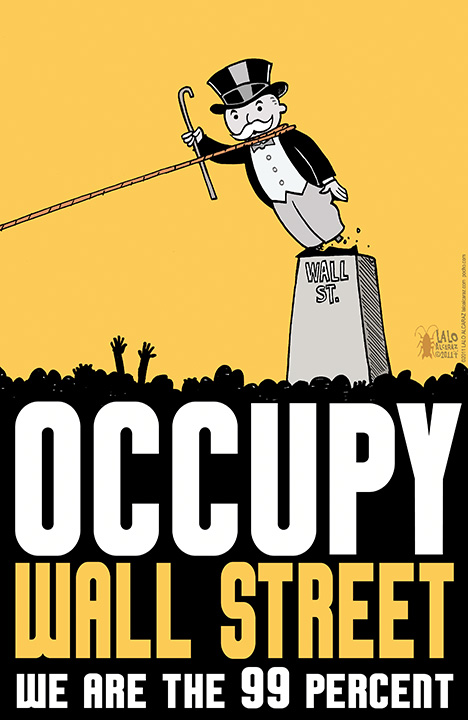
Thus, we in the U.S. are relegated to working our way through the logic of slogans that are broadly informed by a reality that is everywhere manifest, but only stiltedly articulated. But that’s the political culture we’ve got, and the OWS slogans do point, inexorably, to confrontation with The Hegemon: the Lords of Capital, their servants and institutions.
The brilliance – if not genius – of the movement, is in the evocation of “occupation” when coupled with the address of the enemy, Wall Street. To many of the participants, “Occupy Wall Street” signifies the elevation of human needs and values over Wall Street profits – a laudable, though amorphous, goal. But to “occupy” the enemy’s camp is to grapple with him for physical and/or political space. Inevitably, that means a struggle whose outcome can only be measured in terms of power. In this arena, left-liberal nostrums of tinkering and accommodation with fundamental evils must fail – and will be seen as inadequate to the struggle, early on.
The imperative to “occupy” space means the movement is constantly challenged to find new arenas to manifest itself, whether or not the original occupation sites are lost. It is a promise to the people that the movement intends to be permanent, a commitment to provide a focus for expanding spaces of struggle. That is the new and dynamic element that has intruded upon the national psyche, and has so energized and inspired previously existing Left political forces. It is the promise – the possibility – of a popular, activist movement that is, for practical purposes, as permanent as the presence of the enemy: Wall Street.
The cumbersome horizontal mechanisms of the Occupy movement are, in practice, a prophylactic against co-optation by the Democratic Party – a greater danger than the police. To put it bluntly, OWS practice makes it difficult for the movement to make a “deal” with Wall Street’s minions in the Democratic Party and like-minded circles, even if the weaker reformers in the ranks wanted to – which many do, judging by some of the proposals swirling around the milieu.
The movement’s machinery has also stifled radicals in some locations, but it does not prevent them from functioning outside of and in close collaboration with OWS elements. That’s because there is no OWS “franchise” that must be bought into; if there were, then OWS would become its own opposite – a limiting structure in a movement whose central purpose is to constantly expand against the hegemonic power of massed capital.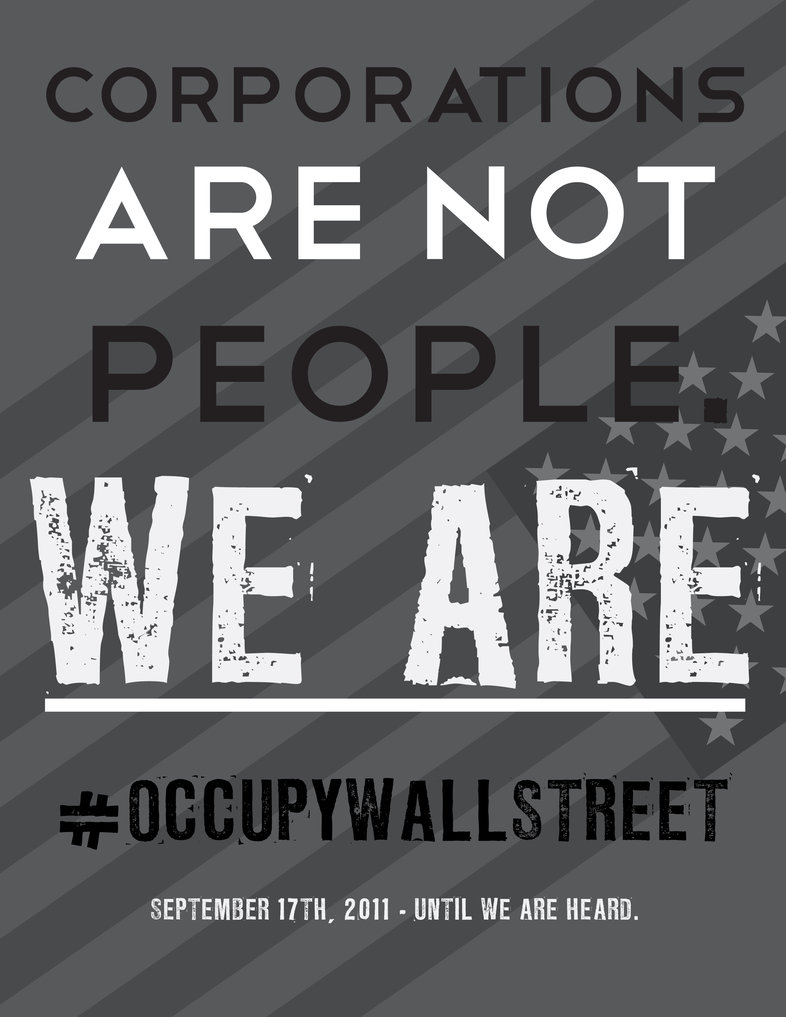
The movement has had dramatic effect in Black America. By virtue of its whiteness, the OWS has been allowed to exercise citizenship rights that have been effectively denied to African Americans in their militarized communities. A Black-occupied Zuccotti Park, or Freedom Plaza in Washington, DC, or any of the other occupation sites, is unthinkable under the New Jim Crow. It would invite massacre, as virtually every African American knows. White privilege – in this case, the privilege not to be summarily shot or beaten to a pulp en masse when confronting authority – has been on televised display for the past six weeks. Black perceptions of the spectacle were mixed. There was, of course, deep resentment of the ease with which young white kids from “wherever” could flaunt petty public assembly laws and, for the most part, get away with it, while Black youth are routinely accosted, humiliated and falsely imprisoned by police while simply walking or standing in their own neighborhoods. Black activists who have labored for decades in the urban trenches recoiled at the media exposure garnered by even relatively small groups of white OWSers at their downtown encampments.
But, there is another side of the racist coin. The mostly white OWS movement had, in a sense, legitimized civil disobedience and confrontation with the cops in the current era – an opening that could be exploited. And, if the cameras followed the white people like drones on the kill, then Black outfits should take advantage of the new publicity. After all, African American audiences get most of their information from the same corporate media as whites. If white people could take over a city site and proclaim themselves the Occupation, why not “occupy” Black neighborhoods? In a matter of weeks, Occupy the Hoods proliferated, quite often generating more neighborhood organizing activity than had previously existed, and this time with the cameras rolling.
To the extent that it collaborates with people of color within and outside the OWS, the mostly white movement gains legitimacy among those with the greatest (objective) stake in toppling Wall Street. Without such legitimacy, it is doomed, and no amount of white privilege will save it.
It is doubtful that there would have been an Occupy Wall Street phenomenon, as we have experienced it, if President Obama had not lost his last stitch of emperors clothes this past spring and summer. His abject subservience to the “market’s” (Wall Street’s) demands that the budget deficit take priority over human needs – a logic that would necessitate the gutting of virtually every social program of the New Deal and the Great Society, including Social Security – broke the heart of every left-liberal Obamite, and every Black person that was not still drunk on ObamaL’aid. His 2008 activist base watched as Obama pleaded with Republicans to accept his $4 trillion budget cut “Grand Bargain” that would roll back a lifetime of social safety nets. The “progressive’s” champion became the star in their nightmare. This is what their votes had bought them: a total disaster.
And then the OWS folks gave them a movement.
In that sense, we should thank Obama for shattering the illusion that a Black corporate Democrat with better snake oil-selling skills than Bill Clinton can be anything but a more efficient facilitator of Wall Street’s all-consuming, world-killing agenda. However, this unintended favor is nothing compared to the catastrophic harm Obama’s ascent has wreaked on Black politics. The advent of the First Black President has politically neutralized Black America, the most progressive constituency in the nation – despite the fact that Obama opposes every element of the historical Black political consensus on peace and social justice. The opening that OWS has created for movement politics comes not a moment too soon for African Americans, the group most in need of a movement, and with the deepest historical experience in movement building.

The local organization Healing Children of Conflict (HCC), which earlier this year brought a young Iraqi boy to West Michigan for medical treatment, is hosting a film next week on the Israeli/Palestinian conflict.
The film Budrus will be screened at Calvin College on Tuesday, November 15 – 7:00PM. Budrus is a powerful film, which demonstrates how effective collective non-violence can be against repression.
“Budrus is an award-winning feature documentary film about a Palestinian community organizer, Ayed Morrar, who unites local Fatah and Hamas members along with Israeli supporters in an unarmed movement to save his village of Budrus from destruction by Israel’s Separation Barrier. Success eludes them until his 15-year-old daughter, Iltezam, launches a women’s contingent that quickly moves to the front lines. Struggling side by side, father and daughter unleash an inspiring, yet little-known, movement in the Occupied Palestinian Territories that is still gaining ground today. In an action-filled documentary chronicling this movement from its infancy, Budrus shines a light on people who choose nonviolence to confront a threat.”
Healing Children of Conflict screening of Budrus
Tuesday, November 15
7:00PM
Calvin College – Bytwerk Theater/DeVos Center
This film showing is free and open to all. A discussion about the film and the work of HCC will follow the film screening.
Grand Rapids LGBT History: Community Relations Commission & Inclusion
As we have shared with you over the past several weeks the ordinance, which included the language “gender orientation,” was finally adopted in Grand Rapids in 1994.
This ordinance language was first approved by the Grand Rapids Community Relations Commission (CRC) years before the ordinance was adopted in 1994.
However, what is not as widely known is that beginning in 1994, members of The Lesbian and Gay Network of West Michigan began submitting their names to be on the Community Relations Commission in Grand Rapids.
According to a Network News article from 1995, Network Secretary Phil Duran had applied to be a member of the Community Relations Commission in 1994, “but was turned away as the Commission was at that time seeking to replace their departing Jewish representative, without whom their was little religious diversity.”
The article goes on to say:
“In 1995, after learning that yet another opening had occurred, and was filled by a White woman whose main attribute was living on the Westside, Duran submitted another application, and sent a copy to Equal Opportunity Officer Ingrid Scott – Weekley. Additionally, he and Network President Mary Banghart made a concerted effort to attend each CRC meeting for the rest of 1995.”
Towards the end of 1995, another member of the CRC stepped down and members of the Network had hoped that their applicants would finally be included on the Commission. However, Ingrid Scott – Weekley decided that the Commission lacked representation from the Native American community and again the LGBT community was overlooked.
So it seems that even though the Community Relations Commission had supported language to protect against discrimination of the LGBT community in the early 1990s, that government body did not practice what it preached.
It is worth noting that the Community Relations Commission in Grand Rapids now has representation from the LGBT community, but like the tactic of The Network in 1995, it might be a useful practice for people to attend those meetings just to have extra eyes on monitoring what the CRC is doing.
It is also important that we are familiar with the stated purpose of the Community Relations Commissions, what the ordinance language actually states and how one can file a complaint if discrimination occurs.
The issue of the battle for an LGBT inclusive ordinance in Grand Rapids is one of the chapters of the People’s History of the LGBTQ Community in Grand Rapids film that will premier next Thursday, November 17 at 6:30PM in the Loosemore Auditorium at the GVSU downtown campus. This event is free and open to everyone.
Presidential Candidate Fundraising in Michigan
This article is re-posted from Opensecrets.org.
Southeastern Michigan was the setting for the latest GOP presidential debate Wednesday night. The state’s significance as the symbolic center of the American auto industry and as an epicenter of a sluggish economic recovery were lost on no one, as the candidates debated bailouts to American car manufacturers and the economy at length.
Though a Republican presidential candidate hasn’t won Michigan since 1988, residents’ political contributions indicate the state could turn red in the 2012 elections. According to research by the Center for Responsive Politics, Michigan residents contributing $200 or more have given about 60 percent of their contributions to Republicans this election cycle, much of it to one candidate: former Massachusetts Gov. Mitt Romney.
Romney, who was born and raised in Michigan and whose father also served as governor of the state, has so far received $1 million from Michigan residents. President Barack Obama, meanwhile, has raised about $600,000 from such donors in Michigan. Combined, the two candidates have raised significantly more than the other presidential hopefuls.
Detroit and it’s surrounding suburbs — ever the heart of the American auto industry — has favored Republicans in 2011, having given them 65 percent of their contributions, including $868,000 to Romney thus far.
Detroit-based car companies Ford and General Motors have also preferred Republicans with their political contributions this cycle, while prominent labor unions such as the United Transportation Union have been heavily Democratic in their donations in 2011.
Meet Kellogg’s Sludge Puppet
This article by Rebekah Wilce is re-posted from PRwatch.org.

A new puppet’s in town! His name is Karden, and according to his PR, he shows kids how much fun gardening can be. What parents and teachers aren’t told is that he is actually a marketing tool for sewage sludge merchant Kellogg Garden Products.
Books featuring Karden, available at common bookstores, and an “Idea Factory” website devoted to him, are full of gardening activities for parents and teachers to do with their kids. Karden throws free kids’ gardening events at bookstores and hardware stores.
Lisa Ely, one of the two creators of the character, is listed on a gardening website about “Karden’s Corner” as “an award-winning television producer and owner of one the newest production companies in Los Angeles focused on documentary television.” But while she has, indeed, produced such reality TV shows as CBS’s “The Amazing Race,” Discovery Channel’s “Verminators,” and TLC’s “America’s Ugliest,” Ely’s Facebook page lists no production company. Instead, it lists Kellogg as her employer:

While Ely was busy producing TV shows about what creepy-crawlies are “grossest,” and featuring “gnarly infestations,” her latest employer, Kellogg, was busy buying concentrated sewage sludge from municipalities like Los Angeles, via its “Inland Empire Regional Composting Authority,” and repackaging and greenwashing it as “compost.” Kellogg has been in the sludge slinging business since 1925.

Sewage sludge contains toxic and hazardous materials, including large numbers of endocrine disruptors and several heavy metals, along with carcinogenic flame retardants, pharmaceutical residues, phthalates, industrial solvents, resistant pathogens, and perfluorinated compounds, which can bioaccumulate in gardens and in the human body.
A recent test of Kellogg’s Amend and Nitrohumus found high levels of cancer-causing dioxins.
“If the ingredients aren’t listed, you may want to look at buying a different bag.”
One of the suggested kids’ activities in Karden’s “Idea Factory” is choosing bagged potting soil. Karden, who’s supposed to have just toured “Kellogg’s soil factory,” says he “learned that when shopping for potting soil, the most important thing you can do is look for a bag that lists quality ingredients and gives a satisfaction guarantee. The ingredients should be listed on the bags of soil you’re buying, almost like the food you buy from the grocery store. If the ingredients aren’t listed, you may want to look at buying a different bag.”
Although Kellogg’s “Amend” product, as pictured on the kids’ activity page, sports a list of ingredients, it does not list sewage sludge or even the sludge industry’s Orwellian PR euphemism, “biosolids.” It does list “compost.”
One must look on Kellogg’s website, rather than its packages, to find what is meant by “compost”:
“Compost from biosolids … comes from wastewater treatment plants in different communities throughout the U.S. (Our compost comes mostly from the Inland Empire.) You might find it in our Amend, Gromulch, or Topper products — depending on where they’re bagged. And this type of compost is always in bags of Nitrohumus.”
What parent, with kids in tow, would put a bag of fertilizer that says it contains something as innocuous-sounding as “compost” back on the shelf until they can go home and look up Kellogg’s definition tucked away on the web?
Sludge Obstacles
Another activity in Karden’s “Idea Factory” is setting up and playing in an “obstacle course” made of Kellogg products, including Amend and Topper, made from industrial and human sewage sludge.
More Children Gardening in Sludge
Karden’s Corner, Kellogg and Lowe’s sponsored a school garden design contest earlier this year. The winner was a young student at Joseph Sims Elementary School in Elk Grove, CA.
Kellogg’s contribution came in the form of — what else? — a “soil donation” to the school.
As we’ve reported, Kellogg has contributed the products it sells, many of which contain “biosolids,” to at least thirteen schools in the Los Angeles area and to a rooftop community garden on skid row.
As for Karden, you may find him at a garden store near you, greenwashing the idea of kids gardening in sewage sludge. Parents may want to beware of Kellogg’s puppets bearing “gifts” made of contaminated industrial waste.
Redefining Veteran’s Day
This article by Jared Ball is re-posted from Black Agenda Report.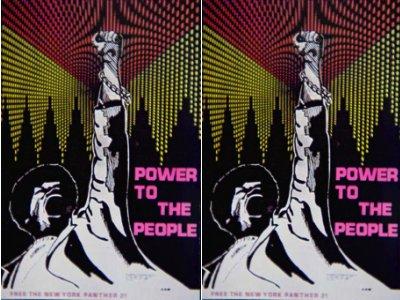
I am officially a veteran. Like many I was conscripted by this country’s “poverty draft” and its associated judicial-military pipeline, the one that encourages military time over jail time, and then immediately pressed into service of this nation’s imperial projects. And while I recognize this reality and can still appreciate the position in which people like me have found themselves and the suffering some have endured for it, I prefer we praise another kind of veteran. On November 11th let us commemorate those who have fought, and still fight, those who have been exiled, assassinated or imprisoned as veterans of the many on-going wars against U.S. and Western imperialism. More than any they deserve our reflection and support.
Veteran’s Day began as “Armistice Day,” commemorating the end of what we now call World War I, what was called then the “war to end all wars.” But rabid empires can only expand. There can never be an armistice. So after a second so-called World War they simply dropped the “Armistice” and made it about the oh-so-many veterans that would be created and re-created by the permanency of war. This permanence of the nation’s war machine is evident in the permanence of this nation’s thirst for war. Simply interlace lists of American wars against Europe between 1776 and the massacre at Wounded Knee in 1890 which “settled” the matter of control over this land with lists of American invasions into every pocket of Latin America and the Caribbean from then until now. Then add the lists of repression of hundreds of African uprisings against enslavement and the domestic policing of internally-held colonies and suppression of labor organizers and you won’t find a 10 year period in this country’s history when it wasn’t at war. And all of this warfare creates veterans on all sides.
In the U.S. alone we currently have dozens of political prisoners still incarcerated for their veteran participation in these wars. We certainly have thousands more here and around the globe who have, in some form of solidarity, been engaged in anti-imperial, counter-terrorism but whose names and stories we don’t know and whose political legacy we have not carried on. Perhaps an aggressive attempt to redefine the state’s propaganda could help. Power over definition is essential. This is why Nat Turner and his compatriots were once described as “insurgent[s]” as are those fighting today against the U.S. in Iraq, Afghanistan and elsewhere. And it is also why, more than a century after Nat Turner, this same concept, applied to his political descendants, resulted in the FBI’s Counter Intelligence Program (COINTELPRO) application of “counter-insurgency” tactics against domestic targets. Malcolm X did say that, “the police do locally what the military does internationally.”
This, of course, is not mere semantics. Those we know as political prisoners are indeed veteran prisoners of war. These POWs, as former Black Liberation Army member and current political prisoner Jalil Muntaqim has explained, come from the Black, Indigenous and Latin American “nations” held in “domestic (neo) colonialism.” They, along with those oppressed along class lines, are “all fighting wars of national liberation, seeking independence and sovereignty from capitalist exploitation.” In fact, during the sentencing for Muntaqim, Albert ‘Nuh’ (Noah) Washington and Herman Bell, all members of the Black Liberation Army, the judge said as much, that if these are prisoners of war then they should see themselves as having been “captured by the enemy.” And so our commemoration of a Veteran’s Day should incorporate work to free our prisoners of war and to finally force this country into an armistice. This is the least we can do.
So as symbolism goes it is indeed fitting then that this year Veteran’s Day coincides with the release of Clint Eastwood’s J. Edgar, a film that is already said to be little more than praise to a “brilliant patriot” who was merely an “impediment to the civil rights movement” and who may have been gay. Yes, Veteran’s Day and J. Edgar, one praises those who do internationally what the other did domestically.
Bloom Collective hosts discussion on the role of museums in perpetuating oppression and elite values
This Saturday, the Bloom Collective is hosting a potluck/discussion on the role that places like the Grand Rapids Public Museum, Fred Meijer Gardens and Gerald R. Ford Presidential Museum in perpetuating oppression and favoring the elite through their choice of exhibits and their portrayal of history.
The Bloom Collective promotion for this event says, “Bring a dish to pass as we discover what motivates these institutions choices around what they teach us… and what they don’t.”
Bloom Collective Potluck/discussion
Saturday, November 12
1 – 3pm
671 Davis NW, Grand Rapids
Also see the Facebook event page.
 Grand Rapids Institute for Information Democracy