Global Corporations admit they are killing the planet

Today, in an unprecedented move, the top global multinational corporations announced that they have finally come to the realization that their continued existence, an existence based upon constant growth and profits is incompatible with a truly sustainable future for the planet.
The World Bank and the International Monetary Fund corroborated this message and vowed to shift their emphasis from creating global markets to letting local communities determine their own economic future. In addition, the World Bank and IMF have decided to eliminate the debt owed by smaller countries, since they now are acknowledging that these countries have not contributed to global environmental destruction or global warming like the major industry nations of the world such as the US, England, France, China and Russia.
April Fools!
Unfortunately, this is not the announcement that the world is likely to see, yet there is a growing global awareness and resistance to the continuation of an economic system which values profits over people and all life on this planet.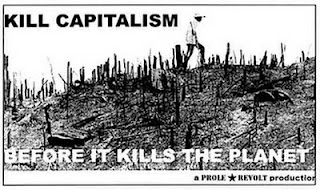
We are all aware of the environmental problems we face in deforestation, mining, the burning of fossil fuels, the destruction of oceans, rivers and lakes, species extinction, factory farming and militarism. The economic and political system that most humans are subjected to means we are at war with the planet.
However, we believe that most people want to live in harmony with each other and with the planet. We believe that people want to live lives that are fundamentally different that the debt-ridden drudgery of what the current economic system has to offer in the form of jobs.
We believe that we don’t need corporations or the capitalist economic system, which is the root of our current ecological crisis. We believe that through cooperation, mutual aid and a radical redistribution of wealth that humans can live in harmony with the earth and live more fully human lives.
Today, on April Fools Day, we are announcing the unveiling of a collective effort to both resist the current system and to create truly sustainable communities.
First, we are promoting mutual aid, sharing and the beginnings of liberation from the for-profit system with our online barter project called MutualAidGR.org. At this site people can share resources and skills to get some basic needs met without having to spend money. People can learn to be more independent and build community by sharing themselves and their skills.
Second, we are announcing that we will be hosting a People’s Assembly on Radical Sustainability that will take place on Saturday, April 21st, from 11 – 3 at Trinity United Methodist Church, located at 1100 Lake Dr. in Grand Rapids. At this assembly we will collectively discuss what kind of world we want to live in and what actions are needed to get there. We will also unveil a guide to a truly radical GR, a document we think will provide some concrete actions to take and an analysis that demonstrates why we need to make a radical shift in the kind of system we need to live healthy lives.
This media release was produced by the people organizing the People’s Assembly for Radical Sustainability.
Alpine Township’s Oil & Gas Meeting: the Landmen are Coming!
This article was written by Maryann Lesert.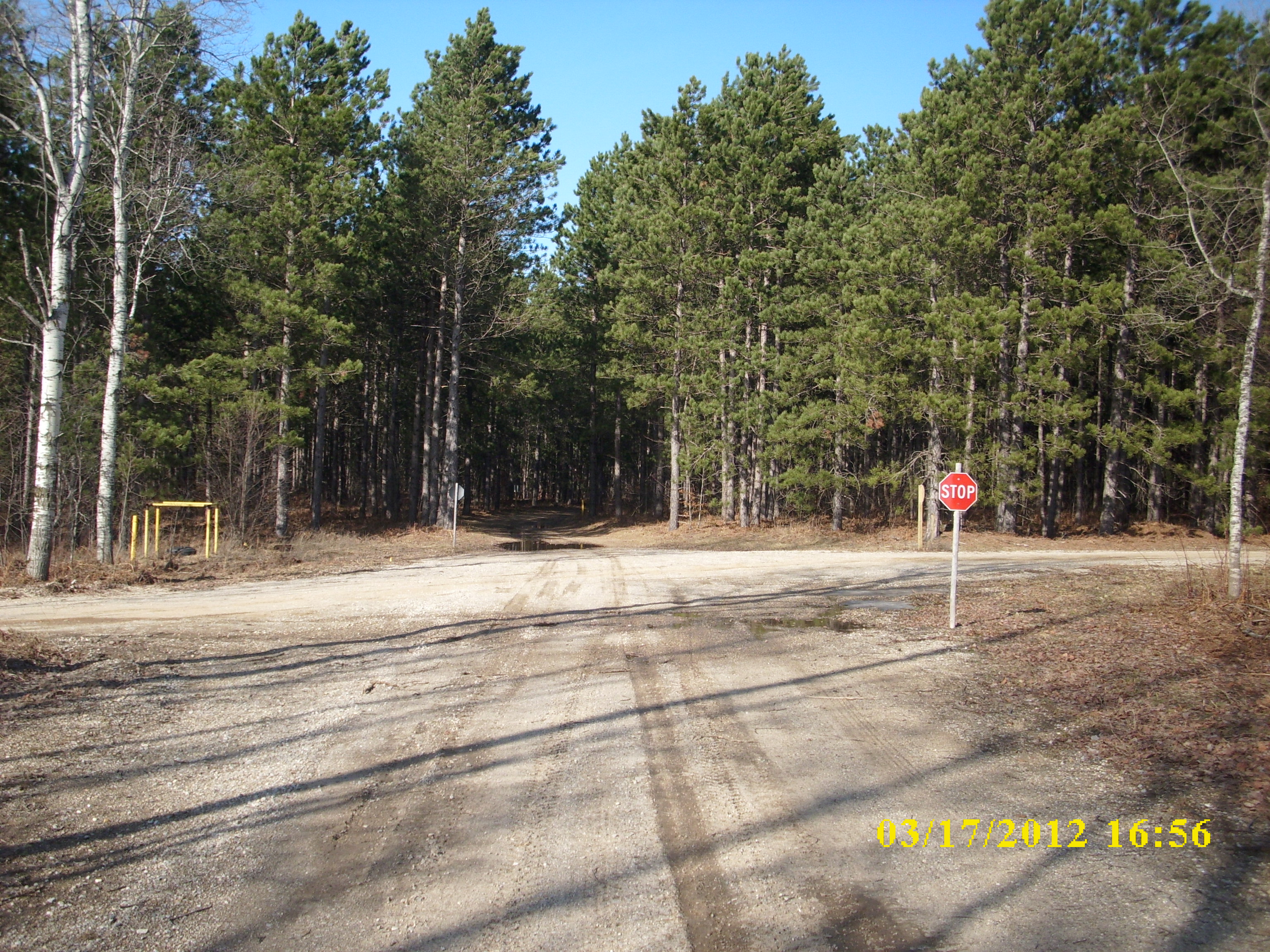
An informational meeting on Oil & Gas Leasing hosted by the MSU Extension Office and the Michigan Farm Bureau on Monday, March 26 at the Alpine Township offices was billed [link: http://www.msue.msu.edu/portal/default.cfm?pageset_id=580675 ] as an “Oil and Gas Leasing and Michigan Oil and Gas Industry Educational Meeting.” According to MSU’s website, the meeting would cover: “the Department of Environmental Quality’s role in regulating the Michigan oil and gas industry, understanding oil and gas leases, and legal issues associated with oil and gas leases.” Although the agenda also listed “questions and answers,” neither the meetings’ organizers nor most of the residents present seemed willing to allow time for questions about hydraulic fracturing and its potential environmental impacts. In fact, when I asked DEQ geologist Mike Shelton about recent environmental studies and government reports, MSU Extension Educator Curtis Talley Jr., leading the leasing portion of the program, closed the Q & A with several hands still in the air, saying “There will be no more questions.”
The tone of the March 26 Alpine Township meeting was decidedly different than another recent meeting that took place across the state. On March 8, responding to public pressure, State Representatives Mike Shirkey (R-Clark Lake) and Earl Poleski (R-Jackson) [Link: http://www.lenconnect.com/news/x1160492929/Town-hall-meeting-to-address-fracking-in-Irish-Hills-area] hosted a public comment session in Brooklyn where residents of southeast Michigan’s Jackson and Lenawee counties have moved beyond the leasing stage and are now experiencing the full rush of trucks, drill rigs, gas flares, and processing facilities that go along with gas and oil drilling. The 600 residents of the rolling hills and wetlands of Brooklyn’s Irish Hills who attended the meeting voiced a myriad of environmental concerns. Many were clearly worried about West Bay Exploration’s request for permits for two deep injection wells in the area, where contaminated waste water (“brine” as the industry likes to call it) would be injected into deep wells drilled below ground and surface waters. At the Brooklyn meeting, water use and contamination were on a lot of people’s minds.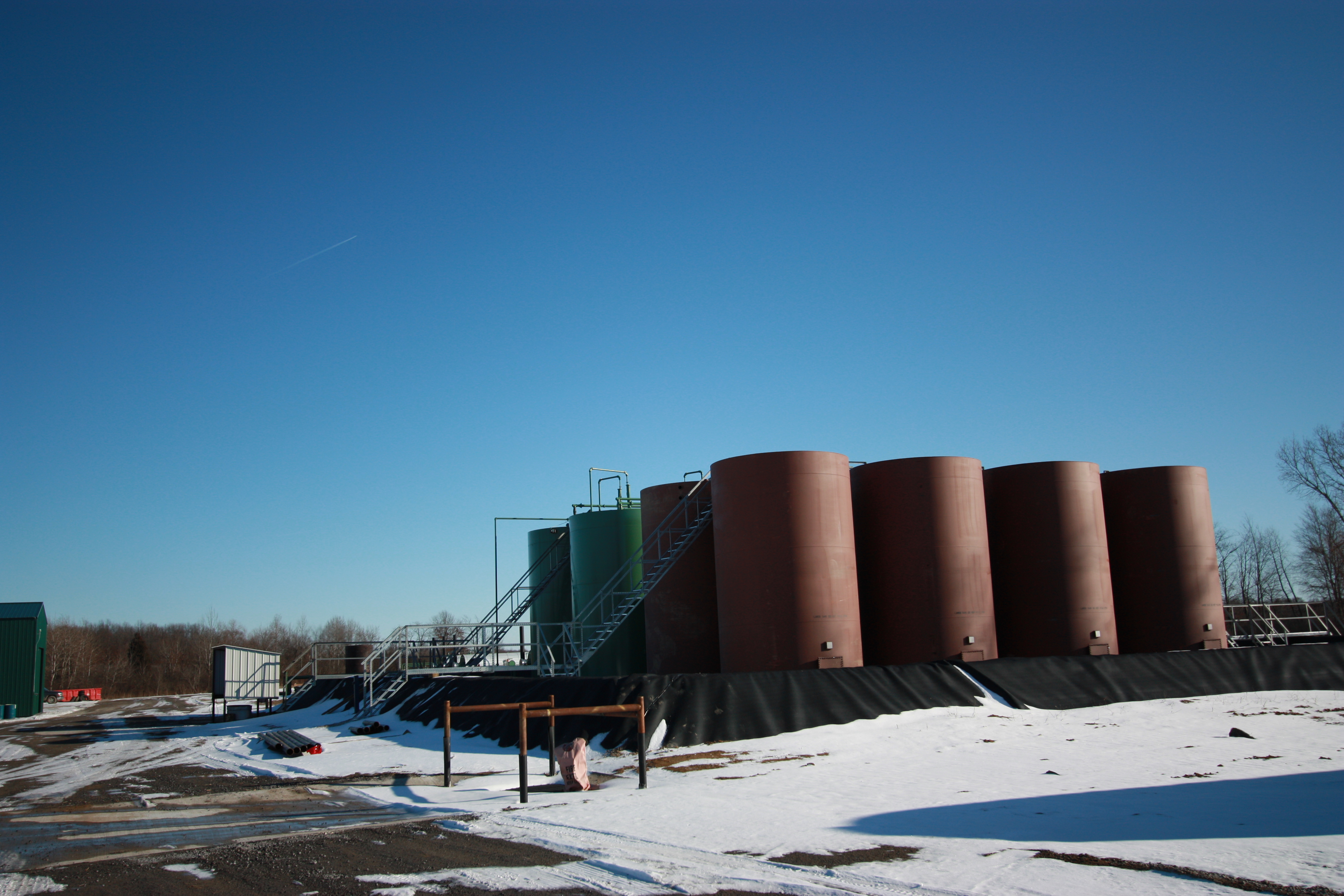
I arrived at the Alpine Township hall a bit late but still in the early stages of DEQ geologist Mike Shelton’s presentation on hydraulic fracturing. Unlike what residents of the Irish Hills experienced, with West Bay Exploration (the Traverse City firm drilling under Brooklyn’s water shed and lakes) insisting that “We don’t frack,” Shelton’s Alpine presentation made it clear that the landmen (industry term) visiting landowners in this area were seeking mineral rights leases meant for deep horizontal drilling and hydraulic fracturing.
Shelton used slides to depict the process, showing well construction beginning with a vertical drilling, typically 5,000-10,000 feet deep to get to the shale rock layer. He then explained how advances in drilling allow contractors to turn and drill horizontally for another mile or so in one or more directions. He noted that large volumes of water, chemicals, and sand are pumped deep into these wells at high pressure, sometimes up to 11,000-psi, causing the shale rock to crack open or fracture in several places. The gas in the rock then flows out of the shale and into the well as a liquid. Water and chemicals shot into the well also come back up as what the industry calls “brine” or “flowback” or “produced water.” This waste water must then be disposed of in deep injection wells because it contains chemicals, and DEQ regulations say that this “water” can’t be disposed of above ground.
A few audience members asked questions about how gas and oil contractors decide where to place a well on the property, and what types of wells might be constructed. Shelton showed a slide of the tall drill rig that comes in for a month or more when the well is being actively fracked. He also showed an aerial slide of a typical processing facility with an open fresh water pit and a second pit where drill cuttings and mud are dumped and dried out for later burial or disposal. But he didn’t mention that these muds contain toxins brought to the surface by fracking. Instead, he called attention to the amount of equipment and trucks that can be on site during the process, which is common at informational meetings. Presenters often address truck traffic, aesthetics, and road construction openly with the public.
The geologist’s comments downplayed chemical concentrations and toxicity. He emphasized that “out of the large volumes of water used” which he admitted could be millions of gallons per well, “out of all the fluid, about 98 to 99 % of it is water and there’s only a small percentage of chemicals.” He described chemicals used as “things like detergents, everyday chemicals, but also things you wouldn’t want in your drinking water.” He spoke of regulations that require contractors to have “MSDS [Material Safety Data] sheets on site,” but neglected to say that for undisclosed chemicals – additives that frackers are allowed to keep secret – there are no safety sheets on site.
At one point the DEQ geologist said, “There is no history of contamination or spills in Michigan.” But according to another DEQ official’s statements during the March 8 meeting in Brooklyn and a follow-up article by Detroit Free Press environmental reporter Tina Lam [Link: http://www.freep.com/article/20120318/NEWS06/203180473/Oil-boom-fears-flow-in-pristine-Irish-Hills ], this claim of zero contamination is not true. One of the most recent accidents made public occurred on Dec. 24 of 2011 when hydrogen sulfide (industry term = sour gas) leaked for 4-6 hours from a Crawford County injection well, sending a cloud of the toxic gas fuming all the way to Canada. [Link: http://articles.petoskeynews.com/2012-01-06/sulfur-compound-mercaptans_30600048 ]
One woman at the Alpine meeting asked, “Who makes sure the wells are properly capped?” referencing the process of closing a well or safely sealing a well head. “That’s where a lot of these problems have come from. Do you make sure they do this right?”
“Do I?” Shelton responded.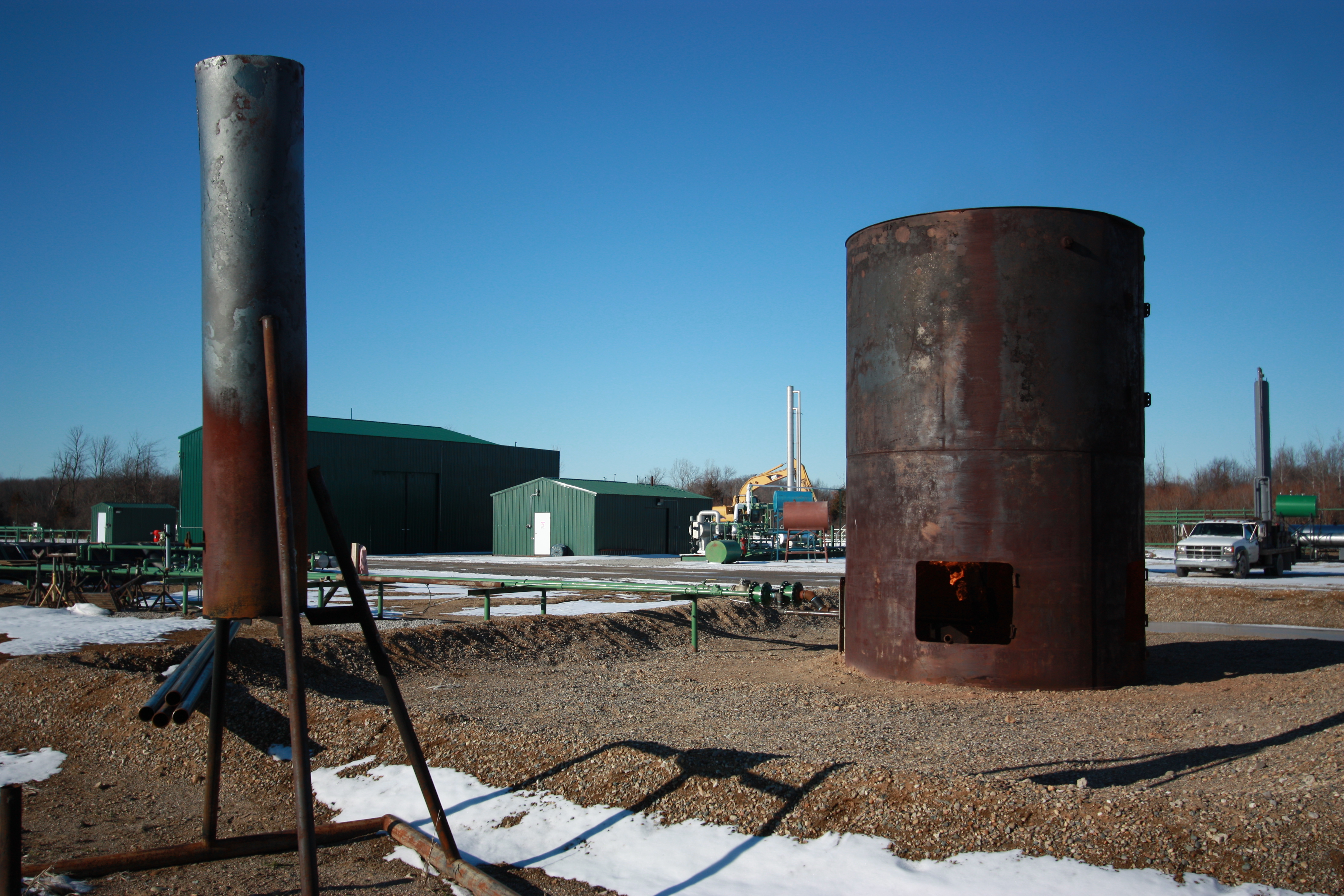
“Yes,” she said. “Do you or does someone from the DEQ go out there and supervise? How often are you out there?”
Shelton admitted that no, neither he nor other DEQ representatives have time to “sit at the well sites.” Contractors are required to cap each well according to regulations, he said, while admitting that “accidents happen” and “there have been some problems.”
Another woman followed with, “You said that the wells are safe,” referring back to Shelton’s claim of no contamination in Michigan. “But then you just said that well caps have cracked.”
And to that Shelton said, “Now don’t twist my words.”
When a question or two came up about water use, he mentioned that contractors drill a water well on site, drawing water from the landowner’s property, but downplayed concerns about water levels, saying that the DEQ requires contractors to report water usage. Report, yes, but not limit. In May of 2011, in a document the DEQ likes to tout as strengthening water regulations, the Office of Oil, Gas, and Minerals exempted the oil and gas industry from the 100,000 gallons-per-day withdrawal limit that Great Lakes water activists had worked toward for years. [Link: http://www.michigan.gov/documents/deq/SI_1-2011_353936_7.pdf ]
“But where does that water come from?” the woman who asked about well capping said. “Doesn’t that have an effect on wells or aquifers?”
Curtis Talley, MSU Extension Educator who had been standing aside, stepped to the front to say “One or two more questions.”
So I asked: “Are we going to get a chance to discuss some of the environmental concerns and exemptions? Because there are three main questions I have. You’ve talked about chemicals used in fracking, but you haven’t mentioned (and here I held up a printed copy of the report) our own US government report called ‘Chemicals Used in Hydraulic Fracturing’ which lists 29 known toxins, carcinogens, and neurologically damaging chemicals.” [Link to PDF: http://democrats.energycommerce.house.gov/sites/default/files/documents/Hydraulic%20Fracturing%20Report%204.18.11.pdf ]
“And as far as regulations go, can we talk about how the US Congress, in a 2005 energy bill, made the oil and gas industry exempt from the Clean Water Act, the Clean Air Act, the Safe Drinking Water Act, and all sorts of environmental regulations?” [Link: Summary table: http://www.nytimes.com/interactive/2011/03/03/us/20110303-natural-gas-timeline.html]
“And three, there are other states that are a year or two ahead of us in the fracking process, like Pennsylvania and New York, and a Duke University study from the Marcellus Shale shows that methane can migrate up from these wells and into drinking water. Can you discuss how methane gets into nearby water and wells?” [Link: http://www.nicholas.duke.edu/hydrofracking/methane-levels-17-times-higher-in-water-wells-near-hydrofracking-sites ]
Several loud male voices shouted over my last few words: “This is Michigan!” “Sit down!” and “Next Question!”
Shelton attempted to answer my questions. There had been studies that showed some concern, he said, but warned that we have to be careful with studies from other areas, because Michigan is different. But before he could formulate responses to gas and oil industry exemptions, or known toxins present in fracking fluids, Curtis Talley closed the question and answer period, saying, “We can answer questions, but not questions about anyone’s agenda.”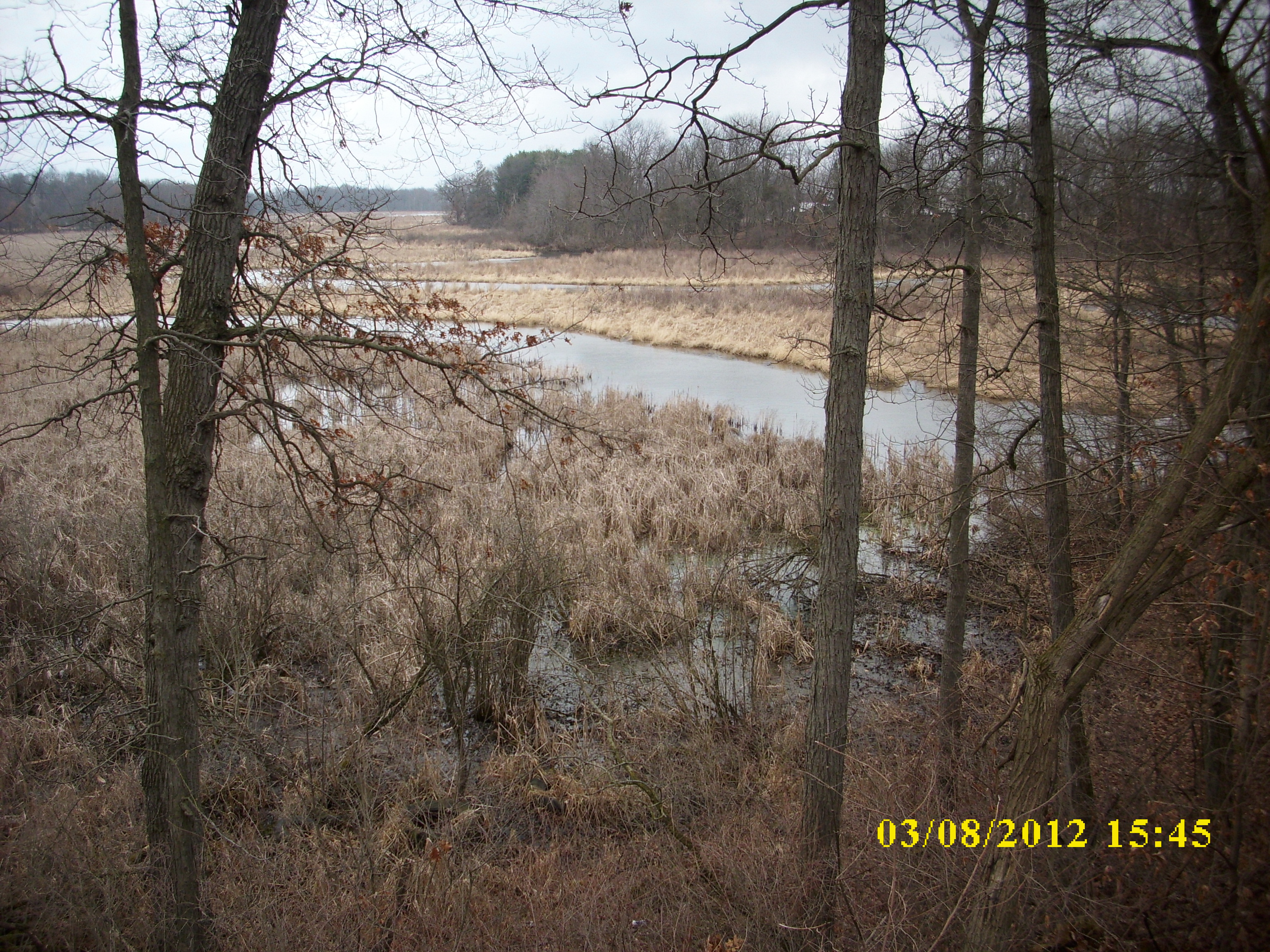
Shelton, from the Kalamazoo DEQ office, walked to the back of the room to discuss these questions privately with me as Talley took the floor. I expressed concern that his presentation came across as pro-leasing, and we discussed studies and risks at length. What about toxins and carcinogens that are buried in on-site pits? Or metals and salts and radioactive elements that come up in the “brine” that the industry likes to call “water”? What about Duke University’s finding that drinking water wells near fracking sites have 17 times higher concentrations of methane than samples more distant? But the public, of course, was not privy to our one-on-one discussion of broad-scale environmental concerns. And as soon as Shelton and I separated, three men from the audience accompanied the young geologist into the township’s backroom kitchen, where they remained behind its closed door for twenty minutes.
The rest of the meeting flowed smoothly, with Talley presenting a landowner’s right to lease mineral rights as a “blessing” (his word, not mine). “It’s a blessing to own mineral rights and to have this opportunity,” he said.
Delivered in a comparative context – making note of how some landowners do not own the mineral rights for their property and therefore may not have the opportunity to accept or reject mining operations – the comment might have been informative and neutral. But the “blessing” as presented was monetary: “Let’s get this straight,” Talley said. “A lot of money is at stake here.”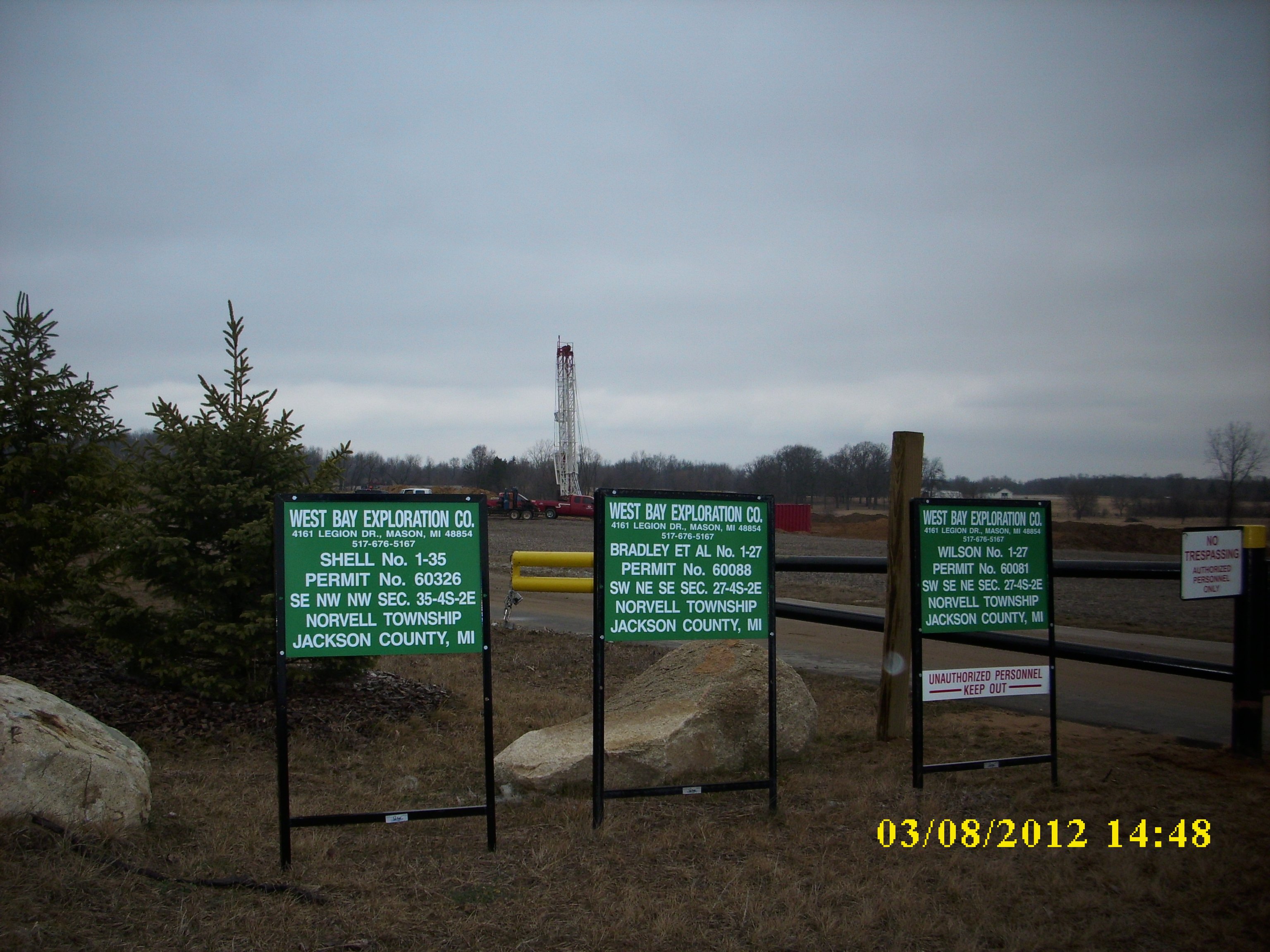
He mentioned, two or three times during his presentation, that whether or not to sign a lease is up to the landowner, noting that “it isn’t fair to the gas and oil companies” to sign a lease when a landowner isn’t supportive of drilling. His “Psychology of Leasing” slide encouraged landowners to be firm in negotiating with experienced landmen. Be “price makers, not price takers.” He used a slide from a Colorado site that had barely discernible well pipes rising like tall grasses against a broad landscape and said, “There are 33 wells on this site.” I pictured the huge drill rigs I’d seen going up in the Irish Hills just a few weeks before, and the processing sites with tanks upon tanks and flaring fires.
When he got to an area of landowner rights that had been particularly contentious at the Brooklyn meeting, he described Michigan’s compulsory pooling law as “not that bad.”
During the March 8 meeting, Hal Fitch, DEQ Assistant Supervisor of Wells, whose office approves oil and gas drilling permits, explained Michigan’s compulsory pooling law like so: A well site requires 40 acres. If landowners who own 38 of the acres sign a lease, but a landowner owning the remaining 2 acres refuses to sign a lease, the state (DEQ) can put the landowner into a “pool” for the purposes of drilling on the site.
At the Irish Hills meeting, one man repeatedly asked Fitch for clarification: “So even if I don’t sign a lease, you can force me into drilling on my land?” And Fitch responded: “The wells are coming anyway, you might as well enjoy the profits.”
Talley illustrated his “not so bad” pooling judgment with a brief story. “In fact, at the last meeting, we had an owner who was pooled stand up and say compulsory pooling worked out really well.”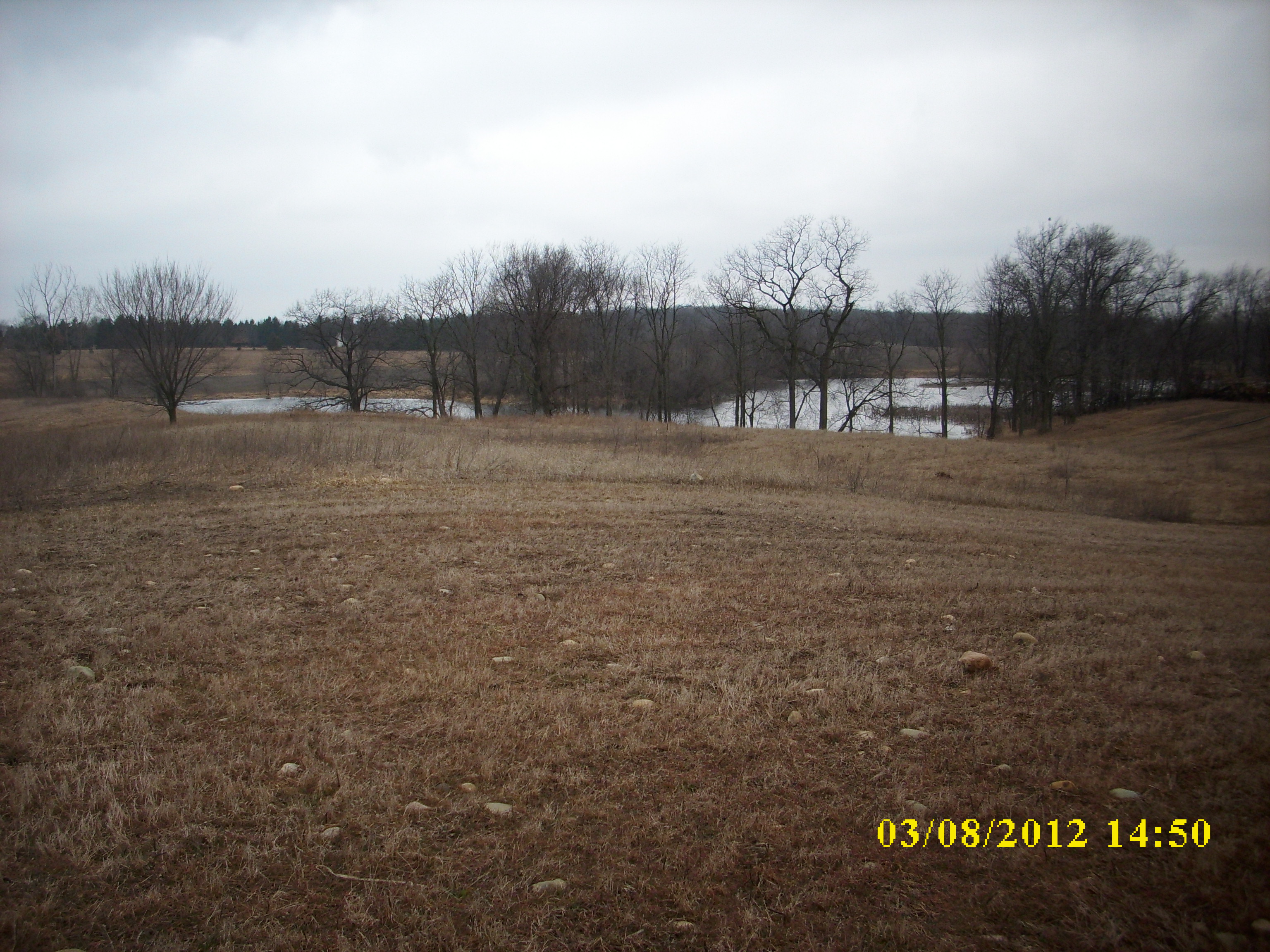
A third presenter, Trent C. Hilding, Esq., answered questions about the legalities of negotiating leases. He advised audience members to make sure that their leases included a ‘no processing facilities’ stipulation. When an older man who had come over to thank me for bringing up environmental questions asked whether a landowner could add language to a lease to make the company responsible for environmental contamination and cleanup, Hilding answered yes, landowners could add contamination terms.
I wanted to question whether such terms could be enforced with the gas and oil industry exempted from practically every environmental regulation we have at federal and state levels, but the meeting was adjourned before I got the chance.
For one man in the audience, sixty-plus minutes of leasing talk were not enough to cool the hostility over my environmentally motivated questions. As people filed out of the room, the man strode quickly up to me and stood way too close for the average American’s space bubble, saying loudly: “How many acres do you have to lease?”
I responded, “I’m not sure what that has to do with anything.”
“How many acres do you have to lease?” he said, more loudly.
“I’m still not sure what that has to do with anything,” I said.
His anger was jarring, though not jarring enough to offset the comments of the one older man who had made it a point to approach me and say, “Thank you for bringing up those important questions.”
For that man, and for others who expect the Department of Environmental Quality to put the long-term health of our ecosystems and communities before short-term profits, I left the meeting wondering, will the public get the information it needs to understand what fracking really looks and smells and sounds like? How can the public assess fracking’s risks when it comes to contaminating our communities – potentially forever?
On the materials table, residents were offered paper copies of a sample lease agreement and Talley’s power point presentation, but there was no information on environmental impacts. The only take-away on fracking was a four-color brochure put out by the Michigan Oil and Gas Producers Education Foundation [Link: http://www.mogpef.org/ ] whose mission it is to make materials available “for use by members of the petroleum, energy and allied industries.”
What about the people in Alpine Township and around the state of Michigan who are not land owners? How will the larger public come to understand that the landmen are coming? That the landmen are, in fact, already here?
As Talley said at the close of his presentation: “It’s [leasing is] all about controlling the land and controlling land for a long time.”
Maryann Lesert is an author and Associate Professor of English at Grand Rapids Community College, researching fracking for an environmental writing project. She belongs to Ban Michigan Fracking (www.banmichiganfracking.org), an educational organization working toward local and statewide bans on hydraulic fracturing.
Breaking Up with the Sierra Club
This letter written by Sandra Steingraber is re-posted from PRWatch.
In February, Time magazine broke the news that the Sierra Club, an old and respected environmental defender, had, for three years, accepted $25 million from Chesapeake Energy, one of the largest gas-drillers in the world. (In 2010, Michael Brune, the Sierra Club’s new executive director, refused further donations from the company.) The story prompted Steingraber to write an open letter to the Club, posted below. We invite you to read the letter, which testifies to the confusion, fear, and outrage that’s pouring out of communities in gasland—but which is also, importantly, a bold call to courage.
***
No right way is easy….We must risk our lives to save them. —John Muir, Sierra Club’s founder
Dear Sierra Club,
I’m through with you.
For years we had a great relationship based on mutual admiration. You gave a glowing review of my first book, Living Downstream — a review that appeared in the pages of Sierra magazine and hailed me as “the new Rachel Carson.” Since 1999 that phrase has linked us together in all the press materials that my publicist sends out. Your name appears with mine on the flaps of my book jackets, in the biography that introduces me at the speaker’s podium, and in the press release that announced, last fall, that I was one of the lucky recipients of a $100,000 Heinz Award for my research and writing on the environment.
I was proud to be affiliated with you. I hoped to live up to the moniker you bestowed upon me.
But more than a month has past since your executive director, Michael Brune, admitted in Time magazine that the Sierra Club had, between 2007 and 2010, clandestinely accepted $25 million from the fracking industry, with most of the donations coming from Chesapeake Energy. Corporate Crime Reporter was hot on the trail of the story when it broke in Time.
From the start, Brune’s declaration seemed less an acknowledgement of wrongdoing than an attempt to minister to a looming public relations problem. Would someone truly interested in atonement seek credit for choosing not to take additional millions of gas industry dollars (“Why the Sierra Club Turned Down $26 Million in Contributions from Natural Gas Interests”)?
Here, on top of the Marcellus Shale, along the border between Pennsylvania and New York — where we are surrounded by land leased to the gas industry; where we live in fear that our water will be ruined, our mortgages called in, our teenage children killed in fiery wrecks with 18-wheelers hauling toxic fracking waste on our rural, icy back roads; where we cash out our vacation days to board predawn buses to rallies and public hearings; where we fundraise, donate, testify, phone bank, lobby, submit public comments, sign up for trainings in nonviolent civil disobedience; where our children ask if we will be arrested, if we will have to move, if we will die, and what will happen to the bats, the honeybees, the black bears, the grapevines, the apple orchards, the cows’ milk; where we have learned all about casing failures, blow-outs, gas flares, clear-cuts, legal exemptions, the benzene content of production fluid, the radioactive content of drill cuttings; where people suddenly start sobbing in church and no one needs to ask why — where in the crosshairs of Chesapeake Energy, Michael Brune’s announcement was met with a kind of stunned confusion.
The Sierra Club had taken money, gobs of it, from an industry that we in the grassroots have been in the fight of our lives to oppose. The largest, most venerable environmental organization in the United States secretly aligned with the very company that seeks to occupy our land, turn it inside out, blow it apart, fill it with poison. All for the goal of extracting a powerful heat-trapping gas, methane, that plays a significant role in climate change.
Climate change: identified by The Lancet as the number-one global health problem of the 21st century. Children, according to the World Health Organization, are among its primary victims.
It was as if, on the eve of D-day, the anti-Fascist partisans had discovered that Churchill was actually in cahoots with the Axis forces.
So, I’ve had many weeks now to ponder the whole betrayal and watch for signs of redemption from Sierra Club’s national leadership. Would it be “coming clean” (to quote the title of the executive director’s recent book)?
Freed from the silence that money bought, would it now lend its voice in support of environmental groups in New York State that seek a statewide prohibition on fracking? Would it come to the aid of those in Pennsylvania calling for a halt to the devastation there?
Would it, at the very least, endorse the modest proposal of Physicians, Scientists and Engineers for Healthy Energy, who recommend a national moratorium on fracking until human health impacts are researched?
And would Michael Brune humbly ask forgiveness from antifracking activist Lisa Wright, formerly on the executive committee of the Sierra Club’s Finger Lakes chapter? As recently as last May, in response to a direct query from Wright, who had become suspicious, Brune wrote, “I do want to be clear about one thing: we do not receive any money from Aubrey McClendon, nor his company Chesapeake. For that matter, we do not receive any contributions from the natural gas industry. Hopefully this will alleviate some concerns.”
The answer to all of the above questions: No.
So, Sierra Club, call some other writer your new Rachel Carson. I’ll be erasing your endorsement from my website.
And take back these words, penned by your own fierce and uncorruptible founder, John Muir, that have hung for years by my writing desk:
Climb the mountains and get their good tidings. Nature’s peace will flow into you as sunshine flows into trees. The wind will blow their own freshness into you, and the storms their energy, while cares will drop off like autumn leaves.
There is no peace in the mountains and hills over the Marcellus Shale. No glad tidings. The forests of Pennsylvania are filled with chainsaws, flares, drill pads, pipelines, condensers, generators, and the 24/7 roar of compressor stations. The wind that blows east from the gas fields carries toluene, benzene, and diesel exhaust. Sunshine turns it all into poisonous ozone. Storms send silt into trout streams from denuded hillsides and cause good people to lie awake at night, worried about overflowing impoundment pits full of neurotoxic chemicals and overturned frack trucks full of carcinogens.
Even now, plans are being laid to transport 88.2 million gallons of liquid propane and butane to caverns that lie beneath the idyllic New York lakeshore where my ten-year-old son was born. (“This transaction is yet another example of the successful execution on our plan to build an integrated natural gas storage and transportation hub in the Northeast,” says the company called Inergy.) When you tramp through the fields and forests where I live — 40 percent of the land in my county is leased to the gas industry — cares don’t drop off like autumn leaves. They accumulate like convoys of flowback fluid laced with arsenic, radium, and barium with no place, no place to go.
And, yes, they are fracking in Rachel Carson’s beloved Allegheny County, too.
The hard truth: National Sierra Club served as the political cover for the gas industry and for the politicians who take their money and do their bidding. It had a hand in setting in motion the wheels of environmental destruction and human suffering. It was complicit in bringing extreme fossil fuel extraction onshore, into our communities, farmlands, and forests, and in blowing up the bedrock of our nation. And I can’t get over it.
So, here are some parting words from the former new Rachel Carson.
The path to salvation lies in reparations — not in accepting praise for overcoming the urge to commit the same crime twice. So shutter your doors. Cash out your assets. Don a backpack and hike through the gaslands of America. Along the way, bear witness. Apologize. Offer compensation to the people who have no drinkable water and can’t sell their homes. Whose farm ponds bubble with methane. Whose kids have nosebleeds and mysterious rashes. Write big checks to the people who are putting their bodies on the line in the fight to ban fracking, and to the grassroots groups that are organizing them.
Finally, go to Washington and say what the Sierra Club should have said in 2007: Fracking is not a bridge to the future. It is a plank on which we walk blindfolded at the point of a sword. There is no right way to do it. And the pirates are not our friends.
Sincerely,
Sandra Steingraber
A symposium was held at the downtown campus of GVSU today around the broad theme of Women & the Environment. The event was organized by the GVSU Women’s Center in collaboration with the West Michigan Environmental Action Council. 
After a luncheon, the day was divided into 3 themed panel discussions. The first panel discussion dealt with the theme of women entrepreneurs and the environment. The first panelist to speak was Deb Steketee with the Aquinas College Center for Sustainability.
Steketee began by saying she wanted to present some recent trends that could have transformative outcomes. The first was the idea of bio-mimicry, where what we produce can be more sustainable if we mimic natural systems. Other trends were Green Chemistry, sustainable business and women led organizations.
All of these trends were underlined by the fact that women were at the forefront, but what seemed somewhat disingenuous was that most of the emphasis was on business and less about substantive ecological change. One of the women highlighted was the late Wangari Maathai, the amazing Kenyon woman who challenged capitalist power in her country and promoted climate justice. Juxtaposing Maathai with some of the female entrepreneurs seemed a bit contradictory, since what Maathai did and what eco-business owners do are very different things. Maathai was about movement building and calling for a radical shift in how we operate in the world, whereas most eco-businesses promote lifestyle changes through green capitalism.
The other speakers during the first panel was Angela Topp, the owner of the local business Tree Hugger and Renae Hesselink, Vice President of Sustainability at Nichols Paper & Supply. The panel was set up in a Q&A format that was moderated by Shelley Irwin with WGVU. Both Topp and Hesselink spoke about their business practices of trying to be more sustainable. Topp emphasized recycling and helping people make daily purchasing decisions that would make a difference in the world.
At one point Irwin asked Deb Steketee how sustainability could impact the global business world. Steketee said she believed that there is tremendous potential around products that cater to what she referred to as Lifestyle markets.
Angela Topp mentioned a news story she heard about the palm oil industry, which was clear cutting forests to plant palm oil trees that would be used in marketed products and that this could result in the extinction of orangutans. She went on to say that not purchasing those products would make a difference and that it was the little things that general do. Topp did not address the strategy of collective resistance of the palm tree industry to be able to clear cut forests to begin with.
The first panel ended by each of the participants talking about what they see as priorities for the future. Topp did say that we need to hold companies accountable for the waste they generate and that the US should do what Germany did, which was to have source point recycling, where the industry is responsible for waste and packaging that come with the products people buy. This kind of policy was attempted in the US in the late 1960s but was undermined by the National Association of Manufacturers who instead promoted their own campaign known as Don’t Be a Litter Bug, which put the emphasis on what individuals did with waste.
The second panel of the day dealt with the theme of food and farming. Again, this panel featured three presenters: Dr. Kirsten Bartels (GVSU), Katie Brandt (Groundswell Farm) and Dr. Wynne Wright (MSU).
Kirsten Bartels began the panel by talking about the classes she teaches at GVSU on food. Dr. Wynne Wright with MSU talked about growing up on a family farm and how she wanted to get away from it as fast as possible. Katie Brandt is a farmer at Groundswell Farm and talked about starting a farm with another woman and that they currently have 150 members in their CSA.
One question asked of the panel was, how does food production impact women? Dr. Wright said we have to look at social markers and social location. Many people often see women’s involved with food as just preparation, but women often play the role of maintaining culture through food. Wright also said that women are the persons who do most of the food prep work in the food service industry, particularly women of color or immigrant women.
Katie Brandt talked about the environmental and health benefits of farm to table eating. She encouraged more people to get involved in growing some of their own food and getting to know area farmers. It isn’t easy to start your own farm, but there is a growing demand from people to eat locally grown food. She also talked about a project they started which was to invite people to share meals on the farm with other farm workers who could share best practices.
Another question asked was how do we stop hunger worldwide? One panelist said stop participating in the current global food system. Another panelists said that hunger is a function of distribution not availability. Bartels focused on the waste of food in the US and how so many more people could be fed with the waste we generate.
It was interesting to note that no policies were discussed, like the Farm Bill or the importance of challenging the current agri-business system that is based on profits and the expense of public health and environmental integrity.
The last panel of the day explored the topic of Environmental Health Impact Gayla Jewell (Grand Rapids Medical Education and Research Center), Dr. Julia Mason (GVSU) and Courtney Myers-Keaton (Program Manager for Healthy Homes Coalition of West Michigan) were the three panelist for this session.
Julia Mason emphasizes the point that if we are going to do anything it really needs to be a collective response and no so much what we can do as individuals. This was a refreshing point to hear since most of the presenters put the emphasis on individual behavior and purchasing power.
One question addressed to this panel was how are minority communities disproportionately impacted by environmental degradation? One panelist said women of color are more likely to come in contact with hazardous waste and toxic dumps, because of where they live and that is a form of environmental racism. The Environmental Justice movement has done a great deal in the last 20 years to point out the race and class disparities for communities of color, which are subjected to worse environmental conditions across the country. An environmental justice movement would require us to think more systemically about the system. Julia Mason said too often the current environmental movement is trendy and disproportionately attracts people of privilege, so we need to figure out how to address environmental issues that takes into consideration systemic change that truly promotes justice.
Courtney Myers-Keaton addressed issues like lead poisoning in homes, radon exposure and asthma triggers. She also addressed issues like child exposure to mice, cockroaches and other unhealthy dynamics in the homes of many who live in rental properties throughout the city.
Gayla Jewell talked a great deal about how we all have toxins in our bodies because of what we have been exposed to. For women it is worse because of all the beauty projects, cleaning products and other basic things like bottled water that women are disproportionately exposed to.
Julia Mason again emphasized the need to push for collective change and policy change. Challenge water contamination at the source instead of just finding ways to filter your own water.
One woman said she doesn’t want to give money for more research for breast cancer, because they keep spending money on research instead of prevention. Julia said that we need to put the emphasis on prevention and look at the industries that are the ones responsible for making us sick to begin with, which many times are the ones offering some kind of pharmaceutical cure.
There was a great deal of information shared during the 3 panel sessions at the forum. However, the format made it difficult for people to probe further or to spend much time discussing tactics and strategies to make important changes in the world. It is also worth noting that all nine panelists were Caucasian women, which certainly spoke to issues of privilege and limited the discussion around women and environmental justice.
Trayvon Martin, Troy Davis and the 2012 Election
This article by Bruce Dixon is re-posted from Black Agenda Report.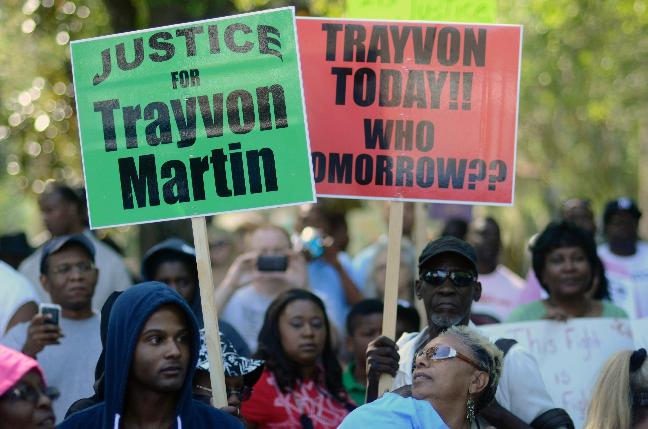
The world of US politics and media is a twisted place where lofty words often cloak base intentions. It’s a world where Trayvon Martin’s parents, for instance, feel obliged to trademark phrases containing their son’s name to prevent economic exploitation of his case by canny entrepreneurs. But in a presidential election year, rampant political abuse, misuse, hand in hand with media disinformation and trivialization of Trayvon Martin and the meaning of his death are practically inevitable.
Corporate media news did cover the “million hoodie march,” a hastily organized outpouring of popular rage and frustration, not just at the individual murder of Trayvon martin, but at the universal American policy of hyper-policing young black males in New York, Los Angeles, Philadelphia and other cities. What the coverage left out, however, is that at least in New York, those thousands of hooded protesters ended their march by joining with Occupy Wall Street, where for the first time in six months the occupation was mostly African American, a fact that would have served the agendas of neither of the two corporate parties.
On the other hand, in the interest of making some whites feel better about themselves, the hacks at CNN sought out the tiny and deceptively named “New Black Panther Party” which seems to exist purely to be called upon by the likes of Sean Hannity and Anderson Cooper when they need a comic black racist bogeyman. The NBPP dutifully rendered its standard performance, complete with scowling and on-camera chest-thumping about bounties and “citizens arrests.”
African Americans are the Democratic party’s base constituency. Black politicians are long accustomed to making good sounding but often empty statements against police brutality, stop and frisk, and similar practices. In keeping with the rising level of public anger, black state legislators in New York showed up for a Monday morning press conference in hoodies, and Democrat-supporting figures in the corporate media like Keith Oberman did at least one segment of his show wearing a gray hoodie.

The problem of course, is that the culture of over-policing African Americans is deeply rooted in thousands federal, state and local law enforcement agencies, prosecutors offices, and courts. Aside from repealing a single odious Florida law, few of the public figures and politicians suddenly concerned have any proposals to offer that might begin to roll back the omnipresent culture of racist policing, like rolling back the ability of law enforcement agencies to keep confiscated assets, or ceasing to funnel federal money to police departments based on the number of low level drug arrests. After all, that governing in the interest of the people stuff is hard. Showing up for work in a hoodie is easy.
The 21st century civil rights establishment, unlike their predecessors a half-century ago, are so tightly bound to the fortunes and careers of elected Democrats that they dare not raise any demands which will embarrass their colleagues. So extending the dramatic demonstrations to, say, wearing a black ribbon until the nation’s prison population is cut in half, are utterly unthinkable. Despite their demands for Justice Department interventions here and there, the last thing the civil rights establishment wants in a presidential year, when their candidate is courting “moderate” voters, is a deep and honest national discussion about hyper-policing and the prison state.
For our cynical black political class, which we sometimes call the black misleadership class, Troy Davis was last year’s fundraising slogan, and this year’s get-out-the-vote watchword will be remembering Trayvon Martin. Sound far-fetched? It’s not. In the 2000 presidential campaign, the NAACP’s national voter action arm commissioned a mailer to millions of black households across the country. It featured whites waving confederate flags and the tag line “If they win, we lose,” and a drawing of a pickup truck dragging a chain, an obvious reference to the 1998 Texas murder of James Byrd by white supremacists. In fairness, the murder did happen when Republican presidential candidate Bush was governor in Texas, and Texas had failed to pass hate crimes legislation.
But the black political class never bothered Al Gore about the fact that his home state of Tennessee, like Florida and other key states, banned from the voting lists for life anybody convicted of a felony, disenfranchising hundreds of thousands of voters in each of those two states alone. They never demanded he use his political capital to stand up for their actual constituents. Did it matter? Of course it did. 2000 Democratic presidential candidate Al Gore lost both Florida and his home state of Tennessee by margins far greater than the number of black voters disqualified by the felony restriction alone. In their defense however, using confederate flags and pickup trucks on campaign mailers is a lot easier than demanding your candidate stand up for you, and easy is what our black political class is about.
As for the president, many Democrats, wise and learned members of our black political class have offered, on other subjects the excuse that the president can’t say what he wants to say about this or that, or is saying what he thinks he must to please some unknown powerful interests. But if the president is prevaricating on these other fronts, how do we know he’s not telling black people as much as he can of what he thinks we want to hear without actually doing much of anything? Obama isn’t Trayvon’s father, and he isn’t ours either, so his imagined emotional connection is beside the point. He’s not a pastor, he’s a president. For a president, saying there ought to be a national debate without being willing to lead it is a weasely cop-out.
If the president was seriously concerned with trying to prevent police and vigilante murders, he could have opened his mouth on the November 2006 murder of Sean Bell by NYPD. As a member of the powerful US Senate Judiciary Committee and presidential aspirant, Obama was in an ideal spot to put both light and heat on that and many similar cases. He didn’t. If the Obama White House was the least bit interested in leading the way, it could have told the Justice Department to find a legal reason to take an interest in the case of Troy Davis. That’s all it would have taken to preserve Troy Davis’s life for months or years longer, as investigations, debates and political maneuvers continued. Talk is cheap. Expressions of concern are cheap. Even a federal investigation confined to the specific case of Trayvon Martin is a tiny thing, as there are a million mostly young black men in prison, and hundreds will be killed by sworn police officers, not pretenders like Zimmerman this and every year of the near future.
For Obama and the black political class, interested only in their own careers, Trayvon Martin will be an empty slogan, a symbol. Their own careers are proof enough that rolling back the prison state won’t be accomplished at the voting booth.
The few lonely voices hollering about Trayvon being the start of some new movement, while bemoaning the fact that the million hoodie march ended up at Occupy are aspiring members of the black political class afraid they won’t get their share of campaign dollars of the hoodie folks go with Occupy instead of the Democrats. But that’s the way it is. The movement for real change will have to begin somewhere else, and flow to and from some entirely different directions.
33 Years after the Three Mile Island Nuclear disaster, we still haven’t learned our lesson
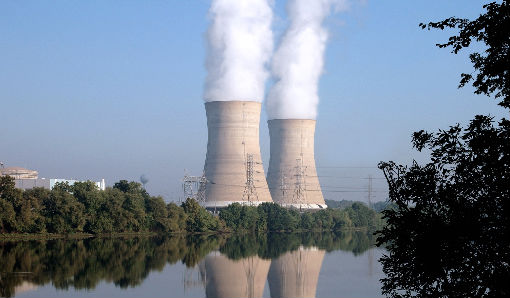
Today marks the 33rd anniversary of the Three Mile Island (TMI) nuclear disaster that took place in Middletown, Pennsylvania.
I write about this today for two reasons. First, I am from that part of Pennsylvania and I move to Michigan the day that nuclear reactor 2 had a systems failure and caused a major disaster in Central Pennsylvania.
Some sources put the nuclear meltdown on March 28, but most sources place the actual systems failure at Three Mile Island in the early morning of March 29, 1979. I left Middletown airport that morning and remember that we flew right over the 2 nuclear reactors that sit right in the middle of the Susquehanna River, near Harrisburg, Pennsylvania.
When I got to Michigan later that day I found out that the nuclear reactor had leaked radiation and that the governor of Pennsylvania had called for a voluntary evacuation, even though earlier in the day the state government had announced that there was no cause for alarm. My parents were panicking about what to do and whether or not to even let the dogs out for fear of contamination.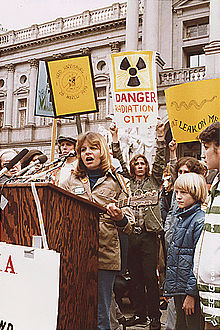
The voluntary evacuation saw thousands of people leave the area, although for just a brief time. Residents and schools were told to keep people inside until the “situation” was more under control.
Activists and angry citizens responded by organizing protests across the country in response to the Three Mile Island incident. In 1981, there was a class action lawsuit by citizen’s groups, which resulted in a $25 million settlement. Most of that money was used to found the TMI Public Health Fund.
The nuclear industry has continued to downplay the health consequences of the Three Mile Island meltdown, but there are plenty of independent studies that have been done, which have determined that there had been an increase in cancer, stillbirths, deformities and other negative health outcomes, especially for women and children living in the area.
It was also discovered later that not only those who lived closed by were affected, the Three Mile Island operators ordered the dumping of radioactive water was dumped into the Susquehanna River, thus impacting those down stream.
In 1993, Karl Grossman produced a documentary entitled Three Mile Island Revisited, which exposed many of the lies and cover-up from the Nuclear Regulatory Commission. Grossman has been one of the leading critics of the nuclear industry and has written numerous books on the topic.
Fast forward to 2012, and there is still a great deal of confusion and misinformation about the safety and viability of the nuclear industry. In some ways this seems rather amazing considering what the world saw and what the ongoing effects are of the Fukushima nuclear disaster in Japan that began last year or the nuclear meltdown that occurred at the power plant in Chernobyl in Russia in 1986.
Three Mile Island did have the effect of putting a stop to any new construction of nuclear power plants in the US, but the industry has not given up and continues to influence energy policies in this country.
The nuclear power industry has provided hundreds of millions of dollars to political candidates and spends an equal amount on lobbying. The Center for Public Integrity last year published a report on the activities of the US nuclear industry to calm the fears of elected officials in the US right after the Fukushima disaster in Japan. The Nuclear Energy Institute, the political action committee of the nuclear industry, has drastically increased its lobbying efforts since the 2004 election and doesn’t tend to favor one political party over the other.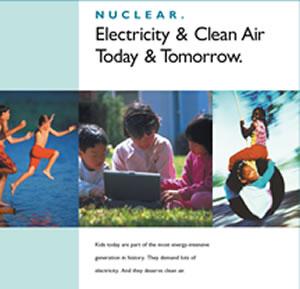
One of the most influential nuclear corporations is Exelon, which ironically happens to be the company that now runs Three Mile Island. Exelon was a major contributor to the 2008 campaign of Barack Obama and has given more money to his re-elections campaign than to any other candidate in 2012.
Part of the lobbying strategy used by the nuclear industry has been to paint itself as a clear energy alternative to coal and other fossil fuels. The image here is an ad that the Nuclear Energy Institute has used in recent years.
Probably one of the more insidious manifestations of the PR campaign by the nuclear industry was to hire former Greenpeace activist Patrick Moore, who now shills for the nuclear industry, particularly the front group for the Nuclear Energy Institute known as the Clean and Safe Energy Coalition.
The fact that the industry spends millions to influence policy and has created front groups to mislead the public should be a clear indicator about the intent of the industry and why we should not support the nuclear industry. On the 33rd anniversary of Three Mile Island and in the wake of the Fukushima disaster, we can’t afford to be fooled.
Anarchist Prisoner Support and Resisting State Repression event coming to Grand Rapids April 5
Sacramento Prisoner Support and the Marie Mason Support Crew are traveling the country giving multimedia presentations on anarchist prisoners Eric McDavid and Marie Mason’s cases as well as facilitating discussions about long-term prisoner support and building stronger cultures of resistance.
This group will be in Grand Rapids on April 5 to talk about these political prisoners, ways that people can become involved in supporting these political prisoners and learn about ways to protect ourselves from state repression.
According to the Never Alone blog site, “the nationwide Never Alone tour is crisscrossing the country in April 2012, featuring the usual suspects speaking about long-term anarchist prisoner support. Focusing specifically on the cases of Eric McDavid and Marie Mason, the tour will mark the spots where the events of these cases unfolded, using multimedia presentations to bring the facts of these cases to light.
As well as raising awareness and support for Eric and Marie, the tour will also feature strategizing about how to more effectively grow a culture of resistance that can breach the prison walls and sustain us and our friends for the long term, a security culture beyond 101 workshop (updated for 2012, now with extra tech!) and some awesome guest speakers. Truly, you won’t want to miss this.
When our friends and loved ones are snatched from us and held captive by the state, we become all too aware that we are never alone. The eyes of the state are always upon us, attempting to silence our voices and still our hands. To keep us from doing the work we know must be done. We must act despite this.
Because we also know that it is imperative that our friends on the inside know that they, too, are never alone. That we will stand by them throughout their time in prison, and welcome them with open arms when they return. That the struggles they were involved in continue on, and that they are empowered to continue on in struggle from inside the prison walls.
And we know that we can’t do this alone. We need the active support of our communities to give us the strength and courage to struggle for our friends and their freedom.”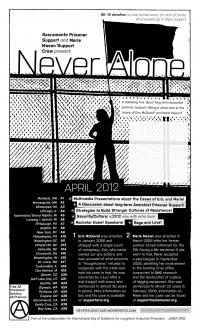
April 5
7pm
The DAAC (115 S Division)
$5-15 donation, no one turned away for lack of funds, all donations go to legal support.
Vegan potluck at 7pm followed by presentation
Featuring:
* Multimedia presentations about Marie and Eric’s cases
* Discussion about long-term anarchist prisoner support
* Security/Culture v.2012 now with extra tech!
* Rage and Love
More information can be found at: https://neveralonetour.wordpress.com/ or the facebook page for this event.
“Voices of the Women’s Health Movement”
 Last week, approximately 40 women gathered at The Bloom Collective for the 4th Annual Empowered Women’s Health Workshop. They came eager to share and learn. The women came from varying economic levels, ranged in age from pre-teen though crone, were black, white and shades in between. Barriers dropped. Healing wisdom and empowerment ensued.
The wisdom and experiences shared during the workshop mirrored the intent of a new two-volume work edited by Barbara Seaman, “Voices of the Women’s Health Movement.” Described as “An unprecedented and definitive collection of rabble-rousing writings on women’s health,” the pages share women’s powerful writings on a wide variety of topics: reproductive rights, sexuality, pregnancy, childbirth and mothering, violence, illness, aging and many more.
While some of the authors are well known names, for example, Sojourner Truth, Susan Brownmiller, Shere Hite, Elizabeth Cady Stanton and Angela Davis, others are less familiar. However, upon reading what they share, a woman experiences a kinship and pride in the amazing female lineage giving voice to women’s concerns with their health—and their right to have power over it.
Volume one gets started with a historical overview. Women with healing power were marginalized (and sometime burned at the stake) in those days; that marginalization continues today. While women today continue to find themselves maneuvering a patriarchal healthcare system, these voices from across the centuries inspire to look within and to other powerful women for healing alternatives. And, when the medical pathway becomes the chosen option, here is courage to speak up and demand respectful, informed care.
“Voices of the Women’s Health Movement” is now available at The Bloom Collective.
This article is re-posted from The Partnership for Civil Justice Fund.
A trove of documents released today by the Department of Homeland Security (DHS) in response to a FOIA request filed by the Partnership for Civil Justice Fund, filmmaker Michael Moore and the National Lawyers Guild Mass Defense Committee reveal that federal law enforcement agencies began their coordinated intelligence gathering and operations on the Occupy movement even before the first tent went up in Zuccotti Park on September 17, 2011.
On September 17, 2011, a Secret Service intelligence entry in its Prism Demonstrations Abstract file records the opening of the Occupy Wall Street (OWS) movement. The demonstration location that the Secret Service was protecting? The “Wall Street Bull.” The name of the Protectee? The “U.S. Government.”
American taxpayers might find it odd to learn that the Secret Service was on duty to protect the Wall Street Bull in the name of protecting the U.S. Government. But there it is.
The DHS’s Game of Three Card Monte to Deflect Disclosure of Law Enforement Operations
These documents, many of which are redacted, show that the highest officials in the Department of Homeland Security were preoccupied with the Occupy movement and have gone out of their way to project the appearance of an absence of federal involvement in the monitoring of and crackdown on Occupy.
On the street it would be called “Three Card Monte,” a swindler’s game to hide the ball — a game of misdirection. The House always wins.
The DHS, as revealed in the newly released documents, has engaged in what appears to be a effort to avoid looking for Occupy related materials where it is likely to be found, including in Fusion Centers and DHS sub-divisions such as the Operations Coordination & Planning sub-division which is responsible for DHS coordination with local and federal law enforcement partners.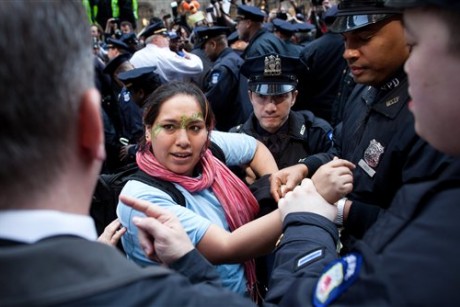
On November 16, DHS Press Secretary Matthew Chandler transmitted an e-mail to top ranking DHS officials, including the Chief of Staff to Janet Napolitano, the Chief of Staff to the DHS General Counsel, among others, in which he reports:
“We’re getting inquiries from CBS, AP, Daily Caller and others on an un-sourced Examiner.com piece that says that DHS and FBI are collaborating with cities by providing tactics and information on removing Occupy protestors. A check of I & A [Intelligence and Analysis] and FPS [Federal Protective Services] shows that this type of outreach is not occurring in any wholesale manner.”
The Press Secretary is careful to couch the official statement, that such is not occurring in any “wholesale” manner, leaving the door open to possible future revelations of such conduct.
But this official statement was based solely on a mid-November inquiry to two DHS sub-sections: Intelligence and Analysis (I&A) and Federal Protective Services (FPS). And by the date of that statement, Federal Protective Services and apparently also the I&A Directorate had already purged, “restricted and/or rescinded,” any Occupy related intelligence products, as discussed further here.
In other words, having looked into only two drawers – – which had already “restricted and/or rescinded” all Occupy related intelligence products – – it is not surprising that Press Secretary Chandler’s statement that no “wholesale’ coordination of Occupy related actions is based on incomplete information.
The Press Secretary, following the script, conveniently avoided other likely DHS repositories and departmental components, including the personnel deployed to Fusion Centers or to the DHS Operations Coordination & Planning sub-division, which according to the DHS web site is “responsible for monitoring the security of the United States on a daily basis and coordinating activities within the Department and with governors, Homeland Security Advisors, law enforcement partners, and critical infrastructure operators in all 50 states and more than 50 major urban areas nationwide.”
DHS Monitoring, Megacenters and Misdirection
Before the first OWS action took place, the DHS Office Intelligence and Analysis (I&A) produced a series of NCCIC (National Cybersecurity and Communications Integration Center) alerts about the coming OWS demonstrations. When this was picked up by the media and it generated inquiry and press, the DHS learned its lesson: Misdirection.
In an email exchange dated September 29, 2011, DHS officials discuss the NCCIC alert and the fact that they will now need to respond to media inquiries about DHS monitoring and involvement in the response to the Occupy movement. The substantive discussion about how to handle the media is redacted, with one participant writing, “Here it is. That answer works-“ and the rest is redacted.
An October 5, 2011 document reflects that the DHS Philadelphia Megacenter was monitoring the OWS demonstration in New York, titled “Demonstration-Peaceful/Planned”, and reporting on assembly and movements “peacefully protesting union solidarity issues.”
An October 30, 2011 document shows DHS’ Battle Creek Megacenter also reporting that a “peaceful/unplanned” “Occupy Wall Street demonstration is taking place in Ilus W. Davis Park in Kansas City, MO.”
These documents appear to be the tip of the iceberg, carefully submerged by the DHS. While there is policy discussion as to the propriety of a threat assessment regarding Occupy Pittsburgh, other emails reference additional internal inquiries about OWS that were withheld from public disclosure in response to this FOIA request.
The Fusion Centers
Moreover, the DHS documents evidence the misdirection to avoid civil liberties issues by handing off OWS monitoring to DHS’s project of Fusion Centers and then failing to make inquiry for information to the Fusion Centers or DHS personnel deployed to them, even though documents indicate that a push-down of Occupy related information into the massive fusion center clearinghouses was already in play.
By November 16, when the PCJF filed this FOIA request, and when the media was contacting DHS regarding its role in the Occupy crackdown one I&A analyst, following such guidance, reported that I&A “scrupulously avoided any connection with the Occupy movement/protests/dismantlings. We cannot speak for any individual fusion center or other departmental component…”
On October 17, 2011, the DHS Intelligence Coordination Branch wrote in an email titled “Guidance Requested: Occupy Wall Street” that in response to requests for OWS information, “we have recommended…that our intelligence Officers refer inquiries [i.e., requests for intelligence information] to Fusion Centers and avoid the topic altogether. That being said, given the number of requests that have appeared, we would like to equip the field with formal guidance…”
DHS Guidelines on How To Justify Intelligence Gathering on Free Speech Activities
The DHS then undertakes to draft policy guidance on OWS. Within days, however, the DHS concludes that formal policy guidelines are not going to go into effect. Instead, on October 24, 2011, a redacted email chain includes the recommendation that policy guidance changes have sought “to take out language that indicates our guidelines are mandatory. For instance replace ‘personnel must’ with ‘personnel should’. I also recommend that we advice only the DHS people and remain silent on whether they should pass along our input to the Pittsburgh folks.”
On October 28, 2011, further exchanges on the guidance draft discuss making the recommendations less specific, and that they should focus on the “congruence concept.” The “congruence concept” is the creation of a supposedly criminal pretext for investigation into First Amendment activities. It is so loosely applied that any unsupported, unsourced tip — or agent provocateur statement on a website — can create the basis for monitoring and investigation.
When the final guidance is produced, it has no mandatory language and states: “If you ever feel you are in put in a situation where first amendment rights could be potentially violated, please refer to the below guidance, which was created after we received a number of questions from around the nation in reaction to the Occupy protests.”
The guidance then explains how to “justify research into and creation of a product containing First Amendment protected activity…” including the “congruence concept.”
Subsequent discussion on October 31, 2011 regarding how and when DHS can “clear on any [intelligence] product on OWS” is significantly redacted as is the author.
Purging of DHS Files and the Carefully Constructed Media Response
A November 1, 2011 email reflects that following the internal guidance issued to I&A, all Occupy related materials had been “restricted and/or rescinded” including specifically by FPS. The email, from an FPS official, reports that:
“FPS was notified of the guidance to the I&A representatives to restrict production of all Occupy products absent criminal activity and/or life safety issues, FPS has followed this guidance and restricted and/or rescinded all products (both internal and pass-through).”
By November 16, when the media was barraging the DHS with inquiries about its role in the Occupy crackdown, the responses to media were carefully crafted. “We’re getting inquiries from [various media] on an un-sourced Examiner.com piece that says DHS and FBI are collaborating with cities by providing tactics and information on removing Occupy protestors. A check of I&A and FPS shows that this type of outreach is not occurring in any wholesale manner.”
As we now know, checking with I&A and FPS by November 16 was not likely to lead to responsive information given that the DHS activity was being carried out by other components and that a purge, restriction and/or rescission of intelligence “products” had taken place.
At this point the DHS provided a prepared statement, given over and over to the press, which includes a quotable paragraph and then “background” points.
Documents show that in the drafting of that paragraph, which is disseminated repeatedly to the press, and shows up in numerous press reports from the time, there is a second paragraph that is removed and appears not to be given to the press. That sentence read: “We have held standard coordination calls and face-to-face meetings with our partners to ensure that the proper resources are available for operations such as street closures, etc,”
Showing the deficiency of response to the FOIA demands, there are no records produced that reflect those “standard coordination calls” and “face-to-face meetings.”
Evading a Complete FOIA Records Search
In addition to these efforts to misdirect the press and the public, the other tactic the DHS has used to stave off inquiry into DHS involvement is to evade a responsive search to this and other FOIA requests. As we stated previously, we had been told by the DHS that other media requestors agreed to narrow their FOIA requests to consist only of materials in the possession of select senior staff. We have not so agreed, and will be pursuing further disclosure of information from the DHS.
Highly conscious of the demand for public disclosure of DHS actions, one official wrote in November of their considered response to FOIA requests and urged the department to release their policy guidance regarding First Amendment activities. He wrote, “I understand we have already received some FOIA requests regarding our possible reporting of the “Occupy…” protests. I think should the FOIA experts find it appropriate to release information about the manner in which this issue was managed with DHS, it could only be perceived as a positive by those in the public who closely observer [sic] the Department.”
So for those of you who wish to “closely observe” the Departments responses, the PCJF is making the documents available in a searchable format. We will also be disclosing and uploading more materials obtained from our national campaign of federal and local FOIA demands as they become available.
MLive and the memory of Congressman Paul Henry
Yesterday, MLive posted a story that was more of a tribute to the late Congressional Representative Paul Henry.
The article sourced only Beth Bandstra Decker, a former aid to Rep. Henry, who is scheduled to give a lecture on the late Congressman at Calvin College.
Bandstra talked about what a “wonderful” person Henry was and that if he were alive today he would be President. She also said that Henry would be “disappointed” and “chafe” at the current political climate in the US, both in Washington and from the news pundits.
Paul Henry’s political career was cut short when he died of a brain tumor in July of 1993.
Putting aside the personal commentary from his former aid, it is important to distinguish Henry’s demeanor and his voting record. I had numerous interactions with the late Congressman and never found him to be rude or arrogant.
However, many of us in the social justice sectors had serious issues with the late Congressman in the 1980s and early 1990s.
In the 1980s one of the most contentious issues during the Reagan/Bush years was US policy towards Central America. The US was providing military aid, weaponry and military advisors to fight insurgent wars in El Salvador and Guatemala, while at the same time was supporting the Contra forces, which were attempting to overthrow the Sandinista-led government in Nicaragua.
On the matter of the US support for the Contras, Paul Henry consistently voted for military funding that allowed the Contras to attack Nicaragua from both Honduras and Costa Rica, the countries which border that Central American nation. The Reagan administration (and Paul Henry) was claiming that the Contra forces were “freedom fighters,” despite the record of massive human rights violations. The Contras were known for attacking farming cooperatives, literacy workers and other social programs, which were at the forefront of the Sandinista revolution.
There was a lively campaign in Grand Rapids to challenge Paul Henry’s position on Nicaragua and his support for the Contras beginning in 1984, with the Stop The Invasion Campaign (STIC). There were weekly demonstrations outside his office in the federal building for years and several acts of civil disobedience, where people occupied his office until they were arrested. On one occasion, a group of people put 100 crosses in the lawn of the federal building with the names of Nicaragua civilians that the Contras had killed. Despite these efforts and many more Paul Henry never changed his position on Nicaragua, even after the Iran Contra affair and the allegations that the CIA was working with the Contras to traffic cocaine to buy weapons.
In the 1980s the US was also providing massive amount of military aid to the country of El Salvador to fight the FMLN guerilla forces. Throughout that period human rights groups and many US-based church groups were claiming that the Salvadoran military and the death squads were responsible for the bulk of the human right abuses, but Congressman Henry (who support military aid to El Salvador) was staunch in his conviction that the human rights abuses were equally committed by the FMLN.
Again, people in Grand Rapids organized to oppose the US support of the Salvadoran military and Paul Henry’s office was the target of people’s rage. The largest action against Henry’s support for the death squad terror in El Salvador was right after several priests, their cook and her daughter were assassinated on November of 1989.
About 100 people blocked traffic on Michigan Avenue in front of the Federal building in Grand Rapids. After the police came, another contingent of people went into Paul Henry’s office and attempted to make a citizen’s arrest against the Congressman and his staff. Eventually, the people who were in Paul Henry’s office were dragged out and the doors to the federal building were locked so no one could get in.
In 1992, there was a ceasefire in El Salvador and a UN Truth Commission was established to investigate the crimes committed in El Salvador between 1980 and 1992. In March of 1993, the UN Truth Commission published their findings, which stated that the Salvadoran military was guilty of 85% of the human rights abuses during that 12-year period and that the FMLN was only responsible for 5%. Congressman Henry never admitted he was wrong or that he was mislead by the Reagan/Bush administrations.
The other major foreign policy that Congressman Henry endorsed was the 1991 US war in the Persian Gulf. After the border dispute between Iraq and Kuwait in the summer of 1990, the Bush administration immediately began a massive US military building up to invade Iraq.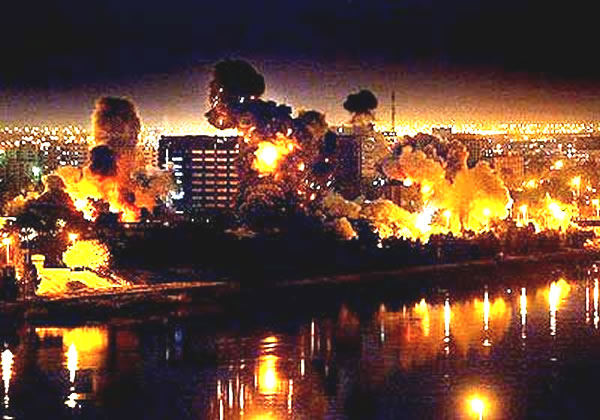
Once again, people in Grand Rapids organized regular demonstrations, teach-ins and engaged in civil disobedience at the office of Congressman Henry. The US invasion began on January 16, 1991 and lasted on 45 days because of the intense areal bombing by the US military. President Bush considered this action a victory for the US despite the fact that the US killed thousands of Iraqi civilians during that brief war and even more Iraqi civilians died because of the US imposed sanctions and the devastation done to the Iraqi national infrastructure.
It is bad enough that the MLive reporter did not seek out other voices for this story on the annual Paul B. Henry Lecture series at Calvin and it is equally frustrating that his voting record on critical issues of the day were not looked at in this story. Paul Henry may have been a “wonderful” person, but he signed off on US policies that resulted in the deaths of hundreds of thousands of people.
 Grand Rapids Institute for Information Democracy