Top Michigan PACs have raised $22.2M this cycle
This article is re-posted from the Michigan Campaign Finance Network.
Coming on the heels of a record year of lobbyists’ spending, there are more signs of recovery in the money-in-politics sector of Michigan’s economy. Michigan’s top 150 political action committees have raised $22.2 million so far this election cycle. That figure is up by 12.2 percent compared to the same point in the 2010 election cycle, when the top 150 PACs had raised $19.8 million.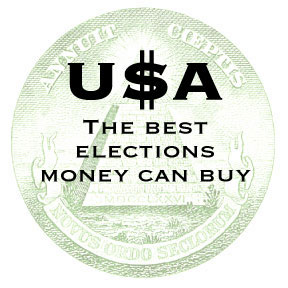
PAC fundraising this cycle is up by 1.6 percent compared to 2008, when the top 150 raised $21.8 million. This year’s total trails the mark set in Michigan’s record-setting 2006 election, when the top 150 PACs had raised $23.2 million by this point in the cycle.
Data were compiled by the nonpartisan Michigan Campaign Finance Network from reports filed last week with the Michigan Department of State.
The House Republican Campaign Committee and the House Democratic Fund have raised the most of all PACs so far this cycle. The House Republicans have raised $1,567,831 and they have $1,004,449 on hand. The House Democrats have raised $1,199,490 and they have $674,817 on hand. Both committees are debt free from last cycle.
The Senate Republican Campaign Committee has raised third most at $1,075,419 but its fund balance is only $76,336. Senate Democrats rank 10th on the list. They have raised $450,427 and have $276,472 on hand. Both Senate caucus PACs are debt free as they prepare for the 2014 elections.
Occupying positions 4 through 8 are: The Michigan Education Association PAC: $947,386; Blue Cross / Blue Shield PAC: $751,292; Michigan Regional Council of Carpenters PAC: $574,998; Michigan Association for Justice PAC: $507,137; and the Michigan Association of Realtors PAC: $472,171.
Business Leaders for Michigan PAC II ranks 9th overall, and highest among committees taking corporate contributions, with $466,000. The next leading SuperPAC is the California-based ‘education choice’ supporter, Parents and Teachers for Putting Students First – 30th with $210,000. The Michigan Chamber of Commerce PAC III ranks 3rd among SuperPACs and 36th overall with $154,406 raised.
PACs that raise corporate contributions are allowed to make independent expenditures but they are not allowed to make contributions to candidate committees.
The Michigan Chamber PAC III was heavily involved against the recall of former Rep. Paul Scott and the subsequent election of his successor, Rep. Joseph Graves. The MEA-backed Citizens Against Government Overreach, 29th with $217,681, drove the campaign to recall Scott.
Leadership PACs are a mix of the expected and the unexpected so far this cycle. House Speaker Jase Bolger has the top leadership PAC so far, ranking 14th overall with $386,973 raised. Senate Majority Leader Randy Richardville has the second biggest fundraising total among the politicians with $322,327, good for 16th overall.
Former Rep. Michael Sak of Grand Rapids has the third biggest fundraising total among leadership PACs with $249,775, holding the 22nd spot overall. Sak amassed his total by giving up funds from his old candidate committee.
The fourth biggest leadership PAC is that of Wayne County Executive Robert Ficano. He had the largest leadership PAC last cycle. This cycle he has raised $135,296, but only $1,000 since last October’s report. His administration has been racked by criminal investigations and charges against former staffers.
Gov. Rick Snyder’s One Tough Nerd PAC ranks 148th overall, at $30,175.
Last week’s PAC reports were the first ones filed by most PACs since last October, six months ago.
“The frequency of state PAC reporting is abysmal,” said Rich Robinson of the Michigan Campaign Finance Network. “We should not have to wait six months to see who is raising money from whom. The legislature and the Governor need to get a better standard of campaign finance accountability written into law. This isn’t rocket science.”
Top 150 Michigan state PACS, 01/01/2011-04/20/2012
It has been a week since the announcement from Rick DeVos of his latest endeavor known as Start Garden.
As has been the case with other projects such as 5×5 and ArtPrize, this new project has received plenty of media coverage, all with significant fanfare.
The basic idea is that with $15 million of the DeVos Family money, people will submit proposals for business ventures that DeVos and his team will look at and decide which ones deserve to get funded. Of course, there is a mechanism where the public can vote on some of the proposals, but in the end “voting” in this format will generally mean people who are supportive of such projects and those who have an awareness of it. It would be safe to assume that most of those “voting” for projects submitted to Start Garden will be people who fall into the creative class category…..the ones who who have been involved in Rick DeVos’s other projects.
DeVos made his announcement last week at a press conference held at one of the many family owned properties in Grand Rapids, the JW Marriott Hotel. DeVos is quoted in MiBiz as saying, “It’s unlike any fund in the world. It involves hundreds of ideas, which can come from anywhere and from anyone.” But any serious observer (which should include journalists) would ask the question of how this project is different than any other in the world?
Other wealthy families have a history of investing in projects, so that couldn’t be what makes it different. In fact, what the Start Garden Project is doing is somewhat similar to what banks and other financial institutions do, they lend money to projects they think are viable. The difference here is that the DeVos family and the Start Garden Team will be making those decisions, which gives them even more leverage to determine the future of Grand Rapids. Gaining more leverage in determining the future of this community has been the goal of the DeVos family ever since Rich DeVos began acquiring billions through the Amway business.
In addition to increasing the family’s influence on the economic, social and political future of Grand Rapids, the Start Garden Project is just another mechanism for the DeVos family to make money off the ideas and hard work of others. If one reads the Start Garden rules page it is clear that those who run Start Garden get to have the right to make money off of ideas that are profitable. The investment agreement section states clearly, “Start Garden does not take ownership in intellectual property of your idea at the $5,000 level. It contains options so we remain investors if your idea becomes a successful business.”
The emphasis on Start Garden’s ability to benefit from profitable ventures is restated again on a different page. “We recognize this investment agreement is unusual. It’s our prototype of an agreement that has as few strings attached as possible, but still maintains an investor relationship if your idea becomes a huge success.”
At a recent talk Rick DeVos commented that such criticism of his projects are nothing more than conspiracy theories about his family’s business. Start Garden is not a conspiracy, but it is another way for the DeVos family to make money while having more influence in the future of Grand Rapids.
Leaving Afghanistan by Staying?
This article is re-posted from Voices for Creative Non-Violence (VCNV).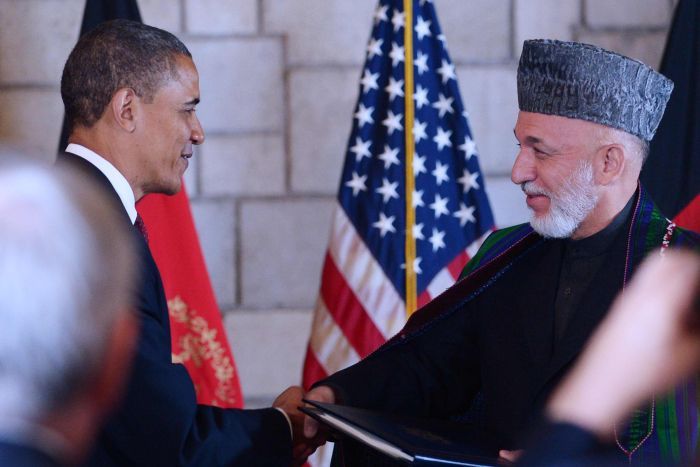
President Obama has signed an agreement with President Karzai to keep a major U.S. military presence in Afghanistan (currently about three times the size Obama began with) through the end of 2014, and to allow a significant unspecified military presence beyond that date, with no end date stipulated.
But Obama forgot to provide any reason not to withdraw from Afghanistan now. Rep. Barbara Lee has a bill for withdrawal now.

Obama spoke of a transition to Afghan control, but we’ve heard that talk for a decade. He talked of fighting al Qaeda, but the U.S. has not been fighting al Qaeda in Afghanistan, and has admitted for years that there is virtually no al Qaeda presence there.
The agreement requires that all “entities” involved in a peace process renounce violence, but the Taliban will no more do that while under foreign occupation than the United States will do so while occupying. This is not a serious plan to leave. Nor is it a plan based on Afghan sovereignty.
The agreement says it becomes effective when “the Parties notify one another, through diplomatic channels, of the completion of their respective internal legal requirements.” The U.S. Constitution requires ratification by the Senate of all treaties.
Tell Congress to insist on its right to approve or reject this plan.
A more detailed agreement will be worked out on May 20th when NATO meets in Chicago. Activists for peace and justice need to be there!
Roots Action, Veterans For Peace, Fellowship of Reconciliation, and Voices for Creative Nonviolence are working together to end the war in Afghanistan and are jointly issuing this call for peace.
This article by Vandana Shiva is re-posted from Common Dreams.
The economic crisis, the ecological crisis and the food crisis are a reflection of an outmoded and fossilized economic paradigm – a paradigm that grew out of mobilizing resources for the war by creating the category of economic “growth” and is rooted in the age of oil and fossil fuels. It is fossilized both because it is obsolete, and because it is a product of the age of fossil fuels. We need to move beyond this fossilized paradigm if we are to address the economic and ecological crisis.
Economy and ecology have the same roots “oikos” – meaning home – both our planetary home, the Earth, and our home where we live our everyday lives in family and community.
But economy strayed from ecology, forgot the home and focused on the market. An artificial “production boundary” was created to measure Gross Domestic Product (GDP). The production boundary defined work and production for sustenance as non-production and non-work – “if you produce what you consume, then you don’t produce”. In one fell swoop, nature’s work in providing goods and services disappeared. The production and work of sustenance economies disappeared, the work of hundreds of millions of women disappeared.
To the false measure of growth is added a false measure of “productivity”. Productivity is output for unit input. In agriculture this should involve all outputs of biodiverse agro-ecosystems – the compost, energy and dairy products from livestock, the fuel and fodder and fruit from agroforestry and farm trees, the diverse outputs of diverse crops. When measured honestly in terms of total output, small biodiverse farms produce more and are more productive.
Inputs should include all inputs – capital, seeds, chemicals, machinery, fossil fuels, labour, land and water. The false measure of productivity selects one output from diverse outputs – the single commodity to be produced for the market, and one input from diverse inputs – labour.
Thus low output, high input chemical, industrial monocultures, which in fact have a negative productivity, are artificially rendered more productive than small, biodiverse, ecological farms. And this is at the root of the false assumption that small farms must be destroyed and replaced by large industrial farms.
This false, fossilized measure of productivity is at the root of the multiple crises we face in food and agriculture. It is at the root of hunger and malnutrition, because, while commodities grow, food and nutrition have disappeared from the farming system. “Yield” measures the output of a single commodity, not the output of food and nutrition.
This is the root of the agrarian crisis.
When costs of input keep increasing, but are not counted in measuring productivity, small and marginal farmers are pushed into a high cost farming model, which results in debt – and in extreme cases, the epidemic of farmers’ suicides.
It is at the root of the unemployment crisis.
When people are replaced by energy slaves because of a false measure of productivity based on labour inputs alone, the destruction of livelihoods and work is an inevitable result.
It is also at the root of the ecological crisis.
When natural resource inputs, fossil fuel inputs, and chemical inputs are increased but not counted, more water and land is wasted, more toxic poisons are used, more fossil fuels are needed. In terms of resource productivity, chemical industrial agriculture is highly inefficient. It uses ten units of energy to produce one unit of food. It is responsible for 75 per cent use of water, 75 per cent disappearance of species diversity, 75 per cent land and soil degradation and 40 per cent of all Greenhouse Gas emissions, which are destabilizing the climate.
In food and agriculture, when we transcend the false productivity of a fossilised paradigm, and shift from the narrow focus on monoculture yields as the only output, and human labour as the only input, instead of destroying small farms and farmers we will protect them – because they are more productive in real terms. Instead of destroying biodiversity, we will intensify it, because it gives more food and nutrition.
Futureconomics, the economics of the future, is based on people and biodiversity – not fossil fuels, energy slaves, toxic chemicals and monocultures. The fossilized paradigm of food and agriculture gives us displacement, dispossession, disease and ecological destruction. It has given us the epidemic of farmers suicides and the epidemic of hunger and malnutrition. A paradigm that robs 250,000 farmers of their lives, and millions of their livelihoods; that robs half our future generations of their lives by denying them food and nutrition is clearly dysfunctional.
It has led to the growth of money flow and corporate profits, but it has diminished life and the wellbeing of our people. The new paradigm we are creating on the ground – and in our minds – enriches livelihoods, the health of people and eco-systems and cultures.
On April 2, 2012, the United Nations organised a High Level Meeting on Wellbeing and Happiness: Defining a new Economic Paradigm to implement resolution 65/309 [PDF], adopted unanimously by the General Assembly in July 2011 – conscious that the pursuit of happiness is a fundamental human goal and “recognising that the gross domestic product does not adequately reflect the happiness and well-being of people”.
I was invited to address the conference at the UN. The meeting was hosted by the tiny Himalayan Kingdom of Bhutan. Bhutan has given up the false categories of GNP and GDP, and replaced them with the category of “gross national happiness” which measures the wellbeing of nature and society.
Bhutanese Prime Minister Jigmi Thinley has recognised that “growing organic” and “growing happiness and wellbeing” go hand in hand. That is why he has asked Navdanya and I to help make a transition to a 100 per cent organic Bhutan.
In India, Navdanya is working with the states of Uttarakhand, Kerala, Madhya Pradesh, Jharkhand and Bihar for an organic transition. We aim for an organic India by 2050, to end the epidemic of farmer suicides and hunger and malnutrition, to stop the erosion of our soil, our biodiversity, our water; to create sustainable livelihoods and end poverty.
This is futureconomics.

Earlier today, a small group of people gathered at the corner of Fulton and Division in downtown Grand Rapids to draw attention to the US/NATO war in Afghanistan.
The group handed out flyers to people passing by and held signs that called for an end to the more than a decade-long US/NATO occupation of Afghanistan that has escalated under the Obama administration.
Thos involved in organizing the protest were also inviting people to Chicago later this month to be part of a march against NATO that is expected to have several hundred thousand participants.
We interviewed one of the organizers, Tom Burke, and asked him about the relationship between May Day and the May 20th action in Chicago, Obama’s continuation of the Bush wars and what people can expect if they go to Chicago for the NATO protest on May 20.
You Can Vote, but You Can’t Work
This article by Vijay Prashad is re-posted from CounterPunch.
In August 1964, Malcolm X spent several weeks in Egypt. While in Cairo, he wrote an essay in the Egypt Gazette entitled “Racism: the Cancer that is Destroying America.” Here, Malcolm X noted, “The common goal of 22 million Afro-Americans is respect and HUMAN RIGHTS….We can never get civil rights in America until our HUMAN RIGHTS are first restored.” The distinction is essential. Civil Rights are earned through the State form. They are historically specific to the modern world, and came onto the agenda of the modern State only because of the struggles of ordinary people to move the ideals of the early modern era into the realm of legality. These are Civil Rights.
Human Rights, Malcolm notes, are to be restored. They are innate, the essence of our species being, the way in which we as social actors want to see ourselves, and how our best instincts force us to see each other. These are innate, but they are not always enacted, for human history is as much a struggle of ordinary people for justice (civil rights) as it is the march of dehumanization. The dance between human rights, our rights as people in society, and civil rights, our rights as citizens in states, is a fundamental part of the grammar of modern politics. To believe that to win civil rights from the state is sufficient is what constitutes modern liberalism: legal provisions for equality are enough for it. That is why it celebrates the US Civil Rights Act of 1964 as its highest achievement. After that, modern liberalism sees that the task is to tinker with reality, not to fundamentally transform it.
Malcolm X looked through and beyond modern liberalism. Of course civil rights in the state are necessary, but these are not sufficient. More is required.
The great tragedy of the movement that fought for civil rights within the United States is that it won its liberal victory just when the United States economy and society were violently transformed. The structural process of globalization and the Reaganist anti-State policy combined to undermine the very institutions that had been tasked with upholding the civil rights of the newly enfranchised minorities. A weakened State and a national economy convulsed by the domination of finance would not be able to guarantee the civil rights of the people. This is what Malcolm saw, and this is why he was quick to seize on the distinction between civil rights and human rights.
It is also fitting that Malcolm made these comments in Egypt. It is a long-standing tradition in African American radical thought that over the course of a career its political intellectuals have begun with hope that justice would be attained within the American project, and then in the course of struggle come to the realization that absent an international perspective this dream is futile. The importance of Pan-Africanism is here, but Pan-Africanism is a concrete form of what is the more general affirmation, the importance of an internationalist politics. Since 1964, the liberal doctrine of multiculturalism has enabled the state to absorb a small percentage of minorities into the ranks of the elite, while at the same time the question of human rights for the majority of minorities languishes. Barack Obama and Susan Rice put a sophisticated face on contemporary imperialism, at the same time as the State enhances a regime to devastate the social world of the darker nations.
That mix of globalization and Reaganism which tragically undermined the goals of the Civil Rights victories is what constitutes neo-liberalism: opening up for profit areas of social life that had been communal, selling public assets at throwaway prices to private speculators, allowing finance to become dominant over social life, and enabling real estate and insurance to produce massive bubbles that burst in slow motion and then spectacularly in 2008. The social consequences of neo-liberalism have been grotesque. Global unemployment is at spectacularly high levels, with an “alarming” future for joblessness, according to the International Labour Organisation’s World of Work Report 2012. Young people are nearly three times as likely as adults to be unemployed. An estimated 6.4 million young people have given up hope of finding a job.
You can vote, but you can’t work.
High unemployment comes in a context of a collapsed state-support network, a weakened social fabric and criminally high food and fuel prices that have resulted mostly from commodity speculation in these markets. From Rome, the Food and Agriculture Agency reports that the world’s hungry will top 1.02 billion this year. Since 2008, food riots have struck Africa, Asia and Latin America, with the edges of Europe and the United States now prone to inflation protests. The Social Unrest Index shows that 57 out of 106 countries showed a risk of increased social unrest. The IMF recognized that one of the spurs for the Arab Revolt of this year was the rising bread prices as a result of the end to the “democracy of bread.”
You can vote, but you can’t eat.
It is bad enough if one is reduced to the level of bare life, but even worse if this condition is not general across the population. Rates of social inequality are at record levels for the modern era. In the US, the Occupy movement raised the issue of the 1%. We know that they control obscene amounts of social wealth. It is scandalous when you look at the wealth situation on the global level. A recent UN report shows us that the richest 1% of adults across the planet owned forty percent of global assets, and the richest 10% owned eighty-five percent of the world total.
You can vote, but you have no power.
Disparity and deprivation do not sit well with the commonplace ideas of fairness and justice. The powerful know this. The way they divide up the national budget demonstrates their values. The US national budget is given over to military and police expenditure, to prisons rather than schools, to guns rather than bread. Given the social consequences of neo-liberalism, it is far more effective and logical to build a security apparatus, to cage people into devastated cites or to hold them in congested high-security prisons. There is nothing irrational about the prison industrial complex. From a neo-liberal perspective, it is perfectly reasonable. Neo-liberalism was always purchased with the iron fist, rarely with the velvet glove (whether your example is Chile, 1973 or NYC, Guiliani time).
You could vote, but we’ve now locked you up.
But you cannot lock up Freedom.
One of the great triumphs of the past two decades has been the gradual and by now almost total demise of the legitimacy of the current phase of capitalism, in other words, neo-liberalism. The first big blow to neo-liberalism came in South America, starting with the Caracazo in 1989 and ending in the Pink Tide of elections that brought in governments that leaned Left. Over the past two years, we’ve seen massive protests in Africa and Asia, with the Arab Spring as the most dramatic, and then the southern European uprisings bookended by the Occupy experiment. These tell us that neo-liberalism is the naked Emperor. The governing ideology of the ruling class is bankrupt.
Neo-liberalism has begun to be seen as de-legitimate, but neither it nor the logic that governs beneath it, capitalism, has been dispatched for at least two reasons.
First, neo-liberalism continues to exercise institutional power through the Central Banks and the multilateral financial institutions. Inflation is their target, not jobs. There is no fiscal space, no policy space, for States or politicians to exert other dreams, other imaginations. If they do not hold their debt down and keep inflation low, they are sanctioned by a rise in the price of their borrowing. Freedom to act is constrained by the dollar-crats who hold the keys to the vaults.
Second, one of the long-term trends of the capitalist system is to the move by those who control capital to substitute machines for labor. Capitalism is a massive labor-displacing system. The problem with actual workers is that they are restive and demanding, and they are expensive. Machines are undemanding and cheaper. Machines might end up being ecologically devastating, but that’s not relevant to capitalism. Machines might also end up being socially wonderful, since they free up time for leisure, but that would only work if the fruits of mechanization were not seized by the select few who own or control the social wealth.
What we know for sure is that the time of the neoliberal security state, of the governments of the possible, is now over. Even if such states remain, its legitimacy has eroded. The time of the impossible has presented itself.
We need to fight for reforms because they are imperative to the survival of people. But the reforms themselves can never deliver more than survival. The system is simply not able to open its arms and embrace us. Love is antithetical to Profit and Property. There is nothing that we can tinker with to make this system any better. Many have already come around to the idea that they have become disposable to this system, and so they have disposed it: they have turned to the creation of alternative economies, to new collectivities, experimental forms of putting our social relations ahead of Money. Our fear, my fear, of the future holds us back from fully embracing the time of the impossible. If we want to restore our human rights, as Malcolm said, the time is now.
In Memory of GRIID contributor Kate Wheeler
Long time GRIID contributor Kate Wheeler passed away on Saturday after fighting an illness for years.
Despite an illness that limited her mobility, Kate Wheeler was a tenacious fighter for justice and someone with a solid grasp of history.
Kate had been contributing to GRIID over the past few years, with numerous stories on the consequences of Governor Snyder’s austerity measures, the battle against Michigan’s Emergency Financial Manager Law and the role that the right wing think tank, the Mackinac Center for Public Policy, played in the push to privatize more public services in Michigan and punish public workers.
In addition, Kate wrote numerous stories under the heading of “This Day is Resistance History,” a column that was intended to show that there is a rich history of public resistance to injustice in the US and around the world.
Her last column was on April 17, The Capitalist Shame of the Titanic.
We at GRIID are grateful for Kate’s contributions and we will miss her tenacious commitment to justice.
This campaign finance update is re-posted from OpenSecrets.
Pharmaceuticals, utilities and big agriculture have led the lobbying charge so far this year, according to preliminary figures from latest lobbying disclosures. The pharmaceutical industry as a whole spent $69.6 million on lobbying in the first three months alone, while electrical utilities spent $43.3 million. The agricultural services industry – which includes heavy hitters like Monsanto, the American Farm Bureau and Archer Daniels Midland – spent far less, only about $12.9 million, but that represented a 48 percent increase over its lobbying in the final three months of 2011.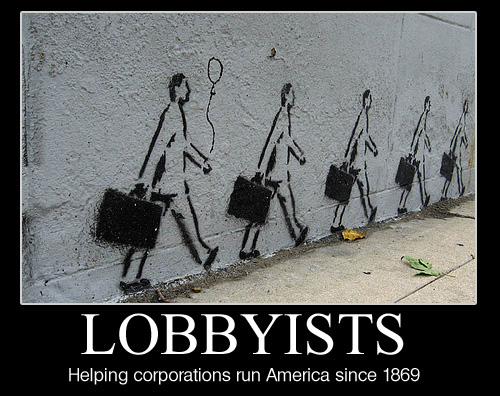
Overall, the ebb and flow of industries on our list of top lobbyists was dictated by the legislative calendar. While all these groups regularly rank highly in terms of their spending, they all had particular battles early in 2012.
The farm bill, the sprawling piece of legislation that sets the tone (and subsidies) every five years for the agriculure and food industry, is up for reauthorization this year — giving the agriculture industry a lot to talk to legislators about. The American Farm Bureau spent $6 million in the first three months of the year, a bit more than it spent in the entirety of 2011. That pushed the organization, which is the largest trade group for the industry, into fourth position on our list of top lobbying clients so far this year.
It’s difficult to tell exactly how much an industry or company spends lobbying on a particular bill — most big companies have a laundry list of interests — but the pharmaceutical industry clearly focused on protecting the existing provisions of Medicare Part D, which subsidizes the cost of drugs. Critics in Congress have targeted the program for its huge cost, and some want it to be more transparent about how reimbursements are set. Also at issue is whether the government should be able to negotiate drug prices with the companies, something that is currently prohibited.
At the forefront of the pharmaceutical firms’ lobbying push was PhRMA (Pharmaceutical Researchers and Manufacturers of America), the industry trade group, which has spent $5.2 million so far this year. If that rate is sustained, PhRMA will top its 2009 total – when it fought hard over healthcare reform and spent $26.1 million. Following right behind the trade group was Merck, which has spent $4.5 million so far this year, more than half of its total spending in all of last year.
The $43.3 million that electric utilities spent lobbying makes it the second-biggest spending industry, but the number represents only a 12 percent increase over last quarter’s lobbying. The dominant issue for most of the big utilities – like Southern Company (which accounted for nearly 10 percent of the entire industry’s lobbying expenses with $4 million spent so far this year) — is the EPA’s plan to regulate the emissions of greenhouse gases. Since the plan is on hold while details are worked out, the big utilities have all had a chance to make their voices heard with lawmakers on new bills that would kill the EPA’s power to regulate in this area.
To see a full list of the top industries and how they’ve lobbied Washington in the first three months of 2012, explore our industry lobbying page. Or, check out our top spenders page, to see a list of top organizations and how much they spent on lobbying so far in 2012 (spoiler: once again, the No. 1 organization, by far, is the Chamber of Commerce).
Michigan Senator Debbie Stabenow was in Grand Rapids today to promote her support for what MLive called the “Bring Jobs Home Act.”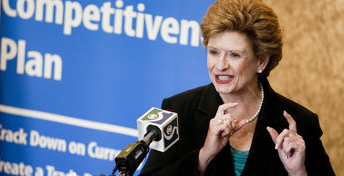
First, it should be noted that Senator Stabenow is up for re-election and her visit to Grand Rapids today is most likely motivated by her desire to stay in the Senate.
Second, the public should be very skeptical of such a proposal. The language of the proposed legislation on one level seems kind of like a benefit when it says the bill is designed, “To amend the Small Business Act to establish a loan program to assist and provide incentives for manufacturers to reinvest in making products in the United States, and for other purposes.”
The public and journalists are often swayed by any language that promotes the notion of job creation, but what this proposed legislation will actually do is transfer more public money to the private sector.
Why is it that those who promote capitalism never see the contradiction of the state intervening on behalf of capital? This contradiction is even more apparent when looking at US trade policy over the past 20 years.
The Bring Jobs Home Loan Act of 2012 is designed to provide financial incentives for manufacturers to bring jobs back to the US that have gone overseas. However, over the past 20 years US trade policy has facilitated an easy transfer of US manufacturing jobs to foreign countries with legislation like NAFTA, CAFTA and the most recent trade bills with Colombia, Panama and South Korea.
These trade policies have generally been a bi-partisan affair, with the first major trade agreement being NAFTA. NAFTA was signed by the Clinton administration and has resulted in Michigan losing 287,923 manufacturing jobs (or 36 percent) during the NAFTA-WTO period (1994-2011), according to Public Citizen.
More recently, the US Congress passed legislation that would make it easier for US companies and investors to do business in Panama, Colombia and South Korea. Public Citizen was clear last fall about how these trade policies would impact US workers by stating:
“Passing the Korea deal would kill U.S. jobs. Even official government studies show it will increase the U.S. trade deficit. Passing the Colombia deal would kill any leverage Colombian union, Afro-Colombian and other community leaders and their U.S. union and civil society friends and allies have to stop the murders, forced displacements and other acts of political violence that dominate life in Colombia. And passing the Panama deal would kill our ability to fight tax havens without risking attack by corporations under new privileges established in the pact.”
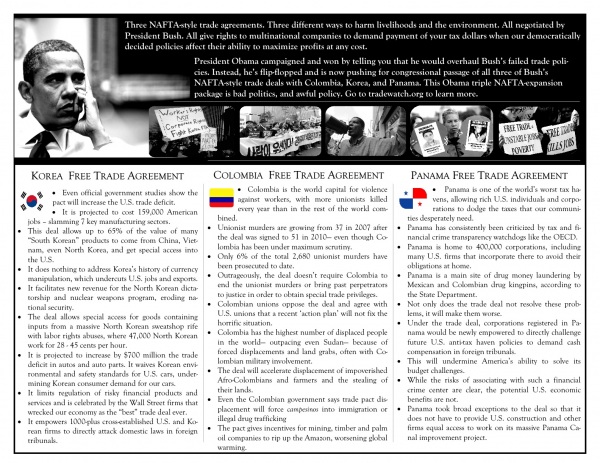
Michigan Senator Stabenow voted for the trade agreement with South Korea, which was the biggest US job killer of the three. She voted against the trade proposals with Colombia and Panama in October, but those will have less of an impact on US jobs.
Having supported some trade agreements, which export US jobs abroad, it seems a bit strange that Stabenow would now want to provide government incentives to have manufacturers bring jobs back to the US. However, as we stated earlier, in her bid to win re-election, the Senator is really pushing for legislation that will transfer taxpayer money to private businesses and then call it job creation.
This article by Tom Engelhardt is re-posted from Tom’s Dispatch.
He has few constraints (except those he’s internalized). No one can stop him or countermand his orders. He has a bevy of lawyers at his beck and call to explain the “legality” of his actions. And if he cares to, he can send a robot assassin to kill you, whoever you are, no matter where you may be on planet Earth.
He sounds like a typical villain from a James Bond novel. You know, the kind who captures Bond, tells him his fiendish plan for dominating the planet, ties him up for some no less fiendish torture, and then leaves him behind to gum up the works.
As it happens, though, he’s the president of the United State, a nice guy with a charismatic wife and two lovely kids.
How could this be?
Crash-and-Burn Dreams and One That Came to Be
Sometimes to understand where you are, you need to ransack the past. In this case, to grasp just how this country’s first African-American-constitutional-law-professor-liberal Oval Office holder became the most imperial of all recent imperial presidents, it’s necessary to look back to the early years of George W. Bush’s presidency. Who today even remembers that time, when it was common to speak of the U.S. as the globe’s “sole superpower” or even “hyperpower,” the only “sheriff” on planet Earth, and the neocons were boasting of an empire-to-come greater than the British and Roman ones rolled together?
In those first high-flying years after 9/11, President Bush, Vice President Dick Cheney, and their top officials held three dreams of power and dominance that they planned to make reality. The first was to loose the U.S. military — a force they fervently believed capable of bringing anybody or any state to heel — on the Greater Middle East. With it in the lead, they aimed to create a generations-long Pax Americana in the region.
The invasion of Iraq in 2003 was to be only the initial “cakewalk” in a series of a shock-and-awe operations in which Washington would unilaterally rearrange the oil heartlands of the planet, toppling or cowing hostile regimes like the Syrians and the Iranians. (A neocon quip caught the spirit of that moment: “Everyone wants to go to Baghdad. Real men want to go to Tehran.”) This, in turn, would position the U.S. to control the planet in a historically unique way, and so prevent the rise of any other great power or bloc of nations resistant to American desires.
Their second dream, linked at the hip to the first, was to create a generations-long Pax Republicana here at home. (“Everyone wants to go to Kansas, but real men want to go to New York and LA.”) In that dream, the Democratic Party, like the Iraqis or the Iranians, would be brought to heel, a new Republican majority funded by corporate America would rule the roost, and above it all would be perched a “unitary executive,” a president freed of domestic constraints and capable — by fiat, the signing statement, or simply expanded powers — of doing just about anything he wanted.
Though less than a decade has passed, both of those dreams already feel like ancient history. Both crashed and burned, leaving behind a Democrat in the White House, an Iraq without an American military garrison, and a still-un-regime-changed Iran. With the arrival on Bush’s watch of a global economic meltdown, those too-big-not-to-fail dreams were relabeled disasters, fed down the memory hole, and are today largely forgotten.
It’s easy, then, to forget that the Bush era wasn’t all crash-and-burn, that the third of their hubristic fantasies proved a remarkable, if barely noticed, success. Because that success never fully registered amid successive disasters and defeats, it’s been difficult for Americans to grasp the “imperial” part of the Obama presidency.
Remember that Cheney and his cohorts took power in 2001 convinced that, post-Watergate, post-Vietnam, American presidents had been placed in “chains.” As soon as 9/11 hit, they began, as they put it, to “take the gloves off.” Their deepest urge was to use “national security” to free George W. Bush and his Pax Americana successors of any constraints.
From this urge flowed the decision to launch a “Global War on Terror” — that is, a “wartime” with no possible end that would leave a commander-in-chief president in the White House till hell froze over. The construction of Guantanamo and the creation of “black sites” from Poland to Thailand, the president’s own private offshore prison system, followed naturally, as did the creation of his own privately sanctioned form of (in)justice and punishment, a torture regime.
At the same time, they began expanding the realm of presidentially ordered “covert” military operations (most of which were, in the end, well publicized) — from drone wars to the deployment of special operations forces. These were signposts indicating the power of an unchained president to act without constraint abroad. Similarly, at home, the Bush administration began expanding what would once have been illegal surveillance of citizens and other forms of presidentially inspired overreach. They began, in other words, treating the U.S. as if it were part of an alien planet, as if it were, in some sense, a foreign country and they the occupying power.
With a cowed Congress and a fearful, distracted populace, they undoubtedly were free to do far more. There were few enough checks and balances left to constrain a war president and his top officials. It turned out, in fact, that the only real checks and balances they felt were internalized ones, or ones that came from within the national security state itself, and yet those evidently did limit what they felt was possible.
The Obama Conundrum
This, then, was what Barack Obama inherited on entering the Oval Office: an expanding, but not yet fully expansive, commander-in-chief presidency, which, in retrospect, seemed to fit him like a… glove. Of course, he also inherited the Bush administration’s domestic failures and those in the Greater Middle East, and they overshadowed what he’s done with that commander-in-chief presidency.
It’s true that, with President Truman’s decision to go to war in Korea in 1950, Congress’s constitutional right to declare war (rather than rubberstamp a presidential announcement of the same) went by the boards. So there’s a distinct backstory to our present imperial presidency. Still, in our era, presidential war-making has become something like a 24/7 activity.
Once upon a time, American presidents didn’t consider micro-managing a permanent war state as a central part of their job description, nor did they focus so unrelentingly on the U.S. military and the doings of the national security state. Today, the president’s word is death just about anywhere on the planet and he exercises that power with remarkable frequency. He appears in front of “the troops” increasingly often and his wife has made their wellbeing part of her job description. He has at his command expanded “covert” powers, including his own private armies: a more militarized CIA and growing hordes of special operations forces, 60,000 of them, who essentially make up a “covert” military inside the U.S. military.
In effect, he also has his own private intelligence outfits, including most recently a newly formed Defense Clandestine Service at the Pentagon focused on non-war zone intelligence operations (especially, so the reports go, against China and Iran). Finally, he has what is essentially his own expanding private (robotic) air force: drones.
He can send his drone assassins and special ops troops just about anywhere to kill just about anyone he thinks should die, national sovereignty be damned. He firmly established his “right” to do this by going after the worst of the worst, killing Osama bin Laden in Pakistan with special operations forces and an American citizen and jihadi, Anwar al-Awlaki, in Yemen with a drone.
At the moment, the president is in the process of widening his around-the-clock “covert” air campaigns. Almost unnoted in the U.S., for instance, American drones recently carried out a strike in the Philippines killing 15 and the Air Force has since announced a plan to boost its drones there by 30%. At the same time, in Yemen, as previously in the Pakistani borderlands, the president has just given the CIA and the U.S. Joint Operations Command the authority to launch drone strikes not just against identified “high-value” al-Qaeda “targets,” but against general “patterns of suspicious behavior.” So expect an escalating drone war there not against known individuals, but against groups of suspected evildoers (and as in all such cases, innocent civilians as well).
This is another example of something that would be forbidden at home, but is now a tool of unchecked presidential power elsewhere in the world: profiling.
As with Bush junior, the only thing that constrains the president and his team, it seems, is some set of internalized checks and balances. That’s undoubtedly why, before he ordered the successful drone assassination of Awlaki, lawyers from the Pentagon, State Department, National Security Council, intelligence agencies, and the Department of Justice Office of Legal Counsel held meetings to produce a 50-page memorandum providing a “legal” basis for the president to order the assassination of a U.S. citizen, a document, mind you, that will never be released to the public.
In truth, at this point the president could clearly have ordered those deaths without such a document. Think of it as the presidential equivalent of a guilty conscience, but count on this: when those drones start taking out “behaviors” in Yemen and elsewhere, there will be no stream of 50-page memorandums generated to cover the decisions. That’s because as you proceed down such a path, as your acts become ever more the way of your world, your need to justify them (to yourself, if no one else) lessens.
That path, already widening into a road, may, someday, become the killing equivalent of an autobahn. In that case, making such decisions will be ever easier for an imperial president as American society grows yet more detached from the wars fought and operations launched in its name. In terms of the president’s power to kill by decree, whether Obama gets his second term or Mitt Romney steps into the Oval Office, the reach of the commander-in-chief presidency and the “covert” campaigns, so secret they can’t even be acknowledged in a court of law, so public they can be boasted about, will only increase.
This is a dangerous development, which leaves us in the grip — for now — of what might be called the Obama conundrum. At home, on issues of domestic importance, Obama is a hamstrung, hogtied president, strikingly checked and balanced. Since the passage of his embattled healthcare bill, he has, in a sense, been in chains, able to accomplish next to nothing of his domestic program. Even when trying to exercise the unilateral powers that have increasingly been invested in presidents, what he can do on his own has proven exceedingly limited, a series of tiny gestures aimed at the largest of problems. And were Mitt Romney to be elected, given congressional realities, this would be unlikely to change in the next four years.
On the other hand, the power of the president as commander-in-chief has never been greater. If Obama is the president of next to nothing on the domestic policy front (but fundraising for his second term), he has the powers previously associated with the gods when it comes to war-making abroad. There, he is the purveyor of life and death. At home, he is a hamstrung weakling, at war he is — to use a term that has largely disappeared since the 1970s — an imperial president.
Such contradictions call for resolution and that should worry us all.
 Grand Rapids Institute for Information Democracy