This Media Alert is re-posted from the Campaign for a Commercial Free Childhood.
PBS deserves tons of awards. But not for selling kids on fast food.
Last year, the popular PBS Kids show Martha Speaks entered into a 4-year agreement to promote fast food purveyor Chick-fil-A. The multi-pronged campaign, whose stated goals include to “reach children” and “drive brand preference and restaurant traffic,” includes 15-second ads for Chick-fil-A before and after Martha Speaks TV episodes; advertising on the PBS Kids’ website; and in-store promotions at more than 1600 Chick-fil-A locations. In 2011, an astounding 56 million Chick-fil-A Kids’ Meals were distributed in Martha Speaks co-branded bags. PBS executives refuse to say what they have planned for the 30 months left in the promotion.
Tell PBS: Stop selling kids on fast food.
You might think that PBS would be ashamed of using a highly-regarded children’s show to lure kids to Chick-fil-A, especially since a kids’ meal can contain as much as 670 calories, 29 grams of fat, and 25 grams of sugar. Instead, PBS is using the “success” of its fast food campaign to attract other sponsors looking to target children. The Sponsorship Group for Public Television features a case study on the Chick-fil-A campaign to convince companies that sponsoring kids’ shows on PBS can help meet their marketing goals. And PBS member station WGBH—which produces Martha Speaks—actually nominated its Chick-fil-A campaign for a kids marketing award. On June 7 in New York City, the Chick-fil-A/Martha Speaks promotions are competing for a Cynopsis Kids Imagination Award for “Best Promotional Campaign.”
We support public broadcasting and abhor the ongoing political attacks on funding PBS’s excellent programming. But public television has an obligation to put the wellbeing of children first. Campaigns like the Chick-fil-A/Martha Speaks partnership make it difficult to distinguish PBS from corporate networks generating profits by selling kids on junk.
Children deserve better. Using a beloved children’s character to entice kids to eat fast food is nothing to celebrate. So let’s tell PBS and WGBH to end their Chick-fil-A promotion and withdraw from the Cynopsis Awards.
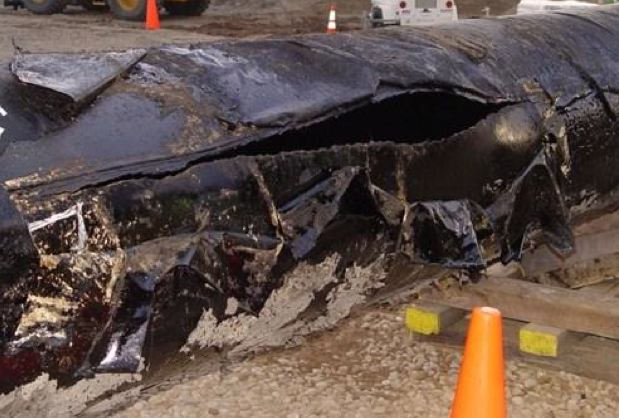
Within the last 24 hours, numerous West Michigan news sources have reported on the newly released government documents related to the 2010 Enbridge oil disaster that caused nearly 1 million gallons of oil to contaminate the Kalamazoo River.
The Mlive reporter out of Kalamazoo states, “The 158 documents and 58 photos will provide the factual basis for the National Transportation Safety Board’s conclusion of what caused the spill.”
The Mlive story goes on to cite a spokesperson for the Natural Resources Defense Council, who made reference to what this new information could mean as it relates to the pipeline system that Enbridge will be responsible for in the Keystone Tar Sands Project.
Despite the limited discussion around the Keystone Tar Sands Project, much of the coverage was focused on the release of the documents, but not what they concluded.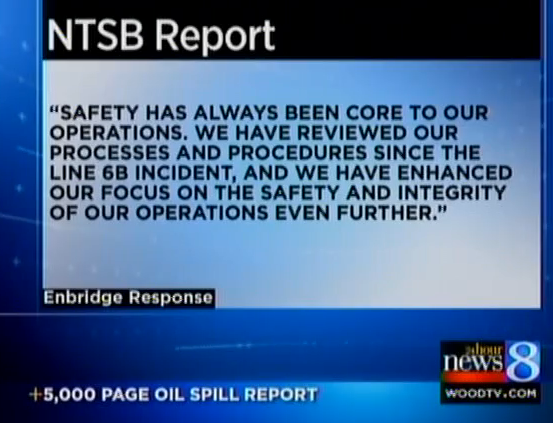
In addition, the MLive story also includes a response from Enbridge, as did most of the other major media sources in West Michigan. The WOOD TV 8 story quoted an Enbridge executive who stated, “Safety has always been core to our operations. We have reviewed our processes and procedures since the Line 6B incident, and we have enhanced our focus on the safety and integrity of our operations even further.”
The only major news agency in West Michigan that framed the story differently was the Battle Creek Enquire. Their headline had a different tone with, Documents shed light on Enbridge spill response. The Battle Creek Enquire article just does a better job of framing the story, by reporting on what some of the documents say. The documents reveal that the response time by Enbridge was faulty and the alarm designed to go off when pipeline breaks occurred, wasn’t working.
The documents released are worth reading and they reveal other useful bits of information as well.
Lastly, it is important to point out that in none of the West Michigan news coverage of these new documents was their any reference to the company’s track record on oil spills and pipeline leaks. According to a report from the group Tar Sands Watch,
Between 1999 and 2010, across all of Enbridge’s operations there have been 804 spills that have released 168,645 barrels (approximately 26.81 million litres, or 7.08 million gallons) of hydrocarbons into the environment.159 This amounts to approximately half of the oil that spilled from the oil tanker the Exxon Valdez after it struck a rock in Prince William Sound, Alaska in 1988.
Reporting the track record of Enbridge on oil spills and pipeline leaks should have been a priority for reporters, but we have come to learn that such reporting has not been consisted with how they have covered this issue from the very beginning.

In 1830, the US government passed what was called the Indian Removal Act, as one of the first formal means of displacing Native Americans from land that the government and the wealthy White sectors had plans for.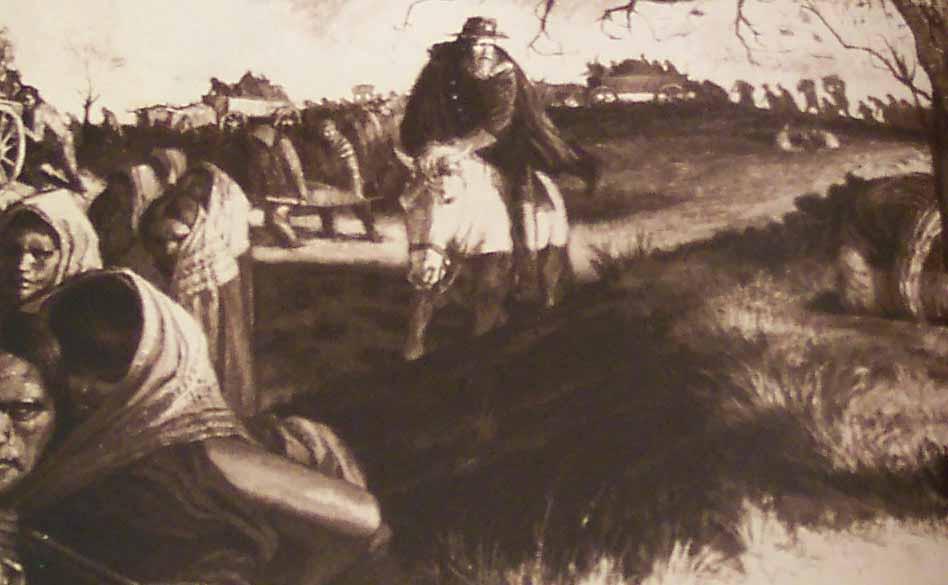
Native communities had been outright attacked in many cases before this, particularly in the northeastern part of the country, but Congress and Democratic President Andrew Jackson decided to take a different tactic.
The land, in what is now Georgia, South Carolina and Florida was inhabited by the Cherokee, Choctaw, Creek, Seminole and Chickasaw nations, who lived in relative harmony with each other. However, the growing slave labor plantation system was in need of expansion and the last thing that plantation owners wanted was any kind of alliance between Black slaves and Native communities, an alliance that some military strategist had seen before.
During the Seminole Wars in Florida, Andrew Jackson had seen the danger of runaway slaves finding sanctuary in Native communities, as several of the bravest Seminole fighters were Black Indian, as is well documented in Black Indians, by William Loren Katz.
Jackson wanted no part of any kind of a repeat with Black and Native resistance to the US plans for expansion, so his administration devised a plan of forced removal of the Cherokee, Choctaw, Creek, Seminole and Chickasaw people to Oklahoma, a campaign, which began as early as 1831.
The pretext of this forced removal, according to Jackson administration, was to provide greater separation between Whites and Native people in order to avoid future conflicts. The White-owned newspapers in the area fed the perception that Native people were dangerous, based on how they were portrayed. In the book News for All the People: The Epic Story of Race and the American Media, the authors demonstrate that not only was there a disproportionate amount of news stories about Native people at that time, most of the stories framed Natives as violent and a danger to White settler communities.
The forced removal of what was known as the Trail of Tears began on May 23rd, 1838, but the Cherokee were rounded up by US troops months before and interned in camps, where they were held until the long march west began.
Native men, women, children and their elders were forced to march by US troops who held them at bayonet point throughout. Most accounts note that there were inadequate provisions of food, clothing and medical care for the thousands that were forcibly removed.
The forced removal of the Cherokee Nation took them 1,000 miles west to Oklahoma, but along the way thousands died from starvation, disease or freezing to death during the winter months of the forced removal. Some estimates say that 55% of the Cherokee Nation died as a direct result of the Trail of Tears. (A Little Matter of Genocide, Churchill)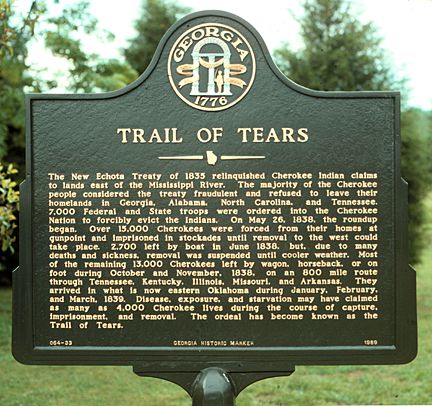
However, to those in power in the US, the loss of this many Native people was of little concern, especially considering the amount of land that was then appropriated by the federal government. The amount of land appropriated from the Indian removal of Native Nations in the southeast part of the country was roughly 25 million acres, which was then used by White Settlers.
In recent years the Trail of Tears has become a mild embarrassment to the US government, but much of the official landmarks have been sanitized in order to diminish the brutality of what is known as the Trail of Tears. Excellent examples of the misinformation of this history on those landmarks are well documented in James Loewen’s book, Lies Across America.
After World War II, the Genocide Convention laid out a legal framework for how we currently define genocide. Often, people think that genocide is only the outright killing of a people, but the legal definition includes the theft of a people’s culture, preventing a group of people to reproduce or the forced removal of people from their traditional lands. We know that thousands died in the process of the Trail of Tears, but we should never forget the loss of land, culture and heritage that came with this heinous campaign of violence against Native people in US history.
Many Native people resisted the forced removal and died in the process. It is important that we honor their resistance and never forget crimes committed like the Trail of Tears.
Repealing the Wilderness Act?
This article by Matthew Koehler is re-posted from CounterPunch.
“The purpose of the Wilderness Act is to preserve the wilderness character of the areas to be included in the wilderness system, not to establish any particular use.”
– Howard Zahniser, chief author of the Wilderness Act
One of the activities I enjoy more than any other is waking up before dawn on a crisp, late-fall morning, loading up my backpack, grabbing my 30-06 and walking deep into a USFS Wilderness area in search of elk and deer. Because of this, and many other reasons, as a backcountry hunter I’m adamantly opposed to HR 4089, the so-called “Sportsmen’s Heritage Act of 2012.
The folks at Wilderness Watch have put together a very detailed analysis of HR 4089 titled, “How the Sportsmen’s Heritage Act of 2012 (HR 4089) Would Effectively Repeal the Wilderness Act.” The analysis describes in detail how the incredibly destructive provisions of HR 4089 would effectively repeal the Wilderness Act of 1964. Make no mistake about it, if HR 4089 becomes law – and it has already passed the House with all but two Republicans and 20 percent of Democrats voting for it – Wilderness as envisioned in the Wilderness Act will cease to exist. Here’s the intro to that analysis:
Introduction
On April 17, 2012, the U.S. House of Representatives passed HR 4089, the Sportsmen’s Heritage Act, supposedly “to protect and enhance opportunities for recreational hunting, fishing and shooting.” But the bill is a thinly disguised measure to gut the 1964 Wilderness Act and protections for every unit of the National Wilderness Preservation System.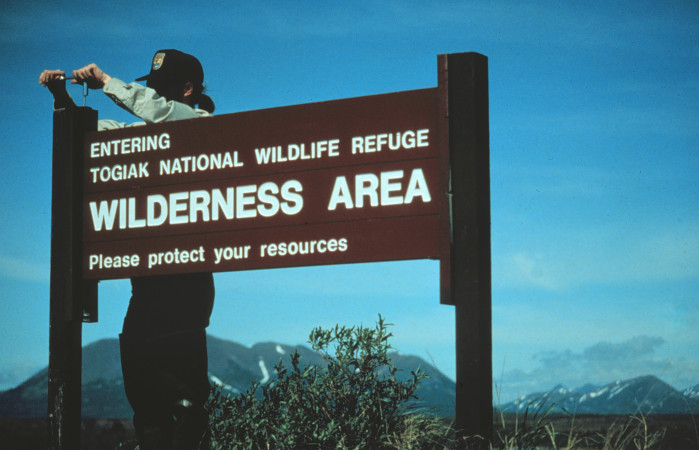
HR 4089 would give hunting, fishing, recreational shooting, and fish and wildlife management top priority in Wilderness, rather than protecting the areas’ wilderness character, as has been the case for nearly 50 years. This bill would allow endless, extensive habitat manipulations in Wilderness under the guise of “wildlife conservation” and for providing hunting, fishing, and recreational shooting experiences. It would allow the construction of roads to facilitate such uses and would allow the construction of dams, buildings, or other structures within Wildernesses. It would exempt all of these actions from the National Environmental Policy Act (NEPA) review. Finally, HR 4089 would remove Wilderness Act prohibitions against motor vehicle use for fishing, hunting, or recreational shooting, or for wildlife conservation measures.
According to some news reports, Senator Tester (D-Montana) is the guy the NRA and Safari Club are hoping will sponsor the bill in the Senate. They’ll need Democrat support and Tester is a target for obvious reasons, since he’s locked in a tight re-election campaign with Congressman Denny Rehberg (R-Montana). In addition to the detailed analysis from Wilderness Watch more info concerning HR 4089 from the Animal Welfare Institute is contained in this action alert, where you can quickly send a note to your two US Senators. According to the Animal Welfare Institute, other extreme provisions within HR 4089 include:
Amending the Marine Mammal Protection Act to permit the importation of polar bear hunting trophies from Canada for bears killed before May 15, 2008 — the date when polar bears were designated as a threatened species under the Endangered Species Act. This would reward 41 hunters for bad behavior: they either killed bears who were off limits or wanted to get their kills in knowing the bears were about to be listed;
Requiring the U.S. Forest Service and U.S. Department of the Interior to open nearly all public lands (including National Wildlife Refuges!) to recreational hunting, and directing them to do so without following the environmental review processes required under the National Environmental Policy Act; and
Eliminating the Environmental Protection Agency’s authority to protect wildlife, habitat, and people from lead and other toxic substances released by ammunition waste under the Toxic Substances Control Act, thereby undermining the ability of the Agency to fulfill its obligation to protect public health and the environment.
During a recent interview on C-SPAN, the head lobbyist for the U.S. Sportsmen’s Alliance, one of the groups pushing the bill, admitted that most federal land is already accessible to hunters and anglers, and that this bill was simply a proactive measure in case something happens at a later date. That just reaffirms what Representative Raul Grijalva (D-AZ) correctly noted during his speech against the bill: “The problem this bill claims to solve actually does not exist.”
As an avid backcountry hunter, I couldn’t agree more.
How Rural America Got Fracked
This article by Ellen Cantarow is re-posted from TomDispatch. Editor’s Note: While this story deals with the consequences of fracking in Wisconsin and Minnesota, it should be of concern for people who live in West Michigan, where recent land auctions took place that could result in hydraulic fracking.
If the world can be seen in a grain of sand, watch out. As Wisconsinites are learning, there’s money (and misery) in sand — and if you’ve got the right kind, an oil company may soon be at your doorstep.
March in Wisconsin used to mean snow on the ground, temperatures so cold that farmers worried about their cows freezing to death. But as I traveled around rural townships and villages in early March to interview people about frac-sand mining, a little-known cousin of hydraulic fracturing or “fracking,” daytime temperatures soared to nearly 80 degrees — bizarre weather that seemed to be sending a meteorological message.
In this troubling spring, Wisconsin’s prairies and farmland fanned out to undulating hills that cradled the land and its people. Within their embrace, the rackety calls of geese echoed from ice-free ponds, bald eagles wheeled in the sky, and deer leaped in the brush. And for the first time in my life, I heard the thrilling warble of sandhill cranes.
Yet this peaceful rural landscape is swiftly becoming part of a vast assembly line in the corporate race for the last fossil fuels on the planet. The target: the sand in the land of the cranes.
Five hundred million years ago, an ocean surged here, shaping a unique wealth of hills and bluffs that, under mantles of greenery and trees, are sandstone. That sandstone contains a particularly pure form of crystalline silica. Its grains, perfectly rounded, are strong enough to resist the extreme pressures of the technology called hydraulic fracturing, which pumps vast quantities of that sand, as well as water and chemicals, into ancient shale formations to force out methane and other forms of “natural gas.”
That sand, which props open fractures in the shale, has to come from somewhere. Without it, the fracking industry would grind to a halt. So big multinational corporations are descending on this bucolic region to cart off its prehistoric sand, which will later be forcefully injected into the earth elsewhere across the country to produce more natural gas. Geology that has taken millions of years to form is now being transformed into part of a system, a machine, helping to drive global climate change.
“The valleys will be filled… the mountains and hills made level”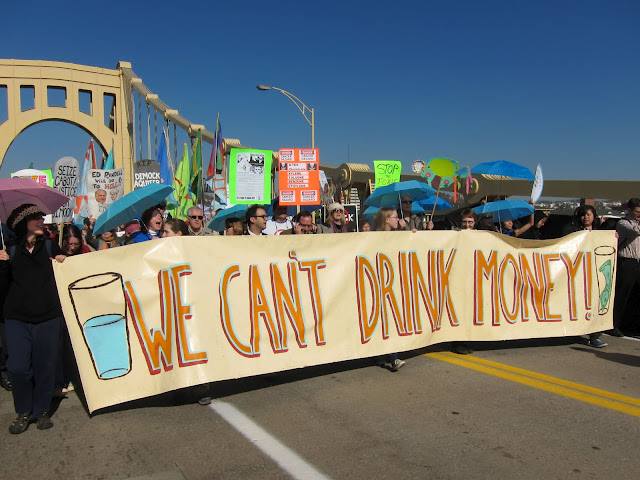
Boom times for hydraulic fracturing began in 2008 when new horizontal-drilling methods transformed an industry formerly dependent on strictly vertical boring. Frac-sand mining took off in tandem with this development.
“It’s huge,” said a U.S. Geological Survey mineral commodity specialist in 2009. “I’ve never seen anything like it, the growth. It makes my head spin.” That year, from all U.S. sources, frac-sand producers used or sold over 6.5 million metric tons of sand — about what the Great Pyramid of Giza weighs. Last month, Wisconsin’s Department of Natural Resources (DNR) Senior Manager and Special Projects Coordinator Tom Woletz said corporations were hauling at least 15 million metric tons a year from the state’s hills.
By July 2011, between 22 and 36 frac-sand facilities in Wisconsin were either operating or approved. Seven months later, said Woletz, there were over 60 mines and 45 processing (refinement) plants in operation. “By the time your article appears, these figures will be obsolete,” claims Pat Popple, who in 2008 founded the first group to oppose frac-sand mining, Concerned Chippewa Citizens (now part of The Save the Hills Alliance).
Jerry Lausted, a retired teacher and also a farmer, showed me the tawny ridges of sand that delineated a strip mine near the town of Menomonie where he lives. “If we were looking from the air,” he added, “you’d see ponds in the bottom of the mine where they dump the industrial waste water. If you scan to the left, you’ll see the hills that are going to disappear.”
Those hills are gigantic sponges, absorbing water, filtering it, and providing the region’s aquifer with the purest water imaginable. According to Lausted, sand mining takes its toll on “air quality, water quality and quantity. Recreational aspects of the community are damaged. Property values [are lowered.] But the big thing is, you’re removing the hills that you can’t replace. They’re a huge water manufacturing factory that Mother Nature gave us, and they’re gone.”
It’s impossible to grasp the scope of the devastation from the road, but aerial videos and photographs reveal vast, bleak sandy wastelands punctuated with waste ponds and industrial installations where Wisconsin hills once stood.
When corporations apply to counties for mining permits, they must file “reclamation” plans. But Larry Schneider, a retired metallurgist and industrial consultant with a specialized knowledge of mining, calls the reclamation process “an absolute farce.”
Reclamation projects by mining corporations since the 1970s may have made mined areas “look a little less than an absolute wasteland,” he observes. “But did they reintroduce the biodiversity? Did they reintroduce the beauty and the ecology? No.”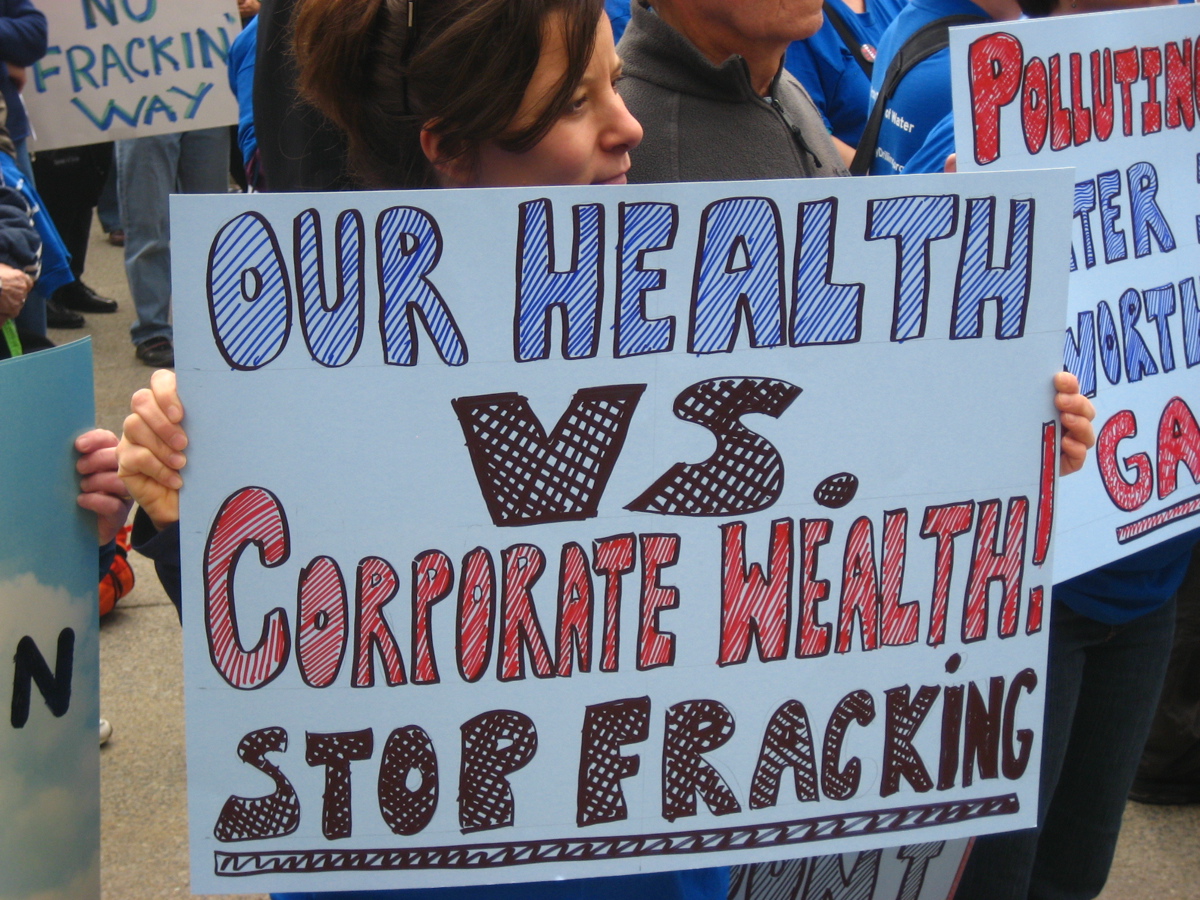
Studies bear out his verdict. “Every year,” wrote Mrinal Ghose in the Journal of Scientific and Industrial Research, “large areas are continually becoming unfertile in spite of efforts to grow vegetation on the degraded mined land.”
Awash in promises of corporate jobs and easy money, those who lease and sell their land just shrug. “The landscape is gonna change when it’s all said and done,” says dairy farmer Bobby Schindler, who in 2008 leased his land in Chippewa County to a frac-sand company called Canadian Sand and Proppant. (EOG, the former Enron, has since taken over the lease.) “Instead of being a hill it’s gonna be a valley, but all seeded down, and you’d never know there’s a mine there unless you were familiar with the area.”
Of the mining he adds, “It’s really put a boost to the area. It’s impressive the amount of money that’s exchanging hands.” Eighty-four-year-old Letha Webster, who sold her land 100 miles south of Schindler’s to another mining corporation, Unimin, says that leaving her home of 56 years is “just the price of progress.”
Jamie and Kevin Gregar — both 30-something native Wisconsinites and military veterans — lived in a trailer and saved their money so that they could settle down in a pastoral paradise once Kevin returned from Iraq. In January 2011, they found a dream home near tiny Tunnel City. (The village takes its name from a nearby rail tunnel). “It’s just gorgeous — the hills, the trees, the woodland, the animals,” says Jamie. “It’s perfect.”
Five months after they moved in, she learned that neighbors had leased their land to “a sand mine” company. “What’s a sand mine?” she asked.
Less than a year later, they know all too well. The Gregars’ land is now surrounded on three sides by an unsightly panorama of mining preparations. Unimin is uprooting trees, gouging out topsoil, and tearing down the nearby hills. “It looks like a disaster zone, like a bomb went off,” Jamie tells me.
When I mention her service to her country, her voice breaks. “I am devastated. We’ve done everything right. We’ve done everything we were supposed to. We just wanted to raise our family in a good location and have good neighbors and to have it taken away from us for something we don’t support…” Her voice trails off in tears.
For Unimin, the village of Tunnel City in Greenfield township was a perfect target. Not only did the land contain the coveted crystalline silica; it was close to a rail spur. No need for the hundreds of diesel trucks that other corporations use to haul sand from mine sites to processing plants. No need, either, for transport from processing plants to rail junctions where hundreds of trains haul frac-sand by the millions of tons each year to fracture other once-rural landscapes. Here, instead, the entire assembly line operates in one industrial zone.
There was also no need for jumping the hurdles zoning laws sometimes erect. Like many Wisconsin towns where a culture of diehard individualism sees zoning as an assault on personal freedom, Greenfield and all its municipalities, including Tunnel City, are unzoned. This allowed the corporation to make deals with individual landowners. For the 8.5 acres where Letha Webster and her husband Gene lived for 56 years, assessed in 2010 at $147,500, Unimin paid $330,000. Overall, between late May and July 2011, it paid $5.3 million for 436 acres with a market value of about $1.1 million.
There was no time for public education about the potential negative possibilities of frac-sand mining: the destruction of the hills, the decline in property values, the danger of silicosis (once considered a strictly occupational lung disease) from blowing silica dust, contamination of ground water from the chemicals used in the processing plants, the blaze of lights all night long, noise from hundreds of train cars, houses shaken by blasting. Ron Koshoshek, a leading environmentalist who works with Wisconsin’s powerful Towns Association to educate townships about the industry, says that “frac-sand mining will virtually end all residential development in rural townships.” The result will be “a large-scale net loss of tax dollars to towns, increasing taxes for those who remain.”
Town-Busting Tactics
Frac-sand corporations count on a combination of naïveté, trust, and incomprehension in rural hamlets that previously dealt with companies no larger than Wisconsin’s local sand and gravel industries. Before 2008, town boards had never handled anything beyond road maintenance and other basic municipal issues. Today, multinational corporations use their considerable resources to steamroll local councils and win sweetheart deals. That’s how the residents of Tunnel City got taken to the cleaners.
On July 6, 2011, a Unimin representative ran the first public forum about frac-sand mining in the village. Other heavily attended and often heated community meetings followed, but given the cascades of cash, the town board chairman’s failure to take a stand against the mining corporation, and Unimin’s aggressiveness, tiny Tunnel City was a David without a slingshot.
Local citizens did manage to get the corporation to agree to give the town $250,000 for the first two million tons mined annually, $50,000 more than its original offer. In exchange, the township agreed that any ordinance it might pass in the future to restrict mining wouldn’t apply to Unimin. Multiply the two million tons of frac-sand tonnage Unimin expects to mine annually starting in 2013 by the $300 a ton the industry makes and you’ll find that the township only gets .0004% of what the company will gross.
For the Gregars, it’s been a nightmare. Unimin has refused five times to buy their land and no one else wants to live near a sand mine. What weighs most heavily on the couple is the possibility that their children will get silicosis from long-term exposure to dust from the mine sites. “We don’t want our kids to be lab rats for frac-sand mining companies,” says Jamie.
Drew Bradley, Unimin’s senior vice president of operations, waves such fears aside. “I think [citizens] are blowing it out of proportion,” he told a local publication. “There are plenty of silica mines sited close to communities. There have been no concerns exposed there.”
That’s cold comfort to the Gregars. Crystalline silica is a known carcinogen and the cause of silicosis, an irreversible, incurable disease. None of the very few rules applied to sand mining by the state’s Department of Natural Resources (DNR) limit how much silica gets into the air outside of mines. That’s the main concern of those living near the facilities.
So in November 2011, Jamie Gregar and ten other citizens sent a 35-page petition to the DNR. The petitioners asked the agency to declare respirable crystalline silica a hazardous substance and to monitor it, using a public health protection level set by California’s Office of Environmental Health Hazard Assessment. The petition relies on studies, including one by the DNR itself, which acknowledge the risk of airborne silica from frac-sand mines for those who live nearby.
The DNR denied the petition, claiming among other things that — contrary to its own study’s findings — current standards are adequate. One of the petition’s signatories, Ron Koshoshek, wasn’t surprised. For 16 years he was a member of, and for nine years chaired, Wisconsin’s Public Intervenor Citizens Advisory Committee. Created in 1967, its role was to intercede on behalf of the environment, should tensions grow between the DNR’s two roles: environmental protector and corporate licensor. “The DNR,” he says, “is now a permitting agency for development and exploitation of resources.”
In 2010, Cathy Stepp, a confirmed anti-environmentalist who had previously railed against the DNR, belittling it as “anti-development, anti-transportation, and pro-garter snakes,” was appointed to head the agency by now-embattled Governor Scott Walker who explained: “I wanted someone with a chamber-of-commerce mentality.”
As for Jamie Gregar, her dreams have been dashed and she’s determined to leave her home. “At this point,” she says, “I don’t think there’s a price we wouldn’t accept.”
Frac-Sand vs. Food
Brian Norberg and his family in Prairie Farm, 137 miles northwest of Tunnel City, paid the ultimate price: he died while trying to mobilize the community against Procore, a subsidiary of the multinational oil and gas corporation Sanjel. The American flag that flies in front of the Norbergs’ house flanks a placard with a large, golden NORBERG, over which pheasants fly against a blue sky. It’s meant to represent the 1,500 acres the family has farmed for a century.
“When you start talking about industrial mining, to us, you’re violating the land,” Brian’s widow, Lisa, told me one March afternoon over lunch. She and other members of the family, as well as a friend, had gathered to describe Prairie Farm’s battle with the frac-sanders. “The family has had a really hard time accepting the fact that what we consider a beautiful way to live could be destroyed by big industry.”
Their fight against Procore started in April 2011: Sandy, a lifelong friend and neighbor, arrived with sand samples drillers had excavated from her land, and began enthusiastically describing the benefits of frac-sand mining. “Brian listened for a few minutes,” Lisa recalls. “Then he told her [that]… she and her sand vials could get the heck — that’s a much nicer word than what he used — off the farm. Sandy was hoping we would also be excited about jumping on the bandwagon. Brian informed her that our land would be used for the purpose God intended, farming.”
Brian quickly enlisted family and neighbors in an organizing effort against the company. In June 2011, Procore filed a reclamation plan — the first step in the permitting process — with the county’s land and water conservation department. Brian rushed to the county office to request a public hearing, but returned dejected and depressed. “He felt completely defeated that he could not protect the community from them moving in and destroying our lives,” recalls Lisa.
He died of a heart attack less than a day later at the age of 52. The family is convinced his death was a result of the stress caused by the conflict. That stress is certainly all too real. The frac-sand companies, says family friend Donna Goodlaxson, echoing many others I interviewed for this story, “go from community to community. And one of the things they try to do is pit people in the community against each other.”
Instead of backing off, the Norbergs and other Prairie Farm residents continued Brian’s efforts. At an August 2011 public hearing, the town’s residents directly addressed Procore’s representatives. “What people had to say there was so powerful,” Goodlaxson remembers. “Those guys were blown out of their chairs. They weren’t prepared for us.”
“I think people insinuate that we’re little farmers in a little community and everyone’s an ignorant buffoon,” added Sue Glaser, domestic partner of Brian’s brother Wayne. “They found out in a real short time there was a lot of education behind this.”
“About 80% of the neighborhood was not happy about the potential change to our area,” Lisa adds. “But very few of us knew anything about this industry at [that] time.” To that end, Wisconsin’s Farmers’ Union and its Towns Association organized a day-long conference in December 2011 to help people “deal with this new industry.”
Meanwhile, other towns, alarmed by the explosion of frac-sand mining, were beginning to pass licensing ordinances to regulate the industry. In Wisconsin, counties can challenge zoning but not licensing ordinances, which fall under town police powers. These, according to Wisconsin law, cannot be overruled by counties or the state. Becky Glass, a Prairie Farm resident and an organizer with Labor Network for Sustainability, calls Wisconsin’s town police powers “the strongest tools towns have to fight or regulate frac-sand mining.” Consider them so many slingshots employed against the corporate Goliaths.
In April 2012, Prairie Farm’s three-man board voted 2 to 1 to pass such an ordinance to regulate any future mining effort in the town. No, such moves won’t stop frac-sand mining in Wisconsin, but they may at least mitigate its harm. Procore finally pulled out because of the resistance, says Glass, adding that the company has since returned with different personnel to try opening a mine near where she lives.
“It takes 1.2 acres per person per year to feed every person in this country,” says Lisa Norberg. “And the little township that I live in, we have 9,000 acres that are for farm use. So if we just close our eyes and bend over and let the mining companies come in, we’ll have thousands of people we can’t feed.”
Food or frac-sand: it’s a decision of vital importance across the country, but one most Americans don’t even realize is being made — largely by multinational corporations and dwindling numbers of yeoman farmers in what some in this country would call “the real America.” Most of us know nothing about these choices, but if the mining corporations have their way, we will soon enough — when we check out prices at the supermarket or grocery store. We’ll know it too, as global climate change continues to turn Wisconsin winters balmy and supercharge wild weather across the country.
While bucolic landscapes disappear, aquifers are fouled, and countless farms across rural Wisconsin morph into industrial wastelands, Lisa’s sons continue to work the Norberg’s land, just as their father once did. So does Brian’s nephew, 32-year-old Matthew, who took me on a jolting ride across his fields. The next time I’m in town, he assured me, we’ll visit places in the hills where water feeds into springs. Yes, you can drink the water there. It’s still the purest imaginable. Under the circumstances, though, no one knows for how long.
Facebook and the 100 Billion
This article by Binoy Kampmark is re-posted from Counter Punch.
“Investors that shoot for IPO allocations needn’t worry that a high stock price overvalues the company if they are confident they can find a ‘greater fool’ willing to pay more.” Wall Street Journal, May 21, 2012.
With cult-like projections, Mark Zuckerberg’s face was beamed across a screen at Hacker Square. Facebook was, after all, having its heralded float as a public company, though the occasion could not cease but be a social event of some magnitude. That, and the fact of its founder’s marriage, which received the usual empty adulation that such a network facilitates.
The shares in the company’s shares finished at $38.37, though at one point stocks were trading at $42 a share. The value of the company is now $104 billion. That value places Facebook, in terms of the corporate giant stakes, in the 24th position in the US. The pundits did end up with egg on their beaming faces, predicting rises of 5 to 10 percent, though this was based on the oversubscribing of the IPO by 25 times, notably in the Asian tranche (Business Spectator, May 19). Behind the scenes, however, underwriters had to step in after an initially promising rise which touched 11 percent. Morgan Stanley managed to keep the stock price above $38 by tapping its emergency reserve, and the bean counters are claiming that the performance was a disappointing one.
The question then is whether such a value is not just a touch exaggerated, something which might be said of the entire social media experiment. Social media remains a treacherous form of investment, highly competitive, and entirely liquid. The fall of MySpace suggested an automatic obsolescence – in time, hidden shallows will be exposed. Once the bang goes off, the whimper and ultimate end will set in.
With Facebook, we are in a curious situation of producing what we consume in one act. The Facebook generation is self-serving, self-referencing and self-contained, all interiorised by means of updates, connections, invitations. There, the virtual and ‘actual’ mingle. This is Zuckerberg’s cult of false intimacy, though one can hardly claim his own earnings to have been false.
Its value, like its functionality, is fictitious or better still, virtual. The same argument might be made about company values in general, but Facebook combines this in neat fashion. While it would be too extreme to call it, as some have, a ‘juvenile business’ model, the pressure to maintain its enormous value will be monumental. Zuckerberg’s own value – a princely sum of $19 billion – suggests that he would not be averse to the challenge. And challenges they shall be.
One of those lies in the world of advertising. Companies such as GM feel that the AdSense run by Google is more efficient. It is also worth noting that GM is entirely absent from Facebook’s list of customers (Business Spectator, May 19). Its base of users has grown astronomically, but that has not kept pace with the advertising feature of the business. The way users employ Facebook is also a problem of sorts, notably in the realm of mobile usage (Crikey, May 18). A huge revenue base is essentially going untapped.
The hunt for more revenue, however, will bring the company into conflict with a world of privacy it seeks to both undermine and preserve. Facebook ventures into inner worlds of intimacy, however genuine they might seem. Users surrender details to Facebook as if it were a Mephistophelian bargain, though they are told that those details can be controlled in terms of access. That very data, however, is the premise that the company might use to assist advertisers to sharpen their focus.
Besides, Zuckerberg has shown that privacy is a moot point for him, a mutable formality. His antics in hacking the website of the Harvard University’s student newspaper when he was 19 suggest a certain mania at work. That mania has paid off even if it wasn’t as spectacular as market analysts would have it.
Occupy the PGA protests planned for this week
Made up of a coalition of community groups and residents of Benton Harbor, Occupy the PGA is inviting people to participate in protest this week, from May 23 – 27.
The group issued a letter today asking the 2012 Senior PGA to transfer 25% of its profits to the city of Benton Harbor. The group plans a demonstration from May 23 to 27, concurrent with the golf championship in Benton Harbor.
The group also demanded a public acknowledgement at the tournament of the “theft of public park land for private profit”, referring to the lease of 22 acres of dunes on Jean Klock Park for transformation into three holes of the Harbor Shores golf course at which the Senior PGA Championship plays later this month. The letter links the transfer of parklands to the “complete undermining of democratic structures” via the installment of the Emergency Financial Manager in Benton Harbor in December 2010.
Accompanying the demand letter is a lengthy summation of community grievances against the Harbor Shores development, ranging from the taking of the park land to unfulfilled promises of significant jobs and tax revenue for Benton Harbor residents. The packet, including maps illustrating the transformation of Jean Klock Park, also analyzes the failures of state and federal agencies to protect the public interest, the unpermitted use of public water resources by the private development, and the origin of the Emergency Financial Manager bill. The group also demands that the packet be distributed to all 2012 Senior PGA participants.
Spokesperson Rev. Edward Pinkney of the local community group BANCO said, “Benton Harbor continues to be a city under siege. The mishandling of public trust couldn’t be more massive, unjust, inhumane, and unconstitutional. The Senior PGA needs to hear our voice. It’s time to stand up and fight for what’s right.”
If anyone from West Michigan is interested in going to the Occupy the PGA protests this week, you can contact Occupy GR about getting a ride or the Bloom Collective, which is also organizing a car pool on Saturday, May 26.
On Thursday, the Kent County Health Department, Healthy Kent 2020 and the Strong Beginnings Program hosted a forum to explore the root causes of health inequality in Kent County.
Quite often the focus of health care forums is about access or looking at just individual behavior as determinants of people’s poor health. At this forum, the focus was an investigation into the structural or systemic causes of poor health.
To facilitate this conversation, the Kent County Health Department invited two staff members of the Ingham County Health Department, Dr. Renee Canady and Doak Bloss. Canady and Bloss have been doing social justice focused health analysis at their health department and facilitating workshops across the state in recent years.
The presenters expressed the importance of finding new language when talking about health inequality in America. They defined health inequity as: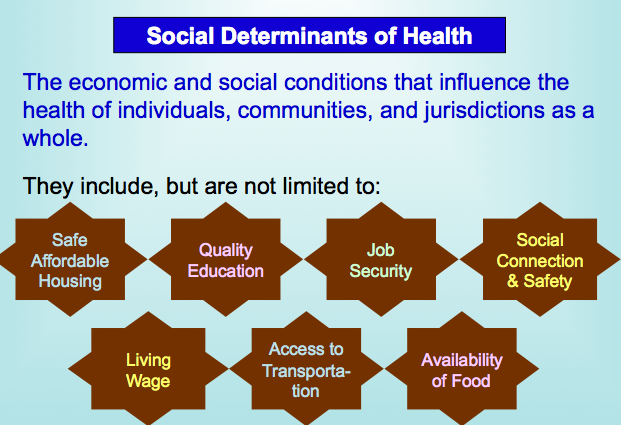
Differences in population health status and mortality rates that are systemic, patterned, unfair, unjust, and actionable, as opposed to random or caused by those who become ill.
The co-facilitators then looked at the various determinants of health inequality in the US and said that things like housing, transportation, education, job security, access to health foods and a living wage were some of the determinants.
The presenters said that this was a radical departure from the traditional view of public health, which is often limited to individual behavior. However, they emphasized that class, gender and racial privilege often prevent people from seeing the systemic causes of health inequity.
It was quite refreshing to hear presenters talk about class oppression and globalization as major factors in determining people’s health. The presenters even used the language of the Occupy movement and referred to the 1% versus the 99%.
After the main presenters discussed social justice and health inequity, a staff member of the Kent County Health Department then presented data on health disparities in Kent County.
The data presented information on how many adults and children were living in poverty in Kent County, with a breakdown along racial lines. There was also data on infant mortality rates, morbidity and geographical significance.
It was clear from the data presented that there were large pockets of poor neighborhoods that were disproportionately Black and Hispanic that had greater health inequality. Blacks and Hispanics children have a higher rate of living in poverty and infant mortality rates are higher than for White children. The data also showed that poor & minority communities are 6 times more likely to report 14 or more days a year of poor health, 3 times more likely to have diabetes and 8 times more likely to have heart disease.
The social justice and health inequity forum concluded with individual tables having discussion about the information presented and how those in the health care community need to respond to the systemic injustice that exists in Kent County. However, it was recognized that the organizations in the room needed to begin with the recognition of systemic and root causes of health disparities and then develop strategies to confront the systems that maintain these disparities.
Occupy, Neighborhood Organizing & National Convergences: Race & Class Struggles in Chicago & Beyond
This interview is re-posted from ZNet.
Introduction: As Occupy activists travel to Chicago for the NATO protests it is important to consider tensions between neighborhood organizing/long term organizing and national campaigns/shorter term actions. James Tracy and Amy Sonnie are authors of “Hillbilly Nationalists, Urban Race Rebels, and Black Power: Community Organizing in Radical Times” (Melville House, 2011). It is the story of radical organizing in working-class white neighborhoods, the interracial movement of the poor, and the original (pre-Jessie Jackson) Rainbow Coalitions with the Black Panthers, Young Lords, and others.
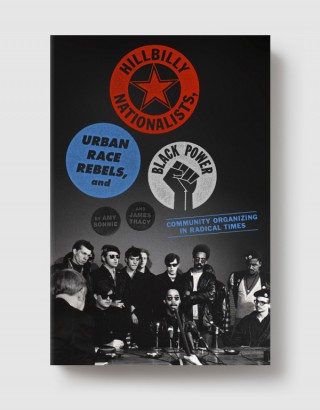
Camilo Viveiros (CV): Can you share a story related to Chicago from your book that may inform activists who hope to gather people from around the country for upcoming national protests?
James Tracy (JT): The Chicago of 2012 is much the same as the Chicago of 1968 in one very important way: there are dynamic community and radical organizations that have been fighting what we now call the 1% for generations. Chicago has been an important part of every national progressive upheaval in the last century. Think of Haymarket, the Industrial Workers of the World and the Puerto Rican Independence movement, just to name a very few. If you are going to Chicago for the NATO protests, that’s wonderful. You are stepping into an event that may well turn out to be just as historical as the Democratic National Convention protests of 1968. But you should know the lessons of history and respect the local activists who have valuable experience. The Chicago-based groups in our book were very intentional in how they picked their targets. They organize against slumlords who had holdings in black, white and brown neighborhoods because these targets gave community members an opportunity to work with one another. It was a commitment to what the Panthers would later call intercommunalism. These kinds of tangible opportunities for unity are built when organizers first build a base and make deliberate choices to foster connections. There will be choices for Occupy activists to make about where to put your energies. Why not choose to support the protests led by local Chicago groups fighting school privatization, health care access or housing displacement? These struggles are all being fought right now and outsiders would do well to ask how they can help. And if your protest turns into a war zone, realize that at some point, most of the visiting activists will receive a level of legal support often denied everyday people in a town notorious for police brutality.
CV: In the early 1960s, Students For a Democratic Society (SDS) created the Economic Research and Action Projects (ERAP), placing student organizers in poor neighborhoods. What are some examples of student-community alliances from ERAPs that worked? What are ways that students and community groups can make sure to monitor and foster reciprocal relationships?
JT: While many of the ERAP projects folded quickly, the Jobs or Income Now Community Union based in Chicago’s Uptown neighborhood lasted the longest and evolved into two important organizations: the Young Patriots Organization and Rising Up Angry. These are the central stories we cover in our book. The alliance between students and poor residents had its share of issues, but it worked because organizers on both sides put hard work into understanding each other. It wasn’t about a single action or Rent Strike. They knew if they were going to go toe-to-toe with the Right for the allegiance of poor whites, it was about long-term building in the community. It’s also important to note that quite a few key organizers were students from working-class backgrounds, the first in their family to get through college. For them the student-worker debate felt artificial, they had their feet in both worlds. With so many of the access points to higher education closed off today, I’d imagine that the divide is actually more intense today than it was in the 1960s.
“The alliance … worked because organizers on both sides put hard work into understanding each other…it was about long-term building in the community.”
CV: Can you touch on the story of the founding of the original Rainbow Coalition in Chicago and how similar collaborations might be useful models for today’s activists? What are some of the lessons about forming alliances that are pro-organizing, that are diverse without letting any group dominate?
JT: The Original Rainbow Coalition included the Young Patriots Organization, the Black Panther Party and the Young Lords Organization chapters in Chicago. Each group was expected to organize their own community, and come together in coalition. Former Panther Bob Lee told me that the Rainbow Coalition was simply a code word for class struggle in a movement that had been focused on race — for important reasons, of course. Our book details how the slow work of organizing across colorlines created the conditions where the Patriots (poor whites who used the Confederate Flag on their uniform) physically defended Lee from assault by the police and even ran armed security for the Panthers at events. It was their sustained organizing that made the insurrection possible, not the other way around.
“It was the sustained organizing that made the insurrection possible, not the other way around.”
The key to understanding this organizing approach is the concept of Self-Determination. Each group had the right to make its own decisions, but were simultaneously accountable to each other in a structured coalition.
CV: In your book Peggy Terry, a poor white organizer originally from the South, believed that “politicians stoked poor whites’ fears that any gains for people of color would come at the greatest loss to them.” What are ways working class organizers can shift narrow power analyses that define other oppressed people as competitors, and instead target those in power who pit us against each other?
JT: These fears come from somewhere tangible, because historically the ruling-class has indeed granted reforms in a strategic manner to divide and conquer poor people. The Black Panther Party demanded full employment, but the Nixon Administration came up with affirmative action. Now imagine what might have been done if the movement had been able to fully articulate a vision of what full employment for all would look like while honestly addressing historical inequalities and racism within labor? It would have been harder to convince poor whites that they were going to be tossed aside.
“…what might have been done if the movement had been able to fully articulate a vision of what full employment for all would look like while honestly addressing historical inequalities and racism within labor?”
CV: After the anti-WTO protests in Seattle in 1999 many anti-globalization activists went “summit hopping,” prioritizing going from one large-scale protest to another, not always spending the necessary time building local campaigns or supporting local organizing. As we face a series of national (DNC, RNC, etc.) protests in 2012, what are some lessons you can share about the need to work with local struggles and specifically for activists to recognize and organize in their own communities? What worked and what went wrong in Chicago related to the DNC protests in 1968 and how can we reflect on and avoid the same mistakes now?
JT: It’s not an either/or proposition. Rising Up Angry built a strong base in Chicago’s neighborhoods over many years, but also took their members to important protests in other cities. They knew that going to the mobilizations against the war in DC could give their members a sense of being connected to something bigger, and that hopefully the movement would recognize the importance of working-class people in it. At the same time, these national conventions and summits have a very real and not always positive impact on local communities. While many people now recognize the 1968 DNC as the turning point for broad public acknowledgement that the police were out of control, many local activists skipped the convention altogether because they knew the level of brutality the cops were likely to unleash. They saw it every day. It’s a double-edged sword that national attention can come out of these events, when on the other hand the ongoing repression of local folks, especially in communities of color, never gets discussed. The questions for out-of-towners are: What can you do to limit negative impacts of mass protests on local neighborhoods, and how can you actually build with and listen to local activists before, during and after a convention?
“how can you actually build with and listen to local activists before, during and after a convention?”
CV: Thank you for bringing to light the myth that poor and working class whites are more likely to defend racism than whites with money. In your book you share another key organizing insight “that poor whites experience the benefits of institutional racism differently and, therefore class-based organizing must account for those differences without ever ignoring the race question.” What are ways we can counter classism in today’s movements?
JT: White supremacy is a complex system and it works on many levels, from financial advantage to psychological. But it is also a system that requires broad participation from all so-called white people, so why assume that the bulk of the responsibility for it lies on the backs of those who benefit from it the least. A poor racist might throw around epithets displaying their racism more crudely. A rich racist can just smile and benefit from foreclosures, offshoring and privatization. I don’t think we should try to measure the extent of damage done — racism is damaging no matter what its form — but class matters because power matters. And where power comes into play, we need to evolve smart organizing strategies and understandings. The groups we write about didn’t do everything right, but they saw a real need to address class, race and gender issues in tandem, pushing poor whites to re-examine who they blamed for their problems and pushing the Left not to ignore poor people’s leadership. This is just as relevant a lesson today.
CV: Stemming from discussion and correspondence about your book, have you seen any shifts from white middle class people about the importance of white working class organizing with an anti white supremacist orientation? What are the core suggestions that you would offer activists and organizers as we look ahead for ways to build trust and relationships of respect in our diverse movements of oppressed people?
JT: Yes, when we first started discussing this book with other organizers and activists, I sensed a bit of trepidation from some self-identified white anti-racists about our intentions. I think it is obvious now that the book is not trying to unravel the good work they have done to create an understanding of how central white supremacy has been in destroying progressive movements. Intellectually, we are indebted to the work of people like Ted Allen, David Roediger, Noel Ignatiev, Roxanne Dunbar-Ortiz and many others. Yet we’re firmly outside of the “white studies” canon and people of various classes have responded positively to what our books suggests: an interracial movement of the poor is possible, and it is also possible for it to be led by poor people themselves.
This article by Allison Kilkenny is re-posted from The Nation.
The Chicago police wasted no time harassing protesters Wednesday evening when they raided a Bridgeport apartment complex without a valid warrant and detained up to nine people without cause. The individuals have been identified as NATO activists, and the NLG quickly responded to the arrests.
“We’ve called police officials at every level trying to find out where they were being held. We were denied any information at all about any people being arrested, let alone a raid happening last night. So essentially these people were disappeared for more than twelve hours until we could finally locate them,” said NLG spokesman Kris Hermes.
Lawyers from The NLG were allowed to meet with nine individuals and reported that they were in low spirits, confused about why they were arrested and shackled at both their hands and feet at the meeting. No charges have been filed against them almost 24 hours after their arrest and an Illinois States Attorney at the station refused to meet with the NLG lawyers.
The theme of harassment continued over the weekend when a memo allegedly from the Chicago Police Department Office of International Relations, marked not intended for general distribution was posted online.
The three-page document outlines press behavior that will and will not be tolerated, including normally acceptable media maneuvers that will no longer be considered acceptable and actually might be grounds for arrest.
“No ‘cutting’ in and out of police lines will be permitted, or ‘going up against their backs,’” the document states, reportedly quoting Debra Kirby, chief of the Chicago Police Department Office of International Relations. “Those who follow protesters onto private property to document their actions are also will be [sic] subject to arrest if laws are broken.”
Weaving in and out of police lines is a critical right for journalists, particularly photojournalists, who frequently need to pass police lines to document police actions, most often arrests.
Upon arrest, media will go through the same booking process as anyone else, though “release of equipment depends on what part the equipment played in the events that led to the arrest,” the memo vaguely states.
Most absurdly, Kirby appears to place the onus of getting arrested on the press.
“She urges media to keep safety in mind and warns them to ‘not become the story,’” the memo warns, as though journalists are nothing more than spotlight-craving narcissists hellbent on enduring the thoroughly unpleasant experience of getting arrested and acquiring a police record in order to reap the lavish rewards of blogging about it later.
The ominous warnings to press and CPD policy of harassment and intimidation of protesters didn’t stop around a thousand people and a decently sized media presence from flooding Daley Plaza Friday afternoon for the National Nurses United rally.
The NNU gathered to demand the creation of a Robin Hood tax on Wall Street. Members wore red National Nurses United (NNU) shirts accompanied with green Robin Hood masks and hats in keeping with the theme of a small trading tax in order to raise badly needed revenue.
“[It’s] less than half a penny tax on financial transactions,” said Casey Hobbs, a registered nurse for thirty-seven years, adding, “With the billions of dollars we’d get from that, we’re gonna heal America. We’re going to do that by providing Medicare for all, we’re going to provide college educations, we’re going to rebuild our infrastructure, and put people back to work, and give back to the 99 percent.” (photo: Casey Hobbs)
Speakers, including rocker Tom Morello, regaled the crowd before a separate environmental march left the plaza for a non-permitted march.
Occupied Chicago Tribune editor Joe Macare witnessed at least one arrest during the procession, a young man named Henry who was reportedly arrested for wearing a mask. Some protesters believe Henry was specifically targeted by CPD. (photo by Joe Macare)
Friday kicked off a weekend of anti-NATO protests, including a “Say No to the War and Poverty Agenda” scheduled to take place at Petrillo Bandshell on Sunday, which includes a march afterward to McCormick Place. The event includes participants such as Jesse Jackson, SEIU Health Care Illinois/Indiana, the United National Antiwar Coalition, Chicago Teachers Union, National Nurses United, United Electrical Workers Western Region, Malik Mujahid of the Muslim Peace Coalition and Veterans for Peace, among many others.
Afghanistan and Iraq veterans also plan to converge on Chicago that Sunday in Grant Park to march to the NATO summit where they will ceremoniously return their medals to NATO’s generals.
A call to action released by Iraq Veterans Against the War states, “We were awarded these medals for serving in the Global War on Terror, a war based on lies and failed policies.” Calling this a march for justice and reconciliation, veterans say they will mobilize to “demand that NATO immediately end the occupation of Afghanistan and related economic and social injustices, bring U.S. war dollars home to fund our communities, and acknowledge the rights and humanity of all who are affected by these wars.”
 Grand Rapids Institute for Information Democracy