Benefit Concert for Marie Mason, Eric McDavid, and Anarchist Prisoners June 11 at the DAAC

June 11th is International Day of Solidarity with Long-Term Anarchist Political Prisoners! Check out http://www.june11.org! It will be a night of radical political music and poetry to support our friends who are in cages. So far, the line up includes performances by One Blown Speaker and Big Dudee Roo.
Benefit Concert
Monday, June 11
7:30 – 11:00PM
The DAAC
115 S. Division, Grand Rapids
Cost – $5
On Friday, Michigan Senator Carl Levin posted on his website another commentary that not only reflects his commitment to militarism, but to the US acting as an imperial power.
Levin begins the commentary by stating, “As chairman of the Senate Armed Services Committee, my most important responsibility each year is passage of the National Defense Authorization Act, which authorizes programs and sets policies for our military.”
The honesty in this comment is useful and should make it clear to anyone who thinks Levin has some commitment to social justice that they are dead wrong. Sure Levin may vote occasionally to support unions or put mild pressure on the financial industry, but Levin is a militarist plain and simple.
Besides voting for the annual National Defense Authorization Bill each year, a bill that means a huge chunk of the federal budget is allocated to the military, Levin has supported virtually every war or invasion that the US has engaged in over the past 30 years while serving in the Senate. Some will argue that Levin opposed the US invasion of Iraq in 2003, but once the occupation began Levin voted to authorize every major funding bill for the US war in Iraq, which has resulted in over 1 million deaths.
In his posting on June 1st Senator Levin highlights why he supports the nearly $1 Trillion National Defense Authorization Act. He again affirms his commitment to the nearly 11- year US occupation of Afghanistan, despite the brutal killing of Afghan civilians by US troops on the group or through the use of drones.
Levin also states he supports the US military activity in Yemen and East Africa, even though it is clear that these area have nothing to do with the defense of the US. US military actions in these areas of the world do have everything to do with geo-political and economic interests that benefit corporations and defense contractors.
The Michigan Senator then goes on to state the National Defense Authorization Act will stop the spread of nuclear weapons and materials, even though analysis by the Institute for Policy Studies provides a fundamentally different view of the provisions in the bill on nuclear policy.
Levin continues with claims that the annual military bill will, “strengthen special operations forces.” What Senator Levin leaves out is what the US special operations forces have been doing lately, which is the focus of a recent article by military analyst Andrew Bacevich. Levin’s comments on special operations forces also omits information on the assassination squads that President Obama has decided to oversee personally.
Senator Levin then writes about how the new military funding bill will impact the National Guard, but he saves the best for last by talking about how, “this year’s bill continues to rely on Michigan’s manufacturing, engineering and technological know-how to protect our country.” Levin uses the last three paragraphs to talk about how the military budget will continue to re-direct US tax dollars to the private sector to make weapons and other resources that will be used by the US military abroad to maintain the imperialist stranglehold on the world. Some will see this as Levin keeping jobs in Michigan, but his continued support for the military industrial complex should not be something that people should praise, even if you call it job creation.
Who’s Profiting from the Water Crisis?
This article by Joyce Nelson is re-posted from ZNet.
In January 2010, investment banker Goldman Sachs, along with General Electric and a high-powered Washington thinktank called the World Resources Institute (WRI), announced the launch of a new index measuring water-related risks facing companies and their investors.
In the words of their corporate news release: ‘In many regions around the world, water scarcity from climate change and pollution is starting to impact a company’s performance, yet few analysts account for water-related risks.’
This new water index would ‘draw on publicly available data regarding physical scarcity and water quality and overlay factors including the regulatory regime and social and reputational issues’ in various regions of the world.
Business jargon aside, if you think this will be a useful tool for corporations, you’d be right. In fact, the risk-index might more accurately be called an ‘opportunity-index’ for water speculators and investors.
Next year the water privatization market worldwide is expected to reach $1 trillion. As Goldman Sachs puts it, ‘There is no substitute for water. It is the only utility you ingest.’ According to Maude Barlow, a leading Canadian critic of water privatization, ‘The biggest water company of all is General Electric.’
By August 2011, Goldman Sachs, General Electric and WRI had not only found a name for their partnership – the Aqueduct Alliance – they had also developed the index into a water database and mapping tool, which can include the amount of infrastructure investment taking place in a given region.
Moreover, they had put an ‘environmental’ spin on the project, claiming that it will help corporations, governments and stakeholders become more aware of their ‘water footprint’ and thus make more ‘sustainable’ decisions.
That same month the original threesome – Goldman Sachs, General Electric and WRI – invited into the Aqueduct Alliance some new corporate partners: Coca-Cola, Talisman Energy, Dow Chemical, United Technologies and the financial/news conglomerate, Bloomberg LP.
The WRI’s Kirsty Jenkinson told the Financial Times (FT): ‘Companies see the need to get better visibility about water if they are going to have to access it for their business.’ With the new water database, ‘they can see if they are at risk of not getting the water they need, or coming into conflict with other users of that water’.
Presumably, the potential for ‘conflict’ is what attracted United Technologies to join the Aqueduct Alliance. UT is the world’s 10th largest arms-producing company with sales of $11.1 billion in 2009.
Mired in controversy
Coca-Cola has handed over to the Alliance its own proprietary data on freshwater availability worldwide – data collected over years of research for its bottling enterprises. ‘Water is the lifeblood of our business,’ Coke spokesperson Joe Rozza told the FT. The Atlanta-based company has hundreds of bottling-franchises worldwide, many of them mired in controversy. In India and Latin America, Coca-Cola has regularly faced irate local communities who are losing their drinking and irrigation water to Coke’s local bottlers.
In January this year, Britain’s Guardian newspaper reported that Coca-Cola is under fire for propping up Mswati III of Swaziland, one of Africa’s most notorious dictators. Poverty is endemic, political parties are banned and activists are regularly imprisoned and tortured in the country.
Another Aqueduct Alliance partner is Talisman Energy, a Canadian natural gas company based in Calgary, Alberta. ‘We are very excited to have been asked to become the oil and gas sector sponsor for the Aqueduct Alliance,’ Talisman spokesperson Sandy Stash told Marketwire. ‘Talisman aspires to a water management strategy that defines best practices for water withdrawal, reuse, disposal and conservation in our North American shale gas operations.’
Just weeks earlier, in July 2011, the government of British Columbia (BC) awarded Talisman a licence to divert up to 10,000 cubic metres of water per day from the province’s major hydroelectric reservoir for the next 20 years. Talisman uses the water to ‘frack’ for shale gas in northeastern BC. The company has also secured access to 6,200 square kilometres of shale gas deposits along Quebec’s St Lawrence River.
The Aqueduct Alliance intends to generate databases and water-maps with ‘an unprecedented level of detail and resolution’, including advanced hydrological data and ‘geographically specific indicators that capture the social, economic and governance factors that affect companies and economies’. The databases will include up-to-date regional news coverage on water issues.
By September 2011, the Aqueduct Alliance had developed a prototype database/map covering the Yellow River Basin in northern China. Water shortages in China are already so severe that more than half its cities are facing restrictions on water use.
In 2013 the Alliance intends to release four additional database/maps on river basins of ‘high priority’, including the 2,300-kilometre long Colorado River in the US which has experienced years of drought; the Orange-Sengu River in Africa which extends across Botswana, Lesotho, Namibia and South Africa; the Yangtze River in China, where 10 million people were displaced by the Three Gorges Dam; and the Murray Darling River in Australia.
All are regions where water scarcity is enticing speculators to secure water-rights in a ‘buy-and-hold’ strategy. Their model is based on recent events in Australia.
In a short-sighted cash grab, the Australian government in the 1990s introduced a water market for the Murray Darling River Basin – one of the longest river systems in the world and the heart of Australia’s agricultural production. But in 2001 a major drought struck the Basin and within a few years the federal government in Canberra was forced to start buying back water from private owners.
The price shot up. By 2009, so many speculators had targeted the Basin that some $3 billion in water-rights were bought and sold in that year alone. The government was forced to compete with international speculators, including giant hedge-funds.
By September 2010, the Australian government had spent at least $1.4 billion buying back water-rights. Although the drought eased that same year, the fact that the Aqueduct Alliance is now focusing on the Murray Darling Basin means that the risks and opportunities there are still ‘high priority’.
As one hedge-fund advisor quipped, an emerging worldwide water crisis is creating ‘serious profit opportunities for those in the know’. The Aqueduct Alliance database/ maps will show where those opportunities are located. Another 15 regions across the world will be analyzed once the Alliance has created its first four database/maps.
‘If you play it right,’ says the advisor, ‘the results of this impending water crisis can be very good.’
Obama and the Environment
This article by Jeffrey St. Clair and Joshua Frank is re-posted from CounterPunch.
Although America’s greatest Interior Secretary, Harold Ickes, who had the post for nearly a decade under FDR, was from Chicago, the playbook for presidential transitions calls for picking a Westerner for Interior, as long as the nominee isn’t a Californian. Pick someone from Arizona or New Mexico or Colorado. Of course, Colorado has produced two of the worst recent Interior Secretaries: James Watt and Gale Norton. Ken Salazar may make it three.
And why not? After all, Salazar was one of the first to endorse Gale Norton’s nomination as Bush’s Interior Secretary.
By almost any standard, it’s hard to imagine a more uninspired or uninspiring choice for the job than professional middle-of-the-roader Ken Salazar, the conservative Democrat from Colorado. This pal of Alberto Gonzalez is a meek politician, who has never demonstrated the stomach for confronting the corporate bullies of the West: the mining, timber and oil companies who have been feasting on Interior Department handouts for the past eight years. Even as attorney general of Colorado, Salazar built a record of timidity when it came to going after renegade mining companies.
The editorial pages of Western papers largely hailed Salazar’s nomination. The common theme portrayed Salazar as “an honest broker.” But broker of what? Mining claims and oil leases, most likely.
Less defensible were the dial-o-matic press releases faxed out by the mainstream groups, greenwashing Salazar’s dismal record. Here’s Carl Pope, CEO of the Sierra Club, who fine-tuned this kind of rhetorical airbrushing during the many traumas of the Clinton years:
“The Sierra Club is very pleased with the nomination of Ken Salazar to head the Interior Department. As a Westerner and a rancher, he understands the value of our public lands, parks, and wildlife and has been a vocal critic of the Bush Administration’s reckless efforts to sell-off our public lands to Big Oil and other special interests. Senator Salazar has been a leader in protecting places like the Roan Plateau and he has stood up against the Bush’s administration’s dangerous rush to develop oil shale in Colorado and across the West.
“Senator Salazar has also been a leading voice in calling for the development of the West’s vast solar, wind, and geothermal resources. He will make sure that we create the good-paying green jobs that will fuel our economic recovery without harming the public lands he will be charged with protecting.”
Who knew that strip-mining for coal, an industry Salazar resolutely promoted, was a green job? Hold on tight, here we go once more down the rabbit hole.
The Sierra Club had thrown its organizational heft behind Mike Thompson, the hook-and-rifle Democratic congressman from northern California. Obama stiffed them and got away with it without enduring even a whimper of disappointment.
In the exhaust-stream, not far beyond Pope, came an organization (you can’t call them a group, since they don’t really have any members) called the Campaign for American Wilderness, lavishly endowed by the centrist Pew Charitable Trusts, to fete Salazar. According to Mike Matz, the Campaign’s executive director, Salazar “has been a strong proponent of protecting federal lands as wilderness…As a farmer, a rancher, and a conservationist, Sen. Salazar understands the importance of balancing traditional uses of our public lands with the need to protect them. His knowledge of land management issues in the West, coupled with his ability to work with diverse groups and coalitions to find common ground, will serve him well at the Department of the Interior.”
Whenever seasoned greens see the word “common ground” invoked as a solution for thorny land use issues in the Interior West it sets off an early warning alarm. “Common ground” is another flex-phrase like, “win-win” solution that indicates greens will be handed a few low-calorie crumbs while business will proceed to gorge as usual.
In Salazar’s case, these morsels have been a few measly wilderness areas inside non-contentious areas, such as Rocky Mountain National Park. Designating a wilderness inside a National Park is about as risky as placing the National Mall off-limits to oil drilling.
But Salazar’s green gifts haven’t come without a cost. In the calculus of common ground politics, trade-offs come with the territory. For example, Salazar, under intense pressure from Coloradoans, issued a tepid remonstrance against the Bush administration’s maniacal plan to open up the Roan Plateau in western Colorado to oil drilling. But he voted to authorize oil drilling off the coast of Florida, voted against increased fuel-efficiency standards for cars and trucks and voted against the repeal of tax breaks for Exxon-Mobil when the company was shattering records for quarterly profits.
On the very day that Salazar’s nomination was leaked to the press, the Inspector General for the Interior Department released a devastating report on the demolition of the Endangered Species Act under the Bush administration, largely at the hands of the disgraced Julie MacDonald, former Deputy Secretary of Interior for Fish and Wildlife. The IG report, written by Earl Devaney, detailed how MacDonald personally interfered with 13 different endangered species rulings, bullying agency scientists and rewriting biological opinions. “MacDonald injected herself personally and profoundly in a number of ESA decisions,” Devaney wrote in a letter to Oregon Senator Ron Wyden. “We determined that MacDonald’s management style was abrupt and abrasive, if not abusive, and that her conduct demoralized and frustrated her staff as well as her subordinate managers.”
What McDonald did covertly, Salazar attempted openly in the name of, yes, common ground. Take the case of the white-tailed prairie dog, one of the declining species that MacDonald went to nefarious lengths to keep from enjoying the protections of the Endangered Species Act. Prairie dogs are viewed as pests by ranchers and their populations have been remorselessly targeted for elimination on rangelands across the Interior West.
Ken Salazar, former rancher, once threatened to sue the Fish and Wildlife Service to keep the similarly imperiled black-tailed prairie dog off the endangered species list. As a US senator, Salazar also fiercely opposed efforts to inscribe stronger protections for endangered species in the 2008 Farm Bill.
“The Department of the Interior desperately needs a strong, forward looking, reform-minded Secretary,” says Kieran Suckling, executive director of the Tucson-based Center for Biological Diversity. “Unfortunately, Ken Salazar is not that man. He endorsed George Bush’s selection of Gale Norton as Secretary of Interior, the very woman who initiated and encouraged the scandals that have rocked the Department of the Interior. Virtually all of the misdeeds described in the Inspector General’s expose occurred during the tenure of the person Ken Salazar advocated for the position he is now seeking.”As a leading indicator of just how bad Salazar may turn out to be, an environmentalist need only bushwhack through the few remaining daily papers to the stock market pages, where energy speculators, cheered at the Salazar pick, drove up the share price of coal companies, such as Peabody, Massey Energy and Arch Coal. The battered S&P Coal index rose by three per cent on the day Obama introduced the coal-friendly Salazar as his choice to head Interior.
Say this much for Salazar: he’s not a Clinton retread. In fact, he makes Clinton Interior Secretary Bruce Babbitt look like Ed Abbey.
As Hot Rod Blajogevich demonstrated in his earthy vernacular, politics is a pay-to-play sport. Like Ken Salazar, Barack Obama’s political underwriters included oil-and-gas companies, utilities, financial houses, agribusiness giants, such as Archer Daniels Midlands, and coal companies. These bundled campaign contributions dwarfed the money given to Obama by environmentalists, many of whom backed Hillary in the Democratic Party primaries.
Environmentalists made no demands of Obama during the election and sat silently as he promoted off-shore oil drilling, pledged to build new nuclear plants and sang the virtues of the oxymoron known as clean-coal technology. Obama probably felt he owed them no favors. And he gave them none. The environmental establishment cheered never-the-less.
Of all of Barack Obama’s airy platitudes about change, none were more vaporous than his platitudes about the environment and within that category Obama has had little at all to say about matters concerning public lands and endangered species.
As Interior Secretary, Ken Salazar wasted no time in turning the department into a hive of his homeboys. This group of lawyers and former colleagues earned the nickname the Colorado Mafia, Version Three. It’s Version Three because Colorado
Mafia Version One belonged to James Watt (a Colorado transplant) and his Loot-the-West zealots from the Mountain States Legal Fund. The Version Two update came in the form of Gale Norton and her own band of fanatics, some of whom remain embedded in the Department’s HQ, just down the hall from Salazar’s office.
Beyond a perverse obsession with Stetson hats, Salazar and Watt share some eerie resemblances. For starters, they look alike. There’s a certain fleshy smugness to their facial features. Who knows if Salazar shares Watt’s apocalyptic eschatology (Why save nature, Watt once quipped, when the end of the world is nigh.), but both men are arrogant, my-way-or-the-highway types. Watt’s insolent demeanor put him to the right even of his patron Ronald Reagan and ultimately proved his downfall. (Salazar may well meet the same fate.) Most troubling, however, is the fact that both Watt and Salazar hold similar views on the purpose of the public estate, treating the national forests and Bureau of Land Management lands not as ecosystems but as living warehouses for the manufacture of stuff: lumber, paper, wedding rings, meat, energy.
With this stark profile in mind, it probably came as no big shock that the man Salazar nominated to head the Fish and Wildlife Service, the agency charged with protecting native wildlife and enforcing the Endangered Species Act, viewed those responsibilities with indifference if not hostility. For the previous twelve years, Sam Hamilton ran the Southeast Region of the Fish and Wildlife Service, a swath of the country that has the dubious distinction of driving more species of wildlife to the brink of extinction than any other.
From Florida to Louisiana, the encroaching threats on native wildlife are manifest and relentless: chemical pollution, oil drilling, coastal development, clearcutting, wetland destruction and a political animus toward environmental laws (and environmentalists). And Sam Hamilton was not one to stand up against this grim state of affairs.
A detailed examination of Hamilton’s tenure by Public Employees for Environmental Responsibility revealed his bleak record. During the period from 2004 through 2006, Hamilton’s office performed 5,974 consultations on development projects (clearcuts, oil wells, golf courses, roads, housing developments and the like) in endangered species habitat. But Hamilton gave the green light to all of these projects, except one. By contrast, during the same period the Rocky Mountain Office of the Fish and Wildlife Service officially consulted on 586 planned projects and issued 100 objections or so-called jeopardy opinions. Hamilton has by far the weakest record of any of his colleagues on endangered species protection.
There’s plenty of evidence to show that Hamilton routinely placed political considerations ahead of enforcing the wildlife protection laws. For example, in the agency’s Vero Beach, Florida office Fish and Wildlife Service biologists wrote a joint letter in 2005 complaining that their supervisors had ordered them not to object to any project in endangered species habitat—no matter how ruinous.
Take the case of the highly endangered Florida panther. One of Hamilton’s top lieutenants in Florida has been quoted as telling his subordinates that the big cat was a “zoo species” doomed to extinction and that to halt any developments projects in the panther’s habitat would be a waste of time and political capital.
“Under Sam Hamilton, the Endangered Species Act has become a dead letter,” says PEER’s Executive Director Jeff Ruch, noting that the White House announcement on Hamilton touted his “innovative conservation” work. “Apparently, the word ‘no’ is not part of ‘innovative’ in Mr. Hamilton’s lexicon. To end the cycle of Endangered Species Act lawsuits, the Fish and Wildlife Service needs a director who is willing to follow the law and actually implement the Act. Hamilton’s record suggests that he will extend the policies of Bush era rather than bring needed change.”
Obama and Salazar put the fate of the jaguar, grizzly and northern spotted owl in his compromised hands. Feel the chill?
Over at the Agriculture Department Obama made a similarly cynical pick when he chose former Iowa governor Tom Vilsak to head the agency that oversees the national forests. Vilsak resides to the right of Salazar and not just in the sitting arrangement at Cabinet meetings. He is a post-Harken Iowa Democrat, which means he’s essentially a Republican who believes in evolution six days a week. (He leaves such Midwestern heresies at the door on Sundays.) Think Earl Butz—minus the racist sense of humor (as far as we know).
Vilsak is a creature of industrial agriculture, a brusque advocate for the corporate titans that have lain waste to the farm belt: Monsanto, Archer Daniels Midland and Cargill. As administrations come and go, these companies only tighten their stranglehold, poisoning the prairies, spreading their clones and frankencrops, sucking up the Oglalla aquifer, scalping topsoil and driving the small farmers under. It could have been different. Obama might have opted for change by selecting Wes Jackson of the Land Institute, food historian Michael Pollan or Roger Johnson, president of the National Farmers Union. Instead he tapped the old guard, a man with a test tube in one hand and Stihl chainsaw in the other.
Through a quirk of bureaucratic categorization, the Department of Agriculture is also in charge of the national forests. At 190 million acres, the national forests constitute the largest block of public lands and serve as the principal reservoir of biotic diversity and wilderness on the continent. They have also been under a near constant state of siege since the Reagan era: from clearcuts, mining operations, ORV morons, ski resorts and cattle and sheep grazing.
Since 1910, when public outrage erupted after President William Taft fired Gifford Pinchot for speaking out against the corrupt policies of Interior Secretary Richard Ballinger, the chief of the Forest Service had been treated as a civil service employee and, much like the director of the FBI and CIA, was considered immune from changes in presidential administrations. This all changed when Bill Clinton imperiously dismissed Dale Robertson as chief in 1994 and replaced him with Jack Ward Thomas, the former wildlife biologist who drafted Clinton’s plan to resume logging in the ancient forests of the Pacific Northwest. Thomas’ tenure at the agency proved disastrous for the environment. In eight years of Clinton time, the Forest Service cut six times as much timber as the agency did under the Reagan and Bush I administrations combined. The pace of logging set by Thomas continued unabated during the Bush the Younger’s administration.
So Vilsak soon gave the boot to Gail Kimbell, Bush’s compliant chief, and replaced her with a 32-year veteran of the agency named Tom Tidwell. Those were 32 of the darkest years in the Forest Service’s long history, years darkened by a perpetual blizzard of sawdust. You will search Google in vain for any evidence that during the forest-banging years of the Bush administration, when Tidwell served as Regional Forester for the Northern Rockies, this man ever once stood up to Kimbell or her puppetmaster Mark Rey, who went from being the timber industry’s top lobbyist to Bush’s Undersecretary of Agriculture in charge of the national forests. No, Tidwell was no whistleblower. He was, in fact, a facilitator of forest destruction, eagerly implementing the Kimbell-Rey agenda to push clearcuts, mines, oil wells and roads into the heart of the big wild of Montana and Idaho.
Despite this dismal resumé, Tidwell’s appointment received near unanimous plaudits, from timber companies, ORV user groups, mining firms and, yes, the Wilderness Society. Here’s the assessment of Cliff Roady director the Montana Forest Products Association, a timber industry lobby outfit: “His appointment keeps things on a fairly steady course. He reported to Gail Kimbell, and they worked together really well. He’s somebody we’d look forward to working with.”
And here, singing harmony, were the tweets of Bob Eckey, a spokesman for the Wilderness Society, which some seasoned observers of environmental politics consider to be yet another timber industry lobby group: “Tidwell understands the American public’s vision for a national forest has been changing.”
During his tenure in Montana, Tidwell specialized in the art of coercive collaboration, a social manipulation technique that involves getting environmental groups to endorse destructive projects they would normally litigate to stop. Yet, when copiously lubricated with the magic words “collaboration” or “climate change” most environmentalists can be enticed to swallow even the most ghastly of clearcuts in the most ecologically sensitive sites, such as the Bitterroot Mountains in Montana to the fast-dwindling ponderosa pine forests of Oregon’s Blue Mountains.
One of Tidwell’s highest priorities is turn the national forests into industrial biomass farms, all in the name of green energy. Under this destructive scheme, forests, young and old alike, will be clearcut, not for lumber, but as fuel to be burned in biomass power generators. Already officials in the big timber states of Oregon and Washington are crowing that they will soon be able to become the “Saudi Arabia” of biomass production. Did they run this past Smokey the Bear?
Of course, Smokey, that global icon of wildfire suppression, and Tidwell found common ground on another ecological dubious project: thinning and post-fire salvage logging. We’ve reached the point where old-fashioned timber sales are a thing of the past. Now every logging operation comes with an ecological justification — specious though they all certainly turn out to be.
The Alliance for the Wild Rockies, one of the few green outfits to consistently stand up against Democratic Party-sponsored depredations on the environment, sued Tidwell at least 20 times during his time as regional forester in Missoula. There’s no record of Tidwell being sued even once by Boise-Cascade, Plum Creek Timber or the Noranda Gold Mining Company.
Yet by and large, the mainstream environmental movement muzzled itself while the Obama administration stocked the Interior Department with corporate lawyers, extraction-minded bureaucrats and Clinton-era retreads. This strategy of a self-imposed gag order only served to enable Salazar and Vilsak to pursue even more rapacious schemes without any fear of accountability.
The pattern of political conditioning has been honed to perfection. Every few weeks the Obama administration drops the Beltway Greens a few meaningless crumbs–such as the reinstitution of the Clinton Roadless Area rule–, which greedily gobble them up one after the other until, like Hansel and Gretel with groupthink, they find themselves hopelessly lost in a vast maze of Obama-sanctioned clearcuts. After that, they won’t even get a crumb.
On the environment, the transition between Bush and Obama was disturbingly smooth when it should have been decisively abrupt.
This essay is excerpted from Hopeless: Barack Obama and the Politics of Illusion edited by Jeffrey St. Clair and Joshua Frank.
The Virtual Branding of Childhood Experiences

How many of us remember scrapping our knee, or scuffing our elbow and then have Mom or Dad put a band-aide on it to make us feel better?
The band-aide industry has certainly evolved over the years with more and more branding that targets children. However, a new band-aide by Johnson & Johnson takes branding to a whole new level.
According to the Campaign for Commercial Free Childhood, there is now a digital application to alter how children and parents interact when a child gets a boo boo.
With a new app from Johnson and Johnson, kids point an iPhone or iPad at their Muppet Band Aid and a virtual Muppet emerges on-screen to offer comfort.

“When you have your first wound-care occasions—both as a child and as an adult with children—it’s emotional,” said Hugh Dineen, a vice president of Johnson & Johnson Consumer Products Company. “We like to think about Band-Aid as the magic healing brand. Mom puts the Band-Aid on and seals it with a kiss.”
If the augmented reality app is incorporated into that apply-and-kiss ritual, then “the entire experience is branded, and there isn’t another bandage brand or store brand that could bring that experience,” Mr. Dineen said.
Wow, makes you wonder if there will be a breast-feeding app down the road or maybe a lets celebrate your report-card app. How about an app for potty training? They could call it the iPoop.
Yesterday, about 40 people gathered near downtown Grand Rapids at the Justice For Our Neighbors office to participate in the National Day of Action to Defend Immigrant Families.
The crowd gathered to honor and hear the stories of immigrants who all acknowledge that the current immigration policies are unjust.
Natalie Guevara told those present that her husband was sent back to Honduras 3 months ago because of how the US government is applying immigration policy. Natalie and her husband are married, they have children and he was employed at the time of his deportation. The federal government is claiming he needed to obtain additional documentation in order to return to the US, but Natalie fears for his life as he has already been the victim of robbery in the politically unstable country of Honduras.
There were other families that addressed these issues and told their stories about how the current immigration policies were destroying families. Grand Rapids attorney Richard Kessler said he can not remember a time in recent decades when the immigration policy has been so devastating. “People are being arrested, detained, deported and out of the thousands of cases that are being heard in court, less than 8% are granted the right to stay. It appears that enforcement is going on at the expense of families.”
West Haven resident Cayla Roberts was sold to a Chinese cartel at the age of 14 by her own father. She was trafficked to the United States and caught at the border. For ten years, she has been bounced around the immigration system. In the meantime, she has married a US citizen and Air Force veteran, and graduated with two degrees from Western Michigan University. She has been denied “prosecutorial discretion” and the government is attempting to deport her to a land that she no longer knows, nor is safe for her to return to. Watch this video of Cayla telling her powerful story.

One of the sad realities of growing up in the US is that many of us are unaware of the rich history of resistance to US wars and US imperialism.
This resistance has taken on many forms, but one of the most courageous forms of resistance has come from US military personnel refusing to participate in US imperialism.
On June 1st, 1914, eighty US soldiers refused to participated in the invasion of Veracruz, Mexico.
The invasion and occupation of Veracruz began on April 21st, but because of the resistance in Mexico, the US military needed to deploy more troops and that is when these 80 men said no.
Some US troops had already invaded and occupied Veracruz and were attempting to influence the outcome of the Mexican Revolution. This was not the only involvement the US has during the 1910 – 1920 Mexican Revolution and it wasn’t as significant as the campaign to hunt down Pancho Villa and his troops, but the Veracruz occupation was yet another clear signal that the US would not tolerate real independence in the western hemisphere.
We do know that the 80 US soldiers who refused orders were charged with insubordination and sentenced to time in the brig. This action did not stop the 6-month US occupation of Veracruz, but it did send a strong signal to the US military command and fellow soldiers about their refusal to participate in an imperialist campaign.
This kind of resistance has been part of US history since the Revolutionary War. US soldiers have refused orders, went AWOL, deserted, attacked superior officers and even joined forces with insurgent forces fighting the US.
Robert Fantina, author of Desertion and the American Soldier, notes that it is important that Americans realize that going AWOL was not something that began with the Vietnam War. US troops, according to Fantina, engaged in acts of resistance, especially desertion in every US war since the founding of the country, including US invasions and occupations that are rarely mentioned in the US education system.
The resistance of the 80 US soldiers in 1914 to the invasion of Mexico is continued to this day with US soldiers refusing to participate in the imperial wars in Iraq and Afghanistan. We salute the war resisters of 1914 and hope their actions are an inspiration for current and future soldiers to not participate in imperialism, no matter the consequences.
In the most recent issue of MiBiz, there is a story about how some car parts producers are investing in research to develop agricultural replacements for plastics. That’s right, they are calling it car farming.
“A March report from the Center for Automotive Research found the automotive supply chain is increasingly looking to bio-based materials as an alternative to petroleum-based or non-renewable components.
The report singled out the Great Lakes region for its “significant potential for the expansion of bio-based automotive parts and components manufacturing,” partially because a base of suppliers in the area have been working on this new technology for many years and because many of the favorable feedstock materials are grown in the region.
Think of it as a convergence of the automobile industry and agriculture.”
Yeah, this is what we need……..to use more land for the benefit of the private automobile. Have we not learned from the disaster that is bio-fuels?
Beginning around 2005 there was a massive push for bio-fuels in the US. Farmers were getting new subsidies to grow corn and soy for bio-fuels, which sparked a new market for genetically modified plants from Monsanto.
One of the initial consequences of the bio-fuels rush was that the shift from food to fuel resulted in massive price increases in basic food staples globally, which led to food riots in dozens of countries in 2007-2008.
An additional consequence of the shift from food production for people to fuel has resulted in new global financing projects in poor countries that has kicked people off of traditional land and caused massive environmental problems because of deforestation and increased mono-cropping. In fact, bio-fuels are particularly devastating for rainforests around the world, according to an article by Heather Rogers, author of the book Green Gone Wrong: How Our Economy is Undermining the Environmental Revolution.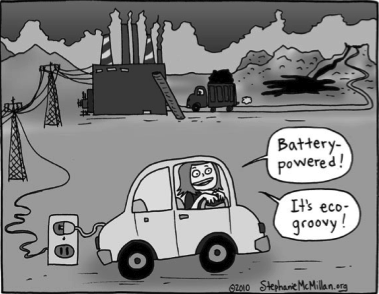
So, if crops for fuel for cars has been disastrous, wouldn’t the push to use more land and crop production for car parts have the same result? It would seem to follow, since the electric car push affirms the fact that the auto industry isn’t interested in real environmental sustainability. Instead, the auto industry realizes that the whole green marketing approach is very profitable.
The continued manufacturing of cars, even electronic cars or cars with soy-based seats is not a real solution to pollution, the proliferation of roads, traffic congestion and global warming, all of which the auto industry contributes to on a massive scale.
The idea of car farming is not only an insult to food farming, it is just the most recent manifestation of the absurdity of Green Capitalism.
This article was re-posted from Narco News.
The administration of Felipe Calderón has retained a politically connected US advertising and public relations firm to promote the political and economic agenda of the Mexican president in advance of the upcoming G20 Summit, which will be held in Los Cabos, Mexico, only a few weeks prior to the July 1 Mexican general election.
The move raises serious questions about whether Calderón is skirting, possibly even violating, a Mexican constitutional provision, Article 41, that prohibits the Mexican government from engaging in political promotion and advertising prior to a national election.
The Group of 20 (G20) Summit, a gathering of the leaders from the dominant global economies to be chaired this year by Mexico, will take place in Los Cabos, located on the southern tip of the Mexico’s Baja California peninsula, in mid-June at a plush convention center built for the occasion by the Mexican government at a cost exceeding $100 million. The Mexican government also is kicking in some $47 million to stage and promote the convention itself.
The marketing firm that has been hired by Calderón’s administration is Las Vegas-based R&R Partners, which has deep connections to Nevada’s political royalty and gained national fame by coining the slogan: “What happens here, stays here” — as part of a promotional campaign for the Las Vegas Convention and Visitors Authority.
R&R, according to a copy of the “media plan” obtained by Narco News through the Foreign Agents Registration Act database, “has been engaged to assist the Mexican government with the promotion of President Calderón ‘s objectives for the G20 as well as the progress of the meetings leading up to and during the summit through consultation services for earned media outside of Mexico, social media and the G20 website.” [Emphasis added.]
R&R Partners’ contract for the five-month stretch it has been retained to promote Calderón’s political and economic achievements, totals $500,000, according to FARA records.
That “promotion” includes touting “the country of Mexico and its progress … in particular during the Calderón administration,” utilizing, in part, “spokespeople” drawn from Mexican embassies and consulates as well as from “Los Pinos” — the official office and residence of the president of Mexico.
Among the pitches to be used, the media plan shows, include the following:
• The success of the G20 & President Calderón’s legacy are indelibly linked through June;
• The country of Mexico and its progress in the past 10 years — and in particular during the Calderón administration;
• President Calderón is the perfect spokesman at this time in history…;
• Mexico has an unprecedented opportunity to tell the world about its great successes in: public education, accessible health care, investment in infrastructure (schools, universities, roads, ports, manufacturing, exportation, and social responsibility).
Sin City
R&R Partners plays both sides of the aisle in US politics, with one of its principals, Billy Vassiliadis, having close ties to US Senator Harry Reid, D-Nev. But, it appears the media pact inked with Calderón’s administration is being run out of the Republican side of the R&R house.
Peter Ernault is the R&R executive charged with overseeing the G20 Summit campaign for the Calderón Administration, according to federal documents obtained by Narco News. Ernault, a former three-term Republican Nevada State Assemblyman with close ties to former Republican US Senator John Ensign — serving as his campaign manager in the 2000 and 2006 Senate races.
Ensign resigned from office in 2011 in the wake of a sex scandal (he had an affair with staff member’s wife) and subsequent cover-up, which implicated an R&R executive — while he was serving as Ensign’s chief of staff, prior to joining R&R.
Ernault himself, though never accused of any wrongdoing in the Ensign affair, was subpoenaed to testify before the Senate Ethics Committee about the scandal.
Another R&R executive, who serves under Ernault in Washington, D.C., as managing director of government and public affairs, is Michael Pieper. He provides R&R with reach inside Capitol Hill — having previously, according to his Linkedin page, served as president of the national Republican Governors Association. Pieper also worked for a short while (2007-2008) on the Finance Committee for the political action committee Romney for President Inc. — during Mitt Romney’s presidential run in the 2008 election cycle.
R&R, which boasts revenues exceeding $40 million, has done work for a long list of clients, including major US corporations such as NV Energy, Newmont Mining and Western Lithium Corp. However, its Web site lists no international clients and Narco News could find no evidence that the firm has ever done prior work for the Mexican government. So why Calderón chose R&R for the G20-promotion contract is not clear.
Narco News contacted Ernault seeking, among other things, to verify that R&R has not worked in the international arena previously and to get a clearer explanation of why it was chosen for the Mexican G20 promotion contract — given there are many qualified Mexican advertising agencies that could have handled the job.
Ernault replied via email with the following cryptic response: “We’ll handle. Thank you.”
Narco news also contacted Ricardo Alday Gonzalez, spokesman for the Mexican Embassy in Washington, D.C., for comment, but he did not reply by press time.
John Ackerman, a professor at the Institute for Legal Research of the National Autonomous University of Mexico (UNAM) as well as a columnist for Mexico’s La Jornada newspaper and Proceso magazine, however, seems clear as to what Calderón’s intentions are with the G20 Summit.
In a column he penned for Britain’s Guardian newspaper in November of last year, Ackerman states the following:
The G20 committed a big mistake by naming as its chair for 2012 a possible war criminal [Calderón] who is in the midst of an intense electoral battle in his home country.
… Calderón has already convinced the G20 to move up its 2012 meeting in Los Cabos, Mexico, so that it takes place only a few weeks before the 1 July presidential elections. The Mexican president hopes to use the presence of the international leaders to boost his failing credibility and overcome his party’s weakness in the polls.
… Calderón is particularly desperate for international recognition because on 25 November 2011, a group of lawyers, journalists, activists and academics, let by human rights lawyer Netzaí Sandoval, will bring a formal petition to the International Criminal Court (ICC) to investigate Calderón for war crimes and crimes against humanity.
… More than 40,000 soldiers who today occupy Mexico’s streets under Calderón’s command are not exclusively dedicated to keeping the peace. The military is trained to kill, and they have done so on hundreds, if not thousands, of occasions over the past five years while serving in the “drug war”. Extra-judicial killings have become standard operating procedure and the military has been known to mutilate the bodies of its victims, in clear violation of the Rome Statute.
The Calderón administration denies the charges raised in the peitition, which was filed with the ICC last November after being signed by some 20,000 people, including academics, lawyers, journalists and human rights activists. It also threatened to take legal action against those lodging the complaint.
From a press release issued by the Calderón administration:
The accusations against the Mexican government are groundless and unfounded, as noted by experts on the issue. However, they constitute slander and rash accusations that not only damage persons and institutions but also seriously affect Mexico’s good name. The Mexican government is therefore exploring every possible means of taking legal action against those who have made these accusations at national and international forums.
Los Pinos Sheen
The Mexican state-owned petroleum giant Pemex, according to a May 2 Bloomberg news-service story, recently “canceled a quarterly call with analysts and investors, citing an election law that bans the government from promoting achievements during a campaign.”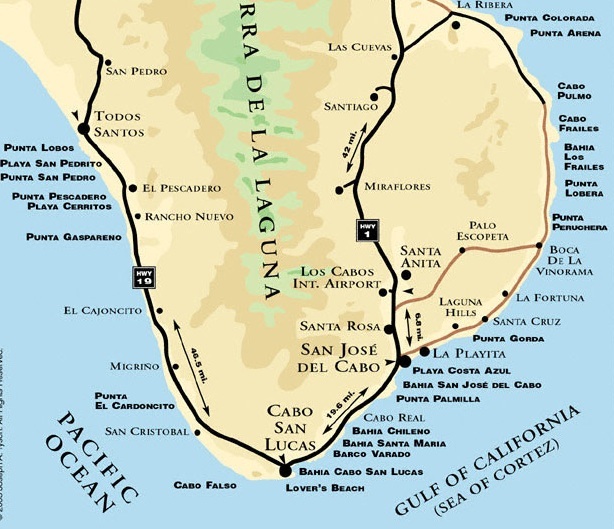
A number of pages on Web sites sponsored by the Mexican government that were previously public are now blocked and instead display a notice that indicates: Per the requirements of Article 41 of the Mexican Constitution, from March 30 to July 1, 2012, sections of certain Web sites are “suspended” because they contain information promoting the programs, actions, works or achievements of the government. [See link for an example of the notice in Spanish.]
So, it seems, some in the Mexican government take seriously the obligation to comply with Article 41 during the course of a national election. And that section of the Mexican Constitution seems quite clear in its directions [translation]:
During federal and local election campaigns, all governmental advertising, whether by federal, state or local government, offices of the Federal District [Mexico City], its representatives, or any public entity, shall be suspended until the date of the election. The only exceptions to the above shall be: a) information disseminated by election officials, b) information regarding education and health services or c) in the event of emergencies, information regarding the protection and welfare of citizens. [Emphasis added.]
With his party [the National Action Party, or PAN in its Spanish initials] trailing in the presidential polls by a wide margin, and the control of the Mexican Congress hanging in the balance, it would seem Calderón has every incentive to use any means at his disposal to not only preserve his “legacy,” but to assure the PAN maintains, to the extent possible, its power base in the country.
By turning to a US marketing and lobbying firm (with no known prior ties to Mexico and whose charge is to promote Calderón and his government’s achievements “outside Mexico”) it seems Calderón has found the perfect vehicle for skirting the prohibition on government-sponsored advertising and propaganda during an election cycle, a prohibition that is, again, established under the Mexican Constitution.
But there are clearly some holes in that line of rationalization. Among them is the fact that we live in a global media world, and any mainstream news coverage or advertising related to the upcoming G20 Summit to be held in Mexico in June (even if that propaganda is published or broadcast by and in media based outside of Mexico) is certain to blow back into Mexico and circulate inside the country.
Many Mexicans have cable TV and Internet connections and watch Univision and CNN Español and even English-language channels. In addition, Mexicans living along the Mexican/US border, in places such as Juárez, Tijuana or Nuevo Laredo, watch TV broadcasts from US stations.
R&R Partners’ media campaign for Calderón’s government also is making use of social media, such as Facebook and Twitter, which flows easily across international borders.
So it seems a thin conceit to claim that the R&R Partners’ media blitz (which also is employing Los Pinos and Mexican embassy officials as spokesperons) is not violating the spirit, if not the letter, of Article 41 of the Mexican Constitution.
But regardless of where Mexican legal scholars come down on that call, it is clear that R&R Partners’ media campaign and the $150 million or more that Calderón is spending to host and promote the G20 Summit, is masking an ugly reality that will endure in Mexico regardless of the outcome of the elections in July. And that reality is the ongoing drug war, which was escalated by Calderón upon taking office in 2006, and to date has claimed more than 60,000 Mexican lives and resulted in hundreds, if not thousands, of human rights violations since he took office.
On the subject of the drug war, R&R Partners’ “media plan” for the Mexican government includes only a few words — listed under a section for preparing “fact sheets,” or talking points:
• Crime and Security (for reactionary purposes if needed).
In other words, nothing will be said about the drug war, unless it is needed, should the issue be broached by somebody who isn’t on script.
But regardless of the Calderón administration’s efforts to put a sheen on the drug-war bloodshed with the help of a professional propaganda firm, or its seeming willingness to contort the Mexican Constitution in an effort to help sanitize the tragedy of it all, the truth of that drug war will continue to be exposed daily, with every bullet spent.
What happens in Los Pinos may well stay in Los Pinos — when it comes to the manipulations hatched by the government’s inner court.
But what happens in Mexico eventually happens to all of us — if we buy their hype.
Stay tuned…..
Editor’s Note: In the interest of full disclosure, I live on the 400 block of LaGrave, in the exact area where the Wealthy – Jefferson Project is taking place. A neighborhood I have lived in for 28 years.
Last week there was news coverage of the Inner City Christian Federation’s (ICCF) Wealthy – Jefferson Project, now known as Tapestry Square.
The story in MiBiz is indicative of the type of coverage this project has been receiving ever since ICCF took over the project a few years ago. The article states early on that this project began as early as 1991. This is true, in that ICCF built several houses along Jefferson Ave, just north of Franklin Street.
However, the article also states that interest in the 400 blocks of LaGrave, Sheldon and Division began in 2000, when ICCF held a 3-day neighborhood planning meeting. This is simply not true. Our neighborhood group at the time, the Forgotten Corner Neighborhood, held a day-long planning meeting in 1998. This first neighborhood planning meeting was in response to the expansion of St. Mary’s and Mary Free Bed, both of which were buying property south of Wealthy for parking space.
At the time, the office of ICCF was located on the corner of Logan and Jefferson and our neighborhood group invited them to participate in the planning meeting. The meeting not only brought neighbors and area business owners together, it was the first time that the hospitals had heard from most of the area residents that they did not want to be displaced. People expressed concerns that various sectors had developed long-term plans that area residents were not made aware of until after construction had begun.
ICCF did facilitate two separate neighborhood planning sessions in 2000 and 2002, which led to what they called the Wealthy – Jefferson Development Initiative. The result of those meetings can be seen online and if you look closely there is a significantly different blueprint than what is currently playing out.
After the 2002 meetings those of us who participated were told that ICCF did not have the funding to proceed with the project and it was put on the back burner. Years later, the Grand Rapids Press ran a story based on an interview with the Executive Director of ICCF, Jonathan Bradford. For the first time, the neighborhood was now hearing a different story about what was planned for the Wealthy/Division area.
ICCF had bought up all the vacant land in the 400 & 500 blocks of LaGrave, Sheldon and Division and then began approaching landlords and homeowners in the area. By the end of 2010, the remaining houses on the 400 block of Sheldon had been bought by ICCF, with apartment dwellers having to vacate and home owners selling their property.
In the 2002 Wealthy – Jefferson Development Initiative, it states, “All current home owners will be able to continue to enjoy their homes, including some form of protection against tax increases that could threaten their ownership in the future.” The residents, who participated in the 2000 and 2002 planning sessions, were also assured that they would not have to leave and that new development would be built around existing property. Clearly, ICCF had other plans.
The last family to hold out on the 400 block of Sheldon was the Williams family, which had lived in their house for more than 4 decades. Mrs. Williams had told this writer the year before that she did not want to sell and that she liked living so close to where she worked (St. Mary’s). However, after all the other land around them had been bought it became nearly impossible for the Williams family to stay.
Just to be clear, all during this process, residents had expressed concerns about being forced out of the area and they were assured this would not happen. People who attended those meetings in 2000 and 2002 were not opposed to new housing and new retail. In fact, the residents welcomed the possibility of having a grocery store they could walk to and more homeowners to combat the history of drug use and sex trafficking in the area. However, there was no solid justification for tearing down houses that could have be rehabilitated nor any real justification for cutting down all of the trees on that block, some of which were healthy, mature trees.
The real issue here is not specifically any new development, but the way in which the current plans came about. Residents in this area have not been informed about new plans until after the fact. A recent example of this was the announcement of the GR University Preparatory Academy being built on the southeast corner of Division and Logan. Despite being a resident of this neighborhood, I was not told of this project until it appeared in the news media. On top of that, when I met with ICCF last year on the development project, I was told that the 500 block of Sheldon (where part of the school building & parking will be located) was going to be developed by ICCF for future housing. Again, a decision was made without neighbors being made aware.
It should also be noted that all of the residents, which vacated housing in the area now known as Tapestry Square, were either African American or Latino and all of them were working-class with limited income. Now, I have no way of knowing exactly who will be living in the new apartments that are being developed along Wealthy, located above retail space, but I would suspect that those future residents will not be working class people or minorities.
The promotional literature for the apartment spaces under construction state that 1 bedroom apartments will run for $895.00 a month or $1,095.00 a month for a 2 bedroom apartment. To some this might seem rather affordable, but it is significantly higher in cost than the rent paid by people who used to live on the 400 block of Sheldon.
Even the images used on the promotional literature provides us with an indication of who the target audience will be for the first stage of this development project. Notice the large flat screen TV and the movie that is playing.
In the MiBiz article, a spokesperson from Rockford Construction (the company contracted for the project) states, “This is a very upscale building. It is meant to have a very urban and edgy feel to it.” Edgy indeed, but this edgy and urban feel could very well be the new way of identifying gentrification, especially when longtime residents have been excluded from the process or forced to abandon their property.
 Grand Rapids Institute for Information Democracy