MLive invites you to discuss Obama’s speech with their experts – corporate investors and lobbyists
This morning, MLive posted an announcement about how the public can be part of a discussion after the President’s speech tonight at the Democratic National Convention.
The article states, “we want to hear what you and political experts on both sides of the aisle have to say.”
The panel of experts will include a few MLive reporters, but the three political strategists they have invited are Tom Shields of Marketing Resource Group; Joe Disano of Main Street Strategies; T.J. Bucholz of Lambert Edwards & Associates, and Greg McNeilly of The Windquest Group.
Looking at this line up it is clear what MLive considers as political strategists……..people who represent corporate interests as lobbyists, investors and people who work in the narrow world of money & politics.
The Marketing Resource Group claims to offer PR services, political consulting, marketing, advertising and crisis management. MRG’s history of political consultation was helping to elect John Engler, Candice Miller and according to their site. “Republican majorities in both the Michigan House and Senate.”
The client list for MRG is also instructive, with lots of casino and entertainment companies, along with the bottled water giant Nestle North America, environmental criminal Kennecott Minerals and the anti-gay legal group, the Thomas More Law Center.
Then there is Main Street Strategies, a political lobbying group based in Lansing. Their client list is pretty much just politicians, government entities and labor groups. I guess this would make them the other side of the aisle, since they disproportionately represent Democrats.
Main Street Strategies has a listing of some of their political lobbying campaigns, which includes the kind of ads the public loathes, attack ads. Knowing what they do makes their company tag line all the more ironic, since they claim to be “cutting through the clutter.”The Third expert is with Lambert Edwards & Associates, which promotes itself as a public relations, investor relations company. Their clients are mostly from the corporate world, such as Wolverine Worldwide, Biggby Coffee, Rubbermaid and Zondervan. However, Lambert Edwards & Associates has also represented the Grand Rapids Art Museum and the Michigan Department of Education.
The last expert or political strategist making up the MLive panel for tonight is Greg McNeilly of The Windquest Group. The Windquest Group is the public face that represents many of the DeVos family interests. McNeilly was part of the DeVos led attempt to alter local government through the group known as the One Kent Coalition.
It seems that the line up MLive has put together is made up of power brokers for corporate and government interests and not one of them represents the interests of working class people or issues like environmental protection, economic justice or racial, gender and LGBT equality.
This is what political pundits mean by both sides of the aisle, people who represent the two parties of the capitalist system. It’s as if another side or point of view doesn’t exist.
Profiting from the Global Food Crisis
This article is re-posted from ZNet. Editor’s Note: While this is article is about one company, it is indicative of neoliberal capitalism as a whole, which is based on profit making and not on human needs. See Raj Patel’s book “Stuffed and Starved.”
Barclays has made as much as half a billion pounds in two years from speculating on food staples such as wheat and soya, prompting allegations that banks are profiting handsomely from the global food crisis.
Barclays is the UK bank with the greatest involvement in food commodity trading and is one of the three biggest global players, along with the US banking giants Goldman Sachs and Morgan Stanley, research from the World Development Movement points out.
Last week the trading giant Glencore was attacked for describing the global food crisis and price rises as a “good” business opportunity.
The extent of Barclays’ involvement in food speculation comes to light as new figures from the World Bank show that global food prices hit an all-time high in July, with poor harvests in the US and Russia pushing up the average worldwide cost of staples by an unprecedented 10 per cent in a month.
The extent of just one bank’s involvement in agricultural markets will add to concerns that food speculation could help push basic prices so high that they trigger a wave of riots in the world’s poorest countries, as staples drift out of their populations’ reach.
Nor has the UK escaped rising food costs. Shop food prices have risen, on average, by 37.9 per cent in the past seven years, according to the Office for National Statistics, as the demands of an increasingly affluent and growing world population strain supply. Oils and fats have soared by 63 per cent in the UK during that period, fish prices by 50.9 per cent, bread and cereals by 36.7 per cent, meat 34.5 per cent and vegetables 41.3 per cent. In April, average UK food prices were 4.2 per cent higher than a year earlier.
Oxfam’s private sector adviser, Rob Nash, said: “The food market is becoming a playground for investors rather than a market place for farmers. The trend of big investors betting on food prices is transforming food into a financial asset while exacerbating the risk of price spikes that hit the poor hardest.”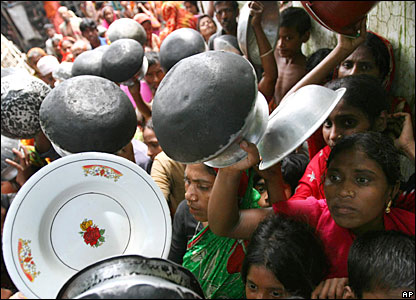
The World Development Movement report estimates that Barclays made as much as £529m from its “food speculative activities” in 2010 and 2011. Barclays made up to £340m from food speculation in 2010, as the prices of agricultural commodities such as corn, wheat and soya were rising. The following year, the bank made a smaller sum – of up to £189m – as prices fell, WDM said.
The revenues that Barclays and other banks make from trading in everything from wheat and corn to coffee and cocoa, are expected to increase this year, with prices once again on the rise. Corn prices have risen by 45 per cent since the start of June, with wheat jumping by 30 per cent.
Barclays makes most of its “food-speculation” revenues by setting up and managing commodity funds that invest money from pension funds, insurance companies and wealthy individuals in a variety of agricultural products in return for fees and commissions. The bank claims not to invest its own money in such commodities.
Since deregulation allowed the creation of such funds in 2000, institutions such as Barclays have collectively channelled an astonishing $200bn (£126bn) of investment cash into agricultural commodities, according to the US Commodity Futures Trading Commission.
Barclays’ dominance in commodities trading is thanks to its former chief executive Bob Diamond, who was Britain’s best-paid banking boss until he was forced to resign last month following a £290m fine for attempting to manipulate the Liborinterest rate. As boss of Barclays Capital he boosted trading in agricultural products.
Dealing with the reputational headache associated with high levels of food speculation will be yet another item in the already-bulging in-tray of Antony Jenkins, who was promoted to become Mr Diamond’s replacement on Thursday.
Christine Haigh, policy and campaigns officer at the World Development Movement and one of the analysts behind the research, said: “No doubt the UK’s biggest player in the commodities markets is hoping it will do better this year by cashing in on rising food prices. “Its behaviour risks fuelling a speculative bubble and contributing to hunger and poverty for millions of the world’s poorest people.”
Banks and hedge funds typically argue that speculation makes little or no difference to food prices and volatility and argue, correctly, that no definitive link has been proved. Barclays declined to comment on the amount of money it makes from trading in agricultural commodities yesterday.
The bank defended its actions, pointing out that trading in so-called futures contracts – an agreement to buy or sell a certain quantity of a product, at a given price on an agreed date – helped parties such as farmers and bakers to hedge against the risk of rising or falling prices. “Our clients include investment companies, food producers and consumers who, among other things, seek our help to manage risks.”
Barclays also declined to comment on whether it thought large amounts of speculation pushed up prices and volatility. A spokesman said: “We recognise there is a perception held by some stakeholders that participation in agricultural futures markets by some participants can unduly influence the prices of commodities. As a result, we continue to carefully monitor market trends and any research produced on this subject,” a spokesman said.”
Barclays Capital analysts admitted in a note to clients in February that speculation did push up prices. Barclays said: “The second key driver is that commodity investors have begun allocating to commodities again after beginning 2012 heavily underexposed to the sector.” The other drivers were the “health of the global economy” and “weather and geopolitics”.
A satirical look at environmental criminal Enbridge
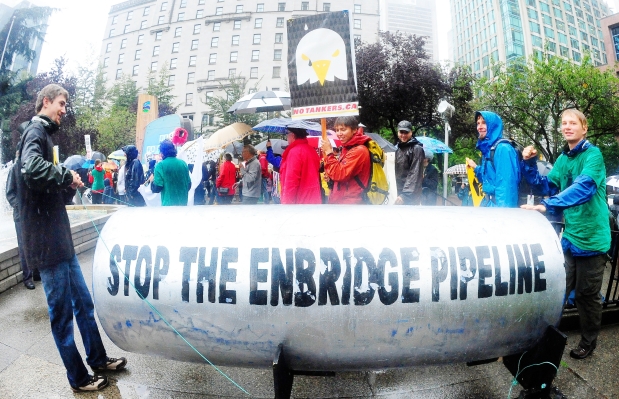
We came across this video recently, which does a nice job of altering an Enbridge commercial and inserting their own animation and voice over.
The video was made in response to the new Tar Sands pipelines that Enbridge is contracted to operate in both Canada and the US. The video was made by folks in Vancouver and the spot was originally posted online at “The Province,” a Vancouver newspaper, but under pressure from Enbridge the satirical video was removed.
Enbridge has a long history of environmental crimes, with hundreds of oil spills/leaks all across North America, including the disastrous spill in the Kalamazoo River two summer’s ago.
This Day in Resistance History: the First Labor Day – September 5, 1882
On this day in 1882, an estimated 30,000 people marched in New York City in the first US Labor Day event.
Organized by the Knights of Labor, the event was meant to celebrate the accomplishments of labor unions and to draw attention to the ongoing struggles that workers faced at that time.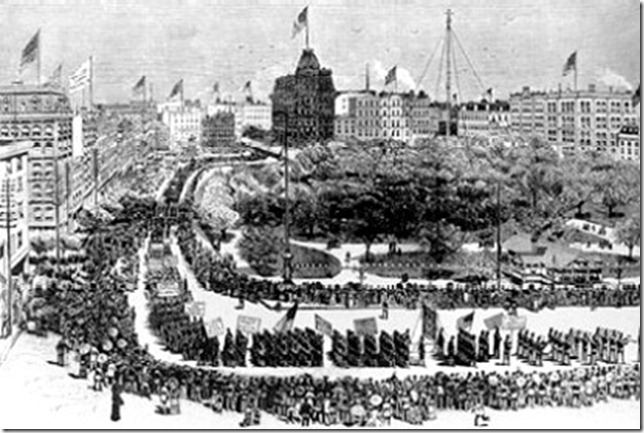
The first Labor Day parade was taking place amidst the struggle for an 8 – hour work-day, the right to organize in the workplace and the fight against child labor.
Labor Day celebrations then began popping up all across the country. In 1887, Oregon became the first state to make Labor Day an official holiday and by the time the federal government made it a national holiday in 1894, 23 states had already made it official.
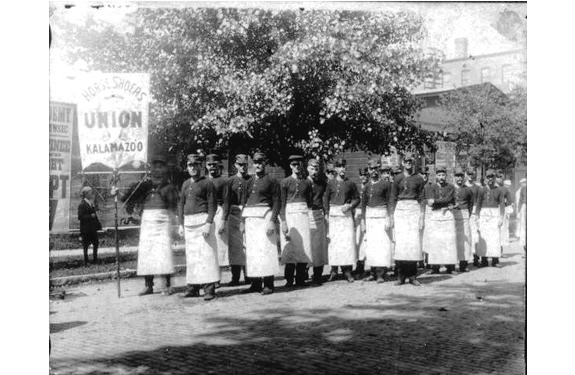
Closer to West Michigan, there is evidence that Labor Day was being celebrated as early as 1886. There is evidence that Labor Day was celebrated in Grand Rapids in 1886 and in Kalamazoo, as is reflected in this picture of workers dressed for the parade.
However, as the years went by, the significance and origin of Labor Day became an issue that reflected the tension between the more radical unions and what some scholars refer to as “business unions.”
Most sources credit the Knights of Labor for organizing the first Labor Day events in many cities across the country, but by the time Labor Day became a federal holiday, there was a dispute about its origin.
The American Federation of Labor (AFL), under the leadership of Samuel Gompers, was claiming that the first Labor Day parade was organized by a member of the AFL in New York. Gompers wanted to give credit to his union for the founding of Labor Day as one more means to demonstrate to the US capitalist class that he was not anti-American.
Gompers believed in the American Capitalist system and never wanted to overthrow it, unlike some of the more radical, international unions of the late 19th and early twentieth century.
The AFL approach most often meant negotiating with company owners and focusing on wages, instead of making stronger demands and using tactics such as strikes and sabotage. This history is well documented in Paul Buhle’s book, Taking Care of Business: Samuel Gompers, George Meany, Lane Kirkland, and the Tragedy of American Labor.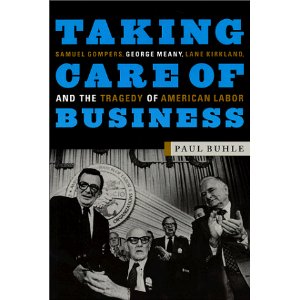
This tension between radical and business unions was also reflected historically as the business unions would not celebrate or commemorate the 1886 Haymarket riot and its holiday on May 1, despite the fact the May 1st had become an international labor holiday.
As union continued to win gains such as the 8-hour work-day, ending child labor, worker compensation and the right to collective bargaining, Labor Day continued to be a celebration of those rights and gains.
After WWII, with the push for greater nationalism in the US, the anti-Communist Red-Scare and the merger of the CIO with the AFL, most of the radical sectors of the labor movement were all but repressed or co-opted. It is at this point that we begin to see a great alliance between big labor and the Democratic Party, which was eventually reflected in the inclusion of partisan politics into Labor Day celebrations.
It is important that we understand this history, not just in some nostalgic sense, but as a framework to move forward and reclaim the radical, independent power of working class people to make change. All of the gains that have been made by labor unions over the years have come about because of direct action – strikes, pickets, boycotts, sabotage and an independent labor press. The victories of organized labor never came about through electoral politics.
Afghanistan’s Base Bonanza: Total Tops Iraq at That War’s Height
This article by Nick Turse is re-posted from ZNet.
Afghanistan may turn out to be one of the great misbegotten “stimulus packages” of the modern era, a construction boom in the middle of nowhere with materials largely shipped in at enormous expense to no lasting purpose whatsoever. With the U.S. military officially drawing down its troops there, the Pentagon is now evidently reversing the process and embarking on a major deconstruction program. It’s tearing up tarmacs, shutting down outposts, and packing up some of its smaller facilities. Next year, the number of International Security Assistance Force (ISAF) coalition bases in the southwest of the country alone is scheduled to plummet from 214 to 70, according to the New York Times.
But anyone who wanted to know just what the Pentagon built in Afghanistan and what it is now tearing down won’t have an easy time of it.
At the height of the American occupation of Iraq, the United States had 505 bases there, ranging from small outposts to mega-sized air bases. Press estimates at the time, however, always put the number at about 300. Only as U.S. troops prepared to leave the country was the actual — startlingly large — total reported. Today, as the U.S. prepares for a long drawdown from Afghanistan, the true number of U.S. and coalition bases in that country is similarly murky, with official sources offering conflicting and imprecise figures. Still, the available numbers for what the Pentagon built since 2001 are nothing short of staggering.
Despite years of talk about American withdrawal, there has in fact been a long-term building boom during which the number of bases steadily expanded. In early 2010, the U.S.-led International Security Assistance Force (ISAF) claimed that it had nearly 400 Afghan bases. Early this year, that number had grown to 450. Today, a military spokesperson tells TomDispatch, the total tops out at around 550.
And that may only be the tip of the iceberg.
When you add in ISAF checkpoints — those small baselets used to secure roads and villages — to the already bloated number of mega-bases, forward operating bases, combat outposts, and patrol bases, the number jumps to 750. Count all foreign military installations of every type, including logistical, administrative, and support facilities, and the official count offered by ISAF Joint Command reaches a whopping 1,500 sites. Differing methods of counting probably explain at least some of this phenomenal rise over the course of this year. Still, the new figures suggest one conclusion that should startle: no matter how you tally them, Afghan bases garrisoned by U.S.-led forces far exceed the 505 American bases in Iraq at the height of that war.
Bases of Confusion
There is much confusion surrounding the number of ISAF bases in Afghanistan. Recently, the Associated Press reported that as of October 2011, according to spokesman Lieutenant Colonel David Olson, NATO was operating as many as 800 bases in Afghanistan, but has since closed 202 of them and transferred another 282 to Afghan control. As a result, the AP claims that NATO is now operating only about 400 bases, not the 550 to 1,500 bases reported to me by ISAF.
This muddled basing picture and a seeming failure by the U.S. and its international partners to keep an accurate count of their bases in the country has been a persistent feature of the Afghan conflict. Some of the discrepancies may result from terminology or from the confusion that can result from communications in any international coalition. ISAF, NATO, and the U.S. military all seem to keep different counts. Mainly, however, the incongruities appear to stem from fundamental issues of record-keeping — of, in particular, a lack of interest in chronicling just how extensively Afghanistan has been garrisoned.
In January 2010, for example, Colonel Wayne Shanks, an ISAF spokesman, told me that there were nearly 400 U.S. and coalition bases in Afghanistan, including camps, forward operating bases, and combat outposts. He assured me that he only expected that number to increase by 12 or a few more over the course of that year.
In September 2010, I contacted ISAF’s Joint Command Public Affairs Office to follow up. To my surprise, I was told that “there are approximately 350 forward operating bases with two major military installations, Bagram and Kandahar airfields.” Perplexed by the apparent loss of 50 bases instead of a gain of 12, I contacted Gary Younger, a public affairs officer with the International Security Assistance Force. “There are less than 10 NATO bases in Afghanistan,” he wrote in an October 2010 email. “There are over 250 U.S. bases in Afghanistan.”
By then, it seemed, ISAF had lost up to 150 bases and I was thoroughly confused. When I contacted the military to sort out the discrepancies and listed the numbers I had been given — from Shanks’s 400 base tally to the count of around 250 by Younger — I was handed off again and again until I ended up with Sergeant First Class Eric Brown at ISAF Joint Command’s Public Affairs Office. “The number of bases in Afghanistan is roughly 411,” Brown wrote in a November 2010 email, “which is a figure comprised of large base[s], all the way down to the Combat Out Post-level.”
If the numbers supplied by Olson to the Associated Press are to be believed, then between November 2010 and October 2011, the number of foreign military bases in Afghanistan nearly doubled, from 411 to about 800. Then, if official figures are again accurate, those numbers precipitously dropped by nearly 350 in just four months.
In February of this year, Lieutenant Lauren Rago of ISAF public affairs told me that there were only 451 ISAF bases in Afghanistan. In July, the ISAF Joint Command Press Desk informed me that the number of bases was now 550, 750, or 1,500, depending on what facilities you chose to count, while NATO’s Olson and the Associated Press put the number back down at the January 2010 figure of around 400. TomDispatch did not receive a response to a request for further clarification from a spokesman for U.S. Forces-Afghanistan before this article went to press.
Reconciling the numbers may never be possible or particularly edifying. Whatever the true current count of bases, it seems beyond question that the number has far exceeded the level reached in Iraq at the height of the conflict in that country. And while the sheer quantity of ISAF bases in Afghanistan may be shrinking, don’t think deconstruction is all that’s going on. There is still plenty of building underway.
The Continuing Base Build-Up
In 2011, it was hardly more than an empty lot: a few large metal shipping containers sitting on a bed of gravel inside a razor-wire-topped fence at Kandahar Air Field, the massive American base in southern Afghanistan. When I asked about it this spring, the military was tight-lipped, refusing to discuss plans for the facility. But construction is ongoing and sometime next year, as I’ve previously reported, that once-vacant lot is slated to be the site of a two-story concrete intelligence facility for America’s drone war. It will boast almost 7,000 square feet of offices, briefing and conference rooms, and a large “processing, exploitation, and dissemination” operations center.
The hush-hush, high-tech, super-secure facility under construction is just one of many building projects the U.S. military currently has planned or underway there. While some U.S. bases are indeed closing down or being transferred to the Afghan government, and there’s talk of combat operations slowing, as well as a plan for the withdrawal of American combat forces, the U.S. military is still preparing for a much longer haul at mega-bases like Kandahar and Bagram, a gigantic air base about 40 miles north of Kabul. “Bagram is going through a significant transition during the next year to two years,” Air Force Lieutenant Colonel Daniel Gerdes of the U.S. Army Corps of Engineers’ Bagram Office told Freedom Builder, a Corps of Engineers publication, last year. “We’re transitioning… into a long-term, five-year, 10-year vision for the base.”
According to contract solicitation documents released earlier this year and examined by TomDispatch, plans are in the works for a Special Operations Forces’ Joint Operations Center at Kandahar Air Field. The 3,000-square-meter facility — slated to include offices for commanders, conference rooms, training areas, and a secure communications room — will serve as the hub for future special ops missions in southern and western Afghanistan, assumedly after the last U.S. “combat troops” leave the country at the end of 2014.
Thus far in 2012, no fewer than eight contracts have been awarded for the construction of facilities ranging from a command and control center and a dining hall to barracks and a detention center at either Kandahar or Bagram. Just one of these contracts covered seven separate Air Force projects at Bagram that are slated to be completed in 2013, including the construction of a new headquarters facility, a control room, and a maintenance facility for fighter aircraft.
Improvements and expansions are planned for other bases as well. Documents examined by TomDispatch shed light on a $10 to $25 million construction project at Camp Marmal near Mazar-e-Sharif in Balkh Province on the Uzbekistan and Tajikistan borders. Designated as a logistics hub for the north of the country, the base will see a significant expansion of its infrastructure including an increase in fuel storage capacity, new roads, an upgraded water distribution system, and close to 150 acres of space for stowing equipment and other cargo. According to David Lakin, a spokesman for U.S. Forces-Afghanistan, a contract for work on the base will be awarded by the end of the year with an expected completion date in the summer of 2013.
Base World
Even before the new figures on basing in Afghanistan were available, it was known that the U.S. military maintained a global inventory of more than 1,000 foreign bases. (By some counts, around 1,200 or more.) It’s possible that no one knows for sure. Numbers are increasing rapidly in Africa and Latin America and, as is clear from the muddled situation in Afghanistan, the U.S. military has been known to lose count of its facilities.
Of those 505 U.S. bases in Iraq, some today have been stripped clean by Iraqis, others have become ghost towns. One former prison base — Camp Bucca — became a hotel, and another former American post is now a base for some members of an Iranian “terrorist” group. It wasn’t supposed to end this way. But while a token number of U.S. troops and a highly militarized State Department contingent remain in Baghdad, the Iraqi government thwarted American dreams of keeping long-term garrisons in the center of the Middle East’s oil heartlands.
Clearly, U.S. planners are having similar dreams about the long-term garrisoning of Afghanistan. Whether the fate of those Afghan bases will be similar to Iraq’s remains unknown, but with as many as 550 of them still there — and up to 1,500 installations when you count assorted ammunition storage facilities, barracks, equipment depots, checkpoints, and training centers — it’s clear that the U.S. military and its partners are continuing to build with an eye to an enduring military presence.
Whatever the outcome, vestiges of the current base-building boom will endure and become part of America’s Afghan legacy. What that will ultimately mean in terms of blood, treasure, and possibly blowback remains to be seen.
Amway/Alticor is donating to Obama’s re-election campaign
When people hear the corporate name Amway, all sorts of images and labels come to mind, but one label that doesn’t usually come to mind is “supported of Democrats.”
It is true that the Amway Corporation has traditionally funded the Republican Party as has the DeVos and Van Andel Families. We noted back in July that the DeVos family had already donated over a half a million dollars to the Republicans so far in the 2012 election cycle.
Since 1990, Amway/Alticor had contributed roughly $8,000 to Democrats prior to 2012, but have thus far contributed $46,800 to Democrats in the current election cycle. Comparatively, the Republican Party has received $390,900 from Amway/Alticor in the 2012 election cycle, which demonstrates where the bulk of their paying for political influence has gone.
The Democrats who have received funding from Amway/Alticor so far this year have been Congressional candidates David Wu from Oregon ($2,500) and Daniel Adler from California ($3,500). However, what might come as a surprise to some is that President Barack Obama has received $10,000 from Amway/Alticor in his bid to be re-elected, according to the Center for Responsive Politics. Comparatively, Amway/Alticor has only given $12,750 to Republican Presidential candidate Mitt Romney so far.
The reason why Amway would give money to Democrats and specifically President Obama, depends on how one views electoral politics in the US. Thos who think it is purely ideological might be confused by this data, but if one sees electoral politics purely in terms of power, then Amway’s donation to Obama and other Democrats makes complete sense.
Corporations give money to candidates primarily to buy access and to influence policy. That Amway gave money to Obama’s re-election campaign reflects that they want some access if he is re-elected. This is the nature of electoral politics in the US, which is why the corporations that much of the public loathes, such as Goldman Sachs, JP Morgan Chase, Comcast, BP, Coca Cola give to both political parties. These companies, along with most, donate to both parties because they want access and the ability to influence policy no matter who controls the White House or Congress.
Yesterday, I attended the annual Labor Day event in Grand Rapids, held at Ah Nab Awen Park in downtown Grand Rapids.
The annual event had moved to this location a few years ago, after decades of hosting the event at John Ball Park on the Westside. I used to attend those Labor Day celebrations, with substantial crowds and lots of local labor unions with food tents set up, providing refreshments to their members and families.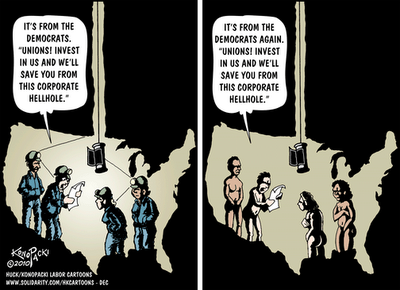
The Westside event also included a parade from downtown Grand Rapids to the park, with people lined up along the route to catch candy being thrown by union members, along with trucks and floats that brought cheers from the crowds.
There was also a detestable element to this annual event, at least detestable to this writer. Joining the parade were local politicians trying to present themselves as advocates for working class people.
When the parade reached John Ball Park, there would be music and some recognition of local labor people, but the bulk of the stage time that wasn’t music consisted of politicians pimping for votes.
The parade and the candy no longer exists, now that the event is held downtown, but one thing that is still highly visible during the West Michigan Labor Fest is the presence of politicians and partisan politics.
There are aspects to Labor Fest that still honors working class people and their families. Some of the local unions provide rides for kids, there was plenty of food and the beer tent is the largest on site. There were craft vendors, a classic car presence and a few of the unions had booths with free stuff.
However, what dominated the events were the presence of politicians and booths for the Democratic Party and their local candidates. I sat through 30 minutes of praise from local labor people about the Democratic candidates and their commitment to organized labor and the “middle class.”
Absent from the event and the praise for Democratic candidates was hard evidence that these candidates or the Democrats have actually done anything for working people. That is partly due to the fact that they have done much and are not offering much in the upcoming election. Here is what Steve Pestka, candidate for the 3rd Congressional seat, has to say about creating jobs:
Getting a good job is crucial to strengthening our families and the middle class. Steve Pestka recognizes that we need to continue building a diverse economy with good-paying jobs in West Michigan. We need leaders in Washington who will embrace policies that support Michigan’s employers and which lead to higher wages, better jobs, and a more educated and stronger workforce.
Seems like a whole lot of nothing to me. Not only does Pestka not provide any clear plan for defending and advocating for the rights of working people, he has no sense of or is not willing to even acknowledge that we have an economic system that benefits the rich at the expense of working people.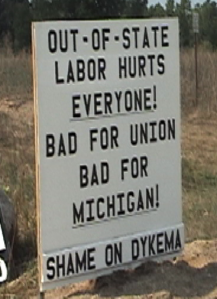
On top of the fact that the West Michigan Labor Fest was really a Democratic Party love-in, there was not a word about the current labor organizing campaigns in West MI. Nothing was said about the Grand Rapids Gravel Workers and their ongoing strike against a company that wants to cut their wages by $6 an hour, nor was there mention that the company had hired an out of town company to find scab workers and private security to harass and intimidate striking workers. With no evidence of the Grand Rapids Gravel workers getting their jobs back soon, why wouldn’t the Labor Fest organizers have striking workers there to inform people and recruit people for solidarity actions?
Maybe it is because the local unions have lost their sense of history and what tactics unions used to actually win rights on the job, through wildcat strikes, sit ins, pickets, boycotts, worker solidarity and recruiting new members. Labor rights and worker justice has never really come about through partisan elections, but through direct action and grassroots organizing.
Despite this being a Presidential Election year, the attendance was sparse and them demographic was disproportionately older. If the local labor unions don’t change their tactics and their focus, they might well be a thing of the past.
The Bloom Collective to host A Grand Rapids Power Analysis this Saturday
Every community has its own power structure, made up of individuals, families and entities that wield a significant amount of power over the lives of people who live and work in those communities.
Providing a power analysis is critical for those who want to understand and challenge power in their own communities.
This Saturday, the Bloom Collective will provide a Power Analysis of Grand Rapids. Their facebook event page states:
Join us for an investigation and discussion about who has power in Grand Rapids, both political and economic power. We will present information on individuals and organizations, as well as look at the inter-locking systems of power between private wealth, political associations and who is connected to what organizations. The Bloom
Collective believes that without such analysis, no real organizing for social justice can occur in Grand Rapids.
A Grand Rapids Power Analysis
Saturday, September 8
Noon
The Bloom Collective
671 Davis NW – in the lower level of the Steepletown Center
Suggested donation of $3
The Bloom Collective will provide some food, but feel free to bring a dish to pass.
A Call for Solidarity
Editor’s note: The following article should be viewed as an opinion piece, and the views expressed in it belong to the solely to the author, and do not necessarily represent GRIID as a whole. The purpose of this publishing is to encourage local community members to come together and work for their collective liberation, nothing more or less. Interested parties may contact the author at shawn.g.ferguson@gmail.com
I moved to Grand Rapids completely politically unaware in 2002, the midst of the second Bush administration. The kickoff to the Iraq war which soon followed brought me out of the slumber which many Americans continue to find themselves in. I knew next to nothing about the world (or even my community), but I knew I didn’t support what was happening and what my tax dollars were going towards. I quickly found myself marching with hundreds of others down Fulton Avenue, carrying a sign and being told to “get a job!”. I met people on the streets then that I still organize with today. I had no idea at the time, but it was the beginning of my new life.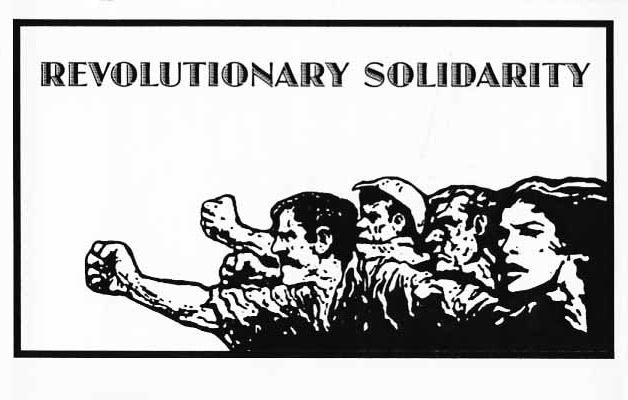
In those “early years” the protests were very diverse. Even my untrained eye could see the difference between the middle-aged, “peace loving”, capital “D” Democrats, and the adolescent, crust-punk, “black-bloc”, circle “A” Anarchists. While the two were marching together and chanting some of the same slogans, I could tell neither would be seen in public with the other under different circumstances. It appears “preemptive” war was a force strong enough to bring us all together, at least while Bush was still president. We don’t even see anti-war demonstrations in Grand Rapids anymore, let alone this type of solidarity. As a matter of fact, in recent years horizontal hostility has been on the rise among the already insufficient radical community in Grand Rapids.
One wiki states horizontal hostility is when “individuals direct the resentment and anger they have about their situation onto those who are of equal or lesser status”. If I were to ascribe my personal definition to the term (though I think the one above is pretty good), it would be something like, “when those who could most benefit from working together against a common enemy or foe instead work against one another, or otherwise obstruct the work of those that have common aims”. Essentially, horizontal hostility is the opposite of solidarity.
This parasitic phenomenon is particularly common among nurses. Studies have been done on the subject (also equated with bullying) and have shown that “HH” contributes to “diminished productivity and increased absenteeism”. It doesn’t take long to see how horizontal hostility could be devastating to an already repressed and fatigued political community working for such lofty goals as ending oppression, instituting equality, and perhaps even “smashing the state”. I struggle to think of anything more damaging the radical community could do to itself, except maybe mass suicide.
My political journey has been a long one since those early protests, moving quickly from “independent”, to capital “D” Democrat, to Marxist (and almost a card-carrying socialist), to what most of my former comrades would refer to as an “anarchist”[1], but I tend to refer to as a “radical”. Connecting the dots between war, oppression, capitalism, and civilization has been a sharp, though liberating, philosophical plummet. I can only assume that this process has been equally as difficult, and alienating at times, for others as it has for me. It is not uncommon for those with such experiences to galvanize together as a result. This is not what I have experienced since becoming a radical in Grand Rapids.
Anarchists have a reputation for being exclusive and judgmental is this town. Thus, before anyone even considers moving beyond the left/right paradigm they have to contend with the idea that they will be judged for not being hardcore enough. This is not a abstract concept for me, as it was my experience, and it has been for many of my contemporaries as well. While I did not allow such a petty thing to discourage me from realizing my own political expression, it certainly has the potential to close the door for others (and may have already).
After breaching that initial barrier, I discovered deep rifts within the radical community in this otherwise conservative town. Those with the same enemies (war, oppression, the two party system, hierarchy) and nearly identical philosophies (“anarchism”) were not on speaking terms. And as far as all those on the “left” working together, Democrats and anarchists marching together in solidarity against a single issue, forget about it. I found that radicals regularly participated in horizontal hostility against one another, typically under the guise of “loving” criticism of actions or statements not radical enough, however at times much more devastating. I have seen projects sabotaged, radical institutions and actions boycotted, confrontations during public discussions, anonymous comments on blogs and websites, scathing editorials published in local zines (one about “building community” in a great twist of double-think), and (of course) good old fashioned word of mouth back biting.
What I’ve not seen a lot of is anarchists being supportive of each others projects (unless they’re just right), positive or motivating internet comments, or anything constituting the “love” the above hostility is supposedly coming from. I, like many others, was raised around twisted and damaging ideas of love, and to be rediscovering them in an environment which prides itself on it’s “safe spaces” and claims to be a thorn in the side of abusers and the powerful, was dismaying to say the least. While this dynamic has certainly done irreparable harm to personal relationships, more significantly it has driven a wedge between would be political allies.
Those of us fighting for equality and justice (“anarchist” or not) have a long history of losing battles to power. We often cite all the dirty tricks they like to use to keep us down, not the least of which is “divide and conquer”, the masterful technique of turning the underlings against one another, thus enabling the elite to simply sit back and enjoy the chaos and infighting they’ve created amongst all their would-be enemies. By utilizing the tactic of horizontal hostility, the radicals and anarchists in Grand Rapids have been doing much of the elite’s oppressive work for them. The powerful here on the West Side don’t even have to bother with sabotaging the opposition, we doing it to ourselves.
If seeing the horizontal hostility in action hasn’t been proof enough, I’ve seen the evidence of it’s destructiveness as well (aside from broken relationships and hurt feelings). There are no more events that utilize the energy of both liberals and radicals. The only anarchist institution in town, an infoshop, has teetered on the edge of closure. Radical organizations were feared by local police in years past, even infiltrated (a sure sign that you’re doing something right as an opposition group); white supremacists groups targeted them. Such reactions are now unheard of, laughable even. In short, they’ve won.
Grand Rapids certainly needs to build a much stronger radical community if local power is going to be overturned or even threatened, there is absolutely no doubt of that. The first step is to rediscover what solidarity means; we must put an end to the hostility among allies. We have already seen “diminished productivity and increased absenteeism” in our groups and meetings, and we can afford no more. We must grow our numbers, build upon our existing relationships, and give the authorities something to really be worried about, something to fear, again.
[1] I hesitate in using that label not because I have found any inconsistencies in what I have read and understood to be anarchism and my own beliefs, but because of the flak I have seen others receive after using the label in ways that other anarchists more devoted (or dare I say more “pure”) have deemed unfit.
Drought Devastates U.S. Corn Crop, Spikes Worldwide Food Prices
This article is re-posted from EcoWatch.
This summer, many parts of the U.S. are in the grips of an unrelenting record heat wave exacerbating drought conditions throughout most of the nation. Yesterday, a report by the U.S. Energy Information Administration (EIA) detailed the significant effects drought is having on corn production.
The U.S. Drought Monitor, a joint publication of U.S. Department of Agriculture (USDA) and the National Oceanic and Atmospheric Administration (NOAA), is currently reporting that large areas of the Midwest and Great Plains regions, which are substantial corn-producing areas, are experiencing significant drought conditions. Analyzing Drought Monitor data, the USDA’s Agricultural Weather and Drought Update for Aug. 16 reported that 85 percent of the U.S. corn crop is located within a drought area, with nearly half of the crop area experiencing extreme or exceptional drought levels, their most severe designations. The map below illustrates the location of U.S. drought areas superimposed on major and minor corn-growing areas.

Initially, the USDA predicted this year would see the largest corn harvest in history. However, due to the extreme drought conditions in the corn belt some estimate that the actual yield of the U.S. corn crop will be as much as 30 percent lower than was initially forecast.
Though 98 percent of the U.S. corn crop is not consumed directly by humans, but is instead used for animal feed, ethanol production and other industrial uses, a huge amount of is consumed indirectly worldwide through beef, pork, poultry and dairy consumption. The U.S. corn crop accounts for 40 percent of the global harvest and an increase in the price of U.S. corn will be felt with an increase in food prices worldwide. These effects will especially be felt by poor people worldwide who subsist mostly on grain and eat little animal protein or dairy, because an upward spike in corn prices also leads to an increase in the price of the other “great grains” including rice and wheat.
Fear that higher food prices worldwide will lead to greater global political instability has led many to call for an end to U.S. government mandated policy that 40 percent of the U.S. corn crop must be diverted to ethanol production. Mandates to use corn as fuel heighten rises in food prices. The World Bank blamed expanded biofuels production as being one of the main causes of the global food crisis of 2008.
Most climate change experts predict that we are in for a future of more and more severe drought which will in turn lead to higher and higher food prices. What’s more, according to a recent scientific study the severe drought conditions themselves inhibit carbon uptake, thereby worsening climate change, a vicious cycle. The five year drought from 2000 to 2004 in Western North America, the worst of its kind in 800 years, inhibited carbon uptake, contributing to global warming conditions, but scientists say that that may turn out to be among the wetter time periods compared to the climate of the recent of the 21st century.
A National Wildlife Federation report this week detailed the many ways in which climate change made its presence felt during this record hot summer. In addition to problems such as disease outbreaks and devastating wildfires, one of the main problems associated with climate change is drought. Some of the most dramatic effects of drought have been felt in the global food system.

