Amy Goodman in Grand Rapids: Media that doesn’t cover the critical issues of the day is a disservice to democracy
Jeff Smith also contributed to this story.
Democracy Now show host Amy Goodman and her colleague Dennis Moynihan, co-authors of the new book, The Silenced Majority: Stories of Uprising, Occupations, Resistance and Hope, spoke in Grand Rapids yesterday to an audience at noon in the Wealthy Theater.
Goodman began her talk by reflecting on when she was in Haiti and got the call from Democracy Now to host the daily news show. She was in Haiti covering the election that was won by Aristide, where 90% of Haitian population voted even though many of them risked their lives to do so. She remembers it being the same time that Clinton was elected in the US the first time and how so few people turned out to vote in the US.
Goodman said that things in the electoral arena have changed a great deal since then and that covering the Democratic and Republican Conventions has become quite instructive in terms of where we are as a country. She remembers going to the Democratic National Convention in 2008, where there were war protestors, people opposing both the Iraq and Afghanistan wars. She remembers then Sen. Obama who said he would filibuster a bill to stop the AT&T/Verizon telecom spying, but when he became a nominee he changed his mind and voted for the legislation that would give the telecom companies retroactive immunity. The gratitude from the telecom companies could be seen, Goodman said, with AT&T logos on delegate bags, lanyards and a big soiree by ATT for “thanking the Democrats for getting them out of jail free.”
At the RNC in 2008 it was even more intense, with the city highly militarized and reporters being arrested, which included Goodman and two of her Democracy Now crew. Goodman was arrested, she said, just for demanding that her colleagues be released. It is true that numerous journalists were arrested at the RNC, but Goodman failed to mention that hundreds of activists were arrested, physically assaulted and detained in harsh conditions. Goodman also failed to mention that the FBI had infiltrated the group organizing the counter-RNC actions and were facing years in prison just for planning and coordinating actions.
A few days later back to convention center, some of the networks wanted to interview Goodman. One NBC reporter said, “ I didn’t get arrested.” Goodman responded by saying, “I don’t get arrested in a skybox either.” At another press conference, the St. Paul police chief said he would love to see reporters embedded with law enforcement. The next day Goodman saw a Fox reporter embedded with this moving police escort. The embedding of journalists has brought journalism to an all time low, according to Goodman.
The Democracy Now host then said that in this hi tech digital age all we get is “static, distortions and half truths. What we need is a media that covers power not covers for power.”
The theme of the responsibility of the media was what Goodman emphasized most. She made the point that, “if the news media does not cover the critical issues of the day, then they do a disservice to our democracy.” Unfortunately, this is the kind of news media we have in the US.
Goodman did refer to the victory of Barack Obama in November 2008 as historic, but she went on to say that so many of the issues the people who elected Obama cared about were not changed but intensified in the wrong direction. Goodman cited Guantanamo not being shut down, the Afghanistan war, the attack on government whistleblowers, immigrants and the increase in government surveillance.
Goodman then went on to talk about how social movements, such as the abolition, civil rights, suffrage, and anti-war movements are what made the US a great nation. Such comments echo the work of radical historian Howard Zinn who always emphasized that it was social movements and not voting that has made the difference on major issues.
Goodman spoke about Rosa Parks, Martin Luther King Jr and A Phillip Randolph and many other unsung heroes of the civil rights movement. She talked about how the news media misrepresented Rosa Parks as being a tired seamstress who didn’t have the energy to give up her seat on the bus. This is such a distortion, since Parks had been part of the NAACP for more than a decade and part of an effort to challenge the racist segregation of the bus system and the sexist treatment of women for years.
The Democracy Now co-host also talked about brutal murder of Emmett Till at the hands of a white. Mamie Till, being incredibly courageous, asked that there be an open casket so the world could see the ravages of racism. Mamie Tll had an important lesson for the press of today…..Show the pictures. “If we saw the pictures of war every day above the fold a baby dead on the ground, every story referred to a dead soldier or a woman with her legs blown off by a cluster bomb, in just a week the American people would say no war.”
By way of wrapping up, Goodman cited the former Dean of Communications at the University of Pennsylvania, George Gerbner. Gerbner said that the media “has nothing to tell and everything to sell.” “This is exactly why we need an independent news media in this country if change is going to take place,” said Goodman.
Civil Rights and Press Freedom One Year After Occupy
This article by Josh Stearns is re-posted from Free Press.
One year ago the Occupy movement took root in a small square in New York City. From there it would ripple out across the nation over a matter of weeks and months.
A week after that initial occupation the first reporter, John Farley from local PBS station WNET Thirteen, was arrested by the NYPD. Like the occupations, the press suppression and journalist arrests spread throughout the U.S.
As press and protesters headed back to Zuccotti Park this weekend, reports suggest that three more journalists were arrested, bringing the total number of journalists arrested while covering Occupy Wall Street and other U.S. protests in the last year to well over 90, almost half of which were in New York City. Credentialed mainstream reporters, citizen journalists, freelancers and live-streamers all ended up behind bars over the course of the year. Today, remarkably, a number of those journalists are still facing charges.
Across the country, the response to the arrests varied city by city. Press freedom groups sent letters and held meetings with police departments, 40,000 people contacted their mayors calling for stronger protections for the First Amendment, and 16,000 people sent messages of support to the arrested journalists.
The attacks on press were troubling on many levels but particularly because media making was such a central part of the Occupy movement. From tweets to blog posts, pictures to streaming video, Occupy made strategic use of the Web from day one and inspired a new generation of activist journalists who chronicled the movement. While covering the NATO protests this summer in Chicago, Laurie Penny tweeted that “In 2012, youth power’s equivalent of the peace v-sign is the camera phone held aloft.”
The threats that those covering Occupy faced remind us that when anyone can commit acts of journalism, we need everyone to be advocates for press freedom. Matt Taibbi points to the University of California Davis police officer who pepper-sprayed a group of students on campus during a peaceful protest as evidence of what is at risk if we don’t fiercely defend our rights. He writes that:
“What happened at U.C. Davis was the inevitable result of our failure to make sure our government stayed in the business of defending our principles. When we stopped insisting on that relationship with our government, they became something separate from us.”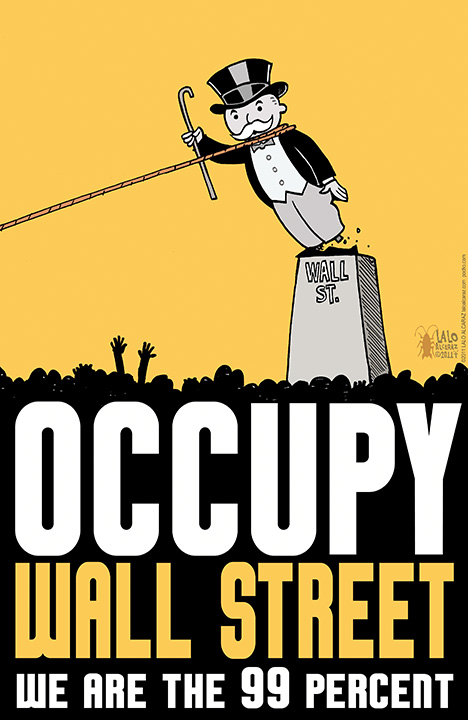
Occupy Wall Street has helped highlight this divide, especially as it applies to press freedom. The almost weekly journalist arrests put First Amendment rights in the spotlight at a moment when journalism was (and continues to be) in a state of profound change. For the most part, when we talk about the fundamental changes happening in the media, we focus on business models or modes of production and distribution. Indeed, on Twitter and Storify, via live-stream and even in print publications like the Occupied Wall Street Journal journalistic experimentation and a robust hacker culture was alive and well around Occupy.
Citizen journalism in its current form has been around for well over a decade, but Occupy help legitimize it as citizens reported with independence, tenacity and honesty from the streets. Live-streamers were profiled by mainstream media and their footage carried on news websites from NBC to the Washington Post.
However, Occupy also illustrated that as the media models change, our law enforcement agencies and institutions are struggling to catch up. New questions were raised about press credentialing laws and the wisdom of allowing police departments to define who is and who is not considered a member of the press. Too often, in the heat of the moment when police were surrounded by cameras, police took an “arrest now and ask questions latter” approach. Meanwhile city officials relied on old definitions of journalists, or tried to rewrite history entirely.
Back in December, Robert Stolarik, a photographer for the New York Times, caught an NYPD officer on video as he tried to stop Stolarik from photographing the arrest of citizen journalists at an Occupy protest. Last month, Stolarik was arrested again while working at a crime scene. According to a report in the Times, officers “took his cameras and dragged him to the ground,” and “he said that he was kicked in the back and that he received scrapes and bruises to his arms, legs and face.” Many other journalists covering Occupy walked away bruised and bloodied by police this year.
Occupy Wall Street, along with tragic incidents in Mexico, Syria and around the world, reminded us that many journalists put their bodies and their freedom on the line when they seek to bear witness to civil unrest. When we put our bodies on the line, they not only become symbols but also targets.
Writing about Occupy Glenn Greenwald argues, “If a population becomes bullied or intimidated out of exercising rights offered on paper, those rights effectively cease to exist.” Thankfully, even in the face of arrest and harassment, night after night, journalists and live-streamers, bloggers and photographers are back on the streets, covering the protests. If the past year teaches us anything about the future of journalism, it is that the First Amendment depends on all of us.
Photo credit: Courtesy of yfrog.com
After NATO Strike Kills 8 Afghan Women, Pundits Still Wonder: Why Do They Hate Us?
This article by Peter Hart is re-posted from Fairness & Accuracy in Reporting.
The protests and violence in Egypt, Libya and Yemen have caused a notable uptick in media discussions about, as Newsweek‘s cover puts it, “Muslim Rage.”
Part of the corporate media’s job is to make sure real political grievances are mostly kept out of the discussion. It’s a lot easier to talk about angry mobs and their peculiar religion than it is to acknowledge that maybe some of the anger has little to do with religion at all.
Take the news out of Afghanistan yesterday: A NATO airstrike killed eight women in the eastern province of Laghman who were out collecting firewood. This has happened before. And attacks that kill a lot of Afghans–whether accidental or not–tend to be covered the same way–quietly, and with a focus not on the killing but on the ramifications.
So yesterday if you logged into CommonDreams, you may have seen this headline:
NATO Airstrike in Afghanistan Kills 8 Women
Now look for the same news in the New York Times today (9/17/12). It’s there–but the headline is this:
Karzai Denounces Coalition Over Airstrikes
The Times gave a clear sense of what was important: “Mr. Karzai’s condemnation was likely to rankle some Western officials…” the paper’s Matthew Rosenberg explained, who went on to explain that
the confrontational tone of the statement was a sharp reminder of the acrimony that has often characterized relations between Mr. Karzai and his American benefactors.
In the Washington Post, the NATO airstrikes made the front page–sort of. Readers saw this headline at the website:
4 troops killed in southern Afghanistan insider attack
As you might have already guessed, the killings of Afghan women are a secondary news event:
Four U.S. troops were killed Sunday at a remote checkpoint in southern Afghanistan when a member of the Afghan security forces opened fire on them, military officials said. The attack brought to 51 the number of international troops shot dead by their Afghan partners this year. The insider attack came on the same day that NATO warplanes killed nine women gathering firewood in the mountains outside their village in an eastern province, according to local officials.
One has to wonder whether, absent the deaths of U.S. troops, the airstrike would have made the news at all.
What’s the Fracking Problem with Natural Gas?
This article by David Suzuki is re-posted from EcoWatch. Editor’s Note: There is an anti-fracking march in Grand Rapids, this Friday, September 21 at noon. See details at this link.
At least 38 earthquakes in Northeastern B.C. over the past few years were caused by hydraulic fracturing, commonly called fracking, according to a report by the B.C. Oil and Gas Commission. Studies have found quakes are common in many places where that natural gas extraction process is employed.

It’s not unexpected that shooting massive amounts of water, sand and chemicals at high pressure into the earth to shatter shale and release natural gas might shake things up. But earthquakes aren’t the worst problem with fracking.
Hydraulic fracturing requires massive amounts of water. Disposing of the toxic wastewater, as well as accidental spills, can contaminate drinking water and harm human health. And pumping wastewater into the ground can further increase earthquake risk. Gas leakage also leads to problems, even causing tap water to become flammable! In some cases, flaming tap water is the result of methane leaks from fracking. And methane is a far more potent greenhouse gas than carbon dioxide!
Those are all serious cause for concern—but even they don’t pose the greatest threat from fracking. The biggest issue is that it’s just one more way to continue our destructive addiction to fossil fuels. As easily accessible oil, gas and coal reserves become depleted, corporations have increasingly looked to “unconventional” sources, such as those in the tar sands or under deep water, or embedded in underground shale deposits.
And so we end up with catastrophes such as the spill—and deaths of 11 workers—from the Deepwater Horizon blowout in the Gulf of Mexico in 2010. We turn a blind eye to the massive environmental devastation of the tar sands, including contamination of water, land, and air; destruction of the boreal forest; endangerment of animals such as caribou; and impacts on human health. We blast the tops off of mountains to get coal. We figure depleted water supplies, a few earthquakes, and poisoned water are the price we have to pay to maintain our fossil-fuelled way of life.
As Bill McKibben points out, it didn’t have to be this way. “We could, as a civilization, have taken that dwindling supply and rising price as a signal to convert to sun, wind, and other noncarbon forms of energy,” he wrote in the New York Times Review of Books, adding that “it would have made eminent sense, most of all because it would have aided in the fight against global warming, the most difficult challenge the planet faces.”

Some people, mostly from the fossil fuel industry, have argued that natural gas could be a “bridging” fuel while we work on expanding renewable energy development and capacity, by providing a source of energy with fewer greenhouse gas emissions when burned than coal and oil.
But numerous studies, including one by the David Suzuki Foundation and the Pembina Institute, have found this theory to be extremely problematic. To begin, leaks of natural gas—itself a powerful greenhouse gas—and the methane that is often buried with it, contribute to global warming. Burning natural gas and the industrial activity required to extract and transport it also contribute to increased greenhouse gas emissions. As McKibben notes, the U.S. National Center for Atmospheric Research concluded that switching to natural gas “would do little to help solve the climate problem.”
More than anything, continued and increasing investment in natural gas extraction and infrastructure will slow investment in, and transition to, renewable energy. Would companies that build gas-fired power plants be willing to shut them down, or pay the high cost of capturing and storing carbon, as the world gets serious about the need to dramatically reduce greenhouse gas emissions? Just as fossil fuels from conventional sources are finite and are becoming depleted, those from difficult sources will also run out. If we put all our energy and resources into continued fossil fuel extraction, we will have lost an opportunity to have invested in renewable energy.
If we want to address global warming, along with the other environmental problems associated with our continued rush to burn our precious fossil fuels as quickly as possible, we must learn to use our resources more wisely, kick our addiction, and quickly start turning to sources of energy that have fewer negative impacts.
Behind the ‘Green Economy’: Profiting from environmental and climate crisis
Last week, the organization GRAIN posted an important analysis piece, which critique’s the so-called Green Economy and exposes how the free market system is profiting from current ecological crisis, namely the climate crisis.
The analysis states, “This new area of business has been designated as the “Green Economy.” Previously the concept referred almost exclusively to activities involving the creation of energy from sources other than petrol, but today it is used in a larger sense, permitting the inclusion of a) the commercialization of all goods that nature offers (water, biodiversity, land, scenic beauty, the re-fill of rivers and lakes, climate regularity, even air and in fact, any other natural process that we could potentially sell) and b) all economic activities that create ways to allegedly mitigate climate change and environmental degradation, but are ultimately about adapting to their effects.”
What the authors of this analysis are ultimately describing is free market capitalism, which sees everything as a commodity to make profits from.
The analysis continues by stating:
Corporate and government studies and documents insist that there are many opportunities to make money (to the order of billions of dollars), but they do not explain long term calculations, nor do they specify general figures. At best, they only provide a few examples of cases considered to be successes. Even so, the potential for profit seems enormous. Morgan Stanley, one of the only companies to have given concrete figures, indicated in 2007 that the “clean energy” sector could generate revenues of billions of dollars for the firm in 2030.8 At present, the global carbon market alone generates around 180 billion dollars per year. The entire market of goods and services “with a low carbon footprint” (which only includes one aspect on adaptation) currently surpasses 5.5 billion dollars annually (more than 7 per cent of the global Gross Domestic Product) and it is growing at an incredible speed. 10 This figure is actually insignificant when compared to the scale of the privatization of nature in its entirety. The figure initially given by one of the pioneering promoters of the Green Economy indicates that if everything in nature were to be transformed into commodities, the trade that would result would be equivalent to some two times the global GDP, according to the most conservative of estimates.
The document by GRAIN continues by discussing other aspects of the “Green Economy,” what that means for ecosystems and the role of the state in promoting private sector investments that profit from the climate crisis.
One of the critiques they provide is the idea that not only do we need to find truly renewable forms of energy, we need to make sure it is not left in the hands of the private sector.
There has been a rush by the fossil fuel industry and investment companies to cash in on the energy crisis, not because it is smart, but because it is extremely profitable. Look at what happened in 2007-2008 with the big push for bio-fuels. People in the US were clamoring for ways to be less dependent on oil and said we should be producing more bio-fuels. This led to a significant amount of government subsidies to large corporations to divert corn from food to fuel. Agro-fuels are not only an inefficient use of land, they end up contributing almost as much to global warming as do fossil fuels. To top it off, the race to divert grains to fuels resulted in an increase in basic food prices globally and global hunger.
A Michigan example of the Green Economy
Here in Michigan we saw a recent example of the so-called Green Economy with a $750,000 federal grant going to NextEnergy, a private company that does R&D for companies profiting from alternative energy systems.
Senators Carl Levin and Debbie Stabenow just announced this federal grant for NextEnergy and hailed it as a benefit for Michigan because of the jobs it would create. What the Levin and Stabenow announcement doesn’t tell you is that NextEnergy has a history of working for the Department of Defense and has been lobbying since the company was founded to get federal funds for their work.
NextEnergy’s leadership consists of many people who have worked in the for-profit dirty energy sector, with both the CEO and several board members coming from DTE. These people have a profound understanding of how to use the system to make profits, even in the name of clean energy.
Some people might say, “well, I don’t care if they make money from this, as long as the energy is renewable.” Such a sentiment is not only naïve, it misses the bigger point about the problem of profiting from the current climate crisis.
As long as alternative energy remains in the hands of private companies, the public will truly not have a say in environmental policy. Private companies will be able to determine how energy is produced, how it is distributed and how it is consumed. What good will it do us in the end to have wind energy if it means that it powers much of the destructive hyper-consumerist economy that we currently have? We need an energy system and an economy that is truly democratic and sustainable.
The Koch Brothers Exposed being shown this Thursday at the Bloom Collective
This Thursday, September 20, the Bloom Collective will be hosting a screening the documentary The Koch Brothers Exposed.
The film takes an in depth look at the political and economic power the Koch brothers have in US policy and the consequences to the democratic process, worker rights, public health, public education and environmental destruction.
However, according to the Bloom Collective Facebook event, they will only being showing part of the film.
This will be more than just a film screening, as the film will be intermixed with other media, resources, and research which will better enable us to capture the true nature of power, thus empowering us to take that power back.
In addition, we’ll screen the trailer for Untouchable Waters, a film being produced locally about Plaster Creek (a Grand River tributary) and how it has become so toxic people cannot touch it without being harmed. More on that project can be found on their facebook page.
Koch Brothers Exposed
Thursday, September 20
7:00 PM
671 Davis NW, Grand Rapids – lower level
$3 suggested donation
The Role of State Secrecy and Deception in Fostering Islamophobia
This article is re-posted from Dissident Voice.
The hatred and vitriol of, the deceptively titled film, Innocence of Muslims was the origin of a subsequent wave of hatred and vitriol. People were angered and people died because of the outraged filliped by the film. When further information came to light about the film and how it was produced, immediately the motto of the Mossad came to mind: “By way of deception …”

I have not seen the film, and I have no intention of seeing it. According to news accounts, Innocence of Muslims mocks Muslims and the prophet Mohammed. Western governments, academia, and state/corporate media bear much responsibility for this further example of the increasingly prevalent scourge of Islamophobia. This is antithetical to progressivism and its principles.
The identity of the man behind the film, and its deception, is clouded. There are conflicting claims made. At first the man was identified as Sam Bacile, an Israeli-born Jew living in California. AP identified the man as an Egyptian Christian, Nakoula Basseley Nakoula. The JTA states unequivocally, “He was not a Jew.” Whatever his background, he was driven by hatred, and hatred can be found within all groups.
Whoever Sam Bacile really is, he appears to be a thoroughly disreputable character. The film was made by deceiving the cast and crew of the film. The actors and crew behind the making of Innocence of Muslims claim they were “grossly misled” about the film, which mentioned neither Islam nor Mohammed in the script.
There is a tendency to be unguarded or loose in criticizing groups that critics need to be wary of: the error of appearing to paint all members of a group with one brush. Are there groups that are 100 percent homogeneous? It is possible that on certain key concepts there may be a unity of belief. Usually there reside countervailing views with most groups; consequently, whenever one group is singled out for blanket criticism and condemnation, it seems prudent to confine criticism to the negative beliefs and actions of the group rather than direct criticism at all the members of the group. Nonetheless, there are certain loathsome groups that believe they have the right to discriminate against non-group members. By virtue of voluntary membership in such groups an entirety of the membership may open itself to blanket condemnation. Examples are the KKK, Nazis, and Zionists.
By way of deception …
Espionage and intelligence gathering is a practice born of, and wed to, deception; it is not peculiar to Mossad. “Bacile” merely practiced what so many governments practice the world over, often with the same fatal results. People need to challenge what their national intelligence agencies are really up to, challenge the raison d’être of the intelligence agencies?
If people desire to live in peace and equality, then it is important to ground oneself in knowledge, principles by which to lead one’s life, and actions that abide by those principles based in epistemology and, its important concomitant, verisimilitude.
Whistleblowing is a sine qua non for a progressivist world — a world of peace enjoyed by all peoples. Wikileaks has been prominent in forging the way for the people’s right to know. Wikileaks (and Julian Assange and Bradley Manning) deserve and need the support of people who cherish open and peaceful societies. If “our” governments clandestinely, through deception, through disinformation and propaganda engage in skullduggery and evil against other groups – it is crucial that the citizenry be informed so that they at least have a chance to formulate opinions and actions based on knowledge of what is happening in their names.
This interview is re-posted from ZNet. Editor’s note: McKibben we be part of a forum on Climate Change in Grand Rapids on Tuesday, Sept. 25 at GVSU’s Eberhard Center in downtown Grand Rapids at 7pm.
Bill McKibben, founder of the international climate change group 350.org, is one of the world’s leading campaigners on the climate change crisis. In 2010, the Boston Globe called him “probably the nation’s leading environmentalist.” The Center for Media and Democracy (CMD) interviewed McKibben to ask about the status of the global climate change movement and the current priorities of 350.org. McKibben will be in Madison, WI to address “Fighting Bob Fest” September 15.

CMD: You have been one of the leading voices in resistance to the construction of the Keystone XL pipeline. While the border-crossing permit for the Keystone XL pipeline has been postponed by the Obama administration, construction has commenced on the southern portion of the pipeline. What do activists need to know about the status of the pipeline?
McKibben: The victory that we won last year was a temporary victory. I guess all environmental victories are temporary, but this one was even more temporary than most. Mitt Romney has made it absolutely clear that if he wins the election his first duty, on his first day in office, will be to approve the Keystone XL pipeline. Barack Obama hasn’t said one way or another what he will do, but the signs aren’t particularly great. The U.S. State Department has given no indication that it will conduct a comprehensive hearing on the climate issues surrounding the pipeline. That’s not a great sign. The thing that we can do most effectively at this point is to try and keep a strong focus on climate change as an issue. We need to make President Obama understand that if he wins again, this is his legacy issue. In many ways it will be the most decision he makes in regards to climate change. We will see what happens. The one thing we can say for sure is that Mitt Romney can’t wait to sign this thing.
CMD: Why is Keystone XL such a important climate change issue?
McKibben: The pipeline runs through sensitive territory and requires people to give up farms and ranches. The good people in Texas right now are fighting hard to block construction of the southern leg that would run through their homes and farms. In the larger sense, it matters enormously because the tar sands in Canada are the second largest pool of carbon on earth. As Jim Hansen at NASA has said, if we manage to burn all the economically recoverable tar sand up there, then its essentially ‘game over’ for the climate. It’s a very big deal. The oil fields in Saudi Arabia are the largest pool of carbon. Burning the oil fields of Saudi Arabia has raised the temperature of the planet about a degree more than any other single thing on earth. That gives us a good reason to not go and do it all over again.
CMD: You have been part of the movement to resist hydraulic fracturing or “fracking.” Why is fracking an issue you are prioritizing?
McKibben: Fracking is really important because it’s this discovery of a new wave of carbon-based energy forms at a time when we already have far more than scientists say we can safely burn. Knowing that, it makes no sense to go out and rip apart the countryside looking for more. Natural gas is a great danger because of the methane leaks in the course of producing it. That methane is 23 times more greenhouse gas intensive, molecule per molecule, than even the carbon dioxide that we worry about so much. Burning this cheap natural gas seems to displace lots of renewable energy, even more than it replaces coal. The net effect seems to be, if anything, it makes climate change worse off than it was before.
I will be in Philadelphia on the 20th for “Shale Gas Outrage.” Pennsylvania is being hit harder than any other place, maybe in the whole world, by fracking. They have had enough. They people there are really ready to get to work.
CMD: You’ve recently written about how the extreme weather we’ve been experiencing — record heat waves, wildfires, flooding and droughts — are now the “new normal” because of the warming planet. Do you think recent weather events have increased awareness about climate change?
McKibben: I do. The polling data shows that the number of Americans that are concerned about climate change has gone up dramatically just in the last year. Its now 72 percent of people. In a sense, how could it be otherwise? All you had to do was poke your nose out the door this summer to have the sense that the world is changing very fast. I’m not surprised at all that people are becoming more engaged. More engagement always increases the odds of actual action taking place.
We are getting ready to launch a very big divestment campaign to get institutions like colleges to get rid of their stock in fossil fuel companies. These companies are dangerous; they are rogue forces. They have contributed way more carbon than the atmosphere can absorb, so we have to stop them. That’s going to be a hard job, but I think we are capable of it.
CMD: Why do you think there has been this increase in civil disobedience and how important is direct action in the progression of the environmental movement?
McKibben: I think its very important. We organized last summer around the Keystone XL pipeline what became the largest civil disobedience action in 30 years in this country with 1,253 people who were arrested. I’m very glad to see that this type of action has spread. There were people who were doing it before that — the mountaintop removal people, heroes like Tim DeChristopher. This idea has spread and it’s a very good thing.
CMD: How would you rate the president’s performance on the environment? How does this administration compare to the Bush administration?
McKibben: He’s better on the environment than the Bush administration. But then, you know, I’ve drunk more beers than my 14 year old niece too. It wasn’t a very high bar to live up to. The Obama administration has been very mixed on environmental and energy issues and its been kind of a shame to watch the power that the fossil fuel industry has exerted over this administration. I guess the relevant question for the moment is how they’ll be vis-à-vis the Romney administration, and it was sad to see Mitt Romney mocking the very idea that someone might try to work on the health of the planet in his convention speech. Even if we re-elect Obama, I think the sort of obvious message is that we can’t just sit around and wait for him to do the right thing. We have to take the action to him and to the corporations in the years to come because they are not going to do the right thing by themselves. I’d say that’s abundantly clear at this point.
I think the administration will only change if we build movements to make it change. Politicians, you have to pressure them to get done what needs doing. Let’s hope we can build that pressure.
CMD: 350.org is a global organization. Can you talk about some promising movements abroad to fight climate change?
McKibben: There’s a lot of good movements going on around the world. We are fighting this huge coal plant in Kosovo; fracking in South Africa. All across Europe people are working on these issues. It’s exciting to see. The willingness of people all over the world to carry on this fight is my motivation. Especially the willingness of people in places that have done nothing to cause the problem. As long as they are willing to fight, I feel like I have no choice but to fight with them.
Howard Zinn play “Marx in Soho,” to be performed September 21st as a fundraiser for Grand Rapids workers on strike
This Friday, September 21st, there will be a performance of the late radical historian Howard Zinn’s play, Marx in Soho.

Marx in Soho gives the audience a rare glimpse of a Marx seldom talked about: Marx “the man” – the pedantic Marx, the vindictive Marx, the loving family man, Marx as humorist, and a Marx that can laugh at his enemies at the same time he expresses outrage at social injustice. The play offers an entertaining and thorough introduction to any person who knows little about Marx’s life, while also offering valuable insight to students of his ideas.
Howard Zinn’s MARX IN SOHO
with Jerry Levy as Karl Marx
Performance at 7pm
Friday, September 21
G.R.E.I.U. Hall
917 Bridge St NW, Grand Rapids MI
Admission: Donations for the Grand Rapids Gravel Striking Workers of Teamsters Local 406
Decades Of Deception: The Coal Industry Has Advertised ‘Clean Coal’ Since At Least 1921
This information on the Greenpeace campaign to expose the lies of the Coal Industry is re-posted from Common Dreams.
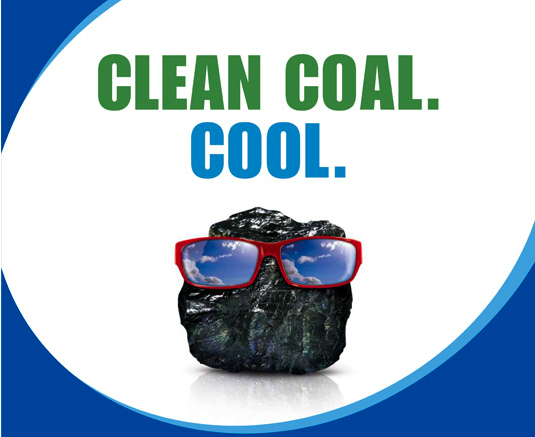
Coal is clean! Environmental regulations will cripple the economy! Scientific evidence about coal pollution and the environment is inadequate and uncertain! Sound familiar? Big Coal relies on these arguments today in order to block environmental and public health protections.
Searching through newspaper archives, Greenpeace investigated the history of Big Coal’s advertising to assess how the industry’s arguments have changed over the years. The answer? Not much.
For at least five decades, the coal industry deployed deceptive advertising campaigns to scrub its image and delay important clean air standards. An intriguing pattern surfaces of increased rhetoric and advertising whenever rumors of environmental protections circulate. Once government agencies pass air quality regulations, the coal industry then spins their required cleanup using technologies they once opposed as a big achievement.
It’s time for Big Coal to stop crying wolf. Check out Greenpeace’s slideshow highlighting a handful of Big Coal advertisements.

