We Can’t Fix Our Economy Without Confronting White Supremacy
This article by Imara Jones is re-posted from Colorlines.
Regardless of when the president and Congress decide to end their current budget standoff, it is increasingly clear that the emerging deal will do very little to reverse the fiscal wrongs at the heart of the tax code. These wrongs have transformed America’s economy into the least equitable and most racially unfair it’s been in almost a half century.
Our collective denial over the fundamental injustice at the heart of our economic system is a result of white supremacy. The words “white supremacy” are radioactive to be sure. It pains me to write them. However, as a trained economist I go where the facts lead me. Since I have written potentially inflammatory words, let me be clear about what I mean.
White supremacy is a low-level assumption about characteristics that white people allegedly have which transforms inequality between them and everyone else into something natural. It often masks itself as fairness and goes unquestioned as a result. Using this definition, our current tax code is a work of white supremacy.
The fact that we’ve arrived at this point on the watch of the country’s first black president is an irony too large to ignore. Mostly victim, partly complicit, Obama is not fully to blame. Yet, economically speaking, the stubborn fact remains that the country is at a moment of racial injustice not seen in more than a generation. In the last four years, that injustice has only expanded and calcified.
White wealth is double what it was 30 years ago. Black and Latino wealth is at its lowest point ever recorded. These inequitable consequences flow directly from political choices embedded in our tax code. But since 1980 when these choices began to be implemented, we’ve talked ourselves out of race and into a mess when it comes to taxes. In fact the frame for our current fiscal debate has clear white supremacist roots.
Recent Origins
As I’ve written previously, it began in 1980 when Ronald Reagan announced that he wanted to reduce taxes and return money to the states. This was long a demand of southern White Citizens Councils. He did so in a Mississippi county were one of the most brutal murders of the civil rights era took place.
White Citizens Councils, the political wing of the Klu Klux Klan, detested federal taxes because they were used to promote economic fairness for blacks in the South. Government spending on economic opportunity had upset the pre-existing racialized economic order. So in speech after speech, Reagan promised to “turn back the clock” and won in a landslide.
Once in office, Reagan did as promised. He re-constructed a system which took money from the employed poor and working class—who are disproportionately black and brown—and gave it to a mostly white minority who were already wealthy.
The result of Reagan’s policies—which were turbocharged under George W. Bush—is that the top 1 percent have a greater share of national income than at any point in American history. And 97 percent of the top 1 percent are white. Yet poverty is stuck at decades-high levels. One out of three blacks and one out of four Latinos is poor.
Reagan’s policies, largely followed by his predecessors in both parties, have left us a country where a child born in poverty in any other advanced economy on the planet has a better chance of becoming rich than one born in the United States.
This is blatantly wrong to the vast majority of Americans, regardless of race. They would not allow this injustice to stand, if spoken to plainly about it.
But since Reagan’s success in winning office off of white supremacist notions, the U.S. has struggled to be honest with itself about the racial impact of its economic choices. The trouble is that you can’t solve a problem that you don’t admit exists.
A Longterm Legacy
The stubborn truth is that economic white supremacy hangs like poison in the national air. It’s been the default position of the United States since the country came into existence as a slave republic. The only way to neutralize white supremacy is to admit that it still animates many of our basic economic assumptions.
The fact that Oprah and Jay-Z are points of interests because they are people of color with vast wealth makes the point. We’re conditioned to be astounded by the economic success of blacks and more unassuming about the wealth of whites. Our stereotypes about who’s deserving and who’s not are grounded in an ongoing white supremacist paradigm.
You would think that having a black president would help us work through some of this. But President Obama has yet to give one speech dedicated exclusively to the Depression-like economic distress in communities of color nor the three-decades-long government policies which caused it. In his silence Obama extends his party’s complicity in our economic system’s destructive racial aspects.
Democrats argue that they fight for race-blind, middle-class economic policies.
The only problem is that Americans aren’t attune to issues of economic injustice. In our national subconscious, economic inequality is just assumed as a natural result of capitalism. It is not. However, through hundreds of years of struggle, Americans, are actually sensitive to racial injustice.
By not confronting the racial aspects of economic inequality, we’ve actually hardened our former racial caste system, which had economic implications, into an economic caste system that has racial implications. From the perspective of economic rights and wrongs, both approaches appear eerily similar.
Instead of a debate over tax increases or spending cuts, what we need to have is an argument about what kind of country we want to have. We need to ask ourselves whether the past was both right and good enough, and how we can build a better, stronger, and fairer future.
Until we have a real stand-off over our fundamental values, we’ll continue to be stuck in a national economic cul-de-sac shaped by white supremacy. Without real change, we’ll circle there in a fruitless, schizophrenic argument with ourselves.
Democrats, Social Security and the Fiscal Cliff
This article by Rob Urie is re-posted from Counter Punch.
With democrats ecstatic that political dysfunction has postponed their cutting the social insurance programs that Americans have paid for and count on for a few weeks, discussion of the intricacies of ‘chained CPI’ (Consumer Price Index) versus other measures of inflation used to adjust Social Security can now apparently wait for the New Year. Still, this probably isn’t a bad time to ask: why? Why cut Social Security? The program is currently solvent, is expected to remain solvent for decades to come, and projected shortfalls in the future could be better addressed by raising the incomes of the people who pay into the program, not by cutting payments to those who depend on them. What is to be gained by ‘solving’ a problem that isn’t?
If cutting Social Security isn’t necessary, why then is it being proposed? Barack Obama provided copious evidence in prior proposals, television interviews and speeches that doing so is his intent. Congressional democrats and labor leaders quickly acceded to his proposal to do so, with House Speaker Nancy Pelosi going so far as to actively lie that proposed cuts will ‘strengthen’ the program. And given the cuts will eventually put tens of millions of Americans into dire poverty from a program they paid into for all of their working lives, what rationale could possibly justify doing so?
The reason I ask is a coalition of democrats, labor, liberals and progressives just re-elected Mr. Obama and democrats in Congress to what—cut Social Security? Mr. Obama created the ‘fiscal cliff’ to first push his stacked (in favor of cutting social insurance programs) ‘deficit commission’ to develop a plan to cut government spending and second, to force the issue to be revisited immediately after the election if no plan was agreed to. And Republican threats to refuse to raise the debt ceiling for leverage to ‘force’ spending cuts are idiotic—George W. Bush and congressional Republicans just led the largest increase in government spending in modern history. And that is not a difficult point to make. (And had it been on beneficial programs, it would have been laudable).
Ultimately the entire ‘debate’ is nonsense—the U.S. doesn’t fund spending directly from taxes. As the Federal Reserve is in the process of demonstrating with its QE (Quantitative Easing) programs, it can buy an unlimited quantity of government debt with money it ‘creates’ –the ‘debt limit’ is an arbitrary misdirection. This isn’t to argue that there is no relationship between economic production and money creation, but it is to point out that the ‘Federal budget’ is a convenient fiction. So, given his repeated analogy of the Federal budget to a family budget, is Mr. Obama ignorant of government finances or does he understand them and is purposely using the misleading analogy to further unstated goals?
The ‘Fix the Debt’ committee of politicians, corporate executives and connected financiers claiming to be concerned about the Federal deficit isn’t discussing eliminating the ‘carried interest’ deduction that benefits billionaire hedge fund managers, raising effective corporate tax rates that are currently the lowest in modern history, materially cutting end-of-empire levels of military spending and raising personal income tax rates on the titans of finance who would be begging for change in the street were it not for Federal government largesse in the (ongoing) bank bailouts. But they are deeply concerned about the Federal deficit, as are Mr. Obama and congressional democrats.
But again, why? The web of convenient fictions currently in play amongst both democrats and republicans in Washington—corporate tax cuts promote economic growth and job creation, government spending ‘crowds out’ more productive private sector spending, ‘excessive’ government debt will cause a financial market rebellion (bond vigilantes) and handing social insurance programs to private market profiteers is beneficial to the insured, are all demonstrably nonsense with only a cursory look at ‘the evidence.’
Effective corporate tax rates are the lowest in modern history and job creation, even before the economic calamity began in 2008, is the weakest since the 1930s. As global warming caused by largely private production and the predatory, dysfunctional private sector demonstrate on a daily basis, the ‘efficiencies’ of private production come from cost shifting, not by levels of human motivation intrinsic to capitalism. As QE is demonstrating, the Federal Reserve can control both short and long term interests rates—the ‘bond vigilantes’ are only in control when they provide cover for private interests. And Barack Obama didn’t choose the ‘least bad’ option with his healthcare ‘reform,’ he chose the private option to which he is ideologically committed.
Without apparent irony, these convenient fictions are straight from the IMF (International Monetary Fund) and World Bank playbooks circa 1980. While couched in the language of ‘economic development,’ IMF policies were / are extractive, designed to exert control over political economies and were / are tools of economic imperialism. The ‘austerity’ of IMF policies, cutting social spending to divert funds to service external debt, was rarely accompanied by even the pretense it benefited those whose social insurance programs were being looted. Cut to Mr. Obama and Democratic Speaker Nancy Pelosi mirroring the Vietnam Warism that to strengthen Social Security we must weaken it. Welcome to neo-Colonial America.
Also without apparent irony, the neo-Keynesian wing of the Democratic Party claims to have correctly analyzed current economic travails and prescribed the necessary and sufficient solutions if only Mr. Obama and the DC democrats would listen. In the first, this leaves the great mystery of why they haven’t listened and have actively articulated the policies of the radical right instead? In the second, Keynesian solutions imply that ‘we are all in this together,’ economically speaking, decades after official Washington and America’s plutocracy made it abundantly clear they believe they are responsible for their lot and we for ours, except when they need a few trillion dollars for a bailout. Finally, the ‘we’re all in this together’ monetary policies of the neo-Keynesians have benefited America’s richest 10% who own financial assets alone. (For explanations see Minsky’s essays on inflation and Marx’s Capital, Volume II).
With no respect whatsoever, this leads to the observation that Mr. Obama and his co-conspirators in the Democratic Party haven’t ‘caved,’ ‘capitulated,’ ‘relented,’ ‘given in,’ ‘submitted’ or ‘yielded’ by agreeing to cut social insurance programs. Mr. Obama’s far-right-of-center policies of his first term were just affirmed by the coalition that re-elected him. He will propose cutting Social Security again in just a few weeks. And democrats, labor, liberals and progressives will again be sincerely debating the merits of chained CPI versus other measures of inflation by which to cut Social Security. But while the effects of cuts will be real, the ‘debate’ won’t be. Put another way, the goal is to cut Social Security, not to ‘strengthen’ it.
In his speech at the Hamilton Project launch (link above) in 2006 Mr. Obama articulated the ‘slippery slope’ argument he believed was the ‘left’ position against ‘modernizing’ America’s social insurance programs. He argued supporters of these programs feared minor ‘adjustments’ were a pretext for the wholesale cuts desired by the radical right. But what this explanation leaves out is context. Were the ‘discussion’ taking place as the economic prospects of the poor and working classes were dramatically rising– rapid income gains, increasing income security, rising food security and income and wealth distribution resembling economic democracy, interpreted intent might be benign. But with Mr. Obama and congressional democrats several decades into giving voice to the desires and policies of the radical right, it would require a fool to believe benign intent today.
Hopefully I am underestimating the political pushback proposed cuts will engender. But given the propensity of democrats, labor, liberals and progressives to sincerely debate irrelevancies while giving unwavering support to the increasingly debased policies of their leaders, I doubt it. The bourgeois of these constituencies will likely break with the poor and working class and accede to the bogus rationale that the programs must be weakened so they may be strengthened, calculating that they’ll be all right in any case. And the pundit class will do the narrow calculus of cutting this program to save that without noticing the unwavering trajectory toward neo-liberal hell of the last forty years. To the folks who support the Democratic Party without apparently knowing what their policies are, good luck with that Social Security thing and all. To everyone else, we didn’t ask for this, but it’s coming our way anyhow.
Leonard Peltier Speaks Out from Prison on Denial of Medical Care, Bid for Clemency
This video is re-posted from ZNet.
Leonard Peltier, one of the nation’s most well-known and longest-incarcerated prisoners, speaks out from the U.S. Penitentiary at Coleman, Florida, where he is currently held. Peltier is the Native American activist and former member of the American Indian Movement who was convicted of aiding in the killing of two FBI agents during a shootout on South Dakota’s Pine Ridge Indian Reservation in 1975. Sentenced to prison in 1977, Peltier is now 68 years old. Democracy Now! host Amy Goodman spoke with Peltier on Saturday when he called into a press conference organized by his supporters.
So Now What?
The following video from subMedia is re-posted from Dissident Voice.
This week:
1. Daniel McGowan is out of jail!
3. Early start for the end of their world
4. #IdleNoMore
6. Michu MC
The Border Security and Criminal Alien Consensus
This article by Tom Barry is re-posted from CounterPunch.
Democracy in America works. One has only to observe the surge of bipartisan support for immigration policy reform following the November elections.
Election results revealed the new demographics of a multiracial, multiethnic America that is pushing aside the anti-immigrant backlash that dominated the immigration policy debate over the past two decades. Being anti-immigrant, anti-immigration no longer makes good politics in much of America.
The new bipartisanship for immigration reform may signal the advent of less divisive, more constructive politics in America. But underlying the apparent bipartisan support for some type of pro-immigrant, pro-immigration reform is another less welcome bipartisanship based around the traditional conservative politics around security, drug policy, and criminal justice issues.
The emerging post-election bipartisanship exists in the shadows of an almost enthusiastic bipartisanship in favor of increased “border security” and of ridding the nation of “criminal aliens.”
These two terms – border security and criminal aliens – have become central to the immigration policy debate over the past two decades. Both terms are also closely related to deeply bipartisan yet deeply dysfunctional convictions about drug wars and drug prohibition.
Border Security Consensus
Within Congress, there is no – absolutely none, — opposition to border security policy and operations. This bipartisan consensus in support of the border security buildup is largely uncritical and unconditional, and also counts on support of nongovernmental immigration reformers who have come to accept the conventional wisdom increasing border security increases the political base for reform.
The enthusiastic support for almost any spending program described as a border security initiative persists year after year— despite persistent widespread waste, recurring corruption, immigrant abuse, and the Border Patrol’s inability to set forth a coherent border security strategy with associated performance measures.
In Congress, there are differences about border security but these are largely limited to questions about just how many more agents, drones, walls, and surveillance systems are needed.
Unfortunately, President Obama already set the bottom line of the debate, when speaking about the need for immigration reform. In late November, he told the media: ”I think it [immigration reform] should include a continuation of the strong border security measures that we’ve taken because we have to secure our borders.”
Even as the immigration policy debate has dramatically opened following the election with substantially changed views about legalization, the “secure our borders” imperative remains unquestioned. Indeed, there will be many in Congress who will use the new immigration debate as an opportunity to lobby for even more border security spending than the Obama administration has authorized – in part because border security has proved popular politically and in part because of the infusion of pork-barrel spending in border areas.
The broadening political consensus for immigration reform is hopeful. Bipartisan border security, however, is a sure sign that the traditional bipartisanship over all types of security spending issues – defense, intelligence, homeland, and border policy — continues to taint politics and fiscal responsibility.
Bipartisanship is the rule not the exception when security issues are involved. That’s a sorry tradition in U.S. politics – a tradition that since 9/11 has expanded beyond national security to include homeland security and border security.
Uncritical Acceptance of Border Security
At first, the post-9/11 fear of foreign terrorists drove the multi-billion dollar campaign to “secure our borders.” The buildup continued, however, even as that fear diminished, counterterrorism experts (and common sense) concluded that it was unlikely that foreign terrorists or weapons of mass destruction would enter the country across the southwestern border – the focus of the new border security operations.
Congress and the White House have kept increasing the border security budgets – not so much to obstruct terrorists but to “secure our borders” against immigrants, driven by the mounting anti-immigrant backlash during the second Bush administration. More recently, border hawks – and the Obama administration – explain border security operations mainly in terms of the drug war or what’s now called the “combat against transnational crime.”
Since 2005, when Congress began debating comprehensive immigration reform, a key factor in ensuring wide support for the border security buildup was, oddly, the assumption that the imperative to “secure our borders” was a necessary precondition for immigration reform.
The uncritical – and largely enthusiastic – backing for more border security has cost the nation more than $100 billion over the last ten years. It has left a legacy of national shame and monumental waste in the form of useless virtual fence projects, embarrassing walls between north and south, a mounting toll of dead and murdered immigrants, and an escalation drug war throughout the U.S. and Mexican borderlands even as political pressure is mounting throughout the hemisphere to end drug prohibition.
Aside from the near total absence of strategic focus, the border security buildup represents an insult to professions of good governance and accountability. Again, the uncritical acceptance of border security has resulted in systemic abuse of the standards of accountability, transparency, and performance evaluations.
Rather than once again giving a free rein to the border security hawks, the coming immigration debate represents an opportunity to assess the assumptions and achievements of the continuing border security buildup. Without such a critical examination of border security, the proponents of immigration reform / border security become accomplices of the waste, human rights abuses, and drug war escalation that have become emblematic of the Border Patrol.
As part of the new movement for immigration reform, advocates and activists need to stand up and reject the implicit political marriage of immigration reform and the border security buildup. That doesn’t mean open borders but rather a stance in favor of sensible border control and regulation, not virtual militarization.
It would be unfortunate if progress on immigration reform gives border security a free pass, leaving mounting questions about the waste, militarization, misdirection, and lack of accountability in U.S. border policy unaddressed and unresolved.
Protecting the Homeland Against Criminal Aliens
In addition to border security, another source of broad agreement in the immigration reform is the widely shared conviction that noncitizen immigrants (whether here legally or not) should be “removed” from this country if they have criminal records. Even nongovernmental advocates of immigration reform accept the criminal exclusion provisions, or at least haven’t opposed these restrictions.
At first glance, this determination to deny legal residency and to deport criminal immigrants makes good sense. Why, after all, should America open its borders to foreigners who not only threaten public safety but who also burden every level of government with law enforcement, prosecution, and incarceration costs?
One should expect that in the coming immigration debate all the main actors – whether they be progressives, liberals, centrists, conservatives, and hawks — will accept the notion that the so-called “criminal aliens” have no place in U.S. society.
Yet if immigration reform is largely about social justice, can this automatic exclusion be defended morally? There are also unaddressed questions about the impact of this exclusion and deportation of criminals on the stability of neighboring nations and the spread of international criminal networks.
For reform advocates, opposition (whether tacit or explicit) against including criminals from immigration-reform benefits may stem less from an ethical conviction than from a political calculation – much as support for border security operations is seen as a precondition for any reform.
Immigrants are America
That’s a phrase often used by proponents of liberal immigration reform.
As the prospects for reform increase, it will be tempting for advocates to maintain a sharp focus on the strategy and tactics of the reform campaign, yet give short shrift to their own rhetorical and social-justice arguments for legalization of those immigrants who are already part of our communities and economy.
If “Immigrants are America” and if immigrants are “America’s voice,” as the pro-reform slogans have it, then perhaps the immigration reform campaign shouldn’t be so narrowly fought – on strictly immigration issues.
In the past, immigration reform activists have been so focused on their own campaigns and strategies that they have not sought out allies in the prison-reform, criminal-justice reform, and drug-law reform movements.
There are strong and increasingly powerful movements and lobbies to reform drug laws, mass imprisonment practices, and the dysfunctional criminal justice system. Immigration reformers would do well ally themselves with such citizen movements.
For fear of reinforcing the anti-immigrant stereotypes of immigrants as criminals and drug addicts, the immigration reform campaign over the past two decades has largely distanced itself from the movements against mass incarceration, drug prohibition, and the expansion of the federal government’s domination of our criminal justice system.
There are few other sectors of U.S. society that have been so victimized by our nation’s drug laws, imprisonment habit, and harsh criminal justice system.
Since the early 1990s there has been a steadily increasing merger of the criminal justice, drug prohibition, and immigration enforcement systems. Scholars call this conflation of the immigration and criminal-justice system the crimmigration of America.
Once caught in the grips of crimmigration, immigrants are doubly punished – first by jail, fines, and prison sentences; and second by automatic removal from the country.
Many otherwise law-abiding immigrants, as do many U.S. citizens, have drug violations on their record. Many immigrants have spent some time in jail or been on probation, the same as millions of U.S. citizens. If we are to accept that America has been a nation of immigrants and that immigrants continue to be an integral part of this nation, then our lawmakers shouldn’t exclude immigrants from the benefits of any immigration reform.
Such a course of action would preempt hundreds of thousands of future deportations that separate families and weaken communities. Dealing directly with the criminal alien shibboleth in the reform debate, rather than assuming that all immigrants with records will be ineligible for reform benefits, would created a more expansive community of immigration reform proponents, including members of the growing anti-drug prohibition movement.
In a powerful way, such a willingness to link immigration reform to criminal justice issues would also demonstrate that immigrants are not a population apart – that immigrants are America, and like many Americans have criminal records, mainly for drug control violations but are not dangerous criminals who represent a threat to community public safety or to homeland security. In the process, the coming immigration reform debate could push aside the restrictive framework that has stifled criticism of the border security buildup and the process of crimmigration.
Time to Reassess Border Security and Criminal Alien Bipartisanship
Fortunately the November election has opened up political space for immigration reform. Few observers of the immigration debate expected this increased support for a less restrictive immigration policy.
In the early 1990s, political pressure generated by the leading immigration restrictionist organizations and by the immigration backlash movement led to an expanding array of measures to target and then deport legal and illegal immigrants with criminal records. This same lobby has also been largely responsible for the monstrous buildup in border security.
For the most part, immigration reformers have largely accepted increased border security operations and the crackdown on “criminal aliens” as necessary preconditions for liberal immigration reform. Yet in may now be possible, as part of this new democratic opening for immigration reform, that the critique of the nation’s flawed and counterproductive immigration policy may also now extend to federal government’s border security buildup and criminal alien crackdown.
If democracy is to really work in America, more than to simply pass new policies to better regulate immigration, our body politic will also need to confront the political culture of heedless popular assent to laws, policies, and spending initiatives promoted as anti-crime and pro-security.
What went wrong in Michigan?
This article by Lee Sustar is re-posted from the Socialist Worker.
IF LOSING Indiana to “right-to-work” forces was a disaster for organized labor, the defeat for unions in Michigan was a catastrophe. Yet labor leaders themselves must bear most of the blame for this terrible loss.
Certainly, lavishly funded union-busters and labor-hating Republican politicians were formidable foes in pushing “right-to-work” measures. That’s shorthand for legislation that makes it illegal for union membership to be mandatory, even though unions must continue to provide services for workers who “opt out” of paying their fair share of dues.
Nevertheless, the road to a “right-to-work” victory in Michigan was paved by decades of labor’s failed strategy of partnership with employers and uncritical political support for the Democrats.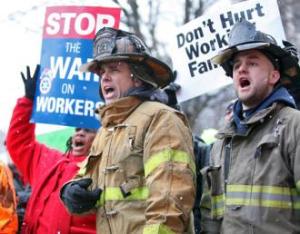
For three-quarters of a century, unions have been promising to organize the South, where “right-to-work” laws are prevalent. Now, the opposite is happening–anti-union political forces are steamrollering into the North, bringing the Southern laws with them.
“RIGHT-TO-work” became the law in Indiana earlier this year–a state where, in the 1960s, some 40 percent of workers were union members. But in recent decades, Indiana has become a favored site of investment for nonunion employers like Subaru, Honda and Toyota. Earlier this year, the heavy equipment maker Caterpillar closed a unionized locomotive plant in Canada–and moved production to a new nonunion operation in Indiana.
Yet the “right-to-work” success in Michigan is even more shocking. At the beginning of 2012, the United Auto Workers (UAW) union was celebrating the 75th anniversary of the sit-down strike in Flint, Mich.–the key battle in the great labor upsurge of the 1930s. These days, however, the UAW, as a result of massive job losses, is a shadow of its former self, with 355,000 members, compared to 1.5 million in 1979.
Labor’s decline, along with the Michigan Republicans’ takeover of the governor’s office and the state legislature in the 2010 elections cleared the way for a “right-to-work” sneak attack–Gov. Rick Snyder pushed the measure through with no notice during a lame-duck session.
Union members in Michigan and surrounding states responded with spirited protests, culminating on December 11 with a turnout of more than 10,000 demonstrators. Rank-and-file union members were prepared to take direct action to block the legislation.
But they were held back by labor leaders, who instead pointed them toward the 2014 elections. According to the mainstream website Politico, unions “are eyeing a large-scale counteroffensive against the conservative state leaders who have slashed away at union power since the 2010 midterm elections,” aiming to replace them with Democrats.
The electoral focus was reinforced by President Barack Obama, who spoke to workers at a Michigan factory shortly before the legislature voted on “right-to-work”:
We should do everything we can to keep creating good middle-class jobs that help folks rebuild security for their families. And by the way, what we shouldn’t do–I’ve just got to say this–what we shouldn’t be doing is trying to take away your rights to bargain for better wages and working conditions…The so-called “right-to-work” laws–they don’t have to do with economics, they have everything to do with politics. What they’re really talking about is giving you the right to work for less money.
IN FACT, Obama knows a lot about giving Michigan workers the “right to work for less money.” Under terms of the federal government’s 2009 bailout of the auto industry, UAW members saw tens of thousands of jobs disappear–autoworkers still on the job took huge concessions.
At GM, the government bailout was contingent on the union agreeing to a wage freeze, an end to bonuses and the elimination of work rules that limited speedups and helped ensure job security. The givebacks were worth between $1.2 billion and $1.3 billion per year. The union even gave up the right to strike when its contract expired in 2011.
These concessions followed a 2007 contract that cut pay for most new hires to $14 an hour–about half that for high-seniority workers. The result of all this is a reduction of hourly labor costs to the level of nonunion Toyota workers in the U.S.
The UAW, once the pacesetter for U.S. unions as they improved pay and benefits in the three decades following the Second World War, has now given employers the green light to push down wages and benefits–and not only in manufacturing. Public-sector unions in Michigan were soon in the crosshairs, too, as state and local government budgets were hit by the recession.
In response, Snyder–along with his Republican counterparts Scott Walker in Wisconsin and John Kasich in Ohio–used the economic crisis as the pretext to gut public-sector unions. Snyder’s legislative allies beefed up Michigan’s emergency financial manager law, which empowers the governor to impose an unelected boss to control local budgets. The early targets were the cash-strapped Detroit Public Schools and bankrupt cities like Pontiac.
Then came Detroit’s turn. Mayor Dave Bing–a Democrat, like virtually all the city’s politicians–used the threat of an emergency financial manager to extract deep concessions from municipal unions. In April, Bing negotiated a deal with Snyder to avoid the appointment of an emergency financial manager. Instead, they got the Detroit City Council to surrender much of its power to a Financial Advisory Board.
Now, fresh from his success with “right-to-work,” Snyder has ordered a review of Detroit’s finances that could result in the appointment of an emergency manager anyway.
Obama’s and Bing’s central role in driving anti-union policies in Michigan should underscore the fact that the attack on organized labor is thoroughly bipartisan.
The Democrats are unlikely to attempt frontal assaults on unions through “right-to-work” legislation or gutting public-sector bargaining rights, as Scott Walker did in Wisconsin. That’s because the Democrats need unions to relate to their voting base and to provide troops and money at election time.
Yet if the Democrats seem reasonable, it’s only because Republican scorched-earth policies have now become standard. Thus, Illinois Gov. Pat Quinn is attempting to renege on paying state workers promised raises. Quinn is also out to cut state workers’ pension benefits, following the example of New York Gov. Andrew Cuomo. In California, Gov. Jerry Brown is also out to extract concessions from unions.
NO WONDER Snyder and the employer-backed anti-union groups thought that Michigan labor would be easy pickings for “right-to-work” legislation. Having presided over concession after concession in order to preserve labor-management partnership, the unions had surrendered much of their potential economic and social power. Politically, the unions mostly tailed the Democrats, who also want to reverse labor’s historic gains.
Michigan unions did try to take independent political action by pushing for a ballot initiative that would have amended the state constitution to prohibit the passage of legislation restricting public-sector bargaining rights. Their model was labor’s victory in a 2011 ballot initiative in Ohio, when voters overturned a Wisconsin-style attack on public-sector bargaining rights.
But where the Ohio fight was a straightforward battle over union rights, the Michigan debate was easier for employers to distort. The unions, they claimed, were trying to install special protections into the state constitution. The p.r. campaign worked: Despite the fact that labor spent $25 million on the effort, the union-backed measure was handily defeated.
So how should labor combat “right-to-work”? Fortunately, we have the example of a successful effort in 1978 by Missouri unions to head off “right-to-work” being imposed by a ballot measure. Jerry Tucker, the dissident UAW leader who passed away earlier this year, helped lead the effort on behalf of his union. Years later, he described the effort in an article written for Labor Notes. Building a broad labor-community alliance was key, Tucker explained:
The National Farmers Organization and leaders of the American Agricultural Movement participated in rallies and motorcades against RTW throughout rural Missouri.
Civil rights organizations stepped up, and national leaders such as Coretta Scott King visited Missouri. They emphasized that RTW hurts the underprivileged and minorities first and worst. Dozens of ministers took the message into the Black wards of Kansas City and St. Louis.
Women’s groups such as NOW held rallies. Senior citizens were a bedrock, handling the brunt of canvassing on Election Day. Students, however, seemed to misunderstand the issue and were not successfully recruited.
A majority of the state’s major officeholders from both parties spoke out against RTW, and many appeared at campaign functions. Urban Republicans, in particular, felt the deepening social heat.
Religious opposition to RTW was vital. It gave weight to the moral case–“Democratic decision-making in the workplace is just, and collective bargaining is good for society.” It allowed labor to reach tens of thousands of Missourians through their churches.
Religious opposition drew much attention in the press, helping to create a “good guys” image for unions and the reverse for the right-to-workers. The RTW campaign, with business as its principal backer, began to look sinister.
But the most important factor in stopping the anti-union measure, Tucker wrote, was the activism of rank-and-file union members:
Rank-and-file unionists were the mainstay of the campaign. In fact, some couldn’t seem to do enough, and at the outset thought their leaders weren’t doing enough.
While the labor committee was still ramping up, members were acting on their own. They set up meetings, visited the merchants with whom they did business, painted signs on their cars, and worked the polls.
Many traveled from urban areas back to their childhood homes in rural Missouri to urge folks there to vote “no.” On weekends, caravans of urban and suburban workers traveled to meet farmers and small-town shopkeepers to make their case against RTW.
Motorcyclists cruised the highways in bunches, with banners opposing RTW. Truckers used CB radios to maintain a steady stream of anti-RTW conversations on the Interstates.
In November, the “no” vote took 60 percent. The 1.6 million ballots cast set an off-year election record, with 60 percent of registered voters going to the polls. Right-to-work galvanized the big vote; Missourians cast 100,000 more ballots on the amendment than they did in statewide candidates’ races.
New member organizing spiked upward for several years afterward.
Today’s labor officials lack the strategic vision and organizational skills of Jerry Tucker, one of the outstanding labor leaders of recent decades. Even so, union members and supporters who want to fight “right-to-work” and anti-union forces can learn from the experience.
It’s clear that the employers want to permanently cripple organized labor–and that politicians of both major parties are helping to advance that goal. Facing up to that fact is the first step in developing a new winning strategy for labor today.
This article/video is re-posted from the Indigenous Environmental Network.
The Mending News released a 7:25 minute video on the basics of an international carbon offset mechanism called REDD (Reducing Emissions from Deforestation and Forest Degradation) and its link to California’s cap and trade regulations that currently include a “placeholder” to allow sub-national REDD carbon credits to enter into its cap and trade system.
A Governor’s Forests and Climate Task Force is working with several states/provinces – most notably Chiapas, Mexico and Acre, Brazil – to potentially supply California with REDD credits. Some NGOs are saying this California REDD project will become a model for implementing REDD internationally. IEN and other groups in California support California’s greenhouse gas reduction goals, but REDD credits should not be accepted into California’s carbon trading system.
The film makes note that: REDD credits lack environmental integrity; REDD projects pose high risks to Indigenous Peoples and forest dependent communities; and REDD offsets are risky in terms of fraud, land grabs, evictions and human rights abuses.
Watch the video to get the real story of REDD, the deceptive climate ‘solution’ being proposed in California and being implemented within the UN climate negotiations and the World Bank. It sounds good on paper, but the reality is that REDD enforces the global colonization of Mother Earth; allows the polluting industry to expand its toxic emissions creating local toxic hotspots in faraway places; and creates a stolen future for Indigenous peoples, local forest dependent communities, communities living next door to a fossil fuel polluting industry, and a stolen future for the environment and all life.
New Media We Recommend
Below is a list of new materials that we have read/watched in recent weeks. The comments are not a “review” of the material, instead sort of an endorsement of ideas and investigations that can provide solid analysis and even inspiration in the struggle for change. All these items are available at The Bloom Collective, so check them out and stimulate your mind.
The Beginning of the American Fall: A Comics Journalist Inside the Occupy Wall Street Movement, by Stephanie McMillan – Comic strip creator, author and activist Stephanie McMillan combines her talents in this new book from Seven Stories Press. Using comic strip illustrations and prose, McMillan uses her own journey of activism and organizing to offer up some useful insights into the Occupy Movement and the state of organizing in the US. McMillan takes on politics as process, consensus, racism, leadership and what kind of spaces Occupy has opened for insurgent movements and political analysis. McMillan also includes a written and visual account of a presentation she gave at the Earth at Risk conference in 2011, a presentation which demonstrates how well the author understands both power dynamics and how urgent the need for direct action is around issues like climate change. A delightful read that with both entertain and educate.

The Changing Face of Empire: Special Ops, Drones, Spies, Proxy Fighters, Secret Bases, and Cyberwarfare, by Nick Turse – One of the best young writers on US foreign policy, this new collection of essays by Nick Turse just adds to his credibility as a solid critic of how the US military functions in the 21st Century. Most of these essays have previously appeared on Tom’s Dispatch, but putting them in one volume makes it easier to see the complexity of US militarism and the breadth of Turse’s analysis. The author covers a great deal of ground, as is reflected in the book’s title. However, what makes this book so useful is that in addition to all the data on US militarism, Turse puts in very plain terms the significance of US military trends and its relationship to social movements globally. The author makes it clear that the US military reach is far and wide, with particular growth in the Middle East and Africa. For those who wish to understand the role the US military plays in the world today and who don’t want to be duped by the claims of humanitarianism from the Obama administration, The Changing Face of Empire is a must read.
Gender, by Jamie Heckert – Another solid zine from the Institute for Anarchist Studies Lexicon Series. This zine looks at the concept of gender and how it is fundamentally a social construct that not only leads to tremendous harm, particularly for those who are gender non-conforming, but how our limited views of gender can prevent us from truly being free in our own bodies in the world. Jamie Heckert does a fabulous job in this short zine of not only deconstructing gender norms, but if looking at gender norms and how it relates to other systems of oppression and how we can engage in resistance. As the author says, “Gender can be a pattern of control, violence, and domination. Or it can be just another way of talking about the beautiful diversity of human existence.”

Surviving Progress (DVD) – Ronald Wright, whose best-seller, “A Short History Of Progress” inspired this film, reveals how civilizations are repeatedly destroyed by “progress traps” — alluring technologies serve immediate needs, but ransom the future. With intersecting stories from a Chinese car-driving club, a Wall Street insider who exposes an out-of-control, environmentally rapacious financial elite, and eco-cops defending a scorched Amazon, the film lays stark evidence before us. In the past, we could use up a region’s resources and move on. But if today’s global civilization collapses from over-consumption, that’s it. We have no back-up planet.
Earlier this week energy profiteers Consumers Energy announced that they have plans to build a $750 million dollar natural gas powered energy plant.
The proposed facility will be built in Thetford Township, about 20 miles northeast of Flint. The only potential roadblock is if the Michigan DEQ does not grant the company an air quality permit, which seems unlikely since the DEQ is supportive of the current levels of natural gas extraction, particularly through horizontal hydraulic fracturing, as we have witness at public forums.
It is also likely the energy company will get what they want considering how much money they spent lobby and influencing politicians at both the federal level and state level. According to the Michigan Campaign Finance Network, the group CMS Energy Employees for Better Government had contributed $305,730 in PAC money in Michigan in 2012.
According to one news source, John Russell, the president and CEO of Consumers Energy, said development of a major new natural gas power plant is consistent with the company’s Balanced Energy Initiative, a comprehensive plan to meet the energy needs of Consumers Energy’s customers over the next 20 years.
Russell doesn’t say if the new plant will rely on natural gas from hydraulic fracturing, but it seems likely this will be the case, since companies have been purchase oil & gas leases from the state and purchasing access to natural gas deposits by buying access to private land as we have noted in Kent County over the past year.
Consumers Energy currently provides electricity to about two thirds of Michigan’s 10 million residents, in addition to thousands of businesses across the state.
Such an announcement from Consumers Energy means that the energy giant is committed to extracting and burning natural gas in order to generate more profits from electricity sales in the state.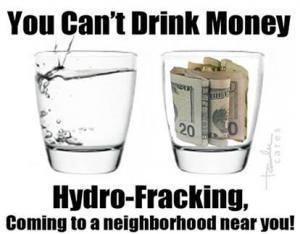
As we noted in an article looking at the Holland announcement to build a natural gas burning power plant, Consumer’s Energy announcement is a serious blow to efforts to protect the environment since it means a greater push for horizontal hydraulic fracturing.
With a growth of horizontal hydraulic fracturing will come the following:
- The use of toxic chemicals (often undisclosed) in the fracking process, chemicals which cause cancer.
- The use of millions of gallons of water, which will not only mean water diversion from lakes, streams and underground aquifers, but the disposal of this water, which will be contaminated with chemicals. Where will they dispose of this toxic water?
- New roads or the widening of roads will take place, especially in more rural and environmentally sensitive areas, causing more environmental destruction – deforestation, run-off and impacting wildlife.
This new announcement from Consumers Energy should be a wakeup call to environmental groups and activists that the fight against fracking is heating up and that there is little time to resist the direction that the power companies want to take that we can no longer afford to accept.
154.3 million spent on ballot proposals in Michigan this year
This information was re-posted from the Michigan Campaign Finance Network.
Michigan ballot committees smashed all previous records for fundraising and spending in 2012. In aggregate, the 2012 ballot committees raised $154.3 million. All six proposals lost at the polls on November 6th.
The spending in three of the ballot contests – Proposal 2, 3 and 6 – broke the previous record of $27.4 million for spending on a single ballot proposal, set in the campaign for the 2004 constitutional amendment setting terms for future expansion of casino gaming.
The ballot committees’ total of $154.3 million is 43 percent more than the spending in 2010 for all Michigan’s state campaigns. Spending last election cycle for governor, attorney general, secretary of state, state senate, state house, statewide education boards, supreme court, court of appeals, trial courts and a single ballot question was $107.6 million.
Proposal 1 - Proposal 1 was a referendum on whether to adopt the Emergency Manager Act. The proposal was defeated and the law was effectively repealed.
The proponent of Prop 1, Stand Up for Democracy, raised $1,995,466. American Federation of State County and Municipal Employees (AFSCME) Michigan Council 25 gave $1,829,000, or 91 percent of that amount. AFSCME Oregon Council 75 gave $50,000, as the second biggest donor.
There was no focused financial opposition to Proposal 1 after it survived a legal challenge put forth by Citizens for Fiscal Responsibility.
The Emergency Manager Act has been rewritten in the lame duck legislative session and it will be signed into law by the Governor.
Table of leading donors to committees concerned with Proposal 1.
Proposal 2 - Proposal 2 was the most expensive ballot question in 2012. Prop 2 would have guaranteed collective bargaining in the Michigan Constitution. It lost at the polls by a wide margin.
The main proponent of Prop 2, Protect Working Families, raised $23,660,772. Its major donors included the United Auto Workers National Civic Action Program, $3,555,763; the Michigan Education Association, $2,685,675; the AFL-CIO State Unity Fund, $1,836,561; the National Education Association, $1,500,000, UAW Solidarity House, $1,028,480; the American Federation of Teachers, $1,002,427; and the MEA’s USO Crisis Fund, $1,000,000.
The direct opponent of Prop 2, Protecting Michigan Taxpayers, raised $23,175,994. Its leading donors included the Michigan Chamber of Commerce, $9,213,325; The Michigan Alliance for Business Growth, $5,540,000; Sheldon and Miriam Adelson, $2,000,000; and the DeVos Family, $2,000,000.
Table of leading donors to committees concerned with Proposal 2.
Proposal 3 - Proposal 3 was a proposed constitutional amendment to require 25 percent renewable energy by 2025. The proposal lost by a wide margin.
Proponents of Prop 3 raised a net total of $14.5 million through several committees, mainly Michigan Energy, Michigan Jobs. Leading financial supporters of Prop 3 included the Michigan League of Conservation Voters, $3,125,188; Green Tech Action Fund, $2,843,000; the national League of Conservation Voters, $2,489,007; Blue Green Alliance, $1,421,172; American Wind Energy Association, $1,062,644; and Julian H. Robertson, Jr., $1,000,000.
The opponents of Prop 3, Clean Affordable Renewable Energy (CARE) for Michigan, raised $25,281,104. Its major donors were Consumers Energy, $12,213,929; and DTE Energy, $11,892,623.
Table of leading donors to committees concerned with Proposal 3.
Proposal 4 - Proposal was a constitutional amendment to establish a guarantee of unionized home health care workers. It was defeated at the polls.
The proponent of Prop 4, Citizens for Affordable Quality Home Care, raised $9,360,437. All contributions to the ballot committee ran through the 501-c-4 corporation Home Care First, Inc. Service Employees International Union contributed $5,570,000. Other donors are not identifiable.
There was no committee in opposition just to Prop 4. Citizens Protecting Michigan’s Constitution opposed all the constitutional amendments, particularly Proposals 2, 3 and 4.
Proposal 5 - Proposal 5 was a proposed constitutional amendment that would have required a legislative supermajority or a vote of the citizens to approve any state tax increase. The proposal lost by a margin of more than two-to-one.
Two committees supported Prop 5, both of which were supported mainly by the financial holdings of Ambassador Bridge owner Matty Moroun. Americans for Prosperity Michigan Ballot Committee raised $1,512,703. The Detroit International Bridge Company gave $1,213,014, through the Prop 6 ballot committee, People Should Decide. Americans for Prosperity contributed $299,689.
Michigan Alliance for Prosperity had $3,755,138 in support of Prop 5. Moroun’s Liberty Bell Insurance Agency gave 99.6 percent of that money.
The opponents of Prop 5, Vote No on 5 – Defend Michigan Democracy, raised $2,090,546. Its top donors included: Michigan Health and Hospital Association, $410,000; National Education Association, $400,000; Michigan Municipal League, $269,000; and American Federation of Teachers, $250,000.
Proposal 6 - Proposal 6 was a proposed constitutional amendment that would have required voter approval for any new international bridge or tunnel. The proposal was defeated by a wide margin.
The proponent committee, The People Should Decide, raised $33,541,060, almost entirely from Matty Moroun’s Detroit International Bridge Company. Moroun’s Central Transport chipped in $100,000 of in-kind support.
Opponents to Prop 6 raised $1,719,350 through the committee Taxpayers Against Monopolies. Its top donors included: Fund for Michigan Jobs, $565,000; General Motors, $500,000; and DTE Energy Corporation, $250,000.
Table of leading donors to committees concerned with Proposals 4, 5 & 6
Multi-Tasking Committees Citizens Protecting Michigan’s Constitution opposed all five constitutional amendments, particularly, Proposals 2, 3 and 4. The committee raised $8,675,491. Its top donors were the Michigan Chamber of Commerce, $1,982,811; the Michigan Republican Party Administrative Account, $1,500,000; the Prop 2 opponent, Protecting Michigan Taxpayers, $941,000; the Michigan Chamber’s ballot PAC, $900,000; and the Michigan Health and Hospital Association, $750,000.
Michigan League of Responsible Voters opposed Proposals 1 and 5, and supported Proposals 2, 3 and 4. It raised $875,744, and its donors were the National Education Association, $585,000; the UAW, $100,744; SEIU, $100,000; and the MEA, $90,000.
Table of leading donors to committees concerned with multiple proposals
Failed Proposals A proposal to expand casino gaming was denied certification for the ballot. The proponent committee, Citizens for More Michigan Jobs, raised $3,466,500. Partners in the limited liability company contributed the cash.
Two committees sponsored by existing casino owners opposed the expansion proposal. Protect MI Vote raised $1,949,680, and Protect MI Constitution raised $555,858.
Finally, a proposal for a constitutional amendment to require “corporate accountability” was withdrawn almost as soon as it was announced. Right to Know Committee raised $73,452. The Michigan Democratic Party contributed $69,500 of that amount.

