Where did the GR elite spend their money in the 2012 elections?
Well, it’s finally over. One thing we can say about the 2012 elections is that they were the most expensive ever, with roughly $2 billion dollars spend on the Presidential race alone and that is without the last few weeks of the spending being accounted for yet.
Billions more were spent on Congressional and Senate races, with nearly $20 million spent in the race in Michigan between Debbie Stabenow ($14 million) and challenger Pete Hoekstra ($5 million).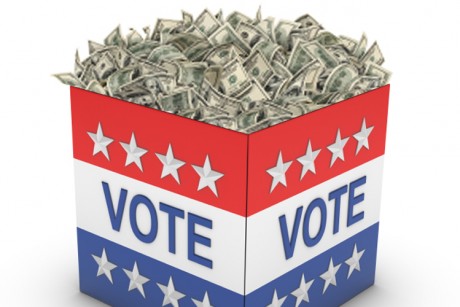
However, what is interesting to look at is how the economic elite from Grand Rapids spent their money in the most expensive US election ever. When we say GR elite, we are referring to some of the same people identified in a September posting that provided what we called a Grand Rapids Power Analysis.
Many of the local elites have residence in the 49503 zip code area and according to the Center for Responsive Politics, the 49503 zip code also set a record for money contributed to candidates or political parties in the 2012 Election cycle. The total money spent from the 49503 zip was $1,556,252.
According to the Center for Responsive Politics this amount contributed from zip code 49503 was 28 times as much as the average zip code area. The average for zip code areas spent on buying influence is $54,969.
The top contributors from 49503 are people we have identified as part of the local ruling class, people with economic wealth who also influence policy is a variety of ways. Most of them own businesses, are CEOs, sit on board(s) of directors or are part of organizations such as the Grand Rapids Chamber of Commerce, the Econ Club of Grand Rapids, The Right Place Inc., Grand Action and the West Michigan Policy Forum.
The top financial contributors from zip code 49503 are several members of the DeVos family, such as Doug DeVos, President of Amway/Alticor. According to the data Doug DeVos contributed $68,300 to several Republican National committees and some directly to Mitt Romney’s campaign.
Another member of the DeVos family, Dick DeVos contributed $82,300 in 2012, mostly to the Republican National Committee and the Republican Party of Michigan. Combined with other members of the DeVos family who claim residency in the 49503 zip, the collectively gave over half a million dollars, mostly to the Republican Party or candidates like Mitt Romney and Justin Amash.
Another resident from 49503 who is part of the local elite is Peter Secchia. According to Open Secrets, Secchia contributed $66,600 in the 2012 election cycle. Like the DeVos family members, he also gave to the Republican National Committee and Mitt Romney.
Another member of the local elite is Michael Jandernoa, business owner who sits on the boards of the Van Andel Institute, Grand Action and the West Michigan Policy Forum. Jandernoa contributed $160,000 to the Republican Party and Republican candidates in this most recent election cycle.
In the 49506 zip code area Crystal Flash owner Tom Fehsenfeld contributed $40,800 to the Democratic Party and Debbie Stabenow. Another 49506 resident Mark Murray (Meijer), contributed $71,100 to the Republican Party, Mitt Romney and Fred Upton.
From the 49546 zip code there was a sizeable amount contributed. For example, former Calvin College President Gaylen Byker, contributed $44,300 to the Republican National Committee, the Michigan Republican Party and Justin Amash.
Another member of the local elite, CEO of Autocam John Kennedy, was a major contributor. According to Open Secrets, Kennedy contributed $323,850 is the 2012 election cycle to CatholicVote.org, Restore Our Future, the Republican National Committee, Republican Party of Michigan, Pete Hoekstra, Justin Amash and Mike Rogers. Kennedy also sits on the boards of the Right Place Inc., the Van Andel Institute and the Acton Institute.
David Frey, with the Frey Foundation, contributed $92,550 during the 2012 election cycle. He directed his money towards the Republican Party, Mitt Romney, Justin Amash, Tim Walberg and Pete Hoekstra. Frey is also part of Grand Action.
This is just a sampling of the local power elite and how they try to influence electoral politics. While one could argue that the Republicans did not win the White House, they did retain control of the Michigan House of Representatives and the 2nd and 3rd Congressional districts are still held by Republicans. Also, it should be noted that all of the state ballot proposals in Michigan opposed by the reactionary right and the business community were defeated, except for Proposal One. Either way in the two-party dominated system we have big money wins, since the Democrats also relied on wealthy individuals and corporations to win or maintain the seats they held in the 2012 election.
PR stunt from Ford can’t hide their role in Climate Change
In their weekly e-newsletter, Michigan Loves Manufacturing included a Press Release from the Ford Motor Company announcing its donation to the Red Cross for Hurricane Sandy disaster relief.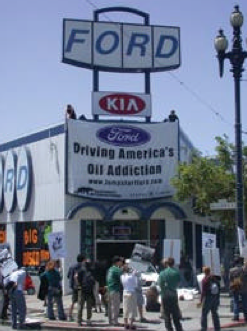
Like many news agencies, this business journal doesn’t question such an action from one of the world’s largest auto companies nor do they see the irony. The irony is, one of the largest contributors to climate change, which is the real cause of Hurricane Sandy, wants to provide some “relief” to the victims.
Ford, like the other auto companies, has a long history of contributing to pollution and climate change. The company has made massive profits from imposing a means of transportation on the public, particularly in the US, that has been one of the major contributing factors in climate change. The resource extraction necessary for the manufacturing cars/trucks is massive, the fossil fuels used to make cars/trucks is massive and the fossil fuels necessary to operate cars/trucks has all been a major reason why humanity is faced with the climate crisis we have today.
In 2001, the Ford Motor Company acknowledged that, “it was responsible for releasing approximately 400 million metric tons of carbon dioxide and other greenhouse gases annually, which amounts to a whopping 1 to 2 percent of all man-made emissions.”
The company also has a long history of climate denial. In 2006, there was a leaked memo stating that GM and Ford were both financing an ad campaign by the Competitive Enterprise Institute that was denying global warming.
In addition, the Ford Motor Company has aggressively fought any regulations or higher emissions standards that the US government has sheepishly tried to impose on the auto industry. For example, in a January 12 letter to House Oversight and Government Reform Committee Chairman Darrell Issa (R-Calif.), Ford Motor Co. complained that California and 13 other states adopted stringent CO2 tailpipe emissions standards.
Ford states: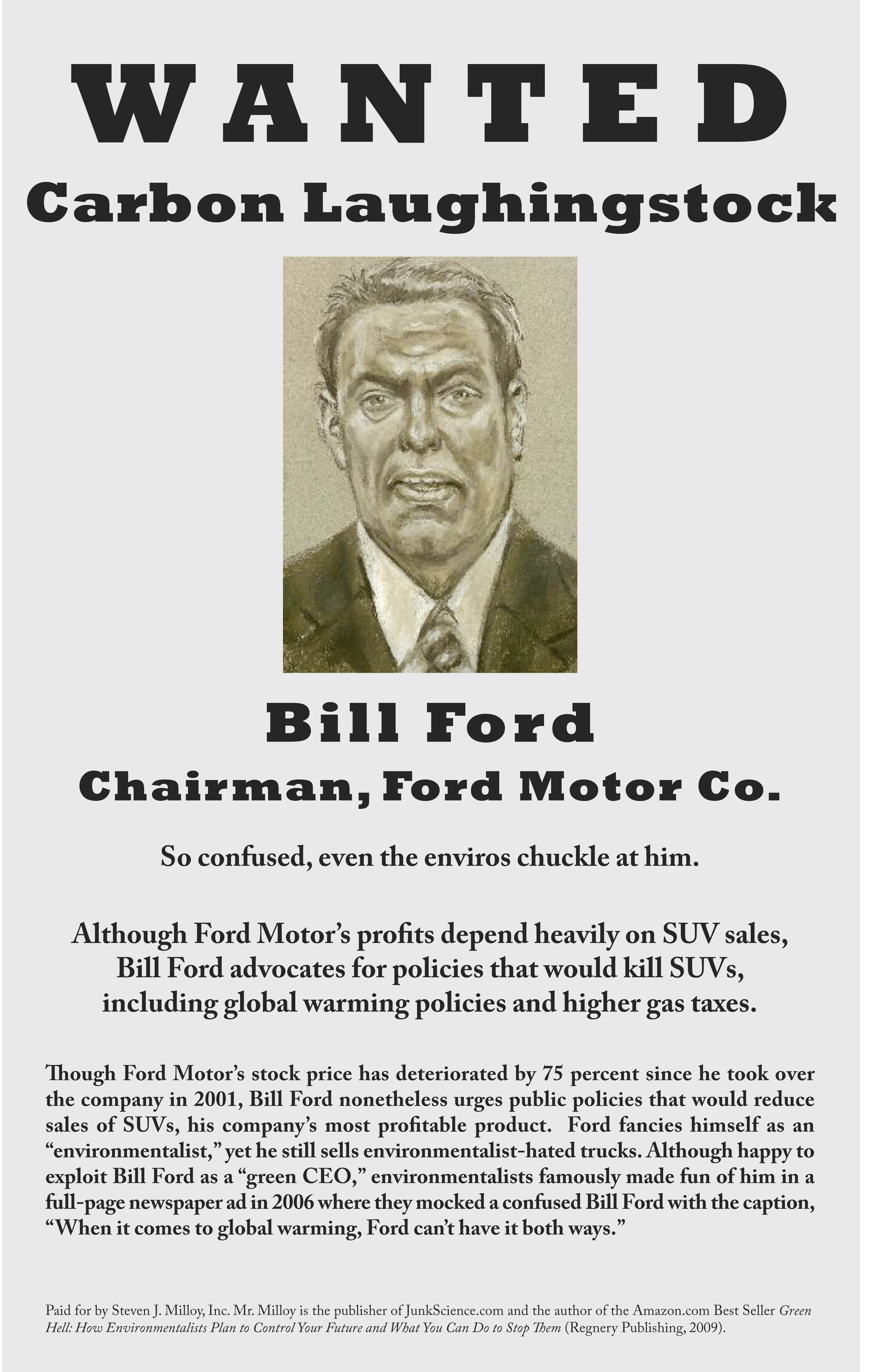
The enforcement of the state-specific standards would have a detrimental impact on the auto industry, and the 8 million jobs it directly supports, by forcing manufacturers to comply with incompatible state and federal [greenhouse gas] regulations… The potential impacts and costs of such standards include the following:
- Adversely impacting automotive-related employment in states not adopting the California standards
- Forcing dealers in affected states to restrict, ration or eliminate sales of selected models
- Forcing manufacturers to reduce or eliminate production of selected modelswell
- Reducing the selection of vehicles available to consumers in affected states
According to Open Secrets, the Ford Motor Company has spent $107 million lobbying Congress on industry regulations and has contributed almost $10 million to candidates running for office since 1990.
Some environmentalist groups have been bamboozled by the Ford Motor Company’s claim to be adopting green policies. The Sierra Club not only runs ads for the Ford Motor Company is its national publication, they even have been running a joint promotional campaign with the company touting their latest SUV the Mercury Mariner, which has a reported fuel efficiency of 33 city, 29 highway miles per gallon.
Greenwashing attempts aside, the Ford Motor Company would in a sane world be tried for major environmental crimes and be listed near the top of the list of individual companies that has made billions off of environmental destruction and climate change. Then again, this should not come as a surprise, since the Ford Motor Company has a strong relationship with Nazi Germany and profited immensely from doing business with the Germans almost til the end of WWII.
This article is re-posted from Earth First News.
McKenna, Long and Ostridge on K st is the main law firm representing Transcanada, the builder of the Keystone XL tar sands export pipeline. On the 5th of November, a march of about 50 protesters from Chesapeake Earth First! and Occupy DC stormed their building. Four were arrested when they staged a sit-in and refused to leave.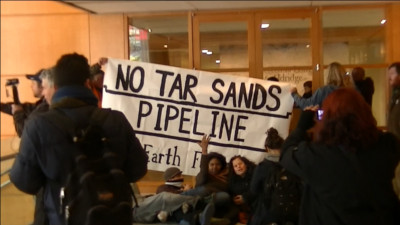
Secondary blockade to defend the blockade inside by delaying the cops
This protest was in solidarity with the Tar Sands Blockade in Texas, on the 43 day of the blockade. It was in solidarity with the Lakota people defending their lands from Keystone XL pipeline itself, and with all Native people resisting the tar sands mining in Alberta, Canada, It was also in solidarity with the Occupy Wall Street folks bottom-lining Hurricane Sandy relief in NY, and the people who were hit by this climate-change driven storm.
The entire building targetted by the protest bears McKenna, Long and Ostridge’s name, and they have an office on the first floor, accessable from the lobby. The civil disobediance blockade was across that locked doorway inside the building.
Originally protesters controlled the doors from the inside as a precaution against anyone being trapped if security locked the doors. The cops were very slow to arrive,
When cops had pushed enough protesters out of the building to get control of the doors, security locked them from the inside, violating DC fire codes. In a real emergency these doors will yield to being body-slammed from the inside if they work the same way as the doors at Bechtel, but that’s still a fire code violation.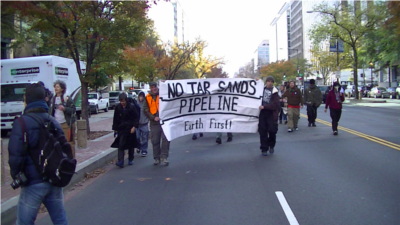
When more cops showed up to arrest the 4 people sitting down(and escort out the two standing behing them with the banner), protesters set an secondary, arm-locked blockade across the front doors to delay the police.
In the end, 4 people were arrested, and a loud message was sent to McKenna, Long and Ostridge that those who represent the builders of the Keystone XL tar sands pipeline risk receiving the same treatment that TransCanada themselves does. It’s like doing business with Huntingdon Life Sciences, only worse.
Already the Alberta tar sands mining project is killing Indigenous people, especially children, by poisoning the water they drink. Already Lakota people are being killed by being driven off the road by overloaded trucks crossing Pine Ridge. Already children living near the mine sites are being poisoned and some are dying, Already Transcanada is using eminent domain in Texas to force farmers out of the way of the southern leg of the Keystone XL pipeline.
Already we are being hit by climate-driven superstorms, with Katrina and Sandy only 7 years apart, plus that furious “derecho” storm this summer. If all 4 segments of this project are ever finished, the killing of the Lakota and other Indigenous people will accelerate, and the climate will get worse fast. Since the pipeline has been called ‘the fuse to the largest carbon bomb on the planet,” it is doubtful the rest of us would outlast the Lakota by very long.
Who Will Stand Up to Obama Now?
This articleby Jeffrey St. Clair is re-posted from CounterPunch.
Barack Obama is a technocrat and he just won a technocratic victory. His reelection campaign, lacking any kind of arching philosophy or defense of his own disturbing tenure as president, became a bland exercise in political calculus, targeting individual precincts, swing counties and fractionated demographic sectors.
Obama’s victory, at the cost of $2 billion, is about as thrilling as completing a game of Sudoku. Obama was propelled to his slender popular vote win by those that the Republicans almost ritually abused: women, blacks, gays and Hispanics. Ironically, these are people that the Obama administration has also ruthlessly strafed for four years. But Obama smiled as he cut the lower-classes adrift in the midsts of a cratering economy, while Romney expressed only contempt for them.
Mitt Romney ran an inept campaign. As a candidate, he was even more aloof, arrogant and emotionally distant than Obama. If Obama’s campaign lacked any unifying message, Romney’s resembled a kind of political Brownian Motion of constantly drifting themes in a tank of rancid and racially-charged sludge. He doomed his chances with his peculiar choice of Paul Ryan as his running mate, who personified the budgetary cruelties of the Republican right and alienated aging white voters who otherwise might have wandered into his camp.
Where does Obama go now? The House remains firmly in the hands of militant right-wingers. The Senate will continue to be paralyzed by the filibuster-happy minority and a spineless Democratic majority. Stalemate? Probably not. Second terms are almost always about polishing a presidential legacy, already being harped upon by the withered likes of Tom Brokaw. Obama will be desperate for some signature legislative victories.
So what to expect from Obama? An aggressive new plan to combat climate change? A real federal jobs program aimed at full-employment? Liberalization of immigration policies? Decriminalization of marijuana? Deep cuts in the defense budget? Rollback of the Patriot Act? A ban on assassinations by drones? Movement toward single-payer health care? Sure.
No. Clinton will be his template: the Clinton who pushed for the elimination of the Glass-Steagall Act, the gutting of welfare and the war on Serbia. Obama will pursue bi-partisanship with a vengeance. Obama has always been a committed neoliberal, a closeted agent of austerity. Now he no longer needs to even play-act for his political base. He can openly betray their interests.
In a few months, the president will reach out to his old pal Paul Ryan to take a stroll across that tragic terrain known as the common ground in pursuit of those twin obsessions of the elites: deficit reduction and entitlement reform. In the name of political conciliation, Obama will piously move to slash away at Social Security, Medicare, Medicaid and the last frail fabrics of the federal social welfare programs. These savage cuts will be enthusiastically cheered by the mainstream press, Wall Street and the Washington establishment.
Who will stand up to challenge him?
That is the real question posed by this enervating election.
The local group Mutual Aid GR is hosting a meeting this Saturday to talk about next steps in resisting the fossil fuel industry.
According to the facebook event posting:
Next steps – after organizing the anti-fracking action on September 21 and participating in the DNR protest in Lansing on October 24, Mutual Aid GR wants your input on where we go from here.
Some of us want to keep focusing on anti-fracking actions, but need your input and ideas on what those actions might look like. Also, do we organize to fight the tar sands pipelines that are planned to go through Michigan? and what can we do collectively to fight climate change?
If you have ideas, anger and want to make a difference, please join us for this discussion/meeting in the lower level of the Steepletown Center building. Also, feel free to bring food and drink to share.
Mutual Aid GR meeting on Resisting the Fossil Fuel Industry
Saturday, November 10
3:00PM
671 Davis NW, Grand Rapids
Lower Level of the Steepletown Neighborhood Center
Michigan companies Dow and Kellogg fund the defeat of food labeling proposal in California
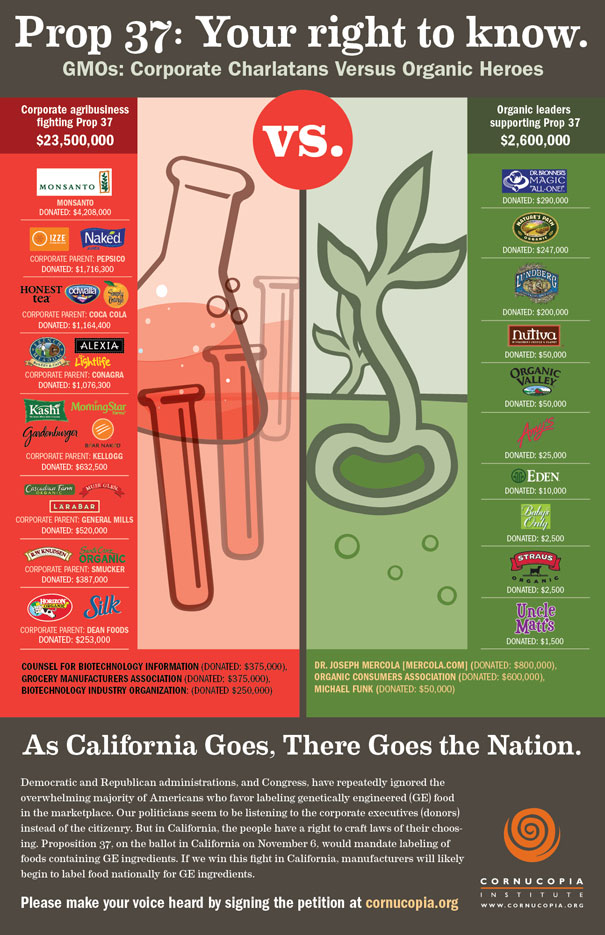
One outcome of the 2012 elections was the defeat of Proposal 37 in California, a proposal that sought to require that food sold in the state included labeling, particularly if there were any GMOs – Genetically Modified Organisms.
It was an issue that generated a ton of money, particularly from the corporate forces in opposition to complete transparency about what is in the food that people are eating.
The most recent data shows that groups wanting food labeling in California raised a few million dollars, compared to the nearly $50 million raised by food corporations opposed to telling people what they are really eating.
According to an article by Jill Richardson:
Coca-Cola might not want to label the genetically engineered corn used to make the high fructose corn syrup in its sodas, but it also owns organic and “natural” brands like Honest Tea and Odwalla. Likewise, PepsiCo, owner of Izze and Naked Juice, donated $1.7 million to oppose Prop 37 – more than every other donor except Monsanto and DuPont, and even more than the other four major biotech corporations (Bayer, BASF, Dow, and Syngenta).
Other brands owned by Prop 37-opposing corporations include Lightlife and Alexia (owned by Conagra); Kashi, Gardenburger, Bear Naked, and Morningstar Farms (Kellogg); Cascadian Farm Organic, Muir Glen and Larabar (General Mills); R.W. Knudsen Farms and Santa Cruz Organic (Smucker); and Silk and Horizon Organic (Dean Foods).
Looking at the list of corporations named, one can see that there are two based in Michigan – Dow and Kellogg. Monsanto was by far that largest contributor to the defeat of Prop 37, but Dow contributed $2 million and Kellogg chipped in $790,700.
This is just one more example of how companies like Dow and Kellogg, despite all their claims to be environmentally and socially responsible companies are simply committed to making a profit.
The defeat of the public’s right to know what it is eating is just one more reason to not financially support companies like Kellogg, Dow and Coca Coal by boycotting them. However, boycotting these companies is not enough, they must be confronted by a resistance movement that can put them out of business since they continue to demonstrate that they do not care about the public well being.
Ride the Taco
This video by subMedia is re-posted from Dissident Voice. subMedia’s video collection is a fabulous mix of satire, analysis and presentation of global political resistance.
On tap this week:
- Ride the Taco
- Romney and Obama’s climate silence
- Chinese Resistance to Civilization
- You are not in Mexico S.A.
- Athens Anarchist Anti-Fascist Motorcycle Club
- Severed Heads of State
- Dawn Paley‘s “Drug War Capitalism”
Panel discussion on homeless LGBTQ Youth held at GVSU today
The GVSU School of Social Work hosted a panel discussion this morning at the downtown campus on the topic of LGBTQ Youth and homelessness.
The panel included Susan Sheppard with Arbor Circle, Mary Alice Walker with Heartside Ministry and Colette Seguin-Beighley with the GVSU LGBT Resource Center.
Colette began the discussion by telling a story about a gay youth whom Colette had correspondence with. The young man said that his mother hated the church that Colette was part of, because it was an open and affirming church, which is why the gay youth decided to continue correspondence with Colette.
The young man had faced homelessness because his family did not accept his identity, so Colette and her family took him in for the next 6 months. It was her first encounter with a homeless LGBTQ youth.
In a time where Marriage Equality is becoming more acceptable, homeless LGBTQ youth is not really on the radar screen for both progressive sectors and many LGBT organizations across the country. Colette said it is a much more difficult issue to tackle and that it is one that needs to dealt with through an intersectional lens.
Mary Alice Walker, who works at Heartside Ministry, talked about how their organization has recently designated their space as a safe space for the LGBTQ community. She told a story about a 21 year old Black bisexual man who has used the services at Heartside, but how his identity and the fact that he is now 21 has limited the kinds of services and safe spaces for him, since he is no longer a youth.
Mary Alice also talked about how LGBTQ youth are often bullied in a variety of circumstances. She also addressed the lack of services available to LGBTQ youth, particularly Trans youth, since most shelters will not allow them to stay since they do not identify as male or female. Mary Alice also talked about how those in the social service profession needed to not only become familiar with the terminology and identifying language that LGBTQ youth use, so that greater sensitivity can be part of the services offered.
Susan Sheppard, who works for Arbor Circle, talked about the gaps in the community. She talked a bit about the history of federal policy on homeless youth in the US, a policy, which has never included any language specific to LGBTQ youth.
In Grand Rapids there is The Bridge, Homeless Youth Services and the Street Outreach Program, which is all part of Arbor Circle. Susan talked about a variety of issues that contributed to the homelessness of LGBTQ youth, but that her staff tries to focus on providing a safe space and building relationships with these youth.
During the Q&A part of the program, most of the questions focused on issues of parental involvement, church involvement, federal funding or other social service focused questions. The conversation clearly demonstrated that this is a complex issue that includes basic social services such as housing, counseling, food assistance, transportation needs, health care and HIV/AIDS services. It seems clear that there are inadequate amount of services available to homeless LGBTQ youth in Kent County, plus a lack of understanding from some service providers about LGBTQ youth and homophobia.
What was lacking in the discussion was looking at this issue through a much bigger lens and outside of the social service framework. The panel was asked by this writer about the importance of looking at root causes of LGBTQ homelessness and the benefits of social movements to address this problem instead of just social services.
Susan Sheppard acknowledged that having a strong social movement would be important in addressing root causes, but she also suggested that the emphasis be on legislation. Colette Seguin-Beighley agreed that social movements would be important to not only reframe the issue of LGBTQ homeless youth, but could also get people to think about how the work could be done specifically by folks in the LGBTQ community. She said that there are people talking about starting a housing collective that would assist homeless LGBTQ youth, but not in a non-profit model. She also stated at one point that funding is always an issue, but not because the money doesn’t exist, it’s what we spend it on. Beighley noted that federal funding has been cut for some of the projects for homelessness, while at the same time millions have left this community to funds the US occupation of Iraq and Afghanistan and that these are connections that need to be made.
Seizing the climate crisis to demand a truly populist agenda
This article by Naomi Klein is re-posted from The Nation.
Less than three days after Sandy made landfall on the East Coast of the United States, Iain Murray of the Competitive Enterprise Institute blamed New Yorkers’ resistance to big-box stores for the misery they were about to endure. Writing on Forbes.com, he explained that the city’s refusal to embrace Walmart will likely make the recovery much harder: “Mom-and-pop stores simply can’t do what big stores can in these circumstances,” he wrote.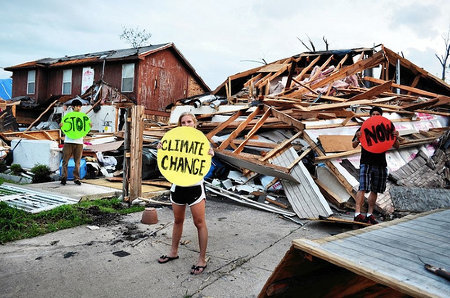
And the preemptive scapegoating didn’t stop there. He also warned that if the pace of reconstruction turned out to be sluggish (as it so often is) then “pro-union rules such as the Davis-Bacon Act” would be to blame, a reference to the statute that requires workers on public-works projects to be paid not the minimum wage, but the prevailing wage in the region.
The same day, Frank Rapoport, a lawyer representing several billion-dollar construction and real estate contractors, jumped in to suggest that many of those public works projects shouldn’t be public at all. Instead, cash-strapped governments should turn to “public private partnerships,” known as “P3s.” That means roads, bridges and tunnels being rebuilt by private companies, which, for instance, could install tolls and keep the profits.
Up until now, the only thing stopping them has been the law—specifically the absence of laws in New York State and New Jersey that enable these sorts of deals. But Rapoport is convinced that the combination of broke governments and needy people will provide just the catalyst needed to break the deadlock. “There were some bridges that were washed out in New Jersey that need structural replacement, and it’s going to be very expensive,” he told The Nation. “And so the government may well not have the money to build it the right way. And that’s when you turn to a P3.”
Ray Lehmann, co-founder of the R Street Institute, a mouthpiece for the insurance lobby (formerly a division of the climate-denying Heartland Institute), had another public prize in his sights. In a Wall Street Journal article about Sandy, he was quoted arguing for the eventual “full privatization” of the National Flood Insurance Program, the federal initiative that provides affordable protection from some natural disasters—and which private insurers see as unfair competition.
But the prize for shameless disaster capitalism surely goes to right-wing economist Russell S. Sobel, writing in a New York Times online forum. Sobel suggested that, in hard-hit areas, FEMA should create “free trade zones—in which all normal regulations, licensing and taxes [are] suspended.” This corporate free-for-all would, apparently, “better provide the goods and services victims need.”
Yes that’s right: this catastrophe very likely created by climate change—a crisis born of the colossal regulatory failure to prevent corporations from treating the atmosphere as their open sewer—is just one more opportunity for more deregulation. And the fact that this storm has demonstrated that poor and working-class people are far more vulnerable to the climate crisis shows that this is clearly the right moment to strip those people of what few labor protections they have left, as well as to privatize the meager public services available to them. Most of all, when faced with an extraordinarily costly crisis born of corporate greed, hand out tax holidays to corporations.
Is there anyone who can still feign surprise at this stuff? The flurry of attempts to use Sandy’s destructive power as a cash grab is just the latest chapter in the very long story I have called The Shock Doctrine. And it is but the tiniest glimpse into the ways large corporations are seeking to reap enormous profits from climate chaos.
One example: between 2008 and 2010, at least 261 patents were filed or issued related to “climate-ready” crops—seeds supposedly able to withstand extreme conditions like droughts and floods; of these patents close to 80 percent were controlled by just six agribusiness giants, including Monsanto and Syngenta. With history as our teacher, we know that small farmers will go into debt trying to buy these new miracle seeds, and that many will lose their land.
When these displaced farmers move to cities seeking work, they will find other peasants, indigenous people and artisanal fishing people who lost their lands for similar reasons. Some will have been displaced by foreign agribusiness companies looking to grow export crops for wealthy nations worried about their own food security in a climate stressed future. Some will have moved because a new breed of carbon entrepreneur was determined to plant a tree farm on what used to be a community-managed forest, in order to collect lucrative credits.
In November 2010, The Economist ran a climate change cover story that serves as a useful (if harrowing) blueprint for how climate change could serve as the pretext for the last great land grab, a final colonial clearing of the forests, farms and coastlines by a handful of multinationals. The editors explain that droughts and heat stress are such a threat to farmers that only big players can survive the turmoil, and that “abandoning the farm may be the way many farmers choose to adapt.” They had the same message for fisher folk inconveniently occupying valuable ocean-front lands: wouldn’t it be so much safer, given rising seas and all, if they joined their fellow farmers in the urban slums? “Protecting a single port city from floods is easier than protecting a similar population spread out along a coastline of fishing villages.”
But, you might wonder, isn’t there a joblessness crisis in most of these cities? Nothing a little “reform of labor markets” and free trade can’t fix. Besides, cities, they explain, have “social strategies, formal or informal.” I’m pretty sure that means that people whose “social strategies” used to involve growing and catching their own food can now cling to life by selling broken pens at intersections, or perhaps by dealing drugs. What the informal social strategy should be when super storm winds howl through those precarious slums remains unspoken.
For a long time, climate change was treated by environmentalists as a great equalizer, the one issue that affected everyone, rich or poor. They failed to account for the myriad ways by which the superrich would protect themselves from the less savory effects of the economic model that made them so wealthy. In the past six years, we have seen the emergence of private firefighters in the United States, hired by insurance companies to offer a “concierge” service to their wealthier clients, as well as the short-lived “HelpJet”—a charter airline in Florida that offered five-star evacuation services from hurricane zones. “No standing in lines, no hassle with crowds, just a first class experience that turns a problem into a vacation.” And, post-Sandy, upscale real estate agents are predicting that back-up power generators will be the new status symbol with the penthouse and mansion set.
It seems that for some, climate change is imagined less as a clear and present danger than as a kind of spa vacation; nothing that the right combination of bespoke services and well-curated accessories can’t overcome. That, at least, was the impression left by the Barneys New York pre-Sandy sale—which offered deals on Sencha green tea, backgammon sets and $500 throw blankets so its high-end customers could “settle in with style”. Let the rest of the world eat “social strategies, formal or informal.”
So we know how the shock doctors are readying to exploit the climate crisis, and we know from the past how that would turn out. But here is the real question: Could this crisis present a different kind of opportunity, one that disperses power into the hands of the many rather than consolidating it the hands of the few; one that radically expands the commons, rather than auctions it off in pieces? In short, could Sandy be the beginning of a People’s Shock?
I think it can. As I outlined last year in these pages, there are changes we can make that actually have a chance of getting our emissions down to the level science demands. These include relocalizing our economies (so we are going to need those farmers where they are); vastly expanding and reimagining the public sphere to not just hold back the next storm but to prevent even worse disruptions in the future; regulating the hell out of corporations and reducing their poisonous political power; and reinventing economics so it no longer defines success as the endless expansion of consumption.
These are approaches to the crisis would help rebuild the real economy at a time when most of us have had it with speculative bubbles. They would create lasting jobs at a time when they are urgently needed. And they would strengthen our ties to one another and to our communities— goals that, while abstract, can nonetheless save lives in a crisis.
Just as the Great Depression and the Second World War launched populist movements that claimed as their proud legacies social safety nets across the industrialized world, so climate change can be a historic moment to usher in the next great wave of progressive change. Moreover, none of the anti-democratic trickery I described in The Shock Doctrine is necessary to advance this agenda. Far from seizing on the climate crisis to push through unpopular policies, our task is to seize upon it to demand a truly populist agenda.
The reconstruction from Sandy is a great place to start road testing these ideas. Unlike the disaster capitalists who use crisis to end-run democracy, a People’s Recovery (as many from the Occupy movement are already demanding) would call for new democratic processes, including neighborhood assemblies, to decide how hard-hit communities should be rebuilt. The overriding principle must be addressing the twin crises of inequality and climate change at the same time. For starters, that means reconstruction that doesn’t just create jobs but jobs that pay a living wage. It means not just more public transit, but energy efficient affordable housing along those transit lines. It also means not just more renewable power but democratic community control over those projects.
But at the same time as we ramp up alternatives, we need to step up the fight against the forces actively making the climate crisis worse. Regardless of who wins the election, that means standing firm against the continued expansion of the fossil fuel sector into new and high-risk territories, whether through tar sands, fracking, coal exports to China or Arctic drilling. It also means recognizing the limits of political pressure and going after the fossil fuel companies directly, as we are doing at 350.org with our “Do The Math” tour. These companies have shown that they are willing to burn five times as much carbon as the most conservative estimates say is compatible with a livable planet. We’ve done the math, and we simply can’t let them.
We find ourselves in a race against time: either this crisis will become an opportunity for an evolutionary leap, a holistic readjustment of our relationship with the natural world. Or it will become an opportunity for the biggest disaster capitalism free-for-all in human history, leaving the world even more brutally cleaved between winners and losers.
When I wrote The Shock Doctrine, I was documenting crimes of the past. The good news is that this is a crime in progress; it is still within our power to stop it. Let’s make sure that this time, the good guys win.
Reflections on Dr. King’s Evil Triplets

“We must rapidly begin the shift from a “thing-oriented” society to a “person-oriented” society. When machines and computers, profit motives and property rights are considered more important than people, the giant triplets of racism, materialism, and militarism are incapable of being conquered.” Dr. Martin Luther King Jr.
In 1967, Dr. Martin Luther King Jr. gave one of the more memorable and dynamic speeches of his life.
The “Beyond Vietnam: A Time to Break Silence” speech is an amazing piece of writing that gives an incredible astute analysis of US foreign policy and US power.
In this speech King shares a solid understanding of US policy in Vietnam, in South East Asia and in the rest of the world that the US was involved in at the time.
However, King did not see US foreign policy merely through an anti-war lens. King understood the real nature of US foreign policy and US power and identified them as the evil triplets of racism, capitalism and militarism.
Dr. King understood that these were the structural or systemic problems that the people of the US faced and that they were at the root not only of the US war in Vietnam, but the US war against Black America.

A revolution against an edifice that creates poverty
On the matter of capitalism, Dr. King recognized the need for revolutionary change and replacing an economic system that created and functioned on poverty and suffering. Using the language of his faith King said:
A true revolution of values will soon cause us to question the fairness and justice of many of our past and present policies. On the one hand we are called to play the good Samaritan on life’s roadside; but that will be only an initial act. One day we must come to see that the whole Jericho road must be transformed so that men and women will not be constantly beaten and robbed as they make their journey on life’s highway. True compassion is more than flinging a coin to a beggar; it is not haphazard and superficial. It comes to see that an edifice which produces beggars needs restructuring. A true revolution of values will soon look uneasily on the glaring contrast of poverty and wealth. With righteous indignation, it will look across the seas and see individual capitalists of the West investing huge sums of money in Asia, Africa and South America, only to take the profits out with no concern for the social betterment of the countries, and say: “This is not just.”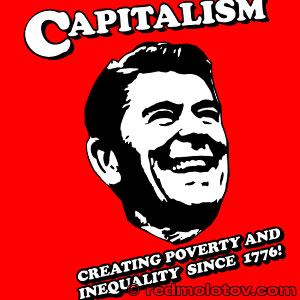
Taking a cue from Dr. King, it seems pretty clear that we have an “edifice” called capitalism, which produces poverty and definitely needs restructuring. I do not take his comments to mean we need to reform the system, rather we need a new one not centered around profit and private property, as the slain civil rights leader pointed out.
We also should take to heart the need for those who seeks radical change to have righteous indignation directed at those with tremendous wealth, no matter how “philanthropic” they might be. Indeed, this was at the core of the Occupy Movement, the righteous indignation directed at the 1%.
US Militarism
“A nation that continues year after year to spend more money on military defense than on programs of social uplift is approaching spiritual death.”
This statement from Dr. King at his Beyond Vietnam speech is a powerful one, but one that is too often forgotten by those who continue to support war mongers. According to the National Priorities Project, the US has spent (as of this posting) nearly $1.4 Trillion jut on the occupations of Iraq and Afghanistan. Imagine if that kind of money was redirected to human needs right here in this country, in this state, in all of our communities. Poverty, debt, poor nutrition and lack of health care could all be done away with.
However, on the eve of the 2012 election, neither the Democrats or Republicans are talking about any reductions in the US military budget. Instead, the two wings of the capitalist system are vying to see which can be better at war making and imperialism.
A new evil triplet – Climate Change
In thinking about a third major issue that has far reaching implications, I would like to suggest that we modify Dr. King’s list of evil triplets and exchange racism for climate change. This is not to say that racism is no longer a serious threat to humanity, since it certainly is. However, Climate Change confronts all of us in a new and daunting way. If we do not reduce the current levels of carbon emissions by 80% before 2050, we might not have a future.
This is the level of reduction in carbon emissions put forth by the Inter-Governmental Panel on Climate Change since 2007, and some are arguing that it might be worse in 2012 than it was when the international panel of climate scientist put forth their original data.
Without focusing too much on numbers, it is important to recognize two things about where we stand on Climate Change. First, there has been no substantive effort from the major industrial governments of the world, particularly the US on this matter. Secondly, the fossil fuel industry has made it clear they don’t give a damn about our collective future, just so long as they can continue to make profits. And since this is where they stand on these issues, they continue to make sure that the political system in this country won’t do anything to seriously disrupt their profit-making goal.
Lastly, it must be stated that Climate Change is a direct consequence of the militarism and capitalism, which Dr. King directed is rage towards in his 1967 speech. The warming of the planet is a result of an economic system based on profits and constant growth. In order for that system to fulfill its needs, it will use military force to achieve such ends, which means that the burning of fossil fuels will accelerate, since the US military is one of the largest consumers of fossil fuels on the planet.
On this day before the 2012 elections, let us commit to working on doing away with the evil triplets of our time – militarism, capitalism and climate change. And let us recognize, as Dr. King did, that doing away with such deeply entrenched system will require sacrifice, it will require risk and it will require way more than the sideshow that is electoral politics.
 Grand Rapids Institute for Information Democracy