This article by Kristen Lombardi is re-posted from the Center for Public Integrity.
Notre Dame’s high-profile re-emergence among college football’s elite has focused new attention on the university’s long-standing claims that it does things “the right way” — that football players are treated like anyone else on campus, with no special favors.
The boasts of lofty moral standards have long struck other schools’ fans as a bit sanctimonious. But they are getting fresh scrutiny now, in part because the bright lights of college football’s biggest stage have brought renewed attention to a two-year-old case involving a Notre Dame player and chilling allegations of sexual assault.
In August 2010, 19-year-old freshman Lizzy Seeberg accused the athlete of sexually assaulting her in his dorm. She filed a report with campus police, which sat on it for two weeks before even interviewing him. By then, Seeberg had committed suicide. Administrators would later convene a closed-door campus disciplinary hearing—three months after Seeberg’s death became national news—in which the player was found “not responsible.” In the university’s only direct comment on the case, Notre Dame’s president, the Rev. John I. Jenkins, told the South Bend Tribune in December 2010 that university police had conducted a “thorough and judicious investigation that followed the facts…” He acknowledged, however, that the inquiry could have been conducted “more quickly, perhaps.” The player, who has not been publicly identified, reportedly has never missed a game, nor presumably will he miss tonight’s national championship contest with Alabama’s Crimson Tide. Meanwhile, a small but vocal number of critics are asking pointed questions about how this case was handled, and wondering aloud whether Notre Dame’s righteous rhetoric is really a fiction.
As tragic as the details of the Seeberg case are, they are actually far from unusual. The struggles that colleges have faced in addressing campus sexual assault were the subject of an investigation by the Center for Public Integrity beginning in 2009. Published in a six-part series, “Sexual Assault on Campus: A Frustrating Search for Justice,” the investigation showed that campus judicial proceedings were often confusing, shrouded in secrecy and marked by lengthy delays, leaving alleged victims feeling like they were victimized a second time. Those who reported sexual assault encountered a litany of institutional barriers that often led to dropped complaints. Even students found “responsible” for alleged sexual assaults often faced little punishment, while their victims’ lives frequently turned upside down. Many times, victims dropped out of school — or worse — while their alleged attackers graduated.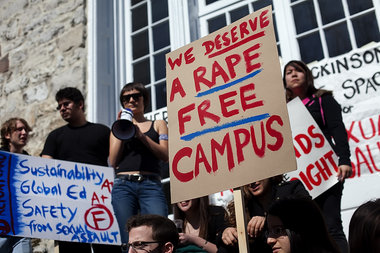
The Center series — done in collaboration with National Public Radio — shed light on what Education Department officials have since called “an epidemic of sexual violence” on campuses. According to a report funded by the Justice Department, roughly one in five women who attend college will become the victim of a rape or an attempted rape by the time she graduates. Much of the problem is up to the institutions to address, because prosecutors face imposing obstacles in filing criminal charges; allegations come down to he-said-she said accounts that may be colored by alcohol, while physical evidence and eyewitness testimony are often lacking.
In April 2011, the Education Department’s civil rights office unveiled its most thorough guidance on how schools must respond to student complaints of campus rape. The 19-page “dear colleague letter,” combined with a unique enforcement strategy, has spurred change at dozens of schools nationwide, including Notre Dame. There’s also proposed federal legislation aimed at combating campus sexual violence.
The guidance hasn’t pleased everyone, and the legislation is, for the moment, stalled. Sadly, cases like Seeberg’s continue to make headlines. The latest comes from elite Amherst College, where a former student has documented allegations of her school’s callous treatment following an alleged rape by a classmate. Highly emotional, colored by broader cultural stereotypes, these cases remain among the thorniest for colleges and universities. Even so, lawyer Brett Sokolow, who advises college administrators, says he believes they have improved their handling of what he calls “the garden variety cases” — those without ties to money or influence.
But “the old rules still apply if [the alleged assailant is] a star athlete or a student president…Corruption still exists in those cases,” he says, while adding he’s not familiar with the details of the Seeburg case.
Changes
That new federal guidance, announced with fanfare by Vice President Joe Biden, says schools have an obligation, under the federal law known as Title IX, to investigate student complaints, and to take prompt and effective action to end harm.
The guidance has drawn fierce pushback, much of it focused on a policy the civil rights office was already enforcing: that schools should rely on the more lenient evidence standard in these cases — “preponderance of evidence” rather than the higher “clear and convincing” or even “beyond a reasonable doubt” evidence standards. Groups like the Foundation for Individual Rights in Education, which advocates for free speech and due process, have penned multiple letters arguing that such a “weak” principle undermines, in its words, “the reliability, integrity and basic fairness of the disciplinary process.”
“We see the burden of proof on many campuses being the only protection an accused student has,” says FIRE’s Joe Cohn, whose last letter, in May 2012, included 19 professors, lawyers and other individuals as co-signers.
Taking a cue from the department, many colleges and universities were using the preponderance standard when the guidelines came out. Others have followed suit. Some 40 schools at last count have also adopted what administrators describe as “the easy things” — policy reforms and procedural fixes like hiring a Title IX coordinator and offering appeal rights to both the accused and accusing students. Some administrators are even clamoring for more guidance to clear up lingering “confusion” about what Title IX requires.
By all accounts, the civil rights office has become far more aggressive since December 2010, when it announced its first in a series of “model” settlements with schools regarding policies on campus sexual assault. These settlements have emerged from “compliance reviews” that were pushed by the Education Department’s assistant secretary for civil rights, Russlynn Ali, who stepped down in early December. Unlike formal complaints, which students must file before the office can act, these compliance reviews have allowed the department to act proactively in response to allegations of campus sexual violence.
To date, there have been 11 such reviews — and the first one was at Notre Dame. Prompted by the Seeberg case, the civil rights office launched a seven-month investigation into how the school handles all sexual assault complaints. That ended in June 2011 with a “voluntary resolution agreement,” in which Notre Dame agreed to speed up investigations, adopt the “preponderance” standard, and issue no-contact orders for alleged assailants and their alleged victims, among other things. Seth Galanter, the civil rights office’s acting director, declined to discuss the Notre Dame resolution, citing its “open” status. The office is currently monitoring the school to ensure its compliance.
Many of the reviews are ongoing, but the office has hammered out similar settlement agreements with such schools as Eastern Michigan and Yale. Last spring, it took the rare step of joining the Justice Department in examining how the University of Montana, as well as local law enforcement, handle campus rape allegations — after several prominent cases there, some involving football players. The civil rights office has even seen the number of formal complaints from students filed against schools soar to more than 120 in the past four years— a rise of more than 41 percent.
“One of our goals,” Galanter says, “is to make sure the April 2011 ‘dear colleague’ letter isn’t just a piece of paper.”
A multi-front struggle
Over on Capitol Hill, victim advocates have pressed for passage of the Campus Sexual Violence Elimination Act. Filed in the fall of 2010, the federal legislation was meant to codify the Title IX guidance, creating minimum, national standards for colleges and universities. Two years later, after lobbying by FIRE and others brought about changes in the bill, some supporters now actually oppose it. The most notable change: the bill would no longer require schools to use the “preponderance” standard.
“Now we have this monstrous bill all wrapped up in nice sounding language,” says lawyer Wendy Murphy, a prominent victim advocate. She believes the bill, stripped of that mandate, would give institutions leeway to use a higher burden, thus in her view undermining the guidance.
Bill supporters counter that the SaVE Act would still require that institutions expand programs to offer prevention awareness and bystander intervention education, meant to stop sexual assaults from occurring. And the legislation would improve victim protection, they say, by guaranteeing counseling, legal assistance, and medical care on campus, as well as other accommodations.
“We didn’t get everything we wanted,” agrees Daniel Carter, a long-time victim advocate now with the VTV Family Outreach Foundation, who helped draft the original bill. But “no one was willing to sacrifice [the whole measure]” he explains, to preserve a few of its mandates.
Administrators and advocates alike expect the legislation to pass — eventually. It had been incorporated, as Section 304, into the Senate’s re-authorization of the Violence Against Women Act, but not the House’s. Advocates were pinning their hopes on the bill making it in the final version of VAWA until the House let it expire at the end of the congressional session on January 3. Now, it will have to be re-introduced, as will the stand-alone version of the bill. Its sponsor, Senator Robert Casey Jr., a Democrat from Pennsylvania, will keep working to ensure final passage of the Campus SaVE Act in the 113th Congress, his office says.
For all the attention on campus sexual assault, it remains an intractable and complex problem. The cultural climate surrounding these cases is tense— especially those involving athletes. They are, after all, popular public figures who may be pivotal to the reputation and success of a school’s highest-profile programs.
It all feels painfully familiar to Laura Dunn, whose case was featured in the Center series; in 2005, she reported her allegations of rape by a crew member at the University of Wisconsin-Madison. He denied the allegations. It took the university nine months to contemplate, and then reject, filing disciplinary charges against him.
“It’s almost like you’re attacking something bigger than the individuals who assaulted you,” Dunn says. When she thinks about how much progress colleges have made in combating campus sexual assault, her thoughts turn to Lizzy Seeberg and that Notre Dame football player.
“Until college athletes are handled differently,” Dunn says, “nothing has changed.”
New Media We Recommend
Below is a list of new materials that we have read/watched in recent weeks. The comments are not a “review” of the material, instead sort of an endorsement of ideas and investigations that can provide solid analysis and even inspiration in the struggle for change. All these items are available at The Bloom Collective, so check them out and stimulate your mind.
Howard Zinn Speaks: Collected Speeches 1963 – 2009, edited by Anthony Arnove – This is a wonderful collection of speeches by radical historian Howard Zinn. Anthony Arnove, who collaborated with Zinn on several projects, has given us these powerful words by Zinn that cover a broad range of topics and gives us even more insight into his personal life. Zinn talks about why he became an historian and why he thinks history is so important to contemporary struggles. In these speeches, we can read how passionate Howard was to abolishing war, racism, economic exploitation and how dedicated he was to the idea that ordinary people are what makes up real social change in this country’s history. The collection of speeches covers a period from the Civil Rights movement, the anti-Vietnam War movement, all the way to the present. Zinn takes on government lies, the first amendment, the legacy of Columbus, civil disobedience and the idea of American exceptionalism. A fabulous collection.

Foodopoly: The Battle Over The Future of Food and Farming in America, by Wenonah Hauter – Just released, Foodopoly, is a well researched and well written investigation into the current state of food production in the US. Hauter, who is the Executive Director of Food & Water Watch, does a marvelous job of breaking down for readers the current framework for how food is grown/raised in the US within the agribusiness model. Hauter makes it clear that the food system in the US is unjust and unsustainable. She looks at problems of the for profit food system, the chemicals used, GMOs, CAFOs, the control of seeds and food policy. The book has only a brief discussion on what is happening to create a just food system in the US, but the real flaw of the book is that it’s emphasis on how to confront the current food system is through better regulation and financial incentives for local food production, both of which are too reformist and even a bit naïve in terms of the power that the agribusiness sector has in the current food system. However, the critique of the current system section, which is the bulk of the book, is well worth reading.
Anarchism, by Cindy Milstein – This is the last in a series of zines we have looked at from the Institute for Anarchist Studies. Cindy Milstein provides one of the most readable and beautifully written brief descriptions of both the spirit of anarchism and its practice. Author of several books and an active practitioner of anarchist principles, Milstein presents the origins of anarchist thinking, what distinguished it from other political philosophies and ways in which it can contribute to creating a healthier and more fulfilling society(ies) of equality and freedom. Milstein does not provide any real historical examples of anarchism in practice, of which there are plenty, but she does provide a valuable introductory tool for those who are new to anarchism and those wanting to spread its message of a society without hierarchies, where power is shared for the good of all.
Abused: The Pottsville Raid (DVD) – In May 2008, US immigration officers raided a meatpacking plant in Iowa and arrested nearly 400 workers. They were not given proper legal representation and sentenced to serve 5 months in jail, before most of them were deported. Abused presents the devastating effects of US Enforcement Immigration policies on communities, families and children. The film tells the gripping personal stories of the individuals, the families and the town that survived the most brutal, most expensive and largest immigration raid in the history of the United States and serves as a cautionary tale of government abuses. An important film for anyone concerned about immigration, the growing police state in the US, racism and what drives immigration policies of this country.
If it creates jobs, no questions asked
One of the major justifications from the business community to support the basic capitalist principle of growth, is that it will create more jobs.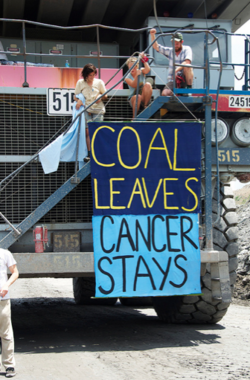
Creating more jobs is a phrase that is meant to silence critics and end discussion about what it is the company does or stop us from thinking about the unsustainable realities of economic growth.
For instance, in a recent article in MiBiz, readers are told about a Bangor-based company, Getman Corp, which just announced that they might double their workforce because of global growth that impacts their industry.
The article is filled with information about the implication of the expanding industry and relies on a company spokesperson as well as other people in the same industry in West Michigan.
Getman Corp. makes mining equipment and the article makes it clear that this is a global growth industry. The article relies heavily on a 2013 Trends report from the financial consulting company Deloitte Global Services, which is only concerned about markets that are not volatile. The article states:
While sub-Saharan Africa is a resource-rich area, the Deloitte report stated, the difficulty of financing, lack of infrastructure and corruption were the main reasons mining companies avoided the area. Consequently, miners are looking to more stable, if less lucrative alternatives. The report projects the top three countries to receive investment from the mining industry between 2012 and 2031 will be Australia, Brazil and Chile — in line with the Getman Corp.’s market strategy.
Of course, what the financial world considers volatile has to do with sales growth and projected needs of products and services. What they aren’t concerned about is the ecological and human health impact that mining has globally.
Many people are aware of the impact that coal mining has, particularly in recent years with campaigns to stop mountain top removal of coal in the US. However, the impact of mining is vast, whether it is mining for gold, silver, copper, iron ore or the many other substances extracted in the process of mining.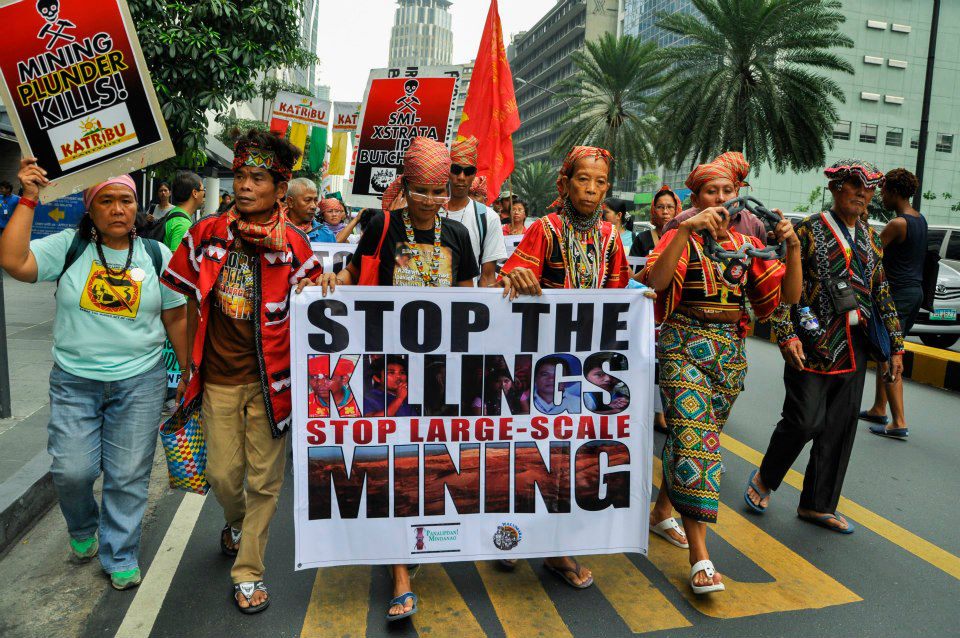
Highly toxic chemicals are used in mining and the mining process almost always required large sums of water, which not only depletes the water sources of nearby communities, it often pollutes the water and soil near the areas being mined.
Mining also has a long history of human rights abuses and this history continues today, with numerous campaigns to combat mining and the repression from the mining industry in countries like Australia, Ecuador, Guatemala and El Salvador. In fact, in late 2011, GVSU hosted an anti-mining activist from El Salvador who spoke about the repression that he and other people in his community have faced because they dared to fight mining from US and Canadian companies.
None of this information or perspective is included in the MiBiz article, because growth is good and new jobs cannot be questioned. However, any economic activity that causes ecological destruction and human misery should be denounced and resisted.
Let’s not be fooled by the claims of jobs and growth. The planet can not afford it.
Rosa Luxemburg and Occupy
This article by Mumia Abu Jamal is re-posted from ZNet.
Meiner freunden; Wie geht’s?
I recently did a thought experiment of Rosa Luxemburg and gave her a role in advising the young activists.
I will not repeat that practice.
Her spirit, however, of principled and resistance to Imperialism and advocacy of revolution over reform, endears her to us, and informs young activists involved in struggle against the US Empire.
As the Occupy Movement is still with us, and finding new ways of trying to live lives consistent with the spirit of Occupy, we think of it as a new year dawns, and try to draw lessons for movements active today, and ones to come.
Initially, we must note that Occupy is an American phenomenon, but there are similar expressions in other parts of the world, like the Indignados in Spain; the Arab Spring in North Africa; the Movimiento San Tierra (the Landless Peasants Movement) in Brazil, and beyond.
All of these movements share something fundamental: a discontent with the status quo; and a deep desire for change.
They each know that the status quo is untenable; that the state is an instrument of the wealthy; and that the present economic system is rapacious when it comes to using its power to protect the well-to-do.
Rosa Luxemburg would’ve loved to be around, not just to see the effects of that crisis, but to teach the lessons of organizing, and revolution-growing.
And while it would be premature to call some of these movements revolutionary, they are certainly radical in that they are calling into question the systems under which we live, including capitalism.
In the US, the Occupy Movement struck quite a chord, simply by speaking to the stark divide in American society, between the 1% and the 99%.
Their slogan, “We Are the 99%!”, cut to the very heart of the economic crises ripping through the United States, the joblessness, the government budgets being slashed, and the monstrous weight to many states of the prison industrial complex- the biggest such system on earth.
Similar crises are being thrust into many European states, say Greece, Italy and Portugal, for starters.
What we are seeing is the boundless appetite of capital for more capital, especially in the aftermath of the fall of the Soviet Union.
These economic disruptions are having political effects, as shown by the rise of anti-capitalist groupings which challenge the status quo. As the contradictions in society become sharper, more people are drawn into such movements, to try to redirect this social decay into more productive, more social concerns.
The Empire Strikes Back
National news reports have shown a campaign of repression against occupiers, from police assaults, beatings, mass arrests and anti-Occupy media propaganda.
First, the media ignored them; then, when that was no longer possible, they maligned them.
They defended their corporate owners by misreporting on these anti 1%ers, depicting them as silly, trifling people. Police infiltrated them at every level.
Yet, they remain, involved in a variety of issues. In a variety of American cities.
No longer as visible, and longer amassed at open air locations, they remain opposed to the status quo.
They are searching for a way, true; but the good thing is that they are still searching.
They are still organizing.
They are still trying to build a system that serves human needs, instead of corporate needs.
They are still trying.
Rosa Luxemburg would be proud.
Danke Sehr,
Hier Sprecht Mumia Abu-Jamal
Idle No More Actions Target US-Canadian Bridges
This update by Andrea Germanos is re-posted from Common Dreams.
Idle No More continues its momentum with a series of demonstrations on Saturday including one that has shut down a US-Canadian bridge as the movement continues its demands for Indigenous sovereignty.
CBC News reports that police closed the International Bridge in Cornwall, Ontario, when at least 100 protesters marched there, and adds that other international bridges will be sites of actions as well:
- The Peace Arch crossing in Surrey, B.C., from 1 to 2 p.m. PT.
- NWT’s Deh Cho Bridge between 2 and 4 p.m. MT.
- The Canadian side of the Blue Water Bridge in Sarnia, Ont., for one hour. Sarnia police said the bridge would be closed in both directions from noon until 1 p.m.
- The Peace Bridge between Fort Erie and Buffalo in the Niagara region, starting at 1 p.m. ET. Organizers say it will be “peaceful,” and they will occupy only one lane of traffic on the international bridge.
- A disruption is also planned at the Queenston/Lewiston Bridge between Niagara Falls and Niagara on the Lake.
CTV News adds:
Onion Lake Cree Nation Chief Wallace Fox said the main reason behind the protests was the passing of Bill C-45.
Protesters say First Nations lands and treaty rights are being infringed upon through the government’s contentious omnibus budget bill.
“This is something that many First Nations have always wanted to get the general public to understand,” said Fox.
“We never relinquished any of the resources. We never ceded any of the resources, the minerals, that was not part of the treaty.”
The day’s actions follow a Friday statement from the movement that vowed it was “here to stay” and that it would continue to work for its goals of “Indigenous sovereignty (Nation to Nation relationship) and protection of the land and water (Social and Environmental Sustainability).”
Prime Minister Stephen Harper’s Friday announcement he would meet with Indigenous leaders on Jan. 11 is being met with caution.
“It won’t take just one meeting to address what is broken. We will hold the prime minister’s feet to the fire,” Deputy Grand Chief Alvin Fiddler, a deputy grand chief of an Ontario First Nation, said at a news conference.
And Attawapiskat First Nation’s Chief Theresa Spence, who began a hunger strike Dec. 11 unless Prime Minister Stephen Harper met to discuss treaty rights and Canada’s relationship with its Indigenous peoples, reacted, saying:
“I will continue my hunger strike and await the outcomes of the meeting. Our Peoples have had a history of prior promises and commitments from the Canadian government with no true tangible results. We look forward to re-establishing and strengthening our Treaty relationship with Canada and the ongoing discussions that will lead to the recognition, implementation and advancement our inherent and treaty rights,”
Idle No More has garnered international solidarity actions and has received the support of human rights and indigenous organiztions. Singer and activist Buffy Sainte-Marie also added her support for Chief Spence and Saturday’s actions in this video:
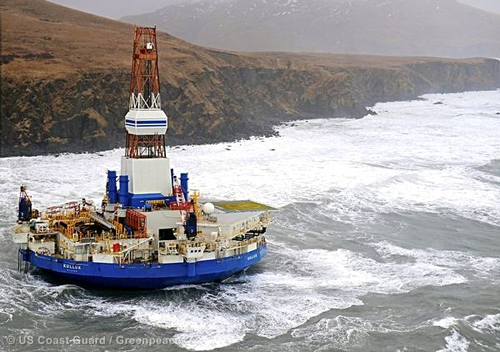
Shell has once again been making the news because of their disastrous attempt to drilling for oil in the Arctic.
According to Open Secrets, congressional Democrats called for an investigation into the company’s operations in the area by the Interior Department and the Coast Guard. One investigation, by federal, state and company representatives, is already under way.
Shell has fought long and hard to drill in the Arctic, and its lobbying records show it. In 2011, when the company was getting its final regulatory green lights for the operations, it spent $14.8 million making its case in Washington, a steady and substantial increase from the $3.1 million it spent in 2007. In the first three-quarters of 2012, it laid out nearly $10.9 million for lobbying.
Unlike many companies, Shell hasn’t focused just on the House and Senate: the White House, the Departments of Commerce, Interior, Treasury, State, the Environmental Protection Agency and the Coast Guard are among those on which Shell has lavished its attentions.
In a recent article by Greenpeace, the environmental group documents numerous reasons why Shell’s attempts to drill for oil in the Arctic would be devastating for the ecosystem there. The article documents several incidents that have occurred already, prior to the current attention to the offshore drilling platform problems.
Open Secrets adds:
All of that could mean even higher lobbying expenditures by the company. Shell isn’t persona non grata in Washington the way BP was after the 2010 Gulf of Mexico blowout or Exxon after the Valdez spill in 1989 — at least not yet. But environmentalists and other critics of Arctic drilling warn that the company’s current problems show it’s likely just a matter of time before more severe occurrences.
Snyder continues to stack Ag commission with agribusiness people
Yesterday, MLive reported that Michigan Governor Rick Snyder appointed a new member to the Michigan Commission of Agriculture and Rural Development.
Fred Walcott, who works for Valley View Pork near Allendale, is the newest of the five-member commission, that is exclusively made up of people who work for large agribusiness operations.
Walcott, who works at a 4,000 acre farm, will serve as commissioner along with Bob Kennedy, who is Vice President of Operations for Auburn Bean and Grain. The website for this business reads like a stock market sheet instead of a place where people respect the land and care for the earth.
Also serving on the Ag Commission is Diane Hansen, owner of Hansen Seed Farm and Donald Coe, the managing partner of Black Star Farms. Based on the information at Black Star Farms, it appears to be more of a tourist destination than a farm.
The fifth member of the Michigan Agriculture Commission is Trever Meachum, who is the production manager for High Acres Fruit Farm, a 3,000 acre farm in Van Buren County.
Adding Walcott demonstrates that the Governor is only interested in having the perspectives of people involved in large agribusiness operations. There is no one on the commission that seems committed to organic and sustainable farming practices, or people who are committed to promoting food justice.
Walcott is also part of the Michigan Pork Producers Association, which represents the interests of large factory farming operations, also known as CAFOs, in Michigan.
More importantly, groups like the Michigan Pork Producers Association and the industry groups represented by those on the ag commission, are also actively involved in federal farm policy issues and are engaged in lobbying efforts to continue the massive taxpayer subsidies currently operating through the Federal Farm Bill.
According to the Environmental Working Group, Michigan Farmers received $79,450,000 in federal subsidies for 2011. Looking at the list of farms that did receive massive subsidies, the majority of them are larger agribusiness operations and not smaller farms engaged in Community Supported Agriculture.
This announcement, coming from Snyder, is another blow to those who are part of the local food movement and those who work for food justice.
Oppose Labor Rights to Blunt ‘Pro-Abortion and Pro-Homosexual Activism,’ says Ohio-based Religious Commentator
This article by Brian Tashman is re-posted from Right Wing Watch. Editor’s Note: We re-posted this story in light of the Right to Work law that now exists in Michigan and to point out that pro-Right to Work families like the DeVos family are also anti-LGBT. This seems to be a pattern of groups that push for RTW laws across the country.
Mission America head Linda Harvey encouraged Ohio Republicans to push anti-union right-to-work legislation on her radio bulletin today, and like always linked it back to her zealous anti-gay activism. Harvey maintained that Religious Right supporters should rally behind so-called right-to-work efforts because “unions support all aspects of pro-abortion and pro-homosexual activism and have no problem truly with students opting for these life-altering practices” and promote “politically correct agendas.” She went on to falsely assert that without such laws workers are forced to join labor unions and also made the discredited claim that unions can compel non-members to pay for political activities.
Harvey said:
Now you might be thinking, why does Mission America care? Here’s why: the leftists in this country and all their destructive anti-family policies have been propped up by the funding of both private and public employee unions. You may have heard me talk about teachers unions like the National Education Association or here in Ohio, the Ohio Education Association. The NEA and OEA are largely responsible for the left-wing tilt of our public schools and the politically correct agendas that now dominate school room lessons. These unions support all aspects of pro-abortion and pro-homosexual activism and have no problem truly with students opting for these life-altering practices. Actively opposing more traditional viewpoints, the teachers unions generously support Democrats running for President and Congress while contributing very little to Republican or more conservative candidates. So if we want to get our country back a good place to start is where the left is getting its money, and it’s often from labor union members who had no choice to contribute to that candidate or issue.
New Tree Blockade Halts Construction of the Keystone XL Pipeline
This article is re-posted from EcoWatch.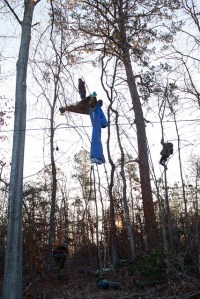
Late last night, blockaders set up two “dump platforms” in trees outside of Diboll, Texas which would otherwise be cleared to make way for TransCanada’s Keystone XL toxic tar sands pipeline. These special “dump platforms” are shielded by an unprecedented 80-100 foot perimeter of life-lines arranged, which if disturbed would certainly dump the two blockaders nested in them roughly 50-60 feet in the air. The blockaders are sitting in soldarity with the now global Idle No More campaign for First Nation’s human rights and tribal sovereignty that very recently started in Canada.
This new tree blockade comes just a couple weeks after the end of Tar Sands Blockade’s 85-day tree-sit near Winnsboro, TX. TransCanada rerouted the tar sands pipeline to go around the Winnsboro tree-sit, despite having told countless landowners, including Douglass resident Mike Bishop, that the route was set in stone and could not be altered to avoid bulldozing their cropland, or to go around schools, neighborhoods or ecologically sensitive areas.
This new site is surrounded by barriers like Highway 59, railroad tracks and Ryan Lake. With these nearby, blockaders have found a location around which the pipe cannot easily be rerouted.
The viability of this blockade depends entirely on the safe conduct of TransCanada and local police forces. They could easily end it by cutting ropes and seriously injuring or killing the tree sitters. Blockaders Audrey and Mike know the risks. They are prepared to stay on their platforms, just big enough to lie down on, indefinitely, to defend their collective home from the expansion of tar sands exploitation that Keystone XL would usher in.
“Protecting the living systems which we’re a part of is a moral necessity,” shared Audrey, who is sitting in a singular tree left in a newly-cleared field. “Extraction of the tar sands is the most destructive project on the continent. It threatens the integrity of the entire biosphere, not to mention the First Nations dependent upon access to clean water, land, and air for the health and food for their tribal communities.”
Mike, the other sitter suspended in a 50 foot skypod between two trees, agreed, “That their plight has been so long ignored by industry and policy-makers is a clear violation of their human rights and a crime of conscience. That’s why we are enthusiastically supporting the Idle No More movement!”
Tar Sands Blockade is a coalition of Texas and Oklahoma landowners and climate justice organizers using peaceful and sustained civil disobedience to stop the construction of TransCanada’s Keystone XL tar sands pipeline.
“Institutional methods of addressing climate change have failed us,” explained Ron Seifert, a Tar Sands Blockade spokesperon. “Rising up to defend our homes against corporate exploitation is our best and only hope to preserve life on this planet. We must normalize and embrace direct, organized resistance to the death machine of industrial extraction and stand with those like Idle No More who take extraordinary risk to defend their families and livelihoods.”
‘Alarmingly High Methane Emissions’ from Natural Gas Extraction
This article by Jeff Tollefson is re-posted from Nature.
Scientists are once again reporting alarmingly high methane emissions from an oil and gas field, underscoring questions about the environmental benefits of the boom in natural-gas production that is transforming the US energy system.
The researchers, who hold joint appointments with the National Oceanic and Atmospheric Administration (NOAA) and the University of Colorado in Boulder, first sparked concern in February 2012 with a study1 suggesting that up to 4% of the methane produced at a field near Denver was escaping into the atmosphere. If methane — a potent greenhouse gas — is leaking from fields across the country at similar rates, it could be offsetting much of the climate benefit of the ongoing shift from coal- to gas-fired plants for electricity generation.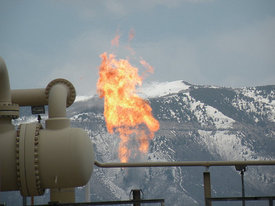
Industry officials and some scientists contested the claim, but at an American Geophysical Union (AGU) meeting in San Francisco, California, last month, the research team reported new Colorado data that support the earlier work, as well as preliminary results from a field study in the Uinta Basin of Utah suggesting even higher rates of methane leakage — an eye-popping 9% of the total production. That figure is nearly double the cumulative loss rates estimated from industry data — which are already higher in Utah than in Colorado.
“We were expecting to see high methane levels, but I don’t think anybody really comprehended the true magnitude of what we would see,” says Colm Sweeney, who led the aerial component of the study as head of the aircraft programme at NOAA’s Earth System Research Laboratory in Boulder.
Whether the high leakage rates claimed in Colorado and Utah are typical across the US natural-gas industry remains unclear. The NOAA data represent a “small snapshot” of a much larger picture that the broader scientific community is now assembling, says Steven Hamburg, chief scientist at the Environmental Defense Fund (EDF) in Boston, Massachusetts.
The NOAA researchers collected their data in February as part of a broader analysis of air pollution in the Uinta Basin, using ground-based equipment and an aircraft to make detailed measurements of various pollutants, including methane concentrations. The researchers used atmospheric modelling to calculate the level of methane emissions required to reach those concentrations, and then compared that with industry data on gas production to obtain the percentage escaping into the atmosphere through venting and leaks.
The results build on those of the earlier Colorado study1in the Denver–Julesburg Basin, led by NOAA scientist Gabrielle Pétron (see Nature 482, 139–140; 2012). That study relied on pollution measurements taken in 2008 on the ground and from a nearby tower, and estimated a leakage rate that was about twice as high as official figures suggested. But the team’s methodology for calculating leakage — based on chemical analysis of the pollutants — remains in dispute. Michael Levi, an energy analyst at the Council on Foreign Relations in New York, published a peer-reviewed comment2 questioning the findings and presenting an alternative interpretation of the data that would align overall leakage rates with previous estimates.
Pétron and her colleagues have a defence of the Colorado study in press3, and at the AGU meeting she discussed a new study of the Denver–Julesburg Basin conducted with scientists at Picarro, a gas-analyser manufacturer based in Santa Clara, California. That study relies on carbon isotopes to differentiate between industrial emissions and methane from cows and feedlots, and the preliminary results line up with their earlier findings.
A great deal rides on getting the number right. A study4 published in April by scientists at the EDF and Princeton University in New Jersey suggests that shifting to natural gas from coal-fired generators has immediate climatic benefits as long as the cumulative leakage rate from natural-gas production is below 3.2%; the benefits accumulate over time and are even larger if the gas plants replace older coal plants. By comparison, the authors note that the latest estimates from the US Environmental Protection Agency (EPA) suggest that 2.4% of total natural-gas production was lost to leakage in 2009.
To see if that number holds up, the NOAA scientists are also taking part in a comprehensive assessment of US natural-gas emissions, conducted by the University of Texas at Austin and the EDF, with various industry partners. The initiative will analyse emissions from the production, gathering, processing, long-distance transmission and local distribution of natural gas, and will gather data on the use of natural gas in the transportation sector. In addition to scouring through industry data, the scientists are collecting field measurements at facilities across the country. The researchers expect to submit the first of these studies for publication by February, and say that the others will be complete within a year.
In April, the EPA issued standards intended to reduce air pollution from hydraulic-fracturing operations — now standard within the oil and gas industry — and advocates say that more can be done, at the state and national levels, to reduce methane emissions. “There are clearly opportunities to reduce leakage,” says Hamburg.

