Obama Endorses Stonewall?
This article by Gary Leupp is re-posted from CounterPunch.
At first I wasn’t sure I had heard right. “…Seneca Falls, and Selma, and Stonewall.”
Does Obama, I wondered, mean that Stonewall? Or is there some battle by that name I’ve never learned about?
It soon became clear, that yes, he was referring to the Stonewall Riots of 1969. “Our journey is not complete until our gay brothers and sisters are treated like everyone else under the law.”
This is significant, I thought. A Reuters report this morning notes that “Obama’s inclusion of gay rights—still opposed by many conservatives—among his list of priorities might have been unthinkably divisive as recently as his first inauguration in 2009.” It would at least have been unthinkably risky for a traditional, centrist politician with an instinctive inclination towards compromise.
But much has changed. Public opinion polls show rising support for gay rights including the right to marry; over the last few years those in support for the latter have become significantly more numerous than opponents. A USA TODAY poll shows 73% of 18 to 29 year olds supporting gay marriage.
Seven states legalized same-sex marriage during Obama’s first term. In July 2011 a federal appeals court effectively ended the military’s “Don’t ask, don’t tell” policy. (Now openly gay people can drop bombs on Waziristan.) The National Cathedral is now performing gay marriages. Nobody bats an eyelash when Anderson Cooper comes out as gay. School bullying of gays has declined. Gay-straight alliances have become mainstream, and the influence of religion-based homophobia is on the wane.
Internationally, six more countries have legalized same-sex marriage in the last several years. In June 2011 the UN Human Rights Council passed, 23 to 19, a resolution condemning violence and discrimination against persons based on their sexual preference. In Europe, social democrats who have sold their souls to austerity programs are trying to bolster their progressive credentials by embracing gay rights. It has become less risky politically; indeed, in some places, it’s become de rigueur.
Obama describes his views on gay marriage as “evolving” and points to the influence of his wife and daughters on his evolving thought. (Joe Biden’s announcement for his own support for gay marriage, which slightly preceded Obama’s statement in favor last June, may have influenced the timing of the latter.) They are evolving to mirror the attitude shift we see throughout society. He has more to gain than lose politically for taking his stand at this point.
Still, the specific reference to Stonewall—to several days of violent anti-police rioting in Greenwich Village—was risky. Wasn’t he endorsing rock-throwing? Hundreds fought back in the wee hours of the morning June 28, 1969, when cops busted into a Mafia-owned gay bar called the Stonewall Inn, announcing “Police! We’re taking the place!” They miscalculated as they tried to force patrons (divided into cross-dressers, whom the police wanted to search and, if found to be male, arrest, other gay men, and lesbians) into separate rooms where they were searched and asked for identification. Many refused to produce IDs or submit to searches; a large crowd amassed, police vehicles were attacked, cops were hit with coins and rocks, garbage cans set ablaze.
This was no Seneca Falls (a peaceful two-day women’s rights convention in New York in 1848) or Selma, Alabama (where non-violent actions in 1965 contributed to the passage of the Voting Rights Act). It was violent resistance. That Obama should feel a need to validate it in such a high profile forum is significant.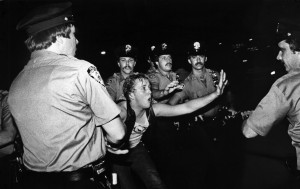
But meanwhile, in many respects, Obama remains a continuation of Bush. As he announced that “a decade of war is now ending,” his drone war killed three more “suspected militants” in Yemen—another statement that the U.S. has the right to target anyone, anywhere suspected of wanting to attack U.S. nationals or the forces of governments that work with the U.S. are fair targets for annihilation at the president’s discretion.
Obama withdrew from Iraq, but in accordance with the agreement signed by the U.S. and the Iraqi regime of al-Maliki at the end of Bush’s second term. He can take no credit for this, other than to note that he didn’t try to undo it very aggressively—although he did, in fact, try to persuade the Iraqis to accept the ongoing presence of thousands of U.S. troops. (They declined.)
Obama not only continued the unwinnable war in Afghanistan, but dramatically escalated it, making it his own. Over 70% of U.S. fatalities in that dozen year-old war have occurred under his administration, while the Taliban continues to resist, while “green-on-blue” attacks proliferate, while U.S. commanders conclude a military over the Taliban is impossible, while intelligence reports confirm that the entire operation is spreading anti-American feeling and hence further jeopardizing U.S. security rather than enhancing it.
In foreign policy Obama has differed from Dubya in several respects. Aside from ordering the “surge” in Afghanistan, he has made drones his weapon of choice, his signature contribution to the global war Bush called the “War on Terror.” His 298 drone strikes in Pakistan have killed between 500 and 800 civilians, infuriated the Pakistani people and destabilized that populous, nuclear-armed nation.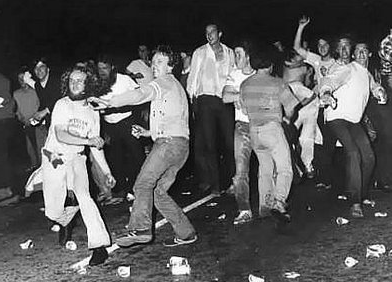
While distancing himself somewhat from the Israeli government, mildly criticizing its illegal settlements policy and declining (so far) to attack Iran on Israel’s behalf, Obama continues to threaten Iran. He continues to encourage the false perception encouraged by the media that Iran has a nuclear weapons program threatening Israel and the world. Following the joint U.S.-NATO operation to topple Qadafy in Libya (producing an even worse regime), he mulls over intervening in Syria, and already orders his air force to deliver French troops to the battlefields of yet another war-of-choice, this time in Mali.
Thus you can be the president of an imperialist country, carrying on as normal, killing from the Af-Pak borderlands to the Sahel, presiding over much evil, and still pose as a cutting-edge advocate of human rights, in this case declaring that “if we are truly created equal, then surely the love we commit to one another must be equal as well.” Powerful words equalizing hetero- and homosexual loves.
But where are the soaring cadences affirming the equal right of the dispossessed Palestinians to the lands appropriated by Zionist settlers? Or the equal right of Iranians to develop nuclear energy under IAEA supervision with the right of the Israelis, who have never signed the NPT and refuse any supervision of their nuclear weapons program, to build power plants?
Where’s the ringing affirmation of the people of Bahrain to topple their oppressive regime (that sponsors the U.S. Fifth Fleet), as the Tunisians, Egyptians and Yemenis toppled theirs? And how is Obama standing up to the Iraqi regime’s assault on gay rights once grudgingly conceded by the secularist Baathist regime? Where the support for the right of marginalized, frightened, oppressed people thousands of miles from Greenwich Village to attack the police having been attacked by them?
Obama selects his causes carefully, politically. It’s good he has, in his own understated way, paid tribute to the Stonewall uprising. I’m sure many thousands are Google-searching that term since the speech, maybe some feeling inspired by what they learn. But as we revisit the Stonewall experience, should we not also recall how the Obama administration arms the police in countries like Saudi Arabia where gays are flogged, lashed or executed? And should we not note that the campaign for gay rights, however important, is no substitute for a campaign to topple U.S. imperialism, the endless source of war?
Sierra Club announces it will engage in civil disobedience……finally
Yesterday, the Sierra Club announced that its board of directors has for the first time in the organization’s 120-year history endorsed the use of civil disobedience.
The announcement read in part: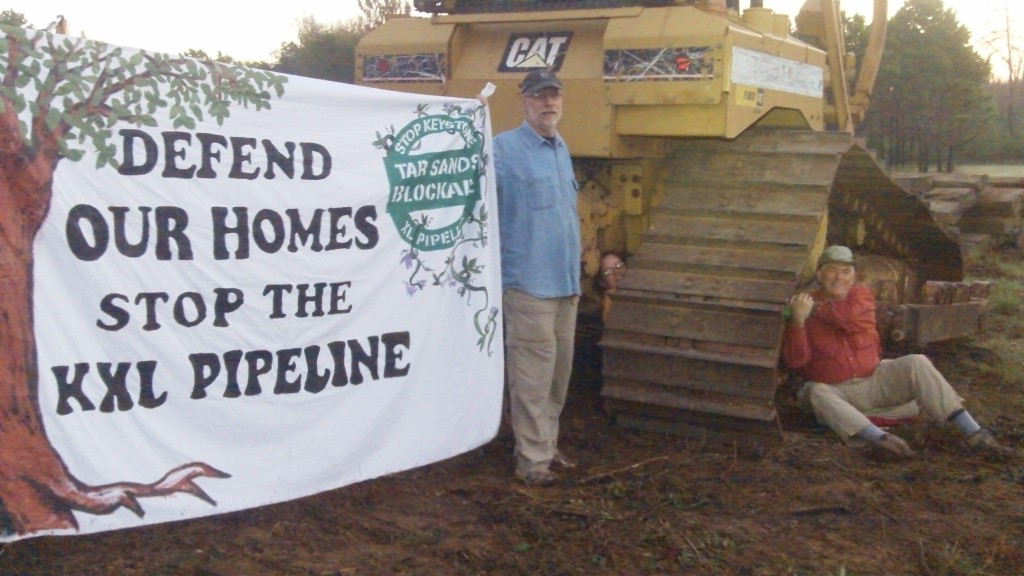
As citizens, for us to give up on stopping runaway global temperatures would be all the more tragic if it happened at the very moment when we are seeing both tremendous growth in clean energy and firsthand evidence of what extreme weather can do. Last year, record heat and drought across the nation wiped out half of our corn crop and 60 percent of our pasturelands. Wildfires in Colorado, Texas, and elsewhere burned nearly nine million acres. And superstorm Sandy brought devastation beyond anyone’s imagining to the Eastern Seaboard.
It is encouraging to see the Sierra Club come to this conclusion and endorse direct action as a necessary tactic to stop the madness of global climate disaster. The announcement also stated:
The Sierra Club has refused to stand by. We’ve worked hard and brought all of our traditional tactics of lobbying, electoral work, litigation, grassroots organizing and public education to bear on this crisis. And we have had great success—stopping more than 170 coal plants from being built, securing the retirement of another 129 existing plants and helping grow a clean energy economy. But time is running out, and there is so much more to do. The stakes are enormous. At this point, we can’t afford to lose a single major battle. That’s why the Sierra Club’s board of directors has for the first time endorsed an act of peaceful civil disobedience.
Let us hope that this announcement leads to large numbers of Sierra Club members willing to put their bodies between the machinery of the oil & gas industry and the ecosystems that cannot afford to be pillaged any longer.
The LGBT Resource Center at GVSU is hosting a screening of an important documentary that explores the intersectionality of today’s most pressing social justice issues.
Angela Davis and Tim Wise, two of this country’s leading racial and social justice scholar-activists, join moderator Rose Aguilar onstage for a rare, unscripted and free ranging conversation on the state of contemporary global politics.
They explore how our culture’s uncritical embrace of pervasive individualism, the myth of meritocracy and entrenched institutional inequality have led to racialized public policy, the privatization of education, health care and the environment, and the commodification of many of our basic needs, including water and food.
Through bold discourse, wit, and an optimism of the will, Angela and Tim call for new vocabularies – a different kind of fluency and a different quality of literacy. With a shared reverence for historical memory and today’s activism, they invoke the power of a new language to restore clarity and to unify global communities.
One comes away from this conversation with a sense of renewed faith in humanity and with the realization that ordinary people can, and do, and will achieve the extraordinary. As Angela notes in her commentary, “as isolated individuals we will always be powerless…but as communities we can achieve anything.”
Vocabulary of Change
Monday, January 28
4:00PM
GVSU Allendale Campus
Kirkhof Center – Pere Marquette Rm
This event is free and open to the public.
Dirty Wars: Jeremy Scahill and Rick Rowley’s New Film Exposes Hidden Truths of Covert U.S. Warfare
This interview is re-posted from Democracy Now!
Premiering this week at the Sundance Film Festival in Utah, the new documentary “Dirty Wars: The World is a Battlefield” follows investigative reporter Jeremy Scahill to Afghanistan, Somalia and Yemen as he chases down the hidden truths behind America’s expanding covert wars. We’re joined by Scahill and the film’s director, Rick Rowley, an independent journalist with Big Noise Films.
“We’re looking right now at a reality that President Obama has essentially extended the very policies that many of his supporters once opposed under President Bush,” says Scahill, author of the bestseller “Blackwater: The Rise of the World’s Most Powerful Mercenary Army” and a forthcoming book named after his film. “One of the things that humbles both of us is that when you arrive in a village in Afghanistan and knock on someone’s door, you’re the first American they’ve seen since the Americans that kicked that door in and killed half their family,” Rowley says. “We promised them that we would do everything we could to make their stories be heard in the U.S. … Finally we’re able to keep those promises.”
40th Anniversary of Roe v Wade: 5 Things I Learned About Abortion by Checking My Assumptions at the Door
This article by Samara Azam-Yu is re-posted from Colorlines.
When it comes to the 40th anniversary of Roe v. Wade, I have this deep, yet complicated sense of gratitude to people who poured their hearts into the issue of making abortion a legal right. It is humbling to think about all the work that came before this moment in the civil rights, social change, and social justice movements.
As a young woman of color and an activist, it can feel like being a tiny, relatively unimportant drop in a formidable tide of change. But one thing makes me certain I must continue to do this work: somehow, women of color, young women, low-income women, immigrant women, and women in rural areas are still waiting while barriers to sexual and reproductive health care, including abortion, continue to trump legal rights and provision of health services, human dignity, and self-determination.
After college, while working on public policy related to reproductive health, I began to see a gap in the way our institutions treat people of color, and believe that I must do something to help change the situation. I volunteered for ACCESS Women’s Health Justice in 2007, providing rides and housing to women traveling long distances because they could not access abortion services in their area. On a very basic level, I volunteered because, were I to need help, I would want someone to be there for me.
I grew up in a conservative area and had internalized some challenging attitudes about abortion, poverty, and the death penalty—attitudes aligned with policy that worked against my (and my family’s) interests. Still, I discovered that I was ready to drop everything for a friend who needed my help. Eventually, I learned to hold this level of compassion for complete strangers, too.
While volunteering, I had the honor of meeting incredible, resilient women who chose to terminate their pregnancies. The most striking part of this experience was when I realized that despite how seemingly different each woman is, we are also all deeply connected by the human experience, and that I needed to check my assumptions at the door.
Here are some things I learned when I began to leave my assumptions behind.
1) Teens often include their parents and have their parents’ support in making decisions.
One of the first young women who came to stay with me was still in high school. She came to the San Francisco Bay Area on a bus with her mom. They didn’t have a suitcase and had to borrow her mom’s boyfriend’s duffle bag and cell phone to make the journey. The mother was exhausted from a long bus ride from the Central Valley, but she really needed someone to talk to about her daughter. The mother also told me that she got pregnant and had her daughter at her daughter’s age. Things had been difficult raising her daughter, and she wanted a better life for her. At least, she wanted her daughter to have the opportunity that she never had—to graduate from high school. It was hard for her to see her daughter pregnant, feeling sick, and vomiting, knowing that this was only the beginning.
2) Real life is not a movie or a story with a neat conclusion.
The same mother and daughter both called me to say they felt relieved and exhausted after the daughter’s pregnancy termination. They had made it all the way home, but someone stole their bags, including the lunches I packed for them, their clothes, their money, and the mother’s boyfriend’s cell phone. The mother and the daughter were moving forward, but the lost phone and bag seemed like it would put a strain on their relationship with the mom’s boyfriend. I quickly learned that helping someone access abortion services is but one moment in their broader lives.
3) Many women who get an abortion already have kids.
When I was pregnant with my daughter, I became worried about continuing to volunteer and putting women in a potentially uncomfortable position being around someone who wanted to keep a pregnancy. But I continued, and one day I picked up a woman in Fresno who was proud of her three kids. She and a friend who came with her (who had two kids of her own) gave me all their tips on what made them feel better from pregnancy to pregnancy. They could see I was pretty freaked out about the prospect of labor and coping with pain. They were brutally honest about what it was like for them and how hard the recovery can be, but helped me to know I would be just fine. They also had a great sense of humor about what the first year could be like, depending on the child, since every kid is so different.
4) Economic and health barriers compound the problem of access for pregnant women seeking abortion services.
Low-income women and women of color are more likely to experience diabetes, heart disease, asthma, and obesity, all of which may contribute to difficult pregnancies and high health care costs. Furthermore, these women may struggle to access abortion services in their area and must often travel long, expensive distances to find a provider and receive care. For example, I worked with a woman in West Oakland who worked in a salon. The salon only paid her commissions, which meant she earned around $8.00/week—not per hour, per week. She had two adorable children that she struggled to support and was pregnant with a third. She wanted an abortion, but was unable to have one nearby because she had diabetes. The closest place she could go was San Francisco, but she had never been on BART before in her life. Despite its close proximity, San Francisco may as well have been a world away.
5) Terminating a pregnancy is not the only pressing medical issue a woman is dealing with.
A woman and her husband came to stay with me, and in the middle of the night they came to wake me up. I thought maybe there was a complication and I was getting ready to take her to the hospital. But then her husband let me know that she was in an enormous amount of pain from her teeth. Since she was laid off from her job and he had limited work doing construction, they couldn’t afford insurance. She was in excruciating pain, but was unable to see a dentist.
What I’ve learned and experienced has been a gift in my life. But I’m still overwhelmed by the thought that women are forced to make tough health care decisions for themselves and their families without adequate supports and services. This is simply unacceptable.
I am now the Executive Director of ACCESS. When I think of the anniversary of Roe v. Wade, it strikes me that ACCESS is receiving an increasing number of calls from women in California who face tremendous barriers in accessing all reproductive health care—not just abortion. Persistent social inequity is at the root of my mixed feelings around this anniversary, and it is why I am honored to continue working for reproductive justice for all people.
The Extremist Cult of Capitalism
This article by Paul Buchheit is re-posted from Common Dreams.
A ‘cult,’ according to Merriam-Webster, can be defined as “Great devotion to a person, idea, object, movement, or work..(and)..a usually small group of people characterized by such devotion.”
Capitalism has been defined by adherents and detractors: Milton Friedman said, “The problem of social organization is how to set up an arrangement under which greed will do the least harm, capitalism is that kind of a system.” John Maynard Keynes said, “Capitalism is the astounding belief that the most wickedest of men will do the most wickedest of things for the greatest good of everyone.”
Perhaps it’s best to turn to someone who actually practiced the art: “Capitalism is the legitimate racket of the ruling class.” Al Capone said that.
Capitalism is a cult. It is devoted to the ideals of privatization over the common good, profit over social needs, and control by a small group of people who defy the public’s will. The tenets of the cult lead to extremes rather than to compromise. Examples are not hard to find.

Extremes of Income
By sitting on their growing investments, the richest five Americans made almost $7 billion each in one year. That’s $3,500,000.00 per hour. The minimum wage for tipped workers is $2.13 per hour.
Our unregulated capitalist financial system allows a few well-positioned individuals to divert billions of dollars from the needs of society. If the 400 richest Americans lumped together their investment profits from last year, the total would pay in-state tuition and fees for EVERY college student in the United States.
Extremes of Wealth
The combined net worth of the world’s 250 richest individuals is more than the total annual living expenses of almost half the world – three billion people.
Within our own borders the disparity is no less shocking. For every one dollar of assets owned by a single black or Hispanic woman, a member of the Forbes 400 has over forty million dollars. That’s equivalent to a can of soup versus a mansion, a yacht, and a private jet. Most of the Forbes 400 wealth has accrued from nonproductive capital gains. It’s little wonder that with the exception of Russia, Ukraine, and Lebanon, the U.S. has the highest degree of wealth inequality in the world.
Extremes of Debt
Up until the 1970s U.S. households had virtually no debt. Now the total is $13 trillion, which averages out to $100,000 per American family.
Debt appears to be the only recourse for 21- to 35-year-olds, who have lost, on average, 68% of their median net worth since 1984, leaving each of them about $4,000.
Extremes of Health Care
A butler in black vest and tie passed the atrium waterfall and entered the $2,400 suite, where the linens were provided by the high-end bedding designer Frette of Italy and the bathroom glimmered with polished marble. Inside a senior financial executive awaited his ‘concierge’ doctor for private treatment.
He was waiting in the penthouse suite of the New York Presbyterian Hospital.
On the streets outside were some of the 26,000 Americans who will die this year because they are without health care. In 2010, 50 million Americans had no health insurance coverage.
Extremes of Justice
William James Rummel stole $80 with a credit card, then passed a bad check for $24, then refused to return $120 for a repair job gone bad. He got life in prison. Christopher Williams is facing over 80 years in prison for selling medical marijuana in Montana, a state which allows medical marijuana. Patricia Spottedcrow got 12 years for a $31 marijuana sale, and has seen her children only twice in the past two years. Numerous elderly Americans are in prison for life for non-violent marijuana offenses.
Banking giant HSBC, whose mission statement urges employees “to act with courageous integrity” in all they do, was described by a U.S. Senate report as having “exposed the U.S. financial system to ‘a wide array of money laundering, drug trafficking, and terrorist financing'” in their dealings with Mexico’s Sinaloa cartel, which is considered the deadliest drug gang in the world.
HSBC received a fine equivalent to four weeks’ profits. The bank’s CEO said, “we are profoundly sorry.”
In the words of Bertrand Russell, “Advocates of capitalism are very apt to appeal to the sacred principles of liberty, which are embodied in one maxim: The fortunate must not be restrained in the exercise of tyranny over the unfortunate.”
Accurate to the extreme.
ExxonMobil Donates $260,000 to Obama Inauguration
This article by Steve Horn is re-posted from DeSmogBlog.
President Barack Obama will be publicly sworn in today—on Martin Luther King Jr. Day—to serve his second term as the 44th President of the U.S.
Today is also the three-year anniversary of Citizens United v. FEC, a U.S. Supreme Court ruling that—in a 5-4 decision—deemed that corporations are “people” under the law. Former U.S. Sen. Russ Feingold (D-WI)—who now runs Progressives United (a rhetorical spin-off of Citizens United)—said in Feb. 2012 that the decision “opened floodgates of corruption” in the U.S. political system.
Unlike for his first Inauguration, Obama has chosen to allow unlimited corporate contributions to fill the fund-raising coffers of the entity legally known as the Presidential Inaugural Committee. Last time around the block, Obama refused corporate contributions for the Inauguration Ceremony as “a commitment to change business as usual in Washington.”
But not this time. With a fundraising goal of $50 million in its sights, the Obama Administration has “opened floodgates” itself for corporate influence-peddling at the 57th Inaugural Ceremony.
A case in point: the Obama Administration’s corporate backers for the Inaurguation have spent more than $283 million on lobbying since 2009, the Center for Public Integrity explained in a recent report.
“It’s a deeply disturbing move, and a reversal from the positive steps they took in 2009,” Robert Weissman, president of Public Citizen told Roll Call. “Corporations make donations to events like the inaugural festivities because they get something back in return.”
One of the biggest givers so far is none other than what Pulitzer Prize winning investigative journalist Steve Coll calls a “Private Empire“—ExxonMobil.
ExxonMobil: More than $260,000 to Obama’s Inauguration Committee
According to a scoop by The Hill, ExxonMobil contributed $250,000 to the Inaugural Committee. Additionally, ExxonMobil attorney Judith Batty has given the Committee $10,750, according to the Center for Responsive Politics. Thus, ExxonMobil has given the Committee a grand total of more than $260,000.
ExxonMobil earned a profit of $41.1 billion in 2011 and in the first three quarters of 2012 earned a profit of $34.92 billion, well on pace to surpass its 2011 profit margin.
Some mathematical context is warranted. This means ExxonMobil earned $9,935 per minute in the first three quarters of 2012, $596,107 per hour and $14.3 million per day in profits.
Despite these oligarchic-type bottom lines, ExxonMobil doesn’t even pay its fair share in taxes, as ThinkProgress explained in a March 2012 article:
Citizens for Tax Justice reported Exxon paid only 17.6 percent taxes in 2010, lower than the average American, and a Reuters analysis using the same criteria estimates that Exxon will pay only 13 percent in effective taxes for 2011. Exxon paid zero taxes to the federal government in 2009.
In practice, this means that ExxonMobil actually pays less in taxes by percentage than an average Middle Class American family.
For a corporation with financial wealth of this magnitude and one that, to boot, evades paying taxes, $260,000 is truly a “drop in the bucket.” And yet in a political system favoring those who can “pay to play,” it’s a true game-changer in terms of gaining direct access to the Administration.
Obama Administration Responds … Sort Of
Critics say it’s more of the same out of an Obama Administration that in the first term had a cozy relationship with corporate patrons.
“It fits into a pattern of not treating this campaign-finance issue with concern when in fact it is of great concern to the integrity of the political process and our democratic system,” Fred Wertheimer, president of Democracy 21, told The Hill.
The Obama team’s response? According to them, they are champions of campaign-finance reform and anti-corruption measures.
“This president has done more to reduce the influence of special interests in Washington than any administration in history,” White House spokesman Eric Schultz told The Hill.
It looks as if Oil Change International has hit the nail on the head in framing this one, asking and answering the following question with an accompanying graphic co-created with The Other 98%:
Martin Luther King Jr and the State of the Dream 2013
“A nation that continues year after year to spend more money on military defense than on programs of social uplift is approaching spiritual death.”
Dr. Martin Luther King Jr. – Beyond Vietnam Speech

In his speech, Beyond Vietnam, Dr. King identified three aspects of American society that he named the Evil Triplets…………Racism, Militarism and Consumerism.
King identified these three themes as the major forms of institutionalized violence and oppression of his generation. Such an analysis by Dr. King reflected a maturation from the person who participated in the Montgomery Bus Boycotts and gave the “I Have a Dream Speech” in 1963.
For King, racial equality was no longer just about the right to vote, to use the same bathroom as Whites or to sit at the same lunch counter. King had moved beyond desegregation to racial justice, but he also understood that racial justice was not possible without economic justice. As King would say, “What good is it for us to sit at the lunch counter, if I can’t afford to buy the hamburger.”
In his Beyond Vietnam speech, King then sees the connection of racial and economic justice as tied to the demand for peace and an end to militarism. King called out the US government’s military spending in Vietnam and made it clear that this was a gross injustice, especially when so many communities of color were living in abject poverty.
The Evil Triplets in 2013
If we are serious about honoring the message and legacy of Dr. Martin Luther King Jr., then we cannot be content with just seeing more Black and Brown faces in positions of power. King made it clear at the end of his life that we have to change the systems of oppression.
In his Beyond Vietnam speech he states:
A true revolution of values will soon cause us to question the fairness and justice of many of our past and present policies. On the one hand, we are called to play the Good Samaritan on life’s roadside, but that will be only an initial act. One day we must come to see that the whole Jericho Road must be transformed so that men and women will not be constantly beaten and robbed as they make their journey on life’s highway. True compassion is more than flinging a coin to a beggar. It comes to see that an edifice, which produces beggars, needs restructuring.
If MLK were alive today, what might he say about the condition of this country, particularly as it related to the Evil Triplets?
Over the last decade, the organization United for a Fair Economy has been publishing an annual report called the State of the Dream. The title for the 2013 edition of the State of the Dream is, A Long Way Home: Housing, Asset Policy and the Racial Wealth Divide.
The report is highly critical of where we are as a nation today, particularly along the divide of race and class. Here is a summary of findings from the report:
- The average, or mean, net worth of White families is more than six times higher than the average net worth of Black families, and 5.7 times greater than the average net worth of Latino families.
- Black and Latino families faced a shocking loss of wealth during the Great Recession. Between 2007 and 2010, the average net wealth of White families decreased by 6.7 percent. By comparison, Black families lost 27.1% of their average net wealth and Latino families lost 41.3 percent.
- Black and Latino families came out of the Great Recession much more highly leveraged (holding more debt relative to their net assets) than White families. White families on average have a debt burden equal to just 17% of their net worth, while Black and Latino families owe 53% and 58%, respectively.
Such economic disparities are a reflection of the institutionalized racism that exits in America. These economic indicators, however, are not just because of institutionalized racism, but also include the other two evil triplets – consumerism and militarism.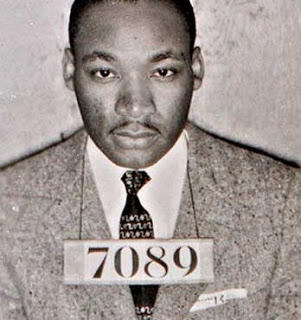
When King used the term consumerism in his Beyond Vietnam speech, he was really calling out our economic system, which he condemned as giving more worth to things than people. In other speeches, King mad it clear that he had a strong contempt for Capitalism.
We are now making demands that will cost the nation something. You can’t talk about solving the economic problem of the Negro without talking about billions of dollars. You can’t talk about ending slums without first saying profit must be taken out of slums. You’re really tampering and getting on dangerous ground because you are messing with folk then. You are messing with the captains of industry….Now this means that we are treading in difficult waters, because it really means that we are saying that something is wrong…with capitalism…there must be a better distribution of wealth and maybe America must move toward a Democratic Socialism.
In addition to the economic system, King named militarism as the other evil triplet. Again, in his Beyond Vietnam speech, “I knew that America would never invest the necessary funds or energies in rehabilitation of its poor so long as adventures like Vietnam continued to draw men and skills and money like some demonic destructive suction tube.”
The funding that could alleviate poverty is spent on war and militarism by the US even more so today. The cost of the US wars in Iraq and Afghanistan are roughly $1.5 Trillion, according to the National Priorities Project. Add to that the cost of recent wars in Libya, Yemen, Syria, the campaign against Iran, the thousands of US military bases abroad and the military weaponry this country provides around the world. All of this is an astounding amount of wealth that is taken from the poor and the oppressed.
The cost of the Evil Triplets is overwhelming.
If we applied King’s analysis to Kent County alone, it would be clear that institutionalized racism and economic oppression are apparent in this community as well.
The rates of poverty are higher in Black and Latino communities, income rates are lower, unemployment and underemployment are higher, funding for education is less and the number of Blacks and Latinos in the Prison Industrial Complex in Kent County is a higher percentage than the populations for both of those groups in this county.
My question to you is, if the speakers at the varying MLK events don’t address these aspects of King’s message (and they likely won’t), will you?
“A time has come when silence is betrayal.” Dr. King
Don’t You Dare Conflate MLK and Obama
This article by Glen Ford is re-posted from Black Agenda Report.
Back in 1964, under prodding from a BBC interviewer, Dr. Martin Luther King Jr. predicted that a Black person might be elected president “in 25 years or less.” Four years later, shortly before his assassination, King confided to actor/activist Harry Belafonte that he had “come to believe we’re integrating into a burning house.” We now see that the two notions are not at all contradictory. At least some African Americans have achieved deep penetration of the very pinnacles of white power structures – integrating the White House, itself – while conditions of life for masses of Black folks deteriorate and the society as a whole falls into deep decay.
The fires lit by the “giant triplets of racism, extreme materialism, and militarism” that Dr. King identified in his 1967 “Beyond Vietnam: Breaking the Silence” speech are consuming the world, now stoked by a Black arsonist-in-chief. Domestic poverty hovers only a fraction of a percentage below the levels of 1965, with “extreme poverty” the highest on record. Black household wealth has collapsed to one-twentieth that of whites. Today, more Black men are under the control of the criminal justice system than were slaves in the decade before the Civil War, according to Michelle Alexander, author of The New Jim Crow.
The intervening years have shown that Dr. King’s 1960s visions were not in conflict: the rooms at the top floors of the national house may have been integrated, but the building still burns.
The deepening crisis of capitalism, the triumph of Wall Street finance over industrial capital, the increasing imperial reversion to international lawlessness in a desperate bid to maintain global supremacy – all this was predictable under the laws of political economy. Had the assassin’s bullet not found him, Dr. King would have continued his implacable resistance to these unfolding evils, rejecting Barack Obama’s invasions, drones and Kill Lists with the same moral fervor and political courage that he broke with Lyndon Johnson over the Vietnam War. Absolutely nothing in King’s life and work indicates otherwise.
One school of thought holds that corporate servants like Obama could not have taken root in Black America if Dr. King, Malcolm X and a whole cadre of slain and imprisoned leaders of the Sixties had not been replaced by opportunistic representatives of a grasping Black acquisitive class. In any event, had King survived, his break with Obama would have come early. Surely, the Dr. King who, in his 1967 “Where Do We Go from Here” speech called for a guaranteed annual income would never have abided Obama’s targeting of Social Security, Medicare and Medicaid in the weeks before his 2009 inauguration. Forty-five years ago, King’s position was clear: “Our emphasis must be twofold: We must create full employment, or we must create incomes.” The very notion of a grand austerity bargain with the Right would have been anathema to MLK.
Were Martin alive, he would skewer the putative leftists and their “lesser evil” rationales for backing the corporatist, warmongering Obama. As both a theologian and a “revolutionary democrat,” as Temple University’s Prof. Anthony Monteiro has described him, MLK had no problem calling evil by its name – and in explicate triplicate. His militant approach to non-violent direct action required him to confront the underlying contradictions of society through the methodical application of creative tension. He would make Wall Street scream, and attempt to render the nation ungovernable under the dictatorship of the Lords of Capital. And he would deliver a withering condemnation of the base corruption and self-serving that saturates the Black Misleadership Class.
He would spend his birthday preparing a massive, disruptive action at the Inauguration.
Making Green A Threat Again
This article by Scott Parkin is re-posted from CounterPunch.
“The climate movement needs to have one hell of a comeback.” –Naomi Klein
The energy was there. It was an overcast spring morning in April 2011 in the nation’s capita1. Thousands had shown up to take action on climate change. The earlier march led us to the Chamber of Commerce, BP’s Washington D.C. offices, the American Petroleum Institute and other office buildings associated with oil spills, coal mining, carbon emissions and more. We heard speakers. We saw street theater. It was all very tame and managed. It lacked confrontation.
It was almost a year to the day after the Gulf oil spill, yet offshore drilling continued as usual with little consequence for oil giant British Petroleum. Out west, the Obama administration had just opened up thousands of acres for coal mining in the Powder River Basin. Appalachia’s mountains were still under attack by the coal industry. Natural gas extraction, also known as “fracking,” was spreading like an epidemic through the countryside.
Over 15,000 youth, students and climate activists had gathered at Powershift for weekend of education, networking and keynote speakers. There were keynote speeches by Al Gore and Bill McKibben, yet little was offered in the way of taking action against Big Oil and Big Coal. We are faced with the greatest crisis in the history of the world, so we were told, yet the Beltway green groups had only produced failure in Copenhagen and Washington.
Globally, we had watched the Arab Spring throw out dictators; anti-austerity movements in Iceland and Greece rise up against corrupted regimes and massive protests in the Wisconsin state house fighting for labor rights. We were only a few months away from Occupy Wall Street.
Needless to say, the North American climate movements wanted in on the action.
As the morning march ended that day at Lafayette Park, the unofficial march, spearheaded by Rising Tide North America, formed and headed into the streets of Washington D.C. Tim DeChristopher of Salt Lake City, who had become something of a folk hero to climate activists after derailing a federal land auction and protecting thousands of acres of southern Utah wilderness, announced on the microphone that it was time for more drastic action. Anyone that wanted to take that step should join the Rising Tide march that was heading down 17th St NW to the Dept. of Interior.
The crowd quickly swelled to over a thousand, both singing “We Shall Overcome” and chanting “Keep It in the Ground” and “Our Climate is Under Attack, What’ll We Do? Act Up, Fight Back!”
As we approached the Dept. of Interior, the small group of twenty that had been pre-organized to occupy the lobby began to more towards the doors. Then to much our surprise and shock, a crowd of over 300 stormed in after them and joined the sit-in. As they sat in, they chanted “We’ve got power! We’ve got power!” It was scary. It was exhilarating. It was powerful.
Direct action is supposed to push a person’s comfort zone, but even veteran direct action organizers felt their comfort zones pushed when many in the march joined the occupation.
In the end, 21 were arrested as part of the sit-in. The Dept. of Interior action began a shift for the youth and grassroots activists with the North American climate movements. Soon, they would become a force to be reckoned with.
Corporations and Politicians Stall, Nature Doesn’t
The clock is ticking and the science is not just a theory, its science. Yet, corporate and political decision-makers continue to ignore these warnings for short term profit.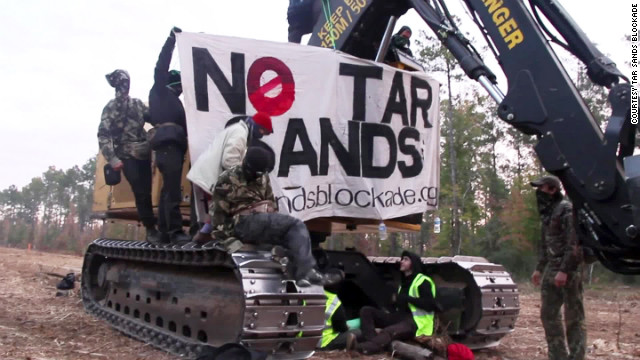
A new scientific report put out by the United Nations on the second day of the 18th Conference of the Parties to the UNFCCC (COP18) in Doha this week reports that thawing of the Arctic permafrost will “significantly amplify global warming.” Permafrost emission spurred by rising global temperature will contribute up to 39% of global emissions. On the third day of COP18 negotiations, the World Meteorological Organization warned the delegates that the Arctic ice melt had reached an alarming rate and that “far-reaching changes” would from climate change would impact the Earth.
Despite these dire warnings from the scientific community, wealthy industrialized nations continue to stall any sort of climate progress in Doha. The top topic at COP18 has been an extension of the Kyoto Protocol –up for renewal this year—to 2020. The Associated Press reports, a number of wealthy nations including Japan, Russia and Canada have joined the ranks of the U.S. and “refused to endorse the extension.” The U.S. has never endorsed Kyoto and continues to block any progress on agreements to reduce global emissions or pass legislation to regulate its own emissions.
Not surprisingly, the fossil fuel holds a chokehold on the American political system. In 2012, oil and gas industries combined with Big Coal to spend over $150 million elections to both parties.
U.S. deputy climate envoy Jonathan Pershing told the media in Doha that the Obama administration plans to stick to its 2009 goal of reducing emissions by 17% by 2020. Pershing went on to say that U.S. efforts to curb emissions are “enormous.”
Yet, Obama recently signed into law a bipartisan bill to shield the U.S. airline industry from a European Union carbon tax. Furthermore, Obama’s top candidate to replace Hillary Clinton at the State Dept., UN Ambassador Susan Rice, has been revealed to be a major investor in companies developing Canadian tar sands and building the Keystone XL pipeline.
While the politicians in Doha and Washington stall, Mother Nature has thoughts of her own. Global warming is no longer an abstract notion. Rising temperatures and extreme weather are spreading at unprecedented levels. 11 of the past 12 years are among the hottest since 1850. This summer in Colorado, wildfires brought on by scorching heat, high winds and drought conditions killed four people, displaced thousands and destroyed hundreds of homes.
In late Oct., Hurricane Sandy battered the Atlantic seaboard from the Caribbean to New England. It took over 100 lives and cost tens of billions of dollars in damage. Millions were displaced while politicians scrambled for photo ops and New York Mayor Michael Bloomberg’s finance network declared “It’s Global Warming, Stupid.”
Harnessing Rebel Energy
Presented with these stark facts, it begs the question: Why haven’t governments and corporations been forced to act on climate change?
To begin with, the mainstream strategy, which controls large portions of resources to fight climate change, is too rooted in working within the existing political and economic system. In 2009, the environmental establishment comprised of small grouping of donors and environmental non-profits primarily based in Washington D.C. (aka the Beltway Greens) placed its faith in the Obama administration. They hoped that his ability to regulate emissions through the Environmental Protection Agency, combined with lobbing Congress to pass meaningful climate legislation in 2010 and pressuring world governments to secure a unilateral agreement on climate at the 15th Conference of the Parties to the UNFCCC (COP15) in Copenhagen would turn the tide on global emissions. These strategies are fraught with compromise on a global crisis that pays no heed to politics as usual.
Second, the environmental establishment was completely unprepared for the power that Corporate America, particularly Big Oil and Big Coal, wielded in Washington D.C. In 2009, oil and gas companies spent $121 million to dispatch 745 lobbyists to Congress in 2009 to influence the climate bill. Before the 2010 election, Big Oil put $19,588,091 into the U.S. election cycle. Big Coal put in $10,423,347. The Beltway Greens were outgunned, outspent and outmatched.
Finally, turning the tide on the most powerful industry in history requires more than lobbyists and policy people. It requires rebel energy fueling people power and non-violent direct action. In the 1970’s when activists were doing battle to end the war in Vietnam and stop the proliferation of nuclear power, author and activist George Lakey wrote in the pamphlet “The Sword that Heals:”
“You can’t pull off powerful nonviolent direct action without rebel energy. You’ve run this campaign as a conventional lobbying operation and you can’t — at the last minute — switch gears and become a nonviolent protest movement!”
Political parties and non-profits did not drive the uprisings in Egypt, Tunisia or Iceland; it was People Power that had been organized for decades. In Egypt, the established opposition groups only joined in after the masses took over the streets in Cairo, Alexandria and Suez calling for President Hosni Mubarak’s ouster. In North America, Corporate America, the political establishment and the media has convinced us that national politicians and well paid non-profit staff are the change agents we’ve been waiting for. Thus far, they’ve only delivered epic failures in Copenhagen and Washington D.C. We mustn’t let the priorities of big well-resourced institutions trump planetary or community survival.
The momentum to stop climate change is going to come from the rebel energy that challenges not only the established order, but the established opposition as well.
Know Your History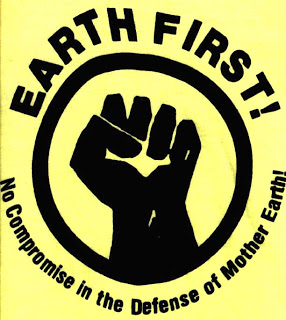
As daunting as it sounds, climate rebels wouldn’t be re-inventing the environmental movement’s wheel in building a grassroots mass climate movement. Far from it, in fact, greens have threatened corporate power with non-violent direct action and people power for decades.
During the 1970’s and early 1980’s, emerging from the anti-war and burgeoning environmental movement, the anti-nuclear, or “No Nukes,” movement rose up to challenge the Nixon administration’s plant to build 100 new nuclear power plants by the year 2000. In 1976 and 1977, thousands with the Clamshell Alliance used non-violent direct action to occupy the site of a proposed nuclear plant in Seabook, NH. Similar mass actions followed Seabrook. The Three Mile Island disaster was a watershed event that by the early 1980’s put millions into the streets against U.S. nuclear power. While Seabrook and few other plants were built, the vast majority of plants proposed remain halted.
Similarly, in the early 1980’s, a group of disgruntled redneck tree-huggers fed up with constant compromise on wilderness protection in western states by the Beltway Greens formed the radical ecological movement known as “Earth First!” Their politics of “No Compromise in Defense of Mother Earth” manifested into the direct action tactics of road blockades and tree-sits that strengthened and emboldened the environmental movement. Their campaigns and tactics targeted corporate logging and development companies, but also created much needed political space for grassroots activists on environmental issues
Former Sierra Club director and Friends of the Earth founder David Brower remarked “I thank God for the arrival of Earth First!, they make me look moderate.”
A third movement that challenged corporate power for the betterment of the environment was the global justice movement. This grassroots street wing of anti-austerity, human rights and environmental movements emerged from the World Trade Organization (WTO) protests in Seattle in 1999. Rooted in direct action, direct democracy and anti-capitalism of movements both in the U.S. and abroad, the global justice movement undermined global trade talks set to privatize labor, environmental and human rights protections across the globe.
In the laboratory of resistance we call “social change,” the “No Nukes” movement, Earth First! and the global justice movement all had at least one strategy that set them apart from the establishment: they did their most important work out of Washington D.C. The anti-nuclear movement didn’t organize their massive rallies in Washington until they had built power on the highways and byways of the country. Likewise Earth First! and the organizers coming out of the WTO protests rejected Beltway politics as usual to build and embolden their own anti-establishment movements.
Hope & Climate Change
Fortunately, the rebel energy is alive and well in today’s climate movement. Outside of Washington D.C., grassroots activists, direct action organizers, smaller environmental, faith-based and student groups, rank and file Sierra Club members and environmental and climate justice groups have mobilized a very different climate movement from the air conditioned offices of the Beltway Greens.
Climate activists, the youth climate movement in particular, are fed up and hungry to make some real change and take real action. Just this summer, numerous actions from a mass civil disobedience in West Virginia at the Hobet Mine to a week of civil disobediences opposing the western coal exports in the Montana state capitol to community-led direct actions against fracking in New York, Ohio and Pennsylvania have created space for groups to make meaningful progress both on their issues and internally within the movement. While this work has been complimentary and cumulative, it’s not always necessarily collaborative, nor should it be.
The fight over tar sands development and the Keystone XL pipeline has galvanized climate activists of all ages. Over the past year, we have witnessed people from the Lakota nation in South Dakota and from Moscow, Idaho putting their bodies in roads and highways blocking large transport trucks carrying oil refining equipment to develop further tar sands extraction.
In Texas a young marine veteran named Ben Kessler returned from the war in Afghanistan to witness oil and gas companies ravaging North and East Texas with fracking and the southern leg of the Keystone XL pipeline. He got involved in environmental and climate organizing, and with friends, formed a student environmental group at the University of North Texas. In April 2011, some of them attended Powershift in Washington D.C. At the Dept. of Interior, Kessler took his first civil disobedience arrest. But more importantly the group went back to Denton, TX and transformed their group into an anchor for a grassroots direct action campaign called the Tar Sands Blockade. The Tar Sands Blockade joined with Texas landowners to form the Tar Sands Blockade which has organized dozens of actions and a two month old tree blockade to stop the construction of the southern leg of the Keystone XL pipeline.
People are hungry for climate action that does more than asks you to send emails to your climate denying congressperson or update your Facebook status with some clever message about fossil fuels. Now, a new anti-establishment movement has broken with Washington’s embedded elites and has energized a new generation to stand in front of the bulldozers and coal trucks and, in the words of Naomi Klein to make “one hell of a comeback.”

