Obama’s Lawless, Secretive Drone War Continues Over Pakistan
This article by John Queally is re-posted from Common Dreams.
While domestic issues dominate the headlines in the US, a clandestine war in the tribal regions of Pakistan continued apace Thursday, with separate drone attacks leaving many dead and revealing fresh evidence of illegal behavior by the CIA.
A top leader in the Pakistani Taliban was reported killed by a US drone strike early Thursday along with between six and ten other individuals in South Waziristan.
If confirmed, the death of Mullah Nazir will be claimed as a victory for US military officials, including President Obama, who have continued to mount clandestine drone attacks against resistance fighters in the tribal regions of Pakistan.
A cluster of separate missile attacks were reported in two incidents in Pakistan on Thursday. The first, according to reports, struck Nazir’s home in South Waziristan where a meeting was being held.
Later, a separate attack took place near Mir Ali, the main town of the North Waziristan tribal region. In that incident the Associated Press reports:
One missile hit a vehicle near the town, followed by another missile when people rushed to the vehicle to help people in the car. The officials say four people were killed in the strike, although the identities of the dead were not immediately known.
Such attacks—in which rescuers or onlookers responding to a missile strike are then targeted by the drone operators—have been specifically singled out by human rights defenders as a gross practice and a horrible violation of the international laws.
Reporting on an emerging pattern discovered early in 2012, The Bureau of Investigative Journalism interviewed Naz Modirzadeh, associate director of the Program on Humanitarian Policy and Conflict Research (HPCR) at Harvard University, who said killing people at a rescue site has no legal justification.
“Not to mince words here, if it is not in a situation of armed conflict, unless it falls into the very narrow area of imminent threat, then it is an extra-judicial execution,” Modirsadeh said. “We don’t even need to get to the nuance of who’s who, and are people there for rescue or not. Because each death is illegal. Each death is a murder in that case.”
Critics, of course, continue to argue that the drone program and targeted killings that often leave civilians dead are only making matters worse—angering broad sectors of the population who live under the constant threat of US missile attacks and making prospects for peace in the region less, not more, likely.
Despite legal challenges to the ongoing Obama drone and assassination policy, US courts continue to shield the administration from clarifying how it legally justifies attacks in country’s with which the US is not at war or from describing to the public how it determines which targets are legitimate.
Filing from Islamabad, The Guardian‘s Jon Boone reports:
Mullah Nazir was reportedly holding a meeting at the time of the missile strike with other senior leaders of his group in a building in Birmil in South Waziristan, one of the troubled tribal regions where the Taliban, al-Qaida and other militant groups have based themselves.
The first reported drone strike of 2013 was followed by another attack in North Waziristan at around 9am on Thursday morning. That strike reportedly involved four separate missile strikes on a vehicle in Mubarakshahi, a village near Miran Shah.
Because journalists are usually prevented by militants from visiting places hit by drones, the exact details of what happened and who was killed in such attacks are often extremely hard to verify.
Residents and an intelligence official in South Waziristan who spoke to a local journalist said the total number of people killed in the first attack was either six or 10. The intelligence source said all the men killed were “top leaders” of the Mullah Nazir group, the leading militant group in South Waziristan.
Reuters, citing a number of different security sources, reported Nazir’s deputy commander, Ratta Khan, was also killed, along with eight others.
Neither the Pakistani government nor the Taliban had made an official statement by lunchtime on Thursday.
Still Time to Sign up for 2012 GRIID Winter Classes
We are less than three weeks away, but there is still time to sign up for the two new classes we are offering this winter.
The first class, Social Movements in Latin America, is designed to investigate the recent history of social movements in Latin America. We will be discussing those movements since the 1994 Zapatista uprising in Mexico to the present.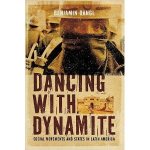
Some of the movements explored are: the Revolution in Venezuela, Indigenous movements in Bolivia & Chile, Worker movements in Argentina, The Landless People’s Movement in Brazil and Anti-Globalization movements in Central America.
We will be using numerous sources, but the primary text that participants will need to have is Dancing with Dynamite: Social Movements and States in Latin America, by Benjamin Dangl. This class will meet on Mondays from 7 – 9pm beginning on January 21st.

The second class we are offering will be an investigation into the Non-Profit Industrial Complex. Using the book, The Revolution Will Not Be Funded: Beyond the Non-Profit Industrial Complex, we will explore the evolution of the Non-profit, it’s relationship to funders, the state and social movements.
In addition, this class will spend part of the time investigating the Non-Profit Industrial Complex in West Michigan. This class will be held on Wednesdays from 6 – 8pm and begin on January 23rd.
Both classes have a flyer that can be downloaded:
Social Movements in Latin America
Investigating the Non-Profit Industrial Complex
Class size is limited, so sign up early. Classes are $20 each, not including the cost of the book, but no one will be turned away for lack of funds. Contact Jeff Smith jsmith@griid.org to sign up.
This Day in Resistance History: Free Blacks in Philadelphia petition Congress to Abolish Slavery
Over 200 years ago on this day, a group of free blacks living in Philadelphia submitted a petition to the US congress against the slave trade and against the fugitive slave act of 1793.
Absalom Jones and other Philadelphia blacks petition Congress at a time when it was not only an unpopular position to take, but risky for blacks to be publicly opposed to slavery.
Petitions today are generally weak and ineffectual tactics in struggles for liberation, but such an act in 1800 was not only a powerful statement against the slaveocracy in the US, it was an act that put your life at risk.
It was one thing to call for an end to slavery, but including the repeal of the 1793 Fugitive Slave Act was an affront to the slave owners and the slave-based economy in the US. The Fugitive Slave Act not only allowed for slave owners to get slaves back, which had escaped, it institutionalized the role that the legal system and society as a whole played in policing against runaway slaves.
The House voted 85-1 to not even accept the petition. Only a lone Massachusetts representative opposed the movement to give “no encouragement or countenance” to these petitions and to refuse to even consider them, because of their “tendency to create disquiet and jealousy.”
The petition was defeated, and South Carolinian John Rutledge, Jr., comments that the request is one result of “this new fangled French philosophy of liberty and equality.”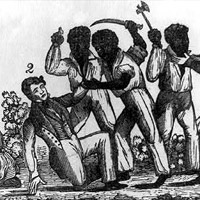
A prelude to Abolition
While the petition to end slavery on January 2, 1800 was roundly defeated, it must be seen as part of the long-term campaign to abolish slavery.
Such acts are always necessary in any struggle. It provides a framework and makes a statement of what a movement is against and what it is for. Such an act is part of a trajectory of change that begins with what these free blacks in Philadelphia did and then builds to include other acts of resistance.
It should not be too surprising that in 1800 two great abolitionists are born, Nat Turner and John Brown. Turner and Brown both engaged in direct action against the system of slavery and sought to arm former slaves in order to liberate more of them. These actions along with work slowdowns, the Underground Railroad, insurgent newspapers and other acts of resistance against slavery are what made up the abolitionist movement that eventually ended legal chattel slavery.
Lessons for Today
The bold actions of free blacks in Philadelphia 213 years ago today is not just an opportunity to wax nostalgically about what people have done in the past, it can be both a source of inspiration and a lesson for acts of defiance today.
We always need to think about resisting current injustices with the same sense of urgency that those in the abolitionist movement did. If people or other forms of life are being brutalized right now, then our acts need to be bold and defiant.
We also need to remember that our single action or tactics will not be enough to achieve real liberation, but can be seen as part of the longer trajectory of liberation and freedom.
However, we must engage in actions to defy the existing power structure and not try to win them over. Struggles for liberation in this country’s history have never come about by appealing to those in power. As the great abolitionist Frederick Douglass would say, “power concedes nothing without a demand, it never has and it never will.”
One might say that petitioning Congress to end slavery is an appeal to those in power, but such an act at that time was more of a line in the sand act to make it clear to those in power what people were fighting for.
Such actions and movements may result in power structures doing things that movements want to see happen, like ending slavery, but this was the result of the collective resistance of the movement, not because of appeals to those in power.
These are the real lessons for today – Act defiantly, with urgency, engaging in acts of resistance that challenges systems of power.
Idle No More
This article by Winona LaDuke is re-posted from ZNet.
As Attawapiskat Chief Theresa Spence enters her fourth week on a hunger strike outside the Canadian parliament, thousands of protesters in Los Angeles, London, Minneapolis and New York City voice their support. Spence and the protesters of the Idle No More Movement are drawing attention to deplorable conditions in Native communities and recently passed legislation C-45, which sidesteps most Canadian environmental laws.
“Flash mob” protests with traditional dancing and drumming have erupted in dozens of shopping malls across North America, marches and highway blockades by aboriginal groups from across Canada and their supporters have emerged from as far away as New Zealand and the Middle East.
This weekend, hundreds of Native people and their supporters held a flash mob round dance with hand drum singing at the Mall of America near Minneapolis, again as a part of the Idle No More protest movement. This quickly emerging wave of Native activism on environmental and human rights issues has spread like a wildfire across the continent.
“Idle No More” is Canadian for, “That’s Enough BS, We’re Coming Out to Stop You” – or something like that. Spence is the leader of Attawapiskat First Nation — a remote Cree community from James Bay, Ontario. The community’s on-reserve 1,549 residents (a third of whom are under 19) have weathered quite a bit: the fur trade, residential schools, a status as non-treaty Indians, and limited access to modern conveniences — like toilets, or maybe electricity. Conditions like these are all too commonplace in the north, but they have become exacerbated in the past five years with the advent of a huge diamond mine.
DeBeers, the largest diamond mining company in the world, moved into Cree territory in 2006. The company states it “is committed to sustainable development in local communities.” This is good to know. This is also where the First World meets the Third World in the north, as Canadian MP Bob Rae discovered last year on his tour of the rather destitute village. There is no road into the village eight months of the year, and four months a year, during freeze up, there’s only an ice road.
A diamond mine needs a lot of infrastructure. And that has to be shipped in, so the trucks launch out of Moosonee, Ontario. So the mining company built a better road. The problem is that the road won’t work when the climate changes, and already stretched infrastructure gets tapped out. Last year, Attawapiskat drew international attention when many families in the Cree community were living in tents at minus 40 degrees.
There is some money flowing in. A 2010 report from DeBeers states that payments to eight communities associated with its two mines in Canada totaled $5,231,000. Forbes Magazine reports record diamond sales by the world’s largest diamond company “… increased 33 percent, year-over-year, to $3.5 billion… The mining giant, which produces more than a third of the world’s rough diamonds, also reported record EBITDA [earnings before interest, taxes, depreciation, and amortization] of almost $1.2 billion, a 55 percent increase over the first the first half of 2010.”
As the Canadian Mining Watch group notes, “Whatever Attawapiskat’s share of that $5 million is, given the chronic underfunding of the community, the need for expensive responses to deal with recurring crises, including one that DeBeers themselves may have precipitated by overloading the community’s sewage system, it’s not surprising that the community hasn’t been able to translate its … income into improvements in physical infrastructure,” said the report. “Neighboring Kashechewan is in similar disarray. They have been boiling water, and importing water. The village almost had a complete evacuation due to health conditions, and … fuel shortages are becoming more common among remote northern Ontario communities right now.”
As Alvin Fiddler, Deputy Grand Chief of the Nishnawbe Aski Nation, explained to a reporter, that’s because the ice road used to truck in a year’s supply of diesel last winter did not last as long as usual. “Everybody is running out now. We’re looking at a two-month gap” until this winter’s ice road is solid enough to truck in fresh supplies, Fiddler said.
Kashechewan’s chief and council are poised to shut down the band office, two schools, the power generation centre, the health clinic and the fire hall because the buildings are not heated and could no longer operate safely. “In addition, some 21 homes had become uninhabitable,” according to Chief Derek Stephen. Those basements had been flooded last spring, as the weather patterns changed.
As a side note, in 2007, some 21 Cree youth from Kashechewan attempted to commit suicide, and the Canadian aboriginal youth suicide rate is five times the national average. Both communities are beneficiaries of an agreement with DeBeers.
The reality is that these communities would never see the light of media attention, if it weren’t for Theresa Spence — and probably Facebook, Twitter and other social media. Chief Spence is still hoping to meet with Prime Minister Stephen Harper, urging him to “open his heart” and meet with native leaders angered by his policies.
“He’s a person with a heart but he needs to open his heart. I’m sure he has faith in the Creator himself and for him to delay this, it’s very disrespectful, I feel, to not even meet with us,” Chief Spence said.
Native communities receive little or no attention, until a human rights crisis of great proportion causes national shame. Facebook and social media may change and equalize access for those who never see the spotlight. (Just think of Arab Spring). With the help of social media, the Idle No More movement has taken on a life of its own in much the same way the first “Occupy Wall Street” camp gave birth to a multitude of “occupy” protests with no clear leadership.
This has spread in ways that we wouldn’t even have imagined,” said Sheelah McLean, an instructor at the University of Saskatchewan and one of the four women who originally coined the “Idle No More” slogan. “What this movement is supposed to do is build consciousness about the inequalities so that everyone is outraged about what is happening here in Canada. Every Canadian should be outraged.”
Actually, we all should be outraged, and Idle Mo More.
Tarantino’s “Django: Unchained”
This movie review by Cecil Brown is re-posted from Counter Punch. Cecil Brown, screenwriter and writer, is a visiting scholar in the English Department at U C Berkeley. is the author of I, Stagolee: a Novel, Stagolee Shot Billy and The Life and Loves of Mr. Jiveass Nigger. Brown directed the film “The Two-Fer” (produced by Ishmael Reed). He can be reached at: stagolee@me.com
I had little dog, his name was Dash, I’d ruther be a nigger than be white trash.
–African American saying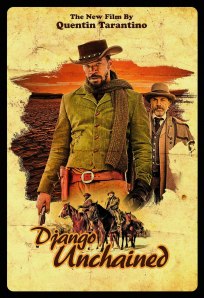
In order for a joke to work, Mary Douglas, the eminent British anthropologist, wrote that one had to have a social context for it to operate in. “We must ask what are the social conditions for a joke to be both perceived and permitted,” she asked in her wonderful little essay, “Jokes.”
“My hypothesis,” she writes“is that a joke is seen and allowed when it offers a symbolic pattern of a social pattern occurring at the same time.”
With Django: Unchained, the symbolic pattern–I’d call it historical context–is Hollywood itself. “If there is no joke in the social structure,” Mrs Douglas observed, “no other joke can appear.” In Hollywood, there are lots of jokes in the system!
The social pattern that allows Quentin Tarantino’s “Nigger joke” to work is set in the South, two years before the Civil War, but my point is that this is only a pretext for Hollywood itself.
Some critics, like Betsy Sharkey in the Times, think this film is a masterpiece. Sharkey calls it, “the most articulate, intriguing, provoking, appalling, hilarious, exhilarating, scathing and downright entertaining film yet.”
African American critic Wesley Morris hated it. He called it “unrelenting tastelessness — […] exclamatory kitsch — on a subject as loaded, gruesome, and dishonorable as American slavery.”
Ishmael Reed, the novelist, pointed out how the Weinstein Company promoted an advertising campaign to get a black audience by promoting Jamie Foxx as the star. In fact, Foxx is only one of the stars, along with Christoph Waltz and Leonardo DiCaprio. As Reed points out, Foxx spends most of his time looking at Mr.Waltz and then looking at Mr. DiCaprio, with a puzzled look on his face, as if to say, What’s dese white folks, talkin ‘bout?
My aim in his essay is to examine the way in which the symbolic system is a reflection of the social system. “What are the social conditions for a joke to be both perceived and permitted,” Mrs Douglass wrote in that little essay, “Jokes.”
What are the social conditions that would permit Django to be the big howling, empty nigger joke that it is?
One of these social conditions, certainly, involves the relationship between black actors and Hollywood as a symbol of the plantation system.
In his review of the film, for example, Mr. Reed said that Sam Jackson, in the role of the conniving, omnipresent, evil slave, is “playing himself.”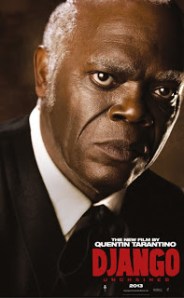
If Jackson had not dominated the Hollywood system in such a sly way, then his role as Stephen, the master-worshipping house slave to Calvin Candie (Leonardo DiCaprio) would not have its loaded, edgy, uncanny realism. The plantation is called CandieLand (Candyland) and is meant to refer to Hollywood itself as a producer of entertainment (Candy). Get it?
If Jamie Foxx is not known in Hollywood as a resourceful hustler, who will play almost any role, then his part as the “bad nigger” Django would not be so compelling (and lubricous). If he was not the “New nigger on the block,” then the confrontation between him and Sam Jackson’s character, Stephen, the off-the-hook house slave, the scene would not be powerful (and dumb) at the same time.
The dramatis persona forms a homology with the enacted characters on the screen. The key that unlocks Tarantino’s sensationalistic mosaic is that it reveals the inner game of how the Hollywood studio and the plantation slave institution exploited black people.
Unwittingly and unconsciously Tarantino has provided us with a scenario that makes the plantation system the symbolic equivalent of Hollywood. It is a film a clef.
In other words, Hollywood forms a homology with the slave plantations system– in both cases making money is being underlined as the goal, and it does not matter how many people are hurt or offended.
Tarantino approaches Hollywood–that is, the Weinstein Brothers production company as if it were a plantation, and as if he were an aspiring poor white trash overseer trying to get into the closed system by manipulating the slave code.
Instead of presenting the Weinstein Company with a script, Tarantino screened a film– Django (1966.), a Spaghetti Western.
How hard was that? In an age where even Hollywood execs don’t read, Tarantino made it easy for them. As it turns out, Django (1966) was itself a take-off of the Spaghetti Western, Fistful of Dollars, a film (and a genre) invented by the Italian director Sergio Leone.
Tarantino’s task (as he probably explained to the Weinstein Company) was to map characters, incidents, and plot points from the original Django (1966) onto the target, his proposed plantation script, Django:Unchained (2012).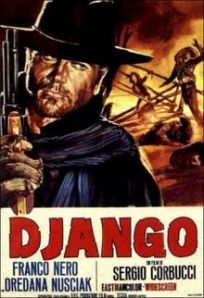
Let us now compare the original Django (1966) directed by Sergio Coerbucci with Tarantino’s Django: Unchained (2012). In mapping, some things are easily transferrable and somethings are not. What Tarantino took from the original films were the characters, plot, and gross details of violent acts. What he added–and what was not in the original–was African American nigger humor, the joke. Tarantino ransacked Black folklore for the Trickster, the slave John, and the Bad Nigger, and the Jezebel. For music, he takes some of the original Italian, but for the most part, he overlays the film with James Brown’s “The Big Pay Back” and hip-hop music.
If we compare the plots with each other, as summarized in the IMDb, we can see what Tarantino transferred over from the original source the target: “A coffin-dragging gunslinger enters a town caught between two feuding factions, the KKK and a gang of Mexican Bandits. Then enters Django, and he is caught between a struggle against both parties.”
The plot of Django:Unchainedis: “With the help of his mentor, a slave-turned bounty hunter sets out to rescue his wife from a brutal Mississippi plantation owner.” And: “Former dentist, Dr. King Schultz, buys the freedom of a slave, Django,and trains him with the intent to make him his deputy bounty hunter. Instead, he is led to the site of Django’s wife who is in the hands of Calvin Candie a ruthless plantation owner.”
In the opening scene of the original movie, a beautiful woman (Loredana Nusciak) is rescued from rape by Django (Franco Nero). This female character is mapped over by changing the name and character to Broomhilda Von Shaft (Kerry Washington).
Imitating the original scene of desperation, Tarantino opens his film with a slave coffle. First, a long shot of the slaves chained together. Then, close-up shots of the shackled ankles. Then, overlay of the moanful voices, Aint Nobody Gonna Hold My Body Down. Next, close-ups of raw stripes of blood lashes on a black backs.
It makes for a painful, depressing sight, and it is photographed in a realistic mode. The audience is taken in, because the scene depicts the holocaust for many blacks who sat in the audiences across the country.We see the strips from the whips across the backs of the slaves.
Then, there is an incident: a light in the dark. Who goes there? The owner of the slaves calls out.
“Just a fellow traveler,” returns a Dr. King Schultz (Christop Waltz), a bounty hunter. Dr. Schultz examines the slave , picks out Django (Jamie Foxx), and when the slave owner tries to prevent him from talking to Django, pulls out a gun and shoots him dead. Shooting the white slaver point blank, Dr. Schultz laughs and turns the gun over to Django, who is miraculously transformed from a lowly slave to—Presto!–into a “Bad Nigger” with a gun and a mean attitude. Now we are rolling!
As a spokesman for the director, Dr. Schultz is a white Negro. His action and trickster character lift the action out of serious mood ; and suddenly, we hear the pounding music of James Brown’s “The Big Payback!”
We are roaring with laughter at the punchline in an ethnic joke. Some of Django’s lines include, as he shoots a poor white man, “I like the way you die!” When Dr. Schultz offers him a deal of working with him as a bounty hunter, Django exhales the punchline, with panache, “Kill white folks and get paid for it?”
We realize that all that had gone before, the shots of the black slaves, the sad music, the spiritual music and lyrics—all of that was just a set-up, a pretext. The real text, the underlying message was the punchline that Blacks in slavery were fools and cowards.
Throughout the rest of the film, this is Tarantino method: begin with a serious treatment, suck the audience in, and then, he hits you—Bang!–with a punch line that catches you off guard. The problem with the ethnic joke is that the joke is always on the black man, who, has no recourse to respond.
Jamie Foxx as a slave agrees to help him if he will help him go back and get his wife (Kerry Washington ) out of slavery. Tarantino centers on the exotic notion that it beautiful slave’s name Broomhilda and speaks German. Mein Gott!
We know that there was a KKK in the original model. That was easily mapped over to slavery, but Tarantino makes a mistake here. He choses 1858, two years before the Civil War, as the fictional time for his film. But the Ku Klux Klan wasn’t until some 20 years later, in the 1880s, after the Civil War.
Just because it was in the original source, Tarantino included it in the target material. He wasn’t following Black history, but rather he was following his original template.
In the original, Django (1966), the hero is a “anti hero, ” but Tarantino mapped him over to the target as the “bad nigger.” Black culture is full of images of the “bad nigger,” including Stagolee, Deadwood Dick, and Dolomite. They all are screaming, “I’m a bad motherfucker and I don’t mind dying!” (And all of them signified by a large brimmed hat.)
Tarantino didn’t limit himself to lifting the characters, incidents, and plot elements from the Spaghetti Western, but the grossness of imagery as well.
In the original Django material, for example, the hero cuts the bandits’s ears off and force them into his mouth. Tarantino has one of the sadistic slaver turn Django turned upside down so he can cut his testicles (symbolic equivalent of ears) off. In another scene, he has dogs eat a black man to death on screen. In yet another scene, DiCaprio’s Calvin Candie is watching his Mandingo fighters kill each other; Calvin offers the winner, a hammer to beat his brains out.
There are 5 or 6 instances where I had to look away from the screen, because it was so violent and and the violence was so gratuitous.
The film is soaked in pretentious drivel. For example, in one scene, Calvin Candie instructs his overseer to set a pack dogs on a black slave and we (the black audience) watch the dogs eat the slave alive (on screen). Dr. King Schultz wonders what Alexander Dumas, the Black French writer, would have said of that scene.
This gross and ludicrous non-sequitur is meant to show how hip Tarantino is to Black history. Here is notion that Tarantino really knows something about French literary history Dumas was black! No shit?
I’m willing to bet that when Jamie Foxx Jamie Foxx read this in the script, he turned to Tarantino and asked, “Who the hell is Dumas?”
Tarantino proposed to the Weinstein Company to deliver an audience on Christmas Day that would make them a lot of money. An equivalent was the poor Irishman who approached the plantation owners with the proposal to save the plantation money by managing his slaves (through beating them and yielding a profit).
What was this audience that Tarantino promised to deliver to the Weinstein Company?
Where I saw the film, at the AMC theater, in Emeryville California, the audience was the same one that had voted for Obama. When I waited in the long line to see the film, people’s faces were glowing with expectation. The hype about Jamie Foxx and Sam Jackson and Kerry Washington was like voting for a Black man for President.
But after seeing the film, their faces were empty, their eyes were blank. Sure, they had laughed at the scatological humor, had flinched at the gruesome ugly scenes, had been insulted by the self-deprecating humor, and had been lifted up by the antics of the “bad nigger” And don’t forget the ending–with the hero and his slave bride ridding off into the sunset and the glowing flames that consumes the CandyLand Plantation! And all this, with this synched to beat of rebellious hip-hop music. Burn, Hollywood, Burn!
For many of them, Tarantino had delivered. In essence, they had their cathartic laugh, and yet they still felt dirty from the guilty pleasure. Their empty faces were drained understanding. They had been used, and they were beginning to know it. You could see that they had been bamboozled.
In one scene revealing scene, the slave master, Calvin Candie shows his dinner guests the skull of a Black slave, Ben. “Old Ben never revolted against the white man? Why didn’t he? Because when you cut his skull open, you find that there is something in his brain that won’t allow him to rebel against the white man.”
What Tarantino is asking in his meta-language, Why don’t blacks take over Hollywood? Why do they allow the likes of him and the Weinstein Company along with Sam Jackson and Jamie Foxx to run a game on them?
I ask myself the same question. Why do Blacks, who can elect a President, not prevent themselves from being exploited by Hollywood? Why can’t they demand more black directors and better scripts from the likes of the Weinstein Company?
Why do we continue to allow Sam Jackson and Jamie Foxx to clown us?
As I watched the long line of Blacks que up for the movie, and as I listened to their guffaws in the darkened theater, I realized that nobody likes a “nigger joke” more than Black people themselves. Are Black people themselves deeply masochistic? Would a Jewish American audience tolerate a film that makes fun of their history and their holocaust? I doubt it. Would the Weinstein have made a film about the Jewish Holocaust that ridicule and belittled the Jewish experience during Hitler? I doubt it.
Much of the problem has to do with Black people themselves. You would think that Samuel Jackson would have enough clout to produce his own films. Every Hollywood black have their own “company,” but they never produce any films.
Even though we have rich black men, they do not have the intellectual heft to confront Hollywood, which is supported by a culture of literacy. After four hundred years of being told that you can’t write, blacks tend to stay with “acting” and sports. They do not have the respect of their own authors to use their work in films. The literary codes that Hollywood uses depend on a culture that reads books, but for Blacks, literature is not a high priority.
Blacks seem contented to be consumers of the movies and not producers of them. In the past, Blacks attended film schools and produced Spike Lee (New York University) and John Singleton (UCLA), but there are few Blacks attending film schools. This year at UCLA, one of the most important film schools in the country, admitted not one single Black student.
You can’t present a project to a studio about Black Dumas if you never heard of Dumas? How can you talk to a Hollywood producer if all you know is the lyrics from Snoop Doggy Dog?
In reality, both Hollywood (Weinstein Bros) and the plantation system are closed systems, despite the fact that slave-owners say they’re taking good care of the slaves and despite the fact that Hollywood says that the success is based on talent alone.
Another important similarity between Hollywood and the Plantation is that they are both controlled by literacy. On the slave plantations, no black is allowed to leave the plantation without a pass.
In order to get a pass you have to consult the white man since no black can write one, as Blacks are not allowed to read and write. Therefore, literacy controlled the plantation and the enslavement of enslaved Africans–enslaved mainly because the technology of writing was withheld for them. The attending rhetoric was that Blacks were too stupid to learn to read and write.
I read Mick Lasalle’s the review of the film in the San Francisco Chronicle. He loved it, “entertaining” for every minute. While putting down Spike Lee’s “The Red Hook Summer” as one of the worst films of 2012, he puts Django:Unchained at the very top of his best list (second to Lincoln). He didn’t like Roberto Benigni’s Life Is Beautiful, which is about A Jewish man who uses humor to survive a Nazi death camp.
Even if he is a fan of white male racist jokes against blacks, he should have warned African American readers that the film is racially offensive in its exploitation of black humor.
The 4th Estate, in a recent study of American newspapers, “Bleached, Lack of Diversity on the Front Page,” claimed that 98 percent of all newspapers headlines are written by whites. At the San Francisco Chronicle, the study found that there were no Black writers at all. Given the social conditions in Journalism, LaSalle was obliged to tell black readers what was really inside the wrapper.
Whites control the newspapers, like Hollywood, and use their print to keep the public stupid and dumb. Like the blacks ancestors on the plantation, African Americans are held in check so that the pockets of the cultural producers (ruling class) can be filled.
Movie Review: Matt Damon’s Promised Land
This review is re-posted from The Progressive.
Hydraulic fracturing, known colloquially as fracking, is a contentious issue, and Hollywood has not overlooked it.
Promised Land, directed by Gus Van Sant and starring Matt Damon, takes on fracking, which involves blasting millions of gallons of water, sand, and chemicals into rock, often shale, in order to extract the oil and natural gas within the formations. Critics argue that the process wastes colossal amounts of water; contaminates air, soil, and drinking water; and may be implicated in causing earthquakes.
The screenplay, written by Matt Damon and John Krasinski, is based on a story by Dave Eggers. It’s a decidedly mixed bag.
In Promised Land, Steve Butler (Matt Damon) is a salesman, who — along with his colleague Sue Thomason (Frances McDormand) — travels to rural Pennsylvania. He sees fracking as a chance to help struggling farmers. Working for Global Crosspower Solutions, they sign lucrative leases: the farmers earn money by leasing their farmland, while Global earns by extracting its resources.
Having grown up in rural Iowa, where his grandfather owned a farm, Steve knows first-hand the struggle of farmers, so sees no issues with his mission at first. All the arguments from “can’t survive on federal farm subsidies” to “it will fund the rising cost of a college education” are included in the sales pitch and made in quick succession.
As in real life, heated debates among the area residents ensue. The farmers, who are struggling financially, are tempted to take the badly needed monies to make ends meet. Yet Frank Yates (Hal Holbrook), a science teacher at the local high school, expresses concerns at a town meeting about the long-term effects of hydraulic fracturing on the region, its soil, water, and air, and consequently on livestock and residents’ health.
And then Dustin Noble (John Krasinski), an environmentalist, arrives in town, expressing just these and other concerns, too. Who will pay for the clean up that might be needed, once the resources are depleted and the company moves on? The company? The state? The local coffers? Who will pay for any adverse effects on health that might be incurred? Who will replace the lost jobs that the boom and bust economic wave might unleash? A one-man organizer, he goes farm to farm, talking to the residents and putting up signs in their front lawns that read “Global Go Home” and are adorned with images of dead cows.
Promised Land complicates what could be a simplistically rendered battle between outside salesmen seeking to profit from struggling local farmers by presenting the fissures within each group: the differing opinions among the farmers about the best course of action, and the increasingly conflicted viewpoint of Steve Butler.
The film portrays the increasingly bleak economic prospects in the rural U.S., which Steve, increasingly frustrated with the resident’s skepticism, depicts at the local bar, Buddy’s Place: “You think about how much you made on your best day … and then you think real hard about much you made on your worst. Cuz let’s be real honest with each other, they’re all starting to look like that more and more, aren’t they? These people? This town? This life? It’s dying and damn near dead.”
In Promised Land, the decision about whether or not to allow fracking is ultimately brought to the town for a vote. Debate exists about whether hydraulic fracturing should be regulated at the federal, state, or local level. To date, numerous towns and cities nation-wide have passed local bans. Both New York and Maryland have suspended fracking, in order to assess its environmental and health impacts. New York City has stated that hydraulic fracturing’s risks are too great to risk contaminating the drinking water of its 8.5 million residents.
Unfortunately, the film leaves Steve’s moral education up to local high school teacher Alice (Rosemate DeWitt) and science teacher Frank, who used to be a scientist. Alice once lived in Manhattan but moved back to her grandfather’s farm because when it came time to give up the property, she “did not want to be that person.” Now, she brings students to visit the garden in the backyard, so that they “learn how to take care of things.” It’s a line she gives Steve when he first tours the yard and one he cites during his last speech. The implicit narrative: Leave it to the women and elderly to be the moral compass that (may) educate men and have them realize a sense of ethics. (And teachers are mainly people who have been successful elsewhere rather than choosing the profession for its own merits.) Yawn.
Also disconcerting is the fact that the environmentalist comes from outside the community rather than from within the community. This distorts the broad base and local roots of the anti-fracking movement.
The clichéd depictions of non-urban spaces as all alike also smack of bi-coastal unfamiliarity and may rub audiences the wrong way. The film quips “two hours outside any city looks like Kentucky.” In fact, as anyone who has ever driven through Kentucky and Pennsylvania knows, the two are not the same, in vegetation, in people’s demeanor, or in shale deposits.
Promised Land contains superb acting and beautifully shot landscapes, but unfortunately it offers a rather superficial take on fracking and clichéd images of rural residents.
The film opened in select cities on Friday, December 28, making it an Oscar contender, and opens nationwide on January 4, 2013. To find a theater near you: http://focusfeatures.com/promised_land.

My New Year’s Eve Poem from Chiapas
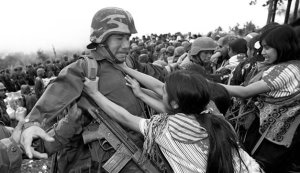
(I wrote this poem while in Chiapas, Mexico on New Year’s Eve in 1998, while acting as an international observer in one of the Zapatista communities that were being terrorized by the Mexican Army. This poem is from my book Sembramos Comemos Sembramos: Learning Solidarity on Mayan Time.)
In the cool December morning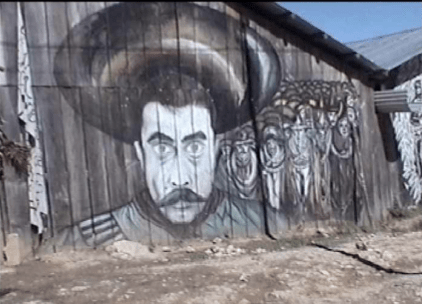
I rise to greet the warmth of the sun
Dew drips off plants and roof
While barefooted Indians pass by
On the road below
Oventic, Aguascalientes of youth
Where children walk hand in hand
Or lean up against siblings
Their eyes are as dark
As the earth
Their smiles bring hope
From the mountains
Zedillo calls the young
Zapatistas terrorists
As they prepare the
New Years festival
pine needles are spread out
like a royal carpet
where musicians create ancient songs
with marimba and flute
their bodies sway in rhythm
like trees that bend in the wind
along a narrow path
the view of people gathered
is more beautiful than any
painted canopy or ecclesiastical ceiling
families sit proudly on benches
built for this open air arena of democracy
while helicopters fly above
monitoring games & ice cream vendors
as the night approaches
the Mayan moon illuminates
the court where dancing and Tzotzil speeches
fill our souls,
and even though we do not
understand the words
we know their truth the way lovers
know each other’s touch
It is here that I understand
The meaning of justice
Its hunger satisfied
And like the mountains,
These proud people have
Withstood the weathering of history
and the cruelty of men…
walking in paths of freedom
2012: Year of Indigenous Resistance in Mexico
This article by Kent Peterson is re-posted from ZNet. Editor’s Note: This posting is in honor of the January 1, 1994 Zapatista uprising.
Once again, the international press – and a good deal of the Mexican one – missed the real story coming out of the Mayan heartland. Zoomed in on the completion of the ancient Mayan calendar and the media-hyped, predicted end of the world December 21, the corporate show boys did not notice or grasp the significance of the silent mobilization that occurred on the afternoon of the 21st in the southern Mexican state of Chiapas.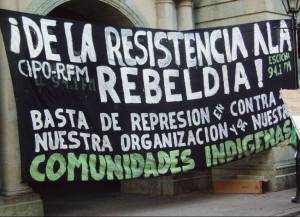
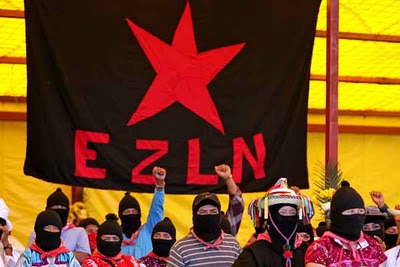
In an almost step-by-step replay of their New Years’ Day 1994 uprising, tens of thousands of masked and uniformed members of the Zapatista National Liberation Army (EZLN) marched in military formation into five Chiapas towns.
A big difference between this year’s action and the one nearly 19 years ago is that the Mayan Zapatistas of 2012 did not carry guns or utter words. And according to Proceso magazine, their numbers this year- estimated between 30,000 and 50,000 people- were many-fold greater than the several thousand fighters who launched the 1994 revolt on the day that the North American Free Trade Agreement (NAFTA) went into effect.
The emblematic Zapatista spokesperson Subcomandante Marcos, who mysteriously vanished from the public limelight during the past four years, delivered a brief but ironic message issued by the EZLN’s Clandestine Revolutionary Indigenous Committee-General Command that declared in part, “Did you hear? This is the sound of your world being torn down, and of ours resurging…”
In one swift move, the Zapatista’s reappearance laid to rest widespread rumors of Marcos’ and the movement’s demise.
“Thousands of young men and women who represent the new cadres of the EZLN paraded,” wrote Proceso writers Jose Gil Olmos and Isain Mandujano. “They were born or grew up after 1994 when the insurgent group burst on the political scene in the days that Carlos Salinas Gortari was announcing the entrance of Mexico to the First World…”
The Zapatistas’ “Mayan Apocalypse” march also fell on the eve of another important date-the 15th anniversary of the Acteal massacre in Chiapas, when 45 Mayan men, women and children were slaughtered by paramilitaries originally organized and coordinated by the Mexican armed forces as part of a counterinsurgency plan.
The EZLN’s public reemergence could be interpreted as a message to new President Enrique Pena Nieto and his PRI party to not attempt a repeat of an earlier PRI administration’s counterinsurgency scheme, and to comply with the 1996 San Andres accords, an agreement recognizing the rights of Mexico’s indigenous peoples which was reached between the government and Zapatistas but never respected by the former.
The Zapatista mobilization is far from the exception in 21st century Mexico. From north to south and from east to west, many of Mexico’s estimated 15 million indigenous people have spent a milestone year immersed in a thousand battles to recover ancestral homelands, organize community-based security and justice systems, face down foreign mining and energy companies and, like the Zapatistas’ Good Government Councils in Chiapas, carve out autonomous zones of political power.
In the process they’re showing the world alternative paths in implementing community security and justice institutions, furthering grassroots participation in governance and striking the proper balance between economic development and environmental protection.
In the states of Michoacan and Guerrero, more and more indigenous communities are taking security matters into their hands. Besieged by organized crime, the Purepecha community of Urapicho, Michoacan, followed the lead this fall of their neighbors in Cheran by posting armed guards and erecting barricades at the entrance to the small town.
Similar actions were soon reported in neighboring Guerrero state, where indigenous communities in the municipality of Olinala reclaimed their security. The latest citizen uprisings dovetail in many ways with the community policing and justice movement that first arose in Guerrero in the mid-1990s following the Zapatista revolt to the south.
Unlike law enforcement and justice systems devised in state capitals, Mexico City and foreign nations, the community police/justice model hails from the bottom up and is rooted in indigenous customs. Typically, the lightly-armed police officers are locals who are selected through community recommendation and consensus. Alternative justice is often meted out through community service and victim restitution as opposed to incarceration.
At last month’s 17th anniversary ceremony for the Coordinating Council of Regional Authorities (CRAC), the leadership body of Guerrero’s community police, at least 23 new communities announced they were enlisting in the movement.
The pledges bring to more than 100 indigenous communities in 13 municipalities of the Costa Chica and La Montana zones of Guerrero participating in community policing. Upwards of 1,200 community police officers joined with supporters from Cheran, Olinala and Mexican social movements like the Other Campaign at the gathering. Speakers linked the movement to fights for cultural survival, economic justice, self-determination and autonomy, and protection of Mother Earth from mining and other forms resource exploitation.
“For us, justice implies the possibility of having health, education and the strengthening of our cultures..,” Felicitas Martinez Solano, CRAC councilor, was quoted in La Jornada.
Defending communities and the earth
Opposition to new mining operations by Canadian and other foreign capitalists is at the forefront of many indigenous struggles across Mexico. In November, for instance, 5,000 indigenous residents of Zautla, Puebla, demanded the closure of the Chinese-run JDC Minerals mine, contending the facility will contaminate springs, crops and soil, as well as harm human health. “No to the mine, yes to life!” chanted the protesters.
In northern Mexico’s Sierra Tarahumara country, the indigenous Raramuri people are increasingly active in defending their lands from illegal loggers, tourism developers and other encroachers.
Earlier this year, Raramuri litigants won a major victory in Mexico’s Supreme Court when the justices ruled that indigenous residents had a constitutional right to participate in the Copper Canyon Trust Fund, an organization spearheading tourism development in the Sierra Tarahumara of Chihuahua state.
The high court’s members also noted that relevant national law is similar to the International Labor Organization’s Convention No.169, which protects the rights of indigenous communities and tribal peoples. Mexico is among 22 nations that have ratified the international agreement. The United States is not one of them.
However, the issue of genuine indigenous participation in decisions affecting their homeland is far from resolved.
In a September letter to Chihuahua Governor Cesar Duarte, three Raramuri leaders from the communities of Huetosachi, Bacajipare anjd Mogotovo explained why they were boycotting a government-sponsored meeting. Maria Monarca Lazaro and the other Raramuri spokespersons asserted that recent tourism projects in the Copper Canyon region had brought land speculation, increased drug and alcohol abuse, marginalization of traditional crafts sellers, and water shortages, among other negative impacts.
The letter demanded a temporary halt to tourism, logging and resource extraction projects; the resolution or expedition of Raramuri land claims in the courts; and the release of pertinent information about development plans so Raramuri leaders could adequately discuss the issues with community members.
“We want the decisions we take to be respected,” the letter concluded. “Our way of life tells us that decisions can’t be made on their own; we have to take our people into account.”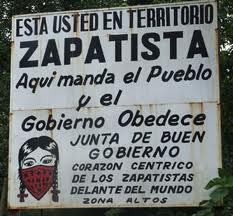
Resistance in the NAFTA region
The surge in Mexican indigenous activism comes at a time of mounting resistance by the aboriginal peoples of the other NAFTA member nations. In the U.S, indigenous communities are battling against the KeystoneXL Pipeline, proposed new uranium mines and coal-fired power plants. In Canada, meanwhile, a national uprising called Idle No More, named after a poem by former American Indian Movement leader John Trudell, is taking hold against government attempts to curtail treaty concessions, exploit lands and assimilate First Nation’s peoples into the melting pot of Canadian capitalism.
Like earlier periods in history, the lands of indigenous peoples in Mexico, Canada and throughout the hemisphere are the coveted prize of outsiders profiting from economic booms elsewhere. Only this time they are doing it under a free trade regime that allows capital to move much easier across borders.
In a statement that echoes sentiments of indigenous activists in Mexico and across the Americas, Idle No More calls on “all people to join a revolution which honors and fulfills Indigenous sovereignty, which protects the land and water.” The new movement concludes:
“Colonization continues through attacks to Indigenous rights and damage to the land and water. We must repair these violations, live the spirit and intent of the treaty relationship, work toward justice in action, and protect Mother Earth.”
Demanding a serious hearing of long-standing grievances of Canadian First Nations, Attawapiskat Chief Theresa Spence declared a hunger strike this month in the national capital of Ottawa until a meeting was held with Prime Minister Stephen Harper, whose conservative government has promoted the recent spike in Canadian mining investment in Mexico and Latin America, an expansion which has often been accompanied by controversy and violence.
In Mexico, indigenous activists frequently continue to be the target of violence and repression. Among the latest suspected victims is Celodonio Monroy Prudencio, Nahua defender of the Manatlan Biosphere Reserve from illegal loggers in the borderlands of Jalisco and Colima states.
The director of indigenous affairs for the municipality of Cuatitlan in Jalisco, Monroy was taken away from his home last October 23 by a group of heavily-armed men dressed in military-style uniforms, according to his wife Blanca Estela, who reportedly witnessed the forced disappearance. “We don’t know anything, (officials) don’t know anything, and when I ask them they say they don’t know…,” she later told La Jornada’s Jalisco edition.
Despite the ongoing and historic repression directed against them, Mexico’s indigenous communities push forward in defense of their lands, their cultures and their ecosystems.
The year 2012 reminded the world of the relevance of the slogan that was popularized after that New Year’s Day nearly two decades ago when the Zapatista National Liberation Army burst into history: “Never a Mexico without Us!”
2012 Censored news stories in the US
This video story is re-posted from Project Censored.
Project Censored director Mickey Huff was recently interviewed for the show Inside Story on Al Jazeera English. He discussed the ongoing problems of censorship and under reporting in the US as well as highlighted some of the past years most significant stories published in Censored 2013: Dispatches From the Media Revolution. Greg Mitchell of The Nation magazine was also a guest on the program.
 Grand Rapids Institute for Information Democracy