Further Evidence of a US Police State: Raytheon Video Claims Riot Software Can Track Users Via Social Networks
This article by Pratap Chatterjee is re-posted from CorpWatch.
Raytheon, a U.S. military manufacturer, is selling a new software surveillance package named “Riot” that claims to predict where individuals are expected to go next using technology that mines data from social networks like Facebook, Foursquare and Twitter.

Based just outside of Boston, Massachusetts, Raytheon sells $25 billion worth of equipment a year to military clients like the Pentagon. Some of its most famous products include Sidewinder air-to-air missiles, Maverick air-to-ground missiles, Patriot surface-to-air missiles and Tomahawk submarine-launched cruise missiles.
Raytheon’s Rapid Information Overlay Technology (Riot) software extracts location data from photos and comments posted online by individuals, and then analyzes this information to create a variety of spider diagrams to show where the individuals like to go, what they like to do and whom they communicate with.
A video demonstration of the software was recently published online by the Guardian newspaper. In it, Brian Urch of Raytheon shows how Riot can be used to track “Nick” – a company employee – to predict that the best time and place to steal his computer or put spy software on it.
“Six a.m. appears to be the most frequently visited time at the gym,” says Urch in the video, which is dated November 2010. “So if you ever did want to try to get a hold of Nick – or maybe get a hold of his laptop – you might want to visit the gym at 6:00 a.m. on Monday.”
“Riot is a big data analytics system design we are working on with industry, national labs and commercial partners to help turn massive amounts of data into useable information to help meet our nation’s rapidly changing security needs,” Jared Adams, a spokesman for Raytheon’s intelligence and information systems department, told the Guardian.
Adams says that nobody has bought the software – which is still under development – yet. However, company filings indicate that Riot is classified as an “Export Administration Regulations 99” item which allows it to be sold or exported to any client.
But it is certainly true that a number of U.S. government agencies have been eagerly pursuing surveillance software to exploit the vast quantities of data that individuals are posting online about themselves. In January 2012 the Federal Bureau of Investigation posted a request for an application that would allow it to “provide an automated search and scrape capability of social networks including Facebook and Twitter … and (i)mmediately translate foreign language tweets into English.”
Last month the U.S. Transportation Security Administration asked contractors to propose applications “to generate an assessment of the risk to the aviation transportation system that may be posed by a specific individual” using “specific sources of current, accurate, and complete non-governmental data.” The initial plan is to use it to screen volunteer flyers who will be offered the benefits of “expedited screening lanes … leave on their shoes, light outerwear and belts, as well as leave laptops and … compliant liquids in carry-on bags.”

Privacy activists say that the Riot package is troubling. “This sort of software allows the government to surveil everyone,” Ginger McCall, the director of the Electronic Privacy Information Center’s Open Government program, told NBC News. “It scoops up a bunch of information about totally innocent people. There seems to be no legitimate reason to get this.”
“(T)he government has no business rooting around people’s social network postings—even those that are voluntarily publicly posted—unless it has specific, individualized suspicion that a person is involved in wrongdoing,” writes Jay Stanley, a senior policy analyst at the Speech, Privacy and Technology Project of the American Civil Liberties Union. “Among the many problems with government “large-scale analytics” of social network information is the prospect that government agencies will blunderingly use these techniques to tag, target and watchlist people coughed up by programs such as Riot, or to target them for further invasions of privacy based on incorrect inferences.”
Indeed, it would also be possible for a tech-savvy malcontent to lead security officials on a wild goose chase, or even deliberately frame anyone they wanted.
This article is re-posted from Common Dreams. Editor’s Note: There is an event in Grand Rapids tonight, just go to the link.
Across the globe today women are dancing, striking, and in other ways “rising” to call attention to the plight of violence against women and girls across the many cultures of the planet.
Long celebrated as Valentine’s Day in many cultures and leveraged for the last fifteen years by women’s rights activists in the “V-Day movement,” today’s actions are a culmination of the “One Billion Rising” campaign spearheaded by author, playwright and activist Eve Ensler and champions equal rights and an end to violence against women and young girls.
“February 14, 2013 will change the world not because it is a day of magic, although there are indeed mystical elements surrounding this campaign. It will change the world because the preparation for it and organizing for it has already created an energetic wind or wave igniting existing efforts to end violence against women and create new ones,” said Ensler in a statement.
Ensler says the campaign has brought together broad and unexpected coalitions of groups and individuals that have never worked together before, including young people and men previously unaware of how deep the problem of violence against women has been.
“We are rising together because it is in our connectedness, in our stomping feet and uncontrollable hips that the path and energy will be created to bring in a new world,” Ensler said, referring to the campaign’s focus on dance and public protest. “We will galvanize the will and the passion of everyone rising around the world to create change.”
According to the group, planned actions for the day include:
In Paris, the Women’s Coalition of the French Parliament is rising. The Minister of Women’s rights and hundreds of groups in India, students, teachers, and thousands of people are speaking out, and new laws and prevention education are being introduced. Over 100 events are taking place in Italy. In Germany, more than 100 events are planned around the country including a flash mob at the Brandenburg Gate. In Bosnia, a network of organizations and individuals in Sarajevo plan a dancing parade along the riverside, public squares and busy places. From the north of Europe to the south, thousands of activists have planned events large and small. In Bangladesh, over 25 million are expected to rise and will form human dancing chains across the country. The One Billion Rising anthem “Break the Chain” has been translated into Spanish, Farsi, Hindu, and many more languages. In Cape Town, Soweto, and Johannesburg, teen girls are touring schools and teaching the flash mob dance, and all over Africa local TV stations are showing the “Break the Chain” video leading up to the rising.
The ‘Break the Chain’ anthem, which is has been learned by millions and will be performed at many of the events today can be viewed here:
Immigration Reform Groups hold Press Conference to kick-off Campaign for a Just Immigration Policy
Earlier today, several immigration groups hosted a Press Conference at the downtown campus of GVSU.
Members of the West Michigan Immigration Reform Coalition, the Micah Center, the Latino Community Coalition and AIR-MOP each had speakers to address the importance of have comprehensive immigration reform at the federal level.
The Press Conference is on the heels of President’s State of the Union address, wherein the President stated that immigration reform was on the table.
Jordon Bruxvoort, with the Micah Center, also spoke from a faith perspective and addressed the realities of why most of the people who immigrate the US. He spoke about the violence, the poverty and the desire to provide for their families.
Richard Kessler, a local immigration attorney, said that even if the President spoke on immigration reform and Congress is making proposals, the policy reform needs to be pushed from the grassroots and by people who are suffering from a broken immigration policy and their allies.
Our job as immigrants and immigrant rights supporters need to force the government to make comprehensive reform a priority. Many members of Congress, according to Kessler, are saying that they don’t want to change much until they “can get the border security under control.”
Such a statement is not only misleading, but reflects the lack of understanding amongst those in power. Border agencies and those involved have virtually unlimited budgets and have been deporting undocumented immigrants at unprecedented numbers. The position of many members of Congress also ignores what people must endure to get in the US and the climate of fear they live in on a daily basis from both law enforcement and the hateful anti-immigration rhetoric of many media pundits.
Kessler said that the goal should be to make a clear pathway to citizenship easy and attainable. People are willing to take the necessary steps, but unless the government is willing to treat the 11 million undocumented immigrants as possible US citizens, it will not solve the immigration crisis we currently face.
Susan Im, another immigration lawyer also spoke at the Press Conference. She emphasized that the US can no longer afford to not pass immigration reform. She stressed that many businesses are suffering and will continue to suffer since the current restrictions they face in who they can hire limits them in employ workers who currently lack documentation.
Local labor activist and author of a recent book on labor activism, Greg Shotwell, also addressed the audience at the Press Conference. Greg made the point that work and workers should never be illegal and that immigrants are labor rights and labor rights are human rights. Shotwell made it clear that if workers were treated fairly in their own countries that they would be happy to stay in their own communities. Immigration reform needs to involve, and is connected to, global worker solidarity.
There were also several immigrants who addressed the audience and spoke about their own experience of coming to the US. Emmanuel Joshua, who is a Muslim from Pakistan, spoke about his own story and how his family has been separated for years because of the repressive immigration policies of the US. Emmanuel came primarily to flee religious persecution, but when he fled he could not come with all his family members.
Another immigrant who shared his story was Sigifredo Pizana, a young man from Mexico. His father was deported in 2011 for not having a driver’s license and one of his brothers also has been deported since then. Sigifredo talked about the difficulties of not being able to drive to work, since he cannot obtain a driver’s license under the current laws. Often he would have to walk 2 hours each way to get to work, even in the middle of the winter. Sigifredo has been involved in the campaign to get the driver’s license policy for DACA youth in Michigan, a campaign that has been successful.
One last speaker was Jose Jimenez, who was part of the Puerto Rican youth movement in the 60’s, known as the Young Lords. Jose spoke about the connection between those who struggled for justice in the 60s and those struggling for justice now. He identified what the President and Congress mean by comprehensive immigration reform, which is more border security, fines, that people need to learn English and get to the back of the line. “We want self-determination, but we have to fight for it, because they are not going to give it to us.”
Indeed, it was clear from the various speakers at today’s Press Conference, that a just immigration policy, will only come about if we organize to make it so.
What Obama Didn’t Say on Immigration at the State of the Union
This article by Aura Bogado is re-posted from The Nation.
President Obama mentioned immigration several times during his State of the Union address this evening—perhaps most poignantly when he altered the citizenship narrative that closed his remarks to include a definition “that doesn’t just describe our nationality or legal status.” 
But we didn’t hear anything new in terms of comprehensive immigration reform.
Obama touted increased border security, but failed to mention the record number of deportations that continue to occur under his watch. The president did reiterate his call for a pathway to citizenship, but only when followed by a background check, fees and fines, and English language acquisition. Some of those restrictions might stand in the way of undocumented immigrant workers who labor long days with little pay, and little access to time or the educational opportunities that would allow them to learn English.
Tonight’s audience included at least five young undocumented immigrants, most of whom qualify for Obama’s Deferred Action for Childhood Arrivals plan, or DACA. These “dacamented” students included current college students and recent graduates. Julieta Garibay, who founded United We Dream, could have been one of them. The activists has organized around the DREAM Act for years, but at 32 years old, she just missed the age cut off. Garibay represents the toll that the arbitrary nature of a broken immigration system takes.
Obama’s remarks didn’t sit well with Miguel Guerra. The 37-year-old construction worker and father of three was arrested last summer for protesting against Sheriff Joe Arpaio in an action organized by Puente. His oldest daughter also just became “dacamented” under Obama’s plan—and two of his other children are US citizens, both born in Arizona.
After his arrest, Guerra was taken to a local jail before an immigration hold placed him in detention an additional day. He was released on bond, and is fighting his deportation, with a court date for December. In the meantime, he has a worker’s permit and driver’s license—but his future remains uncertain. His wife, a domestic worker, currently has no documentation. Their family represents so many that remain split by a jumbled collection of rules, directives and legislation that may stand to tear them apart: a father with permission to be in the country until at least the end of the year, an undocumented mother, a daughter with authorization for at least two years and two US citizen children.
Guerra said he was disappointed with Obama—he was hoping the president would announce a halt to deportations that could split families like his apart at any moment. “This isn’t just for me, but for all families, for the whole country,” he explained from Washington, DC, where he traveled with a delegation of more than 250 workers who will attend tomorrow’s Senate hearing on immigration.
The hearing will include remarks from a range of panelists, including Pulitzer Prize–winning journalist turned undocumented activist Jose Antonio Vargas.
Grand Rapids DDA plan to give DeVos owned RDV Corp $317,000 tax abatement to redevelop Morton House put on hold
At this morning’s Downtown Development Authority (DDA) meeting, the members of the committee were scheduled to approve the recommendation that the DeVos/Rockford Construction redevelopment project of the old Morton House move forward.
I talked with DDA member Jim Talen who didn’t know why the RDV Corp redevelopment proposal was pulled from the agenda and City Staffer Eric Pratt said he couldn’t say why it was no longer on the agenda. When asked about if the matter would be on next month’s DDA agenda, Pratt said he didn’t know and that it might depend on Rockford Construction, which released a statement today, which we could not find on their website or online anywhere.
The Morton House used to provide housing for low-income residents in a federally subsidized program that served roughly 200 people for several decades.
The DDA staff recommendation was to offer the RDV Corp a 10-year tax abatement under what is know as OPRE, Obsolete Property Rehabilitation Exemption. Under such a plan, RDV Corp would not have to pay the estimated $31,700 property taxes per year or $317,000 over ten years.
The RDV Corp proposal is to redevelop the property to create what they referred to as 100 “market value residential units.” The reduction from 200 previous units would suggest that the housing units would be much bigger and target urban professionals. Indeed, the DDA estimates that said resident in the new RDV Corp facility would spend $2 million in the downtown area.
On this matter the DDA document states:
The addition of 100 new market-rate residential units on Monroe Center will infuse approximately $2 M in annual consumer spending potential into the core of Downtown, which will grow the demand side of retail feasibility, again consistent with the goals Framework Plan.
Such comments reflect the trickle down theory of economics, that as long as people are spending money, some of it will trickle down to the rest of the community. However, we know that such notions don’t actually work and what is really happening in this case, the DeVos/Rockford Construction project to redevelop the old Morton House, is that the spending will benefit the downtown business owners, which is a small group of people, many of which have close ties to the DeVos family businesses – hotels, restaurant/bar, sports teams and of course ArtPrize.
Free Market for everyone else, not for us
Equally important in this story is the fact that despite the DeVos family commitment to the idea of the “free market,” they don’t often practice it themselves. Why would a corporation that promotes business solutions to social problems, meaning everyone should be an entrepreneur, accept massive tax subsidies from the City of Grand Rapids, when they in principle don’t want the government to interfere with the “free market?”
The truth is that the DeVos owned businesses have always welcomed massive tax breaks and subsidies for their business ventures, thus welcoming the Nanny state when it benefits them. When can working class people take advantage of the same kinds of tax breaks and subsidies for their contributions to society?
Some might argue that working class people already have “entitlements” in the form of Social Security and Medicaid, but those pale in comparison to corporate subsidies. In addition, the social benefits such as social security and Medicaid are constantly under attack by reactionary Think Tanks like the Mackinac Center for Public Policy and the Heritage Foundation, both of which have been recipients of DeVos funding.
The reality is that the free market is really something that the likes of DeVos want imposed on the general public, but not themselves. If most major corporations did not benefit from tax breaks, government subsidies and taxpayer funded services such as roads, most of them wouldn’t last in the real free market.
Virginia Bill Allowing Campus Groups to Ban LGBTQ Students Await Governor’s Signature
This article is re-posted from Political Research Associates.
The Virginia state legislature passed a bill yesterday that would allow religious and political student groups on college campuses to discriminate and still receive public funding. The bill, which would prevent universities from implementing wide-ranging non-discrimination policies, follows a scattered and heated debate across colleges nationwide on what constitutes religious discrimination.
HB1617, now awaiting Gov. Bob McDonnell’s (R) signature, asserts: “A religious or political student organization may determine that ordering the organization’s internal affairs … are in furtherance of the organization’s religious or political mission and that only persons committed to that mission should conduct such activities.” It further bars higher education institutions from discriminating against student groups who exercise this right to discriminate. A similar bill was introduced by Republican State Rep. Mark Pody in Tennessee earlier this week.
“Our concern with the bill is it allows discrimination with publicly accessible funds,” said Kevin Clay, a spokesman for Equality Virginia, to Metroweekly, expressing concern about the impact on LGBTQ students. “This protects the student organizations, not the individual students.”
In recent years, Christian student groups have repeatedly clashed with campuses’ non-discrimination or “all comers” policies, often involving the InterVarsity Christian Fellowship (IVCF), a national evangelical campus ministry. Challenges have been brought against IVCF chapters on 41 college campuses, often due to the strict adherence to a “Basis of Faith” clause required for group leaders. In the past year alone, the University of Michigan, the State University of New York at Buffalo, and Tufts University all saw conflicts when this clause was found in violation of the university’s “all comers” policy for student groups. Many public colleges in Virginia, including James Madison University and the College of William & Mary, have similar non-discrimination policies that would be jeopardized if the governor signs this bill.
In 2010, the U.S. Supreme Court took on a constitutional challenge by the Christian Legal Society–a student organization that required subscription to a “Statement of Beliefs” preventing LGBTQ students from becoming members–against a school non-discrimination policy. The American Center for Law and Justice (ACLJ) filed an amicus brief, along with IVCF, supporting the group’s “religious freedom.” The majority opinion on Christian Legal Society v. Martinez, however, authored by Justice Ruth Bader Ginsburg, ruled that university’s “all comers” policies were “reasonable, viewpoint-neutral condition on access to the forum,” and therefore not in violation of the First Amendment.
While that case awaited review by the Supreme Court, in Virginia, state Attorney General Kenneth Cuccinelli sent a letter to colleges advising that only the state legislature can ban discrimination on the basis of sexual orientation. (Cuccinelli’s actions as attorney general that line up with the Christian Right agenda include targeting abortion clinics and unsuccessfully challenging the federal health care law in 2011, with the ACLJ’s support.) The Virginia state constitution does not include sexual orientation in its non-discrimination clause and legislation to remedy this has repeatedly failed. This hostile history makes this bill additionally worrisome to the state LGBTQ community.

The Center for Science in the Public Interest has created a new campaign to expose and challenge the soda industry’s impact on public health.
The campaign features great online resources as part of their “Truth” campaign, where they juxtapose solid scientific and public health information with statements and claims from companies like Coca Cola.
The group has also created a new video that pokes fun at Coke’s iconic marketing characters, the Polar Bears.
In this video, the Polar Bears consume Coke and are faced with the myriad of health issues that many Americans are faced with. The video presents the unhappy reality of soda consumption.
This Day in Resistance History: WWI & WWII vets burn their draft cards
On February 12, 1947, an estimated 500 US military veterans who were involved in World War I and World War II and Conscientious Objectors burned their draft cards in both New York City and Washington, DC.
Those in DC, burned their draft cards in front of the White House because of a proposed universal conscription law. The law was defeated that year, but reinstated in 1948 with the signing of the Selective Service Act.
Remembering this act of resistance is important for a variety of reasons. First, it dispels the notion that prior to the Vietnam war, US soldiers were compliant with draft laws and happy to serve in the military.
An estimated 72,000 men register as Conscientious Objectors during World War II, a number, which flies in the face of the so-called “Greatest Generation.” People opposed the war for a variety of reasons, some because of their faith, while others objected to the imperialist nature of US wars.
In the powerful film, The Good War and Those Who Refused to Fight It, we hear from dozens of US men who were Cos during WWII and their motivations for such resistance. These were men who still went to war as clerks or medics, these were men who stayed in the US and did some other form of service in the Conservation Corp.

This act of resistance in 1947 also is important, since it demonstrates that there has been a long history of domestic opposition to forced military conscription in the US. In his book Desertion And the American Soldier: 1776-2006, Robert Fantina documents how tens of thousands of US soldiers have resisted conscription and went AWOL while in the US military. Such documentation smashes this myth about US soldier obedience in this country’s history and shows that in every US war there have been men (and some women) who have refused to engage in brutal acts of violence against enemy soldiers and civilians.
There are men and women who have also refused to participate in the US wars in Iraq and Afghanistan, despite the almost complete absence of media coverage of such refusal.
Today, we honor the courage of men and women who refuse to participate in war and publicly defy US militarism and Imperialism.
Normalizing Male Dominance: Gender Representation in 2012 Films
This report was conducted by Chloe Beighley and Jeff Smith. For a more updated version of gender representation in films, see our study of films from 2015.
This is the first of several reports based on our investigation of Hollywood films in 2012. In this report we looked at gender representation, both quantitatively and qualitatively. Part of our analysis looked at represented by extreme gender roles, some by gender parity and other films by extreme gender inequalities. Our analysis looks at films by genres, with some concluding remarks about gender roles and examples of male and female characters that were less objectified and represented gender roles that were more human or outside of the narrow gender roles of most films.

A picture is worth 1,000 words. The above picture really only needs two words to describe it: gender inequality. In a shot from one of the year’s biggest films, The Avengers, we are privy to a perfect representation of women in films. Five men standing, preparing to protect the city of New York from being wiped off the map, and there is one woman with them. She is dressed in a suit that perfectly forms to her curves, as to appear appealing, and she armed with the smallest weapon. This is how women are portrayed in cinema.

We looked at a total of 72 of the top films from 2012 for the larger film study. The above graphic represents the lead characters of 67 of those films. Of the 67 films, 55 of the lead characters were male, and only 12 of the characters were female. That number of females includes the films in which we considered the gender roles to be equal. This is a huge misrepresentation of women in the world, and especially in the media, and only furthers gender stereotypes in the United States. For the analysis part we only included 53 of the 72 films.
Looking at the 53 films (listed at the end) in the category of gender representation, we see that the majority of characters were male, and only 7 were female. This further proves that men still dominate the cinema and gender is continually misrepresented in cinema and in films. Men are seen as the protectors, the saviors, the breadwinners, and the know-alls. Women are constantly being misrepresented in these films, shown for purposes of objectification, support of the male characters, and mostly as love interests that drive the male characters. In the few movies where we see strong lead female characters, we also see them having the support of at least one male who is involved in their situation in some way where the female ends up needing their help. We very rarely see any breaks in stereotypical gender roles. Even in action films where the lead is a female, there is always some sort of emotional baggage tied into the movie that makes her seem more “soft.” If this did not exist in the films then the women would seem “threatening” or “unlikable,” which is not what cinema wants in their female characters. Women in cinema, even in their action roles, are portrayed in a way that objectifies them, even if that is not the end goal of their role.
There were plenty of films where women were presented in stereotypical roles, which we would define as stereotypes that perpetuate gender roles within a male-dominated system. In these roles women are overtly feminine, have weak character, lack confidence, have an identity that is tied to a man or need to be saved by a man.
One example is how women are portrayed in the film Project X. Project X is a “high school” film about three guys who throw a party at one of their houses, a party that is over the top in terms of size, but fits into the typical high school film genre. One of the lead male characters has a friend who is female. They flirt on and off before the party, but want to hook up at the party. Instead, the male character, played by Thomas Mann, ends up with another woman at one point. The girlfriend walks in on them, runs away, only to forgive him later and be by his side after the fallout from the party devastation.
In addition, there are scenes all throughout the film during the party, where some of the high school girls in attendance are topless around and in the pool. This kind of casual hypersexual depiction does not take place with male characters, thus normalizing the objectification of female bodies.
There were other films that fit this genre of movies that cater to high school and college age audiences, where the gender roles are hyper-sexualized. In the film 21 Jump Street, the two male lead characters played by Channing Tatum and Jonah Hill, are cops that go undercover in a high school to thwart illegal drug dealing. Both Tatum and Hill play hyper-masculine roles, with Tatum being the eye-candy and Hill playing a character that wants to relive his high school years, be accepted by the cool kids and get the girl.
There are several different party scenes where women are objectified, but throughout the film both lead male characters use language that is both over the top and dismissive of women.
Such movies present men as stuck in a permanent state of adolescence, where men never mature much beyond puberty and women are available purely for male pleasure.
Other films that perpetuated this permanent state of male adolescence were American Reunion, where five male friends try to re-live their high school sex fantasies when attending their 10 year high school reunion. Another film that promotes a permanent state of male adolescence was That’s My Boy. Like many of Adam Sandler’s film, That’s My Boy is a comedy geared toward normalizing male privilege and objectifying women. Negative male behavior is normalized in numerous scenes, but the most egregious is when a group of men go to a strip club as part of a bachelor party.

One last example of films that normalize male adolescent behavior was the movie Ted. In this film Mark Wahlberg’s character has a teddy bear that comes to life and as he gets older the teddy bear adopts crude behavior that involves lots of casual sex and where women are presented as lacking in intelligence. Ted exemplifies the permanent state of adolescence that men are encouraged to embrace in this culture.
Superhero Category
We see gender role reversal in one of 2012’s big blockbuster hits, The Hunger Games. In this film we are seeing a new type of heroine who defies gender stereotypes in cinema. She is not a victim, she is not passive, she is not cold. She takes action, she is compassionate, and she’s strong. She has taken over her deceased father’s role of providing for her family, and also has become a mother figure to our younger sister, when her own mother couldn’t fulfill the role. In terms of romantic interests, she is caught between her best friend at home, and another contestant in the games with her. However, she is not sexualized with either character until she and Peeta kiss, which was only prompted by her trainer. The thought process being that people watching the Games would begin to support her if she and Peeta looked as though they were falling in love, essentially sex sells. The scene also shows her love interest whom is not participating in the Games watching the kiss on TV. This adds drama to the scene, essentially, conflict sells. These are themes that we are seeing over and over in movies being released today.

Generally, in superhero movies, the gender roles are stereotypical. There is a man who comes to save the woman from peril and is deemed a hero. We are seeing the same amount of gender stereotypes in the superhero genre films that were released in 2012, namely, The Avengers, The Amazing Spider Man, Snow White and the Huntsman, and The Dark Knight Rises.
In The Avengers we see a collaboration of superheroes who are trying to protect the world from a super villain. In this instance, there was not a woman that needed protection, however, we still see stereotypical gender roles. The men are all fighting for control of the situation, each claiming to have the best solution to the problems they face. On the same level, they are trying to undermine the other male characters with snide comments. The main female character, the Black Widow, fights on the same level as the men do, an area we see a small amount of gender equity in the film. However, she is still very sexualized. When we first meet her character, she is playing the role of a prostitute, and is extremely scantily dressed. She is also the only character in the film that cries on screen. Additionally, there are undertones of a romantic relationship with another character. We see romantic relationships with nearly all of the characters in the film, however, her relationship is not spoken about, and therefore given more clout.
In The Amazing Spider Man we see the common role between Peter Parker and his love interest, in this movie, Gwen, named differently in other Spider Man films. They are schoolmates, then she grows to become a bit of a love interest, there is heavy flirting as he pursues her, and then some romantic kissing. They hide their relationship from her father, which adds a sense of danger or tabooness to their relationship, and of course, in the end, he does save her life, and comes home to her. We see very stereotypical gender roles in superhero films in this film.
 In Snow White and the Huntsman the clash of two poignant traditional characters, Snow White and the Evil Queen and their fight for beauty. Snow White is not overly sexualized, she is trying to portray a stronger female heroine. She is bold and fearless, we don’t see as much of the girl who needs to be protected by the dwarves and Prince Charming, we do see, however, her being mentored by the huntsman, which does reinforce patriarchy. Similarly, in their fight for beauty, the judgement of who is the fairest in the kingdom comes from a male, the mirror on the wall, so the Evil Queen fights to be the most beautiful woman in the kingdom based on male opinion. The Evil Queen is highly sexualized. We see her going naked into a bath, and then emerging from that bath naked, covered in a white substance. Similarly, we see her in her bed, and her night clothes, as she kills the king.
In The Dark Knight Rises there are two strong female characters, Catwoman and villain Miranda Tate. While both of these women demonstrate courage and confidence, they are not independent of men. Miranda Tate deceives Bruce Wayne and sleeps with him. She is with the villain Bane and owes her life to him. The Catwoman character is often represented as being selfish and wanting her own freedom. Her character ultimately succumbs to Batman’s plea that she help save Gotham, but her decision to come back and fight Bane was to be with the hero Batman. Both Miranda Tate and the Catwoman character fall into the familiar pattern of being either defined by men or saved by them.
There are other films that have male heroes as the central character, such as Abraham Lincoln Vampire Hunter, Dredd, John Carter, Men in Black 3, Skyfall, Taken 2, The Bourne Legacy, The Expendables 2, The Grey, The Hobbit, The Man with the Iron First, The Raven, The Woman in Black, Total Recall and Wrath of the Titans.
In each of these films, the men are clearly the saviors, the heroes, the focus of the plot. When female characters do appear in these films, it is primarily to be saved. There are some strong willed women in some of these movies, such as the female Judge in Dredd, who is an apprentice and another woman who is the drug lord, but clearly cast as a villain.
In this group of films most women are saved or merely play the role as the girlfriend, wife or love interest. Rarely, do we see women the primary protagonist, as in the films Resident Evil: Retribution, Prometheus and Underworld: Awakening. In Prometheus, it is the female scientist who keeps a level head and is able to survive, whereas all the male experts were fooled or gave into personal gain. In President Evil and Underworld, the lead females characters are strong and confident, but one is a vampire who is looking for her male partner and the lead female character in Resident Evil is often sexualized by the way she is dressed.
Animated Films

In the animated movie, Brave, we see a young female character trying to defy social norms by not getting married, and the struggle that ensues with another female character, her mother. The girl goes on a journey with her mother, which is a result of her desire to not be married. In the end, we see a understanding growing between the two characters, who agree on defying the “social responsibility” of a princess being given to a prince.
The mother character is both domineering and understanding, two characteristics which are not often seen together in maternal characters in cinema, especially in children’s movies where the mother character tends to be sweet and nurturing, or overbearing. The mother also is perceived as the head of the house, where the father/king responds to what the mother would like done.
The young girl is both headstrong and rash in the beginning of the movie, focusing on her weaponry and adventuring. By the end of the movie, she has become both more understanding of others and a caring daughter.
Frankenweenie, created by Tim Burton, portrayed the classic Frankenstein tale with a bit of a twist. A young boy who loves his dog is suffering when the dog is suddenly hit by a car. Using the lessons he learned in science class, he resurrects his dog. The film is shot in black and white and uses Burton’s familiar stop-motion medium that we saw in Corpse Bride and Nightmare Before Christmas. We see animated film gender stereotypes here, a young boy being the main character, his dog being male, his role model in the film being a the male science teacher, his mother being overly protective and the villain, of sorts, being the cranky male neighbor/mayor of the town. The boy of course has a young love interest, and she is stuck with her creepy uncle while her parents are gone, creating a friendship between the two.

Hotel Transylvania does not have a singular main character, however, it heavily focuses on the overprotective father and his teenaged daughter. The other characters in the hotel are family characters as well, and we are not seeing anything out of the ordinary in terms of gender in this film. The daughter wants to roam free and learn about the world, her overbearing father says no, and then a love interest comes to stay at the hotel. Eventually, they leave the hotel and travel together. There was certainly potential of the vampire girl to end up with someone other than a straight, white male, however that did not occur. Since monsters in movies are traditionally represented as “the other,” there was also room for her to end up with a variety of characters, including other monsters, however, she ended up with a white male human, completing the fairy tale.
The families that come to stay at the hotel are male dominated monster characters. They are the best male friends of the father, and are traditional monster characters: the werewolf, the mummy, frankenstein, and the invisible man. Their wives are certainly vocal secondary characters, however, it is the men who make the majority of the decisions and voice their concerns in the film.
In The Lorax, the main character, the Lorax is voiced by a male. The first three characters that appear on screen are male characters. Also, the towns “billionaire character” who is the antagonist is a male. The first woman character, Audrey, voiced by Taylor Swift, is deemed a love interest right from the time she is introduced. She plays a stereotypical “hippie chick,” tall, with long messy hair who wants to paint and plant trees. The main male character Ted, voiced by Zac Efron, lives with his mom and grandmother and does not have a father figure, which is interesting, since in a large number of children films, the maternal character is missing. The grandmother plays a huge role in encouraging Ted to find the Onceler and learn about planting trees. The mother is also very encouraging of his journey, especially when he faces characters who want to stop him. The character that Ted goes to seek out while looking for a tree, The Onceler is also a male, and the part of the storyline, follows him as he devastates a forest and entire ecosystem and then gets Ted to help him rebuild it. There is nothing extremely different about gender roles in this film.
Madagascar 3: Europes Most Wanted follows the gender representations that the other Madagascar films have followed. The main characters are three males and a female. The Lion, who is male, and the leader of the group makes all the plans for the group. At the beginning there is a struggle of power between the three men, then the woman hippo decides that she will be in control when they are interrupted and the argument is stopped. The animal control chief is a woman, who is stereotyped similarly to how female policewomen are usually portrayed, very harsh and motivated in her job.
The animals buy a circus so they can go back to America and the lion tells the other animals not to think of him as an authority figure because they own the circus now. He tries to act like an authority figure but one of the other animals tells him they feel bad for him. However, when the circus fails, he takes the position of trainer and gains their respect.
Ice Age: Continental Drift follows the same storyline as the previous Ice Age movies. The movie focuses around the three main male characters, Manny, Sid, and Diego. Manny is having trouble controlling his teenage daughter, who in turn is having trouble fitting in with the other mammoths. The men face conflict with the male leader of a pirate ship. When the men sink his ship, the pirate leader, Gutt, vows to take revenge, and ends up holding their families hostage. The female roles come from Manny’s wife, Ellie, their grandmother, and their daughter, Peaches. Also, from the first-mate of the pirate ship, Shira, who becomes the love interest of Diego. The women are all in very secondary roles as loving companions, similar to the roles that we saw in Hotel Transylvania. One difference we do see, however, is Shira betraying her friends to protect Diego and his friend’s families. Shira saves Manny’s wife, therefore earning the love and respect of the group of friends. Also, Granny plays a large part in protecting the family when her pet whale stops the fighting between the pirates and the friends. In this film, there are also Sirens, creatures that portray what each of the male characters find desirable, which creates an environment where the female characters are being objectified.
In Wreck-It Ralph, the relationships between male and female characters are portrayed as much more of a partnership than we see in many other movies, where one, mostly male, character is dominating another, usually female, character. There is a solid relationship of mutual partnership between the main character Ralph, and one of the female characters, Vanellope, who has been made an outcast in her game by another character who has taken over. They continually work together to help solve each others problems. There is the opportunity for the movie to have a stereotypical lesbian character, and it seems like they will head down that path with the character of Sergeant Calhoun; however, she works closely with another male character, Felix and the two become romantically involved. In the arcade itself, the movie does a good job of having young women playing the games and not making the conclusion that only young men play video games.
ParaNorman continues the male dominated representation like the other animated films we have looked at. In Paranorman, a boy who has the power to see the dead saves the town by uncovering the haunting secret surrounding ghosts, which plague his town. Female characters have marginal roles, like Norman’s sister, who plays a stereotypical teenager that is irritating and obsessed with boys. ParaNorman had potential to deal with historical gender oppression, since the ghosts that haunt the town were community leaders that sentenced a young girl hundreds of years ago because they did not understand her gifts. The film mildly presents the harm done during what is often called the Salem Witch hunt; wherein men accused women and girls of witchcraft as a means of controlling female behavior. While this film does have a positive lesson for younger audiences, it failed to challenge gender norms.
Male Drama Category
There were several films we looked at in this study that would fall under the genre of drama. Disproportionately, these movies had lead characters that were men and the majority of the time, men who played stereotypical male roles.
The revisionist film Argo is primarily about the heroics and political hardball played by men during the Iran hostage crisis. The movie Battleship was a typical military film, except instead of fighting enemies from foreign lands, the US military fights aliens from outer space. Men are the dominant characters who not only win the war, they get the girls.
Other drama films also focused on men, like Lockout, Looper, Premium Rush, Safe House and Lawless. Women are certainly present in these films, but their roles are marginal and only serve to bolster the male character’s identity. The movie Lawless typifies this dynamic, where one female character, who works for the men, and has a love interest in the lead character played by Tom Hardy. This women is sexually assaulted in the film, but her victimization is not relevant to the plot, which centers around three brothers from a small town involved in selling moonshine during the period of Prohibition in the US. A scene near the end of the film reflects the essence of Lawless, when there is a bloody shootout between two groups of men.

There were a few dramatic films that did give women larger roles. The Oliver Stone film Savages, has two strong willed women, one who is the lover for the two male characters, and a female drug lord in Mexico, played by Salma Hayek. The other film was The Trouble With the Curve, where the daughter of Clint Eastwood’s character is played by Amy Adams. Eastwood is a baseball scout who is losing his eyesight and is helped one season by his daughter to scout new players. In the process Amy Adam’s character decides to quit her job at a law firm as an extremely gifted lawyer, in order to take over for her father and become a new baseball scout, while at the same time rescuing her relationship with her dad and ending a romantic relationship with a fellow lawyer. It is a heartwarming film that challenges some gender roles, but in the end Amy Adams character finds another male love interest and plays the role of the female fixer in a dysfunctional family.
Romantic/Romantic Comedy Films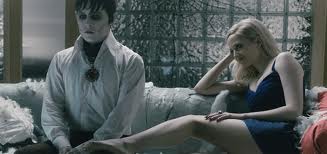
In Dark Shadows, we see quite a few different love interests for Johnny Depp’s character, Barnabus, which are really the drive behind the film. The plot, which involves restoring the family to their original fame and fortune, is interlaced with the romantic dealings of Barnabus. We see a sexually aggressive female character in Angelique, who loves Barnabus and wants his love in return. There is a particularly amusing segment where Angelique tries to force herself upon Barnabus, in turn destroying her office. The character that Barnabas loves is one of a younger girl with a much sweeter demeanor, much more so than Angelique. We also see the members of the family occupying his house trying to vie for his love and attention, which the writers rely on to drive the humour of the film.
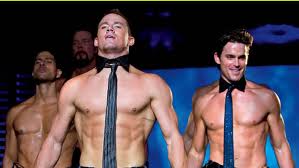
The premise of Magic Mike seems like it is driven completely by the sexual objectification of some of Hollywood’s most “attractive” actors. The plot is based around the main stripper, Mike, changing his lifestyle for the woman that he loves, the sister of one of the strippers. With the exception of the lead female character, the women in the film are also objectified, being portrayed as girls who love male strippers, and will eventually sleep with them.
In The Five Year Engagement we see a bit of gender parity, the movie focusing equally on the main male and female characters. The situation with the male character seems to be more crass and sexually objectifying. He is seen naked in a scene, he makes the decision to cheat on his fiance, and when he enters into a new relationship, the woman that he is dating is young and very sexually active, which they show more than once in the movie. When the main female character enters into another relationship, it is with an older man who is portrayed as more mature, and they do not show the same types of situations as they do with the male characters. In the end, they do switch traditional gender roles, and the main female character proposes to the main male character.
The Vow follows the gender roles as in all Nicholas Sparks movies. The couple is in love, they face turmoil, they are separated, and in the end they are together. This movie is no different. There is a bit of gender parity, each character being equally focused on. The main female character is a little more stereotyped, she comes from a wealthy family and she lives at home with them, which is opposing how she lived with her husband and had an art studio before her accident. Following suit to all Sparks movies, the couple does get back together in the end of the film.
In Twilight: Breaking Dawn Part 2 we see a change in the attitude of Bella, as she is now a vampire. She functions much more singularly, not following Edward around or reacting to his every action. She spends time on her own, doing her own problem solving. Also, she now plays the role of a stereotypical mother, being protective of her child, and protecting her family. It is a refreshing change from the previous movies. The other female vampires play roles that they have previously played, mostly being strong female character with male counterparts. Similarly, the male vampires play roles that they have been in throughout the film series. Edward becoming a strong protective father figure, being the difference.
What To Expect When You’re Expecting focuses on the female characters, trying to show how potential childbirth affects each character. Each potential mother handles the arrival in different ways and we see natural childbirth, adoption, and a miscarriage, and the resulting emotional trauma of each situation. However, the film does not completely disregard the male characters. There are plenty of scenes where the fathers or potential fathers spend time together discussing life with children and how their lives have changed. Though the movie seems as though it would focus on the babies and the mothers, the writers added the parts of the movie about the fathers to add more humour and also to appeal to a male audience.
There were a few examples of solid representations of women where the female character was independent and did not rely on men, were not portrayed as emotionally unstable, and not used for purposes of a love interest. Brave was certainly one example of a movie where the lead female character did not rely on men, and in fact, did not want to get married. Also, it could be argued that in The Hunger Games, Katniss was not used for a love interest, but rather, had other love interests, which were manifested for the purpose of achieving her end goal. Also, in Snow White and the Huntsman, the Queen was certainly using men as a means to her end, however, she was certainly doing so to protect herself. Though there are not a large number of deviations from the cinematic norm, it is certainly nice to see a few differing representations of women in 2012 cinema. 
In addition to the instances where women are portrayed with positive characteristics, there were films that also allowed men to step outside the limited boundaries of normative male behavior. For instance, the main character in the film Perks of Being a Wallflower, Charlie, while struggling with depression, is allowed to show emotion and does not try to just fit into the dominant culture. The friends he develops throughout the film, both male and female, allow him to be his own person and deal with the myriad of emotions that any teenager is confronted with.
Considering the power of images and messages in Hollywood films, it is safe to conclude that male dominance continues to be the norm and that gender stereotypes continue to limit the kind of representation that is possible in film. There is not a simple cause and effect of media representation and what happens in the real world, but media representation does normalize the reality of male dominance that continues to be pervasive in the United States.
Here is a listing of the films we looked at for the gender representation study:
Lead Characters:
21 Jump Street – 2 Males
Abraham Lincoln Vampire Hunter – Male
American Reunion – Male
Argo – Male
Battleship – Male
Brave – Female
Cabin in the Woods – Male
Chernobyl Diaries – Male
Chronicle – Male
Cloud Atlas – Male
Contraband – Male
Dark Shadows – Male
Diary of a Wimpy Kid: Dog Days – Male
Dredd – Male
Flight – Male
Frankenweenie – Male
Fun Size – Female
Here Comes The Boom – Male
Hit and Run – Male
House at the End of the Street – Female
Hunger Games – Female
Ice Age Continental Drift – Male
John Carter – Male
Lawless – 3 Males
Life of Pi – Male
Lockout – Male
Looper – Male
Madagascar 3 – Male
Magic Mike – Male
Men in Black 3 – Male
One for the Money – Female
ParaNorman – Male
Premium Rush – Male
Project X – Male
Prometheus – Both
Resident Evil: Retribution – Female
Safe House – Male
Savages – Gender parody
Skyfall – Male
Snow White and the Huntsman – Female
Taken 2 – Male
Ted – Male
That’s My Boy – Male
The Amazing Spider Man – Male
The Avengers – Male
The Bourne Legacy – Male
The Campaign – 2 Males
The Dark Knight Rises – Male
The Dictator – Male
The Expendables 2 – Male
The Five Year Engagement – Both
The Grey – Male
The Hobbit – Male
The Lorax – Male
The Man with the Iron Fist – Male
The Odd Life of Timothy Green – Male
The Perks of Being a Wallflower – Male
The Raven – Male
The Vow – Both
The Watch – Male
The Woman in Black – Male
Think Like A Man – Both
Total Recall – Male
Trouble with the Curve – Male
Twilight Breaking Dawn 2 – Female
A Wake Up Call from Vandana Shiva
This video is re-posted from the Perennial Plate.
There has been a lot written about GMOs, pesticides, organic etc. to the point that it’s easy to lose touch with how these issues actually impact people’s lives.
On our recent trip to India, we got a wake up call from environmental activist Dr. Vandana Shiva on the reality of these issues and how they can impact farmers to the point of suicide. Watch this video to learn the message of Dr. Shiva and the seed saving solution that she and her partner Bija Devi are manifesting in rural India.
 Grand Rapids Institute for Information Democracy