Associated Press Stylebook Drops ‘Illegal Immigrant’
This article by Jorge Rivas is re-posted from ColorLines.
The Associated Press announced on Tuesday they will no longer recommend journalists use the term illegal immigrant when referring to immigrants in the United States without legal permission.
The announcement comes more than three years after Colorlines.com launched The Drop the I-Word campaign that called on media outlets to stop using the term “illegal immigrant” because it is a racially charged slur that confuses the immigration debate and fuels violence.
“The Stylebook no longer sanctions the term “illegal immigrant” or the use of “illegal” to describe a person. Instead, it tells users that “illegal” should describe only an action, such as living in or immigrating to a country illegally,” wrote AP Senior Vice President and Executive Editor Kathleen Carroll on the organization’s blog.
“It’s great to see the Associated Press stand up for responsible journalistic standards. The style guide is the last word on journalistic practice so it’s particularly important for the AP to set this standard,” said Rinku Sen, executive director of the Applied Research and publisher of Colorlines.com. “This should put the debate to rest.”
The updated AP Style Guide entry is being added immediately to the AP Stylebook Online and Manual de Estilo Online de la AP, the new Spanish-language Stylebook. It reads as follows:
illegal immigration Entering or residing in a country in violation of civil or criminal law. Except in direct quotes essential to the story, use illegal only to refer to an action, not a person: illegal immigration, but not* illegal immigrant. Acceptable variations include *living in *or *entering a country illegally or* without legal permission.*
Except in direct quotations, do not use the terms illegal alien, an illegal, illegals or undocumented.
Do not describe people as violating immigration laws without attribution.
Specify wherever possible how someone entered the country illegally and from where. Crossed the border? Overstayed a visa? What nationality?
People who were brought into the country as children should not be described as having immigrated illegally. For people granted a temporary right to remain in the U.S. under the Deferred Action for Childhood Arrivals program, use temporary resident status, with details on the program lower in the story.
The Drop the I-Word campaign argued journalists have professional and ethical standards to uphold and that term illegal is not legally or journalistically accurate and it confuses debate.
Margaret Sullivan, the New York Times’ public editor announced Monday afternoon her organization is also working on revising its usage of the term “illegal immigrant.”
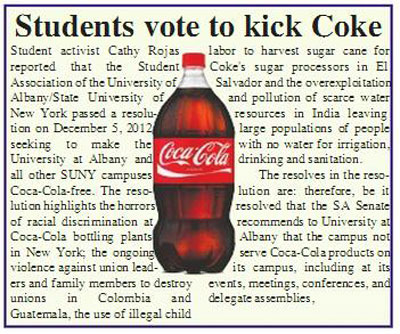
Students vote to Kick Coke off of SUNY Campus
This article is re-posted from the Killer Coke.
“Student activist Cathy Rojas reported that the Student Association of the University of Albany/State University of New York (SUNY) passed a resolution on December 5, 2012 seeking to make the University at Albany and all other SUNY campuses Coca-Cola-free…”
Students at SUNY/Albany not only want Coca-Cola off campus, but are also demanding the removal of Sodexo from their campus over worker exploitation and worker rights issues. It should be noted that Coca-Cola Co. board member Alexis Herman is chair of the Business Advisory Board of Sodexo.
SUNY is composed of 64 campuses with almost a half million students.
Foundation Profile: The Frey Foundation
This foundation profile is part of a series of profile included in the Grand Rapids Non-Profit Industrial Complex Project.
Unlike the other foundations we have profiled up to this point, the Frey Foundation has an online presence, thus providing more transparency, than the foundations of the DeVos family members.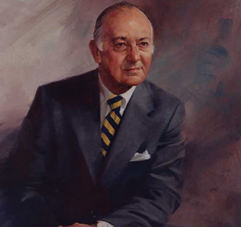
The wealth of the Frey Foundation originated with Edward Frey, who was the former President and Chairman of the Union Bank in Grand Rapids. Frey also functioned as the chairman of the board of Foremost Insurance Company. Like all foundations, the wealth used by the Frey Foundation was generated from the business class, which makes much of its wealth off of the labor of workers.
The Frey Foundation’s mission is as follows:
We invest in change. We work in partnership with organizations, agencies, and other funders, which have a track record of success and a deep commitment to the west Michigan community. Our grantmaking focuses on six interrelated aspects of community life: Arts, Capital Projects, Children, Civic Progress, Environment, and Philanthropy.
In looking at the 990s for the Frey Foundation from 2009 – 2011, one could argue that the Frey Foundation has contributed to organizations that people might identify as progressive, such as Dwelling Place and Legal Aid. There is a substantial investment in environmental efforts in West Michigan and across Michigan, with contributions to Blandford Nature Center, WMEAC, the Nature Conservancy, Friends of Grand Rapids Parks and Trout Unlimited. The Frey Foundation even provided $45,000 to the Greater Grand Rapids Bicycle Coalition in 2012, according to their own site.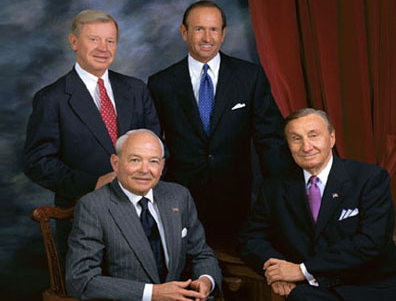
At the same time, the Frey Foundation has been a significant amount of money to entities that support business interests and the business class. Between 2009 – 2011, the Frey Foundation contributed $150,000 to the Right Place Inc., $26,000, Michigan Future Inc., $95,000 to the West Michigan Strategic Alliance and $289,000 to Grand Action.
These entities all are primarily made up of people who are part of the Grand Rapids power structure, with Michigan Future Inc. being somewhat of an exception, since it is not based in West Michigan. In fact, a representative of the Frey Foundation sits on three of the four business groups just listed, including Grand Action, Michigan Future Inc. and the West Michigan Strategic Alliance.
These relationships and these entities primarily exist to support existing power dynamics in West Michigan, dynamics which benefits the business class and local elites. While the Frey Foundation provides funding to progressive organizations that do engage in work that has social benefit, none of it challenges power.
This is not to argue that these groups should not take money from the Frey Foundation or any other foundation, but it does raise questions about how much influence these contributions have on organizations and their ability and inability to look at structural or systematic causes of major social problems, such as environmental destruction and contamination. These are questions we will be asking non-profits as part of our Grand Rapids Non-Profit Industrial Complex Project.
Decolonize This!
This video was produced by subMedia. Another fabulous video by subMedia on several current anti-colonial campaigns in Latin America and Canada. This video also includes a great discussion at the end on what colonialism is and what an ally would look like in a decolonizing struggle.
1. Super SME
3. Enbridge Pipeline Fenced off
5. Hearts are stronger than bullets
 About 100 people gathered on Friday to protest ongoing Immigration and Customs Enforcement (ICE) raids against immigrants in West Michigan and to kick off a local campaign to mobilize people to prevent raids in the future or to intervene on behalf of people arrested by ICE.
While Mlive has done a piece on the protest, much valuable content was missed, including a basic understanding of why the demonstration took place. Below is our report.
The demonstrators initially gathered at Calder Plaza in downtown Grand Rapids, where Joyce Herdog led the group in prayer. The Dominican sister ask that folks remember that Jesus’ love was universal and that he “made no distinctions”.
The group was diverse and all present were asked to “stand in solidarity” with those facing deportation, arrests, and intimidation by ICE. One organizer made a point to welcome any police or ICE officers that might be present at the march, saying “We’re not afraid of you, and we won’t be intimidated”. Helicopters whirled overhead. The recurring echoes of chopper blades bouncing off nearby buildings served as an ominous reminder of our current surveillance state and the dangers those people designated as “illegal” face.
 Protestors participated in a silent march to the ICE office at 517 Ottawa Avenue. Organizers asked folks to “circle up” on the sidewalk outside of the office windows to ensure visibility from inside the office. The group sang together before several people gave testimonies of their experience with ICE and why they decided to participate in the protest.
Two women shared testimonies in Spanish about family members that have been arrested, detained, and deported by ICE officials. Both women talked about the hardship of being separated from the family members who were deported and how difficult it has made their lives.
Local immigration attorney Rick Kessler spoke about how many raids have been taking place in West Michigan and how most of those picked up in ICE raids have been people who committed petty crimes, often over 15 years ago. Kessler said that the ICE budget has expanded and is now larger than many other law enforcement agencies combined. Kessler also made the point that these arrests are political in nature and have little to do with public safety or security.
A representative from Justice for Our Neighbors (JFON) also addressed the crowd, speaking about the services their organization provides and the importance of working for Comprehensive Immigration Reform at the federal level.
 There were two organizers with AIR-MOP, a statewide group that is working on Comprehensive Immigration Reform. Both talked about the policies that need to change and the national campaign to make those changes. They also spoke about a large demonstration that will take place on April 10 in Washington, DC, with several bus loads going from Grand Rapids.
The last speakers were with the group that organized the protest and announced the campaign to have a Rapid Response to ICE Raids West Michigan. The Rapid Response to ICE West Michigan is made up of a coalition of people and organizations that are responding to the social, economic and political violence caused by ICE raids in our community. Their goals are to:
1) Co-ordinate and network with organizations and individuals that are already offering social services to families impacted by ICE raids,
2) Offer financial and legal support to individuals and families impacted by ICE raids,
3) Document the frequency of these raids, arrests and detentions,
4) Mobilize people to rapidly respond to ICE raids using a variety of political pressure tactics.
The group has said they will soon be creating a Facebook group and email listserve to help raise awareness and keep people involved.
Last week to sign up for GRIID Spring 2013 Classes
This is the last week to sign up for the Spring 2013 Classes with us here at GRIID.
We are offering two new popular education classes, both of which will last seven weeks.
The Indy Media Production class is being offered as an opportunity for people to learn independent journalism skills, media analysis and independent media production. For people wanting to be part of a growing movement of independent journalists, videographers, documentary makers, podcasters, zine makers or street media, then this class is for you.
This GRIID Class will primarily be project focused, and the group will be asked to work together to create local Indy media. The nature of this media, the form that it takes, the audience it speaks to, and so on, will be determined by the group. We will do a brief intro looking at the state media locally and nationally before beginning on the project.
The Indy Media Production class will take place on Mondays from 6 – 8pm, starting on Monday, April 8 and will last 7 weeks, ending on May 20.
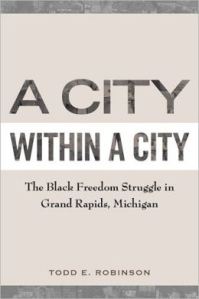
The second class we are offering, Institutional Racism in Grand Rapids, is an investigation into the function of institutional racism in Grand Rapids. We will be reading the recently released book, A City Within a City: The Black Freedom Struggle in Grand Rapids, MI, which covers the period from WWII through the early 1970s. The author of this book, Todd Robinson, names the institutional racism in Grand Rapids as a form of managerial racism.
In addition to using A City Within a City, we will investigate how institutional or managerial racism functions in Grand Rapids today, by looking at the economic, political and social condition of communities of color, as well as how White Supremacy is manifested in power structures.
The Institutional Racism in Grand Rapids class will take place on Wednesdays, from 7 – 9pm, beginning April 10 and will last 7 weeks, ending on May 22nd.
We are asking $20 for each class (does not include the cost of the book), but we will not turn anyone away for lack of funds. To sign up for either class, send an e-mail to jsmith@griid.org. Location for these classes will be provided to those who sign up.
IWW organizers say today’s rally just the beginning of actions in support of unlawfully fired worker at Star Tickets
Earlier today a group of IWW members and supporters came to a rally in solidarity with Deirdre Cunningham, an IWW organizer who was fired last week for organizing fellow workers.
The unlawful termination of Deirdre Cunningham came on the heels of an organizing campaign that resulted in the majority of Star Ticket workers voting in favor of having a union.
This was just the beginning of an effort to challenge Star Tickets owner Jack Krasula and his anti-union tactics. The IWW stated that they planned to continue having rallies, do fundraising for Deirdre and engage in other tactics to pressure the company to reinstate their fellow worker.
People are encouraged to check the IWW Star Tickets Worker Union Facebook page for updates and continue to flood Jack Krasula with phones calls, calling for the reinstatement of Deirdre Cunningham.
Jack Krasula Phone – 248-945-1127
We also had a chance to talk with Deirdre Cunningham on tape, which is followed by IWW organizer Cole Dorsey talking about the union’s reaction to Deirdre’s firing.
Modern Capitalism’s Hall of Hypocrisy
This article by Paul Buchheit is re-posted from Common Dreams.
Capitalist greed is splitting our country in two. But rather than look objectively at their failures, many of those responsible have been hypocritical, portraying themselves as advocates of freedom and prosperity while the greater part of America slides toward poverty.
Some of the candidates:

1. The “Get a Job” Critic
This usually well-connected person criticizes the jobless for being lazy. But in a recent poll that asked if “the government in Washington should see to it that everyone who wants to work can find a job,” 68% of the general public agreed, while only 19% of the wealthy were in agreement.
Apparently they feel the free market will find those jobs. But as they staunchly adhere to their notion, large corporations are holding trillions in cash, transferring millions of jobs overseas, and paying low-level wages to those who have managed to stay employed.
2. The Illusionist
It all started with a “world is flat” reverie, by which every individual in the world is empowered to accomplish great things. Then on to “create your own job” hyperbole, and on a global scale to the capitalist’s belief that “a billion people have been lifted from poverty through free-market competition.”
The message being spread by the people at the top is that everyone benefits, and everyone has opportunities.
The reality is that only the top of the mountain is flat. Or more accurately, the plateau just below the top of the mountain is flat. Perhaps 10% (or somewhere between 5% and 20%) of the U.S. is doing reasonably well, especially with 93% of non-home wealth owned by the richest quintile of Americans. Everyone else has experienced a 35-year decline in income. But hypocrisy bares its contemptuous soul with its hurrahs for the ever-growing stock market. Outside our borders, world inequality has decreased, but largely because of the rapid ascent of China, while INSIDE China inequality has grown at a pace rivaling the United States. There may be a half-billion young Chinese laborers who are technically above poverty level, but GDPs don’t measure the quality of life or asset distribution of 70-hour-per-week factory workers.
3. The Self-Made Man
Wealthy individuals pride themselves on their successes from meager beginnings. Many of this self-congratulatory group grew up as educated white males in the richest nation ever in the most productive time in the history of the world. They rode the technology engine for thirty years, benefiting from federal funding that provided almost half of basic research funds into the 1980s, and half of research in the communications industry as late as 1990. Now, of course, it’s much different. Globalization and automation have eliminated many of the old opportunities. Half of college graduates are unemployed or underemployed. And while it’s always been more of a struggle for the lowest-income people, it’s even worse now, withmore than half of those individuals in the bottom income quintile remaining there 10 years later. Compared to other developed countries, the U.S. ranks near the bottom in economic mobility.
4. The Government Hater
This candidate opposes government intervention of any type, unless it’s for national defense, homeland security, surveillance, prison funding and the drug war, any subsidies to oil and coal and agricultural companies, bailouts and Quantitative Easing, tax expenditures that mainly benefit the rich, and anything to do with women’s bodies.
5. The Revolving Doorman
Here’s another candidate who hates government interference, but will tolerate it if there’s a friend in the regulator’s chair. A friend like Mary Jo White, connected for 36 years to a law firm that would be monitored by her new position as head of the SEC. A report by the Project on Government Oversight stated that “Former employees of the Securities and Exchange Commission (SEC) routinely help corporations try to influence SEC rulemaking, counter the agency’s investigations of suspected wrongdoing..and win exemptions from federal law.” General Electric has a particularly smooth-spinning revolving door in the back of its corporate offices. After eliminating 37,000 jobs over ten years, CEO Jeffery Immelt was appointed as chairman of President Obama’s Jobs Council. Secretary of Energy nominee Ernest Moniz has served on GE’s advisory board. And Cathy Koch, a lobbyist for the tax-avoiding company, was appointed chief advisor on tax and economic policy.
6. The Entitlement Basher
This person claims that Social Security recipients are ‘takers.’ Here are the facts. According to the Urban Institute the average two-earner couple making average wages throughout their lifetimes will receive less in Social Security benefits than they paid in. Same for single males. Meanwhile, tax expenditures (deductions and exemptions which primarily benefit the very rich) cost us about 8% of the GDP, which is almost exactly the same percentage that goes to Social Security and Medicare.
7. The New American – Love It and then Leave It at Tax Time
Unlimited candidates for the Hypocrisy Hall here, starting with companies like Google and Microsoft that hold onto their foreign cash to avoid taxes, but actually keep the cash in U.S. banks, taking advantage of publicly-funded national security to safeguard the assets they’re not paying taxes on. Then there are pharmaceutical companies like Eli Lilly and Pfizer who denounce the idea of consumers purchasing cheap prescription drugs from Canada, but then shift patents and profits to offshore tax havens to avoid paying U.S. taxes. On the individual level, 1,700 Americans renounced their citizenships in 2011. The top Hypocrisy Hall candidate is Eduardo Saverin, who found safe refuge in the U.S. after his family was threatened in Brazil, benefited from American research and technology to take billionsfrom his 4% share in Facebook, and then skipped out on his tax bill. Finally there are CEOs like Doug Oberhelman of Caterpillar, who threatened to leave Illinois unless the highly profitable company received atax break that allowed the company to pay less than 1% of its total net income in state taxes, and then said, “Legislators in Illinois have created an environment that is unfriendly to business and investment.”
8. Realtor for the Slaves
The GEO Group, operator of private prisons, is trying to qualify as a “real estate intensive industry” (REIT). In a company profile GEO refers to itself as having “attractive real estate characteristics.”
What is the nature of GEO’s property? The 13th Amendment says “Neither slavery nor involuntary servitude, except as punishment for crime whereof the party shall have been duly convicted, shall exist within the United States.” The private prisons have a room ready for the kids on the school-to-prison pipeline.
So Who Makes It to the Hall?
Only those who can aspire to duplicitous extremes, like Monsanto, whose website proclaims “Monsanto is committed to assuring the safety and quality of our products and promoting a culture of integrity through our business conduct,” after their communications director said “Monsanto should not have to vouchsafe the safety of biotech food. Our interest is in selling as much of it as possible.” Now, that is worthy of recognition.
Interview with student organizer of campaign to prevent Gov. Snyder from being a GVSU Commencement Speaker on April 27
The following interview was conducted via e-mail with Ian Post, one of the student organizers involved in an effort to prevent Michigan Governor Rick Snyder from being a Commencement Speaker this April at GVSU. For updates on this campaign go to their Facebook page.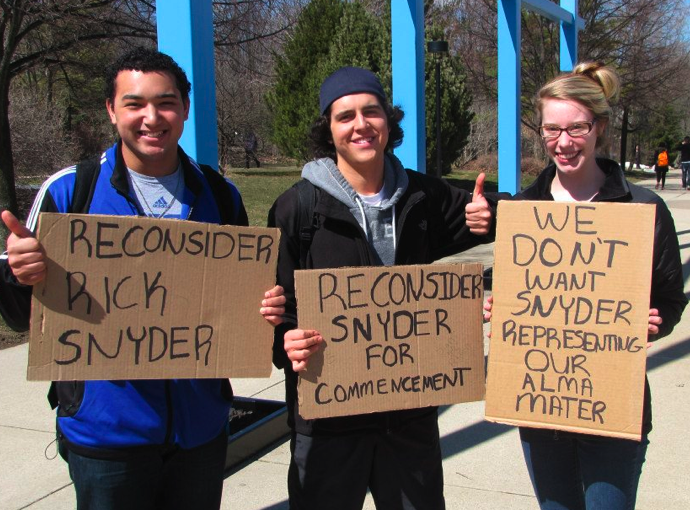
1) How did this effort to prevent Gov. Snyder from being a commencement speaker come about?
The effort to prevent Governor Snyder from being the Commencement speaker began when a few seniors became aware that he was chosen at the Board of Trustees meeting and voiced their concern at our place of work. As a junior, I saw this as a much larger problem that affected more people than the graduates. This led a couple of concerned students to take action against the administration’s decision.
2) What actions have you taken so far in this campaign?
So far the effort includes a physical petition, an online petition, social networking tools, and one small protest on campus that gathered petition signatures. There will be more protests in the following weeks. We have also been forming a coalition with other campus activist groups that will strengthen the voice of the students.
3) What has been the reaction from students, faculty and staff?
The reaction from students, staff, and faculty has been surprisingly welcoming. Students who see the title of the petition voluntarily approach us and ask if they can sign. When I printed the first petition in the library, a senior approached and asked if it was legitimate and whether or not he could sign. The GVSU staff has been equally supportive as groundkeepers and full-time campus dining employees have asked to sign the petition. The majority of faculty has been reluctant to support the effort, but there are professors who have joined to express their support.
4) Is this a non-partisan effort?
This is a non-partisan effort. This is a much bigger fight for education and democracy. Students are fed up with increasing tuition rates and tremendous debt. This is also the fault of the university administration, but they frequently attribute tuition increases to state funding. Direct democracy has been undermined by lame-duck session bills (Right to Work and private prison bill), referendum-proof bills, the Emergency Financial Manager law, and the Education Achievement Authority that is in progress. The voice of the voter has been replaced with the authoritative decision of a budget-cutting businessman. Although cuts may be needed, they should not be made to the education system. There are other places where cuts can be made without harming Michigan’s students.
5) If you are not able to prevent him from speaking at commencement, are there plans for other actions? On the day of the commencement?
We will not stop voicing our concern until Governor Snyder is replaced as the 2013 Commencement speaker. However, if the administration does not replace him we will continue to protest until, and on, April 27. Further actions to fight for the democratic and education institutions in Michigan will be organized over the summer and implemented in the following years. The Commencement protest may end on April 27, but the larger struggle will move on.
6) Will there be any efforts to involve the larger West MI community that has been impacted from the anti-democratic policies of this administration?
We have been coordinating a GVSU coalition that will provide a forum for dialogue about these kinds of issues. From there, we will decide how to take action. We have also been discussing a regional and state-wide effort, much like the SDS in the 1960s and 1970s. Once the same sort of dialogue resource has begun at other universities in the region, the strength of the student voice will be realized and taken in to effect. Student solidarity is the key, no matter what political or ideological affiliation.

Boeing Helps Kill Proposed Law to Regulate Drones
This article by Pratap Chaterjee is re-posted from CorpWatch.
Boeing, the aircraft manufacturing giant from Seattle, helped defeat a Republican proposal in Washington state that would have forced government agencies to get approval to buy unmanned aerial vehicles, popularly known as drones, and to obtain a warrant before using them to conduct surveillance on individuals.

Local authorities in Seattle and in King county experimented with conducting surveillance from Draganfly Innovations drones last year, only to cancel both programs in the fact of public protest. “I’m not really surprised that people are upset,” said Jennifer Shaw from the American Civil Liberties Union, a human rights group that campaigned against the drones. “It’s a frightening thing to think that there’s government surveillance cameras overhead.”
On February 7, 2013, David Taylor, a Republican member of the state legislature, introduced a bill to regulate drone use. The proposed law quickly won support from several Democratic party politicians on the state Public Safety Committee.
Alarmed by the growing bipartisan coalition, Boeing jumped into the fray. “We believe that as the technology matures, best practices and new understanding will emerge, and that it would be counterproductive to rush into regulating a burgeoning industry,” Boeing spokeswoman Sue Bradley wrote in a statement. (The company makes a variety of drones from the Unmanned Little Bird and the A160 Hummingbird helicopters to the ScanEagle which has been used in Iran and Iraq and the proposed new X-45C combat aircraft) After the company approached several lawmakers, Frank Chopp, the Democratic speaker of the House of Representatives in Washington state, canceled a scheduled March 13 vote on the bill. Instead Jeff Morris, another Democrat who chairs the House Technology and Economic Development Committee, was asked to lead a “more comprehensive study of surveillance issues.”
“This is all about profit,” said a disappointed Taylor. “This is about profit over people’s rights.” While local and state use of drones has been limited to short pilot projects so far, concern about the federal use of drones has been on the rise in the last few months especially as the Obama administration has refused to divulge details on how drones are used by government authorities like the Department of Justice and the Department of Homeland Security’s Customs and Border Protection agency. Republicans in the U.S. Congress have even voted to ask the Pentagon to reveal whether it is using drones inside the U.S.
Privacy groups have raised questions about what might be legally possible. “We don’t believe that there are actually any federal statutes that would provide limits on drone surveillance in the United States,” says Amie Stepanovich, director of the Domestic Surveillance Project at the Electronic Privacy Information Center. “The privacy laws that do exist are very targeted [and] don’t encompass the type of surveillance that drones are able to conduct.”
To date lawmakers in some 32 states have introduced bills to restrict drone use. While none have been voted into law (North Dakota and Oklahoma both opposed such laws in order to attract more investment in their states), last month the city of Charlottesville, Virginia, pledged not to conduct drone surveillance and voted in favor of a resolution that calls on the federal and state governments to adopt laws banning “information obtained from the domestic use of drones from being introduced into a Federal or State court.”
Some believe that the use of drones for surveillance is just the first step towards using them for more deadly purposes within the U.S. “The belief that weaponized drones won’t be used on US soil is patently irrational. Of course they will be. It’s not just likely but inevitable,” writes Glenn Greenwald, the UK Guardian columnist and former constitutional lawyer. “Police departments are already speaking openly about how their drones ‘could be equipped to carry nonlethal weapons such as Tasers or a bean-bag gun.’
Greenwald applauds the proposed new laws to regulate drones that are being introduced in states from Texas to Massachusetts which he says “affords a real opportunity to forge an enduring coalition in defense of core privacy and other rights that transcends partisan allegiance, by working toward meaningful limits on their use.”
 Grand Rapids Institute for Information Democracy