Labor Solidarity and the Poor People’s Campaign: On the 45th anniversary of Dr. King’s assassination
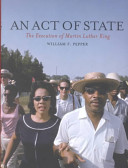
On this day, April 4, 1968, Dr. Martin Luther King Jr. was gunned down in Memphis, Tennessee, in what scholars like William Pepper called a state execution. Pepper’s thesis, which is supported by sound sources, claims that the FBI and the State Police of Tennessee were involved in the assassination of Dr. King.
Whoever pulled the trigger(s) in the end is not as relevant as what brought Dr. King to Memphis in the spring of 1968. King came to Memphis to support sanitation workers who were on strike. The strike, which had been in effect for months before King came, was an important campaign, since the White power structure in Memphis was not going to allow the mostly Black sanitation workers to demand anything.
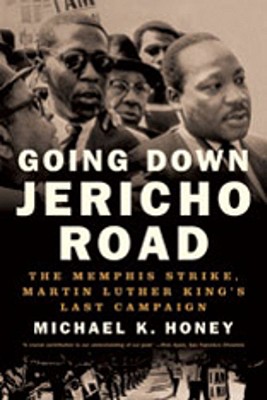 The sanitation workers struggle is well documented in Michael Honey’s book, Going Down Jericho Road: The Memphis Strike, Martin Luther King’s Last Campaign. Sanitation workers were faced with brutal working conditions and little pay. The call for a strike came when one worker was crushed inside of a garbage truck and no compensation was provided for his family.
The sanitation workers called for a strike and got lots of support from the community and some outside unions, but not as much support from organized labor as they had hoped. The lack of organized labor support was due to big labor’s relationship with the Democratic Party in the South, which continued to support racial apartheid in states like Tennessee.
The strike campaign expanded when the workers began targeting companies doing business in Memphis, such as Coca Cola, which Dr. King identifies as one of the corporations to boycott in his April 3 speech in Memphis.
King’s decision to come to Memphis was important on several fronts. First, it demonstrated the continued political maturation of the most visible Civil Rights leader at that time. King had begun to see that desegregation and civil rights were woefully inadequate as long as institutional racism was embedded in every major sector of American society, as long as the government spend billions on war on not social programs and as long as poverty plagued the Black community.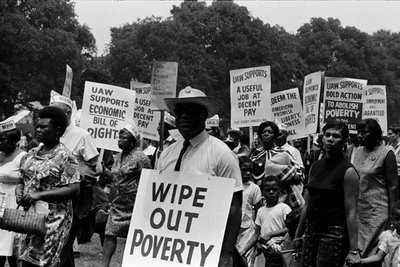
The second reason why King’s trip to Memphis was so important is that it signaled a growing realization that the civil rights movement needed to build a larger coalition of justice movements, like the labor movement.
In his book, All Labor has Dignity, Michael Honey demonstrates that King had a long relationship to organized labor, going back as far as the late 50s. However, King did not fully realize the power of organizing workers until later in life, particularly after he moved his campaign to the North and came to terms with the brutality of neoliberal capitalism in places like Chicago and Detroit.
King’s growing interaction with groups that had a class-based analysis is reflected in his later speeches and was the centerpiece for his Poor People’s Campaign, a campaign that King and others had been organizing for over a year before his assassination.
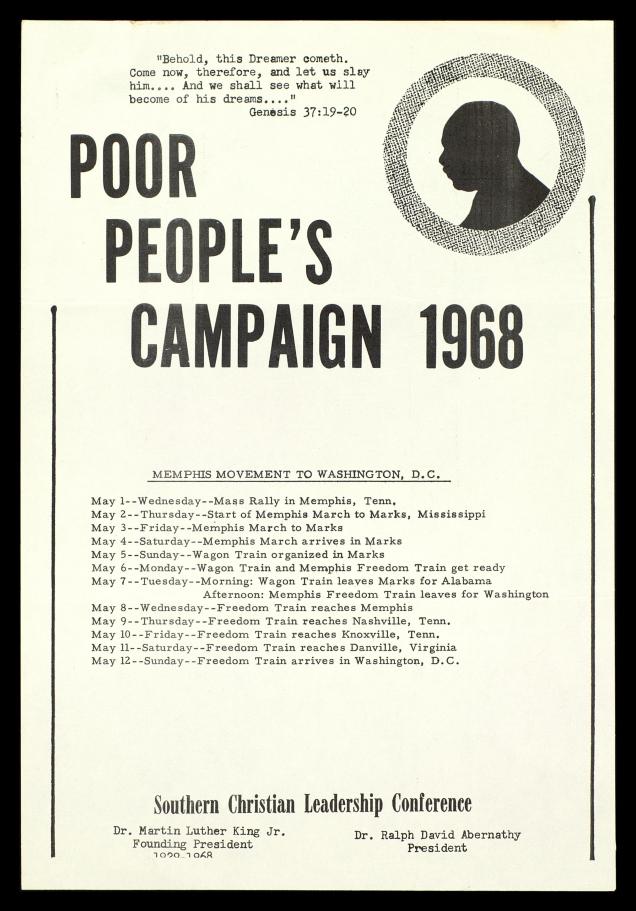 King and others wanted to make poverty and economic injustice the center of this campaign and wanted to bring over a million working poor, both employed and unemployed, to the nation’s capitol. King was calling for massive civil disobedience and for redistribution of wealth. Such a campaign scared the shit out of the power structure and even raised serious concerns for many of the mainstream liberal groups that King had been associated with, who felt that these were demands that they could not get behind.
King sought the support from as many unions as possible and travel the country to places like New York City to speak in front of labor groups to gain support for the Poor People’s Campaign.
In a speech he gave to Local 1199 in New York City on March 10, 1968, King said,
“When there is massive unemployment in the black community, it’s called a social problem. But when there is massive unemployment in the white community, it’s called a depression.”
In this speech King talked about the Poor People’s Campaign and clearly makes statements that would put the fear of god into those in power.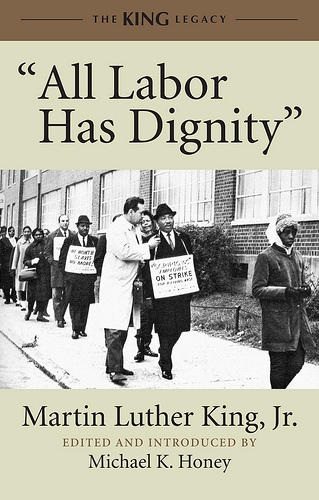
And this is why we’re going to Washington. I wish I had time to talk to you about it in detail tonight. I’ve been through the ghettos of our nation, been in the Delta of Mississippi. I’ve been all over and people are frustrated. They’re confused, they’re bewildered, and they’ve said that they want a way out of their dilemma. They are angry and many are on the verge, on the brink of despair.
Now, I know that something has to be done. I can’t advise them not to riot. I don’t need to make a long speech tonight. You know my views on nonviolence. And I’m still absolutely convinced that nonviolence, massively organized, powerfully executed, militantly developed, is still the most potent weapon available to the black man in his struggle in the United States of America.
The problem with a riot is that it can always be halted by superior force, so I couldn’t advise that. On the other hand, I couldn’t advise following a path of Martin Luther King just sitting around signing statements, and writing articles condemning the rioters, or engaging in a process of timid supplications for justice. The fact is that freedom is never voluntarily given by the oppressor. It must be demanded by the oppressed……that is the long, sometimes tragic and turbulent story of history. And if people who are enslaved sit around and feel that freedom is some kind of lavish dish that will be passed out on a silver platter by the federal government or by the white man while the negro merely furnishes the appetite, he will never get his freedom.”
King was actually in Memphis on March 18, on the invitation from AFSCME and then again on April 3 of 1968, where he delivered his I’ve been to the Mountaintop speech, the day before his assassination.
What we can and must do on this anniversary and any future remembrance of Dr. Martin Luther King Jr. is not let anyone murder his message. We must keep alive the bold and brave analysis that challenged white supremacy and economic injustice. We must fight for freedom, for as King said, it will never be voluntarily given to us.
This article is re-posted from Eco-Watch.
Filmmaker Jim Tittle previewed his new documentary film, The Price of Sand, at the historic Sheldon Theatre in Red Wing, Minnesota, to a full house last week. With original interviews, coverage of recent events and local music about frac-sand mining, this visually rich 57-minute film explores the controversy surrounding frac-sand mining.
Minnesota and Wisconsin are experiencing a mining boom because both states have plentiful deposits of pure silica sand, a necessary component in hydraulic fracturing or fracking. A Minnesota legislator recently compared the current demand for frac-sand to a new gold rush. This session, the Minnesota Legislature is considering a one-year moratorium on silica sand mining to allow further study of potential impacts including health risks, depressed property values, excessive noise and truck traffic, water pollution and disruption of the tourist industry.
Tittle became interested in frac-sand mining two years ago after an oil company secretly acquired land near his mother’s house in Hay Creek Township, near Red Wing, MN. The company announced plans to build a 150-acre open pit industrial silica mine
As neighbors organized against the oil company, Tittle learned that mines were already operating in nearby Wisconsin. He produced a series of short YouTube videos on frac sand mining that got more than 10,000 views in the first three months. Current views exceed 55,000.
In November 2011, Tittle embarked on a more ambitious project, crowd-sourcing $6,800 in small donations to make his first feature-length documentary film, The Price of Sand. Tittle interviewed more than four dozen business owners, small town mayors, farmers and truckers. The Price of Sand tells the stories of real people and as Tittle says, explores “the real price of frac sand, not just in dollars, but in lives, communities and the future of our region.”
Silica sand from Minnesota and Wisconsin is transported by rail to fracking operations in North Dakota and Texas and other major oil fields. Huge trains carrying uncovered loads of silica travel through the Twin Cities, and can be seen regularly in the St. Anthony Park rail yards.
When frac-sand arrives at an oil field, it is mixed with water and chemicals, and injected into wells under high pressure. The hard, round grains of sand are wedged into cracks in the oil-bearing rock, and keep them propped open after the fracking fluid has been cleaned out. Oil and gas are then extracted.

To show what huge open pit frac-sand mines look like, Tittle had to be resourceful. Since many mines aren’t visible from public property, he built a custom mount for a sports action camera and attached it to small airplane. This low-altitude video footage presents a striking view of what may be in store for Minnesota.
The Price of Sand also includes Tittle’s original footage of airborne silica dust and microscopic sand particles. A University of Wisconsin Eau Claire professor explains how the dust affects humans,and why it is toxic. A Wisconsin farmer tells about the asthma she developed after a frac-sand mine opened near her home.
Tittle realized that many of the small towns affected by the frac-sand boom have vibrant art communities. To encourage artists to express their opinions and find unique music for his film, Tittle sponsored a “Best Frac Sand Song” contest on his film’s Facebook page. Music from the contest is featured in the film’s soundtrack.
DVDs are available for purchase on the film’s website.
New Report on Monsanto details the power & influence of one of the most dangerous global corporations
Earlier today, the national organization Food & Water Watch released a new report on the multinational corporate Monsanto.
The new report provides an overview of the biotechnology giant that now holds 1,676 patents on seeds, plants and other agricultural applications. Monsanto’s products are grown on over 282 million acres worldwide, including 40 percent of all U.S. crop acreage. The report outlines Monsanto’s history and its undue influence over lawmakers, regulators, academic research and consumers.
“Even though you won’t find the Monsanto brand on a food or beverage container at your local grocery store, the company holds vast power over our food supply,” said Wenonah Hauter, executive director of Food & Water Watch and author of the book Foodopoly. “This power is largely responsible for something else we cannot find on our grocery store shelves – labels on genetically engineered food. Not only has Monsanto’s and other agribusinesses’ efforts prevented the labeling of GE foods, but they spend millions to block grassroots efforts like California’s Prop 37 in order to keep consumers in the dark.”
Monsanto: A Corporate Profile provides a deep-dive into Monsanto’s history as a heavy industrial chemical manufacturer; a reality at odds with the environmentally friendly, feed-the-world image that the company spends millions trying to convey. The report offers a timeline of milestones in the company’s history including chemical disasters, mergers and acquisitions, and the first genetically engineered plant cell.
The 20-page report covers numerous aspects of the corporation, such its history, the tactics it uses to impose its will on the public, their global reach and the PR practices.
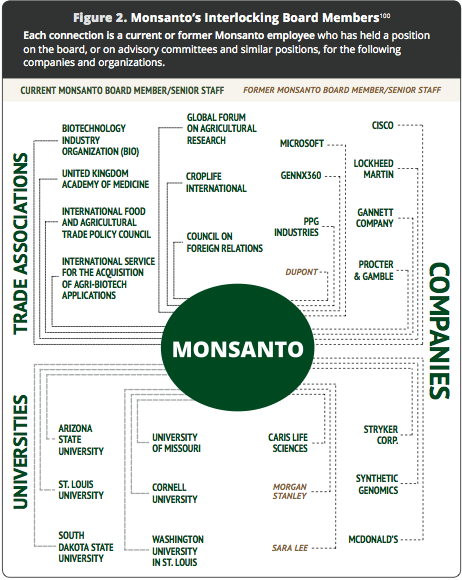
Other areas the report explores that this writer found valuable is Monsanto’s political influence with federal policy and the company’s relationship to other corporations, demonstrating an interlocking system of power, as you can see in the following graphics.

The Heritage Clinic for Women on East Fulton in Grand Rapids, has been the target of anti-abortionists for years.
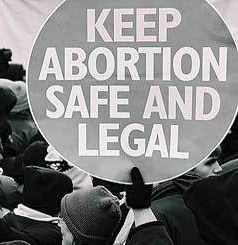
Last October, we interviewed someone from the Heritage Clinic on this history of harassment, during their 40 Days of Choice Campaign, which was a campaign to counter the “40 Days of Life” campaign organized by anti-abortionists in West Michigan.
On Wednesday, April 10, there is a protest planned in front of the Heritage Clinic for Women to continue to counter the so-called Pro-Life presence outside the clinic. Here is what the Facebook event page says:
Politicians, republicans, and anti-women groups are trying to turn back the clock on womens’ liberation by using various measures. However, we want to show that women are capable of choosing their own fate and combat the sexism that is built from believing that women are incapable of making their own decisions. We will be holding a counter-protest in favor of a pro-choice approach for women and trans* men and furthering the movement in achieving womens’ liberation.
Support a Woman’s Right to Choose!
Wednesday, April 10
10:00AM
Heritage Clinic for Women
320 E. Fulton, Grand Rapids
This article by Erin O’Sullivan is re-posted from The Price of Oil.
As the Obama Administration continues to ponder a decision on the Keystone XL pipeline, TransCanada has been assuring everyone of it’s safety. “Safety of the public and the environment is a top priority for TransCanada” their slick website reads. Any spill is deemed “unlikely”.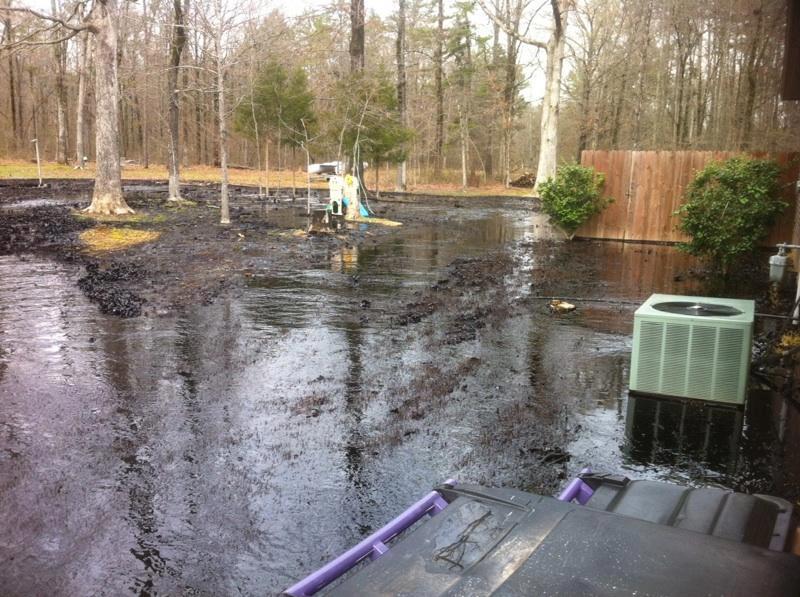
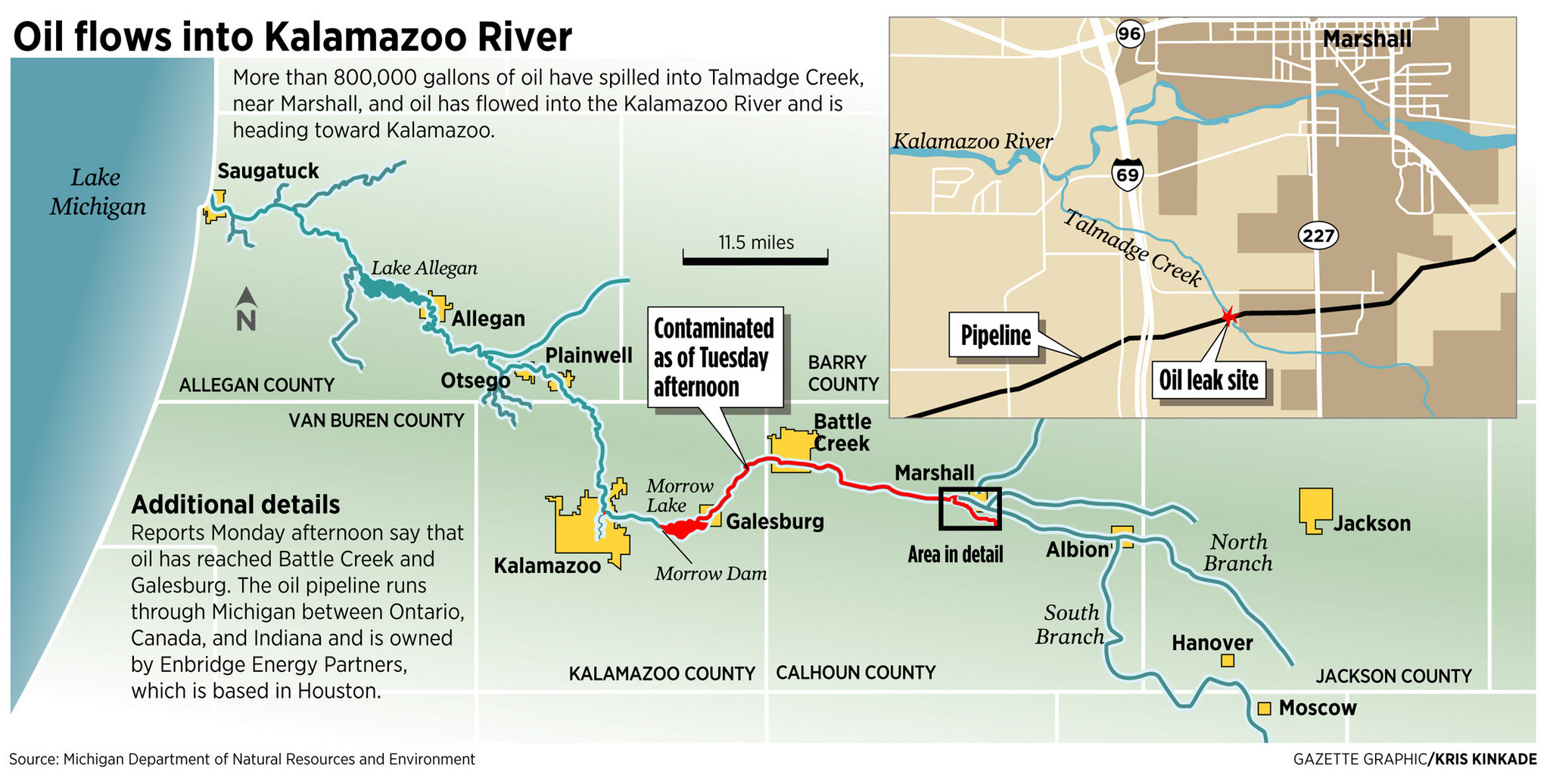
Hardly. Last year, there were 364 spills from pipelines that released about 54,000 barrels of oil and refined products. In 2010 in Marshall, Michigan an Enbridge pipeline sent 819,000 gallons of toxic tar sands crude into the town’s creek just 80 river miles from Lake Michigan. Now in Mayflower, Arkansas, 22 homes have been evacuated this week as Exxon prepares to attempt to clean 10,000 barrels of this same dirty tar sands crude from neighborhoods.
The experiences of people of Marshall, Michigan may shed light on what the citizens of Mayflower, Arkansas may now be in for.
On July 26th 2010, at 7:30 a.m., Marshall resident Susan Connolly dropped off her children at daycare. That Michigan morning there was a strong smell in the air, making it hard to breathe. By the time she picked up her children just a few hours later, the symptoms had started.
That night her son vomited. The week following, her daughter had a rash, as did almost all the children at the daycare. The other children also reported cases of vomiting, upset stomach, shortness of breath, lethargy, headaches, rash, irritation with the eyes, sore throat, and cough. Meanwhile, Connolly and her husband experienced migraines, eye irritation, sore throat, nausea, and cough. Just six days later, their dog came in from the yard suffering from continuous vomiting and diarrhea.
They quickly learned that this was all related to a broken Enbridge pipe, spilling bitumen ooze into the water just 6/10ths of a mile from their children’s day care and just two miles from their home. Bitumen is a thick, sticky, black semi-solid form of petroleum. It is transported from Alberta Canada as diluted bitumen (dilbit) on its way to refineries in the U.S.
“I’m a parent and I see the children and the staff of this center who have been affected by this spill,” says Connolly, “Three months after the spill, four parents withdrew six children from the center due to their concern of their short-term health effects of their children. They were concerned about the smell, air quality, and potential long-term effects. An employee who has been with the child care center since it opened, who helped them build it from the ground up, left the center because she has been sick since the day of the spill.”
Their concern is understandable. The EPA established that there were 15 parts per billion of benzene in the atmosphere in the region of the spill, which is roughly three times the standard established as safe for human exposure.
Connolly reports that “the argument made by Enbridge is: you cannot prove that the spill may be the cause. Well, my response as a parent is you can’t prove that it’s not… I’m not anti-pipeline, but I am an advocate for safety. You need to know the health impacts. There will be another spill, it’s not an if, it’s a when.”
Connolly’s story highlights the clear effects of the revolving door of money from politicians and fossil fuel companies keeping the safety standards and oversight low. In 2009 and 2010 fossil fuel companies like Enbridge spent $25.8 million lobbying Congress and in return they received subsidies and tax loopholes worth $20.5 billion. That’s a 5800% return on political investment; about $59 in return for each dollar they spend lobbying.
Connolly sees the influence fossil fuel companies have on Washington, DC firsthand. She asks, “Who do you think [government officials] are looking out for more? Corporations or the people?”
Companies that transport oil are required to pay into the Oil Spill Liability Trust Fund, giving the government a pot of money for immediate spill responses. The Enbridge pipeline in Michigan and the Exxon pipeline in Arkansas, however, are exempt because these pipelines are not considered to be carrying “conventional oil”, despite the fact bitumen spills are more expensive and more dangerous.
In a January 2011 memorandum, the IRS determined that to generate revenues for the oil spill trust fund, Congress only intended to tax conventional crude, and not tar sands or other unconventional oils. This exemption remains to this day, even though the United States moves billions of gallons of tar sands crude through its pipeline system every year. The trust fund is liable for tar sands oil spill cleanups without collecting any revenue from tar sands transport. If the fund goes broke,the American taxpayer foots the cleanup bill.
When Connolly learned that Enbridge is not required to pay into the Oil Spill Liability Trust Fund, she was shocked. “I can’t believe that,” she said, “it’s unconscionable, disgusting. I can’t believe it’s not being brought up… [Companies] get enough tax loopholes; they can pay into the system and should not make taxpayers pay for their cleanup.”
Connolly holds that the government needs to hold companies like Enbridge and Exxon accountable. She believes her government representatives should advocate for companies to pay into the Oil Spill Liability Fund and keep discussing the issue. “They’re making a ton of money and they’re calling the shots, but who do they answer to? We’re asking the government to come and look at the impact, but no one comes out. No one looks; no one sees. They think it’s all cleaned up.”
Connolly has just one piece of advice for politicians and Enbridge CEO Al Monaco: “Come back to Michigan; meet with the residents who have concerns and questions. Don’t come just for PR or to hand out checks. Make the time to talk to those involved in pipeline and cleanup. I’m not trying to bash anyone, but we should all learn from it and be better prepared… a spill like this will happen again.”
And indeed it has.
Associated Press Stylebook Drops ‘Illegal Immigrant’
This article by Jorge Rivas is re-posted from ColorLines.
The Associated Press announced on Tuesday they will no longer recommend journalists use the term illegal immigrant when referring to immigrants in the United States without legal permission.
The announcement comes more than three years after Colorlines.com launched The Drop the I-Word campaign that called on media outlets to stop using the term “illegal immigrant” because it is a racially charged slur that confuses the immigration debate and fuels violence.
“The Stylebook no longer sanctions the term “illegal immigrant” or the use of “illegal” to describe a person. Instead, it tells users that “illegal” should describe only an action, such as living in or immigrating to a country illegally,” wrote AP Senior Vice President and Executive Editor Kathleen Carroll on the organization’s blog.
“It’s great to see the Associated Press stand up for responsible journalistic standards. The style guide is the last word on journalistic practice so it’s particularly important for the AP to set this standard,” said Rinku Sen, executive director of the Applied Research and publisher of Colorlines.com. “This should put the debate to rest.”
The updated AP Style Guide entry is being added immediately to the AP Stylebook Online and Manual de Estilo Online de la AP, the new Spanish-language Stylebook. It reads as follows:
illegal immigration Entering or residing in a country in violation of civil or criminal law. Except in direct quotes essential to the story, use illegal only to refer to an action, not a person: illegal immigration, but not* illegal immigrant. Acceptable variations include *living in *or *entering a country illegally or* without legal permission.*
Except in direct quotations, do not use the terms illegal alien, an illegal, illegals or undocumented.
Do not describe people as violating immigration laws without attribution.
Specify wherever possible how someone entered the country illegally and from where. Crossed the border? Overstayed a visa? What nationality?
People who were brought into the country as children should not be described as having immigrated illegally. For people granted a temporary right to remain in the U.S. under the Deferred Action for Childhood Arrivals program, use temporary resident status, with details on the program lower in the story.
The Drop the I-Word campaign argued journalists have professional and ethical standards to uphold and that term illegal is not legally or journalistically accurate and it confuses debate.
Margaret Sullivan, the New York Times’ public editor announced Monday afternoon her organization is also working on revising its usage of the term “illegal immigrant.”
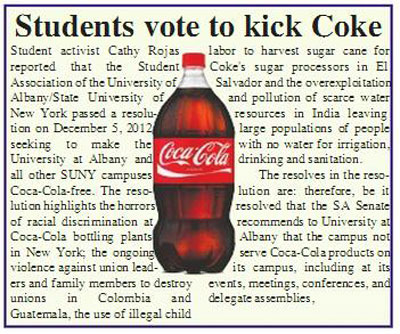
Students vote to Kick Coke off of SUNY Campus
This article is re-posted from the Killer Coke.
“Student activist Cathy Rojas reported that the Student Association of the University of Albany/State University of New York (SUNY) passed a resolution on December 5, 2012 seeking to make the University at Albany and all other SUNY campuses Coca-Cola-free…”
Students at SUNY/Albany not only want Coca-Cola off campus, but are also demanding the removal of Sodexo from their campus over worker exploitation and worker rights issues. It should be noted that Coca-Cola Co. board member Alexis Herman is chair of the Business Advisory Board of Sodexo.
SUNY is composed of 64 campuses with almost a half million students.
Foundation Profile: The Frey Foundation
This foundation profile is part of a series of profile included in the Grand Rapids Non-Profit Industrial Complex Project.
Unlike the other foundations we have profiled up to this point, the Frey Foundation has an online presence, thus providing more transparency, than the foundations of the DeVos family members.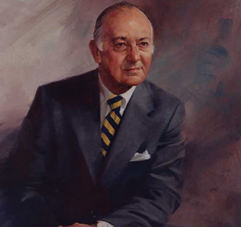
The wealth of the Frey Foundation originated with Edward Frey, who was the former President and Chairman of the Union Bank in Grand Rapids. Frey also functioned as the chairman of the board of Foremost Insurance Company. Like all foundations, the wealth used by the Frey Foundation was generated from the business class, which makes much of its wealth off of the labor of workers.
The Frey Foundation’s mission is as follows:
We invest in change. We work in partnership with organizations, agencies, and other funders, which have a track record of success and a deep commitment to the west Michigan community. Our grantmaking focuses on six interrelated aspects of community life: Arts, Capital Projects, Children, Civic Progress, Environment, and Philanthropy.
In looking at the 990s for the Frey Foundation from 2009 – 2011, one could argue that the Frey Foundation has contributed to organizations that people might identify as progressive, such as Dwelling Place and Legal Aid. There is a substantial investment in environmental efforts in West Michigan and across Michigan, with contributions to Blandford Nature Center, WMEAC, the Nature Conservancy, Friends of Grand Rapids Parks and Trout Unlimited. The Frey Foundation even provided $45,000 to the Greater Grand Rapids Bicycle Coalition in 2012, according to their own site.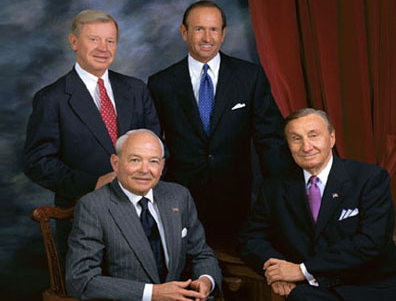
At the same time, the Frey Foundation has been a significant amount of money to entities that support business interests and the business class. Between 2009 – 2011, the Frey Foundation contributed $150,000 to the Right Place Inc., $26,000, Michigan Future Inc., $95,000 to the West Michigan Strategic Alliance and $289,000 to Grand Action.
These entities all are primarily made up of people who are part of the Grand Rapids power structure, with Michigan Future Inc. being somewhat of an exception, since it is not based in West Michigan. In fact, a representative of the Frey Foundation sits on three of the four business groups just listed, including Grand Action, Michigan Future Inc. and the West Michigan Strategic Alliance.
These relationships and these entities primarily exist to support existing power dynamics in West Michigan, dynamics which benefits the business class and local elites. While the Frey Foundation provides funding to progressive organizations that do engage in work that has social benefit, none of it challenges power.
This is not to argue that these groups should not take money from the Frey Foundation or any other foundation, but it does raise questions about how much influence these contributions have on organizations and their ability and inability to look at structural or systematic causes of major social problems, such as environmental destruction and contamination. These are questions we will be asking non-profits as part of our Grand Rapids Non-Profit Industrial Complex Project.
Decolonize This!
This video was produced by subMedia. Another fabulous video by subMedia on several current anti-colonial campaigns in Latin America and Canada. This video also includes a great discussion at the end on what colonialism is and what an ally would look like in a decolonizing struggle.
1. Super SME
3. Enbridge Pipeline Fenced off
5. Hearts are stronger than bullets
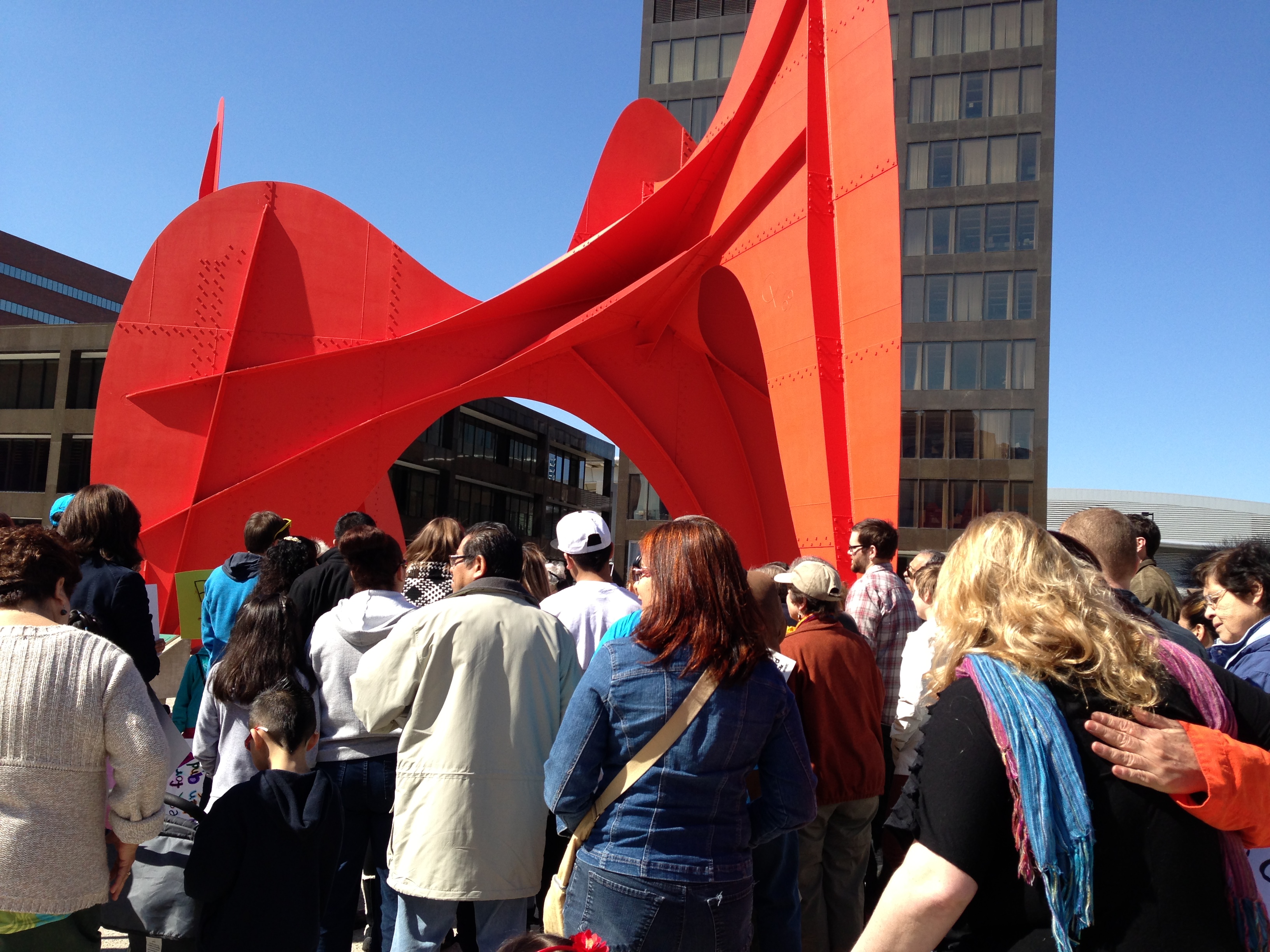 About 100 people gathered on Friday to protest ongoing Immigration and Customs Enforcement (ICE) raids against immigrants in West Michigan and to kick off a local campaign to mobilize people to prevent raids in the future or to intervene on behalf of people arrested by ICE.
While Mlive has done a piece on the protest, much valuable content was missed, including a basic understanding of why the demonstration took place. Below is our report.
The demonstrators initially gathered at Calder Plaza in downtown Grand Rapids, where Joyce Herdog led the group in prayer. The Dominican sister ask that folks remember that Jesus’ love was universal and that he “made no distinctions”.
The group was diverse and all present were asked to “stand in solidarity” with those facing deportation, arrests, and intimidation by ICE. One organizer made a point to welcome any police or ICE officers that might be present at the march, saying “We’re not afraid of you, and we won’t be intimidated”. Helicopters whirled overhead. The recurring echoes of chopper blades bouncing off nearby buildings served as an ominous reminder of our current surveillance state and the dangers those people designated as “illegal” face.
 Protestors participated in a silent march to the ICE office at 517 Ottawa Avenue. Organizers asked folks to “circle up” on the sidewalk outside of the office windows to ensure visibility from inside the office. The group sang together before several people gave testimonies of their experience with ICE and why they decided to participate in the protest.
Two women shared testimonies in Spanish about family members that have been arrested, detained, and deported by ICE officials. Both women talked about the hardship of being separated from the family members who were deported and how difficult it has made their lives.
Local immigration attorney Rick Kessler spoke about how many raids have been taking place in West Michigan and how most of those picked up in ICE raids have been people who committed petty crimes, often over 15 years ago. Kessler said that the ICE budget has expanded and is now larger than many other law enforcement agencies combined. Kessler also made the point that these arrests are political in nature and have little to do with public safety or security.
A representative from Justice for Our Neighbors (JFON) also addressed the crowd, speaking about the services their organization provides and the importance of working for Comprehensive Immigration Reform at the federal level.
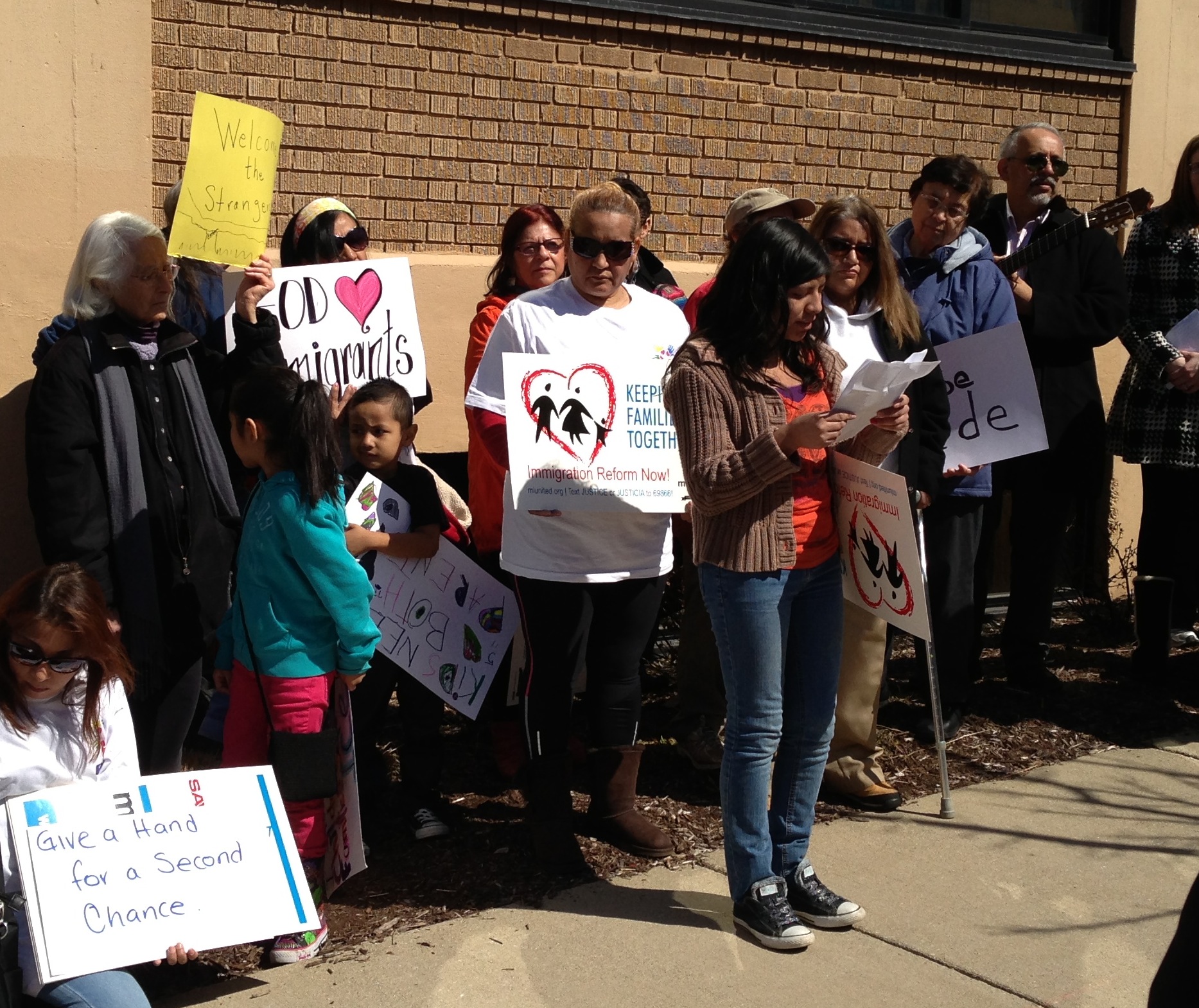 There were two organizers with AIR-MOP, a statewide group that is working on Comprehensive Immigration Reform. Both talked about the policies that need to change and the national campaign to make those changes. They also spoke about a large demonstration that will take place on April 10 in Washington, DC, with several bus loads going from Grand Rapids.
The last speakers were with the group that organized the protest and announced the campaign to have a Rapid Response to ICE Raids West Michigan. The Rapid Response to ICE West Michigan is made up of a coalition of people and organizations that are responding to the social, economic and political violence caused by ICE raids in our community. Their goals are to:
1) Co-ordinate and network with organizations and individuals that are already offering social services to families impacted by ICE raids,
2) Offer financial and legal support to individuals and families impacted by ICE raids,
3) Document the frequency of these raids, arrests and detentions,
4) Mobilize people to rapidly respond to ICE raids using a variety of political pressure tactics.
The group has said they will soon be creating a Facebook group and email listserve to help raise awareness and keep people involved.
 Grand Rapids Institute for Information Democracy