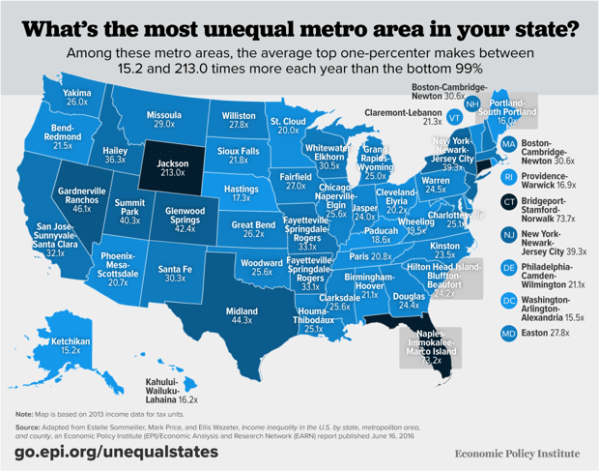
Recently, the Economic policy Institute published a new report on income inequality in the US and found that Grand Rapids has the largest gap between the richest people in the community and the poorest.
However, none of the West Michigan news media chose to run a story about the wealth gap in Grand Rapids. WDET radio in southeast Michigan did produce a story about the new report and interviewed the head of the Grand Rapids Urban League.
The link to this story provides a summary of the interview with Joe Jones (GR Urban League) and Karen Holcomb-Merrill with the Michigan League for Public Policy. However, we encourage our readers to click on the audio file at the top of the link page, since the full interview is worth listening to.
What the text version of the story doesn’t share is that Joe Jones acknowledges that Grand Rapids is a highly gentrified community. The Michigan League for Public Policy spokesperson also stated that one reason why Grand Rapids made the top of the list in Michigan for income inequality is because the top 1% in Grand Rapids is making more than top 1% in Detroit.
Karen Holcomb-Merrill goes on to say that there are clear policy decisions that have been made in recent years that impact income inequality, such as a regressive tax structure that benefits the wealthy and the earned income tax credit has been reduced. Joe Jones said that the reduction in the Earned Income Tax Credit has particularly been devastating in communities of color, with 52% for blacks and 31% for Latinos unemployment in certain neighborhoods.
Who are the wealthiest people in Grand Rapids?
It is difficult to find out exactly how much the wealthiest people in the area are worth, since many of them do not like to reveal this information to the public.
We do know, based on the Forbes list of wealthiest people, that Hank & Doug Meijer are worth $8.2 billion and Richard DeVos is worth $4.7 billion.
In addition to these billionaires, we know that data from the Michigan Department of Treasury’s tax filings shows that when comparing 2010 to 2014, the number of millionaires in Kent County increased from 407 in 2010, to 600 in 2014.

Other people in Grand Rapids who are part of the millionaire plus club are:
Dick & Betsy DeVos
Dan & Pam DeVos
Doug & Maria DeVos
Steve Van Andel
David Van Andel
Pete Secchia
Michael Jandernoa
Sam Cummings
Scott Wierda
John Kennedy
Blake W. Krueger
Interestingly enough, many of these same people are not only amongst the richest in Grand Rapids, thus contributing to greater income inequality, they are part of the larger power structure that makes policy decisions or at least influences those same decisions in Grand Rapids, Kent County and at the state level.
Many of the people listed here are part of groups like the West Michigan Policy Forum, which has helped to push through legislation in recent years that made Michigan a Right to Work state and change the tax structure to benefit themselves.
Some of these millionaires and billionaires have contributed hundreds of thousands or millions of dollars to political campaigns to make sure that state legislators pass laws that support their political agenda or benefit their own economic interests.

So the next time the news media proclaims these people as great philanthropists, just remember that their wealth is directly contributing to greater income inequality in Grand Rapids.
The Business of Making Lists in Grand Rapids
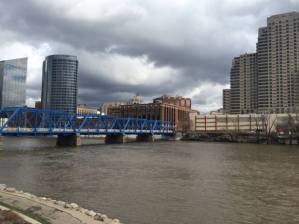
“For the second year in a row, the Grand Rapids – Wyoming metropolitan area was ranked as the nation’s third best place to do business by Area Development Magazine.”
This was the first sentence from an MLive article posted yesterday. The folks at MLive love lists and are happy to promote those lists that Grand Rapids appears on, especially if it doesn’t question the neoliberal capitalist agenda that dictates so much of this city.
The MLive article only provides one source in response to the announcement about Grand Rapids appearing on yet another list. Birgit Klohs, with The Right Place Inc., affirmed the pro-business narrative about Grand Rapids, but she was the sole voice.
The Grand Rapids ranking on best places to do business by Area Development Magazine lists San Francisco and Napa, California as the top two places to do business across the country. It is interesting that these two cities topped the list, because there is another similarity between their status on the list and Grand Rapids. The similarity is that Grand Rapids, like San Francisco and Napa are cities that have seen significant increases in the cost of housing in recent years.
James Tracey, in his book Dispatches Against Displacement: Field Notes From San Francisco’s Housing Wars, makes a strong case for San Francisco being one of the most gentrified cities across the country. Tracy cites the work of the National Housing Law Project, which emphasizes the links between wages and housing and tracks what is 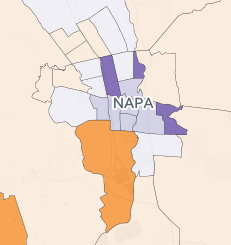 affordable for the average worker. He writes that this group’s data, “has consistently shown that rents far outpace the means to pay not only in high-investment, hyper-gentrified cities like San Francisco, but also in shrinking cities such as Detroit. Thus, in 2014 … there is no state in the United States where a typical low-income worker can afford a two-bedroom apartment.” Tracy and others use the toolkit, Mapping Susceptibility to Gentrification as a resource.
If one looks at recent data for Napa, which is just north of San Francisco, we find the same thing is happening there, although not at the same breakneck pace.

Using the mapping project created by the University of California, Berkley, we can see how Napa is also experiencing increased gentrification. The color coded descriptions are shown here in this graph as to how much of Napa is being gentrified or is at risk of gentrification.
As we and other independent media sources have been reporting over the past year, Grand Rapids has been undergoing a process of gentrification, resulting in significant rent increases and displacement in numerous parts of the city.
Making a List
As a way to counter some of the euphoria associated with the latest list that Grand Rapids is appearing on, we think it is important to offer up some alternative lists that Grand Rapids could aspire to. The lists that follow are not in any particular order, but are ones that will require major changes to how “business is done” in Grand Rapids.
- Cities that promote and practice Racial Justice, including reparations
- Cities where sexual assault and rape are not experienced
- Cities that embrace the LGBTQ community and particularly Trans people of color.
- Cities where Environmental Justice is practiced
- Cities where poverty and homelessness are not experienced.
- Cities that have done away with the Prison Industrial Complex
In Kent County, 31,167 children, or 20 percent between the ages of birth and 17, lived in poverty in 2014, up 18 percent from 2006, according to Kids Count data.
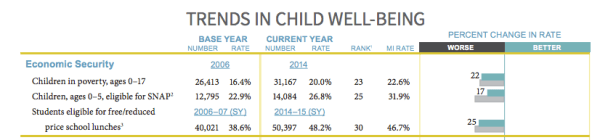
The Annie E. Casey Foundation and Michigan Kids Count just released data on the condition of children all across the US, in Michigan and by county throughout the state.
This data is sobering and is a clear reflection of how many families are negatively impacted by neoliberal capitalism and White Supremacy. How is it that so many children in Kent County are experiencing poverty when the mantra in news media is that Grand Rapids is booming? How is it that with people like Richard DeVos, Hank & Doug Meijer who are worth billions ($4.7 and $8.2 billion respectively) can have so much wealth when so many children are living in poverty?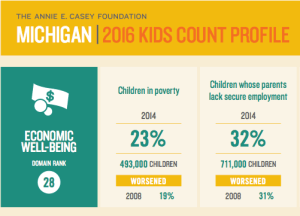
These are fundamental questions of justice that are not being asked by policy makers, business leaders and non-profit organizations, because they are either the beneficiaries of neoliberal capitalism or they are too compromised to take a stand.
We are constantly hearing about the need for equity in Grand Rapids. However, equity in its most basic form would never allow so many children to suffer as they do in this community. So the question is, what are we going to do to end child poverty in this community?
WGVU program investigates Gentrification in Grand Rapids
Within the past few days there has appeared lots of postings on Facebook about a show that WGVU did on the topic of gentrification in Grand Rapids.
The video is just short of an hour and pieces together several components that were filmed over a period of time. The video is worth watching and certainly can generate some interesting discussion about a topic that seems to polarize people. Here is the link http://video.wgvu.org/video/2365787420/.
The video starts of powerfully, by including a spoken word piece by Marcel Price. His words are also accompanied by images that are based on his experiences of Grand Rapids an a young African American.
One portion of his spoken word particularly caught my attention, in that it called out one of the factors contributing to gentrification near the downtown area, the Downtown market. Here are those words from Marcel, juxtaposed with the image of a market that caters to those who are the beneficiaries of gentrification.
The WGVU program then frames how gentrification has impacted the working class poor in several neighborhoods – the westside, the Heartside area and the southeast side of Grand Rapids. We learn that on the westside that the cost of rent has gone from an average of $400 a month to $1000 and up a month.
The WGVU program does a solid job of putting a human face on the issue of gentrification in all three neighborhoods.
However, the program then falls flat and ends up mimicking some of the same old tired narratives about gentrification and how it could be addressed.
First, those responsible for gentrification, planners, investors and developers, are never really identified in the program. Rockford Construction is mentioned in passing because of a leaked document they were developing that proposed to radically alter a neighborhood on the southeast side, but that issue and the role they have played in other areas of the city was not explored. 
Third Coast Development was actually featured in the program and given the opportunity to claim they provide affordable housing without really being questioned in the process.
So, how is it that entities like 616 Development, Orion Construction, Artesian Group, Rockford Construction, Third Coast Development, Grand Valley State University and several DeVos-owned projects are completely omitted from the conversation? Not only does this completely omit the causes of gentrification, it lets off the hook developers that are profiting heavily from the process of gentrification.
There was a representative from the City of Grand Rapids, Suzanne Schultz, but she basically admitted there was no funding and not much happening with city government in the process. However, she failed to mention that the Grand Rapids City Commission has been approving virtually every development project that has come before them, often with a unanimous vote, despite public opposition.
There were also two non-profit representatives who spoke in the program, Jeremy DeRoo with LINC and Tami Vandenberg with Well House. Both of the non-profit representatives did talk in more detail about how gentrification impacts neighborhoods, but both were careful with their words and neither of them were willing to name businesses/developers that are the main force behind gentrification.
Lastly, why were the voices of those who are organizing in response to gentrification not included in the show. There are the efforts by folks on the westside through the Other Way Ministries, the efforts of the Micah Center and the more recent organizing by Grand Rapids Homes for All?
Talking to any of these three entities and others would have altered the content and may have brought us to a deeper understanding of how gentrification not only impacts neighborhoods, but who benefits from the process.
“The economy, as it is now, prescribes plunder of the landowners and abuse of the land.” Wendell Berry
Three years ago we posted an article entitled Arrogance and the Creative Class in West Michigan.
The article is a critique of the creative class in West Michigan, but it is also a response to the appropriation of ecological language by local members of the creative class, referring to the how they are “tending the local economic rainforest.”
The use of ecological language is an important PR tool increasingly used by the capitalist class based on the notion that if you use green language or words like sustainability, then people will think that what you are doing is somehow for the greater good.
However, author Heather Rogers, who points out the major flaws of green capitalism in her book Green Gone Wrong, makes the following point:
“When a firm such as DuPont saves billions by reducing its energy footprint, it will funnel much of that money right back into making more goods to sell to more clients. Staying competitive demands production may go down, its scale of production will continue to escalate.”
Start Garden’s Ecosystem
Facebook has been featuring sponsored ads recently from Start Garden that seeks to refer to the service they offer as a kind of ecosystem. These ideas are reflected in 2 short videos they produced entitled Ecosystem Part One and Two.
Both videos begin with the same introduction, with images of downtown Grand Rapids and accompanied by a voice over stating, “A city deliberate about creating opportunities for entrepreneurs, is committed to building an ecosystem.” Such a statement is followed by the idea that social, intellectual and financial capital are what makes up this venture capitalist ecosystem.
After the introduction to the Ecosystem video Part One, we are then introduced to three business partners that utilize the physical space and resources of Start Garden. First, we hear from a woman who works for the Cultural Intelligence Center. This organization works with clients to help them be better prepared to “relate and work effectively in culturally diverse situations.” This of course means they want to promote diversity and cultural sensitivity. However, what good does this do for the staff of businesses, when the businesses themselves are engaged in oppressive and unsustainable practices? 
Looking at their client list, one can easily draw some conclusions about how practicing cultural intelligence only benefits institutions by making them feel better about themselves while they pillage the planet. Here is just a sampling of their client list: the Department of Defense (DOD) – how does cultural intelligence benefit the world when the DOD engages in criminal acts on a daily basis around the globe; Coca Cola – another entity that makes billions while extracting water resources around the globe and by supporting the murder of labor organizers; Walmart, McDonalds, Starbucks, Shell, Amway, Cargill and Bank of America. If this is what it means to be part of a Start Garden ecosystem, then we are all in serious trouble.
Another person who speaks in Part One of the video is a guy who is with OXX. OXX is the maker of a coffee machine that is marketed as being “The World’s Toughest Coffee Maker.” More importantly, OXX is a subsidiary of the DeVos business consortium known as The Windquest Group. So, maybe that is what Start Garden, owned by the DeVos Family, means by an ecosystem, since they internally promote their own brands.
In the Start Garden video Ecosystem Part Two, viewers are introduced to Bruce Thompson, President of Urbaneer. This video only features the work of Urbaneer, which has the following statement of purpose on their website. “URBANEER’s pre-fabricated components, wall systems and multi-purpose furnishings allow for more efficient construction while reducing real estate costs and providing a better occupant experience. URBANEER envisions a solution to affordable market-rate housing, aging-in-place, the changing healthcare landscape and a range of other space challenges.” 
Thompson founded Urbaneer with the CEO of Rockford Construction Mike VanGessel. This makes complete sense when you look at the video images used in the Ecosystem Part Two video, which features examples of Urbaneer’s work in collaboration with Rockford Construction projects along Bridge St, images that include the new brewery and the market rate apartments on Bridge and Alabama St.
Looking at the blog on Urbaneer’s website, one can read about their role in the renovation of the The Morton. The Morton is also a Rockford Construction project, in partnership with the DeVos family’s RDV Corp. In the blog posting Urbaneer states, “The building once housed the Morton Hotel, which was built in the late 1800s. Rockford Construction began renovations in 2012 to create 99 apartments and a limited number of condominiums.” What is omitted in the blog post is that the Morton House was used for Section 8 housing for decades and that the DeVos owned RDV Corp was given $317,000 in tax breaks by the Downtown Development Authority to re-develop the Morton House.
So it seems that not only is Start Garden’s appropriation of the word ecosystem an insult to the very notion of what a real ecosystem is, their videos make it clear that their definition of an ecosystem is really a closed system that facilitates their ability to promote their own interests and that if the rest of the West Michigan capitalist class.
Last week, there was an article in MiBiz, entitled, Seeking affordable housing solutions: Arguments emerge for added density, more income-inclusive options in GR.
The narrative follows much of what we have seen lately from commercial news sources, which has either been either journalism as cheerleading or the more sober reporting that talks to experts on the issue of affordable housing.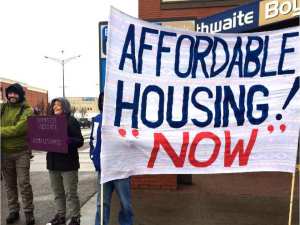
What we have not seen much have been the voices of people who are directly impacted by the lack of affordable housing, whether that is home owners or renters. Such voices are critical for us to have a better understanding, not so much of the politics of affordable housing, but the consequences of the lack of affordable housing.
We were able to talk with four people, all of which in different parts of Grand Rapids, who have been experiencing the direct consequences of the housing crisis, particularly around the issue of affordable housing.
The first person has chosen to remain anonymous. They live on the west side of Grand Rapids.
One of the reasons I moved to the westside was because of the relative low cost of housing compared to Heritage Hill and other parts of the city. I lived in the SWAN neighborhood close the John Ball Park for a year before the landlord (Urban Pharm at the time) decided to raise the rent of our 3 bedroom apartment from $650 to just over $900. An increase of almost $300 a month without them doing any renovations whatsoever to the property.
From there I moved to the West Grand neighborhood. I was lucky to find an affordable apartment closer to downtown. However the reality of living here for more than a few years seem dim. I live on 4th St and Broadway, just across Union Square Condos. With the recent developments on Bridge St, the New Holland Brewery opening shop on Broadway/Bridge St, and new duplexes built just a few houses down from ours on the same street, I know my days are numbered. Although rent has increased slightly the last couple of years ($10 one year, $25 last year), the fear of another year of rent increase lives in the back of my mind has me already looking at other living options farther away from the city core.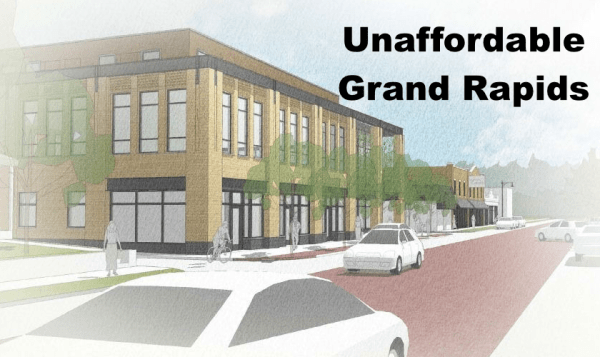
The second voice is someone who lives in the northeast side of Grand Rapids and identifies as a queer, multi-racial, disabled, artist and has also chosen to remain anonymous.
I’ve been in the same apartment, in the Creston Neighborhood, for 9 1/2 years. My landlord has never raised the rent in that time because he was happy to have someone who stayed and didn’t cause problems (I also haven’t been locked into a lease after the first year.) He has had a difficult time renting out the apartment above me with long-term tenants and the last tenant up there stayed for 2 years but was a regular domestic violence scene. This is the neighborhood I grew up, and have lived in off and on throughout over 40 years, though I have since lived all over the city as well. When I was growing up here the neighborhood was mostly homeowners, now it is rental properties more than not. Some of the homeowners now are more diverse, and there are a few long-time home owning residents who complain about how the neighborhood has “changed” but explicitly mean the fact that it isn’t just white people anymore.
Although my rent hasn’t gone up (yet), I have been paying attention to rising housing costs because I have had to consider the possibility of moving, trying to figure out ways to get more space for making art without having to pay for a separate studio, looking to get away from increasingly vocal racist neighbors, etc. I’ve looked at apartments that are not half as nice as my own or as well-cared-for but cost 1.5x what mine does. Trying to find a little more space meant doubling my rent, even in questionable quality. The current going rate for my apartment would be $850-1,000. I know this not only because I’ve paid attention to the market, but because my landlord just sold the house and I listened to realtors telling potential buyers that $850 was too low to ask in this market. I pay $545 right now and have a lease until September 2017, because my landlord wanted to protect me as long as he could.
I’m a disabled full-time student who isn’t able to work full time. Outside of my student loans, my main income comes from the occasional sale of artwork and freelance writing. I was working a full time job until two years ago and struggled even then to pay the rent, utilities, and stay fed. I would also describe the neighborhood as a food desert, since the closest grocery store was dingy, dirty, and overpriced, and has since closed. Since losing my job I’ve also watched the neighborhood go through major shifts and changes. An entire section of Plainfield that has lain mostly empty and crumbling for 20 years is suddenly being revitalized through tax incentives to the men that owned it all this time. There is an increase in white people moving into the neighborhood who openly intend gentrification. I know this because I see the increase in young middle class white people out jogging, walking their dogs, etc. Because of my light skin and being outside with my own dog, I’ve had the opportunity to meet many of them and it doesn’t take long for them to spout something overtly racist about how they can’t wait until the neighborhood is cleaned up for them. Several have told me they could rent in EGR if they wanted to, but that they have chosen this neighborhood as part of “revitalization” or to buy their first home.
I know that next summer I will have to start figuring out where I will live next. I don’t yet know the new owner of this house or what they expect, so it’s entirely possible they will be anxious for me to move out so they can fix the apartment up to rent it out again. Obviously my rent will be significantly more than it currently is, whether I stay here or move elsewhere. I can’t even begin to wrap my head around how I will pay a higher rent, much less get together a deposit to move. I hear about “affordable” housing developments all over the city but none of them have been remotely affordable. I’m currently working a minimum wage minimal hours part time work-study job at my university. I don’t qualify for any kind of job that can afford the new rental rates in this city. I mean, I know a lot people who have professional jobs and are renting rooms or living with several roommates because rent is too high otherwise. There is the added difficulty of finding a place that will rent to me because I have a rescue dog who serves as my emotional support animal. It’s really hard to find a place that will accept her at all, and the ones that do not only require an extra deposit but even higher rent. There is a really high chance that about the time I am turning 43 years old I too will have to revert to renting a room in a house full of strangers, and also somehow find and pay for separate studio space to continue to work. Even that is an overwhelming prospect, since it’s not like studio space is cheap and widely available either.
I hear about the additional plans for my neighborhood – the new brewery (as if beer can somehow save the world) – and I have a few home owning friends in the neighborhood who watch how their property value is climbing in anticipation. I don’t see how that in any way helps those of us who are poor in the neighborhood. When the Creston Market did its whole revitalization efforts it was obvious that they weren’t fixing it up for the needs of the current residents but for the residents they aspire to. The same can be said for the brewery and any other new businesses coming in – they aren’t coming here to benefit long-time residents but to carve out space for an influx of new upwardly mobile people. To do that, they have to push us out. One of my home owning friends who is watching the value of his house increase says he refuses to be pushed out of the neighborhood. But he owns, and he’s white, so he admits he has little fear of being pushed out and is aware that most of us here don’t have those protections.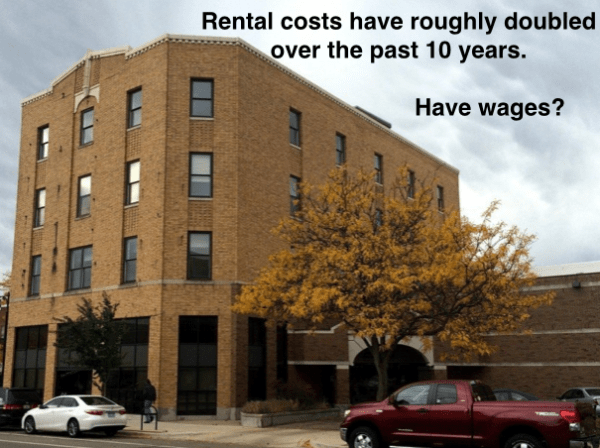
The third person we spoke with is Liam Bailey, who has lived in numerous parts of Grand Rapids and currently lives in the southeast part of Grand Rapids. Liam identifies as a local queer social justice activist.
For me, I have never had a problem getting into a space, but I have had a huge difficulty in finding affordable rent, especially in a place that is not a “slum.” I use this term because, some of these landlords are slumlords. The houses that I could pay for are a max $450 a month. I was living in a place near downtown that was $450, but it was in a basement level, which had the furnace in it, which meant that the landlord had constant access to our space with limited notification for me.
Landlords are generally unwilling to keep the inside up unless you are willing to pay out the ass for it. I pay $720 a month now, even though this area is considered “sketchy.” However, most of the neighbors are students and in many ways this neighborhood is the new Wealthy street and is being gentrified rapidly.
I live with 3 other people, which makes it cheaper, but that is because it is out of need. I have a month to month lease. The landlord is very nice to me, but I still feel unwilling to push any limits. I know that if people are willing to pay $1,200 for a one bedroom downtown, they could charge more here, so I don’t ask for much of fear that I may lose the option to live here.
Living on the westside was the worst experience I have ever had. The landlord did virtually nothing for up keep. The landlord next door cleaned out the basement which exposed us to both a serious mold and cockroach problem. The landlord we rented from was unwilling to deal with it, so we had to deal with the mold and the cockroaches.
My current landlord could charge a whole lot more, probably double, which is why I am reluctant to push on any issues. Just down the street, north of Pleasant, they charge $4,500 for renting the whole house.
Pixie Properties is company where I rented from for a while in the downtown area. We lived in the basement, which was unfinished, just bare cement. Three of us paid $450 per person. The bedrooms were essentially cement squares. The ceiling was exposed and the pipes had hot water running through them and it was so hot in the winter that we needed to keep the windows open. I complained about it and they threatened me.
Rent has gone up every time I have moved since 2011. I am being priced out of Grand Rapids I don’t have a car and so I need to live near the downtown. The current development projects only exacerbate this process, which is why I can’t think of the lack of affordable housing as anything other than gentrification.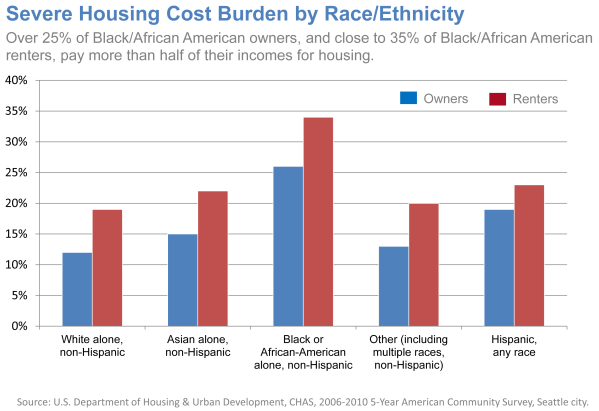
The fourth person we spoke with is Maurice Warner. Maurice, an African American, lives on the northeast side, near 196.
Approximately nineteen years ago my partner and I moved from Chicago to Grand Rapids, Michigan. Our one bedroom apartment in Hyde Park cost (at that time) $675 per month…with no utilities. At the time, I considered us fortunate to land a two-bedroom apartment in Heritage Hills for $580 per month– utilities not included. Unfortunately, our relationship expired before the apartment lease did, and I ended up living with a friend for the next year—paying $300 a month for a one room space, with access to computer services, cable television and all the electricity and gas I could use. Eventually the very first apartment I rented after leaving this space was a 2 bedroom unit that included all amenities (no washer & dryer); all for the unheard of price of $450 a month. The unit was in Eastown, so I was quite thrilled with the close proximity to one of the more dynamic parts of G.R.
Then came the gentrifiers.
The property owner that I rented from was moving to Canada–so, a negotiated sale was made…without my knowledge. When the new owner notified me of the sale, he asked how much my present rent was. I told him $450 monthly. He grimaced, and said that he wouldn’t be able to rent for that amount. He said that $550 would be the new monthly rate—and if that was agreeable, I could stay. Since, at the time, I was fairly comfortable with the location, I agreed. What I did not know at the time was that my new landlord planned to leave his wife, rent out the large 3 bedroom ground level unit below —and, move into the upper 2 bedroom space; the one that he’d just agreed to rent to me. Of course he didn’t tell me this at the time; I’d find out four months later—after he’d finished resurfacing the floors, painting the walls, remodeling the kitchen and adding a deck to downstairs unit. The day finally came when, after I slipped my next month’s rent into his mailbox, he slipped into my mailbox a letter—informing me that I would need to vacate the apartment before the first of the next month. But, not to worry: he had some “friends” who had rental properties available. I declined his thoughtful largesse and informed him that I preferred to find my next place on my own.
Three weeks later I moved from Eastown to the NE part of G.R., on College St.—between Michigan and Leonard. I’ve always hated moving—but when done with the kind of duress and haste that a landowner ambushes you with, well…it can leave a person more than just a bit angry. All in all, I was quite lucky to find a two-bedroom unit available in Grand Rapid—in September; and one that didn’t require a security deposit to boot! I thought that the gods had begun to smile on me.
Boy, was I wrong. Unbeknownst to me, I’d gone from the frying pan…into the fire. This 2 bedroom apartment had an advertised rental rate of $520/mo. I was now being told that was actually $535/mo. O.K…fine. $535 it is; besides…I’m somewhat desperate. So…I manage to get some friends to help with the move, and arrive to find that carpet has not been shampooed. I can tell because the saucer-sized deposit of dried vomit is still quite visible—although (thank goodness) the smell is gone. Additionally, there are no blinds on any of the windows. The property management rep and I had done a walk-through the previous week, and I was assured that these deficiencies would be corrected by my move in date. Nonetheless, we get everything moved in (working around the dried vomit, which I resolved by renting a shampooer the next day. Additionally, I grew tired of waiting for the blinds to arrive, so I went and purchased some of my own.
In short, my relationship with the property management people did not improve: I had to call and “request” lawn maintenance during the summer months (I was lucky is the grass was mowed more than two times during the summer). Snow removal was the responsibility of the tenants. At the time of my lease renewal I was informed that the monthly rent would increase by $10/mo. Time would prove that this would become a standard practice around lease renewal time: there would inevitably be a monthly increase of between ten and fifteen dollars.
I could additionally add that with the increase in the monthly rent every two years ($300 extra this year) that the property management also now wants tenants to sign subsequent leases for 1 ½ years, instead of the previous 1 year agreements.
And on it goes. Being on a fixed income comes with its own unique set of challenges—but when coupled with the slumlords you sometimes find yourself dealing with…well….it can at times feel unbearable.
These are just four stories of how the lack of affordable housing is deeply and personally impacting people in Grand Rapids. We believe there are thousands of more people who are experiencing a similar fate, yet we rarely hear their voices.
The tragedy and injustice of what took place in Orlando, Florida over the weekend is almost too difficult to write about. What does one do in the face of such hate and violence?
The news media has already done tremendous harm in how they are framing the issue. It’s either about guns, the identity of the shooter or it is about the outpouring support that is being demonstrated all across the country and the world.
What the news media is not doing is offering much substantive analysis of why this happened, and more importantly, the historical context for this kind of repression against a marginalized population. One of the best things I have seen so far is this amazing video, Familia: Trans Queer Liberation Movement, which gives critical voice to queer and trans people of color. The video is also powerful, because it properly frames the Orlando shooting in an historical context.
Creating a homophobic, transphobic climate
As the voices in the Trans and Queer Liberation Movement make clear, this violence has been going on for centuries and is properly named in the video as White Supremacy. White Supremacy is too often ignored, downplayed or denied as a major factor in the current level of violence and repression that communities of color face.
White Supremacy takes on many forms, such as an economic, legislative, religious and cultural form. All of these dynamics play a role in creating, maintaining and normalizing the violence and repression that so many people of color face. Add to this, queer and trans people of color and the level of systemic and structural violence increases exponentially.
For instance, many people in the case of the Orlando shooting, are grateful for the role that law enforcement plays. However, what communities of color and what queer and trans people of color have understood for a long time, is that the use of state violence is a false solution.
This brings us to some of the larger context of what has been happening in Orlando and throughout the state of Florida, in terms of creating a climate of hate against those who identify as gay, lesbian, bisexual, transgender and queer.
Let’s be clear that this kind of hate is happening everywhere, but for the purposes of the article, let’s just focus on Florida.
The Southern Poverty Law Center’s Hate Map, identifies three main anti-LGBTQ groups operating in Florida; the American College of Pediatricians, Liberty Counsel and Dr. James Kennedy Ministries.
The American College of Pediatricians has only been around since 2002 and is essentially a hate group that targets transgender youth.
The Liberty Counsel, which is based in Orlando, has been around since 1989 and plays a more integral part of the religious rights ongoing war against the LGBTQ community. The founder of Liberty Counsel, Matthew Staver, came from Jerry Falwell’s Liberty University. The organization works closely with other religious right groups, such as Dr. James Dobson’s group, Focus on the Family, committed to blocking the rights of the LGBTQ community.
Liberty Counsel is also the former home of Matt Barber, the viciously anti-gay pundit who now runs a right-wing propaganda site, BarbWire. Matthew Staver, the organization’s founder, once compared pro-equality Republicans and those who don’t share social conservatives’ priorities to cockroaches.
Recently, Staver’s wife, Anita, announced that she would start carrying her Glock .45 into the bathroom in response to Target saying it would not discriminate against transgender customers.
Liberty Counsel is an aggressively anti-gay organization, praising repressive anti-gay legislation in other countries and arguing that it is immoral for the U.S. government to encourage other countries to decriminalize homosexuality. Liberty Counsel also represents the rabidly anti-gay activist Scott Lively, who has campaigned against legal equality for LGBT people in the U.S. and around the globe.
The other major anti-LGBTQ entity in Florida, is Dr. James Kennedy Ministries, formerly known as Truth in Action and Coral Ridge Presbyterian Church. Kennedy has been dead since 2007, but he has been one of the most anti-LGBTQ pastors for decades. Kennedy had organized a national conference for the religious rights for years called, “Reclaiming America for Christ.”
One newsletter from D. James Kennedy’s Coral Ridge Ministries featured a photograph of very young children under the headline “SEX WITH CHILDREN? HOMOSEXUALS SAY YES!” The newsletter asserts “Adult sex with children has been a crucial component of the homosexual movement all along, and officially since the 1993 March on Washington when it was included as a demand (#55) in their famous manifesto.”
Over the years, Kennedy emphasized anti-gay rhetoric, particularly in his TV ministry. He recommended as “essential” the virulent work of R.J. Rushdoony, who believed practicing gays should be executed.
The West Michigan Connection
Considering the strong religious right presence in West Michigan, it should come as no surprise that people like Richard DeVos have been a major donors to anti-LGBTQ groups in Florida.
In 2008, the DeVos family was the largest contributor to the Florida4Marriage group, which put Amendment 2 on the ballot calling for marriage between only a man and a woman. The Amendment passed in 2008 and outlawed same sex marriages in Florida until that decision was overturned by the US Supreme Court decision last year.
In addition, the DeVos family owns the Orlando Magic basketball team, which has allowed the arena to be used for Evangelical Christian Faith Nights. These Christian rallies have also provided a platform for anti-LGBTQ organizing in Orlando. (See Bad Sports, by Dave Zirin)
Fore more than three decades, the Richard and Helen DeVos Foundation has donated hundreds of thousands of dollars to Kennedy’s ministry on an annual basis. Although the DeVos family no longer contributes to Coral Ridge Presbyterian Church, the millions of dollars they have donates over the years to anti-LGBTQ groups in Florida played a significant role in creating a climate that legitimized and normalized violence and hate directed at the LGBTQ community.

Over the years I have observed that when GRIID posts articles critical of the local power structure, particularly about the DeVos family, people give some of the most interesting responses.
The dominate response goes something like this; “Where would Grand Rapids be without the generosity of the DeVos family?” It is an interesting question. Where indeed would Grand Rapids be without the DeVos family or any other members of the local power structure?
So here are our top reasons why we disagree with the idea that Grand Rapids is better off with the likes of DeVos, Seechia, Jandernoa, Kennedy, Meijer, etc.
These families and individuals promote and fund a tremendous amount of hate. For decades, many of the families and individuals that make up the local power structure have promoted and funded hate. Maybe the most obvious has been the anti-LGBT efforts led by the DeVos and Prince families. They have funded hate to support ballot initiatives, to block ballot initiatives and to fund organizations committed to spiritual violence and the social oppression of those who identify as gay, Lesbian, bisexual and transgender. Listen to the anti-LGBT message from Richard DeVos.
2. The local power structure does harm locally because they are the primary beneficiaries of neo-liberal economic policies. Let’s be clear, the local elite are primarily interested in their own well being. They have made massive amounts of money through exploitation and have used the legislative process to divert public funds, taxpayer money, for subsidies and for funding their own pet projects. The families and individuals that make up the Grand Rapids power structure has made billions of dollars off the backs of other people. We can stop with the nonsense about them being job creators or wealth creators. Wealth is actually created by those who do the work, not those who collect the profits.
These same families and individuals also manipulate the political system to increase their wealth and to divert more public money to support their interests. This is why they contribute significantly to political campaigns and participate in groups like the West Michigan Policy Forum, the Grand Rapids Chamber of Commerce and The Right Place inc.
3. The local power structure was instrumental in making Michigan a Right to Work state. The West Michigan Policy Forum made it a goal from the organization’s inception, to attack unions and workers by making Michigan a Right to Work state. Such an attack on working class individuals and families demonstrates their disregard for people who are not part of the ownership class. The individuals and families who are power of the local power structure have a long history of engaging in anti-worker and anti-union activities, as is evidenced by their funding of neo-liberal capitalist entities such as the American Enterprise Institute, The Heritage Foundation, The Mackinac Center for Public Policy, the Acton Institute and the Competitive Enterprise Institute. 
4. Grand Rapids would have a stronger public school system if many of the local elites would stop funding campaigns to undermine public education. Dick and Betsy DeVos have been some of the national leaders behind policies to undermine public education.
Researcher Rachel Tabachnick identifies Betsy DeVos as the Four Star General of the School Privatization Movement, in an article she wrote for the Political Research Associates. The article states:
Rob Boston of Americans United for Separation of Church and State described Betsy DeVos as the “four-star general” of the school privatization movement shortly after DeVos announced the formation of the “new” American Federation for Children (AFC) in March 2010. As Boston noted, the American Federation for Children was not new, but a rebranding of an organization called Advocates for School Choice.
The American Federation for Children is now the umbrella organization for two nonprofits that have been at the center of the pro-privatization movement for over a decade. In addition to the renamed Advocates for School Choice, it includes the Alliance for School Choice, formerly known as the Education Reform Council. Both entities received extensive funding from the late John Walton, one of the Wal-Mart heirs. The boards of the two related entities included movement leaders Betsy DeVos–scion of a Christian Right family who married into the Amway home goods fortune–William Oberndorf, Clint Bolick, John Kirtley, Steve Friess (son of Foster Friess), James Leininger, John Walton, and Cory Booker.
These two nonprofits–Alliance for School Choice, a 501(c)(3) and Advocates for School Choice a.k.a. American Federation for Children, a 501(c)(4)– provided over $17 million in grants to 35 other national and state-level pro-privatization nonprofits from 2006 to 2010. These grants represented a significant portion of the total budgets for many of the state organizations. Today Betsy DeVos and John Kirtley are the chair and vice chair of both boards.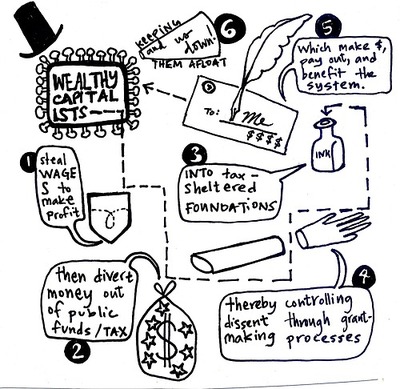
5. Don’t the Grand Rapids political and economic elites donate to local causes? These families and individuals do provide money from their foundations to some local organizations. However, the tend to only fund groups that do not conflict with their politics and it gives the illusion that they are great philanthropists. The reality is much different. Foundations are a tax haven for the rich, it acts as a propaganda tool to divert public attention from focusing on how they acquired the massive amounts of wealth they have and the philanthropic contributions are another way of participating in social management. (see The Revolution Will Not Be Funded.)
In addition, the amount of of money donated by these wealthy individuals and families pales in comparison to the amount of money they give to organizations and candidates. On top of that, the groups and candidates they fund promote policies that actually contribute to the root causes of social problems, like poverty, that some of the non-profits groups who are recipients of their foundation money are claiming to combat.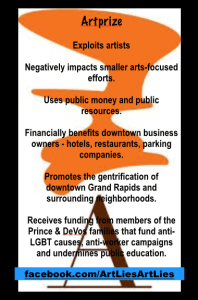
6. Haven’t these wealthy families been part of reviving downtown Grand Rapids? If one thinks about the building of the arena, the convention center, the downtown market and other major construction projects over the years, rich people often are given credit for their creation. However, in every single project there have been massive amounts of public money, federal, state and local money that has also made these projects a reality, often without public consent. Also, the “revival” of downtown Grand Rapids has also been driven by the fact that the economic elite will also make tremendous profits, since so many of them owned so much property downtown – hotels, office spaces, restaurants, etc. The revival of downtown Grand Rapids and its ongoing gentrification ultimately serves the interests of the local power structure, a reality that can be seen with the spectacle called ArtPrize. 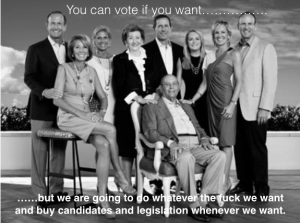
7. Imagine what the combined wealth of the local power structure could do to alleviate poverty in Grand Rapids? According to the Forbes list of wealthiest people on the planet for 2016, Hank & Doug Meijer are worth $8.2 billion and Richard DeVos is worth $4.7 billion. With the combined wealth of these individuals, which is roughly $13 billion, imagine what could happen if that wealth were in the hands of the most vulnerable people in Grand Rapids. With $13 billion, which is only part of the total wealth of the rest of the power structure, no one in Grand Rapids would be homeless, or go hungry, be malnourished or be denied access to health care. With $13 billion dollars there would be affordable housing for everyone, free college tuition and funding for fighting climate change.
Lets us really imagine what this kind of funding could do for Grand Rapids. In fact, if we had an economic system that was not based on making profits for the wealthy few, but one that would radically alter how we lived in this community, imagine what we could do.
These are just some of the reasons why I don’t buy the idea that Grand Rapids is better off with the likes of DeVos.

For several years now, MLive has been including in their news feed, what they called Sponsored Content. These are actually stories that are written by corporations or corporate associations, but often pass as news articles.
Last month, MLive posted one of these Sponsored Content stories written by the Michigan-based corporation, Kellogg’s. The article’s headline read, Better Foods for Your Family and the Earth. Such a claim is presented as fact, since there is no fact checking or investigation from MLive. Kellogg’s in effect, gets to say whatever it wants to and make whatever claims it wants to, with no accountability.
The Sponsored Content in question does not include much text, rather some well crafted info graphics, which are meant to dazzle the eye with their bright colors and fun images.
We have written about the Green Capitalism claims that Kellogg has been making for many years. In 2011, the Battle Creek corporation was making the claim that the company is certified for its sustainable practices, through groups like the Roundtable on Sustainable Palm Oil. 
Author Heather Rogers (Green Gone Wrong) also has a critical take on the RSPO practices in a chapter on the ecological and social consequences of bio-fuels and palm oil. Rogers, who spent a great deal of time in Borneo doing research says that companies that are members of the RSPO have not only displaced local communities in order to plant palm tree plantations they have also cut down old growth forests in the process.
The company also has claimed for years that their business practices are actually fighting climate change. In an article we wrote in September of 2011, Kellogg’s claimed that the Carbon Disclosure Project has also given them high marks for fighting climate change.
This is the strongest message in the most recent Sponsored Content on MLive, where Kellogg’s is claiming to make commitments to reducing greenhouses gases. One example is an interview that the CEO of Kellogg’s did last year during the Paris Climate Summit. You can watch this interview by going to the Kellogg’s Sponsored Content linked page, Open for Breakfast. 
In this interview, the CEO of Kellogg’s talks about how their customers care about products like Pop Tarts and Pringles. The head of Kellogg’s also talks about their commitment to getting farmers around the world to grow in a sustainable manner. However, we should ask ourselves how it is possible for a company like Kellogg’s, which relies on so much grain production to make its processed foods, to actually practice climate justice. Wouldn’t it be better for the earth, as Kellogg’s claims, for people to not only eat locally, but to eat whole grains that did not end up being the products that Kellogg’s makes? What if the corn, rice and wheat that farmers grew for companies like Kellogg’s was grown for local consumption and eaten in a less processed form? Imagine the amount of energy and resources (like packaging) that would not be used if people we re allowed to eat unprocessed foods that were not controlled by the likes of Kellogg’s?
These are basic and obvious questions that need to be asked. They need to be asked because it would expose the false solutions to climate change that companies like Kellogg’s claims to fight.
Yesterday, MLive ran a story entitled, Developer wants to bring excitement back to his old West Side neighborhood. The article focuses on the person of Mike VanGessel, the CEO of Rockford Construction, who was raised on the westside of Grand Rapids.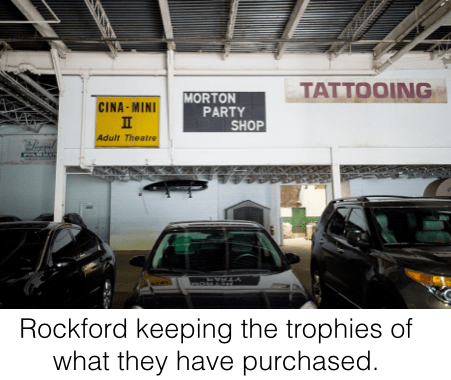
The MLive article has all the components of acting as a stenographer to power: pulling yourself up by your bootstraps narrative, associations with other “investors” and gentrifying a neighborhood and calling it exciting.
Still doing Business on the Westside
The MLive paints a narrative about Mike VanGessel that makes it sound as if anyone from humble beginnings can end up be wealthy. With both print and video, MLive takes us through VanGessel’s old neighborhood attempting to frame his westside roots and his company’s takeover of the westside as another Great American success story. But then, we get what the westside native is really up to:
Three years after moving the company’s headquarters into the neighborhood, VanGessel is working on a series of plans and projects aimed at revitalizing the gritty, working-class neighborhood into an entertainment, shopping and residential neighborhood.
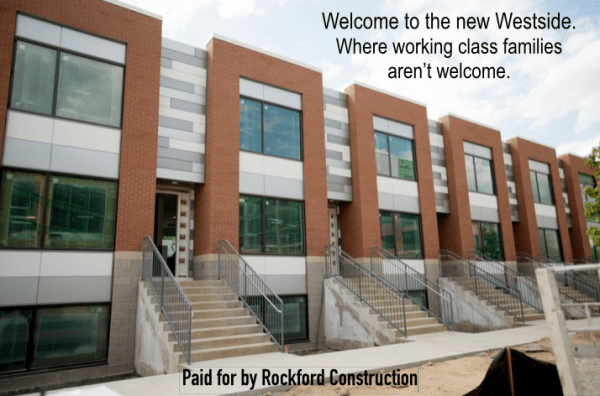
The Rockford CEO wants to transform the neighborhood from a working class neighborhood and make it upscale. In fact, the development projects that Rockford has in the works on the westside will mean that many of the traditional westsiders could not even afford to live in the new apartments. It is as if VanGessel and friends want to write out of history the 1911 furniture workers strike. Or maybe, what VanGessel and company are really doing is saying that just like the furniture barons, they will dictate the future of politics on the westside.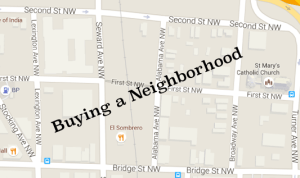
Well-heeled Investors?
The MLive article also reveals that the Rockford CEO has developed important relationships over the years with other power players in the area, specifically Rich DeVos, Mike Jandernoa and Pete Secchia. While these powerful individuals are referred to as “well-heeled investors,” nothing is said about their contempt for working class people.
DeVos, Jandernoa and Secchia all have a long history of buying politicians and influencing public policy. Each of these men and their families are part of the political and economic elite in West Michigan. They all are part of the Grand Rapids Chamber of Commerce, the West Michigan Policy Forum and sit on numerous boards to make sure that they get what they want. This means they all were in favor of making Michigan a Right to Work state, imposing economic austerity measures that have been brutal for working class families and have attacked public sector unions. By acknowledging that VanGessel sees these men as trusted partners, means that he puts himself in the same class as them.
Buying a neighborhood
However, the real focus of the MLive article is on the numerous gentrification projects that Rockford has embarked on just west of the Grand River. In every instance, the MLive article communicates that these so-called development projects should elicit nothing but praise. Market rating (read upscale) housing, beer gardens and other forms of commerce are the focus of what Rockford is really doing on the westside. In addition to the new projects, they continue to buy property along Bridge and Stocking streets, in what VanGessel calls “the super block.”
We know these projects are having negative impacts on the working class families that make up much of the westside. There is displacement from these development projects, with houses being bulldozed in recent years and more buildings to be “demolished” on the super block.
Then there are the other, more hidden dynamics, with increased property taxes, increased rental costs and the radical change of the neighborhood culture on the westside. Having spoke with numerous near westside residents about these issues at recent housing forums, it is disconcerting that there are no voices critical of the Rockford projects. However, this is the role that news media plays when when they act as stenographers to power.
 Grand Rapids Institute for Information Democracy