Rep. Scholten displays fake empathy for people in Gaza being killed while trying to access food aid
On Monday, Rep. Hillary Scholten posted an article from Reuters News with the headline, Israeli fire kills 67 people seeking aid in Gaza, medics say, as hunger worsens.

While I agree that what is happening to people in Gaza is abhorrent, I’m going to call bullshit on the comment that Rep. Scholten wrote that was attached to the Reuters article. Rep. Scholten wrote:
“I’m heartbroken and deeply concerned about the loss of innocent lives this weekend in Gaza. Innocent people seeking aid and food MUST be able to do so without harm as we work toward an end to this humanitarian crisis.”
First, what is happening to the people of Gaza is NOT an humanitarian crisis, it is genocide, a genocide being perpetrated by the Israeli government/military.
 Second, it is instructive that Rep. Scholten can’t even name the innocent lives being lost, the Palestinians. She can’t, not unless she wants to piss off the Israel lobby and the Democratic Party leadership, which pretty much do whatever the Israel lobby wants them to do. In addition, Rep. Scholten can’t even say that the Israeli military killed the 67 Palestinians over weekend.
Third, Rep. Scholten’s empathy is so ridiculously shallow, since she has supported every US military aid bill since October of 2023 and every weapons sales since then as well – as I have been methodically documenting. You can’t sign off on genocide and then claim to give a shit about innocent lives being killed while trying to access food aid.
Fourth, the Israeli military has been engaged in the strategy of attacking and killing Palestinians seeking food aid since last year. What happened last weekend was not new, so why is Rep. Scholten addressing it now. Again, fake empathy. Here is just a sampling of sources on how Israel has not only created starvation conditions for those in Gaza, but are attacking those seeking food aid.
THEY WENT TO GET FLOUR WITH THEIR MOTHER IN GAZA. “SHE CAME BACK IN A WHITE SHROUD.”
‘An Avoidable Disaster’: Israeli Blockade of Gaza Could Starve Hundreds of Premature Babies
ISRAELI SOLDIERS KILLED AT LEAST 410 PEOPLE AT FOOD AID SITES IN GAZA THIS MONTH
‘The Never-Ending Hunger Games of Gaza’: IDF Kills 70+ Palestinians Trying to Get Food Aid
Children Are Starving in Gaza, as Soldiers Kill People Looking for Food
US and Israel turn “aid” centers into slaughter zones

IN GAZA, FAMINE IS THE WEAPON — AND SO IS AID
THE RISING DEATH TOLL OF THE U.S.–ISRAEL AID DISTRIBUTION PLAN IN GAZA
“People Are Starving to Death”: Oxfam Warns Israel’s Blockade on Gaza Is Catastrophic
Surveillance Humanitarianism”: As Gaza Starves, U.S.-Israeli Plan Would Further Weaponize Food
We need to see through the fake empathy from Rep. Scholten and any other politicians who doesn’t support a tru ceasefire, an end to US military aid and weapons sales to Israel and for Israel to be tried in an international court for the crime of genocide. Anything less would betray the Palestinian people.
Five reasons to demand that the Kent County Commission adopt Sanctuary policies at their meeting this Thursday
Movimiento Cosecha and GR Rapid Response to ICE have invited people to attend the Kent County Commission meeting this Thursday, at 8:30am, to demand that the commissioners adopt sanctuary policies that would ultimately mean that Kent County would not cooperate with Immigration and Customs Enforcement (ICE) or support private entities that are profiting from ICE contracts.

Anyone who attends will have a chance to speak during public comment in order to support these demands. If you are unable to attend in person, then make sure you sign the online Action Alert and share it with your people.
Here are 5 reasons why people should attend the Kent County Commission meeting this Thursday and why the Kent County Commissioners should adopt Sanctuary policies.
1. There have been numerous instances over the past 6 months, where the Kent County Sheriff’s Department has been seen during ICE arrests in Grand Rapids and the surrounding communities. In addition, GR Rapid Response to ICE received the following message from a family impacted by ICE violence, where the Kent County Jail directly cooperated with ICE by alerting them to an undocumented person in their custody.
“My wife was driving home from Chicago. She was almost home. It was heading East on Michigan St, and was pulled over for speeding, just before reaching Ele’s Place which is a little before turning on Lakeside Dr.
She had a warrant out for her arrest in Ottawa County for a partially paid traffic ticket. They were going to let her go because she was going 10mph over at 0330 in the morning, but they noticed she had a warrant and so called me to pick up our son so that they could arrest her.
She was initially sent to Kent County Corrections. I paid her bond the following afternoon, and that’s when I was told that she is not allowed to leave due to a 48 hour ICE hold.
An ICE agent picked her up Monday morning at about 0840. I saw the vehicle go into the jail and leave with her. I followed the vehicle (safely) and they dropped her off in an unmarked building, which I later learned is the Department of Homeland Security building in downtown GR.
I stayed outside for a while, not knowing what to do. The agent saw me and immediately closed the garage door. About 15 minutes later (I was still outside the building), a van pulled up and an officer stepped out to pull out chains from the rear side of the van. I knew those were for her. They opened the garage doors, they greeted each other, and again noticed me still there. Once they saw me, they closed the garage door again. I left after about 5 minutes because my wife had contacted me by that point.”
She told me they were moving her to Battle Creek, Calhoun County Corrections. They did that and she’s been in there since. ICE agents told her that she wasn’t even on their radar and that they probably wouldn’t have looked for her if it were not for the jail reporting her.”
This recent first hand account is the same thing that Movimiento Cosecha and GR Rapid Response to ICE have been hearing since ICE ended their contract with Kent County in 2019, where the Kent County Sheriff’s Department continues to notify ICE when some undocumented is processed into the Kent County Jail.
2. The Kent County Commissioners must adopt a policy to make sure that they will never permit an ICE detention center to be constructed in Kent County. In addition, the Kent County Commission needs to put an end to allowing the Kent County Jail to hold immigrants for ICE.
3. For several years, the Kent County Sheriff’s Department has been using 25 cameras that are spread around Kent County, cameras that relay information about vehicles and license plate numbers. According to a recent article on 404 Media, Immigration and Customs Enforcement (ICE) is now using what are called Flock cameras to obtain license plate numbers to track down undocumented immigrants.

While state and local law enforcement agencies normally lack the authority to enforce federal immigration laws, the Trump administration has encouraged them to participate in a program called 287(g), a provision of the the Immigration and Nationality Act that authorizes DHS agencies including ICE to delegate certain immigration enforcement actions to state and municipal police.
Using the Flock technology provides an additional tool to be used by the Kent County Sheriff’s Department, the GRPD and other local law enforcement agencies to assist ICE in hunting down those who are undocumented and those that the administration are targeting, regardless of immigration status. To see the exact location of the Flock cameras being used in Kent County, go to this link.
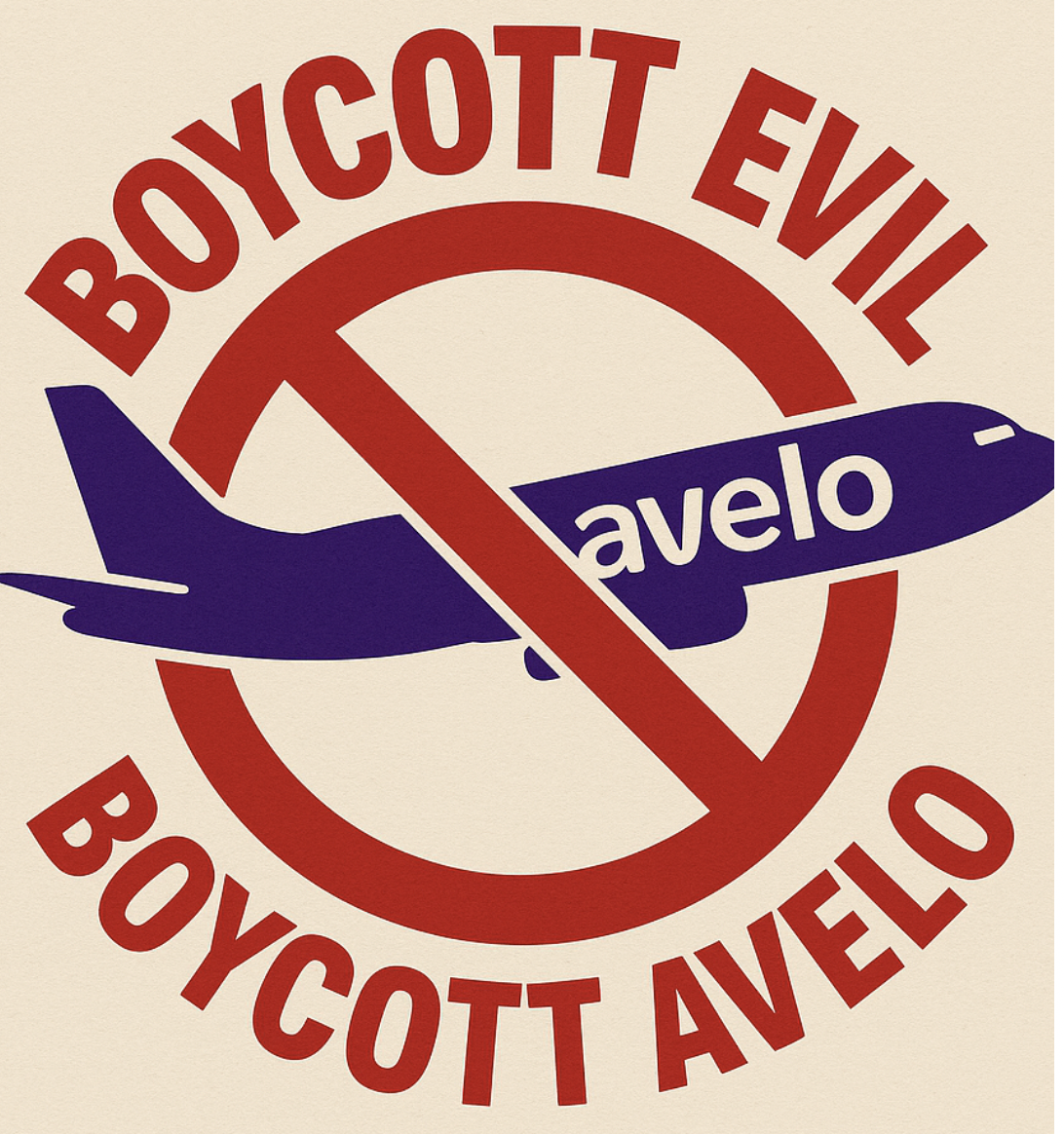 4. In March, it was announced that Avelo Airlines would be offering flights out of the Kent County Airport, with a few direct flights to North Carolina and Florida. In May of this year, Avelo Airlines entered into a $150 Million contract with ICE to transport immigrants directly to El Salvador, becoming the first commercial airline to begin deportation flights, and running flights and hiring flight attendants in Mesa, AZ to fly people in ICE custody out of the country.
Several groups, including GR Rapid Response to ICE, have been calling for a boycott of Avelo Airlines since June, a boycott which is part of a national campaign to pressure the company to end their contract with ICE. As a follow up to a June 21st action, GR Rapid Response to ICE invited people to attend the Kent County Airport Authority’s monthly board meeting and to pressure the board members to demand that Avelo Airlines end its contact with ICE.
The Kent County Airport Authority Board did not respond directly to the issues about Avelo Airlines that people raised during their monthly board meeting, but has since released the following statement:
“The airport is required by federal law to allow all airlines to use our gates as long as they comply with FAA rules and regulations and remain in good financial standing. To do otherwise would unfairly discriminate against an airline, which could jeopardize our FAA funding.”
The Kent County Airport Authority statement reveals several things. First, the Kent County Airport Authority is making it clear that even if private airlines have contracts with ICE, contracts that allows them to transport undocumented immigrants to El Salvador with little hope of justice, that this is NOT a violation of the Federal Aviation Authority (FAA). Indeed, having a contract to do harm to immigrants does not violate FAA rules and regulations, which means the FAA rules and regulations normalizes human rights abuses.
Second, the Kent County Airport Authority statement makes it clear that apart from not violating FAA rules and regulations, as long as Avelo Airlines remains “in good financial standing”, they can continue to profit off of human rights abuses.
It is also worth noting that there are two Kent County Commissioners who sit on the Kent County Airport Board Authority, Commissioners Dan Burrill and Jennifer Merchant. We demand that they speak out against Avelo Airlines’ contract with ICE and adopt a policy to not support businesses that are profiting off of the arrest, detention and deportation of immigrants in Kent County.
5. ICE violence and immigrant family separation are happening in Kent County every week. With the passing of the Big Beautiful Bill, there will be an additional $170 billion added to the budgets of ICE and other immigration enforcement agencies to arrest, detain, and deport immigrants, and for a border wall and militarization in the next few years. Specifically, the bill includes funding for some of the following:
- $45 billion: for expanding detention capacity, including building new facilities and expanding existing ones.
- $29.9 billion: for enforcement and removal operations, such as hiring more ICE personnel and providing transportation costs.
- $10 billion: for a DHS cost-reimbursement fund related to border enforcement.
- $12 billion: for state reimbursement related to border enforcement.
In early June, ICE agents arrested at least 8 people who were at the ISAP office on Michigan Street in Grand Rapids while they were attending regularly scheduled appoints with ICE. ICE agents took those immigrants, some who are in detention and some have been deported. Actions like these are causing fear and trauma in the immigrant community. This is family separation, it is violence and it is happening right here in Kent County. If Kent County adopts the Sanctuary policies that Movimiento Cosecha and GR Rapid Response are calling for, it will not only send a message to the immigrant community that Kent County cares about the well being of immigrants, it will send a message to the federal government that Kent County will not cooperate with violence and immigrant family separation.
If you are able, please attend the Kent County Commission meeting this Thursday, at 8:30am, and demand that Kent County adopt these Sanctuary policies. For details on the meeting this Thursday and where to park, go to this link.
Philanthropy is just reputation laundering for the oligarchy.
The Edgar & Elsa Prince Foundation
GRIID has always begun our Foundation Watch work by looking at the foundations associated with the most powerful family in West Michigan, the DeVos family. Seven weeks ago I looked at the Dick and Betsy DeVos Foundation, then six weeks ago I investigated the Doug and Maria DeVos Foundation. Five weeks ago it was the Dan and Pamela DeVos Foundation, and four weeks ago it was the CDV5 Foundation, which is the Cheri DeVos Foundation. Three weeks ago I looked at the DeVos Family Foundation, and two weeks ago I wrote about the David and Carol Van Andel Foundation. The most recent post was about the Steve and Amy Van Andel Foundation. Today, I want to look at the most recent 990 document from the Edgar & Elsa Prince Foundation.

According to GuideStar, in 2024, the Edgar & Elsa Prince Foundation contributed $1,367,500 leaving them with $1,222,741 of funds left in their foundation account. Edgar and Elsa Prince are the parents of Erik Prince and Betsy DeVos. Erik Prince is one of the Board members of his parents foundation. Although Edgar has been dead for several years, the foundation that is in his wife and his name, continues the legacy of funding the Religious and Political Right.
Religious Right
- Christian Leadership Institute $20,000
- American Values $20,000
- Gateways to Better Education $15,000
- Words of Hope $30,000
- Bible League – $15,000
- Women’s Rights Without Frontiers $20,000
- Pregnancy Resource Center $10,000
- Alliance Defending Freedom $25,000
- Protect Life Michigan $35,000
- Wycliff Bible Translators $15,000
- Michigan Family Forum $25,000
- Prison Fellowship Ministries $100,000
The Alliance for Defending Freedom is a Conservative Christian group of lawyers that defends religious groups around anti-LGBT policies and other religious right issues. They are a far right version of what the ACLU is. American values is a group that was started by Gary Power, which put their emphasis on fighting against abortion and defending Israel. The Prison Fellowship Ministries is a Far Right Christian group that tries to convert people in prison, but doesn’t have a problem with the Prison Industrial Complex. They are also part of the State Policy Network. The Bible League and the Wycliff Bible Translators often in work in tandem to impose Christianity on Indigenous people around the world, which I have written about previously.
Political Right and Think Tanks
- Freedom Alliance $25,000
- Media Research Center $20,000
- Council for National Policy $15,000
- Mackinac Center for Public Policy $10,000
- Acton Institute $23,500
- Turning Point USA $35,000
- Mom’s for America $5,000
Freedom Alliance is an entity that was founded by convicted Iran Contra scandal participant Col. Oliver North. The Media Research Center is a right wing media “watchdog” group run by president and founder Brent Bozell. It is predominately funded by larger right-wing foundations. The Mackinac Center for Public Policy is a right-wing pressure group based in Michigan. Founded in 1987, it is the largest state-level “think tank” in the nation. It was established by right-wing activists to promote “free market,” pro-business policies. Moms for America is a group of women that fights against Critical Race Theory in schools, opposes the Movement for Black Lives, was involved in the January 6th, 2021 insurrection, plus the Southern Poverty Law Center designates them as a Hate Group. Turning Point USA is a right-wing 501(c)(3) organization, with a mission to “build the most organized, active, and powerful conservative grassroots activist network on high school and college campuses across the country.” The group funnels money to right-wing candidates for student government at universities across the country and has faced numerous allegations of racial discrimination. TPUSA is funded by a variety of right-wing mega-donors, including the Lynde and Harry Bradley Foundation, the Ed Uihlein Family Foundation, Foster Friess, Michael Leven and various Koch brothers-affiliated groups, such as the Foundation for Economic Education, DonorsTrust and Donors Capital Fund.
Education Institutions
- Holland Christian Schools $28,500
- Potter’s House Christian School $37,500
- Zuni Christian Mission School $20,000
- Allendale Christian Schools $15,000
DeVos-owned, created or connected groups
- Christian Leadership Institute $20,000
- West Michigan Aviation Academy $47,500
Groups receiving Hush money
- Wedgewood Christian Youth and Family Services $15,000
- Family Promise $20,000
These groups all provide some sort of social service. There are root causes to all of these issues, but these groups are not likely to address root causes and larger systems of oppression. When the Prince family foundation makes contributions, this will increase the likelihood that systems of oppression will not be addressed by these organization, which is why we call it hush money.
You can clearly see that the Edgar and Elsa Prince Foundation primarily funds the Religious Right and the Political Right, even though sometimes it is difficult to distinguish the two. The Edgar and Elsa Prince Foundation is a perfect way for the family to hide some of their wealth from taxation, but allows them to use it, just like direct political contributions, often working in tandem with campaign contributions.
Last week, in the Email that Rep. Scholten sends out, she spent a great deal of time talking about how the “Big Beautiful Bill” would be bad for people, especially around the issues of health care cuts, food assistance cuts, attacks on public education and several other important matters.
Rep. Scholten is correct in pointing out what kind of damage the “Big Beautiful Bill” will do. Unfortunately, all she did was vote against it, since the Democrats do not control Congress. Michigan Senator Elissa Slotkin did the same thing in her July 19th Email, critiquing all the things wrong with the “Big Beautiful Bill.”
However, what Slotkin and Scholten did not do was to talk about where much of this money will be going, money that has been cut from food assistance and medicaid. The Big Beautiful Bill allocates $170 billion to arrest, detain, and deport immigrants, and for a border wall and militarization in the next few years. Specifically, the bill includes funding for some of the following:
- $45 billion: for expanding detention capacity, including building new facilities and expanding existing ones.
- $29.9 billion: for enforcement and removal operations, such as hiring more ICE personnel and providing transportation costs.
- $10 billion: for a DHS cost-reimbursement fund related to border enforcement.
- $12 billion: for state reimbursement related to border enforcement.
So, why did Slotkin and Scholten say nothing about the increased funding that will further the Trump Administration’s desire to arrest, detain and deport as many immigrants as possible? For one, Slotkin, Scholten and the Democratic Party as a whole have voted for ICE funding, the expansion of private detention facilities and related Department of Homeland Security efforts directed at the immigrant community since ICE was created in 2003.
A second major reason that Democrats have not talked about expanded funding for ICE and other immigration related repression is because the Democratic Party leadership did not want to talk about it. This matter is explored in an excellent article from the Intercepted, entitled, “TRUMP’S BUDGET BILL WOULD EXPLODE FUNDING FOR ICE. TOP DEMOCRATS AREN’T TALKING ABOUT IT.” The reason why the Democratic Party leadership did not want to talk about ICE and the the further criminalization of immigrants, along with the further militarization of the border, is because they fundamentally agree with those policies, just as they did under Clinton, Obama and Biden. (See Daniel Denvir’s book, All-American Nativism: How the Bipartisan War on Immigrants Explains Politics as We Know It.)
Some people might point out that Senator Slotkin recently co-sponsored theVISIBLE Act, which requires ICE agents to not cover their faces and have some form of identification on their person when arresting and detaining immigrants. Of course it is problematic that ICE agents are covering their faces, but Slotkin’s legislation says nothing about how ICE has arrested, detained and deported millions of immigrants since ICE was created. As I wrote in a piece last week, Senator Slotkin doesn’t have a problem with ICE arresting in detaining millions of immigrants. In fact, she is pushing the VISIBLE Act legislation because it will, “strengthens officer credibility, and improves public cooperation.” This clearly means she doesn’t oppose what ICE does, only that she doesn’t want them to cover their faces.
For her part, Rep. Scholten has voted with the Trump Administration on several bills to further criminalize undocumented immigrants, as I have documented, Scholten and Slotkin refused to condemn the US bombing of Iran last month, and Rep. Scholten recently voted for the pro-Trump Genius Act, as did the majority of Congress, which would further Trump’s corruption, but also “expose our financial stability, national security, and consumer protections to greater risk.”
For those who continue to put their faith in electoral politics, I would argue, as does historian Howard Zinn, that the most effective means to address systemic oppression is by building radical social movements that are too powerful for politicians to ignore. From an Interview, Zinn said:
Significant changes occur when social movements reach a critical point of power capable of moving cautious politicians beyond their tendency to keep things as they are — or when these movements, by direct action, bypass the political system and bring about change by acting directly on the obstacles to change. When the anti-slavery movement reached its height in the late 1850s and early 1860s, it pushed President Abraham Lincoln toward the Emancipation Proclamation and pushed Congress toward the 13th, 14th and 15th Amendments. When the labor movement became militant and called strikes all over the country in the 1880s, it won the eight-hour day directly from employers without the actions of government. In the 1930s, the strike and the growing labor movement pushed President Franklin D. Roosevelt into the New Deal reforms — minimum wage, Social Security, subsidized housing, etc. When black people protested and demonstrated all over the South, bringing about scenes that shocked the nation, then we got the Civil Rights Act of 1964 and the Voting Rights Act of 1965. But before that legislation, militant black protesters desegregated lunch counters and began to change the South by direct action. The movement against the war in Vietnam reached the point where it could not be ignored, where the direct action of deserting GIs, angry veterans and draft resisters created an atmosphere in which the government could no longer count on the support of the American people — and then the government began to move gradually toward ending the war.
It is true that things are worse under Trump than it was under the Biden Administration, but that is due primarily to the fact that the Democratic Party rarely keeps there promises on social and economic policies and actually embraces Imperialism, State violence and Capitalism as necessary.
The Democratic Party would love for all those involved in resisting current policies in the US to focus on getting Dems elected in 2026, rather than building powerful social movements. Indeed, this is the strategy of the Democratic Party, which is to be slightly less oppressive than the Republicans, but when they control Congress they only modify GOP policies instead of listening to the existing social movements or population most impacted by white supremacy, policing, the climate crisis, a market-driven housing system, militarism, patriarchy and other systems of power and oppression.
I would highly recommend that people read Lance Selfa’s book, The Democrats: A Critical History, which chronicles how the Democratic Party has undermined social movements throughout US history, by prioritizing voting over direct action, by convincing people that voting for the lesser of evil is good, and by not enacting robust social and economic policies when they have political power…….what we call betrayal. Lastly, why would we continue to defend and participate in a system of representative democracy, when we can have direct democracy or collective liberation through powerful social movements.
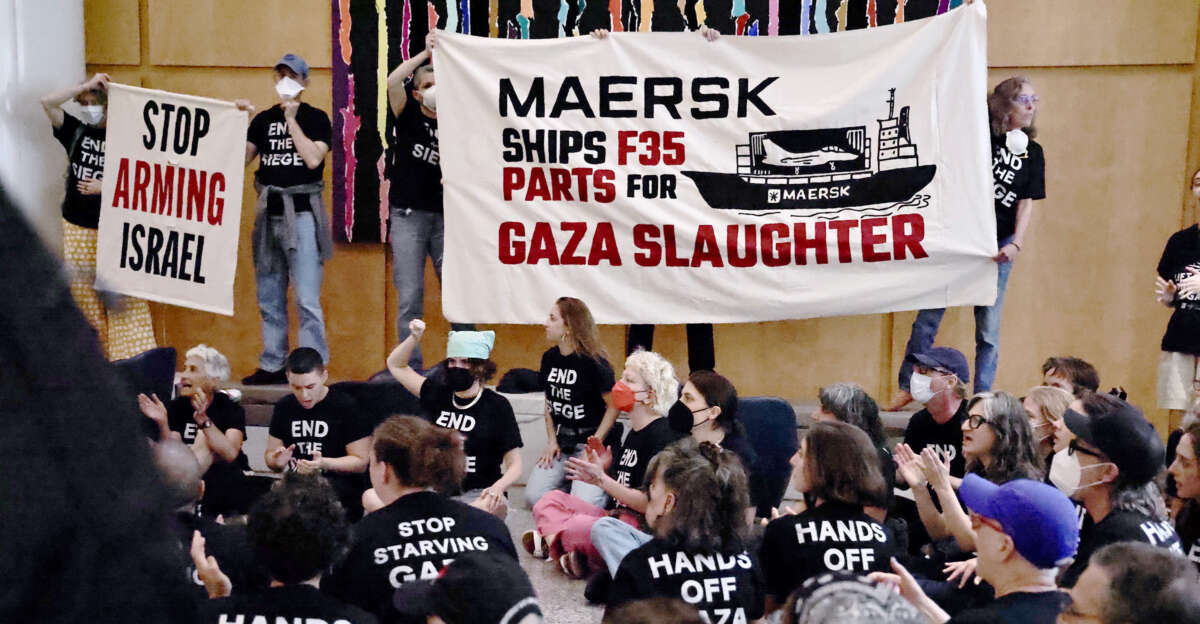
It has been more than 21 months since the Israeli government began their most recent assault on Gaza and the West Bank. The retaliation for the October 7, 2023 Hamas attack in Israel, has escalated to what the international community has called genocide, therefore, GRIID will be providing weekly links to information and analysis that we think can better inform us of what is happening, along with the role that the US government is playing. All of this information is to provide people with the capacity of what Noam Chomsky refers to as, intellectual self-defense.
Information
Witnesses Say American Military Contractors Shot Tear Gas at Gaza Aid Seekers
The Collapse of the Corporate University in the Time of Gaza
Beit Hanoun’s Fury: How Gaza’s Obliterated Northern Town Defies Israeli Victory
Trump and Netanyahu dither on Gaza ceasefire
Stop Israel’s Dystopian “Humanitarian City” Plan—Before It’s Too Late
Analysis & History
Israel’s Relentless Attacks on Gaza and Prospects for a Ceasefire
Iman Abid on the Economy of Genocide
Image used in this post is from https://fair.org/home/iman-abid-on-the-economy-of-genocide-victor-pickard-on-paramount-settlement/
Join the Communities Not Cages campaign to shut down ICE Detention Centers across the county and in Michigan
On July 4th, No Detention Centers in Michigan (NDCM) kicked off their campaign to shut down the Geo Group Inc. run Ice detention facility in Baldwin, Michigan, known as the North Lake Detention Center.
On Wednesday, the national group Detention Watch Network, sent out a Press Release, which included the following comments about their Communities Not Cages campaign:

Communities Not Cages is amplifying local community organizing to end ICE detention while illuminating the dangers of the Trump administration’s multi-layered detention expansion plan. Campaign organizers underscore that the gravity of this moment cannot be understated, particularly after the passage of the MAGA megabill that will supercharge Trump’s cruel mass detention and deportation agenda, making ICE the largest law enforcement agency in the country. Shockingly, ICE’s budget now exceeds many militaries around the world.
The bill provides an appalling $150 billion for the targeting, detention, and deportation of people including $45 billion for ICE detention to detain families and adults over the next four years. This bill is 13 times ICE’s current fiscal budget which is already operating at a historic high, and will be in addition to ICE’s annual budget that Congress green lights each year.
A representative from No Detention Centers in Michigan was also quoted in the Press Release, stating:
“As the federal government continues its assault on immigrants across Michigan and around the country, we hear from more people every day who are shocked to learn that Baldwin is now home to the largest detention center in the Midwest. We know that as this awareness spreads, opposition to ICE and the GEO Group will only continue to grow. When North Lake was last open five years ago, and conditions inside led to multiple hunger strikes, one person held there told us: ‘They don’t want nobody to know what’s going on over here—they want to keep it under the rug.’ The GEO Group keeps these things under the rug as much as they can, but the truth is that this facility has been shut down before, and it will be shut down again. We stand with campaigns around the country and beyond in looking toward a future where everyone’s needs are met, freedom of movement is respected, and the immigration detention system that allows the GEO Group to profit from fear and racist sadism no longer exists.”
 Last month I posted an article about the recent ICE raid at the ISAP office in Grand Rapids. That office is managed by the group BI Incorporated, which is a subsidiary of the GEO Group. This means that immigrants who go to ICE appointments at that office are at risk of being taken by ICE and would likely be sent to the North Lake Detention Center, which is also owned by the GEO Group. The GEO Group has a near monopoly on immigration monitoring and detention in the western part of Michigan.
The fact is that the US Government maintains the world’s largest immigration detention system and the North Lake Detention Center is the largest in the midwest. You can see where the ICE detention centers are located throughout the US by going to this newly create detention center map that Detention Watch Network recently created. In addition, the Detention Watch Network has created a useful toolkit for those wanting to organize a Communities Not Cages campaign in their own community.
For people in Michigan, it is important that we join the campaign to shut down the GEO Group’s ICE detention facility in North Lake. Follow No Detention Centers in Michigan on Facebook to stay informed about updates and actions in the campaign to shut down that facility. When the North Lake Facility was a prison, No Detention Centers in Michigan was able to get it shut down, which means we can collectively do it again.
Mixed messages from a new Downtown GR Inc. video don’t reflect the economic and racial realities in Grand Rapids
There is a new 5 minute video about Grand Rapids, a video entitled GR Forward Together, and is hosted on the Downtown Grand Rapids Inc. YouTube page.
The video is very well made, with great music, camera work and editing. Additionally, the video features primary BIPOC people in Grand Rapids, which is unusual, since Grand Rapids is such a white dominated city. The well made video is produced by ArtPeers.

The music that accompanies the video includes lyrics that talk about the marginalization and struggle of people, using lines like “from the wrong side of town” and “money for rent”, which reflects the reality of a large sector of the city, especially BIPOC communities. Last year I posted an article which used the ALICE data – ALICE stands for Asset Limited, Income Constrained, Employed – which said that in Grand Rapids 47% of the household in this city were living paycheck to paycheck.
At first view it was refreshing to see so many BIPOC people, several that I knew, in this video, but there were also a few people in the video that I found troubling. There was former Grand Rapids Mayor Rosalynn Bliss in a scene in the video, where she is getting on an elevator with Victor Williams. The irony of this is that while Bliss was Mayor she presided over the 2020 uprising, numerous demands from the community for more police accountability and calls to defund the GRPD, which I have documented. What is even more ironic, was that just weeks ago, Victor Willams was tased by the GRPD, then arrested for questioning why the GRPD had stopped several Black youth at gunpoint.

I also found it troubling that in three different scenes Rick DeVos, the sone of Dick and Betsy DeVos, is shown in the video also riding an elevator. Rick DeVos imposed ArtPrize on Grand Rapids, which has been detrimental to many artists and the art community, while at the same time it brought in tourists to spend money at hotels and other venues that are owned by the DeVos family and other members of the Grand Rapids Power Structure.

The video is also interesting in that it centers Black, Latinx and Indigenous contributions to the city, which is appreciated, but the video also centers downtown Grand Rapids, which has not primarily benefited BIPOC communities as a whole, unless members of those communities have decided to become allies with the local power structure to gain access to their funding.
The reality is that in the last decade there have been billions of dollars invested in downtown Grand Rapids and much of those dollars have come from the public. The Amphitheater, the Soccer Stadium, Lyon Square and other developments have primarily benefited the already well to do members of the Capitalist Class in Grand Rapids, while the City has fundamentally ignored the plight of thousands of its residents.
The wealth gap in this city is growing between the haves and have nots. Public demands around policing, affordable housing and sanctuary for immigrants living in fear of ICE violence have mostly been ignored by City officials. Thus, I am not sure this video honestly communicates the economic disparities and the systemic racism that is very much a part of Grand Rapids.
Philanthropy is just reputation laundering for the oligarchy.
It is that time of the year again, when GRIID posts about the various West Michigan Foundations from families that make up the Grand Rapids Power Structure. I started with the DeVos family, which has 5 different foundations. Now I want to look at the Van Andel family foundations.
The Stephen and Amy Van Andel Foundation
GRIID has always begun our Foundation Watch work by looking at the foundations associated with the most powerful family in West Michigan, the DeVos family. Six weeks ago I looked at the Dick and Betsy DeVos Foundation, then five weeks ago I investigated the Doug and Maria DeVos Foundation. Four weeks ago it was the Dan and Pamela DeVos Foundation, and three weeks ago it was the CDV5 Foundation, which is the Cheri DeVos Foundation. Two weeks ago I looked at the DeVos Family Foundation, and last week I wrote about the David and Carol Van Andel Foundation.

According to GuideStar, in 2023, the Stephen and Amy Van Andel Family Foundation contributed $16,482,013 leaving them with $99,226,020 of funds left in their foundation account.
The Stephen and Amy Van Andel Family Foundation made contributions to dozens of entities in 2023, but there are some clear categories of groups they contributed to, such as the Religious Right, Think Tanks, Education-centered groups, and social service entities, to name a few.
Religious Right
- Bethel Community Education – $50,000
- Guiding Light Mission – $10,000
Think Tanks
- Acton Institute – $2,500
- American Enterprise Institute – $20,000
- The George W Bush Foundation – $3,000,000
- Grand Rapids Economic Club – $25,000
- The Heritage Foundation – $10,000
Education-centered groups
- Cornerstone University – $15,000
- Grand Rapids Catholic Secondary Schools – $100,000
- Grand Rapids Christian Schools – $300,000
- Hillsdale College – $3,000,000
- Potter’s House – $30,000
- Western Theological Seminary – $1,876,000
Van Andel-owned, created or connected groups
- Van Andel Research Institute – $10,000
Groups receiving Hush $
- Baxter Community Center – $30,000
- Family Promise – $75,000
- Kids Food Basket – $25,000
- Literacy Center of West MI – $25,000
One recipient of funding from the Steve and Amy Van Andel Foundation that stands out is Hillsdale College ($3 Million). Hillsdale College is know for being part of the larger Charter School movement that opposes Public Education and is on the advisory board of Project 2025.
 Hillsdale College has a long history of practicing and promoting far right values. The former President of Hillsdale College, George Roche, was also on the advisory board of the US affiliate of the World Anti-Communist League, according to Scott and Jon Lee Andersen’s book, Inside the League: The Shocking Expose of How Terrorists, Nazis, and Latin American Death Squads Have Infiltrated the World Anti-Communist League.
Hillsdale College has hosted forums over the years with speakers such as Manuel Ayau, a member of Guatemala’s Amigos del Pais, a group linked to the death squads in Guatemala. Hillsdale also houses the late John Bircher Clarence Manion’s tape collection, with lectures from former Nicaraguan Dictator Anastasio Somoza Hillsdale’s magazine, Imprimis, which provides a forum for anti-minority views.
In another book by Russ Bellant, The Coors Connection: How Coors Family Philanthropy Undermines Democratic Pluralism, the author writes:
“Longtime Hiilsdale President Roche is opposed in general to social engineering plans, among which he includes affirmative action and public education. Roche has attacked the Civil Rights Restoration Act as frightening federal intervention. He calls affirmative action “the putrid backwash of all the tired social engineering schemes and complains that its advocates are so hypersensitive that a school’s unwillingness to set up advanced bongo drum programs is called racist.”
Bellant goes on to say:
“The selection of contributors for Hillsdale’s monthly magazine, Imprimis, also relfects the school’s far right political views. In one issue, Gerda Bikales, a founder and former executive director of the English Only organization, US English, condemned the advocates of cultural diversity and bilingual education. She attacked the skilled language planners and other militant advocates who promote bilingual education, as well as those who aggressively pursue diversity and cultural pluralism.”
However, don’t just take the word of Bellant, even a recent article in the New York Times made it clear that the politics of Hillsdale College are reactionary and far right.
Because Hillsdale College does not accept federal money, they do not have to follow federal policy, like Title IX. As a result, the college does not follow Title IX guidelines on sex discrimination and the handling of sexual assault cases and it has refused to engage in the otherwise required reporting on student race and ethnicity, let alone develop an affirmative action plan. Not surprisingly, the school’s “race blind” admissions policy results in an overwhelmingly white student body.
In 2013, Dr. Arnn was castigated by Michigan legislators when, during testimony against the Common Core, he made a remark about officials who questioned Hillsdale’s racial record. Years before, he said scornfully, Michigan officials had come to the campus with clipboards, trying to count faces and prove, he said, that the college “didn’t have enough dark ones.” He later issued a barbed apology: “No offense was intended by the use of that term except to the offending bureaucrats.”
The New York Times article goes on to say:
It is no coincidence that Justice Clarence Thomas, an advocate of strict “originalist” interpretation of the Constitution, delivered the commencement address last spring, likening Hillsdale to a “shining city on a hill” for its devotion to “liberty as an antecedent of government, not a benefit from government.”
On a recent episode of Doug DeVos’ podcast Believe, GRIID provided some analysis on the comments from the current Hillsdale College President, Dr. Larry Arnn, which are here below.
The President of Hillsdale College engages in what most scholars refer to as American Exceptionalism. American Exceptionalism is the idea that the US as a country is unique and special and should be seen as a model for the rest of the world. This sentiment is reflected in the conversation between Dr. Arnn and Doug DeVos, since neither of them mention anything about the US genocidal policies directed at the First Nation’s people that lived here way before the Europeans invaded these lands.
The Hillsdale President does acknowledge slavery, but just in passing. Interestingly enough, Dr. Arnn then spends a great deal of time talking negatively about the 1619 Project, stating:
You know, the New York Times has done that frightful 1619 Project. And they claim that the movement of the founding of America from the colonies forward was in the direction of perpetuating slavery.
The President of Hillsdale College then cites Gordon Wood as the leading US Historian, so as to contradict the claims made by the 1619 Project. This theme is not really explored by DeVos or his guest, since both are not interested in a serious exploration of the more honest history that the 1619 Project explores, particularly as it related to the centuries long practice of systemic racism in the US and how it has impacted the Black community in particular.
While DeVos and his guest make backhanded comments about Critical Race Theory, they fail to mention that Hillsdale College has developed their own curriculum to counter the 1619 Project. The Hillsdale project is called The Hillsdale 1776 Curriculum, which is a very sanitized and whitewashed version of US history.
Hillsdale College is also smack dab in the middle of the Charter School debate in the US, providing curriculum resources and a cadre of ideological apologists for far right values. In fact, a recent investigation by NewsChannel5 in Tennessee, “discovered new evidence that reveals the true Hillsdale connection, including more hidden-camera video from the reception hosted by Hillsdale president Larry Arnn for Lee.
That’s the same video where Arnn famously declared that public school teachers come from “the dumbest parts of the dumbest colleges.”
Following the release of that controversial video, three Tennessee school boards voted down applications from the Hillsdale-affiliated American Classical Education to open charter schools in their districts.
All of this is to show that, like so many other wealthy families from West Michigan, the Van Andel family has a long history of funding far right causes and institutions, like Hillsdale College. This example demonstrates once again, that philanthropic contributions are not simply charitable gifts, the foundations of wealthy families are designed to channel massive funds to promote their ideological interests.
Billionaires like the DeVos family will also benefit from the Big Beautiful Bill just for owning private jets
The Big Beautiful Bill, which is only beautiful for the Capitalist Class and government entities like Immigration and Customs Enforcement (ICE), will deeply hurt millions of people in the US, especially those who rely on Medicaid.
There is another aspect of the Big Beautiful Bill (BBB) that hasn’t received much attention, one which will benefit billionaire families like the DeVos family.
According to inequality.org, the BBB:
“Includes a massive tax subsidy for private jet buyers. Instead of corporations deducting the purchase of their jets over several years of their useful life, the BBB includes 100 percent “bonus depreciation” in the year of purchase.
For example, a corporation purchasing a $50 million private jet could potentially deduct the entire $50 million from their taxes in the year of the purchase, rather than spreading the deduction over many years. This amounts to a massive taxpayer subsidy, as ordinary taxpayers pick up the tab for the private jet industry and billionaire high flyers.
From our IPS research on private jets, we know that regular taxpayers and commercial air travelers subsidize the high-flying excess of private jet owners. In the U.S. private jets use seven percent of the airspace but only contribute 0.6 percent of the cost of using it.
As wealth has concentrated into the vaults of the ultra-wealthy, the demand for private jets is surging. Every billionaire appears to need one or two. As a result, private jets are one of the largest and fastest growing sources of air and climate pollution. In 2023, private jets emitted 19.5 million tons of greenhouse gas (GHG) emissions, a 25 percent increase over 2013 levels.”
The DeVos Family and their fleet of jets
 It is always difficult to find out details about the wealth of the DeVos family, primarily because they don’t believe in full transparency and because they have diversified their wealth and assets in such a way as to make it difficult to track.
There was an interesting article from Business Insider in 2018, with a headline that read, Education secretary Betsy DeVos owns a fleet of 12 private jets and 4 helicopters. In that article it states:
According to Forbes, the DeVos family owns a fleet of 12 private jets — 1 Boeing Business Jet, 5 Gulfstream G550’s, 1 Gulfstream G450, 2 Bombardier Challenger 350’s, 3 Cessna Citation CJ4’s — and four helicopters.
We also know that while she was the Secretary of Education, Betsy DeVos used her own private jets to travel as Education Secretary, rather than using commercial planes.
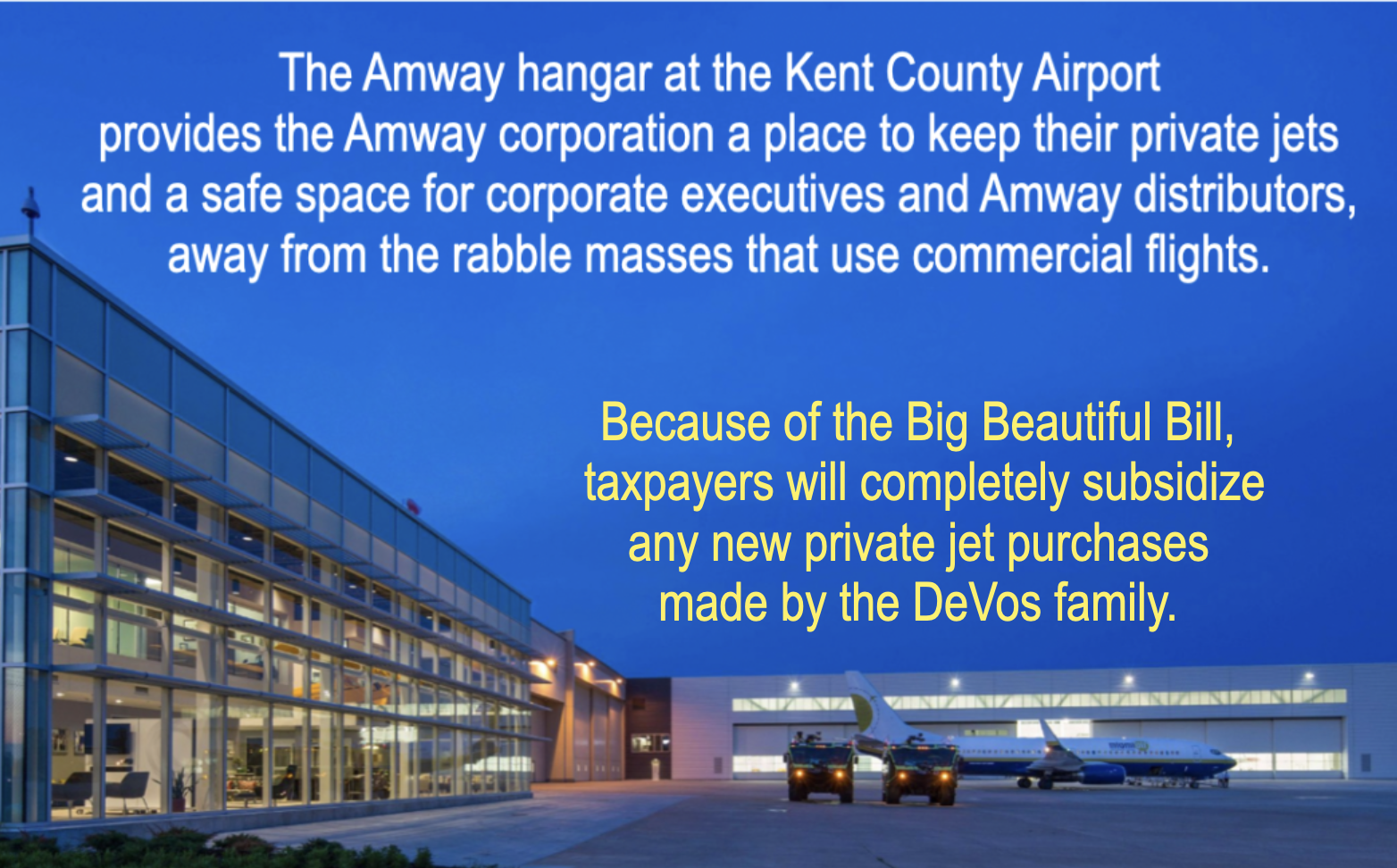
Then there is the fact that the global corporation that Rich DeVos founded with Jay Van Andel, the Amway Corporation, also has a fleet of private jets and other planes, with their own hangar at the Kent County Airport.
 The Amway corporate jets get even more use than the private jets owned by the DeVos family, primarily because the Amway jets are used by more people, particularly the people who are near the top of earners in their notorious pyramid scheme. In addition, the Amway Corporation has partnered with other commercial airline companies to offer exclusive trips to Amway distributors for Amway conventions. One example was the partnership with the Emirates, the world’s largest international airline, which transported over 6,500 distributors and company representatives to Dubai.
Then there is the Charter School scheme that Dick DeVos runs, the West Michigan Aviation Academy. The West Michigan Aviation Academy, located at the Kent County Airport, is a school designed to create more pilots, but it also encourages more private jet/plane ownership and use. In the past, Dick DeVos has complained about his Charter School not getting enough public funding.
Therefore, on top of the fact that the DeVos family:
- Makes massive political contributions to GOP candidates/politicians, which adopt policies that do tremendous harm to working class families, immigrants, the LGBTQ community and BIPOC people in general;
- Uses their foundations to funnel millions to far right groups like Focus on the Family or think tanks like the American Enterprise Institute or the Mackinac Center for Public Policy.
The DeVos family and the Amway Corporation – just on the matter of air travel – emit at least 10 times more pollutants than anyone else who books a flight from the Kent County Airport. Lastly, besides travel for pleasure, the DeVos family uses their private jets to travel to places to meet with other disgustingly rich people to figure out new ways to expand their wealth and to exploit and oppress more of the world’s population, while creating more pollution and perpetuating Climate Change. Reason #31 for why we should have nothing but contempt for the most powerful family in West Michigan, the DeVos family.
Last week, Michigan Senator Slotkin, along with several Democratic Senators, introduced a bill that is called, the Visible Identification Standards for Immigration-Based Law Enforcement (VISIBLE) Act of 2025.

According to a statement released by Senator Slotkin, the VISIBLE Act would do the following:
- Requires immigration enforcement officers — including DHS personnel such as Customs and Border Protection (CBP) and Immigration and Customs Enforcement (ICE), federal agents detailed to immigration operations, and deputized state or local officers — to display clearly legible identification, including their agency name or initials and either their name or badge number, in a manner that remains visible and unobscured by tactical gear or clothing;
- Prohibits non-medical face coverings (such as masks or balaclavas) that obscure identity or facial visibility, with exceptions for environmental hazards or covert operations; and
- Requires DHS to establish disciplinary procedures for violations, report annually to Congress on compliance, and investigate complaints through its Office for Civil Rights and Civil Liberties.
In the statement released by Slotkin, it provides some of the motivations for proposing such a bill, stating:
Clear, consistent, visible identification helps reduce miscommunication during enforcement encounters, strengthens officer credibility, and improves public cooperation, all of which are vital to mission success. The VISIBLE Act would place a critical check on the government’s power, ensuring basic transparency safeguards that protect public trust and legitimacy in immigration enforcement operations.
I highlighted parts of the statement from Senator Slotkin, so as to make a point about the absurdity of the VISIBLE Act.
Calling what ICE does as enforcement encounters legitimizes that ICE is arresting and detaining immigrants, simply because they are undocumented.
Slotkin also states that when ICE arrests or detains immigrants it strengthens officer credibility if they aren’t covering their faces, which means if immigrants can look into the eyes of the ICE agents that are arresting and detaining them, it strengthens the credibility of the ICE agents.
The Michigan Senator also thinks that ICE agents not covering up their face would improve public cooperation. This one is interesting, since it suggests that people will more like be willing to cooperate in the arrest and detainment of immigrants if ICE agents don’t have their faces covered.
The last part that is in bold merely restates what was previously said about public trust and legitimizing what ICE does to immigrants.
I understand the intention behind the proposed legislation, with ICE agents not providing transparency or to limit the number of fake-ICE agents from taking immigrants. However, what I find most problematic and most distributing about the VISIBLE Act is that it is not calling for the actual abolishment of ICE. Do you think that immigrants will feel better or less terrorized if ICE agents are not covering their faces when they arrest them and take them to a detention facility?
It is important that we stop supporting politicians who merely want to make mild reforms to institutions that are inherently oppressive. Requiring cops to wear body cameras has not reduced the number of times that cops abuse or kill people they are targeting. In fact, since body cameras have been introduced, the number of people killed by cops has increased, according to mappingpoliceviolence.org.
Everything about this proposed legislation is not only wrong, it would help to strength state carceral violence. What we need is to embrace a more abolitionist framework into our efforts to resist ICE. This is exactly what Detention Watch Network staffer and longtime activist Silky Shah writes about in her amazing book, Unbuild Walls: Why Immigrant Justice Needs Abolition.
Taking a more abolitionist approach to US immigration policy is also what Movimiento Cosecha and GR Rapid Response to ICE does. I encourage you to follow them on social media and get involved in their work.
 Grand Rapids Institute for Information Democracy