Gun Violence, Structural Violence and the GRPD
 Over the past few weeks, we have written numerous stories about the Grand Rapids Police Department’s push to obtain the technology known as ShotSpotter, as a tool to reduce gun violence in the city.
On Tuesday, the Grand Rapids City Commissioners voted no on using a $500,000 gift from Kent County, which was funding the county received through the CARES Act. The vote was 3 – 3, which meant that it didn’t pass. However, the GRPD had a memo attached to the city’s resolution on the county funding, a memo which clearly states their intentions to obtain ShotSpotter, beginning with a pilot program:
“Going forward, GRPD will attempt to negotiate a pilot program with ShotSpotter and one or more willing neighborhood in order to evaluate the value of this technology in reducing gun crime. This also will allow GRPD to further engage with residents about where this technology may be deployed and to inform them and receive their feedback on this technology. GRPD will return to the City Commission after negotiation with ShotSpotter and additional engagement with the community to seek approval of a pilot per the City’s surveillance policy. After evaluation of the technology through the pilot, future funding possibilities will be explored.”
Now, I completely understand that the rise in gun violence is a serious issue in Grand Rapids. I also acknowledge that the majority of gun-related homicides have occurred in the southeast part of town, which also has the largest concentration of the Black community. It is completely understandable if people who live in that community are open to wanting ShotSpotter if it results in the reduction of gun violence.
However, the problem with how we respond to violence, gun-related or otherwise, is problematic, mostly because we allow the GRPD to control the narrative on how to respond to violence in Grand Rapids.
The reality is that the GRPD, which is part of a larger system of oppression, relies on force/violence, or the threat of force/violence, when responding to conflict in the community. The ShotSpotter technology should be viewed as just another tool in the police department’s arsenal when responding to violence. The ShotSpotter technology detects gun shots in the city, which, as the GRPD would argue, allows them to potentially respond quicker when gun fire is occurring. Read that point again……it allows the GRPD to potentially respond quicker. In other words, ShotSpotter does not prevent gun violence, which is where the community’s focus should be, violence prevention.
Structural Violence and the GRPD
Before we talk about Structural Violence in Grand Rapids, it is important for us to establish a working definition of what Structural Violence is. One of the best definitions I have come across is from an online site called Structural Violence. Here is their definition:
“Structural violence is one way of describing social arrangements that put individuals and populations in harm’s way… The arrangements are structural because they are embedded in the political and economic organization of our social world; they are violent because they cause injury to people … neither culture nor pure individual will is at fault; rather, historically given (and often economically driven) processes and forces conspire to constrain individual agency. Structural violence is visited upon all those whose social status denies them access to the fruits of scientific and social progress.”
Now that we have a working definition of structural violence, lets look at ways in which structural violence manifests in Grand Rapids, especially when, historically given (and often economically driven) processes and forces conspire to constrain individual agency.
- There are a handful of billionaires in GR, along with one quarter of the population living in poverty.
- There are thousands of people who on’t make a living wage and can’t afford the cost of rent in most neighborhoods.
- Thousands of families are food insecure in Grand Rapids and have little or no health insurance.
- There are countless families who have to decide on paying rent each month or paying their utilities.
- People who still live in places with lead-base paint or lead in their drinking water.
- People who can’t afford to own are car and who don’t have a bus route near their place of residence.
- People who are forced to live near the City owned incinerator, a toxic waste site or other areas that disproportionate have more pollution.
- People who can’t find work or a place to live because of a past criminal record.
- People who live in neighborhoods that are disproportionately policed by the GRPD.
- Black, brown, indigenous and other communities of color that face structural racism, which is also a form of structural violence.
Ok, so here are just 10 ways in which Structural Violence exists in Grand Rapids. At this point we should ask ourselves, if they really want to reduce violence, why is the GRPD not policing or arresting employers who don’t pay a living wage; landlords who charge too much for housing; businesses that pollute the water, air and soil; the food system which keeps people malnourished and sick; billionaires for being, well billionaires; and politicians who vote on policy that benefits the rich and punishes working people?
Aren’t all of the things I have listed an urgent, daily form of violence that plagues our communities? Why is the GRPD not urgently trying to figure out ways to stop these forms of violence? Simple, because the GRPD, which is part of the system of power and state violence, doesn’t care about Structural Violence, they only want to respond to street level violence, because it disrupts business as usual.
However, the thing we need to come to terms with is the fact that people who are harmed by Structural Violence on a daily basis, are often the same people who resort to crime or gun violence out of desperation. I’m not saying that people, even those who experience Structural Violence, have no agency, but if you have ever experienced multiple forms of Structural Violence for much of your life, your options are often quite limited, especially within the systems of White Supremacy and Capitalism.
Lastly, if we want to honestly prevent gun violence in our community, then we have to work towards ending structural violence, in all of its many manifestations. To do so will require lots of hard work, a great deal of creativity, an enormous amount of radical imagination and lots of compassion, since ending structural violence will mean we need to fundamentally re-order society. Of course, if we want to fundamentally re-order society, we will have to contend with those who currently benefit from Structural Violence – rich people, politicians, the business class, landlords, and the GRPD, just to name a few.
International Solidarity in Grand Rapids: Remembering when GR mobilized to protest the US sponsored murder of priests in El Salvador
 Thirty-one years ago, on November 16, 1989, Ignacio Ellacuría, S.J., Ignacio Martín-Baró, S.J., Segundo Montes, S.J., Juan Ramón Moreno, S.J., Joaquín López y López, S.J., Amando López, S.J. and their housekeeper Elba Ramos, and her 15 year-old daughter Celina Ramos, were murdered at the University of Central America in San Salvador, El Salvador.
The murder of the six Jesuits, their house keeper and her daughter, was at the hands of the Salvadoran military. There is clear evidence, based on declassified documents that the order to kill the Jesuits came from the highest levels of the Salvadoran military. In fact, some of the Salvadoran soldiers involved in the 1989 massacre, were also graduates of the notorious US Army School of the Americas.
The Jesuits were targeted, in part, because they were seen as the “intellectual authors” of the Salvadoran left. While there is no clear connection between the Jesuits and the armed insurgents of the 1980s (FMLN), the priests were known for their sharp and ongoing critique of the Salvadoran elite. Some of the comments they make that are in this short video are a clear indication of why they were seen as a threat to the Salvadoran power structure.
Grand Rapids Responds
As soon as word got out to the international community about this most recent atrocity in El Salvador, those involved in the Grand Rapids Central American Solidarity movement mobilized.
About 100 people blocked traffic on Michigan Avenue in front of the Federal building in Grand Rapids. The road blockade consisted of people using two long banners that people held up, with one banner stating, “End US Military Aid to El Salvador.” (The US had been giving El Salvador – a country the size of Massachusetts – $1 million a day in military aid)
After protestors blocked traffic for 30 minutes, the Grand Rapids police came and threatened to arrest people if they did not move. Most of those blocking the trafficking decided to leave the road rather than get arrested. Shortly afterwards another contingent of people went into Congressman Paul Henry’s office and attempted to make a citizen’s arrest against the Congressman and his staff.
Several people held signs about the most recent massacre in El Salvador, while others read the Congressman’s staff their rights. Another protestor leaned over the counter in the congressional office and picked up the phone to call the GRPD, making the claim that there were “violent crimes being committed at 110 Michigan.”
Eventually, the federal building security showed up and demanded that people leave. One by one the security guards dragged people out and the doors to the federal building were locked so no one could get back in.
 Another action was organized a week later, where those resisting US policy in El Salvador built coffins and made cardboard tombstones to draw attention to the US financed murders. One protestor began to dig a grave in the federal building lawn, but before they could did a large enough hole to bury the coffin, federal building security came out a took the shovel away. Those protesting US policy were still able to bury half of the coffin and place the cardboard tombstone next to it, while others held signs by Michigan Avenue.
These actions that took place 31 years ago, were in larger part, due to the nearly decade long Central American Solidarity movement that existed in Grand Rapids. For more on the Grand Rapids Central American Solidarity movement, go to the Grand Rapids People’s History Project.
West Michigan Far Right Watch for the week of November 6 – 14: Celebrating Capitalist Class Election victories and interpretations of fascism
 Welcome to the next installment of West Michigan Far Right Watch, where we keep tabs on the far right in this area and provide a summary of what they are up to and what kind of messages they are promoting in this community.
We have 3 new examples to share with you this week. The first comes to us from the Acton Institute for the Study of Religion and Liberty, which always posts information and opinion that we find detestable. However, the article we want to discuss provides a rundown of some of the ballot initiatives on each state in the country. What is instructive about the Acton position on these ballot initiatives, is that they supported those which passed that gave more power to corporations and those that punished the public. For example, Acton cheered the passage of Prop 22 in California, which kept gig economy workers are contractual, meaning they would not be employees who could receive benefits.
Then there were ballot initiatives like the one in Florida, which increased the minimum wage from $8.56 to $15 by 2026. Not exactly a radical shift, since many people can’t live off of $15 an hour right now. However, the Acton Institute saw this as a defeat, since they never want to concede anything to workers, only to the Capitalist Class.
Our second example of the Far Right for this edition, is the American Patriot Council. While they have been kicked off of Facebook, they still have a blog and a youtube channel for their show with Ryan Kelley and Jason Howland. There are two videos we wanted to point out. The first one is simply a Live streamed video on November 6 in Detroit, where Howland and Kelley were leading Trump supporters in a protest of the election result. As always, their arguments are weak, vague and intellectually simplistic.
The second video is their regular format, where Howland, Kelley and sometimes a guest spew their hate, propaganda and naive understanding of US history. In this video, they use the Webster’s dictionary to look at the definition of fascism:
a political philosophy, movement, or regime (such as that of the Fascisti) that exalts nation and often race above the individual and that stands for a centralized autocratic government headed by a dictatorial leader, severe economic and social regimentation, and forcible suppression of opposition
Based on this definition, Howland and Kelley determined that the “real fascists” in our country are antifa and Black Lives Matter. Are they not aware that antifa literally means anti-fascist? It boggles the mind, but this is the kind of distorted worldview that members of the American Patriot Council embrace.
The 3rd example in our West Michigan Far Right watch for this week is the Great Lakes Education Project (GLEP). Now, GLEP is based in Lansing, but it was founded by none other than Betsy DeVos, which is as West Michigan and Far Right as they come.
GLEP made our list for this week, because they are celebrating all of the Michigan lawmakers who were elected or re-elected recently, specifically the lawmakers who embrace Betsy DeVos’s favorite catch-phrase, School Choice. GLEP writes:
Advocates for students and families turned up and voted for school choice and parental options from one corner of Michigan to the next. When all the votes were counted, pro-student reformers carried the day and maintained a majority in the state House of Representatives.
And now that Betsy DeVos will no longer be attacking public education from inside the government, we can count on her attacking public education from the private sector, and using groups like the Great Lakes Education Project to do just that.
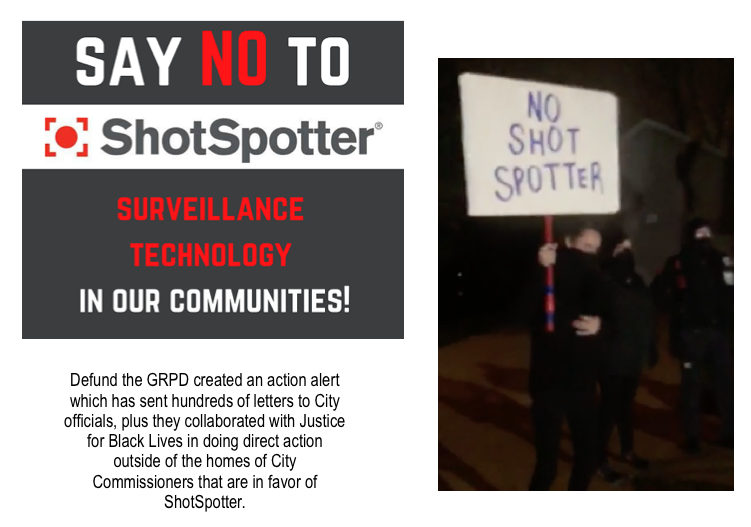
City Resolution to accept $500,000 from the county for crime prevention defeated, GRPD plans to move forward with pursuing ShotSpotter
 At this morning’s Grand Rapids City Commission’s Committee of the Whole meeting, there was a resolution to accept $500,000 from Kent County to be used for crime prevention.
The vote was split, with Mayor Bliss, Commissioners Jones and Moody voting for and Commissioners Ysasi, Lenear and Reppart voting against. Commissioner O’Conner was absent, so the resolution was defeated.
There was a lengthy conversation centered around the resolution, with questions about why there was ShotSpootter information included, along with how the money would be used and how quickly it the CARES Act funds would need to be used.
The City Attorney and City Manager both chimed in on these questions in order to clarify a few points. City Manager Mark Washington stated that the $500,000 could only be used for crime prevention within the GRPD. Washington claimed that the money would likely be used for GRPD payroll, to cover additional costs for officers who have been responding to gun violence in recent months. The City Manager also said they might be able to us the money for the GRPD’s gun buy back program, but the County could reserve the right to reject the proposal to use it for such a program.
On the matter of ShotSpotter, there was lots of confusion and frustration being expressed by several commissioners. Commissioner Reppart and Ysasi both asked why ShotSpotter was included in the resolution, especially if the $500,000 could not be used for this technology. The Mayor acknowledged that it was confusing, but kept saying the resolution language was clear.
Commissioners Ysasi and Reppart both made it clear that all communications they have received about ShotSpotter have been in opposition to the technology, while Commissioner Lenear said that most of the messages she has received were also in opposition, except for some residents in the 3rd Ward who want something to be done about the gun violence, but that they were not naming ShotSpotter as the solution specifically.
In many ways, this is a victory for the public that has been expressing opposition to ShotSpotter and funding for the GRPD. The City of Grand Rapids just lost out on half a million dollars, but they made it clear that that money would likely have been used for GRPD payroll.
There was a memo attached to the resolution on the $500,000, a memo from the GRPD. Here is some of what Chief Payne says in the memo:
“Going forward, GRPD will attempt to negotiate a pilot program with ShotSpotter and one or more willing neighborhood in order to evaluate the value of this technology in reducing gun crime. This also will allow GRPD to further engage with residents about where this technology may be deployed and to inform them and receive their feedback on this technology. GRPD will return to the City Commission after negotiation with ShotSpotter and additional engagement with the community to seek approval of a pilot per the City’s surveillance policy. After evaluation of the technology through the pilot, future funding possibilities will be explored.”
This memo makes it clear that they still want to get ShotSpotter technology, but now they will have to find funding internally. You can read the resolution language and the GRPD memo, by going to this link.
To stay informed and involved in ongoing efforts to defund the GRPD and oppose ShotSpotter technology, follow the Defund the GRPD page on Facebook.
“I Don’t Care”: Movimiento Cosecha, Rep. O’Malley and the DeVos family
 On Sunday, members of Movimiento Cosecha Michigan, held a non-violent demonstration in front of the home of Rep. Jack O’Malley, who not only represents the 101st House District, but is the chair of the Michigan House Transportation Committee.
Movimiento Cosecha has been pressuring Rep. O’Malley to hold hearings to discuss their demand to have Driver’s Licenses for All. Cosecha Michigan has been sending e-mail, making phone calls and then on Sunday held a protest near his house. Here, on the right, you can read what O’Malley’s response was to the Cosecha Michigan demand to have him hold public hearings.
What O”Malley is saying, when he says, “I don’t care,” means that he doesn’t care about the hardship of immigrant lives in Michigan. Saying “I don’t care” also dismisses the lived experience of thousands of immigrants in Michigan who pick his food, work in restaurants in his community or work on construction projects that O’Malley and his constituents benefit from. When Rep. O’Malley says he doesn’t care, he minimizes the risks that immigrant families live with, the fear of being stopped by cops and the economic hardships they face because they do not have a driver’s license.
On top of this, Rep. Jack O’Malley was just named as Deputy Whip for the Michigan House. If one looks at his recent posts on the Michigan House Republicans page, O’Malley does a great deal of complaining about how Gov. Whitmer has handled the COVID 19 crisis.
On O’Malley’s Facebook page, apart from disrespecting members of Cosecha Michigan (and immigrants in general), O’Malley, in his weekly video post for 11/13, the State Representative for the 101st District, spent time complaining about Gov. Whitmer’s decision to shut down Enbridge’s Line 5. O’Malley continues in his ramblings to argue that Line 5 “in fine right where it is,” but then goes on to argue that everyone should agree to the tunnel that Enbridge is proposing to replace Line 5.
Rep. Jack O’Malley has only been in office since 2018, when he was first elected to the Michigan House. His campaign finance records show that he has received significantly funding from usual GOP sources listed here:
TALLY: Top Disclosed Donors To O’Malley And Connected Committees From 2018 Through Today
1. House Republican Campaign Committee, $151,541
2. Chatfield Majority Funds, Lee Chatfield, $25,250
3. Jack O’Malley, $23,299
4. Wentworth Majority Fund, Jason Wentworth, $6,000
5. Compete Michigan, Mike Shirkey, $5,000
6. Realtors PAC, $5,000
7. DeVos family, Amway, $5,000
8. Blue Water Liberty Fund, Shane Hernandez, $4,500
9. Haworth family, Haworth, $4,000
10. Whiteford Leadership Fund, Mary Whiteford, $4,000
Michigan Strategic Leadership Fund, Jim Lilly, $4,000
However, the one thing that is somewhat misleading about O’Malley’s campaign contributors, is the fact that even though the data here shows that the DeVos family contributed only $5,000, the reality is that the DeVos family is the largest contributor to the House Republican Campaign Committee, contributing more than three times the amount of money of the next largest contributor, the Kennedy family, which is also from Grand Rapids. In reality, the DeVos family has been the largest contributor to Rep. O’Malley, which means that the have bankrolled a legislator who just told immigrants demanding Driver’s Licenses for All, that he doesn’t care.
A visual timeline of how the GRPD has tried to control the narrative about public safety since the May 30th rebellion in Grand Rapids
(Editor’s Note: you can download a PDF of this post, which is 29 pages, by going to this link.)

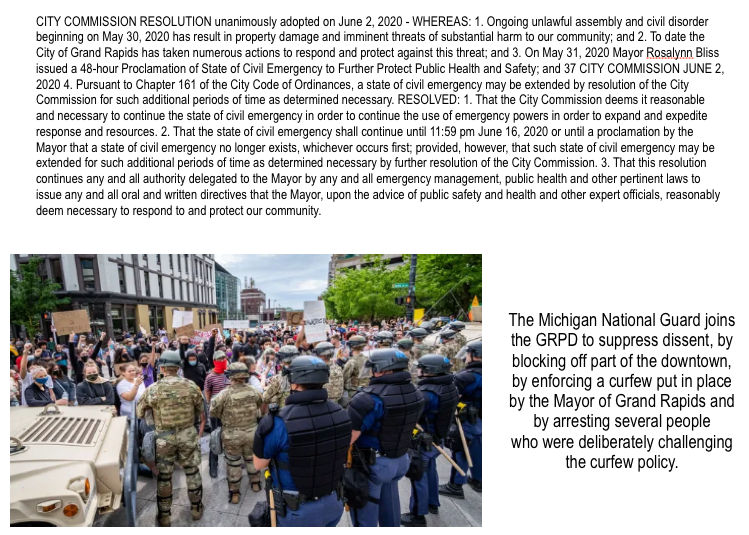
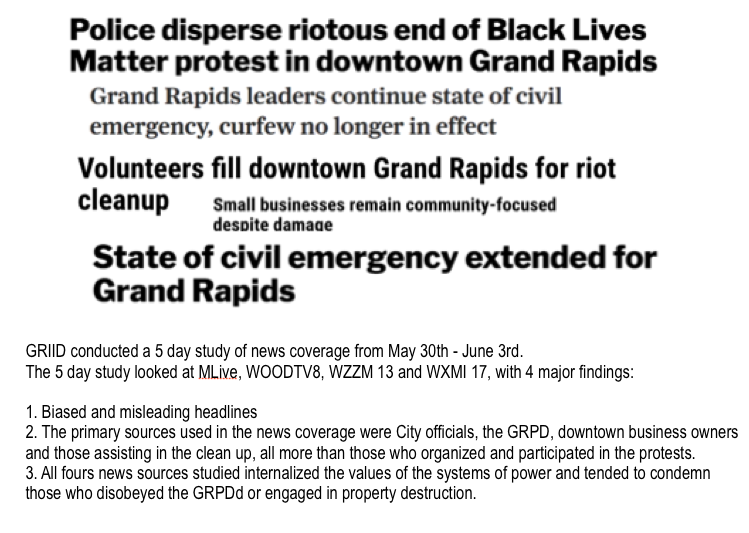
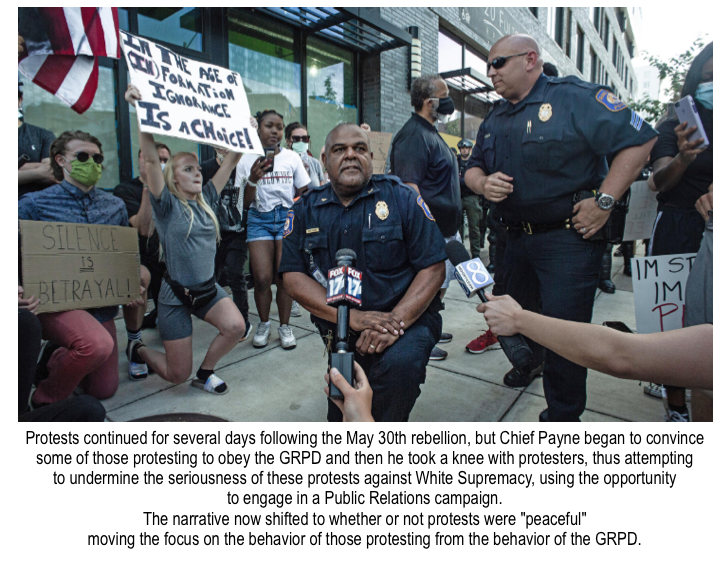
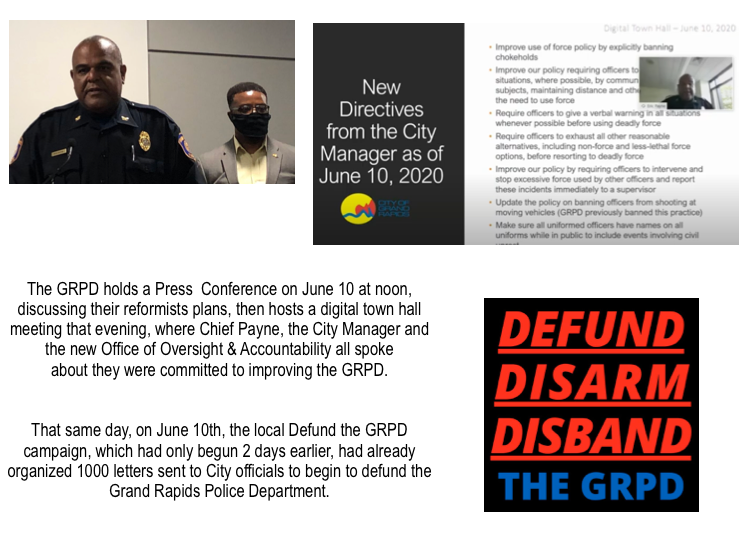
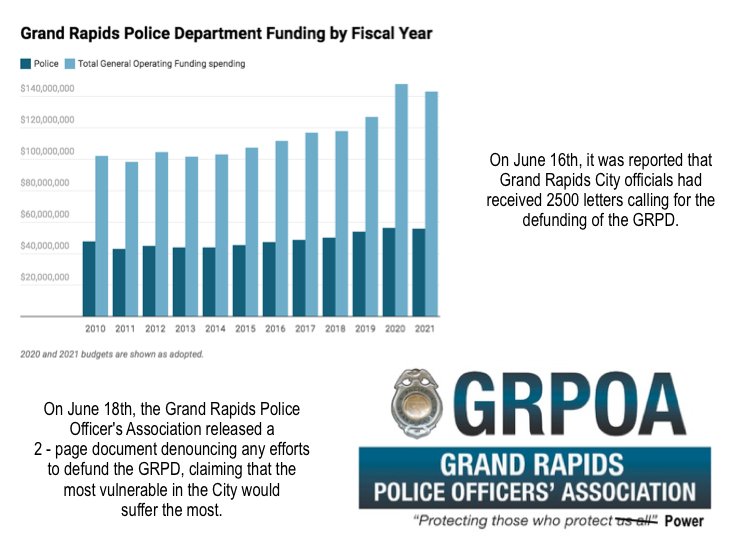
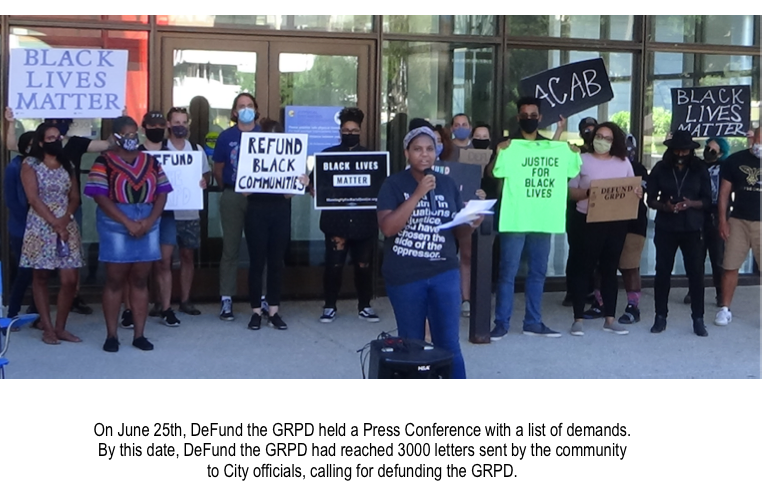


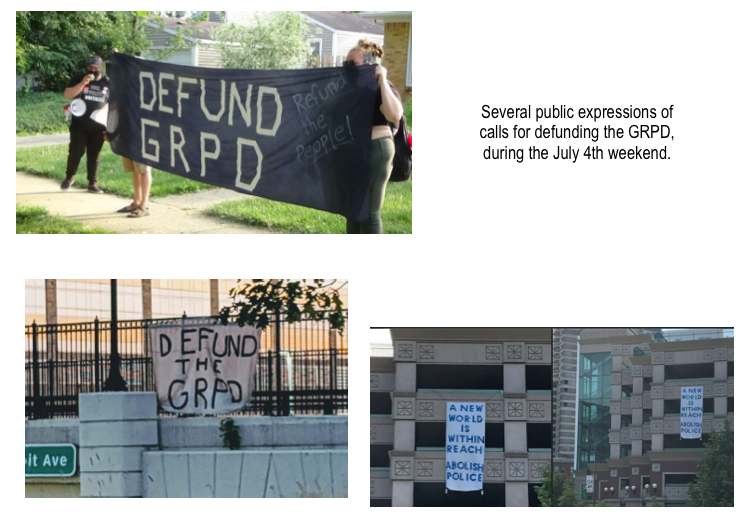
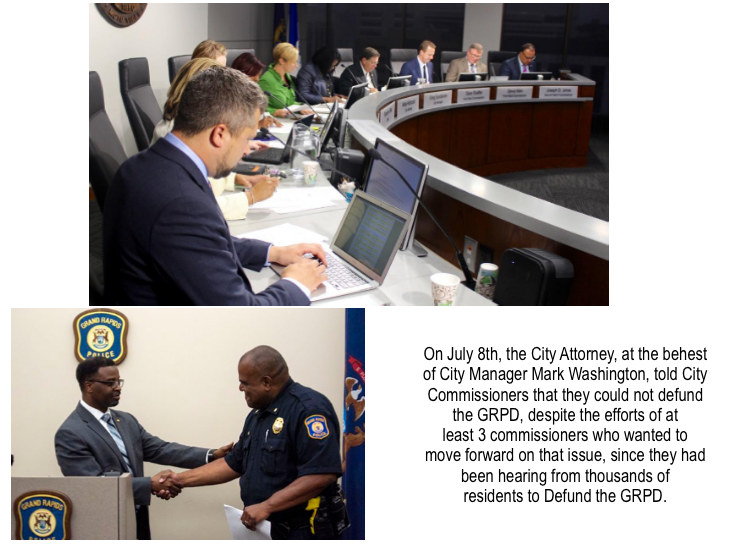

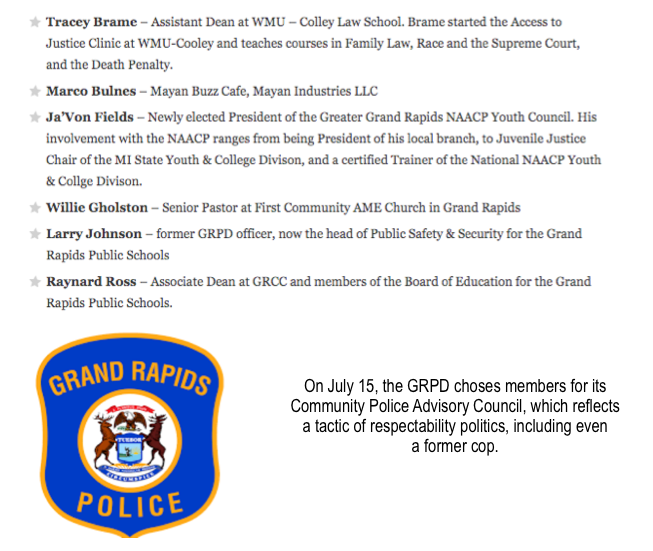
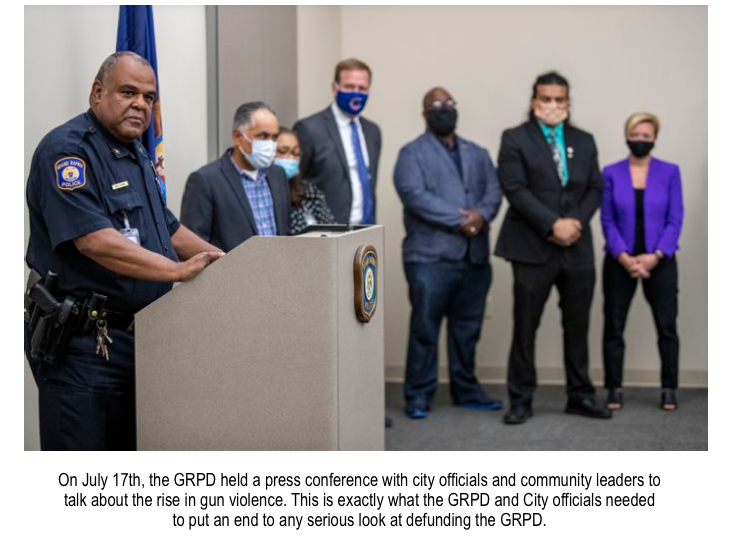
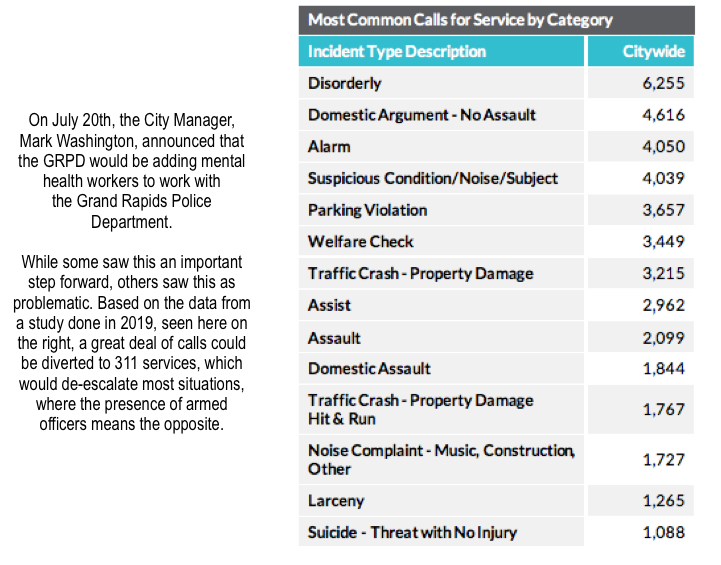
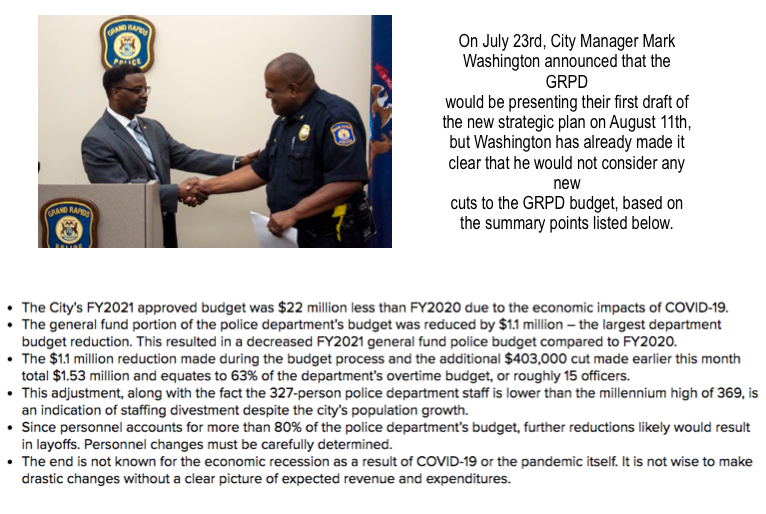
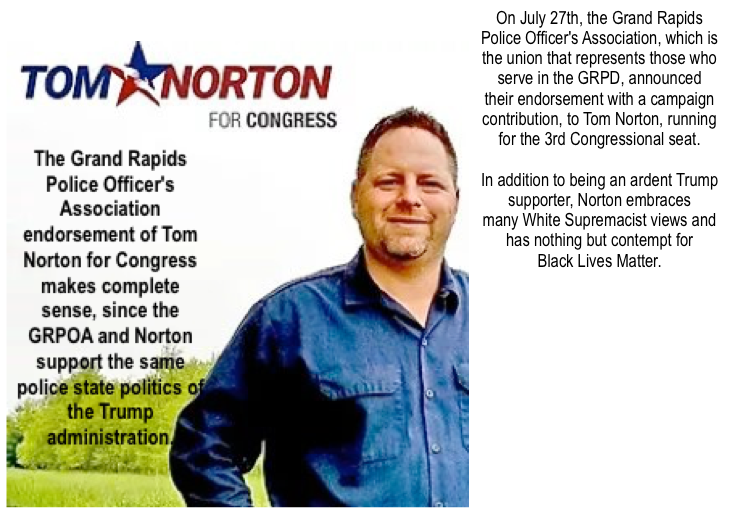
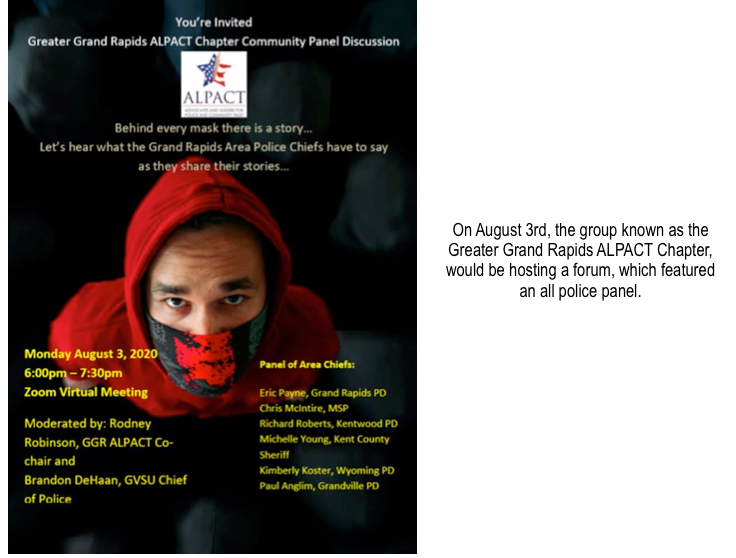
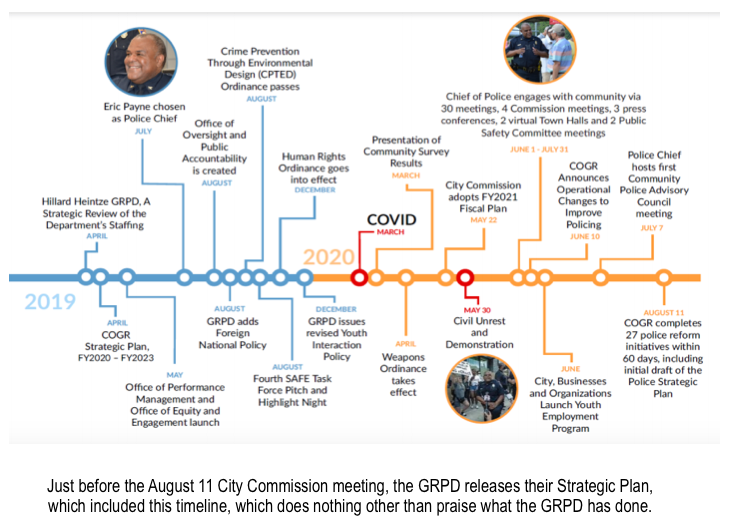
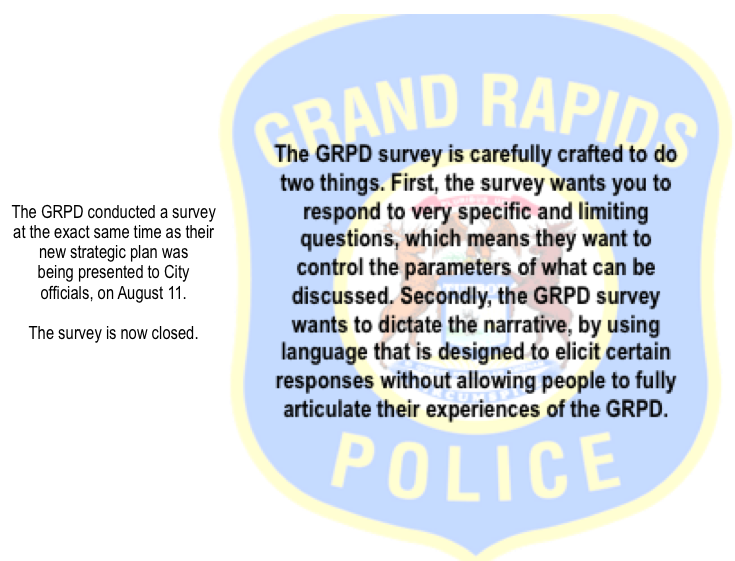
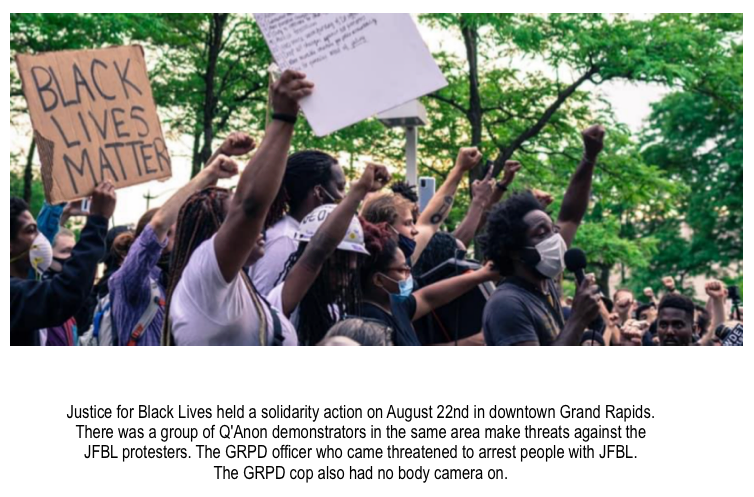
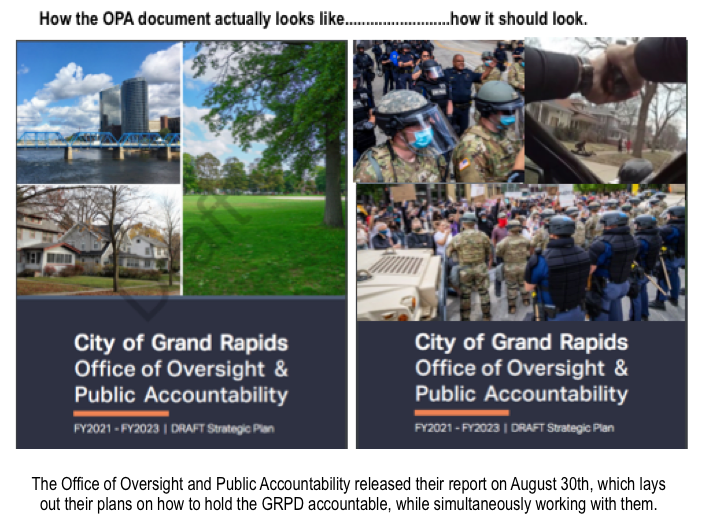
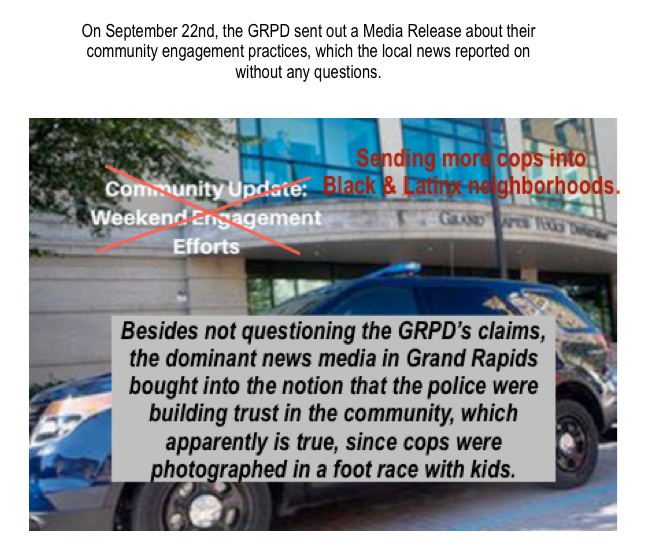
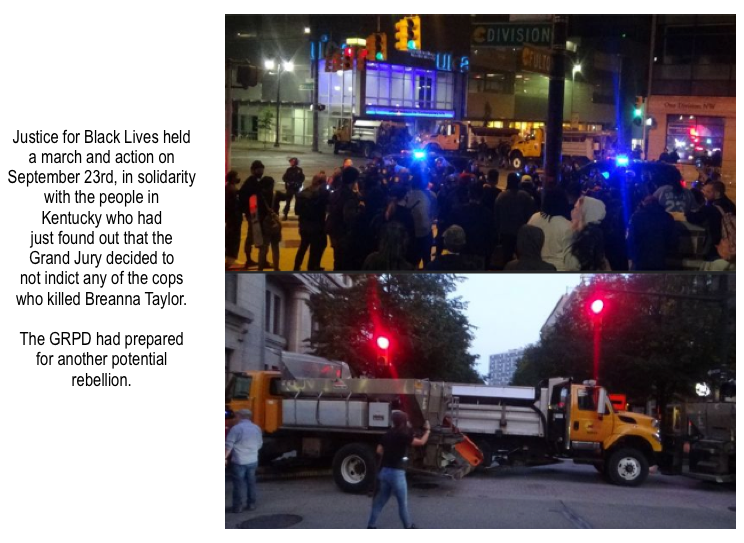
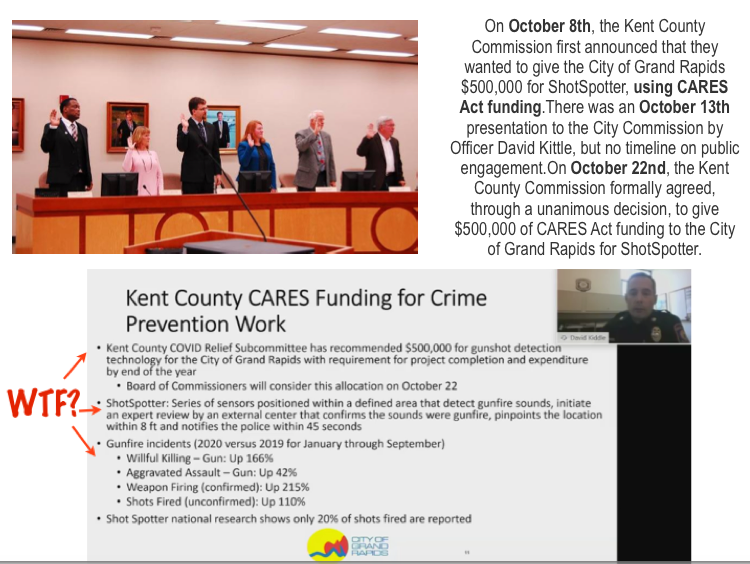

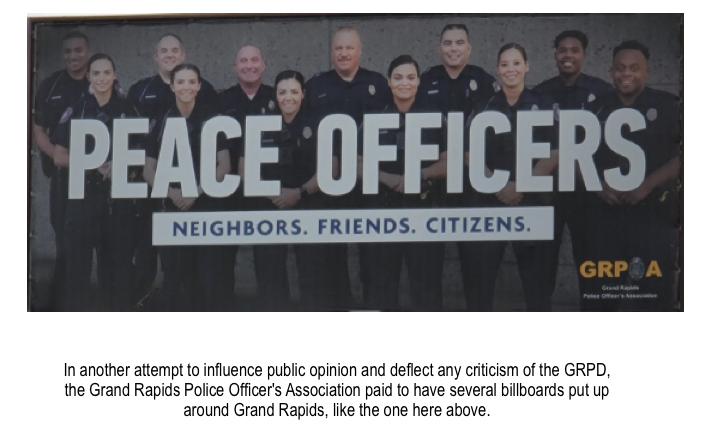
The links below provide more details for the visual timeline, with analysis of what has happened since the May 30th rebellion in Grand Rapids.
https://griid.org/2020/06/07/is-there-really-any-such-thing-as-a-peaceful-protest/
https://griid.org/2020/07/08/grand-rapids-city-officials-deception-and-defunding-the-grpd/
https://griid.org/2020/09/23/the-local-news-media-continues-to-be-a-press-agent-for-the-grpd/
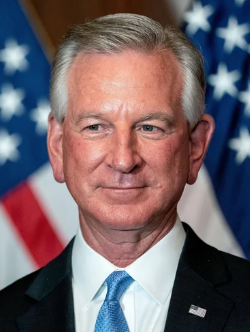
Tommy Tuberville thinks the US liberated Europe from Socialism during WWII, wins Alabama Senate seat, with lots of funding from the DeVos cartel
 Since the November 3rd election, there have been many things that should be of concern to people who care about social justice and collective liberation.
A great deal of attention has been given to Trump’s unwillingness to concede the election results, which is understandable. However, there is another significant issue, which is the fact that the GOP will continue to control the US Senate.
With the continued Republican control of the Senate, they will be able to block or alter potential cabinet positions, along with making it difficult for social justice-oriented policy to be passed.
We can thank that DeVos cartel in part for the continued GOP control of the Senate. The DeVos cartel contributed nearly $1 million to the Republican Senate Leadership Fund, which contributed money to several key GOP Senate candidates, like Tommy Tuberville in Alabama.
Tuberville, the former Auburn football coach, also received $14,000 in campaign contributions from individual members of the DeVos cartel.
During his election victory speech, Tuberville said the following:

Earlier today, the New York Magazine wrote the following, in response to Tuberville’s comment about the US freeing Europe from socialism during WWII:
Despite being of an age at which American men pick up military history as if by osmosis, Tuberville did not seem familiar with the politics of the European theater: In his speech, the new senator described how his father took part in “liberating Paris from socialism and communism.” While this may be an effort to compare his father’s combat experience to his own effort to halt “the doctrine of socialism” in America, the coach’s political framework is off. When First Sergeant Charles Tuberville landed in France in 1944, he was part of a campaign to liberate the allied power from the Nazis. Though socialism was in the name of the party that Hitler rode into power, the Nazis were, canonically, fascist. And for students of history aware of the robust French left prior to the war, Tuberville’s gaffe could accidentally suggest that his father was involved in a different march into Paris in the 1940s.
This is what America politics has come to, and thanks to the DeVos cartel, we now have people like Tommy Tuberville making policy decisions in the US Senate. This is what money can buy.
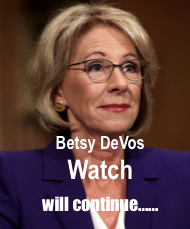
Even though she is out as Secretary of Education, we are going to continue to monitor the actions of Betsy DeVos
 Like many, I will be delighted to see Betsy DeVos be forced to leave her position as US Secretary of Education. How wonderful it will be for her to be shown the door in the coming weeks.
For those of us in West Michigan, we understand that she has spent the last 4 years in the Trump administration attacking public education and expanding funding for Charter and private schools. However, we also understand that Betsy DeVos has spent the last three decades attacking public education and re-directing funding for Charter and private schools through school vouchers and other tactics.
Over the past four years, we have been writing about Betsy DeVos, from the time that she was first picked by the Trump administration, to the Grand Rapids Public School Superintendent celebrating Betsy’s selection as the Secretary of Education, to that instructive moment when DeVos’s financial holdings were being scrutinized.
GRIID then spent the past 4 years providing regular analysis of policy decisions and deconstructions of speeches by Betsy DeVos in our column called Betsy DeVos Watch.
We produced 70 articles investigating Betsy DeVos during her tenure as Secretary of Education and are proud of that work.
However, despite our glee with the soon departure of Betsy DeVos from her position, we will continue to monitor the actions of Betsy DeVos. The reason why we will continue to monitor Betsy, is because she did as much damage to public education before becoming the Secretary of Education.
People are somewhat familiar with what Betsy DeVos has done in Michigan since her failure School Voucher ballot initiative in 2000. After that loss, Betsy created the Great Lakes Education Project and continued to work closely with groups like the DeVos-created Michigan Freedom Fund, the Mackinac Center for Public Policy and the Acton Institute, all of which spend significant time on pushing for privatized education by using a “School Choice” mantra.
On the national level, Betsy DeVos has been working with groups like the American Federation of Children, All Children Matter, the American Enterprise Institute, the Manhattan Institute, the American Legislative Exchange Council and many more.
Betsy DeVos is also still a darling in the Republican Party and will now be able to contribute money again to the GOP, along with her family, which contributed over $20 million during the Trump years.
It is important to celebrate the fact that Betsy DeVos will no longer be the Secretary of Education. However, we should not assume that the incoming Secretary of Education will be a defender of public education, especially since Arne Duncan was no real champion of public schools, as Diane Ravitch points out in her excellent article from 2017.
It is equally important that we continue to monitor how Betsy DeVos will work to undermine public education through her nationwide connection to far right groups that embrace a Neo-Liberal Education model.
Grand Rapids invests over $6 million for private development in downtown, while Southeast Grand Rapids experiences disinvestment: We call this Structural Racism
 Last month, we reported on how some groups in the Grand Rapids Power Structure were planning to move forward with a proposal to build a large amphitheater in downtown Grand Rapids.
We also reported that the land in question for the proposed amphitheater was owned by the DeVos family, specifically the old Charlie’s Crab restaurant and the adjacent land & parking area. One of the properties is owned by 63 Market Avenue Holdings LLC, which was not verified by local news sources, but 63 Market Avenue Holdings LLC is in the same address that houses the DeVos businesses and the various DeVos family foundations – 126 Ottawa Ave NW, Grand Rapids.
As of Tuesday, we now know more details about this proposal, which is even more insidious. During the Grand Rapids City Commission’s Committee of the Whole meeting on Tuesday morning, the City approved a Memorandum of Understanding (MOU), whereby the Amway Hotel Corporation, 63 Market Avenue Holdings LLC, the Grand Rapids-Kent County Convention/Arena Authority and the City of Grand Rapids, have agreed to enter into a private-public agreement to build a 14,000 seat outdoor amphitheater.
Now, in order to do this, the City will have to vacate some of their properties, just south of a US 131 highway offramp, along Market Avenue. As is shown on the map here, the land north of the US 131 highway offramp is owned by the Amway Hotel Corporation and 63 Market Avenue Holdings LLC, which will likely be used for parking. The new 14,000 seat amphitheater will be located, according to City documents, at the 201 Market Avenue SW location, also shown here on the map. In addition, the City would give up their property located at 509 Wealthy SW, which is the property on the corner of Wealthy and Market Avenue.
This whole process is designed to free up the land along the Grand River for commercial development. The MOU states:
This innovative public/private partnership is an economic recovery project that will remove a critical barrier to redevelopment of properties along the Market Avenue corridor, including the City’s 15.8 acre 201 Market Avenue property and the 4.3 acre property located at 509 Wealthy Street. Proceeding in this way reduces construction conflicts and helps ensure timely availability of the properties for redevelopment without this encumbrance.
The cost of freeing up land for commercial development is an estimated $18,636,585, which will be divided up by three entities. The private entities – the Amway Hotel Corporation and 63 Market Avenue Holdings LLC would contribute $7,383,942, the Convention/Arena Authority would contribute $5,000,000 and the City of Grand Rapids would pitch in $6,252,643. However, as MLive reported, Grand Action 2.0 would be the primary private entity leading the charge for the amphitheater and other commercial development along the Grand River and Market Avenue.
To be clear, the City of Grand Rapids and Kent County created the Convention/Arena Authority, which technically makes in a public entity. However, looking at who sits on the board of the Convention/Arena Authority, we’d be hard pressed to consider it public. Grand Rapids-Kent County Convention/Arena Authority – Steve Heacock (Grand Rapids Whitewater), Birgit Klohs (Right Place Inc.), Charlie Secchia (SIBSCO), Floyd Wilson (Cancer & Hematology Centers of Western Michigan), Rosalynn Bliss (Mayor, Grand Rapids), Lew Chamberlin ( West Michigan Whitecaps), and Richard Winn (Amway Hotel Corporation).
 Whether or not the Convention/Arena Authority is public, we do know that the City of Grand Rapids is willing to invest $6,252,643 to free up land along the Grand River for commercial development, which would include a 14,000 seat outdoor amphitheater.
So what does this announcement that the City of Grand Rapids is willing to spend $6,252,643 of public money for private development in the downtown area mean? It means that the City of Grand Rapids is not really committed to equity and racial justice, as they claim. Why is it so easy for the City to use over $6 million in public money to benefit the private sector in downtown Grand Rapids, yet is unwilling to invest that amount and more into the southeast part of Grand Rapids, at part of the city that has economically suffered for decades, which also happens to be where the majority of African Americans live? The answer must be because of systemic and structural racism. What else could it be?
No Time to Get Comfortable: Resisting oppression and working for transformative change in Grand Rapids right now!
 The 2020 Election is now over. Sure Trump, McConnell and other GOP holdouts are still contesting the election results, but they don’t have a leg to stand on and even Fox News and Jared Kushner have urged Trump to concede gracefully. Plus, the armed, White Supremacist groups that had been threatening a major uprising have demonstrated that they don’t have the capacity to really threaten the outcome on a large scale.
There have been lots of people who have celebrated the ousting of Donal Trump, both on social media an in the streets. This celebration is understandable and welcomed, but we are far from achieving the kind of transformative politics we so desperately need. While Trump will be gone from the White House, he is merely a symptom of our deep seated problems.
The US will still be an Empire that engages in imperialist an colonial policies around the globe, with nearly 200 military bases and hundreds of thousands of troops ready to enforce military and economic policies that benefit the Capitalist Class.
Millions of Americans will still be facing eviction in the New Year, when the CDC moratorium on evictions will end and many more are facing the loss of their homes due to the ongoing housing crisis, compounded by high unemployment.
Immigrant children are still in cages and Immigration & Customs Enforcement (ICE) will still be operating under the Biden/Harris administration. This means that ICE will continue to arrest, detain and deport immigrants, which has escalated under every administration since the Clinton.
Climate Change is still an extremely urgent matter, with regular reports coming from Climate scientists on how they have underestimated to severity of the crisis. The Biden/Harris administration will likely rejoin the Paris Accords, but that is a woefully inadequate response to the crisis. Numerous Climate Justice organizations are already demanding that the Bidden/Harris administration adopt a 10 step plan with the first 10 days of the new administration, plus the Green New Deal has to be adopted soon in order for Climate catastrophe to be avoided.
Mass incarceration, police violence and other manifestations of State violence and White Supremacy are deeply entrenched in our society and there are no indications that the Biden/Harris administration will threaten this reality.
Indigenous land is still being occupied through Settler Colonialism and indigenous resistance to oil pipelines is still being criminalized and threatened with State violence.
For those who have been doing on the ground work during the Trump administration, none of them are under the illusion that a Biden/Harris administration will mean they can relax or start having long, relaxing brunches.
Groups like Movimiento Cosecha GR are still fighting to get Driver’s Licenses for All in the short term, with long terms goals to win dignity, respect and permanent protection for the estimate 11 million undocumented immigrants in the country. GR Rapid Response to ICE will continue to work with Cosecha, along with their commitment to resisting ICE in Kent County and providing solidarity and Mutual Aid to immigrant families impacted by ICE violence. https://www.facebook.com/cosechagr and https://www.facebook.com/RapidResponseGR
The Grand Rapids Area Mutual Aid Network (GRAMAN) is continuing to raise funds to provide Mutual Aid to families, particularly Black, latinx and indigenous, that have been disproportionately impacted by the COVID 19 crisis. The COVID crisis has only escalated in recent weeks and most estimates suggest that the crisis will continue at least through all of 2021. This means there will be huge needs for the families that GRAMAN is working with. https://www.facebook.com/GRAMutAid
Groups like Justice for Our Lives and DeFund the GRPD are working on confronting the funding for the Grand Rapids Police Department, which continues to push for additional funds, despite large calls for defunding throughout the community. DeFund the GRPD has resources for alternatives to calling the police and they have set up an online resource for people who want to share their stories about police abuse in Grand Rapids. You can access these resources at https://www.facebook.com/DefundtheGRPD.
The Grand Rapids Area Tenant Union is fairly new, but is working to build a tenant-led union to challenge the power of landlords and Property Management Companies in the area. They have resources for those facing eviction and are beginning to host regular online meetings to allow people to access resources and connect with other tenants. https://www.facebook.com/GRATU4Inquilinos
Then there are groups like Together We Are Safe, the Urban Core Collective, the Sunrise Movement, Democratic Socialist of America, the ACLU, the People’s Budget and many more in this community that always need volunteers and supporters to be involved in the fight for transformative justice and collective liberation.
All of these groups are doing important work and we can not abandon them just because Trump will soon be out of the White House. Imagine if all the energy and financial support that people provided to the 2020 Elections were to go to the groups listed above, imagine how that could impact the grassroots, transformative work they are doing. With electoral politics, you chose politicians to represent you, sometimes they lose, but even if they win they often don’t end up representing the change you want to see in the world. With grassroots organizing, you get to be involved in the ongoing work using direct action tactics and strategies, which can actually begin to dismantle the systems of power and oppression you are fighting against, plus it provides a direct democracy avenue to build community and work for the kinds of collective liberation we do want to see in this world.