Create poverty, then contribute to charity: The Jandernoa Foundation, like most foundations, is a con
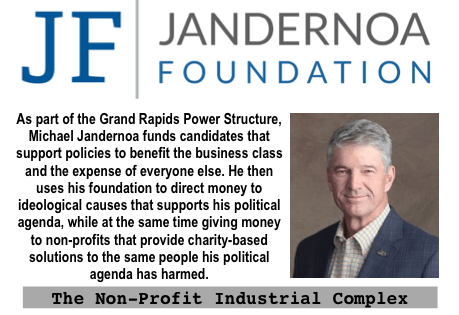 Michael Jandernoa is part of the Grand Rapids Power Structure, as we have noted for many years now.
The former CEO of Perrigo Pharmaceutical Co., and now the CEO of 42 North Partners, has long been involved with numerous groups that advocate for Neo-Liberal economic and social policies.
Jandernoa has been involved with the Grand Rapids Chamber of Commerce for decades, the Right Place Inc and the West Michigan Policy Forum (WMPF). In 2018, Jandernoa and other members of the worked to undermine public teacher unions, particularly by eliminating retirement benefits.
In 2019, Jandernoa was interviewed by the GR Chamber of Commerce, as part of a forum hosted by the West Michigan Policy Forum. Jandernoa was talking about the problems with public education and essentially was advocating for more Charter and private forms of education, along with saying that the business community should be more involved in creating school curriculum to create the “talent” that businesses needed.
Then there is the matter of campaign contributions. Michael Jandernoa nd his wife are major contributors to the GOP and GOP candidates, all of which embrace neoliberal economic and social policies that primarily benefit the class that Jandernoa is part of, the Capitalist Class. In the 2013/2014 election cycle, Jandernoa contributed $649,996 to GOP candidates. In the 2015/2016 election cycle, he contributed $437,500 and during the 2017/2018 election cycle Jandernoa contributed $592,000 to GOP candidates. In fact, according to FollowtheMoney.org, Jandernoa has contributed a total of $4,299,096 in campaign money over the past 27 years, mostly to GOP candidates.
All of his campaign contributions have resulted in public policy decisions that have impacted working class families struggling to survive, especially BIPOC families who are disproportionately impacted by economic policies that benefit the likes of Michael Jandernoa.
Jandernoa then turns around and contributes money through his foundation, which is considerablely smaller than foundations run by the DeVos family. In the 2020 990 documents for the Jandernoa Foundation, his family contributed a total of $2,981,127, which you can find on GuideStar.org.
Some of that money has gone to Catholic entities, since Jandernoa himself is a Catholic.
- Aquinas College – $50,000
- Catholic Central High School – $150,000
- Diocese of Grand Rapids – $80,000
The Jandernoa Foundation has also contributed to local public colleges and universities, based on the most recent 990 document.
- GVSU – $125,000
- Michigan Colleges Alliance – $80,000
- Regents of University of Michigan – $957,877
Other, more charity focused groups have also benefited from the philanthropy of Jandernoa, such as:
- Heart of West Michigan United Way – $350,000
- Habitat for Humanity – $150,000
- Make A Wish Foundation – $310,000
- Mel Trotter Ministries – $187,500
- Special Olympics Michigan Inc. – $150,000
- Kids Food Basket – $20,000
- Disability Advocates of Kent County – $40,000
- Aya Youth Housing – $37,500
What is instructive about this last group, is the fact that the people they provide services to, are the very same people who are negatively impacted by the public policies that are promoted and adopted by the Michigan Legislature, which Jandernoa has been contributing to for nearly 3 decades.
His foundation contributions are a great way to win over people and organizations, because of this so-called philanthropy. However, it is rarely questioned by the news media or non-profit groups, that the small amount of money Jandernoa contributed to charitable causes is nothing compared to the profits he has generated for himself and his fellow members of the Capitalist Class in West Michigan. This is exactly why rich people have foundations, so they can con the public into thinking they are generous, while their economic and political role is to create more poverty.
Over the next few weeks, we will be posting information and links to candidate websites and/or social media pages so that people can see what their policy positions are and what they say they will do if elected.
We will be posting this information specifically for candidates running for office in West Michigan, candidates at the Congressional level, state level and in Kent County. We do this in part, since we cannot rely on the dominant commercial news media to provide this information or any robust analysis of the policy platforms of those running for office.
In late July we will also be posting information on campaign financing for these same candidates, so that people have as much information as possible about candidates before the August Primary and the November 2022 Election.
Now, personally I identify as an anarchist, so I don’t put much stock in representative democracy or the electoral process. However, I do think it is important for people to think critically about the political/electoral process that currently exists.
In today’s post, we look at Congressional Candidates. These candidates, if elected, will have to deal with a whole range of topics and issues. On the foreign policy end of decision making, which candidates, if any are committed to a reduction in the US Military budget, which is the largest in the world? Where do candidates stand on continued support for Israel, for the marginalization of countries like Cuba and Venezuela. What about the US military aid to Ukraine and the push to escalate a possible war with Russia. Where do candidates stand on international trade policies, the global war on drugs, torture, US weapons sales to countries with atrocious human rights records, etc.
On the domestic end, where do candidates stand on housing and gentrification, the wealth gap, Medicare for All, the Prison Industrial Complex, immigration policy, structural racism, public education, the urgent climate crisis, corporate welfare, policing, LGBTQ issues, gun control and gun manufacturing, the agribusiness system, the corporate control of the news media, etc.
As an anarchist, I believe that my aspirations and the desire to work towards Collective Liberation are rarely reflected in the electoral/representative democracy process. Where are the candidates who are publicly anti-capitalist and anti-racist? Where are the candidates that oppose the homophobic and transphobic policies and practices in this country and in this community? Where are the candidates that are anti-colonialist, who believe that Indigenous sovereignty and land should be a priority? Where are the candidates that are committed to reparations for Black people? Where are the candidates that want to use money that currently goes towards policing and to US militarism, and want it to go instead to the most marginalized communities? Where are the candidates who believe that housing, income, education and health care are fundamental rights? Where are the candidates who are committed to resisting the current climate crisis and want to shut down the Enbridge Line 3 and Line 5? Where are the candidates that want to deal with root causes of problems, instead of false solutions perpetuated by charitable groups and the Non-Profit Industrial Complex? Where are the candidates that not only support labor unions but actively work to support workers to create workplace democracy? Where are the candidates who support reproductive justice? We all deserve a better world and we need to support policies and movements that confront and dismantle systems of power and oppression.
Here are the candidates for the 3rd Congressional District:
Peter Meijer (incumbent) R
https://www.votemeijer.com/issues
https://www.facebook.com/votemeijer
Hillary Scholten D
https://hillaryscholten.com/priorities/
https://www.facebook.com/scholtenforcongress
John Gibbs R
Watch A People’s History of the LGBTQ Community in Grand Rapids, a film the GR People’s History Project produced in 2011
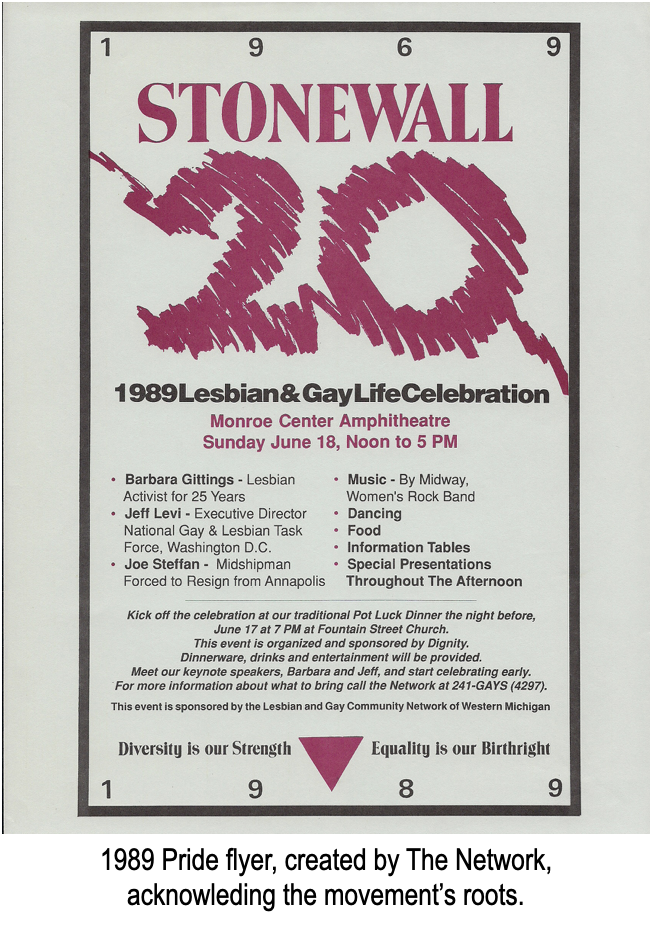 Eleven years ago we were frantically in the midst of conducting some 75 interviews with members of the LGBTQ community and a few allies, for our feature lengthen documentary on the history of this community in Grand Rapids.
In addition to the interviews, we collected tons of archival materials – pictures, video, posters, flyers – along with sifting through The Network newsletters and a methodical research project of the Grand Rapids Press from the late 1970s through 2010.
All of these materials are what made up the content of the documentary we produced, which included Girbe Eefsting, Bob Toft, Colette Seguin Beighley, Tom Henry and Ana Fisk.
As the lead producer of this project, I learned a ton about the history of the LGBTQ community in Grand Rapids and was in awe of the sacrifices, risks and commitment of the people we interviewed. Their stories were powerful and inspiring.
The film focuses on the period of the late 1960s through 2010, particularly around the following critical junctures in the local LGBTQ community:
- Early years of support and survival
- The founding of The Network
- The early Pride Celebrations
- Organizing and care work around HIV/AIDS
- The Campaign to pass a non-discrimination ordinance in Grand Rapids
- Organizing and campaigns at GVSU
- The Religious Right in West MI
- Sons & Daughter’s Book Store
- The growth of LGBTQ organizations
- Why this history is important
The film is 1 hour and 41 minutes long and can be viewed online and we still have DVD copies for those interested.
After his arrest by the FBI last week, Ryan Kelley might be the front runner in the GOP race for Governor
 As a Founding Father (what he likes to call himself) of the American Patriot Council, Ryan Kelley became know to the broader public when he organized some of the anti-lockdown protests in Lansing in late April of 2020.
From a post in April of 2020 on the American Patriot Council site, a post that has since been removed, Kelley writes:
“We received several death threats,” said organizer Ryan Kelley, “and the second amendment was designed to protect the first.”
“We organized the rally with the constitution in mind,” said Jason Howland, “and this is the way it was designed to work. The guys from the militia are always portrayed by the media in a negative light, and they are genuinely necessary. They did a great job at the event.”
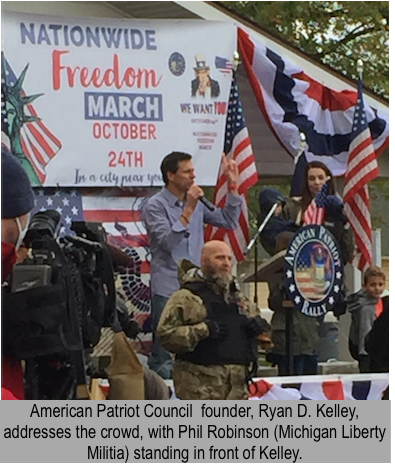 Kelley also acknowledged that he was in constant communication with State Senator Mike Shirkey during those anti-lockdown protests in Lansing. In May of 2020, Kelley then hosted a an anti-lockdown protest in Grand Rapids on May 18, which we wrote attended and wrote about. We noted in a follow up post that some of the armed militia members were also on stage at Rosa Parks Circle with Kelley, along with several other speakers.
Shortly after Kelley’s rally in Grand Rapids, he once again made the news with his involvement and support of a Confederate Statue in Allendale, Michigan. Kelley used the campaign to remove the Confederate Statue in Allendale as a rallying cry for an American Patriot Council action at that statue site some 10 days before the 2020 Elections. The local news media failed to ask important questions, instead choosing to report on the two opposing view points.
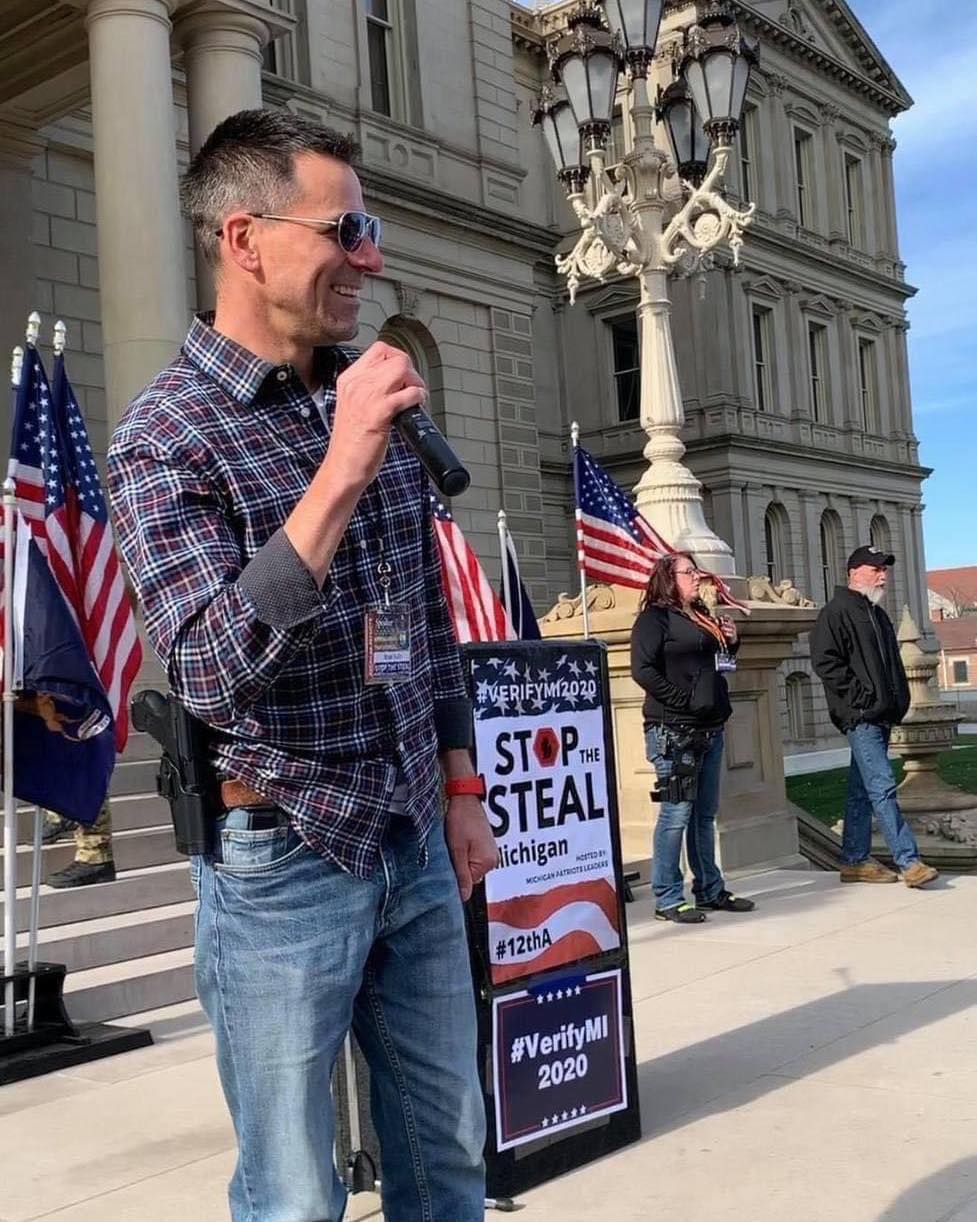 After the 2020 Elections, Kelley joined other Trump supporter in denouncing the outcome of the election, with Kelley traveling to Detroit to protest outside of one of the vote counting sites, then hosting another rally in Lansing late November. We did include video that the American Patriot Council (AMC) had used at that Stop the Steal rally, but the AMC once again removed that content.
In January of 2021, Kelley and his colleague, Jason Howland, were both documented to have participated in the January 6th insurrection at the Capitol in Washington, DC.
Then in early February of 2021, Ryan Kelley announced that he was running as a Republican for Governor in Michigan. At the time, I wrote that this would be a great time to focus on his involvement with far right groups, particularly their White Supremacist beliefs and practices.
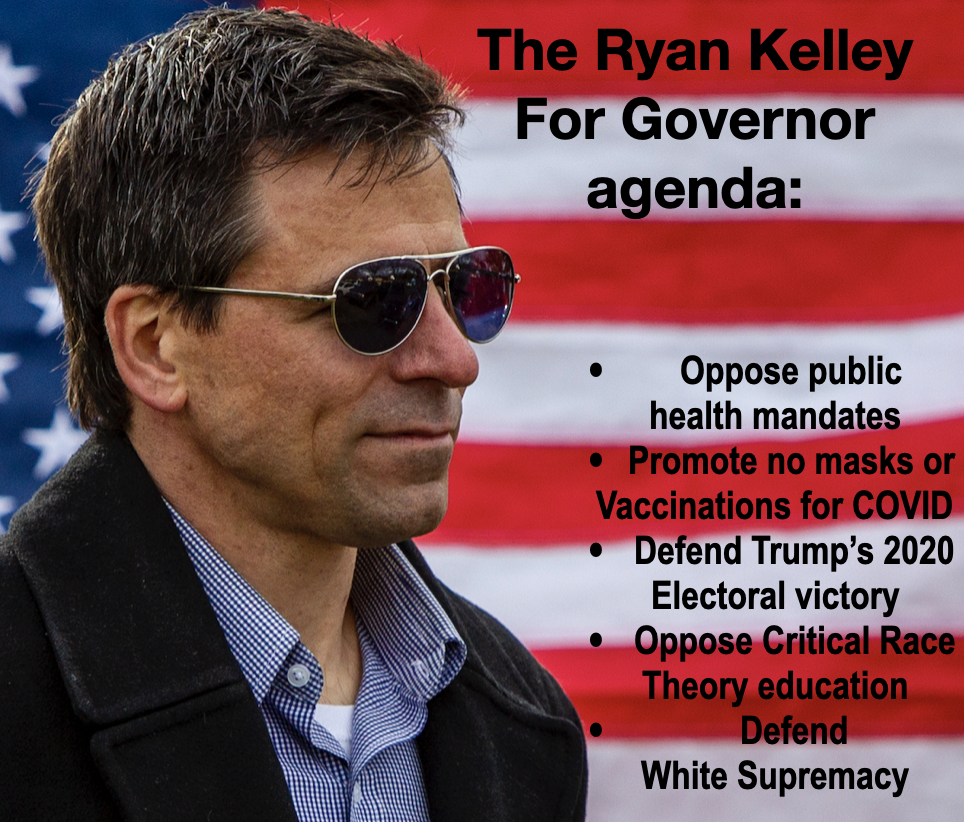 However, shortly after Kelley’s announcement to run for Governor, much of the news media’s attention had moved on to other things. Kelley was not generating a great deal of campaign contributions, so his campaign also was downplayed. We continued to report on Kelley, providing a deconstruction of a political ad he produced in October of 2021.
The new media has recently re-discovered Ryan Kelley, after he was arrested by the FBI last week, which included their search of his home. In addition, with some of the front-running GOP Gubernatorial candidates now disqualified for bogus campaign signatures, Kelley has been elevated to being possibly the front runner of the remaining GOP candidates for Governor of Michigan.
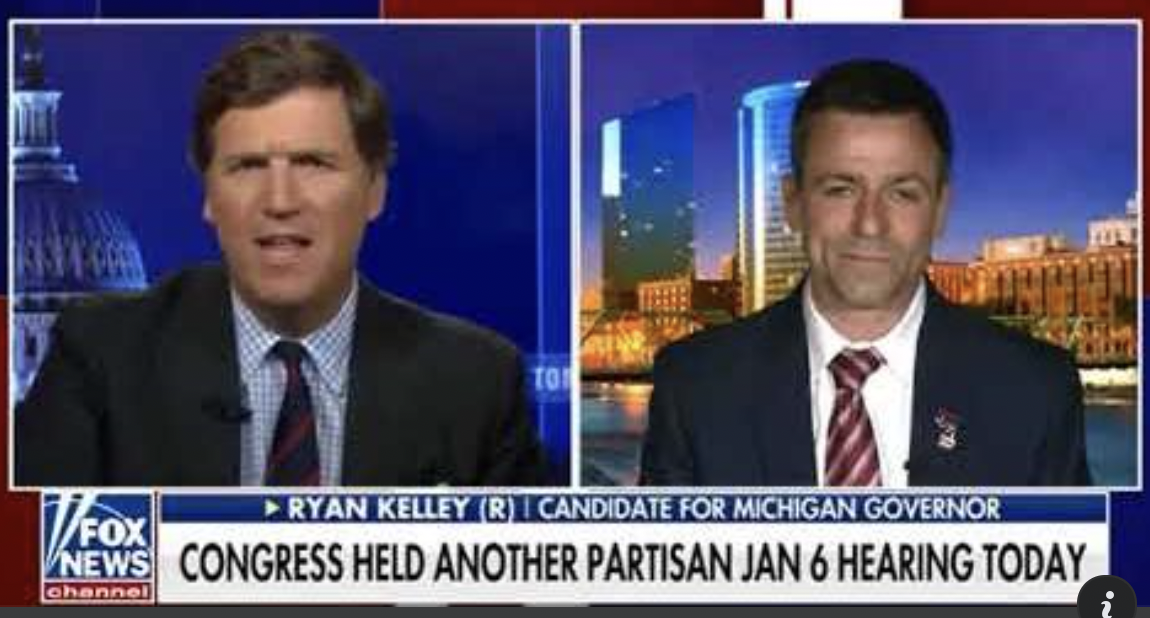
The arrest of Ryan Kelley by the FBI has made him an attractive candidate within the Trump wing of the GOP. According to Kelley’s Facebook page, he is receiving hundreds of e-mails and messages on how to donate to his campaign. In addition, since his arrest last Thursday, Kelley has been invited to speak at numerous locations, was interviewed by Tucker Carlson on Monday and has been a quest on several other right wing radio shows and podcasts. On the short interview with Tucker Carlson, Kelley says he believes that his arrest was politically motivated, particularly because he is a candidate for Governor. In addition, Kelley was interviewed by Steve Bannon on the same day that he was arrested by the FBI.
Regardless of the FBI’s arrest of Kelley, people should start paying attention to the “founding father” of the American Patriot Council and his broader policy stances, instead of just seeing him as another crack-pot who took part in the January 6th insurrection.
It will be interesting to see Kelley’s campaign finance data in late July, just before the August Primary, particularly who is now contributing to his campaign. Too many people downplayed Donald Trump as the Presidential candidate in 2016, and they might regret ignoring or dismissing Kelley after the election results in November.
 People in power will always counsel the public to engage in “peaceful protest.” When those in power use the term “peaceful protest,” they essentially mean the kind of protest that is non-confrontational and often performative.
Ever since the May 2020 uprising in Grand Rapids, Grand Rapids City Officials have been tell the public that they need to engage in peaceful protests. Hell, even the GRPD has been saying that they respect the public’s right to protest and long as it is peaceful. The fact is that virtually all of the protests that have taken place since May 2020 have been non-violent. However, City Officials consider confrontation, swearing, disruption and protesting outside their homes as disrespectful. City Manager, Mark Washington, who had to protestors come to his home recently, stated:
“These types of tactics and attempts to harass and intimidate will not be tolerated nor will bullying impact my judgement in carrying out my duties as City Manager. As was discussed during Thursday’s press conference, I suspended Officer Schurr without pay on Friday pending his termination hearing which is scheduled to take place this coming Thursday. I made that decision because I believe it was the right thing and not because of the obnoxious tactics of a handful of confrontational activists who tried to intimidate me and my family into action.’
Many of those who have been making demands of City Officials and confronting them on public policies in recent years, have come to expect the type of responses from government bureaucrats, like the above statement from March Washington. What is always instructive is the fact that Mark Washington, and other City Officials, never publicly call upon the GRPD to be peaceful towards protesters. What is truly obnoxious, is the constant monitoring, harassment, abuse and arrests of those who have been protesting in recent years.
Additionally, what is maybe even more difficult to accept is the same admonition to only engage in “peaceful protests,” which are coming from non-profit groups, even established Civil Rights organizations. Last Thursday, after the Kent County Prosector charged a GRPD cop with Second-degree murder, the Grand Rapids NAACP President Cle Jackson stated:
We have the right, based on the constitution to protest, but we also have to be very cautious and protest in a way that is peaceful, that is civil and gets work done from a policy perspective.”
There is a great deal to unpack from the statement. First, people do not need the US Constitution to give them the right to protest. Since when has the US Constitution actually been a benefit to those who have suffered from genocide, slavery, Jim Crow laws, and numerous other forms of exploitation and State violence since the founding of the United States?
Second, again we are told to be peaceful, cautious and civil if we want to change things. This is an interesting statement, since my reading of US history is filled with people NOT being civil, cautious or peaceful when it comes to protest. Here is a brief overview of US history and how people have responded to various forms of oppression:
- Indigenous people took up arms in hundreds of cases as a way to respond to the genocidal policies being implemented by the US government. While this period is often mislabeled as the Indian Wars – it was more accurately the US government instigated counter-insurgency wars meant to dispossess Indigenous people of their land – the taking up of arms was a natural response to the brutality of the US Government, implemented by the US Cavalry. (See Roxanne Dunbar Ortiz’s book, An Indigenous Peoples’ History of the United States)
- The Black Freedom Struggle has primarily relied on disruptive acts of resistance. People who were enslaves didn’t ask to be liberated, they rose up, engaged in work strikes, fled the plantation (which was illegal), sometimes burned the crops and/or the plantation, even killed the plantation owners. After slavery was abolished, the federal government passed the 13th Amendment, which allowed Black be to subject to another form of slavery, then there were Jim Crow laws that Black people resisted, sometimes with violence. The Civil Rights Movements used disruptive tactics, civil disobedience, boycotts, strikes, sit-ins, freedom rides, and there were various armed components of this movement, such as the Deacons for Defense. Even Dr. King, in the last years of his life, while working primarily in the north, used armed body guards (Deacons for Defense), because of the constant death threats he faced. More recently, the Movement for Black Lives and other Black-led groups have engaged in uprisings all across the US, calling for the Defunding of Police, to shut down government meetings, disrupting business as usual in all of its forms, especially economic and political. (See Dixie Be Damned: 300 Years of Insurrection in the American South, by Neal Shirley and Saralee Stafford, plus,This Nonviolent Stuff′ll Get You Killed: How Guns Made the Civil Rights Movement Possible, by Charles E. Cobb.)
- The US Labor Movement was rather militant from its origins in the 19th Century, into the early part of the 20th Century, with wildcat strikes, attacking scab workers and fighting with the cops. ( See the book, Strike by Jeremy Brecher.)
- The South African Anti-Apartheid Movement and the Central American Solidarity Movements used disruptive tactics, civil disobedience, strikes, boycotts and confronting politicians at numerous levels. The Central American Solidarity Movement engaged in Sanctuary, which was illegal during the 1980s, even targeted by the US Federal Government. (See Sanctuary: The New Underground Railroad, by Renny Golden and Michael McConnell)
- The LGBTQ Movement began as a riot with Stonewall. The group ACT Up engaged in civil disobedience, disruption, confronting civic and religious leaders and defying oppressive social norms. (See the films Before Stonewall and United in Anger: A History of ACT UP)
 Third, Cle Jackson makes the point that you need to have peaceful protest, “to get work done from a policy perspective.” Again, this is simply not accurate. Every major policy around critical social issues have come about because social movements forced federal, state and local governments to make changes. Those in power never make significant structural changes because people ask nicely. Those changes came about because the system felt threatened with civil unrest.
For example, during the Great Depression and the ensuing years, the labor movement was so militant, engaging in thousands of strikes annually, that the FDR administration was forced to pass the Wagner Act and then to adopt some robust social policies known as the New Deal. Had the New Deal policies not been adopted, the Labor Movement may have moved toward a more revolutionary strategy.
The Johnson Administration passed the Civil Rights Act and the Voting Rights Act because of the constant disruption, civil disobedience and growing militant resistance to Structural Racism in the US, not because the federal government thought it was a good idea, but because they were forced to meet the demands of an increasingly militant movement.
Major policy changes almost always are the result of mass movements on the ground disrupting business as usual, to the degree that systems of power, both economic and political, felt threatened enough to concede to movement demands. This is the whole point of Howard Zinn’s monumental work, A People’s History of the United States. What ever rights or gains we have made, it is because of social movements. It’s never a gift from those in power.
The founder of the NAACP, W.E.B. DuBois, understood the necessity of resisting structural racism and White Supremacy through disruptive tactics and strategies. DuBois even referred to the organized resistance to slavery as, “A General Strike.” The great Black Intellectual would no doubt be dismayed by the insistence from Mr. Jackson that people protest peacefully.
Since, last Friday, we now know which two lawyers will be defending GRPD Officer Christopher Schurr, now that he has been charged with Second-degree murder by the Kent County Prosecutor.
The two lawyer, which work for two different law firms are Mark Dodge and Matthew Borgula. Dodge workers at his father’s law firm, Dodge & Dodge, P.C. and Borgula works for Springstead, Bartish, Borgula & Lynch PLLC. Both law firms are located in downtown Grand Rapids, at 200 Ottawa Ave NW, Suite 401 and 60 Monroe Center St NW #500.
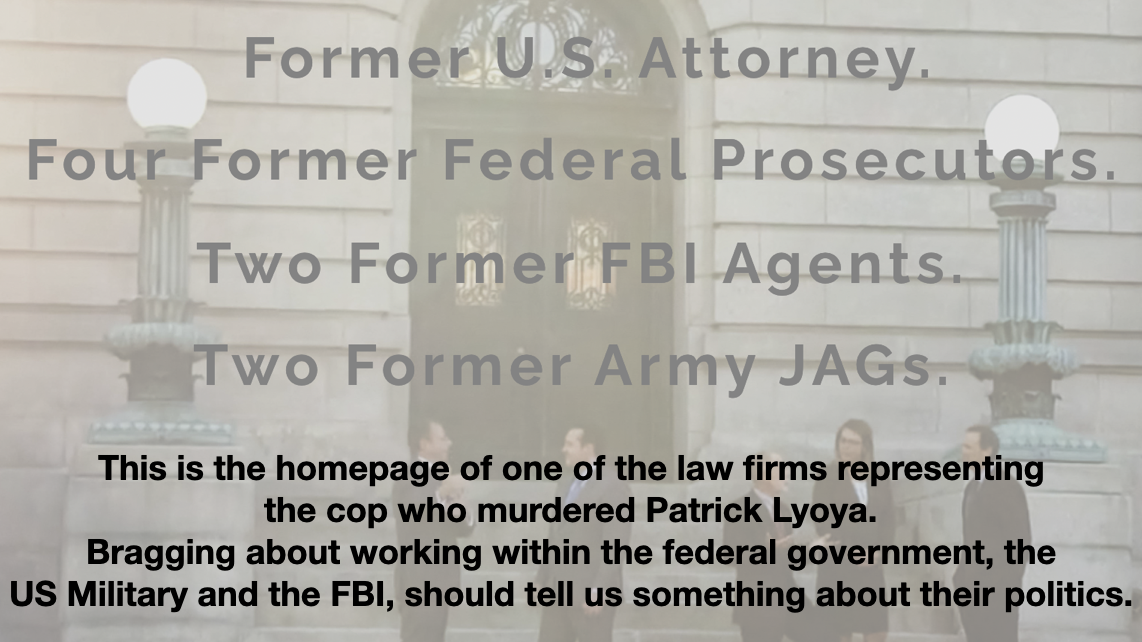
Both lawyer are partners in their respective law firms and both law firms highlight some of the same areas of legal expertise, such as:
- Drug Offenses
- Sex Crimes
- White Collar Crime
- Violent Crime
- DUI
On the home page of Springstead, Bartish, Borgula & Lynch PLLC, they brag about the fact that they have a Former US Attorney, Four Former Federal Prosecutors, Two former FBI Agents and Two Former Army JAGs. For many people, especially white people – both conservative and liberal – such credentials may seem impressive. However, throughout US history, lawyers who have experience at the federal level, in the US Military or with the FBI, have primarily defending the interests of systems of power and oppression.
Take the FBI for instance. People are aware that within the past year, the FBI have arrested and charged people in Michigan for threats against Governor Whitmer, and just a few days ago, GOP Gubernatorial candidate Ryan Kelley was arrested by the FBI for his involvement with the January 6th insurrection. However, if we take a long look at the history of the FBI, we see that they have primarily undermined and targeted BIPOC groups and other political dissidents, as has been well documented by Jim Vander Wall and Ward Churchill in their two books, Agents of Repression: The FBI’s Secret Wars Against the Black Panther Party and the American Indian Movement, and The Cointelpro Papers: Documents from the FBI’s Secret Wars Against Dissent in the United States. Another excellent resource on the repressive history of the FBI is the documentary, COINTELPRO 101.
Statement from the attorneys representing the GRPD cop who shot Patrick Lyoya in the back of the head
On Friday, Dodge and Borgula, released the following statement:
We were disappointed to learn that Officer Schurr has been charged with murder by the Kent County Prosecutor. Officer Schurr is a decorated member of law enforcement who has dedicated his career to helping others and protecting the citizens of Grand Rapids. The evidence in this case will show that the death of Patrick Lyoya was not murder but an unfortunate tragedy, resulting from a highly volatile situation. Mr. Lyoya continually refused to obey lawful commands and ultimately disarmed a police officer. Mr. Lyoya gained full control of a police officer’s weapon while resisting arrest, placing Officer Schurr in fear of great bodily harm or death. We are confident that after a jury hears all of the evidence, Officer Schurr will be exonerated.
This narrative about Christopher Schurr was very strategic on the part of his lawyers. First, they want to present Schurr in a positive light, since he apparently, “has dedicated his career to helping others and protecting the citizens of Grand Rapids.” Neither of these claims are substantiated by the lawyers, but they will no doubt be using this narrative as a central part of their case when it goes to trial. This narrative about Schurr is also a narrative that has been perpetuated by the commercial news media, like a recent MLive article from late May that GRIID deconstructs.
The second primary narrative of the statement from Schurr’s lawyer was to communicate that the notion that Patrick Lyoya was at fault and that his death could have been prevented if he had just obeyed Officer Schurr. This narrative, which is embraced by the GRPD union, by the GRPD, by other pro-police groups and by much of white society, is an old trope, where the victim of a horrendous and brutal crime is at fault.
Christopher Schurr’s lawyers will lean heavily on this second narrative, first by attacking the character of Patrick Lyoya, and secondly, by making the claim that Officer Schurr had a right to defend himself, as is evidenced in their statement, which says, “Mr. Lyoya continually refused to obey lawful commands and ultimately disarmed a police officer. Mr. Lyoya gained full control of a police officer’s weapon while resisting arrest, placing Officer Schurr in fear of great bodily harm or death.”
These two dominant narratives will be used over and over again by Schurr’s lawyer, but they will also be continually used by pro-police groups, the commercial news media and within white society – in the break rooms, the chat rooms, at the dinner table and during coffee hour at church. For those of us who are demanding Justice4Patrick, we need to not only reject such narratives, we need to develop our own narratives to counter these White Supremacist, Copaganda narratives.
Policing in this city is so normalized we often don’t recognize it: The Matrix of Policing in Grand Rapids
(Editor’s Note: This is an updated article posted earlier this year.)
There has been heightened awareness about the function of policing, since the uprising of 2020, when several million people around the world responded to the police murder of George Floyd. I should clarify, this heightened awareness was within the white community and the news media. BIPOC communities have been well aware of the function of policing in the US ever since policing began.
Having cops around is almost like breathing, you don’t think about it, it just is. Or at least, it has always felt that way. Think about the history of the crime novel, TV shows, Hollywood films and video games, all of which are inundated with cops and cop themes. One thing that is fairly standard in police representation in media, is the fact that while there are some instances where “bad cops” are depicted, it is rare that the institution of policing ever comes into question. In fact, policing is so normalized, that it is hard for us to imagine a world without cops.
In today’s post, I want to look at what I refer to as the Matrix of Policing in Grand Rapids. The Matrix of Policing is essentially an investigation into how policing is so interwoven into our society.

As the graphic above shows, there is Department of Homeland Security presence in Grand Rapids, which of course includes Immigration and Customs Enforcement (ICE). There is also offices for the Michigan State Police in this community as well. However, the primary police entities in Grand Rapids are the GRPD and the Kent County Sheriff’s Department.
Now, both the GRPD and the Sheriff’s Department are entities that function within the City of Grand Rapids and Kent County. Local governments have the ultimate say in policing, since they not only approve, and to some degree craft policy, they hold the purse strings. In the case of the Kent County Commission, they also have final say in the funding of not just the Sheriff’s Department, but the Kent County Jail.
Quite often people running for local office, also receive funds from the Grand Rapids Police Officer’s Association (GRPOA) which is the cop union for the GRPD. There is GROPA and the Grand Rapids Police Command Officers Association (GRPCOA), which is made up of higher ranking cops. These police union entities send out their own Press Releases and have a social media presence, on Facebook and their own website. There are also other Pro-Police groups that have an online presence and in person meetings in Grand Rapids, such as the Gerald R. Ford Metro Lodge #97, Fraternal Order of Police, which identifies itself as a “social club.” This group has become more active recently, as they are collecting funds for the cop that murdered Patrick Lyoya, Christopher Schurr.
Then there are the programs that the GRPD implements throughout the community, most of which are youth focused, where cops say they are trying to build positive relationship with local youth, but we all know that this is a PR stunt that is really designed to be a recruiting mechanism for the police. Then there are programs like Clergy on Patrol, which attempted to propagandize local clergy and get them to buy into the mission of local policing.
The Grand Rapids Police Foundation certainly plays a major role in the funding of youth-based programs in Grand Rapids, which essentially provides tax deductible funding opportunities for the GRPD, funding that is outside of public scrutiny.
There are some so-called “checks and balances” entities as it relates to the GRPD. First, is the Office of Oversight and Public Accountability, an entity that is fairly new, but is not independent of the City Government or the GRPD, where they often have to wait months before being able to access police records. A second accountability group is the Grand Rapids Police Civilian Appeal Board, which can review cases and hear complaints, but has no real power to hold the GRPD accountable. Lastly, there is the Public Safety Committee, which involves some residents, but it also has very limited ability to call for accountability.
The GRPD also does contractual work with private entities, such as Mercy Health, which has a contract to have GRPD officers in their Emergency Rooms in Grand Rapids.
Neighborhood Associations also have police officers assigned to their area, often having a desk in the Neighborhood Association offices. This is part due to the fact that most neighborhood associations in Grand Rapids rely on federal funding, which is controlled through the city, which requires that neighborhood associations have cops assigned to their neighborhoods.
There are also two pro-cop groups that we are aware of in Grand Rapids, the iCI Nation and Voice for the Badge. iCI Nation prefers to work in the background, whereas Voice for the Badge was created specifically with the intention of responding to the calls for more police accountability and police defunding.The leader of Voice for the Badge is Johnny Brann Sr., who owns Brann’s restaurants.
Then there are all of the College and University courses/programs offered in the area, courses that are in the larger “criminal justice” framework. The Grand Rapids Community College even has a Police Academy, which is also provides potentially new recruits for the GRPD.
In talking about the GRPD and policing in Grand Rapids, one has to include the Local News Media. For more than 20 years, GRIID has been documenting how much the local news media relies on the cops as primary news sources. In addition, the local news media has demonstrated that they often act as an unofficial PR agent for the GRPD, rarely questioning Press Releases or the function of policing in this city.
Of course there are more institutions, organizations and the business community, which relies on or promotes local policing, primarily to protect their interests, which includes members of the Grand Rapids Power Structure and the business class in general. Then there are non-profit organizations, which generally rely on the police to deal with people “they serve” who get out of line.
Religious institutions also generally defend and support the police in this community. There are some 800 churches in Grand Rapids along, with many of them having more than one pastor. I attended a press conference recently, where only 70 pastors had signed on to a statement in support of the family of Patrick Lyoya, which also included a list of demands. This means that the majority of churches in Grand Rapids are silent on the police murder of Patrick Lyoya, thus making them complicit.
One last group to identify are taxpayers. In Grand Rapids and Kent County, the budgets for the GRPD and the Kent County Sheriff’s Department come directly from taxpayers. Therefore, if you are not actively questions, challenging and resisting the function of policing in Grand Rapids, then you are essentially complicit in the harm they do on a daily basis.
On April 4th of this year, Officer Christopher Schurr shot Patrick Lyoya in the back of the head, an act which ended his life. Since then there has been a great deal of organized resistance to the police murder of Patrick Lyoya, resistance that has been led by Black organizers.
It was announced on Thursday, that Christoper Schurr was charged with Second-degree murder, but he is now free on bond and is still an employee of the Grand Rapids Police department. The GRPD union and several pro-police groups are raising money for Schurr and doing whatever they can to support his family. This is to be expected. However, there are also lots of secondary support for policing and the cop who shot and killed Patrick Lyoya, which is why we need to come to terms with the Matrix of Policing in Grand Rapids. If we are to win Justice4Patrick, then we will need to understand and address how normalized policing is in this city.
Reactions and responses to the news that GRPD cop Christopher Schurr is being charged with second-degree murder
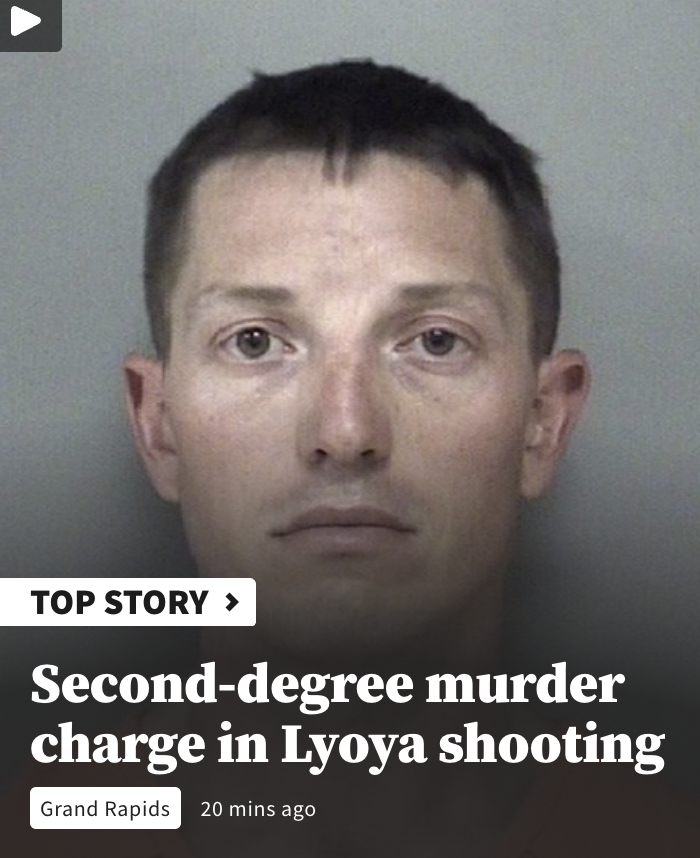 There must have been thousands of people tuning in to Prosecutor Chris Becker’s announcement yesterday, where he charged GRPD Officer Christopher Schurr with second-degree murder.
As soon as the Kent County Prosecutor made his announcement, social media was blowing up, with posts from local, state and national news sources. In addition, there were tons of individual commentary, along with some Grand Rapids-based organizations weighing in.
Kent County Prosecutor Chris Becker said he charged Christopher Schurr with second-degree murder, because that was the only conclusion to make based on the evidence from the investigation. However, it seems to this writer that there were probably other factors that played in to Becker’s decision. First, Becker was receiving a ton of pressure to recuse himself because of his acceptance of Police Union campaign contributions. Thousands of electronic messages were sent to Becker’s office making that demand. In addition, we know that Becker also received $23,000 in campaign contributions from the DeVos family over the past two election cycles. It would not be a stretch to think that one of the wealthiest families in West Michigan, which has numerous offices, a restaurant and several hotels in downtown Grand Rapids, would encourage Becker to charge Schurr with murder, so as to avoid another riot, this putting their property at risk. This is of course speculation, but the DeVos family doesn’t make that kind of contribution to political candidates without being able to call in a favor or influence their decisions.
Peter Lyoya, the father of Patrick Lyoya, after hearing the announcement of second-degree murder charges being brought up against Officer Christopher Schurr, stated, “it brings a little bit of consolation to our family.” This is probably the most important reaction from yesterday’s news.
Mayor Rosalynn Bliss stated, “I do want to say that I appreciate all of those who have respected the time need to complete a comprehensive investigation.” This was the Mayor’s backhanded way of saying that she doesn’t appreciate the more than 150 thousand electronic messages making immediate demands, the boots on the ground protests and the pressure she and the rest of the City Commission was receiving over the past two months. Bliss also recognized, “the staff, officers and leadership of the GRPD and the role they play in our community.” This is the Mayor letting the cops know that she is 100% behind them. This would not surprise those who have known that Bliss has received $3,000 in campaign contributions from the Grand Rapids Police Officer’s Association PAC during her political career.
City Manager Mark Washington – says he is committed to more de-escalation training for the GRPD. Maybe the most meaningless statement of the Press Conference.
Grand Rapids Police Chief Eric Winstrom, said that he plans to submit a letter to the city manager recommending that Grand Rapids police officer Christopher Schurr be suspended without pay and terminated. This is important, but this has been one of the demands from the community since Patrick Lyoya was killed by Officer Christopher Schurr. Chief Winstrom is merely doing what the public has been demanding for more than two months.
Kent County Commissioner Robert Womack stated during a Press Conference that he believes that the decision from the Kent County Prosecutor proves that the system can work and that “young activists should refrain from burning down buildings and throwing bricks.”
Local NAACP President Cle Jackson, not to be outdone by comments from Commissioner Womack, also stated, “It’s fine to protest, but it has to be peaceful. It has to be strategic. We will never win the war on the streets.” Why is it that people from establishment organizations feel the need to police those in the streets and tell them how to protest?
Attorney General Dana Nessel – “At the Department of Attorney General, we understand the exceptional resources needed to evaluate police-involved shooting deaths and I commend Prosecutor Becker, his team and the Michigan State Police for the exhaustive review conducted these last two months. We must now respect the judicial process and allow the facts of the case to be presented in court.” Nessel thanks the police and puts her faith in the judicial system. Instructive.
Michigan State Senator Winnie Brinks – Since this shooting, I have listened to people across the district, parents worried about the world their children are growing up in, and communities who feel their concerns are not being heard. Patrick’s family left a country of violence and corruption yet walked into one where he was shot in the back of the head in someone’s front yard. We cannot accept this violence as a normal way of life. When our laws don’t protect everyone, they must change. I will continue to work to ensure Patrick’s is not another life lost in vain. Everyone in every community deserves to have the peace of mind that, regardless of who they are or the color of their skin, they will receive fair and equal treatment by our police.” Such a statement fails to recognize the origins of policing in the US and the harsh fact that BIPOC communities, working class people and political dissidents have never been treated equally by the police.
The Black-led resistance to the GRPD murder of Patrick Lyoya, while in the streets last night made it very clear that the Kent County Prosecutor’s decision to charge Officer Christopher Schurr with murder is only the first step to achieving justice for the Lyoya family. Black organizers publicly committed to continuing the resist the way that the GRPD polices BIPOC communities and the continued intimidation, harassment and arrest of activists who are demanding justice for Patrick Lyoya.
We recently received 46 pages of a FOIA document that provides some insight into the arbitration submitted by the Grand Rapids Police Command Officers Association (GRPCOA), in their attempt to get Captain Kurt VanderKooi vindicated of any wrong doing for his role in contact Immigration and Customs Enforcement (ICE) on Jilmar Ramos-Gomez in late 2018.

Jilmar Ramos-Gomez, a former Marine and US citizen was arrested on November 21st, 2018, at Spectrum Hospital where he trespassed on the helipad after damaging a keypad. This all took place around 8:30am on November 21st.
At 7:40pm that same day, WOOD TV 8 ran a story about this incident involving Jilmar Ramos-Gomez. GRPD Captain Kurt VanderKooi was watching the WOOD TV 8 story while off duty, but contact an ICE agent in West Michigan to “check on his immigration status.” The ICE agent contact Captain VanderKooi two days later to tell him that he interviewed Ramos-Gomez at the Kent County Jail, stating, “he is a foreign national illegally in the U.S. Thank you for the lead he will be coming into our custody when he is released from his criminal case. Let me or Derek know if you ever have any other good leads.” Jilmar Ramos Gomez was then taken to an ICE detention facility, until it was discovered that the indeed was a US citizen. You can read about the details of this case from ACLU and Michigan Immigrant Rights Center documents, which these two organizations obtained from their own FOIA request.
The immigrant-led movement, Movimiento Cosecha GR and GR Rapid Response to ICE then began a campaign to get Captain Kurt VanderKooi fired from the GRPD for his role in calling ICE, which led to Jilmar Romas-Gomez being sent to detention.
In late February of 2019, Movimiento Cosecha GR and GR Rapid Response to ICE, attended a Grand Rapids City Commission meeting to demand that VanderKooi be fired, but when it became clear that the City would not act, people protested and shut down the meeting.
A month after the protest at the City Commission meeting, an Internal Affairs (GRPD) investigation was conducted and determined that Captain Kurt VanderKooi did nothing wrong in this matter.
The ACLU and MIRC pushed for this case to go before the Civilian Appeals Board, which it did in May of 2019. After a contentious meeting, the Civilian Appeals Board voted 6 – 2 in favor of overturning the decision by the Police Department’s Internal Affairs.
In November of 2019, several news sourced reported that the City of Grand Rapids paid $190,000 to Jilmar Ramos Gomez because Captain VanderKooi called ICE on Mr. Ramos-Gomez. A spokesperson for the ACLU said the City, “did not include an apology or an admission of guilt by the city.”
However, it should be said that the Grand Rapids Police Command Officers Association (GRPCOA) filed a grievance just after the May 2019 Civilian Appeals Board decision, which had overturned the Internal Affairs decision. Then, from September 25 – October 19 of 2020, there was an arbitration hearing between the City of Grand Rapids and the Grand Rapids Police Command Officers Association (GRPCOA). Both parties were represented by legal council and here is a link to the FOIA document.
 The first thing that is noticeable in the FOIA documents regard the arbitration case, is that there are a fair amount of pages with redacted content. For example, you can see that on page 40 of the FOIA document, there are only a few words on the page, which was discussing the Civilian Appeals Board meeting from May of 2019. (Seen here on the right.)
In other instances where there is clearly redacted content, it appears that much of the redacted content is testimony given by people who were part of the proceedings, like City Manager Mark Washington. People will often say that content is redacted to protect privacy, but there seems to be too much redacted content in this 46 page document. What are they hiding in this instance and why can’t the public see exactly what local government officials are saying about something that not only involves the GRPD, but something that clearly impacts the community?
This FOIA document once again confirms that the GRPD police union has too much power and that the City of Grand Rapids is in no way interested in transparency. The public pays the salaries of the police and Grand Rapids government officials, yet we continue to be told that we do not have access to information concerning public matters. The redacted parts of this document should be viewed as protecting certain city officials from potential public backlash, and it should make people question what other information are City Officials and the Grand Rapids Police Department withholding from us?
 Today, marks the 66th day since Officer Christopher Schurr shot and killed Patrick Lyoya. Schurr has been on paid leave since he shot Lyoya in the back of the head, but word is the he is not staying at his home and might be out of town.
The Justice4Patrick movement has been demanding that Christopher Schurr be arrested and tried for murder. The Kent County Prosecutor, Chris Becker, who has refused calls for his recusal in this case, has yet to make any decision on what the fate of Officer Schurr is.
There have been some who are suggesting that when this much time passes that the likely outcome will be that Christopher Schurr will not be charged with murder. No one really knows if this is the case, but we do know that the way that the law is written around “use of force”, sides with the police. Here is what the law in Michigan says about use of force:
OBJECTIVELY REASONABLE USE OF FORCE
- Under the Fourth Amendment of the United States Constitution, a law enforcement officer may only use such force as is “objectively reasonable” under all of the circumstances. The standard that courts will use to examine whether the use of force is constitutional was first set forth in Graham v. Connor, 490 U.S. 386 (1989), and expanded by subsequent court cases. The reasonableness of a particular use of force must be judged from the perspective of a reasonable law enforcement officer on the scene at the moment the force was used, rather than with 20/20 vision of hindsight. The reasonableness must account for the fact that law enforcement officers are often forced to make split-second judgments – in circumstances that are tense, uncertain, and rapidly evolving – about the amount of force that is necessary in a particular situation.
- Reasonableness will be determined by balancing the nature and quality of the intrusions with the countervailing governmental interests. The question is whether the law enforcement officer’s actions are objectively reasonable in light of the facts and circumstances confronting the officer. Objective factors will determine the reasonableness of force including, but not limited to, the severity of the crime, whether the suspect poses an immediate threat to the safety of the law enforcement officers or others, and whether the suspect is actively resisting arrest or attempting to evade arrest by flight.
- Enforcement members shall only use force which is objectively reasonable under the totality of the facts and circumstances to overcome a subject’s resistance, to make an arrest, or maintain proper custody of a prisoner, when a resisting subject de-escalates his/her resistance, the enforcement member shall also de-escalate the amount of force used proportionately.
We know that the Grand Rapids Police Officer’s Association, which released a statement on April 26, believes that Officer Schurr was justified in his use of force, stating:
“we feel a thorough review of this entire situation will show that a police officer has the legal right to protect themselves and community in a volatile dangerous situation such as this, in order to return to his/her family at the end of their shift.”
Then there are the four major FOIA documents regarding this case, documents obtained by WOOD TV8, which are all documents based on the GRPD reporting from April 4 when Officer Schurr shot and killed Patrick Lyoya. The language of these documents suggest that Schurr followed “proper procedure.”
In addition, there have been people cited in local news stories about the GRPD killing of Patrick Lyoya, which have also justified Officer Schurr’s use of force. In late May, an article posted on MLive, cites John Riley, the founder of Gentle Response Conflict/De-escalation Training, who said, “he believes Schurr followed his training properly and did everything he could to try to de-escalate the situation, including telling Lyoya to stop resisting several times.” In fact, Riley had posted three separate opinion pieces about the GRPD killing of Patrick Lyoya on his website.
The first entry is a lengthy argument that Officer Schurr did follow de-escalation protocol, stating:
Argue, debate, and pontificate whether or not the shooting was righteous and justified, but do not dare say the officer did not try to successfully and effectively de-escalate and control the situation, first verbally and then physically. Mr. Lyoya’s significant contributing factor to this tragic incident was his own behavior and actions, which guided, lead and turned what would have been a ticket and a few hours in jail into a fatal shooting.
In the second blog post, John Riley is talking about misconceptions of what de-escalation is, stating:
2 misconceptions from the tragic OIS in Grand Rapids. I point out and emphasize in my seminars that there are no magic words or phrases that will just “de-escalate” a person or situation. The other person MUST be able to allow themselves to be de-escalated, and in this tragic incident was a man who clearly did not want to de-escalate, though that officer frantically, then desperately tried very hard to.
In the third, and finally blog post from Riley, where he continues to blame Patrick Lyoya for his own death, he states:
In this sad, tragic incident, an intoxicated driver, whose judgement and decision making abilities are further affected by the amount of alcohol he consumed, chose to physically resist lawful authority. The officer is legally obligated to make an attempt to detain the driver because it’s his job, and can be heard on his body cam saying 7 to 8 times, “Stop!”. Had Patrick Lyoya simply stopped, and surrendered to lawful authority, like his record shows he has done so in the past, the officer would not have found himself in a situation where he believed he was in danger of great bodily harm or death.
 All of this is to say that there is a strong possibility that Officer Christopher Schurr will not be charged with murder by Kent County Prosecutor Chris Becker. However, even if Schurr does go to trial, there is also the strong possibility that he will not be found guilty. These are possibilities that the Justice4Patrick Movement needs to come to terms with and to begin to develop strategies and tactics that will be necessary if the GRPD gets away with murder.
There is a possibility that Officer Schurr could be charged with murder and later found guilty of that charge. If this happens, then it will bring some relief to the family of Patrick Lyoya and possibly lead to some healing in the larger community. However, even if this is the outcome, the response from the GRPD and Grand Rapids City Officials has been deplorable and oppressive. We should see their response as a normative practice when responding to public demands. This too should inform our movements moving forward and should cause all of use who are on the side of liberation and abolition to reflect and reformulate how we move forward in our efforts to radically imagine the kind of community we want to live in.

