Always Follow the Money: Largest donors in State Representative races in West Michigan
Campaign Finance data for candidates for State Representative seats in the West Michigan was as expected.
- In contests where one candidate raised no funds or very little, their opponent also raised a lower amount, but enough for mailers and other Get Out the Vote efforts.
- Candidates from both parties relied heavily on contributions from Political Action Committees, funds set up by other politicians, and their county partisan headquarters.
- The DeVos family members and one their associates contributed to 3 of the 10 State Representative races in West Michigan. The small numbers is in part due to races where the Democratic opponent did not raise money (4 of the 10 races), thus the DeVos family did not need to contribute or because the seats have been controlled by the Democrats for multiple election cycles. As we have noted on many occasions, the DeVos family is despicable, but they are not dumb.
- There were also several GOP and Democratic Party candidates which listed over $100,000 for media buys, which ran on local TV and cable services in this region. In fact, more money was spent on media buys than on anything else.
78th District State Representative
Leah Groves (D)
No funds raised
Gina Johnsen (R)
Largest Contributors:
- Ionia County GOP – $3000
- Borton Leadership – $500
- Granger PAC – $500
- Auto Dealers of MI – $500
- MI Farm Bureau PAC – $500
79th District State Representative
Kimberly Kennedy-Barrington (D)
Largest Contributors:
- UAW Region 1D – $3000
- Barry County Democratic Committee – $500
Angela Rigas (R)
Largest Contributors:
- Maddock Leadership Fund – $6500
- Beeler Majority Fund – $6000
- Meerman Majority Fund – $1500
- David Herrema – $1050
80th District State Representative
Phil Skaggs (D)
Largest Contributors:
- Michigan Regional Council of Carpenters – $5450
- Brixie Blue Wave Fund – $5000
- American Federation of State County – $5000
- Kent County Democratic Party – $5000
- End Citizens United. – $1000
- West MI Progress PAC – $1000
- Progressive Women’s Alliance – $1000
Jeffrey Johnson (R)
Largest Contributors:
- Kent County Republican Committee – $5000
- Michigan Farm Bureau – $3000
- House Republican Campaign Committee – $2066
- Meerman Majority Fund – $1500
- Dick DeVos, RDV Corp – $1050
- Betsy DeVos, RDV Corp – $1050
- Pamela DeVos, RDV Corp – $1050
- Dan DeVos, RDV Corp – $1050
- Suzanne DeVos, RDV Corp – $1050
- Doug DeVos, RDV Corp – $1050
- Maria DeVos, RDV Corp – $1050
- Steve Ehmann, RDV Corp – $1050
81st District State Representative
Rachel Hood (D)
Largest Contributors:
- The PAC for America’s Future MI – $10,500
- Julie Brixie Blue Wave Fund – $10,050
- Kent County Democratic Party – $7750
- Michigan Regional Council of Carpenters – $7000
- MEA PAC – $6750
- American Federation of State County – $6000
- Progressive Women’s Alliance – $5000
- Grand Rapids Firefighter’s Union – $5000
Lynn Afendoulis (R)
Largest Contributions:
- Wentworth Majority Fund – $10,500
- Wentworth Majority Fund 2 – $10,500
- Friends of Matt Hall PAC – $10,500
- Friends of Matt Hall Majority Fund – $10,500
- Kent County Republican Committee – $10,000
- TGIF Victory Fund – $10,000
- Michigan Oil & Gas PAC – $5000
- Small Business PAC – $3000
- Dick DeVos, RDV Corp – $1050
- Betsy DeVos, RDV Corp – $1050
- Pamela DeVos, RDV Corp – $1050
- Dan DeVos, RDV Corp – $1050
- Suzanne DeVos, RDV Corp – $1050
- Doug DeVos, RDV Corp – $1050
- Maria DeVos, RDV Corp – $1050
- Steve Ehmann, RDV Corp – $1050
82nd District State Representative
Kristian Grant (D)
Largest Contributors:
- Brandon Dillon – $500
- Noah Klugman – $250
All other donations were $100 or less, with only 25 contributions listed.
Ryan Malinoski (R)
No Funds raised in this campaign finance cycle.
83rd District State Representative
John Fitzgerald (D)
Largest Contributors:
- Kent County Democratic Party – $10,500
- The PAC for America’s Future MI – $10,500
- Brixie Blue Wave Fund – $10,000
- Michigan Education Association – $7000
- Michigan Regional Council of Carpenters – $5000
Lisa DeKryger (R)
Largest Contributors:
- Friends of Matt Hall PAC – $10,500
- Wentworth Majority Fund – $10,500
- TGIF Victory Fund – $10,000
- Kent County Republican Committee – $5000
- Dick DeVos, RDV Corp – $1050
- Betsy DeVos, RDV Corp – $1050
- Pamela DeVos, RDV Corp – $1050
- Dan DeVos, RDV Corp – $1050
- Suzanne DeVos, RDV Corp – $1050
- Doug DeVos, RDV Corp – $1050
- Maria DeVos, RDV Corp – $1050
- Steve Ehmann, RDV Corp – $1050
84th District State Representative
Carol Glanville (D)
Largest Contributors:
- The Julie Brixie Blue Wave Fund – $9000
- The PAC for America’s Future MI – $5500
- Progressive Women’s Alliance – $4500
- Kent County Democratic Party – $2750
- West MI Plumbers, Fitters & Service – $2500
- Grand Rapids Firefighters Union PAC – $2000
Mike Milanowski Jr. (R)
Largest Contributors:
- TGIF Victory Fund – $10,000
- Wentworth Majority Fund – $5000
- Kent County Republican Committee – $5000
- Small Business Association of MI – $4500
- Realtors PAC of Michigan – $3500
- Michigan Farm Bureau PAC – $3000
- Meerman Majority Fund – $2000
89th District State Representative
Sharon McConnon (D)
No funds raised
Luke Meermen (R)
Largest Contributors:
- Matt Hall Majority Fund – $10,500
- Ford the American Road – $1500
- CMS Energy Employees for Better Gov. – $1250
- Centene Corporation PAC – $1000
- Altria Group PAC – $1000
90th District State Representative
Meagan Hintz (D)
No funds raised
Bryan Posthumus (R)
Largest Contributors:
- Auto Dealer of MI – $3050
- Rock Holdings PAC – $2500
- ABC PAC – $1500
- Michigan Laborers Political League – $1000
- Michigan Educational Partners PAC – $1000
- CMS Energy Employees for Better Gov. – $500
91st District State Representative
Tammy DeVries (D)
No funds raised
Pat Outman (R)
Largest Contributors:
- Friends of Matt Hall PAC – $10,500
- 4th District republican Committee – $5000
- Blue Cross Blue Shield of MI PAC – $5000
- Ionia County Republican Committee – $1500
- Michigan Petroleum Association PAC – $1000
- Michigan Oil & Gas Association PAC – $1000
Always follow the money: Campaign Finances for the Kent County Commission races and the Grand Rapids Power Structure contributions
Just as we have demonstrated over the past few days with the Grand Rapids City Commission races, the Kent County Commission seats will be influenced by the Grand Rapids Power Structure.
In the 21 Kent County Commission seats that are up for election, there is a great deal of money coming from political organizations and individuals/families that make up the Capitalist Class in Grand Rapids.
Below you can find basic campaign finance information for all 21 Kent County Commission seats and some of the larger campaign contributors. What follows is a list of the organizations that have contributed and the combined amount for each organization for all 21 Kent County seats. We will then do the same thing for the Individuals/families that are amongst the wealthiest in this area.
Organizations
- Grand Rapids Chamber of Commerce PAC – $14,300
- Realtors PAC of Michigan – $16,250
- TGIF Victory Fund – $6000
- Kent County Republican Committee – $15,000
Individuals/family campaign contributions
- Terri Land & Dan Hibma – $12,500
- Michael & Susan Jandernoa – $12,100
- DeVos family & associates – $60,900
Between the Political Action Committees and the members of the Capitalist Class in Kent County, we are looking at roughly $150,000 that have been contributed collectively to the Kent County Commission races. These organizations and these families do no contribute money just so their candidate can win, the contribute money to make sure that policies get adopted that will benefit their interests. To ignore this reality is both naive and dangerous.
Lastly, it is worth noting that along partisan lines, it is clear that when candidates do not raise funds they are conceding that race. However, if you look closely, the Democratic Party candidates that have raised money, some of them have also received contribution from PACs like the Chamber of Commerce or the Realtor PAC of Michigan, since those entities also want to influence policy outcomes and are less concerned about partisan politics than having politicians who are more likely to adopt policy that benefits their interests.
District #1
Jerry Berta (D) –
No funds raised
Ben Greene (R)
Total raised: $28,858.08
Largest contributors:
- Grand Rapids Chamber of Commerce – $3500
- Realtors Political Action Committee of Michigan – $2000
- TGIF Victory Fund – $2000
- JC Huizenga, National Heritage Academies – $1050
- Dan Hibma, Land & Company – $1000
- Terri Land, Land & Company – $1000
- Joel Langlois, Delta Properties – $1000
- Michael Jandernoa, 42 North Partners – $1000
- Susan Jandernoa, homemaker – $1000
- Lee Anne Langlois, Retired – $1000
District #2
Rebecca Diffin (D)
No funds raised
Thomas Antor (R)
No funds raised
District #3
Janalee Keegstra (D)
No funds raised
Jennifer Merchant (R)
Total raised: $27,675
Largest contributors:
- Jennifer Merchant, Deputy Policy Director – $2100
- Realtors PAC of Michigan – $2000
- Rebecca Humphries, CEO National Wild Turkey Federation – $1050
- Dick DeVos, RDV Corp – $1050
- Betsy DeVos, RDV Corp – $1050
- Pamela DeVos, RDV Corp – $1050
- Dan DeVos, RDV Corp – $1050
- Suzanne DeVos, RDV Corp – $1050
- Doug DeVos, RDV Corp – $1050
- Maria DeVos, RDV Corp – $1050
- Dalton DeVos, RDV Corp – $1050
- Steve Ehmann, RDV Corp – $1050
- Michael Jandernoa, 42 North Partners – $1000
- Susan Jandernoa, Retired – $1000
- GR Chamber of Commerce PAC – $1000
- Don Goris, President Campaign Resource Group – $1000
- Michelle Humphries, Retired – $1000
District #4
Judy Wood (D)
No funds raised
Katie DeBoer (R)
Total Raised: $6151
- Katie DeBoer – $6151
District #5
Vanessa Lee (D)
No funds raised
Dave Hildenbrand (R)
Total raised: $27,750
Largest contributors:
- Grand Rapids Chamber of Commerce – $2500
- West Michigan Anesthesia PAC – $1000
- Realtors PAC of Michigan – $1000
- Compete Michigan PAC – $1000
- Gregory Ford, K&R Excavating – $1050
- Dick DeVos, RDV Corp – $1050
- Betsy DeVos, RDV Corp – $1050
- Pamela DeVos, RDV Corp – $1050
- Dan DeVos, RDV Corp – $1050
- Suzanne DeVos, RDV Corp – $1050
- Doug DeVos, RDV Corp – $1050
- Maria DeVos, RDV Corp – $1050
- Steve Ehmann, RDV Corp – $1050
- Edward Nausieda, President Bravo LT – $1000
- Mark Anderson, Retired – $1000
- Michael Jandernoa, 42 North Partners – $1000
- Susan Jandernoa, Retired – $1000
District #6
Nicholas H. Vander Veen (D)
Total raised: $4024
Largest contributors:
- Matthew Clark, Attorney – $1050
- West MI Progress PAC – $500
- UA Local 174 – $500
- Patrick Miles, Attorney – $500
Stan Stek (R)
Total raised: $24,927
Largest contributors:
- Kent County Republican Committee – $2500
- Miller Canfield PAC – $2000
- GR Chamber of Commerce – $1500
- GRAR Commercial Real Estate PAC – $1500
- Dick DeVos, RDV Corp – $1050
- Betsy DeVos, RDV Corp – $1050
- Pamela DeVos, RDV Corp – $1050
- Dan DeVos, RDV Corp – $1050
- Suzanne DeVos, RDV Corp – $1050
- Doug DeVos, RDV Corp – $1050
- Maria DeVos, RDV Corp – $1050
- Steve Ehmann, RDV Corp – $1050
District #7
Sue Merrell (D)
No funds raised
Stan Ponstein (R)
Total raised: $3394
Largest contributors:
Stan Ponstein – $1604
- Kent County Republican Committee – $1000
District #8
Jennie Chatman (D)
No funds raised
Dan Burrill (R)
Total raised: $60,363
Largest contributors:
- Kent County Republican Committee – $2500
- GR Chamber of Commerce PAC – $2000
- Realtors PAC of Michigan – $1000
- Sheldon Dekryger, Dekryger Builders – $1050
- Jody Tubergen, homemaker – $1050
- Scott Tubergen, Tubergen Construction – $1050
- Terry Zandbergen, retired – $1050
- Terri Land, Land & Company – $1050
- Dick DeVos, RDV Corp – $1050
- Betsy DeVos, RDV Corp – $1050
- Pamela DeVos, RDV Corp – $1050
- Dan DeVos, RDV Corp – $1050
- Suzanne DeVos, RDV Corp – $1050
- Doug DeVos, RDV Corp – $1050
- Maria DeVos, RDV Corp – $1050
- Steve Ehmann, RDV Corp – $1050
- Dave Deshaw, Consultant – $1050
- Gerald Grooters, retired – $1050
- Pamela Bouwman, retired – $1000
- Harold Voorheen, retired – $1000
District #9
Chip LaFleur (D)
No funds raised
Matt Kallman (R)
Total raised: $764
District #10
Julie Humphreys (D)
No funds raised
Emily Post Brieve (R)
Total raised: $23,286
Largest contributors:
- Realtors PAC of Michigan – $3000
- GR Chamber of Commerce PAC – $2000
- Terri Land, Land & Company – $1050
- Dick DeVos, RDV Corp – $1050
- Betsy DeVos, RDV Corp – $1050
- Pamela DeVos, RDV Corp – $1050
- Dan DeVos, RDV Corp – $1050
- Suzanne DeVos, RDV Corp – $1050
- Doug DeVos, RDV Corp – $1050
- Maria DeVos, RDV Corp – $1050
- Steve Ehmann, RDV Corp – $1050
- Michael Jandernoa, 42 North Partners – $1000
- Susan Jandernoa, Retired – $1000
District #11
John Considine (D)
Total raised: $100
Lindsey Thiel (R)
Total raised: $19,450
Largest contributors:
- Realtors PAC of Michigan – $3000
- GR Chamber of Commerce PAC – $1050
- Dick DeVos, RDV Corp – $1050
- Betsy DeVos, RDV Corp – $1050
- Pamela DeVos, RDV Corp – $1050
- Dan DeVos, RDV Corp – $1050
- Suzanne DeVos, RDV Corp – $1050
- Doug DeVos, RDV Corp – $1050
- Maria DeVos, RDV Corp – $1050
- Dalton DeVos, RDV Corp – $1050
- Steve Ehmann, RDV Corp – $1050
- Kent County Republican Committee – $1000
District #12
Monica Sparks (D)
Funds raised: $2000
Largest contributors:
- Realtors PAC of Michigan – $1750
- GR Chamber of Commerce PAC – $250
Lee White (R)
Funds raised: $1550
Largest contributors:
- Terri Land, Land & Company – $1050
- Dan Hibma, Land & Company – $1050
- Kent County Republican Committee – $250
District #13
Michelle McCloud (D)
Total raised: $3687
Largest contributors:
Michelle McCloud – $1610
- GR Chamber of Commerce PAC – $250
Tom McKelvey (R)
Total raised: $16,683
Largest contributors:
- Kent County Republican Committee – $8000
- TGIF Victory Fund – $3000
- Michael Jandernoa Trust – $2000
- Realtors PAC of Michigan – $1250
District #14
Carol Hennessy (D)
Total raised: $4829
Largest contributors:
- Grand Rapids Firefighters Union PAC – $1000
- Realtors PAC of Michigan – $500
Jerri Schmidt (R)
Total raised: $3861
Largest contributors:
- Jerri Schmidt – $3738
District #15
Lisa S. Oliver-King (D)
Total raised: $11,831
Largest contributors:
- Bill Mann, Bronson Health System – $850
- Bradford Mathis, Rockford Construction – $850
- Jeffrey Howard, SEIU – $500
- Tim Williams, Attorney – $500
- Natalie Hall, Michigan Women’s Forward – $500
- Brian Schwartz, Michigan Bank – $500
- Shannon Wilson, Priority Health – $500
Brian Boersema (R)
No funds raised
District #16
Melissa LaGrand (D)
Total raised: $8652
Largest contributors:
- Melissa LaGrand – $7487
John Brooks Twist (R)
No funds raised
District #17
Tony Baker (D)
Total raised: $17,333
Largest contributors:
- Tony Baker – $3500
- Realtors PAC of Michigan – $750
- Mike Kolehouse – $500
Jason Gillikin (R)
No funds raised
District #18
Stephen Wooden (D)
Total raised: $12,226
Largest contributors:
Stephen Wooden – $2000
- Michigan Laborers Political League – $1000
- GR Chamber of Commerce PAC – $250
Tim Allen (R)
Total raised: $2505
Largest contributors:
- Terri Land, Land & Company – $1050
- Dan Hibma, Land & Company – $1050
District #19
Kris Pachla (D)
Total raised: $7515
Largest contributors:
- 314 Action Victory Fund – $500
- Matt Richenthal, Mediavine Inc – $500
- Amy Brogger – $500
Samuel R. Carstens (R)
Total raised: $3145
Largest contributors:
- Terri Land, Land & Company – $1050
- Dan Hibma, Land & Company – $1050
- Kent County Republican Committee – $1000
District #20
Ivan Diaz (D)
Total raised: $1555
Largest contributors:
- Equity PAC – $1000
- West MI Progress PAC – $500
Elisa Rodriguez (R)
Total raised: $14,215
Largest contributors:
- John Kennedy, Autocam Corporation – $1050
- Terri Land, Land & Company – $1050
- Dan Hibma, Land & Company – $1050
- Dick DeVos, RDV Corp – $1050
- Betsy DeVos, RDV Corp – $1050
- Pamela DeVos, RDV Corp – $1050
- Dan DeVos, RDV Corp – $1050
- Suzanne DeVos, RDV Corp – $1050
- Doug DeVos, RDV Corp – $1050
- Maria DeVos, RDV Corp – $1050
- Steve Ehmann, RDV Corp – $1050
- TGIF Victory Fund – $1000
District #21
Charles Howe (D)
No funds raised
Walter Bujak (R)
Total raised: $5945
Largest contributors:
- Walter Bujak – $5000
Always follow the money: Campaign Finances for the Grand Rapids School Board Candidates
There are several candidates that are running for the Grand Rapids School Board, in an election to fill three of the seats in a 9 member board.
As of this posting, there are numerous candidates that have not filed campaign finance data, primarily because they did not raise enough funds to warrant filing. However, there are 4 candidates who have filed, so we can take a look at their campaign finance information.
The limited amount of money going into the Grand Rapids School Board elections is a bit surprising, especially when one considers how contested the public education system has been in recent decades. Then there is the issue of school closings, masking policies, Critical Race Theory, the attacks on trans students, all of which are being fomented by far right movements and parent groups that tend to be inherently anti-public schools. One would have thought that those with deep pockets would have used their considerable influence in the Grand Rapids School Board Election.
Lastly, GRIID did a post a few weeks ago, where candidates for the Grand Rapids Public School Board had responded to a letter sent out by the group Grand Rapids for Education Justice. The responses to that letter can be read here.
Amanda Bernes
Total raised: $1,703.83
Total spent: $1,698.83
Total # of contributions: 22
Largest contributors:
Political Action Committees & Organization
None
Individuals
Nothing above $500
Sara Melton
Total raised: $1,877.84
Total spent: $1,755.63
Total # of contributions: 23
Largest contributors:
Political Action Committees & Organization
- Grand Rapids Education Association – $250
Individuals
Nothing above $500
Jose Rodriguez
Total raised: $2,527.67
Total spent: $2,356.97
Total # of contributions: 39
Largest contributors:
Political Action Committees & Organization
- West Michigan Progress PAC – $300
- Michigan Education Association – $275
Individuals
Nothing above $500
Aarie Wade
Total raised: $2,504.75
Total spent: $2,066.82
Total # of contributions: 27
Largest contributors:
Political Action Committees & Organization
- Equity PAC – $500
- Michigan Education Association PAC – $275
Individuals
Nothing above $500
It is now official. The Judge presiding over the case of the ex-cop, Christopher Schurr, made a ruling on Monday that Schurr will stand trial for the 2nd degree murder charge he was given when he shot Patrick Lyoya in the back of the head.
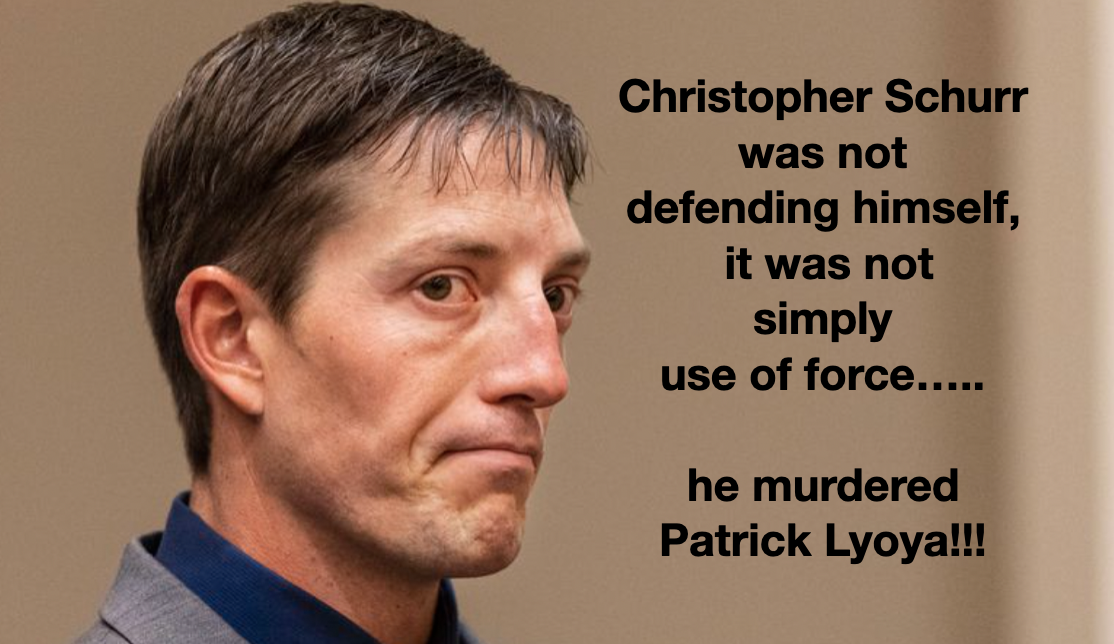
The Grand Rapids Police Officer’s Association (GRPOA) wasted no time in responding to the judge’s decision that Schurr will stand trial, with this post on their Facebook page:
Chris and Brandey,
The GRPOA will continue to support you and stand with you. You are family! We are here for your every need. Today’s decision by Judge Ayoub is only prolonging the inevitable. You have committed no crime and you will be acquitted. Keep your head up! Know you have many that support you in the community and throughout the nation.
Proverbs 3:5-6
Trust in the LORD with all your heart, And lean not on your own understanding; In all your ways acknowledge Him, And He shall direct your paths.
This statement is worth a brief deconstruction. First, the GROPA claims that Schurr committed no crime and that he will be acquitted. This is the same arrogant stance they took when responding to the court’s decision on the cop who discharged his gun while confronting another Black man, Daevionne Smith. During Smith’s court case the judge would not allow him to give testimony and Smith was quoted as saying after the ruling, “This is one of the first times I’ve ever felt so powerless, to sit back and actually watch this go on and not able to do nothing about it. Y’all made me feel like I don’t matter. My life don’t matter. Everything that I went through and I’m still continuously going through doesn’t matter.”
Second, Patrick Lyoya is completely absent in the GROPA commentary, as it he didn’t exist, as if Schurr never shot him in the back of the head.
Third, the GROPA person who posted the comment, then includes a bible verse, which also suggests that if the Schurr family just trusts God then all will be good. Just one of the reasons I despise monotheistic religions, because people can quote religious texts to justify any damn thing they see fit.
Lastly, it is worth bringing up the point that Grand Rapids police Capt. Chad McKersie, who is in charge of the training unit, said about what what Schurr did. He said in the courtroom last Thursday, that “Schurr followed department training and policy” and that, “the use of deadly force was justified.”
Now, I have no doubt that this is what Captain McKersie believes and teaches to members of the GRPD. The laws around use of force favor the cops and always have. This is why I am not interested in police reform or any of that other bullshit about making cops more sensitive or culturally competent. I am for the abolition of policing. If cops get trained to do what Schurr did to Patrick Lyoya, then anyone who disobeys a cop, resists a cop, tries to defend themselves when cops use force, they could end up just like Patrick Lyoya. If the cop who is in charge of training at the GRPD says that the use of deadly force was justified in this instance, then we all should be outraged and in the streets demanding that the GRPD be defunded and abolished.
Always follow the money: 2nd Ward Grand Rapids City Commission Race also sees a contrast in candidate donor amounts
 Our most recent posts have taken a look at the campaign finances data for the 1st and 3rd Ward races. The most overwhelming factor in both of those races has been the fact that the Grand Rapids Power Structure has put all of their considerable money behind Andrew Robbins in the 1st Ward and Kenneth Hoskins in the 3rd Ward.
I was curious to see if the same pattern was taking place in the 2nd Ward race, but unfortunately, the incumbent, Joe Jones, has not filed all of his campaign finance information. The deadline for filing was last Friday, so it seems a bit disconcerting to see an incumbent candidate be later with providing the public with their campaign finances. The County Clerk’s office sent a letter to the Committee to Keep Joe Jones, stating:
Please send the required Statement to the address listed below. If a required filing is not received in this office within 9 days of the due date, MCL 169.216(8) requires us to refer the matter to the Attorney General.
Joe Jones is running against Lisa Knight, who is a newcomer in the electoral arena. Knight did provide all of her campaign finance data, but we can get a sense of who is backing Jones, based upon previous data provided earlier this year, campaign contributions that were raised in 2021.
However, people can draw their own conclusions, based upon the campaign finance data from the two 2nd Ward candidates. We have posted both the final campaign finance documentation for the 2022 election on the GRIID site, with the campaign finance data for Knight here and the data for Jones here. Editors note: This is incomplete data for Jones, plus the link provided for his data does not include $1000 from Michael Jandernoa, which was included in campaign finance reporting in early 2022.
Joe Jones
Total raised: $14,000
Total spent: $ ?
Total # of contributions: 14
Largest contributors:
Political Action Committees and organizations
None
Individuals
- Mike & Gayle VanGessel, CEO of Rockford Construction – $2000
- Daniel & Sharon Bowen, Principal Owner of Dempsey Ventures – $2000
- Brian Britton, President & CEO, National Heritage Academies – $1000
- Kalli Britton, Express Employment Professional – $1000
- Darryl Elmouchi, President at Spectrum Health West Michigan – $1000
- Rosalynn Bliss, Mayor of Grand Rapids – $1000
- Mark Murray, Vice Chairman of Meijer – $1000
- Christina Freese Decker, President & CEO of Spectrum Health – $1000
- Michael Price, Retired – $1000
- David Cassard, Mercantile Bank – $1000
- David Quade, Regional President of Horizon Bank – $1000
- Michael Jandernoa, Chairman of 42 North Partners – $1000
14 contributions were $500 or more.
Lisa Knight
Total raised: $12,332.77
Total spent: $10,847.65
Total # of contributions: 94
Largest contributors:
Political Action Committees & Organization
- Equity PAC – $1500
Individuals
- Tamara Vandenberg, The Meanwhile Bar Inc. – $1000
- Deb Cleland, Retired – $500
- Blythe Kaźmierczak, BlytheTalent – $500
- Janay Brower, Public Thread – $500
5 contributions were $500 or more.
The numbers for the campaign contributions going to the candidates in the 2nd Ward Grand Rapids City Commission race speak for themselves and while we do not have the full picture of campaign contributions for Joe Jones, it is clear that those who have contributed have substantial political and economic influence in this community. With what information we do have, it is instructive the with the 14 donors listed in Joe Jones campaign finance information, he still raised more money than the total raised by Lisa Knight from the 94 contributors.
Always follow the money: Rich White people and the 3rd Ward Grand Rapids City Commission Race
 As we reported a few days ago, in the 1st Ward Grand Rapids City Commission, candidate Andrew Robbins has been the recipient of thousands of dollars from a few Political Action Committees and thousands more from members of the Grand Rapids Power Structure.
The Rev. Kenneth Hoskins is running against Kelsey Perdue to represent the 3rd Ward of Grand Rapids. Hoskins, like Andrew Robbins in the 1st Ward, has been the recipient of $10,500 of campaign funds from the Grand Rapids Chamber of Commerce, as we reported on last week.
Hoskins has run for office before, being part of the Grand Rapids School Board beginning in 2004 and served multiple terms. It is possible that powerful people are backing him because of his electoral experience. However, my take on why Hoskins is receiving so much money from the Grand Rapids Power Structure is because of his as Executive Director of Oakdale Neighbors and its relationship to the DeVos entity known as AmplifyGR.
Oakdale Neighbors has received at least $300,000 from several of the DeVos family foundations since AmplifyGR was first conceptualized in 2016. GRIID reported on this in 2017, and have continued to document DeVos Foundation support of Oakdale Neighbors. In fact, Oakdale Neighbors was contracted by AmlifyGR to conduct community surveys in the Boston Square neighborhood. The DeVos family is very big on these kinds of relationships with organizations and individuals that have bought into their vision for Grand Rapids.
However, people can draw their own conclusions, based upon the campaign finance data from the two 3rd Ward candidates. We have posted both the final documentation for the 2022 election on the GRIID site, with the campaign finance data for Hoskins here and the data for Perdue here.
Kenneth Hoskins
Total raised: $51,824.61
Total spent: $17,372.11
Total # of contributions: 95
Largest contributors:
Political Action Committees and organizations
- Grand Rapids Chamber of Commerce PAC – $10,500
- Grand Rapids Fire Fighters Union PAC – $2000
- Realtors Political Action Committee of Michigan – $1000
- Priority Health PAC – $500
Individuals
- Richard DeVos, RDV Corp. – $1050
- Betsy DeVos, RDV Corp. – $1050
- Pamela DeVos, RDV Corp. – $1050
- Daniel DeVos, RDV Corp. – $1050
- Suzanne DeVos, RDV Corp. – $1050
- Steve Ehmann, RDV Corp. – $1050
- Doug DeVos, RDV Corp. – $1050
- Maria DeVos, RDV Corp. – $1050
- Johnny Brann Jr., President of Interphase Interiors – $1050
- Mark Meijer, President of LifeEMS Ambulance – $1050
- Terri Land, Property Management – $1050
- Dan Hibma, Land & Company – $1050
- Russell Richter, Richter Realty – $1050
- Jim Bossenbroek, Northgate Resorts – $1050
- David Lyngklip, Power Generation Sales – $1050
- Rick Baker, CEO of GR Chamber of Commerce – $1000
- Daniel Meyering, CEO of Trillium Investments – $1000
- John Kennedy, President Autocam Corp. – $1000
- Sam Cummings, CWD Real Estate Investment – $1000
- Michael Jandernoa, Owner 42 North Partners – $1000
- Susan Jandernoa, Board of Trustees GVSU – $1000
- John Brann Sr., owner Brann’s Steakhouse – $1000
- Gayle VanGessel, Owner of Rockford Construction – $1000
- James Hackett, Retired – $750
- Robert Hughes, Advantage Benefits Group – $550
- Shaquanda Gordon, Spartan Nash – $500
- Mark Murray, Meijer Inc. – $500
- Charlie Secchia, Attico Ventures LLC. – $500
- Robert Schermer, Meritage Hospitality Group – $500
- Doug Dozeman, Warner Norcross – $500
- Matt Missad, Universal Forrest Products – $500
- Timothy Schowalter, Pioneer Construction – $500
- Mike VanGessel, Rockford Construction – $500
- Michael Houseman, Wolverine Building Group – $500
38 contributions were $500 or more.
Kelsey Perdue
Total raised: $42,711.95
Total spent: $31,397.51
Total # of contributions: 244
Largest contributors:
Political Action Committees & Organizations
- Progressive Women’s Alliance – $2000
- Equity PAC – $1500
- West Michigan Cannabis Guild – $1000
- Rental Property Owners Association – $500
Individuals
- Kayla Smith, Manager FMC – $1000
- Carla Erikson, Atomic Object – $1000
- Joe Glover, Well House – $1000
- Chris Burtley, Barnes and Thornburg – $734.90
- Joe Jones – $525
- Annemarie Valdez – $500
- Darell Ross, Forty Acres – $500
- Lynn Heemstra, Retired – $500
- Amber Wagner, Treadstone Mortgage – $500
- Arlen-Deam Gaddy, Erhardt Construction – $500
- Angel Duff, Price Waterhouse Coopers – $500
- Christopher Spain, Acrisure – $500
- Kate Wolters, KRW Foundation – $500
- Marlin Feyen, Retired – $500
18 contributions were $500 or more.
The numbers for the campaign contributions going to the candidates in the 3rd Ward Grand Rapids City Commission race speak for themselves. More importantly, the amount of money that was contributed to Kenneth Hoskins campaign from members of the Grand Rapids Power Structure are astonishing. The DeVos family & Associates collectively contributed $9450 alone. This amount of money from the wealthiest people in Grand Rapids, which are almost exclusively White, is also very troubling in a political Ward that has the largest Black population in Grand Rapids. White rich people seeking to install Black candidates is nothing short of Managerial Racism, Institutionalized White Supremacy and White Saviorism.
Always follow the money: Grand Rapids 1st Ward City Commission race has members of the Grand Rapids Power Structure seeking to buy a candidate
 Within the past week, GRIID has discovered that one of the 1st Ward candidates for City Commission, Andrew Robbins, has been the recipient of major funding from two very conservative organizations in Grand Rapids.
On Tuesday, GRIID reported that the Grand Rapids Police Officer’s Association PAC had contributed $10,000 to Andrew Robbins, and on the same day we reported that Robbins had received an additional $10,500 from the Grand Rapids Chamber of Commerce.
The GR Chamber of Commerce is part of the Grand Rapids Power Structure, while the GRPD police union essentially serves the same power structure.
On Friday, GRIID accessed the campaign finance report, which you can find at this link, for both Andrew Robbins and the incumbent Kurt Reppart. What follows is a breakdown of those reports – total funds, amount spent, number of contributions and a listing of the largest contributors.
Andrew Robbins
Total raised: $59,620.00
Total spent: $46,918.93
Total # of contributions: 105
Largest contributors:
Political Action Committees and organizations
- Grand Rapids Chamber of Commerce PAC – $10,500
- Grand Rapids Police Officer’s Association PAC – $10,000
- Grand Rapids Fire Fighters Union PAC – $2000
- Realtors Political Action Committee of Michigan – $1000
Individuals
- Andrew Robbins, candidate – $1050
- Johnny Brann Jr., President of Interphase Interiors – $1050
- Samuel Moore, ED of Kent County Parks Foundation – $1050
- Sam Cummings, CWD Real Estate Investment – $1050
- John Brann Sr., owner Brann’s Steakhouse – $1050
- Sandra Brann, Manager of Brann’s Steakhouse – $1050
- Mark Meijer, President of LifeEMS Ambulance – $1050
- Randy Damstra, Ottawa Avenue Private Capital (DeVos-owned) – $1050
- Richard DeVos, RDV Corp. – $1050
- Betsy DeVos, RDV Corp. – $1050
- Pamela DeVos, RDV Corp. – $1050
- Daniel DeVos, RDV Corp. – $1050
- Suzanne DeVos, RDV Corp. – $1050
- Steve Ehmann, RDV Corp. – $1050
- Doug DeVos, RDV Corp. – $1050
- Maria DeVos, RDV Corp. – $1050
- Terri Lynn, GML Companies – $1050
- Zachary Bossenbroek, Northgate Resorts – $1050
- Jim Bossenbroek, Northgate Resorts – $1050
- David Lyngklip, Power Generation Sales – $1050
- Daniel Meyering, CEO of Trillium Investments – $1000
- John Kennedy, President Autocam Corp. – $1000
- Michael Jandernoa, Owner 42 North Partners – $1000
- Susan Jandernoa, Board of Trustees GVSU – $1000
- Gayle VanGessel, Owner of Rockford Construction – $1000
- Rick Baker, CEO of GR Chamber of Commerce – $1000
- Mark Murray, Vice Chair of the Board Meijer Inc. – $500
- Mike VanGessel, CEO of Rockford Construction – $500
- Charlie Secchia, Partner Sibsco – $500
- JC Huizenga, CEO of West Water Group – $500
- Dan Hibma, Owner Land & Company – $500
- Doug Dozeman, Managing Partner Warner Norcross – $500
- Robert Schermer, Meritage Hospitality – $500
37 contributions were $500 or more.
Kurt Reppart
Total raised: $26,260.30
Total spent: $18,863.07
Total # of contributions: 114
Largest contributors:
Political Action Committees & Organizations
- Equity PAC – $1500
- West Michigan Cannabis Guild – $1050
Individuals
- Rochelle Reppart, retired – $1050
- Casey Kornoelje, Owner Pharmhouse Wellness – $1000
- Dale Spencer, retired – $1000
- Aaron Jonker, President Wolverine Building Group – $1000
- Tamara Vandenberg, Owner Pyramid Scheme – $1000
- John Glover, ED Wellhouse – $800
- Joe Jones, CEO Hekima Group LLC – $650
- Patrice Jonker, Social Worker – $500
- Jonathan Peerboom, Co-owner of Pear tree Homes – $500
- Elizabeth Sharda, Professor Hope College – $500
- Paul Knust, Partner Studiocraft – $500
- Philip Scipio, Reporter London Stock Exchange Group – $500
- Megan Kornoelje, Realtor Keller Williams – $500
15 contributions were $500 or more.
The numbers for the campaign contributions going to the candidates in the 1st Wars Grand Rapids City Commission speak for themselves. More importantly, the amount of money that was contributed to Andrew Robbins campaign from members of the Grand Rapids Power Structure was astonishing. The DeVos family & Associates collectively contributed $9450 alone. Other members of the Grand Rapids Power Structure that contributed to Andrew Robbins were Michael & Susan Jandernoa, John Kennedy, Sam Cummings, Gayle & Mike VanGessel, Mark Murray, Rick Baker, JC Huizenga and Charlie Secchia. Anytime these people contribute to political candidates, those who claim to stand for social justice and collective liberation should reject those candidates.
Editor’s Note: On Monday, we will post information about the other Grand Rapids City Commission Races, followed by candidates for the Grand Rapids School Board, Kent County Commission, State offices and more.
Witness testimony and character assassination: Local news coverage of the court hearing of Chris Schurr, the man who shot and killed Patrick Lyoya
As we reported yesterday, there was a protest outside the 61st District Court in support of a guilty conviction of the former GRPD cop Christopher Schurr. On April 4, Schurr, while sitting on top of Patrick Lyoya, shot him in the back of the head, killing him instantly.
There was a great deal of news coverage, especially from the West Michigan commercial news media outlets, which is the focus of this post. MLive, channel 8, 13 and 17 on reported on the court case for Thursday, October 27. In addition, there was coverage on WGVU radio and the NPR affiliate, Michigan Radio. We will look at the coverage from each of these news outlets, which sources they used, how they framed their stories and what was omitted.
MLive
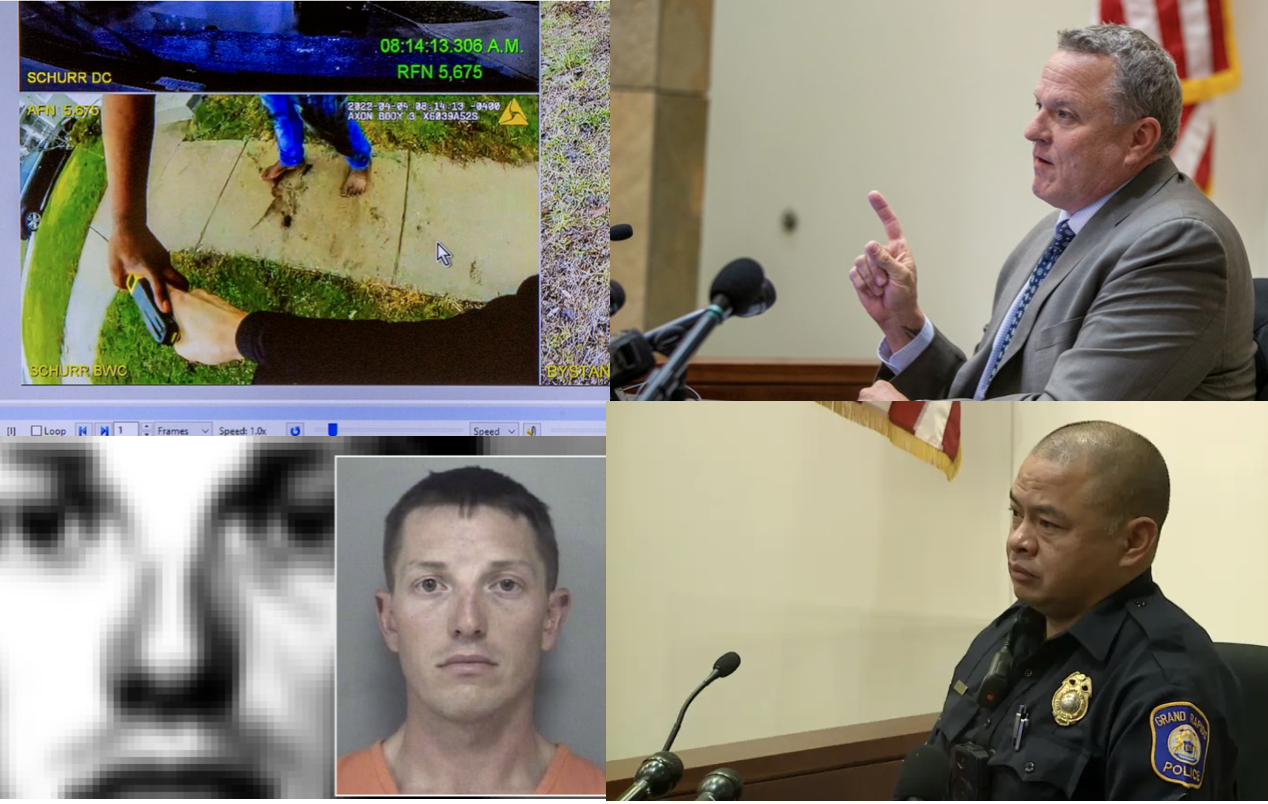
There were four separate stories on MLive, reporting on the court proceedings for October 27. The first article explained the basics of the case and let readers of MLive know that they could watch the court proceedings live online. The article also included 65 photos, many of them from before the October 27th court case, but there were also pictures from yesterday as well that are worth mentioning. The image on the left here is a still image of one of the videos captured from April 4, the day that Christopher Schurr killed Patrick Lyoya. The image is a freeze frame of the video that the Defense was using to make arguments about how Lyoya “took control” of the taser from Schurr. The image on the right is of a former cop and video expert, Robert McFarlane, who was also brought in by the defense attorneys to bolster their case. Here is a link to McFarlane’s Linkedin page, which provides additional details on his history.
A second MLive article centers around a witness in the case, Wayne Butler, who said he pleaded with Patrick to stop resisting the GRPD cop who shot and killed Lyoya. This article is for MLive subscribers only, so I am unable to comment on it.
A third MLive article is headlined, Patrick Lyoya took control of officer’s Taser before fatal shooting, defense claims. In this article both the defense lawyers and the prosecuting attorney are cited, although more space was given to the defense attorneys who argued points about the taser, the blood/alcohol level of Patrick and the claim from the defense attorney that Lyoya was “living as another person.” It is clear that the defense attorneys want to attack the character of Patrick Lyoya and make the claim that he was living a “different life.”
A fourth MLive article centers around the likelihood that the law office of Ven Johnson will likely file a lawsuit against Christopher Schurr for the murder of Patrick Lyoya. In this article, a witness for the defense, once again attempted to denigrate Lyoya. A lawyer with Ven Johnson’s firm responded to the character assassination of Lyoya, stating:
“The family finds it upsetting, as we do, that they bring out things that don’t have anything to do with the killing,” Waun said.
“He didn’t shoot him because they had a Bridge card in the back of the car. He didn’t shoot him because he had somebody else’s ID in the car. He didn’t shoot him because (Lyoya) was intoxicated.
“To bring out all of these things just to kind of muddy the waters with regard to Patrick, to make him look bad, to try and justify what happened, I believe that’s just wrong,” he said
WZZM 13
There were two stories on October 27th that appeared on WZZM 13. In the first story posted by channel 13, it provides some preliminary information about the case, a fair amount of testimony offered by the witness, Wayne Butler, and similar commentary from the defense, commentary meant to discredit the character of Patrick Lyoya.
The other story from WZZM 13, rehashes much of the information already known to the public, but in this story they also cite a criminal defense attorney who works for a law firm in Kalamazoo. The lawyer provided some scenarios about how the case could go and made a few clarifying comments about the case. However, this source offered no significant information or analysis about these types of criminal cases.
WOOD TV8
Channel 8 aired just one story from October 27 about the court hearing. In their story they cited Aime Tuyishime, a friend of Lyoya and the passenger of his car on April 4, the day he died. In addition, the neighbor who witnesses what happened was cited, along with an expert for the defense and a GRPD cop, Sgt. Nicholas Calati. Channel 8 gave Calati some airtime, but if you wanted to read his police report statement, go to this link and read page 5.
The WOOD TV8 story did include information about both supporters of Schurr and supports of Patrick Lyoya who were there yesterday. No one who supported Schurr opted to speak with the news media, but someone who was there as part of the protest spoke with channel 8.
WXMI 17
The coverage from WXMI 17 provided much of the same information that the other commercial media sources reported. However, there were two significant differences, First, it their main story, WXMI provides a complete recording of the entire court proceedings from October 27, in three parts, thus allowing people to watch and listen to everything that took place that day.
The other story that WXMI aired centered around those protesting outside the court building, which included an interview with one of the organizers and even footage of the march that took place later in the day.
Radio coverage
There was also some radio news coverage of the preliminary hearing in the case of Christopher Schurr. WGVU radio ran a very brief story that added no new information or perspective on what happened yesterday.
The other radio news story was from Michigan Radio. In that story, one of the witnesses, Wayne Butler, was cited extensively, along with an acknowledgement that another GRPD cop testified. The Michigan Radio story concluded by stating that the judge in this case would likely decide on Friday if and when a trial would take place.
The news coverage was over all fairly balanced in terms of hearing from both of the legal sides of this case. Overall there was a typical narrative that all of the commercial news outlets stuck to, but it is worth noting that WXMI 17 did post – in three parts – the entire court proceedings from October 27 and they provided a more robust story on the people who were protesting in support of Patrick Lyoya and demanding that the courts convict Chris Schurr. As we noted last month, much of the commercial news coverage up to this point had been demonstrating a bias in favor of Chris Schurr, although that may change, especially if this case goes to trial.
While all the attention was given to the court hearing that began today in the case against the former GRPD officer Christopher Schurr, the cop who shot Patrick Lyoya in the back of the head, there was an organized protest outside the 61st District Court in downtown Grand Rapids.
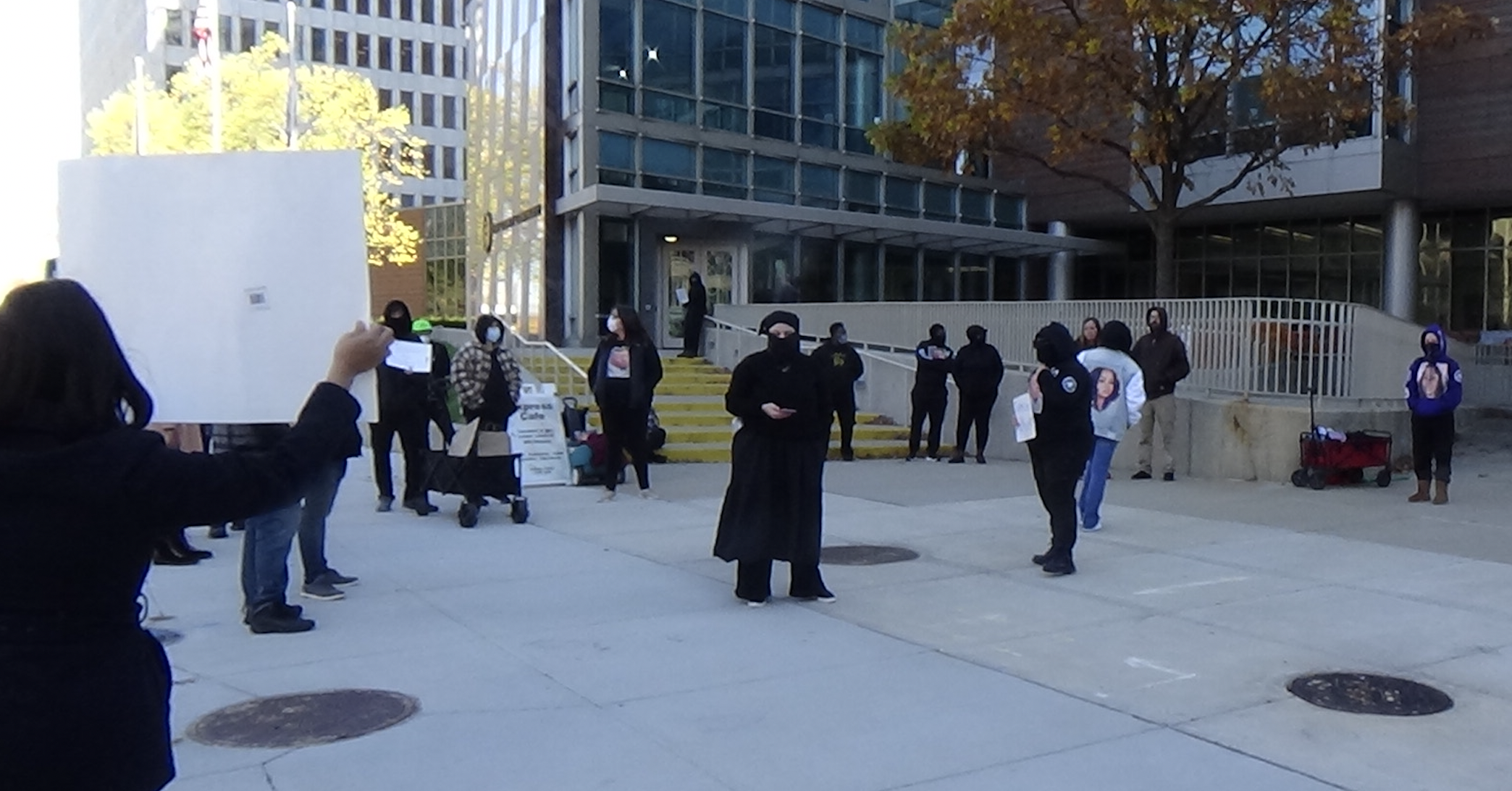
About 30 people began to gather outside of the Kent County Court building around noon on Thursday to continue to public demonstrate solidarity with the Lyoya family. One organizer told this writer that it was important that we continue to take action and apply pressure, any kind of pressure to win justice for Patrick Lyoya’s family.
Some of the people in the Justice4Patrick camp were inside the courtroom, to listen to what was being said and to monitor the process. This information was being shared with activists on the outside, with regular updates.
A brief rally was held outside the 61st District Court, where organizers kept making demands around convicting Schurr, around ending qualified immunity, around greater accountability of the police, and to defund the GRPD. It has been almost 7 months since Patrick Lyoya was pulled over for having an expired license plate on his car, where the cop escalated the situation, used his taser on Lyoya, kicked him repeatedly, then sat on top of him while he laid faced down on the ground and shot him in the back of the head.
There was constant GRPD presence outside during the protest, with cops on foot and cops in cars, monitoring those who were protesting. Eventually, those who had gathered in front of the court building began to walk and chant through downtown Grand Rapids, thus letting those working, shopping or living in downtown that there was still a community of people who were demanding justice for Patrick Lyoya.
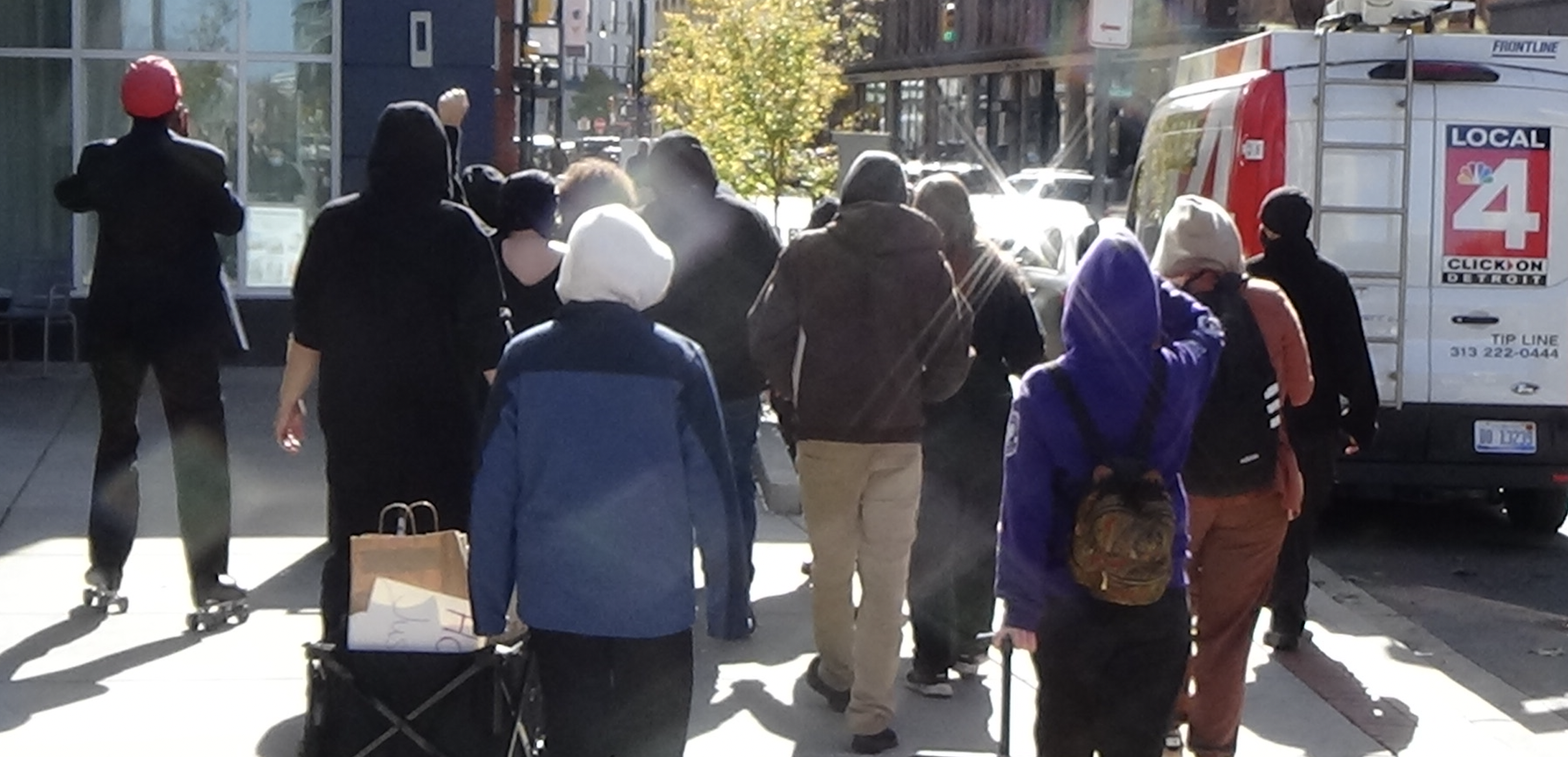
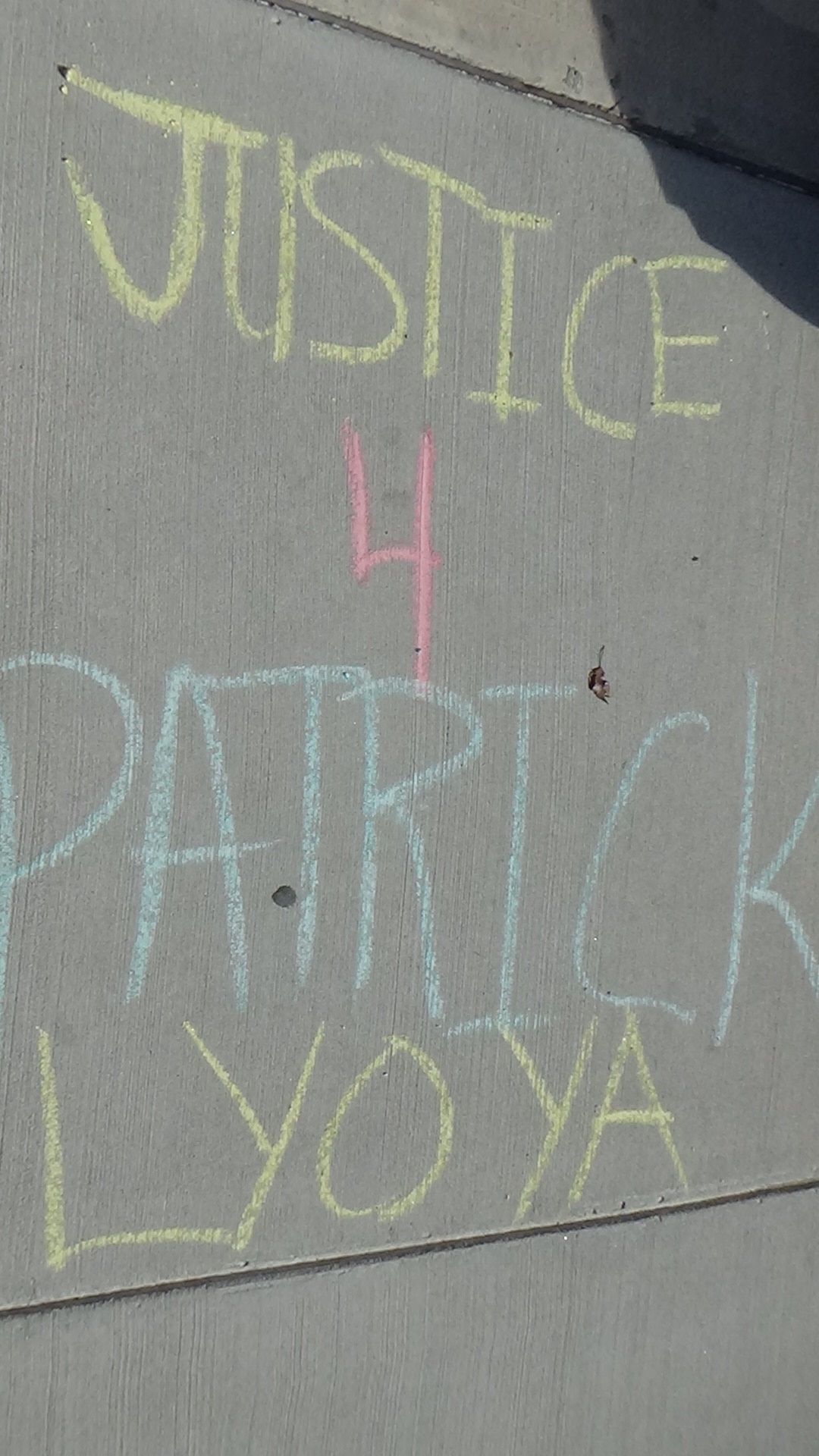 People honked their horns in support, gave a thumbs up and some even yelled in favor of those who were marching for Patrick Lyoya. Not everyone was happy about the protest, nor the march. Some people in cars became impatient with the marchers, having to wait a few seconds more at an intersection, while the march weaved its way through the city. There were also a few people who, walking by the protest in front of the court building, made comments that were critical of those demonstrating. One woman even made the comment that, “he got what he deserved,” referring to Lyoya.
Having been part of the organized resistance since Patrick Lyoya was murdered on April 4th of this year, I was heartened by the turnout on this sunny Fall day. While the so-called justice system is often a system of oppression, I was struck by all the people who came, their passion, their dedication and how much they cared about each other and the affected community.
The preliminary hearing will continue Friday, followed by a timeline for when the actual trial will begin. Considering it is almost November, it seems likely that the trial will not take place until after the New Year. In tomorrow’s post, we will deconstruct the local news coverage of the court proceedings in the case against Chris Schurr for the murder of Patrick Lyoya.
Always follow the money: Real Estate and Rental Property Owners Political Action Committee campaign contributions for the November Election
As we have noted in the past two days, those that have Political Action Committees (PACs) that have a stake in policing – the Grand Rapids Police Officer’s Association, and those that have an interest in making profits from the labor of others – the Grand Rapids Area Chamber of Commerce, have both made significant campaign contributions to candidates in the upcoming election on November 8.
In addition, throughout our coverage of candidates running for City, County and State office, we have always looked at how candidates response to some of the most pressing issues of the day, such as policing and the growing wealth gap in the Greater Grand Rapids area.
Another major issue that has been the topic of much debate in this city is the issue of housing. The cost of housing in Grand Rapids has increased significantly in the past decade, both the cost of buying a home, along with the cost of rent. Many individuals and families have been priced out of the Grand Rapids housing market, both in terms of buying a home and rental fees.
The City of Grand Rapids has made some effort to address the housing disparities, but the amount of money they have allocated for affordable housing is inadequate. City officials continue to provide significant tax breaks and tax incentives to housing developers, who also double dip by applying for state housing funds. This means that the public is making a significant investment in housing, without really have much of a say in it.
Then there is the issue of gentrification, where several neighborhoods have been gentrified, with families being displaced because the; 1) property values/property taxes have gone up, making it difficult or impossible for people to pay the increased property taxes; 2) developers level buildings and housing units that have been allowed to fall apart to make room for newer and costlier housing options; and 3) the process of development proposals happens in such a way as to almost guarantee that residents will not be able to have a say in the housing needs, the design and most importantly the process even before development plans are submitted.
What follows are a list of candidates on the November 8th ballot that have received campaign contributions from the Realtors Political Action Committee Michigan and the Rental Property Owners Association of Kent County. These associations both have as a primary interest the profitability of housing, which means they don’t believe that people have a right to a safe place to live. These associations also have lobbyist that will constantly pressure candidates once they are elected, so that they will adopt legislation that is often crafted by housing industry associations or to defeat proposed legislation that would would be detrimental to their bottom line. One example of legislation that would be detrimental would be rent control, which would regulate the cost of rent to make sure that people could still afford the cost of rent.
These are just some of the reasons that those in the housing for profit industry contribute to political candidates.
Realtors Political Action Committee Michigan – Secretary of State online Campaign Finance data at this link.
Here are a list of candidates the Realtors Political Action Committee Michigan has made campaign contritions to who are running for State seats:
- Thomas Albert – 18th State Senate candidate: $6500
- Mark Huizenga – 28th State Senate candidate: $15,000
- Winnie Brinks – 29th State Senate candidate: $2000
- Kristian Grant – 82nd State Representative candidate: $1500
- Mike Milanowski – 84th State Representative candidate: $3500
- Carol Glanville – 84th State Representative candidate: $250
- Lynn Afendoulis – 81st State Representative candidate: $5150
- Rachel Hood – 81st State Representative candidate: $250
- Bryan Posthumus – 90th State Representative candidate: $8500
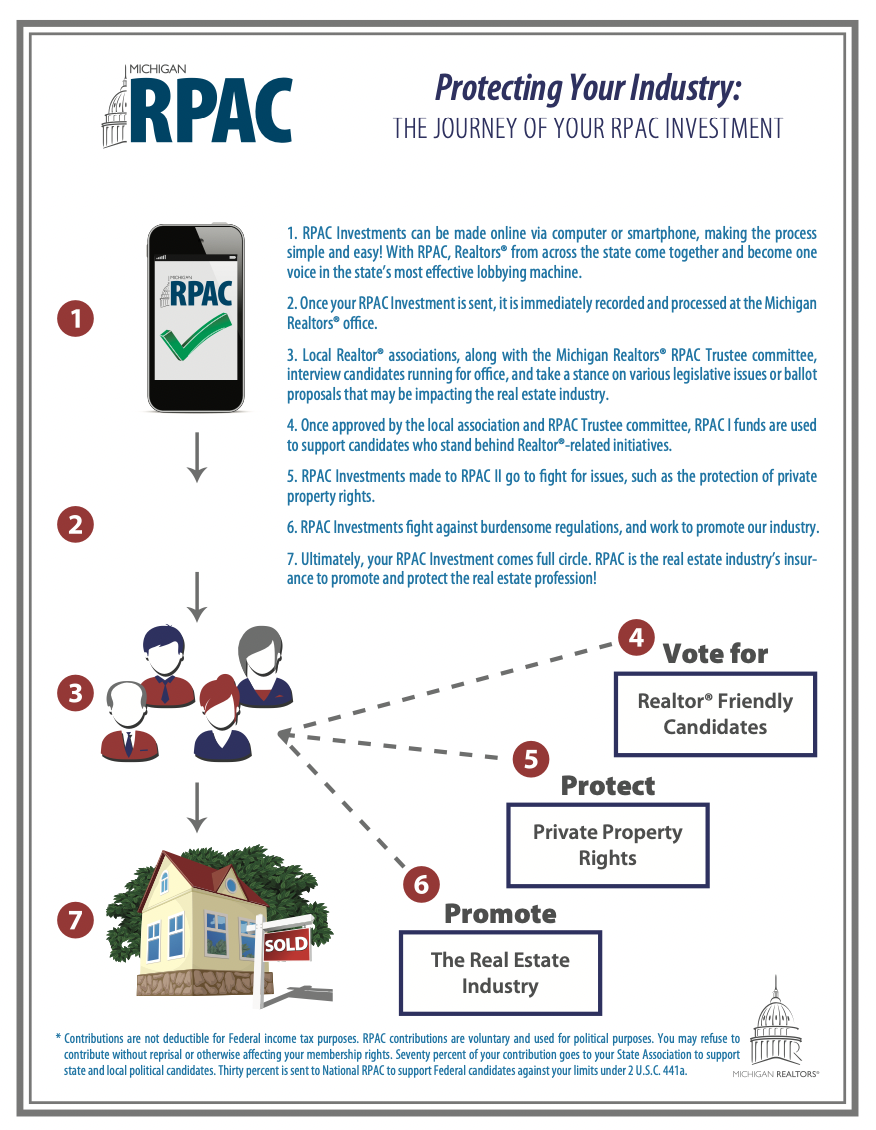 Here are a list of candidates the Realtors Political Action Committee Michigan has made campaign contritions to who are running for Kent County Commission seats:
- Ben Greene – 1st District Kent County Commission candidate: $3000
- Jennifer Merchant – 3rd District Kent County Commission candidate: $2000
- Dave Hildenbrand – 5th District Kent County Commission candidate: $2000
- Stan Stek – 6th District Kent County Commission candidate: $3000
- Stan Ponstein – 7th District Kent County Commission candidate: $500
- Dan Burrill – 8th District Kent County Commission candidate: $3000
- Emily Post Brieve – 10th District Kent County Commission candidate: $3000
- Lindsey Thiel – 11th District Kent County Commission candidate: $3250
- Monica Sparks – 12th District Kent County Commission candidate: $1750
- Tom McKelvey – 13th District Kent County Commission candidate: $2000
- Carol Hennessy – 14th District Kent County Commission candidate: $500
- Melissa LaGrand – 16th District Kent County Commission candidate: $750
- Tony Baker – 17th District Kent County Commission candidate: $750
Here are a list of candidates the Realtors Political Action Committee Michigan has made campaign contritions to who are running for Grand Rapids City Commission seats:
- Andrew Robbins – 1st Ward Grand Rapids City Commission candidate: $1300
- Kenneth Hoskins – 3rd Ward Grand Rapids City Commission candidate: $1300
- Joe Jones – 2nd Ward Grand Rapids City Commission candidate: $800
Rental Property Owners Association of Kent County – Secretary of State online Campaign Finance data at this link.
Here are a list of candidates that the Rental Property Owners Association of Kent County has made campaign contritions to who are running for seats at the State level, with one candidate running for a Grand Rapids City Commission seat.
- Thomas Albert – 18th State Senate candidate: $500
- Mark Huizenga – 28th State Senate candidate: $500
- Tommy Brann – 29th State Senate candidate: $500
- Luke Meerman – 89th State Representative candidate: $500
- Jeffrey Johnson – 80th State Representative candidate: $500
- Lynn Afendoulis – 81st State Representative candidate: $500
- Lisa Dekryger – 83rd State Representative candidate: $500
Kelsey Perdue – 3rd Ward Grand Rapids City Commission candidate: $500
 Grand Rapids Institute for Information Democracy