Funding priorities for the City of Grand Rapids: Business Districts are a priority, Affordable Housing not so much
For years now, there has been a growing demand from the public to get the City of Grand Rapids to do more around the issue of housing, particularly affordable housing.

This push from the public has happened in part because of the push back against the gentrification of numerous neighborhoods throughout Grand Rapids. However, the demands around housing have also come as a result of the increased number of those who are unhoused, and how the City of Grand Rapids has in many ways criminalized those who are unhoused. Lastly, the so-called housing market in this city has seen the cost of housing, whether it is the cost of buying a home or the cost of rent, increase at such a pace that is staggering.
Therefore, push back on all three fronts – resistance to gentrification, how the unhoused are treated, and the increase in housing/rental costs – has pushed the City of Grand Rapids to craft some newer policies around housing, along with a new Affordable Housing Fund that was created in the Fall of 2021.
The Affordable Housing Fund has set aside $5 Million to fund affordable housing and homelessness prevention projects in the city, according to an MLive story that was posted earlier this year. The city’s relatively new Affordable Housing Fund Board is seeking applications from organizations that could use a share of $5 million in federal stimulus dollars to complete that work.
One could certainly say that for the City of Grand Rapids to tackle the issue of Affordable Housing, setting aside $5 Million, is a victory for those who have been pushing for these demands over the past decade. However, in the big scheme of things, $5 Million dollars isn’t a great deal of money, especially considering the size of the annual City Budget, which for the 2023 fiscal year was $597,859,508. This means that with a City budget just shy of $600 Million, setting aside $5 Million for Affordable Housing seems rather small.
In looking at a comparison to the $5 Million for the Affordable Housing Fund and put that next to budget allocations for business development, the amount for the Affordable Housing Fund is almost an embarrassment.
During the May 9th Grand Rapids Committee of the Whole meeting, there were numerous 2024 budget items that were excepted without question, all of which centered around business development or business districts. Here is the breakdown for these 2024 budget items, which you can read in detail at this link. Number 7 on the Agenda for the May 9th Committee of the Whole meeting says:
Overview of FY2024 budgets for boards and authorities administered by the Economic Development Department and Downtown Grand Rapids, Inc. with appropriation requests totaling $45,375,682.
Here is the breakdown of that $45,375,682:
- City of Grand Rapids Brownfield Redevelopment Authority – $22,829,602
- City of Grand Rapids Downtown Development Authority – $15,382,500
- City of Grand Rapids Economic Development Corporation – $120,201
- City of Grand Rapids Michigan Street Corridor Improvement Authority – $505,000
- City of Grand Rapids Monroe North Tax Increment Finance Authority – $875,124
- City of Grand Rapids North Quarter Corridor Improvement Authority – $155,000
- City of Grand Rapids SmartZone Local Development Finance Authority – $2,746,522 City of Grand Rapids South Division- Grandville Corridor Improvement Authority – $384,000
- City of Grand Rapids Southtown Corridor Improvement Authority – $750,432
- City of Grand Rapids Uptown Business Improvement District – $122,840
- City of Grand Rapids Uptown Corridor Improvement Authority – $534,461
- City of Grand Rapids West Side Corridor Improvement Authority – $970,000
This is a great deal of money that is fundamentally going to subsidize economic development, business districts, etc. So, why is the City of Grand Rapids willing to provide $45 Million and change for business districts, yet only $5 Million for Affordable Housing?
Another way of framing the issue could be, it is the responsibility of local government to give priority to individuals and families that are subjected to poverty as opposed to those involved in Capitalist enterprises? I always thought that Capitalists believed in competition and that the free market should not be regulated by the government. Why do taxpayers have to foot the bill, by paying out more than $45 Million for business districts and other economic development project in the City? And we don’t we get to vote on these matters?
My conclusion is that the the City of Grand Rapids is only recently involved in the business of Affordable Housing – primarily because of public pressure – whereas, the City doesn’t think twice on being about the business of business development. As it is with most budgetary matters in government, it is not a question of there not being enough money to fund projects, it is always about priorities, and right now the City of Grand Rapids prioritizes funding business districts and tourism for downtown Grand Rapids over Affordable Housing.
In the Tuesday, May 9th Committee of the Whole Agenda packet for the Grand Rapids City Commission, there is a list of upcoming special events that need approval by the City.

One of the events that was approved by the City of Grand Rapids reads:
Major Aime Kemppainen of Armed Forces Thanksgiving is requesting permission for a UH 72 Lakota helicopter to land in Ah-Nab-Awen Park on Friday, May 19, 2023, at 7:00 AM and depart at 12:00 PM as part of their annual event. GRPD and the Parks Department would approve this event.
So, let me get this straight. The City of Grand Rapids has approved an event that includes the landing of a US Military helicopter named after a Native Nation (Lakota), that will land at a park with an Indigenous name, on land that was stolen from Indigenous people, in order to teach young people about the contributions US Military personnel have made – even though the US Military killed and forcibly removed countless Indigenous people, specifically in the 19th Century,
According to the group Armed Forces Thanksgiving:
The Armed Forces Thanksgiving event was created in 2014 by a group of Grand Rapids businessmen with the objective of raising awareness and dialogue on the contributions our military personnel have made – and continue to make – on behalf of their families, friends, and country. The annual event provides a vehicle for our community, from teens to adults, to understand, honor, and express thanks for the service of those who have served or are serving in our Armed Forces.
Unless I am mistaken, there are already numerous holidays dedicated to honoring people who were in the US military, such as Memorial Day, Veteran’s Day, arguably the 4th of July, and the now 9/11 commemorations, which also include US military personnel. There there are the countless ways that US military personnel and US militarism are inserted into the dominant culture, such as at sporting events and parades.
Then there is the issue of US Militarism and Indigenous people. The US military has long referred to enemy areas as “Indian Country”, and they often refer to US military campaigns using Indigenous names, such as the US military campaign to hunt down Osama bin Laden, which was called Operation Geronimo. Then, there are the literally more than two dozen US Military aircraft that use Indigenous names. And of course, the US Military often claims as the primary argument for including Indigenous names for US Military equipment as a sign of “respect” and as a way to “honor Native Americans.” These claims are hollow and meaningless, especially since the primary relationship that the US Military has had with Indigenous people and Indigenous nations has been to kill Indigenous people, to displace them, to conquer them, with the stated goal of US territorial expansion. This has essentially been the relationship that the US Military has had with Indigenous people since the colonies became the United States of America.
It’s bad enough that the group Armed Forces Thanksgiving has organized this event, but it is even more frustrating and insulting that the City of Grand Rapids has approved this event. Do those at the City of Grand Rapids not see how offensive and insulting this event is to Indigenous sovereignty? Do they not see how this event on May 19th normalizes Settler Colonialism and erases the legacy of conquest by the US Military of Indigenous peoples?
Michigan Democratic Representatives at opposite ends of the political spectrum over Israel/Palestine
A few days ago, Michigan Representative Rashida Tlaib re-introduced a resolution calling on Congress to recognize “the ongoing Nakba and Palestinian refugees rights.”

The resolution introduced by Tlaib begins by saying:
Whereas May 15, 2023, is the 75th commemoration of the Palestinian Nakba, meaning ‘‘catastrophe’’ in English, a term which refers to Israel’s uprooting, dispossession, and exile of the Palestinian people from their homeland, and Israeli politicians are increasingly threatening Palestinians with a second Nakba today;
Three paragraph’s later the resolution from the Michigan Representative goes in to say:
Whereas, during the Nakba, Israel forcibly exiled or caused to flee for their lives under duress of military campaigns, which frequently included massacres and other atrocities committed against civilians, at least 750,000 Palestinians (approximately 75 percent of the indigenous population that had lived in areas that became Israel), who became refugees;
At the other end of the spectrum, newly elected Rep. Hillary Scholten has made no comments about the resolution proposed by Representative Rashida Tlaib, but she did make a Facebook post on April 25th, which read:
This week marks Israel’s 75th birthday. Happy Yom Ha’atzmaut! #Israel75

Now, for those who are familiar with the founding of the State of Israel, you cannot separate their founding with the massacres and the displacement of thousands of Palestinians, which is exactly what the Nakba commemorates. The fact that Rep. Scholten said nothing about this in her April 25th Facebook post nor the resolution proposal by Rep. Tlaib is instructive.
Now some may argue that there is no point in pursuing a resolution calling on Congress to recognize “the ongoing Nakba and Palestinian refugees rights,” as Rep. Tlaib has done, especially since the Israel Lobby is so powerful in the US. (See, The Israel Lobby and U.S. Foreign Policy, by John J. Mearsheimer and Stephen M. Walt) However, the idea of not pursuing something because there is significant opposition is cowardly. Rep. Tlaib faced down a Pro-Israel PAC in the 2022 Election, but was still able to win because she is committed to challenging not only the Israel Lobby, but the longstanding commitment of the US government to fund billions of dollars of military aid to Israel on an annual basis since the mid-1970s.
Michigan has one of the largest Arab American populations in the country, so it is not only out of a sense of justice that Rep. Tlaib speaks about against US support of Israel and in solidarity with Palestinians, but also because her district has a sizable Palestinian diaspora that she represents.
The Israel/Palestine issue has long plagued the Democratic Party. The Democrats Party needs to get behind the international movement to support Palestinian rights, and supporting Rep. Tlaib’s resolution is a good first step for Rep. Scholten to take, along with her Michigan colleagues. Taking this kind of a stand would make a strong statement to the Democratic National Committee, who for too long has been complicit in Israel’s violation of International Law.
 The urgency around trying to work towards a more just and sustainable world for all life is no simple or easy matter. However, there are some fundamental truths that we have to come to terms with, like the fact that the wealthiest nations and the richest people on the planet cause a great deal more harm than the majority of the world’s population.
For instance, in a November 2022 report from Oxfam entitled, Carbon Billionaires: The investment emissions of the world’s richest people, states:
 The investments of just 125 billionaires emit 393 million tonnes of CO2e each year – the equivalent of France – at an individual annual average that is a million times higher than someone in the bottom 90 percent of humanity.
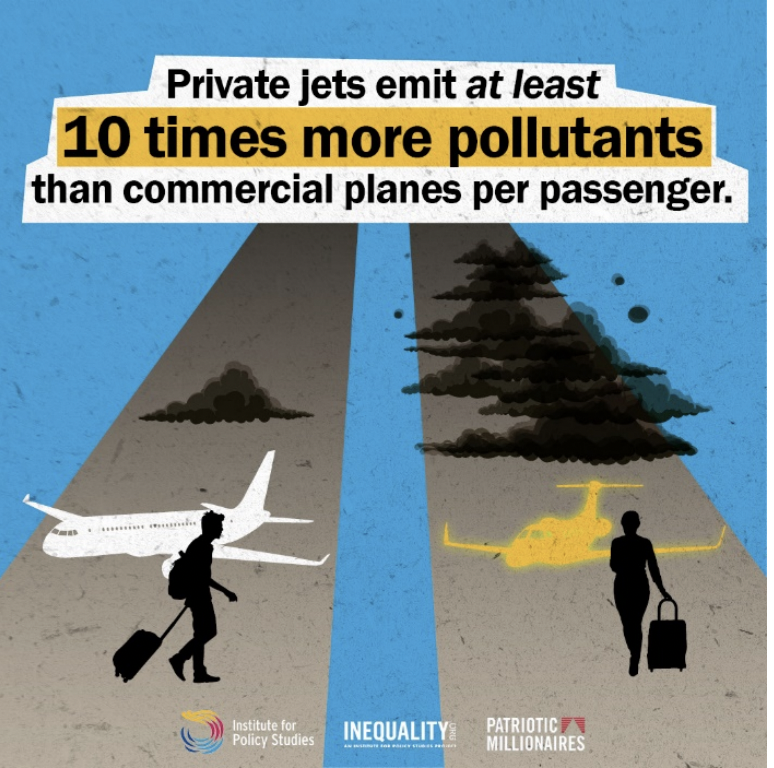
Just last week, the Institute for Policy Studies released a new study entitled, High Flyers 2023: How the Ultra-Rich Private Jet travel costs the rest of us and burns up the planet. Here are just a few of the major findings in that report:
- Private jets emit at least 10 times more pollutants than commercial planes per passenger.
- Thousands of municipal airports in the U.S. are funded by the public, but many primarily serve private and corporate jets.
- Since the start of the pandemic, private jet use has increased by about a fifth and private jet emissions have increased more than 23 percent, according to a recent study.
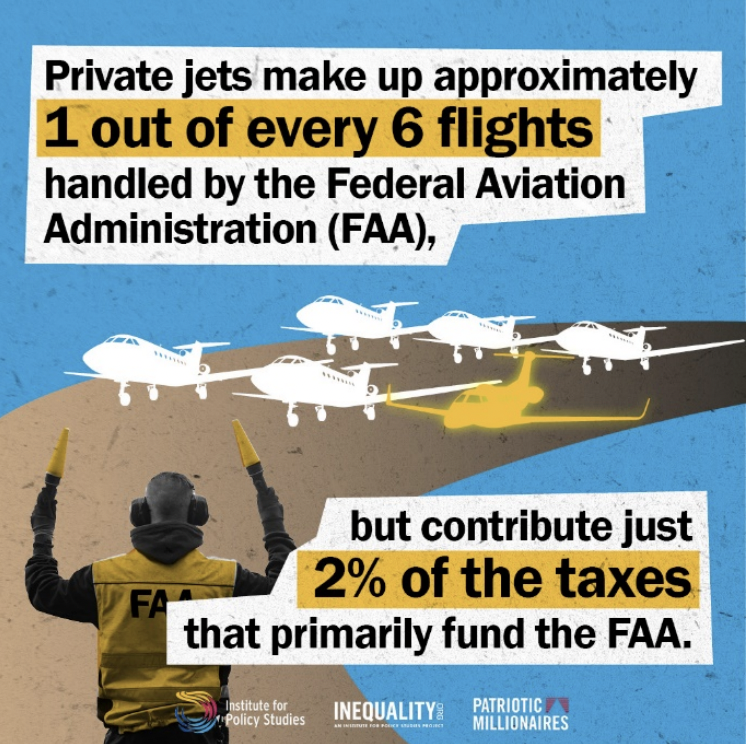 The DeVos Family and their fleet of jets
It is always difficult to find out details about the wealth of the DeVos family, primarily because they don’t believe in full transparency and because they have diversified their wealth and assets in such a way as to make it difficult to track.
There was an interesting article from Business Insider in 2018, with a headline that read, Education secretary Betsy DeVos owns a fleet of 12 private jets and 4 helicopters. In that article it states:
According to Forbes, the DeVos family owns a fleet of 12 private jets — 1 Boeing Business Jet, 5 Gulfstream G550’s, 1 Gulfstream G450, 2 Bombardier Challenger 350’s, 3 Cessna Citation CJ4’s — and four helicopters.
We also know that while she was the Secretary of Education, Betsy DeVos used her own private jets to travel as Education Secretary, rather than using commercial planes.
Then there is the fact that the global corporation that Rich DeVos founded with Jay Van Andel, the Amway Corporation, also has a fleet of private jets and other planes, with their own hangar at the Kent County Airport.
 The Amway corporate jets get even more use than the private jets owned by the DeVos family, primarily because the Amway jets are used by more people, particularly the people who are near the top of earners in their notorious pyramid scheme. In addition, the Amway Corporation has partnered with other commercial airline companies to offer exclusive trips to Amway distributors for Amway conventions. One example was the partnership with the Emirates, the world’s largest international airline, which transported over 6,500 distributors and company representatives to Dubai.
Then there is the Charter School scheme that Dick DeVos runs, the West Michigan Aviation Academy. The West Michigan Aviation Academy, located at the Kent County Airport, is a school designed to create more pilots, but it also encourages more private jet/plane ownership and use. In the past, Dick DeVos has complained about his Charter School not getting enough public funding.
Therefore, on top of the fact that the DeVos family:
- Makes massive political contributions to GOP candidates/politicians, which adopt policies that do tremendous harm to working class families, immigrants, the LGBTQ community and BIPOC people in general;
- Uses their foundations to funnel millions to far right groups like Focus on the Family or think tanks like the American Enterprise Institute or the Mackinac Center for Public Policy;
The DeVos family and the Amway Corporation – just on the matter of air travel – emit at least 10 times more pollutants than anyone else who books a flight from the Kent County Airport. Lastly, besides travel for pleasure, the DeVos family uses their private jets to travel to places to meet with other disgustingly rich people to figure out new ways to expand their wealth and to exploit and oppress more of the world’s population, while creating more pollution and perpetuating Climate Change. Reason #31 for why we should have nothing but contempt for the most powerful family in West Michigan, the DeVos family.
 On Tuesday, April 25th, the Grand Rapids City Commission approved a recommendation from the Fiscal Committee to authorize Grand Rapids Police Department recruit classes to attend Grand Valley State University Police Academy for a total cost of $93,560.
The Fiscal Committee Agenda Packet for April 25 also states:
The process of hiring non-certified employees will broaden and increase the candidate pool of individuals that have a drive to serve the public. The anticipated class of ten recruits will run from May to August of 2023. Three have already paid for their own academy costs, which GRPD will reimburse directly should they successfully complete the program. Seven will be paid for by GRPD but reimbursed by Michigan Commission on Law Enforcement Standards (MCOLES) Public Safety Academy Assistance Program should funding be approved. The estimated cost of the training and certification for these ten candidates, which includes tuition, student fees, and uniform expenses totals $93,560.
There were several people who spoke during the first public comment period, most of which opposed the $93,560 being spent on new recruits. Some suggested that the money could better be spent on housing or other community needs, rather than on potential new recruits for the GRPD.
In response to the opposition to this additional spending by the GRPD, 3rd Ward Commissioner Kelsey Perdue stated she believed that, “in order to have better policing, we need better training.” Now, to be clear, the $93,560 that was approved on April 25th is not about “providing better training,” it is to pay GVSU for a class for potential GRPD recruits. The GRPD may or may not accept those who attend the GVSU classes at their Police Academy.
GVSU Police Academy
According to the GVSU Police Academy page, it states:
The Grand Valley State University Police Academy educates and trains police recruits so they graduate with the knowledge, skills, and abilities needed to begin a successful career in law enforcement. Grand Valley is known as a leader in the state for police academy training and has been setting the bar for law enforcement for over 40 years.
In addition, the GVSU Police Academy website says:
The vast majority of the instruction comes from local law-enforcement officers with a wealth of knowledge and years of experience. The academy is rigorous but your instructors and support staff will be there to support you from the time you enter to the time you graduate. This kind of intimate support is what GVSU is known for and it applies to the Academy as well.
The cost of the classes that were approved by the Grand Rapids City Commission on April 25th, run from May through August of 2023. I inquired about the curriculum for the GVSU Police Academy Courses, through their online portal on April 29th, but still haven’t received any response. Then, when I sent an e-mail to the Director of Training, Geoff Collard, this was their response: Your message to collarg@gvsu.edu has been blocked.
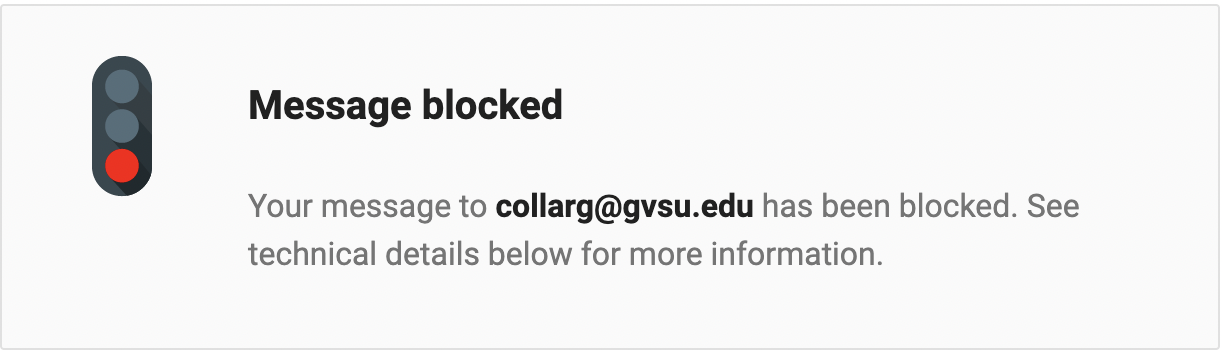
In all my years of using gmail, I have never been blocked by any government, corporate or academic institution. So much for transparency.
This lack of transparency on the curriculum being used in the classes for potential GRPD recruits is somewhat disturbing, but not surprising. However, it does raise the question if Commissioner Perdue knew what she was talking about regarding better training. It seems unlikely that she has seen or read the curriculum being used by the GVSU Police Academy, thus making her comments all that more ridiculous and out of touch with what is actually happening with potential GRPD recruits. The public deserves better and should demand better. I encourage others to fill out the request field from the GVSU Police Academy and send Geoff Collard an e-mail (collarg@gvsu.edu) message as well demanding to see the curriculum being used for potential GRPD recruits.
One major element of Media Literacy is the idea that all media is constructed. There isn’t a 360 degree video shot that is unfiltered. The news media essentially gives us what they want to give us and when they want to give us the news.
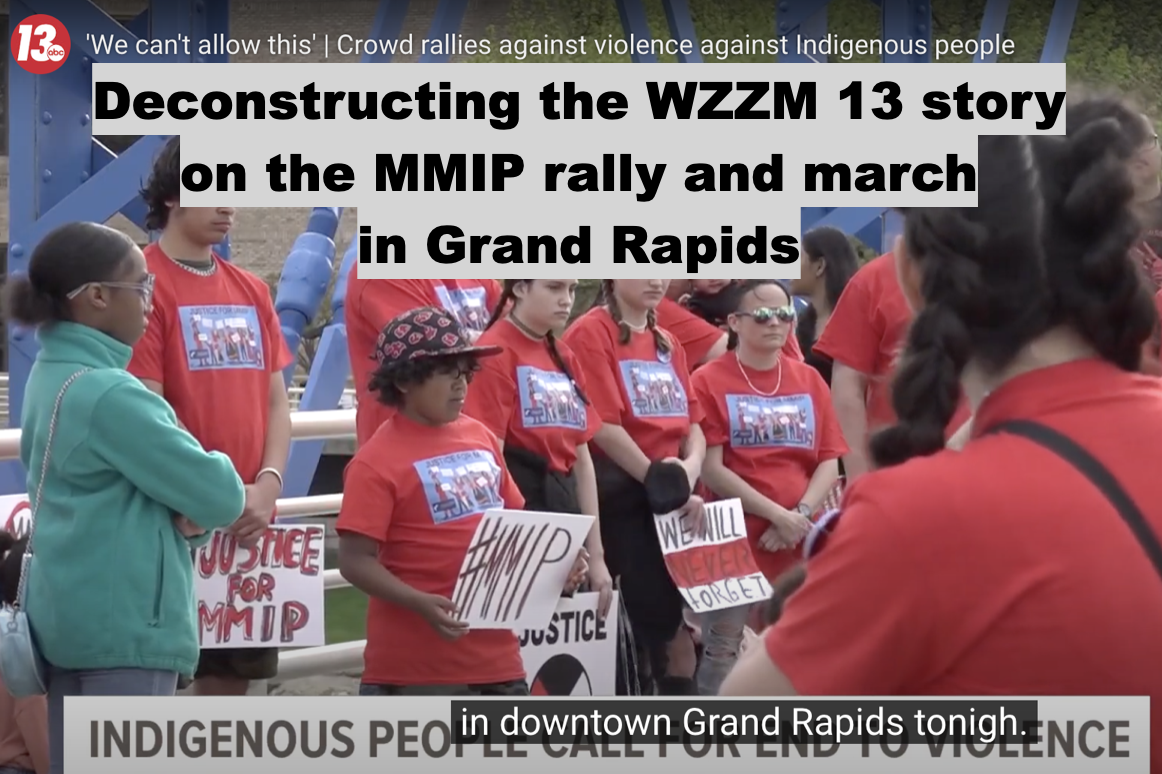
A clear example was the recent Missing or Murdered Indigenous Person’s awareness day action that took place on Friday, May 5th, in downtown Grand Rapids. I was at that event, so I decided to record the full interview that WZZM 13 did with one of the organizers of the event, Jade Green. Here is the unedited interview that channel 13 conducted with Jade.
Now, here is the WZZM 13 story as it aired later that night for their 11pm news broadcast.
After looking at the unedited version of what Jade had to say and what they included in the channel 13 news story, one can see/hear that they use just a few seconds of what the Indigenous Youth organizer had to say. The portion of the interview was a pretty good one, since the comment from Jade challenged the Federal and State governments to do more than just pass resolutions.
However, had channel 13 stayed for the entire program, which included several Indigenous speakers and a march through downtown Grand Rapids, they would have captured a great deal more that would have provided viewers a more complete sense of what Indigenous people are demanding. For instance, speakers hit a several important issues during their talks, such as:
- Making sure that people understood that MMIP included, men, women, children and two-spirit members of the Indigenous community, something that is important, especially since there is a great deal of backlash and the LGBTQ community, particularly the trans community.
- That Line 5 must be shut down immediately, since it directly impacts Indigenous communities and violates numerous treaties.
- In edition, pipeline projects and other fossil fuel extraction projects, like the Willow Project in Alaska, which one of the speakers addressed, is important because it means that camps are set up for oil & pas workers, what are general referred to as “man camps.” It has been well documented that the presence of oil & gas workers always increases the possibility of sexual assault and murder of Indigenous people, which has been well documented, like the findings in this article by the Center for Public Integrity.
A fourth, and last point, was the fact that the WZZM 13 newsreader stated that the youth organizer who was interviewed said that the violence against Indigenous people is genocide. Now, it is a common misunderstanding that when people hear the word genocide, they think that means the outright extermination of a group of people. However, genocide, as was determined by the 1948 United Nations Genocide Convention, means more than the killing of a group of people. Here are the ways that genocide can be perpetrated against Indigenous people.
Article II
In the present Convention, genocide means any of the following acts committed with intent to destroy, in whole or in part, a national, ethnical, racial or religious group, as such:
- Killing members of the group;
- Causing serious bodily or mental harm to members of the group;
- Deliberately inflicting on the group conditions of life calculated to bring about its physical destruction in whole or in part;
- Imposing measures intended to prevent births within the group;
- Forcibly transferring children of the group to another group.
Overall, the WZZM 13 story was not an awful story on the MMIP rally/march, but it was fairly superficial, missing an expanded critique of how violence is being perpetrated against Indigenous people in North America, along with no real list of demands or concrete examples sexual assault and violence that several speakers have experienced, along with the lasting trauma they must live with for the rest of their lives. All news agencies can and must do better when reporting on critical issues that affect communities, particularly communities that are highly marginalized in the dominant society.
Last week, we wrote about the annual May Day march that was organized by Movimiento Cosecha, the immigrant-led movement that works on a variety of issues specific to those who are undocumented, but are currently fighting to win Driver’s Licenses for All in Michigan.

Most of the 200 people that marched last Monday were undocumented immigrants, who are some of the most vulnerable people in the state. This is why it was particularly frustrating to observe last Monday that not one State Legislator from the Democratic Party was present to walk in solidarity with a community of people who live in constant fear of arrest, detention and deportation.
The Kent County Democratic Party likely knew that the annual May Day march organized by Movimiento Cosecha was being held, since newly elected Kent County Commissioner Ivan Diaz shared the information about the Cosecha march. Even if not every Democratic State Legislator didn’t know about the Cosecha May Day march, they should, since Movimiento Cosecha is the movement that put Driver’s Licenses for All on the map in Michigan.
Yes, there is a politically inside group, Drive Michigan Forward, who has been working with State Legislators to pass a driver’s license bill, but this group did not start organizing until years after Movimiento Cosecha began demanding driver’s licenses for the undocumented community. Plus many of those involved in this coalition, came out of Movimiento Cosecha.
In addition, as State Legislators who have introduced or supported passing a Driver’s Licenses for All bill in Michigan, they should be attending actions like the annual May Day march. If State Legislators showed up to these events, it would send a message to the undocumented immigrant community that they want to support them, that they want to hear their stories and their concerns.
Then there was the fact that in late March, Movimiento Cosecha visited State Senator Winnie Brinks at her office in Lansing. Senator Brinks was not there, but Cosecha members spoke with her staff, providing information in English and Spanish and inviting her to participate in the May Day march.
Now, some might say that since Senator Brinks, who has introduced a bill in support of Driver’s Licenses, doesn’t need to attend Movimiento Cosecha events. People are aware of the fact that Senator Brinks has introduced legislation, but the undocumented community, who can’t obtain Driver’s Licenses, also cannot vote. Therefore, it seems to me that regardless of whether or not people can vote, if they are some of the most vulnerable people in the state, then elected officials should make it a priority to develop relationships with them.
In looking at Senator Brinks’ Facebook page, it is clear that she attended several other events last week and even a local coffee shop that was just a few blocks from where the May Day march had been walking in the rain last Monday. People in positions of power and privilege need to interact with, develop relationships with, and be in solidarity with undocumented immigrants. Proposing legislation and even passing legislation are not enough, since they can learn a great deal from those who facing family separation on a daily basis.
Two weeks ago, MLive posted an article entitled, Making room for proposed riverfront amphitheater could cost Grand Rapids $58M.
Early on in the MLive article it states:
On Tuesday, April 25, Grand Rapids city leaders approved a notice of intent to issue up to $60 million in bonds which would help fund the purchase and renovation of the Kent County Road Commission’s central complex location at 1500 Scribner Ave. NW. Grand Rapids plans to relocate its operations at the city-owned 201 Market Ave. property to the Scribner Avenue location.
Since October of 2020, we have been tracking this story, especially since the outdoor amphitheater project is being run by Grand Action 2.0, an organization run by the Grand Rapids Power Structure. Here are some of the other articles we have posted on GRIID about the outdoor amphitheater project:
How is it that we allow groups like Grand Action 2.0 to get away with the shit they do?
In a June 2021 post on GRIID, we wrote:
This whole project so far has involved roughly $42 million, between the City of Grand Rapids, the Convention and Arena Authority and the DeVos-owned 63 Market St LLC. This is a great deal of money, which demonstrates that when a multi-billionaire family the the DeVos family wants something, they usually get it. Sure, building an outdoor amphitheater will bring more people, including more tourists to Grand Rapids, which means more money will be spent in the city. But, we must always ask ourselves who are the primary beneficiaries of such projects?
Then, in March of 2022, GRIID noted that the City of Grand Rapids unanimously approved the new $116M land purchase for Amphitheater project. One question we asked in the March 2022 article was, “when was the last time that the City of Grand Rapids spent $35.7 Million on a project that would specifically benefit the Black community or any other marginalized community in this city? In fact, we could expand this question to include the amount of money that is estimate to be spent on the larger 31 acre riverfront development (includes the amphitheater), which is $500 Million. When was the last time the City of Grand Rapids spent $500 Million to benefit the BIPOC community in this city?”
In June of 2022, we then learned that the State of Michigan would be providing an estimated $30 million for the downtown amphitheater project, which is also public money.
This brings us to the present, where we are once again told that an additional $58 Million will be spent by the City of Grand Rapids to move some of the City’s operations to purchase and renovate the Kent County Road Commission’s central complex location at 1500 Scribner Ave. NW.
There are a few things that are important to point out about all of this. First, the MLive article from last week is not quite accurate when they wrote that amphitheater could cost Grand Rapids $58M. This latest aspect of the amphitheater project will cost taxpayers $58 Million to move some of the City’s operations to purchase and renovate the Kent County Road Commission’s central complex location at 1500 Scribner Ave. NW. The same way it was reported that the State would contribute $30 Million to the downtown Grand Rapids Amphitheater project is misleading, since the State of Michigan will be using $30 Million of taxpayer money, public money, to contribute to the outdoor amphitheater project.
A second point about this is that even though we are talking about $88 Million, plus however many other millions have been negotiated for this project, the public had NO say in the $88 Million of their money being spent on the amphitheater project. Now, I know that we have a representative form of government, but no politician, not at the City, County or State level, ever asked me or anyone else I know, whether or not they wanted $88 Million – plus in public money going to a project that was proposed by the most powerful family in West Michigan.
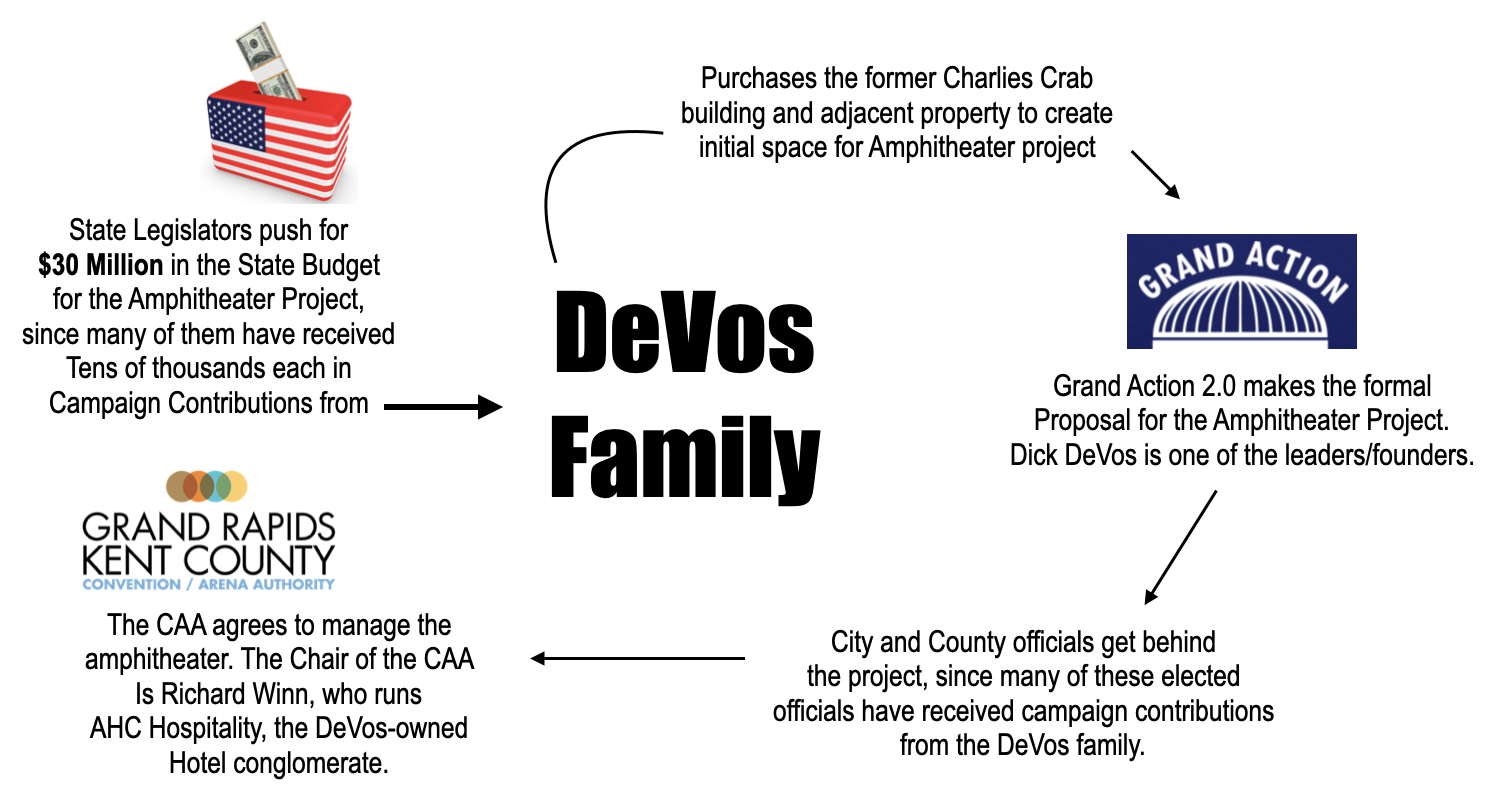
And third, the failure of the local news media to question these types of projects, which are always subsidized by public money with no public input, limits our collective imagination about what taxpayer money, public money could be used for.
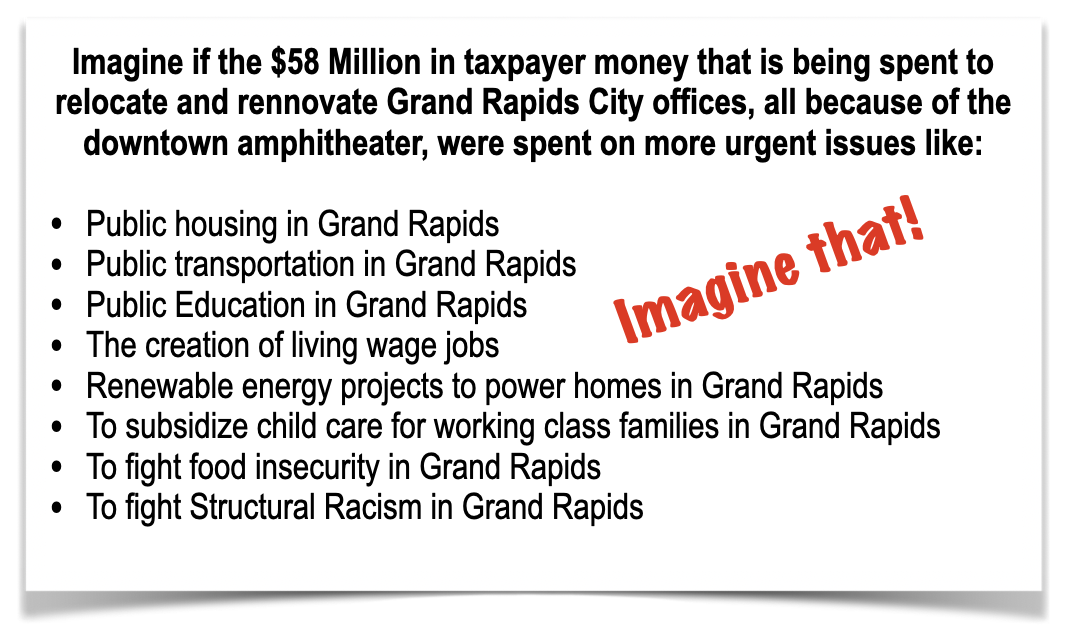
Imagine if the $88 Million we are talking about in this post, which is only part of the total amount that the public will pay towards the outdoor amphitheater project, imagine if that public money were spent on:
- Public housing in Grand Rapids
- Public transportation in Grand Rapids
- Public Education in Grand Rapids
- The creation of living wage jobs
- Renewable energy projects to power homes in Grand Rapids
- To subsidize child care for working class families in Grand Rapids
- To fight food insecurity in Grand Rapids
- To fight Structural Racism in Grand Rapids
The only way we will ever be able to imagine, work on and implement these kinds of projects is if the public begins to say no and then actively resist the use of public money for projects like the downtown amphitheater, then start demanding that public money be used to meet real public needs. Imagine that!
On Tuesday, Downtown Grand Rapids Inc. posted a message, which not only needs to be seriously scrutinized, it deserves a retraction and an apology. Here is that message, stupid emojis not included:

Happy Birthday, Grand Rapids!
Did you know that our city was officially founded on this day in 1850? Here’s to many more years of progress and growth!
Scroll for a quick history on the start of GR
2000+ years ago: Indigenous Americans settled.
Early 1800s: The first white settlers arrived.
1831: Louis Campau bought what is now the entire downtown business district of GR for $90.
1850: Grand Rapids became a city.
The comment about wanting many more years of progress and growth is the first thing that should be challenged. When using the word progress, if they mean moving forward in the areas of social, political and economic rights, then most of the history of Grand Rapids has not been equitable for the majority of the population. Grand Rapids still has the largest wealth gap of any city in Michigan, but more importantly, whatever social progress that has been made has been the result of organized groups and social movements. Labor unions, the Black Freedom Struggle, the LGBTQ movement, the Environmental Justice movement, the Immigrants Justice movement, various feminist movements, etc, have all brought about significant progress/change, but always against systems of power and oppression in the community that did not support them.
Early 1800s: The first white settlers arrived. Now, I know that this statement comes right after 2000+ years ago: Indigenous Americans settled. However, Euro-Americans did not simply arrive, they used a variety of tactics to displace indigenous people and then appropriate their land.
Grand Rapids was founded on Settler Colonialism
As a foundational framework, it is vital that we come to terms with the fact that Grand Rapids, like virtually all US cities were founded on what Native scholar Roxanne Dunbar Ortiz calls Settler Colonialism. Settler Colonialism in West Michigan is the result of a larger White Supremacist strategy that included legal means (treaties), forced relocation, spiritual violence (role of churches) and cultural imperialism, most radically seen with the policy of putting Native children in boarding schools with the goal of, “Killing the Indian, Saving the Man.”
We know that hundreds of Native children from the Three Fires Nations were taken and put into boarding schools by settler colonialists, many of which were run by christians. In these instances Native children were denied the right to speak their own languages and practice their own spiritual traditions. Most of the removal of Native children from their communities happened in the later part of the 19th Century and first half of the 20th Century.

However, on the matter of christian missions attempting to make converts of Native communities in the 1820s and 1830s along the Grand River, it is less clear on whether or not this could be defined as a form of genocide. How much free will did Native people have on choosing another religion? Was the adoption of christian beliefs a form of assimilation into the dominant culture and was it tied to larger socio-economic issues like food and land?
It should come as no surprise that right after the 1821 Treaty of Chicago was signed, the first christian missions came to what is now West Michigan. The Baptist Church established a mission in 1824, under the leadership of Isaac McCoy, and Catholic missions were begun in 1833 by Fr. Frederic Baraga.
One of the things that lured missionaries to the area after the signing of the Treaty of Chicago, was a provision in the treaty which allowed funds for people to work as teachers of blacksmiths amongst the Native people along the Grand River. The government treaty called this, the “civilization fund,” a phrase that underscores the settler colonial mentality.
Isaac McCoy first arrived in 1823, only to discover: “Many Odawa were drinking and few responded to his call for a council. After some inquiries McCoy learned that the majority regarded the 1821 treaty as fraudulent and viewed his visit as an attempt to trick them into ratifying it.” (pg. 7, from Gathered at the River: Grand Rapids, Michigan and Its People of Faith)
Such a statement reflects not only that the Native people along the Grand were not in support of the government imposed treaty, but that many Natives were negatively impacted by alcohol. Alcohol was introduced by French fur traders, particularly Louis Campau and should be seen as another tool used by settler colonialism to control Native people.
Rev. McCoy, however, was not deterred from his initial observations and continued to use all means at his disposal to “win over” the hearts and minds of Native people. In 1826, McCoy set up the Thomas Mission on the westside of the Grand River. McCoy’s greatest contribution during his time along the Grand River was his relationship with Native leader Nawequageezhig, whom the white settlers called Noonday.
Noonday was one of the few Native leaders who signed the 1821 Treaty of Chicago and was viewed by many as a traitor or collaborator with the settler colonialists. Noonday went as far as to be baptized by McCoy’s successor, Rev. Leonard Slater in the summer of 1827. Another Native leader in the area, Kewwaycooshcum, also known as Blackskin, did not sign the 1821 treaty, but did develop a relationship with the catholics through his connection to Campau. It is hard to know from the limited documentation of that time, whether or not the Native people were using the tensions between the various christian factions to their benefit or if the christian were using Native compliance with the government as a means to an end. One gets a sense of the christian rivalry in a comment from Fr. Baraga, who said, “Mary, to who it is given to root out all heresies of the world……to destroy the false [Protestant} teachings with which some of the poor Indians were already infected, and suffer on His gospel to reign everywhere.” (pg. 12, from Gathered at the River: Grand Rapids, Michigan and Its People of Faith)
However, whatever tensions existed, they were most useful in pushing Native people out of the area as more white settlers colonialists came to the area. This increase in settler colonialists, along with greater desire for land and settler colonial expansion, resulted in a new treaty being drawn up, the Treaty of Washington in 1836. This treaty turned over an additional 13,837,207 acres of land to settler colonialism’s expansionist desires.
It seems that all along, the goal with relations of Native people along the Grand were to take the rest of their land. Whether or not there was direct complicity with the early christian missions to this land takeover is not relevant, the fact remains that they did nothing to resist such an effort.
The end of chapter one from Gathered at the River: Grand Rapids, Michigan and Its People of Faith, states of the fate of Native people in West Michigan:
Keeping title proved difficult, however, as fraud, inexperience, and incompatibility of family farming with tribal tradition took their toll.
It indeed took its toll, but the authors of Gathered at the River do not call it land theft or settler colonialism or even acknowledge the role that early missions played here in the ongoing genocidal policies of US expansionism. The plight of Native people is not addressed in the rest of the book, which simply goes on to celebrate the history of christian churches in Grand Rapids. However, it seems apparent to this writer that the history of christianity in West Michigan is founded on genocide and settler colonialism.
1831: Louis Campau bought what is now the entire downtown business district of GR for $90. This point by DGRI is totally misleading, since it doesn’t say from whom did Campau buy the land. It is a popular notion that Louis Campau and Lucias Lyons are seen as the founding fathers of Grand Rapids, but the reality is, they are the founding fathers of Settler Colonialism in what was to become known as Grand Rapids.
The last last point that DGRI makes is, 1850: Grand Rapids became a city. While it is true that Grand Rapids officially became a city in 1850, those involved in making that happen were only able to do so because of the displacement of Indigenous people and the theft of their land. Grand Rapids only became a reality because of the genocidal policies that were implemented by the early Settler Colonialists. Until Grand Rapids honestly confront this history it will never be a community that is rooted is equity and justice.
None of the bullet points that DGRI made on their Facebook page about the founding of Grand Rapids should surprise people, especially those who actually pay attention to what they do. Their mission statement says, “Downtown Grand Rapids Inc. (DGRI) is the organization responsible for city building and place-management in the urban core of the City of Grand Rapids, Michigan. Established in 2013, DGRI serves as the singular management entity for the combined operations of the Downtown Development Authority, the Downtown Improvement District, and the Monroe North Tax Increment Finance Authority.” DGRI is all about furthering the interests of those who control large sections of land and property in the downtown area, which includes members of the Grand Rapids Power Structure, other businesses and members of the professional class, which are the dominant class of people now living in downtown GR. So it would stand to reason that DGRI would reflect a history of Grand Rapids that is all warm and fuzzy, one that avoids talk of Settler Colonialism and genocide.
For a counter-narrative to the early history of what is called Grand Rapids, see my new book, A People’s History of Grand Rapids.
On Friday, May 5th, beginning at 6pm, there will be a rally and march for Missing and Murdered Indigenous People (MMIP) in Grand Rapids.

There have been several held in Grand Rapids in the past, or related issues, such as an event the Indigenous community organized after the new revelations about US & Canadian so-called Boarding Schools in June of 2021. Last year, we interviewed two indigenous activists after an MMIP event was held, where a Grand Rapids government official spoke just one month after the GRPD had murdered Patrick Lyoya during a routine traffic violation.
This year GRIID interviewed the lead organizer, Jade Green, who sat down with us earlier this week to talk about the event and why the issues that the rally/march addresses are so important for both the Indigenous community and the dominant community. Below is a video interview with Jade, but we are including the questions we asked them in the interview.
- Can you talk a bit about what exactly the MMIP Youth Rally and March will be about and what it is an urgent matter?
- Why do you think that this issue hasn’t received the same kind of attention that other BIPOC issues have received, at least not outside of Indigenous communities?
- What do you think are the underlying factors, the root causes Missing or Murdered Indigenous Persons?
- How is the MMIP connected to the ongoing issue of settler colonialism of Indigenous land and communities?
- I was at a mostly white organized Climate Justice march last week, where they did an Indigenous land acknowledgement, but failed to address how Indigenous people are at the forefront of the Climate Justice Movement. What do you think about land acknowledgements?
- Are there demands coming out of this rally/march, and if so can you name them?
- What are the most important things you want people to know/think about after coming to the march/rally?
- Last question, why is this issue so important to you personally?
 Grand Rapids Institute for Information Democracy