State Board approves millions more for downtown development projects, while nearly half of Grand Rapidians live paycheck to paycheck
On Tuesday, the Michigan Strategic Fund Board unanimously approved $252.3 million of incentives for the 12,000 seat Amphitheater in downtown Grand Rapids. This announcement marks just the latest in a series of announcements, where millions of dollars in public money will be used to support the designed of the private group known as Grand Action 2.0.
WOODTV8 reported on the announcement, but did what most commercial news media outlets do, they celebrate the announcement and only cited the Executive Director of Grand Action 2.0.
Channel 8 didn’t even bother to inform people what the Michigan Strategic Fund Board does or that it was created by former Michigan Governor Rick Snyder in 2012, the same Governor who imposed a non-elected governing body in Flint, which led to the water crisis that has harmed thousands and impacted a whole generation of mostly poor and Black residents. Former Governor Snyder committed crimes, yet he continues to walk free.
The Michigan Strategic Fund Board is also made up of people from the corporate world, along with a few government staffers. Included among the MSF Board is Randy Thelen, the President and CEO of the Right Place Inc. Thelen has been a champion of the Amphitheater project from the beginning, along with the Soccer Stadium and any other downtown development project that use public funds.
You can read the memo from the Michigan Strategic Fund Board regarding the $252.3 million in public money for the Amphitheater, the Soccer Stadium and the adjacent over priced housing that will be built with both of these projects.
One yearns for the day when the State of Michigan, the Kent County Commission or the Grand Rapids City Commission unanimously approves $252.3 million for families that are subjected to poverty condition, where they can’t afford decent housing, are food insecure and don’t have the kind of health care coverage that government officials do. In July, I wrote about the most recent data in Grand Rapids residents that are living in poverty which is based on the ALICE standards – Asset Limited, Income Constrained, Employed. According to the ALICE report 47% for Grand Rapids households, which is nearly half of the households in Grand Rapids, are living paycheck to paycheck!
Now, we can yearn for a day when government officials will chose people over projects hatched by the rich, but such a day will never come. If we want to support people over profits, then we will need to be organized in such a way as to force government officials to fund real community needs instead of projects that will primarily make the rich members of Grand Action 2.0 even richer. Now that is the kind of day that I yearn for!
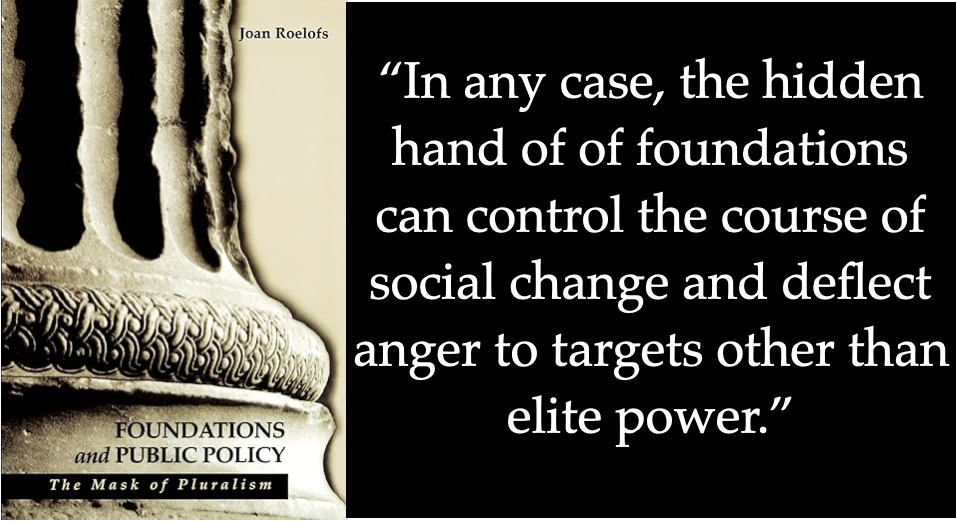
“In any case, the hidden hand of of foundations can control the course of social change and deflect anger to targets other than elite power.”
– Joan Roelofs, Foundations and Public Policy
The Dan and Pamela DeVos Foundation
GRIID has always begun our Foundation Watch work by looking at the foundations associated with the most powerful family in West Michigan, the DeVos family. GRIID has already looked at the Dick and Betsy DeVos Foundation, along with the Doug and Maria DeVos Foundation. Today, I want to look at the Dan and Pamela DeVos Foundation.
I am using the data from the foundation’s 990 document for 2022, which is the most recent year that is available. The Dan and Pamela DeVos Foundation has $6,114,272 of assets in the foundation’s account, which is just another way that members of the Capitalist Class to be able to hide their money from taxation.
Before I dive into how the Dan and Pamela DeVos Foundation distributed their funds, I wanted to point out that Dan and Pamela own the following components of the DeVos family empire – DP Fox, Fox Motors, the Pamela Roland Collection, the Grand Rapids Griffins, and are a partner in CWD Real Estate Investments, as we noted in Part II in the series on the Grand Rapids Power Structure.
The Dan and Pamela DeVos Foundation made contributions to dozens of entities in 2022, but there are some clear categories of groups they contributed to, such as the Religious Right, Think Tanks, Education-centered groups, and social service entities, to name a few. Below is a listing of each from these categories, with a dollar amount.
Religious Right
Keystone Community Church – $75,000
Far Right Think Tanks/Pro-Capitalist groups
Mackinac Center – $375,000
Education-centered groups
- Davenport University – $252,500
- GVSU – $425,000
- * Northwood University – $20,090,000 (Dan DeVos is on the Board of Trustees)
DeVos-owned, created or connected groups
- ArtPrize – $25,000 (this was the last year it was being run by Rick DeVos)
- Chicago Cubs Charities – $30,000
- Corewell Health Foundation – $225,000
- Grand Action Foundation 2.0 – $50,000
- * Grand Rapids Art Museum – $250,000 (Pamela DeVos is an honorary Trustee)
- Grand Rapids Griffins Youth Foundation – $52,560
- * Grand Rapids Symphony Society – $450,000 (Pamela Roland is a Board member)
- * Hope Network Foundation – $425,000 (Dan DeVos is a Board member)
- * John F Kennedy Center for the Performing Arts – $200,000 (Pamela DeVos is a Trustee)
- West Michigan Aviation Academy Foundation – $65,000
- * Whitney Museum of American Art – $550,000 (Pamela DeVos is on the Board of Trustees)
Groups receiving Hush $
- Baxter Community Center – $10,000
- Bethany Christian Services – $50,000
- Family Promise of Grand Rapids – $50,000
These groups all provide some sort of social service – people fleeing domestic violence, those who are housing insecure, people with disabilities, adoption and immigration. There are root causes to all of these issues, but these groups are not likely to address root causes and larger systems of oppression. When the DeVos family foundations make contributions, this will increase the likelihood that systems of oppression will not be addressed by these groups.
The Dan and Pamela DeVos Foundation gives less money to religious groups and right wing think tanks, compared to other DeVos Family Foundations. However, where they do stand out is in contributions to entities that either Dan or Pamela DeVos are board members. (Wherever you see an *) These groups receive millions or hundreds of thousands of dollars from the Dan and Pamela Foundation, which means they not only have a significant say in how their contributions are used, they get to influence policies in the organizations that they are board members of. In these cases they are doubling up on the kind of influence they have.
WOODTV8 story on investors buying up homes is only part of the story with the current housing crisis in cities like Grand Rapids
On Sunday, WOODTV8 posted a story with an online headline that read, Investors bought 1 out of every 4 affordable homes last quarter.
The channel 8 story says, “Up 3% year-over-year, investor home purchases totaled $43 billion, marking the largest increase since 2022, according to a Redfin report. It’s a sign that investor activity is stabilizing in a market that endured volatility over the past few years. While that’s potentially good news for investors and sellers, soaring prices mean homeownership remains an unachievable goal for many first-time buyers.”
As this quote states, this news is very good for investors and those that see housing as a commodity instead of a right that everyone should enjoy. Unfortunately, the WOODTV8 story failed to address how increased investor purchases on “affordable home” means an increase in rental costs. Equally problematic is the fact that channel 8 did not include any information about Grand Rapids housing in their story, nor did they talk with people who are being priced out of this market.
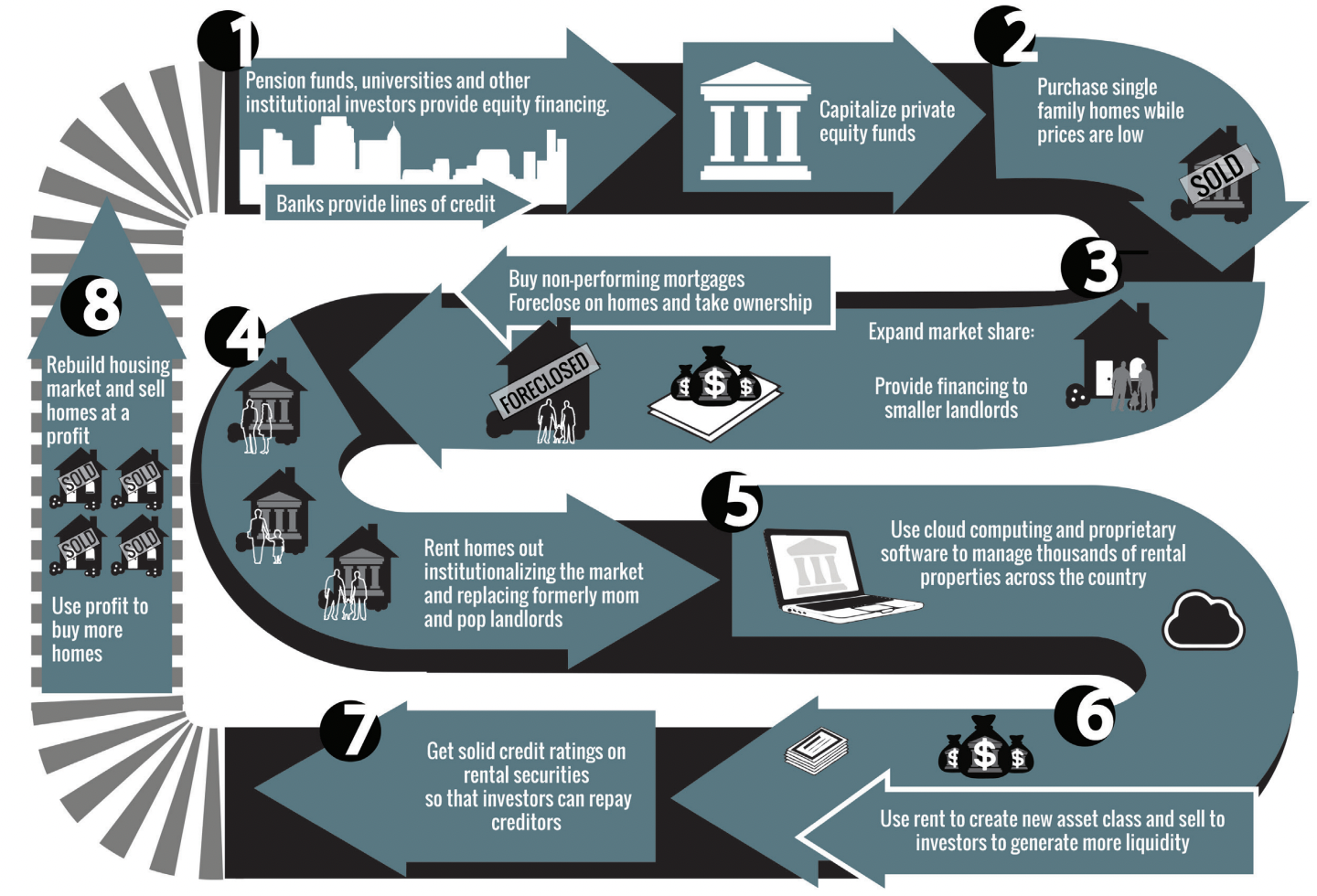
Investor purchasing of the housing stock is not new in the history of the US. However, it has become more pronounced in recent decades, especially after the 2007-2008 economic crash, where a ton of people lost their homes, which were then gobbled up by investors.
In 2014, the Right to the City published a reported entitled, The Rise of the Corporate Landlord, which further investigated and analyzed the corporate investor control of more and more rental properties in the US. The infographic above is from that report.
In 2017, Michigan Public Radio produced an excellent documentary called, Pushed Out, which investigated who was buying homes that were foreclosed, along with the outrageous increase in the cost of housing in Grand Rapids.
If WOODTV8 was serious about doing journalism, they would have provided this kind of context for the current data on increased investor home purchases. In addition, channel 8 should do a series of stories, where they talk to families and individuals on how difficult it is to buy or rent in the current housing market in this city. We need journalism that takes national news and makes it local, especially since Grand Rapids has been experiencing a housing crisis for more than a decade now.
GRPD Chief Winstrom engages in a little Copaganda and the local news media never questions it
Last week, WXMI 17 posted a story after they submitted a Freedom of Information Act (FOIA) request to the City of Grand Rapids regarding the cost of providing the police department to protect the Republican Presidential candidate Donald Trump, when he spoke in town back in July. According to the Fox 17 story, the cost of having the GRPD protect the Trump event was $69,000.00.

Unfortunately, the Fox 17 story did not center on the cost of having the GRPD provide protection for the presidential candidate. Instead, the story provided a platform for Chief Winstrom to make claims that the channel 17 reporter did not question or verify. Here are some of Winstrom’s comments:
“We have a strong law enforcement community here, and everybody stepped up and helped out, and we were able to properly staff the event.”
“We had about 30,000 total visitors. We had a line that stretched over a mile and a half,” Winstrom said. “What we knew was that it’s our job to keep everybody in the city safe.”
While these sentiments from Chief Winstrom sound nice, they are simply well crafted responses to give the appearance that the GRPD exit to keep people safe, when in fact they do not.
According to a report the group Interrupting Criminalization, entitled, Cops Don’t Stop Violence:
Addressing rising rates of violence requires deep investments in meeting our communities’ economic and social needs and in community-based violence prevention and interruption programs — NOT more policing. The bottom line is that police don’t stop violence, no matter how high their budgets are. It’s time to stop falling for cops’ fearmongering and throwing good money after bad in pursuit of safety cops are not set up to deliver.
We know that prisons and police don’t keep us safe or deter violence — and that they contribute tremendous amounts of violence to our communities. We know that research shows — and even some cops agree — that the best way to reduce violence and increase safety is to increase access to housing, healthcare, including mental health care, education, accessible, sustainable and living wage jobs, and community care, connection, and programs. It is this knowledge that is informing and driving campaigns to defund police and invest in community safety — because we know that is the only path forward toward safer, more just communities.
Since January 1st, I have been tracking news stories on public safety in Grand Rapids. From the beginning of the year through August 27th, there have been 360 stories that center the GRPD. Of those 360 stories, there were only 11 stories where the GRPD actually prevented violence. In the other 349 stories, the GRPD showed up after violence/harm had already been done.
The data I have been collecting on local news coverage clearly demonstrates that despite Chief Winstrom’s claim that the GRPD protects people, the exact opposite happens, unless of course you are a Presidential candidate speaking in Grand Rapids.
Understanding the GR Power Structure – Part VIII: Religious Institutions as buffers against systemic change
 In Part I of this series I began an updated version of a Grand Rapids Power Analysis, which lays out the ground work for what the Grand Rapids Power Structure looks like and what it means for this community.
When I use the phrase, the Grand Rapids Power Structure and who has power, it is important to note that I mean power over. A local power analysis is designed to investigate who has power over – who oppresses, exploits and engages in policy that benefits them to the exclusion of everyone else – the majority of people living in Grand Rapids.
In Part II of this series on the Grand Rapids Power Structure, I looked at the DeVos family, which I argue is the most powerful family in this city, in terms of economics, politics, social and cultural dynamics. In Part III of this series I looked at some of the other families and individuals that also wield tremendous power in this city, economically, politically and socially. In today’s post I will focus on the private sector organizations that also have tremendous power and influence on daily life in Grand Rapids.
In Part IV, I focus on private sector organizations, many of which have individuals who are part of the Grand Rapids Power structure sitting on their boards. These private sector organizations serve a vital role in dictating local policy, which primarily benefits their own interests. Part V took a critical look at the role that the Grand Rapids City Commission and the Kent County Commission play in representing the interests of the private power sector, along with how they use fear and violence against residents who are actively challenging the local power structure.
In Part VI, I looked at how the major daily local news agencies normalize systems of oppression that protect and expand the Grand Rapids Power Structure. Then in Part VII, I discussed the role that local colleges and universities play when it comes to the Grand Rapids Power Structure. Today I want to talk about religious organizations in Grand Rapids and their relationship to the local power structure.
Historically, the three monotheistic religions of Christianity, Islam and Judaism have caused more harm than good. Christianity, especially since the Roman Empire adopted it in the 4th Century, has been the religion of empires, colonialism and settler colonialism. Sure there have been small enclaves of Christians that have adhered to a radical form of love, justice and mercy, but religious historians often refer to these groups as the faithful remnant. Since Christianity is the dominant religion in Grand Rapids, we will limit our analysis to that religion.
Grand Rapids is built on settler colonialism, with indigenous populations inhabiting this area for centuries, only to be forced or coerced into submission in the early part of the 19th Century. Various Protestant denominations and Catholicism have played a critical role in the formation of Grand Rapids, since those who have made up and continue to make up the local power structure identify as Christians. However, for the purpose of this article is to focus on how religious institutions, specifically Christianity, acts as a buffer against systemic change.
Grand Rapids is sometimes referred to as the City of Churches, with an estimated 800 churches. Hundreds of thousands of people in Grand Rapids belong to churches, yet very few of them take an active role in promoting systemic change. There are the ultra-conservative churches, which embraces and supports the concentrated wealth of a few over the many, but they are not the focus of this article. We want to look at the mainstream churches that ultimately acts as a buffer for the Grand Rapids Power Structure, rarely calling into question the systems of power and oppression that exist in this city.
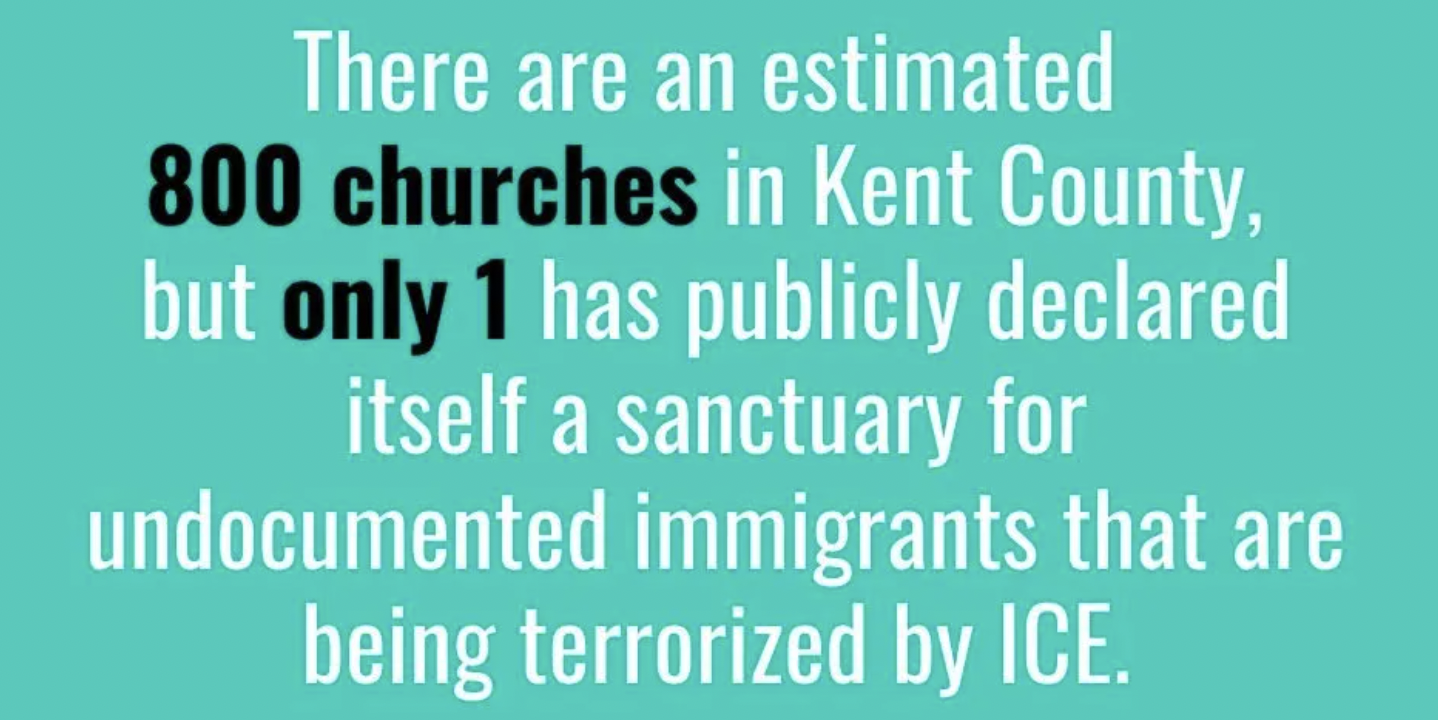
There are several ways that churches act as a buffer against systemic change in Grand Rapids. One of the most common ways, is to remain passive or distracted from the injustices that occur every day in this city. This is what Karl Marx meant by religion being the opiate of the people. In Grand Rapids, Christianity is certainly a distraction for thousands of Christians, so that they don’t have to even acknowledge the suffering, exploitation and oppression that exist in this community on a daily basis. For example, despite the tremendous anti-immigrant rhetoric in this city and the well-documented state violence against the undocumented community, there is only 1 church in this community that has publicly declared itself a sanctuary. Just one out of 800!
Other examples of the how churches are often complicit in systemic oppression and fail to speak out can be seen with the issue of policing and brutality against BIPOC people in this city. For years Black, Brown and Indigenous people have been trying to draw attention to the institutionalized policing of their communities, yet very few faith communities have gone public with condemning the GRPD. This silence was on full display with the GRPD murder of Patrick Lyoya in 2022, where the majority of the faith communities remained silent. There was a group of pastors that made a public statement and held a press conference some 2 months after Lyoya’s murder at the hands of the GRPD. Their statement is fairly strong, but there hasn’t been much activity or ongoing criticism of the GRPD in the past two years.
A Second way that churches act as a buffer against systemic change, are those churches that engage in various forums of charity. Now, I’m not saying that charity, in and of itself is a bad thing, but charity often doesn’t lead to people questioning the larger, systemic problems that lead to things like homelessness, hunger and poverty.  Charity is also an easy way to make yourself feel good without having to take any kind of risk that usually accompanies the dismantling of systems of oppression.
A Third way that churches act as a buffer against systemic change is to take on causes, without ever taking the necessary risks involved to challenge systems of oppression. Churches might be gay-friendly, but they do not challenge hetero-patriarchy that permeates the Grand Rapids Power Structure. Churches might try to practice being good stewards of the earth by recycling, but they rarely confront the fossil fuel industry or the economic system of capitalism, which is incompatible with environmental justice. Churches might promote some vague notion of peace, without ever taking the hard risks necessary to end war or white supremacy. Over the past year, how many churches have publicly condemned the Israeli genocide or taken an active role in resisting the unconditional US support of Israel, which includes providing weapons, some of which are manufactured here in West Michigan. Even Rep. Scholten, who goes out of her way to let us all know that her Christian faith is central to what she does, recently met with weapons contractors in West Michigan and said they promote peace.
A Fourth way that churches act as buffer against systemic change is to practice White Savior Politics. Churches often have good intentions in wanting to be good allies, but more often than not, they still think that they know what’s best for people experiencing poverty, those in the immigrant community or those in the black community. Good intentions are not only not enough, they often lead to “good people” doing real harm to those they seek to “help.” This is often the case with churches that focus on diversity, instead of racial justice. Diversity proponents rarely have a power analysis and believe that if we just treat each other with respect then we can all get along. Those who practice racial justice are those that recognize historical inequities, are willing to look closely at how they contribute to racial oppression and then develop relationships with communities of color to find out how they can best be in solidarity with them.
If churches in Grand Rapids were not acting as a buffer for the local power structure, what might that look like?
- Churches would demand the elimination of the wealth gap and practice economic justice, which cannot exist within capitalism.
- Churches would acknowledge that this community was founded on settler colonialism and ask the Native community what is required of them to undo settler colonialism.
- Churches would acknowledge that this city was built on and continues to practice White Supremacy. The churches would then ask communities of color what they need to do to not participate in White Supremacy, which is related to the wealth inequality and the need to pay reparations.
- Churches would stop practicing and condoning violence against women, violence against the LGBTQ community and practice inclusive and horizontal ways of sharing power.
- Churches would declare themselves a sanctuary and take in members of the immigrant community that are being targeted by ICE.
- Churches would not support the Prison Industrial Complex, would use their wealth to bail people out, would start seeing the police and the courts as instruments of oppression and work to end the criminalization of poverty and the war on drugs.
- Churches would stop defending US Imperialism and militarism, by demanding their members to not work for weapons manufacturers, to fight against the Military Industrial Complex, to not send their young members to war and to denounce nationalism.
These are just a few things that churches could do, which would surely scare the shit out of those who are part of the Grand Rapids Power Structure. Unfortunately, it is not likely that churches would even consider practicing justice to end systems of oppression. It is far easier for churches to act as a buffer in service of those who make up the Grand Rapids Power Structure. In Part IX, I will explore how non-profits organizations in this community also serve as a buffer for the Grand Rapids Power Structure.
Preventing police violence and Community Care were the focus of the Grand Rapids Pullover Prevention event
During the four hour time slot at the Pullover Prevent event, hosted by GRPOP, roughly 50 people took advantage of the numerous resources that were being offered.

The event was held in an over flow parking lot owed by the First Community AME Church in southeast Grand Rapids. AME churches have a long history of being part of the Black Freedom Struggle, so it was no surprise that they were happy to have their space used for the event on Saturday.
People who came had the opportunity to have a team of volunteers check their brake lights, turn signal lights and other lights on their vehicle to see if they needed any replaced. The GRPOP volunteers would then replace any burned out lights at no cost, since traffic stops by cops often lead to violence perpetrated by cops against motorists, especially BIPOC people. I was able to interview one of the GRPOP volunteer organizers, which you can view here.
In addition, to the pullover prevention resources that were being offered on Saturday, people who attended could visit with groups such as the GR Pride Center, the Grand Rapids Area Tenant Union, the Med Collective, and A.I.M. – the Autonomous Infrastructure Mission, which provided fresh produced raised in the gardens they have in West Michigan.
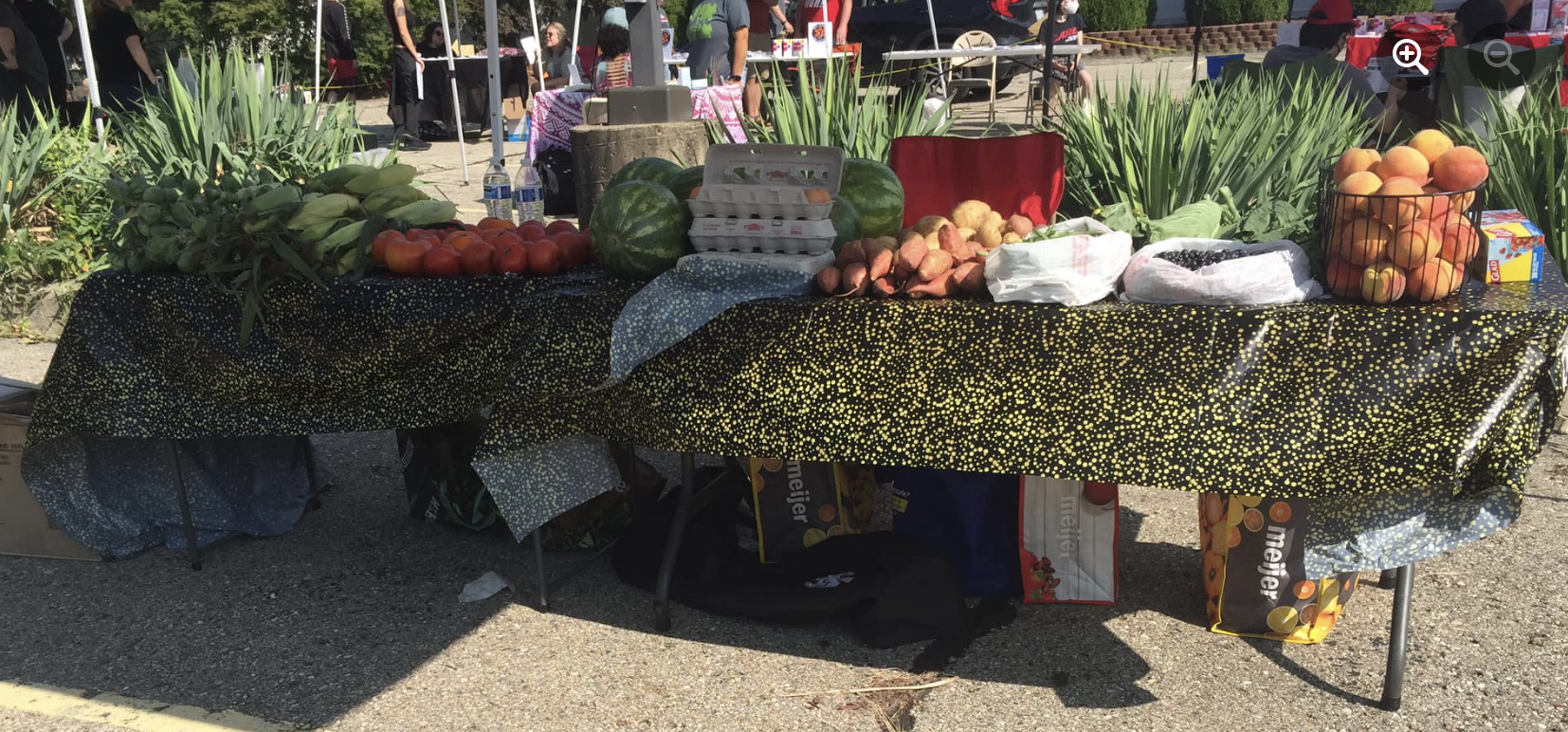
There was also free narcan being offered by the Grand Rapids Red Project, a clothing swap, information about the revised Food Not Bombs chapter, the Grand Rapids Alliance Against Political Repression, the Community Owns Safety Coalition, B Balance Bodywork and the Accountable Communities for Abolition. GRPOP also provided bottled water and other snack foods to those who were tabling and those who came to the event.
As a participant, there were two main observations that I had. First, the level of interest and enthusiasm by people who were visiting the information/resource tables was very evident. I heard people talking about being so happy to see that this kind of work was being done in Grand Rapids, as well as promises to further engage the autonomous groups at future events or to address issues that they were dealing with, such as discrimination, exploitation by landlords, food insecurity or police repression.
 The second overarching observation I had was that the various groups that were represented at the event did a lot of talking amongst themselves, letting each other know about upcoming events or actions. In addition, there was great conversations being had around future collaborations, so as to avoid operating in silos. Such conversations are critical for local movement work, but don’t happen often enough. Based on my own conversations and what I observed, people were relishing the opportunity to talk and just get to know each other in a safe and relax environment.
The GRPOP event was not only a successful event, it once again demonstrated how community-based organizing can engage in mutual aid, along with practicing the idea that “we take care of each other.”
Thanks to Ashes for some of these pictures.
Palestine Solidarity Information, Analysis, Local Actions and Events for the week of August 25th
It has been more than 10 months since the Israeli government began their most recent assault on Gaza and the West Bank. The retaliation for the October 7 Hamas attack in Israel, has escalated to what the international community has called genocide, therefore, GRIID will be providing weekly links to information and analysis that we think can better inform us of what is happening, along with the role that the US government is playing. We will also provide information on local events and actions that people can get involved in. All of this information is to provide people with the capacity of what Noam Chomsky refers to as, intellectual self-defense.

Information
Partners in Genocide: Israel is Slaughtering Palestinians with Western Arms
Israel Is Holding Thousands of Palestinians Captive — Including Children
Blinken Warns of Ceasefire Deadline as US Pledges Even More Arms to Israel
Democratic Party Unites Under Banner of Silence on Gaza Genocide
‘Complicity in War Crimes’: Report Names Countries, Companies Supplying Fuel to Israel
Prolonging Genocide as a Smokescreen: On Israel’s Other War in the West Bank
The U.S.-Led Ceasefire Talks Are Just Buying More Time for Israel’s Genocide
Biden Taps ‘Literal Arms Dealer’ Mira Resnick for Top Israel Policy Post
Analysis & History
Beyond the Rhetoric: Standing in Integrity: Norman Finkelstein and Daniel Maté
Local Events and Actions
Power to Palestine: Weekly Rally in Grand Rapids
Wednesday, August 28th, 12 – 1pm, Rosa Parks Circle
https://www.facebook.com/events/992936209242057?ref=newsfeed
Image used is from https://visualizingpalestine.org/visual/how-israel-is-arming-israeli-settlers/
 On Tuesday, MLive posted an article with the headline, Michigan’s first ‘Shark Tank’ style competition seeks transportation innovations.
Michigan Gov. Whitmer was quoted as saying:
“PitchMI will unleash Michigan’s innovative spirit, strengthen our entrepreneurial ecosystem, create good paying jobs, and spur new ideas on the future of mobility. I can’t wait to see all the creative ideas and look forward to the competition in October.”
Ok, so what innovative ideas does the Governor think people will come up with? People get around by car, by bus, by bike or scooters, walking and a few by train. Walking and biking are sustainable, so unless Big Gretch is thinking about Star Trek-style transportation, I don’t know what else there is.
The MLive article is based on a Press Release from the Governor’s office, which you can read in its entirety here. However, one paragraph stood out to me from the Press Release, stating:
“In addition to capital, innovators and entrepreneurs across the state need visibility to grow. This competition offers our entrepreneurs a stage to share their ideas with the world and demonstrate yet again that Michigan is at the cutting edge of innovation,” said Chief Growth Officer Hilary Doe. “Investing in entrepreneurs and innovators will help our state become a magnet for both businesses and talent, working together to drive population growth. Supporting entrepreneurs in starting and scaling their businesses will also create a more prosperous place to live for all Michiganders.”
This paragraph reads like something that the DeVos family or the Grand Rapids Chamber of Commerce would say. Fucking entrepreneurs. We don’t need entrepreneurs to come up with ideas for mobility, since we already know what the hell we need……..lots of efficient and affordable mass transit.
Unfortunately, mass transit is not on Gov. Whitmer’s mind, especially since she has decided to use billions of taxpayer funds to subsidize the electric car industry, which she announced back in January of 2022. GRIID wrote about this announcement at that time and in 2023, when the State Legislature began providing massive subsidies to the Ford Motor Company.
Imagine if we had incredibly efficient and affordable mass transit, like adding more buses that ran more frequently, light rail in larger cities like Grand Rapids, plus high speed rail for going east, west , north and south throughout the state. If we had all of these, there would be less carbon emissions, less parking lots, more green space, less of a financial burden to own a car, less stress from driving and being stuck in traffic, and these are just some of the benefits of a robust mass transit system. We need government leaders who will make this happen, not leaders who want to hold Shark Tank-like contests that simply promote get rich quick schemes.
Foundations are a way for members of the Capitalist Class, which made their wealth by exploiting workers, to hide some of their wealth from taxation, only to then turn around and use foundation funds to undermine social movements and generate positive PR for themselves.
The Doug and Maria DeVos Foundation
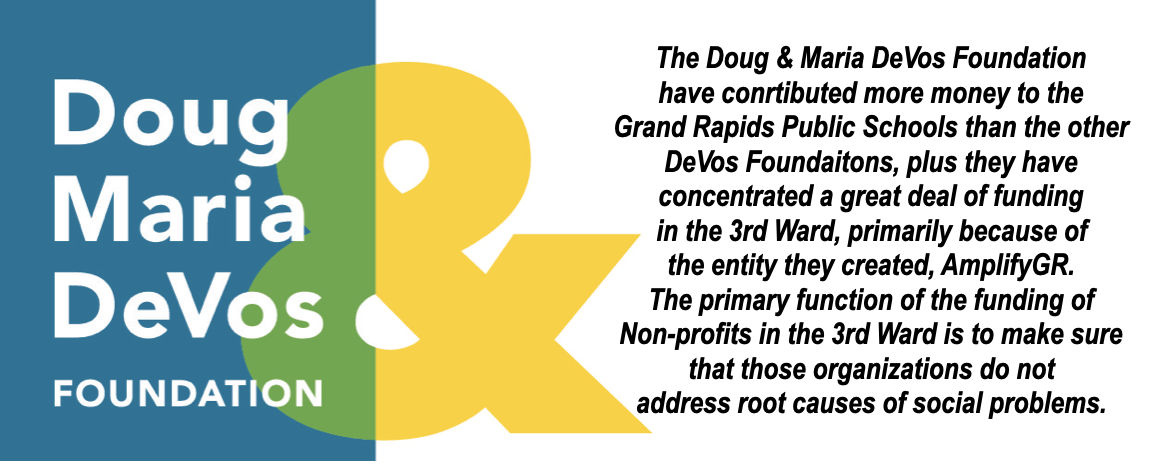
GRIID has always begun our Foundation Watch work by looking at the foundations associated with the most powerful family in West Michigan, the DeVos family. Last week I looked at the Dick and Betsy DeVos Foundation, but today we’ll take a look at the Doug and Maria DeVos Foundation.
I am using the data from the foundation’s 990 document for 2022, which is the most recent year that is available. The Doug and Maria DeVos Foundation has $86,526,683.00 of assets in the foundation’s account, which is just another way that members of the Capitalist Class to be able to hide their money from taxation.
Before I dive into how the Doug and Maria DeVos Foundation distributed to of their funds, I wanted to point out that they spent over $1 million on “professional services”, some of which were just a way of giving money back to themselves. For instance, their foundation paid RDV Corporation (DeVos owned) $617,137.00 for a “management fee.” The foundation also spent another $294,728.00 for a “management fee” to Ottawa Avenue Private Capital, which is also owned by the DeVos family. Other expenses for the Doug and Maria Foundation went to:
- Basis Policy Research, which has an office on Wealthy St, and does consulting and research on education policy and practices, with an emphasis on private and Charter School education systems, received $141,661.00.
- Seyferth PR received $71,846.00 as a communications consultant.
- Tiffany McCurley Bierlein Designs LLC received $51,075.00 for consultation services.
I guess when you have over $86 million in assets in your foundation, you can afford to spend over $1 million on services, especially when most of that goes back to entities you already own.
The Doug and Maria DeVos Foundation made contributions to dozens of entities in 2022, but there are some clear categories of groups they contributed to, such as the Religious Right, Think Tanks, Education-centered groups, and social service entities, to name a few. Below is a listing of each from these categories, with a dollar amount.
Religious Right
- Covenant House Michigan – $25,000
- Keystone Community Church – $370,000
- Life International Inc. – $30,000
- Luis Palau Association – $150,000
- National Christian Foundation – $366,000
- Partners Worldwide – $15,000
- Pregnancy Resource Center – $30,000
- Young Life – $55,000
Far Right Think Tanks/Pro-Capitalist groups
- Acton Institute for the Study of Religion and Liberty – $80,000
- American Enterprise Institute – $350,000
- Grand Rapids Chamber of Commerce – $59,500
- Mackinac Center – $125,000
- National Constitution Center – $6,522,500
- Philanthropy Roundtable – $25,000
- Stand Together Foundation – $1,000,000
Education-centered groups
- Calvin University – $100,000
- Grand Rapids Christian Schools – $450,000
- Grand Rapids Public Schools Foundation – $145,000
- GVSU – $15,000
- K Connect. – $125,000
- Leading Educators Inc. – $900,000
- Living Stones Academy – $90,000
- Potters House – $225,000
- Rehoboth Christian School Association – $100,000
- Talent 2025 Inc. – $25,000
- Wake Forest University – $265,000
DeVos-owned, created or connected groups
- ArtPrize – $25,000 (this was the last year it was being run by Rick DeVos)
- Corewell Health Foundation – $362,000
- Grand Action Foundation 2.0 – $50,000
- West Michigan Aviation Academy Foundation – $60,000
Groups receiving Hush $
- Baxter Community Center – $40,000
- Bethany Christian Services – $116,000
- DA Blodgett/St. Johns – $150,000
- Degage Ministries – $25,000
- Exalta Health – $30,000
- ICCF Community Homes – $30,000
- Kids Food Basket – $7,500
- Safe Haven Ministries – $70,500
- The Other Way Ministries – $30,000
These groups all provide some sort of social service – people fleeing domestic violence, those who are housing insecure, people with disabilities, adoption and immigration. There are root causes to all of these issues, but these groups are not likely to address root causes and larger systems of oppression. When the DeVos family foundations make contributions, this will increase the likelihood that systems of oppression will not be addressed by these groups.
Just last month, the US Supreme Court made the decision that gave state authorities more power to dismantle the encampments of unhoused people in, with no guarantee that they will land anywhere more safe.
Many people, from Liberal, Progressive to left on the political spectrum refer to this as the criminalization of the unhoused. Indeed, we saw this play out in Grand Rapids in 2023, when the Grand Rapids City Commission decided to adopt 2 ordinances that would essentially criminalize those who are unhoused.
The two ordinances that the City of Grand Rapids adopted last year have to do with, 1) loitering, which they define as lingering or hanging around without any apparent purpose; and 2) People cannot be walking around downtown with personal property, which is exactly what those who are unhoused frequently do. It should also be noted that these ordinances were being pushed by the Grand Rapids Chamber of Commerce and other members of the Grand Rapids Power Structure.
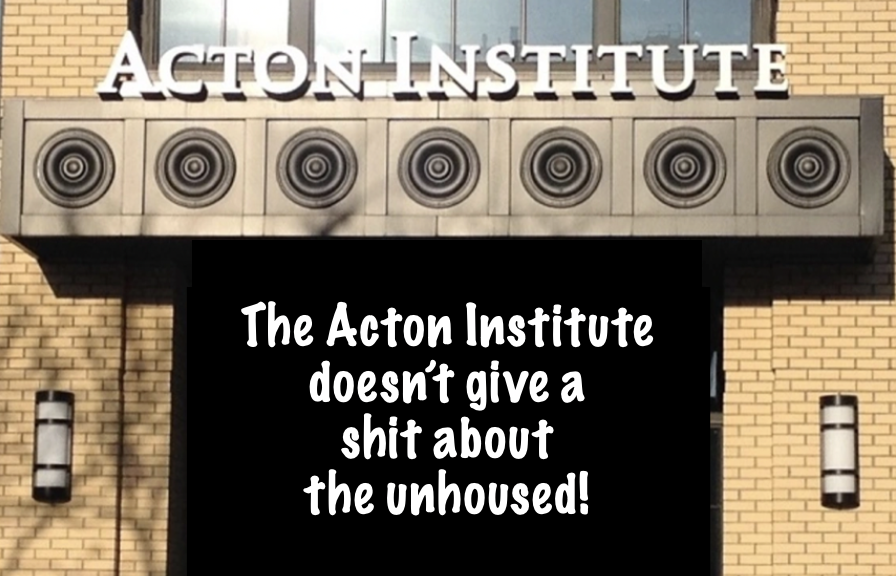
Besides the GR Chamber of Commerce and their collaborators, there are other organizations in Grand Rapids that defend the US Supreme Court decision on criminalizing the unhoused. One such group is the Acton Institute for the Study of Religion and Liberty.
There was an article posted on the Acton Institute website from July 31st, with a headline that was phrased as a rhetorical question – Is It Now Illegal to Be Homeless?
The author of the Acton Institute article was Trey Dimsdale, who works as a lawyer for the First Liberty Institute, which is a Christian Right litigation group that primarily defends issues of religious liberty. Dimsdale makes the following arguments:
It is easy to assign blame for all the social ills that follow in the wake of gentrification, for example, on the middle-class residents of the new townhomes and high rises that have replaced less expensive, sometimes blighted neighborhoods.
The housing problems in most of America’s large cities, it must be noted, are directly traceable to government regulation.
It is a hard reality, but it is not altogether clear that anyone has a right to housing in the sense that anyone else has a duty to provide it.
So, if cities do not ban camping in public spaces—for the homeless, for the Boy Scouts, and for commuters—does this mean that there is then a right to camp in these public spaces?
Unfortunately, the root causes of homelessness are also the root causes of many antisocial behaviors that are threatening and dangerous. No one enjoys exposure to public urination, aggressive harassment, or intrusive and incoherent yelling. I’ve encountered all these things and more in nearly every city I’ve visited, and within just a few hundred yards of my front door in an urban area.
Barring municipalities from imposing criminal penalties on the improper use of public spaces or antisocial behavior in public spaces for a certain class of person—namely those without shelter—does nothing but remove one of many tools that can ultimately be useful in helping homeless people and solving the complex and tragic problem of homelessness.
The entire argument presented by the Acton Institute writer is based on faulty assumptions and just plain cruelty. This should not surprise anyone, especially if you have been paying attention to the work of the Acton Institute over the years. The Acton Institute has consistently opposed policies that would benefit working class people and simultaneously support policies that benefit the business community and the capitalist class.
In fact, the very pro-Capitalism message of the Acton Institute, is arguably a major contributing factor in the increased number of those who are unhoused and the millions of people who are housing insecure. You can’t be in favor of gentrification, the commodification of housing or the corporatization of the housing and rental market and then say that unhoused people don’t have a right to housing. Maybe it is time we organize an encampment in front of the Acton Institute building and draw attention to their brutally cold support of Capitalism!
 Grand Rapids Institute for Information Democracy