There are numerous opportunities to resist mass deportations in Grand Rapids, with several events and actions in the next week
The Trump Administration is calling for mass deportations once he occupies the White House again after January 20th. The time is now for all of us who care about solidarity and collective liberation to not sit on the sidelines or think complaining about Trump on social media will do a damn thing.

In Grand Rapids, there are lots of ways to be involved in the resistance to mass deportations and to stand in solidarity with immigrants right now. What follows is a list of upcoming/current actions that people can take, plus the groups that are working diligently to practice immigration justice.

On Wednesday, January 15th, there will be a free screening of the film Citizen: The Jilmar Ramos Gomez Story, which will be screened at the Wealthy Theater at 7pm. This short film not only focuses on the person of Jilmar Ramos Gomez, it shows how people in Grand Rapids resisted anti-Immigration policies by the Trump Administration during his first tenure as President.

On Saturday, January 18th, GR Rapid Response to ICE is hosting a training at Fountain Street Church from noon til 2pm. This is a training being offered through GR Rapid Response to ICE to prepare people to take action in support of immigrants that will be targeted, especially with the threat from the incoming Trump Administration of mass deportation. This training will offer multiple ways for people to support immigrants, along with concretes ways for people to practice solidarity.

On Monday, January 20th, Movimiento Cosecha Michigan is hosting a NO Deportations march. People will gather at Rosa Parks Circle and march in downtown Grand Rapids, which is a great action to counter Trump’s inauguration. Cosecha says, “Immigrants are human beings who want a better world for our children and our community. We deserve to live with dignity, respect, and permanent protection, without the fear of being deported. Come march with us and show your solidarity with immigrants to say NO DEPORTATIONS in our community.”
You can also sign an Action Alert right now, an action alert that is calling on the Grand Rapids Public Schools to adopt a Sanctuary policy for the district.
GR Rapid Response to ICE is doing the defensive work that allies can be part of, which is exactly what Movimiento Cosecha is calling for. GRIID encourages people to follow both groups to practice solidarity and resist anti-immigrant policies, like deportation.
Students and community members challenge the Grand Rapids Public Schools to become a Sanctuary School District ahead of the threats of mass deportation
Last night at the Grand Rapids Public Schools Board of Education meeting, it was anything but boring.
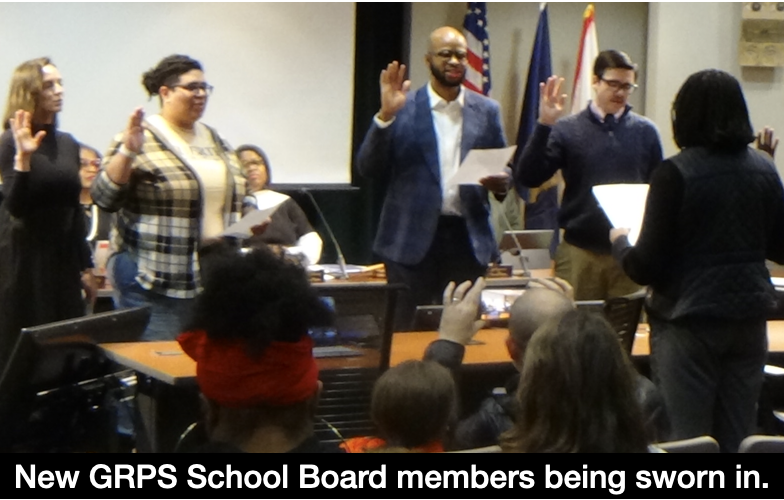
First, there were 4 new School Board members who were sworn in. Then, in their very first vote, around the issue of new School Board positions, two of the more progressive members – Eleanor Moreno and Amber Kilpatrick, along with returning member Jose Rodriguez, voted no on the proposed board positions. While the other School Board members voted in favor of the new positions, it was refreshing to see that there is a growing group of board members that are not just going to rubber stamp business as usual dynamics in the district.
Secondly, during the public comment portion of the Grand Rapids School Board meeting, the majority of comments centered around a call for the Grand Rapids Public Schools to adopt a Sanctuary policy for the district. This is happening all across the country, as communities are attempting to take action with the incoming Trump Administration and their proposal to engage in mass deportations.
Several GRPS students who identified as being part of SALT (Student Association for Leadership and Transformation), which is a student union. All of the SALT students talked about the importance and the urgency of GRPS needed to adopt a Sanctuary policy, to keep students, staff, parents and community members safe from potential arrests, detention and deportation by Immigration and Customs Enforcement (ICE) officials. More than one of the student who spoke up identified as part of the Latino/a community and talked about how their community lives in constant fear of being targeted by ICE and how it impacts all aspects of their lives, including being a GRPS student.
Several community members spoke as well, many of them calling for the GRPS to adopt a Sanctuary policy for the district. One speaker, who spoke through an interpreter, said that the document that the district shared recently regarding GRPS protocol when dealing with ICE (which you can read here) was completely inadequate, since it would allow ICE to enter the building and be on GRPS premises in general.
Grand Rapids Superintendent Dr. Roby, addressed the document that the district had sent out after public comment and pretty much avoided talking about what the students and the community were calling for, which was for the GRPS to adopt a Sanctuary policy. While Dr. Roby was speaking, there were slides being shown on the big screen, with information that is not on the document they sent out. One thing that stood out to me that was on the screen said that the district was, “legally obligated to cooperate with ICE and the Department of Homeland Security.” Dr. Roby kept talking about the fact that the GRPS would not share information with ICE, which is a good thing, but failed to address more pressing matters around ICE having access to the schools. A few School Board members pressed on this issue, but Dr. Roby kept saying ICE officials would be asked to leave, unless they could produce government documents, like a warrant. When Dr. Roby made the statement about government officials having documents, I took that as they would be given access to the building, to students and staff, because they had some form of an arrest warrant.
This is exactly why people were calling for the Grand Rapids Public Schools to adopt a Sanctuary policy, which would not only prevent ICE and other law enforcement officials from being allowed on GRPS property, it would keep students, staff, parents and community members safe.
At the same time that students and community members were calling for the GRPS to adopt a Sanctuary policy for the district, GR Rapid Response to ICE has been circulating an online Action Alert calling for the GRPS to adopt a Sanctuary policy, which people can sign here.
The language of the Action Alert is important, which I will include here below, as it provides important narrative about why it is important for the GRPS to adopt a Sanctuary policy. GRIID encourages people to sign the statement, to share it and push the Grand Rapids Public Schools to adopt a Sanctuary policy for the district.
Why:
- Both the past and the incoming administrations have targeted our immigrant neighbors using different strategies and tactics, but immigrant justice workers expect increased levels of ICE violence starting with the new administration.
- Children cannot learn and thrive unless they have a safe and welcoming school environment. If children are afraid that they, their family members, or their classmates will be deported, they will not be able to focus in school, or they will skip school.
- This has a ripple effect. If one child feels unsafe or threatened, others will feel unsafe and threatened too. This is especially true for younger children. Most younger children do not know their immigration status, and if their classmates are scared, they will be scared too. You can’t target one child without targeting all children in the classroom. Thus, you can’t protect one child without committing to protect all children.
- For teachers to fulfill their mission of educating all kids, the classroom must be a nurturing and safe space. Teachers cannot fulfill their mission if their students are afraid or if the environment is hostile. A safe zone resolution helps ensure that teachers can focus on their mission of educating instead of managing fear and its ripple effects among their students.
- We all are connected, and we live and study together in the same communities and classrooms. Anything that harms one person is going to harm all of us — and will interfere with our progress.
- To establish a safe learning environment for all children, the school district must commit the material and psychological support necessary for their well-being. It should act to ensure that children and their families have access to resources that can inform and help protect them. This includes public support for driver’s licenses for immigrants so that parents can transport children to school and extracurricular activities.
- Children are already concerned that immigration authorities may come to get them or their family members. The school district can and should take steps to assure children that their school is a safe place, that their information is confidential, and that the school will support them and their families to the best of their ability.
What Could the Sanctuary District Resolution Look Like?
- First the Grand Rapids Public School board would pass a resolution to be a Sanctuary School District.
- The GRPS board would issue a press release and public statement stating that in order to keep students safe, Grand Rapids Schools will not be cooperating with ICE, and they will work closely with community partners to provide resources, training, and support for any GRPS families who are being targeted by ICE or have been affected by detention or deportation.
- The resolution would include public support to reinstate making Driver’s Licenses available to undocumented folks who meet the requirements, so that parents can safely transport their children to school and to school events.
- Teachers and staff in schools would be trained on various methods to keep ICE out of schools: this may include:
- Training staff on the importance of not putting children or families at risk by unnecessarily asking or sharing their immigration status.
- Posting signs on school doors that state the school is a sanctuary safe space and “ICE is not welcome here.”
- Training staff how to intervene if ICE is present, and to reach out to groups like Rapid Response to ICE to intervene to keep students and families safe, as well as other community partners.
- Hosting information and resource sessions with community partners that center the needs of affected families, educate the community on policies and strategies that keep students safe, and allow input and conversation about the ways that ICE violence affects the entire community.
If you are interested in wanting to understand what the Prison Industrial Complex is and how it functions in Kent County, then this class is for you.
The Prison Industrial Complex (PIC) is a term that has been used by prison abolitionists for decades and it refers to the systems of power and oppression that play a role in mass incarceration – policing, the court system, parole, probation, jails, prisons, the businesses that have contracts with jails and prisons, the role the local news media plays in normalizing the PIC, and municipal governments that fund and oversee the PIC.
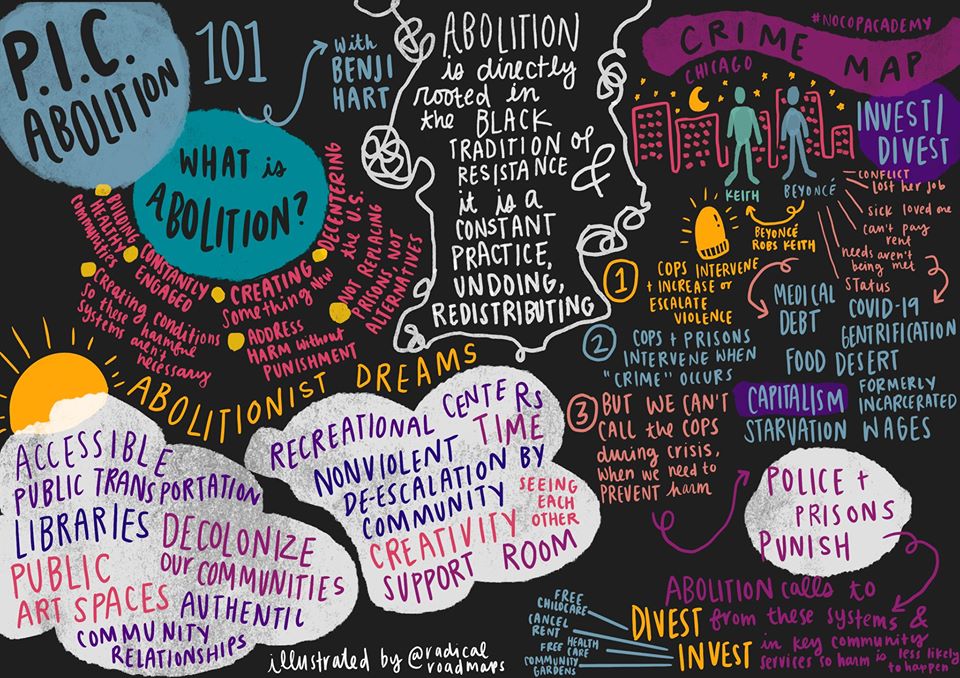
The group that first coined the phrase, the Prison Industrial Complex, Critical Resistance, defines the PIC as: “The prison industrial complex (PIC) is a term we use to describe the overlapping interests of government and industry that use surveillance, policing, and imprisonment as solutions to economic, social and political problems.”
The Prison Industrial Complex is vast and an 8-week class will not be enough to fully understand all the facets of the PIC. However, the class that GRIID is offering will enhance your understanding, particularly at the local level – Grand Rapids and Kent County.
The goals of this 8 week class on the Prison Industrial Complex in Kent County are:
- Introduce and provide a framework for understanding the Prison Industrial Complex
- Discuss and share our collective lived experiences with the PIC in Kent County.
- Examine how the local news media normalizes policing.
- Radically re-think the function of the local court system.
- Utilize data that researchers have done on the Kent County Jail.
- Map the PIC in Kent County.
- Propose ways that we can collectively confront the PIC in Kent County and concretely reduce the harm caused by this system at the local level.
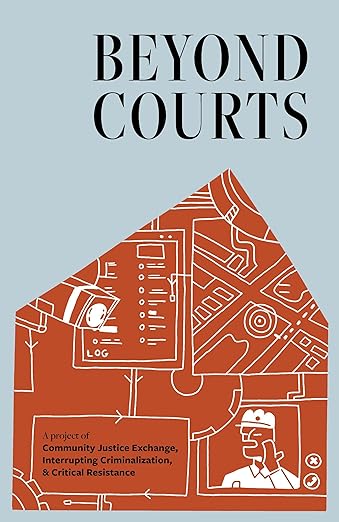 This class will utilize numerous online resources, resource material that GRIID has been working on for years, data from other researchers and the book Beyond Courts. GRIID will provide a copy of the book and all the necessary links.
This class is free, since GRIID accessed funds provided through the Community Owns Safety Coalition and their Mutual Aid Project.
The class will held held on Monday night from 7 – 9pm, beginning on Monday, February 3rd and will go for 8 weeks. The class will be virtual, except for week 8, where we will discuss in person ideas for how we can collectively confront the PIC locally and reduce the harm that disproportionately impacts BIPOC people in Kent County.
The maximum number of people for this class is 15. If you want to sign up and can commit to the 8 weeks, then send an Email to sjeff987@gmail.com.
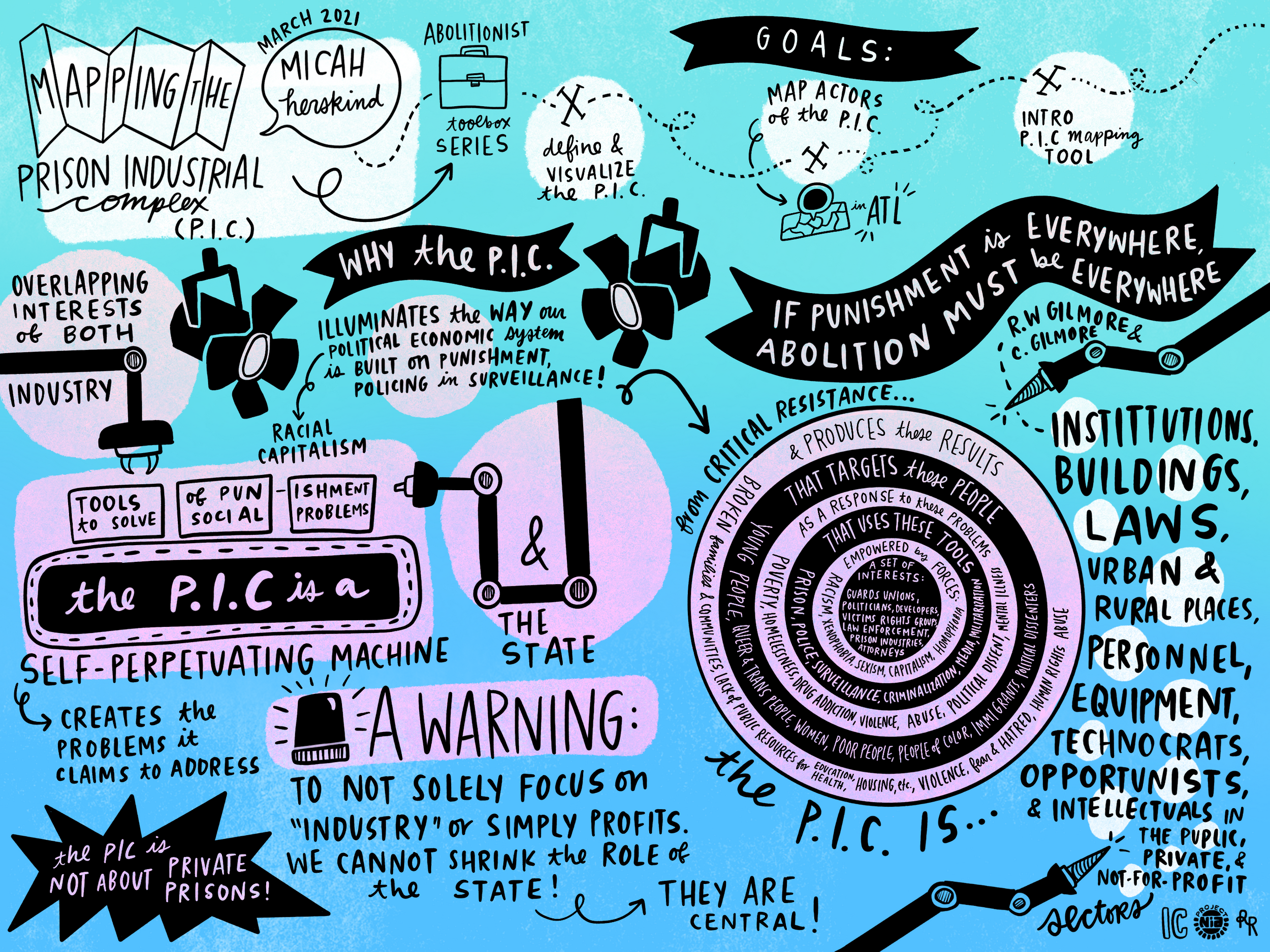
We now know who was funding the deceptive mailers used during the Grand Rapids First Ward race in 2024
For several weeks just before the November 2024 elections in Grand Rapids, people in the 1st Ward were receiving deceptive and misleading mailers that were attacking candidate Alicia Marie Belchak.

The mailers were claiming that Alicia Marie Belchak had supporters who favored defunding the police, even though the claim was completely bogus. As I noted in an article from October 30th:
If you look at the Belchak’s campaign website, the candidate survey from MLive, the one done by The Rapidian or the Voter Guide done by the Urban Core Collective, none of those candidate surveys suggest that Belchak wants to Defund the Police. In fact, on her own campaign website, candidate Belchak states: “As a mom, I know that strong, safe, vibrant neighborhoods are essential. That means funding public safety….” This statement is accompanied by a photo of Belchak and a GRPD officer sitting in his cruiser.
The group behind the mailers was the Fund for Safe Clean and Healthy GR. During the last campaign finance reporting deadline in October of 2024, there was no funds going to the Fund for Safe Clean and Healthy GR. I did discover that there were people listed as part of the group, as I noted in my October story.
However, after checking the Michigan Secretary of State’s campaign finance records on Saturday, the Fund for Safe Clean and Healthy GR finally submitted their campaign finance records. The Fund for Safe Clean and Healthy GR received $200,000 and spent nearly all of it. According to the expenditures portion of the campaign finance requirements, the group had 9 different expenses, with 6 of them contracted with a entity on Salt Lake City, Utah, two expenditures to a firm in Dallas, Texas, and one group – Right Strategies LLC, which has an office in East Grand Rapids on Wealthy St.
Regarding the contributions to the Fund for Safe Clean and Healthy GR, all $200,000 came from one source, Maintain Our Majority PAC. The Maintain Our Majority PAC only has a page that allows you to make a contribution and has an address a PO Box.
However, on the contributions page from the Michigan Secretary of State’s office, there is an address for the Maintain Our Majority PAC, which is 220 LYONS ST NW SUITE 510, Grand Rapids, Michigan 49503. When you look up that address, it is listed as SIBSCO, the real estate firm that was started by the Secchia family, which is now run by Charlie Secchia. Charlie Secchia is following in his father’s footstep, by being part of the Grand Rapids Power Structure. According to campaign finance records from the Kent County Clerk’s office, Charlie Secchia and his mother Joan, each contributed $1,225 to Dean Pacific, the very candidate that was running against Alicia Marie Belchak.
So, we have a member of the Grand Rapids Power Structure, Charlie Secchia, a person who is a Republican precinct delegate in Ada, who comes from a family that has provided millions to the Republican Party, and has his business office listed as the sole source of funds ($200,000) used to smear a candidate for a non-partisan race, claiming that people in the candidate’s camp wanted to defund the police. Here is just another concrete example of how the Grand Rapids Power Structure works, by using their wealth to deceive the public, while hiding behind a name like Fund for Safe Clean and Healthy GR.
Palestine Solidarity Information, Analysis, Local Actions and Events for the week of January 12th
It has been 15 months since the Israeli government began their most recent assault on Gaza and the West Bank. The retaliation for the October 7, 2023 Hamas attack in Israel, has escalated to what the international community has called genocide, therefore, GRIID will be providing weekly links to information and analysis that we think can better inform us of what is happening, along with the role that the US government is playing. We will also provide information on local events and actions that people can get involved in. All of this information is to provide people with the capacity of what Noam Chomsky refers to as, intellectual self-defense.

Information
The Children of Gaza Are Freezing to Death
Letters from Gaza – ‘Alhamdulillah. We Are Not Okay’
Exposing ties between MIT and Israel’s army
“We Have to Act”: Taxpayers Suing Congressmembers for Funding Genocide Speak Out
Biden Greenlights ‘Racist’ and ‘Sociopathic’ $8B Arms Sale to Israel
Doctors Against Genocide Hold Global Sick-Out to Highlight Atrocities in Gaza
Genocidal President, Genocidal Politics
Analysis & History
Will There Be a Gaza Deal Before Trump’s Inauguration?
Lancet Study Finds Official Gaza Death Toll Likely a 41% Undercount
Image used in this post is from the https://visualizingpalestine.org/.
Michigan Senators Gary Peters and Elissa Slotkin help Republicans to pass anti-immigrant bill
Two days after I reported that Rep. Hillary Scholten voted with the Republicans to pass an anti-immigration bill, both Michigan Senators Gary Peters and Elissa Slotkin also vote with Republicans on the same trumpian anti-immigration bill.
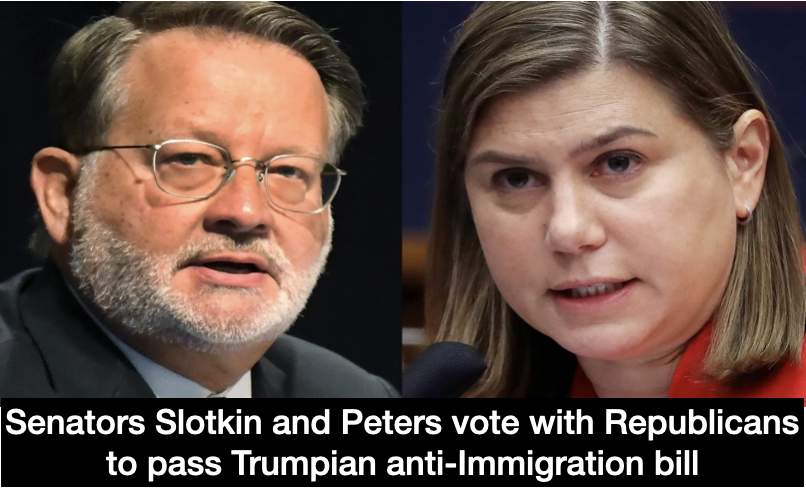
In the Senate case, there were even more Democrats that voted with Republicans on the Laken Riley Act, with only 9 Senate Democrats voting no, according to CNN. A Politico article came with the headline, Large swath of Senate Dems vote to advance GOP’s immigration bill.
Reuters reported the same thing, but included what appears to suggestion some of the motivation behind the Democrats voting with Republicans, stating:
Many of the Democrats who supported the bill hailed from states that Trump won in the November, including Senators Gary Peters and Elissa Slotkin of Michigan and Raphael Warnock and Jon Ossoff of Georgia. Peters and Ossoff are among the one-third of the senators up for reelection next year.
I checked the websites and social media of both Senators Peters and Slotkin and neither of them posted anything about their vote. In an Associated Press article, I did find a comment from Senator Slotkin. The AP reporter wrote:
Michigan Sen. Elissa Slotkin, a freshman Democrat who was elected in November, posted on X that “Michiganders have spoken loudly and clearly that they want action to secure our southern border. We must get past petty partisanship that continues to dominate the immigration debate.”
The harsh reality is that the Laken Riley Act, if signed into law, will most certainly increase detentions and deportations of immigrants. This is what Michigan Senators Peters and Slotkin voted for, which not only doesn’t demonstrate any real intent to fight against the incoming Trump Administration, more importantly it means they are complicit in the harm that will only increase against the immigrant community.
Personal reflections on the movie Bonhoeffer: Pastor, Spy, Assassin – From resisting Hitler to resisting Trump
“The church is the church only when it exists for others. To make a start, it should give away all its property to those in need. The church must share in the secular problems of ordinary human life, not dominating, but helping and serving. It must tell people of every calling what it means to live in Christ, to exist for others. It will have to take the field against the vices of hubris, power-worship, envy, and humbug, as the roots of all evil. It must not underestimate the importance of human example (which has its origin in the humanity of Jesus); it is not abstract argument, but example, that gives the word emphasis and power.”
-Dietrich Bonhoeffer, Letters and Papers from Prison

Last night I watched the new movie Bonhoeffer: Pastor, Spy Assassin. The movie resonated with me on many levels, partly because I used to identify as a Christian, but more importantly, the film centered on the issue of how to confront evil.
The film’s construction jumps back and forth between the time that Bonhoeffer was a prisoner of the Nazis, to critical moments in his life, moments that formed the person who would eventually be seen as a threat to the Nazi Party. In all of the scenes where Bonhoeffer was in prison, he was always writing in a notebook he had with him. What Bonhoeffer was writing was what eventually became one of his most famous books, Letters and Papers from Prison.
 There are beautiful scenes with his family, particularly as a boy, where he is playing with siblings, but then his older brother has to join the German army and fight in WWI. Dietrich’s brother doesn’t come back, as he was killed in the war.
Another critical section of the film deals with the years Bonhoeffer spent in the US, specifically at Union Theological Seminary, where he met an African American named Albert Fisher. Fisher introduces Bonhoeffer to a jazz club in Harlem and then to a Black church. Bonhoeffer was deeply transformed by these experiences, which are captured in an excellent article entitled, BONHOEFFER’S HARLEM RENAISSANCE.
With a rejuvenated faith, Bonhoeffer returns to Germany just as the Nazi Party has begun to gain massive national support. There is an interesting scene, where Bonhoeffer’s bishop is preaching and is referring to the church as the Nazi Church, the Reich Kirche. Bonhoeffer is shocked by this and confronts his bishop.
Shortly after this scene Bonhoeffer is now delivering a sermon in the same church, with several Nazi officers present and he preaches the the beatitudes, but Luke’s version, which also includes phrases like, “But woe to you who are rich, for you have already received your comfort.”
The film does a fairly good job of looking at the complicity of the Christian Churches, with the majority being either silent or taking an active part in the Nazi Party.
Woe to you, from Luke’s beatitudes – clergy and Nazi officers get up and walk out because of what Bonhoeffer is saying, which is to denounce the church’s allegiance to the State. If you want to explore in more detail how the German Church was complicit with the Nazi Party, see Betrayal: German Churches and the Holocaust, and The Third Reich and the Christian Churches.
Bonhoeffer: Pastor, Spy Assassin also includes the formation of what became known as the Confessing Church. The Confessing Church brought together clergy and regular Christians to take a clear stance against the Nazi Party and Adolph Hitler. They did this with what is know as the Barmen Declaration.
Bonhoeffer was identified as a threat to the Nazi Party with his endorsement of the Barmen Declaration, as were many other Germans. Because of this, several seminarians joined Bonhoeffer in a somewhat clandestine school that was created, known as the Finkenwalde seminary, which lasted from 1935 – 1937, when it was burned to the ground by the Nazi Party.
With his life being threatened Bonhoeffer is encouraged by other members of the Confessing Church to go to back to the US, to tell them what is happening under the Nazi Party. Bonhoeffer goes, but is only in the US for a brief time, since he decides to go back to Germany and be part of the resistance.
Shortly after Bonhoeffer returns, he is arrested and imprisoned by the Nazi’s because of his role of raising funds that were used in the plot to assassinated Hitler. In his last days in prison, which was bombed, the Nazis moved Bonhoeffer and the other prisoners to a different sight, where they hang him.
Overall the film is good, even though it was not totally historic, plus in some areas I wish they would have focused more on the larger Confessing Church movement, which Bonhoeffer was a part of. I would encourage people to watch this excellent documentary about Bonhoeffer, which will help fill many of the gaps that the Hollywood film doesn’t address sufficiently.
What is past is present
It was hard for me to not think about the courage of Bonhoeffer and the Confessing Church, which was a clear reaction to the horrors of the Nazi policies. At the same time it is hard for me not to think about current political climate in the US, especially with the incoming Trump Administration. Now, I don’t equate Trump with Hitler. However, I do recognize the authoritarian aspects of Trump and the people around him.
When I look around my own community of Grand Rapids, I think about the kinds of draconian policies being adopted in this city and the possibility of it becoming much worse. Then I think about whether or not there is anything resembling the Confessing Church in Grand Rapids. In my estimate, there isn’t, even with some of “progressive” churches.
There are movements and movement groups in GR, that have both a moral and political framework that is comparable to the resistance of authoritarian structures and systems in this community.
If we think about the possible mass deportation promises of the Trump Administration, then Grand Rapids will be faced with some serious choices. The church community currently does little to resist the the white supremacist practices that impact Black and Brown communities. There are few churches that dare to question or publicly challenge the US role in the current Israeli genocide of Palestinians. In fact, one could argue that the religious communities in Grand Rapids have, by enlarge, been silent on state violence, the growing wealth gap, the current climate crisis, the housing crisis and the blatant transphobia within this city.
It will be very interesting to see if Grand Rapids will respond to the impending mass deportation plan of the Trump Administration. How many churches will declare themselves a sanctuary, how many of them will join Movimiento Cosecha and GR Rapid Response to ICE to in mobilizing people to resist any and all anti-immigration practices of the incoming Trump Administration and the likely cooperation of Grand Rapids and Kent County officials.
Or will we, like Bonhoeffer and the Confessing Church resist authoritarianism in this community? Will people in this city participate in the upcoming training by GR Rapid Response to ICE being held on January 18th at Fountain St. Church? Will people in Grand Rapids come to the march that Movimiento Cosecha is having on January 20th, the same day as Trump’s Inauguration? Let us look upon these moments and realize that we have to act or we could regret for the rest of our lives that we were silent and complicit in the harm that could be done against our fellow community members in Grand Rapids.
Rep. Scholten votes with the Republicans to further criminalize the undocumented immigrant community
On Tuesday, the House voted to pass a GOP-led bill to require detention of undocumented migrants charged with certain crimes.
The bill that passes in the House is known as the Laken Riley Act. The legislation is named after a Georgia student who was killed last year while she was out for a run. An undocumented migrant from Venezuela was convicted and sentenced to life without parole in the case that reignited a national debate over immigration and crime.

The bill requires detention of migrants, including those who have been permitted to seek asylum in the U.S., if they have been accused of theft, burglary or shoplifting, according to an article from The Hill.
According to a CBS news story, “The legislation also includes a provision that would empower state attorneys general who claim their state or its residents have been harmed by immigration policies to sue the Department of Homeland Security.”
These provisions are clearly designed to attack the undocumented immigrant community. Think about it. Why do we need this legislation, when there are plenty of laws on the books that will charge people with shoplifting or theft, regardless of one’s immigration status.
Scholten and the Democrats
3rd Congressional Rep. Hillary Scholten was one of 48 Democrats that voted with Republicans to pass this legislation, which once again demonstrates how Democrats also embrace more draconian policies regarding immigrants, especially undocumented immigrants.
Scholten’s vote should come as no surprise to those who don’t have partisan blinders on. GRIID deconstructed a Scholten political ad in October of last year, which clearly showed that Scholten wants a more militarized border. One thing I said in that article was, “what Hillary Scholten and the Democratic Party is doing is adopting a slightly milder version of what Trump wants to do regarding immigration policy.”
Some news reports are saying that the Laken Riley Act might have a harder time passing in the Senate. However, in a recent CNN story they included a comment from Michigan Senate Democrat Gary Peters who told CNN that he plans to vote for the Laken Riley Act. Asked why, Peters said, “border security and keeping Americans safe.”
What is really at issue here is that politicians want us to buy into the idea that we should fear immigrants – especially undocumented immigrants – and equate immigrants with increased crime.
Fortunately, the facts can dismantle the mantra of “undocumented immigrants are criminals.” The National Institute of Justice wrote in September of 2024, “An NIJ-funded study examining data from the Texas Department of Public Safety estimated the rate at which undocumented immigrants are arrested for committing crimes. The study found that undocumented immigrants are arrested at less than half the rate of native-born U.S. citizens for violent and drug crimes and a quarter the rate of native-born citizens for property crimes.”
The American Immigration Council compared crime data to demographic data from 1980 to 2022, the most recent data available. The data showed that as the immigrant share of the population grew, the crime rate declined. In 1980, immigrants made up 6.2 percent of the U.S. population, and the total crime rate was 5,900 crimes per 100,000 people. By 2022, the share of immigrants had more than doubled, to 13.9 percent, while the total crime rate had dropped by 60.4 percent, to 2,335 crimes per 100,000 people. Specifically, the violent crime rate fell by 34.5 percent and the property crime rate fell by 63.3 percent.
The Migration Policy Institute wrote in October of last year, “A growing volume of research demonstrates that not only do immigrants commit fewer crimes, but they also do not raise crime rates in the U.S. communities where they settle. In fact, some studies indicate that immigration can lower criminal activity, especially violent crime, in places with inclusive policies and social environments where immigrant populations are well established.”
In an NPR story from March of 2024, it states:
Some of the most extensive research comes from Stanford University. Economist Ran Abramitzky found that since the 1960s, immigrants are 60% less likely to be incarcerated than U.S.-born people.
In a Brennan Center for Justice article from May of last year, they write: “When looking specifically at the relationship between undocumented immigrants and crime, researchers come to similar conclusions. Numerous studies show that undocumented immigration does not increase violent crime; research examining crime rates in so-called sanctuary cities also found no discernable difference when compared to similarly situated cities without sanctuary policies. One study that focused on drug crimes and driving under the influence found that unauthorized immigration status was associated with reductions in arrests for those offenses.”
 One last example is from Reuters in September of 2024, where they did a fact check of a political ad from 2024, shown here on the right. Reuters writes:
“There is no evidence to suggest undocumented immigrants are responsible for 4,000 U.S. deaths every year, contrary to social media posts sharing the unsubstantiated statistic. There is no nationwide data on crimes committed specifically by undocumented immigrants, but research shows they do not commit crimes at a higher rate than native-born Americans. “We know of no national statistics on the numbers of deaths committed by unauthorized immigrants,” Michelle Mittelstadt, communications director of the Migration Policy Institute think tank, said in an email. Despite the lack of official data, there is significant research demonstrating “unauthorized immigrants commit crimes at lower rates than the U.S. born,” Mittelstadt said.”
This is the political climate we are facing with the incoming Trump Administration that wants to engage in mass deportations. It doesn’t seem like the Democratic Party is going to put up a fight on this matter. In fact, their actions demonstrate that they are endorsing the horrendously xenophobic anti-immigration platform that the Republicans are pushing.
I want to end this post with the words of Greg Grandin, historian and author of numerous books, including The End of the Myth: From the Frontier to the Border Wall in the Mind of America. Grandin wrote these words just after the 48 Democrats voted with Republicans to pass the Laken Riley Act.
“Democrats falling over themselves to give Trump a big early win, thinking that in six years, voting yes on this monstrous bill is going to yield more political benefit than standing up and articulating a moral alternative now. If this keeps up, the political system is going to move so far to the right, all without the Hitlerite coup resistance liberals and MSNBC historians have been fear mongering about for a decade. All that wasted energy that could have been put into a building a populist, forward looking alternative to trumpian brutalism.”
Why is WOODTV8 providing a platform for a White Supremacist and founder of the American Patriot Council to talk about January 6th 2021?
On Monday, January 6th, WOODTV8 did a story about the attempted insurrection in Washington, DC in 2021.
The story is uncommonly long for a local TV news story, running a full 3 minutes and 31 seconds. What is even worse, is the fact that WOODTV8 contacted Ryan Kelley, someone who participated in the January 6th, 2021 insurrection, thus providing him a platform for justifying his role in the 2021 insurrection.
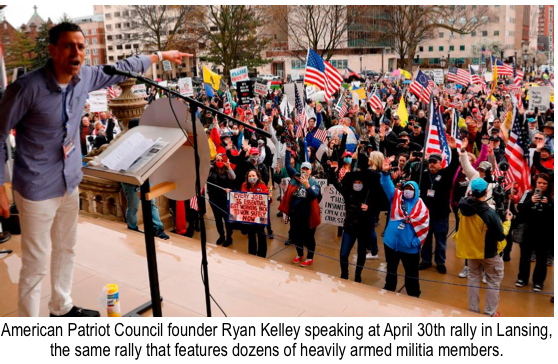
The WOODTV8 reporter, Meghan Bunchman, talked with Kelley at length and only referred to him as a former Michigan Gubernatorial candidate. The reporter did acknowledge that he was convicted of participating in the attempted insurrection and that he did 60 days in a federal prison.
However, what the WOODTV8 reporter did not say, was that Ryan Kelley is the founder of the American Patriot Council and a known White Supremacist. I first began reporting on Kelley and the American Patriot Council in early 2020, after they began organizing protests at the Lansing State Capital. Kelley was often a speaker at these protests, which were designed to oppose the Lock Down order put in places by Gov. Whitmer. At most of those protests, there were numerous heavily armed men who showed up, where on one occasion these armed men were allowed to enter the State Capital. What follows is a rundown of the stories I have written about Ryan Kelley and the American Patriot Council.
In April of 2020, Ryan Kelley and the American Patriot Council were involved in the protest at Gov. Whitmer’s home and they were the lead organizer for the large protest at the Lansing State Capitol a week later.
In May of 2020, the American Patriot Council and Ryan Kelley organized a rally at Rosa Parks Circle in Grand Rapids. I did two stories about that rally, which I attended. The first story was done right after the rally, and a second story where I identified some of the more high profiled people at that rally.
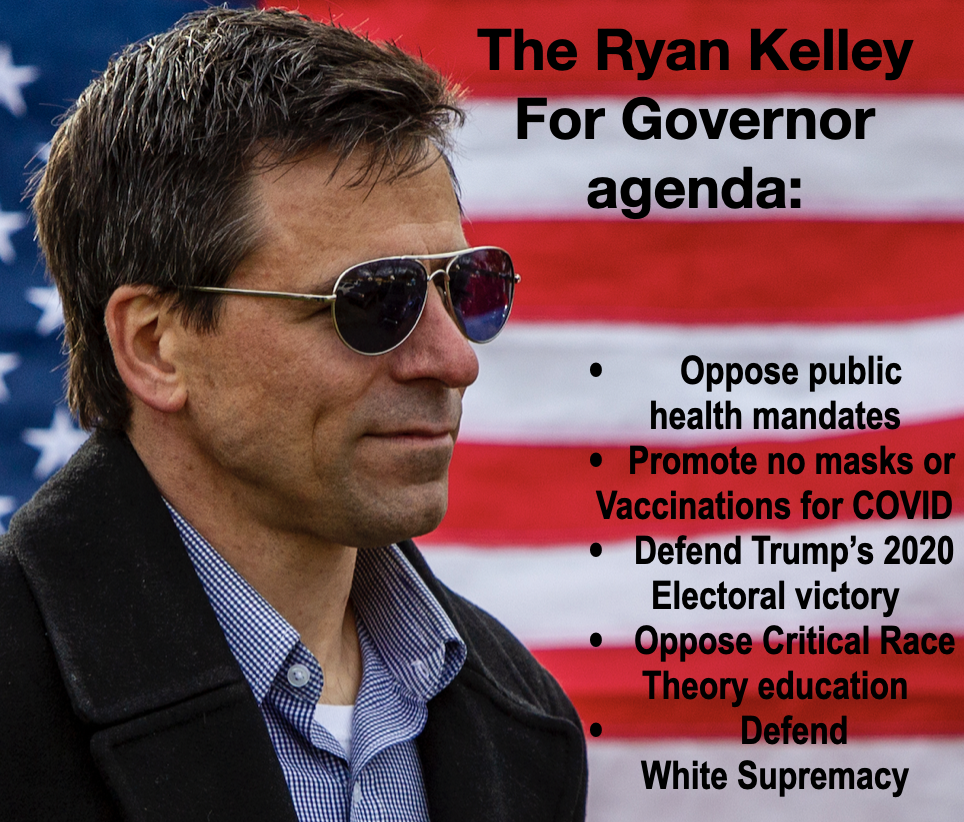 In the summer of 2020, Ryan Kelley and other members of the American Patriot Council showed up as counter-protesters in Allendale, Michigan after civil rights activists were calling attention to a Civil War Statue that was favorable to the Confederate Army. Ryan Kelley then led a rally in October at the same sight in Allendale, but this time roughly 75 civil rights people showed up to protest the American Patriot Council rally.
Here are a few more articles on Ryan Kelley and the American Patriot Council.
Founders of the American Patriot Council were involved in the January 6th Siege at the US Capitol
Ryan Kelley: Campaign Finances, COVID denial and other falsehoods
I just sent an Email to WOODTV8 reporter Meghan Bunchman and I encourage you to do the same. It is unacceptable to provide Ryan Kelley so much airtime and not even question or challenge his role in the American Patriot Council, his promotion of White Supremacist ideology, and his participation in the January 6th attempted insurrection. Meghan’s Email is meghan.bunchman@woodtv.com.
GRIID end of the year in Review: Part IV – Documenting the work of Social Movements in 2024
In Part I of the GRIID Year in Review, I wrote about the media watchdog work I do and how the local news reported on critical issues in Grand Rapids for 2024. Part II of the GRIID Year in Review focused on monitoring the Far Right in West Michigan.In Part III, I provided an overview of GRIID’s monitoring of the Grand Rapids Power Structure. Today, I want to look at my reporting on Social Movements in Grand Rapids for 2024.

I have been tracking the work of Grand Rapids-based social movements since the 1980s, which led to the creation of the https://grpeopleshistory.org/ and my book, A People’s History of Grand Rapids. I also write about local social movements because I believe that more than any other factor, social movements are what creates lasting changes and creates more possibility for collective liberation. For anyone who closely studies history, social movements, uprisings and revolutions are what causes real social transformation, not elections and not the status quo.
Palestine Solidarity
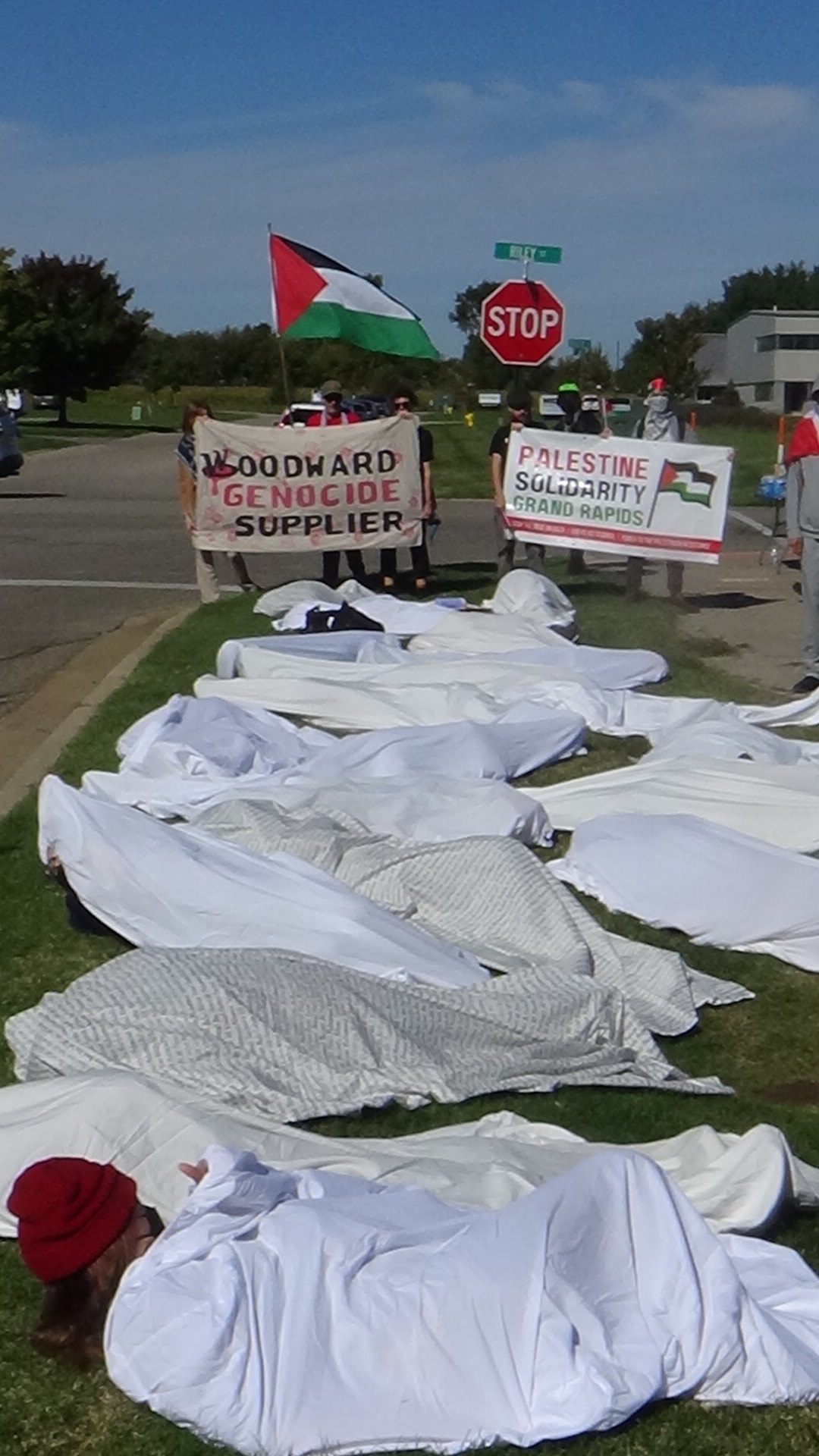 There were numerous social movements that were active in 2024. One of those movements was organizing around the ongoing Israeli occupation of Palestine and the genocidal campaign being waged by Israel. In early January there were some creative banner drops in the downtown area of Grand Rapids. A week later there was an action at a local military contractor, which is also owned by an Israeli company. Then in late January, activist held an action outside of the residence of the Grand Rapids Catholic Bishop, demanding that he call for a ceasefire in Gaza.
In late February, Vice President Kamala Harris came to Grand Rapids, so organizers showed up to confront her and the Biden Administration’s unconditional support for Israel. In March, I wrote about Calvin University’s faculty that was calling for the school to divest from companies operating in Israel. The very next day I did an interview with one of those professors.
In May, organizers with Palestine Solidarity Grand Rapids disrupted a Kent County Democrats annual fundraiser, since the Democratic Party has not called for a ceasefire in Gaza, nor an end to US military sales to Israel. In October, Palestine Solidarity Grand Rapids organized an action at a Zeeland-based corporation, which also makes parts for bombs that the Israeli military is dropping on Palestinian civilians.
Comrades Collective
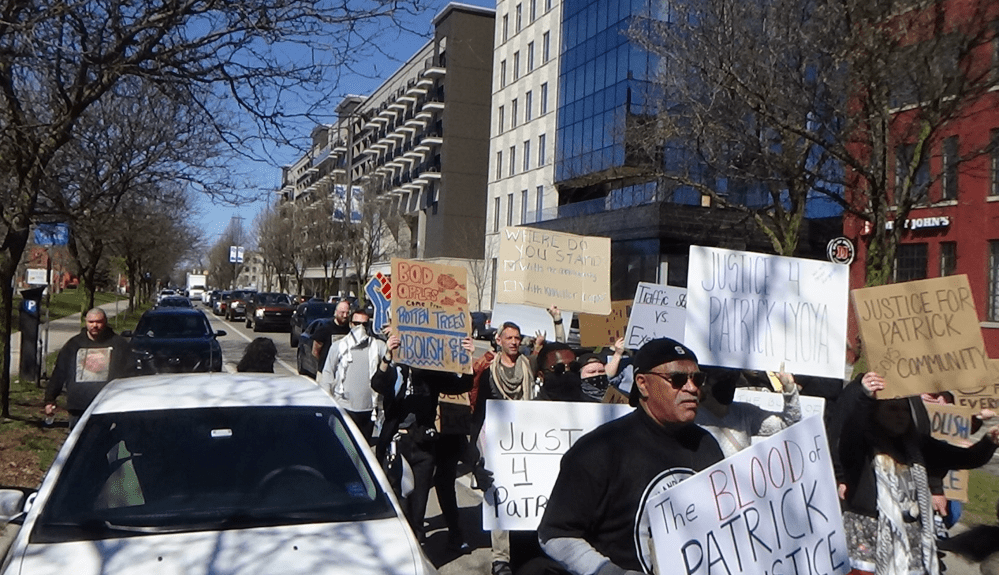
Policing in BIPOC communities continued to be a focus of resistance in 2024. The Comrades Collective organized two events for the 2nd anniversary of Patrick Lyoya’s murder by the GRPD. First, there was a candlelight vigil held in front of the Kent County Court House in early April, which was followed by a march a few days later. In both actions the family of Patrick Lyoya participated.
The march that was held on April 6th saw a significant amount of GRPD presence and harassment. Even though the march was non-violent, the GRPD arrested the safety car driver and impounded their car. In addition, weeks after the action, two BIPOC activists were contacted by the GRPD and told that they were being charged with bogus offenses. GRIID interviewed both of the activist charged, the first on May 6th and the second on May 20th.
Later in April, the Michigan State Police repeatedly ran over a Black man in Kentwood, prompting swift outrage. The Comrades Collective offered crowd safety at several demonstrations, plus they released their own statement on the police murder of Samuel Dajon Sterling. Then in May, because of all of the GRPD repression against movement groups in Grand Rapids, I wrote about piece about the criminalization of dissent. Lastly, after some 14 months after the Comrades Collective submitted a FOIA request regarding GRPD surveillance of those seeking justice for Patrick Lyoya, I wrote a summary of the FOIA documents and posted all of them on the GRIID site.
Grand Rapids Area Tenant Union
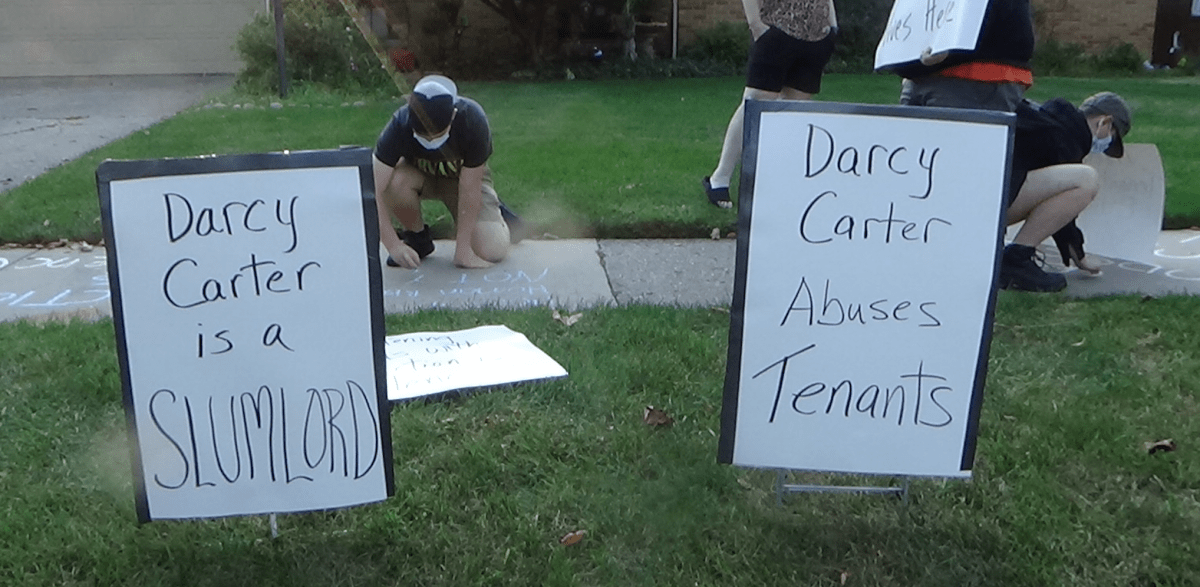
The housing crisis has been front and center in the minds of many people, but rarely do those in power talk about the skyrocketing rental costs, how exploitation by landlords is the norm, nor the daily realities of what it means to be a tenant. GRIID documented numerous actions that the Grand Rapids Area Tenant Union (GRATU) organized in 2024 beginning with the assembly they held in April, with nearly 100 people in attendance. A few weeks after the tenant assembly, GRATU organized an action at the home of a landlord, because the landlord was threatening eviction.
In May, GRATU members went to Lansing to be part of a statewide protest at an annual gathering of the Michigan State Housing Development Authority. A few weeks later, I wrote about how GRATU members supported a tenant who was evicted, thus demonstrating tenant solidarity.
In September GRATU supported another tenant who was being threatened by their landlord, with another action at the home of the landlord. In October GRATU signed on to a letter being sent to Gov. Whitmer with demands to pass 9 specifics bills that would greatly benefit tenants living in Michigan.
GRATU took the lead in organizing a campaign to deny the $565 million tax incentives that the DeVos/Van Andel development project was seeking. GRATU went back to Lansing for a protest at the State Capitol, where they gave the State Legislature a 30 day notice to pass tenant rights legislation. Finally, just before the Thanksgiving holiday, GRATU members and Movimiento Cosecha members organized a protest outside of the home of Democratic State Senator Winnie Brinks.
Movimiento Cosecha
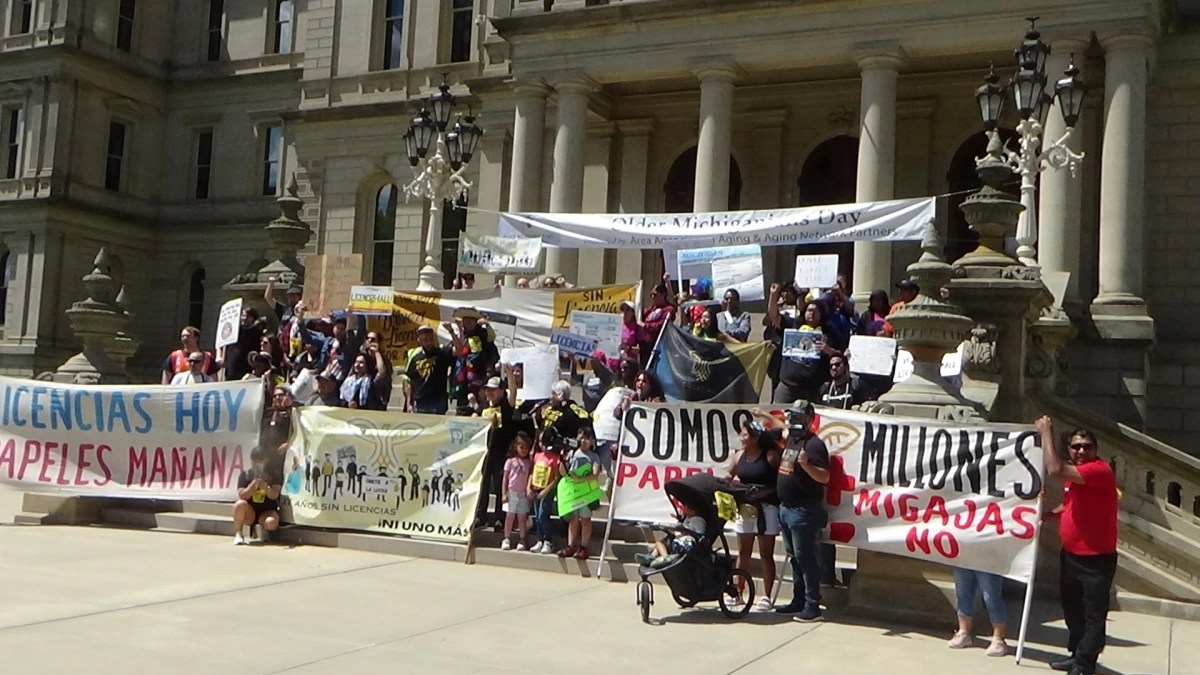
Movimiento Cosecha has been organizing for immigrant justice since 2017 and GRIID has been documenting their work the entire time. In 2024, Movimiento Cosecha was still working to win driver’s licenses for those that are undocumented. For their annual May Day action they went to Lansing and did a disruptive action outside of the State House Chambers. In October, Cosecha members went to a Livingston County Commission meeting to call out the commissioners, which had passed a resultion just weeks before, a resolution which gave the Sheriff’s Department the freedom to detain anyone who was undocumented.
Because of the 2024 elections, where both the Democrats and the Republicans fought to see who could have a more repressive immigration policy, Cosecha took the opportunity to talk about how both parties have not benefited their communities. After Trump was re-elected, where he promised to engage in mass deportations, Cosecha began holding larger community meetings to get people signed up to do anti-deportation work.
Movimiento went back to Lansing because there was still an opportunity to win driver’s licenses for the undocumented community. Their action was to engage in a hunger strike in the State Capitol building and pressure State Legislators to pass the Drive SAFE bills during the lame duck session. Unfortunately, on the last possible day for the State House to vote on the bills, they didn’t even have a quorum to vote.
There were numerous other groups involved in movement work, such as a GRPS student union demanding better pay for teachers, a newly created group called the Grand Rapids Pullover Prevention, plus many of the autonomous organizations in Grand Rapids held a press conference to collectively make a statement that regardless of who gets elected, their work would still be necessary.
Of course, much of the behind the scenes work that social movements doesn’t gain the same amount of attention, but it is clear to me that whatever real and lasting changes that will occur, it will be because of the work of grassroots, community-based movements that are committed to system change.

