WZZM 13 does more harm than good with their reporting on rental costs in Grand Rapids
A week ago, WZZM 13 aired a story which began by presenting the perspectives of two renters, both of which talked about the ridiculously high rental costs in Grand Rapids.
The channel 13 story then lets viewers know that Grand Rapids is the 11th toughest city to find an apartment in, according to RentCafe. GRIID reported on this same RentCafe data, especially how it was presented on MLive last week. The MLive reporter didn’t even both to speak with tenants who are deeply impacted by the unjustly high rental fees in Grand Rapids.
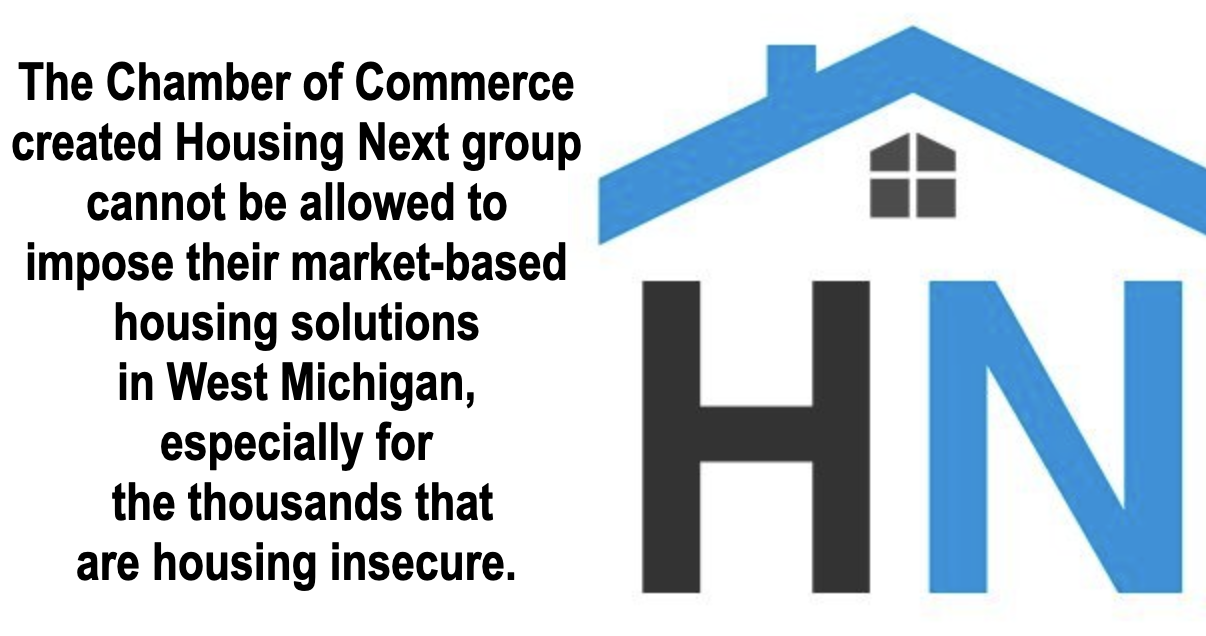
However, despite the fact that WZZM 13 did provide commentary from tenants, the rest of their story simply provided a platform for people who represent business interests and have no idea how tenants are currently being exploited. Right after hearing from tenants, the channel 13 story cuts immediately to Josh Lunger, a government affairs person with the Grand Rapids Chamber of Commerce. Lunger states:
“Whether that’s land-use decisions, and talking about especially, how do we fill along corridors, which is a big priority for Housing Next, or if it’s responsibly and adequately over deploying the tools like housing tax increment financing and other things that the state has enabled or the locals have invested in or it’s just zoning and code obstacles.”
What the GR Chamber staffer essentially did was to dismiss the comments of the renters cited in the channel 13 story, blaming government regulation for the housing crisis instead of the outrageous cost of rent.
WZZM 13 did a follow up story on Grand Rapids being the 11th toughest city to find an apartment in, but instead of talking to more renters or groups like the Grand Rapids Area Tenant Union, they provide a platform for a Grand Rapids Chamber of Commerce created group.
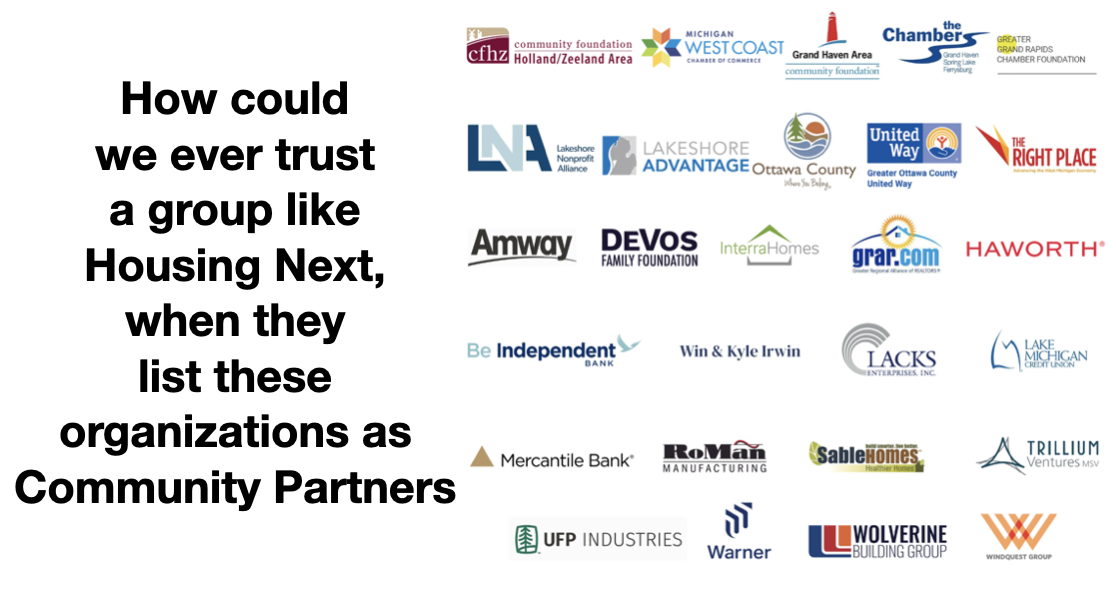
The group Housing Next is the only source cited in the October 13th WZZM 13 story. Housing Next, which was created by the Grand Rapids Chamber of Commerce, represents business interests, not those of working class individuals and families that can’t afford the cost of rent in this market, primarily because they don’t make a living wage.
Brooke Oosterman, executive director of Housing Next, is the only person cited in this channel 13 story, where she continues to blame government regulation instead of addressing the unaffordable cost of rent that thousands of West Michiganders face. Here is one of the innocuous comments from Oosterman:
“It’s working with our local communities, helping them to understand the vision, helping them to rewrite their ordinances in favor of more residential development…And so there are some big challenges ahead of us, right? It’s going to take a very, very strategic, collaborative, intentional approach to get there, but the benefit is, we’re all going to be better for it.”
In the end, WZZM 13 does more harm than good, since they don’t center the lived experience of tenants in this city, they provide a platform for a GR Chamber of Commerce created entity that is committed to finding housing solutions with a market-based approach. Market-based solutions to the current housing crisis are a false solution, but that doesn’t matter, since the local news media has made Housing Next the darling of all things housing.
GR groups joins The Rent is Too Damn High letter to Gov. Whitmer with list of demands and announced mass demonstration in Lansing this November
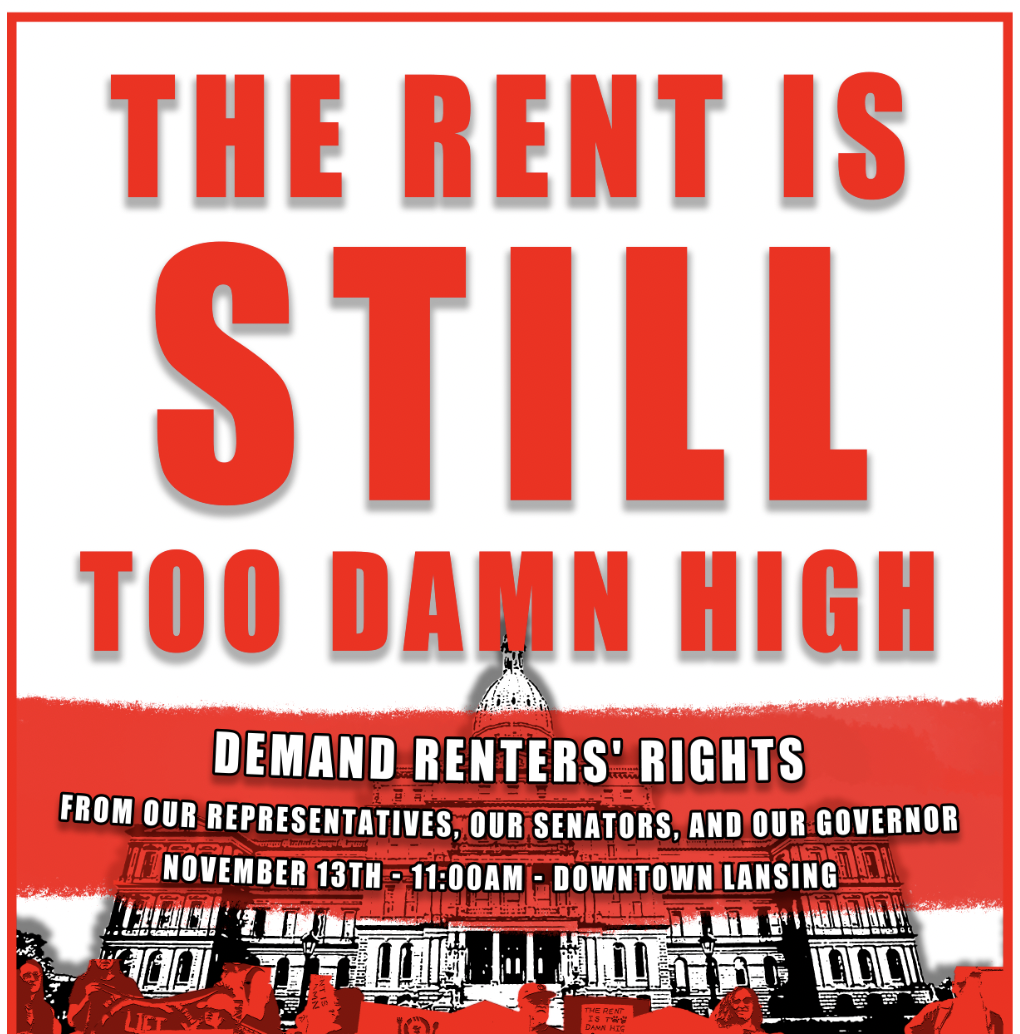 For over a year now, the Lansing-based group, The Rent is Too Damn High, has been making demands of the State of Michigan and working with Tenant Unions in the fight for housing justice.
In September of 2023, some 500 tenants and other housing activists showed up in Lansing with very clear demands, which GRIID wrote about.
Last week, The Rent is Too Damn High sent a letter to Gov. Whitmer – along with other elected officials – with a list of demands and an announcement that they are calling for a mass demonstration in Lansing to get the Lame Duck period of the State Legislature to pass numerous bills that would make the lives of tenants less stressful.
Here is the entire text of the letter:
To:
Gretchen Whitmer, Governor
Winnie Brinks, Senate Majority Leader
Joe Tate, House Speaker
Jeff Irwin, Senate Housing & Human Services Chair
Jason Hoskins, House Economic Development & Small Business Chair Kristian Grant, House Economic Development & Small Business Vice Chair
We are tenants’ unions, housing justice groups, and housing service providers, writing to urge you to pass and sign renters’ rights legislation before the 2023-2024 legislative session concludes. Our members and constituents have been devastated by Michigan’s housing crisis, which has grown more dire under the current administration.
We have held dozens of meetings with state Representatives and Senators, who assured us of their intent to support renters, tenants and the unhoused. And when the Governor acknowledged that “the rent is too damn high!” in her State of the State Address this year, we listened with hope.
Instead of having renters’ backs, your trifecta government leadership has fast-tracked proposals that prioritize real estate developer’s interests, while leaving renters’ rights to languish in committee. Respectfully, the Governor’s exclusive focus on “build baby build” is not a serious approach to ensure that we all have stable and comfortable housing in the years to come. Supply-side interventions alone will take the better part of a decade to impact housing prices. Renters need protection and relief now!
There is still an opportunity to do right. Because of our members’ advocacy, your colleagues have introduced a historic number of renters’ rights bills this session. Now they need to be passed and signed into law. Among the dozens of worthy bills introduced, we are united in support of these nine:

We want to be clear: The reason we are so determined is because of the increasing difficulty of daily life for renters across the state. Our members are doing their best to keep their families safe and sheltered as they are nickeled, dimed, and evicted by (increasingly, out-of-state private equity based) corporate landlords. Now we need you to do your best for them.
On November 13, we will mobilize our members to insist you do the right thing in the Lame Duck session. Renters are fed up with being on the downside of a winners and losers economy. It’s time to give tenants a fighting chance at good housing, by protecting our basic rights. We need these bills to pass this term.
With conviction, and full of fight for our families and neighbors,
- MI Rent Is Too Damn High
Detroit Disability Power
We The People MI Action Fund - Ann Arbor Tenants Union
McKinley Tenants Association
Detroit Action
Keeweenaw Tenants Union
MH Action Michigan Team - Lansing Rent Is Too Damn High
Linc Up Nonprofit Housing Corporation - Grand Rapids Area Tenant Union
Community Owns Safety Coalition - We The Tenants Kalamazoo
- Traverse City Housing Justice Team
- Nation Outside
Detroit Tenants Association
Grand Rapids churches collaborate with the GRPD during the national Faith and Blue weekend
The enforcers of state violence, the cops, have been scrambling for years, especially after the creation of the Movement for Black Lives to present themselves as a social benefit.
When the massive uprising against policing happened in 2020, with calls to defund the police, even more groups emerged on the national and local scene to defend the institution of policing.
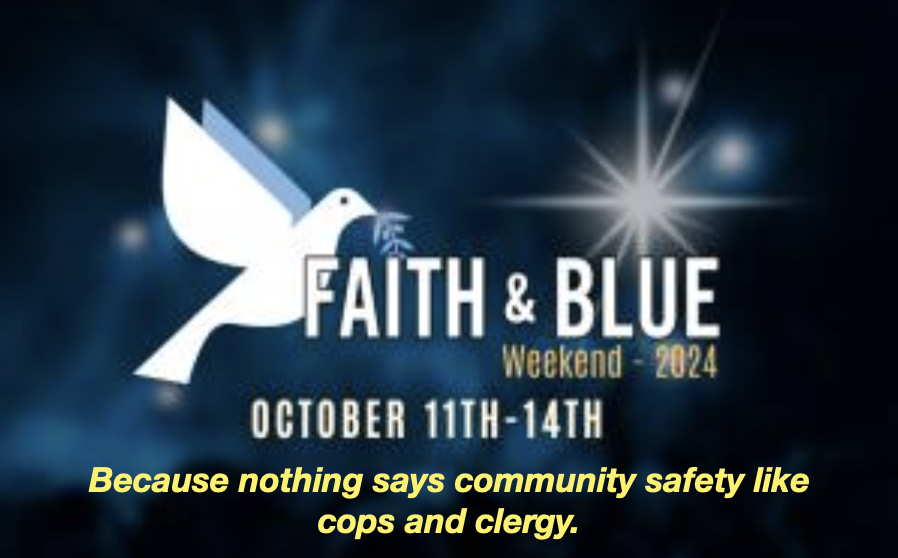
This past week there were groups all across the US and in Grand Rapids celebrating Faith and Blue week, a bizarre collaboration between faith communities and police departments.
WXMI 17 first reported on this collaboration on Friday, with a story headlined, Faith-based discussion pushes for change, collaboration. The channel 17 story, included links to two specific events that were happening in the community.

One event was a Pray and Play basketball game, where the GRPD played youth members of the GR Alternative Correctional Experience. The second event, held on Saturday, was a Crime Awareness and Law Enforcement Community Resource Fair.
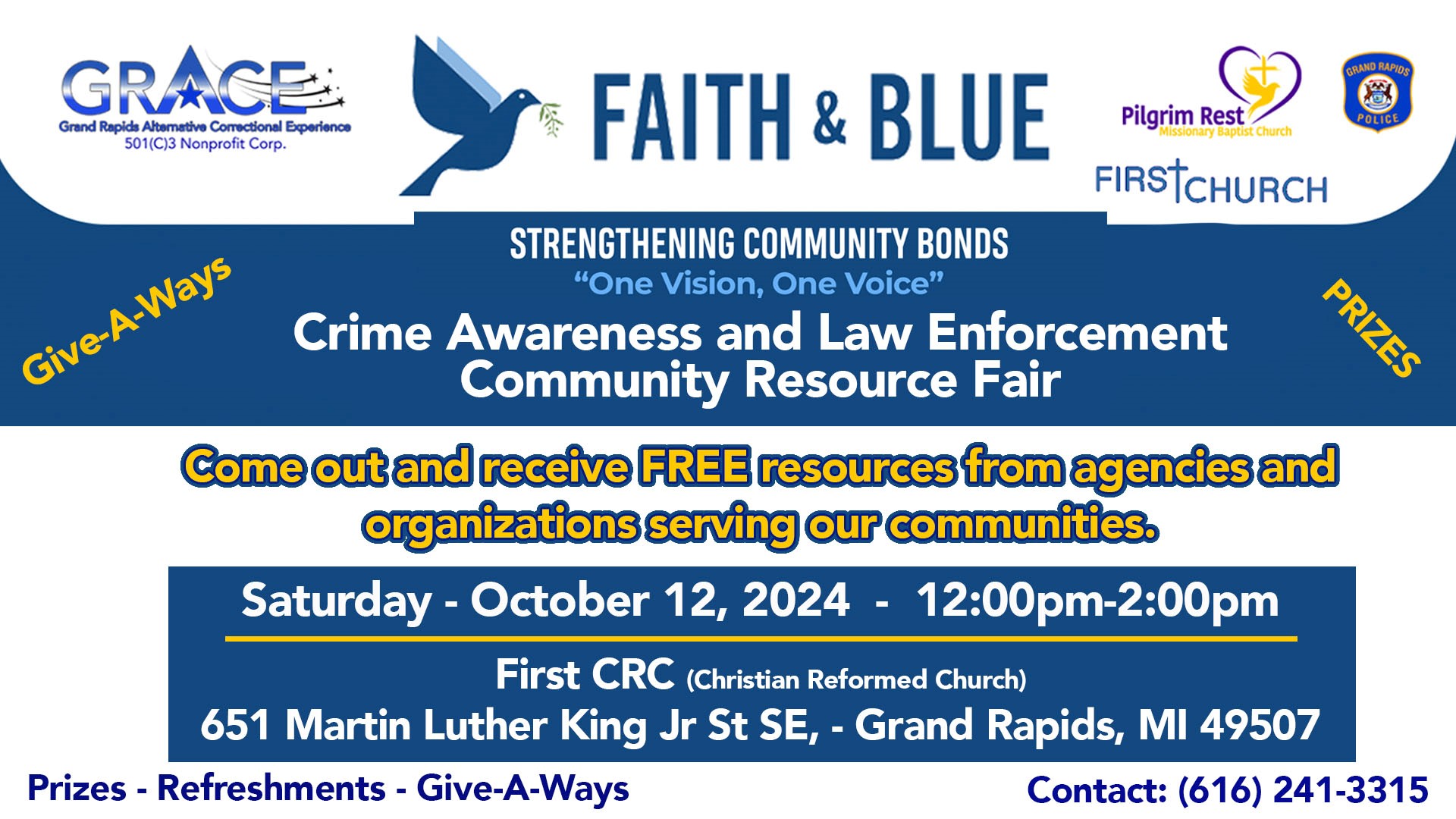
The world is truly a strange and contradictory place, where you have pastors collaborating with cops with the intent of promoting community safety. The clear contradiction is in the clergy’s failure to understand the history of policing (See Kristian Williams’ book – Our Enemies in Blue: Police and Power in America), along with the fact that cops have been disproportionately killing Black people at a very high rate. (See https://mappingpoliceviolence.org/)
At another level, this all makes complete sense, especially in Grand Rapids, where the GRPD has had a program for several years called Clergy on Patrol. Clergy on Patrol is where local clergy do ride alongs with the GRPD and participate in various training exercises, in an attempt to humanize cops.
The Faith and Blue campaign was begun in 2020 as a direct response to the massive uprisings in the US after George Floyd was killed by a cop, coupled with the demands to defund the police. The Faith and Blue campaign was created by the group Movement Forward, which was founded by Reverend Markel Hutchins.
The Faith and Blue mission, “was launched to facilitate safer, stronger, more just and unified communities by directly enabling local partnerships among law enforcement professionals, residents, businesses and community groups through the connections of local faith-based organizations.” The partners involved in the Faith and Blue campaign are a few Christian groups, but mostly state, regional and national law enforcement agencies, including the Department of Homeland Security.
We should see the Faith and Blue campaign simply as a desperate attempt by cops to win over public support and as an opportunity for some clergy to cash in on the funding that is being offered by such programs.
Palestine Solidarity Information, Analysis, Local Actions and Events for the week of October 13th
It has been a little more than 1 year since the Israeli government began their most recent assault on Gaza and the West Bank. The retaliation for the October 7 Hamas attack in Israel, has escalated to what the international community has called genocide, therefore, GRIID will be providing weekly links to information and analysis that we think can better inform us of what is happening, along with the role that the US government is playing. We will also provide information on local events and actions that people can get involved in. All of this information is to provide people with the capacity of what Noam Chomsky refers to as, intellectual self-defense.

Information
U.S. Foreign Policy Has Created a Genocidal Israel
As Israel Extends Its Genocide Into the West Bank, It Targets and Kills Children
US admits it doesn’t want diplomatic solution
ISRAEL’S BLOODY RECORD OF BOMBING SCHOOLS IN GAZA
How Israel killed hundreds of its own people on 7 October
Campuses Are Pulling Out All the Stops to Crush Palestine Solidarity This Fall
Blinken Approved Policy to Bomb Aid Trucks, Israeli Cabinet Members Suggest
How Israel Has Made Trauma a Weapon of War
ONE YEAR OF EMPTY RHETORIC FROM THE WHITE HOUSE ON ISRAEL’S WARS
Analysis & History
How October 7 Transformed Israeli Society
ISRAEL’S YEAR OF KILLING, MAIMING, STARVING, AND TERRORIZING THE PEOPLE OF GAZA
Image used in this post is from https://visualizingpalestine.org/
Shocking News: DeVos controlled Grand Rapids DDA approves DeVos/Van Andel development plan
Recently, the Grand Rapids Downtown Development Authority (DDA) approved a proposal from the DeVos/Van Andel. This should not come as a surprise to anyone who bothers to follow the DDA and who controls it. (See October 9 DDA Agenda)
The Grand Rapids DDA is made up of a 9 member board and two of those members – Greg McNeilly and Richard Winn are both DeVos employees. Richard Winn is the President of AHC Hospitality, which is a DeVos-owned company that manages 14 Hotels/Inns, most of which are in West Michigan. In addition to sitting on the DDA Board, Richard Winn is also on the boards of the Grand Rapids-Kent County Convention/Arena Authority, Experience GR, Downtown Grand Rapids Inc. and Grand Action 2.0. All of these entities work in collaboration to make sure that the DeVos and Van Andel families get what they want.
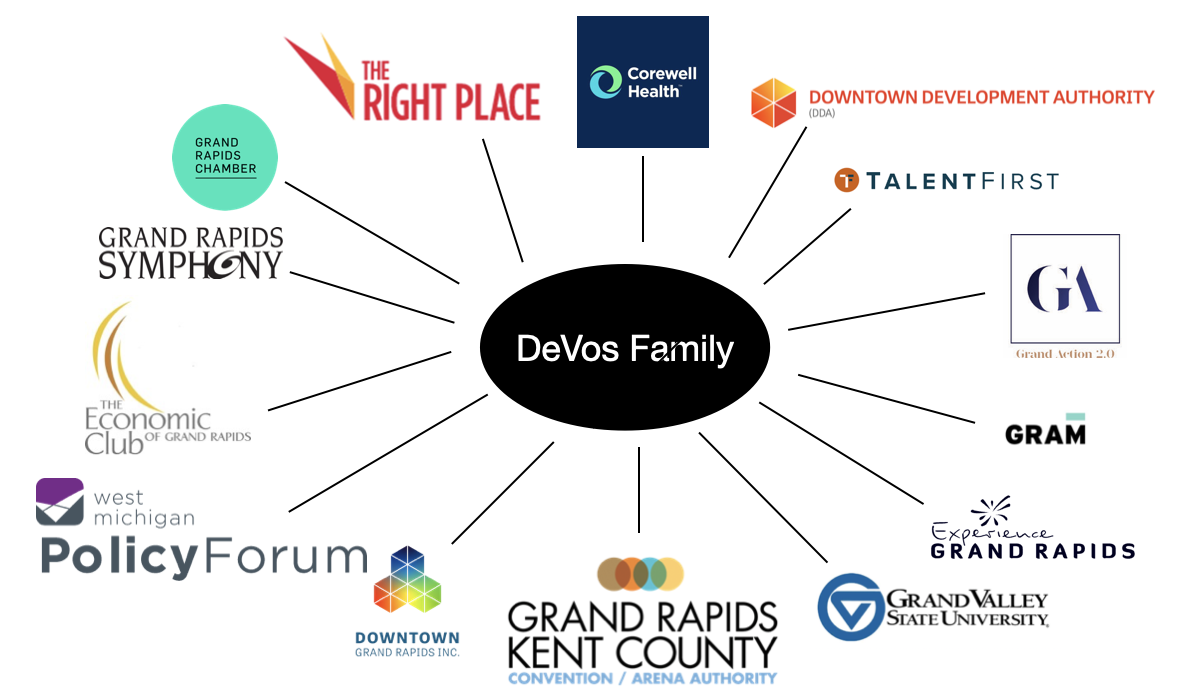
The other DeVos operative is Greg McNeilly. McNeilly was the campaign manager for the failed gubernatorial campaign of Dick DeVos in 2006. McNeilly is currently the Chief Operating Officer of the DeVos run Windquest Group, an entity that is owned by Dick & Betsy DeVos. McNeilly has also been the former President of the Michigan Freedom Fund, a far right political group that was also created by the DeVos family. McNeilly ran the campaign to oppose the Voters Not Politicians ballot initiative. In 2021, McNeilly defended the Enbridge Corporation and their plans to build a tunnel underneath the Great Lakes for the Line 5 oil pipeline.
Most of the recent of the DDA Board has some connection to the DeVos family as well, whether it is business dealings or receiving campaign funding, so there is no real opposing voices on the DDA when it comes to the most powerful families in this city.
Once you understand how the Grand Rapids Power Structure functions in this city, you will then be able to understand the decisions and the policies that are adopted by elected officials and groups like the Grand Rapids Downtown Development Authority.
Congresswoman Hillary Scholten is clearly an imperialist who supports the systematic murder of children in Gaza.
 There were thousands of actions and gatherings that took place around the world on October 7, to draw attention to what is happening in Gaza.
In New York, Jewish activists and allies gathered Monday for a vigil on the first anniversary of October 7 to mourn Israelis and Palestinians who have been killed and to call for an end to the Israeli massacre in Gaza and beyond. Locally, the group Palestine Solidarity Grand Rapids organized an action at a weapons manufacturer in Zeeland, where parts are being made for bombs that the Israeli military is using against the Palestinians.
To commemorate October 7th, Rep. Hillary Scholten posted this message on her Facebook page:
One year after Hamas attacked Israel, we mourn the lives lost and the innocent people taken from their loved ones. Together, we must renew our commitment to bring the hostages home and work toward peace that truly lasts, so this will never happen again.
This in no way is surprising, since Rep. Scholten has been an unconditional supporter of Israel, traveled to Israel on an AIPAC sponsored trip in the summer of 2023, has been the recipient of plenty of Pro-Israel PAC money and has voted for every piece of legislation that has provided Israel with billions in US military aid and over 600 separate US weapons shipments to Israel, weapons that have been used to kill Palestinians. GRIID has been methodically documenting this since the summer of 2023.
The image that Rep. Scholten posted, along with the text above, was an image of a candle, with the words, Remembering October 7th. Of course, I altered the graphic she posted, as to reflect more of what Rep. Scholten has actually supported and which lives she finds worthy and those she finds unworthy.
The text she included in her October 7th post puts all the blame on Hamas, but says nothing about the internationally recognized genocide that Israel is committing. Scholten then says that she wants the hostages to be brought home, but ignores the thousands of Palestinian prisoners that Israel, which has always been part of the negotiation process.
Lastly, Rep. Scholten then demonstrates her bold faced hypocrisy by claiming she wants to work towards a lasting peace. How the hell can you unconditionally support over 600 US weapons shipments to Israel, weapons that are being used on Palestinians, then claim you want peace? Congresswoman Hillary Scholten is clearly an imperialist who supports the systematic murder of children in Gaza.
Graphic used here below is from https://visualizingpalestine.org/.

On Tuesday, WOODTV8 posted a story with the following headline, Grand Rapids sets record for number of 70-degree-plus days in calendar year.
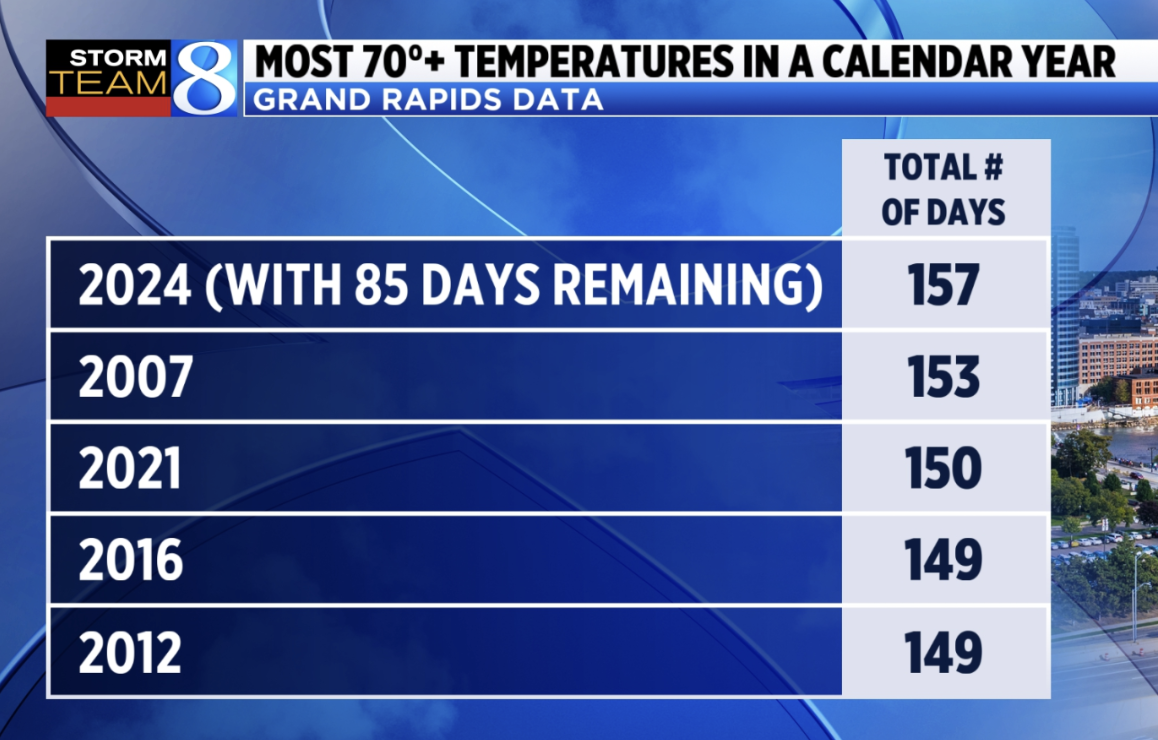
The brief story on channel 8 provided some data and a few graphics, like the one here above, which shows that the record for 70 degree plus days in 2024 is the most, with 85 days still remaining in the year.
Besides the graphics and a brief narrative, there is one major omission in this story – the reporter failed to mention Climate Change.
There are two types of Climate Denial
The first type of climate denial is the one that most of us are familiar with, where institutions and people simply deny that human activity has been drastically impacting the planetary climate, specifically by warming the planet to a likely unsustainable level.
Despite the fact that the large majority of Climate Scientists, many of which are part of the Intergovernmental Panel on Climate Change (IPCC), have been saying for several decades that Climate Change is a scientific fact, there continues to be plenty of denial.
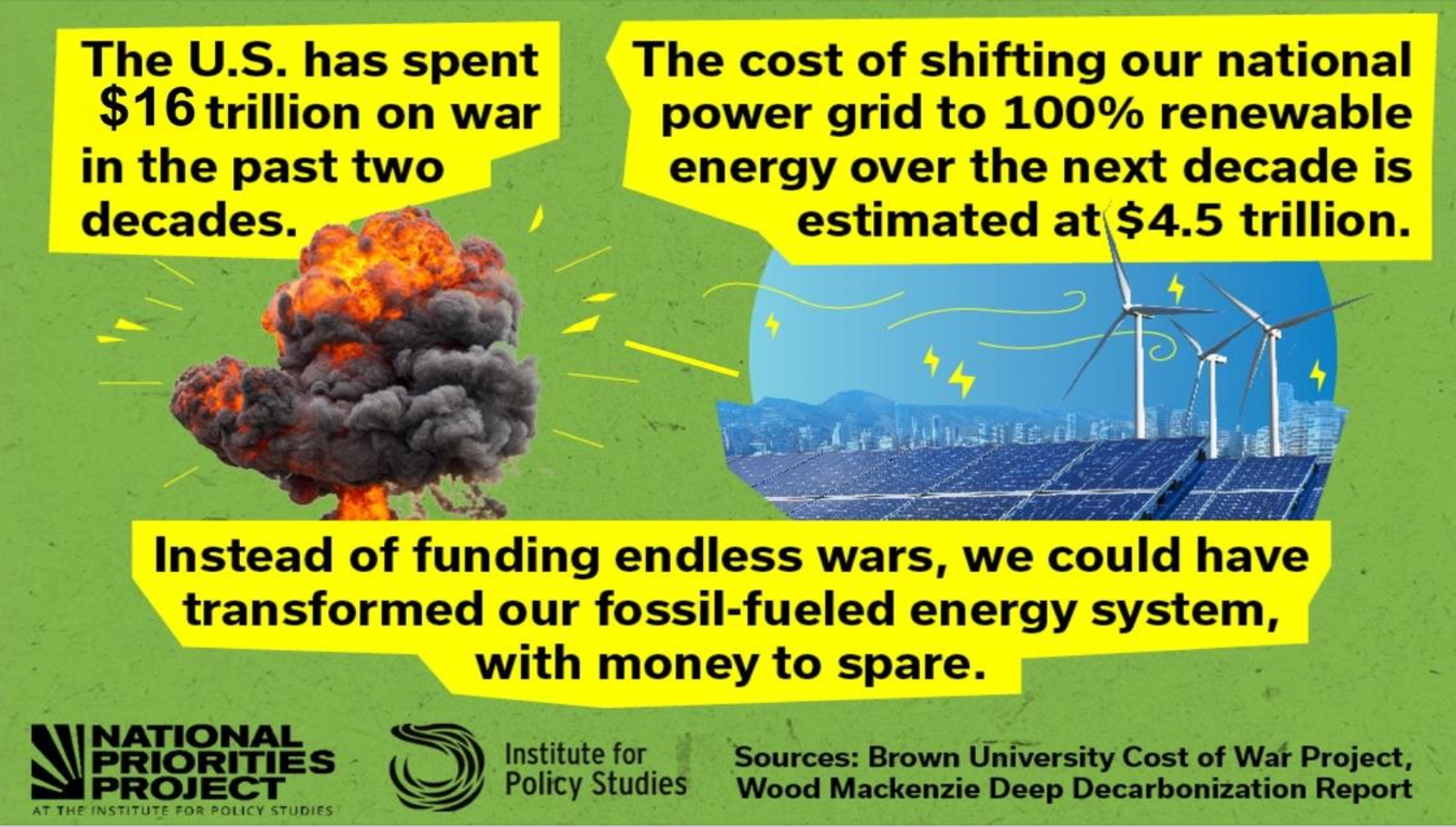
Now, some of this denial is rooted in religious belief, but a large majority of the climate deniers are motivated by political, ideological and economic reasons. In fact, it has been well documented for years that many fossil fuel corporations have not only denied Climate Change, but have funded other groups to promote climate denial.
Maybe the most notorious climate denier has been ExxonMobil. GreenPeace provides an excellent historical timeline of when and how the fossil fuel corporation has denied that the planet is warming because of human activity.
ExxonMobil and other fossil fuel companies have been funding numerous groups, like the Heartland Institute to promote climate denial. In fact, the online source DeSmog, provides an excellent database for anyone who wants to research organizations or individuals who engage in climate denial. For instance, the Grand Rapids-based group, the Acton Institute, has a history of climate denial, plus the database lets you know which groups have been funding the Acton Institute to promote that Climate Change isn’t real. Also, check out this fabulous interactive map from DeSmog, which provides more insights into how climate denial groups are connected.
Then there is the role that politics plays into climate denial. If you look at the Oil & Gas industry alone (there are lots of industry sectors that contribute to Climate Change) you can see that the large majority of money coming from the Oil & Gas industry has gone to the Republican Party since 1990, according to the OpenSecrets.
However, the second form of climate denial is what most of us participate in. Let me put it this way, you can believe that Climate Change is real, but continue to participate in the very systems that perpetuate Climate Change. For instance, the Biden Administration is on pace to approve as many oil and gas leases as Trump did, according to the Center for Biological Diversity. In other words, if you voted for Biden thinking that the Climate Crisis would lessen, then you are mistaken.

Another example of how simply voting for the lesser of evils doesn’t result in reversing the harm of the current Climate Crisis is the Inflation Reduction Act that the Biden Administration adopted in late 2022. A report from Oil Change International, entitled, Biden’s Fossil Fuel Fail: How U.S. Oil and Gas Supply Rises under the Inflation Reduction Act, Exacerbating Environmental Injustice, makes a mockery of President Joe Biden’s claims of “climate leadership.”
A third example of simply thinking that voting will make a difference with Climate Change is the simple fact that the Biden Administration has adopted the largest ever US Military Budgets every year he has been the president. The US military is one of the largest consumers of fossil fuels, and even consumes more fossil fuels than most countries around the world. Check out the essential report, No Warming, No War:How Militarism Fuels the Climate Crisis — and Vice Versa.
What Can We Do?
- Stop participating in ineffective, feel good activities. We have to see the big picture and not just do things like sign petitions, vote or buy “earth friendly” products.
- We have to educate ourselves and look at the systems of power that are perpetuating Climate Change. Read Stephen D’Arcy’s essay, Environmentalism as if Winning Mattered: A Self-Organization Strategy.
- At the same time we have to resist these systems of power, and by systems of power I mean – the US Military Industrial Complex, the current Agri-business food system, Capitalism, White Supremacy, the Prison Industrial Complex, transportation systems, the media system and other systems that perpetuate the Climate Crisis.
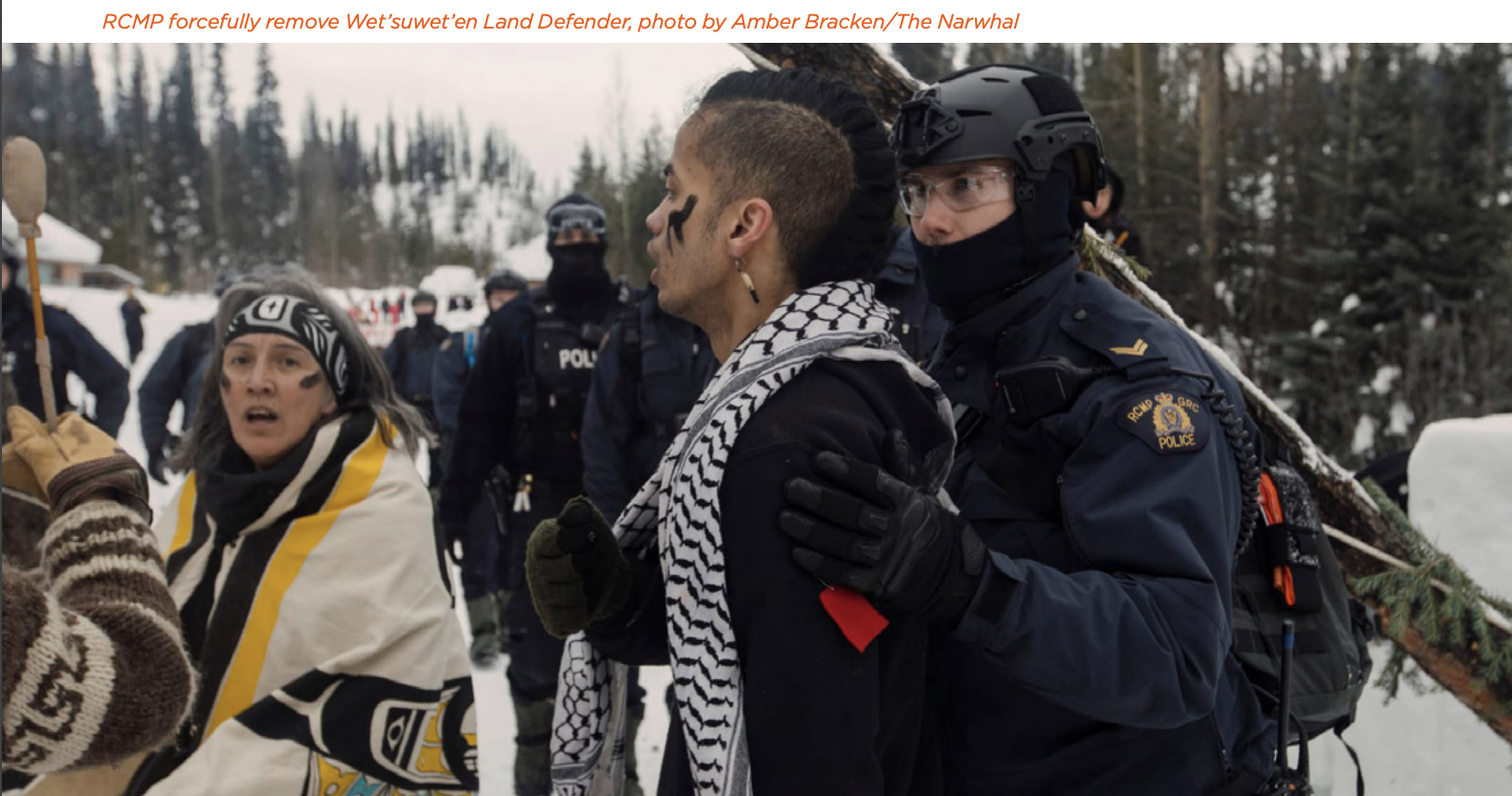
 We need to engage in direct action. One great example is from a report put out by the Indigenous Environmental Network in 2021. The report stated that Indigenous-led resistance campaigns against pipelines in the US and Canada have reduced greenhouse gas pollution by at least 25% annually since these campaigns began.
 - While we are resisting systems of power, such as Capitalism, we need to create new economic systems that are based on cooperation, are eco-centered and not based on perpetual growth. In Stephen D’Arcy’s essay mentioned in #2, he addresses what he calls the transition phase, where humanity is transitioning to something new and truly sustainable.
- Get involved in a local organizing/resistance group or campaign. If these groups are not adopting any of the previous points listed here, then challenge them to do so. The future of humanity and ecosystems is dependent on what we chose to do that does not protect our own asses, but fights for future generations.

Do you ever feel like you are stuck in some strange commercial news time-loop, where the local news media just repeats itself as a tactic to avoid having to question those who run Grand Rapids? It would appear that those who manage MLive are doing just that.
For the past few weeks, MLive has been running a story on the new DeVos/Van Andel proposed downtown development project. The story was first reported on September 21st, so GRIID provided a robust critique of the MLive coverage. A day later, MLive decided to sidestep doing real journalism and simply published a piece entitled, 5 things to know about the massive, skyline changing Grand Rapids riverfront project. I also provided a response to MLive’s recycled reporting.
Hoping that their readership has short term memory loss, MLive further milked this story, with their latest pulitzer prize reporting and catchy headline, 4 things to know as Grand Rapids weighs $544M incentive for massive skyline defining project.
True to its headline, this most recent mLive piece provides 4 subheadings – 1) What’s proposed?, 2) How does the Transformational Brownfield subsidy work? 3) Residents want a bigger affordable housing commitment, and 4) What’s next? In turn, I will provide some responses to each of the 4 MLive things to know.
What’s proposed? – MLive’s answer provides a summary version of their initial article from September 21st. There is a brief mention of the acreage involved in the DeVos/Van Andel development project, that there will be 2500 parking space – just enough for the apartment/condo dwellers and the businesses that will occupy the space – plus a repeat of the rental costs of the proposed apartments, which will be “priced at 150% of Kent County’s Area Median Income.” In other words, let’s make these apartments expensive. Well, not DeVos/Van Andel expensive, but high enough so that only people making six figure salaries and up can afford them. This might actually move Grand Rapids up the list of most competitive rental costs in the country, where they currently sit at #11. This also fits into the narrative that the GRPD have crafted, where the new downtown entertainment venues will result in adding more cops. I mean, we can’t allow unhoused people to ruin the activities and sense of entitlement of the bourgeois that will frequent the amphitheater and the soccer stadium, at least those that will being living right by these venues.
How does the Transformational Brownfield subsidy work? – Here, MLive does a reasonable job in explaining how the Transformational Brownfield subsidy actually works. Unfortunately, MLive then avoids questioning he claims of the DeVos/Van Andel proposal by failing to verify their claims. Here is what the article states:
Project officials say the project isn’t feasible without the subsidy because high-rise towers are very expensive to build, and the amount a developer can charge for rent isn’t high enough to cover the cost of constructing the building. The site itself is also challenging and pricy to build on because of its proximity to the river and the condition of the soil, officials say.
Well, shit, if project officials say this is the case, then it must be true. I mean, the God-fearing DeVos and Van Andel families would not deceive the public to by using public subsidies now would they?
Residents want a bigger affordable housing commitment – This talking point from MLive is just ridiculous. MLive only cites one person from the group Together West Michigan, which hardly represents “residents.” The lone-person cited from Together West Michigan thinks that the DeVos/Van Andel development project could do more to support affordable housing. Unfortunately, they offer no suggestions to either expand the $8.5 million the DeVos/Van Andel project would contribute over a 20 year period to the City’s Affordable Housing Fund. $8.5 million over a 20 year period is $425,000 annual, which is chump change for these two billionaire families.
As a counter proposal, I would say that it seems more than fair to suggest that the DeVos and Van Andel families could give $10 million each per year towards the City’s Affordable Housing Fund. This would result in $20 million a year over the next 20 years and the DeVos and Van Andel families could pay that amount through their tax-free havens they call foundations. In addition, the City could require that the DeVos/Van Andel development project make half of the one bedroom and two bedroom apartments truly affordable, charging $500 a month for a one bedroom and $800 for a two bedroom. This would be more than fair, considering there are currently thousands of renters that don’t make a living wage and many of them have to work two jobs or have two incomes just to survive.
What’s next? – Here, the MLive reporter just says that the city’s Brownfield Redevelopment Authority will discuss the proposed project on October 16th. Unfortunately, MLive fails to inform its readers that the Brownfield Redevelopment Authority meets at 8:30am, making it near impossible for working people/families to attend. I also noticed, that as of this posting, the City’s Meeting portal has yet to provide any information about that meeting on October 16 and will likely wait until a few days before to post anything.
The City will then make the final decision on whether or not to approve the DeVos/Van Andel project, which in all honesty seems like a done deal. I mean, when was the last time that the City of Grand Rapids ever denied any proposal coming from the co-founding Amway families?
Zeeland company exposed as a weapons manufacturer that makes parts for bombs being used to murder Palestinians
Yesterday, about 75 people make the trek from Grand Rapids to Zeeland, Michigan, to confront and expose a weapons manufacturer that is profiting off the murder of Palestinians.
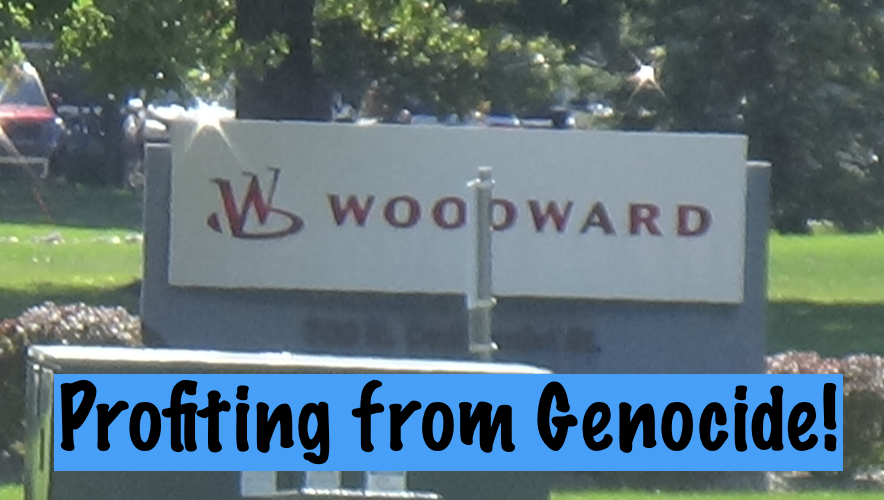
The group Palestine Solidarity Grand Rapids organized the action, which took place on the anniversary of the Hamas act of resistance to the Israeli occupation and Israeli Apartheid.
People arrived at the site of the company known as Woodward, around 1pm. Activists then lined up along the sidewalk that was directly across from the factory where Woodward makes parts used for weapons systems being used by the Israeli military against Palestinians living in Gaza.
This is not the first time that Woodward has been exposed for their role in profiting off of the Israeli genocide. Last November, students protested at a Woodward facility out west. A few months later, in February of this year, activists shut down Woodward MPC manufacturing facility in Niles, Illinois, as reported by Mondoweiss. The Mondoweiss piece also included important details about the role of Woodward, stating:
Woodward is responsible for creating the parts of war equipment and bombs used to drop on Gaza. On its website, Woodward says it provides “control and actuation solutions on air superiority and air defense missiles, direct attack missiles, guided bombs and rockets, anti-ship missiles, guided artillery and mortar rounds, hypervelocity vehicles, training and target missiles, and launch boosters.”
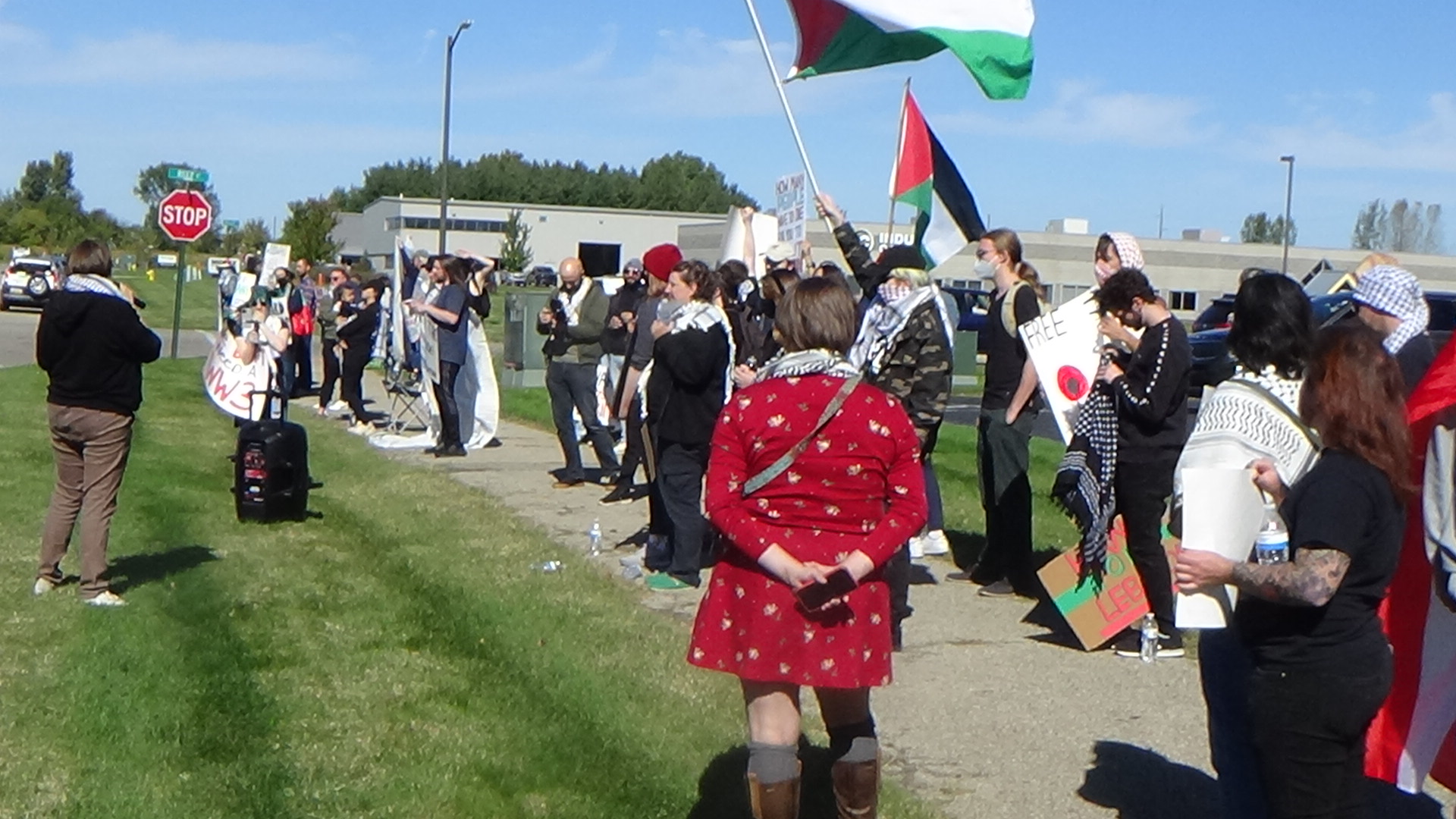
The Palestine Solidarity Grand Rapids organized action lasted just shy of 2 hours. The action included chanting, signs, banners, and numerous Palestinian flags. At one point there were also several speakers that spoke passionately about what Israel has been doing to Palestinians since 1948, the ongoing occupation, and the current genocidal campaign.
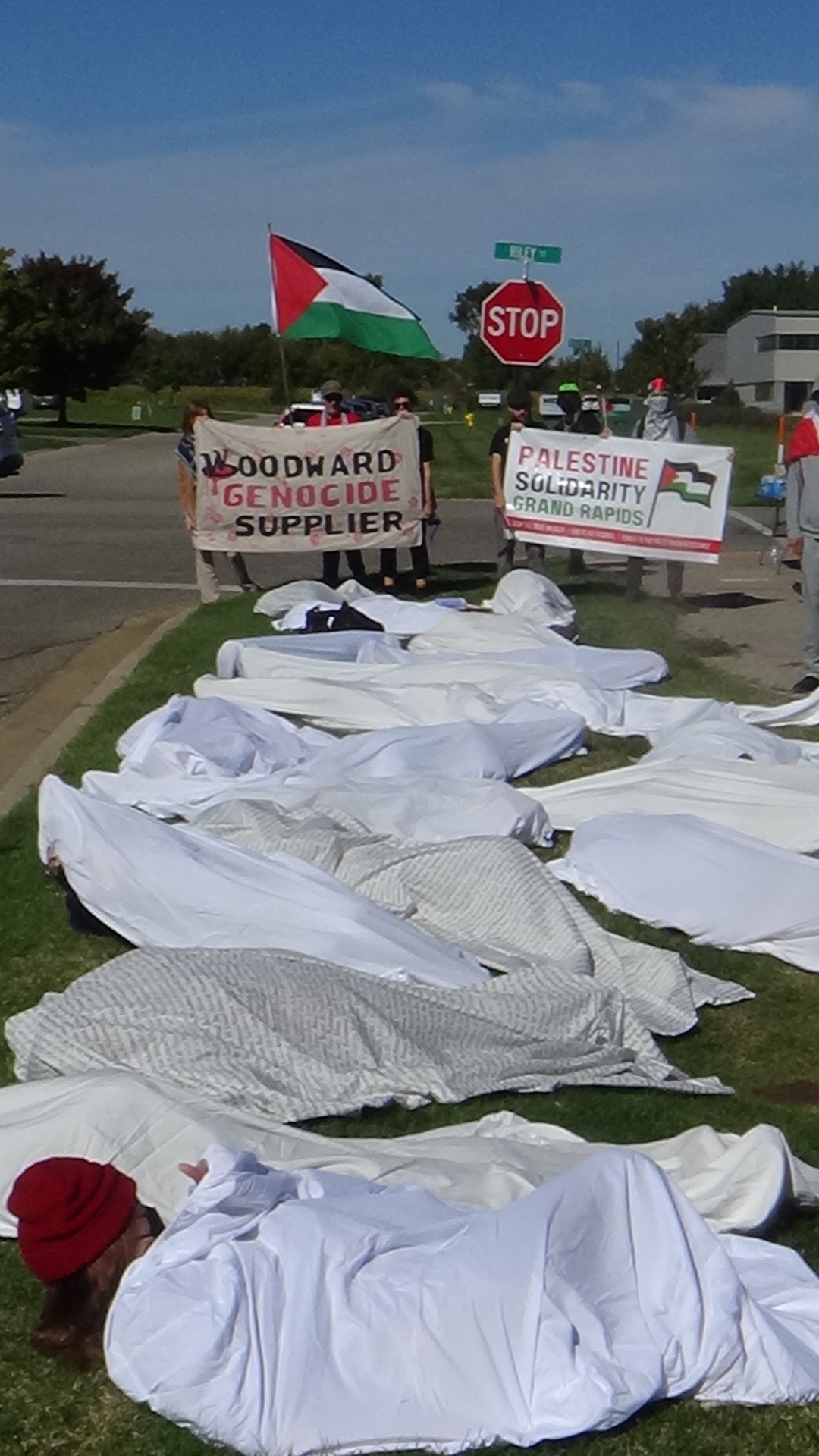 I attended the action as the designated police liaison. During the action I only saw one police car from the Ottawa County Sheriff’s Department, which just drove by the action. There were security people from the company on the side of the road where the protesters were standing, wanting to make sure that people did not step on their property. In fact, they were so insistent on people not stepping on their grass that their security people stayed outside for most of the protest to monitor those protesting. In addition, there were numerous other employees or security staff, from this same company who came out at various times during the protest, often filming those protesting.
There were also two counter-protesters that showed up shortly after the PSGR action began, one with an Israeli flag and the other holding a sign – Bring them home now, referring the Israeli hostages. These two counter-protesters stood at the opposite end of the intersection, choosing not to engage the PSGR action.
Towards the end of the Palestine Solidarity Grand Rapids action, several people laid down on the ground and covered themselves with white sheets, in order to represent the countless number of Palestinians who have been murdered by the Israeli military over the last year.
At this point I don’t know if there will be more actions or an organized campaign to confront the Woodward company on their profiting from the murder of Palestinians. If and when there are future actions, GRIID will try to report on them and any potential campaigns.
On Saturday, MLive posted an article entitled, 3 Michigan cities among most competitive rental markets in the country.
The article is based on recent data from the group RentCafe, which is nothing more than an entity that provides information about rental markets and quaint tips for renters on how to decorate their apartment. RentCafe should not be seen as a serious source, especially since most of their staff come out of the Real Estate industry.
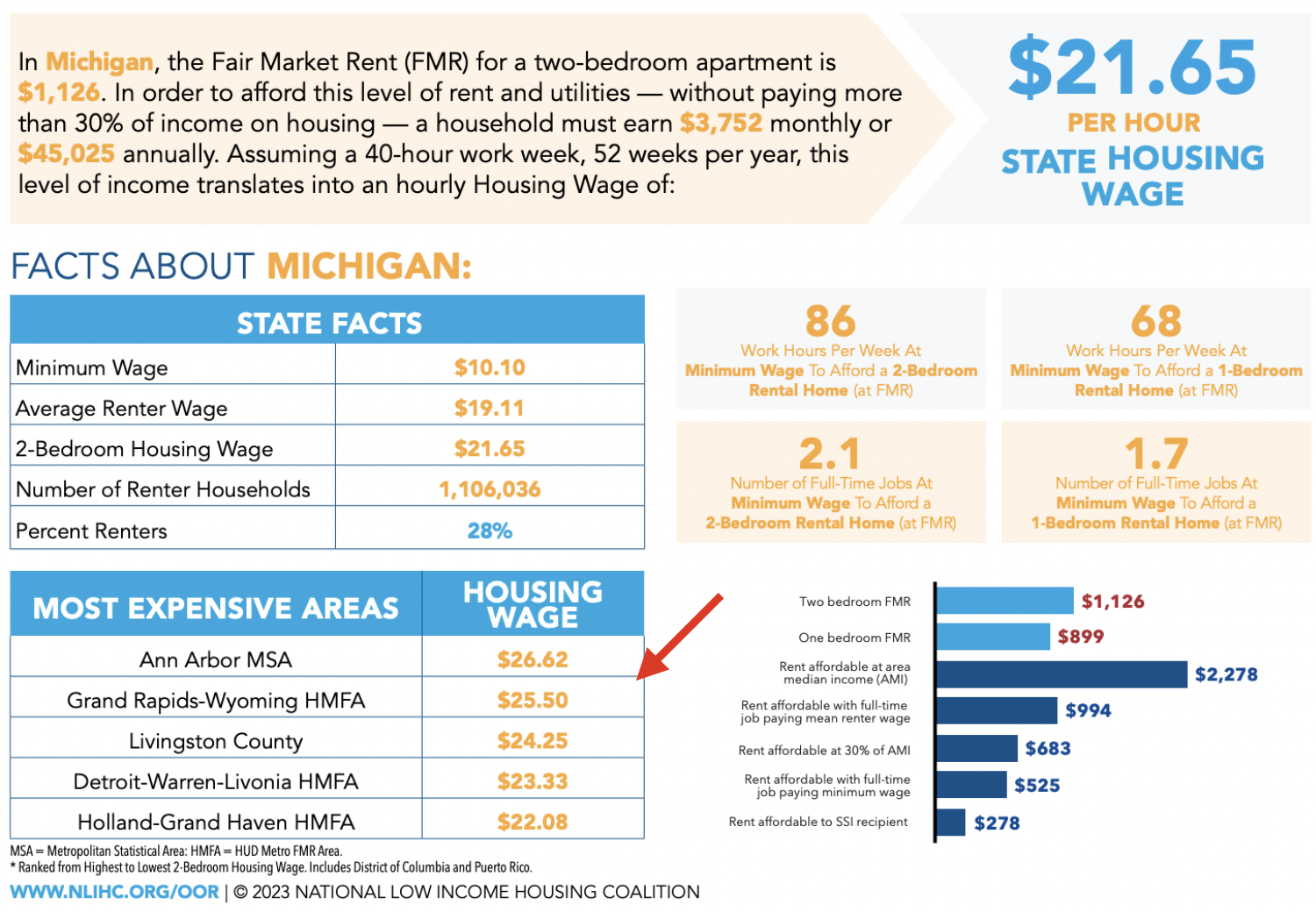
While the MLive article does provide some information on the cost of rent in Michigan and how Grand Rapids, Lansing and Detroit are in the top 20 of the most expensive in the country, the article fails to provide details on the actual cost of rent in each of these cities. MLive does cite the National Low Income Housing Coalition date for Michigan, but not for each of the three cities where the rent is too damn high. See above graphic.
However, the most egregious aspect of the MLive article is the complete lack of perspective on the realities that most tenants in Michigan are facing, especially when it comes to rental costs. Why does the MLive reporter fail to talk to renters and get their take, their lived experience of just how expensive rent is in Grand Rapids, Lansing and Detroit? Are we likely to see a follow up article or even an entire series of articles dedicated to sharing the stories of working people, many of who have multiple jobs just so they can afford rent? Hell no!
In fact, the only thing that the MLive article said about renters in Grand Rapids, was a quote from RentCafe, a quote that should clarify who RentCafe’s target market is. “The Grand Rapids metro area thrives on a diverse and expanding economy attracting recent graduates and young professionals who want to be close to major Midwestern cities like Detroit and Chicago.”
None of this, however, is surprising, when one comes to terms with the ongoing mantra of places like Grand Rapids, which has been saying for decades that they want to attract “talent” to move to this city. Of course, what city officials and other so-called city leaders mean by talent is just what RentCafe cites – recent graduates and young professionals.
Grand Rapids leaders and the commercial media has long abandoned working class people and people who are subjected to poverty conditions. These people, roughly 47% of Grand Rapids residents, live paycheck to paycheck. They just don’t matter, especially since they are not entrepreneurs. Welcome to the harsh realities of West Michigan Nice!

 Grand Rapids Institute for Information Democracy