Reporting on and Promoting ArtPrize
We are just days away from the official opening of the voting for ArtPrize, but to any reasonable observer it is clear that the local media coverage has already drawn a conclusion on the success or failure of the endeavor initiated by Rick DeVos.
While there have been a few stories that look into some of the challenges of ArtPrize, both logistical and the difficulties in voting process, the coverage has been overwhelmingly positive. Both WOOD TV 8 and WXMI 17 have online sections devoted to ArtPrize. WOOD radio provides a “how to guide” for those interested in ArtPrize, but the absolute winner in terms of adver-news for ArtPrize goes to the Grand Rapids Press. Not only do they have a major online section for the contest, they have been running a front-page feature on the days leading up to the opening.
Not to be outdone, the local blog-o-sphere has also been providing substantial coverage of this downtown art event. Rapid Growth Media is even providing space for Rick DeVos to blog this week so we can all learn more about his brainchild and even the new “citizen journalism” site, The Rapidian, seems to be flush with stories on ArtPrize.
However, some of the most honest reporting we have seen so far on ArtPrize , has been done by the Grand Rapids Business Journal. In a front-page story in their September 17 – 23 edition they discuss the economic promise of ArtPrize.
Reporter Mark Sanchez spoke with downtown business leaders to get their take on what the long term impact ArtPrize could have on Grand Rapids. The president of the Grand Rapids-Kent County Convention Center & Visitor’s Bureau was quoted as saying, “The positive buzz and the energy that is being created around ArtPrize is going to do things that traditional advertising could never do for me….I’m appreciative of the short-term economic push, because we all could dearly use it. I’m more excited about the viral effect and what it could do for our destination appeal.”
Jeff Ott with the law firm of Warner, Norcross & Judd talked about ArtPrize being a tool to recruit potential lawyers to this community, lawyers his law firm is seeking. “For us to attract these people, it is very important for us to sell our firm, but we also have to sell the cities where these people are going to live and work. ArtPrize is part of the total package. It helps us sell the city.”
Maybe the most revealing comment is from local property owner and managing partner of CWD Real Estate Sam Cummings. Cummings said, “Our long-term goal is really to import capital – intellectual capital, and ultimately real capital. And this (ArtPrize) is certainly an extraordinary tool.”
This is exactly the point I was making in my initial critique of ArtPrize, that it makes perfect business sense since it will bring more people downtown to spend money and to possibly invest in the ongoing gentrification that will benefit a small sector of the community.
Green Shoots: The GR Press and the Economy
In recent weeks there has been a great deal of news coverage, both local and national that keeps announcing this idea that the economy is turning around, or in their words there are “Green Shoots” showing in the economy.
Anytime there is an announcement that “new” jobs are coming to West Michigan it is framed as a celebration, even though rarely does this news coverage talk about what kind of jobs are being created. Are these jobs fulltime, do they pay a livable wage, do they have benefits, and what sorts of economic subsidies (read: corporate welfare) are offered to these companies from the State or local municipalities.
Juxtaposed with the Green Shoots in the economy coverage are articles like the ones that appeared in the GR Press today. There were two front-page stories, an Associated Press story on state-by-state unemployment numbers and an article on the looming loss of unemployment benefits for thousands.

The AP article mentions that Michigan lost 42,900 jobs and is expected to maintain a jobless rate of 15.8% through 2010. The article cites government representatives from Colorado and New Jersey to put a regional spin on the numbers. The only other sources cited in the article were Federal Reserve Chairman Bernanke and a staff person with IHS Global Insight, a corporate run financial analysis group.
The GR Press article on the looming loss of unemployment benefits is good in the sense that it provides readers with some hard data on how many people will have no income coming in over the next few months. The story also puts a human face on this problem by talking to two people who will soon lose their unemployment benefits. The Press reporter also talked to Congressmen Hoekstra & Ehlers, as well as the head of a local food bank and the President of the Michigan League for Human Services. However, all of these comments are centered around the need to provide some federal assistance or social service relief for people.
What is missing from the story in an analysis of the economy, particularly since it is one year after the Wall Street Bailout. Robert Weissman, writing for Counterpunch.org, said that according to;
“The Special Inspector General set up to oversee the bailout estimates that government agencies, including the Federal Reserve, will ultimately put out more than $23 trillion in various programs and supports related to the financial crisis. This total is almost three times what was spent on World War II, in adjusted dollars.”
Public Citizen also just published a report on the Wall Street Bailout 1 year later and note that the financial sector has already spent $200 million on lobbying Washington on order to continue to guarantee that they will not have to pay back the taxpayer-funded bailout and that there will be little if no accountability in how they operate in the future.
It’s too bad that the GR Press writers and editors cannot or refuse to make the link between local unemployment, increasing financial hardships for working people and the national economy. In the end we are left with just feeling bad for those who are jobless.
GRIID Indy Media Event this Monday
Just a reminder that this coming Monday, September 21 will be our GRIID Media Party/Indy Media event. A chance to hear what we have been up to, but more importantly your chance to get involved in making media. We are looking for people who want to do research, media literacy, news analysis, documentaries and independent news. There will be refreshments and new GRIID T-Shirts for sale.

Monday, September 21
5 – 7pm
314 Straight Ave SW Door M (Tanglefoot Building)
New GRIID Video Archives Added
We’ve been going through our video archives and decided to start posting some of our previous work. We plan on posting archival material during the weeks ahead, but we wanted to let you know about some of the items already at the Video Archive section.
There are three videos from a 2002 movie study, one that looks at Product Placement in Films, one that looks at Hyper-Sexual Content in Films and a third video that deals with Tobacco Use in Hollywood Films. We also have some youth produced counter-marketing ads that take on Big Tobacco.
The two videos that are highlighted here deal with the focus of much of GRIID’s work over the years. The first video is a piece we created based on a local TV story about cows that were roaming around in rural Kent County. It must have been a slow news day because all three of the GR-based TV stations covered it. The other featured video is the GRIID News Team talking about being addicted to watching local TV News.
Community Forum on Immigration Reform
The West Michigan Coalition for Comprehensive Immigration Reform hosted a kick-off event at the GVSU downtown campus Monday night. The forum featured music from local musicians, speakers from many sectors of the community and an information table. The event was also co-sponsored by the GVSU Latin American Studies Department.

The first speaker of the evening was Grand Rapids Mayor George Heartwell who acknowledged that the current immigration policy of this country was broken and was in need of reform. Heartwell reminded the audience that “we are a nation of immigrants” and that any attempt to prevent new immigrants would be “un-American.” The Mayor ended his brief comments by declaring that he too was an immigrant and would stand with those who are currently being targeted by government policies.
Some speakers addressed the multi-racial crowd in Spanish, such as former GRPS Board member Luis Pena, Octavio Reyes – a local radio DJ – and Martin Padilla with the Michigan Organizing Project.
Other speaks addressed topics such as the impact that immigrants have on the economy, how US policy abroad influences immigration to this country and where the local faith community stands on this critical issue.
Ferris State Professor Barry Mehler told the crowd that the current anti-immigration movement is connected to a White Nationalist movement and that they are very organized. One of the most visible anti-immigration groups is Federation for American Immigration Reform (FAIR), who is in Washington, DC today to lobby Congress.
Some of the most powerful speakers were those who have been personally affected by the current immigration policy. One young woman who is a student talked about how she is not eligible for student loans, despite her academic achievements, because she is undocumented. Another speaker talked about how his children live in fear of their parents being arrested and deported by immigration law enforcement officials and one woman shared her story about being married to an undocumented man who was deported and has never seen his 5 year old daughter because he can not come back to the US.
Once the speakers had finished their comments people were invited to sign up to join the coalition and take action packets that included fact sheets, letters to Congress and a DVD/discussion guide for use in house parties. For those wanting to become involved in learning about or advocating for comprehensive immigration reform can contact Diane at dianelawkessler@gmail.com.
Media Bites – Guitar Hero & Porn
This week’s Media Bites takes a look at a recent commercial for the video game Guitar Hero. The spot uses pornographer Hugh Heffner, which is a way of normalizing the pornography industry. We also look at the use of a scene from the 1983 movie Risky Business, a film that glorifies prostitution.
Levin Again Urges More Training of Afghans
Yesterday, the head of the Senate Armed Services Committee, Michigan Senator Carl Levin, again made a plea for increasing US funding for training Afghan soldiers. Last week Levin made a similar plea to the administration with the hopes of limiting growing US citizen concerns about the US occupation of Afghanistan.

The Associated Press story that appeared in the GR Press quotes Levin as saying, “Our support of this surge of the Afghan security forces will show our commitment to the success of a mission that is clearly in our national security interests. But we would do so without creating a bigger U.S. military footprint, which provides propaganda fodder for the Taliban.” He added: “And we should implement these steps on an urgent basis, before we consider an increase in U.S. ground combat forces beyond what is already planned by the end of this year.”
The GR Press version of the story is much shorter than the original AP article and leaves out comments from both White House spokesperson Robert Gibbs and Republican Senator John McCain. Neither Gibbs nor McCain provide significantly different points of view, McCain agrees with the need to train more Afghanis, but also believes the US should not wait to send more ground troops.
The AP story frames Levin’s comments as a reaction to “mounting pressure on the White House to avoid escalating the war in Afghanistan,” but Levin is only suggesting a tactical shift not an anti-war position. Levin makes it clear in his statement that he wants the US mission in Afghanistan to succeed and that the mission’s success is “clearly in our national security interests.” The AP reporter does not challenge this premise nor ask the Senator to verify how the US occupation of Afghanistan is of nation security interest.

Conn Hallinan, writing for Foreign Policy in Focus, recently wrote an excellent response to the current posturing on Afghanistan coming from the White House. Hallinan argues that the US occupation of Afghanistan is not a war of necessity to prevent terrorism, the US can not win a traditional counterinsurgency war in that country, the “Surge” in Iraq was not a success and therefore will not be in Afghanistan, and the NATO forces in Afghanistan are not acting in the same capacity as the British troops were in Iraq.
In addition, the other perspective that is omitted from this story is that of Afghanis. More and more Afghanis are saying that the main source of Taliban recruitment and instability in the country is the US occupation, a view that dissident parliamentarian Malalai Joy expresses in a new book.
Immigration Reform Forum This Monday
The West Michigan Coalition for Immigration Reform is hosting a forum on the importance and necessity of changing the current immigration policy for this country. We believe that the system is broken and needs to be fixed.

“We want a new immigration policy that will keep families to together, provide a pathway for citizenship for millions who are already contributing in positives ways, protect workers, and send a message to the world that we are a nation of immigrants that welcomes people who believe in the American Dream.”
There will be speakers from all walks of life that reflects a broad base of support for Comprehensive Immigration Reform, music and Action Kits – which will provide people with plenty of opportunities to get involved.
Monday, September 14 6:30 – 8pm
GVSU Loosemore Auditorium
Pew Campus/401 West Fulton St.
GRIID Announces New Fall Classes
We are pleased to announce that GRIID will be offering two classes this Fall. The first is A History of US Social Movements, a 6-week session using as a primary text Howard Zinn’s A People’s History of the US. In the Social Movements class we will explore the rich history of social change movements, discuss tactics & strategies, and talk about what we can learn from those movements for today.
The second class that is being offered is a new one that will explore the current US occupation of Afghanistan. The class will also be a 6-week session where we will explore the recent history of US involvement in Afghanistan, from the Soviet occupation of the 80s, to the rise of the Taliban and the current US occupation. The primary text for this book will be Bleeding Afghanistan: Washington, Warlords, and the Propaganda of Silence.
The Social Movements class will held on Wednesdays from 7 – 9pm, starting October 7 and the Afghanistan class will be held on Mondays from 8 – 10pm beginning on October 12.
The cost for each class is $20 and participants are required to get their own copy of each book that will be used. The classes will be held at 1134 Wealthy.
To sign up contact: Mike Saunders outobol@gmail.com or Jeff Smith jsmith@griid.org.
West Michigan Media Coverage of Obama’s Health Care Speech
The news coverage surrounding the health care reform debate has been center stage in recent weeks. According to the Project for Excellence in Journalism, health care was the dominant news story in the national news for the week prior to the President’s speech. So, how did the West Michigan news outlets report on the much anticipate speech from Barak Obama?
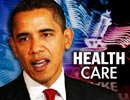
The Grand Rapids Press decided to get feedback from the community on the President’s speech, but limited it to a spectrum of those for or against. The story cites a businessman, someone who works at a low-income health care facility and a doctor. The businessman does not support the proposed plan from the White House, the low-income health care facility worker does, and for all practical purposes the doctor also does not support the President’s plan even though he admits there are problems in the current system. The Press also published an AP story that provided a summary of the President’s comments.
The local TV stations did straight up summaries of the President’s speech. WXMI 17 is a good example, where the reporter provides an overview of the speech with an a few excerpted quotes from the President. The channel 17 does not verify and of the claims made by the President and the excerpted comments were no doubt chosen because they were good punch lines, not because they provided viewers with any details of what the health care proposal actually is. WZZM 13 and WOOD TV 8 provided similar coverage, but they also chose to run additional stories that focused on Rep. Joe Wilson, who during the President’s speech yelled out “You Lie.”
WOOD Radio also reported on the President’s speech. However, the local radio news channel also did a story on reactions from both Congressmen Pete Hoekstra and Vern Ehlers. Hoekstra seems to think that Obama will have a hard time convincing moderate Democrats on this issue and Rep. Ehlers doesn’t think the proposal will pass because there is already a substantial federal deficit.
Independent reporting on the President’s speech was significantly different that how the commercial media was framing it. The Progressive Magazine’s Matthew Rothschild called the President’s comments on the Public Option proposal “tepid.” Washington author and journalist David Sirota provides a brief but excellent analysis of the President’s speech and The Nation magazine’s Washington correspondent John Nichols reported:
When it came to the task of offering the explanations, arguments and details that have been so hard to come by during a frustratingly unfocused debate about how to develop a functional health-care system for a country where tens of millions of Americans have no insurance coverage and tens of millions more are under-insured, Obama remained unsettlingly vague.
A couple of other issues that have been either marginalized or omitted from the commercial news coverage during the recent health care debate are; a single-payer option, which Democracy Now made the focus of their post Presidential speech on September 10; and the financial lobbying by the health care industry of Congress. According to the Center for Responsible Politics, the health care industry has spent $3.4 billion dollars since 1998 influencing federal legislation. It seems that kind of lobbying by the health care industry would merit substantial news coverage. Unfortunately, that has not been the case to this point in the debate.

