Palestine Solidarity Information, Analysis, Local Actions and Events for the week of November 24th
It has been almost 14 months since the Israeli government began their most recent assault on Gaza and the West Bank. The retaliation for the October 7 Hamas attack in Israel, has escalated to what the international community has called genocide, therefore, GRIID will be providing weekly links to information and analysis that we think can better inform us of what is happening, along with the role that the US government is playing. We will also provide information on local events and actions that people can get involved in. All of this information is to provide people with the capacity of what Noam Chomsky refers to as, intellectual self-defense.

Information
The Destruction of Gaza Will Be Joe Biden’s Enduring Legacy
Palestinians, Both Civilian and Military, are Transcending the Horror We’ve Unleashed
In 14-1 UN Security Council Vote, Lone US Veto Kills Gaza Cease-Fire Resolution
Media Coverage of Amsterdam Soccer Riot Erases Zionist Hatred and Violence
More Israelis Are Refusing Deployment to Gaza. Will It Help End the Genocide?
Retreat from Reason: Palestine in the Time of Monsters
Analysis & History
From Campus to the Courts, the “Palestine Exception” Rules University Crackdowns
Events
Labor in Palestine – Saturday, November 30th – 2pm at Fountain Street Church
Image used in this post is from https://visualizingpalestine.org/visual/targeting-childhood-in-the-west-bank-by-distance/.
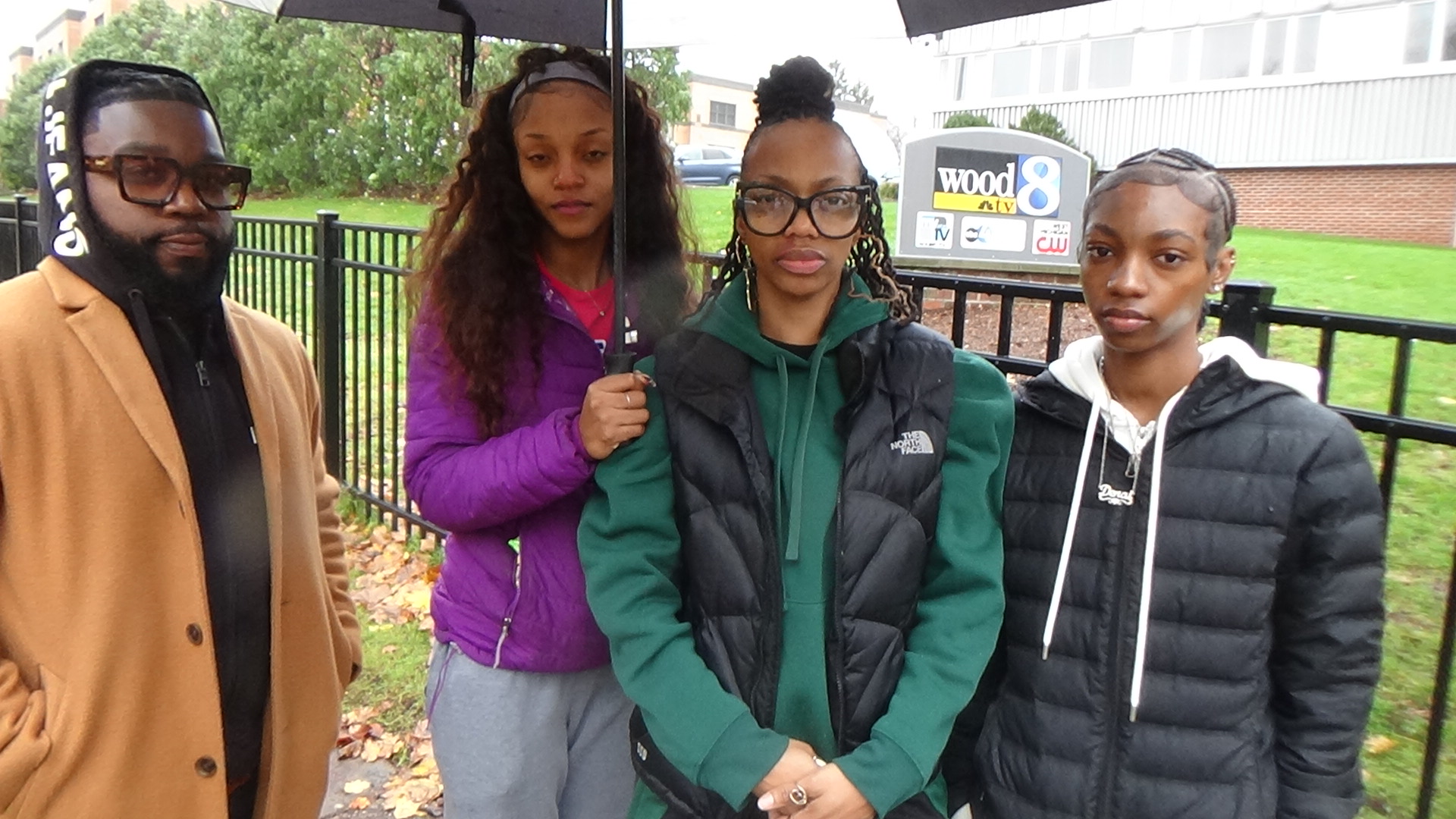
Rebecca Craig speaking out on missing family members and the double standard that the GRPD and local news media engage in
On Thursday, GRIID videotaped a statement read by Rebecca Craig about the two family members that have gone missing and how the local news media, the GRPD and other law enforcement agencies don’t provide them same effort or sense of urgency when Black people go missing as opposed to white people.
Below is the text of what Rebecca read while standing outside of WOODTV8, followed by the video version at the bottom.
Good afternoon,
My name is Rebecca Craig. I am the younger cousin of Donald Hunnicutt, who has been missing since September 3, 2022. And, the older cousin of Cortez McConer Jr, missing since October 27, 2024.
I am here today to demand action against the inactions of the police & media when it comes to the black & brown communities across the US. But, particularly, this community w/ regards to police agencies & media outlets, such as GRPD, MSP & Woodtv8, the leading broadcasting station in W. MICHIGAN.
As stated previously, I have 2 loved ones who are currently missing.
Donnie Hunnicutt, a 6’2, 170 lb, 56 yr old (at time of disappearance) male of African American descent, who goes by the name of Don D and, Cortez McConer Jr, a 6’2, 155 lb, 16 yr old male of African American decent, who goes by Tez or Jr.
I have been on a constant mission to reach the masses about their disappearances.
My unforeseen mission started when my eldest cousin, Donald Hunnicutt, disappeared w/o a trace, September 3rd of 2022, from the Kentwood, MI area. To my understanding, Donnie was last seen leaving a cousin’s apt to go and smoke a cigarette and never came back.
Unexpectedly, my mission further evolved when my youngest cousin, Cortez McConer Jr went missing in the early hours of October 27, 2024.
Unprecedented events as such, leaves one to wonder if they walked off or has something happened. And, most importantly, what should I do? If I didn’t know anything, I knew I needed to garner attention.
For Donald, I shared his flyer throughout social media, made a missing fb page for him and recently did an interview w/ Woodtv8 after I had posted in several Facebook groups about my concerns on how his case never garnered the amount of attention it should have. I was called a race baiter & kicked out of groups that I was a member of for voicing my concerns on the disparities of the black & brown communities when it comes to the media attention we very well deserved also.
I didn’t deserve neither, especially since I,1. Am not a race baiter, and 2. I was stating what was evident.
For Cortez, I shared & hung flyers, spoke with several students but immediately, made contact with reporter, Amanda Porter, a news anchor @ woodtv8, who previously had contacted me regarding the posts I posted in the groups about Donald’s case.
On October 29, 2024, 2 days after Cortez McConer Jr whereabouts were unknown, I asked her for help in reaching the masses. I sent over pertinent information about my cousin Cortez and she immediately submitted it all to the newsroom the same day. 2 days later, still no PSA about a 16 yr old kid missing in our community! So, I emailed into the station and complained.
Now, after I watched my interview about Donald, I had emailed into the station to voice my concern about pertinent information being omitted from the original script to an edited watered down version.
Now, this… 2 days of publicity lost due to Woodtv8 not wanting to set a precedent for ANY runaway kid to whom of which Cortez, a 16 yr old boy, was not a runaway but truly MISSING! BUT, let’s just say he was labeled as runaway.
According to Woodtv8’s own article on Penny Wise (glad she was found safe), “a 17 yr old teenager from Cedar Springs who willingly “walked away from her home” a runaway, brought the city and state out!
Or, the Romeo & Juliet teenage couple, of whom I am grateful were found safe. Jayden Thomas, 13, of Clare, Mich., and Braxton Wood, 14, of Mt. Pleasant, Mich.,who had run away together and gardnered national attention. These are just a couple local cases in the news very recently. But, I just want to know what are the differences?????
Woodtv8 aired a piece covering Cortez from the search the FAMILY had coordinated a week after he had become missing. Nothing further was aired from that point up until a couple days ago when members of the community started to send in complaints to the station & calling you all out.
Everyone knows the urgency regarding the timeframe of getting the word out, in which we loss due to Woodtv8 not covering Cortez’s story from when it was handed over October 29th. There was no urgency here, huh? Just another runaway black kid?
After submitting another complaint, I received a response from Ms. Holly Volkding, (If I pronounced her name wrong, my apologies) stating, ‘We have been airing his story and have been in contact with family members and attending events. We haven’t gotten any updates from GRPD regarding anything further of him. The difference of the two stories is that we reported updates we were given from police of sightings of her. We have no bias between one missing juvenile to another. If you have any frustrations with more information, you can direct you frustration to GRPD who is handling the case, as we too would like more information on Cortez’s whereabouts’.
Which furthers my frustrations because the level of audacity Ms. Holly has in her response is appalling! The nerve of me to question the differences in coverage amongst the cases!
So, now, it boils down to GRPD doing their reporting to the news agencies. You know, it is so much more easier to point the finger than to acknowledge the media bias that is so evident.
So, why is it that we don’t garner the same resources and attention that others do?
Now, only after a month has gone by, everyone is scrambling to bring true awareness to Cortez McConer Jr. case, still with no sense of urgency!!!
I want all the police agencies and media outlets to know, you all have an obligation to the community as a whole to thoroughly report & investigate, leaving no leads unturned, while providing info to the public NO MATTER WHAT RACE IS INVOLVED!!! We all are the human race & deserve the same privileges when comes to investigating & reporting what goes on in our community despite any differences!
DO BETTER FOR OUR COMMUNITY AS A WHOLE!!!!
Thank you.
Michigan Senators Peters and Stabenow voted against the halt of US weapons to Israel, thus perpetuating Israel’s genocidal campaign against the Palestinians
On Wednesday, the US Senate overwhelmingly rejected a set of Joint Resolutions of Disapproval (JRDs) that Senator Bernie Sanders had introduced to halt US weapons to Israel because of the atrocities happening in Gaza.

These JRDs oppose multiple offensive arms sales to Israel that have been used in violation of U.S. law and policy. They include:
- S.Res.111 – focusing on 120mm Tank Rounds – $774.1 million – led by Sens. Sanders, Welch, Merkley, and Schatz
- S.Res.112 – focusing on Medium Tactical Vehicles – $583.1 million – led by Sens. Sanders, Welch
- S.Res.113 – focusing on 120mm High Explosive Mortar Rounds – $61.1 million – led by Sens. Sanders, Welch, and Merkley
- S.Res.114 – focusing on F-15IA Fighter Aircraft and Upgrades – $18.82 billion – led by Sens. Sanders
- S.Res.111 – focusing on 120mm Tank Rounds – $774.1 million – led by Sens. Sanders, Welch, Merkley, and Schatz
- S.Res.115 – focusing on Joint Direct Attack Munitions (JDAMs) – $262 million – led by Sens. Sanders, Welch, and Merkley
- S.Res.116 – focusing on Anti-Jam and Global Positioning System (GPS) Receivers – led by Sens. Sanders, Welch, and Merkley
The Senate only voted on S Res. 111, 113 and 115. According to Common Dreams, “The first vote was 18-79, with Sen. Tammy Baldwin (D-Wis.) voting present and Sens. Mike Braun (R-Ind.) and JD Vance (R-Ohio)—the vice-president-elect—not voting. In addition to Sanders (I-Vt.), those in favor were: Sens. Dick Durbin (D-Ill.), Martin Heinrich (D-N.M.), Mazie Hirono (D-Hawaii), Tim Kaine (D-Va.), Angus King (I-Maine), Ben Ray Lujan (D-N.M.), Ed Markey (D-Mass.), Jeff Merkley (D-Ore.), Chris Murphy (D-Conn.), Jon Ossoff (D-Ga.), Brian Schatz (D-Hawaii), Jeanne Shaheen (D-N.H.), Tina Smith (D-Minn.), Chris Van Hollen (D-Md.), Raphael Warnock (D-Ga.), Elizabeth Warren (D-Mass.), and Peter Welch (D-Vt.).”
The second vote was 19-78—Sen. George Helmy (D-N.J.) joined those voting for the resolution. The third vote was 17-80.
This means that all of the Republican Senators and the majority of Democrats voted to oppose the halting of US weapons to Israel. Critics of Israel’s U.S.-backed offensive in Gaza knew they were never going to actually secure a majority of votes. But while acknowledging the GOP’s unwillingness to question Israel and the intensely pro-Israel views also held by a large proportion of Democrats, skeptics of the Israeli campaigns instead sought to demonstrate a sizeable degree of opposition to continued U.S. involvement in the wars.
According to HuffPost, “The Biden administration pushed hard to convince senators to keep endorsing arms deals for Israel. On Tuesday, the White House sent a document of talking points to Congress that claimed lawmakers who voted for the bills blocking the sales would be aiding Hamas, HuffPost revealed. The administration also dispatched Secretary of State Tony Blinken to Capitol Hill for a briefing with legislators prior to the vote.”
Michigan Senators Stabenow and Peters
Both Michigan Senators, Senator Gary Peters and Senator Debbie Stabenow, voted against the resolutions that would have halted US weapons to Israel. Their votes have been consistently in support of Israeli throughout the tenures in the US Senate.
According to Open Secrets, they have both received sizable amounts of campaign funding from the Pro-Israel groups.
- Senator Stabenow has received $840,482
- Senator Peters has received $626,444
These amounts of money from Pro-Israel groups might not seem like a lot, but in the period between 1990 and 2024, Senators Stabenow and Peters rank in the top 50 recipients of Pro-Israel funding out of the several hundred people who have been US Senators since 1990.
The decision to not support legislation to halt US weapons to Israel will be part of the legacy of Senator’s Stabenow and Peters. Their vote against halting US weapons to Israel means they support the killing of more Palestinian children, Palestinian civilians, the destruction of Palestinian homes, schools and hospital, and it means they support genocide.
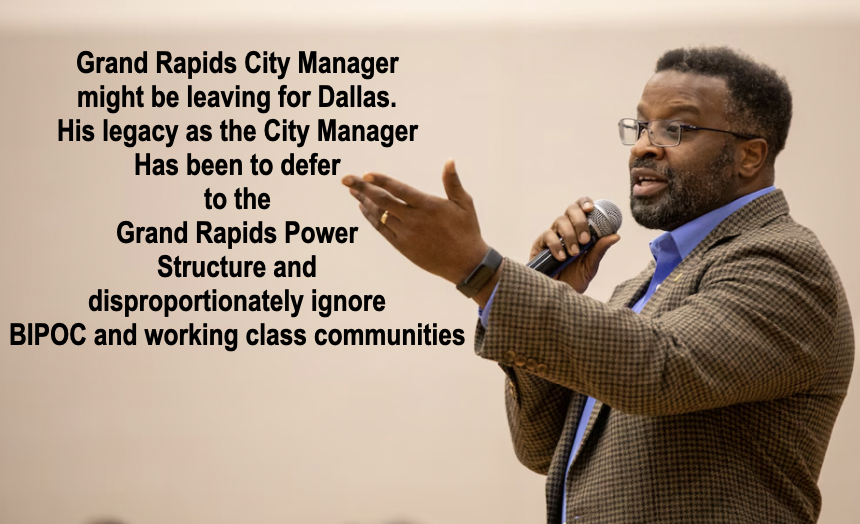
Grand Rapids City Manager Mark Washington might be leaving for Dallas, so what would his legacy look like in this city?
On Monday, MLive reported that Grand Rapids City Manager, Mark Washington, might be leaving to take a job in Dallas, Texas.
The MLive article talked about the possible move, the fact that there is no new contract for Washington, and that Washington turned down a request to be interviewed. GRIID though this would be the perfect time to provide a rundown of Washington’s legacy as the Grand Rapids City Manager, since 2018 when he was hired.
Much of my critique is in rooted in the various issues that community groups and movements have been working on during Washington’s tenure. It is also worth mentioning the non-governmental groups that Washington is part of, which is a partial indication of who he really represents. Some of those groups are – the Econ Club of Grand Rapids, the Right Place Inc., and Downtown Grand Rapids Inc.
- In May of 2018, Movimiento Cosecha once again had a large march from Roosevelt Park to downtown Grand Rapids. Again, Mark Washington did not participate and the GRPD had a massive show of force that again tried to dictate the direction of the march route.
- In late 2018, a GRPD cop who was off duty, saw a story on TV about a man – Jilmar Romos Gomez, who was suffering PTSD and started a fire at Spectrum Health. The GRPD cop called ICE and said that this man was an undocumented immigrant, when he fact he was a former Marine. Under Mark Washington’s leadership Captain VanderKooi was never held accountable for this incident over a two year period.
- In February of 2019, immigrant justice activists disrupted the Grand Rapids City Commission meeting, because the City Commission and Mark Washington would not allow the same amount of time to community members that the Chief of Police was given to defend Captain VanderKooi.
- In March of 2019, a coalition of groups held a press conference with a list of demands around the GRPD and the lack of accountability regarding their actions against Black and Latinx communities.
- May 2019 march by Cosecha, was once again not attended by Mark Washington, plus the GRPD were now threatening people if they marched in the streets.
- GRIID obtained FOIA documents regarding the GRPD’s monitoring, spying, harassment and intimidation leading up to the 2019 May Day march.
- In May of 2020, Grand Rapids also had a George Floyd protest that erupted with thousands of people in the streets and the response from the GRPD was repressive. Grand Rapids leadership called for a State of Emergency, brought in the Michigan National Guard and instituted a curfew for downtown Grand Rapids. There was an effort to Defund the GRPD in late June/early July, which the Mayor and Mark Washington derailed and numerous other repressive tactics used by the GRPD to target activists. You can check out our visual timeline of all this.
- In November of 2020, the community organized a campaign to defeat the GRPD from obtaining Shot Spotter technology. Mark Washington supported it.
- In late December of 2020, Mayor Bliss gave the GRPD the green light to evict unhoused people who set up an encampment at Heartside Park.
- In April of 2021, the City of Grand Rapids sent out a Press Release saying that anyone protesting the outcome of the Derek Chauvin trial would be arrested.
- In May, the group Defund the GRPD was organizing to pressure the City of Grand Rapids to not only reduce funding for the GRPD, but to allow more public input on how public money would be used in the City Budget for 2022. In early May, the City held a one hour virtual town hall meeting on the 2022 Budget, which was an insult to those who have been organizing around how public money would be used. Defund the GRPD had posted their own demands on what they wanted to see happen with the funds, as well as the process for determining the 2022 City Budget. Defund the GRPD also organized people to call in during the City Commission meeting later in May, right before they voted on the 2022 Budget.
- Throughout much of 2021, the group Justice for Black Lives were targeted for demanding Police accountability in Grand Rapids.
- In November, at a protest following a not guilty verdict for Kyle Rittenhouse, several JFBL activists were arrested again, after the protest had finished. Once again, JFBL held a press conference to respond to the arrests and to counter the claims made by the GRPD.
- On April 4, 2022, the GRPD shot and killed Patrick Lyoya in the back of the head, execution style. Grand Rapids leadership has done nothing to further justice for the family of Patrick Lyoya, but has repeatedly allowed the GRPD to target activists who are demanding justice.
- In May of 2022, City Manager Mark Washington said No interruptions to normal operations will be tolerated in the City of Grand Rapids.
- In late December 2022, the Chamber of Commerce wanted to impose ordinances that would essentially criminalize the unhoused. During the last Grand Rapids City Commission meeting for 2022, Mayo Bliss and the other commissioners refused to denounce the Chamber’s proposal, as did City Manager Mark Washington.
- Throughout 2023, Mayor Bliss fully supported the GRPD’s desire to purchase and use drones, plus she fully endorsed the Grand Rapids ordinances that has criminalized the unhoused in this city. Mark Washington also endorsed this policy.
- After the brutal Israeli assault in Gaza, GR residents tried to get the City of Grand Rapids to pass a resolution demanding a ceasefire in Gaza and to call on members of Congress from Michigan to not use federal tax money that does to Israel but to use those funds to benefit our community. City Manager Mark Washington, Mayor Bliss and the other commissioners said calling for a resolution is not what they do.
- Grand Rapids Leadership condoned the repression action by the GRPD during a non-violent protest on the 2nd anniversary of Patrick Lyoya’s murder by the GRPD.
- Grand Rapids City leadership approve massive public tax incentives for the proposed apartment complexes that will be adjacent to the downtown Amphitheater and Soccer Stadium.
- Grand Rapids City Leadership gave the GRPD the green light to target activists working on a range of issues, from GRPD repression, immigrant justice or the opposition to the US supported Israeli genocidal campaign against Palestinians.
- Grand Rapids City Leadership partnered with the GR Chamber of Commerce on a so-called housing project for the unhoused, which GRIID identified as a false solution.
- In June of 2024, Grand Rapids City officials approved the decision to borrow up to $30.5 million to build a multistory parking deck on site at 201 Market Ave. SE near US-131.
- Grand Rapids City officials talked down to the overwhelming opposition to the $565 million in tax incentives for the DeVos/Van Andel development project.
This is just a partial list of the ways in which Grand Rapids City Manager has opposed efforts to promote justice, especially efforts that were led by BIPOC organizers. The legacy of Mark Washington is fundamentally rooted in servitude to the Grand Rapids Power Structure and in opposition to movements demanding social justice amidst systemic racism in Grand Rapids, the ongoing housing crisis and the lack of accountability with the GRPD.
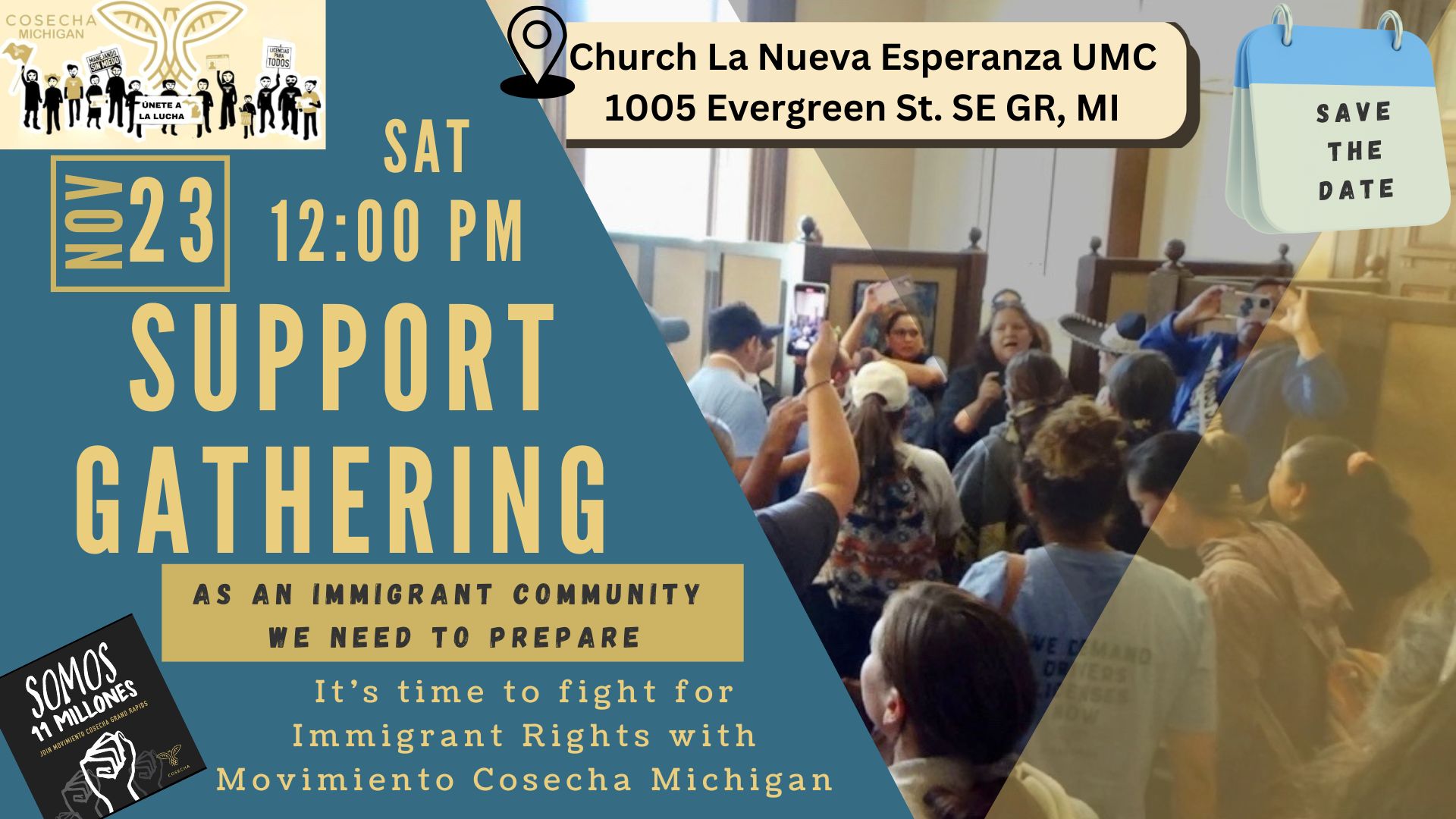
This Saturday, November 23rd, the immigrant justice group, Movimiento Cosecha GR, will be hosting a community forum for both the immigrant and ally communities. The event will take place at noon in the United Methodist Church “La Nueva Esperanza”, located at 1005 Evergreen St. SE Grand Rapids.
Movimiento Cosecha GR recently released a public statement, saying:
Following the recent presidential election results, a cloud of uncertainty hovers over our lives. Fear is felt in our communities, among family and friends. For this reason, Movimiento Cosecha Michigan expresses deep concern and empathy during this time of particular vulnerability and anxiety about the future.
We want to make it clear that you are not alone. Movimiento Cosecha Michigan upholds its commitment to organizing alongside the supportive community to ensure protections and rights, even in the face of threats from the incoming administration of mass deportations, family separations, and promises of inhumane detention camps.
In these challenging times, we renew our commitment to supporting one another in the pursuit of a dignified, safe, and respectful life. Together, we will confront any attempt at discrimination or persecution, remembering that human rights must prevail over any political rhetoric. We will achieve this by mobilizing all sectors of our communities to support our efforts.
We will continue to organize and empower our community through collective power and direct actions to exert sufficient public pressure on the state legislature to secure the approval of the Driver’s Licenses for All bill by the end of 2024. This bill is urgent and essential in these uncertain times, as it will guarantee the right of every immigrant in Michigan to drive without fear.
We are fighting for a better world for everyone, where each person can live without fear, with respect and dignity, regardless of their immigration status. We invite everyone to stay informed, organized, and united. We call on the entire community to be attentive to our event dates and times, where we will share important information to organize and protect ourselves.
At Saturday’s forum, Cosecha will talk about the offensive work, which is change that the immigrant community wants to see happen and will directly benefit them. Right now, winning Driver’s Licenses for All is a big part of their focus. However, the ongoing and longterm goals are to win, dignity, respect and permanent protection for all undocumented immigrants living in the US.
Other types of offensive work might be going to city and county governments and demanding that their police departments will not cooperate with ICE, and that those same government bodies can declare themselves a Sanctuary City or a Sanctuary County.
There is also the defensive work, which is the work that allies are being asked to do. Defensive work on behalf of the immigrant community can be any of the following:
- Provide financial support directly to Cosecha https://secure.actblue.com/donate/luchemos
- Be part of a Rapid Response Network, which will mobilize people to respond to calls from the immigrant community when ICE shows up to their house, their place of work or the schools that their children attend.
- Provide Mutual Aid support to the families that are directly impacted by ICE. This can mean financial support, transportation, food, clothing, or other needs.
- Provide court support for immigrants who are in jail or detention. This could mean visitation or writing letters on behalf of the person in jail or detention, letters that would be sent to the judge.
- Allies can get their faith communities to declare themselves as Sanctuaries for the undocumented community. Faith communities can declare themselves a Sanctuary in a public manner by announcing their commitment to provide protection from arrest, detention or deportation. During the first Trump administration, the Grand Rapids area only had 1 church publicly declare themselves a sanctuary, despite the fact that there are over 800 churches in the area. Faith communities can also become Sanctuaries but not announce it, but provide them same kind of safety to undocumented immigrants that a public Sanctuary would. Individual allies can also offer space in their homes for immigrants who are being targeted by ICE.
- Allies can contribute to a community bond fund, which will allow immigrants who are in detention the opportunity to get out, be with their families and maintain employment, until they have a court date.
- Allies can take classes on the history of US Immigration Policy, classes which the Grand Rapids Institute for Information Democracy will offer.
- Allies can also post in the windows of their homes or the windows of their businesses or in the windows of non-profits and other institutions they are apart of, sign that say – Immigrants are welcome here, but NO ICE agents! This public display sends a message to both the immigrant community and to law enforcement about where they stand.
In the near future, Movimiento Cosecha GR will be offering training opportunities on how you can be part of the Rapid Response to ICE work, the Mutual Aid work and how to get your faith community to become a Sanctuary.
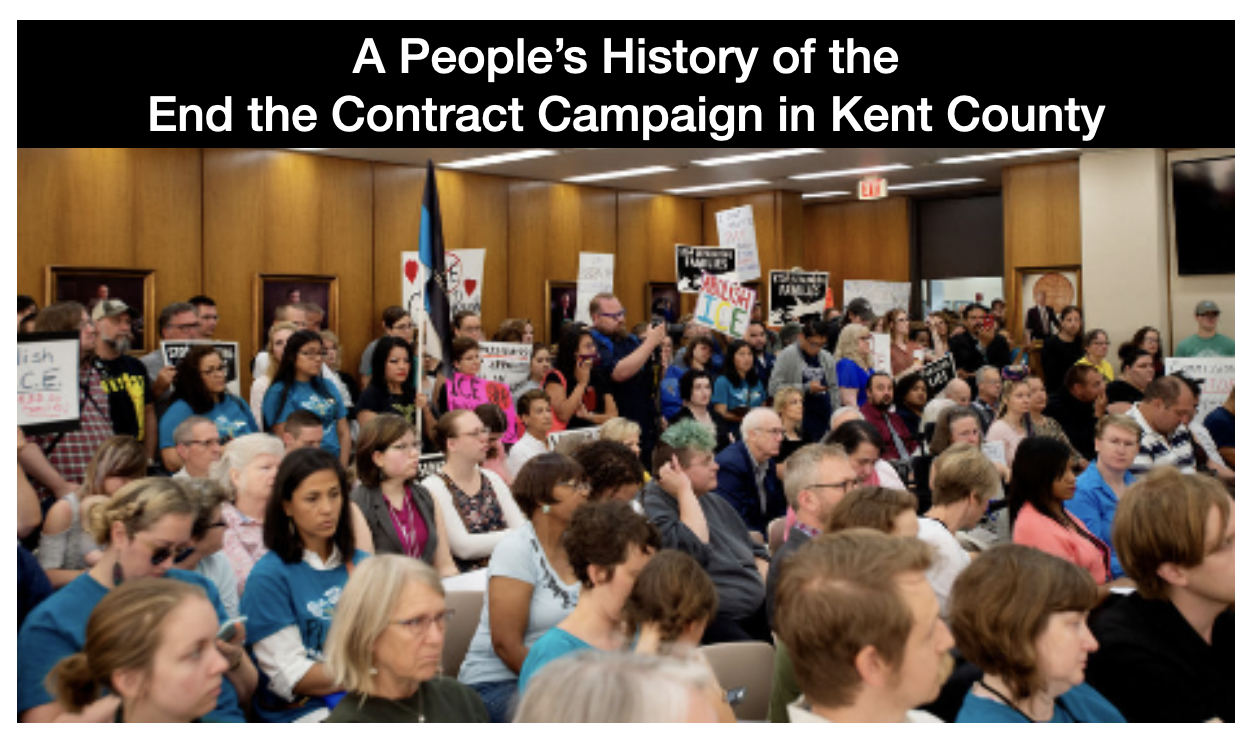
During the first Trump Administration there were a lot of people from the ally community that got involved in immigrant solidarity work. Unfortunately, when the Biden Administration came in there was a significant drop in the number of allies continuing to support immigrants. The Biden Administration continued some of the same immigration policies of the Trump Administration – construction of a border wall, family separation, criminalizing undocumented immigrants, denying asylum, etc.
It is time now to once again stand with the immigrant community, to practice solidarity in our words and our deeds, plus resist the anti-immigrant policies of the incoming Trump Administration. La Lucha Sigue!
Thinking about those struggling with mental health issues and why the GRPD once again demonstrates that they only keep those with tremendous privilege safe
It has been nearly two weeks since the GRPD repeatedly shot and killed an African American man who had a history of struggling with mental health issues.
We know from multiple sources that the man who was repeatedly shot and killed by the GRPD outside of Trinity Health hospital in Grand Rapids, was at the hospital because he was trying to get medications that he had been on. The hospital refused him, which led to his feeling of distress and frustration.
According to a story from WOODTV8 from November 13th, a former police chief turned-turned-police training consultant stated:
“If you take a few seconds to absorb what is going on, you say, OK this is somebody that’s got psychiatric problems. We can’t tell whether this is a real gun or not. He’s not made any threats. So let’s take time from cover to see if we can make an assessment of what’s going on.”
The police consultant went on to say, “The threat never increased and they never tried to do anything except order him to drop the gun. Why didn’t they try to engage in a conversation? What are you doing this for? Why are you so upset? How can we help you? This isn’t worth it. We’re not going to shoot you.”
Essentially, what the police consultant was saying is that the GRPD response in this situation was completely unnecessary. The GRPD response also should make it clear that the way they act in these kinds of circumstances demonstrates that their first priority is not public safety.
To put the GRPD’s killing of the man who was clearly struggling with mental health in context, we have to come to terms with the fact that this was the 1,152nd person killed by the police in the US so far in 2024, according to https://mappingpoliceviolence.org/. Mapping Violence has 1,151, since the most recent police killing of civilians is logged for November 2, 20024. The police have killed at least 25 people in Michigan so far in 2024.
Mental Health Responses
It is clear to this writer that the GRPD does not keep people safe, especially BIPOC people and other marginalized communities, along with those that are struggling with mental health issues. The GRPD’s first impulse was to protect themselves and to ignore someone that was clearly in distress.
So what do we do and how can we organize in such a way as to provide community care, especially during a crisis? First, we need to do no harm in these situations and stop calling the cops. The group Interrupting Criminalization has a great list of for Health Care providers in a document titled, Beyond Do No Harm. Principle #5 says, Stop calling police on people with unmet mental health or medical needs.
In addition, Interrupting Criminalization has an excellent document called, A Checklist for Assessing Mental Health Response Models. This checklist provides important and robust questions about what we in community need to think about regarding response for those having a mental health crisis and why it is important to not do this work with the GRPD or any other cops.
Additional Resources include:
Painting the Ocean & the Sky – A non-carceral community response
Building a Coordinated Crisis Response Learning Space
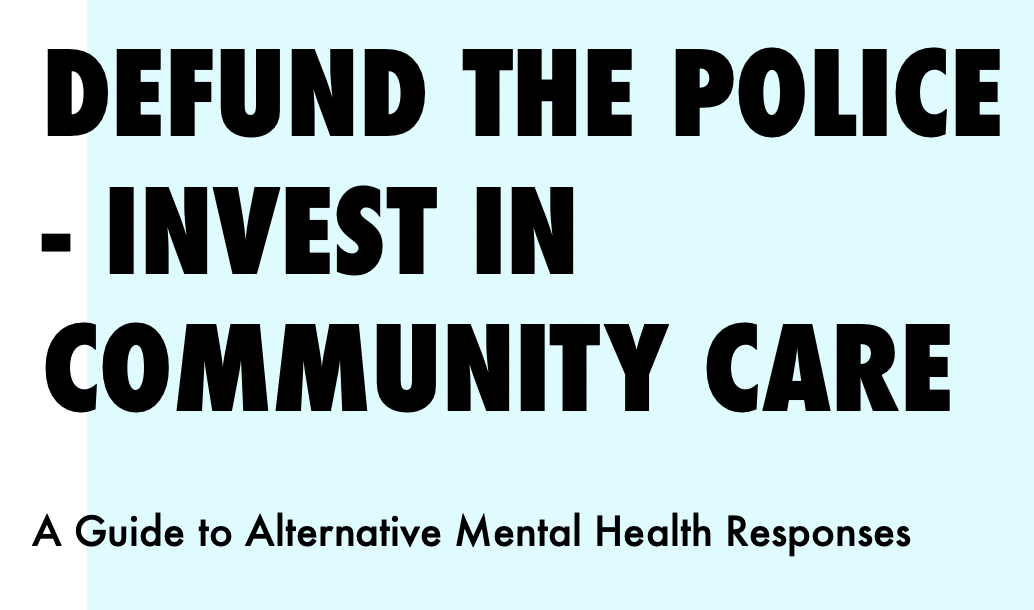
Defund the Police, Invest in Community Care: A Guide to Alternative Mental Health Responses
The new downtown GR Soccer Stadium will be named the Amway Stadium, which should surprise no one who has been paying attention
MLive posted just minutes ago that the soccer stadium that will be located just west of US 131 by Pearl St. will be named the Amway Stadium, after the company pledged $33 million for the stadium.
Not surprising, the MLive story is celebratory and uncritical of the soccer stadium, as they have been all along with other major downtown development projects that have used hundreds of millions of public dollars to subsidize these so-called transformational projects.
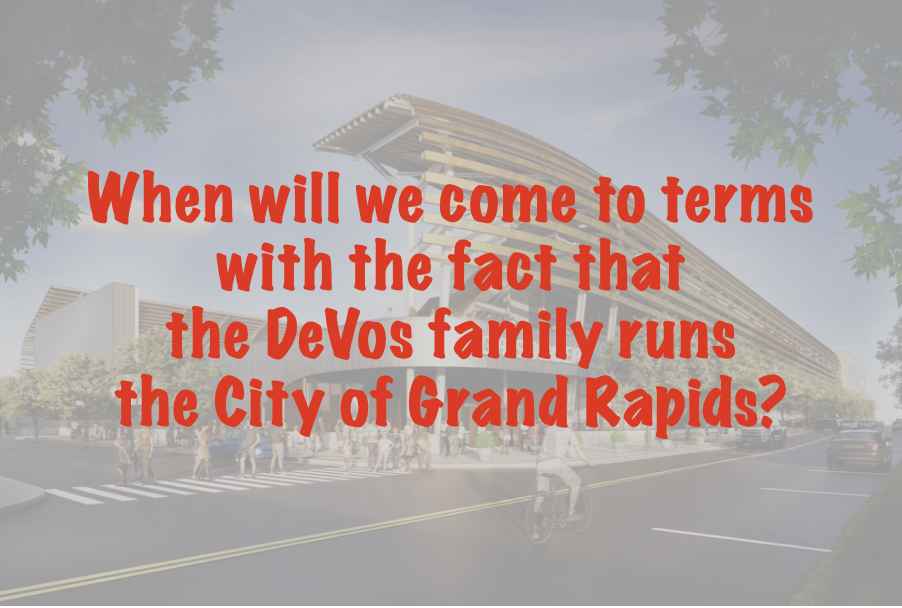
The MLive article omits the fact that Amway is owned by the DeVos and Van Andel billionaire families, but they also omitted several other realities regarding the Soccer Stadium:
- They omitted the fact that Grand Action 2.0 is essentially run by the DeVos family
- They omitted the fact that the DDA – which approved using lots of public tax money for the project, has a DeVos family operative on that unelected board.
- They omitted the fact that the Kent County and Grand Rapids City Commissions are in the pocket of the DeVos family. Both of these governing bodies approved $100 million in public subsidies for the Soccer Stadium.
- They omitted the fact that the Grand Rapids-Kent County Convention/Arena Authority (CAA) is chaired by a DeVos employee – Richard A. Winn AHC Hospitality .
MLive also does not include a statement from the CEO of Amway, Michael Nelson, which reads:
“We are a people business, and sports bring people together. It’s often a source of community and connection—offering shared experiences and points of pride. Those ideas are part of Amway and the thousands of communities around the world that Amway Business Owners create.”
These flowery words should not be confused with what real community looks like, especially when you consider the fact that the DeVos family owns the Grand Rapids Griffins, the Orlando Magic NBA team, the now defunct Grand Rapids Rampage, the Grand Rapids Rise (women’s volleyball team) and the Orlando Squeeze, a Major League Pickleball franchise owned by Ryan DeVos. The DeVos family doesn’t care about community, they care about expanding their wealth, and owning sports teams will do just that.
Lastly, it is ironic, that a $33 million pledge by the Amway corporation, which is a multi-billion dollar global corporation, is only one third of the amount that taxpayers are contributing, even though the public had no say in the use of the $100 million that Kent County and Grand Rapids approved.
West Michigan Policy Forum continues to attack public education funding in latest video, with two major players from the anti-public education camp
Two weeks ago, the West Michigan Policy Forum (WMPF), which was created in 2009 by the Grand Rapids Chamber of Commerce, posted a video conversation between Amway co-Chairman Doug DeVos and Jase Bolger, former speaker of the Michigan House of Representatives. Bolger is also the state policy consultant for the WMPF.
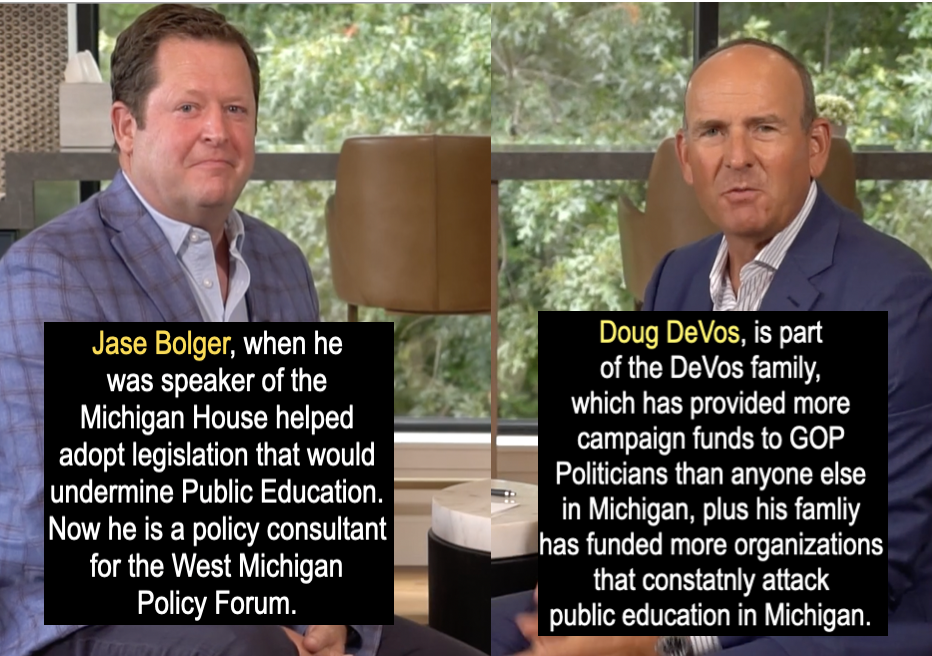
Since leaving the Michigan State House, Bolger went on to create Tusker Strategies, LLC. On the website of Tusker Strategies, Bolger brags about his accomplishments while being a member of the State Legislature. Some os Bolger’s “accomplishment” include:
- Expanding School Choice options in Michigan, which has always been about the dismantling of Public Education.
- Undermining teachers retirement plans by getting the state to move public school district teacher pensions to a 401K plan, claiming the district would be able to spend more on students.
- Putting in place a system to attack teachers for “under-performing”, based on students grades.
In the 7 minute video, DeVos says things like, “we have to have greater accountability with Public Schools”, especially with increased funding but no evidence of improved performance. It may be that this is true, but neither DeVos nor Bolger provide concrete examples of how there is real accountability.
What DeVos and Bolger mostly focus on are the two policies that were implemented by the GOP controlled Michigan Legislature and how the outgoing Democratic majority has overturned those policies, specifically the A to F repeal and the 3rd Grade reading law.
The A through F policy was passed during the lame duck session of 2018, known as HB 5526. With the A through F policy, the state would grade public schools on student academic performance; student academic growth; English learner progress; graduation rates (for high schools only); and the academic performance of students compared to students in demographically similar schools. HB 5526 was repealed in after the Democrats controlled the State Legislature in 2023.
The WMPF posted an article in May of 2023 attacking the Democratic majority for wanting to repeal the A through F legislation, using a report from the Great Lakes Education Project, which was created by Betsy DeVos after her failed school voucher ballot initiative in 2000.
The other issue that DeVos and Bolger discussed was the 3rd bill that the GOP got passed in 2015, HB 4822. In 2019, the Center for Local, State and Urban Policy stated that Michigan’s 3rd Grade Reading Law was a harmful solution to the literacy crisis. The group went on to say that, “Mandatory retention will not help Michigan students read better. Instead, it raises the stakes on the M-STEP without providing adequate resources to catch students up.”
The 3rd Grade Reading Law was repealed by the Democrats in 2023, and the WMPF took the opportunity to post on their blog an article from the Executive Director of the DeVos-created Great Lakes Education Project, which advocates to keep the law and slam the Democratic lawmakers for wanting to repeal it.
It is interesting that Jase Bolger and Doug DeVos have done a great deal to undermine public schools in Michigan, help to adopt policies that would further erode public education – DeVos through funding candidates that attached public education, and Bolger as a state legislator who did undermine Public Education.
These are the types of policies and practices that the West Michigan Policy Forum promotes, policies that erode the public good. This is exactly why we all need to pay attention to this organization and expose them for their involvement in far right politics, especially now with how public education is likely to be under increased pressure after the 2024 Elections.
Palestine Solidarity Information, Analysis, Local Actions and Events for the week of November 17th
It has been more than 13 months since the Israeli government began their most recent assault on Gaza and the West Bank. The retaliation for the October 7 Hamas attack in Israel, has escalated to what the international community has called genocide, therefore, GRIID will be providing weekly links to information and analysis that we think can better inform us of what is happening, along with the role that the US government is playing. We will also provide information on local events and actions that people can get involved in. All of this information is to provide people with the capacity of what Noam Chomsky refers to as, intellectual self-defense.

Information
Israel committing “gravest international crimes” in north Gaza
Israeli attacks leading to increase in birth defects
“A FINAL, DEADLY EXCLAMATION POINT”: BIDEN BACKS DOWN ON 30-DAY ISRAEL ARMS ULTIMATUM
With the US Election Over, Israel’s Genocide Continues With No End in Sight
President Biden’s Gaza Policy Leaves the Middle East in Flames
As US Keeps Arms Flowing, UN Panel Says Israeli Assault on Gaza ‘Consistent With Genocide’
Voting Against Genocide – How Gaza Defeated the Democratic Establishment
Israel has killed 344 Palestinian footballers… with FIFA’s complicity
Analysis & History
Report from Gaza: Palestinians Feel They Are Being “Slowly Exterminated” in Israel’s Genocide
The Horror to Come: Israel is Slowly Implementing the Gaza Playbook on the Occupied West Bank
Understanding the Religious Extremism That Motivates Israeli Expansion in the West Bank
Gaza First Amendment Alert (November 13, 2024)
Image used in this post is from https://visualizingpalestine.org/visual/u-s-military-and-humanitarian-funding/.
Rep. Scholten votes for legislation that would allow the federal government to attack Non-Profits, legislation that has been championed by Trump
The Stop Terror-Financing and Tax Penalties on American Hostages Act would grant the Treasury Department—soon to be under the control of a Trump nominee—the authority to unilaterally strip nonprofits of their tax-exempt status by deeming them supporters of terrorism.

Fortunately, the legislation was defeated in the US House of Representative, yet 52 Democrats still voted for it, with 5 of them being from Michigan – Rep. Scholten, Rep. Slotkin, Rep. Stevens, Rep. Dingell and Rep. Thanedar.
In a recent article from The Intercepted, it states:
The bill prompted stiff opposition from advocates for civil liberties. A wide array of civil society groups advocated against the measure in a campaign led by the American Civil Liberties Union. Critics worried that the bill was specifically designed to go after pro-Palestine groups, citing the numerous accusations of support for terror lobbed at protesters in the year since October 7 and Israel’s devastating war in Gaza.
The fact that Scholten voted in favor of this legislation should not be surprising, since it is consistent with her unconditional support for Israel and their Zionist policies, which GRIID has been documenting since she took office in January of 2023. (See below)
Rep. Rashida Tlaib (D-Mich.), who vocally opposed the legislation, wrote that “these 52 Democrats voted to give Trump the power to shut down any nonprofit he wants.The NAACP, ACLU, Planned Parenthood, no organization would be safe,” Tlaib added. “Shameful.”

Rep. Scholten endorses Israeli War Crimes in Gaza
Yesterday, I was arrested in Rep. Scholten’s office for demanding an immediate ceasefire in Gaza
Rep. Scholten says she is working hard to make sure US Imperialism wins the day in Gaza
Rep. Hillary Scholten voted for resolution that conflates Anti-Zionism with Antisemitism
Congresswoman Hillary Scholten just voted to for a bill that cements genocide as official US policy
Rep. Hillary Scholten continues to support genocide and she voted to criminalize speech
 Grand Rapids Institute for Information Democracy