(This article is re-posted from PRWatch.org.)

BP has purchased search terms relating to the Gulf oil spill disaster on Google, Yahoo and Bing, a move some say is designed to limit the public’s exposure to news reporting about the Deepwater Horizon oil catastrophe.
BP confirmed that it has bought search terms like “oil spill,” “gulf oil,” “offshore oil,” “Louisiana coast spill” and “oil cleanup,” on the top three search engines, so that when people perform searches on these terms, a link to BP’s corporate page about the spill (www.BP.com/OilSpillNews) appears up at the top of the page.
In Google, the result appears as a sponsored link, with a line that says, “Info about the Gulf of Mexico Spill Learn More about How BP is Helping.” On Bing, searching for “BP” returns a link to BP’s “Gulf of Mexico Response” site, with the same “helping” tag line.
BP spokesman Toby Odone explained to ABC News, “We have bought search terms on search engines like Google to make it easier for people to find key links to information on filing claims, reporting oil on the beach and signing up to volunteer.”
Kevin Ryan, CEO of a California-based Internet marketing company, Motivity Marketing, says research shows most people can’t tell the difference between paid and unpaid search results. He says BP’s efforts to divert people looking for information about the disaster to their own, corporate site is “a great PR strategy.” Estimates are that the company is paying over $10,000 a day for the search terms.
Media Bites – BP and the “apology”
In this week’s Media Bites we take a look at a new BP commercial, where the CEO is trying to “apologize” for the oil disaster. However, the commercial is really a well-crafted public relations piece that distracts the public from the reality of the oil disaster and the oil company’s practices and influence in Washington.
Despite the massive global protests against the recent Israeli attacks on several boats attempting to bring humanitarian aid to the people of Gaza, Michigan Senator Carl Levin is taking the side of Israel.

In a statement the Senator released a few days ago, Levin said:
“Israel has the right under international law to set up a naval blockade to keep weapons from being sent to Hamas. Hamas is an organization that is listed by our State Department as a terrorist organization and that controls Gaza, indiscriminately attacks Israeli citizens and cities with rockets, and denies Israel’s very right to exist.
“While all the facts are not yet known, it seems clear that the organizers of the flotilla, particularly those on the Mavi Marmara, set out intentionally to use force to challenge the blockade. This confrontation and the tragic loss of life could have been avoided had the organizers of the flotilla agreed to Israel’s repeated offers to accept the humanitarian aid at an Israeli port and transfer it overland to Gaza under the supervision of those in the flotilla.”
Levin is basically restating exactly what the State of Israel has said, which is that these attacks against the humanitarian vessels were an act of “self-defense.” This is not a surprise since Levin has supported Israel and US funding of Israel for decades. Last year, the Michigan Senator voted for a resolution in support of Israel’s brutal assault on Gaza and Levin has been one of the largest recipients of PAC money from the US-based Israel Lobby, receiving $1,649,962 during his political career.

A group of nearly 50 people gathered in front of the Gerald Ford Federal Building in Grand Rapids Monday to rally awareness of US complicity in Israel’s continuing human rights abuses against the people of Gaza, as shown by last week’s slaughter of innocent volunteers attempting to deliver humanitarian aid there via a flotilla of small ships.
Christian and Muslim, American-born and immigrant, the people rallying held signs that said, “Israel is Using Your Tax Money to Kill the Innocent” and “Help Free Gaza! The Largest Open Air Prison on Earth.”
Indeed, residents of Gaza are imprisoned in their own land, much as German Jews were in the Nazi proscribed ghettoes. However, the prison analogy falls short as the people of Gaza are denied food, shelter and medical care. There is no Auschwitz in Gaza. Instead, Israeli military forces are inflicting a slow death on the people of Gaza by blockading food, building supplies and medical supplies while bulldozing homes and food crops.

The Arab-American Association of West Michigan issued this statement about the recent Israeli assault on the flotilla.
“The Israeli assault violates International Law and is morally reprehensible, especially since those on board the flotilla were non-violent activists on a humanitarian mission. This humanitarian mission was of vital importance because the people living in Gaza have been suffering from lack of food and medical supplies due to the Israeli blockade of Gaza since 2007 and the 2008/2009 Israeli military assault on Gaza.
The Arab-American Association of West Michigan and dozens of local supporters call for a full investigation into these crimes, an end to the Israeli blockade of Gaza, and the suspension of all US aid to Israel until these crimes are fully investigated.”
Afghanistan is now the longest War in US History
(This video is from Brave New Films and is part of Rethink Afghanistan.)
Urban Sprouting: Bringing Nature Back to the City

As the sun set on Wealthy Street on a Thursday night about twenty people gathered in an empty parking lot. With shovels, hoes, and trowels in hand, we began digging on the patches of weeds and grass that has stood neglected for so long. The garden activism had begun.
This was the first event of Urban Sprouting, a Grand Rapids guerilla gardening group that I started. Guerilla gardening, in its most basic form, is planting flora and fauna on abandoned city land in surprising and creative ways. More elaborate guerilla gardening sometimes involves the use of seed bombs and moss graffiti. Since the 1970s guerilla gardening has been used to provoke conversation about land use and can sometimes be a very politically charged statement against land neglect. Guerilla gardening has since branched out to over thirty countries, examples of which can be found here at the main hub of the movement.

The goal of Urban Sprouting is to get the citizens of Grand Rapids to reclaim the fallow land on the sides of our roads and next to the city’s abandoned buildings. We want people to ponder the place of nature in our world that has been confined by streets, houses, and skyscrapers, all in an effort to bring awareness to our disconnect from the soil and the sun. We want to bring color and joy into people’s lives in the simplest way possible: through the beauty and grace of nature.
Perhaps we accomplished that in some way this past Thursday night on the corner of Wealthy and Fuller. We picked up the trash that had gathered, dug out the asphalt embedded in the soil, and replaced it all with a variety of plants and flowers. Overall it is just a small gesture, but one that everyone there that night felt excited to be a part of. Guerilla gardening is a way for us to practice pro-activism and to take back land that has been left to waste.
Environmental activist and poet Wendell Berry says “a seed will sprout in the scar”. Therefore let us sow seeds in the soil scarred by neglect and bring beauty and vitality back to Grand Rapids.
For more information or if you want to get involved in future events, visit Urban Sprouting’s website or e-mail us at urbansprouting@gmail.com . We’re always looking for helping hands and plant donations.
(This action alert is from the End the Occupation Campaign.)
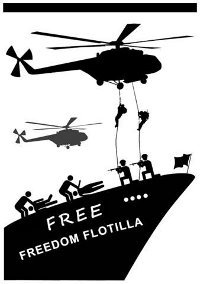
Yesterday we learned that the Israeli military has illegally boarded the MV Rachel Corrie, the final boat in the Gaza Freedom Flotilla, and has abducted the passengers of the boat.
Take action now by clicking here!
The MV Rachel Corrie is named in honor of the U.S. activist who was crushed to death by an Israeli army operated Caterpillar bulldozer while she attempted to nonviolently protect a Palestinian home from demolition in the Gaza Strip.
Rachel’s parents, Cindy and Craig Corrie, have called for a full investigation of the attacks on the Gaza Freedom Flotilla and the unimpeded entry into the Gaza Strip of the ship named after their daughter.
Take action to honor Rachel Corrie by emailing the White House and Congress calling for a full investigation of these attacks on the Gaza Freedom Flotilla, the release of all passengers and supplies, and an end to the siege of the Gaza Strip.
You can also click here to download a template letter that you can give to your Member of Congress demanding an investigation into violations of the Arms Export Control Act; and click here to find an emergency rally or protest near you. (There is a protest scheduled for Monday, June 7 at 5pm in front of the Federal Building in Grand Rapids.)
There’s another way to honor Rachel’s memory as well. The student body of her alma mater, Evergreen College, voted this past week to divest from Israel’s illegal occupation of the Palestinian West Bank, Gaza Strip, and East Jerusalem, and to establish a “Caterpillar free” campus. Support the students and their divestment efforts by clicking here, and find out more about the campaign against Caterpillar and other boycott, divestment, and sanctions (BDS) by clicking here.
You can also find resources for protests and media action on our Gaza Freedom Flotilla web section.
Protests continue across the United States–join one near you, or organize your own using our Gaza Freedom Flotilla resources and register your action with the Gaza Freedom March website.
Horse Race: “Electing” a Michigan Governor
In 19th century Ireland, horse races provided the dream that any impoverished farmer could turn his life around on a single flyer: a fast horse entered in the county steeplechase. But the reality was different. Front runners would turn up mysteriously lame just a day or two before the race. Other horses were “nobbled” with drugged corn or carrots. On the day of the race, a tavern owner or merchant with enough money to buy a horse on the spot might be coaxed into purchasing an exciting last-minute entry: an old horse made young with boot blacking and a meal of botanical performance enhancers that wore off fast. All this drew attention and the heavy betting away from the real favorite: a horse owned by one of the wealthy landowners.
And of course, the wealthy landowner’s horse always won.
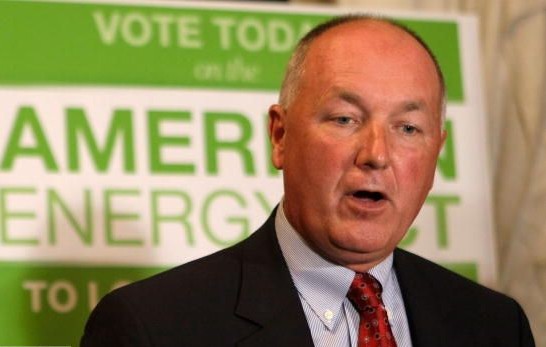
The horse didn’t matter. The backers did. And that’s why, even though our state primaries aren’t until August 3, this race has been run. Pete Hoekstra is going to be our next governor.
How can we tell? All the signs are there. First of all, Hoekstra isn’t talking much. At the Mackinac Policy Conference, he said very little, less than the other candidates. When an attempt was made in April to pin him down on the Arizona immigration law, he hedged and took a “let’s wait and see” tack. Last year, he danced around whether or not he supported school vouchers. Opening up a little more in his infamous “the terrorists will get us” fundraising letter, Hoekstra noted, “I am running for Governor to bring conservative leadership to Lansing. I will fight every day to lower taxes, create jobs and stand up for our shared values.”
The point is, he doesn’t really have to speak out right now. His backers are lined up, he’s leading in the polls, and his rigidly far-right-wing voting record (which has won him supporters like the hate group FAIR) remains largely unexamined by most voters.
Hoekstra’s slipperiness at this point in the campaign lets him appear as a blank slate, in order to attract the most voters. Meanwhile, behind the scenes, his backers are writing checks.

If you look at a list of Hoekstra’s early individual contributors, the big names are lining up: Van Andel. Meijer. Bauer. Cook. Along with a healthy dollop of support from Blue Cross-Blue Shield, looking to wriggle out of its mandated role as the nonprofit which must accept all Michigan applicants. BCBS is joined by other corporations such as Morgan Stanley, Spectrum Health, Fifth Third Bank, and the Michigan Credit Union League.
When Hoekstra wins the primary, much of the contributions that are pouring into the Michigan Republican Party coffers will be at his disposal. When he ran for Congress, he also had the full support of the DeVos family and the Prince empire, so it’s hard to imagine they won’t be throwing considerable financial weight behind him in this race. In fact, Open Secrets recently reported that Hoekstra has already received over $25,000 in contributions from Amway.
Another nobbling tool that just fell into the hands of those looking to fix our elections was January’s Supreme Court decision, Citizens United v Federal Elections Commission. It lifted a ban on political spending by corporations in elections. Companies that want to protect their interests—like insurance corporations looking to find loopholes in recent health care reform laws and heavy industries that want environmental restrictions lifted—can now contribute as much money as they want to the candidate that they believe will give them the desired results. And for Michigan governor, that would be Hoekstra.
Our dream of free elections in this country is, at this point in history, as much of a delusion as those dreams of Irish farmers that they’d win the county steeplechase race. Until working people join together and overturn the election system with essential, grassroot changes, we’ll continue in our current reality. We have no say in our elections and no representation in government. We live in a country controlled by powers capable of ordering the Supreme Court to halt vote-counting and place George W. Bush on the presidential throne.
The Michigan governor’s race is a much simpler fix. The favorite, a shiny-faced frat boy from Hope College, has already proved in Congress that he’ll do the bidding of his conservative masters. He’s as good as crossed the finish line because that’s what the wealthy landowners in our part of the world have decided will happen.
Who are the candidates talking to?
Today, the Grand Rapids Press ran a front-page article about yesterday’s Gubernatorial candidate debate during the Mackinac Policy Conference, which took place on Mackinac Island.
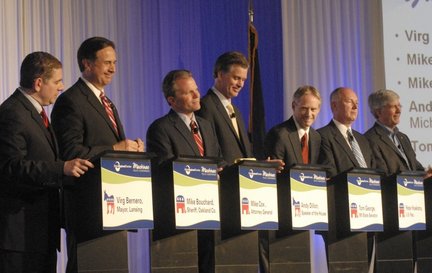
The article followed the usual election coverage format, with about half the content on candidates making verbal jabs and the other half devoted to candidate positions on the state budget, business tax and gas tax. In other words, nothing new was shared by candidates that the public has not already heard.
What was more interesting about this article was the fact that this was yet another debate hosted by the business sector. The Detroit Regional Chamber of Commerce hosted this debate as part of their 3-day policy conference held each year on the Great Lakes island.
The conference featured sessions on topics such as Michigan’s economy, Michigan as a trade portal, investing in commercial health care, education reform, Michigan’s prisons, and the shift from traditional industry to high tech. Virtually every panelist for these sessions were from the business and private sectors, with only one labor representative.
There were also panels that featured “business and legislative leaders,” as well as a “conservation” session featureing Michigan members of Congress. The day also features several keynote speakers such as Newt Gingrich, US Secretary of Health & Human Services Kathleen Sebelius, Sergio Marchionne with the Chrysler Group LLC and Valentino Castellani, a former Mayor of Turin, Italy.
The policy conference was funded by corporate sponsors such as AT&T, Blue Cross/Blue Shield, Meijer, Chase Bank, DTE Energy, Dow Chemical and a whole host of other businesses representing the commercial health, banking and insurance sectors.
The point of all this is to say that the Gubernatorial debate took place within the context of this 3-day business conference, which featured “300 attendees who were charged a $200 contribution to the chamber’s political action committee.” It seems that the participation of the candidates was to win over elite sectors of the state, sectors that can provide significant financial support for any candidate, which agrees to represent their interests.
The real story of the debate was not so much what the candidates said, but who was in the audience and what interests they represent.
(This article by Jeff Biggers is re-posted from Common Dreams.)
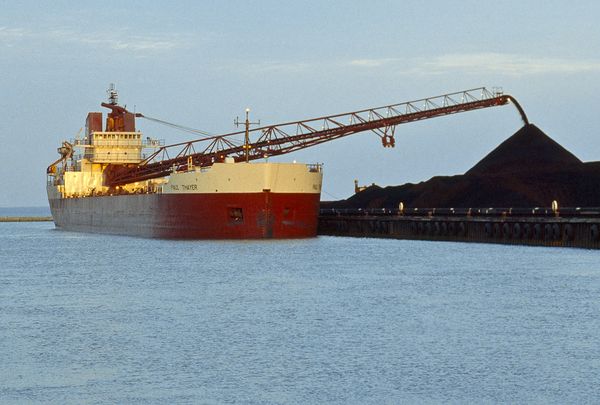
As President Obama makes his third trip to the Gulf today to assess the worst crude oil spill in American history, residents in the coalfields can’t help but sympathize with the stricken area.
In 24 states across the country, coalfield citizens have been living with area watersheds contaminated by toxic coal slurry and coal ash for decades. Thousands of miles of streams have been jammed and sullied with coal waste from strip-mining and mountaintop removal operations.
But it’s the magnitude of the massive coal slurry impoundments and dams hovering above communities in the mountains of the Appalachian coalfields that bring home the sickening images of the Gulf oil spill.
“After watching the disaster unfold in the Gulf with 20-40 million gallons of oil already spilled,” says Bo Webb, in Naoma, West Virginia, “I cannot begin to imagine what would happen to our Coal River Valley if the 9 billion gallon sludge dam above us failed.”
Webb is referring to the Brushy Fork impoundment, the largest and potentially weakest coal slurry impoundment in the nation operated by Massey. According to Massey’s own evacuation reports, a break in the class “C” coal slurry impoundment would result in certain injury or death for the nearly 1,000 residents downslope in the valley. Some area residents would have less than 15 minutes to escape a 72-foot tidal wave of coal slurry.
We’re talking about billions of gallons of coal sludge here, not millions.
Despite pleas and protests by local residents, Massey Energy is operating a reckless strip mine near the Bee Tree branch of Coal River Mountain, blasting outrageously close to the multi-billion gallon coal slurry impoundment that is held back by a weakened earthen dam.
Webb’s concerns are not unfounded. Ten years ago, millions of gallons of toxic coal sludge broke through a similar impoundment at another Massey operation in eastern Kentucky. The worst environmental catastrophe in the US until the TVA coal ash pond disaster, the Martin County spill at the Massey site dumped over 300 million tons of toxic sludge into 100 miles of streams, contaminating the water supplies for 27,000 people, and wiping out 1.6 million fish.
Here is a clip from that coal spill that remained under the news media radar:
In the meantime, coalfield residents from Alaska to Wyoming are wondering if it will take a disaster on the level of the BP oil spill to get the Obama administration to deal with the unfolding disasters of coal slurry impoundments, coal ash ponds, and reckless strip-mining.

