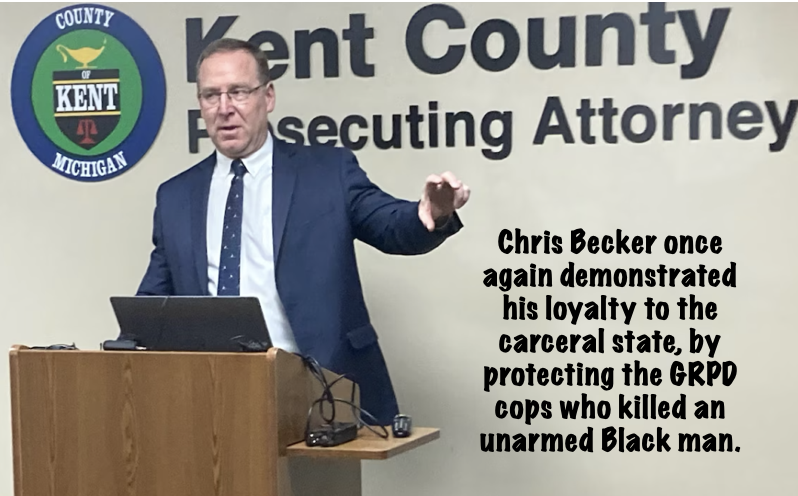
Kent County Prosecutor Chris Becker determined that the GRPD was justified in shooting an unarmed Black man 7 times
On Friday, all four of the daily news agencies in Grand Rapids ran stories about a Press Conference held by Kent County Prosecutor Chris Becker, where Becker announced that the GRPD cops ,who shot a killed a man who was clearly struggling with mental health issues, were justified in using deadly force.
According to MLive, during the Press Conference, Becker stated:
“In reviewing the in-car video of (the first officer on scene), it would appear to any reasonable person that Mr. Wymer had a gun. … The lighter he held closely resembled a gun; it would be virtually impossible for any person to think it was a lighter when viewing it at night, from a distance, and in the way Mr. Wymer was using it. Every police officer, EMS workers, and civilian who saw Mr. Wymer that night clearly believed he had a gun.”
In the WOODTV8 coverage, Kent County Prosecutor Chris Becker further explained his decision in finding the GRPD cops justified in what they did, saying:
“People have a right to use deadly force in the defense of others,” Becker said. “It doesn’t matter that the people who actually were maybe in the danger — as the person perceived it — didn’t fire. You still have a right to use immediately deadly force when you perceive that it may be necessary to protect the lives of others, and that’s what these three officers were doing. They thought their fellow officer (was) in danger. …. One of the officers said, ‘He’s pointing the gun at me.’ And so they reacted at that point in time.”
I highlighted some of the rhetoric from Chris Becker in this statements, mostly to point out the absurdity of his claims. He uses terms like “reasonable person” and “virtually impossible” as if they were absolutes, when in fact there was nothing absolutely about this situation. The GRPD was primarily interested in protecting themselves and demonstrated zero concern for the man they shot seven times.
The Kent County Prosecutor was also quoted at the end of the MLive story, making an absurd comment, which was unquestioned by the reporter:
Becker said that events unfolded so quickly that it would have been difficult to de-escalate. Grand Rapids police work with social workers to help those having a mental-health crisis but “social workers aren’t trained to go in harm’s way like a police officer does,” he said.
Chris Becker wants us all to believe that there was no opportunity for de-escalation in this instance, but that is just plain false. The cops could have decided to stand down and allowed time for mental health workers to arrive, especially since the man they shot and killed a a history of with mental health issues. The cops could have stayed behind their cars if they feared for their life, but according to Becker there just wasn’t enough time. This is bullshit, since time was the most important aspect of this situation.
To their credit, both WXMI 17 and WOODTV8 did contact a family member of the man that was killed by the GRPD, allowing them an opportunity to respond. In the WXMI 17 coverage, a sister stated:
“I was very disappointed that it turned out he [Hank Wymer] did not have a gun and that it was a cigarette lighter and for them to say that it looked enough like a handgun to shoot him seven times,” Naomi said. “That just seems crazy to me.
“I think this has left us with a lot more questions, particularly the hospital that he was released from that day. [Hank] told them that he was going to commit suicide by cop, so why was he released?
Naomi would go on to say, “I would like to seek some legal action and fight this because it doesn’t seem right to me.”
“I didn’t expect [the officers who shot Mr. Wymer] would go to jail, but I thought there would be some kind of repercussion for killing a man who didn’t have a weapon.”
In the WOODTV8 story, the same sister said, “I think based on the phone calls of what he was doing, pacing around and waving a gun-like object, made it clear that he was in a mental health crisis.So it is really strange to me that they didn’t send some kind of mental health crisis team, that they didn’t ask him any questions, that they literally said drop it over and over when he said “shoot me.”
It is clear to this writer that the GRPD does not keep people safe, especially BIPOC people and other marginalized communities, along with those that are struggling with mental health issues. The GRPD’s first impulse was to protect themselves and to ignore someone that was clearly in distress.
So what do we do and how can we organize in such a way as to provide community care, especially during a crisis? First, we need to do no harm in these situations and stop calling the cops. The group Interrupting Criminalization has a great list of for Health Care providers in a document titled, Beyond Do No Harm. Principle #5 says, Stop calling police on people with unmet mental health or medical needs.
In addition, Interrupting Criminalization has an excellent document called, A Checklist for Assessing Mental Health Response Models. This checklist provides important and robust questions about what we in community need to think about regarding response for those having a mental health crisis and why it is important to not do this work with the GRPD or any other cops.
To people who have not bought into the copaganda, this situation could clearly have been dealt with differently, especially if mental health workers were involved. However, the Kent County Prosecutor demonstrated his loyalty to the carceral state, by protecting the cops who killed an unarmed man. As long as the City of Grand Rapids continues to provide massive budget amounts to the cops instead of investing in care, this scenario will be repeated over and over again. The system once again demonstrates that blue lives do matter more than Black Lives.
Palestine Solidarity Information, Analysis, Local Actions and Events for the week of December 22nd
It has been more than 14 months since the Israeli government began their most recent assault on Gaza and the West Bank. The retaliation for the October 7 Hamas attack in Israel, has escalated to what the international community has called genocide, therefore, GRIID will be providing weekly links to information and analysis that we think can better inform us of what is happening, along with the role that the US government is playing. We will also provide information on local events and actions that people can get involved in. All of this information is to provide people with the capacity of what Noam Chomsky refers to as, intellectual self-defense.

Information
Report: Israel “Systematically” Uses Palestinian Children as Human Shields
I resigned from CNN over its pro-Israel bias
Netanyahu Moves to Expand Illegal Israeli Settlements in Syrian Golan Heights
U.S. DEFIED SPANISH EMBARGO ON ARMS BOUND OF ISRAEL BY MAKING ENFORCEMENT MORE DIFFICULT
 What We Talk About When We Don’t Talk About Genocide
Palestinian Authority proves loyalty to US, Israel by attacking Jenin
EPA STAFFERS DEMAND BIDEN RELEASE CLIMATE FUNDS WITHHELD OVER GAZA
Anti-Genocide Activists Target Israeli Drone Manufacturer in Brooklyn
Israel To Annex The West Bank – Why Now? And What Are The Likely Scenarios?
Analysis & History
Archiving As Resistance To Genocide Denial In Gaza
Images used in this post is from the Powering Injustice Report.
Michigan Senators Stabenow and Peters also voted for the $895 billion US military budget while millions living in the US are barely surviving
On Wednesday of this week, Michigan Senators Debbie Stabenow and Gary Peters voted to approve the largest US military budget in history at $895 billion.
The vote passed in the US Senate with very little resistance, with 85 voting for the National Defense Authorization Act and only 14 voting against.

As I noted earlier this week when the US House passed the proposed $895 billion US military budget, there were two other provisions to the National Defense Authorization Act. One of those provisions, according to a recent article on The Intercepted, “would bar the Pentagon from publicly citing as “authoritative” casualty data from the Gaza Health Ministry, effectively concealing the full extent of the death toll in Gaza in the military’s public communications. The data from Palestinian authorities has been the only consistent and reliable count of the death toll out of Gaza over the last 14 months, with Israel consistently denying human rights workers access to the enclave and preventing foreign media journalists from entering.” This fits with Rep. Scholten’s unconditional support for Israel, especially in the past 14 months while Israel has been committing a genocide against the Palestinians.
A second provision would prohibit transgender children on military health insurance from receiving gender-affirming care. This provision was included by the Republican Party, which would codify explicitly anti-LGBTQ+ policy into federal law for the first time in decades.
The votes from Michigan Senators Stabenow and Peters come as no surprise, since both of them have consistently voted for every US Military budget, regardless of who is in the White House. This vote by Senator Stabenow is likely to be one of her last voted in her long political career. Besides always voting for massive US military budgets, Stabenow has consistently supported US weapons sales abroad, even to countries like Saudi Arabia, which has a horrendous human rights record. According to the website boughtbyzionism.org, both Senator’s Stabenow and Peters have received significant funding from Pro-Israel groups, which has translated to their unconditional support for Israel, even while Israel is committing genocide.

Senator Gary Peters did post something on his website about the $895 billion US military budget, which you can find here. Senator Peters loves to brag about things like making sure that US military facilities in Michigan receiving funds from the National Defense Authorization Act, along with bragging about how Military contractors are being supported, which is really just a form of corporate welfare for weapons manufacturers. What Senator Peters fails to mention in his Press Release are the two provisions cited above, preventing the Pentagon from citing Palestinian deaths or casualties, and prohibiting transgender children on military health insurance from receiving gender-affirming care.
The National Defense Authorization Act is going to President Biden’s desk to be signed and there is no indication that he will veto it. Just one more example of how Michigan Senators Stabenow and Peters have always supported military funding over the meeting the basic needs of millions throughout the country.
“A nation that continues year after year to spend more money on military defense than on programs of social uplift is approaching spiritual doom.” Dr. Martin Luther King Jr
On the last possible day to pass the Drive Safe bills in Michigan, the State House did not even have a quorum
Since 2017, when Movimiento Cosecha Michigan was born, the undocumented immigrant-led movement has been fighting for driver’s licenses. I have been fortunate to have been a part of much of this sever year fight for justice.
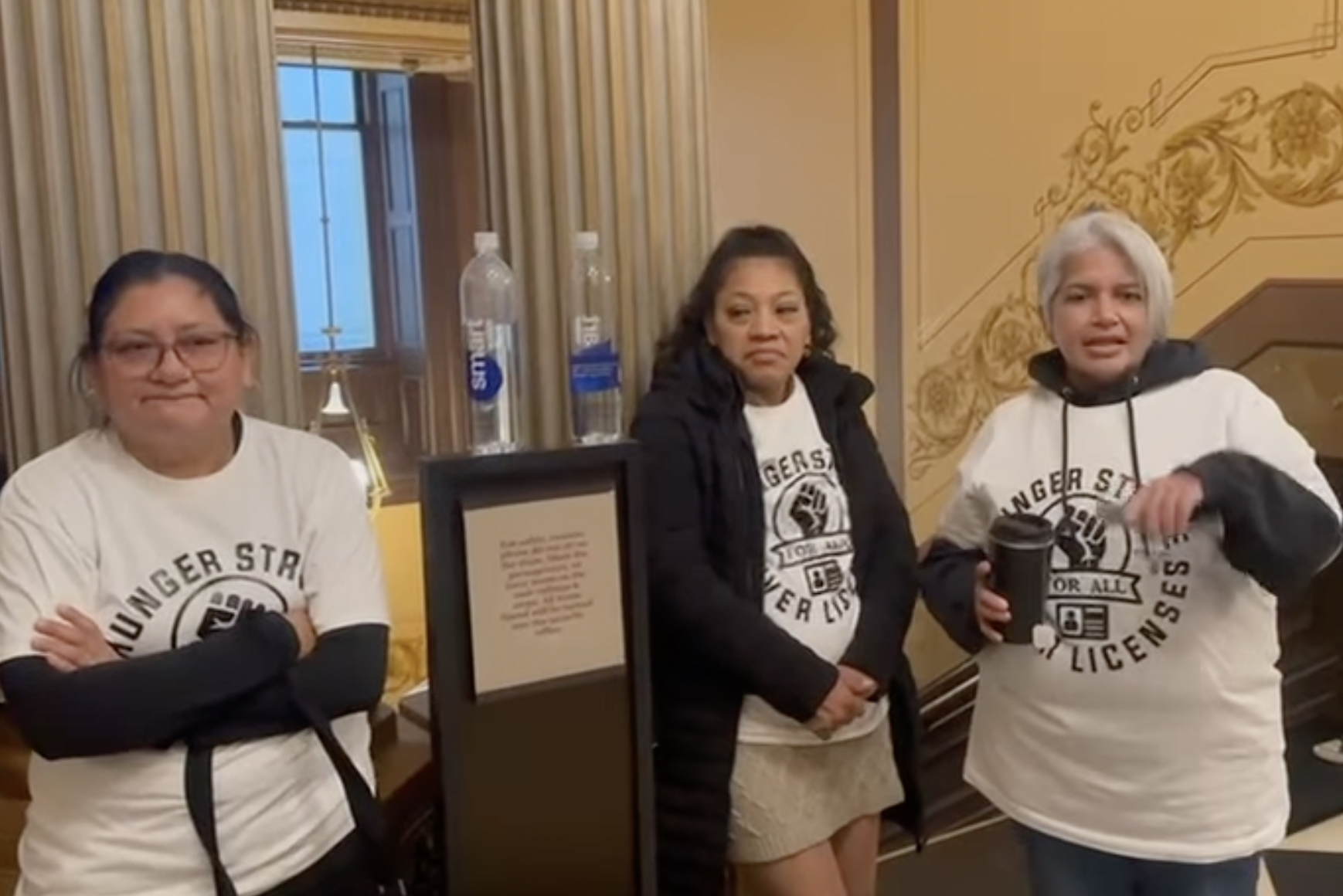
Over the years Movimiento Cosecha has engaged in mass marches on May 1st, held sit-ins at Kent County Commission meetings, offices of various state politicians and at several Secretary of State locations in the Grand Rapids area.
In 2018, Movimiento Cosecha organized a week-long pilgrimage from Grand Rapids to Lansing. There have been numerous fundraisers, actions to demand that local municipalities pass resolutions and send letters to State Legislators to pass bills to allow the undocumented community to obtain a driver’s licenses.
I have witnessed the complete and utter dedication from members of Movimiento Cosecha when dealing with fatigue, anti-immigrant hatred, constant police harassment, intimidation and surveillance. Yet, it the midst of all of this, Movimiento Cosecha has remained faithful to the wishes of the immigrant community’s desire to drive without fear and win driver’s licenses.
Yesterday, a small group of Cosecha Michigan members, along with a few allies, ended their hunger strike, an action they had been engaged in for about a week in the hopes of pressuring Michigan State Legislators to pass the Drive SAFE bills.
Cosecha Michigan members showed up once again outside of the State House Chambers to bear witness, to talk with State Representatives and to demand that during the Lame Duck session that State Legislators pass the Drive SAFE bills. After nearly three hours, the State House adjourned because they didn’t have enough State Representatives for even a quorum to be able to vote.
As I said, I have worked with Movimiento Cosecha Michigan since 2017, but on this day, when the State House could not even get enough of their members to show up to vote, I saw disappointment, disbelief and disgust in the faces of the Cosecha Michigan members.
Do those elected officials who didn’t bother to do their job and show up to vote for such a critical set of bills even understand how the lives of undocumented immigrants would be vastly improved because they would have a driver’s license? Do they know that without driver’s licenses that undocumented immigrants live in constant fear of being stopped by police, which will then contact ICE and have them arrested, detained and possibly deported?
And just to be clear, both Republicans and Democrats were not showing up to vote on the Drive SAFE bills. I saw the disgust, disappointment and disbelief on the faces of the Cosecha Michigan members, because despite all of the promises from State Legislators and from Governor Whitmer’s office that they would pass the Drive SAFE bills after they won the trifecta during the 2022 election, they failed to make that promise a reality.
Lastly, here is a video message from Cosecha Michigan members after the State House closed their session without a quorum.
There is no sense of urgency from MLive over the most recent Enbridge oil disaster in the western part of the Great Lakes
On Tuesday, MLive posted an article with the headline, Enbridge oil pipeline spills nearly 70,000 gallons in Wisconsin.

The article states:
The 465-mile pipeline ruptured underground near Cambridge, a village 18 miles east of Madison. Line 6 is part of Enbridge’s Lakehead system. The 34-inch line moves 667,000 barrels-per-day between terminals in Superior, Wis., and Griffith, Ind.
Most of the rest of the article talks about other oil spills in Wisconsin, then shifts to talking about a pipeline that is being re-routed because of a battle with an Indigenous tribe, with the article ending by talking about Line 5 in Michigan.

There was also some mention of the Enbridge oil catastrophe over ten years ago that resulted in some 843,000 gallons of crude oil contaminating the Kalamazoo River in Michigan. GRIID monitored the news coverage of MLive when the 2010 Enbridge oil catastrophe happened in the Kalamazoo River. At the time, I wrote: After wading through the 32 stories it was clear that the bulk of the coverage on MLive was about the “leak,” political responses from Michigan, the “clean up,” and reactions from those who live on or near the river where the oil has been detected.
In August of 2010, MLive decided to run an interview with the CEO of Enbridge, which was nothing more than a fluff piece. This article was followed by a piece in October entitled, Enbridge gives tour to show most of the oil from Kalamazoo River spill has now been cleaned up.” GRIID also critiqued that article, where I wrote:
Sure the article mentions EPA requirements for the clean up, but no one from the EPA was interviewed for the story in terms of how the clean up is going. The Press writer did not speak to any of the local residents, local biologists or environmental groups as to their assessment of the short-term impact of the Enbridge caused oil spill. Instead they just took the word of the company that caused the disaster in the first place.
 In the MLive article from Tuesday about the 69,000-gallon spill in Wisconsin, the only two people cited in the article was an Enbridge spokesperson, followed by someone from the Midwest Environmental Advocates.
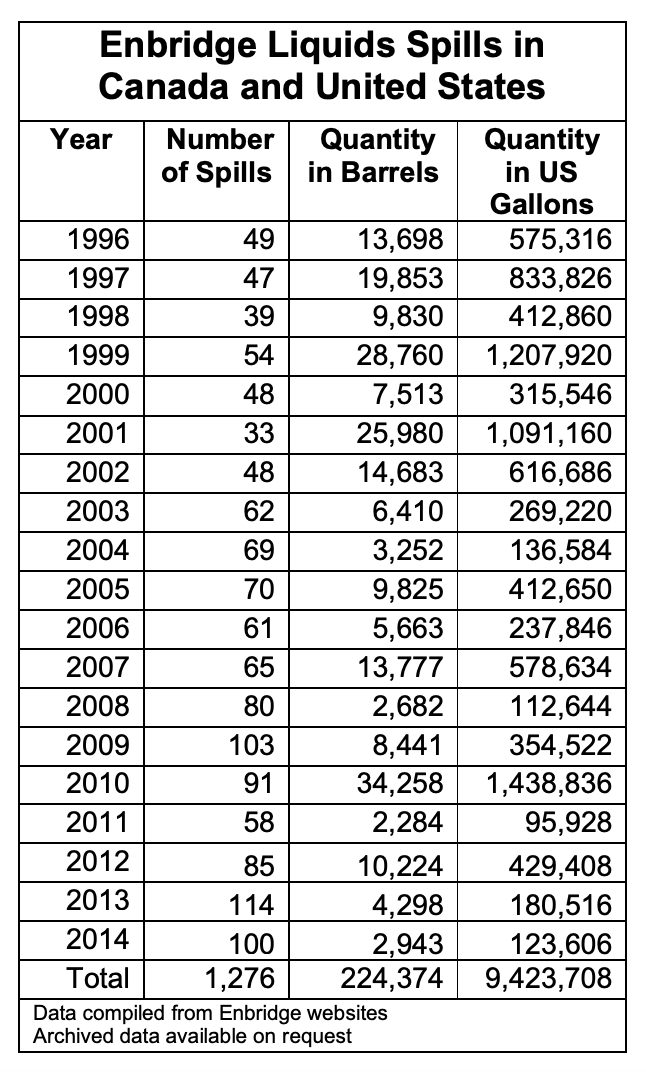
Besides the problem of providing space to Enbridge to make claims without questioning them, the MLive article doesn’t provide a larger context for this most recent spill, such as how many oil spills/disasters Enbridge has had in its history. I looked on the Enbridge website, which does not provide this information and the most recent source I found was from the source linked here, which also include this chart on the right. According to the chart, Enbridge has had 1,276 different spills in the US and Canada between 1996 and 2014.
This is the kind of information that journalists need to provide the public whenever a new oil spill occurs, which it most certainly will. If the data that is provided in the 350.org report linked just above is accurate, then over an 18 year period Enbridge averaged 70.8 oil spills a year from 1996 to 2014. Context is vitally important and can provide the public with a greater sense of urgency around whether or not they want Enbridge pipeline running through the largest body of fresh water on the planet, the Great Lakes.
Earlier today, it was announced that the Amway families of Van Andel and DeVos will be the owners of the new soccer team that will play in the soon to be constructed soccer stadium.
MLive reported that the Van Andel and DeVos families will own the MLS NEXT Pro soccer team. The brief article features comments from Dan DeVos and David Van Andel, with some content that is recycled from previous posts.
The Crain’s Grand Rapids article was much more substantial, although it also had quotes from the billionaire Amway families. The content that was included in the Crain’s article provided more detail on the ownership structure, stating:
David Van Andel and his family will hold primary ownership of the club, with roles planned for his four sons: Jesse, Aaron, Kyle, and Christian Van Andel. Dan DeVos and his family will hold a minority stake, with his son, Cole DeVos, playing a key leadership role.
What is significantly different about the Crain’s piece and the MLive article was that Crain’s provided some context on the amount of sports teams the Amway families own.
The new soccer team will join the Grand Rapids Rise women’s volleyball team, which DeVos’ DP Fox Ventures launched in December 2022 and played its first season this year, as the region’s most recent professional sports team addition.
DeVos also serves as chairman of RDV Sports, which owns the NBA’s Orlando Magic, the NBA G League’s Lakeland Magic and the Orlando Solar Bears minor league hockey team.
DP Fox will assist with the process of forming the team, but the club will eventually need its own group to manage its operations in the future, according to the founders.
The rest of the coverage is fairly standard, with GR Mayor Bliss expressing their excitement about the new soccer team, along with more quotes from the Amway billionaire families.
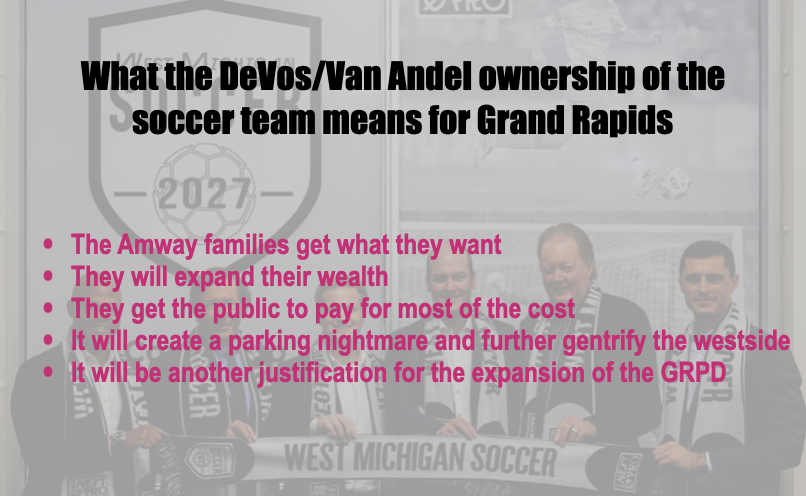
What this means for Grand Rapids
First, as GRIID has been stating all along, especially when it was announced that Dan DeVos had purchased the Big Boy restaurant property in 2022, we all should have known that that the Amway families would own the soccer team.
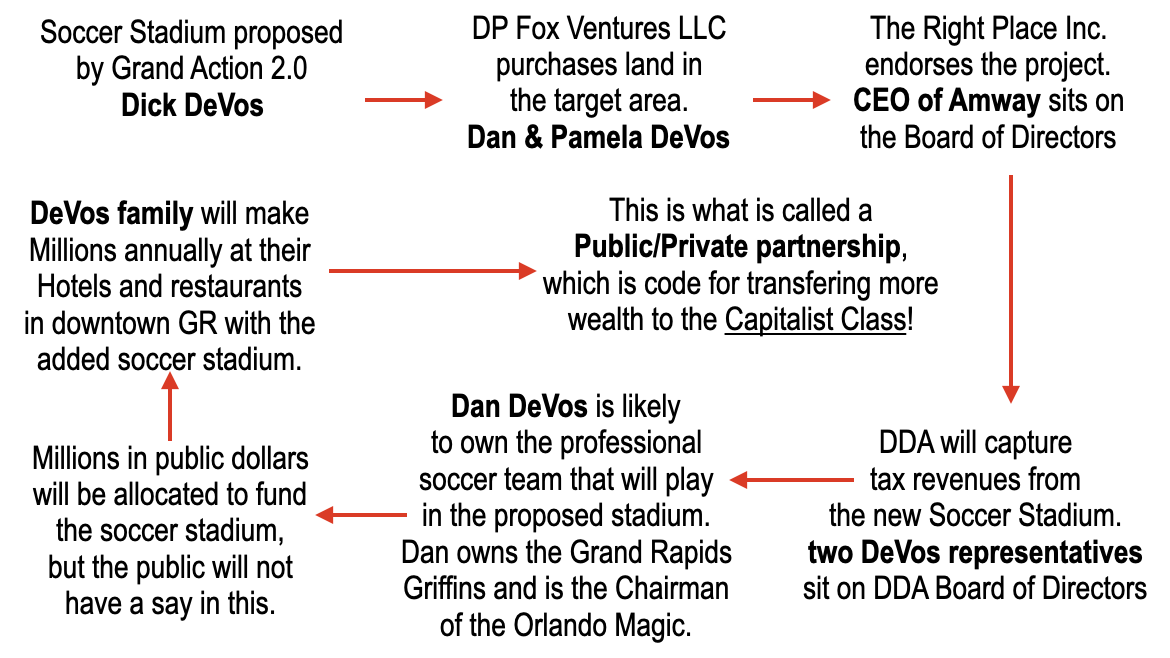
Second, it means that when the billionaire families of DeVos and Van Andel want something done in Grand Rapids, they pretty much get to do whatever they want. Grand Action 2.0 was founded by the DeVos and Van Andel families, with the specific goal of getting the City, County and State governments to spend over a billion dollars of public money to build the Van Andel Arena, the Convention Center, the Downtown Market, the Amphitheater and now the Soccer Stadium. This also includes the apartment complexes that will be adjacent to the Amphitheater and the Soccer stadium with hundreds of millions in public funding and the new “3 towers project” on Fulton and Market, with at least $565 million in tax incentives.
Third, of course the ultimate goal of the DeVos and Van Andel families is to expand their wealth. By owning another sports team, they will get to hold the City and County hostage in the future, when the time comes to expand the soccer stadium or use more land for parking, etc. The DeVos family owns most of the hotels in downtown GR, so when people come to watch a game and don’t want to drive home, or because they are from out of town, the chances are high that they will stay in a DeVos-owned hotel.
 Fourth, In Dave Zirin’s book, Bad Sports: How Owners Are Ruining the Games We Love, he discusses how wealthy sports team owners are constantly manipulating municipal governments and city residents to get them to provide massive subsidies for the construction of sports venues, like arena’s and stadiums. Zirin mentions how the DeVos family squeezed taxpayers in Orlando, when they wanted a new arena for their Orlando Magic basketball team. Zirin writes: “And he’s (DeVos) is getting $1 billion in taxpayers’ money to build the arena. That sends a bad message. Indeed. At its core, the DeVos model could be characterized as theft of public funds that turns teams and arenas into slush funds for radical right politics.”
Fifth, with the Amphitheater and the Soccer Stadium construction projects will come a parking nightmare for those who live on the near westside of Grand Rapids. In addition, all of this construction between Fulton on the south and Bridge St. on the north, will likely result in an ongoing gentrification of the near westside. Low income and working class families will not be tolerated, since they have little to offer to the billionaire families and their network of other members of the Capitalist Class.
Sixth, all of this new development, which is primarily predicated on the expansion of wealth for the DeVos, Van Andel and other members of the Capitalist Class will also result in further justification of expanding the GRPD. People with deep pockets will always use cops to protect their wealth, which is what the GR Chamber was arguing with their push to get the city to deal with the “unhoused problem” in downtown GR in 2022. In addition, the GRPD also recognizes that more development where people are coming in large numbers to spend money will result in the “need” for more cops. GRIID reported on a WOODTV8 story where a GRPD Captain stated: “We want to expand our numbers in the next couple years quite a bit. So I would say in the next couple of years — without speaking for the city commission, they’d have to approve it — but we would like to be in that 330 or 340 range. There’s a lot going on downtown with the amphitheater coming in, the soccer stadium. There’s excitement with the river transformation. There is a lot of great restaurants and nightlife down here.”
A great deal more could be said about the announcement that the Van Andel and DeVos families will own the professional soccer team, but the six reasons I provided are plenty to chew upon for now. What the DeVos and Van Andel families are doing with owning sports teams is also comparable to the bread & circuses environment that was crafted during the Roman Empire. Distract the public with entertainment long enough and they will forget about how they are being constantly robbed by those who run this city. Just another example of West Michigan Nice!
“My family is the largest single contributor of soft money to the national Republican Party. I have decided to stop taking offense at the suggestion that we are buying influence. Now I simply concede the point. They are right.” Betsy DeVos
The election in Michigan ended with the Republicans regaining control of the State House in Lansing. The Democrats had won a trifecta after the 2022 election, but that will end beginning next year, as the GOP will now control the State House.
In response to the Republicans winning back the Michigan State House, Dick DeVos has shared his thoughts on the outcome of the election and what it means on his website dickdevos.com.
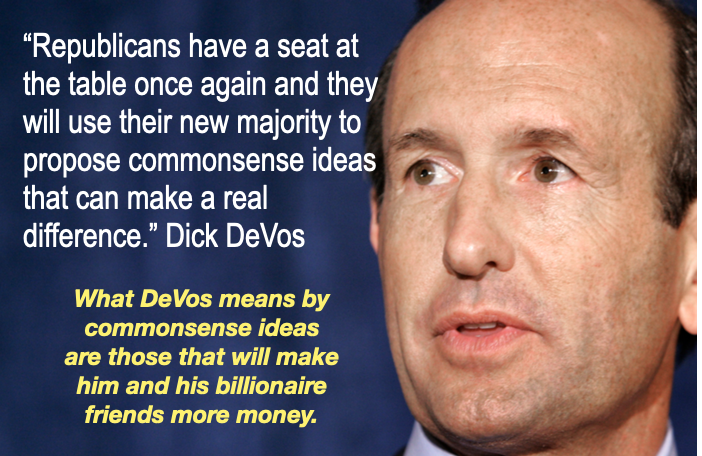
In a post from November 11th, Dick DeVos wrote an article entitled, Republican House majority means good things for Michigan. What I want to do is provide a little deconstruction of the article and correct some of the misinformation in the DeVos’ post.
One of the most glaring things about the post from Dick DeVos is that he never provides any sources or verification of the claims he makes. For instance, in the 2nd paragraph of the article, DeVos writes about what the Democratic-controlled State Legislation has done:
They’ve weakened small businesses, driven jobs and population out of the state, and made our neighborhoods less safe. They stripped workers’ rights by repealing Right-to-Work, raised taxes on Michigan families and small businesses amid record inflation, passed California-style energy mandates that increased costs while reducing reliability, handed billions to big corporations, and removed accountability and transparency in our schools, which rewarded their friends in the teacher’s union but hurt our kids.
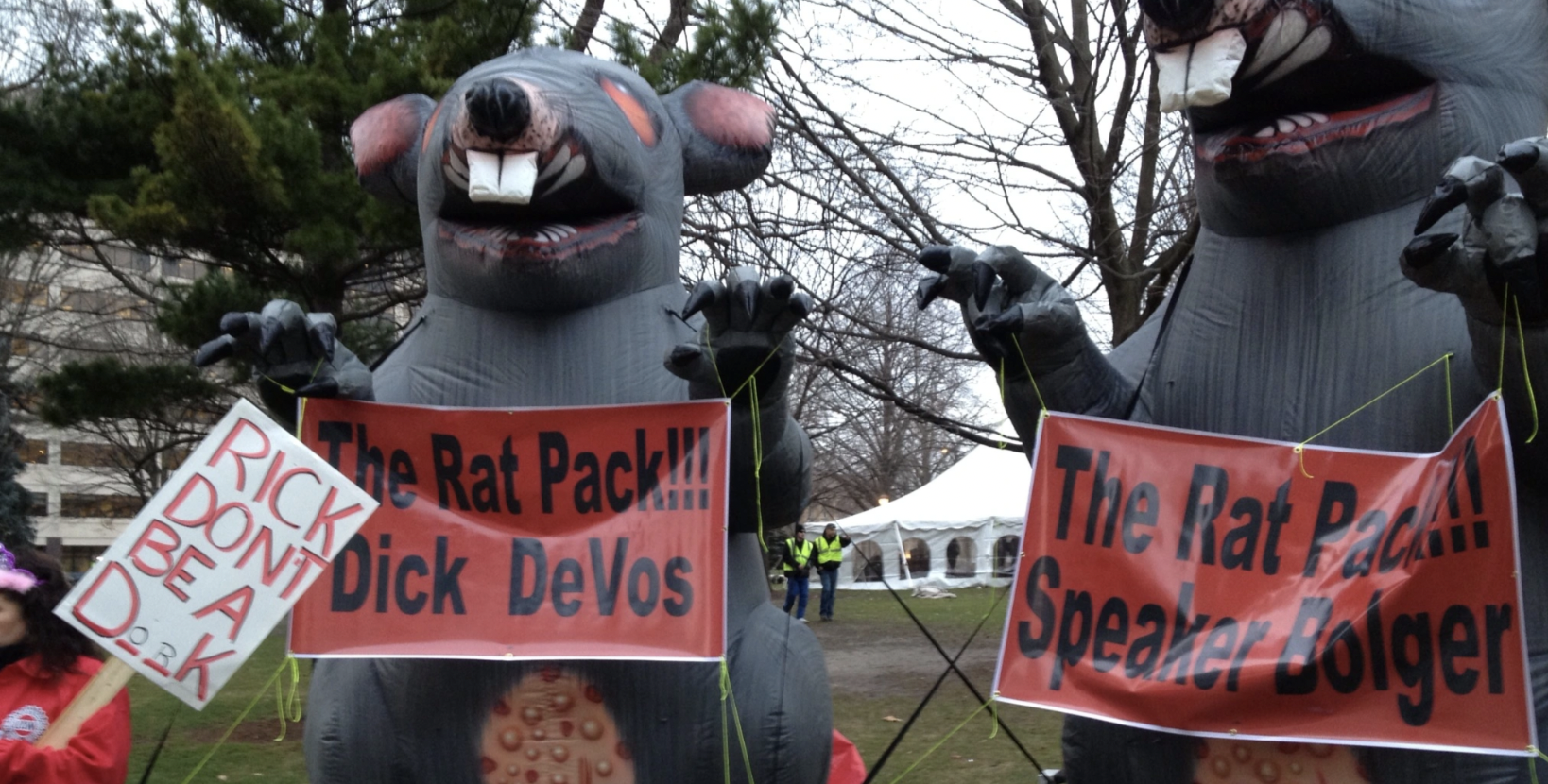
Those with economic and political power rarely feel the need to substantiate claims they make, since this is one of the perks of being rich and powerful. The point about stripping workers’ rights by repealing the Right-to-Work policy is worth saying something about. If this policy was so anti-worker, then why did 10,000 workers show up to the State Capitol in 2012 to protest against the Right-to-Work policy that Governor Snyder put in place? In addition, it should be mentioned that Dick DeVos and his friends with the West Michigan Policy Forum were the main organization that pushed a Right-to-Work policy for Michigan beginning in 2010, when they brought in Rick Berman to speak at their annual policy conference. Lastly, it is worth noting that the Mackinac Center for Public Policy think tank was also working to craft a Right-to-Work policy for Michigan and one of their main funders has been the DeVos family.
Later in the article DeVos writes:
My family has called Michigan home our entire lives. We chose the state to build businesses, invest in our community, create jobs and raise our own families — and we want it to succeed.
First off, states to not succeed or fail, people do. There is no such things as a Michigan economy. There are only economies that are made up of people or entities like businesses. What Dick DeVos really means by wanting Michigan to succeed is that he wants to perpetuate Capitalism and economic policies that promote Capitalism. Capitalism has been very good to people like the DeVos family, which has tons of investments, owns multiple businesses and benefits from publicly funded projects in Grand Rapids. Second, while it is true that Michigan is the home base of the DeVos family, they own houses in other states, specifically in Florida, and have for decades.
Later in the article DeVos says he talked with Republicans who are, “nurses, business owners, law enforcement professionals and long-time community leaders.” This is not exactly a diverse list of people who live in Michigan, plus it is unlikely that Dick DeVos comes in contact with many working class residents from Michigan.
Near the end of the article, DeVos then makes this statement, “Electing a Republican majority in the state House is just the first step in getting Michigan back on track.” What Dick failed to mention is that his family was collectively the single largest contributor to the Republican Party and Republican candidates in the 2024 election, which GRIID documented on November 3rd. In fact, if you can look at how much money Dick DeVos personally contributed to Republican candidates in Michigan in 2024 ($296,175.50) at this link.
Lastly, I want to point out that this is not a partisan issue for me. I have not been very happy with what the Democratic Party has done in the past two years in Michigan, despite having control of the Governor’s office and the State House & Senate. In November of 2022, I wrote a three part series entitled, What Kind of Change Do We really want to see in Michigan, but most of what I included in those articles have not come to fruition.
Editors note: The source of the Betsy DeVos quote at the beginning of this article comes from a 2017 article in Politico. https://www.politico.com/magazine/story/2017/01/betsy-dick-devos-family-amway-michigan-politics-religion-214631/
Rep. Scholten votes for an $895 billion US military budget, to suppress the death toll in Gaza, and to codify an anti-LGBTQ policy all at the same time
On Wednesday, December 11th, the House passed the annual National Defense Authorization Act (NDAA), 281 to 140, with 81 Democrats and nearly all Republicans voting yes.
Rep. Hillary Scholten was one of those 81 Democrats who voted with the Republicans to provide $895 billion for military spending in 2025. This US military spending bill is the largest in US history and demonstrates once again that when it comes to massive spending on the US military it has bi-partisan support.
Rep. Scholten once again proved to her constituents that she unconditionally supports the US military and makes sure that US military funding priorities are more important that meeting the needs of the millions of people in the US who don’t have adequate health care, safe housing, or a livable wage.
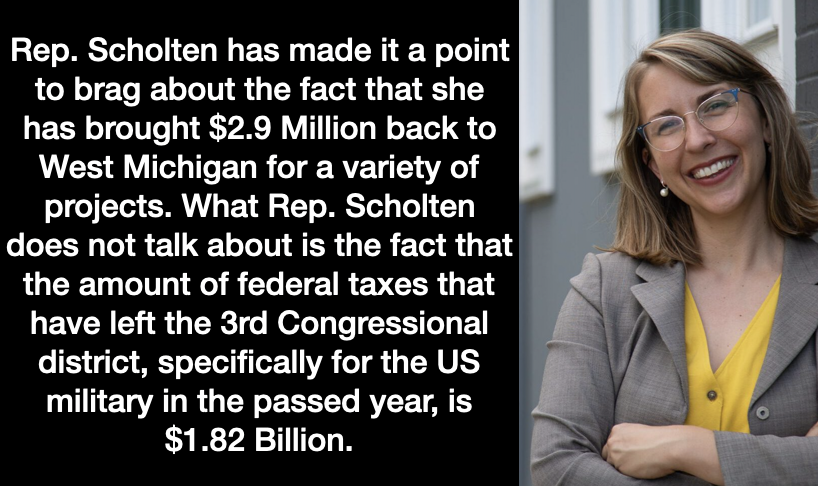
Rep. Scholten has made it a point to brag about the fact that she has brought $2.9 Million back to West Michigan for a variety of projects. What Rep. Scholten does not talk about, nor does she post this on her Facebook page, is the fact that the amount of federal taxes that have left the 3rd Congressional district, specifically for the US military, is $1.82 Billion.
Now, according to the National Priorities Project, the $1.82 Billion that leaves the 3rd Congressional District for US military spending could provide incredible resources to people in Rep. Scholten’s district if she valued their needs over military spending. For example, $1.8 Billion could be used for:
- 256,312 Public Housing Units for 1 Year, or
- 31,873 Scholarships for University Students for 4 Years, or
- 657,002 Children Receiving Low-Income Healthcare for 1 Year, or
- 5.96 million Households with Solar Electricity for 1 Year
In addition to making sure that US military spending is a priority, Rep. Scholten also voted for some additional provisions that were in the National Defense Authorization Act. One of those provisions, according to a recent article on The Intercepted, “would bar the Pentagon from publicly citing as “authoritative” casualty data from the Gaza Health Ministry, effectively concealing the full extent of the death toll in Gaza in the military’s public communications. The data from Palestinian authorities has been the only consistent and reliable count of the death toll out of Gaza over the last 14 months, with Israel consistently denying human rights workers access to the enclave and preventing foreign media journalists from entering.” This fits with Rep. Scholten’s unconditional support for Israel, especially in the past 14 months while Israel has been committing a genocide against the Palestinians.
A second provision that Rep. Scholten voted for would prohibit transgender children on military health insurance from receiving gender-affirming care. This provision was included by the Republican Party, which would codify explicitly anti-LGBTQ+ policy into federal law for the first time in decades.
In the end, Rep. Hillary Scholten decided to vote for the largest US military budget in history at $895 Billion, voted to prevent the Pentagon from citing casualty data from the Gaza Health Ministry, and to codify into federal law that US military personnel could not use health benefits for gender-affirming care for their transgender children. With her vote Rep, Scholten demonstrates that she fully supports US imperialism, wants to suppress information about Israel’s genocide, and her support for anti-trans policies.
Palestine Solidarity Information, Analysis, Local Actions and Events for the week of December 15th
It has been 14 months since the Israeli government began their most recent assault on Gaza and the West Bank. The retaliation for the October 7 Hamas attack in Israel, has escalated to what the international community has called genocide, therefore, GRIID will be providing weekly links to information and analysis that we think can better inform us of what is happening, along with the role that the US government is playing. We will also provide information on local events and actions that people can get involved in. All of this information is to provide people with the capacity of what Noam Chomsky refers to as, intellectual self-defense.

Information
The Tectonic Shift: The Gaza Genocide and the Limits of Israeli Hasbara
TRUMP’S PRO-ISRAEL DREAM TEAM: PATEL NOMINATION CAPS HAWKISH CABINET
Gaza Ministry Says 50 Killed in a Day as Israel Bombs Flour Line, Hospital, and Refugee Camps
Trump genuflects to Genocide Joe, pushes “hell” for Gaza
Trauma and Terror in the North of Gaza
Doctors in Gaza Say They Have No Doubt Israel Is Targeting Them
Genuine Solidarity Is Not Conditional: Gaza and Unity Around Palestine
Israel Is Also Waging an Economic War Against Palestinians
Analysis & History
A new report from B’Tselem, Unleashed: Abuse of Palestinians by Israeli Soldiers in the Center of Hebron
Image used in this post is from the B’Tselem Report.
New Report ranks Michigan amongst the worst in the country for utility performance
 Do you ever wonder about the costs your utilities, especially gas and electric? Does your power go out regularly, especially during severe weather? Also, does it take a long time for you to get power back once you lost it?
These are all important questions, since most of us do not generate our own power and we rely on companies like Consumers Energy and DTE.
In a new report from Citizen’s Utility Board, Michigan ranks as one of the worst states in the country around utility performance. The 2024 edition of CUB’s annual Utility Performance Report is out now, and once again it uses federal data on key metrics for gas and electric utilities to compare the performance of Michigan utilities to those in all other states in the three categories of reliability, affordability and environmental impacts.
One major finding from the report is:
A recurring theme across different versions of this report, reinforced by the latest data, is that Michigan utilities have continually failed to improve their basic reliability performance, a weakness that is likely to be magnified during severe weather, which experts expect will be more common as the climate continues to warm.
Other important findings on Michigan utilities are:
- Average time to restore power following an outage: 49th (and last in the Midwest) Duration of outages per customer: 43rd (and last in the Midwest)
- Energy Expenditures per Household as % of Median Income: 38th (and last in the Midwest)
- Cost of Electricity in the Residential Sector: 41st (and last in the Midwest)
- Clean Generation as % of Total Generation: 34th
- CO2 Emissions Intensity (kilograms per megawatt-hour of electricity generated): 36th
To read the full report, go here.
Another excellent resource for people is The Electric Utility Toolkit: An Activist’s Guide to Changing the Power Grid, a resource developed by the Union of Concerned Scientists.
 Another way to take action is by joining the Michigan Environmental Justice Coalition by heading to the Michigan Public Service Commission hearing on December 19th, 2024. MEJC staff and community members will be driving up together in one bus to attend the MPSC meeting, leave a comment and hand out energy democracy goodie bags! Please meet at the MEJC office, 2701 Bagley St, by 11:00am. We’ll head to Lansing and be at 7109 W. Saginaw Highway, Lansing, Michigan, 4891. We should be back at the office no later than 4:00pm. Lunch will be provided! You can register here.
Lastly, if you are interested in working on utility justice matters here in Grand Rapids, then contact the Urban Core Collective, specifically their Climate Justice team, which does work on utility costs and utility performance issues locally and at the state level. Contact the Climate Justice team members at this link.
 Grand Rapids Institute for Information Democracy