Top 25 Censored Stories of 2011
This list of the top 25 Censored Stories is re-posted from Project Censored.
1. More US Soldiers Committed Suicide Than Died in Combat
For the second year (2010) in a row, more US soldiers killed themselves (468) than died in combat (462). “If you… know the one thing that causes people to commit suicide, please let us know,” General Peter Chiarelli told the Army Times, “because we don’t know.” Suicide is a tragic but predictable human reaction to […]
2. US Military Manipulates the Social Media
The US military is developing software that will allow it to secretly manipulate social media sites by using fake online personas to influence internet conversations and spread pro-American propaganda. A Californian corporation has been awarded a contract with US Central Command (CENTCOM), which oversees US armed operations in the Middle East and Central Asia, to develop an […]
3. Obama Authorizes International Assassination Campaign
The Obama administration has quietly put into practice an ‘incomplete idea’ left over from the Bush II presidency: creating a de facto ‘presidential international assassination program.’ Court documents, evidence offered by Human Rights Watch and a special United Nations report allege that US citizens suspected of encouraging “terror” had been put on “death lists.” These […]
A new worldwide spike in agricultural commodity and food prices is generating both predictable and extraordinary fall-outs. The search for causes once again leads to a conjuncture of flawed policies in trade, environment, finance and agriculture that is likely to produce more dangerous volatility in years to come. Over the past year, food prices around […]
5. Private Prison Companies Fund Anti–Immigrant Legislation
Over the past four years roughly a million immigrants have been incarcerated in dangerous detention facilities in our taxpayer-financed private prison system where children were abused, women were raped and men died from lack of basic medical attention. Arizona’s Governor Jan Brewer received substantial campaign financing from Corrections Corporation of America (CCA) and GEO Group, […]

Earlier this year the Federal Trade Commission (FTC) investigated Internet search engine giant Google for illegally collecting personal data such as passwords, emails and other online activities from unsecured Wi-Fi networks in homes and businesses across the United States and around the rest of the world. Google has claimed the data was accidentally picked up […]
7. U.S. Army and Psychology’s Largest Experiment–Ever
In the January 2011 issue of American Psychologist, the American Psychology Association (APA) dedicated 13 articles to detailing and celebrating a $117 million collaboration with the US Army called Comprehensive Soldier Fitness (CSF). It’s being marketed as a resilience training to reduce if not prevent adverse psychological consequences to soldiers who endure combat. Because of […]
8. The Fairytale of Clean and Safe Nuclear Power
Nuclear power presents a security threat of unprecedented proportions: It’s capable of a catastrophic accident that can kill hundreds of thousands of people, with a byproduct that is toxic for millennia. To call nuclear power “clean” is an affront to science, common sense and the English language itself, yet industry backers, inside and outside of […]
9. Government Sponsored Technologies for Weather Modification
Rising global temperatures, increasing population and degradation of water supplies have created broad support for the growing field of weather modification. The US government has conducted weather modification experiments for over half a century, and the military-industrial complex stands poised to capitalize on these discoveries. One of the latest programs is HAARP, the High Frequency […]
10. Real Unemployment: One Out of Five in US
The corporate media wants America to feel secure during a time of unemployment crisis, but people deserve to know what is really happening rather than being told a statistical lie. The January 2011 unemployment rate released by the Bureau of Labor Statistics (BLS) stated that the unemployment rate had dropped to 9% from 9.4%, conveying […]
11. Trafficking of Iraqi Women Rampant
Human trafficking occurs throughout the world but has become increasingly more prevalent in the country of Iraq due to the instability produced by the Iraq War. Many Iraqi women and girls are widowed or orphaned by wartime casualties. Currently, more than 50,000 Iraqi women have fled to Jordan and Syria and are trapped in sexual […]
12. Pacific Garbage Dump—Did You Really Think Your Plastic Was Being Recycled?
Many people do not realize that there is a swirling mass of plastic in the middle of the Pacific ocean that qualify as the planet’s largest garbage dump. The 5 Gyres Project estimates that there are 315 billion pounds of plastic in the oceanright now. Much of the world’s trash has accumulated in part of […]
13. Will a State of Emergency Be Used to Supersede Our Constitution?
A program dating back to the Eisenhower era of emergency measures for an America devastated in a nuclear attack is now converted to bestow secret powers on the president for anything he considers an emergency. The National Emergency Centers Establishment Act (HR 645), recently introduced in Congress, calls for the establishment of “national emergency centers” […]
14. Family Pressure on Young Girls for Genitalia Mutilation Continues in Kenya
In Kamunera location of Mt. Elgon District in Kenya, more than 100 girls were rescued by the Maendeleo ya Wanawake organization before facing genital mutilation, a practice still widespread in spite of government attempts to end the practice. Female genital mutilation (FGM), which involves the partial or total removal of external female genitalia, is a […]
15. Big Polluters Freed from Environmental Oversight
The Obama administration has distributed out billions of dollars in stimulus money to some of the nation’s biggest polluters and granted exemptions from basic environmental errors. The administration’s main goal in Energy Secretary Steven Chu words was to “get the money out and spent as quickly as possible”. They are trying to boost the economy […]
16. Sweatshops in China Are Making Your iPods While Workers Suffer
Although Apple claims to be a socially responsible company, some of its suspected Chinese suppliers, such as Foxconn, Dafu and Lian Jian Technology, routinely violate China’s “Law on the Prevention and Control of Occupational Diseases.” A report from China’s Institute of Public and Environmental Affairs, “The Other Side of Apple,” criticized the company for harmful environmental […]
17. Superbug Bacteria Spreading Worldwide
Lethal superbugs that do not respond to any known drugs are emerging. The World Health Organization states that the New Delhi, or NDM-1, superbug was recently found in UK patients who had traveled to countries such as India or Pakistan and has reached a critical point. These superbugs are resistant to carbapenem antibiotics, a major […]
18. Monsanto Tries to Benefit from Haiti’s Earthquake
In May 2010, six months after an earthquake destroyed Haiti, the American multinational corporation Monsanto donated to the country 60 tons of corn and vegetable hybrid seed. The United States Agency for International Development (USAID) took charge of the seed distribution. A month later, on 4 June 2010, around 10,000 Haitian farmers demonstrated against Monsanto’s […]
19. Oxfam Exposes How Aid Is Used for Political Purposes
In a new report entitled “Whose Aid is it Anyway?”, Oxfam has found that “billions of dollars in international aid, which could have transformed the lives of many people in some of the poorest countries in the world, was spent on unsustainable, expensive and dangerous aid projects that international donor governments used to support their […]
20. US Agencies Trying to Outlaw GMO Food Labelling
Concern is growing over the health impact of growing and eating genetically modified organisms (GMOs). The World Health Organization has identified allergenicity, antibiotic resistance, gene transfer, outcrossing, GM genes introduced into the wild population, gene stability, susceptibility of non-target organisms (insects) and loss of biodiversity as potential issues of using GM seeds. Currently, most health […]
21: Lyme Disease: An Emerging Epidemic
Lyme disease is one of the most political and controversial epidemics of our time. The disease originates from a bacteria transmitted through the bite of a tick and can remain hidden, mimicking other diseases such as Multiple Sclerosis, ALS, ADHD and other neurological conditions, thus it is often called “the great imitator”. And it is […]
22. Participatory Budgeting – A Method to Empower Local Citizens & Communities
“Participatory Budgeting” (PB) is a process that allows citizens to decide directly how to allocate all or part of a public budget, typically through a series of meetings, work by community “delegates” or representatives and ultimately, a final vote. It was first implemented in the city of Porto Alegre, Brazil, in 1990, and has since […]
23. Worldwide Movement To Ban or Charge Fees For Plastic Bags
Shoppers worldwide are using 500 billion to one trillion single-use plastic bags per year. The average use time of a plastic bag is 12 minutes. Plastic bags pollute our waters, smother wetlands and entangle and kill animals. This eventually affects our health because larger animals eat small, plastic-laden creatures and plastics work their way up […]
24. South Dakota Takes Extreme Measures to Be the Top Anti–Abortion State
South Dakota is taking extreme action against any person who performs an abortion within the state’s borders. The South Dakota House is taking up a bill to redefine “justifiable homicide” that may “make it legal to kill doctors who perform abortions,” Mother Jones reports. A bill backed by the GOP could, in theory, allow a […]
President Obama’s undeclared and congressionally unauthorized war against Libya may be compounded by the crime of spreading toxic uranium oxide in populated areas of that country. Concern is being voiced by groups such as the International Coalition to Ban Uranium Weapons, which monitors the military use of so-called depleted uranium (DU) anti-tank and bunker-penetrating shells. […]
College Football Bowl Games, Lobbying and Corporate branding

Ah, I remember the days when college football bowls games were just simply called the Rose Bowl or the Sugar Bowl. Those days are long gone.
Money has always influenced college sports in one way or another, with boosters giving money and gifts to athletes for recruiting purposes or scholarship money to someone who could run fast with a ball. However, in recent years college football has evolved to a whole new commercial level with corporate sponsorship of bowl games.

There are dozens of college football bowl games, all of which involve universities getting paid to play in them. In addition, the bowl games themselves have become an opportunity for corporations to get lots of advertising and branding of their names.
For instance, there are six games being played today, all of which are traditional bowl games like the Rose Bowl. However, now most of these games are named after the corporate sponsor. In today’s matchup between MSU and Georgia, the game is called the Outback Bowl, named after the restaurant chain. There is also the TicketCity Bowl, Taxslayer Bowl, the Capital One Bowl, the Tostitos Fiesta Bowl and the Rose Bowl sponsored by Vizio.
After today the remaining games include such sports-friendly names as Discover Orange Bowl, the AT&T Cotton Bowl and my favorite, the Godaddy.com Bowl. The University of Michigan is also in a bowl game this year and will play Virginia Tech in the Allstate Sugar Bowl.
Allstate seems to have been the real winner for this year’s college football season, since they are also the corporate sponsor to the championship game between LSU and Alabama, also known as the Allstate BSC Championship Game.
According to an investigation by the Center for Responsive Politics, corporations sponsoring these games are not unaccustomed to spending money to get what they want.
“AllState Insurance, which has its name on two marquees — the AllState National Championship and the AllState Sugar Bowl — has disbursed $2.62 million lobbying the federal government this year. Pepsi Co., which is sponsoring the Tostitos Fiesta Bowl, has spent $2.61 million, and credit card company Discover, of the Discover Orange Bowl, has laid out about $960,000 on federal lobbying.”

The Center for Responsive Politics also looked at how much universities lobbied the federal government in 2011 and discovered that the schools in the major college football games also collectively spent millions to influence Washington.
According to the Center’s report U of M outspent the rest of the schools. “But it’s the University of Michigan Wolverines that has spent the most lobbying the federal government this year, laying out $400,000. The mighty Maize and Blue marches all over its Sugar Bowl rival Virginia Tech, which anted up just $80,000.”
If one looks at regional and national news media, the college football bowl season will receive constant coverage. At the top of MLive today is an update about the MSU/Georgia game, but how often does the public get information about the lobbying being done by universities and corporations that sponsor these games?
A People’s History of the LGBTQ community in Grand Rapids film screening this Sunday 1/8
If you missed it the first time, A People’s History of the LGBTQ community in Grand Rapids is being screened again at Plymouth UCC.
The 1 hour and 40 minutes film chronicles the LGBTQ community in Grand Rapids from the 1950s to the present, with an emphasis on the 1980s and 90s. Viewers will learn about groups such as Dignity and Aradia that both formed in the 1970s, followed by the formation of the Lesbian and Gay Network of West Michigan, which organized the first Pride Celebrations and a campaign to get the City of Grand Rapids to pass an anti-discrimination ordinance in 1994.
In addition, there are chapters on organizing around HIV/AIDS, the Religious Right, GVSU and the growth of LGBTQ groups in recent decades.
The screening will be hosted by Plymouth United Church of Christ, one of the first congregations in West Michigan to become and open and affirming church. This screening is free and open to the public, with discussion to follow the film.
A People’s History of the LGBTQ Community in Grand Rapids Film
Sunday, January 8
6:00 PM
Plymouth UCC
4010 Kalamazoo SE, Grand Rapids
In addition, there is an online archive for a People’s History of the LGBTQ community in Grand Rapids. The film was produced by the Grand Rapids Institute for Information Democracy with the support of the LGBT Resource Center at GVSU.
Justin Amash, the GR Press and voting records
Every Sunday the Grand Rapids Press runs what they call the “Political Polpouuri” section, which consists of a few political sounds bites that are something one would find read at the top of the hour on a classic rock station.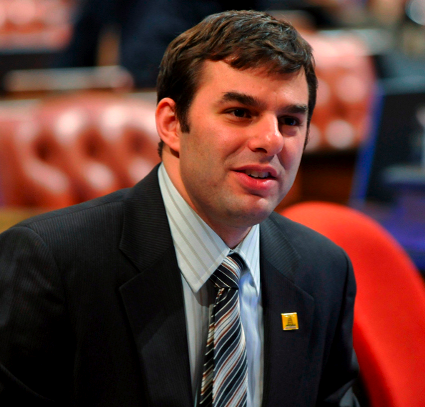
This Sunday’s polpouuri included a short blurb about 3rd Congressional Representative Justin Amash. The sound bite mentions that Amash is only one of 12 members of Congress to not have missed a vote in 2011 and that he posted explanations of all his votes on his facebook page.
The brief news piece also quotes Amash and states he is asking all of his facebook friends to donate $9.48 each for his re-election campaign this year. While there is certainly something to be said for members of Congress who show up for all the votes, the Press tidbit on Amash is problematic in many ways.
First, it appears that the Grand Rapids Press is just reprinting information directly from Rep. Amash without questioning or challenging any of his claims. The Press would better serve the public by publishing Amash’s voting record, which is easily attainable at http://www.votesmart.org/candidate/105566/justin-amash. People can search by most recent votes or by category.
Showing up for every vote might say that Amash is consistent, but it doesn’t tell us anything about where he has stood on key issues. Amash did recently vote against the National Defense Authorization Act, which gives the US military the power to detain US citizens without charging them of anything. In October, Amash voted for the Coal Residuals Reuse and Management Act, which many environmental groups opposed since it weakens regulations on coal ash disposal. Amash also voted for legislation that would repeal EPA emissions regulations for cement manufacturers, which environmental and public health groups opposed because of the toxic pollution that humans and animals are exposed to from cement production.
This past fall, Amash voted for three separate trade bills that restructure trade policies with South Korea, Colombia and Panama. These trade agreements pave the wave for greater corporate profits and drastically reduces worker rights in the three countries and the US, according to the analysis of Public Citizen.
Second, while it is useful at some level for Congressman Amash to post information on why he voted the way he did at his facebook page, it does not replace the necessary role that an independent news source should play in investigating and critiquing said voting record. The news media cannot just act as stenographers for those who have political power, they need to create real transparency and hold elected officials accountable for their actions.
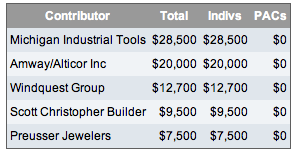
Lastly, for the GR Press to report that Amash is asking his facebook friends to donate $9.48 for his re-election campaign is a bit misleading in terms of who is primary funding sources are for the 2011-2012 election cycle. According to the Center for Responsive Politics, the top 25 campaign donors so far are all corporations, such as Michigan Industrial Tools (owned by the Amash family), Amway/Alticor (DeVos & Van Andel), Windquest Group (DeVos), Koch Industries and Bank of America. All of these entities gave between $2,500 and $28,500. These amounts make the $9.48 that individuals might give to his re-election campaign seem ridiculous since it is the large donors, which truly influence policy.
This is the first 2012 election “article” the Grand Rapids Press has run and based on previous election coverage monitoring it is reflective of the weak reporting we are likely to see all year.
New Media We Recommend
Below is a list of new materials that we have read/watched in recent weeks. The comments are not a “review” of the material, instead sort of an endorsement of ideas and investigations that can provide solid analysis and even inspiration in the struggle for change. All these items are available at The Bloom Collective, so check them out and stimulate your mind.
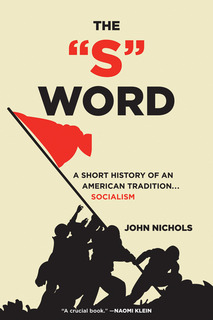
The “S” Word: A Short History of an American Tradition……..Socialism, by John Nichols – Nation columnist and author of numerous books on corporate media in the US John Nichols has written a very interesting book about how much socialism and socialist policies have been apart of US history. Nichols chronicles how entrenched socialist policies and people advocating socialism have been deeply entrenched throughout this country’s history, from Thomas Paine to Walt Whitman and from Horace Greeley to Helen Keller. Nichols also sheds light on socialist policies advocated by labor movements and local municipalities for more than 150 years. A useful antidote to the claims from the far right that the Obama administration is engaged in socialist politics. Nichols provides documented examples of socialism that has been practiced in this country and it looks nothing like what the current administration is up to.
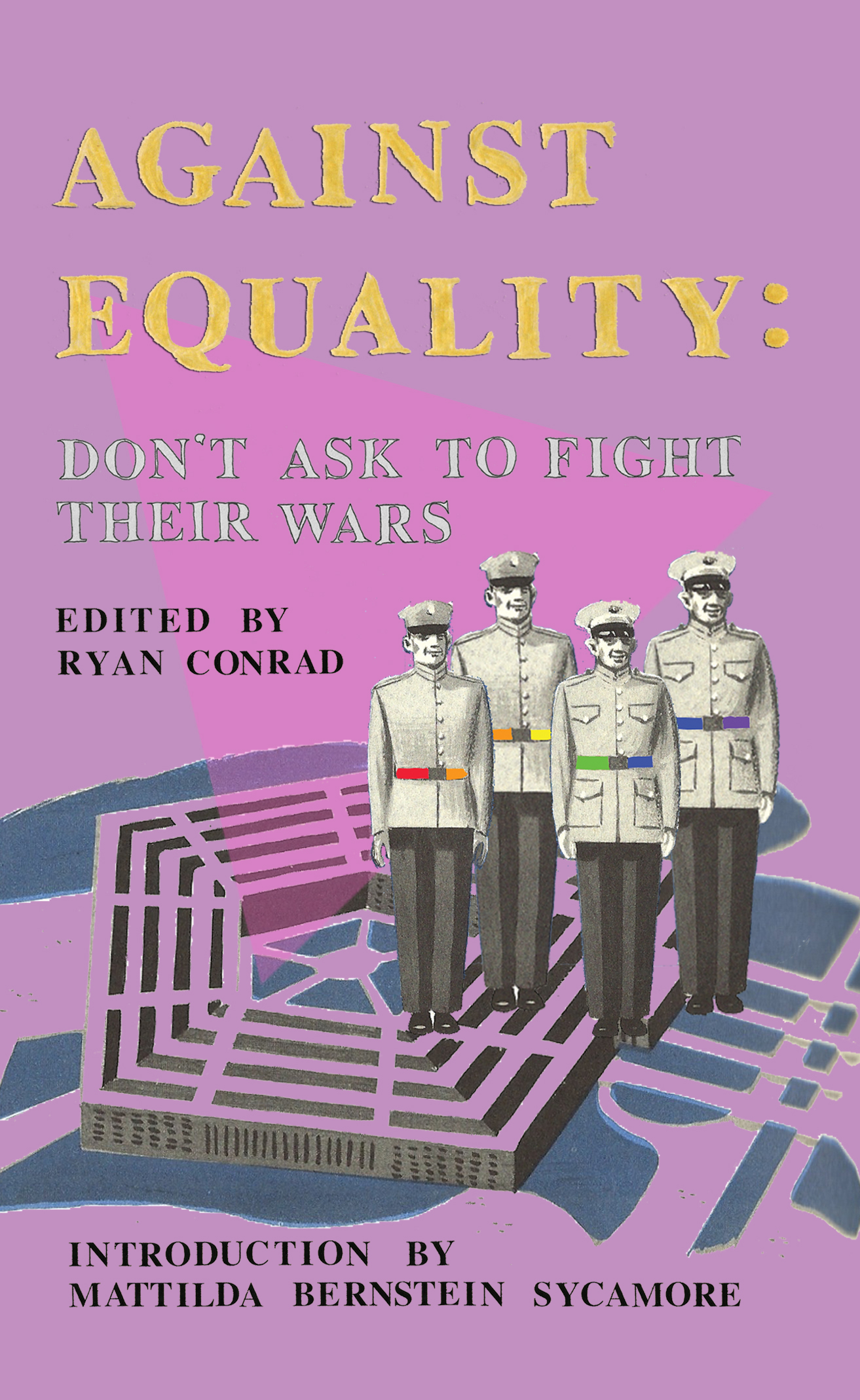
Against Equality: Don’t Ask to Fight Their Wars, edited by Ryan Conrad – This new short book by the radical queer group Against Equality is a collection of essays in response to the passage of the US military policy of Don’t Ask, Don’t Tell. These essays are a powerhouse of analysis of why the mainstream LGBT movement’s support for Don’t Ask, Don’t Tell does nothing more than support oppressive institutions like the US military. The writers collectively challenge the assimilation politics of groups like the Human Rights Campaign, which primarily support policies that benefit members of the LGBT community that are White and more economically well off. The analysis provided in this collection of essays are important since they look at race, gender, class, colonialism and imperialism when discussing the highly problematic policy of allowing gay men and lesbian women to join the military. An important contribution to a growing body of work from growing radical queer community.
News for All the People: The Epic Story of Race and the American Media, by Juan Gonzalez and Joseph Torres – News for All the People is simply one of the best book I have read on the US media in recent years. Gonzalez and Torres have given us a gift in understanding not only the history of media in the US, but how media has evolved through a race lens. The co-authors present part analysis of how racial minorities have been represented in US media, part history of US media policy and part history of minority produced media in the US over the past 200 years. There are amazing stories of when the first Black newspaper first began, the first Native American radio show and the incredible Latino broadcasters that did cross border organizing and information dissemination. News for All the People is not only a fabulous resource of media history, it is an inspiration and an affirmation of why media analysis and independent media are crucial to any social change work we undertake.
The Black Power Mixtape 1967 – 1975 (DVD) – This new documentary shows some never before seen footage of interviews with people involved in the Black Power movement in the US. Based on recently rediscovered film footage at a Swedish TV station, this documentary provides an interesting look at the message and actions of Black Power activists and organizers such as Stokely Carmichael, Elaine Brown, Eldridge Cleaver, Huey Newton, Bobby Seale and Angela Davis. Maybe the most powerful commentary is provided by Davis, when she responds to a questions from a Swedish reporter about the issue of violence. In addition to the archival footage there is also commentary by contemporary Black writers and musicians reflecting on the significance of the messages presented by those who identified with the Black Power movement. However, despite the power of these newly discovered interviews, the film lacks some historical analysis on the relevance of the Black Power movement for today.
It’s not about the creative class, it’s about Justice
As we reported, last week Michigan Governor Rick signed House Bill 4770, which is legislation that will end domestic partner benefits for public sector workers.
House Bill 4770 was introduced by State Rep. Dave Agema, who has a history of introducing and supporting far right policies that target immigrants, Muslims, workers and the poor. Agema pushed House Bill 4770 because he supports anti-LGBT policies, despite his claims that he just wants to fix the state budget.
However, many people and some LBGT organizations have been arguing that eliminating domestic partner benefits for public sector workers won’t do the economy in Michigan any good because it will not help the state to “retain and attract members of the creative class.”
This language is straight from Richard Florida and is often the mantra of area chambers of commerce. But this argument is ultimately misleading and even harmful.
First, the argument that there can be no discrimination in hiring practices for Michigan’s economy to thrive just doesn’t hold up to history. Michigan’s economy was thriving in the late 19th century and through most of the 20th century even at a time while racial minorities were second-class citizens. The auto industry in Michigan did not suffer from Jim Crow laws that were still in place up until the Civil Rights movement forced the federal government’s hand in passing some reforms. In fact, the Big Three automakers benefited from racial discrimination.
Second, Michigan’s economy, like the rest of the country, has not been hurt from treating women as second-class citizens. Women still don’t make the same amount of money that men do for the same amount of work. After decades of efforts to eliminate the wage gap, women still only make 77% of the wages that men make, according to the National Committee on Pay Equity. Most Michigan businesses have not suffered historically because they pay women disproportionately less than men.

Third, the argument that discrimination against LGBT couples will not attract the creative class only holds up for those in the LGBT community who are part of the young, urban professional sector. What about people who identify as LGBT or Queer and are in the working class? Surely there are those who identify as LGBT who work in fast food, who change the beds in hotels, who work as cooks, janitors, factory workers, take care of the elderly and do all the jobs that are not part of the so-called creative class. Using the creative class argument just re-enforced tiered class structure, which values those who work in IT or marketing over those who care for the sick.
Fourth, supporting this creative class argument with data from the Human Rights Campaign (HRC) is not only weak, it echoes a pro-corporate position that is based on identity politics. As we have noted in recent local news coverage about Whirlpool’s 100% rating from HRC, the narrow identity politics approach ignores other aspects of corporate behavior such as labor practices, environmental concerns and the electoral influence of such companies. Just look at HRC’s corporate partner page and you can see companies like Nike, Goldman Sachs, BP, Chevron and Chase Bank. It’s a line-up of some of the most environmentally destructive, anti-worker and greed driven entities on the planet. Hell, even the poster child for corporate greed, Bank of America, is a corporate partner of HRC.
Lastly, when arguing against discrimination we should always argue passionate from the perspective that it is about justice! We cannot create a slippery slope argument like retaining talent, but should champion the basic idea that no one should be denied health care benefits. Do you think that public sector workers who no longer have domestic partner benefits in Michigan are thinking, “damn, now we won’t be able to attract the creative class.” No, they are thinking, how the hell are we going to afford medical treatment for people we care about.
Until we are motivated primarily by justice we will not be able to protect each other from the inequality that is inherently part of contemporary neo-liberal capitalism. We need to think and act through an intersectional lens that incorporates gender, class, race, sexual orientation, immigration status and the environment into how we discern the politics and practices of the corporate world and government policies. If there is no justice, there will be no peace.
Occupy Our Food
This article/video is re-posted from Common Dreams.
On this past December 4, food activists from across the country joined the Occupy Wall Street Farmers March for “a celebration of community power to regain control over the most basic element to human well-being: food.”
The rally began at La Plaza Cultural Community Gardens where urban and rural farmers talked about the growing problems with the industrial food system and the solutions based in organic, sustainable and community based agricultural production. This was followed by a three-mile march from the East Village of Manhattan to Zuccotti Park, the birthplace of the Occupy Wall Street movement.
This video by Anthony Lappe offers an inspiring glimpse into this new movement. Check it out and then go to Food Democracy Now, a grassroots community dedicated to building a sustainable food system, to find out how you can help.
This interview with Noam Chomsky is re-posted from ZNet.
A darling of the left, Noam Chomsky is well known for his articulate criticisms of US foreign policy. The American intellectual takes special interest in how the US coddles authoritarian regimes under threat, in particular when political and economic interests are involved.
Chomsky is a longtime professor in the department of linguistics and philosophy at the Massachusetts Institute of Technology, where he is also famous for developing theories involving the “manufacture of consent” and the dissemination of propaganda through mass media.
Recently, he offered to share his personal views on post-Mubarak Egypt with Egypt Independent.
Egypt Independent: What is your view on the unfolding of events regarding the military’s transitional period? And where do you think the US stands on this?
Noam Chomsky: From the outset, there has been every reason to expect that the US and the military, which are of course closely allied, would do what they can to limit functioning democracy.
Egypt Independent: For what particular reasons, in your opinion?
Chomsky: The military, for obvious reasons: they want to maintain the maximum of political control and protect their considerable economic interests. The US government, for a range of reasons: The narrowest is that they are well aware of Egyptian public opinion, as reported in polls run by the most prestigious US polling agencies, and the last thing they want is for those opinions to be reflected in policy, as would happen in a functioning democracy. The broader reason is that in general, democracy is considered a threat to power interests, at home as well. Abroad, it is well-established in mainstream scholarship that the US has supported democracy if and only if it conforms to strategic and economic interests, and there isn’t the slightest evidence that these understandable, if deplorable, commitments have changed.
Egypt Independent: Why the continued statements from Washington condemning military brutality and advocating the flourishing of democracy?
Chomsky: Of course there is a rhetorical commitment to democracy and all good things, but only the most naïve take such protestations seriously, on the part of any state. And practice, including very recent practice, fully accords with the traditional doctrines.
Egypt Independent: What do you mean by “traditional doctrines?”
Chomsky: When a favored dictator is endangered, as happens over and over, Washington follows a fairly straightforward procedure: Support him as long as possible. If it is no longer possible, for example, if the army turns against him, then issue ringing declarations about our yearning for democracy and then work hard to keep the former system of domination and control in place, as much as possible. Examples abound: Somoza, Marcos, Duvalier, Chun, Ceausescu, Mobutu, Suharto, and others. That the same procedure was followed in the case of Mubarak should surprise no one.
Egypt Independent: Do you sense that the US would be willing to compromise principles such as human rights in order to maintain interests such as Israel and the Camp David accords?
Chomsky: Principles such as “human rights” cannot really be compromised, because they are not seriously upheld in the first place — except, of course, with regard to enemies, or where major power interests are not at stake. The evidence on this is overwhelming, not just for the US of course, so much so that it is superfluous even to recall some of the numerous examples. US power centers, state and private, have longstanding strategic and economic concerns in the region, which they continue to regard as vital. Government policies reflect these concerns, as did those of Britain and France in their days in the sun (and still, even as minor powers). And the same is true of others.
Egypt Independent: With regards to the US, do you believe everyone is on the same page across the board? i.e: state department, congress, white house, defense etc.
Chomsky: Systems of power are not homogeneous, so there are some differences within the government and the business-based power centers that have an enormous role in setting domestic and foreign policy. But the spectrum is not very broad. There are of course those who depart from the consensus, those whom Kennedy-Johnson National Security Adviser McGeorge Bundy called “wild men in the wings.” And there are forces outside, including public opinion when large segments of the public are organized and active. But within the operative spectrum, only restricted options are tolerated, as the record clearly reveals.
Egypt Independent: Recent reports have surfaced alleging that the US Senate has motioned to make its annual US$1.3 billion in military funding in fiscal year 2012 contingent on the transfer of power to a civilian government — on the basis human rights violations and “misuse” of tear gas, etc. What do you make of this?
Chomsky: The word “allegedly” is important. The US has laws prohibiting transfer of arms to states that resort to torture, serious human rights abuses, and other crimes — for example, Israel’s gross violation of the Geneva Conventions in the occupied [Palestinian] Territories. Are they applied in any significant measure when they interfere with strategic and economic interests?
Egypt Independent: With regards to public opinion, what are your views on the persistent use of counter revolutionary propaganda through the state media, particularly with regards to distorting news reportage of collisions between the military and protestors, in post-Jan 25 Egypt?
Chomsky: Authoritarian regimes of course try to restrict and control thought and its expression. Some, like Nazi Germany, seem to have been quite successful in doing so, Bolshevik Russia somewhat less so, but that was over a much longer period without ongoing military conflict as a mobilizing force.
Egypt Independent: But despite increased skepticism from Egyptians towards state media earlier this year, state propaganda continues to prove particularly effective in diverting and distorting public opinion over time. What do you think makes it so?
Chomsky: I presume it is a reflection of more fundamental concerns. Struggle against harsh and brutal systems is costly. People have to survive, a matter of particular concern for those at the edge of survival in the first place. As the struggle goes on, and people do not see concrete gains in their daily lives — rather, disruption and insecurity — it is natural that many would seek stability, which means subordination to power. A side effect might be greater willingness to accept propaganda that places the blame for hardships on the struggle for freedom and justice. That is a common phenomenon in such struggles, throughout history.
Egypt Independent: Recently, there has been what some have described as “media warfare” between independent journalism and state mass media. Do you think that this is actually a two-sided “struggle” with increasing horizontal/social media platforms posing a threat, or is it too marginal to have an actual impact on established information hierarchies?
Chomsky: On the likely impact, I do not know enough to express a judgment with any confidence. Whatever the judgment, it is clear what should be done: extend the challenge, and enlist larger groups into participation with it. It is no doubt an unequal battle, but systems of power do not necessarily win. The overthrow of Mubarak is only one illustration. It is not necessarily a losing battle. What to do depends on judgments of those directly involved.
Egypt Independent: Speaking in regards to previously threatened dictatorships with strong US ties, as you mentioned with respect to “traditional doctrines,” any views on how you see things playing out this time and/or hopes for optimism?
Chomsky: The greatest hope for optimism is offered by the courageous people who have been risking great danger in Tahrir Square to overthrow a brutal regime, inspiring others throughout the world; and by the many like them today and throughout history who have refused to cower in silence in the face of oppression and injustice. That is how the world has become a more decent place, not without regression, often at an agonizingly slow pace, but with many significant victories.
What the local 1% thinks about the economic outlook for 2012
It is nearing the end f 2011 and that often means that people are looking to next year, sometimes even making predictions.
This is what one of the main business publications did in its year-end issue. They asked West Michigan business leaders to comment on what they thought the 2012 economy will look like.
The “economy” is one of those nebulous terms that suggest there is this large entity that we all participate in. While it is true that national and international economic trends do impact all of us, the economy is not some hegemonic entity that only functions one way. Indeed, in the age of speculative capital, people can make money without producing anything tangible.
The US economy is a form of neo-liberal capitalism, where the state is highly protective of the market and taxpayers often subsidize big business. Some companies still produce products and in that model make profits off of the labor of workers. So, it is not surprising that a business publication asked business people and not workers to predict the economic outlook for 2012. Working people would have a lot to say about the economy, but as it is with news coverage in general, their opinion don’t matter that much unless they are speaking as consumers.
What the local 1% thinks about the economy
MiBiz asked dozens of business leaders to chime in and offer a brief forecast on the economic outlook for 2012, particularly for West Michigan. As could be expected most had positive things to say about the economy in West Michigan considering many of those business leaders saw significant profits in 2011 and have enjoyed the benefit of state and regional policies that favored business over labor.
Curt Pullen, the executive VP at Herman Miller said, “Despite lingering uncertainties, we believe that our people, with our highly responsive business model and proven ability to execute our strategy, will enable us to continue to grow and prosper.” At some level you have to admire the way that business people talk. It seems as though Pullen is only referring to his company and not the economy as a whole, thus we could translate his comment as they will continue to make profits by marketing office equipment around the world, benefiting from trade policies that have opened up foreign markets to US manufacturers.
Joseph Papa, CEO of Perrigo, had a similar statement that focused on his company’s economic outlook. “With the continued shift in consumer behavior to store brands, we’re confident that any economic impact will only enhance the benefits to Perrigo and its customers.” Well, in a profit based health care system, Perrigo is certain to continue to make significant profits.
Mitchell Watt, President and CEO of Triangle Associates, thinks there will be a slight decline in revenue in 2012. This is the case for his company, which has been making significant amounts of money in recent years from taxpayers when school millages are passed. “There are pockets of opportunity in the college market, particularly those with private allocations. In the K-12 market, we see a slight decline in the quantity, value and passage success rate of bond referendums due to continued public concerns over the slow economic recovery.”
Cascade Engineering CEO Fred Keller also sees a positive outlook for 2012, especially for his company. His statement touts their sustainability projects, but then he admits that the main profit growths will be in the sectors that make containers and truck parts. So much for sustainability.
Carl Erickson, President of Atomic Object, is pretty excited about the future. He says, “Strong corporate earnings and new sources of venture and angel money in Michigan fuel the demand for software development from both large companies and startups.” Not a surprising statement considering who is on their client list.
Tom Fehsenfeld, President of Crystal Flash and founding member of the West Michigan Sustainable Forum, had this to say. “One of our major businesses is selling diesel fuel, and diesel is a good index of the economy because it moves goods. In the last few months we are seeing some solid increases in year-to-year sales trends.” More diesel fuel sales are good for Crystal Flash, but not so good for the environment and public health.
The duel leaders at Amway, Steve Van Andel and Doug DeVos, are delighted with what 2012 has in store for their company. “Our optimism is because direct selling continues to have great appeal for people in our top markets, including China, Japan, the US, Korea and Russia. The industry has become a $132 billion global industry that provides an opportunity for almost 90 million people to sell own their own business.” Translated, this means that those near the top of the Amway pyramid will make a ton of money off of those who do the actually selling at the grassroots.
In another section of the MiBiz publication there are several business leaders hoping for a push in 2012 to make Michigan a Right to Work state. One example is Tim Schowalter, CEO of Pioneer Construction, who says, “I think Governor Snyder has been doing a great job providing leadership in Lansing particularly in regards to balancing the budget. I would like to see him champion the Right to Work legislation so Michigan will be more attractive to major companies looking to locate here.” Translated, this means dismantle labor unions so that companies can make even bigger profits.
One additional question posed to area business leaders had to do with the 2012 election and its impact on the economy. Some thought that the partisan bickering is bad for business, but Robert Roth, CEO of RoMAn Manufacturing Inc. had the most honest assessment when he said, “Quite frankly, if Obama wins and we retain a Republican House and enough Republican power in the Senate, it will be more of the same.”
While these statements are short, they do give us a window into the mindset of the local 1%……and it doesn’t look good for those of us who make up the 99%.
Mass Black Incarceration Ending? Don’t Hold Your Breath

This article by Glen Ford is re-posted from Black Agenda Report. Editors Note: Black scholar and author of the book The New Jim Crow: Mass Incarceration in the Age of Colorblindness, will be speaking at GVSU on January 18 (5pm – Allendale Campus/Kirkof) and January 19 (10am – Allendale Capus/Cook-DeWitt Center).
For the first time since 1972, the total number of people held in U.S. prisons has gone down. And, for the second year in a row, the number of persons under supervision – such as parole – by state departments of correction, decreased.
Does this mean the beginning of the end of mass Black incarceration in the United States? Not hardly. That would require an historic reversal of a nationwide policy to find new places to put Black people who refused to stay “in their place,” in the wake of the Civil Rights and Black Power Movements. There is little in the current American political conversation that indicates white people have reconsidered – or even acknowledged – their extraordinarily broad support for placing more Black people in captivity over the past 40 years than at any time since slavery.
It takes the government almost a year to tabulate the past year’s prison statistics, so the latest numbers are from 2010. They show about 7.1 million people under some kind of correctional supervision – one out of every 33. That’s down 1.3 percent from 2009, the year that saw the first decrease in supervision in two generations. The total population in state and federal prisons – not counting local jails – stood at 1.6 million inmates, down six-tenths of one percent. State prison populations decreased by almost 11,000, and local jails by almost 19,000, but federal prison populations grow by eight/tenths of one percent, to almost 210,000 inmates. That was, however, the smallest percentage increase in a generation – since 1980.
Half of the states reported decreases in their prison populations, with California and Georgia shrinking the most.
Speculation on why prison populations have, at least temporarily, peaked, centers on the financial crisis. It is true that states are experiencing unprecedented difficulties paying their bills. Some states have clearly responded to their fiscal crises by finding ways to incarcerate fewer people. Michigan reduced its prison population by 6,000 inmates in three years, mainly by decreasing the number of inmates who wind up serving more time in jail than they were originally sentenced to. California is under court order to cut its prison population by 30 percent, or 40,000 inmates. But the court order came too late to have a significant effect on 2010 prison numbers.
Only half the country has seen any decrease, at all. Twenty-four states and the federal prison system increased their inmate populations, with Illinois, Texas and Arkansas leading the pack. And states have found other ways to cut down on inmate costs without putting fewer people in prison, through wholesale privatization of prisons, and imposition of draconian fees on prisoners, probationers and parolees.
The Pew Research Center on the States cites programs that divert some offenders to probation, and accelerated release of low-risk inmates. However, studies have shown that such diversion programs tend to serve disproportionately white offenders. Therefore, it is highly premature for anyone to speculate that the era of mass Black incarceration may be ending. For the foreseeable future, one out of eight of the world’s prison inmates will continue to be African American.
 Grand Rapids Institute for Information Democracy