IWW Film night 1/19 – Land and Freedom

The Grand Rapids branch of the IWW continues its monthly film series on January 19 with a screening of the 1995 film Land and Freedom.
The film is about a young man from Great Britain who goes to Spain in the 1930’s to help the Democratically elected government fight the Fascists who were trying to overthrow it. The Fascists were backed by Hitler and Mussolini. It is a very powerful film that looks at the amazing resistance efforts of people who passionately believed in freedom and justice.
This film is free and open to the public. A discussion will follow for those who wish to participate.
Land and Freedom
Thursday, January 19
6:00PM
IATSE Labor Hall
931 Bridge st. NW. Grand Rapids MI
WOOD TV Reporter now working for far right think tank
Yesterday, the Grand Rapids Press announced that channel 8 reporter Anne Schieber was leaving the station to work for the Michigan-based Mackinac Center for Public Policy.
The article cites Schieber and two Mackinac Center staff members who are delighted to have the former WOOD TV 8 reporter on board. The Press story also quotes the Center’s own description as a “non-partisan research and educational institute dedicated to improving the quality of life for all Michigan residents by promoting sound solutions to state and local policy questions.”
The Press reporter takes this statement as a given and fails to provide readers any other perspective on the work of the Mackinac Center for Public Policy.
According to SourceWatch, the think tank, “was established by the state’s leading conservative activists to promote free market, pro-business policies.”
The Press article also states that the first assignment for Schieber at the Center will be to “provide coverage of the right-to-work debate taking place in Indianapolis.” This makes sense as Right to Work policies, which is essentially an anti-union policy, is one of the positions that the Mackinac Center has taken for years.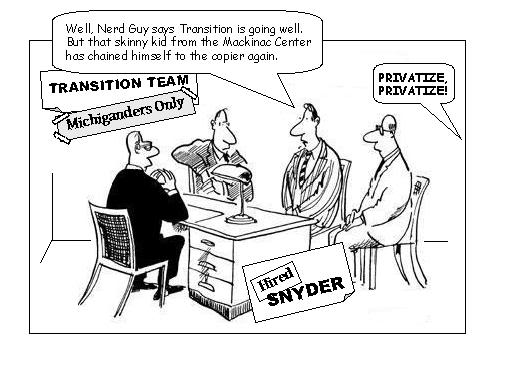
In addition, the Center has been calling for the privatization of public education and the privatization of government services. In fact, the Mackinac Center has been involved in helping the Snyder administration push for greater austerity measures in the state and even has endorsed the Michigan Governor’s Emergency Financial Manager Law, which has resulted in the hostile takeover of local governments by the State.
The Mackinac Center for Public Policy is one of the most influential policy groups in the state of Michigan and has received much of its funding from conservative foundations and families including Grand Rapids businessmen Peter Cook and Dick & Betsy DeVos.
For the Press to not mention any of these aspects of the work that the Center engages in is a disservice to the public.
It should also not be surprising that a member of the commercial news media would end up in such a position. Many former journalists tend to enter the world of either politics or corporate America due to their personal interests or experience of having access to centers of power. It is not surprising that Schieber would end up at the Mackinac Center and in many ways in makes perfect sense.
WOOD TV political reporter Rick Albin is a former staff person for Pete Hoekstra, when Hoekstra was a member of Congress. The station manager at WOOD TV 8, Diane Kionowski is also not neutral in her position in this community, since she is a board member of the Economics Club of Grand Rapids. The Econ Club is a collection of West Michigan power brokers from the business, political and non-profit communities.
Stabenow, the 2012 Farm Bill and running for re-election
Yesterday, MLive posted a brief story based upon a speech that Michigan Senator Debbie Stabenow gave in Lansing to the Michigan Agri-Business Association.
The article, by Press reporter Jim Harger, states that Stabenow is trying to make the best of the Super Committee debacle in her role as the Chair of the Senate Committee on Agriculture, Nutrition and Forestry. The article adds that she and other committee leaders were able to agree on $23 billion worth of cuts in the Agriculture Department’s budget.
Most of the cuts were in subsidies and the consolidation of farmland conservation programs, although there are no details on which subsidies will be cut and which farm industries will be impacted because of the cuts. It is worth looking at which industries and which farmers in Michigan have benefited from Farm Bill subsidies in the past and it is worth noting that there are some misconceptions about agricultural subsidies, which is the topic of a new report from Food and Water Watch.
The MLive story does provide a link to Stabenow’s speech from yesterday, but they offer up no analysis. The beginning of her speech deals with the MF Global scandal, which essentially means that billions of dollars will be lost to numerous investors, particularly those in the agricultural sector, because of the corporate greed and fraudulent behavior of those involved in speculative capital.
The second part of the Senator’s speech dealt specifically with the future of agri-business in Michigan. She states, “Michigan Agriculture is strong and growing, not only because of our incredible growers and producers, but because of companies like yours that provide services and products to farmers, in crop protection, crop fertility, grain handlers, farm credit, equipment manufacturing.”
Stabenow made such a statement since she was addressing a mostly non-farming audience at the 2012 Michigan Agri-business Association conference that is currently taking place in Lansing. The Michigan Senator addressed that audience by reflecting on her visits to such agri-business sites over the past year in Michigan, places like the Dow AgriSciences in Harbor Beach and the DuPont Pioneer and the Monsanto facilities in Constantine.
This should give us an indication of where the Senator’s allegiance lies……..with the Agri-business industry and not with small farmers and farmers which promote organic, local and sustainable practices.
There is further indication of this based on the presenters at the 2012 Michigan Agri-Business Association conference. One can see that the majority of those speaking at technicians, lawyers, government ag committee people, trade associations and representatives of the global food cartel such as Monsanto. Now it is certainly hard to know whether or not small farmers and local farmers committed to sustainable practices are in attendance, but they certainly are not represented on any of the breakout sessions listed.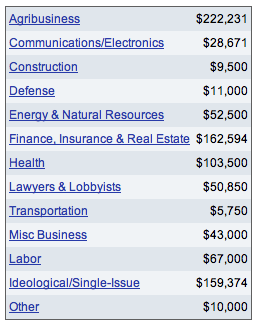
Considering that Senator Stabenow is in re-election mode, it is less likely that she will be receptive to those sectors of society, which cannot afford to financially influence electoral outcomes. According to OpenSecrets, the number one PAC donors for her re-election campaign have been Agribusiness ($222,231). In the breakdown of industries making financial contributions, 2 of the top 20 are also branches of the Agribusiness sector.
This is information that MLive omitted from their story and it is information that doesn’t appear to be very optimistic for those working on a state campaign to get Stabenow to push for major changes in the 2012 Farm Bill that will benefit small farmers and the public in general.
The speaker at Monday’s January Series lecture at Calvin College was Eric Metaxas, Christian author of several books, most recently a biography on the German theologian Dietrich Bonhoeffer.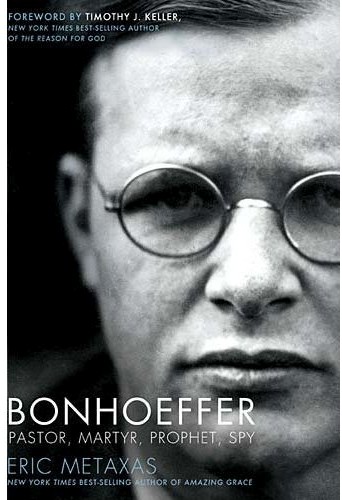
As someone who read and was inspired by Bonhoeffer’s writing nearly 30 years ago, I was curious as to what new information Metaxas might provide in his lecture. I have not read the speakers book on Bonhoeffer, but will say up front that I was deeply disappointed by what the author had to say.
Metaxas spent way too much time telling jokes about himself and the evolution of his own religious development, so much so that he did not even mention Bonhoeffer until 20 minutes in to his speech.
Metaxas gave a brief overview of Bonhoeffer and his family and did mention that Bonhoeffer was taught by his father to think critically and logically, which he then applied in his passion for theology.
Metaxas noted that Bonhoeffer excelled in the university and finished his doctorate at the age of 21. One question that Bonhoeffer grappled with was “the meaning of the church in the world,” according to Metaxas. Bonhoeffer at one point went to the US where he spent some time at Union Theological Seminary. Bonhoeffer was then invite to visit a Black Baptist Church by a fellow student, an experience that deeply touched him. The German theologian was mostly impressed with the social and cultural significance of what he experienced at this Black congregation. The experience had a profound impact on his theological understanding and had a tremendous impact on his courage to speak out against fascism.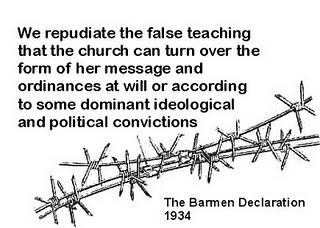
When Bonhoeffer returned to Germany it was around the time that the National Socialist Party is coming to power. Bonhoeffer was from the very beginning of Nazi Germany a critic of the fascist regime. Just two days after Hitler comes to power Bonhoeffer challenged the authority that Adolph Hitler was claiming as the new Furher.
In 1934, Bonhoeffer was part of writing the Barmen Declaration, a statement that essentially said this group of Christians were distinguishing themselves from the state controlled religion in Nazi Germany. In the 1935 Bonhoeffer was asked to lead a seminary that was viewed as an outlaw school that was shut down by the Gestapo at one point, which drove the school underground. Eventually, the school was disbanded as the Nazi repression increased against anyone who questioned the regime.
At one point Bonhoeffer was invited to come back to the US, but he quickly realized that he could not in good conscience abandon the struggle in Germany against the power of the Nazi regime. Here is a fabulous clip from Martin Doblmeler’s excellent documentary entitled Bonhoeffer, where one of the theologian’s students reflects on Bonhoeffer’s decision to come back to Germany. Bonhoeffer himself quoted the prophet Isaiah who said, “those who don’t fear, don’t flee.”
After 3 weeks Bonhoeffer returned to Germany and quickly came in contact with the German resistance movement, particularly those who worked in the area of military intelligence. Bonhoeffer then travels on behalf of the German Intelligence community and meets with people in the Allied countries to share information with them that would help undermine the Nazi campaign of imperialist expansion.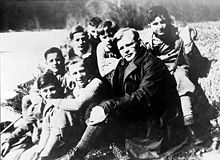
Metaxas then mentions that Bonhoeffer fell in love and says this revelation was something new that the author reveals that had not been presented before, a claim is not true since the documentary already mentioned deals with the theologian love affair.
Metaxas then states that Bonhoeffer was originally arrested for his role in trying to assist some Jews who were trying to escape the country. He is sent to a military prison with the belief that he will get out soon, but he ends up spending the rest of his life there. The Valkyrie plot to kill Hitler happens, but fails and it is at this moment that Bonhoeffer’s name is revealed to the Nazi, which results in his transfer to a concentration camp. He was hung the very next day.
The speaker ended his talk by referencing a statement from Bonhoeffer about his belief in the resurrection, which means you have overcome your fear of death in order to be a true believer. Metaxas tries to present this belief that Bonhoeffer experienced to those in the audience and then walks off the stage without taking any questions.
In many ways I felt that the speaker did not do justice to the person of Bonhoeffer. Metaxas did not explore Bonhoeffer’s intellectual evolution and his body of work, particularly The Cost of Discipleship, Ethics or Life Together. The speaker also did not spend adequate time exploring the tremendous sacrifices that Bonhoeffer and the Confessing Church took in resisting the Nazi regime.
My ambivalence about Metaxas was deepened during his opening remarks where he stated that he used to work for Chuck Colson and referred to as his hero. This seems rather contradictory to writing a biography on Bonhoeffer, someone who has inspired radical left Christians for decades, with Colson who advocates far right religious views.

The Bloom Collective is hosting a film this Thursday entitled If A Tree Falls: A Story of the Earth Liberation Front.
If a Tree Falls is the remarkable story of the Earth Liberation Front’s rise and fall, told through the transformation and radicalization of one of its members, Daniel McGowan. Part coming-of-age tale, part cops-and-robbers thriller, the film interweaves a chronicle of McGowan facing life in prison with a dramatic investigation of the events that led to his involvement with the ELF. Using never-before-seen archival footage and intimate interviews — with cell members and with the prosecutor and detective who were chasing them — IF A TREE FALLS asks hard questions about environmentalism, activism, and the way we define terrorism.
Before the film people are invited to write letters of support to Marie Mason, who is in federal prison and was sentenced to 22 years for property destruction in which not one person was injured. The letter writing will be from 6:30 – 7:00PM.
The Bloom Collective will be providing soup, but anyone wishing to bring food or beverages is welcomed to do so.
If A Tree Falls
Thursday, January 12
7:00PM
Bloom Collective
671 Davis NW, Grand Rapids
lower level of the Steepletown Community Center
Local agribusiness encouraged to seek stomach shares

Living in a period where the use of the word green is so common within the business community it is often difficult to distinguish truly sustainable practices that often are nothing more than corporate greenwashing.
Sifting through the corporate press can sometimes help clarify the mindset of those motivated by profits over those who want to make sure that everyone has access to basic rights such as food.
This was the case with an article in the January 9 issue of MiBiz, which summarized a workshop sponsored by the Van Andel Global Trade Center at GVSU, Varnum LLP, Comerica Bank and MiBiz.
The workshop featured a speaker from MSU’s ag department who stated, “for people looking at the potential of agriculture exports, you have to look for stomach share.” What the presenter from MSU meant by such a statement was that for those who grow food and want to expand their profits they need to seek out other markets for their products. In fact, another MSU spokesperson said, “if you are not engaging globally, you are losing out to your competitors.”
All of this makes sense of course within a capitalist framework, where continual growth and new markets are always sought after. The MiBiz article even states that the Michigan Economic Development Corporation provides assistance with the State Trade Export Program. This program provides all kinds of taxpayer funding for farmers who want to expand their export marketing.
Herein lies the major problem. We know that one of the most unsustainable practices within the agribusiness food system is that the average food item will travel 1,500 miles before it is eaten. This means that our current food system is highly dependent on fossil fuels, which makes it fundamentally unsustainable.
If Michigan wants to practices real sustainability, it will grow food only for people in the Great Lakes region. Not only was the workshop co-sponsored by MiBiz promoting an unsustainable food system they were advocating that those in agribusiness utilize public money to expand that kind of a food system.
The irony is that many people might buy food grown in Michigan, but still be supporting a food system that promotes export. We all need to be more diligent in asking if the food we buy locally is grown by those in agribusiness who also are seeking markets abroad. Just because we are getting it locally doesn’t mean everyone is. If we are serious about the idea of supporting localism then we must also be against local companies shipping products abroad. Shipping products and produce abroad ultimately means that communities around the world are dependent on whatever products local businesses are exporting. We can’t have it both ways.
Local food systems must support local communities and that means everywhere. We need to start seeing food as a right and a necessity for good health, not as merely commodities or stomach shares.

Today, the feature story on MLive was about West Michigan soldiers being deployed to Afghanistan in a new effort to “win the hearts and minds of Afghani women.”
This has been the stated policy of the US military over the past few years, but the difference in this case is that the US soldiers are women who will be used to develop relationships with Afghan women in order to obtain information for the now 10-year US occupation of Afghanistan.
The article cites three of the female soldiers who are tasked with the mission to gain access to Afghan women and one male officer, all who speak in generalities about the mission and how they hope it will be a benefit for the war-torn country.
The GR Press article also includes to related stories, one that profiles one of the female soldiers while the other linked story talks a bit more about the role of these women in the US mission.
Like much of the coverage of the US occupation of Afghanistan in the Grand Rapids Press, this story accepts as truth the motives for the 10-year US occupation of Afghanistan as being to promote democracy. No other perspective is provided, whether it is an anti-war perspective or that of the Afghani people.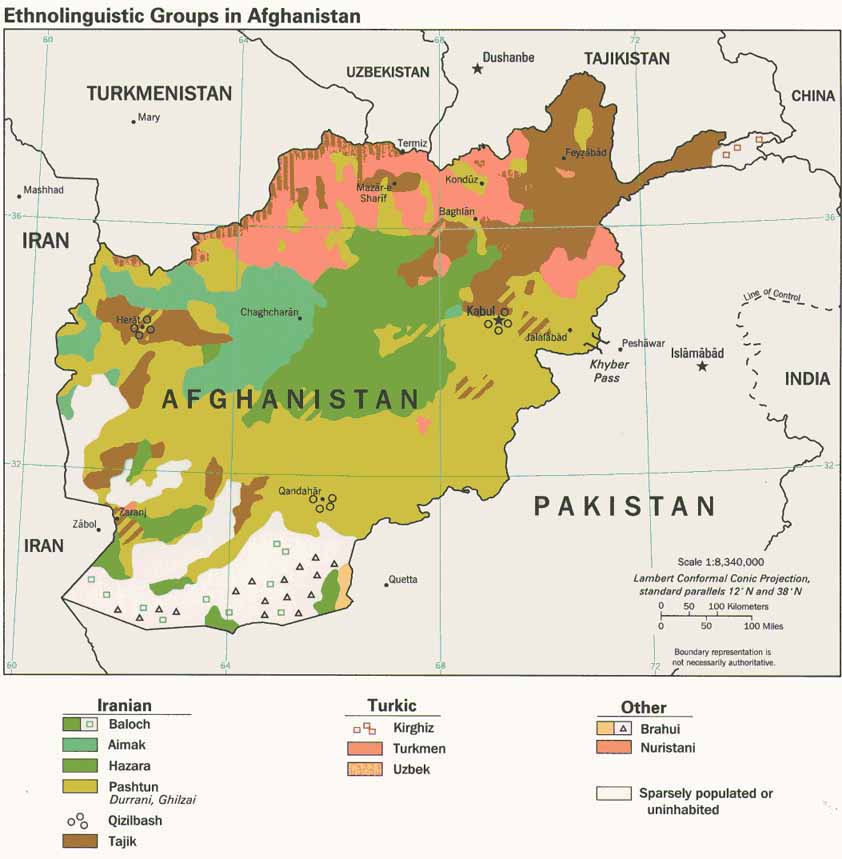
The MLive article does say that the US female soldiers are being exposed to two of the Afghani languages and “cultural standards of this Islamic nation.” As for being exposed to two of the dominant languages of the country, it ignores the fact that Afghanistan is a country of tribes that was created by the British, which makes the idea of national languages a bit misleading since there is tremendous linguistic diversity in the country as you can see from this map.
However, the most insidious aspect of this Press article is the refusal to question the motives for the US occupation of Afghanistan. The Press reporter does not question the US military narrative nor does he present other perspectives, such as this brief video analysis of the 10-year US military occupation by Rethink Afghanistan.
Since the Press story focuses on what US women soldiers will be doing in Afghanistan, gaining access to Afghan women, it would be important for those of us in the US to come to terms with what Afghan women are doing and what they want.
One could start by listening to the words of a former member of the Afghan Parliament, Malalai Joya, who has been calling for an immediate withdraw of US/NATO military in recent years.
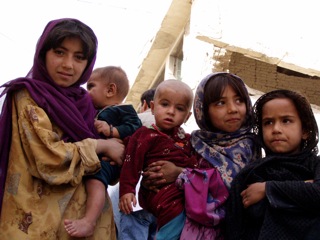
Those of us in the US might find it valuable to understand what women are doing to make life better in their own country. The Afghan Women’s Mission has several projects that deal with the important work around health care, education, orphanages, emergency relief and self-sufficiency.
The Afghanistan Analysts Network (AAN) featured another important aspect of the role of women recently. In an October 2011 publication by AAN they present information about how women are playing a major role in the efforts to develop national reconciliation. The AAN cites three major reports on the work of women and state:
“The hook for all three reports is transition and reconciliation, but what they catch is much broader, it is the day to day struggles of women to advance their rights in a context that is conservative, violent and unpredictable. The reports do refer to the often cited and important advances made for women’s rights, such as an emphasis on equal rights in the Constitution, but even more so they focus on the careful work done by women to ensure that their presence in the public space and in work places is again accepted, and their organizations are able to operate.”
Women in Afghanistan have struggled tremendously for the past three decades, from foreign occupation (Soviet and US) and the inhuman policies of their own men, which has included the Taliban, the Mujahadeen and the current Karzai administration.
Understanding this history of the treatment of US women and understanding what many women in Afghanistan are yearning for is the kind of information that those of us in the US need to know. Presenting US female soldiers role is the ongoing occupation does not further that understanding, rather it presents a misleading picture of a humane interaction between women from both nations.
It is worth watching an excellent video that looks at current treatment of women in Afghanistan and what they feel about the US occupation.
Western Oil Firms Remain as US Exits Iraq
This article by Dahr Jamail is re-posted from Al Jazeera.
On November 27, 38 months after Royal Dutch Shell announced its pursuit of a massive gas deal in southern Iraq, the oil giant had its contract signed for a $17bn flared gas deal.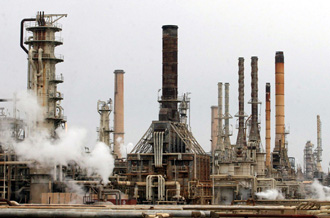
Three days later, the US-based energy firm Emerson submitted a bid for a contract to operate at Iraq’s giant Zubair oil field, which reportedly holds some eight million barrels of oil.
Earlier this year, Emerson was awarded a contract to provide crude oil metering systems and other technology for a new oil terminal in Basra, currently under construction in the Persian Gulf, and the company is installing control systems in the power stations in Hilla and Kerbala.
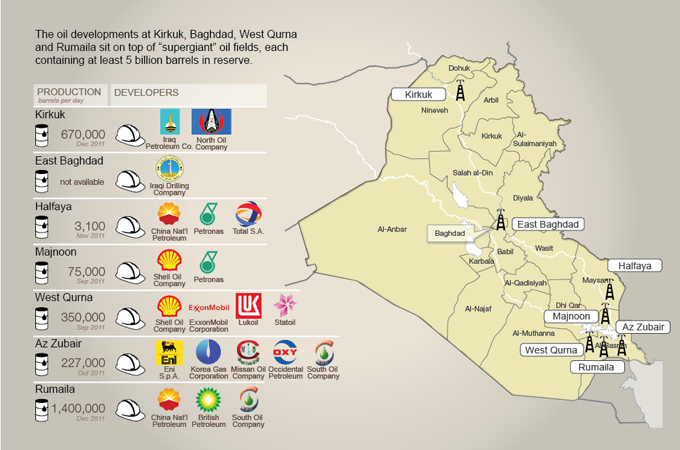
Iraq’s super giant Rumaila oil field is already being developed by BP, and the other supergiant reserve, Majnoon oil field, is being developed by Royal Dutch Shell. Both fields are in southern Iraq.
According to the US Energy Information Administration (EIA), Iraq’s oil reserves of 112 billion barrels ranks second in the world, only behind Saudi Arabia. The EIA also estimates that up to 90 per cent of the country remains unexplored, due to decades of US-led wars and economic sanctions.
“Prior to the 2003 invasion and occupation of Iraq, US and other western oil companies were all but completely shut out of Iraq’s oil market,” oil industry analyst Antonia Juhasz told Al Jazeera. “But thanks to the invasion and occupation, the companies are now back inside Iraq and producing oil there for the first time since being forced out of the country in 1973.”
Juhasz, author of the books The Tyranny of Oil and The Bush Agenda, said that while US and other western oil companies have not yet received all they had hoped the US-led invasion of Iraq would bring them, “They’ve certainly done quite well for themselves, landing production contracts for some of the world’s largest remaining oil fields under some of the world’s most lucrative terms.”
Dr Abdulhay Yahya Zalloum, an international oil consultant and economist who has spent nearly 50 years in the oil business in the US, Europe, Asia and the Middle East, agrees that western oil companies have “obtained concessions in Iraq’s major [oil] fields”, despite “there being a lack of transparency and clarity of vision regarding the legal issues”.
Dr Zalloum added that he believes western oil companies have successfully acquired the lions’ share of Iraq’s oil, “but they gave a little piece of the cake for China and some of the other countries and companies to keep them silent”.
In a speech at Fort Bragg in the wake of the US military withdrawal, US President Barack Obama said the US was leaving behind “a sovereign, stable and self-reliant Iraq, with a representative government that was elected by its people”.
Of this prospect, Dr Zalloum was blunt.
“The last thing the US cares about in the Middle East is democracy. It is about oil, full stop.”
A strong partnership?
A White House press release dated November 30 titled, “Joint Statement by the United States of America and the Republic of Iraq Higher Coordinating Committee”, said this about “energy co-operation” between the two countries:
“The United States is committed to supporting the Republic of Iraq in its efforts to develop the energy sector. Together, we are exploring ways to help boost Iraq’s oil production, including through better protection for critical infrastructure.”
Iraq is one of the largest oil exporters to the US, and has plans to raise its overall crude oil exports to 3.3m barrels per day (bpd) next year, compared with their target of 3m bpd this year, according to Assim Jihad, spokesman for Iraq’s ministry of oil.
Jihad told Al Jazeera that Iraq has a goal of raising its oil production capacity to 12m bpd by 2017, which would place it in the top echelon of global producers.
According to Jihad, Iraq’s 2013 production goal is 4.5m bpd, and in 2014 it is 5m bpd. The 2017 goal is ambitious, given that Iraq did not meet its 2011 goal, and many officials say 8m bpd capacity is more realistic for 2017.
Unexplored regions of Iraq could yield an additional 100bn barrels, and Iraq’s production costs are among the lowest in the world.
To date, only about 2,000 wells have been drilled in Iraq, compared with roughly one million wells in Texas alone.
Globally, current oil usage is approximately 88m bpd. By 2030, global petroleum demand will grow by 27m bpd, and many energy experts see Iraq as being a key player in meeting this demand.
It is widely understood that Iraq will require at least $200bn in physical and human investments to bring its production capacity up to 12m bpd, from its current production levels.
Juhasz explained that ExxonMobil, BP and Shell were among the oil companies that “played the most aggressive roles in lobbying their governments to ensure that the invasion would result in an Iraq open to foreign oil companies”.
“They succeeded,” she added. “They are all back in. BP and CNPC [China National Petroleum Corporation] finalised the first new oil contract issued by Baghdad for the largest oil field in the country, the 17 billion barrel super giant Rumaila field. ExxonMobil, with junior partner Royal Dutch Shell, won a bidding war against Russia’s Lukoil (and junior partner ConocoPhillips) for the 8.7 billion barrel West Qurna Phase 1 project. Italy’s Eni SpA, with California’s Occidental Petroleum and the Korea Gas Corp, was awarded Iraq’s Zubair oil field with estimated reserves of 4.4 billion barrels. Shell was the lead partner with Malaysia’s Petroliam Nasional Bhd., or Petronas, winning a contract for the super-giant Majnoon field, one of the largest in the world, with estimated reserves of up to 25 billion.”
Zalloum says there is a two-fold interest for the western oil companies.
“There is development of the existing fields, but also for the explored but not-yet-produced fields,” he said. “For the old fields, there are two types of development. One is to renovate the infrastructure, since for most of the past 25 years it has depreciated due to the sanctions and turmoil. Also, some of these fields have different stratum, so once they use innovative techniques like horizontal drilling, there is a huge potential in the fields they have explored.”
But there are complicating factors. As a spasm of violence wracked Baghdad in the wake of the US military withdrawal and political rifts widen, Iraq’s instability is evident.
“Iraq has lots of cheap-to-get oil, but it also has a multitude of problems – political, ethnic, tribal, religious etc – that have prevented them from exploiting it as well or as quickly as the Saudis,” says Tom Whipple, an energy scholar who was a CIA analyst for 30 years. “Someday it may turn out that Iraq has more oil underground than Saudi Arabia. The big question is how stable it will be after the US leaves? So far it is not looking all that good.”
Jihad, Iraq’s ministry of oil spokesman, however, said attacks against Iraq’s oil pipelines have minimal effect on production capabilities, and claimed “sabotage will not affect our oil production and exports because we can fix these damages within days, or even hours”.
Whipple, a fellow at the Post-Carbon Institute, says Baghdad had driven a hard bargain with western oil companies.
“The only reason they are participating is because everybody else is and they hope to get a foot in the door in case some new government in Iraq changes its policies to let other outsiders make more money. Remember it is not all the traditional western oil companies that are in there; the Chinese, Russians and Singapore all want a piece of the action.”
Wrong idea?
Spokesman Jihad told Al Jazeera that the reason many Iraqis think western oil companies are operating in Iraq is simply to steal Iraq’s oil.
“These ideas were obtained during the regime of deposed dictator Saddam Hussein, and these are the wrong ideas,” he said. “The future will help Iraqis understand these companies have come to work here to help Iraq sell its oil to help the people, and they work to serve the country.”
Jihad admitted that his media office works “to help Iraqis understand the nature of the work of these companies and their investing in Iraq”.
Despite the efforts of Jihad’s office to prove otherwise, Iraqis Al Jazeera spoke with disagree.
“Only a naïve child could believe the Americans came here for something besides our oil,” Ahmed Ali, an unemployed engineer, told Al Jazeera. “Nor can we believe their being here has anything to do with helping the Iraqi people.”
Basim al-Khalili, a restaurant owner in Baghdad’s Karada district, agrees.
“If Iraq had no oil, would America have sacrificed thousands of its soldiers and hundreds of billions of dollars to come here?”
Oil analyst Juhasz also agrees.
“The US and other western oil companies and their governments had been lobbying for passage of a new national law in Iraq, the Iraq Oil Law, which would move Iraq from a nationalised to a largely privatised oil market using Production Sharing Agreements (PSAs), a type of contract model used in just approximately 12 per cent of the world’s oil market.”
She explained that this agreement has been summarily rejected by most countries, including all of Iraq’s neighbours, “because it provides far more benefits to the foreign corporation than to the domestic government”.
But it has not been an easy road for the western oil companies in Iraq.
“Major western companies, such as Chevron and ConocoPhillips, that had hoped to sign contracts were unable to do so. A third round [of contracts] took place in December 2010 and saw no major western oil companies (except Shell) win contracts. I believe that there was an Iraqi backlash against the awarding of contracts to the large western major oil companies. Thus, in December 2010, fields went to Russian oil companies Lukoil and Gazprom, Norway’s Statoil, and the Angolan company Sonangol, among others.”
Unlike under Iraq’s Oil Law, these contracts do not need to go through parliament, according to the central government. This means the contracts are being signed without public discourse.
“The public is against privatisation, which is one reason why the law has not passed,” added Juhasz. “The contracts are enacting a form of privatisation without public discourse and essentially at the butt of a gun – these contracts have all been awarded during a foreign military occupation with the largest contracts going to companies from the foreign occupiers’ countries. It seems that democracy and equity are the two largest losers in this oil battle.”
Iraq’s oil future
Under the current circumstances, the possibility of a withdrawal of western oil companies from Iraq appears remote, and the Obama administration continues to pressure Baghdad to pass the Iraq Oil Law.
Nevertheless, resistance to the western presence continues.
“The bottom line is that it seems clear that the majority of Iraqis want their oil and its operations to remain in Iraqi hands,” said Juhasz. “Thus far, it has required a massive foreign military invasion and occupation to grant the foreign oil companies the access they have thus far garnered.”
While Iraq’s security remains as volatile as ever, as does the political landscape – which can change dramatically at any moment – there is one thing we can always count on as being at the heart of these conflicts, and that is Iraq’s oil.
We are just a few days past Super Tuesday and already the news media is spending a great deal of time talking about how GOP candidates are jockeying for position.
We see regular stories of polling, what candidates need to do to make a better show or keep up the momentum in the coming weeks. We have seen stories about GOP candidates dropping out of the race and when they will come to Michigan.
MLive has a section on their main page that provides some in house stories and a lot of Associated Press coverage of the GOP race and the Obama administration. WZZM 13 has a main banner on their homepage listed as Election 2012, but the link takes you to a site hosted by channel 13’s parent company’s flagship paper, USA Today. The local TV ratings leader WOOD TV 8 has an election button featured on their main page entitled On Politix and they do tend to run more stories about elections, such as a story “explaining” the Michigan primary. That section also features channel 8’s Sunday morning political talk show, To the Point, where former aid to Pete Hoekstra, Rick Albin, lofts softballs at politicians from the two-party system.
What you don’t see much in West Michigan news coverage, besides the occasional barebones numbers, is much coverage about campaign financing. What some political analysts refer to as the Mother’s Milk of Elections, campaign financing is what really drives the election bus, especially at the federal and state level.
For instance, there was a great deal of coverage about how close the GOP race was in Iowa in the mainstream commercial media, but virtually no one bothered to discuss which candidates were raising the most money, from whom and how that was determining the GOP primary race.
The Center for Media and Democracy ran such a story a few days ago, which focused on the real winner as being the Super PACs. The article puts in perspective the Supreme Court decision on Citizens United and how that has put private money and corporate power in the driving seat for most elections.
However, try to find good investigative stories from the mainstream commercial press on who is giving money to which candidates and how that impacts the electoral process. If the commercial media was paying attention at all to one of the major critiques of the Occupy Movement they would be aware that corporate influence of elections and the US political system is what motivates many across the country who have no faith in the political process.
It is not common knowledge that Mitt Romney has raised nearly twice as much as any of the other GOP candidates, raising over $32 million. Even less known are the sources of his campaign contributions. According to the most recent data on OpenSecrets, Romney is receiving the bulk of his money from Wall Street banks and other financial institutions.
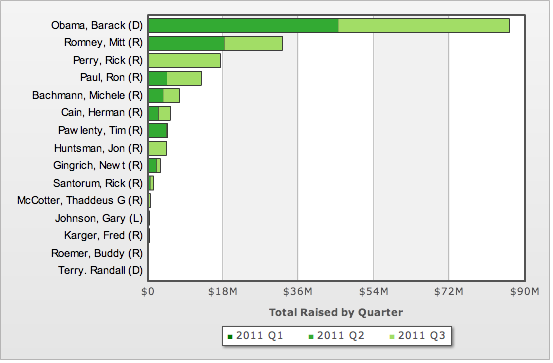
On the Democratic Party side, the Obama campaign is way ahead of all the GOP contenders, having raised over $86 million at this point. Most of the main contributors to the Obama re-election campaign are also from Wall Street and corporate America, with media behemoths Microsoft and Comcast at the top.
The consistency of this data should tell us something about how the electoral system works in the US. Goldman Sachs has contributed thousands of dollars so far to both Romney and Obama, because they want to hedge their bets in such a way that they can have access to either party to influence policy. Since 1990, Goldman Sachs has contributed over $36 million to political candidates, with Democrats receiving $21 million and Republicans $14 million. Add to that the millions Goldman Sachs spends annually to Lobby Congress and you see how money is the Mother’s Milk of electoral politics in the US.

The 7th grade civics lesson we were all given about one person, one vote seems a bit off the mark once we are willing to take a look at how politics really works. To not see this means we are either naïve or just plain stupid. Again, we have the commercial news media to thanks for much of this, since they make it a point to not investigate how money drives politics.
Therefore, we need to do our own homework when it comes to such issues. We need to do the work to uncover the corruption, which is inherent in the US political system. We need to visit OpenSecrets to find out how money is driving the 2012 Elections. We need to look at who is giving to Presidential candidates, Senate and Congressional Candidates. We need to know that Senator Debbie Stabenow has raised 7 times the amount of money than her closest GOP challenger Pete Hoekstra. We need to know who is contributing to 3rd Congressional Representative Justin Amash.
We also need to use resources like Consider the Source, a service of the Center for Public Integrity and Factcheck.org. People should consider attending an event on January 12, hosted by Occupy Grand Rapids entitled, Ending Corporate Control of Government.
Even more importantly, we all should consider that the political system we have in the US is not only corrupt it is extremely limiting and primarily serves the 1%. We need to create systems and structures that promote real democracy, grassroots democracy and participatory democracy. The so-called representative democracy we have now doesn’t serve the needs and the interests of most people or the rest of the planet. It’s time we built something new.
New Media We Recommend
Below is a list of new materials that we have read/watched in recent weeks. The comments are not a “review” of the material, instead sort of an endorsement of ideas and investigations that can provide solid analysis and even inspiration in the struggle for change. All these items are available at The Bloom Collective, so check them out and stimulate your mind.

Border Wars, by Tom Barry – A seasoned writer on US/Mexican relations, Tom Barry’s newest book provides an analysis of current immigration policy in the US. Barry provides an eloquent description and account of multifaceted aspects of US border policy, those of benefit and those who are victims of this policy. The short book is divided into just a few chapters and delves into the growing prison and detention center industry in the southwest part of the US since 9/11. Barry argues that communities that once had thriving economies now rely on federal dollars to fund prisons and detention centers as the war on drugs and the war against undocumented immigrants has increased. Barry also presents a picture of what it is like for those inside this labyrinth of “border security,” where conditions have led to the deaths of several victims of the anti-immigration hysteria that grips the nation. Border Wars is an important contribution to the limited debate on immigration policy in the US, even in progressive circles.

Dear White America: Letter to a New Minority, by Tim Wise – The latest book by one of the best anti-racism writers in America. Wise doesn’t provide much new information on the realities of racism and White Supremacy in the US, but he does give readers ways in which we can talk to people about this issue, particularly those that think that we live in a post-racial era. Wise continues to challenge liberal and progressive views about racism with well-documented data and sharp analysis that exposes the lack of limited sense of racial justice we have. Wise presents his analysis as responses to questions that overt and closeted racist often use, such as “what about personal responsibility for minorities?” Framing the book as a response to such questions makes it a powerful tool for doing anti-racist work. Highly recommended.

Too Many People? Population, Immigration and the Environmental Crisis, by Ian Angus and Simon Butler – Too Many People is a well written critique of the still pervasive belief within some environmental circles that human population is the primary cause of ecological destruction. The co-authors dismantle this claim and demonstrate that populationists are not only wrong in their assumptions, they are often racist and classist in their arguments. Too Many People also discusses the anti-immigration views of many environmentalists and the misinformed notion that environmental pollution is primarily the problem of consumers. The book argues emphatically that the roots of our ecological crisis are institutional and policy driven within a capitalist economy. An important contribution to the growing eco-socialist literature so vital in a country where climate denial exists on a massive scale.
Returning Fire: Interventions in video Game Culture (DVD) – There have been several books and films which investigate the cultural impact of playing violent, first-person shooter games. Returning Fire does something completely different, in that it takes a look at what three artists have done to respond to the war driven culture of the video game world. Narrated by Roger Stahl, author of the recent book Militainment, Inc, this documentary shows how Anne-Marie Schleiner, Wafaa Bilal, and Joseph Delappe moved dissent from the streets to our screens, infiltrating war games in an attempt to break the hypnotic spell of “militainment.” Beyond the creativity of what each of the artists do are the stories they share about how video gamers responded to their acts of resistance. A fresh look at this topic and an inspiration for what artists with a conscience can really do in the digital world.
 Grand Rapids Institute for Information Democracy