New Media We Recommend
Below is a list of new materials that we have read/watched in recent weeks. The comments are not a “review” of the material, instead sort of an endorsement of ideas and investigations that can provide solid analysis and even inspiration in the struggle for change. All these items are available at The Bloom Collective, so check them out and stimulate your mind.

On the Ground: An Illustrated Anecdotal History of the Sixties Underground Press in the US, edited by Sean Stewart – As someone who used to edit an independent newspaper, I can appreciate the effort it takes to put one together. On the Ground is a fabulous collection of reflections, graphics, cartoons and artwork from some of the best radical left newspapers in the US during the 1960s. What made this book so interesting was a combination of the stories by those involved and the images provided that presents a rich visual history of what people were thinking and organizing around during that period. The book includes examples from underground papers such as the Berkley Barb, The Black Panther, East Village Other, Rag, Screw, Seed, the Liberation News Service and Up Against the Wall Motherfucker. A fabulous account of what Indy Media looked like in the 1960s. Every page is a delight.
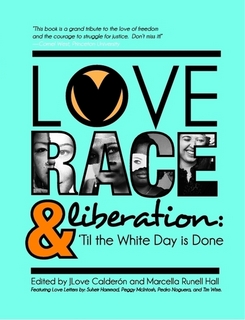
Love, Race & Liberation: Til the White Day is Done, edited by JLove Calderon and Marcella Runell Hall – Having participated in numerous workshops and forums on issues of racism and White privilege, it has been my experience that the material often used is either too superficial or doesn’t honestly address the real causes of racism, particularly institutional racism. Love, Race & Liberation is a collection of lesson plans, interviews and love letters put together my some of the most committed racial justice educators/activists in the country. The lesson plans address issues such as history, White privilege, being an ally, affirmative action, media, cultural appropriation and the prison industrial complex. In addition to these fabulous lessons plans there are numerous letters, what the editors have dubbed love letters, from seasoned anti-racism activists such as Sonia Sanchez and Tim Wise to a group of young activists who are breaking new ground doing the hard work of anti-racism education and organizing. A great resource for anyone serious about confronting White privilege and institutional racism.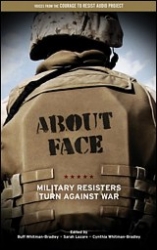
About Face: Military Resisters Turn Against War, edited by Buff Whitman-Bradley, Sarah Lazare and Cynthia Whitman-Bradley – The courage and actions of US war veterans who served in Iraq and Afghanistan are sometimes the subject of commercial news, but on one condition. Those veterans have to be supporters of the ongoing wars. Rarely do we hear the voices and perspectives of US war veterans who have become opponents of US policy in Iraq and Afghanistan. About Face is a collection of such stories, where we hear from men and women who are now some of the most articulate and passionate anti-war resisters in the country. These stories are a necessary component for creating a viable anti-war movement in the US, one that has been stagnant at best since the election of Obama. These stories tell how US soldiers became radicalized by witnessing first hand the brutality of US policy abroad. In addition, the collection of war resister stories includes a great interview with Noam Chomsky in the beginning and ends with an interview with Daniel Ellsberg talking about the courage of Bradley Manning.

The Filter Bubble: What the Internet is Hiding from You, by Eli Pariser – Daily we are told that the Internet has done so many wonderful things for humanity. In fact, anyone even hinting at the potential downsides of living in the digital world are quickly branded as Luddites. This is why Eli Pariser’s book The Filter Bubble is so important. Pariser, who does online advocacy work, wrote this book through his own investigation on who companies like Google and Facebook have an increasing influence over online content. Going directly to the sources, Pariser unearths’ information about how these giant information age companies are determining what kind of information we see. The books addresses the fact that the public has virtually no say in the structural dynamics of information access, even though we often assume that the major Internet content providers are content neutral. Pariser not only debunks that myth, he demonstrates how these companies are constantly collecting personalized data to determine even more of what content we will be exposed to. All of this is of course in the service of capital, which Pariser doesn’t address adequately. The other downfall of the book is that it offers very weak suggestions about what we can do to challenge the growing power of the likes of Google and Facebook. However, despite its shortcomings, the book is valuable in helping us come to terms with the function of Internet content providers and other social media networks, a function which has little to do with democracy.
This article by Ali Abunimah is re-posted from Electronic Intifada.
Is Barack Obama running for reelection as President of the United States or Prime Minister of Israel? A new Obama campaign video makes it increasingly hard to tell, and even more ominously ratchets further the Israelization of US politics.

False hopes of change
US President Barack Obama was elected in 2008 amid expectations that he would be the president who would at last bring some balance – and less abject subservience – to the US relationship with Israel.
I knew this consensus was wrong, as I had documented Obama’s early pandering to extreme Zionists from the moment he decided to seek the US Senate seat he won in 2004, and wrote about it in “How Barack Obama learned to love Israel.”
Now as Obama faces a tough reelection – and accusations from Republicans that he is insufficiently subservient to a foreign state – Obama is doubling down with a shocking video in which leaders of a foreign state – many themselves responsible for war crimes – are drafted in to attest to the US president’s commitment to this foreign state and his willingless to do whatever it takes in its service.
It’s all part of a “phony war over which US party loves Israel most.”
America & Israel: An Unbreakable Bond
The 7-minute film titled America & Israel: An Unbreakable Bond alternates video and audio of Obama speaking before the Israel lobby, AIPAC, and other Zionist groups, and clips of Israeli leaders endorsing Obama’s leadership. It begins and ends with the US flag and the Israeli flag side by side – thus bringing the Israeli flag directly into the US election campaign.
Although the clips of Israeli leaders, including President Shimon Peres, Prime Minister Benjamin Netanyahu, Defense Minister Ehud Barak, former Mossad chief Efraim Halevy and Ambassador Michael Oren appear to have been taken from interviews, they are cut to look as if they were provided specifically for the purpose of endorsing the president.
The film even includes a clip of Danny Ayalon, Israel’s deputy foreign minister from the Yisrael Beitenu party whose extreme anti-Palestinian policies include advocating the transfer of Palestinian citizens of Israel. Obama wants us to know he is proud to have the support of Israeli ethnic cleansers.
As such, Obama is legitimizing the role of foreign – although certainly only Israeli leaders – to participate directly in US campaigns. Can we imagine Obama issuing a video in which he is endorsed as pro-Mexican by the President of Mexico, or pro-Canadian by Canada’s prime minister? It’s inconceivable.
And suppose any of the Israeli leaders featured in the video feel their words were twisted by the Obama campaign. Should they now be asked whether or not they were indeed endorsing Obama’s re-election as the video appears to suggest? It’s an open secret that Netanyahu does not want to see Obama reelected. So this only invites Israel deeper into US politics.
Recently, Sheldon Adelson a US-Israeli billionaire, whose main issue is support for Israel and Benjamin Netanyahu, donated $5 million to a campaign organization linked to Republican contender Newt Gingrich.
Putting Israel first
The themes of the video touch all the familiar messaging of extreme Zionist groups that Obama has used from his early AIPAC speeches: There is a focus on the Holocaust, Hamas rockets, Israeli children suffering, and Iran, Iran, Iran.
Who can now doubt that US Iran policy is largely about appeasing Israel lobbyists, when Obama is heard boasting in a campaign video that his administration has imposed “the hardest hitting sanctions the Iranian regime has ever faced”? Confrontation if not outright war with Iran is a key message of the Israel lobby these days.

Of course there’s no word about Israel’s war crimes, occupation, routine murder and imprisonment of Palestinian civilians and children, the siege of Gaza or the ongoing theft of Palestinian land in the West Bank for Jews-only colonies.
On the contrary, Obama boasts in the video about how he helped stymie justice and torpedo the Goldstone report, and pulled the US out of participation in the UN Durban conference on racism.
The video also reassures viewers that:
Under Obama, US military aid to Israel increased to “unprecedented levels”
“Obama 2012 budget has rise in US aid to Israel”
“We are making our most advanced technologies available to our Israeli allies.”
While Obama boasts of his willingness to cut the federal budget – even as services for Americans are being slashed – he obviously feels politically safe increasing foreign aid, as long as the recipient is Israel.
Fighting for lobby support
Obama’s video comes as Republicans have intensified their attacks on the president, including a smear campaign on Obama-linked think tank the Center for American Progress alleging that some of its bloggers used “anti-Semitic” language.
It also follows anti-Palestinian statements by Republican contenders. Newt Gingrich notoriously declared that Palestinians are an “invented people” and that he would order the CIA to murder freed Palestinian prisoners, and Rick Santorum one-upped him, saying Palestinians don’t exist at all.
Tariq Ali on the Obama administration’s Af-Pak war
This interview with Tariq Ali is re-posted from Democracy Now.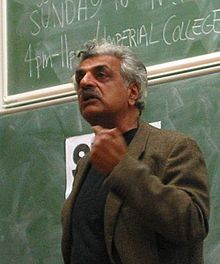
Yesterday on Democracy Now, noted Pakistani author and activist Tariq Ali was interviewed.
In the 12-minute interview Ali talks about recent US drone attacks in Pakistan and the growing anti-American sentiment in his native country. In addition, the Pakistani writer addresses the escalation of the war in Afghanistan and Pakistan and what this could mean for long-term relation in the region. Ali also addresses the Israeli push for war with Iran and the US response.
Traiq Ali has written several books of fiction, plays and non-fiction works such as The Duel: Pakistan on the flight path of American power and The Obama Syndrome: Surrender at home, war abroad.
Local group is offering Media Literacy Workshop in Grand Rapids 1/28
The local group STOK – Stop Targeting Our Kids – is hosting a media literacy workshop next Saturday, January 28.

The workshop by STOK, Managing Media in Daily Life, is designed for both parents and youth ages 11 and up. The workshop description states:
How does the media impact you? How about our families? Our classrooms? Our society? How do we manage rapidly changing new media and mediums such as Facebook, smart phones, 24 hour news cycles, video and online games as well as the omnipresent influence of marketing and advertising in our daily lives? How do screens affect our brains and our development? Why is it important to become media literate?
Explore these questions and more in a dynamic workshop designed for youth ages 11 and up, educators and parents. Facilitated by members of STOK (Stop Targeting Our Kids): a Grand Rapids based advocacy group focused on raising media literacy awareness and eliminating the commercialization of childhood.
January 28, 2012
10 am-12 pm
City Middle/High School
1400 Fuller Ave
Grand Rapids, MI 49505
Free to middle and high school youth.
$5 suggested donation for adult attendees.
Register in advance through GR Parks and Rec or at the door the day of the event.
Spain’s “Indignados” and the Globalization of Dissent
This video is re-posted from The Real News.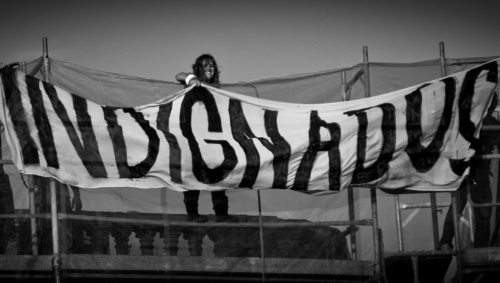
Before Adbusters called on activists to Occupy Wall Street, thousands of Spaniards set up camp in Madrid’s iconic Puerta del Sol, and in public squares across the country. Now, as the occupy movement around the U.S. sets its sights on the longer term struggle for social and economic justice with movements like Take Back the Land and Occupy Our Homes, the Spanish experience has valuable lessons to offer what is now a globalized popular front.
Iraq War Veteran arrests Carl Levin during Occupy Congress Action
On day 1 of the Occupy Congress actions several people went to Michigan Senator Carl Levin’s office to make a citizens arrest of the Chairman of the Senator Armed Services Committee.
This video features people doing street theater in Carl Levin’s office, where they dramatize an arrest of Senator Levin for his role in crafting the National Defense Authorization Act.
Pay close attention to what Iraq war veteran Shamar Thomas says when confronted by Levin’s staff and the Capitol City police.
The New Jim Crow author addresses GVSU audience
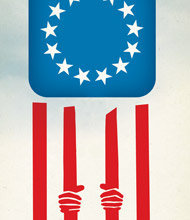
This morning, author Michelle Alexander gave her second talk in two days at GVSU. The topic of her lecture was the subject of her powerful book The New Jim Crow: Mass Incarceration in an Age of Colorblindness.
Alexander addressed a capacity crowd in the Cook-DeWitt auditorium in Allendale. She began by saying that she was tempted to speak about all the accomplishments of Dr. King, but said that she believed that King would rather have us focus on how we have failed to accomplish the goals of the freedom struggle. In addition, she said we must fulfill King’s call to move from Civil Rights work to Human Rights work.
Alexander said that one way in which we have collectively failed is our focus on court battles to protect affirmative action and other so-called gains made during the 60s and 70s. In the meantime, a very sophisticated effort was solidified to criminalize and demonize African Americans through the War on Drugs.
The speaker says that all of this is even happening under the Presidency of Barack Obama. We see a Black man and a Black woman in the highest status in this country, but we don’t see the images of African Americans who are just blocks away from the White House, where the Black community has become second class citizens.
Alexander admitted to the audience that there was a time when she shied away from making comparisons to the current Prison Industrial Complex and chattel slavery. However, after years of research and numerous personal experiences she could no longer not see the link, which eventually led to her writing The New Jim Crow.
The author spoke about how it is impossible and unethical to not look at our criminal justice system through a racialized lens. Alexander then dived into the thesis of her book, which is to say that there are more African Americans in the criminal justice system than there were slaves during the peak of chattel slavery in the US.
Alexander said that an increasing amount of Black men have been charged with felons, which results in most states of their collective loss of voting rights. She went on to then say that this intense criminalization of African Americans and other communities of color has made the US a country with the largest prison population in the world. She also emphasized that this has happened at a time when crime statistics do not show any significant increase in crime being committed.
What Alexander said is the main cause of the mass incarceration is the so-called War on Drugs. In fact, she said that there are more people in the criminal justice system for drug offenses than any other category of crime. Thus, Alexander says that this policy is a way of criminalizing communities of color, despite the fact that more White people use drugs than all other communities combined.
Alexander says that people still believe that there is a tendency to want to have heavy police presence in urban poor communities of color where drug trafficking was prevalent. However, Alexander points of that this is a myth and that the real reason for the heavy focus of law enforcement in communities of color is politically motivated to support the institutionalize economic policies of law enforcement agencies across the country.
The author notes that a policy of Stop and Frisk has led to massive incarceration rates. Alexander notes that this only happens in neighborhoods of poor urban communities of color and almost never in White, upscale neighbors. Even though we know that White people and White youth are more likely to have illegal drugs on their person or in their vehicles, which Alexander says is another indication of the racialized element of the War on Drugs.
The result of getting charged with possession of drugs in a Stop and Frisk action means that you will be labeled a felon. This is a label you will carry all your life and will mean that you will have a difficult time finding work, housing and in most states you will denied social services such as food stamps.
What are folks supposed to do? It seems like the system is designed to send folks back to prison, which is exactly what it does. Alexander says that bout 70% of those in the criminal justice system will go back to prison after they get out. This reality also has the effect of collective shaming of people of color.
So where do we go from here? Alexander says that those of us in the civil rights community have to come to terms with the fact that this massive human rights abuse that has taken place in recent decades has happened on our watch. Alexander says that nothing short of a major massive social movement is necessary for there to be any fundamental change.
The work of this movement will not be easy because it would mean the closure of prisons in poor rural White communities who are now dependent on prisons for economic stability. It would mean that people who have invested and own stock in the private prison system, which is an extremely profitable business.
Alexander said we need to radically alter the focus of the war on drugs to prevention and treatment instead of punitive incarceration. She also said that we need a massive shift of funding from the criminal justice system to public education, housing and community development.
The author then said that this work seems rather daunting, but it is no different than the efforts to abolish slavery or the dismantling of the old Jim Crow system. In order to do this work we need a renewal in the belief that movements for social change can be born again.
It is our task to end not just mass incarceration, but any form of a cast system in which we are faced. Alexander stated we need to create a modern Underground Railroad movement, particularly for those getting out of prison where people can be welcomed, nurtured and supported. The author mentioned a Take Action link on her website that offers to resources and ideas for local community organizing around this issue and that there are no groups on some campuses in the US called Students Against Mass Incarceration.
Other resources we would encourage people to investigate is the movement to abolish prisons and all the great zines on prisons and police at the online zine library.
Sherry Wolf to speak on Occupy Wall Street next Monday at GVSU
Author and activist Sherry Wolf will be in Grand Rapids next week speaking on the campus of GVSU.
Wolf who is the author of the book Sexuality and Socialism: History, Politics and the Theory of LGBT Liberation, will be speaking on a topic she has been writing about a great deal lately……..the Occupy Wall Street Movement.
Wolf, who is a member of the International Socialist Organization (ISO) has been participating in the Occupy Wall Street Movement in New York City where she lives and has visited numerous other Occupy sites across the country. GRIID plans on interviewing here on Monday before she gives her lecture.
Occupy Wall Street: Lessons from the Front Lines – Lecture by Sherry Wolf
Monday, January 23
7:00PM
Grand River Room – Kirkhof Center
GVSU Allendale Campus
This event is free and open to the public.
Equality Rally in Lansing today challenges Michigan lawmakers who ended domestic partner benefits
About 150 people gathered today in front of the State Capitol building on downtown Lansing to protest the recent decision by State Legislators and Michigan Governor Rick Snyder to end domestic partner benefits for public employees.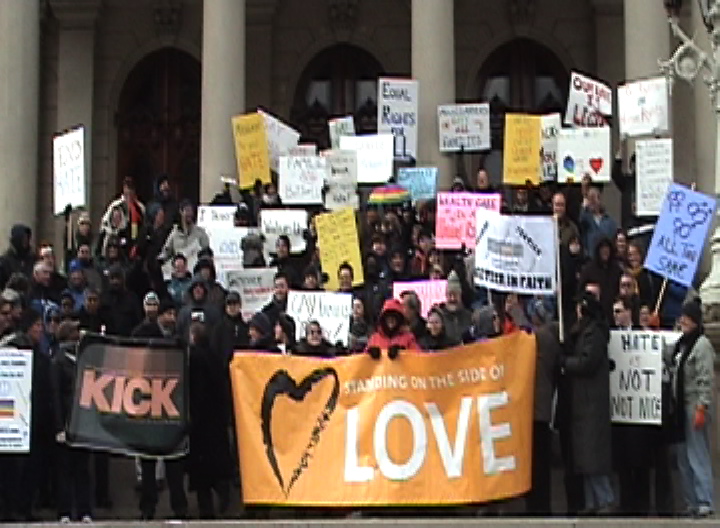
The rally featured speakers from across the state including Ann Arbor, Saginaw and Kalamazoo. West Michigan was represented by people from the GVSU LGBT Resource Center, The Network, West Michigan Pride and Until Love is Equal. Much of the commentary focused on how the LGBT community is outraged that the state would target their community with such a draconian policy.
Some speakers noted that Michigan is a state where anyone who identifies as LGBT or is perceived to be LGBT can be fired from their job, can not legally get married and are the subject of constant harassment and bullying. Add on to that the couples whom now do not have health care benefits because of this new legislation that took effect on January 1st.

Several of the speakers targeted the Republican legislators, which overwhelmingly endorsed the legislation. People also talked about voting out those of push the anti-domestic partner benefits legislation and encouraged people to sign a petition that was circulating in the crowd. It is worth noting that this legislation was first introduced by West Michigan Representative Dave Agema.
Early on in the rally, Rep. Agema passed those protesting, which caused many of those outside to boo him as he crossed the Capitol building walkway. After the rally a handful of those from West Michigan visited Agema’s office to confront him personally. Unfortunately, Agema was not in, but some people left messages with his staff.
TV trucks were parked outside the Capitol building the whole time the protest was taking place in preparation for tonight’s State of the State address from Snyder. Not surprisingly, none of the TV stations bothered to interview or film today’s rally.
The following video includes excellent comments from Dave Garcia with the Detroit-based LGBT group Affirmations and a brief interview with ACLU lawyer Jay Kaplan, who spoke about the legal and real world consequences of this new state policy.
Calvin January Series: Joel Salatin, Polyface Farm

Pigs express their pigness at Polyface Farm
Author and fulltime alternative farmer in Virginia’s Shenandoah Valley, Joel Salatin began his talk with an analogy that likened our relationship to food to a relationship with a dance partner. In eras past, our relationship with this dinner dance partner was much more intimate. People spent a majority of their time dancing with their food—planting it, tending it, harvesting it, preserving it, cooking it and eating it at the table with friends and family.
Now we spend very little time with our dinner dance partner. Most of us don’t even sit down to a meal—instead we graze. “We have pulled away from this dinner dance partner. Others have stepped in very gladly to fill in this relationship deviation: Kraft, Monsanto, Taco Bell … the list goes on and on,” Salatin said. “As we have deviated from this historical intimacy, other entities with dubious agendas have stepped in, corporations which take a fundamentally mechanical view towards food. Food is a biological thing, not a mechanical thing.”
Salatin said that we need to make our kitchens the heart of our homes again. He encouraged audience members to learn to can and cook from scratch–and to be compassionate with themselves. After all, a baby learning to walk falls down a lot at first. “Well, have you heard if it’s worth doing it’s worth doing right? We don’t do anything right at first … If it’s worth doing it’s worth doing poorly first.”
Salatin challenged Tuesday’s January Series audience to think small—microscopically small. He pointed out that two handfuls of fertile soil have more live organisms than there are people living on the earth. He noted that modern science sees agriculture as a mechanical endeavor rather than a relationship with life. Its disregard for the organisms living in soil has grown into a disregard for farm animals, as evidenced in CAFOs, and, ultimately, a disregard for human beings, as borne out by violence in our culture that especially impacts people perceived as “the other,” e.g. immigrants.
“The notion of life as a mechanical thing has led us to some really strange paradigms. Like soil is inert. Look in an electromicroscope. (You’ll see) all kinds of microorganisms living . . . a community of amazing beings . . . Everything that we are and we see is dependent on that invisible world.”
Instead of following the lead of the living, natural world, modern agriculture is looking for “Star Trek fantasy” answers to the increasingly complex problems that science-based agriculture has created. Salatin made reference to the US-Duh (USDA), as it continues to support corporations like Monsanto which are endangering all life on the planet in the name of profits.
“There are reasons why things are the way they are,” Salatin said. “When we view life as an inanimate structure, the culture takes that same kind of tyrannical view towards its own citizens and other cultures . . . we have gotten so mechanistic that we have left an ethical moral parameter.”
A working model
 Salatin’s Polyface Farm successfully flies in the face of modern agricultural science and its destructive “best” practices. One example, over the winter, cows contently amble into a shed to feed—and poop. As the manure piles up, corn is mixed into it and the feed bins are raised. As spring arrives, the pigs are allowed into the shed. As they happily root for corn, they aerate the manure, “fluffing it up” and aerating it, creating a fertile compost for the fields.
Salatin asked, “How do we create a habitat for the pig that allows the talents and gifts that God gave that creature? Put a moral ethic around it. Then we can innovate within the protective confines of humility. In CAFOs, there is no place for the expression of the gifts and talents of the pigs. They get bored, cannibalize each other. We are a culture that cannibalizes as a direct result of a food system that cannibalizes.”
At Polyface Farm, the free range chickens follow the cows, like birds follow herbivores in the wild. The cows here are herbivores. Cows at CAFOs are fed meat, often diseased meat. These types of practices not only subjugate livestock animals to lives of pain and misery, they also breed new diseases, for example, mad cow disease.
Salatin noted that if scientists wanted to create disease, cancer and sickness, the best way to do it would be to establish farms that specialized in only one species so pathogens wouldn’t have to adapt to variety. Then, crowd them up real tight so it’s easy for the pathogens to get from one animal to another. Next they would put the animals in a building with no fresh air or sunshine, as both can slow the growth of pathogens. The scientists would make sure the animals get no exercise, as that might boost their immune systems. They would further suppress the animals’ immune systems by injecting them with antibiotics and hormones. Last of all, they would feed the animals junk. This “experiment” describes today’s CAFO, describes modern, science based agriculture and describes our food system.
“We want a farm that builds soil, builds immune systems, builds nutrient density. Ultimately, as a farmer, I am in the land redemption business . . . (We need to) step in as loving land stewards, caretakers, as an expression of God’s grace, abundance and redemptive capacity. .. God is beautiful and we are supposed to extend his beauty into creation. I’ll bet he’s interested in the pigness of a pig. (We should) all commit ourselves to embracing our dinner dance partner and building a world that’s better than the one we inherited.”
 Grand Rapids Institute for Information Democracy