Food is a Right Festival this Sunday in Grand Rapids

The local chapter of Food Not Bombs is hosting a festival this Sunday under the title of, “Food is a Right, Not a Privilege.”
The event will provide free food, activities, and educational handouts as we stand in solidarity with many other actions across the country to raise awareness of the increase in unlawful attacks against groups trying to provide people with free access to a basic human right: Food.
The awareness festival will also offer music, spoken word and other artistic expression about the right to food, along with DIY workshops related to food. There will also be lots of information tables from a variety of groups in West Michigan.
Food is a Right, Not a Privilege Awareness Festival
Sunday, April 1
Noon – 7:00PM
Veteran’s Park on E. Fulton St. in downtown Grand Rapids
For more information check out the event’s Facebook page or e-mail Food Not Bombs at FNB_GrandRapids@aol.com.
The Reality of Migrant Labor in the US
The video below was produced by The Perennial Plate.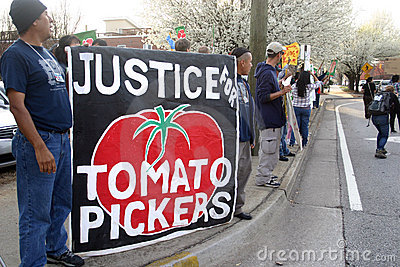
It is that time of the year again in Michigan when migrant labor is sought out by many farmers and other sectors of the food industry.
The video below is an excellent example of the working and living conditions of many of those who engage migrant labor. The woman interviewed for this story is with the Coalition of Immokalee Workers (CIW), which has been one of the leading migrant worker unions in the last 10 years.
The CIW has taken on major campaigns to confront fast food giants like Taco Bell, McDonalds, Subway and Trade Joe’s. In all of these campaigns the CIW won increased wages, educated millions on the reality of migrant workers and developed alliances with church groups, other labor unions and groups like Students Against Sweatshops.
The reality depicted in the video is also the reality for thousands of migrant workers in West Michigan. This reality means that just because one buys food that is grown locally, doesn’t mean that the food you eat promotes justice. Investigate on your own and find out where you food comes from, whether or not pesticides & chemical fertilizers were used and if those who labored to plant and harvest the food were treated justly.
The National Coalition for Health Equity recently released some data on health equity in the US based on racial indicators.
They researched the top 100 metro areas in the US and based on the 2010 Census data, Grand Rapids/Wyoming, rated 87th out of 100 in terms of racial equity for African Americans.
What that rating means is that racial equity for African Americans in this area is one of the worst in the country. This led the Metro Trends group to give Grand Rapids/Wyoming an F grade because of the indicators.
The indicators are as follows:
- 61.4% of African Americans experience residential segregation
- The neighborhood income gap for African Americans is 19.7% less than White neighbors/neighborhoods
- School Test scores for African American children are 53% lower than White children in this area
- African Americans are 29.4% more likely to be unemployed in Grand Rapids/Wyoming
- Home Ownership gap means that 57.2% of African Americans do not own their own homes in the Grand Rapids/Wyoming area.
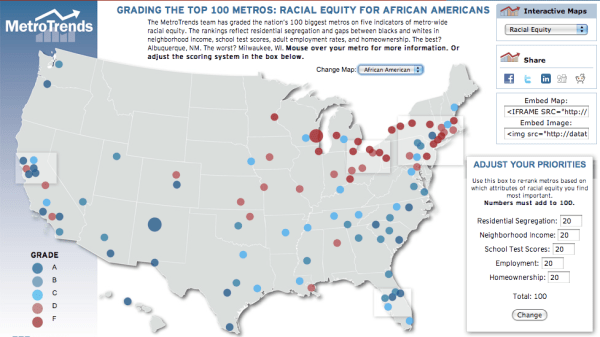
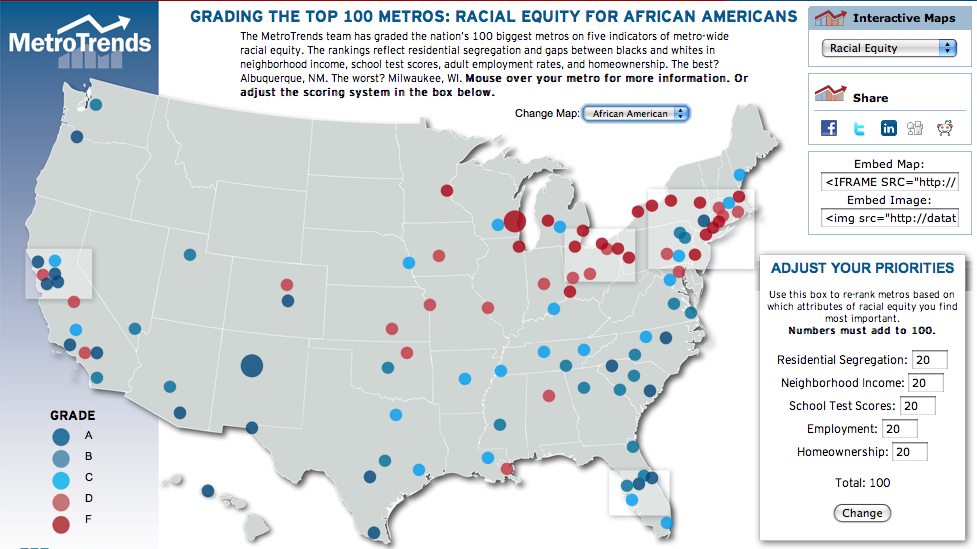
For Latinos/as in the Grand Rapids/Wyoming area, the data is not much better. The Metro Trends group gave out a D grade and rate Grand Rapids/Wyoming as 79th in the country for health equity for Latinos/as.
The inequities for Latino/as are:
- 50.4% of Latinos/as experience residential segregation
- The neighborhood income gap for Latinos/as is 21.1% less than White neighbors/neighborhoods
- School Test scores for Latino/a children are 47% lower than White children in this area
- Latinos/as are 4.2% more likely to be unemployed in Grand Rapids/Wyoming
- Home Ownership gap means that 36.4% of Latinos/as do not own their own homes in the Grand Rapids/Wyoming area.
These indicators clearly demonstrate that the level of institutional racism is very high and it would suggest that despite the claims of greater racial diversity programs in the area, there is serious disparity of wealth and health between White communities and communities of Color.
No Fracking Way! Forum at GVSU

Earlier today there was a forum on fracking, organized by a student socialist group at GVSU on the Allendale Campus. The group invited two speakers to present, a GVSU professor and Chris Williams, author of the book Ecology and Socialism.
Professor Peter Wampler, who presented first, works in the geology department at GVSU. His presentation was very clinical in that he showed slides and presented information that provided those in attendance with basics around where natural gas is and how it is being extracted around the US.
Wampler made some distinctions between shale-based natural gas and other forms of methane gas, such as the gas from human or animal waste or the methane created at landfills where organic material are breaking down.
The GVSU Professor then presented some basic aspects of what fracking is and how the industry extracts it natural gas from shale. He stated that most shale is found at least 1000 feet below the surface.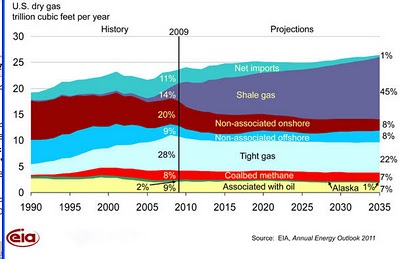
Wampler then shifted his presentation to why there is such a big push for fracking now. He stated that this is a “trend” that really began in 2009. You can see from the graph here the current and projected trends with natural gas extracted from fracking.
Wampler continued with more information on how the industry extracts the gas from shale. He then identified consequences of fracking, such as micro-earthquakes, groundwater contamination, surface water contamination and increased dependence on fossil fuels. One thing he mentioned about contamination in groundwater is because of the chemicals that are pumped in with water to create the fracking necessary to extract the natural gas.
Wampler concluded by saying that there is not enough evidence on the real or longtime consequences and that at a minimum the industry should be responsible for collecting data. This seems to contradict what we know already about how the industry has refused to do the investigation or has lied about the environmental and health impact of fracking.

Chris Williams began his presentation by framing the issue as bigger than just fracking, with an emphasis on a systemic analysis that looked at how we use water in general as well as the larger economic and political factors that determine national and global energy consumption.
Williams made the point that the US is taking a different route than many other industrial nations, such as Germany and France, which have recently banned fracking due to massive public opposition.
Williams feels it is important that we have this discussion about fracking within the larger energy discussion, primarily because of the urgency humanity faces with global warming/climate change. Williams cited the journal Nature, which argues that the rapid rise in temperatures and extreme weather patterns would indicate that climate change is a very serious matter.
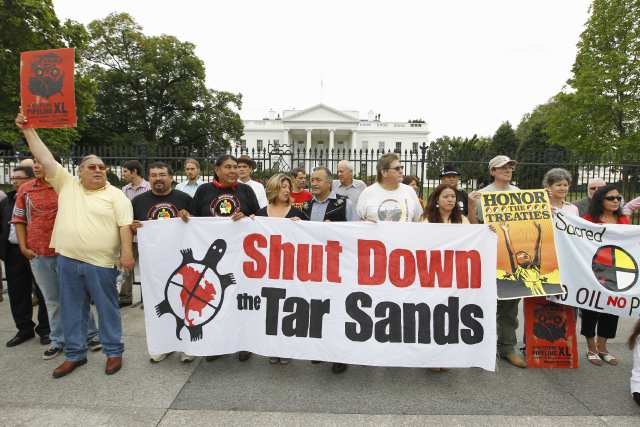
Williams then discussed political dynamics as it relates to fracking and fossil fuel dependency in the US. He cited the recent decision by the Obama administration to give the green light to the Keystone XL project. Williams quoted a New York Times article where the President stated that he not only supported the Canadian Tar Sands Project, he endorsed continued oil exploration and production in the US.
Williams presented a summary of current ecological destruction being brought about by the energy industry and made it clear to those in attendance that the root of this crisis is the economic system of capitalism, which demands constant growth and ever increasing profits.
Another policy dynamic that Williams addressed was the US government’s decision to increase domestic fossil fuel production. Some might argue this is a “good” outcome, as it will make the US less dependent on foreign oil, but the speaker made it clear that this is not the dominant motivation. What motivates the decision is profits and growth, so that the US can continue to dominant the global economy.
Williams stated that the bulk of US oil does not come from the Middle East, rather it comes from Canada and Venezuela. He didn’t address the reasons for US interest in controlling Middle East oil, which is primarily driven by geopolitical and economic interests. The US does not consume much of the Middle East oil, but if they and the oil industry can control global access to this oil, they can control the profits and have greater influence over global politics. (see Michael Klare’s film Blood & Oil.)
Williams also addressed larger geopolitical issues around the US energy policy and what the Obama administration has done that is fundamentally a continuation of the Bush administration’s energy policy, with the only difference being rhetorical.
Williams emphasized to the audience that we have to look at the nature of capitalism to truly understand the current energy crisis. If there is constant growth in production and consumption, there is no way that we can have a sustainable world, since there are finite limits of all “resources.”
The profit driven system for more energy consumption is further complicated when the private energy sector dramatically influences the political process in the US with massive monetary influence in the electoral and policy process. According to Open Secrets, the amount of money that the energy sector has used to buy their political interests has been hundreds of millions of dollars since 1990.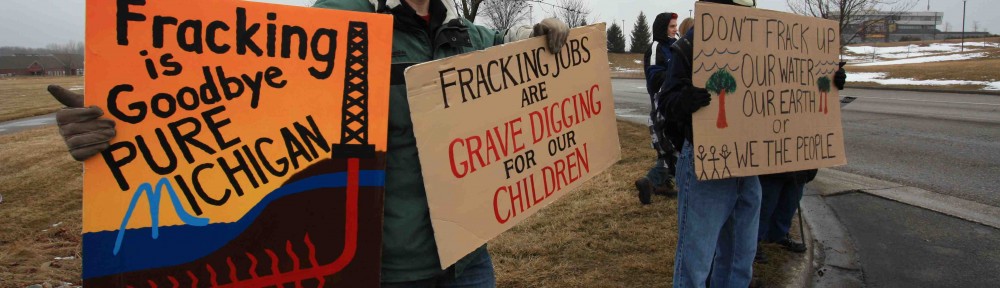
Williams concluded his remarks about the need for a revolutionary movement in response to the environmental destruction that fracking and other energy policies will bring about. The author argued that there are growing movements against fracking and the Keystone XL project, which we should also see as connected to other struggles in the US and around the world, such as the Arab Spring.
Early on in the Q&A someone involved in fighting to prevent fracking in Michigan told people about a public hearing in Alpine Township that was taking place just after the lecture. The Michigan-based group is called Ban Fracking in Michigan.
This article by Ronnie Cummins is re-posted from AlterNet.
It’s not enough that the biotech industry — led by multinational corporations such as Monsanto, Dow, Syngenta, BAS, and Dupont — is poisoning our food and our planet. It’s also poisoning young minds.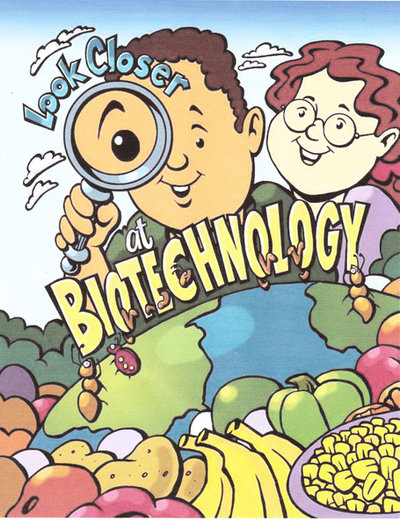
In a blatant attempt at brainwashing, the Council for Biotechnology Information (CBI) has widely circulated what it calls a Biotechnology Basics Activity Book for kids, to be used by “Agriculture and Science Teachers.” The book — called Look Closer at Biotechnology — looks like a science workbook, but reads more like a fairy tale. Available on the council’s Web site, its colorful pages are full of friendly cartoon faces, puzzles, helpful hints for teachers — and a heavy dose of outright lies about the likely effects of genetic engineering on health, the environment, world hunger and the future of farming.
CBI’s lies are designed specifically for children, and intended for use in classrooms.
At a critical time in history when our planet is veering toward a meltdown, when our youth are suffering the health consequences (obesity, diabetes, allergies) of Big Ag and Food Inc.’s over-processed, fat-and sugar-laden, chemical-, and GMO-tainted foods, a time when we should be educating tomorrow’s adults about how to reverse climate change, how to create sustainable farming communities, how to promote better nutrition, the biotech industry’s propagandists are infiltrating classrooms with misinformation in the guise of “educational” materials.
Brainwashing children. It’s a new low, even for Monsanto.
You don’t have to read beyond the first page of Look Closer at Biotechnology to realize that this is pure propaganda:
Hi Kids! Welcome to the Biotechnology Basics Activity Book. This is an activity book for young people like you about biotechnology — a really neat topic. Why is it such a neat topic? Because biotechnology is helping to improve the health of the Earth and the people who call it home. In this book, you will take a closer look at biotechnology. You will see that biotechnology is being used to figure out how to: 1) grow more food; 2) help the environment; and 3) grow more nutritious food that improves our health. As you work through the puzzles in this book, you will learn more about biotechnology and all of the wonderful ways it can help people live better lives in a healthier world. Have fun!
Before we take a closer look at the lies laid out in Look Closer at Biotechnology — lies that are repeated over and over again, the better to imprint them on young minds — let’s take a closer look at the book’s publisher. The Council for Biotechnology Information describes itself as “a non-profit 501(c)(6) organization that communicates science-based information about the benefits and safety of agricultural biotechnology and its contributions to sustainable development.”
According to the Internal Revenue Service, a 501(c)(6) organization is a “business league” devoted to the improvement of business conditions of one or more lines of business. The mission of a 501(c)(6) organization “must focus on the advancement of the conditions of a particular trade or the interests of the community.”
The bottom line is that CBI exists to advance the interests of the corporations that it was formed to promote — in this case, the biotech industry. While it purports to communicate “science-based information,” in fact, that’s not its mission at all. Its mission is to maximize the profits of Monsanto and the biotech industry.
Not surprisingly, CBI is funded largely by the biotech, chemical, pesticide, and seed industry giants: BASF, Bayer CropScience, Dow Agro Sciences, Dupont, Monsanto, and Syngenta.
There’s nothing new about corporations lying to the public. Corporations routinely lie to their employees. They lie in advertising. They lie in the lopsided so-called studies and research projects that they self-fund in order to guarantee the outcomes that support their often false, but self-serving premises. They buy off politicians, regulatory officials, scientists, and the media.
Although here we’re focusing on the biotech industry trying to brainwash our kids, CBI certainly does not limit its propaganda to just children. CBI recently contributed $375,000 to the Coalition Against the Costly Labeling Law — a Sacramento-based industry front group working to defeat the California Right to Know Genetically Engineered Food Act of 2012. If passed in November, this citizens’ ballot Initiative will require food manufacturers and retailers to label foods containing genetically engineered ingredients, as well as ban the routine industry practice of labeling or advertising GE-tainted foods as “natural” or “all natural.” CBI, the Farm Bureau, and the Grocery Manufacturers Association are campaigning furiously to preserve their “right” to keep consumers in the dark about whether their food has been genetically engineered or not, and to preserve their “right” to mislabel gene-altered foods as “natural.”
Clearly, the Council for Biotechnology Information has little or no regard for “science-based” information. But lies aimed directly at kids — under the guise of science education? In our schools?
Let’s take a closer look at the claims made in Look Closer at Biotechnology.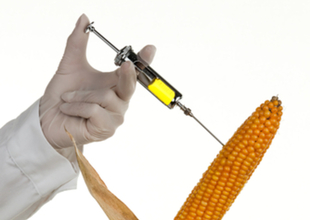
Lie #1: “Biotechnology is one method being used to help farmers grow more food.” (page 7)
This statement is patently false.
In 2009, in the wake of similar studies, the Union of Concerned Scientists examined the data on genetically engineered crops, including USDA statistics. Their report — Failure to Yield — was the first major effort to evaluate in detail the overall yields of GE crops after more than 20 years of research and 13 years of commercialization in the United States. According to the definitive UCS study, “GE has done little to increase overall crop yields.” A number of studies indicate in fact that GE soybeans, for example, actually produce lower yields than non-genetically engineered varieties.
Research conducted by the India research group, Navdanya, and reported in The GMO Emperor Has No Clothes turns up the same results:
Contrary to the claim of feeding the world, genetic engineering has not increased the yield of a single crop. Navdanya’s research in India has shown that contrary to Monsanto’s claim of Bt cotton yield of 1500 kg per acre, the reality is that the yield is an average of 400-500 kg per acre. Although Monsanto’s Indian advertising campaign reports a 50-percent increase in yields for its Bollgard cotton, a survey conducted by the Research Foundation for Science, Technology and Ecology found that the yields in all trial plots were lower than what the company promised. (Page 11).
The claim that GE crops increase agricultural yields is a blatant lie. Equally untrue is the industry’s claim that it is motivated by the desire to feed the hungry of the world. As the Union of Concerned Scientists points out: “For the most part, genetic engineering techniques are being applied to crops important to the industrialized world, not crops on which the world’s hungry depend.” Where does all the genetically engineered soy and corn — two of the largest GE crops — end up? In animal feed, processed junk foods — and school lunchrooms. Precious little goes to feed the hungry in impoverished regions.
One of the sub-arguments related to increasing yields is the biotech industry’s claim that GMO crops are more resistant to pests — hence more of the crops survive. In Look Closer at Biotechnology kids are told that agricultural biotechnology is a “precise way to make seeds with special qualities. These seeds will allow farmers to grow plants that are . . . more resistant to pests . . .” In fact widespread commercialization of herbicide-resistant and Bt-spliced GE crops has engendered a growing army of superweeds and superpests, oblivious to all but the most powerful and toxic pesticides.
What we should be teaching kids in science class is what scientists have been warning for years — that any attempt to increase resistance to pests through genetic engineering will ultimately fail. Insects — and diseases — will build up a tolerance over time, and evolve into stronger and stronger strains. That’s how nature works — and even Monsanto can’t fool Mother Nature. Organic agriculture, on the other hand, utilizing crop rotation, biodiversity, natural fertilizers, and beneficial insects, reduces crop loss from pests and weeds, without the collateral damage of toxic pesticides and fertilizers.
Recently, 22 leading scientists told the US Environmental Protection Agency that it should act with “a sense of urgency” to urge farmers to stop planting Monsanto’s genetically engineered Bt corn because it will no longer protect them from the corn rootworm. Bt corn is genetically engineered with bacterial DNA that produces an insecticide in every cell of the plant, aimed at preventing corn rootworm. Except that corn rootworms have now developed resistance to these GE mutants.
Just as scientists had predicted years ago, a new generation of insect larvae has evolved, and is eating away at the roots of Monsanto’s Bt corn — a crop farmers paid a high price for on Monsanto’s promise that they would never have to worry about corn rootworm again. Scientists are now warning of massive yield loss and surging corn costs if the EPA doesn’t act quickly to drastically reduce Bt crops’ acreage and ensure that Monsanto makes non-GMO varieties of corn available to farmers.
“Massive yield loss” doesn’t sound like “more food” — whether you’re 12 years old or 112.
What we should be telling kids is what responsible scientists and farmers — experts at the United Nations — have been saying all along: Eco-farming can double food output. According to a UN study:
Eco-farming projects in 57 nations showed average crop yield gains of 80 percent by tapping natural methods for enhancing soil and protecting against pests.
Projects in 20 African countries resulted in a doubling of crop yields within three to 10 years.
Sound ecological farming can significantly boost production and in the long term be more effective than conventional farming.
Lie #2: “Biotechnology can help farmers and the environment in many ways.” (page 8)
Two lies for the price of one.
Biotechnology — specifically genetic engineering — helps neither farmers nor the environment, according to the majority of legitimate scientists and economists. In fact, the opposite is true. Genetic engineering of seeds has wreaked havoc on the environment and brought misery to hundreds of thousands of small farmers all over the world.
The majority of farmers in developing countries struggle to afford even the most basic requirements of seeds and fertilizers. Their survival depends on the age-old practice of selecting, saving and sharing seeds from one year to the next. When multinational corporations move into areas previously dominated by small farmers, they force those farmers to buy their patented seeds and fertilizers — under pretense of higher yields, and under threats of lawsuits if they save or share the seeds. Every year, they’re forced to buy more seeds and more chemicals from corporations — and when the promises of higher yields and higher incomes prove empty, farmers go bankrupt.
Compounding their corporate crimes, when Monsanto’s patented seeds contaminate the non-GMO crops of small farmers (because the seeds drift across property lines) Monsanto routinely sues farmers for growing their patented seeds illegally, even though the seeds were actually unwanted trespassers. Further, the company has ruined the livelihoods of small farmers by harassing them for illegally growing patented seeds, even in cases where no patented seeds have been grown, either knowingly or by accident.
As Monsanto and others have expanded worldwide, into India, China, Pakistan, and other countries, the effect on small farmers has been devastating. In India, for instance, after World Trade Organization policies forced the country in 1998 to open its seed sector to companies like Cargill, Monsanto and Syngenta, farmers quickly found themselves in debt to the biotech companies that forced them to buy corporate seeds and fertilizers and pesticides, destroying local economies. Hundreds of thousands of India’s cotton farmers have committed suicide.
And according to a Greenpeace report, poorer farmers in the Philippines were sold Monsanto’s Bt corn as a “practical and ecologically sustainable solution for poor corn farmers everywhere to increase their yields” only to find the opposite was true: Bt corn did not control pests and was “not ecologically sustainable.”
Which brings us to one more of the Council for Biotechnology Information’s lies to kids: That agricultural biotechnology is good for the environment.
Study after study, over more than a decade, has warned us of just the opposite. Even the pro-biotech USDA has admitted that GE crops use more pesticides, not less than non-GE varieties. Genetic engineering results in evermore pesticides being dumped into the environment, destroying soil and water, human and animal health, and threatening the biodiversity of the planet.
How about telling kids instead that numerous reports, including one from the German Beekeepers Association, have linked genetically engineered Bt corn to the widespread disappearance of bees, or what is now referred to as Colony Collapse Disorder? And while we’re at it, maybe we should remind kids of the Albert Einstein’s quote: “If the bee disappeared off the surface of the globe then man would only have four years of life left. No more bees, no more pollination, no more plants, no more animals, no more man.”
Maybe we should also tell them that glyphosate, the active ingredient in Monsanto’s herbicide, Roundup, the most widely used herbicide in the world, kills Monarch butterflies, fish, and frogs, destroys soil fertility, and pollutes our waterways and drinking water.
The fact is, widespread use of Monsanto’s Roundup in all agricultural and urban areas of the United States is destroying the environment, pure and simple. US Geological Survey studies released this month show that Roundup is now commonly found in rain and rivers in agricultural areas in the Mississippi River watershed, where most applications are for weed control on GE corn, soybeans and cotton. Here’s the real truth, from an article published this past week: Monsanto’s Roundup is actually threatening the crop-yielding potential of the entire biosphere. According to the article, new research published in the journal Current Microbiology highlights the extent to which “glyphosate is altering, and in some cases destroying, the very microorganisms upon which the health of the soil, and — amazingly — the benefits of raw and fermented foods as a whole, depend.”
Lie #3: “Scientists are using biotechnology to grow foods that could help make people healthier.” (page 11)
This is the perhaps the most outrageous lie of all. Telling kids that GE foods are more nutritious is tantamount to telling them Hostess cupcakes and Coca-Cola are health foods.
Genetic engineering — of human food and food for animals that humans eat — has been linked to a host of diseases and health issues, including auto-immune disorders, liver and kidney damage, nutritional deficiencies, allergies, accelerated aging, infertility, and birth defects.
There’s a growing and alarming body of research indicating that GMO foods are unsafe, and absolutely no research whatsoever proving that they are safe. And yet the USDA and FDA continue to approve, and just this past month even agreed to speed up approval of these crops that scientists and physicians increasingly link to poor health.
Instead of force-feeding kids lies in bogus activity books, how about having them read some truthful articles?
The study Bt Toxin Kills Human Kidney Cells says Bt toxins are not “inert” on human cells, and may indeed be toxic, causing kidney damage and allergies observed in farmers and factory workers handling Bt crops. The article supports previous studies done on rats, showing that animals fed on three strains of GE corn made by Monsanto suffered signs of organ damage after only three months. Or how about this: “19 Studies Find That GMOs Aren’t Up to Consumer Safety Protection Standards” which reports:
It is abundantly clear that both GMOs made to be resistant to herbicides (aka “Roundup Ready”) and those made to produce insecticides have damaging impacts on the health of mammals who consume them, particularly in the liver and kidneys. We already know that from the trials of 90 days and less. In looking a little deeper into the info, we found a number of issues that point to a probable increased level of toxicity when these foods are consumed over the long term, including likely multi-generational effects.
Multi-generational effects. Eating GMO foods harms not only our health, and our kids’ health — but quite possibly their kids, too — even if we stop eating them today.
In a recent report to the United Nations General Assembly Human Rights Council by Special Rapporteur on the right to food, Olivier De Schutter, Schutter outlines the case for sustainable agricultural practices (the antithesis of industrial agribusiness, with its GE crops and heavy reliance on chemical fertilizers and pesticides). He also addresses the links between health and malnutrition. In the report, Schutter shows why undernutrition, micronutrient deficiency and overnutrition are different dimensions of malnutrition that must be addressed together through a life-course approach. From the report’s summary:
Existing food systems have failed to address hunger, and at the same time encourage diets that are a source of overweight and obesity that cause even more deaths worldwide than does underweight. A transition towards sustainable diets will succeed only by supporting diverse farming systems that ensure that adequate diets are accessible to all, that simultaneously support the livelihoods of poor farmers and that are ecologically sustainable.
Corporate greed plus a complicit government have allowed for the rampant poisoning of our food and environment, and the demise of sustainable agriculture practices — practices sorely needed if we are going to feed the world’s population, and avoid a world health crisis. And we’ve exported the same misery and destruction to foreign countries far and wide.
Propaganda like the CBI’s Look Closer at Biotechnology has brainwashed many of our kids into thinking that the biotech industry has people — not profits — in its best interests. The book’s claims are laughable. But framing blatant lies as “science” for children in schools borders on criminal.
For parents and teachers out there, here’s an alternate lesson plan. Because world hunger is a concern, because saving our planet does matter, and because better health is a worthy and achievable goal, let’s ask our kids to think critically, instead of accepting at face value “information” attractively packaged by multinational corporations.
Don M. Huber, emeritus soil scientist of Purdue University puts it in terms everyone, kids included, can understand. Huber talks about a range of key factors involved in plant growth, including sunlight, water, temperature, genetics, and nutrients taken up from the soil. “Any change in any of these factors impacts all the factors,” he said. “No one element acts alone, but all are part of a system.” “When you change one thing,” he said, “everything else in the web of life changes in relationship.”
This is what we should be teaching the future stewards of our planet.
GRIID Spring 2012 Classes: Last chance to sign up

The next round of the GRIID classes start next week and there is still room for those interested in either class.
The new class we are offering is A Brief History of Revolutionary and Resistance Movements, which will explore the rich history of revolution and resistance over the past century from the Paris Commune to the Zapatista Uprising.
The intent of this 8 – week class is to not only familiarize participants with rich examples of revolution and resistance in recent human history, but to learn from previous movements and to recognize what it might take for contemporary resistance and revolution to occur.
A Brief History of Revolutionary and Resistance Movements class will take place from 6 – 8pm on Mondays, beginning April 2nd.
The second class we will be offering is the very first class we began with in early 2008, Making Sense of US Foreign Policy. This class is designed to discuss US foreign policy since WWII, politically, economically and militarily.
We will discuss issues such as US intervention, torture, sanctions, use of proxy forces, war crimes, trade policies, the US relationship to the United Nations and other international agencies like the IMF and World Bank, with the last few session examining the foreign policy of the Obama administration.
Making Sense of US Foreign Policy will be held from 6 – 8pm on Wednesday nights beginning April 4. For this class we will be using the book Rogue State: A Guide to the World’s Only Superpower.
Both Spring 2012 classes will be 8 – weeks and will be held at the Steepletown Center located at 671 Davis NW, in Grand Rapids. The cost of each class is $20, but anyone is welcomed to sign up even if you can’t pay.
If you have questions about either class or would like to sign up, contact us at jsmith@griid.org.
On Friday, about 100 people attended a transit forum at New Hope Baptist Church in the southeast part of Grand Rapids.
The forum was hosted by Disability Advocates of Kent County, Faith in Motion, Concerned Citizens for Improved Transportation and the Kent County Essential Needs Task Force.
The forum began at 10:30am and concluded at 1:00pm, with the bulk of the time spent discussions the gains made over the past 10 years and soliciting input from people on what additional improvements need to be made.
People were provided with a list of vision statements from a variety of sources, statements that spoke to long-term transit needs. Participants were asked to draft their own vision statements that would be included in the ongoing discussion/planning around transit.
In addition to the vision statements, those in attendance were asked to look at key areas of transit, such as non-motorized transit, public transit, Intercity Options and the State infrastructure needs – roads, bridges, etc. Everyone was provided with options to chose from in terms of how people would prioritize the needed changes and at what cost. Once people chose their top suggestions they were also invited to write why they made such choices and how they would propose to pay for such needs, with an emphasis on how they would want their tax dollars used.

However, the above information was not shared by an MLive story, despite the fact that the reporter was present for the entire forum. What the MLive reporter focused on was the final hour of the forum where state officials that represented West Michigan talked about transit issues, primarily funding.
Granted, what the elected officials had to say was relevant, but the MLive reporter did not include any of the questions posed by those in attendance. The MLive story framed the last part of the forum as a partisan debate. The problem with framing the story this way, in addition to excluding comments from the public, was that is makes it seems as if there are critical differences between the political parties on major transit needs. The reality is that most of what was discussed had to do with maintaining and mildly improving the states infrastructure, with minimal discussion that addressed the more visionary possibilities that the audience looked at during the first 90 minutes of the forum.
It was disheartening for this writer that the state politicians did not address the critical needs of the disability community, even though there were several dozen members participating in the forum. The elected officials also did not address serious environmental aspects of transit or make any reference to transit as a justice issue. In fact, most agreed that transit was primarily an economic development issue.
To this writer, as long as critical issues like transit are tied to the market and not to basic human needs that promote justice, we are not likely to achieve a truly sustainable future.
Media Alert: Verizon pushes corporate media deal

According to the national media policy group Free Press, Verizon has struck a sweetheart deal with a cartel of cable companies — including Comcast, Time Warner Cable and Cox Communications — in which they’ve agreed to stop competing against one another.1 The new plan? To gouge consumers and divvy up the spoils of the broadband market.
Whether you use a mobile phone or a desktop computer to access the Internet, this deal is bad news. We need online communications to be affordable and open to all.
Take action to urge Congress to stand up for broadband competition, and to reject this deal outright.
The following video is a Free Press media policy person addressing Congress on why this Verizon proposal would be bad for the public.
Chemical exposures harming babies in the womb
 The Michigan Green Chemistry Clearinghouse broadcasted a free Webinar March 14, “Neurodevelopmental outcomes in children associated with chemical exposures occurring early in life.” Presenter, Amir Miodovnick, MD, MPH, DTM&H, who works in Pediatric Environmental Medicine at The Mount Sinai School of Medicine, revealed that chemical exposure in our everyday environment is doing great harm to our infants and children—especially babies in the womb.
The list of toxic substances would be hard for any pregnant woman to totally avoid, even if she was up on the latest research, had money for safer product choices or ate a totally organic diet.
These chemical toxins are in the air we breathe, the food we eat and the water we drink. High on the list of damaging toxins are organophosphate pesticides, fire retardants in clothing and furniture, compounds found in most plastics and even on every electronic receipt we get when we buy something. Miodovnick noted that organophosphates were first developed for deadly chemical warfare and later modified for use as pesticides.
 Recent research has shown these chemicals are linked to premature labor, low birth weight, autism, hyperactivity, lower IQ and cerebral palsy in children. Girls exposed in the womb have more risk for emotional illness; boys are more prone to aggression. “These effects are occurring at lower andlower levels, at levels lower than the (EPA) standard,” Miodovnick said.
While folic acid as a supplement or when consumed in deep green leafy vegetable, can amend the effects of some of these toxins in the first trimester of pregnancy, lead is the only toxin that can be reduced in the body through a nutritional approach, according to Miodovnick. He noted that eating foods high in calcium and maintaining good iron stores can help rid lead from the body.
That said, eating organic foods can reduce exposures to these deadly chemicals.
Current EPA regulations do little to protect us and our children from toxic contamination. The sole regulations in place were adopted after the most toxic substances were already in widespread use. These were grandfathered in and excluded from safety testing requirements. Because safety testing is costly, chemical companies simply do not look for safer alternatives as these would require safety testing.
Click here to view a .pdf of the webinar presentation in full.
Young Women making a difference in Grand Rapids
Last night the group Young Women for Change of Kent County hosted a screening of the film Miss Representation on the campus of GRCC.
Miss Representation is a fairly new film that has already been shown in Grand Rapids at least twice in the past 3 months. The film explores how the media’s misrepresentations of women have led to the underrepresentation of women in positions of power and influence.
About 70 people attended the screening and the majority of people stayed after the film to be part of the discussion. The high school students, who are in Young Women for Change, facilitated the discussion and did an amazing job. In fact, this writer was quite impressed with not only their knowledge of the issue, but how confident and articulate they were in addressing the issues raised in the film.
The discussion also raised some important points. Several older women talked about their involvement with the feminist movement in the 1960s and 70s, but also expressed concerns about how there has been a backlash against the gains made by women. Some felt that this backlash was not only a result of reactionary centers of power pushing back against feminism, but that the current generation of young women were not “carrying the torch.”
If the young women who hosted the event last night are any indication of the current generation, then it would seem to this writer that they are quite capable of carrying the message of equality and liberation forward.
Several women also spoke about how difficult it was to move to Grand Rapids and realize that the level of discrimination against women was profound. One woman said this was the case particularly from those who identified as conservative Christians and expressed to these women that their place is in the home. There certainly are strong anti-feminist entities in West Michigan that welcome the male dominant ideology of groups like the Promise Keepers, Focus on the Family and the American Family Association……all of which receive substantial funding from wealthy families in West Michigan.
The Young Women for Change members did say that they will be working on looking at issues of concern over the next several months and then be making funds available for projects that empower women and girls in Kent County. Young Women of Change is a project of the Michigan Women’s Foundation.
 Grand Rapids Institute for Information Democracy