Occupy the PGA protests planned for this week
Made up of a coalition of community groups and residents of Benton Harbor, Occupy the PGA is inviting people to participate in protest this week, from May 23 – 27.
The group issued a letter today asking the 2012 Senior PGA to transfer 25% of its profits to the city of Benton Harbor. The group plans a demonstration from May 23 to 27, concurrent with the golf championship in Benton Harbor.
The group also demanded a public acknowledgement at the tournament of the “theft of public park land for private profit”, referring to the lease of 22 acres of dunes on Jean Klock Park for transformation into three holes of the Harbor Shores golf course at which the Senior PGA Championship plays later this month. The letter links the transfer of parklands to the “complete undermining of democratic structures” via the installment of the Emergency Financial Manager in Benton Harbor in December 2010.
Accompanying the demand letter is a lengthy summation of community grievances against the Harbor Shores development, ranging from the taking of the park land to unfulfilled promises of significant jobs and tax revenue for Benton Harbor residents. The packet, including maps illustrating the transformation of Jean Klock Park, also analyzes the failures of state and federal agencies to protect the public interest, the unpermitted use of public water resources by the private development, and the origin of the Emergency Financial Manager bill. The group also demands that the packet be distributed to all 2012 Senior PGA participants.
Spokesperson Rev. Edward Pinkney of the local community group BANCO said, “Benton Harbor continues to be a city under siege. The mishandling of public trust couldn’t be more massive, unjust, inhumane, and unconstitutional. The Senior PGA needs to hear our voice. It’s time to stand up and fight for what’s right.”
If anyone from West Michigan is interested in going to the Occupy the PGA protests this week, you can contact Occupy GR about getting a ride or the Bloom Collective, which is also organizing a car pool on Saturday, May 26.
On Thursday, the Kent County Health Department, Healthy Kent 2020 and the Strong Beginnings Program hosted a forum to explore the root causes of health inequality in Kent County.
Quite often the focus of health care forums is about access or looking at just individual behavior as determinants of people’s poor health. At this forum, the focus was an investigation into the structural or systemic causes of poor health.
To facilitate this conversation, the Kent County Health Department invited two staff members of the Ingham County Health Department, Dr. Renee Canady and Doak Bloss. Canady and Bloss have been doing social justice focused health analysis at their health department and facilitating workshops across the state in recent years.
The presenters expressed the importance of finding new language when talking about health inequality in America. They defined health inequity as: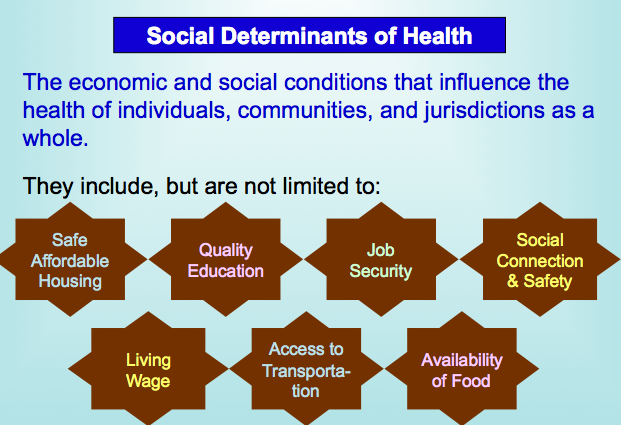
Differences in population health status and mortality rates that are systemic, patterned, unfair, unjust, and actionable, as opposed to random or caused by those who become ill.
The co-facilitators then looked at the various determinants of health inequality in the US and said that things like housing, transportation, education, job security, access to health foods and a living wage were some of the determinants.
The presenters said that this was a radical departure from the traditional view of public health, which is often limited to individual behavior. However, they emphasized that class, gender and racial privilege often prevent people from seeing the systemic causes of health inequity.
It was quite refreshing to hear presenters talk about class oppression and globalization as major factors in determining people’s health. The presenters even used the language of the Occupy movement and referred to the 1% versus the 99%.
After the main presenters discussed social justice and health inequity, a staff member of the Kent County Health Department then presented data on health disparities in Kent County.
The data presented information on how many adults and children were living in poverty in Kent County, with a breakdown along racial lines. There was also data on infant mortality rates, morbidity and geographical significance.
It was clear from the data presented that there were large pockets of poor neighborhoods that were disproportionately Black and Hispanic that had greater health inequality. Blacks and Hispanics children have a higher rate of living in poverty and infant mortality rates are higher than for White children. The data also showed that poor & minority communities are 6 times more likely to report 14 or more days a year of poor health, 3 times more likely to have diabetes and 8 times more likely to have heart disease.
The social justice and health inequity forum concluded with individual tables having discussion about the information presented and how those in the health care community need to respond to the systemic injustice that exists in Kent County. However, it was recognized that the organizations in the room needed to begin with the recognition of systemic and root causes of health disparities and then develop strategies to confront the systems that maintain these disparities.
Occupy, Neighborhood Organizing & National Convergences: Race & Class Struggles in Chicago & Beyond
This interview is re-posted from ZNet.
Introduction: As Occupy activists travel to Chicago for the NATO protests it is important to consider tensions between neighborhood organizing/long term organizing and national campaigns/shorter term actions. James Tracy and Amy Sonnie are authors of “Hillbilly Nationalists, Urban Race Rebels, and Black Power: Community Organizing in Radical Times” (Melville House, 2011). It is the story of radical organizing in working-class white neighborhoods, the interracial movement of the poor, and the original (pre-Jessie Jackson) Rainbow Coalitions with the Black Panthers, Young Lords, and others.
Camilo Viveiros (CV): Can you share a story related to Chicago from your book that may inform activists who hope to gather people from around the country for upcoming national protests?
James Tracy (JT): The Chicago of 2012 is much the same as the Chicago of 1968 in one very important way: there are dynamic community and radical organizations that have been fighting what we now call the 1% for generations. Chicago has been an important part of every national progressive upheaval in the last century. Think of Haymarket, the Industrial Workers of the World and the Puerto Rican Independence movement, just to name a very few. If you are going to Chicago for the NATO protests, that’s wonderful. You are stepping into an event that may well turn out to be just as historical as the Democratic National Convention protests of 1968. But you should know the lessons of history and respect the local activists who have valuable experience. The Chicago-based groups in our book were very intentional in how they picked their targets. They organize against slumlords who had holdings in black, white and brown neighborhoods because these targets gave community members an opportunity to work with one another. It was a commitment to what the Panthers would later call intercommunalism. These kinds of tangible opportunities for unity are built when organizers first build a base and make deliberate choices to foster connections. There will be choices for Occupy activists to make about where to put your energies. Why not choose to support the protests led by local Chicago groups fighting school privatization, health care access or housing displacement? These struggles are all being fought right now and outsiders would do well to ask how they can help. And if your protest turns into a war zone, realize that at some point, most of the visiting activists will receive a level of legal support often denied everyday people in a town notorious for police brutality.
CV: In the early 1960s, Students For a Democratic Society (SDS) created the Economic Research and Action Projects (ERAP), placing student organizers in poor neighborhoods. What are some examples of student-community alliances from ERAPs that worked? What are ways that students and community groups can make sure to monitor and foster reciprocal relationships?
JT: While many of the ERAP projects folded quickly, the Jobs or Income Now Community Union based in Chicago’s Uptown neighborhood lasted the longest and evolved into two important organizations: the Young Patriots Organization and Rising Up Angry. These are the central stories we cover in our book. The alliance between students and poor residents had its share of issues, but it worked because organizers on both sides put hard work into understanding each other. It wasn’t about a single action or Rent Strike. They knew if they were going to go toe-to-toe with the Right for the allegiance of poor whites, it was about long-term building in the community. It’s also important to note that quite a few key organizers were students from working-class backgrounds, the first in their family to get through college. For them the student-worker debate felt artificial, they had their feet in both worlds. With so many of the access points to higher education closed off today, I’d imagine that the divide is actually more intense today than it was in the 1960s.
“The alliance … worked because organizers on both sides put hard work into understanding each other…it was about long-term building in the community.”
CV: Can you touch on the story of the founding of the original Rainbow Coalition in Chicago and how similar collaborations might be useful models for today’s activists? What are some of the lessons about forming alliances that are pro-organizing, that are diverse without letting any group dominate?
JT: The Original Rainbow Coalition included the Young Patriots Organization, the Black Panther Party and the Young Lords Organization chapters in Chicago. Each group was expected to organize their own community, and come together in coalition. Former Panther Bob Lee told me that the Rainbow Coalition was simply a code word for class struggle in a movement that had been focused on race — for important reasons, of course. Our book details how the slow work of organizing across colorlines created the conditions where the Patriots (poor whites who used the Confederate Flag on their uniform) physically defended Lee from assault by the police and even ran armed security for the Panthers at events. It was their sustained organizing that made the insurrection possible, not the other way around.
“It was the sustained organizing that made the insurrection possible, not the other way around.”
The key to understanding this organizing approach is the concept of Self-Determination. Each group had the right to make its own decisions, but were simultaneously accountable to each other in a structured coalition.
CV: In your book Peggy Terry, a poor white organizer originally from the South, believed that “politicians stoked poor whites’ fears that any gains for people of color would come at the greatest loss to them.” What are ways working class organizers can shift narrow power analyses that define other oppressed people as competitors, and instead target those in power who pit us against each other?
JT: These fears come from somewhere tangible, because historically the ruling-class has indeed granted reforms in a strategic manner to divide and conquer poor people. The Black Panther Party demanded full employment, but the Nixon Administration came up with affirmative action. Now imagine what might have been done if the movement had been able to fully articulate a vision of what full employment for all would look like while honestly addressing historical inequalities and racism within labor? It would have been harder to convince poor whites that they were going to be tossed aside.
“…what might have been done if the movement had been able to fully articulate a vision of what full employment for all would look like while honestly addressing historical inequalities and racism within labor?”
CV: After the anti-WTO protests in Seattle in 1999 many anti-globalization activists went “summit hopping,” prioritizing going from one large-scale protest to another, not always spending the necessary time building local campaigns or supporting local organizing. As we face a series of national (DNC, RNC, etc.) protests in 2012, what are some lessons you can share about the need to work with local struggles and specifically for activists to recognize and organize in their own communities? What worked and what went wrong in Chicago related to the DNC protests in 1968 and how can we reflect on and avoid the same mistakes now?
JT: It’s not an either/or proposition. Rising Up Angry built a strong base in Chicago’s neighborhoods over many years, but also took their members to important protests in other cities. They knew that going to the mobilizations against the war in DC could give their members a sense of being connected to something bigger, and that hopefully the movement would recognize the importance of working-class people in it. At the same time, these national conventions and summits have a very real and not always positive impact on local communities. While many people now recognize the 1968 DNC as the turning point for broad public acknowledgement that the police were out of control, many local activists skipped the convention altogether because they knew the level of brutality the cops were likely to unleash. They saw it every day. It’s a double-edged sword that national attention can come out of these events, when on the other hand the ongoing repression of local folks, especially in communities of color, never gets discussed. The questions for out-of-towners are: What can you do to limit negative impacts of mass protests on local neighborhoods, and how can you actually build with and listen to local activists before, during and after a convention?
“how can you actually build with and listen to local activists before, during and after a convention?”
CV: Thank you for bringing to light the myth that poor and working class whites are more likely to defend racism than whites with money. In your book you share another key organizing insight “that poor whites experience the benefits of institutional racism differently and, therefore class-based organizing must account for those differences without ever ignoring the race question.” What are ways we can counter classism in today’s movements?
JT: White supremacy is a complex system and it works on many levels, from financial advantage to psychological. But it is also a system that requires broad participation from all so-called white people, so why assume that the bulk of the responsibility for it lies on the backs of those who benefit from it the least. A poor racist might throw around epithets displaying their racism more crudely. A rich racist can just smile and benefit from foreclosures, offshoring and privatization. I don’t think we should try to measure the extent of damage done — racism is damaging no matter what its form — but class matters because power matters. And where power comes into play, we need to evolve smart organizing strategies and understandings. The groups we write about didn’t do everything right, but they saw a real need to address class, race and gender issues in tandem, pushing poor whites to re-examine who they blamed for their problems and pushing the Left not to ignore poor people’s leadership. This is just as relevant a lesson today.
CV: Stemming from discussion and correspondence about your book, have you seen any shifts from white middle class people about the importance of white working class organizing with an anti white supremacist orientation? What are the core suggestions that you would offer activists and organizers as we look ahead for ways to build trust and relationships of respect in our diverse movements of oppressed people?
JT: Yes, when we first started discussing this book with other organizers and activists, I sensed a bit of trepidation from some self-identified white anti-racists about our intentions. I think it is obvious now that the book is not trying to unravel the good work they have done to create an understanding of how central white supremacy has been in destroying progressive movements. Intellectually, we are indebted to the work of people like Ted Allen, David Roediger, Noel Ignatiev, Roxanne Dunbar-Ortiz and many others. Yet we’re firmly outside of the “white studies” canon and people of various classes have responded positively to what our books suggests: an interracial movement of the poor is possible, and it is also possible for it to be led by poor people themselves.
This article by Allison Kilkenny is re-posted from The Nation.
The Chicago police wasted no time harassing protesters Wednesday evening when they raided a Bridgeport apartment complex without a valid warrant and detained up to nine people without cause. The individuals have been identified as NATO activists, and the NLG quickly responded to the arrests.
“We’ve called police officials at every level trying to find out where they were being held. We were denied any information at all about any people being arrested, let alone a raid happening last night. So essentially these people were disappeared for more than twelve hours until we could finally locate them,” said NLG spokesman Kris Hermes.
Lawyers from The NLG were allowed to meet with nine individuals and reported that they were in low spirits, confused about why they were arrested and shackled at both their hands and feet at the meeting. No charges have been filed against them almost 24 hours after their arrest and an Illinois States Attorney at the station refused to meet with the NLG lawyers.
The theme of harassment continued over the weekend when a memo allegedly from the Chicago Police Department Office of International Relations, marked not intended for general distribution was posted online.
The three-page document outlines press behavior that will and will not be tolerated, including normally acceptable media maneuvers that will no longer be considered acceptable and actually might be grounds for arrest.
“No ‘cutting’ in and out of police lines will be permitted, or ‘going up against their backs,’” the document states, reportedly quoting Debra Kirby, chief of the Chicago Police Department Office of International Relations. “Those who follow protesters onto private property to document their actions are also will be [sic] subject to arrest if laws are broken.”
Weaving in and out of police lines is a critical right for journalists, particularly photojournalists, who frequently need to pass police lines to document police actions, most often arrests.
Upon arrest, media will go through the same booking process as anyone else, though “release of equipment depends on what part the equipment played in the events that led to the arrest,” the memo vaguely states.
Most absurdly, Kirby appears to place the onus of getting arrested on the press.
“She urges media to keep safety in mind and warns them to ‘not become the story,’” the memo warns, as though journalists are nothing more than spotlight-craving narcissists hellbent on enduring the thoroughly unpleasant experience of getting arrested and acquiring a police record in order to reap the lavish rewards of blogging about it later.
The ominous warnings to press and CPD policy of harassment and intimidation of protesters didn’t stop around a thousand people and a decently sized media presence from flooding Daley Plaza Friday afternoon for the National Nurses United rally.
The NNU gathered to demand the creation of a Robin Hood tax on Wall Street. Members wore red National Nurses United (NNU) shirts accompanied with green Robin Hood masks and hats in keeping with the theme of a small trading tax in order to raise badly needed revenue.
“[It’s] less than half a penny tax on financial transactions,” said Casey Hobbs, a registered nurse for thirty-seven years, adding, “With the billions of dollars we’d get from that, we’re gonna heal America. We’re going to do that by providing Medicare for all, we’re going to provide college educations, we’re going to rebuild our infrastructure, and put people back to work, and give back to the 99 percent.” (photo: Casey Hobbs)
Speakers, including rocker Tom Morello, regaled the crowd before a separate environmental march left the plaza for a non-permitted march.
Occupied Chicago Tribune editor Joe Macare witnessed at least one arrest during the procession, a young man named Henry who was reportedly arrested for wearing a mask. Some protesters believe Henry was specifically targeted by CPD. (photo by Joe Macare)
Friday kicked off a weekend of anti-NATO protests, including a “Say No to the War and Poverty Agenda” scheduled to take place at Petrillo Bandshell on Sunday, which includes a march afterward to McCormick Place. The event includes participants such as Jesse Jackson, SEIU Health Care Illinois/Indiana, the United National Antiwar Coalition, Chicago Teachers Union, National Nurses United, United Electrical Workers Western Region, Malik Mujahid of the Muslim Peace Coalition and Veterans for Peace, among many others.
Afghanistan and Iraq veterans also plan to converge on Chicago that Sunday in Grant Park to march to the NATO summit where they will ceremoniously return their medals to NATO’s generals.
A call to action released by Iraq Veterans Against the War states, “We were awarded these medals for serving in the Global War on Terror, a war based on lies and failed policies.” Calling this a march for justice and reconciliation, veterans say they will mobilize to “demand that NATO immediately end the occupation of Afghanistan and related economic and social injustices, bring U.S. war dollars home to fund our communities, and acknowledge the rights and humanity of all who are affected by these wars.”
This article is re-posted from the site KillerCoke.org.
Coca-Cola workers at Coke operations in New York State have linked up with the Campaign to Stop Killer Coke/Corporate Campaign, Inc. to help in their fight for justice. The Coke 16 is a group of black and Latino workers employed at plants in Maspeth (Queens) and Elmsford (Westchester). The New York Daily News dubbed them the Coke 16, although the group is growing much larger. We are also working with victims alleging racial discrimination at Coke’s operations in Smithtown (Long Island).
Here is an except from the opening statement in the Coke 16 lawsuit:
1. Coca-Cola may be an enjoyable refreshment for most, but its black and Hispanic workers produce Coca-Cola’s beverages in a cesspool of racial discrimination. There is an endemic culture of racism at Coca-Cola that runs through its management and supervisors at its New York bottling plants in Elmsford and Maspeth. The 16 Plaintiffs herein have suffered from the worst of its ills in terms of biased work assignments and allotment of hours, unfair discipline and retaliation, and a caustic work environment.
2. Black and Hispanic production workers at Coca-Cola are typically assigned to the most undesirable and physically dangerous positions, and to tasks that are outside of their job descriptions. Meanwhile, the managers contravene the established seniority system by giving better jobs and more overtime hours to white workers with less seniority than minority workers. As several of the Plaintiffs have found, opportunities for advancement and promotion within the company are routinely biased against minority workers. Finally, the truck drivers among the Plaintiffs have had their hours unfairly limited and prevented from working overtime, while white drivers do not have to face these problems.
3. Those among the Plaintiffs who have dared to speak up about the discrimination to managers or human resources have not only found no resolution to their concerns, but instead have faced swift retaliation from the white managers. This retaliation has come in the form of unwarranted scrutiny and unfair disciplinary actions, up to the point of suspension and termination for some of the Plaintiffs.”
On April 16, the Coca Cola Company hosted its annual shareholders meeting, but the Coke bosses did everything they could to avoid discussing the Coke 16 case.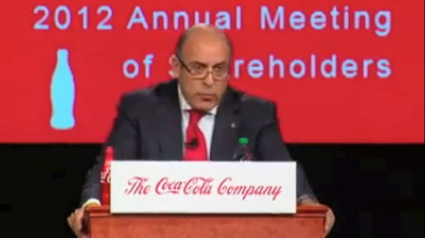
At April’s Coca-Cola annual meeting, in an orchestrated effort to avoid any tough questions about the Coke 16 racial discrimination lawsuit, Coke Chairman/CEO Muhtar Kent tried to take the offense by claiming a question on the Coke 16 had been emailed to the Company.
The question was submitted through the Shareowner Forum by a user named ELV1152. “I’ve been following the lawsuit against your company in the paper that claims some of your employees in New York are once again subject to racial discrimination at work. How do you explain this and what are you doing to make sure this kind of thing doesn’t happen?”
Kent had his answer prepared although he tried to make it seem as though he had never seen the question. During his answer, he looked around at the audience and, in a poor acting job, asked:
“…Is there anyone in the audience that are from those two locations?” pretending as though he did not know that they were present. Five Coke employees WERE present and they stood. Kent stated: “If there’s anybody who’d like to, afterwards, talk to our representatives, associates, from those two locations, please feel free to do so.” Campaign to Stop Killer Coke Director Ray Rogers went up to one of them, Pat Dixon, at the end of the meeting, but he adamantly refused to speak to Ray.
See the video of Kent addressing racial discrimination; Ray addressing racial discrimination and the Coke 16, and Kent responding to Ray. The five Coke “representatives” stood up at 1:57 of the video; Dowin Lewis is the second person on the left.
Michigan Civil Rights Commission seeks input on updating state civil rights act to include LGBTQ community
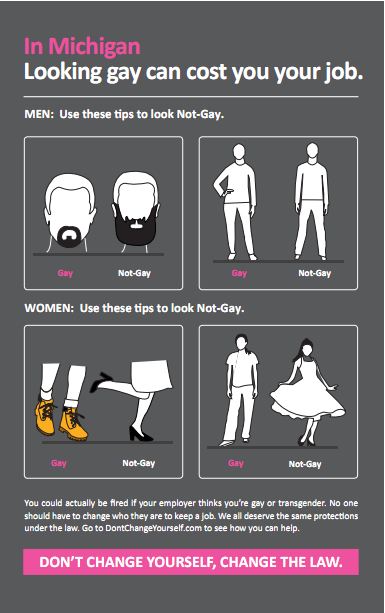
The Michigan Civil Rights Commission will be hosting a forum in Jackson (MI) on Monday, May 21st for the purposes of gathering public input on whether or not to update the Elliott-Larsen Civil Rights Act (ELCRA).
Here is part of the language of the notice the Michigan Civil Rights Commission sent out on this matter:
The Department is conducting a social research project objectively examining the impact Michigan’s laws and policies related to the lesbian, gay, bisexual, and transgender (LGBT) community have, not only on the LGBT community itself but with a particular focus on other communities, the state and its economy. The Department is specifically concerned with the Elliott-Larsen Civil Rights Act (ELCRA). The Elliott-Larsen Civil Rights Act (ELCRA) – Michigan’s Civil
Rights law – prohibits discrimination in employment, housing, and public accommodations based on religion, race, color, national origin, age, sex, height, weight, familial status, or marital status. The Act does not offer protections based on sexual orientation or gender identity.
The Department is seeking stories from Michigan residents about their experiences with discrimination. Please consider how amending ELCRA would:
- Impact your community/neighborhood/family/church/school
- Change your life or that of a family member
- Impact/change your business operations/workforce/services
- Affect your perception of others
In short, this project is not about “I support”/“I don’t support” but what you would gain/lose if ELCRA is or is not amended. Please consider sharing your thoughts on the proposed amendments to this law. We are interested in hearing from individuals in favor of and opposed to such changes to the law. 
Besides the public hearing in Jackson (MI) on Monday, the Michigan Civil Rights Commission welcomes e-mail messages telling your story about the benefit of updating the Elliot-Larson Civil Rights Act.
You can send an e-mail to the commission at calcagnor@michigan.gov or to this link, which was created by Unity Michigan and the Michigan ACLU.
It is important to note that if the Elliot-Larsen Civil Rights Act is updated to include the LGBTQ community, then there would be no need to pay anti-discrimination ordinances in each community around the state.
New Media We Recommend
Below is a list of new materials that we have read/watched in recent weeks. The comments are not a “review” of the material, instead sort of an endorsement of ideas and investigations that can provide solid analysis and even inspiration in the struggle for change. All these items are available at The Bloom Collective, so check them out and stimulate your mind.
Occupy the Economy: Challenging Capitalism, Richard Wolff in conversation with David Barsamian – This book is a collection of interviews conducted between the beginning of the Occupy Wall Street (OWS) campaign and the end of 2011. Alternative Radio talk show host David Barsamian interviews Richard Wolff, an economics professor and author of the book Capitalism Hits the Fan. Wolff and Barsamian discuss the phenomenon of the Occupy movement, particularly at a time when global capitalism is becoming more brutal. Wolff presents information and ideas in a very understandable fashion and links the current movements against capitalism and austerity from OWS to Spain and Greece. These interviews are lively, refreshing and are a good overview of the current global economic crisis within capitalism.

America’s Food: What You Don’t Know About What You Eat, by Harvey Blatt – With the growing interest in eating healthy and eating local, Harvey Blatt’s book is an important additional to the literature that seeks to explain what is wrong with our current food system. The book starts out with technical language and charts, but quickly moves into chapters that lay out how most of the food we consume is grown or raised and why we need to radically alter our food system. Blatt has chapters on the importance of protecting the integrity of soil, the growth of GMOs, how grains are grown, how chickens, pigs and cows are “manufactured,” as well as chapters on fish production and the agribusiness of fruits and vegetables. Blatt concludes the book by looking at how most of the food available in the market are highly processed foods that are the main contributor to poor diet and health in the US. The only shortcoming of the book is that it does not provide any suggestion on how to challenge the food system, but then there are plenty of source that do just that.
Viva La Historia: Mexican Comics, NAFTA and the Politics of Globalization, by Bruce Campbell – For anyone who has spent time in Mexico or reading Mexican popular media they know how prolific Mexican comics are. Not only are there hundreds and hundreds of different Mexican comics, many of them are highly political and are a great source of social commentary. Bruce Campbell does a great job of analyzing the role that comic books play in Mexico, particularly on themes of NAFTA and globalization. Viva La Historia is rich in its investigation of Mexican comics and how they have shredded the North American Free Trade Agreement and the beneficiaries of global capitalism in Mexico, a country that has seen the growth of dozens of billionaires over the past 15 years. The book could have included more visual examples from the comic book world, but the author’s analysis is sharp and often as witty as the comic books he is presenting to the reader. Campbell’s book demonstrates the power of communicating ideas outside of traditional methods of news or academia and why popular culture can be a mechanism for consciousness raising and subversion.
Monumental: David Brower’s Fight for Wild America (DVD) – From the moment David Brower first laid eyes on the beauty of the Yosemite Valley, he fought to preserve the American wilderness for future generations. The story of a true American legend, Monumental documents the life of this outdoorsman, filmmaker and environmental crusader, whose fiery dedication not only saved the Grand Canyon but also transformed the Sierra Club into a powerful national political force, giving birth to the modern environmental movement. (even though Brower would later be forced out of the Sierra Club because they abandoned its more radical roots). Seen through Brower’s own eyes – he was an accomplished filmmaker, and his stunning footage is included here – a 1956 raft trip down Glen Canyon, before its damming, evokes the awful sadness of losing public land we’ve failed to protect. And in period footage of Brower’s early rock-climbs and of his training in the 10th Mountain Division Brower emerges as an unlikely and inspiring national hero.
Banner Challenges Balle Conference Participants

Yesterday was the kickoff to the national Balle conference in Grand Rapids, a conference that focuses on what is vaguely referred to as creating local economies.
The Grand Rapids group Local First, a local version of Balle, is co-hosting the conference and promoting the regional strides that West Michigan has made in the arena of supporting local businesses.
However, not everyone is in agreement with the message of Balle. A banner was hung across the Kent County Convention Center, where the conference was being held, with the message – Capitalism Kills.
The banner hung across the street during the opening ceremonies and keynote presentations while some people handout out small flyers that said, Go beyond BALLE and Local First’s green capitalist approach. Do it yourself! Or why not do it together? The message also included the web address to mutualaidgr.org.
Last week, the West Michigan Environmental Action Council posted an article on their blog entitled, What We Need to Know About Fracking in Yankee Springs. The blog post was included in their e-newsletter that went out yesterday.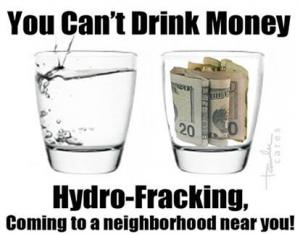
The article was no doubt a response to the growing concern by people who live in Barry County and those who are friends of Circle Pines in the Yankee Springs area over the issue of fracking that could become a reality in the not too distant future.
In fact, at last week’s anti-fracking protest in Lansing, there were several people from Barry County and a few people connected to Circle Pines who came to speak out against the DEQ auctioning of public land for possible oil & gas extraction.
The WMEAC bloggers acknowledge that the land sold in the public auction could allow hydraulic fracking, but then cites the President of Miller Energy Company as saying he doesn’t think, “Yankee Springs will be a successful area for fracking.” Besides not citing any other sources on this matter, why use the President of Miller Energy Company, which has a long history of profiting from oil & gas extraction and a history of global expansion at one point in the company’s history?
The blog posting then provides a brief overview of the history of fracking in Michigan, but only uses the DEQ as a source on this history, particularly Director of the Office of Oil, Gas and Minerals for the Department of Environmental Quality, Hal Fitch. The Michigan DEQ has stated publicly that fracking is safe and for anyone who was at the public auction on Lansing last week, they would be hard pressed to trust anything that Hal Fitch had to say.
However, the most important aspect of the WMEAC blog post was their statement, “WMEAC is not yet ready to request a permanent moratorium on horizontal hydraulic fracturing.”
Instead of supporting a permanent moratorium, WMEAC states that it is supporting some proposed legislation that would “(1) place a moratorium on fracking for two years; (2) provide funding for a study to be done on Michigan fracking and its environmental implications; and (3) require fracking companies to publicly disclose the chemicals used in order to trace chemicals found in water and soil samples to specific companies and wells.”
However, the grassroots group Ban Michigan Fracking has a much more critical view of these legislative proposals.
“The package of bills is a sleight-of-hand, pro-regulatory approach to ensure that fracking for shale gas is labeled ‘safe’ and continues in Michigan,” says LuAnne Kozma of Ban Michigan Fracking. A bill calling for a moratorium is tied to a bill that would initiate a gas industry-funded study and fracking advisory committee, but not the other way around. In other words, the proposed fracking panel and study could go forward even without a moratorium. One of the bills’ key sponsors, state Representative Mark Meadows, revealed shortly after introducing the bills that he is opposed to a ban on fracking.”
The WMEAC blog piece ends with a list of 7 questions that “still need to be answered” about fracking in the Yankee Springs area. The most important of the 7 questions asked has to do with wanting to know what the environmental track record of the companies that purchased land during the public auction. This would indeed be important information as would any and all information that would provide complete transparency if any fracking were to take place.
What was interesting about the list of question was what was omitted. None of the questions asked had to do with how fracking would impact the eco-systems in the area, the wildlife, the soil and water table of the Yankee Springs area. There was also no question posed about how fracking could impact human health. Instead, several of the questions focused on how fracking would impact recreational activities, tourism and other area businesses.
These might be legitimate questions, but they should not take priority over the well being of human and non-human life in the eco-systems that make up the Yankee Springs area.
With the recent legislative proposals that seek to take away more right of women, people have begun to organize and fight back.
One action will be a rally held in downtown Grand Rapids next week to Stop the War on Women. The rally is being organized and co-sponsored by Progressive Women’s Alliance of West Michigan, Planned Parenthood Advocates of Michigan, the National Organization For Women Greater Grand Rapids Chapter, and the American Civil Liberties Union of Michigan Western Branch.
The promotional informational states, “Join us for a rally on May 24th to tell the world that women and men in Grand Rapids will NOT stand for the attacks on women by politicians in both parties.” This would be a refreshing departure from most events and actions in recent decades, which have often ended up being a mechanism of support for the Democratic Party.
We plan to attend the event and report on what is said and what additional actions are being planned after the rally that will really guarantee justice and equality for women.
Stop the War on Women Rally
Thursday, May 24
6:00 – 8:00PM
Rosa Parks Circle
Downtown Grand Rapids
 Grand Rapids Institute for Information Democracy