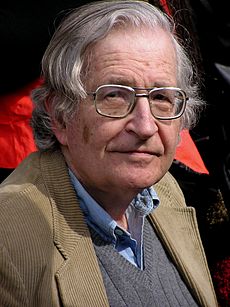
This video is a 90 – minute talk (with Q&A) by Noam Chomsky on the theme of academic freedom and the corporatization of universities.
The lecture takes place in April of this year and focuses on the increasing influence that private capital has on curriculum in universities, the privatization of education and the daunting reality for university students and the mounting debt that most of them are incurring.
Chomsky begins the lecture by talking about the efforts of the capitalist class to respond to the challenges to capitalism in the 1960s and the ongoing propaganda campaign to defend the so-called “free market.”
This article is re-posted from the Union of Concerned Scientists.
Monsanto’s advertisements tell an impressive tale of the agribusiness giant’s achievements: Feeding a growing population. Protecting natural resources. Promoting biodiversity.
It sounds wonderful, but unfortunately, there’s a catch: These claims are often exaggerated, misleading or downright false. Monsanto’s products—and the practices they promote—may sustain the company’s profits, but the evidence shows that they stand in the way of truly sustainable solutions to our food and farming challenges.
In the ads below, we counter Monsanto’s feel-good rhetoric with some facts gleaned from UCS analysis. Share them with friends, and spread the word: when it comes to healthy farming, Monsanto fails!
#1: More Herbicide + Fewer Butterflies = Better Seeds?
Monsanto Says: “In the hands of farmers, better seeds can help meet the needs of our rapidly growing population, while protecting the earth’s natural resources.”
In Fact: Monsanto’s Roundup Ready crops, genetically engineered to tolerate the company’s Roundup herbicide, increased herbicide use by an estimated 383 million pounds between 1996 and 2008. And Monarch butterflies have laid 81 percent fewer eggs thanks to habitat loss since Roundup Ready was introduced.
 #2: A Bumper Crop of Superweeds
Monsanto Says: “Our rapidly growing population is putting limited resources–such as land, water, and energy–under increased pressure.”
In Fact: The challenge is real, but Monsanto’s products aren’t the answer. UCS analysis shows that GE crops have so far done little to improve yields in the U.S. Meanwhile—speaking of rapidly growing populations—overuse of Roundup Ready crops has spawned an epidemic of “superweeds,” causing huge problems for U.S. farmers.
#3: All Wet on Drought Tolerance
Monsanto Says: “With the right tools, farmers can conserve more for future generations.”
In Fact: If farmers want to conserve more water, Monsanto’s DroughtGard corn isn’t the right tool. A recent UCS study found that DroughtGard won’t help farmers reduce water use—and its engineered drought tolerance will likely only be useful in moderate drought conditions. (Research has shown that organic farming methods could improve drought-year yields by up to 96%.)
Stinking Hot Plutocratic Mess
This is part of an article by Paul Street re-posted from ZNet.
In a story that hardly captures attention, the planet is on fire. Speaking of hot plutocratic messes, the raging Colorado wildfires are just the latest in a growing list of signs that the threat posed to humans and other living things by global warming is reaching a new stage of lethality (The dominant corporate media has been reluctant to connect the wildfires to the anthropogenic climate change, of course).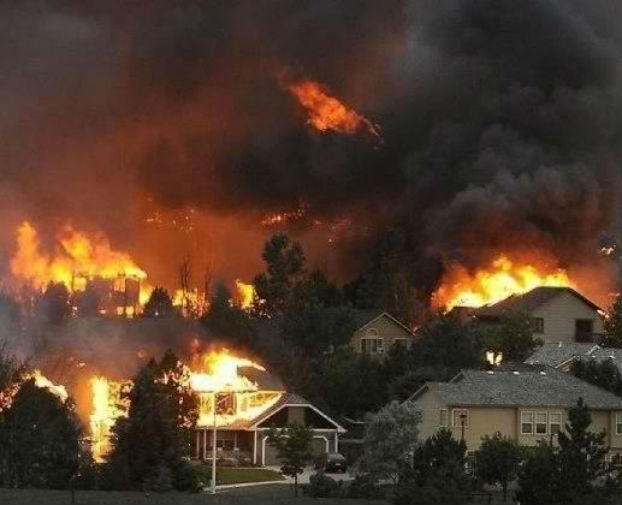
According to new research released last month by the science journal Nature, humanity is now facing an imminent threat of extinction with human-generated climate change in the vanguard of the menace. The report reveals that our planet’s biosphere is steadily and ever more rapidly approaching a “tipping point.” Earth’s ecosystems are nearing a sudden and irreversible change that will not be conducive to decent human life. The authors describe a rapid “state shift” once the tipping point is reached – a sharp difference with the mainstream view that environmental decline will take centuries. “It’s a question of whether it is going to be manageable change or abrupt change. And we have reason to believe the change may be abrupt and surprising,” said co-researcher Arne Mooers, a professor of biodiversity at Simon Fraser University in Canada’s British Columbia.
“The data suggests that there will be a reduction in biodiversity and severe impacts on much of what we depend on to sustain our quality of life, including, for example, fisheries, agriculture, forest products and clean water. This could happen within just a few generations,” stated lead author Anthony Barnosky, a professor of integrative biology at the University of California in Berkeley. “My colleagues who study climate-induced changes through the Earth’s history are more than pretty worried,” he said in a press release. “In fact, some are terrified.”
The report, written by 22 scientists from three continents ahead of this year’s laughably tepid and inconsequential United Nations Rio+20 climate summit,[11] claims that the “state shift” is likely. They think that humans “may have a small window over the next few decades to redesign their relationships to each other and to nature through international cooperation to avoid extinction.” [12]
“The Great Melt…A Commons-Despoiling Tragedy”
A recent special 14-page cover story in the proudly neoliberal-capitalist Anglo-American weekly magazine The Economist is dedicated to an interesting topic: “The Vanishing North: What the Melting Arctic Means.” The Arctic is warming twice as fast as the rest of the planet, and at a much quicker rate than the direst predictions expected, Economist researchers found, adding that “The shrinkage of the sea ice is no less a result of human hands than the ploughing of the prairies. It might even turn out as lucrative. But the costs will also be huge. Unique ecosystems, and perhaps many species, will be lost in a tide of environmental change. The cause is global pollution, and the risks it carries are likewise global. The Arctic, no longer distant or inviolable, has emerged, almost overnight, as a powerful symbol of the age of man.”
Candid acknowledgement of harsh realities is permitted in media venues targeting ideologically safe system coordinators. They should have added: “a powerful symbol of humanity’s self-destruction and murder of other species.”
Torn between thrill over the short-term profit opportunities offered by the retreat of Arctic ice and long-run horror at deepening environmental catastrophe, The Economist notes the reluctance of the world’s multinational petroleum corporations to acknowledge the viciously circular, mutually reinforcing relationship between the vanishing of the North and the extraction of previously un-reachable Arctic oil and gas resources:
“In the long run the unfrozen north could cause devastation. But, paradoxically, in the meantime no Arctic species will profit from it as much as the one causing it: humans…. the great melt is going to make a lot of people rich…The Arctic…has oil and gas, probably lots…Oil companies do not like to talk about it, but this points to another positive feedback from the melt. Climate change caused by burning fossil fuels will allow more Arctic hydrocarbons to be extracted and burned.”[13]
The more oil and gas they extract, the more they melt the North. The more they melt the north, the more oil and gas they extract. “Positive feedback” is an interesting term for a process that The Economist calls at the end its report “a textbook illustration of the commons-despoiling tragedy that climate change is.” Serious thinkers and activists might wish to dig a littler deeper on the subjects of which “humans” are going to profit most from “the great melt” in the short-term and whether it is really “a paradox” that a profits system might extract profit (for some “humans” – if that’s how he want to describe the sociopaths who extract personal gain from the ruination of livable ecology) from a process that is certain (there is no reason, really, to use the magazine’s qualifier “could”) to “cause devastation” over “the long run.”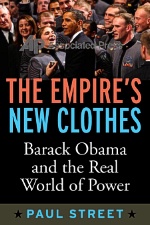
“In a Rational World”
Health care policy is a hot U.S. news item this steamy election summer. The declining environment is not. This is unsettling. With vast parts of the American West in climate-induced flames, with a remarkable climate-driven derecho (straight line wind storm) having just swept from the Midwest to the east coast (devastating the Washington D.C. area, killing more than 20 people, and wiping out electricity for millions), with the melting of the Arctic and yet more record-setting temperatures being registered across the country and in the nation’s capital, Eco-cide really ought to be a bigger story than last week’s Supreme Court’s Obamacare decision, which, Dr. Angell notes, “will have little long-term impact on our health care.”[14] It is only what the radical philosopher John Sanbonmatsu calls the as “the #1 issue of our or any time.”
“In a rational world,” Krugman opined (to his credit) in September of 2009, “the looming climate disaster would be our dominant political and policy concern (emphasis added).”[15] But now as then, global warming registers low on the list of the issues that most worry Americans amidst an ongoing economic crisis that makes the need for more jobs (widely perceived as opposed to environmental regulation in a political climate shaped by petro-corporate propaganda) paramount in the minds of many. American politicians feel little popular pressure to buck the awesome power and influence of leading oil, gas, and utility corporations who spend tens of millions of dollars annually to promote junk science to deny climate change and to smear serious climate scientists as enemies of American prosperity and freedom.
“Physics and Chemistry Don’t Compromise”
A different and related difference between the health care and the climate issues underscores the absurdity of the latter’s secondary status in the ranking of public concerns. It is one thing to speak Barack Obama’s language of incremental change and of not making “the perfect the enemy of the good” when it comes to economic or health care policy. With these and other “normal” policy issues, Bill McKibben noted two years ago, it is partly acceptable “to split the difference between different positions, make incremental change, and come back in a few years to do some more. It doesn’t get impossibly harder in the meantime – people will suffer for lack of health care, but their suffering won’t make future change impossible.”
Global warming is different. It “is,” McKibben observed, “a negotiation between human beings on the one hand and physics and chemistry on their other. Which is a tough negotiation, because physics and chemistry don’t compromise. They’ve already laid out their nonnegotiable bottom line: above 350 [carbon] parts per million [ppm in the atmosphere] the planet doesn’t work.” [16]
If we are serious about averting environmental catastrophe in the next generation we cannot take a letter grades approach. We are in pass-fail territory[17] – and failing badly – in that policy realm. And if we continue on our current eco-cidal path, Noam Chomsky noted last year (in a widely read speech to Occupy Boston), then “in a generation or two, everything else we’re talking about won’t matter.”[18
The Great Destroyer
Different as they may be in these and other ways, the health care crisis and the ecological crisis share two key similarities. First, on climate change and the broader environmental crisis as with health care, Obama has egregiously betrayed his “progressive base” in accord with his standard accommodation of reigning corporate and financial elites. Among other forms of unfaithfulness to those who value livable ecology, he has repeatedly signed off on the escalation of offshore drilling, most recently on the exploitation of the previously protected Alaskan Arctic.[19] (Those interested in a fuller record of Obama’s environmental perfidy can see two recent ZNet essays of mine: “Less Than Zero: the 1 Percent and the Fate off the Earth” and “Cranking Up the Heat: On the Chances for a Decent Future.”
Second, the health care and ecological crises find a common taproot in the same basic underlying profits system that Obama likes to praise as the source of “a prosperity that’s unmatched in human history.”[20] Much the same can be said for other great underlying developments that poison the current American moment.
- The rise of a deeply racist mass incarceration and criminal branding and surveillance complex that puts at least 3 million Americans behind bars each day and saddles more than 1 in 3 black adult males with the crippling lifelong mark of a felony record.
- The permanent, structural nature of unemployment for millions of Americans – a livable wage employment vacuum so deep that the current economic crisis can seem worse than the Great Depression of the 1930s because this time we sense – all too correctly – that most of the jobs that have been shredded are never coming back.
- A concentration of wealth and power so great that the top 1 percent now owns more than 40 percent of the nation’s net worth, more than 57 percent of the nation’s financial wealth, and a probably larger share of the nation’s elected officials – this in a country where the bottom 40 percent owns just 0.3 percent of the wealth, essentially nothing.
- A concentration of wealth so great that six inheritors of the Wal Mart fortune, six Walton heirs, together possess as much wealth as the bottom 30 percent of the country.
- A de-unionization of the American working class so steep that the percentage of workers enrolled in unions has fallen from more than 40 in the early 1960s to less than 10 percent today.
- The investment of well more than a trillion taxpayer dollars each year on a globally and historically unmatched military empire than kills and maims with impunity, swallows (and protects U.S. access to) deadly petroleum reserves on an almost unimaginable scale, and maintains more than 1000 military installations across more than 100 supposedly sovereign nations.
- The eclipse of democracy in a neoliberal state where business power has not merely the dominant political shadow cast across society (as John Dewey put it nearly a century ago) but a dark cloud that envelopes society and pushes both of the reigning political organizations (hardly even real parties anymore) so far to the right of the populace that it becomes hard to see the U.S. as anything but a corporate plutocracy.
With its inherent privileging of private profit and exchange value over the common good and social use value, with its intrinsic insistence on private management, with its inbuilt privileging of the short-term bottom line over the long-term fate of humans and other living things, with its deep sunk cost investment in old and cancerous ways of life and death, with its reliance on endless growth (real and illusory) to keep equality at bay,[21] and with its attachment to the division of the world into competing nations and empires that are incapable of common action for the global good,[22]capitalism is the great destroyer of social, political, and literal biological health at home and abroad. It is socially and institutionally hard-wired kill off the chances for a decent, desirable, and democratic future.
As the environmental tipping point/“state shift” looms ever closer, it is clear that centrist incremental-ism won’t do the job. It’s either the revolutionary reconstitution of society or what two officially unmentionable anti-capitalists called in 1848 the only alternative: “the common ruin of the contending classes.”[23] To prioritize ecology and green issues is not to demote or delay radical democratic transformation and socialism. It means the elevation and escalation of the left historical project,[24] for saving ourselves from environmental ruin poses what Dr. Martin Luther King Jr. referred to in 1968 as “the real question to be faced…the radical reconstruction of society itself.” And it poses that question with a strong emphasis on what Dr, King used to call “the fierce urgency of now.”
This latest blistering 4th of July, We the People would do well to get to work drafting and acting on a new Declaration of Independence – one that expresses our deep enmity to the nation’s unelected and interrelated dictatorships of capital, empire, and eco-cide. This is our pass-fail moment. We’ve got a generation at most to clean up this hot stinking plutocratic mess and to create a world turned upside down and worth inheriting from a capitalist elite that has nothing left to offer humanity but en ever-deepening descent into death and destruction.
Forty-one years ago today, members of the American Indian Movement (AIM), occupied Mt. Rushmore as a protest against land theft and the desecration of a spiritual site.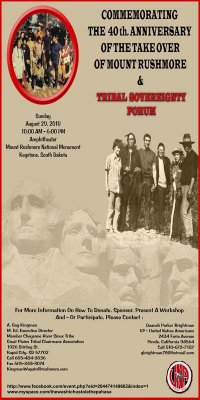
For many Native American nations (Sioux, Cheyenne, Arapaho, and Kiowa), the Black Hills in South Dakota have spiritual significance. Native communities and individuals would have ceremonies in this area and vision quests.
However, as part of the last territorial wars against Native nations, the US government began taking parts of the Black Hills area for mineral extraction. In 1884, New York City attorney Charles E. Rushmore came to the Black Hills to check on legal titles to some properties. On coming back to camp one day, he asked Bill Challis about the name of a mountain. Bill is reported to have replied, “Never had a name, but from now on we’ll call it Mt. Rushmore.”
The Sioux always referred to that mountain area as the Six Grandfathers, but like much of the history of conquest, the victors get to name spaces however they want.
Generating wealth from the Black Hills by extracting minerals was not enough for some and by the early 1920’s, some people were looking to use the Mt. Rushmore area as a tourist attraction. The idea to carve the faces of important figures in US history was initiated by Doane Robinson, who suggested Gen. Custer, Lewis & Clark and Sioux Chief Red Cloud. Robinson sought the consultation of sculptor Gutzon Borglum. Borglum was commissioned to create the monument of heroes of the Confederacy at Stone Mountain in Georgia and was known to be a member of the Ku Klux Klan.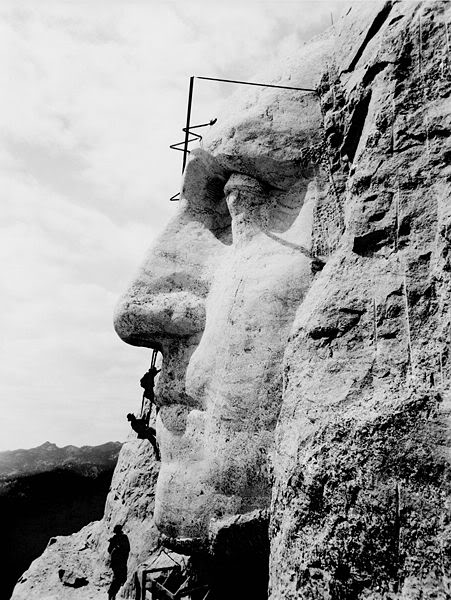
Borglum also had other ideas about whose faces should be forever immortalized at Mt. Rushmore. He said, “The purpose of the memorial is to communicate the founding, expansion, preservation, and unification of the United States with colossal statues of Washington, Jefferson, Lincoln, and Theodore Roosevelt.”
The sculpture had been completed in 1936 and at the dedication President FDR made no mention of Native Americans and the tourist site itself had no reference to Native people at the time.
On July 4, 1971, members of the American Indian Movement occupied Mt. Rushmore. They actually had camped out the night before and were part of a cleansing ceremony performed by Sioux spiritual leader, Frank Fools Crow.
AIM members declared that Mt. Rushmore was again to be Native land and the group renamed the area as Mt. Crazy Horse. From the viewpoint of AIM and many Native Americans, Mount Rushmore should be considered as the Shrine of Hypocrisy rather than as the Shrine of Democracy. Mount Rushmore symbolized to them the treaties broken by the United States. The four US Presidents enshrined on the mountain all participated in theft of Native land and genocidal policies towards Native people.
We honor this action by AIM and call upon people in the US to celebrate such acts of resistance.
This article is re-posted from Fairness & Accuracy in Reporting.
FAIR has noted the tendency of corporate media to play down the connection of extreme weather to climate change. (See Neil deMause’s piece in Extra!, 8/11.) This summer, as the country is beset by another devastating wave of drought and fires, the approach seems to be to acknowledge climate change–in the 10th paragraph–but end up by concluding that it’s impossible to say whether there’s any connection between climate change and any particular weather phenomenon. As in this L.A. Times piece (7/2/12):
Since 2000, it has not been uncommon for wildfire seasons to end with a tally of 7 million to 9 million blackened acres nationally. Though total burned acreage dropped during a few years of milder weather, it spiraled again last year when flames galloped across parched Texas.
Researchers predict that rising temperatures associated with climate change will lead to more wildfires in much of the West. But it is hard to tease out the effects of global warming from natural climate cycles, which in past centuries have seized the region with long, severe droughts.
“We’ve had conditions like this in the past,” [Forest Service research ecologist Bob] Keane said. “So you can’t say with any degree of certainty…that this is climate change. But what you can say is that it certainly meets the model of climate change.”
On a conceptual level, this is just wrong: It’s not as though there are some weather events that are caused by climate change and some that just happened, and there’s some way to tell one from the other. Once you’ve altered the atmosphere, every single weather phenomenon–every storm, every dry spell, every unremarkably pleasant day–is a result of that altered atmosphere. If we had not changed the concentration of atmospheric carbon dioxide from 280 parts per million to almost 400 parts per million, in other words, we would have entirely different weather every day.
That’s not to say that we didn’t have storms and droughts and pleasant days before we changed the climate. But scientists can tell you whether we’d be more or less likely to have any given type of weather with an unaltered climate. And with droughts and forest fires, the answer is clear: We’d be having less of them. This is something reporters should be pointing out in every story on the extreme weather of the summer of 2012.
An interesting interview with Ed Herman, co-author, with Noam Chomsky, of the important book, Manufacturing Consent.
The interview, conducted by The Real News Network, includes discussion with Herman on his early radicalization, when he first met Noam Chomsky, their early collaboration on a 2-volume book (The Political Economy of Human Rights), writing Manufacturing Consent with Chomsky, his more recent work on “international humanitarianism” and his assessment of the left and the Occupy Movement in the US.
This is Part I of a two part interview.
NAFTA on Steroids
This article by Lori Wallach is re-posted from The Nation. Editor’s Note: NAFTA has been devastating to workers in the US and Mexico. Thousands of manufacturing jobs left the US because of NAFTA and according to Public Citizen, 43,600 manufacturing jobs left Michigan because of NAFTA, between 1994 and 2011.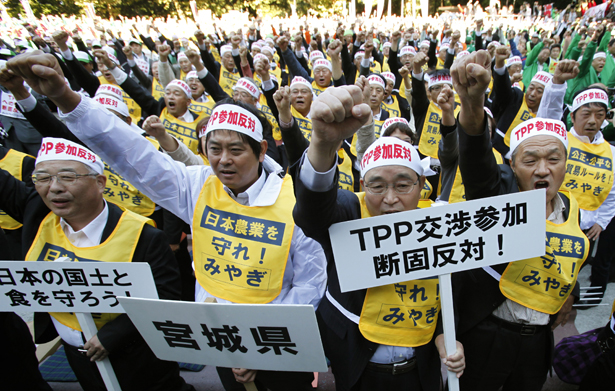
While the Occupy movement has forced a public discussion of extreme corporate influence on every aspect of our lives, behind closed doors corporate America is implementing a stealth strategy to formalize its rule in a truly horrifying manner. The mechanism is the Trans-Pacific Partnership. Negotiations have been conducted in extreme secrecy, so you are in good company if you have never heard of it. But the thirteenth round of negotiations between the United States and eight Pacific Rim nations will be held in San Diego in early July.
The TPP has been cleverly misbranded as a trade agreement (yawn) by its corporate boosters. As a result, since George W. Bush initiated negotiations in 2008, it has cruised along under the radar. The Obama administration initially paused the talks, ostensibly to develop a new approach compatible with candidate Obama’s pledges to replace the old NAFTA-based trade model. But by late 2009, talks restarted just where Bush had left off.
Since then, US negotiators have proposed new rights for Big Pharma and pushed into the text aspects of the Stop Online Piracy Act, which would limit Internet freedom, despite the derailing of SOPA in Congress earlier this year thanks to public activism. In June a text of the TPP investment chapter was leaked, revealing that US negotiators are even pushing to expand NAFTA’s notorious corporate tribunals, which have been used to attack domestic public interest laws.
Think of the TPP as a stealthy delivery mechanism for policies that could not survive public scrutiny. Indeed, only two of the twenty-six chapters of this corporate Trojan horse cover traditional trade matters. The rest embody the most florid dreams of the 1 percent—grandiose new rights and privileges for corporations and permanent constraints on government regulation. They include new investor safeguards to ease job offshoring and assert control over natural resources, and severely limit the regulation of financial services, land use, food safety, natural resources, energy, tobacco, healthcare and more.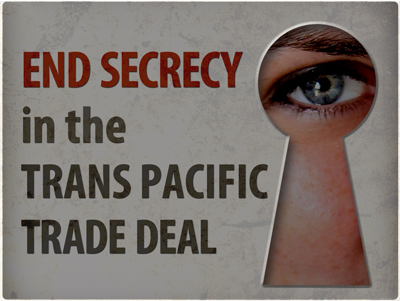
The stakes are extremely high, because the TPP may well be the last “trade” agreement Washington negotiates. This is because if it’s completed, the TPP would remain open for any other country to join. In May US Trade Representative Ron Kirk said he “would love nothing more” than to have China join. In June Mexico and Canada entered the process, creating a NAFTA on steroids, with most of Asia to boot.
Countries would be obliged to conform all their domestic laws and regulations to the TPP’s rules—in effect, a corporate coup d’état. The proposed pact would limit even how governments can spend their tax dollars. Buy America and other Buy Local procurement preferences that invest in the US economy would be banned, and “sweat-free,” human rights or environmental conditions on government contracts could be challenged. If the TPP comes to fruition, its retrograde rules could be altered only if all countries agreed, regardless of domestic election outcomes or changes in public opinion. And unlike much domestic legislation, the TPP would have no expiration date.
Failure to conform domestic laws to the rules would subject countries to lawsuits before TPP tribunals empowered to authorize trade sanctions against member countries. The leaked investment chapter also shows that the TPP would expand the parallel legal system included in NAFTA. Called Investor-State Dispute Resolution, it empowers corporations to sue governments—outside their domestic court systems—over any action the corporations believe undermines their expected future profits or rights under the pact. Three-person international tribunals of attorneys from the private sector would hear these cases. The lawyers rotate between serving as “judges”—empowered to order governments to pay corporations unlimited amounts in fines—and representing the corporations that use this system to raid government treasuries. The NAFTA version of this scheme has forced governments to pay more than $350 million to corporations after suits against toxic bans, land-use policies, forestry rules and more.
The slight mainstream media coverage the TPP has received repeats the usual mantra: it’s a free-trade pact that will expand US exports. But trade is the least of it. The United States already has free-trade agreements that eliminated tariffs with most TPP countries, which highlights the fact that the TPP is mainly about new corporate rights, not trade. Besides, under past free-trade agreements, US export growth to partner countries is half as much as to countries with which we do not have such agreements. Since NAFTA and similar pacts went into effect, the United States has been slammed by a massive trade deficit, which has cost more than 5 million jobs and led to the loss of more than 50,000 manufacturing plants.
How could something this extreme have gotten so far? The process has been shockingly secretive. In 2010 TPP countries agreed not to release negotiating texts until four years after a deal was done or abandoned. Even the World Trade Organization, hardly a paragon of transparency, releases draft negotiating texts. This means that although the TPP could rewrite vast swaths of domestic policy affecting every aspect of our lives, the public, press and Congress are locked out. Astoundingly, Senator Ron Wyden, chair of the Senate committee with official jurisdiction over TPP, has been denied access even to US proposals to the negotiations. But 600 corporate representatives serving as official US trade advisers have full access to TPP texts and a special role in negotiations. When challenged about the conflict with the Obama administration’s touted commitment to transparency, Trade Representative Kirk noted that after the release of the Free Trade Area of the Americas (FTAA) text in 2001, that deal could not be completed. In other words, the official in charge of the TPP says the only way to complete the deal is to keep it secret from the people who would have to live with the results.
The goal was to complete the TPP this year. Thankfully, opposition by some countries to the most extreme corporate demands has slowed negotiations. Australia has announced it will not submit to the parallel corporate court system, and it and New Zealand have rejected a US proposal to allow pharmaceutical companies to challenge their government medicine formularies’ pricing decisions, which have managed to keep their drug costs much lower than in the United States. Every country has rejected the US proposal to extend drug patent monopolies. This text was leaked, allowing government health officials and activists in all the countries to fight back. Many countries have also rejected a US proposal that would forbid countries from using capital controls, taxes or other macro-prudential measures to limit the destructive power of financial speculators.
However, we face a race against time—much of the TPP text has been agreed on. Will the banksters, Big Pharma, Big Oil, agribusiness, tobacco multinationals and the other usual suspects get away with this massive assault on democracy? Will the public wake up to this threat and fight back, demanding either a fair deal or no deal? The Doha Round of WTO expansion, the FTAA and other corporate attacks via “trade” agreements were successfully derailed when citizens around the world took action to hold their governments accountable. Certainly in an election year, we are well poised to turn around the TPP as well. To learn more and get involved, go to tpp2012.com.
Earlier today, MLive columnist Matthew Davis posted a story headlined, White guilt, rather than racial justice, is on display in misdirected video.
The article is a reaction to a video created by the group, the Un-Fair Campaign. Davis states, “The video and its accompanying graphics are part of an effort to stamp out racism, apparently by confession that borders on self-flagellation. One of the graphics on the website has the picture of a blue-eyed, blonde woman upon whose skin is scribbled: “Is white skin really fair skin?”
Self-flagellation? Apparently, Davis doesn’t have the slightest idea about what White Privilege is. The people in this video are all making statements to point out the fact that White Privilege needs to be acknowledged if institutional racism is to be dismantled. In the article, White Privilege: Unpacking the Invisible Knapsack, author Peggy McIntosh states:
White privilege is the unquestioned and unearned set of advantages, entitlements benefits and choices bestowed on people solely because they are white. Generally white people who experience such privilege do so without being conscious of it.
The MLive columnist goes as far as to state that he is not even sure that White Privilege even exists. He then writes, “I have no idea how the video or the overall message is supposed to result in fundamental, systemic change towards racial justice.” If one does not acknowledge that White Privilege exists, it is hard to know how we could achieve systemic change. Dismantling racism necessitates that White people acknowledge that they have privilege.
Davis then affirms his position by noting that there are more dislikes than likes of the video on Youtube. Since when does justice, particularly racial justice, need to be validated by the majority? If that were the measuring stick, African Americans never would have won any civil rights in this country.
The MLive columnist then provides “his own message” that such a video should communicate, by citing Dr. Martin Luther King Jr. about people being judged by the content of their character and not the color of their skin. This quote is always used by racists who are either unaware of their own privilege or are in denial of it. Glenn Beck and company are always using this line from King, which is taken out of context. King yearned for the day when people could be judged purely on the content of their character, but he rightly points out in that speech (I have A Dream Speech) that racial injustice is too pervasive in this country.
Matthew Davis ends his column by including another video that was a response to the Un-fair Campaign. However, Davis fails to mention that the video was created by Right Wing talk show hosts in Minnesota that host a show entitled Late Debate with Jack Tomczak and Benjamin Kruse. The Late Debate show airs on AM 1130 in Minnesota, a station which also features Beck, Limbaugh, Hannity and other voices that have a history of engaging in racist commentary, as is well documented in Rory O’Connors book Shock Jocks: Hate Speech & Talk Radio.
By posting this column, MLive itself is dismissing or downplaying the role of White Privilege. Their decision to post a column by Matthew Davis is a blow to racial justice and an insult to the work of people who have truly been about dismantling institutional racism. However, as we have noted before, this should not come as a surprise, especially when the MLive editor Paul Keep himself has failed to understand White Privilege and its role in perpetuating racism.
Here is the video that Davis dismisses and a link to the Un-Fair Campaign.
This article by Bruce Dixon is re-posted by Black Agenda Report.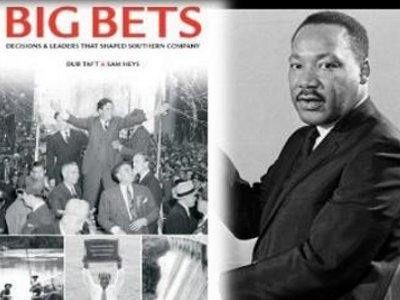
There was a time when the master class of the American South would gather under the shade of carefully pruned magnolia trees to gamble, sip mint juleps, tell tales and celebrate themselves in the midst of stolen wealth trampled from the hides of mother nature, Native Americans and African-descended slaves. In the 21st century South, where as Faulkner said, the past ain’t even past, not much has changed.
Southern Companies is a greedy rapacious corporation that owns power generation and delivery networks throughout the southeast. They own coal, gas and nuclear plants. They endow college and university chairs and scholarships, community organizations and local churches. In whole or in part, they own hundreds of judges and politicians across the region including many black ones, right up to a piece of the White House itself. Their influence is a big reason why Obama called himself the president of “clean coal and safe nuclear power.” One of Barack Obama’s first acts as president was to grant $800 million in free loan guarantees to build the nation’s first new nuclear power plant in 30 years right next to an existing pair of leaky nukes believed responsible for a cancer epidemic in mostly black Burke County GA, one of the poorest places in the South. Southern Companies-owned politicians have also allowed it to charge millions of ratepayers $15 and $20 monthly to cover advance construction costs of the new nukes so it need not invest any of its vast cash reserves.
To insulate themselves against charges of environmental racism for poisoning poor blacks in Burke County, Southern Companies doesn’t just make wild claims about how many Homer Simpson jobs new its nuclear plants will produce. Southern Companies purchased its very own civil rights organization, the Atlanta-based Southern Christian Leadership Council, originally founded by Dr. Martin Luther King himself. A Southern Companies CEO headed up SCLC’s building fund and raised over $3 million to pay for its new office buildings on Atlanta’s Auburn Avenue.
So it is that on July 16, 2012, despite its robbery of mostly poor ratepayers, its massive theft of formerly black land, its fouling of air, earth, water across the South, and its ongoing radioactive poisoning of poor black residents in Burke County, the masters of Sou thern Companies feel comfortable enough in downtown Atlanta to celebrate their history of plunder. On July 16, Southern Companies will rent Atlanta’s famous downtown Fox Theater for an invitation-only showing of Big Bets, a twisted movie based on a twisted book of the same name portraying the company’s bribing, double-dealing, land-stealing founders as titans of civic virtue.
Black America used to be where the left lived. But that was before our civil rights organizations enslaved themselves to corporate funding. Ole massa’s July 16 party in downtown Atlanta will be a kind of test. Our black political class and civil rights organizations have been purchased by our foes. Are we ready to man up, to woman up? Are we ready to put our people before our personal career prospects? Are we ready to throw up new organizations, new formations, new voices that speak for us and our communities, rather than for our current and prospective funders? Only time will tell.
Some news agencies are outsourcing local news
This media alert is re-posted from FreePress.net.
Millions of American workers have been put out of work as employers move operations overseas. It’s true in manufacturing, data processing and customer service.
Now it’s true for local news. That’s right, media giants including Sam Zell’s Tribune Company have begun to send local reporting jobs overseas. To the Philippines.
According to a major story by This American Life, dozens of papers around the country have outsourced local news production to Journatic, a company that hires underpaid workers in the Phillippines to create local news for communities in the United States.1
Tell Tribune Chairman Sam Zell: Local News = Local Journalists
Journatic’s employees attach fake bylines to their stories to obscure its outsourcing scheme. Zell’s Tribune Company has bought into this deception, hoping people won’t notice the journalistic sleight of hand. A whistleblower at Journatic who figured it out had this to say:
“It’s sort of a tattered product that’s being written overseas, halfheartedly edited, and just kind of slopped on the page.”
Most readers of the Tribune Company’s many print and broadcast news outlets would be outraged to know that local reporting was produced in news sweatshops abroad, where writers make 35 – 40 cents per story.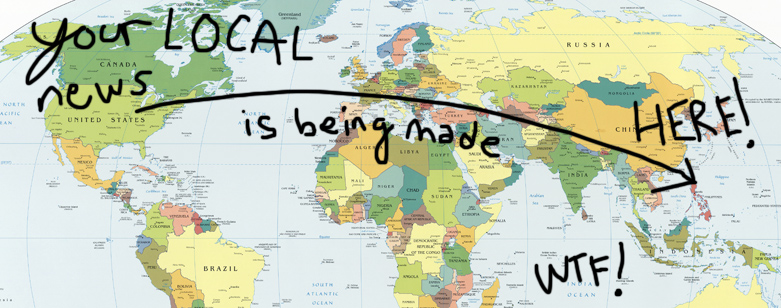
Local news organizations must be accountable to the communities in which they operate. That means hiring reporters who work among us and walk the same streets, who have direct ties to the people and issues that affect our lives.
That’s not what Zell thinks. He’s using Journatic’s assembly line; writers in the Philippines, editors in far-flung corners of the US, and even paragraphs that are auto-generated by computers, to repackage local press releases and public information as real reporting. It’s not.
Demand Local News from Local Reporters. Tell Sam Zell to Stop the News Deception
Zell, who has a notorious disregard for journalism,2 hopes that you won’t notice — that he can save money by fooling Americans and faking local news. His Tribune Company stretches from New York to Los Angeles, from Chicago to New Orleans, and includes dozens of daily newspapers and local TV stations.
Since he took the helm at the Tribune Company, Zell has slashed more than 200 newsroom jobs. Now, with this Journatic deal, it’s clear that Zell’s assault on journalism isn’t over.
Sign our letter to Zell so that the Tribune Company chairman and media executives across the country know that you can’t fake local news. With your help we can return local reporters to local beats.
 Grand Rapids Institute for Information Democracy