15 Issues This Election is Not About
This article by Bill Quigley is re-posted from CounterPunch.
Neither candidate is interested in stopping the use of the death penalty for federal or state crimes.
Neither candidate is interested in eliminating or reducing the 5,113 US nuclear warheads.
Neither candidate is campaigning to close Guantanamo prison.
Neither candidate has called for arresting and prosecuting high ranking people on Wall Street for the subprime mortgage catastrophe.
Neither candidate is interested in holding anyone in the Bush administration accountable for the torture committed by US personnel against prisoners in Guantanamo or in Iraq or Afghanistan.
Neither candidate is interested in stopping the use of drones to assassinate people in Afghanistan, Pakistan, Yemen or Somalia.
Neither candidate is against warrantless surveillance, indefinite detention, or racial profiling in fighting “terrorism.”
Neither candidate is interested in fighting for a living wage. In fact neither are really committed beyond lip service to raising the minimum wage of $7.25 an hour – which, if it kept pace with inflation since the 1960s should be about $10 an hour.
Neither candidate was interested in arresting Osama bin Laden and having him tried in court.
Neither candidate will declare they refuse to bomb Iran.
Neither candidate is refusing to take huge campaign contributions from people and organizations.
Neither candidate proposes any significant specific steps to reverse global warming.
Neither candidate is talking about the over 2 million people in jails and prisons in the US.
Neither candidate proposes to create public jobs so everyone who wants to work can.
Neither candidate opposes the nuclear power industry. In fact both support expansion.
Skill-share, “Canning Applesauce & Brewing Herbal Teas for the Cold Season” this Saturday
 Our Kitchen Table hosts the last in its 2012 series, Preserving the Harvest, with a skill share on Canning Applesauce & Brewing Herbal Teas for the Cold Season. Co-sponsored byThe Bloom Collective, the event takes place upstairs from The Bloom space in the kitchen of Steepletown Center, 671 Davis NW (corner of 5th) this Saturday, Sept. 29 from 2 – 4 p.m.
Facilitated by Jeff Smith, from The Bloom Collective, and Stelle, from The Bloom and OKT, the skill-share is free and open to everyone. OKT will provide fruit and jars.
OKT initiated the Preserving the Harvest series not as a way to jump on board the current “canning bandwagon,” but as part of its efforts to build an alternative food system within Grand Rapids’ neighborhoods. Canning your own food is easy and cheaper – you end up with a superior product when it comes to nutrition and flavor.
In addition, canning your own locally grown food takes you a step away from the industrial food system, a food system that is environmentally unsustainable, nutritionally bankrupt and profits by underpaying farmers and farm workers.
Are you one of the millions of Americans without health insurance? Brewing your own cold season remedies can provide you a gentle, inexpensive alternative to often dangerous prescription and over the counter remedies. We will look at simple teas that help relieve symptoms of sinus congestion, sore throat, cough and tummy troubles. If you have your own remedies, please bring them along to share.
GVSU to host 2012 Great Lakes History Conference October 12 – 13
The Women’s and Gender Historians of the Midwest (WGHOM) and Grand Valley State University’s History Department will host the Great Lakes History Conference, which began in 1975.
The focus for much of the conference this year is on women and women’s struggles. The description of the conference theme and information on both Friday and Saturday night’s keynote speakers is as follows:
“Born in Revolution”: History, Gender and the Power of Conflict
Where else can you see previews of a new documentary about the 97-year old Detroit-based activist/philosopher Grace Lee Boggs by its award-winning filmmaker and a keynote on the history of healthcare reform in the US by its leading historian all in one weekend? Join us for this year’s Great Lakes History Conference, October 12th and 13th, Eberhard Center, Pew Campus, Grand Valley State University.
Friday, October 12th, 7:30 p.m.. Eberhard Center, 2nd Floor, Pew Campus. This event is free and open to the public.
Director Grace Lee will present highlights from “American Revolutionary: The Evolution of Grace Lee Boggs.” The biographical work-in-process film explores the life and work of centenarian Grace Lee Boggs, Detroit activist and feminist.
Saturday, October 13th, 12:30-1:45, Eberhard Center, 2nd Floor, Pew Campus
Dr. Beatrix Hoffman (Northern Illinois University) will speak about her forthcoming book, Health Care for Some, that investigates the history of health care in the United States in a talk entitled “Health Care for All! Women, Activism, and the Human Right to Health“.
If you would like to attend this keynote and/or panels, please contact Gretchen Galbraith at galbraig@gvsu.edu so that we may put you on our special guest list. For details on all the panel discussions go to this link.
2012 Great Lakes History Conference
October 12 – 13
GVSU – downtown campus – Eberhard Center
For details http://www.gvsu.edu/history/module-spotlight-view.htm?entryId=9BD8F75D-D47C-9B41-9673D3766E56E44B
Photo bomb challenges the politics of ArtPrize , with online campaign
Last year we posted a two-part piece on the political economy of ArtPrize. In part II, we identified ArtPrize sponsors, based on the 990 records they submitted to the federal government, which lists the ArtPrize budget, expenses and sponsors and how much they gave.
The article from last year talked about some of the sponsors and the hateful campaigns they have funded, particularly anti-LGBT campaigns.
Some of this funding has gone to support efforts to defeat marriage equality and domestic partner benefits or to religious groups, which preach that, “homosexuality is a sin.” Despite this kind of homophobic policy funding, I have seen nothing in writing or heard anyone discussing these issues while ArtPrize has been going on. Look at it this way, what if neo-Nazi groups or the KKK were sponsors of ArtPrize? Do you think there would be some discussion of this, maybe even rage? Do you think that the African American community and its allies would be avoiding or even calling for a boycott of ArtPrize? Sure seems likely. So why is it that when institutions that make it a priority to deny people who identify as LGBTQ their basic rights, why are people not outraged? Just because the foundations that fund anti-gay policies don’t wear white hoods, doesn’t mean they don’t do harm to vulnerable population.
Starting today, a group of local activists are now trying to shed light on the anti-LGBT funding from some of the ArtPrize sponsors. Using public information, the activists have found a few examples of anti-LGBT funding and are posting photos and information at a Facebook page called ArtLies.
For example, the Edgar & Elsa Prince Foundation gave $75,000 to the 2004 Anti-Gay Marriage Amendment in Michigan. Edgar and Elsa Prince are the parents of Erik Prince and Betsy DeVos. The Edgar & Elsa Prince Foundation gave $450,000 to California’s Prop 8 to ban Gay Marriage, in 2008.
The Richard and Helen DeVos Foundation donated $100,000 to the Florida4Marriage campaign in 2008, to defeat a campaign to get marriage equality in Florida.
More recently, the Doug & Maria DeVos Foundation donated $500,000 to the National Organization on Marriage for its efforts across the country to defeat Marriage Equality. This large amount of money to defeat Marriage Equality across the country has led to a campaign to Boycott Amway, since Doug DeVos is the current President.
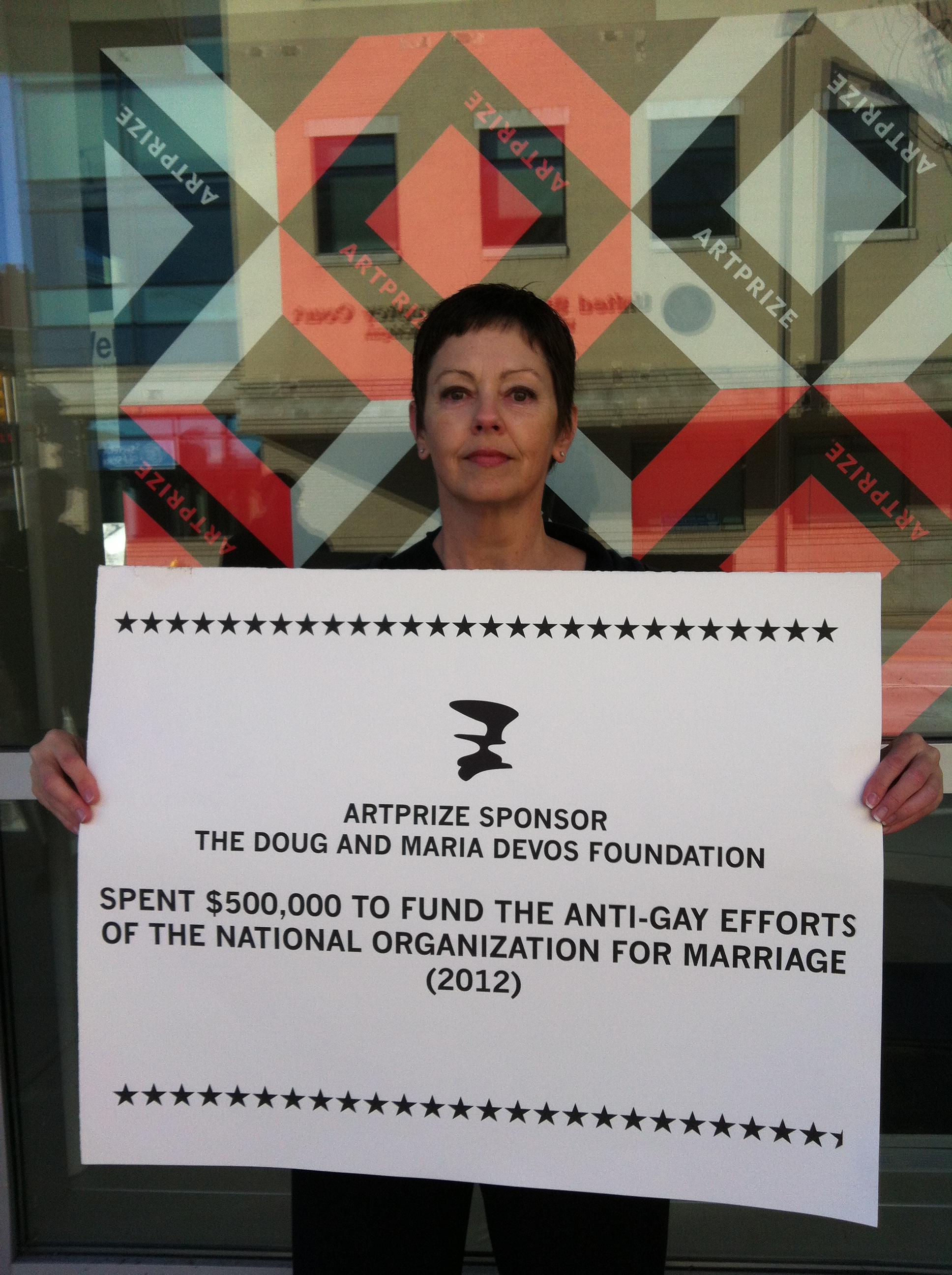
In addition, the local activists pointed out with some signs in their visual campaign other funding issues with some of the ArtPrize sponsors. For example, Richard DeVos contributed $250,000 to Wisconsin Governor Scott Walker to defeat the recall campaign earlier this year, since Walked has been attacking working people and labor policies in that state.
Another issue one of the signs points to is the funding that the Dick and Betsy DeVos Foundation and the Edgar & Elsa Prince Foundation have given the Mackinac Center for Public Policy. The Mackinac Center is a far right think tank that supports Right to Work laws, privatizing public services, privatizing public education and deregulation of any restrictions put on the private sector by the state. The Dick & Betsy DeVos has given $80,000 between 2002 – 2009 to the Mackinac Center for Public Policy and the Edgar & Elsa Prince has provided $195,000 during the same time period.
Lastly, the activists point out in one sign that the Dick and Betsy DeVos foundation has contributed millions of dollars to promote the privatization of education, which undermines public education funding across the country. One researcher even refers to Betsy DeVos as the 4 – star general of the pro-school privatization movement.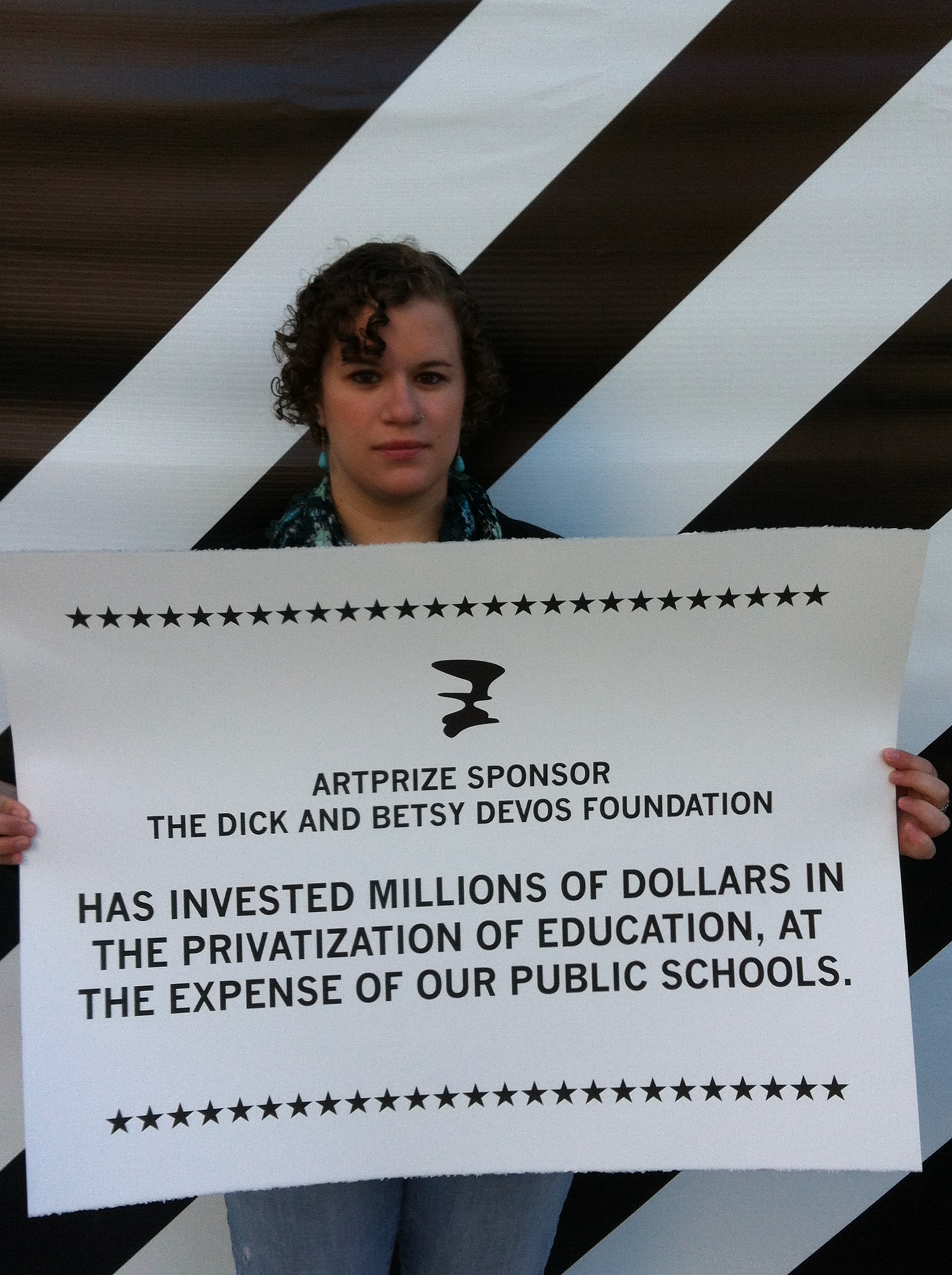
In their photo bomb action today, some of the activists even stood next to one of the WOOD TV 8 signs by the Grand Rapids Art Museum, where the channel 8 station has been broadcasting live since ArtPrize began this year. They stood their with these illuminating signs about ArtPrize sponsors to make the point that commercial media in this community has ignored the politics of the ArtPrize sponsors.

The Forgotten Palestinians
This video is re-posted from ZNet.
Celebrated Israeli historian, Ilan Pappe who wrote “The Ethnic Cleansing of Palestine” that documented the 1948 removal of 700,000 Palestinians from their lands, has now written about “The Forgotten Palestinians”.
In the book, and at this September 16 community meeting at Sydney University, Pappe reveals the situation for the Palestinians who still live within Israel’s borders.
This was the first event of Professor Pappe’s 2012 Australian lecture tour. It was hosted by the Sydney Peace Foundation at the University of Sydney with the Coalition for Justice and Peace in Palestine and Leichhardt Friends of Hebron. Professor Pappe is in Australia as the guest of AFOPA to deliver the annual Edward Said Memorial Lecture at the University of Adelaide.
Climate Justice advocate Bill McKibben to be part of forum at GVSU – September 25
Author, activist and co-founder of 350.org, Bill McKibben will be part of a forum at the downtown campus of GVSU on Tuesday, September 25.
McKibben, who’s most recent book is Eaarth: Making Life on a Tough New Planet, will speak to an audience gathered at GVSU via Skype. The title of the forum is Building a Movement to Save the Climate.
McKibben will speak first, followed by brief comments from several local groups, including Food & Water Watch, GVSU Student Environmental Coalition and Mutual Aid GR. Each organization will also have an information table with educational resources and information on local campaigns related to Climate Justice.
Bill McKibben – Building a Movement to Save the Climate
Tuesday, September 25
7:00 – 9:00 PM
Downtown GVSU Campus – Eberhard Center Room 215
Campus Sustainability Spotlight Event
This event is free and open to the public.
For more information contact Andrea Marz at marzan@gvsu.edu.
Video of anti-fracking action at Wolverine Oil & Gas

Here is a more detailed video of yesterday’s action at Wolverine Oil & Gas, which includes footage of the march, the statement by those being arrested, interaction with a representative from Wolverine Oil & Gas, protestors in the lobby and the eventual arrest.
Those of us who occupied the office went in representing the People’s Environmental Protection Agency and we charged Wolverine Oil & Gas with crimes against the environment and sought to shut them down.
Thanks to several people who documented the action and put together this video!
Local International Day Against Fracking protesters issue statements, three arrested
The Grand Rapids group Mutual Aid GR organized a downtown Grand Rapids march as part of the International Day Against Fracking. This statement was released to media prior to the action:
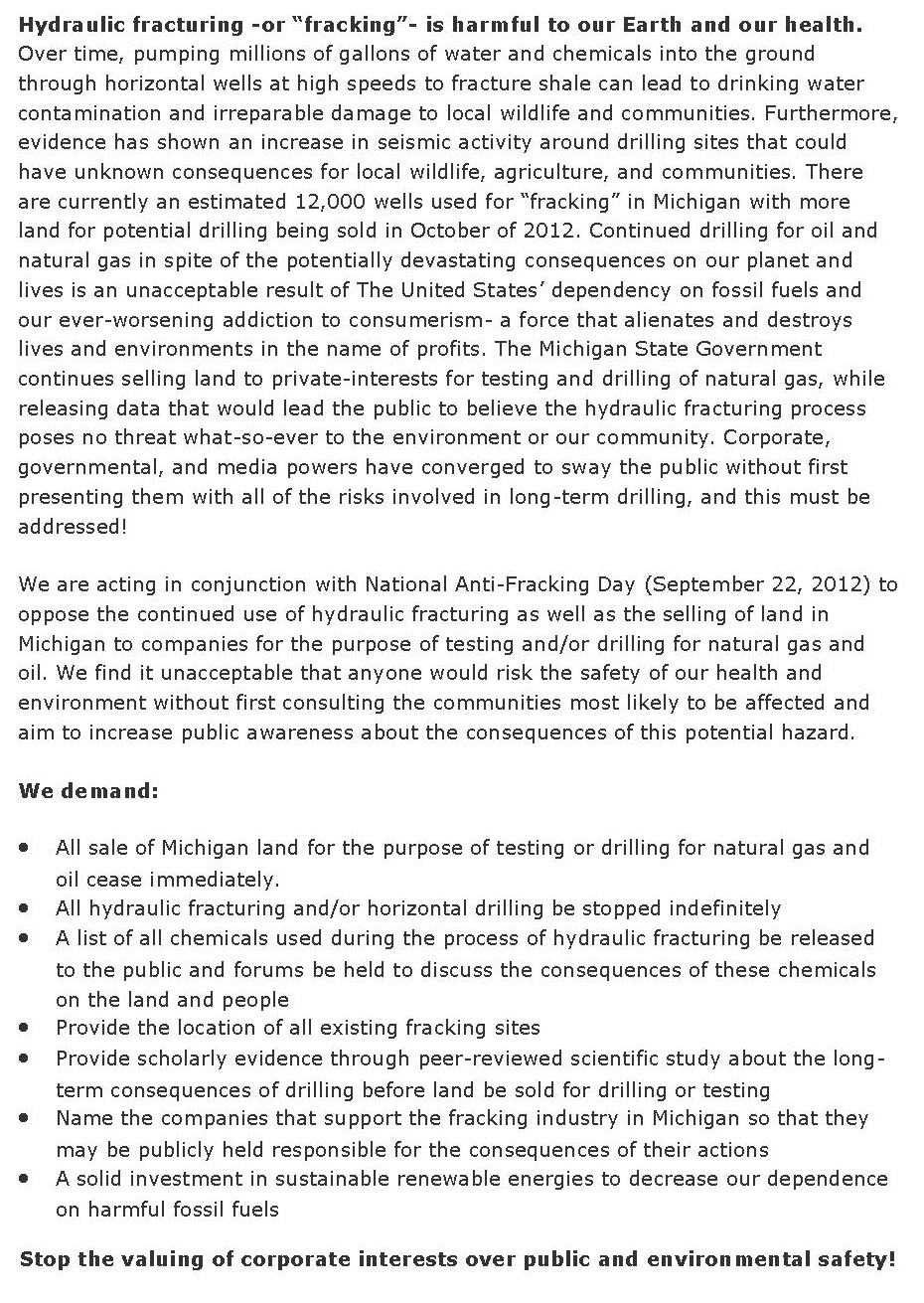
A participant in the action related the following about the event:
We know that hydraulic fracturing is bad for Michigan because it:
• Contaminates ground water and soil with toxic chemicals
• Contributes to the pollution and contamination of fresh water, which is one of the things that make Michigan such a magical place to live.
• Fracking poisons plants, animals and humans.
• Fracking is accelerating around the country and in Michigan and is contributing to the most urgent crisis of our time, global warming.
• Lastly, fracking for natural gas reduces the need to seek truly sustainable and renewable forms of energy.
Therefore, we occupy Wolverine Oil & Gas to say no to contaminating Michigan water; no to practices that significantly contribute to global warming; and no to companies that profit from environmental destruction.
We are occupying Wolverine Oil & Gas to demand that they release all information about the type and amount of chemicals they have used in fracking to date and the amount of water used; to release information on the location of all oil and gas wells they own and operate in Michigan, and to stop the practice of fracking where ever they engage in this practice.
Advanced Placement: The Chicago Teachers Union is poised to lead in the next school-reform fights
This article by Micah Uetricht is re-posted from the American Prospect.
Chicago Public School teachers and students were back in classrooms Wednesday morning after union delegates voted Tuesday to end their seven-day strike. The union won a number of significant victories—including a provision that student test scores will count for no more than 30 percent of a teacher’s evaluation and another that will give teachers more pay for longer school days and years. The proposed contract should be finalized and approved in the coming weeks. By almost all accounts, though, in its fight with Mayor Rahm Emanuel, the union is emerging as the clear winner.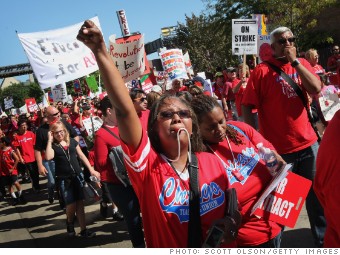
One of the sticking points in negotiations was over teacher evaluations and the role students’ test scores play in them. Emanuel is one of a number of national reformers who see unions as a roadblock to improving student performance and who subscribe to the philosophy that what poor, underperforming school districts need most are better teachers. Chicago teachers have emphasized throughout this fight that they want to weigh in on the education-reform debate and that their mission to do so extends far beyond an individual contract.
With a newly mobilized membership, widespread relationships with community groups, and much of the public’s trust, the Chicago Teachers Union has positioned itself to play a leading role in the debate in their city, which has an education system highly stratified between well-funded public magnet and private schools and crumbling, neighborhood-based schools—where more than 91 percent of public-school students are children of color, more than 90 percent attend hyper-segregated schools, and 82 percent are poor enough to qualify for free or reduced-cost lunch. Their efforts could lead the way for teachers in other cities to organize in the same way.
As union delegates streamed out of their meeting Tuesday evening, many said they were elated to return to work. Teachers embraced one another in the parking lot, and supporters chanted while holding signs reading “We’re Proud of You, CTU.” Teachers also immediately began talking about how to translate the momentum from the contract victory into a broader movement. These teachers want to refocus an education-reform debate that has centered on teacher performance to one that addresses structural barriers to student achievement, including the vastly unequal resources allocated to poor students and students of color in public schools throughout the country. Education reformers have cast teachers’ unions as a problem for urban public-school students; the Chicago union wants to present itself as a solution.
Parents had been on the teachers’ side in large numbers during the fight. They formed a support organization, Parents 4 Teachers, in early 2012 to back the teachers’ contract goals and show that they did not view teachers and their union as enemies. An active Chicago Teachers Solidarity Campaign mobilized community members who weren’t parents to support the union. Community groups like the Kenwood-Oakland Community Organization and the Grassroots Collaborative took key roles in organizing marches and town-hall meetings.
These relationships were not hastily thrown together to give a veneer of neighborhood-based union support. They were based on long-term relationships developed since the Congress of Rank and File Educators (CORE) took control of the union’s leadership in 2010 and emphasized in their platform opposition to school closures and encroaching privatization through the opening of new charter schools—reforms pushed for years under Mayor Richard M. Daley and former Chicago Public Schools CEO (now Secretary of Education) Arne Duncan—and strong relationships with community and parent organizations. While the teachers are legally limited to striking over economic issues, Karen Lewis and the rest of the union’s leaders insisted from the beginning of the contract negotiations that their fight extended past what could be won in a contract.
“That contract only governs a portion of what we’re fighting for. We’re fighting for public education itself,” says Eric Skalinder, a delegate and music teacher at Kelly High School in Brighton Park, a poor, mostly Mexican neighborhood on Chicago’s Southwest Side. Skalinder is looking to the union’s allies for direction in the union’s next fights. “These community partners and parent alliances are new,” he says. “We’ve never been more mobilized or unified. We have to focus that energy on fighting privatization, advocating for neighborhood schools, all of it.”
It’s school closures, in particular, that union delegates and community organizations are concerned about. Mayor Emanuel has proposed closing 80 to 120 public schools and opening 60 charter schools in their stead, seen by many as a not-so-subtle scheme to weaken teachers unions and push privatization. Outside the union hall in an industrial district of Chinatown where delegates met, Kirstie Shanley, an occupational therapist at Walt Disney Magnet School, says the end of contract negotiations should lead to a quick shift in the mobilization to fight those closures.
“The community, clinicians, parents, teachers—they all need to be there when there’s a closing,” Shanley says. “Rahm and [Chicago Public Schools CEO Jean-Claude] Brizard have to be aware that every time they announce a school closing to turn it into a charter, we’re ready to mobilize and fight back.” She says there is also significant movement on a referendum calling for an end to what she calls the “abuses” of the city’s unelected school board.
Whatever their next battle, the 26,000 teachers seem ready, as a text alert circulating among them late Tuesday night suggested: “CTU ALERT: Wear red Wednesday. Meet in your parking lot before swiping in. Everyone walks in TOGETHER. This is the beginning.”
MLive Media Group property Bay City Times is a cheerleader for the pro-fracking companies
Yesterday, the editorial board of Bay City Times (part of the MLive Media Group conglomerate), posted an editorial opinion piece in favor of the expansion of hydraulic fracturing for natural gas in Michigan.
The opinion piece starts off by stating that hydraulic fracturing is growing in the Great Lakes Region and “we would be foolish to stop it before it even starts.”
The Bay City Times opinion piece says that proponents of fracking claim it,“will extend the domestic natural gas supply by more than 100 years and help keep energy prices relatively stable.” By proponents, they mean the oil & gas and energy industry, which has been making a major push to justify the use of fracking for natural gas as a response to the growing public opposition to it.
The Bay City Times opinion piece also states that opponents, “point to the very few regulations of the chemicals injected into the ground.” While this is an important issue of concern it is not the only one. In addition to chemicals used in fracking there is also the amount of water used in the process, what happens to the contaminated water used in the drilling process, contamination of ground water, long-term impact on human health and ecosystems and that advocating for expansion of natural gas will making a serious push towards the use of renewable energy a fading reality.
The editorial board piece goes on to say:
Banning fracking completely would be a knee-jerk response. While restrictions are low, the Department of Environmental Quality frequently tests areas where fracking occurs and has not uncovered any issues. House Democrats are pushing for stricter rules for hydraulic fracturing, something we think needs to be explored without imposing unnecessary red tape that would make it impossible for energy companies to move in this direction.
The key statement here is their calling a ban on fracking a “knee-jerk response.” The editorial board at the Bay City Times should know better to use such language, without backing it up with some data and research. None of this can be found in the opinion piece, just an appeal for expanding fracking because Michigan faces the issue of energy costs.
The Bay City Times editorial board does say upfront that their opinion is based upon an 8-part series of stories they ran on the issue of hydraulic fracturing for natural gas. Of those eight articles only one has a source that is critical of the expansion of natural gas exploration through the use of fracking. However, in all eight articles the Bay City Times uses industry sources such as Midland Cogeneration venture, DTE, Consumers Energy, Dow Chemical, the American Natural Gas Alliance and Friends of Natural Gas Michigan.
Of course companies like Consumers Energy, DTE and Dow would be in favor of fracking and their support seems pretty obvious. The 8-part series in the Bay City Times does not give any background information on the American Natural Gas Alliance or Friends of Natural Gas Michigan.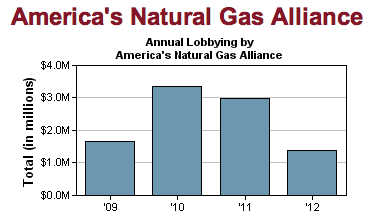
The American Natural Gas Alliance is a fairly recent creation, but has already spent nearly $10 million dollars lobbying the federal government since 2009. This alliance represents dozens of companies seeking to expand profits from hydraulic fracturing. The Vice President of Strategic Communications at the American Natural Gas Alliance is Dan Whitten, who also happens to be the spokesperson for Friends of Natural Gas Michigan.
The Bay City Times 8-part series on this critical issue is so biased towards the industry side that it begs the question of how much advertising money these companies spend with the news agency. The 8-part series and the editorial board opinion piece is a clear indication that the Bay City Times engages in a brand of journalism that not only avoids challenging power, it actually colludes with it.

