A Day in the Life of Big Oil
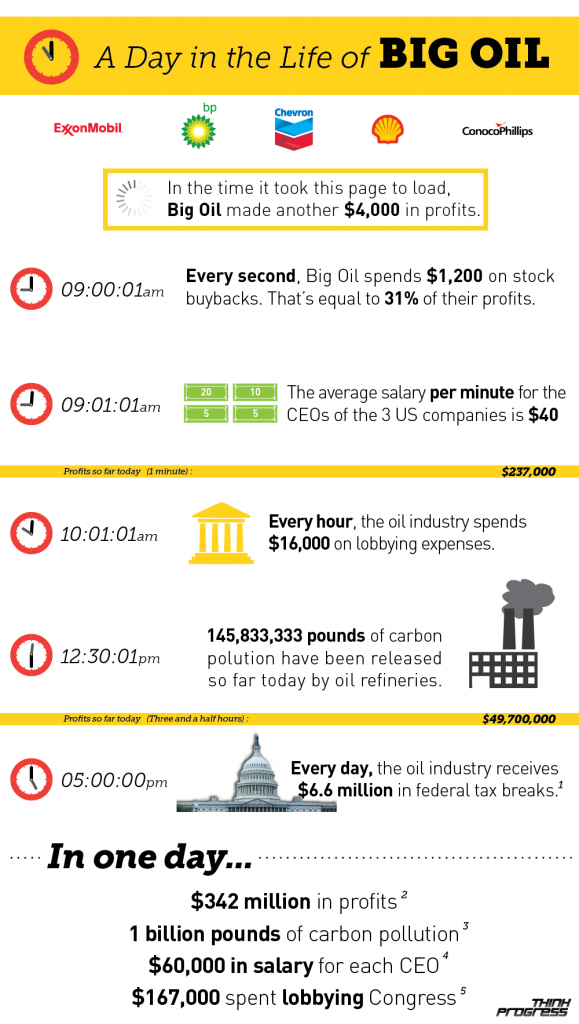
The graphic below is from Think Progress and it should underscore Bill McKibben’s recent comment in Rolling Stone Magazine that the fossil fuel industry should be public enemy number one.
Romney and the “Culture” of White Supremacy
This article by Glen Ford is re-posted from Black Agenda Report.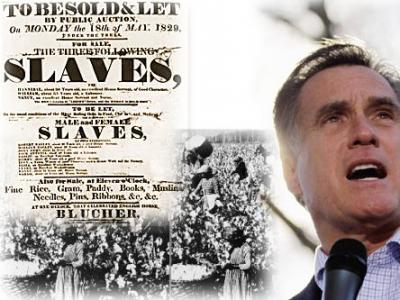
White supremacy is Mitt Romney’s religion, although I’d be willing to bet he has not uttered the epithet “nigger” since reaching adulthood. For Romney and his ilk, it is axiomatic that God’s blessings are manifest in the world through the distribution of wealth. Had God not favored Europeans, He would never have allowed them to expropriate the vast bulk of the Earth’s bounty. They have prospered because their ways are righteous – or, in more modern, secular terms, they possess a superior “culture.”
For the Mormon American multimillionaire, human destiny and divine will are revealed in macroeconomic data. ”As you come here and you see the GDP per capita, for instance, in Israel which is about $21,000 dollars, and compare that with the GDP per capita just across the areas managed by the Palestinian Authority, which is more like $10,000 per capita, you notice such a dramatically stark difference in economic vitality,” Romney told a room full of other wealthy – and, therefore, blessed – people at Jerusalem’s King David Hotel. The actual breakdown is $31,500 vs. $1,500, but I assume the fool misspoke. Romney recognized in those stark 20 to 1 ratios “the power of at least culture and a few other things,” including “the hand of providence.”
Palestinian poverty flows, not from Israeli military conquest, but from the conquered people’s cultural – and, presumably, moral – inferiority, and God’s consequent disapproval. Israeli suppression of Palestinian political, economic and, yes, cultural life, is irrelevant. Two cultures have clashed in Palestine, and one has been found to be 20 times as productive as the other. Enough said.
White South Africa regarded its wealth as prima facie evidence of cultural superiority. The fact that the land, minerals and labor on which that wealth was built belonged to Black people simply proved that Blacks lacked a “culture” adequate to manage those resources. Moreover, White Power was in the best interest of Black South Africans who, the apartheid regime was proud to proclaim, had a higher per capita income than Blacks elsewhere in sub-Saharan Africa. Thus, white cultural superiority could be beneficial to nearby Blacks, under controlled conditions that did not pollute the precious European cultural environment.
In 1973, Edward Botha, information officer for the South African embassy in Washington, assured Americans that his country’s Blacks were content with their situation. “Black people in South Africa own more automobiles than the Russian people do,” said Botha – a material accomplishment that Mitt Romney would surely associate with profound cultural and moral progress. But sadly, the poor Russians, possessing so few cars, retained little culture to speak of.
White U.S. southerners also insisted, during slavery and Jim Crow, that “their” Negroes were the best off in the worldbecause of their exposure to white folks’ religion and way of life. Left to their own devices, however, Black folks’ innate cultural inferiority – depravity! – would do them in. Blacks’ freedom of movement and expression must be contained, for their own good.
White liberals also believed in the Culture Demon. In the 1950s and early 60s, it was considered politically correct to describe African Americans as “culturally deprived” – meaning, Blacks are disadvantaged by lack of exposure to white culture. Power has nothing to do with it.
The 20 to 1 disparity between Israeli and Palestinian per capita income matches the wealth gap between American Blacks and whites (app. $5,000 vs. $100,000 for median Black and white households). The fact that such numbers do not provoke general shock and calls for reparations is proof enough that most whites view the disparity as more a natural phenomenon than evidence of cumulative injustice. Daniel Patrick Moynihan spoke for white folks of the past, present and future when he posited, in 1965, that a Black “culture of poverty” is what keeps Black people poor – not pervasive white racism.
With President Obama’s election, a clear white consensus favors “race neutral” government policies – which, in practice, reject Black grievances based on past discrimination and disadvantage, and set an extremely high bar for complaints of current bias. Such dismissal of essential – and irrefutable – contemporary and historical data can only be rooted in a general white belief that African American culture is what holds Blacks back. Barack Obama either shares this white attitude, or pretends he does for political gain. His singling out of “irresponsible” Black fathers and hectoring of Black parents for feeding their kids Popeye’s chicken for breakfast was a shout-out to white folks that he shared their assessment of Black “culture.” His rejection of targeted economic policies that address deep disparities based on the historical and ongoing realities of race and racism (“A rising tide lifts all boats,” says Obama) puts him in the same “race neutral” camp as Romney and the rest of the GOP – and most of the Democrats, as well. And, of course, Obama also fights for the same empire that sees its roots in the natural (or divinely ordained) rise of “western civilization” – a euphemism for white people – to dominate every nook and cranny of the world, by force.
In truth, white supremacy is foundational to Euro- American culture, which celebrates five hundred years of relentless pillaging, extermination, mass enslavement and racist subjugation of the vast majority of humanity as the march of civilization and progress. It is the culture of a pirate’s bazaar, strewn with stolen goods and bloody booty, guts and bones. Israel is there, too, with a sword between its rotten teeth. Romney is singing “America,” and Obama is composing another lie.

Over the last 5 years, nearly 60,000 people have lost their lives in Mexico’s drug-related wave of violence. More than 70% of the weapons seized in Mexico in the last three years and submitted for tracing came from the U.S. (Source: ATF).
Watch Cuéntame/WOLA’s video: U.S. Guns, The Awful, Shocking Truth included here at the bottom. The two groups have also partnered to try to pressure the Obama administration to change gun sales policies to prevent thousands of US arms going to Mexico that are being used in the Drug War.
President Obama has the power to help stop gun smugglers. We’re asking him to:
1.Enforce the existing ban on the importation of military-style assault weapons (because many of them are later illegally smuggled into Mexico);
2.Require gun dealers to report to the Bureau of Alcohol, Tobacco, Firearms and Explosives (ATF) the sale of multiple assault rifles to the same person over a period of five days;
3.Strengthen legal enforcement in regions of the U.S. that supply the bulk of the contraband weapons smuggled into Mexico.
Next Wednesday, August 8, members of Mutual Aid GR are hosting a meeting at John Ball Park to discuss direct action ideas as a response to the urgency around global warming and other environmental catastrophes.
The Facebook page event posting reads in part: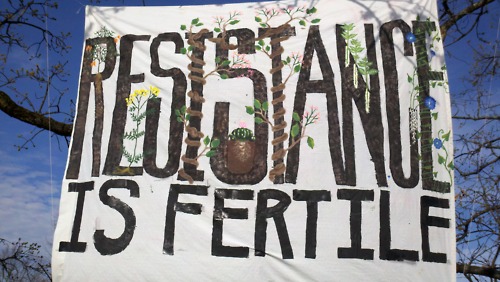
On August 8, we will be gathering at John Ball Park to discuss ACTION here in the city of Grand Rapids. It’s time to stop arguing over whether or not the current weather is related to climate change and start making noise, growing larger and creating solutions. The sky is not pink (http://vimeo.com/44367635) and our biotic communities are suffering because some people still want to believe that it is. We simply cannot afford to remain quiet any longer.
We’re looking forward to working together, toward real solutions, toward a culture of resistance, together.
Please join us on 8/8 at 6:30 pm and bring your ideas, your passion, your smiles, your children, your voices and of course, your appetites.
An RSVP is helpful, as we are preparing food, but not necessary. As always, please let other folks know about the event who you think may be interested.
Action Meeting
Wednesday, August 8
6:30PM
John Ball Park – look for signs
1300 West Fulton, Grand Rapids
This article from Sue Sturgis is re-posted from ZNet.
Activists with the National Immigrant Youth Alliance intentionally placed themselves in deportation proceedings in order to enter the Broward Transitional Center, an immigration detention facility in Florida — and they say they found scores of detainees who shouldn’t be there under the Obama administration’s revised deportation policies.
“Our organizers inside of the detention center have discovered that the Obama administration is still deporting the same people it promises not to deport,” the group said in a statement.
Beginning in June 2011, the administration ordered broader discretion in the prosecution of undocumented immigrants, with consideration to be given to age, how the person entered the country and his or her education, military service, criminal history and family circumstances. Then in June of this year, the administration extended the policy to cover undocumented youth brought to the U.S. as children.
But it appears that those policies are not being applied on the ground. Over the course of the past month, seven NIYA activists who themselves are undocumented immigrants entered the facility (in photo) in an effort to organize detainees. They report finding people who should not or need not be there, including:
* people with pending applications for U visas, which give temporary legal status and work eligibility to victims of certain crimes including rape, torture, domestic violence and human trafficking;
* more than a dozen youth eligible for conditional permanent residency under the DREAM Act, federal legislation that has not yet been approved by Congress but which sets out criteria that the Obama administration says it is using in making deportation decisions;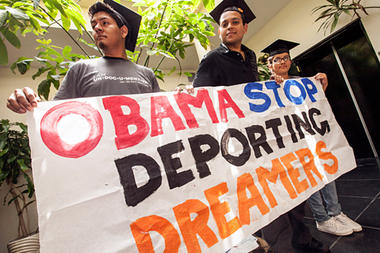
* several cases of immigrants in need of immediate medical care, including one person with a blood clot in his leg and another with a bullet in the spine; and
* more than 60 people with no criminal record or prior deportations who are eligible for discretion under the administration’s policy.
Many of the detainees have been at the facility for at least five months, with some there for as long as 20 months, the activists report. Among those involved in the undercover investigation was Viridiana Martinez, an immigration-reform activist with the North Carolina Dream Team.
A facility specifically for low-priority immigrant detainees, Broward Transitional Center is operated by the GEO Group, a private correctional services company based in Boca Raton, Fla. Formerly known as Wackenhut Corrections Corp., GEO Group receives an average of about $166 a day in tax dollars for each detainee at the Broward facility, which has a capacity of 600.
NIYA publicized the findings of its undercover investigation in a July 30 press conference held outside the office of U.S. Sen. Marco Rubio (R-Fla.). The group is petitioning Homeland Security officials to undertake a full and immediate review of all detainees at the facility.
“NIYA will no longer allow GEO Group or other private prison corporations to profit off of shattered families and broken lives,” the group said in a statement. “We will continue to organize inside their jails until the president lives up to his promises.”
The Problem With Intervening in Syria
This article by Phyllis Bennis is re-posted from CounterPunch.
The brave, non-violent Syrian challenge to a brutal dictatorship emerged as part of the Arab risings across the region. But that short Syrian spring of 2011 has long since morphed into an escalation of militarization and death. The International Committee of the Red Cross acknowledged what many already recognized: Syria is immersed in full-scale civil war. As is true in every civil war, civilian casualties are horrific and rising.
Certainly the regime has carried out brutal acts against civilians, including war crimes. The armed opposition is also responsible for attacks leading to the deaths of civilians. Indications are growing of outside terrorist forces operating in Syria as well.
Of course the normal human reaction is “we’ve got to do something!” But however dire the situation facing Syrian civilians, the likelihood that any outside military attacks would actually help the situation is very remote. Despite defections, Syria’s military, especially its air force, remains one of the strongest in the Arab world, and direct outside military involvement, especially by the United States, NATO, or other longstanding opponents of Syria would inevitably mean even greater carnage. U.S./NATO military intervention didn’t bring stability, democracy, or security to Libya, and it certainly is not going to do so in Syria.
Syria’s war is erupting in a region still seething in the aftermath of the U.S. war in Iraq and the sectarian legacies it left behind. The fighting is also now taking on an increasingly sectarian form – and the danger is rising of Syria becoming the center of an expanded regional war pitting Sunni regimes in Saudi Arabia and Qatar against Shi’a-dominated governments in Iran and Iraq.
Iran is the most important reason for U.S. interest in Syria. With continuing U.S.-EU sanctions on Iran, and Israeli threats of military attack, Syria remains a tempting proxy target. Damascus’s longstanding economic, political, and military ties with Tehran mean that efforts to undermine Syria are widely understood to be at least partly aimed at undermining Iran.
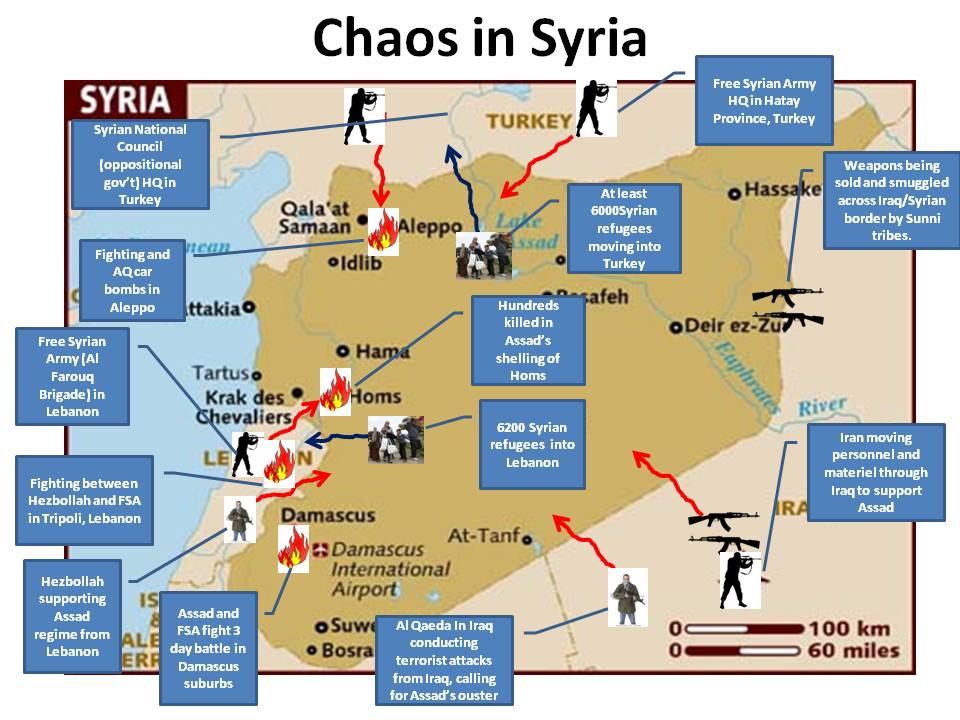
Certainly the United States, the EU, and the U.S.-backed Arab monarchies would prefer a more anti-Iranian, less resistance-oriented government in Syria, which borders key countries of U.S. interest including Israel, Iraq, Lebanon, Turkey. They would also prefer a less repressive government, since brutality brings protesters out into the streets, threatening instability.
But as has virtually always been the case, a U.S. decision to send fighter-jets or bombers or even ground troops to Syria, won’t be because Washington is suddenly worried about Syrian civilians. The Assad regime has brutalized civilians for years, but it has been way too useful for Washington to worry about such things. Damascus accepted U.S. detainees for interrogation and torture in the so-called “global war on terror,” it sent warplanes to join the U.S. Gulf War coalition attacking Iraq in 1991, it kept the occupied Golan Heights and the Israeli border largely pacified… and human rights violations were never a problem for the United States. As State Department spokeswoman Victoria Nuland admitted, “we are not always consistent.”
Whatever our humanitarian concerns might be, real decisions about direct military intervention will be made with little regard for Syrian civilians, Syrian civil society, or Syria’s national survival – all of which will suffer consequences that could last a generation or more. A U.S./NATO air war against Syria would likely not end like Libya’s – with no western casualties and a quick exit. Given Syria’s military, especially air capacity, it will look far more like Iraq than Libya.
Diplomacy is the only way this war will be ended. Accountability for war crimes, whether in national or international jurisdictions, is crucial – but stopping the current escalation of war must come first.
The UN may be able to facilitate that process. The UN observer mission has been a political football, with the United States demanding the Security Council vote under Chapter VII, setting the stage for military intervention. Russia, determined to protect its naval base on the Syrian coast, rejected Chapter VII. A compromise allowed a 30-day extension, but the real goal should be expansion of both the deployment and its mandate, from observation alone to attempts at political negotiation.
The head of the UN observer mission, Norwegian General Robert Mood, described his team’s success in some areas “to facilitate local dialogues between the parties as they seek to find a step by step way to build confidence and stop the negative spiral of violence. …We observe a significant reduction of violence and growing confidence in a possible step by step approach to stop the violence….[T]he political dialogue has to be brought inside Syria …Through that dialogue, and lifting it to the national level, we will then achieve a cessation of violence.”
That kind of bottom-up ceasefire effort, moving from the local to the national level, may offer the best chance to re-engage the non-violent core of the Syrian uprising and those opposition forces inside who are prepared to negotiate, bringing some hope that the UN team on the ground may be able to bring about what the Security Council has so far failed to achieve – a real ceasefire. Then the work to achieve the Syrian Spring’s goals of democracy and human rights may have a chance.
Triple Quest, MLive and the fallacy of carbon offsets
Yesterday, MLive ran a story about a local company that wants to expand the market for their water filters through the sale of carbon offsets.
Triple Quest, a joint venture between Cascade Engineering and Windquest Group, believes it is doing the world some good by making water filters to provide to poor communities in Third World countries.
The problem, according to Triple Quest President Christine Keller, is that most people in those poor communities cannot afford the water filters, which cost $34 each. Keller says that many of the non-profits doing work in those communities cannot afford the cost either.
The solution, according to Keller, might be Carbon Offsets. Here is how MLive describes the way in which carbon offsets will work for Triple Quest”
Triple Quest is going through the process of certifying and validating its water filters through organizations that sell “carbon offset” to companies that want to become “carbon neutral.”
Once the Triple Quest filters are validated by third party monitors, companies can qualify for the carbon credits by investing in projects that buy the water filters, transport and install them in the target communities.
Therefore, Triple Quest is putting its faith in the market system to provide the needed water filters to poor communities around the world. This way of thinking is flawed in many ways.
First, the whole premise of carbon offsets or carbon trading is nothing more than a slick form of Green Capitalism. The most effective way to stop polluting is to stop polluting, which is to say that if we are serious about reversing the rate of global warming we will stop producing the level of current carbon emissions. This is not the case with carbon offsetting.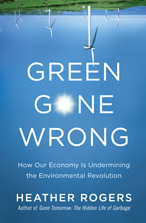
Carbon offsetting works by getting other polluters to invest in projects and then offset the damage they are doing by giving a portion of their investments to eco-friendly projects. Heather Rogers, author of Green Gone Wrong: How Our Economy Is Undermining the Environmental Revolution, has this to say about carbon offsets:
But carbon offsets are a dubious enterprise. To begin with, they don’t cut greenhouse gases immediately but only over the life of a project, and that can take years–some tree-planting efforts need a century to do the work. And a project is effective only if it’s successfully followed through; trees can die or get cut down, unforeseen ecological destruction might be triggered or the projects may simply go unbuilt. As for keeping track of all this, although many retail offsetters choose to get third-party certification to assure quality, they are not obliged to do so, because the voluntary market is largely unregulated. These projects aren’t required by law to meet any standards or have follow-up assessments to ascertain their efficacy. (Offsets under the Kyoto Protocol are regulated, but inspectors charged with this oversight don’t always maintain the highest standards.)
The MLive story lists two carbon trading companies, Native Energy and Carbon Neutral as two companies that do carbon trading certification. Nowhere in the article is it clear that either company will be working with Triple Quest. More importantly, the article does not question or investigate the validity of such companies.
The fallacy of carbon offsets it further exposed by noted US scientist James Hansen who said, “We scientists deserve some blame for government efforts to use [carbon] ‘offsets’ to avoid fossil fuel limits. Fossil fuel CO2 stays in surface reservoirs for millennia. We are nearing the limit for how much carbon can be put there. We should not have acquiesced to the ‘CO2 equivalence’ concept that was adopted in the Kyoto Protocol. There is no equivalence to fossil fuel CO2.“
The second problem with what Triple Quest is proposing here is that they are not asking why people in Third World countries don’t have clean drinking water. Instead of hatching a market scheme to sell more products, why not work with local communities to find the root of the problem and fix that instead? This way you would avoid unnecessary manufacturing and transportation of the products, both of which produce more carbon and pollution.
Lastly, the other problem with this project is that it doesn’t answer the question of why people in those poor countries cannot afford to purchase the $34 water filters if that is what they wanted to do. The answer might be found in another MLive story also posted yesterday.
The story is about Rockford-based Wolverine Worldwide teaming up with Triple Quest to provide water filters for people in the Dominican Republic. The story is based in part on news releases from both Triple Quest and Wolverine Worldwide, which present them as doing good work for the poor in the Dominican Republic.
The article also states that Wolverine Worldwide has two manufacturing plants in the Dominican Republic, which begs the question, “do they pay the workers there enough to buy themselves or their neighbors water filters?”
This is not a question asked by the MLive reporter. The reporter also does not ask the question if these two manufacturing plants came into being after Wolverine Worldwide shut down some of the 450 manufacturing jobs the company eliminated from one of its plants in Rockford in 2009?
Mission Failure: Afghanistan
This article by Tom Engelhardt is re-posted from Tom’s Dispatch.
Imagine for a moment that almost once a week for the last six months somebody somewhere in this country had burst, well-armed, into a movie theater showing a superhero film and fired into the audience. That would get your attention, wouldn’t it? James Holmes times 21? It would dominate the news. We would certainly be consulting experts, trying to make sense of the pattern, groping for explanations. And what if the same thing had also happened almost once every two weeks in 2011? Imagine the shock, imagine the reaction here.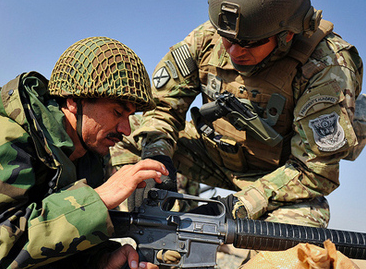
Well, the equivalent has happened in Afghanistan (minus, of course, the superhero movies). It even has a name: green-on-blue violence. In 2012 — and twice last week — Afghan soldiers, policemen, or security guards, largely in units being trained or mentored by the U.S. or its NATO allies, have turned their guns on those mentors, the people who are funding, supporting, and teaching them, and pulled the trigger.
It’s already happened at least 21 times in this half-year, resulting in 30 American and European deaths, a 50% jump from 2011, when similar acts occurred at least 21 times with 35 coalition deaths. (The “at least” is there because, in May, the Associated Press reported that, while U.S. and NATO spokespeople were releasing the news of deaths from such acts, green-on-blue incidents that resulted in no fatalities, even if there were wounded, were sometimes not reported at all.)
Take July. There have already been at least four such attacks. The first, on July 1st, reportedly involved a member of the Afghan National Civil Order Police, a specially trained outfit, shooting down three British soldiers at a checkpoint in Helmand Province, deep in the Taliban heartland of the country.The shooter was captured. Two days later, a man in “an Afghan army uniform” turned his machine gun on American troops just outside a NATO base in Wardak Province, east of the Afghan capital Kabul, wounding five before fleeing. (In initial reports, the shooter in all such incidents is invariably described as a man “in an Army/police uniform” as if he might be a Taliban infiltrator, and he almost invariably turns out to be an actual Afghan policeman or soldier.)
Then, on July 22nd, a security guard gunned down three police trainers — two former U.S. Customs and Border Protection agents and a former United Kingdom Revenue and Customs Officer (while another retired Border Protection agent and an Afghan interpreter were wounded). This happened at a police training facility near Herat in Afghanistan’s generally peaceful northwest near the Iranian border. The next day, a soldier on a military base in Faryab Province in the north of the country turned his gun on a group of American soldiers also evidently working as police trainers, wounding two of them before being killed by return fire.
Note that these July attacks were geographically diverse: one in the Taliban south, one east of the capital in an area that has seen a rise in Taliban attacks, and two in areas that aren’t normally considered insurgent hotbeds. Similar attacks have been going on for years, a number of them far more high profile, including the deaths of an American lieutenant colonel and major, each shot in the back of the head inside the heavily guarded Afghan Interior Ministry in Kabul; the killing of four French soldiers (and the wounding of 16) by an Afghan non-commissioned officer after an argument; the first killing of an American special forces operative by a U.S.-trained Afghan commando during a joint night raid; an elaborate attack organized by two Afghan soldiers and a civilian teacher at a joint outpost that killed two Americans, wounded two more, and disabled an armored vehicle; and the 2011 shooting of nine trainers (eight American officers and a contractor) in a restricted section of Kabul International Airport by an Afghan air force pilot.
In 2007-2008, there were only four green-on-blue attacks, resulting in four deaths. When they started multiplying in 2010, the initial impulse of coalition spokespeople was to blame them on Taliban infiltrators (and the Taliban did take credit for most of them). Now, U.S. or NATO spokespeople tend to dismiss such violence as individual pique or the result of some personal grievance against coalition forces rather than Taliban affiliation. While reaffirming the coalition mission of training a vast security force for the country, they prefer to present each case as if it were a local oddity with little relation to any of the others — “an isolated incident [that] has its own underlying circumstances and motives.” (Privately, the U.S. military is undoubtedly far more worried.)
In fact, there is a striking pattern at work that should be front-page news here. Green-on-blue attacks have been countrywide, in areas of militant insurgency and not; they continue to escalate, and (as far as we can tell) are almost always committed by actual members of the Afghan military or police who have experienced the American project in their country in a particularly up-close and personal way.
In addition, these attacks are, again as far as anyone can tell, in no way coordinated. They are individual or small group acts, in some cases clearly after significant thought and calculation, in others just as clearly impulsive. Nonetheless, they do seem to represent a kind of collective vote, not by ballot obviously, nor — as in Lenin’s phrase about Russia’s deserting peasant soldiers in World War I — with their feet, but with guns.
The number of these events is, after all, startling, given that an Afghan who turns his weapon on well-armed American or European allies is likely to die. A small number of shooters have escaped and a few have been captured alive (including one recently sentenced to death in an Afghan court), but most are shot down. In a situation where foreign advisors and troops are now distinctly on guard and on edge — and in some cases are shadowed by armed compatriots (“guardian angels”) whose job it is to protect them from such events — these are essentially suicidal acts.
So it’s reasonable to assume that, for every Afghan who acts on such a violent impulse, there must be a far larger pool of fellow members of the security forces the coalition is building who have similar feelings, but don’t act on them (or simply vote with their feet, like the 24,590 soldiers who deserted in the first six months of 2011 alone). Unlike James Holmes’s rampage in Aurora, such acts, extreme as they may be, are not in the usual sense mad ones. And scattered and disparate as they may be, they have a distinctly unitary feel to them. They seem, that is, like a single repetitive act being committed, as if by plan and program, across the length and breadth of the country — or perhaps a primal Afghan scream of rejection of the American and NATO presence from an armed people who have known little but fighting, bloodshed, and destruction for more than three decades.
If the significance of green-on-blue violence hasn’t quite sunk in yet here, consider this: such acts in such numbers are historically unprecedented. No example comes to mind of a colonial power, neocolonial power, or modern superpower fighting a war with “native” allies whose forces repeatedly find the weapons they have supplied turned on them. There is nothing in our historical record faintly comparable — not in the eighteenth and nineteenth century Indian wars, the Philippine Insurrection at the turn of the last century, Korea in the early 1950s, Vietnam in the 1960s and early 1970s, or Iraq in this century. (In Vietnam, the only somewhat analogous set of events involved U.S. soldiers, not their South Vietnamese counterparts, repeatedly turning their weapons on their own officers in acts that, like “green-on-blue” violence, got a label all their own: “fragging.”)
Perhaps the sole historical example that comes close might be the Indian Rebellion of 1857. That, however, was a full-scale revolt, not a series of unconnected, ever escalating individual acts.
Whatever the singular bitterness or complaint behind any specific attack, a cumulative message clearly lurks in them that the U.S. military and Washington would undoubtedly prefer not to hear, and that reporters, even when they are toting up the numbers, prefer not to consider too deeply. To do so would be to acknowledge the full-scale failure of the ongoing American mission in Afghanistan. After all, what could be more devastating 12 years after the invasion of that country than having such attacks come not from the enemies the U.S. is officially fighting, but from the Afghans closest to us, the ones we have been training at a cost of nearly $50 billion to take over the country as U.S. combat troops drawdown?
What we’re seeing in the most violent form imaginable is a sweeping message from our Afghan allies, the very security forces Washington plans to continue bolstering up long after the 2014 drawdown date for U.S. “combat forces” passes. To the extent that bullets can be translated into words, that message, uncompromising and bloody-minded, would be something like: your mission’s failed, get out or die.
If the Aurora shootings got all the attention here last week, far more Americans are dying at the hands of Afghan allies than died in James Holmes’s hail of gunfire. And yet the message from the more deadly of those rampages is barely in the news and few here are paying attention.
In reality, the American mission in Afghanistan failed years ago. It’s as if we refused to notice, but the Afghans we were training did. Now, they are sending a message that couldn’t be blunter or grimmer from that endlessly war-torn land. Not to listen is, in fact, to condemn more Americans to death-by-ally.
Celebrate BOOBAPALOOZA Saturday in Grand Rapids
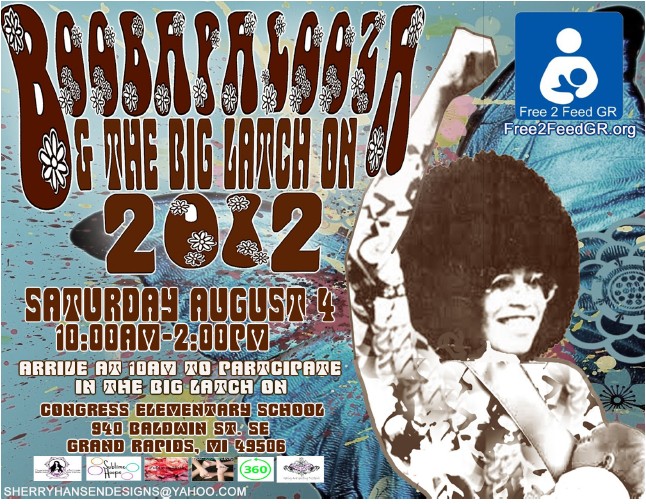 BOOBAPALOOZA: The Big Latch On
(international breastfeeding in unison event)
- 10 a.m. to 2 p.m. Saturday August 4
- Congress Elementary School, 940 Baldwin St. SE, Grand Rapids.
- For breastfeeding moms, their babies and children as well as community and family members who support breastfeeding.
August 1 through 7 every year, The World Alliance for Breastfeeding Action organizes World Breastfeeding Week to raise awareness of the benefits of breastfeeding and the need for global support. Celebrated in 120 countries, World Breastfeeding Week marks the signing of the WHO/UNICEF document Innocenti Declaration, which lists the benefits of breastfeeding along with global and governmental goals.
To mark this occasion, thousands of breastfeeding women, their babies and children across the world will gather in their own communities to take part in the Big Latch On, a synchronized breastfeeding event in multiple locations.
To celebrate the Big Latch On and normalize breasts and breastfeeding, Free 2 Feed GR is hosting BOOBAPALOOZA as Grand Rapids’ Big Latch On event 10 a.m. to noon Saturday August 4 at Congress Elementary School, 940 Baldwin St. SE,
Grand Rapids.
The first Big Latch On took place in Aotearoa New Zealand in 2005. It was introduced to the US in Portland, Oregon in 2010. In 2011, 5687 women participated in the Global Big Latch On, including 57 moms and babies right here in Grand Rapids. This year organizers of the event are aiming to help break the world record. The Big Latch On is informed by the principles of community development, providing the opportunity for breastfeeding women to get together in their local communities, host their own events, and identify opportunities for on-going support.
Free 2 Feed GR’s big goal is to establish a local resource guide to mothers to find establishments in Grand Rapids who support nursing mothers by simply allowing them to nurse wherever they are otherwise allowed to be. This will be the first resource guide of its kind, meaning Grand Rapids could be the first ‘official’ Free 2 Feed city in the country. Free 2 Feed GR’s goal is to promote breastfeeding as a normal, healthy and respected choice within the Grand Rapids community and beyond.
Did you know?
- Breastfeeding contributes to the normal growth and development of babies and children.
- Children who are not breastfed are at increased risk of infant morbidity and mortality, adult
obesity, diabetes, cardiovascular disease, osteoporosis, and premenopausal breast cancer and
ovarian cancer (both mom and baby.) - The World Health Organization recommends breastfeeding exclusively for the first six months of a baby’s life to optimize these benefits, continuing to breastfeed for 2 years and as long thereafter as is mutually desired by a woman and her child.
For information, visit www.Free2FeedGR.org or www.biglatchon.org
Fracking, Lobbyists and an oil company in Grand Rapids
The debate surrounding the issue of hydraulic fracking continues to be intense, with citizen and grassroots groups engaged in resistance to fracking all across the US.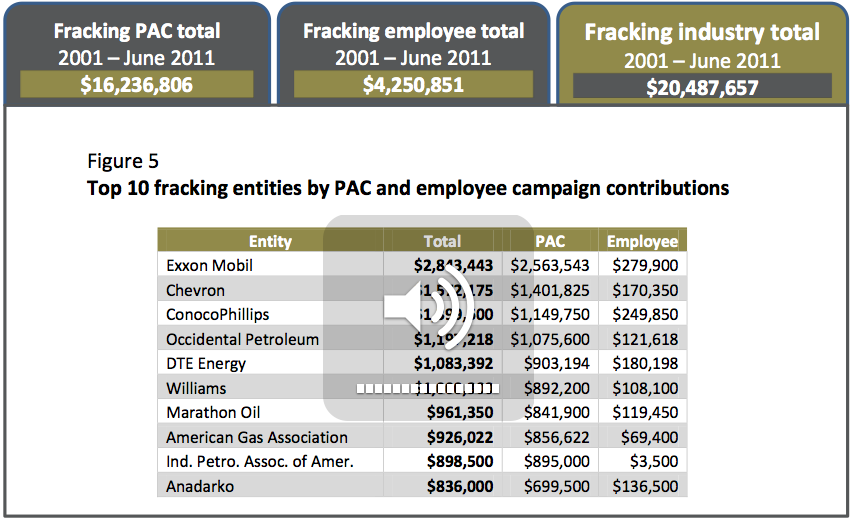
At the same time, the Oil & Gas industry has been aggressively working their own strategies, which include manipulating public opinion and politicians.
According to a report by Common Cause that was published last November, the Natural Gas industry has invested $726 million in lobbying as part of a long-term campaign to influence public policy.
In addition to the money spent on lobbying, the fracking industry has given $20.5 million to current members of Congress. Other major findings from the Common Cause report are:
- Contributions heavily favored current members of Congress who voted for the 2005 Energy Policy Act, which exempted fracking from regulation under the Safe Drinking Water Act. Current members who voted for the bill received an average of $73,433, while those who voted against the bill received an average of $10,894.
- Current members of the Senate Committee on the Environment and Public Works have received a total of $1.4 million from the industry.
- Current members of the House Energy and Commerce Committee have received a total of $3.7 million from the industry. Chair Rep. Fred Upton (R-MI) has received $153,917 from the industry and Committee member Rep. Joe Barton (R-TX) is the single-biggest recipient of fracking money in Congress with $514,945.
- The natural gas industry’s fight against regulation has gotten important help at the state level from the American Legislative Exchange Council (ALEC). As documented in an August 2011 Common Cause report, ALEC generates and lobbies for hundreds of model bills every year despite its status as a tax-exempt 501 (c)(3) organization. Prominent financial backers of ALEC’s activities include the American Petroleum Institute, ExxonMobil, and Koch Industries, owner of the largest network of natural gas- transmitting pipelines in the country.
- The natural gas industry’s political expenditures have been used to target supporters of the FRAC Act, which would regulate fracking under the Safe Drinking Water Act and require disclosure of chemicals used in the fracking process. For example, in 2010, the industry gave $3 million to American Crossroads which in turn spent $533,000 in an attempt to defeat FRAC Act sponsor U.S. Rep. Maurice Hinchey (D-NY).
There are several members of Congress who have received hefty sums of money from the fracking industry since 2001. Michigan Rep. John Dingell has received $203,453, putting him at number nineteen on the top 100 Congressional recipients of fracking money. Dave Camp ($154,627) and Fred Upton ($153,917) are at numbers 30 and 31 on the top 100 list and Rep Mike Rogers lands at 51st on the list, receiving $109,146. Michigan Senator Debbie Stabenow is also on the list at number 75, getting paid $81,489 from the fracking indystry.
Michigan oil and gas companies that have participated in buying political influence on the issue of fracking is led by DTE Energy, which has spent $2.8 million on lobbying at the federal level and an additional $2.2 million on Michigan State candidates and political parties between 2001 and 2010.
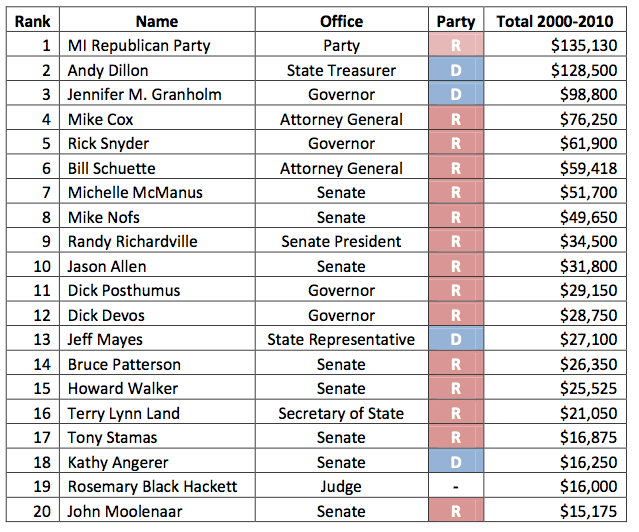
Here is a list of the top candidates, politicians and parties that have received funding from the fracking industry in Michigan from 2001 – 2010.
Grand Rapids Oil & Gas man pushing fracking
Third on the list of companies in Michigan that have sought to influence policy on fracking is Wolverine Oil & Gas. Their CEO, Sidney Jansma, has contributed $107,600.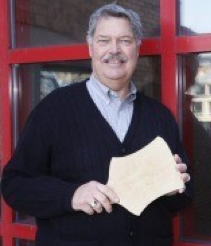
Wolverine Oil & Gas is located in downtown Grand Rapids, at One Riverfront Plaza, 55 Campau, right near the blue walking bridge that connects the downtown to the GVSU campus.
Jansma, whose father started the company 60 years ago, believes whole heartedly in the process of hydraulic fracturing, a fact he stated in an MLive interview back in May. Jansma stated in that interview that he plans to drill an exploratory well near Delton in Barry County this year. Barry County is one of the areas in Michigan that was targeted by the oil and gas industry in the May DNR public land auction for future fracking.
The mission of Wolverine Oil & Gas is rather interesting and seems to provide an ideological justification for environmental destruction and profit making.
Wolverine will find and produce natural gas and oil efficiently so that God is honored, our environment is enhanced, and our employees are constructively challenged and well paid, and our owners and partners receive an excellent return on their investment.
Jansma’s religious justification for wealth also is reflected in his position as a member of the Board of Director of the Grand Rapids-based Acton Institute.
 Grand Rapids Institute for Information Democracy
