What you need to know about Mlive article headlined, “What you need to know before you lease your land for oil & gas exploration”
Mlive posted a second story relating to oil & gas land leasing today, with the second one providing information about a meeting this Thursday in Holland at Olive Township Hall.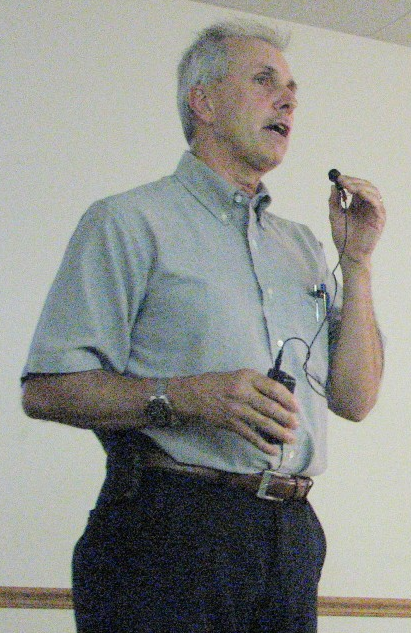
This second oil & gas related story includes some rehashing of information from the first story and uses former Michigan Lt. Governor Dick Posthumus as the poster child for what is looks like to lease your land to private oil & gas companies looking to extract more fossil fuels in the state of Michigan.
However, the bulk of the story uses the perspective of Curtis Talley Jr, which the MLive reporter refers to as a “farm management educator.” Talley will not only be hosting the meeting on Thursday in Holland, he will be one of the “experts” letting area property owners know what they need to do if they are approached by oil & gas companies to lease their land.
In addition, to how to go about selling mineral rights to oil & gas companies, Talley is likely to answer questions and share information on hydraulic fracturing since that is the issue that is being raised by residents and environmental groups in recent months.
If Talley follows the same process he did at a meeting he hosted in Macomb County, they he will be sharing information that is pro-fracking and uses sources from the oil & gas industry.
In a handout Talley gave to those who attended the Macomb County meeting in September, one would find several instructive bits of information from a man who works for the MSU Extension.
The handout includes on page 2 comments about the “excitement” surrounding the growing interest in leasing land to oil & gas companies. Here Talley mentions “concerns” that people have about fracking, but the sources that he sites to put those concerns to rest is a link to the oil & gas industry group known as Frac-Focus. Frac Focus is run by two entities, the Ground Water Protection Council and the Interstate Oil & Gas Compact Commission. Both groups are a partnership between the state and oil & gas industry with no independent representation.
Talley also has a section which discusses chemicals used in fracking, but this section is entitled, AMERICAN PETROLEUM INSTITUTE BEST PRACTICES FOR
GROUNDWATER QUALITY AND TESTING. Again, the group Frac-Focus is sited as the source that will answer concerns people have about chemicals used during fracking. What Talley doesn’t tell people in the handout and is not likely to tell people is that Frac-Focus is a site for the oil & gas industry to self-post information on the testing they have done in regards to chemicals and ground water. This should raise red flags for anyone, since the oil & gas industry has a horrendous track record when it comes to the environmental and human health consequences of drilling for oil & gas.
Lastly, it is worth noting that Curtis Talley has information on the movie Gasland and the petroleum industry fake-movie response TruthLand.
For those who want to listen to an hour-long presentation, with slides, from Curtis Talley on the matter of leasing land to oil & gas companies and fracking, go to this link and you will hear for yourself that Talley is an apologist for the industry, something that MLive does not acknowledge in their story.
Reclaiming Our Lineage: Organized Queer, Gender-Nonconforming, and Transgender Resistance to Police Violence
This article by Che Gossett, Reina Gossett, and AJ Lewis is re-posted from The Scholar & Feminist Online. Editor’s note: This is just one of a whole series of article that we recommend on radical queer politics.
The riots that erupted at the Stonewall Bar on Christopher Street on the night of June 28, 1969, like the one at San Francisco’s Compton Cafeteria in 1966, signaled a real turning point in queer activism. And yet, rather than being narrated as an urgent act of resistance and rebellion against state violence, the story of the Stonewall riot has been refashioned into a homonoramative tale of the LGBT community’s first proud public proclamation of gay identity and rejection of social stigma. The Compton Cafeteria riot was all but erased from mainstream LGBT history, obscuring the fact that the individuals who fought back against the police that evening were not simply members of San Francisco’s gay community, but were also those who most often have to resist police oppression: street youth, gay and lesbian people of color, sex workers, drag queens, transgender, and gender-nonconforming people. Indeed, queer people located outside of the mainstream LGBT movement have much to contribute to an analysis of police violence, as well as to a critique of aligning with the police for “protection.”
That the social and political connections between LGBT communities and policing are so infrequently considered central to LGBT politics is all the more striking when one considers that, in one form or another, strains of LGBT political work have always addressed police violence. There is, in significant respects, nothing new about making police violence central to a queer agenda—indeed it is perhaps only relatively recently that police violence has been seen as anything other than one of the most flagrantly apparent manifestations of LGBT oppression. Before the Stonewall and Compton Cafeteria riots, in fact, even politically moderate groups such as the Mattachine Society, which was founded in 1950 in Los Angeles and later expanded with chapters in the East Coast, were heavily active around issues of police harassment. Printing “What to Do in Case of Arrest” cards and attempting to build collaborative relationships with police forces in order to promote more sensitive police conduct towards gay individuals, Mattachine organized around gay men’s vulnerability towards police violence.[1]
Later, in the politically radical years of the early 1970s, activists of the gay liberation movement looked to the Black Panther Party in their call for an end to the “racist police force,” and prominently espoused an analysis of the police and the prison system as intrinsically oppressive of racial, sexual, and gender minorities alike.[2] As historian Regina Kunzel documents, gay liberation activists marching to commemorate the one-year anniversary of the Stonewall riots marched in front of New York City’s Women’s House of Detention (across the street from the Stonewall Bar), where Afeni Shakur and Joan Bird, Black Panther members, were incarcerated shouting, “Free Our Sisters! Free Ourselves!”[3]
The latter half of 1970s and early 1980s are typically considered the time of collapse of the revolutionary historical moment surrounding the gay liberation movement, and indeed this period saw the fall of the Black Panther Party and other revolutionary groups under the FBI’s COINTELPRO (a secret FBI “counter intelligence program” targeting political groups and often using tactics that were themselves illegal). Although politically moderate groups such as the Gay Activists Alliance, which espoused a comparatively narrow, single-issue approach to gay-positive political reform, were founded in the late 1960s and active in the early 1970s, as the United States became more conservative over the ensuing decades this single-issue approach eventually came to be predominant.
However, the mid-1970s also gave birth to many of the first antiracist and queer of color organizations. Groups such as Salsa Soul Sisters (the first black lesbian organization), Black and White Gay Men Together (BWMT), the National Coalition of Black Lesbians and Gays, Dykes Against Racism Everywhere (DARE), and the black lesbian and feminist Combahee River Collective had all formed by 1980, and all included an analysis of policing issues in some capacity in their work. DARE, Salsa Soul Sisters, BWMT, and other New York City-based activists came together in the fall of 1982 to mobilize in response to the September 29th police raid on Blue’s Bar, a predominantly black gay bar on 43rd Street in Midtown. Queer activists’ response to the incident heightened the levels of attention to police brutality against LGBT people both within and beyond the gay and lesbian community. The lasting legacy of the Blue’s raid could be seen a little over a year later, when James Credle of BWMT addressed the congressional hearings on police brutality in Brooklyn specifically on the subject of the Blue’s raid and police abuse of gays and lesbians. Reminding his audience that it was not an accident that queer people of color and transvestites led the revolt at Stonewall, Credle asserted to the House Subcommittee on Criminal Justice:
While we are often stereotyped as members of a single community, our roots emerge from and encompass multiple ethnic and racial identities. We have suffered, and continue to suffer, brutality as blacks, Hispanics, Asian and Native Americans, in addition to our third-class status as lesbians and gay men. All of us who have been maimed, physically and emotionally abused, unlawfully arrested—yes, even tortured and killed—have yet to receive any note of recognition or acknowledgement that we too are victims of police harassment and brutality. If we are serious about the eradication of such brutality from our community, then we must acknowledge the widespread abuses which occur daily against lesbians and gay males.[4]
Credle presented a nuanced understanding of the police force’s systemic and pervasive oppressive relationship with LGBT communities as well as the role of intersectionality in determining who among those communities were historically the most vulnerable to police abuse. Although none of the officers involved in the Blue’s incident were criminally prosecuted, the incident became a catalyst for coalition building and promoting internal dialogue about community-based responses to police violence. The work of DARE, BWMT, Salsa, and others would eventually lead to the formation of an ad hoc Anti-Police Abuse Coalition in the summer of 1984, the goals of which included a formal apology from the NYPD, as well as to the organization of “a network capable of mobilizing at a moment’s notice to stand up to the police” and to “express […] solidarity and build alliances with other oppressed communities who are fighting police abuse.”[5]
As the burgeoning impact of AIDS in the 1980s and 1990s brought with it a resurgence of queer militancy reminiscent of post-Stonewall radicalism—most notably with the emergence of direct action-oriented groups such as ACT-UP and Queer Nation—so too continued the struggle of queer resistance against police violence. Often, however, these groups exemplified the ways in which gay “antiviolence” activism had come to be fraught with conflicting ideas about and approaches to addressing the perceived threat of antigay violence. Though they championed their confrontational style of direct action politics and radical, antiassimilationist ethos, Queer Nation, for instance, espoused an analysis of antigay violence that did not posit the threat of violence as coming from the state but rather looked to the police force, if not as a de facto ally, than certainly as a potential source of support.[6] In this respect, Queer Nation exemplifies a trend noted by Christina Hanhardt that, in the decades following Stonewall, gay vulnerability to antigay violence came to be perceived as the “vulnerability of the crime victim.”[7]
In this sense, Queer Nation and its spin-offs—in particular the Safe Street Patrol and the Pink Panthers—embodied a significant shift away from the critiques of state- and police-perpetrated violence espoused by gay liberationists and their allies in the new left and carried forward by antiracist queer activists in the 1980s and 1990s. This shift in emphasis became institutionalized when the national lesbian and gay organizations, like the Human Rights Campaign and the National Gay and Lesbian Taskforce took up support for “hate crimes legislation” in the 1990s. These laws increase sentencing and hence can also increase the already unprecedented numbers of people incarcerated in the United States.
Throughout the long history of policing of queer communities in New York City, queer, trans, and gender-non-conforming people have creatively resisted and simultaneously survived police brutality and police violence. Through direct confrontation with the police, intervention in police violence, and concrete attempts at rethinking safety and realizing that vision, queer and trans people, particularly low-income and queer and trans people of color, have sought to change and dismantle policing and create real alternatives to the police state.
In the contemporary moment, while the mainstream LGBT movement continues to advocate for the inclusion of gender identity and sexual orientation in state and federal hate crimes statutes, there are numerous examples of grassroots efforts to challenge homophobic and transphobic violence within the context of a broader movement to decrease our reliance on police, prisons, and courts. Groups like the Southerners on New Ground, the Safe Outside the System Collective at the Audre Lorde Project, Critical Resistance, Justice Now!, INCITE!: Women of Color Against Violence, and many others, actually work in the same spirit of the more liberatory post-Stonewall movements to create spaces to dream, think, and create police-free zones, community accountability mechanisms, and ways of resisting violence.
These organizations continue this project because policing of communities that can be called deviant continues to the present day and is even intensifying in some respects. For example, in July of 2006 Washington DC Mayor Anthony Williams signed the Omnibus Public Safety Emergency Amendment Act, which allowed for prostitution free zones (PFZ) to be implemented throughout the district. Similar to drug- and gang-free zones created in the 1990s as a part of the continuing racialized, policed, militarized, and antipoor “war on drugs,” prostitution-free zones are marked by warning signs and cast a wide net of criminality over a host of identities (trans women, sex workers, and people of color) and actions (congregating in groups, waving at the corner, possessing condoms or cash).
Fears about the “prostitute” are often augmented by hysteria over the presence of people of color in public space who may be simultaneously eroticized, considered “dirty,” and security threats (e.g., “loitering” Latinos) (McArdle, 2001; Cleaveland and Kelly, 2008). Profiled as prostitutes with alarming frequency, transgender women of color are targets for arrest and harassment by police who act out societal stigma against gender-nonconformity (Amnesty International, 2005). Different frameworks can drive policing and surveillance of other forms of sex work, such as massage parlors. Police raids may be framed as “rescues” of trafficked women (Sex Workers Project, 2009), or they may be based on similar fears of congregating “illegal immigrants” who challenge public safety.[8]
Trans justice activist Darby Hickey argues that the implementation of PFZs simply makes a de facto practice de jure. “The intent [of the PFZs] was to legitimize a practice the police have been doing for years, it was not new, it was just legitimized again in the law, not a whole lot changed, now police had an official phrase for doing what they have always done.”[9]
Mallory Teefari, trans activist and harm reduction practicioner, has worked with street sex workers and in the DC trans community since the 1970s, and described the long history of attempts at social control by police:
All through the years the [Metro Police Department] sought means and ways to actually control the trans and sex worker market in Washington DC, by zones, by identification as workers, by means of ID-ing. […] Groups were formed like the DC Transgender Coalition, DC Care Consortium, and Transgender Health Empowerment, and activists started looking into reasons and ways to combat oppression and help the transgender community to deal with issues like health, legal issues of arrests—to try and understand the community that has basically always been an aspect of DC: a transgender street culture.[10]
Organizations mobilized in response to the policing of sex workers in DC, the legislating of the PFZs, and to advocate for alternatives to policing. The Alliance for a Safe and Diverse DC was established in 2005 by community members and advocates in response to an assemblage of proposed laws targeting sex workers and those involved in street sex economies, such as the Prostitution Nuisance Abatement Amendment Act, the Omnibus Public Safety Act, and the Anti-Prostitution Vehicle Impoundment Amendment Act.[11] The Alliance for a Safe and Diverse DC established a community-based research team, which included many people directly impacted by the PFZs. Research team members had significant experience working on “topics of sex work, HIV, drug use, LGBT and immigrant communities, racism, homelessness and community organizing.”[12] The team conducted research over the course of 2007, and finished and published their findings in 2008. The research culminated in “The Move Along Report: Policing and Sex Work in DC” (PDF). The final portion of the report consists of a series of recommendations to the mayor and DC Council, the Metropolitan Police, US Attorney’s Office, the Office of Police Complaints, funders, sex worker organizations, and human rights advocates. The recommendations call for a, “city wide review of the laws, policies and practices regarding the policing and regulating of adult public sex,” and the report proposes that the PFZs be repealed or a moratorium enacted. However, in spite of these recommendations, DC police posted PFZ signs along 5th and I streets during the inauguration of President Obama,[13] and Prince George’s County recently adopted PFZs.[14] In November new legislation was also proposed to extend PFZs in Washington DC indefinitely.[15]
Campaigns like that of the Alliance for a Safe and Diverse DC work to reshape the radical legacies of the Stonewall and Compton Cafeteria uprisings toward a still more expansively liberatory future. This future can be realized by standing in solidarity with—and taking direction from—the vibrant queer and trans organizing led by queer and trangender youth on the Christopher Street Pier in New York City (see FIERCE! article in this issue), as well as with campaigns happening south of New York City, like the sex workers in DC organizing against prostitution free zones or the trans women of color in Memphis, Tennessee organizing in response to the police violence against Duanna Johnson. Arrested in February of 2008, Johnson, a black transgender woman, was verbally and physically assaulted by police at the Shelby County Jail. She spoke out against the violence in the local news media and initiated a federal lawsuit against the Memphis police department for civil rights violations.[16] Nine months later, she was found murdered, execution style, near her home in North Memphis.
Unfortunately, many of the largest national LGBT organizations constantly recall and reference the liberatory and antipolice “Stonewall” riot as a battle cry for their homonormative agenda: marriage, military inclusion, access to the market, and hate crimes legislation. The narrow and singular pressure to accept this agenda and assimilate into mainstream society elides the rich and dynamic history of our movements for liberation and self-determination. A critical analysis about the dangers of aligning with the police, and an alternative practice of building real protection from violence in the form of strong and diverse communities, is part of that rich heritage. Remembering our radical history, and reclaiming ownership over it, is a powerfully transformative act of love for the value of our movements and our lives.
MLive headline on oil & gas interests in Kent County is misleading
This morning, MLive posted a story about the increased interest from oil & gas companies to purchase mineral rights for oil & gas drilling in West Michigan.
The headline reads, “Find out where oil and gas leasing is booming across Lower Michigan.” Such a headline was delightfully welcomed, especially since lots of people in the area have been concerned about where oil & gas companies might be drilling near their property and what the consequences might be.
However, after reading the article one discovers that there are no details of where oil & gas companies are buying land in West Michigan. The MLive reporter builds up some anticipation about finding out which parcels of land have been grabbed up by oil & gas companies by telling readers about how the Kent County Chief Deputy Registrar has seen a significant increase in signed leases in Kent County.
Unfortunately, no details on which parcels of land that have been leased by oil & gas companies follows. It seems clear that the reporter talked to the official from Kent County, either in person or on the phone, so why not get details on which companies and which parcels of land have been leased for mineral rights? Seems like a logical question that the general public would certainly benefit from.
The article does tell readers about companies doing oil & gas exploration up north and that Barry & Allegan Counties have been hotbeds of oil & gas activity, but the only company identified operating in West Michigan is Western Land Services. The MLive reporter talked to a representative from Western Land Services, but their response is, “To detail what we’re doing and what we’re looking for and what we’re after, I’m not at liberty to discuss.”
This is where the MLive article ends, meaning they didn’t question such a response or try to find any information out about the company that would be useful public information. Instead, all readers get is a hyper-link to the company, which upon viewing tells us virtually nothing of value.
What we could find on Western Land Services was limited, but there is some useful information. Western Land Services has offices across the country, but primarily works on behalf of oil & gas companies to purchase land or leasing rights, sort of a front company or go between, in order to protect the companies who will actually be doing the oil & gas extraction. A recent example in Michigan was when Western Land Services was hired by Chesapeake Energy Corp, according to a story from Reuters. The Reuters piece talks about how many land owners in the Traverse City area were approached by companies like Western Land Services on behalf of Chesapeake Energy Corp and that there is now a lawsuit against the fossil fuel giant because of fraudulent practices.
So, not only does MLive not give us details about which parcels of land have been leased in Kent County by oil & gas companies, they didn’t do much work to actually inform the public about the companies seeking to profit from oil & gas extraction.
PACs have raised over $34 million so far in Michigan, one DeVos PAC has given $500,000
According to the Lansing-based group, Michigan Campaign Finance Network, $34.7 million has been raised by Political Action Committees as of the most recent campaign finance filing deadline.
The most recent report states in part: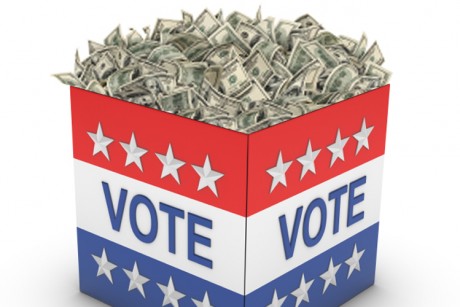
Michigan’s top 150 state political action committees have raised $34.7 million through the October campaign finance reports. That total is the lowest recorded since the 2004 election cycle for the state’s top 150 PACs.
Rankings were compiled by the nonpartisan Michigan Campaign Finance Network from reports filed with the Michigan Bureau of Elections.
The relatively low total reflects the absence of two PACs that topped the state list the last three election cycles: Coalition for Progress, which topped this list in 2006 and 2008, and the Republican Governors Association Michigan PAC, which the set the record as Michigan’s largest PAC ever in 2010.
Another factor contributing to the relatively low total may be the huge volume of money flowing into state ballot committees this year.
The House Republican Campaign Committee leads the list of PACs this year at $2,413,905. It is followed by the House Democratic Fund at $2,012,838.
The rest of the top ten PACs are: Senate republican Campaign Committee, $1,552,849; Michigan Association of Justice PAC, $1,495,502; Michigan Education Association PAC, $1,290,563; Blue Cross/Blue Shield PAC, $1,043,396; Michigan Regional Council of Carpenters PAC, $819,043; Business Leaders for Michigan’s SuperPAC, $796,250; United Auto Workers Voluntary PAC, $675,688; and, Michigan Beer and Wine Wholesalers PAC, $675,688.
Looking at the top 150 PACs in Michigan, one can see the usual suspects in terms of which companies, associations and sectors are trying to use money to influence the electoral outcome.
The state Chamber of Commerce and several regional Chambers have given over a million, trade unions have given over a million, and several political party affiliated groups have done the same.
In addition, energy focused groups like DTE ($544,261), Michigan Petroleum Jobbers ($110,270) and the Michigan Petroleum PAC (68,122) are giving to both oppose Prop 3 and buy influence on oil & gas policy in the state.
Other sectors like the telecom and the automotive industry are buying influence and on the local level the DeVos family has given $500,000 through their group Great Lakes Education Project to push their privatizing/voucher-based education system.
To see a list of the top 150 PACs in Michigan as of now go to this link.
First US Tar Sands Mine Approved in Utah
This article by Steve Horn is re-posted from CounterPunch.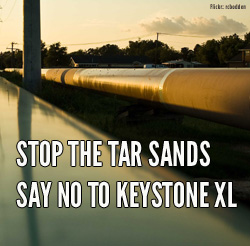
The race is on for the up-and-coming U.S. tar sands industry. To date, the tar sands industry is most well-known for the havoc it continues to wreak in Alberta, Canada – but its neighbor and fellow petrostate to the south may soon join in on the fun.
On Oct. 24, the Utah Water Quality Board (UWQB) approved the first ever tar sands mine on U.S. soil, handing a permit to U.S. Oil Sands, a company whose headquarters are based in Alberta, despite it’s name.
In a 9-2 vote, the UWQB gave U.S. Oil Sands the green light to begin extracting bitumen from its PR Spring Oil Sands Project, located in the Uinta Basin in eastern Utah. The UWQB concluded that there’s no risk of groundwater pollution from tar sands extraction for the prospective mining project.
Members of the public were allowed to attend the hearing but “were not permitted to provide input,” according to The Salt Lake Tribune.
“The PR Spring project remains on track for commercial startup late in 2013, and the decision ultimately illustrates the merits that our responsible approach to oil sands development has for the environment and local communities,” Cameron Todd, CEO of U.S. Oil Sands stated in a press release in response to the decision.
Living Rivers, the Moab, Utah-based offshoot of Colorado Riverkeeper says it will likely appeal the decision to the state’s court system, ”arguing that tar sands mining will contaminate groundwater in a largely undeveloped area of Utah’s Book Cliffs region that drains into the Colorado River,” explained the Associated Press.
In an Oct. 9 interview on Democracy Now!, John Weisheit, Conservation Director of Living Rivers said the harms associated with looming tar sands extraction in the Uinta Basin aren’t merely limited to groundwater contimination. Rather, the entire surrounding ecosystem would be endangered. He told Amy Goodman:
Well, we’re concerned because this particular locality is in a high-elevation place called the Tavaputs Plateau, and it’s one of the last wild places in Utah. It’s a huge refuge for elk and deer. It’s also a beautiful watershed. It not only would affect the Colorado River, but it also—at this particular site, it’s at the top of the drainage, so it would also affect the White River and the Green River.
The PR Spring mining site is 5,930 contiguous acres with a “land position totalling 32,005 acres of bitumen extraction rights on leases in the State of Utah,” according to U.S. Oil Sands’ financial statement for the first half of 2012. AP explained that U.S. Oil Sands plans to extract 2,000 barrels of tar sands crude in Utah in 2012, “in the start of what could grow into a much larger operation.”
Two main grassroots activist groups are currently battling Utah’s upstart tar sands industry: Utah Tar Sands Resistance and Before It Starts. “The Utah Water Quality Board is an entirely inappropriate authority for determining the safety of both water safety and water availability for the 30 million people who depend on the Colorado RIver, most of which do not live in Utah,” Kate Finneran, Co-Director of Before It Starts told DeSmogBlog in an interview.
Though Living Rivers will appeal the decision, U.S. Oil Sands isn’t wasting any time in forging ahead, and according to the AP is already “looking to take on a partner, ordering equipment, hiring Utah contractors and preparing the site” for extraction.
5,900+ acres is a drop in the bucket for an industry sitting on some 232,065 acres of land open for tar sands extraction in the state of Utah, according to a Sept. 2012 story by Inside Climate News.
The U.S. tar sands are deemed a “strategically important domestic resource that should be developed to reduce the growing dependence of the United States on politically and economically unstable sources of foreign oil imports” in Sec. 369 of the Energy Policy Act of 2005.
Most well-known for the “Halliburton Loophole,” the Energy Policy Act of 2005 exempts oil and gas corporations from complying with the dictates of the Clean Water Act and the Safe Drinking Water Act, making the chemicals injected into the ground (and into groundwater) while hydraulic fractruing (“fracking”) for unconventional gas a “trade secret.” The law was written with the helping hand of oil and gas executives via then Vice President Dick Cheney’s Energy Task Force in 2001.
By legal mandate, it appears, the race to extract bitumen from “Tar Sands South” has just begun. It’s a race that, like the one being run by its Canadian neighbor to the north, can’t possibly end well for the ecosystem, public health, water quality and the global climate.
Obama and Romney: Brothers of the Same Imperial Lodge
This article by Glen Ford is re-posted from Black Agenda Report.
Debate? What debate? What we witnessed Monday night was the total hegemony of imperial corporate ideology, served up in chocolate and vanilla flavors. On every point of substance, Barack Obama and Mitt Romney are indistinguishable – not just equally evil, but identically so. On foreign policy, there is not one ray of daylight between the two.
In 2011, Obama was simultaneously waging drone and bomb wars against five countries: Libya, Somalia, Yemen, Afghanistan and Pakistan (he’s currently down to four, plus a proxy terror war in Syria). Romney applauds all of these aggressions, with the caveat that he would bring superior “leadership” to the carnage. Given these facts, how shall we rate the contenders?
If you believe that Romney – who has never caused a cruise missile to be fired in anger – is a dangerous warmonger, then what about the guy whose five actual wars Romney fully endorses? Do you prefer Obama’s martial leadership qualities to Romney’s? If leadership in war involves building foreign and domestic support for war-making, then Obama is your man. After all, he’s neutralized most domestic anti-war sentiment while leading (and definitely not from behind) his NATO and royal Persian Gulf allies in the nine-month pulverization of Libya – great feats of imperial stewardship!
But, of course, that raises the question: should peace-loving voters, given a choice, prefer politicians who are very good at global aggression – who make war palatable to domestic and foreign audiences, as Obama does – or should peaceful folk opt for the less gifted warmonger, one so poorly endowed in leadership skills that he brings discredit to the imperial project, as did George Bush (and as seems likely under a President Romney)? Such is the nature of the choice facing those who cannot resist voting for one or the other of Monday’s contenders: the wannabe destroyer of worlds, or the guy with all the bloody hash marks on his arm.
One can also choose one’s favorite liar. Romney lies about what he has said in the past, while Obama lies about what he has done. Often, they share the same lies. The two got indignant with each over whether Romney, in Obama’s words, “recently gave a speech saying that we should have 20,000 more” troops in Iraq, today, rather than pulling out last December. No doubt, Romney said it. But, throughout the summer of last year, Obama’s civilian and military officials were negotiating with the Iraqi government to allow up to 10,000 U.S. troops to remain. A July 5, 2011, Associated Press story, for example, reported that “the White House has worked out options to keep between 8,500 and 10,000 active-duty troops to continue training Iraqi security forces during 2012, according to senior Obama administration and U.S. military officials.” The talks continued deep into the fall. In the end, Obama had no choice but to honor the withdrawal agreement signed by George Bush, or put the U.S. in a state of war with the Iraqi government and people. But he begged and pleaded to stay. His whole narrative of having always intended a total pullout is a lie – with Romney now chiming in “me too.”
Both candidates tell the same lie about Afghanistan. There are no plans, and no agreement with the Afghan government, for anything remotely resembling a total pullout in 2014. It’s a game of “name change,” with the remaining U.S. troops to be designated as “trainers” rather than “combat” soldiers. How many? The U.S. military is planning for 25,000 troops, including many thousands of Special Forces. When President Obama took the oath of office, there were 34,000 American soldiers in Afghanistan – so we are mainly discussing undoing Obama’s own “surge” of 66,000 in additional troops. Romney endorsed the fake “pullout” – so, at least the two are lying in synch.
Obama’s most noxious statement of Monday evening, on the death of Moammar Gaddafi, revealed the president’s core rottenness as a human being:
“And to the governor’s credit, you supported us going into Libya and the coalition that we organized. But when it came time to making sure that Gaddafi did not stay in power, that he was captured, Governor, your suggestion was that this was mission creep, that this was mission muddle.”
Gaddafi was not “captured,” he was murdered, a knife stuck up his rectum by U.S.-backed thugs after his convoy was disabled by what appear to have been U.S. bombers. The world saw the Libyan leader’s torture on video, and heard Secretary of State Hillary Clinton brag, “We came, we saw, he died.”
For Obama, it seems that a momentary interval between being seized by an enemy and executed, constitutes a “capture” – for which he takes credit, but not the murder. Although his choice of words may not constitute a lie, it speaks volumes to his character.
Romney’s “mission creep” comment may have been a symptom of inner caution in foreign policy. But it seems that was a passing moment, and he is now gung ho on Obama’s Libya adventure.
Obama failed to revel, at the debate, in having used the Libya operation to invent a new definition of war. Since no Americans were killed, there was no reason for Congress to invoke the War Powers Act, said Obama. Although thousands might be slaughtered by U.S. and allied firepower, Obama has declared that, henceforth, no state of war or even “conflict” may exist unless Americans are also harmed.
Mitt Romney seems to have no problem with the Obama war/non-war doctrine. He agrees that Syria’s “Assad must go,” presumably in the same manner as Gaddafi. Romney’s spin on the arming of jihadis is that the U.S. should avoid it, while Obama’s lie is that Washington isn’t doing it. Romney wants the U.S. to draw even closer to Israel. Obama says, truthfully, that he already has “created the strongest military and intelligence cooperation between our two countries in history.” Mitt said amen to that.
Presumably, the Republican and Democratic standard bearers covered every important area of potential disagreement during the 90 minutes allotted – and found none. So, which warmongering, imperialist mad dog are you going to vote for? The one who is actually waging multiple wars and savaging international order, or the rookie?
Do We Really Need Industrial Agriculture to Feed the World?
This video is re-posted from the Institute for Agriculture and Trade Policy.
Have you heard the myth that we need industrial agriculture to feed the world?
The biggest players in the food industry—from pesticide pushers to fertilizer makers to food processors and manufacturers—spend billions of dollars every year not selling food, but selling the idea that we need their products to feed the world. But, do we really need industrial agriculture to feed the world? Can sustainably grown food deliver the quantity and quality we need—today and in the future? Our first Food MythBusters film answers these questions and more in under seven minutes.
Women for Water: An Anti-Fracking Benefit concert set for November 3

Join us for an evening in recognition and celebration of the transcendent connection between women and water. This event will benefit Michigan Land Air Water Defense (MiLAWD), a grassroots group dedicated to protecting our public lands from industrialization by oil and gas companies and, specifically, high-volume hydraulic “fracking”. MiLAWD’s mission is to educate the public about fracking and its many risks, and to use the courts to halt the allowance of fracking and related activities on public lands in Michigan.
The lineup of female artists includes:
Dede Alderman, a versatile performer who wears many hats. Her gypsy style on the vibraphone is enchanting and her vocal style mixes sweet Irish influence with growling soul-felt jazz sensibilities, a unique combo you can only experience for yourself.
Jen Sygit‘s rapidly growing repertoire of original songs has surpassed many with its sophisticated lyrics and intense emotion. This Interlochen Alumus, while composing songs primarily on guitar, also plays old-time clawhammer banjo as well as the dobro.
Ferron is one of Canada’s most famous folk musicians, as well as one of the most influential icons of women’s music worldwide. For a generation she has been a revered poet, a leader, a survivor, and an artist of great depth. She is simply on of folk music’s greatest songwriters and performers of recent times.
Sairuhnade is a passionate local activist, who has bore witness the impact of fracking on Michigan’s ecosystems. She will share her experiences through heart-felt songs, which she has uniquely created and soulfully performs.
Women for Water: An Anti-Fracking Benefit concert
Saturday, November 3
8:00PM (doors open at 7pm)
Wealthy Theater
For Ticket Information go to http://www.grcmc.org/index.php?page=events&event_id=3652
The pro-business newsletter Michigan Loves Manufacturing, ran a Press Release from Amway earlier today, which announced that the Ada-based company has named Bank of America as their 2012 Partner of the Year.
The Press Release talks about the value that Bank of America brings to Amway distributors, also known as Independent Business Owners (IBOs), such as providing each distributor with a VISA card.
Such news is unsurprising, since a company built on direct sales that uses people in a pyramid scheme would give an award to one of the more notorious banks in the US.
The list of reasons why Bank of America is one of the most hated businesses in the country are numerous. Among the criticism are:
- Bank of America is one of the biggest banks that has been gobbling up community and regional banks for years, which gives them the power to dictate and increase fees with few options for the public.
- Bank of America is currently foreclosing on more homes in the US than any other lending institution.
- Bank of America has spent millions lobby the US Congress to pass laws to their benefit or to deregulate the industry. For example they spent millions to oppose bills like the Credit Cardholders Bill of Rights and the Foreclosure Prevention Act, Helping Families Save their Homes Act, Mortgage Reform and Anti-Predatory Lending Act, all of which would have directly benefited consumers.
- Bank of America has contributed over $22 million to both Republican and Democratic candidates since 1990, according to Open Secrets.
- Bank of America is one of three major financial institutions facing charges of money laundering.
- Bank of America has received public bailouts and loan guarantees totaling $199.2 billion plus an undisclosed amount from the Federal Reserve’s $8 trillion in emergency programs. This includes $45 Billion in TARP funds.
- Last May, Bank of America paid $22 million to settle charges of improperly foreclosing on active-duty troops. The firm spun these foreclosures as being Countrywide’s fault for having started them before becoming part of Bank of America.
Considering Amway’s history of financial scamming, buying politicians and funding campaigns that hurt some of the more vulnerable populations in the country, their award to Bank of America.

Yesterday, while waiting to find out the status of several people arrested at the DNR land auction in Lansing, we had the chance to speak with Ellis Boal, a lawyer who filed an appeal on behalf of two Michigan property owners whom are being threatening by an injection well being operated by the Devon Energy Company.
This lawsuit is targeting the Michigan DEQ, which has been adamantly defending the process of hydraulic fracturing in Michigan. The case began in April when plaintiffs filed an administrative petition to the DEQ asking for a declaration that every frack well, whether vertical or horizontal, is an “injection well,” as that term is defined and as frack wells are defined by the DEQ itself.
Ellis Boal talks about the lawsuit, its significance and what it could mean for Michigan if they win the case. In addition, if people want to read the brief on this case, click here.

